Showing posts with label Hydrogen Fuel. Show all posts

Rolls-Royce and TCS Collaborate on Hydrogen Fuel System Tech Research

Rolls-Royce and TCS Collaborate on Hydrogen Fuel System Tech Research

TCS expands its partnership with Rolls-Royce to research hydrogen fuel system technology, continuing to prove hydrogen could be a zero-carbon aviation fuel of the future

Tata Consultancy Services (TCS) has expanded its partnership with Rolls-Royce, a British multinational specializing in civil aerospace, defence aerospace, services and power systems, to advance its sustainable initiatives. This collaboration involves research into hydrogen fuel system technology, continuing to prove hydrogen could be a zero-carbon aviation fuel of the future.

TCS, leveraging its expertise as a trusted service provider, will provide engineering skills and support to Rolls-Royce as it addresses three key challenges in the journey to enabling hydrogen for use in aviation: fuel combustion, fuel delivery, and fuel systems integration with an engine. All elements must be confirmed to operate safely.

This partnership underscores TCS's commitment to driving sustainable transformation across industries, aligning with its broader mission to harness technology for positive societal impact. The International Air Transport Association (IATA) has set ambitious targets for net zero carbon emissions by 2050, necessitating innovative sustainability solutions.

To recall, in early of last month the world's first in-flight study of commercial aircraft using 100% sustainable aviation fuel (SAF) was released and it has shown promising results. The study, which involved an Airbus A350 aircraft powered by Rolls-Royce Trent XWB engines, revealed a significant reduction in soot particle emissions and the formation of contrail ice crystals when compared to conventional Jet A-1 fuel.

Alan Newby, Director, Research and Technology, Rolls-Royce, said, “We welcome TCS to our hydrogen research programme and their engineering skills will play a valuable role in addressing our technology goals. We’ve already made great progress and having TCS with us gives us additional capability as we move forward on our journey to enable the energy transition for the aviation sector.”

This expanded partnership was announced at the Farnborough International Airshow where TCS also showcased its technological prowess in the aviation industry. The partnership builds on a long-standing relationship between Rolls-Royce and the Tata Group, including engines and a strong supply chain commitment. TCS has also been working with Rolls-Royce since 2010 in the areas of design, manufacturing engineering, control systems and software, after-market services as well as IT services. Having supported Rolls-Royce in major civil and business aviation programs, TCS has also supported its end-to-end product development lifecycle.

Anupam Singhal, President - Manufacturing, TCS, said, “The partnership between TCS and Rolls-Royce is an exciting one that represents a powerful alliance in the quest for sustainable aviation solutions. We are aligned with Rolls-Royce’s ambition for a greener future. This partnership is the perfect opportunity to put our technological strengths and passion for the environment to use for advancing innovation and fostering an eco-friendlier aerospace sector.”

TCS will leverage its deep domain knowledge of the aircraft manufacturing industry and will support the engineering activities of Rolls-Royce such as system design, component design, supply chain support and program management. These services will help Rolls-Royce research hydrogen technology as it addresses three key challenges in the journey to enabling hydrogen for use in aviation: fuel combustion, fuel delivery and fuel systems integration with an engine. All elements must be confirmed to operate safely.

Regu Ayyaswamy, Senior Vice President and Global Head- Internet of Things and Digital Engineering, TCS, said, “TCS and Rolls-Royce have been partners in advancing engineering excellence for nearly a decade. The new partnership for research into hydrogen fuel systems represents a pivotal next step at a time when the aviation industry is faced with the urgent challenge of reducing carbon emissions while maintaining performance and efficiency. It aligns well with TCS’ commitment to harness technology for positive societal impact and building a greener future.”

TCS has been on a mission to harness the power of technology for positive societal impact and drive sustainable transformation across industries. With more than 200 sustainability offerings, TCS is helping customers around the world in their sustainability journeys.

As a Tata group company, TCS is also conscious of its impact on the environment. In 2021, TCS had set an ambitious sustainability target to reduce its absolute emissions by 70% across Scope 1 and Scope 2 by 2025 over the baseline year 2016 and to achieve net zero by 2030. By FY24, TCS had already reduced its absolute carbon footprint across Scope 1 and Scope 2 by 80% over a baseline of 2016, exceeding its target achievement by 10%, one year ahead of time.

Tata Motors To Indigenously Develop Hydrogen-fuelled, Zero-Emission Propulsion Systems at its R&D Centre in Pune

Tata Motors To Indigenously Develop Hydrogen-fuelled, Zero-Emission Propulsion Systems at its R&D Centre in Pune
Tata Motors unveils state-of-the-art facilities for development of Hydrogen propulsion technologies

Tata Motors unveils state-of-the-art facilities for development of Hydrogen propulsion technologies

Tata Motors, India’s largest automobile company, unveiled two state-of-the-art & new-age R&D facilities for meeting its mission of offering sustainable mobility solutions. The unveilings constitute of engine test cell for development of Hydrogen Internal Combustion Engine and the necessary infrastructure for storage and dispensing of Hydrogen fuel for the Fuel Cell and H2ICE vehicles.

These facilities are yet another step forward from the company towards carbon neutrality, while tapping the strong potential of Hydrogen as a clean energy source.

The auto major also announced that it will indigenously develop Hydrogen-fuelled, zero-emission propulsion systems at its R&D centre in Pune.

Speaking on the occasion, Mr. Girish Wagh, Executive Director, Tata Motors, said, “Tata Motors has been leading the global megatrend of sustainable, connected and safer mobility in India. We believe Hydrogen to be the fuel of the future, especially for commercial vehicles. With the opening of this dedicated R&D facility to develop and indigenise Hydrogen propulsion technology, we are entering a new era of technological innovations and advancements in green mobility. The resulting benefits from an altogether new class of powertrains and engines will take our customers and our nation future forward.”

Mr. Rajendra Petkar, President & CTO, Tata Motors, expressed, “This is a significant moment for us as we create Hydrogen based internal combustion engine development facility and the associated infrastructure for fuel storage and dispensing at our Engineering Research Centre. This development is a testimony to Tata Motors continued commitment and leadership towards net zero and long-term vision for offering differentiated powertrain solutions across segments under one roof. We have been investing in the Hydrogen technology for the last many years and continue to be committed for harnessing its maximum potential through research and product development.”

Marching on its path to net zero, Tata Motors had showcased one of the widest range of commercial vehicle concepts at Auto Expo 2023 earlier this year. It included the flagship Prima tractor, a heavy commercial vehicle in two avatars: one with a Hydrogen Internal Combustion Engine and other with Fuel Cell Technology along with the next generation Hydrogen Fuel Cell bus. Being the pioneer in the field of zero-emission technologies, Tata Motors on 25th September, 2023 delivered two first-of-its-kind, technologically advanced, safer, new-generation Hydrogen Fuel Cell powered buses to Indian Oil Corporation as part of a tender bagged in 2021.

Tata Motors is amongst country’s most innovative vehicle manufacturer and its research and development facilities have consistently developed and engineered innovative mobility solutions powered by alternate fuel technologies: battery-electric, hybrid, CNG, LNG, Hydrogen ICE and Hydrogen Fuel Cell technologies. The company is poised to continue the leadership with green technologies and has been leading the electrification journey in India for cargo and passenger transportation.

Maharashtra Startup Gets Rs 3.29 Cr Support from Govt for Indigenous Development of Hydrogen Gas Detecting Technology

Maharashtra Startup Gets Rs 3.29 Cr Support from Govt for Indigenous Development of Hydrogen Gas Detecting Technology

In tune with Prime Minister Narendra Modi's vision of National Hydrogen Mission (NHM), Union Minister of State (Independent Charge) Science & Technology, Dr Jitendra Singh today announced financial aid of Rs 3.29 crore to Thane, Maharashtra-based Multi Nano Sense Technologies Pvt. Ltd., to support the manufacturing of Hydrogen sensors indigenously.

Multi Nano Sense Technologies (Multi Nano Sense) has signed an MoU Technology Development Board under DST, for indigenous development of Hydrogen Sensing & Analysis Technology. 

Founded in 2017, Multi Nano Sense is a deep technology company developing an indigenous cutting edge hydrogen analysis sensor for new age applications. The development is also related to the universal miniaturized core sensor designs for leak detection and/ or analysis of hydrogen.

Hydrogen is regarded as one of the best clean energy carriers, which is the ultimate fossil fuel alternate candidate however it is extremely flammable, and high concentrations of the gas in confined spaces will displace oxygen which is life-threatening. Therefore, it is imperative to ensure that there is no leakage of hydrogen which will pave the way for its optimal utility, and thus as the usage of Hydrogen as a fuel will rise the detection of the gas become imperative too.

The startup has patented hydrogen gas sensor and analyzer based on a core sensor; which has been conceptualized, developed, manufactured and serviced entirely in India. The Minister informed that at present, it is heavily dependent on importing sensors, as all core sensor elements are imported from China, USA, UK, Japan and Germany.

The startup is building gas and dust sensors with vastly enhanced capabilities and has a Patented Hydrogen Sensing Technology (Indian Patent No. 252998) which has ability to detect and analyze Hydrogen, with very high selectivity, specificity and intelligence, over the entire range of 0% to 100% H2 v/v in Air.

The sensors can not only operate in a vacuum, but also in both air and inert backgrounds. The sensors have a very long life and do not require any maintenance, except periodic calibration to maintain very high levels of accuracy. It does not require any moving or degradable parts, claims the startup's website.

Besides, the sensor has several other path breaking features such as — Minimum detection: Parts Per Million (PPM) range; Maximum detection: 100% Pure Hydrogen; Instant response within 3 seconds; low power consumption for core sensor operation. Portable detectors can operate continuously upto 36 hours on single charge; non-corrosive; long life of 5 years etc.

With this technology, India can easily penetrate the global market to complement domestic demand through their Made in India products. The global hydrogen gas sensor market is presently valued at USD 685 million and is anticipated to amplify at a CAGR of 6.2%, thereby amassing a valuation of USD 1,250 million by end of the assessment timeline.

Dr Jitendra Singh said, the demand for energy is growing and with the limitation of existing resources, there is a need for an alternative fuel. He said, ‘Hydrogen’ envisages being the future fuel to replace fossil fuel and therefore production of Hydrogen fuel by using power from renewable energy, termed as green hydrogen is one of the major requirements towards environmentally sustainable energy security of the nation.

The Minister added that as per NITI Aayog’s report titled ‘Harnessing Green Hydrogen: Opportunities for Deep Decarbonization in India’ Hydrogen will provide a pathway to accelerate the emergence of a green hydrogen economy, which is critical for India to achieve its net-zero ambitions by 2070.

A recent report highlighted that for India to achieve its target of net-zero carbon economy by 2070, carbon capture technologies and green hydrogen should be among key strategies for the country to adopt optimally, which will also realize India’s green energy potential.

Indian Oil Corporation To Form JV Companies with L&T and ReNew Power for Green Hydrogen Production

Indian Oil Corporation (IOC) Forms JV with L&T and ReNew Power for Green Hydrogen Production

Last year in July, Indian Oil Corporation Limited (IOC) announced that it is building India's first 'Green Hydrogen' plant at its Mathura refinery. Now almost a year after, IOC has signed a binding term sheet with two private firms -- Larsen & Toubro (L&T) and ReNew Power (ReNew) -- to set up a Joint Venture (JV) company that will develop the green hydrogen sector in India.

As per lastest IOC release, there will be two JV companies --- one involving three entities, IOC, L&T and ReNew, and second between IOC and L&T, only  

As per first JV, three companies will together aim to supply green hydrogen at an “industrial scale” by combining L&T’s credentials in designing, executing, and delivering engineering, procurement and construction projects, Indian Oil’s established expertise in petroleum refining with its presence across the energy spectrum, and the expertise of ReNew in offering and developing utility-scale renewable energy solutions.

In second JV, IndianOil-L&T JV will focus on production and sale of Electrolyzer. IOC and L&T have signed an additional binding term sheet to form a JV with equity participation to manufacture and sell Electrolyzers used in the production of Green Hydrogen. 

While IOC is an Indian government owned oil & gas explorer and producer, L&T and ReNew are private companies. ReNew is Gurgaon-based renewable energy company that focuses on wind-energy projects. Backed by hedge fund Sylebra Capital and investment bank Goldman Sachs, ReNew went public in August last year, at the US stock exchange NASDAQ. 

ReNew has recently commissioned Gujarat's first wind-solar hybrid project at the Chlor-Alkali unit of Grasim Industries Ltd in Vilayat, Bharuch.

Government of India's draft guidelines on the National Hydrogen Mission aims to increase production to 5 million metric tonnes (MMT) by 2030 to meet about 40% of domestic requirements.

The planned JVs aim is to enable India’s transition from a grey hydrogen economy to a greener economy that increasingly manufactures hydrogen via electrolysis powered by renewable energy.

Green hydrogen is derived from water electrolysis using renewable energy like solar or wind. Biomass-based hydrogen production technologies also qualify under the green category. On the other hand, Brown and grey hydrogen are produced through coal gasification and natural gas reforming, respectively.

As of now, nearly all of the hydrogen currently produced in India is grey hydrogen using natural gas and ammonia.

The latest IOC release said -- By 2050, nearly 80% of India’s hydrogen is projected to be ‘green’ – produced by renewable electricity and electrolysis. Green hydrogen may become the most competitive route for hydrogen production by around 2030. This may be driven by potential cost declines in key production technologies and in clean energy technologies such as solar PV and wind turbines.

Today, hydrogen is mainly used in the refining, steel and fertilizer sectors, which will be the focus of the JVs’ initial efforts. The country’s refining sector consumes approx. 2 MMT of grey hydrogen every year, with IndianOil owning one of the largest shares of its refining output.

Last year in August, Indian Railways announced that its exploring the feasibility of retrofitting the trains (that presently run o­n diesel) with hydrogen fuel and for same it invited bids for "hydrogen fuel cell-based technology" for retrofitting the existing Diesel Electric Multiple Unit (DEMU) and will be test it out in 89 km Sonipat-Jind section of Northern Railway.

World’s Most Advanced Fuel-Cell EV Toyota Mirai To Run on Indian Roads

World’s Most Advanced Fuel-Cell EV Toyota Mirai To Run on Indian Roads

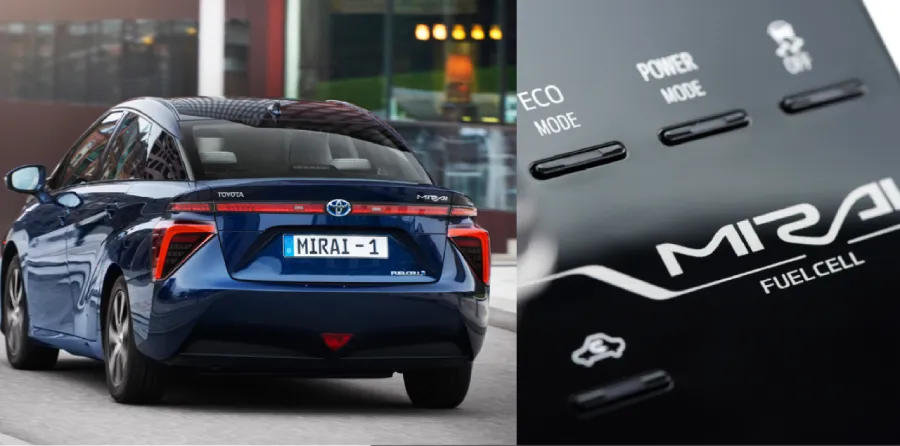
Soon, world’s most advanced Fuel Cell Electric Vehicle (FCEV) - 'Mirai', which is Japense automaker Toyota's premium zero emission, rear-wheel drive FCEV, will be running on Indian roads, at first on a pilot basis. 

Mirai, which sets the world record of traveling 1,360 Km with a full tank of 5.65 kg hydrogen, in August last year, is perhaps the greenest electric car to date.

In a first of its kind project in India aimed at spreading awareness about Hydrogen, FCEV technology and disseminating its benefits to support hydrogen-based society for the country, Union Minister of Road Transport & Highways Mr. Nitin Gadkari  would be inaugurating a pilot project and also demonstrating Toyota Mirai FCEV on 16th March in Delhi.

This Pilot project for Mirai FCEV is being conducted by Toyota Kirloskar Motor Pvt. Ltd. along with International Center for Automotive Technology (ICAT) to study and evaluate Toyota Mirai on Indian roads and climatic conditions. 

The name Mirai means “future” in Japanese.

The Toyota Mirai is expected to launch in India in January 2050, according to Cardekho.com. Mirai's expected prices will start from 6.88 Lakh. In November last year., Mirai was spotted testing in India wearing testing plates of Karnataka numbers. 

How It Works 

The Toyota Fuel Cell System used in Mirai produces electricity from a reaction between hydrogen and oxygen. Mirai users fill it up with hydrogen fuel, in the same way as buying petrol,/diesel/CNG at. The fuel (Hydrogen) is contained in high-pressure tanks and fed into a fuel cell stack, where the hydrogen and the oxygen found naturally in the air react with each other and generate electricity.

Moreover, in Mirai or any FCEV, energy is captured/stored in a battery every time the car brakes or slows down, which contributes to even better fuel efficiency.

Besides Toyota, Triton-EV, a subsidiary of Triton Solar, a leader in solar panel and battery engineering,  had a claim to produce a 100% electric- powered, full-service 18-wheeler semi-truck, which is a hybrid of hydrogen fuels that generate electricity stored in on-board batteries, has a 220,000-pound towing capacity

California-based FirstElement Fuel Inc., which was once a startup, became the world's largest hydrogen retailer, after it raised a $105 Million Series D funding round, in November last year.

Other Fuel-Cell Vehicles Brands in India

Tata Motors has collaborated with Indian Oil Corporation Limited (IOCL) for R&D projects and collectively study the potential of Fuel Cell technology for commercial vehicles. In June last year, Tata Motors won a tender of 15 hydrogen-based proton exchange membrane (PEM) fuel cell buses from the Indian Oil Corporation Limited (IOCL).

Last year in February, India's largest power company National Thermal Power Corporation Limited (NTPC) announced that it is planning to start a premium hydrogen fuel bus service on Delhi to Jaipur route. 

To recall, in year 2020, Department of Science & Technology under government of India had released a report on hydrogen and fuel cells research across the country.

FirstElement Fuel, the Largest Hydrogen Fueling Network in the World, Closes Series D Round of $105 Million

The monies from Air Water, MUFG, Nikkiso, and Japan Infrastructure Initiative will help the company build out its California True Zero Hydrogen Network from 31 stations to 80 stations by 2024

IRVINE, Calif., Nov. 8, 2021 /PRNewswire/ -- FirstElement Fuel Inc., which began as a California start-up with a vision to establish a hydrogen refueling network and has grown to be the world's largest hydrogen retailer, closed a $105 Million Series D funding round. The capital comes in from Air Water, MUFG Bank, Ltd. (MUFG), Nikkiso, and Japan Infrastructure Initiate (JII) as FirstElement Fuel is actively executing on its plan to build out its California Hydrogen Network from 31 True Zero Stations to 80 stations by 2024. At least 12 of the 80 stations will be capable of refueling heavy-duty trucks in addition to light-duty cars.
Hydrogen powered fuel cell vehicles line up at a True Zero retail hydrogen station. FirstElement is the developer, owner and operator of the True Zero brand of retail hydrogen stations which currently represents the largest retail hydrogen station network in the world.

"It's very encouraging to have partners like these who share our vision of what can be accomplished when we build a network of hydrogen stations," said Joel Ewanick, Founder and CEO of FirstElement Fuel Inc. "The whole team at FirstElement is very appreciative of all the financial support we are getting so that we can continue to build our vision of a hydrogen network that serves cars and heavy-duty trucks as well as expand from 31 stations to at least 80 over the next few years."

MUFG, Air Water, Nikkiso, and JII will join Mitsui, Japan Bank for International Cooperation, and Air Liquide as investors in FirstElement. Additionally, FirstElement has received over $125 Million in public funding from the California Energy Commission, the South Coast AQMD, and the Bay Area AQMD.

A heavy-duty hydrogen fuel cell truck takes on fuel at a True Zero retail hydrogen station. FirstElement is the developer, owner and operator of the True Zero brand of retail hydrogen stations which currently represents the largest retail hydrogen station network in the world.
 

FirstElement Fuel's Hydrogen distribution Hub in Livermore, CA. FirstElement is the developer, owner and operator of the True Zero brand of retail hydrogen stations which currently represents the largest retail hydrogen station network in the world.
 
FirstElement opened its first hydrogen station in December of 2015 and since then the company has led the development of stations in California, opening the largest number of stations in the State as well as the largest capacity refueling stations in the world. The Series D funding is the largest round of private capital raised by FirstElement Fuel thus far, and was brought in shortly after the California Air Resources Board and California Energy Commission implemented policies designed to encourage private investment to play a more significant role in developing California's Hydrogen Refueling Infrastructure.

FirstElement is unique in offering the largest network of hydrogen stations in the world supplied by Liquid Hydrogen rather than gaseous. Liquid hydrogen distribution and storage is far more efficient, which is helping drive down the cost of hydrogen at the dispenser by 25%.

In just six years FirstElement Fuel has dispensed enough hydrogen into fuel cell electric cars to drive over 170 Million zero emission miles, and has avoided more than 110 million pounds of CO2. It's only the beginning as FirstElement's 31 stations, all in California so far, have been regularly breaking single day, and 7-day records.

Status and Usage of FirstElement Fuel Inc.'s California Hydrogen Network

About FirstElement Fuel Inc

FirstElement Fuel Inc is a California-based company established in 2013 to provide safe, reliable, retail hydrogen to customers of fuel cell electric vehicles. The company is the developer, owner and operator of the True Zero brand of retail hydrogen stations, which currently represents the largest retail hydrogen station network in the world.

Learn about our True Zero Network at truezero.com

Soon Hydrogen Fuel-based Trains in India

Representational

Indian Railways (IR) is exploring the feasibility of retrofitting the trains (that presently run o­n diesel) with hydrogen fuel and for same it has invited bids for "hydrogen fuel cell-based technology" for retrofitting the existing Diesel Electric Multiple Unit (DEMU) and will be test it out in 89 km Sonipat-Jind section of Northern Railway.

The bids have been invited by Indian Railways Organization of Alternate Fuel (IROAF), Green Fuel vertical of IR. The bidding date for hydrogen fuel cell-based DEMU rake will start o­n September 21, 2021, and the closing date will be October 5, 2021.

Initially, two DEMU rakes will be converted, and later two-hybrid narrow gauge locomotives will be converted based o­n hydrogen fuel cell power movement. After conversion, the train will run o­n hydrogen fuel, the greenest mode of transport as hydrogen can be generated by electrolysing the water from solar energy. 

The retrofitting of diesel-powered Diesel Electric Multiple Unit (DEMU) and converting it into hydrogen fuel-powered train set will not o­nly save the cost to the tune of Rs 2.3 crore annually by converting from diesel to hydrogen, but also save the carbon footprint (NO2) of 11.12-kilo tons per annum and particulate matter of 0.72-kilotonnes per annum.

This initiative is part of the National Hydrogen Energy Mission to launch and promote the concept of Hydrogen Mobility in India. Rs.8 crore has been allocated for the project in 2021-22.

Earlier in June, to use hydrogen as an alternative fuel researchers from the IIT Bombay have devised an economical method for extracting hydrogen from water.

Hydrogen fuel cell-based technology is part of  "Advanced Chemistry Cell (ACC) Batteries” and "National Hydrogen Mission" --- the two flagship programs of the Government of India to meet out the targets of reducing Green House Gas (GHG) emission under Paris Climate Agreement 2015 and "Mission Net Zero Carbon Emission Railway" by 2030.

Last month, NTPC too had invited a tender for setting up India’s first Green Hydrogen Fuelling Station in Leh, Ladakh. In February this year, Nitin Gadkari, Union Minister for Road Transport & Highways, announced that NTPC is planning to start a premium hydrogen fuel bus service on Delhi to Jaipur route.

NTPC Invites Tender To Set Up India’s 1st Green Hydrogen Fuelling Station in Leh

Representational Image

National Thermal Power Corporation Renewable Energy Ltd (NTPC REL), NTPC’s wholly owned subsidiary has invited a domestic tender to set up India’s first Green Hydrogen Fuelling Station in Leh, Ladakh. The sale of bid documents would commence from 31st July, 2021.

The tender follows the recent tender floated by NTPC Vidyut Vyapar Nigam Limited (NVVN) for procurement of Fuel Cell Buses for Ladakh. NTPC REL and NVVN would jointly be executing the Green Mobility Project in Union Territory of Ladakh. A dedicated 1.25 MW Solar plant is also being set up in Leh by NTPC REL to make the Hydrogen Fuelling Station completely green. The solar plant contract is expected to be awarded within a month.

NTPC REL has earlier signed a landmark MoU with Union Territory of Ladakh for development of Green Hydrogen technologies in the high altitude region. The successful completion of the project would usher in a new era of emission free transport in and around Leh and India would be amongst few countries to take a lead in this coveted space.

The project will be a definitive step towards building a cleaner and greener ecosystem in the region. The successful execution of the project will also ease the surface transport issues of the union territory of Ladakh and will prove to be a major boost to tourism in the region.

Tata Motors Bags Order of 15 Hydrogen-based Fuel Cell Buses from Indian Oil Corporation Ltd.

Representative Image Only

The buses will be used to evaluate the potential of developing hydrogen-based PEM fuel-cell technology in India

Bengaluru, 30 June, 2021: Reaffirming its commitment towards sustainable mobility, Tata Motors, India’s largest commercial vehicle player and leading bus manufacturer, announced that it has won a tender of 15 hydrogen-based proton exchange membrane (PEM) fuel cell buses from the Indian Oil Corporation Limited (IOCL). IOCL had invited bids for supply of PEM fuel cell buses in December 2020, and Tata Motors was selected as the winner following a diligent evaluation process. All 15 buses will be delivered within 144 weeks from the date of signing of the Memorandum of Understanding (MOU).

In addition to supplying the buses to the Research & Development Centre of IOCL, Tata Motors will also collaborate with them to undertake R&D projects and collectively study further the potential of Fuel Cell technology for commercial vehicles. This will be done by jointly testing, maintaining and operating these buses for public transport in real-world conditions in Delhi-NCR. The buses will be refuelled by hydrogen, generated and dispensed by IOCL.

Sh. S.M.Vaidya, Chairman, IndianOil, stated that IndianOil has been pioneering the national efforts towards ushering in the hydrogen economy for various applications, including mobility. This 1st of its kind project in the country is bringing the country’s largest fuel supplier and largest commercial vehicle manufacturer on board to take the hydrogen & fuel cell technology to the next level. This initiative would also act as a stepping stone for various other key programs of IndianOil, which proposes to introduce hydrogen-based mobility on different iconic routes and important sectors in the country. These futuristic steps are in the right direction for making hydrogen as the ultimate net-zero fuel.

Speaking on the occasion, Mr. Girish Wagh, President, Commercial Vehicle Business Unit, Tata Motors said, “We are delighted to win this prestigious tender from IOCL for it adds to Tata Motors’ rich legacy of introducing future ready technologies for cleaner and greener public transport. We have successfully supplied 215 EV buses under FAME I and won orders for 600 EV buses under FAME II. This order to supply PEM Fuel Cell buses from a company as respected as Indian Oil Corporation, further encourages our ongoing efforts on developing India-focused alternative sustainable fuels to transform the future of mobility in India.”

Dr. SSV Ramakumar, Director (R&D), IndianOil while congratulating Tata Motors Ltd., mentioned that lot of hard work has been put in by the IndianOil R&D team towards conceiving, planning and executing this joint developmental cum demonstration program with a strong support from Ministry of Petroleum & Natural Gas. IndianOil through cutting edge R&D, is committed to strengthen the production and supply chain of hydrogen energy in India and would be setting up ~1 ton per day hydrogen production pilot plants based on 4 innovative pathways besides collaborating with Tata Motors for fuel cell research.

About Tata Motors

Tata Motors Limited (NYSE: TTM; BSE: 500570 and 570001; NSE: TATAMOTORS and TATAMTRDVR), a USD 35 billion organization, is a leading global automobile manufacturer of cars, utility vehicles, pick-ups, trucks and buses. Part of the USD 113 billion Tata group, Tata Motors is India’s largest and the only OEM offering extensive range of integrated, smart and e-mobility solutions. It has operations in India, the UK, South Korea, Thailand, South Africa, and Indonesia through a strong global network of 103 subsidiaries, 10 associate companies, 3 joint ventures and 2 joint operations as on March 31, 2020.

With a focus on engineering and tech enabled automotive solutions catering to the future of mobility, Tata Motors is India’s market leader in commercial vehicles and amongst the top four in the passenger vehicles market. With ‘Connecting Aspirations’ at the core of its brand promise, the company’s innovation efforts are focused to develop pioneering technologies that are sustainable as well as suited to evolving aspirations of the market and the customers. 

Tata Motors strives to bring new products that fire the imagination of GenNext customers, fueled by state of the art design and R&D centers located in India, UK, US, Italy and South Korea. Internationally, Tata commercial and passenger vehicles are marketed in countries, spread across Africa, the Middle East, South Asia, South East Asia, South America, Australia, CIS, and Russia.

Extracting Hydrogen from Water As Alternate Fuel: IIT Bombay Researchers Devise Economical Method


Hydrogen gas is an environment-friendly fuel, as it produces water upon combustion in the presence of oxygen. Earlier this month, researchers at the Engines and Unconventional Fuels Laboratory at IIT Delhi has developed a technology and even filed patent for Hydrogen-based electricity generation that is environment-friendly as it produce zero-emission. However, the tech developed utilizes hydrogen in internal combustion engines like gensets.

As a clean fuel, hydrogen can provide nearly three times higher energy than gasoline. However, the quantity of hydrogen available from the Earth’s atmosphere is tiny. The more widely available compound, water, might be a source of producing hydrogen. However, the chemical reaction requiring the production of hydrogen from water requires an external source of energy. 

In a recent study , the researchers from the Indian Institute of Technology Bombay (IIT Bombay) have used a new catalyst for extracting hydrogen from water. Researchers have demonstrated how a magnetized catalyst can speed up hydrogen production while bringing down the energy cost. They showed that their chosen catalyst had increased the speed of producing hydrogen and reduced the energy required to do so, compared to previous studies.

To extract hydrogen from water, researchers insert two electrodes across the water and pass current, which can separate the hydrogen from water, a process called electrolysis of water. Earlier studies have shown that metals like Platinum, Rhodium, and Iridium speed up electrolysis. “Although these metals work well, industrial systems don’t prefer them because they are expensive,” says Prof Chandramouli Subramaniam of IIT Bombay and an author of the study. 

The aim of making hydrogen an alternative source of fuel requires minimizing the energy input in producing it while maximizing the amount of energy extracted from combusting hydrogen.

Going more technical, the study has used a compound consisting of cobalt and oxygen to achieve the same goal at a much lower cost. While earlier researchers focused on developing new catalysts for the electrolysis of water, the authors of the present study concentrated on an alternative approach.


To achieve the increased energy efficiency, the researchers turned to less costly metal cobalt, already known for speeding up electrolysis. They decorated carbon nanoflorets, nanocarbon structures arranged like a marigold flower with cobalt oxide particles and placed these nanoflorets in the water. An electric field applied through the cobalt oxide to water molecules results in the electrolysis of water. Although cobalt oxide is a well-known electrochemical catalyst, it requires a high amount of energy and produces hydrogen at a low speed.

To increase the speed of electrolysis, the researchers did not rely on the electric field alone. Magnetic fields, which are related to electric fields, can play a crucial role in these reactions. The researchers showed that if they introduced a small fridge magnet near their setup, the reaction speed increased about three times. Even after removing the external magnet, the reaction still took place about three times faster than in the absence of the magnetic field. “This is because the catalyst we have designed can sustain the magnetisation for prolonged periods, the key being the development of a synergistic carbon-metal oxide interface,” explains Jayeeta Saha, the author of the study. “A one-time exposure of the magnetic field is enough to achieve the high speed of hydrogen production for over 45 minutes,” she adds.

It is easy to integrate accessible house-magnets into the existing designs at a low cost. “We can directly adopt the modified setup in existing electrolysers without any change in design or mode of operation of the electrolysers,” says Ranadeb Ball, another author of the study.

“The intermittent use of an external magnetic field provides a new direction for achieving energy-efficient hydrogen generation. Other catalysts can also be explored for this purpose,” says Prof. Subramaniam.

Once the hydrogen is produced in large amounts, it can be packed off in cylinders and used as a fuel. If their efforts are successful, we might be looking at an environmentally friendly fuel, hydrogen, replacing petroleum, diesel, and compressed natural gas (CNG) in the future.


The study was supported by the Science and Engineering Research Board (SERB), Department of Science and Technology (DST), the Council of Scientific and Industrial Research (CSIR), and the Industrial Research and Consultancy Center, IIT Bombay. It was published in the journal ACS Sustainable Chemistry & Engineering.

To recall, last year in October a report was launched, by secretary of DST, on "Hydrogen and Fuel Cells Research" going across India. The complied report was of that-time ongoing research activities in the country related to hydrogen being carried out by several scientists, industry, utilities, and other stakeholders from R&D laboratories and academia

NewsSource [with editing] - Vigyan Prasar

Soon Hydrogen Fuel-Cell Bus To Run on Delhi-Jaipur Highway Route

Representational Image

In order to boost green mobility, India's largest power company National Thermal Power Corporation Limited (NTPC) is planning to start a premium hydrogen fuel bus service on Delhi to Jaipur route. The plan for the upcoming bus service was announced by Nitin Gadkari, Union Minister for Road Transport & Highways along with R. K. Singh, the Union Minister of State (IC) for Power and New & Renewable Energy, during the "Go Electric" campaign to spread awareness on the benefits of e-mobility and EV Charging Infrastructure as well as electric cooking in India.


Currently, a study for the bus service is underway to test the viability of fuel cell buses for the intercity commute, and no timeline for the bus to start plying the roads has been announced yet. Even though, similar bus services were tested in metro cities like Mumbai earlier, this bus service will be the first of its kind in India to be used for intercity commute.

Power minister RK Singh announced --

We are planning to start premium hydrogen fuel bus service from Delhi to Jaipur and gradually we will also try experimenting running electric bus on the same route.
 
At the same event, the announcement of an all-new electric tractor was made by Union Minister Nitin Gadkari. “I will be launching an electric tractor in the next 15 days,” Gadkari said.

The government at the centre is also trying to procure 40,000 battery-powered buses in Maharashtra for an intracity commute. This comes at a time when the government is trying to make a gradual shift towards alternative fuels in a bid to reduce its dependence on the import of crude oil as prices of petrol and diesel skyrocket in the country.

In October last year, DST launched report on Hydrogen and Fuel Cells research across India.

Fuel Cell Electric Vehicle (FCEV) Market Size Worth around US$ 15,000 Mn 2027: Acumen Research and Consulting


LOS ANGELES, Nov. 03, 2020 (GLOBE NEWSWIRE) -- Acumen Research and Consulting, a global provider of market research studies, in a latest published report titled " Fuel Cell Electric Vehicle (FCEV) Market , Global Industry Analysis, Market S ize, Opportunities and Forecast, 2020 - 2027 " , estimates that global fuel cell electric vehicle (FCEV) market is expected to reach the market value of around US$ 15,000 Mn by 2027 and is anticipated to grow at a CAGR of around 38% in terms of revenue during the forecast period 2020 – 2027. The fuel cell functions like the battery which produces energy by an electrochemical reaction. The fuel cell turns energy from the chemical into electricity. Driven by hydrogen fuel cells with a compact size battery, fuel cells are preferred in electric drive trains. The fuel cell electric vehicle (FCEV) has the same benefits as the battery electric vehicle. Proton exchange membrane fuel cell (PEMFC) is a commonly used low temperature fuel cell type, consisting of a platinum catalyst that is ideal for vehicle use.

Download Sample Pages@ https://www.acumenresearchandconsulting.com/request-sample/2219

The Asia Pacific (APAC) FCEV market has highest market share of global fuel cell electric vehicle (FCEV) market in 2019. With rising fuel cell stack shipments for the transportation industry, the market lead by Japan and China is expected to show substantial growth. Major players in the market, including Hydrogenics and Ballard, partner with Chinese manufacturers to create groundbreaking modules and technologies for fuel cells. In addition, measures like zero-emission vehicles deployed at activities such as the Tokyo Summer Games 2021 will have a positive impact on regional market statistics. Government policies like exemption from purchasing taxes in South Korea, India and Japan have backed up APAC market expansion. The implementation in China of the 'dual credit scheme' in 2018 facilitates the production of minimum annual FCEVs by automotive producers and contributes further to market requirements.

View Table Of Content of this report@ https://www.acumenresearchandconsulting.com/fuel-cell-electric-vehicle-fcev-market

Market dynamics

The fuel cell electric vehicle market is expected to be driven during the forecast period by increasing demand for vehicles with low carbon emissions and strict carbon emission norms and major advances in the field of fuel cell technology. The need for transport facilities with null emissions and the reduction in emission requirements is projected to improve the FCEV market. In addition, during the forecast period, portable battery, less time for refuelling, long reach, and the implementation, by government authorities, of attractive policies is likely to improve the FCEV market. FCEV prices are high is the factor which is expected to hamper the growth of market.

Attributed to the increasing adoption of the short distance market, the growth is planned to be substantial in the coming years. A majority of car owners use their cars to their job and other locations on a regular short range. Therefore, there is immense need for reliable automobiles built to fulfil these travel requirements.

Related Market Study Published By Acumen –

Electric Vehicle Charging Station Infrastructure Market ( https://www.acumenresearchandconsulting.com/electric-vehicle-charging-station-infrastructure-market ) size is expected reach to around US$ 55,347.8 Mn by 2026, growing at a CAGR of around 44.5% over the forecast period 2019 to 2026

EV Range Extender market ( https://www.acumenresearchandconsulting.com/electric-vehicle-range-extender-market ) is expected to reach the market value of around US$ 2 Bn by 2027 and is anticipated to grow at a CAGR of around 11.2% in terms of revenue during the forecast period 2020 – 2027

Off-Highway Electric Vehicle Market ( https://www.acumenresearchandconsulting.com/off-highway-electric-vehicle-market ) is expected to grow at a CAGR of around 26.0% from 2020 to 2027 and expected to reach the market value of around US$ 29,918.5 Mn by 2027

Some of the prominent players in the fuel cell electric vehicle (FCEV) market include Honda Motor Co., Ltd., Toyota Motor Corporation, Hyundai Motor Group, Volkswagen, SAIC Motor Corporation Limited, Audi AG, Ballard Power Systems, LLC, US Hybrid, Meritor, Inc., Nuvera Fuel Cells, Hydrogenics, Dana Limited, Sunrise Power Co. Ltd., Plug Power, Inc., Ceres Power Holdings Plc, Shanghai Shenli Technology Co. Ltd, and others. Desirable deals for the use of the hybrid fuel cell vehicles will be given to market members. The adoption of hybrid fuel cell vehicles further encourages cost-effective lease and rebate offering of new cars Motor Co. Honda. In California, Ltd provides no security deposits for car leases. In addition, the growth of factories and distribution networks is a crucial tactic for the market share improvement.

Recent Developments

In July 2020, Hyundai Motor Corporation unveiled the Xcient Fuel Cell, the first truck based on fuel cell technology in the market. In June 2018, the HyMotion software was expanded by Audi AG and Ballard Power Systems for 3 years. The HyMotion Software involves the development and design of system and support for automotive fuel cell stacks. The software assists Audi in introducing its compact electric fuel cell series. In December 2018, the Fuyang District Council in Hangzhou has signed a cooperation agreement between Nuvera Fuel Cells, LLC and the fuel cell stacks development factory.

Buy this premium research report – https://www.acumenresearchandconsulting.com/buy-now/0/2219

Would like to place an order or any question, please feel free to contact at sales@acumenresearchandconsulting.com | +1 407 915 4157

For Latest Update Follow Us:

https://twitter.com/AcumenRC

https://www.facebook.com/acumenresearchandconsulting

https://www.linkedin.com/company/acumen-research-and-consulting/

India Launches Report on Hydrogen and Fuel Cells Research Across the Country


A compilation of ongoing research activities in the country related to hydrogen being carried out by several scientists, industry, utilities, and other stakeholders from R&D laboratories and academia was launched by Secretary, Department of Science and Technology Professor Ashutosh Sharma recently.

The compilation titled India Country Status Report on Hydrogen and Fuel Cells was an outcome of a brainstorming discussions and presentations on various issues for developing programmes and strategies to accelerate the ushering in of hydrogen economy as part of India’s commitment as a participating country in Mission Innovation Renewable and Clean Hydrogen Challenge.

Greater utilization of renewable in our energy mix is our policy objective to achieve decarbonization. While there are several pathways for decarbonisation varying in time frames, Hydrogen produced from renewables is considered as the cleanest energy source.

Hydrogen as an energy source will play a key role in transforming climate-neutral systems over the next few decades. Hydrogen has high energy content per unit mass, which is three times higher than gasoline. Hydrogen is being used for energy applications with suitable fuel cells. However, in order to make renewable hydrogen a viable option, several key challenges related to materials, including new material development, electrolytes, storage, safety, and standards, need to be addressed. Since hydrogen technologies can help to reduce global warming, further acceleration of efforts is critical to ensuring a significant share of hydrogen in the energy system in the coming decades.

Two key developments have contributed to the growth of hydrogen in recent years-- the cost of hydrogen supply from renewables has come down and continues to fall, while the urgency of greenhouse gas emission mitigation has increased, and many countries have begun to take action to decarbonise their economies.

Hydrogen can help tackle various critical energy challenges, decarbonize a range of sectors including intensive and long-haul transport, chemicals, and iron and steel, where it is proving difficult to meaningfully reduce emissions and also help improve air quality and strengthen energy security. In addition, it increases flexibility in power systems. It is one of the best options for storing energy from renewables and looks poised to become the lowest-cost option for storing large quantities of electricity over days, weeks, or even months.

Currently, there are around 11,200 hydrogen powered cars, 20,000 forklifts operating on hydrogen, 381 hydrogen refueling stations worldwide, said the report.

The report further said -- Ministry of Non-Conventional Energy Sources have supported many demonstration projects through Indian Oil Corporation and Society of Indian Automobile Manufacturers. The first demonstration project was for setting up a dispensing station by the Indian Oil Corporation. The dispensing station at their R&D centre Faridabad, has been commissioned during 2008-09 and has an electrolyser with 5 Nm3/hr hydrogen production capacity (about 11 kg/day). Hydrogen produced from the electrolyser is being blended with CNG for use in demonstration and test vehicles. The project is dedicated to acquire working experience in handling hydrogen for use in
vehicles and also provide field performance feed back on hydrogen-CNG blends as a fuel in automobiles.

The other demonstration project is being implemented by the Society of Indian Automobile Manufacturers (SIAM) in association with five automobile manufacturers (Tata Motors, Ashok Leyland, Eicher Motors, Mahindra and Mahindra and Bajaj Auto) and Indian Oil Corporation
was towards demonstrating the use of hydrogen blend with CNG in automobiles.

Hydrogen fuelled 3-wheeler developed jointly by IIT Delhi and Mahindra & Mahindra in New Delhi

In major activities in hydrogen utilisation other than for fuel cell based applications, The report describe one of the project at IIT Delhi, where the institute is working on Mission mode project on development and demonstration of hydrogen fuelled internal combustion engines for vehicles, multi cylinder IC engine introduced into Mahindra’s tourist or model mini bus, three wheelers based on hydrogen with Mahindra and Mahindra, Development & demonstration of hydrogen fuelled multicylinder spark ignition engine generator set for stationary power generation. Demonstration and field trials of hydrogen fuelled three wheelers conducted in New Delhi. 

Detailed report here(PDF).

CSIR with Pune-based KPIT Demonstrate Hydrogen Powered Car


Council of Scientific and Industrial Research (CSIR) and KPIT successfully ran trials of India’s first Hydrogen Fuel Cell (HFC) prototype car running on an indigenously developed fuel cell stack at CSIR-National Chemical Laboratory, Pune. The fuel cell is a low temperature PEM (Proton Exchange Membrane) type Fuel Cell that operates at 65-75 degree centigrade, which is suitable for vehicular applications.

CSIR and KPIT have successfully developed a 10 kWe automotive grade LT-PEMFC fuel cell stack based on CSIR’s know-how. The heart of the PEM fuel cell technology includes the membrane electrode assembly, which is wholly a CSIR knowhow. KPIT brought in their expertise in stack engineering which included light-weight metal bipolar plate and gasket design, development of the balance of plant (BoP), system integration, control software and electric powertrain that enabled running the fuel cell vehicle. The fuel cell stack uses extremely thin metal bipolar plates, thus reducing the stack weight by about two-thirds. 


In 2016, CSIR-NCL and CSIR-CECRI as part of the Industry Originated Project (IOP) category of the New Millennium Indian Technology Leadership Initiative (NMITLI) scheme partnered with KPIT for the development of an automotive grade PEM Fuel Cell technology. Hydrogen Fuel Cell (HFC) technology uses chemical reactions between hydrogen and oxygen (from air) to generate electrical energy, eliminating the use of fossil fuels. Further, the fuel cell technology emits only water, thus cutting down the emission of harmful greenhouse gases along with other air pollutants. The technology, with further adoption and use, is poised to make the world a cleaner place with reduced air pollution levels.

The trials were run on a battery-electric passenger car platform retrofitted with the Fuel Cell Stack. However, it is expected that the technology is more suited for commercial vehicles (CV) such as buses and trucks. Battery electric buses/ trucks require a large battery to achieve the desired operating range. In comparison, HFC technology requires a much smaller battery for a very large operating range. Hence, HFC technology offers more promise for the CV segment.

The FC vehicle is fitted with a Type III commercial hydrogen tank. Its capacity is around 1.75 Kgs of H2 stored at about 350 bar pressure, the FC vehicle should run for approximately 250 Km range under typical Indian road conditions at moderate speed of 60-65 Km/hr. The entire fuel cell stack and its associated components with power train were retro-fitted in a standard 5-seater sedan car.

On this significant milestone, Mr. Ravi Pandit, Chairman, KPIT said, " The technology has a great future and owing to its indigenous development, is expected to be more commercially viable than ever before. It is an important technology that will help India significantly reduce pollution and reduce our fossil fuel imports."

Prof. Ashwini Kumar Nangia, Director, CSIR-NCL while congratulating the teams on their first successful car run on hydrogen fuel cell using indigenous CSIR-NMITLI technology and KPIT as industry partner stated that, “the time has come for renewable energy based on hydrogen as fuel to power transportation in the country. This will not only reduce the petrol, diesel import bill but hydrogen is the cleanest fuel with water as the only by-product. A long term investment of CSIR under NMITLI in a niche energy area has come to fruition.”

Market Reports

Market Report & Surveys
IndianWeb2.com © all rights reserved