Showing posts with label research. Show all posts

Agilent and C‑CAMP Expand Collaboration to Boost India’s Biopharma Research Infrastructure

Agilent and C‑CAMP Expand Collaboration to Boost India’s Biopharma Research Infrastructure

Agilent Technologies, a global leader in analytical and laboratory solutions, today announced an expansion of its collaboration with the Centre for Cellular and Molecular Platforms (C‑CAMP), a Department of Biotechnology supported initiative. The expanded engagement broadens access to advanced analytical and mass spectrometry‑based capabilities that support life sciences and therapeutic research across India.

Through this collaboration, high‑resolution analytical platforms will be made available via C‑CAMP’s shared infrastructure, supporting applications such as biotherapeutic characterization, oligonucleotide research, and quantitative biomolecular analysis. The model Agilent Technologies, a global leader in analytical and laboratory solutions, today announced an expansion of its collaboration with the Centre for Cellular and Molecular Platforms (C‑CAMP), a Department of Biotechnology supported initiative. The expanded engagement broadens access to advanced analytical and mass spectrometry‑based capabilities that support life sciences and therapeutic research across India. designed to enable researchers from startups, academia and industry to access advanced analytical workflows and deep domain expertise without the need for direct capital investment in specialized instruments or facilities.

As India continues to strengthen its focus on translational research and the development of advanced therapeutics, access to high‑quality analytical infrastructure has become increasingly critical. By expanding this collaboration, Agilent and C‑CAMP aim to help reduce entry barriers and support reliable, reproducible science across the research‑to‑development continuum.

Agilent’s collaboration with C‑CAMP has played a catalytic role in advancing India’s biopharma ecosystem by enabling world‑class, regulatory‑aligned characterization of biologics and biosimilars across therapeutic applications. Building on this momentum, the expanded collaboration deepens Agilent and C‑CAMP’s shared commitment to accelerating next‑generation biotherapeutics and reinforcing India’s ambition to emerge as a globally competitive biopharma hub.

The engagement aligns with C‑CAMP’s vision towards building a connected ecosystem that supports science‑to‑impact pathways, while leveraging Agilent’s expertise in analytical workflows and technology enablement.

India is a strategic priority for Agilent, and partnerships like this are central to how we expand access to critical scientific capabilities,” said Nandakumar Kalathil, Country General Manager, Agilent India.Working with C‑CAMP allows a broader community of researchers to leverage advanced analytical workflows that support high‑quality, reproducible science across discovery and translational research.”

Across Asia Pacific, we are seeing a strong shift toward collaborative, shared infrastructure models that enable broader participation in advanced scientific research,” said Bharat Bhardwaj, Vice President and General Manager, Asia Pacific, Agilent Technologies. “Our expanded engagement with C CAMP reflects Agilent’s commitment to building inclusive innovation ecosystems—where startups, academia, and industry can accelerate high quality research and translate science into meaningful impact.”

Partnerships with frontier science and technology leaders such as Agilent will help C-CAMP build cutting-edge capabilities in India to support researchers and innovators across the country. In the coming years, we believe such collaborations will play a key role in enabling technology development and accelerating science-led innovation,” said Dr Taslimarif Saiyed, Director and CEO, C‑CAMP.The engagement also aligns with C-CAMP’s vision of building a connected ecosystem that supports science-to-impact pathways, while leveraging Agilent’s expertise in analytical workflows and technology enablement.

The expanded collaboration reflects Agilent’s continued commitment to supporting India’s life sciences landscape by enabling scalable access to advanced analytical capabilities through trusted shared platforms.

Agilent Technologies, Inc. (NYSE: A) is a global leader in analytical and clinical laboratory technologies, delivering insights and innovation that help our customers bring great science to life. Agilent’s full range of solutions includes instruments, software, services, and expertise that provide trusted answers to our customers' most challenging questions. The company generated revenue of $6.95 billion in fiscal year 2025 and employs approximately 18,000 people worldwide. Information about Agilent is available at www.agilent.com.

Dr. Jitendra Singh Lays Foundation for ₹75 Crore Astronomy Hub at IIA Bengaluru

Dr. Jitendra Singh Lays Foundation for ₹75 Crore Astronomy Hub at IIA Bengaluru

Union Minister of State (Independent Charge) for Science & Technology, Earth Sciences, and MoS PMO, Dr. Jitendra Singh, laid the foundation stone of a ₹75 crore state‑of‑the‑art building at the Indian Institute of Astrophysics (IIA), Bengaluru. The upcoming seven‑storey facility, spanning nearly one lakh square feet, is set to become one of India’s premier hubs for advanced astronomy research and space science instrumentation.

Ceremony Highlights

  • Event held at IIA’s Koramangala campus with dignitaries including Dr. S. Somanath, Dr. Annapurni Subramanian, senior faculty, scientists, DST and CPWD officials.
  • Programme included plaque unveiling, inauguration of a medium‑size Aspheric Grinder & Polisher in the Optics Laboratory, garlanding of the founder’s bust, and presentations on IIA’s projects.
  • New building to be named “M.K.V. Bappu Bhavana” in honour of Prof. Manali Kallat Vainu Bappu.

Strategic Importance

  • IIA’s legacy dates back three centuries to the historic Madras Observatory.
  • New facility will support students, researchers, and national missions.
  • Strengthens India’s position in cutting‑edge observational science.
  • Enhances IIA’s role in ISRO missions and international collaborations.

Contributions to Space Science

  • Developed the UltraViolet Imaging Telescope onboard AstroSat.
  • Contributed to the Aditya‑L1 solar mission.
  • Operates observatories across Kodaikanal, Kavalur, Gauribidanur, and Hanle for solar and night‑time astronomy.

Future Projects Announced in Union Budget 2026

  • National Large Solar Telescope
  • National Large Optical‑Infrared Telescope
  • Himalayan Chandra Telescope upgrade
  • COSMOS‑2 Planetarium

Government’s Vision

  • Enhanced budgetary support for science and technology.
  • Promotion of public‑private partnerships.
  • Establishment of the National Research Foundation and RDI Fund.
  • Outreach programmes to connect institutions with youth via digital platforms.

Conclusion

The new IIA facility, executed by CPWD with a two‑year completion timeline, represents a critical investment in India’s scientific future. It will expand infrastructure and empower India’s ambitions in astronomy, astrophysics, and space instrumentation, reinforcing the nation’s global standing in space science.

NIPER Mohali Partners Novartis to Boost Pharma Research with Prestigious Grant

NIPER Mohali Partners Novartis to Boost Pharma Research with Prestigious Grant

National Institute of Pharmaceutical Education and Research (NIPER), Mohali, has signed a landmark agreement with Novartis Healthcare Private Limited (NHPL) to strengthen academia‑industry collaboration in pharmaceutical research. The partnership includes the prestigious Development Pioneer Grant, awarded to a NIPER Mohali faculty member, positioning India’s pharma education ecosystem closer to global innovation standards.

The signing ceremony, held in New Delhi, was witnessed by Shri Manoj Joshi, Secretary, Department of Pharmaceuticals, Ministry of Chemicals and Fertilizers, along with senior officials and representatives from Novartis.

The Development Pioneer Grant

  • Agreement signed between NIPER Mohali and Novartis Healthcare Private Limited (NHPL) in New Delhi.
  • Witnessed by Shri Manoj Joshi, Secretary, Department of Pharmaceuticals, Ministry of Chemicals and Fertilizers.
  • One faculty member from NIPER Mohali awarded the Development Pioneer Grant for NIPERs, supported by Novartis.
  • Out of 42 proposals submitted across seven NIPERs, one was chosen after rigorous evaluation by an independent jury.
  • Grant aims to promote cutting‑edge research, encourage innovation‑driven partnerships, and align academic work with industry requirements.

Government’s Vision

The Department of Pharmaceuticals has consistently highlighted the need for stronger industry‑academia linkages. Senior officials including Shri Awadhesh Kumar Choudhary, Dr. Kinny Singh, Prof. Dulal Panda, Prof. Joydev Kumar Laha, Mr. Amitabh Dube, and Ms. Sadhna Joglekar were present during the ceremony, underscoring the government’s commitment to nurturing innovation in India’s pharmaceutical sector.
  • Shri Manoj Joshi emphasized the importance of moving beyond pilot projects to ensure research is effectively integrated with industry needs.
  • The Department of Pharmaceuticals envisions stronger industry‑academia linkages to enhance India’s role in global healthcare innovation.
  • Senior officials including Shri Awadhesh Kumar Choudhary, Dr. Kinny Singh, Prof. Dulal Panda, Prof. Joydev Kumar Laha, Mr. Amitabh Dube, and Ms. Sadhna Joglekar attended the ceremony.

About Novartis

Novartis, headquartered in Basel, Switzerland, is one of the world’s leading pharmaceutical companies, consistently ranked among the top five globally by revenue. The company has undergone a strategic transformation into a pure‑play medicines firm, focusing exclusively on innovative therapies while divesting non‑core businesses such as generics and vaccines.

In recent years, Novartis has reported strong growth driven by breakthroughs in oncology, immunology, cardio‑renal‑metabolic disorders, and neurology. It has also invested heavily in advanced platforms including radioligand therapy, gene and cell therapy, and xRNA technologies. Beyond commercial success, Novartis maintains a strong commitment to global health challenges, working on treatments for malaria, sickle cell disease, Chagas disease, and leprosy. This global positioning makes Novartis a powerful partner for Indian institutions like NIPER, enabling knowledge transfer, research collaboration, and integration into international innovation networks.

Significance for India

  • Strengthens NIPER Mohali’s role in India’s pharmaceutical innovation ecosystem.
  • Provides faculty with global exposure and competitive platforms to advance research.
  • Drives pioneering healthcare advancements that benefit both academia and industry.
  • Reinforces India’s ambition to become a global hub for pharmaceutical innovation.
The partnership between NIPER Mohali and Novartis marks a milestone in India’s pharma education and research landscape. By combining academic expertise with industry resources, the initiative is set to accelerate innovation, nurture talent, and reinforce India’s position in global pharmaceutical research.

NITI Aayog Releases Evidence‑Driven Reports to Strengthen India’s Research Ecosystem

NITI Aayog Releases Evidence‑Driven Reports to Strengthen India’s Research Ecosystem

On April 9, 2026, NITI Aayog released two landmark reports—“Ease of Doing Research & Development in India” and the “Survey Report on Ease of Doing R&D in India”—in New Delhi, aimed at strengthening India’s innovation ecosystem through evidence‑driven reforms, improved funding, and greater private sector participation.

The reports were formally released by Shri Suman Bery, Vice Chairman, NITI Aayog, and Dr. Jitendra Singh, Minister of State (Independent Charge), Ministry of Science & Technology, in the presence of Dr. V. K. Saraswat, Member, NITI Aayog, along with senior officials, presidents of science academies, and representatives from academia and industry.

Key Highlights

  • Reports Released: Ease of Doing Research & Development in India; Survey Report on Ease of Doing R&D in India
  • Date & Venue: April 9, 2026, New Delhi
  • Released By: Shri Suman Bery (Vice Chairman, NITI Aayog) and Dr. Jitendra Singh (Minister of State, Ministry of Science & Technology)
  • Stakeholder Outreach: 400+ institutional leaders, 850+ scientists and researchers

Report Objectives

The reports provide actionable recommendations to improve funding mechanisms, institutional governance, regulatory frameworks, and research translation. They emphasize building a trust‑based, outcome‑oriented environment to empower researchers and institutions.

Report Recommendations -

  • Funding: Encourage private sector and CSR contributions to research. 
  • Governance: Strengthen institutional structures for mission‑mode R&D. 
  • Regulatory Frameworks: Increase flexibility to reduce impediments. 
  • Research Translation: Focus on converting research into practical applications. 
  • Trust‑Based Environment: Build outcome‑oriented systems to empower researchers.

Stakeholder Insights

Stakeholder Key Insight
Prof. Ashutosh Sharma (Former INSA President) Strengthening innovation within the research ecosystem
Prof. Vinod Kumar Singh (NASI President) Support for early‑stage scientists and enabling mechanisms
Dr. Shekhar C. Mande (INSA President) Private sector participation and flexible financial norms
Prof. Ajay Kumar Sood (Principal Scientific Adviser) Continuous improvement and implementation of recommendations
Dr. Jitendra Singh (Union Minister) CSR‑driven private sector support for startups and emerging areas
Shri Suman Bery (Vice Chairman, NITI Aayog) Mission‑mode R&D and adaptable frameworks for collaboration

Significance

The reports reaffirm India’s commitment to becoming a global leader in science, technology, and innovation. They serve as a guidance document for ministries and institutions to strengthen the country’s R&D ecosystem and advance innovation‑driven growth.

Japan Invites 1,000 Indian Researchers for LOTUS 2026 with ₹25.6 Lakh Funding

Japan Invites 1,000 Indian Researchers for LOTUS 2026 with ₹25.6 Lakh Funding

Japan has officially launched the LOTUS 2026 programme, inviting 1,000 Indian Master’s students, PhD scholars, and postdoctoral researchers to pursue fully funded research opportunities at leading Japanese universities. Applications are open until June 9, 2026, with funding support of up to ₹25.6 lakh per researchers.

The LOTUS Programme is a Japan–India bilateral research fellowship that funds Indian Master’s students, PhD scholars, and postdoctoral researchers to conduct research at leading Japanese universities, with support of up to ₹25.6 lakh per researcher. It is designed to deepen scientific collaboration and provide international exposure for young Indian researchers.

Key Highlights of LOTUS 2026

  • Eligibility: Indian Master’s students, PhD scholars, and postdoctoral researchers under the age of 40.
  • Funding: Up to ₹25.6 lakh per researcher for living, travel, and research expenses.
  • Deadline: June 9, 2026 (strict cut-off).
  • Tracks Available:
    • LOTUS Basic: Short-term research stays (up to 12 months).
    • LOTUS-ASPIRE: New long-term track allowing stays up to 36 months.
  • Fields: Open to all disciplines — science, technology, social sciences, interdisciplinary research.
  • Host Institutions: Leading Japanese universities and research centers coordinated by JST.

Comparison of LOTUS Tracks

Track Duration Focus Area Funding Coverage Career Impact
LOTUS Basic Up to 12 months Short-term research projects Living, travel, research costs Exposure to Japanese labs & networks
LOTUS-ASPIRE Up to 36 months Long-term, high-impact research Extended funding for multi-year projects Stronger career-building, deeper collaboration

Important Considerations

  • Competition will be intense: Only 1,000 slots for all of India.
  • Age limit (under 40) may exclude senior researchers.
  • Application process requires coordination with Japanese host institutions — early networking is crucial.
  • Deadline is strict: Missing June 9, 2026 means waiting for the next cycle.

Action Steps for Indian Researchers

  • Identify a Japanese host institution aligned with your research.
  • Prepare a compelling proposal highlighting novelty, feasibility, and collaboration potential.
  • Apply before June 9, 2026 via the official LOTUS portal (JST).
  • Plan funding usage strategically — living costs in Japan can be high, so budget carefully.

A Single Pill to Stop Many Viruses? Researchers Say It’s Possible

A Single Pill to Stop Many Viruses? Researchers Say It’s Possible

Scientists have identified a potential pathway to a universal antiviral drug by targeting common structures on viruses, offering hope for broad-spectrum protection against future pandemics.

Adam Braunschweig, Professor of Chemistry at Hunter College, CUNY (New York) and his team at the Nanoscience Initiative, Advanced Science Research Center (CUNY Graduate Center) discovered compounds that block infections from multiple viruses.

What the Breakthrough Is About

  • Targeting sugars on viral surfaces: Researchers discovered that many viruses share similar carbohydrate structures on their outer shells. By designing small molecules that bind to these sugars, they were able to block infections across multiple virus families.
  • RNA-protein interactions: Another team uncovered how enteroviruses replicate using a structured RNA element. This insight could lead to drugs that disrupt viral replication at a fundamental level.
  • Broad-spectrum potential: Unlike current antivirals that are virus-specific (e.g., HIV or influenza drugs), this approach aims to work against many different viruses at once, including those we haven’t encountered yet.

Why This Matters

  • Pandemic preparedness: Right now, when a new virus emerges, scientists scramble to develop vaccines or treatments. A universal antiviral could serve as an immediate first line of defense.
  • Comparison to antibiotics: Just as broad-spectrum antibiotics revolutionized bacterial infection treatment, a universal antiviral could transform how we fight viral diseases.
  • Versatility: The compounds tested so far blocked infections from at least seven different viruses, showing promise for wide applicability.

Challenges Ahead

  • Safety & toxicity: Any drug that broadly targets viral structures must be proven safe for human cells.
  • Resistance risk: Viruses evolve quickly, so researchers must ensure these antivirals don’t lose effectiveness over time.
  • Clinical trials: The breakthrough is still in the lab stage. It will take years of testing before such drugs could be approved for human use.

Quick Comparison

Feature Current Antivirals (e.g., HIV, flu) Universal Antiviral (in research)
Target Specific viral proteins Shared sugars / RNA structures
Scope One virus family Multiple virus families
Availability Approved & in use Still experimental
Pandemic readiness Slow response (new drug/vaccine needed) Immediate broad-spectrum defense

This is a huge conceptual leap: instead of chasing each virus individually, scientists are trying to hit the common weak spots that all viruses share. If successful, it could be one of the most important medical advances of the century.

MAHE & DST Launch India’s First Self-Financed MIDAS HUB for Medical Innovation

MAHE & DST Launch India’s First Self-Financed MIDAS HUB for Medical Innovation

Manipal Academy of Higher Education (MAHE), an Institution of Eminence Deemed to be University in collaboration with the Department of Science and Technology (DST), Government of India, launched the Medical Instruments, Devices and Allied Services (MIDAS) DST–MAHE HUB on Wednesday 5, 2025 at Manipal Campus, Karnataka. This is the first facility of its kind in a self-financed university.

Inaugurating the DST-MAHE HUB in the MAHE Manipal campus, Dr. Praveen Roy, Head of Scientific Divisions Technology, Translation, and Innovation (TTI) Division, Department of Science & Technology, Government of India, highlighted the critical importance of Translational innovation, which plays a critical role in strengthening India’s scientific ecosystem. He said, “We remain committed to supporting all activities of the MIDAS HUB. The DST–MAHE HUB is uniquely positioned, as MAHE’s multidisciplinary foundation enables seamless integration across diverse domains. This initiative represents a paradigm shift in our approach to research and innovation, and the Government of India will extend its full support to ensure its success.”

He also commended MAHE for its strong research ecosystem, which continues to advance impactful scientific progress for the society.

MAHE & DST Launch India’s First Self-Financed MIDAS HUB for Medical
MIDAS DST–MAHE HUB Unveiled in MAHE Manipal

MAHE & DST Launch India’s First Self-Financed MIDAS HUB for Medical
Dr. Praveen Roy, Scientist G, Department of Science & Technology, along with the Pro Chancellor and the Vice Chancellor of MAHE, releasing the MIDAS Annual Report during the inaugural event.

Addressing the occasion, Dr. H. S. Ballal, Pro Chancellor, MAHE, highlighted MAHE’s pivotal role in advancing collaborative, coordinated research and innovation. He emphasized, “the institution’s commitment to strengthening partnerships across academia, industry, and government, positioning MIDAS DST-MAHE HUB as a driving force for impactful scientific progress and societal benefit.”

Speaking at the event Lt. Gen. (Dr.) M. D. Venkatesh, VSM (Retd), Vice Chancellor, MAHE, expressively spoke about “the HUB’s pivotal role in nurturing high-impact research collaborations and cultivating future scientific leaders. He also appreciated the efforts put in by the team in establishing an excellent centre in the form of MIDAS HUB.”

The ceremony brought together distinguished leaders from academia, industry, and government. Delivering the welcome address Dr. G. Arun Maiya, Principal Coordinator of MIDAS HUB, presented an overview of HUB’s progress in medical device product development. Dr. Lazar Mathew, Senior Advisor, MIDAS HUB, unveiled the HUB logo and explained its philosophy, built around the theme “a project for a product.” The event was supported by MAHE’s key innovation and research entities, including the Directorate of Research, Manipal Universal Technology Business Incubator, Manipal GOK Bioincubator, Innovation Centre, and CAIF.

During the event, MAHE launched the Advanced Certificate Program in Medical Device Technology, Innovation and Leadership and released the MIDAS annual report. The HUB also introduced its industry–academia policy, service flyers, and signed multiple MoUs to foster long-term partnerships. Market-ready prototypes, including Laser Shoe, Mbilimeter, Armable Mini, WeCare, FluroAura, RevoCord, Wearable Electrolarynx, and Adrenaline Autoinjector—were showcased, reinforcing the HUB’s focus on impactful, deployable innovations.

The inauguration highlighted MAHE’s commitment to accelerating innovation in medical technology, strengthening industry–academia collaborations, and supporting translational research. MIDAS HUB aims to serve the entire West Coast innovation corridor, from Goa to Trivandrum, through partnerships with IIT Dharwad, IIT Palakkad, NITK Surathkal, Kannur University, Mahatma Gandhi University, BITS Goa, and leading industry players, including BPL, Philips, InBody, and Sparsh Technologies.

IIT Mandi’s Quantum-Inspired Theory Reveals Hidden Logic Behind Collective Movement

IIT Mandi’s Quantum-Inspired Theory Reveals Hidden Logic Behind Collective Movement
  • IIT Mandi researchers uncover how quantum-inspired dynamics in visual perception can explain flocking, swarming, and coordination, opening doors to new advances in robotics and neuroscience

Why do birds flock, fish school, or humans synchronize their movements without a designated leader? This age-old question has fascinated scientists across disciplines for decades. Now, 0 at the Indian Institute of Technology (IIT) Mandi have put forward a groundbreaking explanation: the secret may lie in quantum-inspired perception.

The study, led by Prof. Laxmidhar Behera and his team, Dr. Jyotiranjan Beuria and Mayank Chaurasiya, recently published in the prestigious journal Proceedings of the Royal Society A (2025), introduces a radical mathematical framework to explain how coordination emerges in nature. In classical models of collective motion, such as the well-known Vicsek model, agents align their movement based on their neighbors’ directions. While these models capture some aspects of swarming and flocking, they often fall short in accounting for real-world complexities, such as noisy environments, delays in response, or ambiguous information. The IIT Mandi team approached the puzzle from a different angle. Drawing inspiration from quantum mechanics, they proposed that each agent’s perception does not collapse immediately into a definite decision. Instead, it exists in a superposition of possibilities, much like a particle in quantum physics can exist in multiple states until observed.

Commenting on the study, Prof. Laxmidhar Behera, Director of IIT Mandi and co-author of the paper, said –
“Our work shows that quantum-inspired ideas can move beyond physics and provide fresh insight into one of nature’s oldest mysteries: how collective order arises out of local perception. The implications range from understanding the mind and brain to engineering next-generation intelligent systems.”

His words reflect a growing trend in modern science: borrowing principles from quantum theory to enrich disciplines far beyond fundamental physics. By bridging cognitive science, biology, and engineering, the IIT Mandi study points to a unifying framework for perception and coordination.

A Unified Framework for Nature and MachinesIn this framework, agents perceive their neighbors not through fixed snapshots but through entangled perceptual states that evolve dynamically. Coordination arises naturally as these states resolve, balancing uncertainty and alignment in a way that mirrors quantum behavior. A central contribution of the study is the introduction of two novel quantities: perception strength, which measures how strongly agents align their perceptual states, and perceptual energy, which measures the stability of collective perception within the group. Together, these measures allow scientists to quantify how coordination emerges even in noisy or incomplete conditions. Importantly, the researchers demonstrated that classical flocking models are special cases of their broader, quantum-inspired theory. This means that existing frameworks for collective motion can be seen as approximations within a more general, perception-driven model.

New Metrics for Measuring Group Intelligence

The implications of this work extend far beyond theory. In biology, the framework offers a new perspective on how swarms of animals remain cohesive despite disturbances. Instead of relying solely on physical interaction rules, the study suggests that perception itself plays a fundamental role in generating order in living systems.

Game-Changing Implications

In robotics, swarm robotics such as coordinated drones used in search-and-rescue operations, environmental monitoring, or planetary exploration could adopt quantum-inspired perception to achieve more flexible and adaptive coordination. In neuroscience and psychology, the study resonates with how human perception often involves ambiguity, sudden switching, and context-dependent interpretation. By offering a rigorous mathematical model for perceptual dynamics, the framework provides a fresh way to understand brain function and cognitive processes. In artificial intelligence, future AI systems could harness quantum-inspired perceptual operators to handle uncertainty with greater robustness, avoiding brittle or premature decisions when confronted with ambiguous or incomplete data.

About IIT Mandi:

IIT Mandi is one of the top second-generation IITs located in Kamand Valley, Mandi district of Himachal Pradesh, India. It is one of eight new Indian Institutes of Technology (IITs) established by the Ministry of Human Resource Development, Government of India, and recognized as one of Institutes of National Importance. IIT Mandi's permanent campus about 14 km (8.7 mi) from Mandi consists of the South and North campuses connected by a narrow neck. The South campus is on the left bank of the Uhl River below Kamand village. The North campus is along the Kataula Khad opposite Salgi village. A transit campus at Government Post graduate College, Mandi was handed over by the Himachal Pradesh Government on 16 November 2009. The Kamand campus ground-breaking ceremony, to mark the start of construction, was held on 13 April 2012.

On 25 April 2015, IIT Mandi became the first of all the new IITs to completely shift B. Tech students to its permanent campus in Kamand. Since its inception the institute has been involved with more than 275 Research and Development (R&D) projects worth more than ₹120 crore. In the past 10 years, the institute has signed Memorandum of Understanding (MoU) with as many as 11 international and 12 national universities.

IIT Study Finds Indian Ragas Sculpt Brain Activity, Boost Focus & Calm

IIT Study Finds Indian Ragas Sculpt Brain Activity, Boost Focus & Calm

In a landmark fusion of India’s rich musical heritage and cutting-edge neuroscience, a new and recent study led by Prof. Laxmidhar Behera, Director of IIT Mandi, has offered compelling scientific validation for a long-held cultural belief that music can transform the mind, exploring the dynamics of brain microtubules. Published in Frontiers in Human Neuroscience, the study reveals that listening to Indian Classical Ragas can significantly influence brain activity, enhancing attention, emotional regulation, and mental stability.

Conducted in collaboration with IIT Kanpur on 40 participants, the research employed advanced EEG microstate analysis, a real-time brain-mapping technique that captures momentary but meaningful patterns of neural activity. These “microstates,” often lasting just tens of milliseconds, represent the brain’s transient modes of operation such as attention, emotional engagement, or mind-wandering.

Prof. Laxmidhar Behera (far left), Dr. Ashish Gupta (Centre), and  Prof. Braj Bhushan (far right) during the EEG-based music and brain experiment.
Prof. Laxmidhar Behera (far left), Dr. Ashish Gupta (Centre), and  Prof. Braj Bhushan (far right) during the EEG-based music and brain experiment.

What makes this study exceptional is the measurable impact of specific Ragas on these brain states. Raga Darbari, known for its soothing and uplifting qualities, was found to increase attention-related microstates while reducing those associated with mind-wandering, indicating deeper focus and cognitive clarity.

In contrast, Raga Jogiya, a melancholic melody, not only enhanced attentional networks but also activated emotion-regulation microstates, enabling listeners to process emotions with calm and composure. “EEG microstates offer a window into how the brain operates moment by moment,” explained Prof. Behera. “It is remarkable to see how these ancient melodies consistently guide the brain into more stable and focused patterns.” Ashish Gupta, the first author of the study, emphasized that the shifts observed in neural activity were not random. “The data showed repeatable, consistent transitions after exposure to the Ragas, suggesting Indian Classical music can serve as a powerful tool for mental wellness,” he said.

With mental health challenges such as stress, burnout, and attention deficits on the rise, this research points to a culturally resonant, non-invasive alternative. The research team suggests that listening to Raga Darbari before exams or important meetings may improve focus, while Raga Jogiya could help manage emotional overwhelm or grief. The study doesn’t just underscore how people feel in response to music, it demonstrates how the brain structurally responds, offering new potential for music-based interventions in cognitive and emotional health. Professor Braj Bhushan of IIT Kanpur, co-author of the study, remarked, “This work reveals the remarkable capacity of Indian Classical music to engage cognitive and emotional systems. It opens a new path for developing personalized, music-based mental health support tools rooted in India’s cultural wisdom.”

In a further affirmation of the findings, the research team conducted a parallel study on Western participants, which confirmed similar effects of classical music on brain microstates. This cross-cultural consistency highlights the universal neurological power of classical music. Both studies, co-authored by Dr. Ashish Gupta, Mr. Chandan Kumar Srivastava, Prof. Braj Bhushan, and Prof. Laxmidhar Behera, have been published in Frontiers in Human Neuroscience.

In doing so, they contribute not only to the scientific understanding of music’s influence on the brain, but also to a growing movement that harmonizes ancient traditions with modern science reminding us that the future of mental well-being may well lie in the timeless strains of the past.

India Doubles R&D Spend for AI, Quantum & 6G Breakthroughs

India Doubles R&D Spend for AI, Quantum & 6G Breakthroughs

India is making a significant push in next-gen technology research, with plans to ramp up annual spending to ₹1,000 crore—more than doubling the ₹400 crore allocated for FY26. This funding will support advancements in 5G/6G, quantum communications, blockchain, and satellite communication, aligning with India's broader vision for technological leadership.

The Bharat 6G Mission is a key part of this strategy, aiming to position India as a global leader in 6G development by 2030. The government has also been actively fostering research in quantum communication, with recent conclaves focusing on standardization, industry collaboration, and innovation.

The Union Budget 2025-26 allocated ₹20,000 crore for research, development, and innovation, with a focus on deep-tech startups, geospatial infrastructure, and Al-driven advancements.

This increased investment underscores India's commitment to self-reliance in emerging technologies, ensuring that domestic research and development keep pace with global advancements. It also strengthens India's position in telecom, cybersecurity, and space-based communication, areas that are becoming increasingly critical.

India's increased investment in quantum communication, AI, and semiconductors is shaping a strategic shift in its technological landscape.

Quantum Communication & AI

The National Quantum Mission is driving advancements in quantum-secured communication, including satellite-based quantum networks and inter-city Quantum Key Distribution (QKD). This strengthens India's cybersecurity framework, making AI-driven systems more resilient against emerging threats.

Semiconductors & AI Integration

India's semiconductor push is gaining momentum with initiatives like the India Semiconductor Mission (ISM) and new Production Linked Incentive (PLI) schemes. Companies like Tata Electronics and Micron are setting up fabrication and packaging facilities, ensuring a robust supply chain for AI hardware.

Strategic Positioning

India is crafting a third path in AI and semiconductors, distinct from the U.S.-China rivalry. The IndiaAI Mission is fostering homegrown AI models, reducing reliance on foreign technologies while ensuring data sovereignty.

CSIR-NAL with DRDO and ISRO to Construct Most Advanced CTW Tunnel for Aerodynamic Research & Testing

CSIR-NAL with DRDO and  ISRO to Construct Most Advanced CTW Tunnel for Aerodynamic Research & Testing

The Council of Scientific and Industrial Research – National Aerospace Laboratories (CSIR-NAL), the Defence Research and Development Organisation (DRDO), and the Indian Space Research Organisation (ISRO) have teamed up to build a state-of-the-art Continuous Trisonic Wind Tunnel (CTWT) or CTW Tunnel. This facility is expected to be one of the world's most advanced of its kind.

A Continuous Trisonic Wind Tunnel (CTWT) is a sophisticated facility designed to simulate the conditions that aircraft and aerospace vehicles experience at various speeds, including subsonic, transonic, and supersonic speeds (Mach 0.1 to 4).

Unlike traditional wind tunnels that operate intermittently, a CTWT can run continuously, allowing for long-duration tests that are crucial for studying steady-state aerodynamic behaviors.

The CTWT project, which has been approved for development, aims to be completed by 2031. The CTWT will feature two distinct wind tunnels: a Continuous Type Wind Tunnel and a Blowdown Type Wind Tunnel. These tunnels will allow for long-duration tests and high-speed aerodynamic simulations, significantly reducing India's reliance on foreign facilities.

The Continuous Type Wind Tunnel will be 2.5 meters wide by 2.5 meters high. The facility will be capable of simulating air speeds from Mach 0.1 to 1.8. The CTW Tunnel will be designed for continuous operation, allowing for long-duration tests crucial for analyzing steady-state aerodynamic behaviors.

The Blowdown Type Wind Tunnel will be 1.75 meters wide by 1.75 meters high. It will be designed for higher speeds and transient flight conditions, offering insights into high-speed aerodynamics. The Blowdown Type Wind Tunnel will be capable of simulating air speeds from Mach 1.6 to 4. 

Notably, the North American Trisonic Wind Tunnel (NATWT) located in El Segundo, California, built by North American Aviation in the 1950s, had a maximum testing speed of Mach 3.5.

The collaboration between CSIR-NAL, DRDO, and ISRO to build a new Continuous Trisonic Wind Tunnel (CTWT) facility is a significant step for India's aerospace capabilities.

This facility will help reduce reliance on foreign wind tunnels, saving both time and costs, while enhancing national security by keeping sensitive projects within the country.

This ambitious project is expected to be completed by 2031, with a Detailed Project Report (DPR) finalized by July 2025.

These advanced wind tunnels will help studying the behavior of aircraft, missiles, and space vehicles under various flight conditions, and at the same time reducing reliance on foreign wind tunnels and keeping sensitive projects within the country.

Rolls-Royce and TCS Collaborate on Hydrogen Fuel System Tech Research

Rolls-Royce and TCS Collaborate on Hydrogen Fuel System Tech Research

TCS expands its partnership with Rolls-Royce to research hydrogen fuel system technology, continuing to prove hydrogen could be a zero-carbon aviation fuel of the future

Tata Consultancy Services (TCS) has expanded its partnership with Rolls-Royce, a British multinational specializing in civil aerospace, defence aerospace, services and power systems, to advance its sustainable initiatives. This collaboration involves research into hydrogen fuel system technology, continuing to prove hydrogen could be a zero-carbon aviation fuel of the future.

TCS, leveraging its expertise as a trusted service provider, will provide engineering skills and support to Rolls-Royce as it addresses three key challenges in the journey to enabling hydrogen for use in aviation: fuel combustion, fuel delivery, and fuel systems integration with an engine. All elements must be confirmed to operate safely.

This partnership underscores TCS's commitment to driving sustainable transformation across industries, aligning with its broader mission to harness technology for positive societal impact. The International Air Transport Association (IATA) has set ambitious targets for net zero carbon emissions by 2050, necessitating innovative sustainability solutions.

To recall, in early of last month the world's first in-flight study of commercial aircraft using 100% sustainable aviation fuel (SAF) was released and it has shown promising results. The study, which involved an Airbus A350 aircraft powered by Rolls-Royce Trent XWB engines, revealed a significant reduction in soot particle emissions and the formation of contrail ice crystals when compared to conventional Jet A-1 fuel.

Alan Newby, Director, Research and Technology, Rolls-Royce, said, “We welcome TCS to our hydrogen research programme and their engineering skills will play a valuable role in addressing our technology goals. We’ve already made great progress and having TCS with us gives us additional capability as we move forward on our journey to enable the energy transition for the aviation sector.”

This expanded partnership was announced at the Farnborough International Airshow where TCS also showcased its technological prowess in the aviation industry. The partnership builds on a long-standing relationship between Rolls-Royce and the Tata Group, including engines and a strong supply chain commitment. TCS has also been working with Rolls-Royce since 2010 in the areas of design, manufacturing engineering, control systems and software, after-market services as well as IT services. Having supported Rolls-Royce in major civil and business aviation programs, TCS has also supported its end-to-end product development lifecycle.

Anupam Singhal, President - Manufacturing, TCS, said, “The partnership between TCS and Rolls-Royce is an exciting one that represents a powerful alliance in the quest for sustainable aviation solutions. We are aligned with Rolls-Royce’s ambition for a greener future. This partnership is the perfect opportunity to put our technological strengths and passion for the environment to use for advancing innovation and fostering an eco-friendlier aerospace sector.”

TCS will leverage its deep domain knowledge of the aircraft manufacturing industry and will support the engineering activities of Rolls-Royce such as system design, component design, supply chain support and program management. These services will help Rolls-Royce research hydrogen technology as it addresses three key challenges in the journey to enabling hydrogen for use in aviation: fuel combustion, fuel delivery and fuel systems integration with an engine. All elements must be confirmed to operate safely.

Regu Ayyaswamy, Senior Vice President and Global Head- Internet of Things and Digital Engineering, TCS, said, “TCS and Rolls-Royce have been partners in advancing engineering excellence for nearly a decade. The new partnership for research into hydrogen fuel systems represents a pivotal next step at a time when the aviation industry is faced with the urgent challenge of reducing carbon emissions while maintaining performance and efficiency. It aligns well with TCS’ commitment to harness technology for positive societal impact and building a greener future.”

TCS has been on a mission to harness the power of technology for positive societal impact and drive sustainable transformation across industries. With more than 200 sustainability offerings, TCS is helping customers around the world in their sustainability journeys.

As a Tata group company, TCS is also conscious of its impact on the environment. In 2021, TCS had set an ambitious sustainability target to reduce its absolute emissions by 70% across Scope 1 and Scope 2 by 2025 over the baseline year 2016 and to achieve net zero by 2030. By FY24, TCS had already reduced its absolute carbon footprint across Scope 1 and Scope 2 by 80% over a baseline of 2016, exceeding its target achievement by 10%, one year ahead of time.

Intel Research Opens Door for Mass Production of Silicon-based Quantum Processors, A Requirement for Making Fault-Tolerant Quantum Computer

Intel has made a significant advancement in quantum computing by demonstrating high fidelity and uniformity in single-electron control on spin qubit wafers. This achievement, as reported in a recent research paper, published in Nature, indicates a major step towards the scalability of silicon-based quantum processors, which are essential for the development of fault-tolerant quantum computers.

Quantum computing researchers at Intel Foundry Technology Research developed a 300-millimeter (mm) cryogenic probing process to collect high-volume data on the performance of spin qubit devices across full wafers, resulting in state-of-the-art uniformity, fidelity, and measurement statistics of spin qubits.

Intel Research Opens Door for Mass Production of Silicon-based Quantum Processors, A Requirement for Making Fault-Tolerant Quantum Computer
Otto Zietz, quantum hardware engineer at Intel Corporation, stands near a quantum cryoprober in Hillsboro, Oregon. The cryoprober can plunge a 300- millimeter silicon wafer to the extraordinarily low temperature of 1.7 kelvins just a hair above absolute zero. (Credit: Intel Corporation)


For an uninitiated, Spin qubits are a type of quantum bit, or qubit, which are the fundamental building blocks of quantum computers. They are based on the quantum property of electron spin. In classical computing, a bit can be in one of two states: 0 or 1. However, in quantum computing, due to the principle of superposition, a qubit like a spin qubit can be in a state that is a complex combination of both 0 and 1 simultaneously.

Spin qubits are particularly promising for quantum computing because they can be made using existing semiconductor manufacturing techniques, and they can potentially operate at higher temperatures than other types of qubits.

With this, Intel advances in controlling single-electron spins with high fidelity and uniformity across a wafer. This is significant because it suggests the possibility of scaling up the production of spin qubits using established semiconductor fabrication methods, which is a crucial step towards building practical quantum computers.

The key highlights from Intel's breakthrough include:

  • The development of a 300-mm cryogenic probing process to collect high-volume data on the performance of spin qubit devices across full wafers.
  • Achievement of 99.9% fidelity for qubits fabricated using CMOS manufacturing techniques.
  • The potential for mass production and continued scaling of silicon-based quantum processors due to the high device yield and automated testing process.
This research opens the door for the mass production of quantum processors and brings us closer to realizing fault-tolerant quantum computers, which will have a profound impact on various fields, including cryptography, materials science, and complex problem-solving. Intel's approach leverages its expertise in CMOS manufacturing, which is traditionally used for creating billions of transistors per chip, to now also create highly uniform and reliable qubit devices.

Intel is taking steps toward building fault-tolerant quantum computers by improving three factors — (1) Qubit density, (2) Reproducibility of uniform qubits, and (3) Measurement statistics from high volume testing.

Intel Research Opens the Door for Mass Production of Silicon-based Quantum Processors, a Requirement for Making Fault-tolerant Quantum Computer
This 300-millimeter Intel silicon spin qubit wafer. In May 2024, Nature published an Intel research paper, "Probing single electrons across 300-mm spin qubit wafers," demonstrating state-of-the-art uniformity, fidelity and measurement statistics of spin qubits. (Credit: Intel Corporation)

The concept of probing single electrons across 300-mm spin qubit wafers is a significant advancement in quantum computing. This method provides rapid feedback for optimizing the CMOS-compatible fabrication process, which is crucial for achieving high yield and low process variation.

This research is being conducted by Samuel Neyens and colleagues and demonstrates the application of CMOS industry techniques to the fabrication and measurement of spin qubits. The researchers successfully automated measurements of the operating point of spin qubits and probed the transitions of single electrons across full wafers. Their analysis of the random variation in single-electron operating voltages indicated that this fabrication process leads to low levels of disorder at the 300 mm scale.

This breakthrough is a key step towards scalable quantum computers capable of tackling real-world applications, as it leverages the mature chipmaking industry's methods for fabricating and testing conventional computer chips. The ability to probe single electrons with such precision is essential for the development of fault-tolerant quantum computers that require vast numbers of physical qubits.

The practical applications of probing single electrons in spin qubit wafers are still largely in the developmental stage, but the technology holds significant promise for the future of quantum computing. The ability to probe single electrons with high precision is crucial for creating scalable quantum computers, which could revolutionize various fields by performing complex computations much faster than traditional computers.

Walmart and IISc Launches Center for Tech Excellence to Boost India's Research Ecosystem

Walmart and IISc Launches Center for Tech Excellence to Boost India's Research Ecosystem

Walmart Global Tech has recently announced a partnership with the Indian Institute of Science (IISc) to establish the Walmart Centre for Tech Excellence. This initiative is aimed at strengthening the research ecosystem in India, particularly in the field of Computer Science.

The center will operate within IISc's Department of Computer Science and Automation and will focus on solving foundational problems in Artificial Intelligence/Machine Learning (AI/ML), Computer Systems, and Theoretical Computer Science. It's designed to inspire top researchers in India by offering fellowships to highly skilled pre-doc, PhD, and post-doc candidates.

Moreover, the center plans to mentor students from tier 2 and tier 3 institutes through internships, workshops, and pre-doc opportunities, as well as collaborate with leading international universities.

This collaboration is part of Walmart's vision of leveraging technology to benefit communities and follows the launch of a similar Centre.

To recall, in February 2024, Walmart launched a Center for Tech Excellence at IIT Madras as well. Walmart’s partnerships with academia reinforce its commitment towards serving communities and helping them live better.

Robotization Can Lead to Decline of Work Meaningfulness and Autonomy

Robotization Can Lead to Decline of Work Meaningfulness and Autonomy

The impact of robotization on work meaningfulness is a topic of current research and debate. A recent study has found that increasing robotization in the workplace correlates with a decrease in perceived work meaningfulness and autonomy.

Specifically, the study suggests that doubling robotization could lead to a 0.9% decrease in work meaningfulness and a 1% decrease in autonomy. If the robotization intensity of certain industries were to align with the leading industry's level, it could result in a 6.8% reduction in work meaningfulness and a 7.5% decrease in autonomy.

This reflects a significant concern, as meaningful work is closely linked to job satisfaction and worker well-being. The introduction of robots can affect various aspects of meaningful work, such as pursuing a purpose, social relationships, exercising skills and self-development, self-esteem and recognition, and autonomy. While there are potential negative impacts, it's also possible for robotization to enhance the meaningfulness of work by relieving workers from repetitive and physically demanding tasks, thereby allowing them to engage in more complex and fulfilling roles.

It's a complex issue with both challenges and opportunities, and the ethical implications of how robots are implemented in workplaces are crucial to consider.

The research paper released is the first to examine the impact of robotization on work meaningfulness, autonomy, competence, and relatedness, which are essential to motivation and well-being at work. Using surveys of workers and robotization data for 14 industries in 20 European countries spanning 2005–2021.

The statement that robotization can lead to a decline in work meaningfulness is a concern that has been raised in the context of increasing automation. The introduction of robots in the workplace can indeed change the nature of work, potentially reducing the opportunities for employees to engage in tasks that they find meaningful.

When robots take over routine, repetitive tasks, it can lead to a reduction in autonomy and a sense of accomplishment for workers, as they may have fewer opportunities to use their skills and creativity. This can affect their perception of the value and significance of their work, leading to a decline in work meaningfulness.

However, it's also important to consider that robotization can have positive effects on work meaningfulness when implemented thoughtfully. By automating mundane tasks, robots can free up human workers to focus on more complex, engaging, and fulfilling aspects of their jobs. This can enhance their sense of purpose and contribution, potentially increasing the meaningfulness of work.

The key is to find a balance where robotization supports human workers, allowing them to grow and find satisfaction in their roles, rather than replacing or diminishing the human aspect of work. It's a nuanced topic that requires careful consideration of the social, psychological, and economic impacts of automation on the workforce.

Indian Research and Insights Industry Overtakes China, Reaches $2.9 Bn in FY'23

Indian Research and Insights Industry Overtakes China, Reaches $2.9 Bn in FY2023

  • Grew by 17.6% over FY2022
  • Expected to reach USD 3.4 Bn in FY2024
  • Overtakes China and secures the third position in global markets, after US and UK
India’s apex industry-led market research body, Market Research Society of India (MRSI) has announced the launch of its industry sizing report titled ‘The Indian Research & Insights Industry 2023 Update’. As per the report, India’s market research and insights industry grew by 17.6% in FY2023 reaching USD 2.9 Bn from USD 2.7 Bn in FY2022. Currently at the third position globally, India’s market research and insights industry is further expected to reach USD 3.4 Bn in 2024.

With a strong growth trajectory, supported with global confidence, India is considered a talent hub with strong analytics expertise. The growth witnessed aligns with the global research and insights industry, which posted a substantial 12% increase to reach USD 130 Bn, over USD 118 Bn in the previous year. Data analytics is the fastest-growing sector of the global insights industry in absolute terms.

With large project commissions and strategic work being revived, India’s market research industry is well aligned with the Government of India's Vision-2030 strategy. Custom research and analytics have also fuelled the domestic market to grow by 12%. Analytics business from local clients continues to grow with an increasing focus on combining survey data, client data, and social data to derive insights.

Speaking on the industry’s growth, Paru Minocha, President at Market Research Society of India said, “The Indian research and insights industry witnessed another year of significant growth, achieving a substantial size of USD 2.9 Billion. This growth is a testament to India being the focus growth market for companies and the market research industry's ability to navigate challenges and capitalize on emerging opportunities to enable that growth. In addition, there is global confidence in India as a talent hub and as a market that is pivotal in offering valuable insights and research solutions.”

Mitali Chowhan, Director General at Market Research Society of India further added, “The growth our sector is undergoing is very encouraging. This has helped maintain us our Global ranking, and infact has moved us up to the third position in the global Market Research & Insights industry. India’s significant capabilities, along with our industry's ability to adapt effectively to challenges and thrive on both global and domestic fronts is something we can be proud of.”

The BFSI, FMCG, Technology, and Healthcare sectors continue to contribute significantly to sectors growth and revenue. Emerging sectors like Telecom, Electric Vehicles, and Gaming have seen increased demand for analytics and custom research. While online data collection is gaining traction, traditional methods such as face-to-face interviews remain relevant for their cost competitiveness and ability to provide wider coverage of the Indian consumer.

The executive summary of The Indian Research & Insights Industry Report 2023 is available to download at – https://insight.mrsi.co.in/indian-industry-report/

About MRSI

Market Research Society of India (MRSI) is a unique, dynamic and a not-for-profit autonomous market research body formed in 1988 by a large fraternity of research suppliers and users from across India. MRSI works with ESOMAR to bring Indian industry’s voice to the global forum.

MRSI aims to guide, encourage and uphold the highest quality standards of professionalism for all those who use, need, generate or interpret insights/data in the market research industry. It is a platform that brings marketing professionals and insight professionals together and instills a code of conduct that should be followed in the market research industry in India and showcases developments and innovations that take place.

Marketing and social research users, providers, innovators and generators are members of MRSI along with organizations which provide support services to the industry, thus holistically representing the interests of the industry at large.

To learn more, visit mrsi.co.in

Climate Change Strongly Affects Future Fire Weather Danger in Indian Forests – IIT Delhi Study

Climate Change Strongly Affects Future Fire Weather Danger in Indian Forests – IIT Delhi Study

Human activity is causing the earth’s climate to change in unprecedented ways. Atmospheric temperatures are rising rapidly and will continue to rise in the future. These warming temperatures will increase the fire weather danger in many Indian forests, according to a recent study by IIT Delhi.

IIT Delhi researchers developed a very high-resolution data set of future climate projections and used that data to calculate the Fire Weather Index (FWI) for forest regions of India. The results showed that forests in Central and South India and the Himalayan region will see significant increases in FWI by the end of the century. The fire season in these regions will also increase by 12-61 days.

Projected change in forest Fire Weather Index by the end of the 21st Century


FWI zones over India

FWI zones over India
Study area depicting a topography and b classified FWI Zones over India.


These findings align well with the conventional wisdom that higher temperatures increase forest fire hazard. Interestingly, the study showed that not to be the case in all forests. Humid tropical forests in the Western Ghats and parts of the North-East, where rainfall and humidity are projected to rise, will experience lower FWI despite the warming.

Dr. Somnath Baidya Roy, Professor and Head of the Centre for Atmospheric Sciences, and a co-author of the study, said, “We must study forest fires in India at a high degree of granularity to properly represent the diversity in climate and forest types across the country. Course resolution global scale studies simply don’t work for us.”

Anasuya Barik, PhD student at the Centre for Atmospheric Sciences and the lead author of the study, said, “Our study is the first of its kind in India and has significant implications for understanding and managing forest fires. Our study shows that we need to develop fire danger thresholds and management policies at local levels instead of national levels.”

The study was published in Communications Earth and Environment, a highly ranked journal from the Nature Springer group and is available online at https://www.nature.com/articles/s43247-023-01112-w.

Indian Navy and IIT Kanpur Sign MoU To Drive Innovation through Research Partnership

Indian Navy and IIT Kanpur Sign MoU To Drive Innovation through Research Partnership

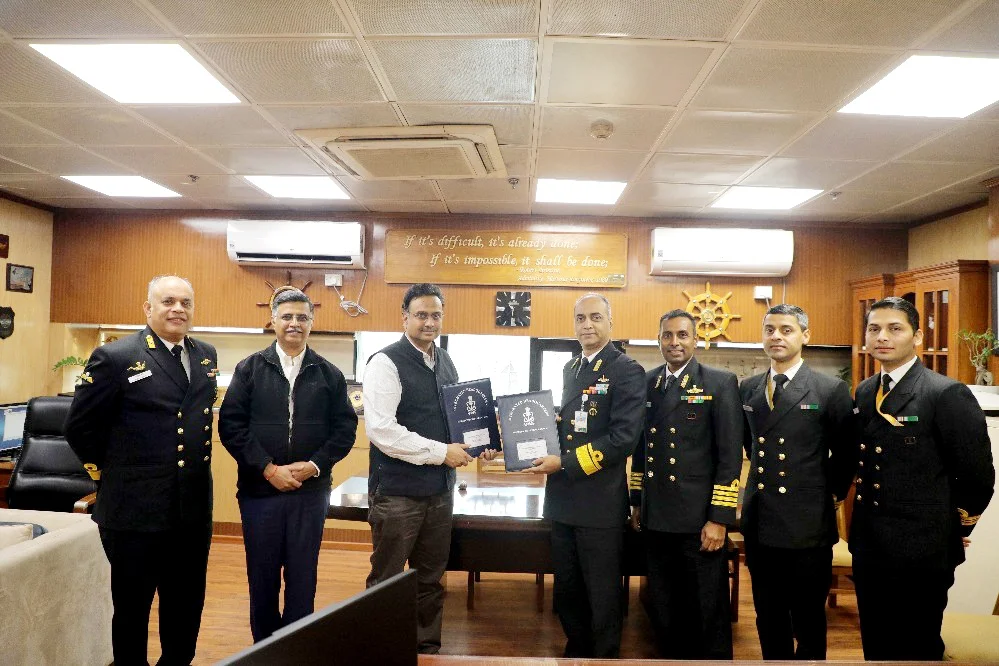
Indian Navy and Indian Institute of Technology Kanpur, signed a Memorandum of Understanding (MoU) today at Naval Headquarters, New Delhi, symbolising their commitment to promote technology development, innovative solutions and joint R&D. Rear Admiral K Srinivas, Asst Chief of Materiel (Dockyard & Refits) and Professor Subramaniam Ganesh, Officiating Director IIT Kanpur concluded this MoU.

Indian Navy and IIT Kanpur share common interest in academic exchange of scientific research activities in the field of Engineering related to defence technologies.

The MoU would serve as a broader framework and enable both sides to enhance capacity building, provide solutions to field level issues and enhance training effectiveness through exchange of faculty/ guest lectures. The structured collaboration focuses on joint Research and Development initiatives involving teams from Centre of Excellence (Marine Engg) at INS Shivaji, Lonavla and IIT Kanpur.

This Strategic alignment signifies a move towards a symbolic relationship between the academia and the armed forces, fostering a conducive environment for innovation and knowledge exchange.

IISc's FSID Launches Multidisciplinary Research Center of Data for Public Good

IISc's FSID Launches Multidisciplinary Research Center of Data for Public Good

IISc’s FSID Launches Centre of Data for Public Good with a first-of-a-kind Symposium

In an initiative aimed at leveraging data for social good, the Foundation for Science Innovation and Development (FSID) within the Indian Institute of Science (IISc) announces the launch of the Centre of Data for Public Good (CDPG). The Centre is dedicated to advancing research, innovation, collaboration, and best practices in the realm of data science, analytics, and policy to address critical societal challenges.

CDPG will serve as a hub for multidisciplinary research, bringing together experts from academia, industry, and government to harness the power of data to benefit the public. With a focus on ethical data use, privacy, and responsible AI, the centre aims to develop solutions that positively impact areas such as smart cities, agriculture, logistics, geospatial, environmental sustainability, and so on.

Emphasising collaboration and innovation, the centre is set to bring under its umbrella learnings from pioneering projects such as the India Urban Data Exchange (IUDX) and the Agricultural Data Exchange (ADeX). These projects, with their focus on urban and agricultural sectors, align seamlessly with the centre’s mission. By incorporating these initiatives, the CDPG will leverage the expertise and resources of IUDX and ADeX, creating a collaborative environment that will accelerate the development and implementation of data-centric solutions. This amalgamation of efforts reflects the Centre’s commitment to harnessing the power of data in addressing real-world issues and advancing the field of data science for societal benefit.

IISc's FSID Launches Multidisciplinary Research Center of Data for Public Good

Speaking about the launch, Prof Govindan Rangarajan, Director, IISc said, “The Centre of Data for Public Good within FSID represents a commitment to harnessing the transformative power of data for the betterment of society. At IISc, we are pleased to nurture such programmes that combine research and practice in service of the nation.

To mark the launch of the centre, IISc hosted the Symposium on Data for Public Good, a flagship event that brought together thought leaders, researchers, and practitioners in the field. The symposium served as a platform for exchanging ideas, showcasing innovative projects, and fostering collaborations.

Distinguished speakers at the event included Mr Kris Gopalakrishnan, Chairman, Axilor Ventures; Co-founder, Infosys, and President, Infosys Science Foundation; Mr J Satyanarayana, Chief Advisor, C4IR India, World Economic Forum; Mr Rajendra Kumar, Chief Postmaster General, Karnataka; Mr Kunal Kumar, Joint Secretary and Mission Director, Smart Cities Mission, and Mr Pramod Varma, CTO of Ekstep Foundation. Their talks shed light on the significance of leveraging data for public good and Digital Public Infrastructure (DPI).

This was followed by panel discussions on urban data, data governance, and agricultural and geospatial data. Many eminent speakers shared their views and several data-driven projects were showcased. Several start-ups displayed innovative solutions. A poster competition was also organised as part of the symposium.

The event culminated with the announcement of a Hackathon focused on a transportation demand prediction problem for specific bus routes in Surat and an air quality prediction problem for certain road segments of Bangalore.

About the CDPG

At CDPG, we are committed to democratising data and our mission is to help harness its power by creating data exchange platforms and integrating them seamlessly into the broader context of Data for Public Good. By ensuring that data exchange is conducted effectively, with a focus on privacy and security, we strive to make the benefits of data accessible to all, promoting inclusivity in decision-making processes.

For more information visit – https://dataforpublicgood.org.in/

Infosys Science Foundation Announces the Infosys Prize 2023 in 6 Categories

Infosys Science Foundation Announces the Infosys Prize 2023 in 6 Categories

Six individuals awarded for their remarkable contributions to scientific research in India

Infosys Science Foundation (ISF) today announced the winners of the Infosys Prize 2023 in six categories – Engineering and Computer Science, Humanities, Life Sciences, Mathematical Sciences, Physical Sciences, and Social Sciences. Since its inception in 2008, the Infosys Prize has honored the accomplishments of the recipients and awarded them for their contributions to scientific research and scholarship impacting India. The prize for each category comprises a gold medal, a citation, and a prize purse of USD 100,000 (or its equivalent in INR). The event was hosted at Infosys Science Foundation’s office in Bengaluru.

The laureates of Infosys Prize 2023 were shortlisted from 224 nominations by an international panel of jurors comprising world-renowned scholars and experts. Over the past 15 years, ISF has recognized some of the best groundbreaking research and scholarship that has contributed to every aspect of human life. The Infosys Prize is currently the largest award in India that recognizes excellence in science and research.

Infosys Prize laureates have gone on to win many international accolades. These include the Nobel Prize (Abhijit Banerjee and Esther Duflo), the Fields medal (Manjul Bhargava and Akshay Venkatesh), the Dan David Prize (Sanjay Subrahmanyam), the MacArthur ‘genius’ Grant (Sunil Amrith), and the Breakthrough Prize in Fundamental Physics (Ashoke Sen). Several laureates have been elected fellows of the Royal Society, among them Gagandeep Kang, who became the first Indian woman to be elected Fellow of the Royal Society. Others have gone on to hold influential posts in government and academia.

The winners of the Infosys Prize 2023 were announced by the trustees of Infosys Science Foundation – Mr. Kris Gopalakrishnan (President, Board of Trustees), Mr. Narayana Murthy, Mr. Srinath Batni, Mr. K. Dinesh, and Mr. S. D. Shibulal. The other trustees of Infosys Science Foundation – Mr. Nandan Nilekani, Mr. Mohandas Pai, and Mr. Salil Parekh – extended their felicitations.

Kris Gopalakrishnan, President – Infosys Science Foundation, said, “This year marks a landmark moment in Infosys Science Foundation’s journey. Over the course of 15 years, the Infosys Prize has recognized mid-career researchers who have done impactful, groundbreaking work across disciplines. The prize has helped drive conversations around their work and on a larger scale created meaningful engagement around science and society. I congratulate the winners of the Infosys Prize 2023.”

Sharing his thoughts, Narayana Murthy, Founder – Infosys, Trustee – Infosys Science Foundation, said, “Learnability, creativity and innovation are the ways to navigate our fast-changing world. We must be daringly inventive to tackle the daunting and persistent problems of today. The laureates of the Infosys Prize have shown us the importance of this adaptive thinking through their approach to problem solving – be it for centuries old conjectures in mathematics, translational medicine and diagnostics or finding solutions to societal challenges like poverty. For this I congratulate all the winners of the Infosys Prize and those who have won in 2023.”

Winners of the Infosys Prize 2023 in the six categories are:

Engineering and Computer Science

The Infosys Prize 2023 in Engineering and Computer Science is awarded to Sachchida Nand Tripathi, Professor, Sustainable Energy Engineering (SEE), IIT-Kanpur, for the deployment of large-scale sensor-based air quality network and mobile laboratory for hyper local measurements of pollution, data generation and analysis using artificial intelligence and machine learning for effective air quality management and citizens awareness. Prof. Tripathi’s work has shown that the important differences between observations of winter haze formation in Delhi and those in other places like Beijing are that the nano-particle growth-rate in Delhi is much higher and happens at night without photochemistry. This finding holds the key to mitigating air pollution in India.

Humanities

The Infosys Prize 2023 in Humanities is awarded to Jahnavi Phalkey, Founding Director, Science Gallery Bengaluru, for her brilliant and granular insights into the individual, institutional, and material histories of scientific research in modern India. Her book, The Atomic State, and many articles insightfully braid the global history of science, especially nuclear science, with the anthropology of the postcolonial state to illuminate rich and textured histories of the everyday lives of science in India. Dr. Phalkey’s work has emphasized the need to see the history of science as much as a history of scientific ideas, as one of power, practice, and the nation-state.

Life Sciences

The Infosys Prize 2023 in Life Sciences is awarded to Arun Kumar Shukla, Professor, Biological Sciences and Bioengineering, IIT-Kanpur, for his outstanding and far-reaching contributions to the field of G-protein coupled receptor (GPCR) biology. Prof. Shukla’s research has established a new understanding of GPCRs, which are one of the most important classes of drug targets. His work has opened up previously uncharted avenues for designing novel and effective therapeutics.

Mathematical Sciences

The Infosys Prize 2023 in Mathematical Sciences is awarded to Bhargav Bhatt, Fernholz Joint Professor at the Institute for Advanced Study and Princeton University, for his outstanding and fundamental contributions to arithmetic geometry and commutative algebra. Prof. Bhatt’s joint work in prismatic cohomology with German mathematician Peter Scholze introduces new ideas and powerful methods in this area at the heart of pure mathematics.

Physical Sciences

The Infosys Prize 2023 in Physical Sciences is awarded to Mukund Thattai, Professor, Biochemistry, Biophysics and Bioinformatics, National Centre for Biological Sciences, in recognition of his groundbreaking contributions to evolutionary cell biology. Prof. Thattai is a physicist who researches how complex cellular organization emerged from microscopic disorder. Thattai’s work could have profound implications in one of biology’s central mysteries of how complex cells emerged from primordial ones. He is among the pioneers of the physics of life.

Social Sciences

The Infosys Prize 2023 in Social Sciences is awarded to Karuna Mantena, Professor, Political Science, Columbia University for her groundbreaking research on the theory of imperial rule, and the claim that this late imperial ideology became one of the important factors in the emergence of modern social theory. Prof. Mantena’s book Alibis of Empire and related papers are landmark publications in political theory with implications for all social sciences. Her impactful book helps us understand that the dramatic shift in imperial policy, following the 1857 rebellion in India was not a straightforward reaction to this traumatic event but legitimated by a new ideology of indirect imperial rule that was carefully crafted by the ingenious conceptual work of thinker-administrators such as Henry Maine. 

Market Reports

Market Report & Surveys
IndianWeb2.com © all rights reserved