Showing posts with label Fuel Cell. Show all posts

India’s Ist Hydrogen Fuel Cell Trainset Approved, Showcasing Cutting‑Edge Clean Rail Tech

India’s Ist Hydrogen Fuel Cell Trainset Approved, Showcasing Cutting‑Edge Clean Rail Tech

Indian Railways has approved India’s first indigenous hydrogen fuel cell trainset, a 10‑car formation on the Jind–Sonipat route in Haryana, marking a historic step towards zero‑emission rail mobility and aligning with India’s clean energy and net‑zero goals.

Key Highlights

  • Trainset Details: 10‑car hydrogen fuel cell trainset, powered by a 1200 KW propulsion system, maximum speed 75 kmph.
  • Pilot Route: Jind–Sonipat section of Northern Railway, chosen for initial deployment.
  • Global Context: India joins Germany, Japan, China, and the US in testing hydrogen rail technology.
  • Indigenous Infrastructure: Hydrogen storage and refuelling facility established at Jind, licensed by PESO.
  • Safety Protocols: Leak detectors, flame sensors, standby compressor, 24×7 monitoring, and trained technical staff during initial operations.
India’s Ist Hydrogen Fuel Cell Trainset Approved, Showcasing Cutting‑Edge Clean Rail Tech

Why It Matters

  • Environmental Impact: Hydrogen fuel cells emit only water vapour, eliminating harmful pollutants compared to diesel traction.
  • Energy Efficiency: Supports India’s net‑zero carbon emission targets and reduces dependence on fossil fuels.
  • Innovation Leadership: Positions India among a select group of nations pioneering hydrogen rail technology.
  • Scalability Potential: Government has allocated ₹2,800 crore for development of 35 hydrogen trains, expected to operate on heritage and hill routes.

Safety & Operations

  • Hydrogen Compression System: Ensures reliable refuelling with backup compressor units.
  • Maintenance Facility: Shakurbasti depot equipped with RDSO‑approved manuals, audits, and SOPs.
  • Personnel Deployment: Certified staff to accompany trains during early phases for operational reliability.

Comparative Snapshot

AspectHydrogen Train (India)Germany (Coradia iLint)Japan (Hydrogen Hybrid)
Speed75 kmph140 kmph~100 kmph
Power1200 KW600 KW800 KW
EmissionsWater vapour onlyWater vapour onlyWater vapour only
StagePilot (Jind–Sonipat)Operational since 2018Testing phase

Outlook

The hydrogen train project is not just a pilot but a strategic leap in India’s rail modernization. If successful, it could pave the way for wider adoption across non‑electrified routes, reduce oil imports, and establish India as a global leader in sustainable rail technology.

IndianOil Equips Indian Army with Green Hydrogen Fuel Cell Bus for use in Delhi-NCR

IndianOil Equips Indian Army with Green Hydrogen Fuel Cell Bus for use in Delhi-NCR

In a significant step towards promoting sustainable, eco-friendly transportation solutions, IndianOil has handed over a state-of-the-art green hydrogen fuel cell bus to the Indian Army. This landmark event was marked by the signing of a Memorandum of Understanding (MoU) between IndianOil and the Indian Army to pioneer the deployment of hydrogen fuel cell technology for heavy-duty e-mobility.

The hydrogen fuel cell bus has a seating capacity of 37 passengers and promises an impressive mileage of 250-300 km on a full 30 kg tank of hydrogen fuel. This collaboration marks the Indian Army's commitment to adopting innovative technologies that enhance operational capabilities while ensuring environmental sustainability.

IndianOil is currently operating 15 fuel cell buses in the Delhi-NCR region, accumulating a total mileage of 300,000 kilometers, which works out to 20,000 km for each bus. The project will assess the performance of these buses in the demanding climatic conditions of the region and evaluate the effectiveness, longevity, and operational reliability of fuel cell buses intended for public fleet utilization.

The handing over and signing ceremony was held at the National War Memorial, India Gate, New Delhi, in the presence of General Manoj Pande (PVSM, AVSM, VSM, ADC), Chief of Army Staff, Mr. S M Vaidya, Chairman, IndianOil and senior officials of IndianOil and Indian Army.

IndianOil Equips Indian Army with Green Hydrogen Fuel Cell Bus for use in Delhi-NCR


General Manoj Pande, PVSM, AVSM, VSM, ADC, the Chief of Army Staff of the Indian Army shared his thoughts on the collaboration, stating, "The partnership between IndianOil and the Indian Army spans over six decades and is built on an unbreakable bond of trust. The Indian Army is committed to exploring and adopting innovative technologies that enhance our operational capabilities while ensuring environmental sustainability. We will be testing one of the hydrogen buses, and I must thank IndianOil for choosing the Indian Army as their partner."

Mr. S M Vaidya, Chairman, IndianOil, expressed his enthusiasm about this initiative, stating, "It is indeed a very momentous day today that a bus which is part of the green hydrogen fuel cell bus fleet will now be operated by the Indian Army. This collaboration with the Indian Army is a landmark step towards a greener and more sustainable future. IndianOil is currently operating 15 fuel cell buses in the Delhi-NCR region accumulating a total mileage of 300,000 kilometers i.e. 20000 kms on each bus”.

This initiative aims to promote hydrogen and fuel cell technology for heavy-duty e-mobility, positioning the Indian Army as a pioneer in evaluating this technology in collaboration with IndianOil, the premier energy company of India. The project will assess the performance of fuel cell electric buses for public transit in the demanding climatic conditions of the Delhi NCR region, analyzing the impact of local fuel and air quality on the performance of fuel cell systems and vehicles. Additionally, it will evaluate the effectiveness, longevity, and operational reliability of fuel cell buses intended for public fleet utilization.

This initiative marks a pivotal step in the journey towards sustainable transportation, setting a precedent for future collaborations aimed at advancing green hydrogen and fuel cell technologies in India.

Amazon Installs Electrolyzer Via Plug Power To Produce Green Hydrogen for Powering Vehicles in Its Fulfillment Center

Amazon Installs Electrolyzer Via Plug Power To Produce Green Hydrogen for Powering Vehicles in Its Fulfillment Center

Amazon Inc, will now produce its own low-carbon green hydrogen to fuel more than 225 hydrogen fuel cell-powered forklift trucks at the site, known as DEN8.

It was in August last year when Amazon inked a deal with Plug Power Inc (PLUG.O), to supply liquid green hydrogen. Now in a latest, on Wednesday, Plug Power has announced that it has now completed the installation and commissioning of an electrolyzer system at an Amazon fulfillment center in Aurora, Colorado.

The installed Electrolyzer is one-megawatt (MW) proton exchange membrane Electrolyzer which is the first for Amazon and is now producing low-carbon hydrogen a.k.a green hydrogen.

The Electrolyzer, installed at the Amazon fulfillment center, uses electricity and water to produce hydrogen and is able to support up to 400 hydrogen fuel cell-powered forklift trucks. The hydrogen produced by the electrolyzer will be compressed on site and stored in a gaseous hydrogen storage tank for use by the forklift trucks.

Notably, Plug Power has collaborated with Amazon to deploy more than 17,000 fuel cells to replace batteries in forklift vehicles in more than 80 fulfillment centers in North America. However, for most of these locations, hydrogen to power the forklifts is produced elsewhere, liquified, and delivered by trucks to an on-site storage and dispensing system.

Now, with the electrolyzer installed in Amazon's own facility the e-commerce giant will now be producing it's own low-carbon hydrogen.

For this project, Plug Power Inc provided design, installation, commissioning, and maintenance services for the 1MW PEM electrolyzer and hydrogen storage —compatible with the existing refueling infrastructure and fuel cells already in use at the site. This is the first electrolyzer system installed and in use at an Amazon site.

Tata Motors To Indigenously Develop Hydrogen-fuelled, Zero-Emission Propulsion Systems at its R&D Centre in Pune

Tata Motors To Indigenously Develop Hydrogen-fuelled, Zero-Emission Propulsion Systems at its R&D Centre in Pune
Tata Motors unveils state-of-the-art facilities for development of Hydrogen propulsion technologies

Tata Motors unveils state-of-the-art facilities for development of Hydrogen propulsion technologies

Tata Motors, India’s largest automobile company, unveiled two state-of-the-art & new-age R&D facilities for meeting its mission of offering sustainable mobility solutions. The unveilings constitute of engine test cell for development of Hydrogen Internal Combustion Engine and the necessary infrastructure for storage and dispensing of Hydrogen fuel for the Fuel Cell and H2ICE vehicles.

These facilities are yet another step forward from the company towards carbon neutrality, while tapping the strong potential of Hydrogen as a clean energy source.

The auto major also announced that it will indigenously develop Hydrogen-fuelled, zero-emission propulsion systems at its R&D centre in Pune.

Speaking on the occasion, Mr. Girish Wagh, Executive Director, Tata Motors, said, “Tata Motors has been leading the global megatrend of sustainable, connected and safer mobility in India. We believe Hydrogen to be the fuel of the future, especially for commercial vehicles. With the opening of this dedicated R&D facility to develop and indigenise Hydrogen propulsion technology, we are entering a new era of technological innovations and advancements in green mobility. The resulting benefits from an altogether new class of powertrains and engines will take our customers and our nation future forward.”

Mr. Rajendra Petkar, President & CTO, Tata Motors, expressed, “This is a significant moment for us as we create Hydrogen based internal combustion engine development facility and the associated infrastructure for fuel storage and dispensing at our Engineering Research Centre. This development is a testimony to Tata Motors continued commitment and leadership towards net zero and long-term vision for offering differentiated powertrain solutions across segments under one roof. We have been investing in the Hydrogen technology for the last many years and continue to be committed for harnessing its maximum potential through research and product development.”

Marching on its path to net zero, Tata Motors had showcased one of the widest range of commercial vehicle concepts at Auto Expo 2023 earlier this year. It included the flagship Prima tractor, a heavy commercial vehicle in two avatars: one with a Hydrogen Internal Combustion Engine and other with Fuel Cell Technology along with the next generation Hydrogen Fuel Cell bus. Being the pioneer in the field of zero-emission technologies, Tata Motors on 25th September, 2023 delivered two first-of-its-kind, technologically advanced, safer, new-generation Hydrogen Fuel Cell powered buses to Indian Oil Corporation as part of a tender bagged in 2021.

Tata Motors is amongst country’s most innovative vehicle manufacturer and its research and development facilities have consistently developed and engineered innovative mobility solutions powered by alternate fuel technologies: battery-electric, hybrid, CNG, LNG, Hydrogen ICE and Hydrogen Fuel Cell technologies. The company is poised to continue the leadership with green technologies and has been leading the electrification journey in India for cargo and passenger transportation.

Reliance Partners Mercedes-Benz Sister Co. To Unveil India's 1st Hydrogen-powered Intercity Luxury Concept Coach

Reliance Partners Mercedes-Benz Sister Co. To Unveil India's 1st Hydrogen-powered Intercity Luxury Concept Coach

Mukesh Ambani led Reliance Industries has partnered with BharatBenz, a subsidiary of Mercedes-Benz’s sister company Daimler Truck AG to unveil India's first intercity luxury concept coach powered by Hydrogen Fuel Cell technology.

The Hydrogen-powered concept coach was showcased at the 4th Energy Transitions Working Group meeting under India’s G20 Presidency in Goa.

BharatBenz


Currently in the concept stage, the upcoming hydrogen-powered bus will undergo extensive testing for the next 12 months and the bus will develop around 300bhp, making it suitable for intercity applications.


The coach is powered by a fuel cell system designed and developed by Reliance Industries using state-of-the-art components from international partners with significant localization, said Nitin Seth, chief executive officer- new mobility, Reliance Industries Ltd, in a LinkedIn post.

The H2-powered bus delivers a gross system power of 127 Kw and net power of 105 Kw, which is equivalent to 300 HP in line with current diesel bus for intercity applications. The intercity bus can travel approximately 400 km on single hydrogen fill and can bring long distance travel between cities on clean fuel like Hydrogen.

Earlier this year in February, Reliance Industries unveiled India's first Hydrogen Internal Combustion Engine technology solution for heavy-duty trucks, which was flagged off by Prime Minister Narendra Modi at the India Energy Week in Bangalore.

India Gets Its 1st Truly Indigenously Developed Hydrogen Fuel Cell Bus


Yesterday, Union Minister Dr Jitendra Singh launched India’s first truly indigenously developed Hydrogen Fuel Cell Bus. Developed by KPIT-CSIR in Pune, the fuel cell utilizes Hydrogen and Air to generate electricity to power the bus and the only effluent from the bus is water, thus making it possibly the most environmentally friendly mode of transportation.

For comparison, a single diesel bus plying on long distance routes typically emits 100 tons of CO2 annually and there are over a million such buses in India.

The uniqueness of the process developed by CSIR-NCL is a novel downstream process technology, which makes this indigenous technology competitive with global benchmarks. The process is ready for technology transfer and further co-development to commercial scale.

Earlier in March this year, Union Minister of Road Transport & Highways Mr. Nitin Gadkari  inaugurated and demonstrated a pilot project of Toyota Mirai FCEV, which is an electric sedan car based on Hydrogen Fuel-Cell technology.


Dr Jitendra Singh told the gathering that Prime Minister Modi's Hydrogen Vision is important for India to ensure Atma Nirbhar means of affordable and accessible clean energy, meeting climate change goals, and creating new entrepreneurs and jobs. He said, Green hydrogen is an excellent clean energy vector that enables deep decarbonization of difficult-to-abate emissions from the refining industry, fertiliser industry, steel industry, cement industry and also from the heavy commercial transportation sector.

To recall, Indian Railways too is exploring the feasibility of retrofitting the trains (that presently run o­n diesel) with hydrogen fuel and for same it invited bids for "hydrogen fuel cell-based technology" for retrofitting the existing Diesel units.

The high efficiency of fuel cell vehicles and the high energy density of hydrogen ensures that the operational costs in rupees per kilometre for fuel cell trucks and buses are lower than diesel powered vehicles and this can bring freight revolution in India. Moreover, Fuel Cell vehicles also give zero green-house gas emissions. The Minister lauded the joint development efforts of KPIT and CSIR-NCL and pointed out that the technology prowess of Indian scientists and engineers is no less than the best in the world and also at much lower costs.

Dr Jitendra Singh pointed out that about 12-14% CO2 emissions and particulate emissions come from diesel powered heavy commercial vehicles and these are decentralised emissions and hence difficult to capture. The Minister said, Hydrogen fuelled vehicles provide an excellent means to eliminate the on-road emissions from this sector. He said, India is also aiming to increase inland waterways for freight and passenger transport.

Dr Jitendra Singh concluded that by achieving these goals, India can pole-vault from being net importer of fossil energy to becoming net exporter of clean hydrogen energy and thus, providing global leadership to India in hydrogen space by becoming a large green hydrogen producer and supplier of equipment for green hydrogen.

World’s Most Advanced Fuel-Cell EV Toyota Mirai To Run on Indian Roads

World’s Most Advanced Fuel-Cell EV Toyota Mirai To Run on Indian Roads

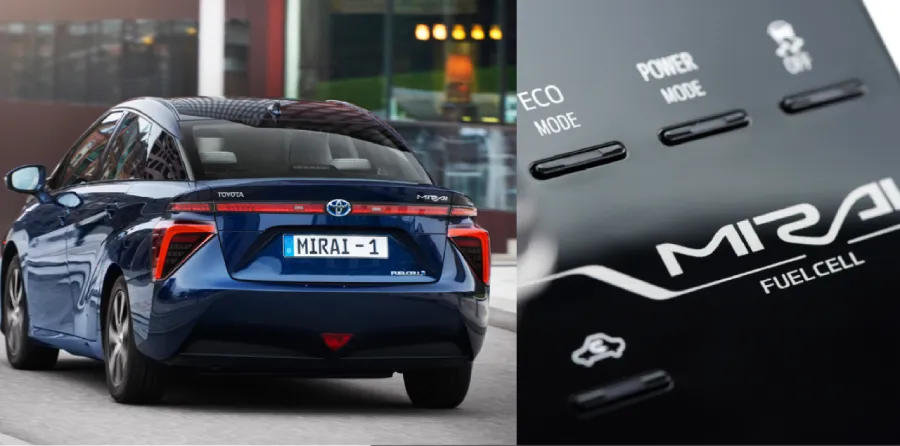
Soon, world’s most advanced Fuel Cell Electric Vehicle (FCEV) - 'Mirai', which is Japense automaker Toyota's premium zero emission, rear-wheel drive FCEV, will be running on Indian roads, at first on a pilot basis. 

Mirai, which sets the world record of traveling 1,360 Km with a full tank of 5.65 kg hydrogen, in August last year, is perhaps the greenest electric car to date.

In a first of its kind project in India aimed at spreading awareness about Hydrogen, FCEV technology and disseminating its benefits to support hydrogen-based society for the country, Union Minister of Road Transport & Highways Mr. Nitin Gadkari  would be inaugurating a pilot project and also demonstrating Toyota Mirai FCEV on 16th March in Delhi.

This Pilot project for Mirai FCEV is being conducted by Toyota Kirloskar Motor Pvt. Ltd. along with International Center for Automotive Technology (ICAT) to study and evaluate Toyota Mirai on Indian roads and climatic conditions. 

The name Mirai means “future” in Japanese.

The Toyota Mirai is expected to launch in India in January 2050, according to Cardekho.com. Mirai's expected prices will start from 6.88 Lakh. In November last year., Mirai was spotted testing in India wearing testing plates of Karnataka numbers. 

How It Works 

The Toyota Fuel Cell System used in Mirai produces electricity from a reaction between hydrogen and oxygen. Mirai users fill it up with hydrogen fuel, in the same way as buying petrol,/diesel/CNG at. The fuel (Hydrogen) is contained in high-pressure tanks and fed into a fuel cell stack, where the hydrogen and the oxygen found naturally in the air react with each other and generate electricity.

Moreover, in Mirai or any FCEV, energy is captured/stored in a battery every time the car brakes or slows down, which contributes to even better fuel efficiency.

Besides Toyota, Triton-EV, a subsidiary of Triton Solar, a leader in solar panel and battery engineering,  had a claim to produce a 100% electric- powered, full-service 18-wheeler semi-truck, which is a hybrid of hydrogen fuels that generate electricity stored in on-board batteries, has a 220,000-pound towing capacity

California-based FirstElement Fuel Inc., which was once a startup, became the world's largest hydrogen retailer, after it raised a $105 Million Series D funding round, in November last year.

Other Fuel-Cell Vehicles Brands in India

Tata Motors has collaborated with Indian Oil Corporation Limited (IOCL) for R&D projects and collectively study the potential of Fuel Cell technology for commercial vehicles. In June last year, Tata Motors won a tender of 15 hydrogen-based proton exchange membrane (PEM) fuel cell buses from the Indian Oil Corporation Limited (IOCL).

Last year in February, India's largest power company National Thermal Power Corporation Limited (NTPC) announced that it is planning to start a premium hydrogen fuel bus service on Delhi to Jaipur route. 

To recall, in year 2020, Department of Science & Technology under government of India had released a report on hydrogen and fuel cells research across the country.

Digitizer Cards by Spectrum Improve the Hydrogen Fuel-Cell Technology by Providing Detailed Real-World Data

Two Fuel Test Stations at the ZBT main laboratory

A new computer model promises a major cost and time advantage in the research

Hydrogen fuel cells will play an important role in cutting carbon emissions especially for mobile applications such as automotive and heavy duty trucks and buses. Having water vapor as the only emission, the fuel is hydrogen that is abundant and can be made using renewable energy. However, at present, this emerging technology is expensive. ZBT GmbH, the hydrogen and fuel cell center in Duisburg, Germany has an ongoing research project to improve the design of hydrogen fuel cells. Having created a computer model of a fuel cell, they are using 8-channel digitizers M2i.4652 from Spectrum Instrumentation to analyze the performance of different fuel cells on a test bench, providing real world data to improve the virtual cell model.

Dr.-Ing. Sönke Gössling, Group Leader for Fuel Cell Systems Simulations and Controls, explained: "The computer model of the fuel cell is very sophisticated such that we can adjust the many variables that affect its performance to see what changes provide performance enhancements. However, these are just theoretical, so the test bench enables us to see how changes in real world parameters affect performance. We quickly realised that the data capture of rate of every second was not providing us with the level of fine detail that we needed."

"We now use three Spectrum digitizers that dramatically improved our data rate capture to three mega-samples per second as well as having twenty simultaneous channels of data. This enables us to analyse the dynamic step changes as well as analyse superimposed high frequencies at an incredible level of detail. The synchronization of the cards with each other and the connection to the test bench environment were intuitive and free of complications. The performance and quality of the cards is first class and they have worked perfectly from day one."

The measurements make it possible to get an insight into the processes inside the fuel cell. They answer the question of how the processes are distributed with which dynamics within the fuel cell. This is of crucial importance, for example, to avoid local undersupply in dynamic operation or to optimize the operating conditions in a focused manner. If the computer model can be validated with the data, the reliability of the predictions of the model increases in general. As a result, development and optimization processes can increasingly be carried out virtually, which promises a major cost and time advantage. Dr.-Ing. Gössling said: "Validating predictions with real world results is a vital part of the scientific method and will really help us improving fuel cell design to meet our target of significantly reducing the costs of fuel cells, which will really open up adoption by becoming more economical and competitive."

The core of the developments is the correct dynamic mapping of all components along the cathode path of the fuel cell. On the basis of these models, a predictive control model has been developed that controls the interplay of the compressor, the throttles and also the fuel cell load. This is used to optimize the holistic operation of the fuel cell to increase the efficiency while maintaining the same service life.

By using model-based control methods with tailor-made dynamic models of the fuel cell, including peripherals, the advantages of the fuel cell are optimally exploited. On the one hand, the operating point of the fuel cell can be selected to be as energy-efficient as possible; on the other hand, an operating-parameter-dependent strategy of the fuel cell enables its operating range to be expanded and thus avoid undesirable shortening of the service life.

Hydrogen fuel cell technology

Illustration of Hydrogen Fuel Cell Technology

The fuel is hydrogen gas that reacts with oxygen from the air with aid of a catalyst, typically platinum. This reaction produces electricity to power the vehicle or other devices with the by-products of heat and water vapour. Fuel cells are much more efficient than combustion-based technologies at converting the chemical energy in the fuel to electrical energy. Furthermore, hydrogen can be produced via electrolysis by renewable electricity and can thus be part of a carbon emissions free energy transition.

Hydrogen is fed to the anode of the fuel cell while air is fed to the cathode. A catalyst at the anode separates the hydrogen atoms into protons and electrons, which take different paths to the cathode. The electrons go through an external circuit, creating a flow of electricity. The protons migrate through the electrolyte to the cathode, where they unite with oxygen and the electrons to produce water and heat.

Variables of fuel cell design

The key decision is to select the size of the fuel cell for optimal output. Larger cells provide more power output as there is a larger catalyst surface area but this increases the weight and cost especially with platinum as the typical catalyst. Adjusting the spacing between the electrodes in the fuel cell stack and improving the gas flows through the cell can improve the catalytic reaction and hence the performance instead of increasing size. Another factor being optimized is the movement of the waste water vapour out of the cell to prevent it blocking up the catalytic surfaces. The other waste product of heat also has to be efficiently removed from the cell to prevent overheating.

Durability

The test bench enables real world operating conditions to be investigated that will affect the performance of the fuel cells over time. These include changing load conditions caused by starting and stopping, and coping with extremes of temperature and humidity that vehicles operate in. These can stress the mechanical stability of the fuel cell system materials over time. This is important as fuel cell applications require long operation lives. For example, the American Department of Energy has set ultimate targets for fuel cell system lifetime under realistic operating conditions at 8.000 hours for light-duty vehicles, 30.000 hours for heavy-duty trucks, and 80.000 hours for distributed power systems.

Further details on this project can be found at www.zbt.de/en/news/rd-highlights/science-and-projects/detail/News/dynacell-dynamic-modelling-and-model-based-control-of-pem-fuel-cell-systems/

About Spectrum Instrumentation

Spectrum Instrumentation, founded in 1989, uses modular design to create a wide range of digitizers and generator products as PC-cards (PCIe and PXIe) and stand-alone Ethernet units (LXI). In 30 years, Spectrum has gained customers all around the world, including many A-brand industry-leaders and practically all prestigious universities. The company is headquartered near Hamburg, Germany, and known or its outstanding support that comes directly from the design engineers. More information about Spectrum can be found at www.spectrum-instrumentation.com


Tata Motors Bags Order of 15 Hydrogen-based Fuel Cell Buses from Indian Oil Corporation Ltd.

Representative Image Only

The buses will be used to evaluate the potential of developing hydrogen-based PEM fuel-cell technology in India

Bengaluru, 30 June, 2021: Reaffirming its commitment towards sustainable mobility, Tata Motors, India’s largest commercial vehicle player and leading bus manufacturer, announced that it has won a tender of 15 hydrogen-based proton exchange membrane (PEM) fuel cell buses from the Indian Oil Corporation Limited (IOCL). IOCL had invited bids for supply of PEM fuel cell buses in December 2020, and Tata Motors was selected as the winner following a diligent evaluation process. All 15 buses will be delivered within 144 weeks from the date of signing of the Memorandum of Understanding (MOU).

In addition to supplying the buses to the Research & Development Centre of IOCL, Tata Motors will also collaborate with them to undertake R&D projects and collectively study further the potential of Fuel Cell technology for commercial vehicles. This will be done by jointly testing, maintaining and operating these buses for public transport in real-world conditions in Delhi-NCR. The buses will be refuelled by hydrogen, generated and dispensed by IOCL.

Sh. S.M.Vaidya, Chairman, IndianOil, stated that IndianOil has been pioneering the national efforts towards ushering in the hydrogen economy for various applications, including mobility. This 1st of its kind project in the country is bringing the country’s largest fuel supplier and largest commercial vehicle manufacturer on board to take the hydrogen & fuel cell technology to the next level. This initiative would also act as a stepping stone for various other key programs of IndianOil, which proposes to introduce hydrogen-based mobility on different iconic routes and important sectors in the country. These futuristic steps are in the right direction for making hydrogen as the ultimate net-zero fuel.

Speaking on the occasion, Mr. Girish Wagh, President, Commercial Vehicle Business Unit, Tata Motors said, “We are delighted to win this prestigious tender from IOCL for it adds to Tata Motors’ rich legacy of introducing future ready technologies for cleaner and greener public transport. We have successfully supplied 215 EV buses under FAME I and won orders for 600 EV buses under FAME II. This order to supply PEM Fuel Cell buses from a company as respected as Indian Oil Corporation, further encourages our ongoing efforts on developing India-focused alternative sustainable fuels to transform the future of mobility in India.”

Dr. SSV Ramakumar, Director (R&D), IndianOil while congratulating Tata Motors Ltd., mentioned that lot of hard work has been put in by the IndianOil R&D team towards conceiving, planning and executing this joint developmental cum demonstration program with a strong support from Ministry of Petroleum & Natural Gas. IndianOil through cutting edge R&D, is committed to strengthen the production and supply chain of hydrogen energy in India and would be setting up ~1 ton per day hydrogen production pilot plants based on 4 innovative pathways besides collaborating with Tata Motors for fuel cell research.

About Tata Motors

Tata Motors Limited (NYSE: TTM; BSE: 500570 and 570001; NSE: TATAMOTORS and TATAMTRDVR), a USD 35 billion organization, is a leading global automobile manufacturer of cars, utility vehicles, pick-ups, trucks and buses. Part of the USD 113 billion Tata group, Tata Motors is India’s largest and the only OEM offering extensive range of integrated, smart and e-mobility solutions. It has operations in India, the UK, South Korea, Thailand, South Africa, and Indonesia through a strong global network of 103 subsidiaries, 10 associate companies, 3 joint ventures and 2 joint operations as on March 31, 2020.

With a focus on engineering and tech enabled automotive solutions catering to the future of mobility, Tata Motors is India’s market leader in commercial vehicles and amongst the top four in the passenger vehicles market. With ‘Connecting Aspirations’ at the core of its brand promise, the company’s innovation efforts are focused to develop pioneering technologies that are sustainable as well as suited to evolving aspirations of the market and the customers. 

Tata Motors strives to bring new products that fire the imagination of GenNext customers, fueled by state of the art design and R&D centers located in India, UK, US, Italy and South Korea. Internationally, Tata commercial and passenger vehicles are marketed in countries, spread across Africa, the Middle East, South Asia, South East Asia, South America, Australia, CIS, and Russia.

Soon Hydrogen Fuel-Cell Bus To Run on Delhi-Jaipur Highway Route

Representational Image

In order to boost green mobility, India's largest power company National Thermal Power Corporation Limited (NTPC) is planning to start a premium hydrogen fuel bus service on Delhi to Jaipur route. The plan for the upcoming bus service was announced by Nitin Gadkari, Union Minister for Road Transport & Highways along with R. K. Singh, the Union Minister of State (IC) for Power and New & Renewable Energy, during the "Go Electric" campaign to spread awareness on the benefits of e-mobility and EV Charging Infrastructure as well as electric cooking in India.


Currently, a study for the bus service is underway to test the viability of fuel cell buses for the intercity commute, and no timeline for the bus to start plying the roads has been announced yet. Even though, similar bus services were tested in metro cities like Mumbai earlier, this bus service will be the first of its kind in India to be used for intercity commute.

Power minister RK Singh announced --

We are planning to start premium hydrogen fuel bus service from Delhi to Jaipur and gradually we will also try experimenting running electric bus on the same route.
 
At the same event, the announcement of an all-new electric tractor was made by Union Minister Nitin Gadkari. “I will be launching an electric tractor in the next 15 days,” Gadkari said.

The government at the centre is also trying to procure 40,000 battery-powered buses in Maharashtra for an intracity commute. This comes at a time when the government is trying to make a gradual shift towards alternative fuels in a bid to reduce its dependence on the import of crude oil as prices of petrol and diesel skyrocket in the country.

In October last year, DST launched report on Hydrogen and Fuel Cells research across India.

Fuel Cell Electric Vehicle (FCEV) Market Size Worth around US$ 15,000 Mn 2027: Acumen Research and Consulting


LOS ANGELES, Nov. 03, 2020 (GLOBE NEWSWIRE) -- Acumen Research and Consulting, a global provider of market research studies, in a latest published report titled " Fuel Cell Electric Vehicle (FCEV) Market , Global Industry Analysis, Market S ize, Opportunities and Forecast, 2020 - 2027 " , estimates that global fuel cell electric vehicle (FCEV) market is expected to reach the market value of around US$ 15,000 Mn by 2027 and is anticipated to grow at a CAGR of around 38% in terms of revenue during the forecast period 2020 – 2027. The fuel cell functions like the battery which produces energy by an electrochemical reaction. The fuel cell turns energy from the chemical into electricity. Driven by hydrogen fuel cells with a compact size battery, fuel cells are preferred in electric drive trains. The fuel cell electric vehicle (FCEV) has the same benefits as the battery electric vehicle. Proton exchange membrane fuel cell (PEMFC) is a commonly used low temperature fuel cell type, consisting of a platinum catalyst that is ideal for vehicle use.

Download Sample Pages@ https://www.acumenresearchandconsulting.com/request-sample/2219

The Asia Pacific (APAC) FCEV market has highest market share of global fuel cell electric vehicle (FCEV) market in 2019. With rising fuel cell stack shipments for the transportation industry, the market lead by Japan and China is expected to show substantial growth. Major players in the market, including Hydrogenics and Ballard, partner with Chinese manufacturers to create groundbreaking modules and technologies for fuel cells. In addition, measures like zero-emission vehicles deployed at activities such as the Tokyo Summer Games 2021 will have a positive impact on regional market statistics. Government policies like exemption from purchasing taxes in South Korea, India and Japan have backed up APAC market expansion. The implementation in China of the 'dual credit scheme' in 2018 facilitates the production of minimum annual FCEVs by automotive producers and contributes further to market requirements.

View Table Of Content of this report@ https://www.acumenresearchandconsulting.com/fuel-cell-electric-vehicle-fcev-market

Market dynamics

The fuel cell electric vehicle market is expected to be driven during the forecast period by increasing demand for vehicles with low carbon emissions and strict carbon emission norms and major advances in the field of fuel cell technology. The need for transport facilities with null emissions and the reduction in emission requirements is projected to improve the FCEV market. In addition, during the forecast period, portable battery, less time for refuelling, long reach, and the implementation, by government authorities, of attractive policies is likely to improve the FCEV market. FCEV prices are high is the factor which is expected to hamper the growth of market.

Attributed to the increasing adoption of the short distance market, the growth is planned to be substantial in the coming years. A majority of car owners use their cars to their job and other locations on a regular short range. Therefore, there is immense need for reliable automobiles built to fulfil these travel requirements.

Related Market Study Published By Acumen –

Electric Vehicle Charging Station Infrastructure Market ( https://www.acumenresearchandconsulting.com/electric-vehicle-charging-station-infrastructure-market ) size is expected reach to around US$ 55,347.8 Mn by 2026, growing at a CAGR of around 44.5% over the forecast period 2019 to 2026

EV Range Extender market ( https://www.acumenresearchandconsulting.com/electric-vehicle-range-extender-market ) is expected to reach the market value of around US$ 2 Bn by 2027 and is anticipated to grow at a CAGR of around 11.2% in terms of revenue during the forecast period 2020 – 2027

Off-Highway Electric Vehicle Market ( https://www.acumenresearchandconsulting.com/off-highway-electric-vehicle-market ) is expected to grow at a CAGR of around 26.0% from 2020 to 2027 and expected to reach the market value of around US$ 29,918.5 Mn by 2027

Some of the prominent players in the fuel cell electric vehicle (FCEV) market include Honda Motor Co., Ltd., Toyota Motor Corporation, Hyundai Motor Group, Volkswagen, SAIC Motor Corporation Limited, Audi AG, Ballard Power Systems, LLC, US Hybrid, Meritor, Inc., Nuvera Fuel Cells, Hydrogenics, Dana Limited, Sunrise Power Co. Ltd., Plug Power, Inc., Ceres Power Holdings Plc, Shanghai Shenli Technology Co. Ltd, and others. Desirable deals for the use of the hybrid fuel cell vehicles will be given to market members. The adoption of hybrid fuel cell vehicles further encourages cost-effective lease and rebate offering of new cars Motor Co. Honda. In California, Ltd provides no security deposits for car leases. In addition, the growth of factories and distribution networks is a crucial tactic for the market share improvement.

Recent Developments

In July 2020, Hyundai Motor Corporation unveiled the Xcient Fuel Cell, the first truck based on fuel cell technology in the market. In June 2018, the HyMotion software was expanded by Audi AG and Ballard Power Systems for 3 years. The HyMotion Software involves the development and design of system and support for automotive fuel cell stacks. The software assists Audi in introducing its compact electric fuel cell series. In December 2018, the Fuyang District Council in Hangzhou has signed a cooperation agreement between Nuvera Fuel Cells, LLC and the fuel cell stacks development factory.

Buy this premium research report – https://www.acumenresearchandconsulting.com/buy-now/0/2219

Would like to place an order or any question, please feel free to contact at sales@acumenresearchandconsulting.com | +1 407 915 4157

For Latest Update Follow Us:

https://twitter.com/AcumenRC

https://www.facebook.com/acumenresearchandconsulting

https://www.linkedin.com/company/acumen-research-and-consulting/

Market Reports

Market Report & Surveys
IndianWeb2.com © all rights reserved