Showing posts with label Hydrogen Vehicles. Show all posts

India’s Green Rail Tech Breakthrough, Covering 1,200 km with Zero Emissions and Saving 3,200 Litres of Diesel

India’s Green Rail Tech Breakthrough, Covering 1,200 km with Zero Emissions and Saving 3,200 Litres of Diesel

This month, India entred into the circle of nations like Germany, Japan, China, and the U.S. that are pioneering hydrogen transport, while highlighting the indigenous innovation and sustainability impact. It’s concise, authoritative, and optimized for a worldwide readership.

India’s first hydrogen train, flagged off on July 17, 2026, between Jind and Sonipat, has now covered 1,200 km while saving over 3,200 litres of diesel. This milestone places India alongside Germany, Japan, China, and the United States in pioneering hydrogen rail mobility, each advancing unique models of clean transport.

India’s hydrogen train covering 1,200 km is vital because it demonstrates sustained, real‑world reliability and efficiency comparable to or exceeding benchmarks set by Germany, Japan, China, and the U.S., where ranges vary widely from 70 km in Japan’s prototype to 1,200 km in China’s CINOVA H2.

Global Benchmark

India’s hydrogen train covering 1,200 km places it firmly among the world’s leaders in clean rail mobility. In Germany, the Coradia iLint has been in commercial service since 2018, achieving ranges of 800–1,000 km per refuelling, proving hydrogen’s viability for regional routes. Japan’s HYBARI prototype, developed by JR East, currently manages 80–140 km per charge, reflecting its early‑stage trials with commercial rollout expected by 2027. China’s CINOVA H2 hydrogen train, unveiled by CRRC, boasts an impressive 1,200–2,000 km range, making it the longest‑range hydrogen rail project globally. Meanwhile, the United States is funding pilots through the Federal Railroad Administration, with Stadler’s FLIRT H2 offering 380–460 km range and setting a Guinness World Record of 2,803 km in testing.

Global Comparison

  • India: Hydrogen train has already covered 1,200 km seamlessly, saving 3,200 litres of diesel. Matches China’s advanced intercity hydrogen trains and surpasses Germany’s rollout.
  • Germany: Coradia iLint hydrogen trains in commercial service since 2018, achieving ranges of 800–1,000 km per refuelling.
  • Japan: HYBARI prototype developed by JR East, currently achieves 80–140 km per charge, with commercial rollout expected by 2027.
  • China: CINOVA H2 hydrogen train unveiled by CRRC, boasting 1,200–2,000 km range, the longest globally.
  • United States: Stadler FLIRT H2 (ZEMU) offers 380–460 km range, but set a Guinness World Record of 2,803 km in testing.

India’s achievement of 1,200 km is therefore vital—it matches China’s advanced intercity hydrogen trains, surpasses Germany’s commercial rollout, and far exceeds Japan’s prototype stage. It signals that India is not only catching up but positioning itself as a credible global contender in zero‑emission rail technology.

India’s Hydrogen Train Milestone

India’s Hydrogen Train Milestone
  • Launch Date: July 17, 2026, flagged off between Jind and Sonipat.
  • Route: Covered 1,200 km seamlessly, saving over 3,200 litres of diesel.
  • Train Specs: 10 coaches, 2 Hydrogen Driving Power Cars delivering 2,400 kW total power.
  • Fuel & Storage: Green hydrogen stored at 500 bar, dispensed at 350 bar, with a 3,000 kg facility at Jind.
  • Safety: Leak, flame, and smoke detectors; automatic shut-off; continuous ventilation; international standards validation.
  • Impact: Zero tailpipe emissions, only water vapour released.

Global Hydrogen Rail Developments

CountryKey ProjectHighlights
GermanyH2goesRail (DB + Siemens)Mireo Plus H trains, range up to 1,000 km, refuelling time equal to diesel.
JapanHYBARI (JR East)Hydrogen hybrid train, commercial service planned by 2027, 70 km per charge.
ChinaCRRC ChangchunUrban hydrogen train tested at 160 km/h, range over 1,000 km.
United StatesFRA-funded pilots$97M grants for hydrogen locomotives in California, Colorado, Pennsylvania.

Why This Matters

  • India’s Position: Launching a fully indigenous hydrogen train places India among global leaders.
  • Global Leadership: Germany leads commercial rollout, Japan advances hybrid systems, China scales urban hydrogen trains, U.S. funds pilots.
  • Strategic Value: Crucial for non-electrified routes, reducing fossil fuel reliance, aligning with net-zero targets.

Challenges & Trade-offs

  • Hydrogen Production: Sustainability depends on renewable electrolysis, not fossil fuels.
  • Infrastructure Costs: High-pressure storage and refuelling facilities require major investment.
  • Safety Concerns: Hydrogen’s volatility demands rigorous detection and validation.
  • Global Lessons: Germany’s refuelling innovation, Japan’s hybrid approach, China’s long-range testing offer pathways for India.
In short, India’s 1,200 km hydrogen train trial is vital because it proves indigenous technology can perform at par with global leaders, offering a scalable, zero‑emission solution for long non‑electrified routes.

India’s Ist Hydrogen Fuel Cell Trainset Approved, Showcasing Cutting‑Edge Clean Rail Tech

India’s Ist Hydrogen Fuel Cell Trainset Approved, Showcasing Cutting‑Edge Clean Rail Tech

Indian Railways has approved India’s first indigenous hydrogen fuel cell trainset, a 10‑car formation on the Jind–Sonipat route in Haryana, marking a historic step towards zero‑emission rail mobility and aligning with India’s clean energy and net‑zero goals.

Key Highlights

  • Trainset Details: 10‑car hydrogen fuel cell trainset, powered by a 1200 KW propulsion system, maximum speed 75 kmph.
  • Pilot Route: Jind–Sonipat section of Northern Railway, chosen for initial deployment.
  • Global Context: India joins Germany, Japan, China, and the US in testing hydrogen rail technology.
  • Indigenous Infrastructure: Hydrogen storage and refuelling facility established at Jind, licensed by PESO.
  • Safety Protocols: Leak detectors, flame sensors, standby compressor, 24×7 monitoring, and trained technical staff during initial operations.
India’s Ist Hydrogen Fuel Cell Trainset Approved, Showcasing Cutting‑Edge Clean Rail Tech

Why It Matters

  • Environmental Impact: Hydrogen fuel cells emit only water vapour, eliminating harmful pollutants compared to diesel traction.
  • Energy Efficiency: Supports India’s net‑zero carbon emission targets and reduces dependence on fossil fuels.
  • Innovation Leadership: Positions India among a select group of nations pioneering hydrogen rail technology.
  • Scalability Potential: Government has allocated ₹2,800 crore for development of 35 hydrogen trains, expected to operate on heritage and hill routes.

Safety & Operations

  • Hydrogen Compression System: Ensures reliable refuelling with backup compressor units.
  • Maintenance Facility: Shakurbasti depot equipped with RDSO‑approved manuals, audits, and SOPs.
  • Personnel Deployment: Certified staff to accompany trains during early phases for operational reliability.

Comparative Snapshot

AspectHydrogen Train (India)Germany (Coradia iLint)Japan (Hydrogen Hybrid)
Speed75 kmph140 kmph~100 kmph
Power1200 KW600 KW800 KW
EmissionsWater vapour onlyWater vapour onlyWater vapour only
StagePilot (Jind–Sonipat)Operational since 2018Testing phase

Outlook

The hydrogen train project is not just a pilot but a strategic leap in India’s rail modernization. If successful, it could pave the way for wider adoption across non‑electrified routes, reduce oil imports, and establish India as a global leader in sustainable rail technology.

Concord Control Systems and NTPC Join Forces for the World’s First 3100 HP Hydrogen Locomotive, Setting New Global Benchmarks in Sustainable Rail Mobility

Representative Image

Concord Control Systems Limited (CNCRD), India’s leading manufacturer of embedded electronic systems and critical electronic solutions, today announced their plans for developing the world’s largest 3100 HP hydrogen-fueled locomotive propulsion system through their wholly owned subsidiary Advance Rail Controls Pvt. Ltd (ARCPL). This milestone represents a historic breakthrough in sustainable rail mobility, a step towards the future of freight and the development of next-generation railway engines. The announcement came right after ARCPL bagged the prestigious work order valued at ₹47 Cr. from NTPC Limited, India’s largest integrated power utility company. Concord Control Systems, through its subsidiary, ARCPL and in collaboration with Railway Engineering Works, is excited to win this opportunity.


NTPC has been leading the Green Hydrogen space for India, and this hydrogen-fuelled locomotive project is a flagship project of its kind. This is the first time a diesel locomotive will be converted to a 3100 HP hydrogen-powered locomotive, marking the highest-ever horsepower diesel locomotive conversion globally to hydrogen-based propulsion. This initiative is being undertaken for the first time not only in India but also worldwide, placing India at the forefront of heavy-duty green locomotive innovation.

With this milestone, India becomes the first nation globally to attempt hydrogen propulsion at such high horsepower, far surpassing the earlier global benchmark of 1,600 HP for hydrogen rail systems. Importantly, Concord’s propulsion system is not a laboratory prototype, but a commercially deployable solution designed for freight scale operations, targeting to demonstrate hydrogen’s real-world viability for heavy-duty rail transport.

Speaking on the announcement, Gaurav Lath, Joint Managing Director, Concord Control Systems Limited, said, “At Concord, we are proud to pioneer the world’s first 3,100 HP hydrogen locomotive propulsion system for the Public Sector giant NTPC on this nationally significant green hydrogen initiative. As a research-backed railway technology company, our conviction is to push the boundaries of innovation, and our promise is to deliver propulsion systems that meaningfully advance the global journey towards zero emissions. Hydrogen-powered locomotives represent a decisive step in creating future-ready, sustainable railway starting in India, aiming for the world.”

In addition, Nitin Jain, Joint Managing Director, Concord Control Systems Limited, said, “This landmark project represents a significant step forward in India’s clean mobility journey. The development of a high-horsepower hydrogen and battery-powered locomotive underscores the strength of indigenous engineering and cross-sector collaboration. We are proud to work with NTPC as our customer to deliver a solution that supports India’s decarbonization goals while setting new global benchmarks in sustainable rail technology.”

Commenting on the successful award of the Hydrogen Locomotive project, Dr. Ritwick Ghosh, at NTPC, said, “This is a dream realized as a Mechanical Engineer and a passionate hydrogen enthusiast, building from a conceptual thought to a project award. The project will also solve the hydrogen off- taker deficit. This is also the moment where we see how Public Sectors make a difference in developing the country’s infrastructure in energy transition by taking a step beyond the regular limits and how private sectors support things through taking risks. I am now excited to see how we go from Paper to Track.”

The initiative links itself with the vision of Union Railway Minister Shri Ashwini Vaishnaw, and aligns with Indian Railways’ ambitious target of achieving net-zero carbon emissions by 2030,placing India decades ahead of its national 2070 net-zero commitment. It also strongly supports India’s broader focus on decarbonisation, green energy adoption, and sustainable transportation infrastructure.

Globally, the announcement comes at a time when the European Union is targeting climate neutrality by 2050, the United States is working towards net-zero rail by 2050, and countries including Japan, Australia, Brazil, South Africa, Indonesia, and China are advancing hydrogen and electrified rail pilots. India’s move into high-horsepower hydrogen locomotives positions the country not merely as a participant, but as a global technology leader in zero-emission heavy rail.

Beyond domestic impact, Concord’s breakthrough opens a new chapter in global expansion, with the company aiming to partner with countries actively committed to net-zero transport, including the European Union, Japan, Australia, the Middle East, Africa, and North America. From hydrogen- and battery-powered propulsion systems to advanced locomotive electronics and subsystems, Concord is well-positioned to contribute to the world’s clean mobility transition.

This NTPC–Concord project reinforces India’s standing as a hub for next-generation railway innovation under the Make in India initiative, while unlocking future export opportunities for hydrogen-powered locomotives. Together, the project emerge as key enablers of India’s clean energy, clean mobility, and climate commitments, reshaping the future of zero-emission heavy-duty transportation at a global scale.

About Concord Control Systems Limited:

Concord Control Systems Limited (CNCRD) is India’s leading manufacturer of embedded electronics systems and critical electronic solutions supporting India’s next-generation rail infrastructure. CNCRD is an RDSO-approved OEM and technology leader delivering advanced electrical and electronic systems for Indian Railways. Aligned with the government’s Gati Shakti initiative, Concord leverages state-of- the-art R&D, testing, and manufacturing facilities to deliver products that meet global quality and safety benchmarks, while ensuring zero- defect production and environmentally responsible practices.

CNCRD is a trusted partner in India’s railway modernization and digital transformation journey aspires to step in railway technology on a global scale, expanding its footprint and tapping international markets. Its portfolio of robust, durable and high-performance systems is tailored-made for the extreme conditions of railway environments. CNCRD is shaping the future of mobility by anticipating emerging railway challenges and transforming them into opportunities through tech-enabled, innovative solutions.

Adani’s Natural Resources Division is India's 1st to Deploy Hydrogen-powered Truck for Mining Logistics

Adani’s Natural Resources Division is India's 1st to Deploy Hydrogen-powered Truck for Mining Logistics
  • The first truck is deployed at the Chhattisgarh government’s mine, more to follow
  • Trucks with three hydrogen tanks will carry 40 ton of cargo for 200 KMs of range
Adani Enterprises, the flagship company of the Adani Group, flagged off India’s first hydrogen fuel cell truck to promote cleaner transportation. These hydrogen-powered trucks will gradually replace diesel vehicles used in the company's logistics operations.

On May 10, Chhattisgarh Chief Minister Shri Vishnu Deo Sai flagged off the first truck in Raipur. It will be used to transport coal from the Gare Pelma III Block to the state’s power plant.

"The launch of India's first hydrogen-powered truck in Chhattisgarh reflects the state's commitment to sustainability. Such initiatives will significantly reduce our carbon footprint and set a new standard for industry. Chhattisgarh is not only at the forefront in meeting the country's electricity demands but also leads by example in adopting sustainable practices," said Chhattisgarh Chief Minister Shri Vishnu Deo Sai.

Adani’s Natural Resources Division is India''s 1st to Deploy Hydrogen-powered Truck for Mining Logistics

The state-owned Chhattisgarh State Power Generation Company Limited has appointed Adani Enterprises as the mine developer and operator for the Gare Pelma III block through a competitive bidding process.

The initiative for hydrogen-powered trucks is a significant step towards Adani Group's commitment to decarbonization and responsible mining. We are creating model mines with minimal environmental impact by incorporating autonomous dozer push technologies, solar power, digital initiatives, and tree transplanters to relocate trees. We aim to ensure affordable and reliable electricity for all while pioneering new standards in sustainable mining practices," said Dr. Vinay Prakash, CEO - Natural Resources and Director Adani Enterprises.

The project is a joint effort between Adani Natural Resources (ANR) and Adani New Industries Limited (ANIL), both part of Adani Enterprises. ANR will source hydrogen cells from ANIL, which is also involved in green hydrogen, wind turbines, solar modules, and battery manufacturing.

Hydrogen, the most abundant element, produces no harmful emissions. Hydrogen fuel cell vehicles match diesel trucks in range and load capacity but emit only water vapor and warm air, with minimal noise.

Since mining mainly uses diesel-powered machinery, switching to cleaner fuels will reduce emissions and noise. It will also help lower India’s crude oil imports and carbon footprint. Notably, Adani Natural Resources is the first in Asia to deploy Dozer Push Semi-Autonomous Technology, boosting both safety and sustainability.

Tata Motors Launches India's First-Ever Trials of Hydrogen-powered Heavy-Duty Trucks

Tata Motors Launches India's First-Ever Trials of Hydrogen-powered Heavy-Duty Trucks

Tata Motors has taken a significant step towards sustainable transportation by launching the first-ever trials of hydrogen-powered heavy-duty trucks in India. This initiative is part of the National Green Hydrogen Mission and aims to assess the commercial viability of hydrogen-powered vehicles for long-distance haulage.

The trial phase, which will span up to 24 months, involves the deployment of 16 advanced hydrogen-powered vehicles with varying configurations and payload capacities. These trucks are equipped with Hydrogen Internal Combustion Engines (H2-ICE) and Fuel Cell (H2-FCEV) technologies and will be tested on prominent freight routes across India, including Mumbai, Pune, Delhi-NCR, Surat, Vadodara, Jamshedpur, and Kalinganagar.

Union Ministers Nitin Gadkari and Pralhad Joshi flagged off the trial, highlighting the potential of hydrogen as a fuel of the future to transform India's transportation sector by reducing emissions and enhancing energy self-reliance. This initiative underscores Tata Motors' commitment to leading the charge in sustainable mobility solutions, aligning with India's broader green energy goals.

H.55S prime movers—one powered by H2ICE and the other by FCEV, alongside the Tata Prima H.28, an advanced H2ICE truck. With an operational range of 300-500 km, these vehicles are engineered for sustainable, cost-efficient, and high-performance transportation. Featuring the premium Prima cabin and advanced driver-assist safety features, they enhance driver comfort, reduce fatigue, and improve productivity while setting new benchmarks for safety in trucking.

Flagging-off the trial, Shri Nitin Gadkari, Hon’ble Union Minister of Road Transport and Highways, Government of India, said, “Hydrogen is the fuel of the future with immense potential to transform India’s transportation sector by reducing emissions and enhancing energy self-reliance. Such Initiatives will accelerate the transition to sustainable mobility in heavy-duty trucking, and move us closer to an efficient, low-carbon future. I congratulate Tata Motors for taking the lead in this significant step towards enabling hydrogen-powered green and smart transportation.”

Shri Pralhad Joshi, Hon’ble Union Minister of New and Renewable Energy, Government of India said, “Hydrogen is an important fuel for India’s transition to a sustainable and zero-carbon future. The beginning of this trial is a significant step forward in showcasing the potential of green hydrogen in decarbonizing India’s transportation sector. This initiative, part of the National Green Hydrogen Mission, reflects our commitment to driving innovation and achieving India’s energy independence while contributing to global climate goals. I applaud Tata Motors for taking the lead in this pioneering effort.”

Rolls-Royce and TCS Collaborate on Hydrogen Fuel System Tech Research

Rolls-Royce and TCS Collaborate on Hydrogen Fuel System Tech Research

TCS expands its partnership with Rolls-Royce to research hydrogen fuel system technology, continuing to prove hydrogen could be a zero-carbon aviation fuel of the future

Tata Consultancy Services (TCS) has expanded its partnership with Rolls-Royce, a British multinational specializing in civil aerospace, defence aerospace, services and power systems, to advance its sustainable initiatives. This collaboration involves research into hydrogen fuel system technology, continuing to prove hydrogen could be a zero-carbon aviation fuel of the future.

TCS, leveraging its expertise as a trusted service provider, will provide engineering skills and support to Rolls-Royce as it addresses three key challenges in the journey to enabling hydrogen for use in aviation: fuel combustion, fuel delivery, and fuel systems integration with an engine. All elements must be confirmed to operate safely.

This partnership underscores TCS's commitment to driving sustainable transformation across industries, aligning with its broader mission to harness technology for positive societal impact. The International Air Transport Association (IATA) has set ambitious targets for net zero carbon emissions by 2050, necessitating innovative sustainability solutions.

To recall, in early of last month the world's first in-flight study of commercial aircraft using 100% sustainable aviation fuel (SAF) was released and it has shown promising results. The study, which involved an Airbus A350 aircraft powered by Rolls-Royce Trent XWB engines, revealed a significant reduction in soot particle emissions and the formation of contrail ice crystals when compared to conventional Jet A-1 fuel.

Alan Newby, Director, Research and Technology, Rolls-Royce, said, “We welcome TCS to our hydrogen research programme and their engineering skills will play a valuable role in addressing our technology goals. We’ve already made great progress and having TCS with us gives us additional capability as we move forward on our journey to enable the energy transition for the aviation sector.”

This expanded partnership was announced at the Farnborough International Airshow where TCS also showcased its technological prowess in the aviation industry. The partnership builds on a long-standing relationship between Rolls-Royce and the Tata Group, including engines and a strong supply chain commitment. TCS has also been working with Rolls-Royce since 2010 in the areas of design, manufacturing engineering, control systems and software, after-market services as well as IT services. Having supported Rolls-Royce in major civil and business aviation programs, TCS has also supported its end-to-end product development lifecycle.

Anupam Singhal, President - Manufacturing, TCS, said, “The partnership between TCS and Rolls-Royce is an exciting one that represents a powerful alliance in the quest for sustainable aviation solutions. We are aligned with Rolls-Royce’s ambition for a greener future. This partnership is the perfect opportunity to put our technological strengths and passion for the environment to use for advancing innovation and fostering an eco-friendlier aerospace sector.”

TCS will leverage its deep domain knowledge of the aircraft manufacturing industry and will support the engineering activities of Rolls-Royce such as system design, component design, supply chain support and program management. These services will help Rolls-Royce research hydrogen technology as it addresses three key challenges in the journey to enabling hydrogen for use in aviation: fuel combustion, fuel delivery and fuel systems integration with an engine. All elements must be confirmed to operate safely.

Regu Ayyaswamy, Senior Vice President and Global Head- Internet of Things and Digital Engineering, TCS, said, “TCS and Rolls-Royce have been partners in advancing engineering excellence for nearly a decade. The new partnership for research into hydrogen fuel systems represents a pivotal next step at a time when the aviation industry is faced with the urgent challenge of reducing carbon emissions while maintaining performance and efficiency. It aligns well with TCS’ commitment to harness technology for positive societal impact and building a greener future.”

TCS has been on a mission to harness the power of technology for positive societal impact and drive sustainable transformation across industries. With more than 200 sustainability offerings, TCS is helping customers around the world in their sustainability journeys.

As a Tata group company, TCS is also conscious of its impact on the environment. In 2021, TCS had set an ambitious sustainability target to reduce its absolute emissions by 70% across Scope 1 and Scope 2 by 2025 over the baseline year 2016 and to achieve net zero by 2030. By FY24, TCS had already reduced its absolute carbon footprint across Scope 1 and Scope 2 by 80% over a baseline of 2016, exceeding its target achievement by 10%, one year ahead of time.

IndianOil Equips Indian Army with Green Hydrogen Fuel Cell Bus for use in Delhi-NCR

IndianOil Equips Indian Army with Green Hydrogen Fuel Cell Bus for use in Delhi-NCR

In a significant step towards promoting sustainable, eco-friendly transportation solutions, IndianOil has handed over a state-of-the-art green hydrogen fuel cell bus to the Indian Army. This landmark event was marked by the signing of a Memorandum of Understanding (MoU) between IndianOil and the Indian Army to pioneer the deployment of hydrogen fuel cell technology for heavy-duty e-mobility.

The hydrogen fuel cell bus has a seating capacity of 37 passengers and promises an impressive mileage of 250-300 km on a full 30 kg tank of hydrogen fuel. This collaboration marks the Indian Army's commitment to adopting innovative technologies that enhance operational capabilities while ensuring environmental sustainability.

IndianOil is currently operating 15 fuel cell buses in the Delhi-NCR region, accumulating a total mileage of 300,000 kilometers, which works out to 20,000 km for each bus. The project will assess the performance of these buses in the demanding climatic conditions of the region and evaluate the effectiveness, longevity, and operational reliability of fuel cell buses intended for public fleet utilization.

The handing over and signing ceremony was held at the National War Memorial, India Gate, New Delhi, in the presence of General Manoj Pande (PVSM, AVSM, VSM, ADC), Chief of Army Staff, Mr. S M Vaidya, Chairman, IndianOil and senior officials of IndianOil and Indian Army.

IndianOil Equips Indian Army with Green Hydrogen Fuel Cell Bus for use in Delhi-NCR


General Manoj Pande, PVSM, AVSM, VSM, ADC, the Chief of Army Staff of the Indian Army shared his thoughts on the collaboration, stating, "The partnership between IndianOil and the Indian Army spans over six decades and is built on an unbreakable bond of trust. The Indian Army is committed to exploring and adopting innovative technologies that enhance our operational capabilities while ensuring environmental sustainability. We will be testing one of the hydrogen buses, and I must thank IndianOil for choosing the Indian Army as their partner."

Mr. S M Vaidya, Chairman, IndianOil, expressed his enthusiasm about this initiative, stating, "It is indeed a very momentous day today that a bus which is part of the green hydrogen fuel cell bus fleet will now be operated by the Indian Army. This collaboration with the Indian Army is a landmark step towards a greener and more sustainable future. IndianOil is currently operating 15 fuel cell buses in the Delhi-NCR region accumulating a total mileage of 300,000 kilometers i.e. 20000 kms on each bus”.

This initiative aims to promote hydrogen and fuel cell technology for heavy-duty e-mobility, positioning the Indian Army as a pioneer in evaluating this technology in collaboration with IndianOil, the premier energy company of India. The project will assess the performance of fuel cell electric buses for public transit in the demanding climatic conditions of the Delhi NCR region, analyzing the impact of local fuel and air quality on the performance of fuel cell systems and vehicles. Additionally, it will evaluate the effectiveness, longevity, and operational reliability of fuel cell buses intended for public fleet utilization.

This initiative marks a pivotal step in the journey towards sustainable transportation, setting a precedent for future collaborations aimed at advancing green hydrogen and fuel cell technologies in India.

UpNext, the Airbus Subsidiary, Launches Cryoprop, A Superconductivity-based Tech Demonstrator for Future Hydrogen powered Aircrafts

Airbus has made significant progress in the field of superconductivity for hydrogen-powered aircraft. On Thursday, Airbus UpNext, a subsidiary of Airbus, announced the launch of a new technological demonstrator named Cryoprop. This demonstrator aims to accelerate the development of superconducting technologies for electric propulsion systems in future hydrogen-powered aircraft.
 
Airbus Subsidiary UpNext Launches Cryoprop, A Superconductivity based Tech Demonstrator for Future Hydrogen powered Aircrafts
Launch of a new technological demonstrator to accelerate the maturation of superconducting technologies for use in electric propulsion systems of a future hydrogen-powered aircraft. | ©Airbus SAS 2024

The Cryoprop demonstrator will integrate a two megawatt-class superconducting electric propulsion system. This system will be cooled by liquid hydrogen through a helium recirculation loop. The development is a collaborative effort by Airbus teams in Toulouse, France, and Ottobrunn, Germany.

This initiative is part of Airbus' ambition to introduce the world's first hydrogen-powered commercial aircraft by 2035. The company has been exploring various configurations and technologies, including hydrogen combustion and hydrogen fuel cells, to achieve this goal.

The successful maturation of these superconducting technologies could lead to significant performance improvements in propulsion systems, resulting in considerable weight and fuel savings. It also represents Airbus' commitment to innovation and its efforts to foster a new ecosystem that will support the introduction of new products in areas such as superconducting cables, motors, cryogenic power electronics, and cooling systems.

Michael Augello, CEO Airbus UpNext, "Our previous demonstrators have shown that superconducting technologies would be a key enabler for the high-power electrification of future hydrogen-powered aircraft. I truly believe that the new demonstrator will lead to performance improvements of the propulsion system, translating into significant weight and fuel saving potential. "

Airbus has been developing superconducting technologies for high-power electric propulsion for several years, culminating in the power-on of an integrated 500 kW cryogenic propulsion system last year.

Electronics company IXYS UK Westcode has been collaborating with Airbus UpNext on the development of a superconducting powertrain for hydrogen-fueled aircraft.

The research and development in this area are part of a broader effort to create more efficient and sustainable aviation technologies. These collaborations are crucial as they combine expertise from different sectors to push the boundaries of what's possible in electric propulsion and superconductivity.

As the industry moves towards a greener future, we can expect more companies to invest in and develop technologies that align with the goal of reducing carbon emissions and enhancing the efficiency of aircraft propulsion systems. Airbus' initiative is likely to inspire further innovation and partnerships in this exciting field of aerospace technology.

Ferrari Files Patent for a Hydrogen-powered Engine

Ferrari Files Patent for a Hydrogen-powered Engine

Italian luxury sports car manufacturer, Ferrari, has filed a patent application for a hydrogen-powered internal-combustion engine. This innovative approach is seen as a way to keep combustion engines relevant in an era of stricter emissions regulations.

The patent, which was filed in 2023 and published by the United States Patent and Trademark Office (USPTO) on February 29, 2024, outlines a system that would generate no greenhouse gases and minimal amounts of other pollutants like carbon monoxide and particulates.

The patent application is titled "CAR PROVIDED WITH A HYDROGEN-POWERED INTERNAL COMBUSTION ENGINE," but it's only one of several documents that describe a number of unorthodox systems for a potential sports car.

Ferrari's move is part of a broader trend among automakers to explore alternative fuels and technologies to reduce the environmental impact of vehicles. Hydrogen combustion engines burn hydrogen instead of gasoline, emitting only water vapor as a byproduct. However, there are challenges associated with hydrogen, such as its lower energy density compared to gasoline, which requires larger volumes of onboard storage to deliver equivalent range.

The patent also suggests that a car with a hydrogen-combustion engine will be "longer and heavier" than a similar car equipped with a petrol-powered internal-combustion engine, due to the need for more extensive hydrogen storage. Despite these challenges, Ferrari is looking into this technology as a potential way to maintain the performance and excitement of their vehicles while addressing climate-change concerns.

Production Model of Hydrogen Engine Cars

As of now, there is no official announcement from Ferrari regarding the release date of a production model featuring the hydrogen-powered internal-combustion engine. While Ferrari has filed a patent for such technology, it appears they are still in the exploratory phase.

The company is already producing plug-in hybrid models and plans to launch its first full-electric vehicle in 2025. However, they have not established a timeline for transitioning to hydrogen fuel cell vehicles. It's important to note that the development and release of new automotive technologies can take several years, especially when it involves significant changes like switching to hydrogen power.

Ferrari is making significant strides towards electrification with a clear vision for the future. The company plans to launch its first electric car in the fourth quarter of 2025.

By 2026, Ferrari aims for 60% of its lineup to be comprised of plug-in hybrid models. The remaining 40% will be internal combustion engine vehicles. The goal is to increase the proportion of EVs to 40%, plug-in hybrids (PHEVs) to 40%, and internal combustion engines to 20% by 2030.

Despite the shift to electric, Ferrari is committed to maintaining its signature performance and driving experience. The electric models will feature multimaterial construction using carbon fiber and aluminum for enhanced strength and rigidity. Ferrari is working on creating a unique sound signature for its electric vehicles to ensure they retain the soul-stirring engine notes that the brand is known for.

The move towards electric vehicles is part of Ferrari's broader strategy to become carbon neutral by 2030. 

Ferrari's journey into electric power has been gradual, marked by hybrid models like the SF90 Stradale, which combines a twin-turbocharged V8 engine with three electric motors¹. The company's electric vision signifies a bold step towards sustainability without compromising on the exhilarating Ferrari experience that fans and drivers have come to expect. 


Tata Cummins Inaugurates New Hydrogen Engine (H2ICE) Manufacturing Facility In Jamshedpur

Tata Cummins Open New Hydrogen Engine (H2ICE) Manufacturing Facility In Jamshedpur

Tata Cummins Green Energy Solutions (TCPL GES), a subsidiary of Tata Motors and Cummins Inc., today inaugurated a new manufacturing plant in Jamshedpur, India.

This facility is dedicated to producing hydrogen-powered internal combustion engines (H2ICE) for medium and heavy commercial vehicles. The plant spans nearly 7 acres and is part of the companies' commitment to developing low-to-zero emission technologies. 

The cost for setting up this state-of-the-art manufacturing facility is reported to be around 35.4 billion rupees, which is approximately $425 million. 

This initiative aligns with Tata Motors' and Cummins' long-standing partnership and their joint venture, Tata Cummins Private Limited (TCPL). The new subsidiary, TCPL GES, was formed in March 2023 to focus on the design and development of sustainable propulsion technology solutions. These technologies are expected to play a significant role in reducing greenhouse gas emissions, improving air quality, and supporting India's net-zero ambitions.

The collaboration between Tata and Cummins also includes a significant investment to build a factory that will produce thousands of hydrogen ICEs per year, marking a substantial move towards cleaner energy in the automotive sector.

H2ICE technology is a significant step towards reducing greenhouse gas emissions and aligns with the global shift towards sustainable and eco-friendly transportation solutions.

The new plant spans almost 7 acres and is equipped with state-of-the-art technology and infrastructure. It was established within a year of signing the Memorandum of Understanding (MoU) with the State of Jharkhand. This initiative is part of a broader commitment by Tata Motors and Cummins to advance decarbonization and support India's net-zero ambitions by developing sustainable powertrain solutions.

The production of Cummins’ hydrogen-powered internal combustion engines (H2ICE) in collaboration with Tata is slated to begin in 2027.

India is expected to be among the first markets to receive these vehicles once production commences. This aligns with the companies' commitment to advancing low-to-zero emission technologies and supporting India's net-zero ambitions.

Adani To Invest $100 Bn in Green Energy Transition Over 10 Years

Adani To Invest $100 Bn in Green Energy Transition Over 10 years

  • Five Portfolio companies at forefront of India’s green energy transition, having set a target to become net zero by 2050
  • Adani portfolio businesses have active strategy to decarbonise, pledge to plant 100 million trees by 2030, and undertake innovative pilot projects, including development of hydrogen Fuel Cell Electric Truck
  • Embarking on developing one the world’s most ambitious green hydrogen ecosystem supported by a fully integrated value chain on the west coast of Gujarat
Adani Group, India’s largest integrated infrastructure developer, has released its half-yearly ESG compendium, showing significant progress in its decarbonization pathway and its ambition to support the global net zero journey. The group has set a target to become net zero by 2050 or earlier for five of its portfolio companies — Adani Green Energy, Adani Energy Solutions, Adani Ports & SEZ, ACC and Ambuja Cements. The Portfolio businesses are actively sourcing renewables, electrifying operations and adopting biofuels, and deploying waste heat recovery and energy storage technologies.

The roadmap to the net zero transition will require last mile green hydrogen solutions. To make green hydrogen adoption feasible, Adani’s track record in largescale renewables and fully integrated manufacturing with end-to-end EPC capability — all in one single location — uniquely positions it to lower costs. The portfolio companies will be investing USD 100 billion over the next decade towards achieving energy transition.

ESG highlights for H1 FY24

The striking advancements made by Adani Portfolio companies on the ESG front are listed below:

Adani Energy Solutions

Adani Electricity Mumbai, a subsidiary of Adani Energy Solutions, has increased its renewable energy share in the overall mix to an impressive 38.3%, positioning Mumbai as leading procurer of RE amongst all megacities. This was made possible by the collaboration between portfolio companies Adani Energy Solutions (which owns the Mumbai distribution business) and Adani Green Energy.

Adani Energy Solutions received an impressive score of 86% from CSRHUB, a leading ESG global performance rating agency. With this, AESL’s score surpassed the Electric & Gas Utilities industry average of 911 companies.

Adani Green Energy

Adani Green Energy is the highest rated utility company in the world as per Sustainalytics. In the first half of the financial year, the renewable power company achieved zero waste to landfill for all operational sites and turned net water positive at all sites of 200 MW or more.

Adani Ports & SEZ

Adani Ports, which owns 15 ports and logistics business, is well on track to turn net zero by 2040. In the first half of FY24, it achieved a 15% share of renewables in the total energy mix, reduced energy intensity by 46%, energy emission by 48% and water consumption intensity by 59%.

Adani Enterprises

Adani Enterprises is building three giga-factories with a target to develop 10 GW Solar Panels, 10 GW Wind Turbines, and 5 GW Hydrogen Electrolysers as part of its low cost integrated green hydrogen project. For solar module manufacturing, the glass factory is completed, with work commencing on the ingot and wafer plant. In October, the company commenced production of India’s largest wind turbine of 5.2 MW.

ESG Innovations

Proactive experimentation with green hydrogen-based decarbonization solutions are being conducted in anticipation of wider adoption as costs come down.
  • To promote reduced emission and promote sustainable energy, Adani Power partnered with IHI Corporation and Kowa company to explore ammonia co-firing at the Adani Power Mundra plant. The studies aim at initially de-carbonizing Adani’s coal fired plants but with a larger objective to implement the technology in other coal-fired plants across India.
  • In another significant move, Adani Enterprises entered into an agreement with Ashok Leyland and Ballard Power to develop a hydrogen Fuel Cell Electric Truck (FCET) for mining logistics and transportation, which will be Asia’s first and one of the few companies globally to operate green hydrogen-powered mining trucks. The launch of the FCET in India is scheduled for 2023, marking a significant milestone in advancing a hydrogen economy and positioning India at the forefront of the emerging technology.
  • To further support decarbonization, the Adani portfolio has pledged to plant 100 million trees by 2030.

India Runs 1st Green Hydrogen Fuel Cell Bus, Made by Tata Motors for IOCL

India Runs 1st Green Hydrogen Fuel Cell Bus, Made by Tata Motors for IOCL

Union Minister of Petroleum & Natural Gas and Housing & Urban Affairs Mr. Hardeep Singh Puri, flagged-off first Green Hydrogen Fuel Cell Bus from Kartavya Path, New Delhi, on Monday.

The fuel cell utilizes Hydrogen and air to generate electricity to power the bus and the only by-product from the bus is water therefore making it possibly the most environmentally friendly mode of transportation.

These Hydrogen Fuel Cell powered (FCEV) buses are built at a dedicated lab in Tata Motors’ world class R&D centre at Pune. The FCEV buses are 12-metre long and designed for easy ingress and egress with a low-floor design, can seat 35 passengers and were delivered after successful strenuous road tests and validations.

India Runs 1st Green Hydrogen Fuel Cell Bus, Made by Tata Motors for IOCL

India Runs 1st Green Hydrogen Fuel Cell Bus, Made by Tata Motors for IOCL

In June 2021, Tata Motors had won a tender from Indian Oil Corporation Ltd. (IOCL) to provide 15 FCEV buses to evaluate the potential of hydrogen-based PEM fuel-cell technology in India. These buses are to be assessed as potential mass transport solution for inter and intra-city commute.

For FCEV buses, Tata Motors acquired the expertise from renowned industry partners and research institutions, for adapting the advanced hydrogen-based proton exchange membrane (PEM) fuel cell technology to Indian conditions, and has played a key role in developing the buses.

It was in August of last year when India’s first truly indigenously developed Hydrogen Fuel Cell Bus was unveiled however it wasn't ran on streets for passengers and was for trials only. Developed by CSIR and KPIT in Pune, the technology of FCEV buses were later transferred for commercialization to Tata Motors.

Speaking about the Government’s ambitious plans on clean and green energy, Union Minister Hardeep Singh Puri said that emerging fuels like hydrogen and bio-fuels shall account for 25% of global incremental energy demand growth over the next two decades.

“With one of the largest synchronous grids in the world, we have achieved ‘One Nation-One Grid-One Frequency’, and would soon be global champion in production and exports of Hydrogen and is set to emerge as the Hub for green hydrogen”, he added.

The Petroleum Minister further complimented Industry and Government’s collaboration in taking India on a global platform and ensuring that it becomes a global hub for cleaner technologies and achieving self-reliance in energy soon. He said, “We were privy to the launch of the world’s first BS 6 (Stage II) Electrified Flex Fuel vehicle prototype that encompasses both the flex fuel engine as well as an electric powertrain that offers higher use of ethanol combined with better fuel efficiencies. Now with flagging-off the first two hydrogen cell buses, we have set the ball rolling and expect another 15 such buses to ply on Delhi NCR roads by the end of this year”

Speaking about the successful deployment of first-of-its-kind FCEV bus, Mr. Girish Wagh, Executive Director, Tata Motors, said, “This is an outcome of the progressive policies of the Government, IOCL’s focus on future readiness and Tata Motors’ R&D prowess, all collaborating to fulfil the common vision of clean mobility in India. The delivery of the FCEV buses to IOCL marks a significant step forward in this journey and we are grateful for the trust and support of our partners. At Tata Motors, we always prioritise nation building and are leading the global megatrend of sustainable, connected, and safer mobility in the country. The delivery of these buses today heralds a new era in inter-city mass public transport and marks another step forward towards fulfilling the aspiration of sustainable mobility. With proactive actions to develop and adapt new age technologies, we are creating future-ready transport solutions for both cargo and people to address the mobility needs of tomorrow’s India, today.”

IOCL is extensively working towards incorporating hydrogen as next fuel for ditching fossil fuel based petrol & diesel. In in July 2021, Indian Oil Corporation Limited (IOC) announced that it is building India's first 'Green Hydrogen' plant at its Mathura refinery. Later, after a year IOCL signed a binding term sheet with Larsen & Toubro (L&T) and ReNew Power (ReNew) to set up a Joint Venture (JV) company that will develop the green hydrogen sector in India.

Besides Govt agencies like IOCL and Bharat Petroleum, private companies are also running for Hydrogen. Few months back, Mukesh Ambani led Reliance Industries announced its partnership with BharatBenz, a subsidiary of Mercedes-Benz’s sister company Daimler Truck AG to unveil India's first intercity luxury concept coach powered by Hydrogen Fuel Cell technology. It's currently in concept stage.


Reliance Partners Mercedes-Benz Sister Co. To Unveil India's 1st Hydrogen-powered Intercity Luxury Concept Coach

Reliance Partners Mercedes-Benz Sister Co. To Unveil India's 1st Hydrogen-powered Intercity Luxury Concept Coach

Mukesh Ambani led Reliance Industries has partnered with BharatBenz, a subsidiary of Mercedes-Benz’s sister company Daimler Truck AG to unveil India's first intercity luxury concept coach powered by Hydrogen Fuel Cell technology.

The Hydrogen-powered concept coach was showcased at the 4th Energy Transitions Working Group meeting under India’s G20 Presidency in Goa.

BharatBenz


Currently in the concept stage, the upcoming hydrogen-powered bus will undergo extensive testing for the next 12 months and the bus will develop around 300bhp, making it suitable for intercity applications.


The coach is powered by a fuel cell system designed and developed by Reliance Industries using state-of-the-art components from international partners with significant localization, said Nitin Seth, chief executive officer- new mobility, Reliance Industries Ltd, in a LinkedIn post.

The H2-powered bus delivers a gross system power of 127 Kw and net power of 105 Kw, which is equivalent to 300 HP in line with current diesel bus for intercity applications. The intercity bus can travel approximately 400 km on single hydrogen fill and can bring long distance travel between cities on clean fuel like Hydrogen.

Earlier this year in February, Reliance Industries unveiled India's first Hydrogen Internal Combustion Engine technology solution for heavy-duty trucks, which was flagged off by Prime Minister Narendra Modi at the India Energy Week in Bangalore.

India Gets Its 1st Truly Indigenously Developed Hydrogen Fuel Cell Bus


Yesterday, Union Minister Dr Jitendra Singh launched India’s first truly indigenously developed Hydrogen Fuel Cell Bus. Developed by KPIT-CSIR in Pune, the fuel cell utilizes Hydrogen and Air to generate electricity to power the bus and the only effluent from the bus is water, thus making it possibly the most environmentally friendly mode of transportation.

For comparison, a single diesel bus plying on long distance routes typically emits 100 tons of CO2 annually and there are over a million such buses in India.

The uniqueness of the process developed by CSIR-NCL is a novel downstream process technology, which makes this indigenous technology competitive with global benchmarks. The process is ready for technology transfer and further co-development to commercial scale.

Earlier in March this year, Union Minister of Road Transport & Highways Mr. Nitin Gadkari  inaugurated and demonstrated a pilot project of Toyota Mirai FCEV, which is an electric sedan car based on Hydrogen Fuel-Cell technology.


Dr Jitendra Singh told the gathering that Prime Minister Modi's Hydrogen Vision is important for India to ensure Atma Nirbhar means of affordable and accessible clean energy, meeting climate change goals, and creating new entrepreneurs and jobs. He said, Green hydrogen is an excellent clean energy vector that enables deep decarbonization of difficult-to-abate emissions from the refining industry, fertiliser industry, steel industry, cement industry and also from the heavy commercial transportation sector.

To recall, Indian Railways too is exploring the feasibility of retrofitting the trains (that presently run o­n diesel) with hydrogen fuel and for same it invited bids for "hydrogen fuel cell-based technology" for retrofitting the existing Diesel units.

The high efficiency of fuel cell vehicles and the high energy density of hydrogen ensures that the operational costs in rupees per kilometre for fuel cell trucks and buses are lower than diesel powered vehicles and this can bring freight revolution in India. Moreover, Fuel Cell vehicles also give zero green-house gas emissions. The Minister lauded the joint development efforts of KPIT and CSIR-NCL and pointed out that the technology prowess of Indian scientists and engineers is no less than the best in the world and also at much lower costs.

Dr Jitendra Singh pointed out that about 12-14% CO2 emissions and particulate emissions come from diesel powered heavy commercial vehicles and these are decentralised emissions and hence difficult to capture. The Minister said, Hydrogen fuelled vehicles provide an excellent means to eliminate the on-road emissions from this sector. He said, India is also aiming to increase inland waterways for freight and passenger transport.

Dr Jitendra Singh concluded that by achieving these goals, India can pole-vault from being net importer of fossil energy to becoming net exporter of clean hydrogen energy and thus, providing global leadership to India in hydrogen space by becoming a large green hydrogen producer and supplier of equipment for green hydrogen.

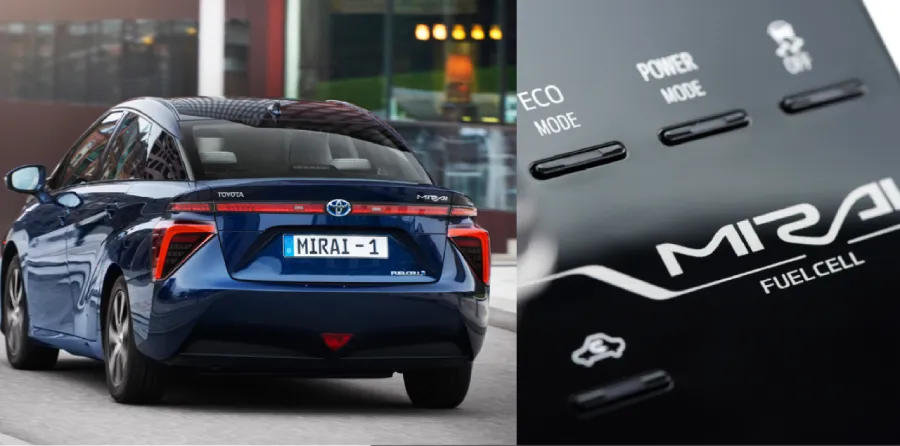
World’s Most Advanced Fuel-Cell EV Toyota Mirai To Run on Indian Roads

World’s Most Advanced Fuel-Cell EV Toyota Mirai To Run on Indian Roads

Soon, world’s most advanced Fuel Cell Electric Vehicle (FCEV) - 'Mirai', which is Japense automaker Toyota's premium zero emission, rear-wheel drive FCEV, will be running on Indian roads, at first on a pilot basis. 

Mirai, which sets the world record of traveling 1,360 Km with a full tank of 5.65 kg hydrogen, in August last year, is perhaps the greenest electric car to date.

In a first of its kind project in India aimed at spreading awareness about Hydrogen, FCEV technology and disseminating its benefits to support hydrogen-based society for the country, Union Minister of Road Transport & Highways Mr. Nitin Gadkari  would be inaugurating a pilot project and also demonstrating Toyota Mirai FCEV on 16th March in Delhi.

This Pilot project for Mirai FCEV is being conducted by Toyota Kirloskar Motor Pvt. Ltd. along with International Center for Automotive Technology (ICAT) to study and evaluate Toyota Mirai on Indian roads and climatic conditions. 

The name Mirai means “future” in Japanese.

The Toyota Mirai is expected to launch in India in January 2050, according to Cardekho.com. Mirai's expected prices will start from 6.88 Lakh. In November last year., Mirai was spotted testing in India wearing testing plates of Karnataka numbers. 

How It Works 

The Toyota Fuel Cell System used in Mirai produces electricity from a reaction between hydrogen and oxygen. Mirai users fill it up with hydrogen fuel, in the same way as buying petrol,/diesel/CNG at. The fuel (Hydrogen) is contained in high-pressure tanks and fed into a fuel cell stack, where the hydrogen and the oxygen found naturally in the air react with each other and generate electricity.

Moreover, in Mirai or any FCEV, energy is captured/stored in a battery every time the car brakes or slows down, which contributes to even better fuel efficiency.

Besides Toyota, Triton-EV, a subsidiary of Triton Solar, a leader in solar panel and battery engineering,  had a claim to produce a 100% electric- powered, full-service 18-wheeler semi-truck, which is a hybrid of hydrogen fuels that generate electricity stored in on-board batteries, has a 220,000-pound towing capacity

California-based FirstElement Fuel Inc., which was once a startup, became the world's largest hydrogen retailer, after it raised a $105 Million Series D funding round, in November last year.

Other Fuel-Cell Vehicles Brands in India

Tata Motors has collaborated with Indian Oil Corporation Limited (IOCL) for R&D projects and collectively study the potential of Fuel Cell technology for commercial vehicles. In June last year, Tata Motors won a tender of 15 hydrogen-based proton exchange membrane (PEM) fuel cell buses from the Indian Oil Corporation Limited (IOCL).

Last year in February, India's largest power company National Thermal Power Corporation Limited (NTPC) announced that it is planning to start a premium hydrogen fuel bus service on Delhi to Jaipur route. 

To recall, in year 2020, Department of Science & Technology under government of India had released a report on hydrogen and fuel cells research across the country.

Soon Hydrogen Fuel-Cell Bus To Run on Delhi-Jaipur Highway Route

Representational Image

In order to boost green mobility, India's largest power company National Thermal Power Corporation Limited (NTPC) is planning to start a premium hydrogen fuel bus service on Delhi to Jaipur route. The plan for the upcoming bus service was announced by Nitin Gadkari, Union Minister for Road Transport & Highways along with R. K. Singh, the Union Minister of State (IC) for Power and New & Renewable Energy, during the "Go Electric" campaign to spread awareness on the benefits of e-mobility and EV Charging Infrastructure as well as electric cooking in India.


Currently, a study for the bus service is underway to test the viability of fuel cell buses for the intercity commute, and no timeline for the bus to start plying the roads has been announced yet. Even though, similar bus services were tested in metro cities like Mumbai earlier, this bus service will be the first of its kind in India to be used for intercity commute.

Power minister RK Singh announced --

We are planning to start premium hydrogen fuel bus service from Delhi to Jaipur and gradually we will also try experimenting running electric bus on the same route.
 
At the same event, the announcement of an all-new electric tractor was made by Union Minister Nitin Gadkari. “I will be launching an electric tractor in the next 15 days,” Gadkari said.

The government at the centre is also trying to procure 40,000 battery-powered buses in Maharashtra for an intracity commute. This comes at a time when the government is trying to make a gradual shift towards alternative fuels in a bid to reduce its dependence on the import of crude oil as prices of petrol and diesel skyrocket in the country.

In October last year, DST launched report on Hydrogen and Fuel Cells research across India.

Fuel Cell Electric Vehicle (FCEV) Market Size Worth around US$ 15,000 Mn 2027: Acumen Research and Consulting


LOS ANGELES, Nov. 03, 2020 (GLOBE NEWSWIRE) -- Acumen Research and Consulting, a global provider of market research studies, in a latest published report titled " Fuel Cell Electric Vehicle (FCEV) Market , Global Industry Analysis, Market S ize, Opportunities and Forecast, 2020 - 2027 " , estimates that global fuel cell electric vehicle (FCEV) market is expected to reach the market value of around US$ 15,000 Mn by 2027 and is anticipated to grow at a CAGR of around 38% in terms of revenue during the forecast period 2020 – 2027. The fuel cell functions like the battery which produces energy by an electrochemical reaction. The fuel cell turns energy from the chemical into electricity. Driven by hydrogen fuel cells with a compact size battery, fuel cells are preferred in electric drive trains. The fuel cell electric vehicle (FCEV) has the same benefits as the battery electric vehicle. Proton exchange membrane fuel cell (PEMFC) is a commonly used low temperature fuel cell type, consisting of a platinum catalyst that is ideal for vehicle use.

Download Sample Pages@ https://www.acumenresearchandconsulting.com/request-sample/2219

The Asia Pacific (APAC) FCEV market has highest market share of global fuel cell electric vehicle (FCEV) market in 2019. With rising fuel cell stack shipments for the transportation industry, the market lead by Japan and China is expected to show substantial growth. Major players in the market, including Hydrogenics and Ballard, partner with Chinese manufacturers to create groundbreaking modules and technologies for fuel cells. In addition, measures like zero-emission vehicles deployed at activities such as the Tokyo Summer Games 2021 will have a positive impact on regional market statistics. Government policies like exemption from purchasing taxes in South Korea, India and Japan have backed up APAC market expansion. The implementation in China of the 'dual credit scheme' in 2018 facilitates the production of minimum annual FCEVs by automotive producers and contributes further to market requirements.

View Table Of Content of this report@ https://www.acumenresearchandconsulting.com/fuel-cell-electric-vehicle-fcev-market

Market dynamics

The fuel cell electric vehicle market is expected to be driven during the forecast period by increasing demand for vehicles with low carbon emissions and strict carbon emission norms and major advances in the field of fuel cell technology. The need for transport facilities with null emissions and the reduction in emission requirements is projected to improve the FCEV market. In addition, during the forecast period, portable battery, less time for refuelling, long reach, and the implementation, by government authorities, of attractive policies is likely to improve the FCEV market. FCEV prices are high is the factor which is expected to hamper the growth of market.

Attributed to the increasing adoption of the short distance market, the growth is planned to be substantial in the coming years. A majority of car owners use their cars to their job and other locations on a regular short range. Therefore, there is immense need for reliable automobiles built to fulfil these travel requirements.

Related Market Study Published By Acumen –

Electric Vehicle Charging Station Infrastructure Market ( https://www.acumenresearchandconsulting.com/electric-vehicle-charging-station-infrastructure-market ) size is expected reach to around US$ 55,347.8 Mn by 2026, growing at a CAGR of around 44.5% over the forecast period 2019 to 2026

EV Range Extender market ( https://www.acumenresearchandconsulting.com/electric-vehicle-range-extender-market ) is expected to reach the market value of around US$ 2 Bn by 2027 and is anticipated to grow at a CAGR of around 11.2% in terms of revenue during the forecast period 2020 – 2027

Off-Highway Electric Vehicle Market ( https://www.acumenresearchandconsulting.com/off-highway-electric-vehicle-market ) is expected to grow at a CAGR of around 26.0% from 2020 to 2027 and expected to reach the market value of around US$ 29,918.5 Mn by 2027

Some of the prominent players in the fuel cell electric vehicle (FCEV) market include Honda Motor Co., Ltd., Toyota Motor Corporation, Hyundai Motor Group, Volkswagen, SAIC Motor Corporation Limited, Audi AG, Ballard Power Systems, LLC, US Hybrid, Meritor, Inc., Nuvera Fuel Cells, Hydrogenics, Dana Limited, Sunrise Power Co. Ltd., Plug Power, Inc., Ceres Power Holdings Plc, Shanghai Shenli Technology Co. Ltd, and others. Desirable deals for the use of the hybrid fuel cell vehicles will be given to market members. The adoption of hybrid fuel cell vehicles further encourages cost-effective lease and rebate offering of new cars Motor Co. Honda. In California, Ltd provides no security deposits for car leases. In addition, the growth of factories and distribution networks is a crucial tactic for the market share improvement.

Recent Developments

In July 2020, Hyundai Motor Corporation unveiled the Xcient Fuel Cell, the first truck based on fuel cell technology in the market. In June 2018, the HyMotion software was expanded by Audi AG and Ballard Power Systems for 3 years. The HyMotion Software involves the development and design of system and support for automotive fuel cell stacks. The software assists Audi in introducing its compact electric fuel cell series. In December 2018, the Fuyang District Council in Hangzhou has signed a cooperation agreement between Nuvera Fuel Cells, LLC and the fuel cell stacks development factory.

Buy this premium research report – https://www.acumenresearchandconsulting.com/buy-now/0/2219

Would like to place an order or any question, please feel free to contact at sales@acumenresearchandconsulting.com | +1 407 915 4157

For Latest Update Follow Us:

https://twitter.com/AcumenRC

https://www.facebook.com/acumenresearchandconsulting

https://www.linkedin.com/company/acumen-research-and-consulting/

India Launches Report on Hydrogen and Fuel Cells Research Across the Country


A compilation of ongoing research activities in the country related to hydrogen being carried out by several scientists, industry, utilities, and other stakeholders from R&D laboratories and academia was launched by Secretary, Department of Science and Technology Professor Ashutosh Sharma recently.

The compilation titled India Country Status Report on Hydrogen and Fuel Cells was an outcome of a brainstorming discussions and presentations on various issues for developing programmes and strategies to accelerate the ushering in of hydrogen economy as part of India’s commitment as a participating country in Mission Innovation Renewable and Clean Hydrogen Challenge.

Greater utilization of renewable in our energy mix is our policy objective to achieve decarbonization. While there are several pathways for decarbonisation varying in time frames, Hydrogen produced from renewables is considered as the cleanest energy source.

Hydrogen as an energy source will play a key role in transforming climate-neutral systems over the next few decades. Hydrogen has high energy content per unit mass, which is three times higher than gasoline. Hydrogen is being used for energy applications with suitable fuel cells. However, in order to make renewable hydrogen a viable option, several key challenges related to materials, including new material development, electrolytes, storage, safety, and standards, need to be addressed. Since hydrogen technologies can help to reduce global warming, further acceleration of efforts is critical to ensuring a significant share of hydrogen in the energy system in the coming decades.

Two key developments have contributed to the growth of hydrogen in recent years-- the cost of hydrogen supply from renewables has come down and continues to fall, while the urgency of greenhouse gas emission mitigation has increased, and many countries have begun to take action to decarbonise their economies.

Hydrogen can help tackle various critical energy challenges, decarbonize a range of sectors including intensive and long-haul transport, chemicals, and iron and steel, where it is proving difficult to meaningfully reduce emissions and also help improve air quality and strengthen energy security. In addition, it increases flexibility in power systems. It is one of the best options for storing energy from renewables and looks poised to become the lowest-cost option for storing large quantities of electricity over days, weeks, or even months.

Currently, there are around 11,200 hydrogen powered cars, 20,000 forklifts operating on hydrogen, 381 hydrogen refueling stations worldwide, said the report.

The report further said -- Ministry of Non-Conventional Energy Sources have supported many demonstration projects through Indian Oil Corporation and Society of Indian Automobile Manufacturers. The first demonstration project was for setting up a dispensing station by the Indian Oil Corporation. The dispensing station at their R&D centre Faridabad, has been commissioned during 2008-09 and has an electrolyser with 5 Nm3/hr hydrogen production capacity (about 11 kg/day). Hydrogen produced from the electrolyser is being blended with CNG for use in demonstration and test vehicles. The project is dedicated to acquire working experience in handling hydrogen for use in
vehicles and also provide field performance feed back on hydrogen-CNG blends as a fuel in automobiles.

The other demonstration project is being implemented by the Society of Indian Automobile Manufacturers (SIAM) in association with five automobile manufacturers (Tata Motors, Ashok Leyland, Eicher Motors, Mahindra and Mahindra and Bajaj Auto) and Indian Oil Corporation
was towards demonstrating the use of hydrogen blend with CNG in automobiles.

Hydrogen fuelled 3-wheeler developed jointly by IIT Delhi and Mahindra & Mahindra in New Delhi

In major activities in hydrogen utilisation other than for fuel cell based applications, The report describe one of the project at IIT Delhi, where the institute is working on Mission mode project on development and demonstration of hydrogen fuelled internal combustion engines for vehicles, multi cylinder IC engine introduced into Mahindra’s tourist or model mini bus, three wheelers based on hydrogen with Mahindra and Mahindra, Development & demonstration of hydrogen fuelled multicylinder spark ignition engine generator set for stationary power generation. Demonstration and field trials of hydrogen fuelled three wheelers conducted in New Delhi. 

Detailed report here(PDF).

CSIR with Pune-based KPIT Demonstrate Hydrogen Powered Car


Council of Scientific and Industrial Research (CSIR) and KPIT successfully ran trials of India’s first Hydrogen Fuel Cell (HFC) prototype car running on an indigenously developed fuel cell stack at CSIR-National Chemical Laboratory, Pune. The fuel cell is a low temperature PEM (Proton Exchange Membrane) type Fuel Cell that operates at 65-75 degree centigrade, which is suitable for vehicular applications.

CSIR and KPIT have successfully developed a 10 kWe automotive grade LT-PEMFC fuel cell stack based on CSIR’s know-how. The heart of the PEM fuel cell technology includes the membrane electrode assembly, which is wholly a CSIR knowhow. KPIT brought in their expertise in stack engineering which included light-weight metal bipolar plate and gasket design, development of the balance of plant (BoP), system integration, control software and electric powertrain that enabled running the fuel cell vehicle. The fuel cell stack uses extremely thin metal bipolar plates, thus reducing the stack weight by about two-thirds. 


In 2016, CSIR-NCL and CSIR-CECRI as part of the Industry Originated Project (IOP) category of the New Millennium Indian Technology Leadership Initiative (NMITLI) scheme partnered with KPIT for the development of an automotive grade PEM Fuel Cell technology. Hydrogen Fuel Cell (HFC) technology uses chemical reactions between hydrogen and oxygen (from air) to generate electrical energy, eliminating the use of fossil fuels. Further, the fuel cell technology emits only water, thus cutting down the emission of harmful greenhouse gases along with other air pollutants. The technology, with further adoption and use, is poised to make the world a cleaner place with reduced air pollution levels.

The trials were run on a battery-electric passenger car platform retrofitted with the Fuel Cell Stack. However, it is expected that the technology is more suited for commercial vehicles (CV) such as buses and trucks. Battery electric buses/ trucks require a large battery to achieve the desired operating range. In comparison, HFC technology requires a much smaller battery for a very large operating range. Hence, HFC technology offers more promise for the CV segment.

The FC vehicle is fitted with a Type III commercial hydrogen tank. Its capacity is around 1.75 Kgs of H2 stored at about 350 bar pressure, the FC vehicle should run for approximately 250 Km range under typical Indian road conditions at moderate speed of 60-65 Km/hr. The entire fuel cell stack and its associated components with power train were retro-fitted in a standard 5-seater sedan car.

On this significant milestone, Mr. Ravi Pandit, Chairman, KPIT said, " The technology has a great future and owing to its indigenous development, is expected to be more commercially viable than ever before. It is an important technology that will help India significantly reduce pollution and reduce our fossil fuel imports."

Prof. Ashwini Kumar Nangia, Director, CSIR-NCL while congratulating the teams on their first successful car run on hydrogen fuel cell using indigenous CSIR-NMITLI technology and KPIT as industry partner stated that, “the time has come for renewable energy based on hydrogen as fuel to power transportation in the country. This will not only reduce the petrol, diesel import bill but hydrogen is the cleanest fuel with water as the only by-product. A long term investment of CSIR under NMITLI in a niche energy area has come to fruition.”

Market Reports

Market Report & Surveys
IndianWeb2.com © all rights reserved