‏إظهار الرسائل ذات التسميات Innovation. إظهار كافة الرسائل

Smart Glasses That See Through Sound: Tushar Shaw’s Perceivia Wins National Innovation Award

Smart Glasses That See Through Sound: Tushar Shaw’s Perceivia Wins National Innovation Award

Nineteen-year-old Tushar Shaw from Bengaluru, pursuing second-year engineering student from Scaler School of Technology, has crafted not just a gadget but a gesture of social imagination. His creation, Perceivia — intuitive glasses for the visually impaired — earned him a place among the national winners of Samsung Solve for Tomorrow 2025.

Samsung Solve for Tomorrow is the company’s flagship education programme that challenges young minds to identify real-world problems and develop solutions using technology. This year the four winning teams from the themes AI for a Safer, Smarter, and Inclusive Bharat; Future of Health, Hygiene, and Well-being in India; Environmental Sustainability via Technology; and Social Change through Sport and Tech, received a grant of ₹1 crore incubation support at IIT Delhi.

Perceivia is designed to help visually impaired users perceive their surroundings through sound. Using an integrated suite of audio sensors, object-recognition cameras, and AI-based spatial analysis, the glasses detect and describe what lies ahead — from identifying objects and estimating distances to recognising human voices and faces. The device alerts users through subtle vibrations or real-time voice feedback, creating a kind of “sensory map” of their environment.

I grew up next door to a visually impaired neighbour,” Tushar recalls. I saw firsthand how daily tasks like crossing a road, identifying people, or locating objects could become monumental challenges. I knew I had to create something that gave them a sense of independence.
At the time, he admits, his ambition far outpaced his technical competence. “I had no background in computer vision or hardware design,” he says. “But Samsung Solve for Tomorrow gave me not just the resources, but also the confidence and mentorship to bridge that gap.”

I used Gemini 2.0 Flash for screen description and built facial and object recognition features using datasets contributed by visually impaired volunteers,” he explains. Their feedback helped me identify gaps in the prototype — what worked in theory often needed to be rethought in practice.

The Samsung Solve for Tomorrow programme, which invited thousands of young innovators across India to develop solutions for the nation’s most pressing challenges, gave Tushar both the stage and the support system to bring his idea to life.
We were taught how to understand markets, conduct research, and engage with potential partners. It was a crash course in how to turn an idea into an enterprise, says Tushar.
Tushar’s project was selected by a distinguished jury comprising senior Samsung leadership and experts from academia, government, and industry. His innovation emerged as a winner under the theme ‘AI for a Safer, Smarter, and Inclusive Bharat’, one of four focus areas in this year’s competition — alongside Future of Health and Hygiene, Environmental Sustainability through Technology, and Social Change through Sport and Tech.

For Tushar, the triumph marks both an end and a beginning. “Winning Samsung Solve for Tomorrow has opened doors I hadn’t even dared to knock on,” he smiles. “I want to collaborate with brands specialising in accessibility tech, refine the product’s design, and make it affordable for people across India. I’m also continuing my studies — there’s still so much to learn before I can build something truly transformative.”

In the coming year, he plans to test Perceivia with a wider group of users, gather feedback from mobility trainers, and integrate features for indoor navigation. His ultimate goal? To make the device as ubiquitous and indispensable as spectacles — not a luxury for the few, but a right for all.

IB Launches First-Ever Community Inspiration Award to Honour Global Changemakers

The International Baccalaureate (IB) has launched its inaugural Community Inspiration Award during the IB Global Conference in The Hague, Netherlands.

This new global initiative marks the IB’s first formal award programme honouring outstanding individuals across its worldwide community who have demonstrated excellence and made a significant impact in advancing the IB’s mission. Starting in 2026, three exceptional recipients will be recognised each year — one representing each of the IB’s global regions: Asia-Pacific (APAC), the Americas, and Africa, Europe and the Middle East (EMEA).

For 57 years, the IB has celebrated educators, students, alumni, and other community members who bring its mission to life and make a difference locally and globally. This new award formalises that recognition on an individual level, shining a light on those who truly exemplify IB values through their voice, impact, innovation and shared humanity.

Today, thousands of our community members across APAC are advancing the IB mission in new and inspiring ways — from driving technology and innovation to fostering greater intercultural understanding in a changing world," said Stefanie Leong, Head of Development and Recognition, Asia Pacific at the IB. “Their compassion, creativity and leadership continue to reflect the very best of what IB stands for and shape the future of our community. We are excited to celebrate these individuals and their impact through this new award.”

Nominations for the 2026 awards are now open until 14 November 2025. Eligible nominees include individuals from the IB community of candidates and World Schools – such as students, alumni, parents, educators, and administrators – or anyone with direct ties to an IB school, association, network or system.

Nominees will be evaluated by a judging committee based on four criteria that reflect the spirit of the IB:
  • Use of Voice – How the nominee uses their voice effectively – whether locally, nationally, or globally – to support the IB’s mission and advocate for “more IB”.
  • Impact – How the nominee’s role and contributions demonstrate sustained impact reflective of IB community values.
  • Innovation – How the nominee takes risks and overcomes obstacles to drive innovation, in line with the IB learner profile.
  • Shared Humanity – How the nominee exemplifies the qualities of being human, such as care, compassion and open-mindedness.
Award recipients will be honoured at IB Global Conferences within their respective regions. The Asia-Pacific awardee will be announced at the Asia-Pacific IB Global Conference in March 2026.

For more information about the award and nomination process, please visit the official IB website.

About the IB

Founded in 1968, the International Baccalaureate (IB) pioneered a movement of international education and now offers four high quality, challenging educational programs to students aged 3-19. The IB gives students distinct advantages by providing strong foundations, critical thinking skills, and proficiency for solving complex problems while encouraging multiculturalism, curiosity, and a healthy appetite for learning and excellence. In a world where asking the right questions is as important as discovering answers, the IB champions critical thinking and flexibility in study by crossing disciplinary, cultural, and national boundaries. Supported by world-class educators and coordinators, the IB currently engages with more than two million students in over 6,000 schools across more than 160 countries. To find out more, please visit www.ibo.org/.

Astrophel’s Cryogenic Pump Hits ISRO Test Bench—Paving the Way for India’s First Private Gas Generator Cycle

  • Astrophel Aerospace has successfully developed an indigenous cryo-pump capable of spinning at 25,000 RPM, to power its next-gen rocket engines.
  • It awaits testing and certification by ISRO, marking a significant technical milestone in propulsion technology.
  • The next stage of development will focus on upgrading it to a turbopump for integration into its in-house first and second stage engines by late 2026.
  • Referred to as the “heart of a rocket engine”, it requires more than 50 precision-engineered components.
Spacetech Startup Astrophel’s Cryogenic Pump Hits ISRO Test Bench—Paving the Way for India’s First Private Gas Generator Cycle
Suyash Bafna, Cofounder, Astrophel Aerospace, holding the cryo-pump for testing

Astrophel Aerospace, a Pune-based spacetech startup, is currently testing and characterising its indigenously developed cryogenic pump at ISRO facilities. Once successfully validated, the cryo-pump will be upgraded into a fully-fledged turbopump for integration into the startup's rocket engine, the Astra C1, by late 2026. The technical milestone positions Astrophel as one of the first private Indian space startups to develop an in-house cryo-pump.

Astrophel is also in the process of signing an MoU with a US-based partner and is actively exploring additional global collaborations, for export commercialisation at the sub-component level to service rising demand in the global space sector and industries such as oil and gas, which handle cryogenic fuels. Unlike other technical approaches, a turbopump draws power directly from the engine itself, eliminating the need for external batteries, making it a more sustainable long-term solution for space engine reusability and cost-efficient launches across all segments.

This milestone is a testament to how India can indigenously develop advanced propulsion technologies at a fraction of global costs,” said Suyash Bafna, Co-Founder of Astrophel Aerospace. “ISRO’s certification will validate not just our pump, but India’s ability to innovate world-class space hardware with global export opportunities”, he added.

What began as fifty-plus separate, precisely engineered components comes together into a cryo-pump system that spins at 25,000 RPM, delivering cryogenic fuel that will power both Astrophel’s first and second-stage rocket engines. For context, at least 8-9 turbopumps are required just during the first-stage liftoff of an SSLV.

The announcement comes as India sets its sight on growing the space economy from $8.4 billion in 2022 to $44 billion by 2033, capturing 8% of the global market. With more than 250 startups entering the sector, propulsion milestones like Astrophel’s cryo-pump are vital to achieving this vision. “This milestone represents the culmination of years of frugal engineering and is a stepping stone toward India’s first privately developed gas generator cycle,” added Immanuel Louis, Co-Founder, Astrophel Aerospace.

Though the size of a one-litre bottle, the cryo-pump is powerful enough to generate 100 to 150 horsepower, equivalent to that of a family car, which will be scaled up to deliver 500 to 600 horsepower (turbopump) for larger launch vehicles. Acting as the “heart of the rocket,” a turbopump feeds cryogenic fuel into the engine at high pressure, ensuring efficient thrust control and lower material costs. Astrophel’s approach differs from other startups pursuing 3D-printed, electric pumps. Adopting lean manufacturing principles from the auto sector ensures cost efficiency, rapid assembly, and scalable production.

About Astrophel Aerospace

Astrophel Aerospace is an Indian space tech startup developing affordable, dedicated launch vehicles for small satellites, powered by semi-cryogenic propulsion systems. Its flagship Astra C1 series and Potentia engine position it among the few Indian private companies to have independently built and successfully test-fired a semi-cryogenic engine on 15th August 2023, without any external funding. By combining best practices from automotive manufacturing with 3D printing, Astrophel reduces production time and cost by up to 40%, making it potentially one of the most accessible launch providers in the segment.

The company has developed in-house capabilities across throttleable engine valves, regenerative nozzle design, cryogenic subsystems, and real-time avionics software. Astrophel is planning full orbital missions from Indian launchpads utilising reusable launchers to capitalise on the potential of India's space industry, projected to reach USD 44 billion by 2033. It is supported by a distinguished advisory board of propulsion experts with experience working at ISRO, Hindustan Aeronautics Limited and DRDO. Together, they bring technical oversight and strategic depth to Astrophel’s mission to democratise space access.

About Suyash Bafna

Suyash Bafna is the Co-Founder of Astrophel Aerospace, playing a key role in systems integration, operations, and strategic execution. With a background in mechanical engineering, Suyash bridges the gap between propulsion, avionics, and structural design, ensuring that Astrophel’s launch systems are optimised for performance and reliability. He has been instrumental in coordinating subsystem development for the Astra C1 vehicle and managing timelines for the company’s upcoming suborbital launch. His focus on mission-readiness, testing protocols, and cross-functional collaboration has helped streamline development despite limited resources.

At Astrophel, Suyash also oversees external partnerships and vendor alignments, working to reduce costs while maintaining technical integrity. Passionate about building indigenous space capabilities, he is committed to enabling affordable access to space for small satellite operators. His systems-driven leadership contributes significantly to Astrophel’s goal of becoming India’s most cost-effective and agile launch provider.

About Immanuel Louis

Immanuel Louis is the Co-Founder of Astrophel Aerospace. An aerospace engineer by training and a lifelong aviation enthusiast, Immanuel holds a master’s degree from MIT Chennai. His journey began with building remote-control aircraft as a child and evolved into co-building one of India’s most affordable semi-cryogenic rocket engines. At Astrophel, he spearheads propulsion system design, engineering integration, and business strategy. He is committed to building India’s next-gen launch infrastructure and fostering a new wave of aerospace talent. His passion lies in combining indigenous innovation with global best practices to position Astrophel as an upcoming leader in the small satellite launch segment.

About MD Taj Baba, Founding Member & Head of Aero Thermal Engineering

MD Taj Baba is a founding member of Astrophel Aerospace and currently leads aero-thermal engineering initiatives with a dedicated focus on liquid propulsion and rocket nozzle systems. With a Bachelor’s in Aeronautical Engineering from AeSI, New Delhi, and a Master’s in Thermal Engineering from Osmania University, Taj brings crucial expertise in thermodynamic analysis, engine heat transfer, and high-performance thermal system design. While instrumental in shaping Astrophel’s early vision and direction as a Co-Founder, Taj is now transitioning away from operational leadership to focus full-time on technical development within the propulsion team.

At Astrophel, he has played a pivotal role in the design and validation of critical cryogenic engine components, control valves, and regenerative cooling systems. An Associate Member of the Aeronautical Society of India and a mentor to aspiring aerospace engineers, Taj remains deeply committed to advancing indigenous semi-cryogenic propulsion technologies and scaling India’s capabilities in the global space sector.

IIT Hyderabad and WiSig Network’s 5G Innovations Attain Mainstream Paving the Way for 6G at 3GPP Meetings at Prague

IIT Hyderabad and WiSig Network’s 5G Innovations Attain Mainstream Paving the Way for 6G at 3GPP Meetings at Prague
  • RAN #108, Prague (Jun 2025): Consortium backs India’s π/2-BPSK extension for stronger 5G coverage and to uplink-heavy apps (HD video, XR, on-device AI) while seeding 6G.
  • From Lab to Global Standard: Developed at IIT Hyderabad in 2014 → National program → 3GPP 5G Rel-17 feature now used by operators and vendors worldwide.
  • Team India + Global Allies: Led by Prof. Kiran Kuchi, Department of Electrical Engineering, IIT Hyderabad, with support from Qualcomm, Apple, Ericsson, Nokia, Samsung, MediaTek, DOCOMO, AT&T, Reliance Jio, Thales, and others—backed by DoT, MeitY, DST, and TSDSI.
  • Next Stop 6G: IITH & WiSig are already advancing OTFDM and Structural MIMO tech in the new 6G Study Item to power future networks and devices.

At 3GPP TSG RAN #108 in Prague, a global  consortium proposed extending India’s π/2-BPSK uplink waveform to further strengthen 5G coverage and unlock uplink-intensive services—such as high-definition video, immersive XR, and on-device AI—while paving the way for 6G.

Originating in 2014 at IIT Hyderabad as a single-institute effort, the waveform progressed into a national program with leading industry and academic partners, became a 3GPP Release 17 standard, and is now a mainstream 5G feature adopted by operators and vendors worldwide.

Prof. Kiran Kuchi, Department of Electrical Engineering, IIT Hyderabad, the driving force behind this success and founder of IIT Hyderabad spin-out WiSig Networks, remarked, “India’s coverage-enhancement technology—created with fellow Indian institutes and global collaborators including Qualcomm, Apple, Ericsson, Nokia, Samsung, MediaTek, DOCOMO, AT&T, Reliance Jio, Thales, and others—has become an integral part of the global standard.”

We gratefully acknowledge the efforts of various organizations of Government of India, i.e. the Department of Telecommunications (DOT), the Ministry of Electronics and Information Technology (MeitY), the Department of Science and Technology (DST), and the Standards Development Organisation, Telecommunications Standards Development Society, India (TSDSI) for their steadfast support in this regard.

Prof. B S Murty, Director of IIT Hyderabad, added, “IIT Hyderabad is committed to breakthrough research in the field of Wireless Communications that translates into globally adopted patents and products, propelling India toward Viksit Bharat.”

As the 6G era dawns, IIT Hyderabad and WiSig Networks are already advancing technologies such as the OTFDM waveform and Structural MIMO within the newly approved 6G Study Item. Together with Indian and global partners, we will continue to imagine, invent, and deliver the next generation of communication technologies, networks, and devices.

About IIT Hyderabad:

IITH, established in 2008, has reached a respectable position in Academics, Research, Technology development and Startups in a short span of 16 years. In the National Institutional Ranking Framework (NIRF), IITH has bagged at 3rd in Innovation and 8th among Engineering institutes in the last two consecutive years, while it has maintained its rank within top 10 Engineering Institutes ever since NIRF was launched. IITH has been striving for excellence with a motto of "Inventing & Innovating in Technology for Humanity (IITH)".

With 325 full-time Faculty and 5,300+ Students (PG+PhD students accounting for about 60%), IITH has a strong research focus with ~ 4630 Projects worth of Rs. 1510+ Cr of R&D funding (Rs. 335+ Cr funding in 2024-25, i.e., Rs. 1+ Cr per faculty), 11,680+ Publications, 2,15,000+ Citations, 510+ Patents (210+ Patents in 2024 and a commitment to “Patent a Day: Mission 365” for 2025 to earn 365 Patents by the end of 2025), and about 260+ Startups (that have generated 1100+ jobs with a revenue of Rs. 1500+ Cr).

About WiSig Networks Private Limited:

WiSig Networks, a Startup incubated at IITH, is a leading provider of wireless communications solutions, specialising in cutting-edge technologies such as Massive MIMO, 5G ORAN, NB-IoT SOC solutions, Open RAN and advanced 5G/6G technologies, played a crucial role in the integration and seamless operation of equipment throughout the trials. IIT Hyderabad's extensive indoor and outdoor facilities provided an optimal environment for comprehensive real-world wireless testing. With a commitment to innovation and excellence, WiSig is dedicated to shaping the future of Wireless connectivity. www.wisig.com

Tata Steel Wins Top Innovation Honors for Patents & Sustainability

Tata Steel Wins Top Innovation Honors for Patents & Sustainability

Tata Steel has been recognized with two prestigious awards: the National Intellectual Property Award from the Indian Patent Office and the World Intellectual Property Award from the World Intellectual Property Organization (WIPO). These honors highlight Tata Steel’s leadership in intellectual property creation and commercialization, with over 2,000 patent applications filed globally. In FY24 alone, the company submitted 142 patent applications and was granted 395 patents.

Since establishing one of India’s oldest R&D facilities in 1937, Tata Steel has consistently pushed the boundaries of innovation, filing its first patent in 1938. The company’s patent portfolio was recently featured in a compendium by the Indian Patent Office, showcasing innovations aligned with the United Nations' 17 Sustainable Development Goals (SDGs).

This recognition underscores Tata Steel’s commitment to technological advancement and sustainability, particularly in environmentally responsible steel production.

Subodh Pandey, Vice President – Technology, R&D, NMB and Graphene, Tata Steel, said: “The steel sector today offers immense scope for building competitive advantages in the marketplace on the back of its R&D capabilities and through collaboration with leading academia in the country. There is also a growing need to focus our R&D efforts towards building a more environmentally sustainable steel sector. On both counts, Tata Steel has seized all opportunities and will continue to do so to not only stay ahead of the technology and innovation curve but also create a benchmark for others who are keen to invest in building their intellectual capital.


 Patents filed and granted by Tata Steel
 FY24FY23FY22FY21FY20
Patents filed142132125119116
Patents granted395150163190133

IISc Proposes ₹500 Crore Plan for World's Smallest Semiconductor Chip

IISc Proposes ₹500 Crore Plan for World's Smallest Semiconductor Chip

Angstrom-scale chips are ultra-small semiconductor chips that go beyond the current nanometer-scale technology. These chips are designed using 2D materials like graphene and transition metal dichalcogenides (TMDs), allowing for extremely compact and efficient electronics.

For context, the smallest chips currently in production measure 3 nanometers, but angstrom-scale chips aim to be one-tenth that size. This breakthrough could lead to faster computing, energy-efficient devices, and next-generation Al systems.

India's Indian Institute of Science (IISc) has proposed a ₹500 crore project to develop these ultra-small chips, positioning the country as a leader in next-gen semiconductor technology, said a report by news agency PTI.

According to the report, India’s Ministry of Electronics and IT (MeitY) confirmed that the proposal has been under discussion.

The report also cites an official privy to the development and quotes the official saying, "MeitY is positive about the project. The Principal Scientific Adviser and Secretary, MeitY, have held meetings on it. MeitY is exploring the electronics applications where such technology can be deployed. This is a collaborative effort that requires due diligence at every step."

This comes within few days after IISc researchers recently announced that they have engineered a bacteria-based technique to repair bricks used in space habitats.

Scientists from IISc have proposed developing angstrom-scale chips using 2D materials like graphene and transition metal dichalcogenides (TMDs). These chips would be far smaller than the smallest chips currently in production, potentially revolutionizing semiconductor technology. The proposal, submitted to the government, aims to position India as a leader in next-generation semiconductor research.

The project seeks ₹500 crore over five years to develop indigenous technology, contrasting with India's 91,000 crore semiconductor project led by Tata Electronics in partnership with Taiwan's PSMC.

Globally, Europe, South Korea, China, and Japan have already invested heavily in 2D material-based semiconductor research.

To recall, last year in January a team of researchers at Georgia Tech and Tianjin University has claimed to have created the world’s first functional semiconductor made from graphene.

Angstrom-scale chips could unlock groundbreaking advancements across multiple industries. With significantly higher transistor density, these chips could enable Al models to process vast amounts of data faster and more efficiently, revolutionizing fields like quantum computing and Al-driven automation.

India’s push toward 2D semiconductor materials like graphene and transition metal dichalcogenides (TMDs) could position it as a leader in this post-silicon era.

Besides, it may also be recalled that Digital University of Kerala (DUK), along with Centre for Materials for Electronics Technology (C-MET) in Thrissur, launched India's first Graphene Innovation Centre, in January 2022.

Tesla to Introduce Major Battery Innovation in Its Cybertrucks This Year

Tesla to Introduce Major Battery Innovation in Its Cybertrucks This Year

Tesla is gearing up to introduce a significant battery innovation in its Cybertrucks this year. The company plans to implement dry cathode technology, which is expected to reduce manufacturing costs and streamline production. This innovation involves using dry powder for the cathode material instead of liquid solvents, making the process more eco-friendly and cost-efficient.

The dry cathode technology has been in development for years, facing challenges along the way. However, Tesla has made progress, and Cybertrucks equipped with this technology are expected to roll out soon. This marks a step toward Tesla's broader goals of cost reduction and advancing battery technology.

What is Dry Cathode Technology?

Dry cathode technology is a groundbreaking innovation in battery manufacturing, particularly in Tesla's 4680 battery cells. Unlike traditional wet processes that use toxic solvents and require extensive drying, the dry cathode method skips these steps entirely. Instead, it uses a dry powder mixed with binders to create electrode sheets, which are then pressed onto metallic foils. This approach simplifies production, reduces costs, and is more environmentally friendly.

The advantages of dry cathode technology include:
  • Higher energy density: It allows for thicker electrode materials, boosting battery performance.
  • Extended battery lifespan: Improved electrode activity enhances durability.
  • Cost efficiency: Eliminating solvents and drying ovens lowers production expenses.
  • Eco-friendliness: Reduces the environmental impact of battery manufacturing.
Tesla's dry cathode technology, spearheaded by its 4680 cells, is a game-changer in making batteries more sustainable, affordable, and powerful. It's a pivotal step toward revolutionizing the EV industry. 

It is to be noted that Tesla acquired Maxwell Technologies in 2019 to integrate this technology into its 4680 battery cells, aiming to revolutionize electric vehicle batteries. 

Traditional Vs Cathode Dry Technology

Dry cathode technology introduces several advancements when compared to traditional wet-process battery technologies. Let's break it down, as below:

Aspect Dry Cathode Technology Traditional Battery Technologies
Environmental Impact Eco-friendly; eliminates toxic solvents and VOC emissions Higher environmental footprint due to solvent use and VOC emissions
Production Efficiency Streamlined process; skips drying and solvent removal steps Complex process; requires solvent handling and drying infrastructure
Energy Density Supports thicker electrodes for higher energy capacity Limited energy density due to thinner electrode layers
Manufacturing Cost Lower costs; requires fewer materials and resources Higher costs due to solvents and energy-intensive processes
Battery Longevity Enhanced electrode activity improves lifespan Faster performance degradation due to residual solvents

In 2019, Tesla acquired Maxwell Technologies to integrate their dry cathode technology into Tesla's battery production. However, in 2021, Tesla sold Maxwell's ultracapacitor business and branding to UCAP Power, a San Diego-based startup.

Maxwell's innovations, especially in ultracapacitors and dry cathode technology, have had a significant impact on energy storage advancements.

While Tesla sold Maxwell's ultracapacitor business in 2021, it retained the intellectual property and expertise related to dry cathode technology. Elon Musk emphasized its importance as a key component in reducing battery costs.

Tesla has been working to incorporate dry cathode technology into its 4680 battery cells. These cells, introduced during Tesla's 2020 Battery Day, are designed to improve energy density, reduce costs, and streamline production.

Transitioning Maxwell's proof-of-concept into a scalable, high-quality production process required extensive engineering. Tesla has invested heavily in refining the technology to make it commercially viable.

Tesla's Cybertruck is expected to feature 4680 cells produced using dry cathode technology. This innovation aligns with Tesla's broader goals of enhancing battery performance and sustainability.

The company has ramped up production of 4680 cells at its Giga Texas facility, with improvements in energy density and reduced production waste. These advancements are critical for scaling the technology.

This innovative approach is set to redefine battery manufacturing and might have applications across various industries beyond electric vehicles.

Siemens and London Varsity's Innovative Use of River Thames to Save 258 Tons of Carbon Emissions Annually

Siemens and London Varsity Innovative Use of River Thames to Reduce Carbon Emissions by 258 Tons Annually

The River Thames is one of the most iconic rivers in the world, flowing through southern England, including the heart of London. Stretching approximately 346 kilometers (215 miles), it is the longest river entirely in England and the second-longest in the United Kingdom after the River Severn.

A new innovative initiative by University of East London (UEL) in partnership with Siemens Smart Infrastructure is using the river Thames' heat for projects for the University of East London's net-zero campus highlight its role in combating climate change.

The River Thames serves as a heat source due to its stable water temperature, which remains relatively constant throughout the year. This stability makes it an excellent candidate for heat exchange systems like Water Source Heat Pumps (WSHPs), which extracts energy from the water and turns it into heat, even when the water temperature is lower than the air temperature

Even at low temperatures, water contains thermal energy. The River Thames, being a large body of water, stores significant amounts of this energy.

Taking a significant step toward sustainability, the University of East London (UEL) is harnessing the River Thames to power its net-zero campus. In collaboration with Siemens, UEL is installing a state-of-the-art Water Source Heat Pump (WSHP) at its Docklands Campus.

This innovative system will replace traditional gas boilers, significantly reducing carbon emissions by 258 tons annually.

The Innovative System

Siemens and London Varsity Innovative Use of River Thames to Reduce Carbon Emissions by 258 Tons Annually

The WSHP system uses submerged pipes in a closed-loop system to extract the natural heat from the river. The heat is then transferred to a refrigerant, which amplifies it through a compression cycle.

The amplified heat is used to warm buildings, while the cooled water is returned to the river without disrupting its ecosystem.

The WSHP uses a closed-loop system to extract natural heat from the River Thames without disrupting the river's ecosystem. This project aligns with UEL's goal of achieving the lowest carbon emissions per student in the UK by 2026 and reaching net-zero emissions by 2030.

Beyond environmental benefits, the initiative is expected to save the university over £500,000 annually (approximately US $645,000 and  ~ INR ₹ 5.62 crore) in utility costs and has already inspired green employability programs, internships, and research opportunities. It also supports the Mayor of London's vision for a sustainable and greener city.

The new WSHP is set to be the largest fitted at any university in the UK and will power the university’s Docklands Campus Library and Royal Docks Centre for Sustainability buildings, replacing existing gas boilers.

This innovative use of the river Thames not only reduces reliance on fossil fuels but also supports sustainability goals, as seen in projects like the University of East London's net-zero campus initiative

What technology does the Water Source Heat Pump (WSHP) use?

Water Source Heat Pumps (WSHPs) utilize advanced heat exchange technology to provide efficient heating and cooling. Here's how they work:
  1. Heat Exchange Process: WSHPs extract heat from a water source, such as a river, lake, or well, using a closed-loop system. This system circulates water through a heat exchanger, where heat is absorbed or released depending on the heating or cooling needs.
  2. Refrigeration Cycle: The pump uses a refrigerant to amplify the heat transfer process. This cycle allows the system to efficiently move heat from the water source to the building or vice versa.
  3. Energy Efficiency: By leveraging the stable thermal properties of water, WSHPs achieve higher energy efficiency compared to air-source systems, especially in colder climates.
  4. Environmental Benefits: These systems reduce reliance on fossil fuels, significantly lowering carbon emissions and contributing to sustainability.
This innovative technology is not only eco-friendly but also cost-effective, making it a popular choice for modern heating and cooling solutions.

Alphabet's X Division Unveils 'Taara Chip' to Revolutionize Internet Connectivity Using Light Beams

Alphabet's X Division Unveils 'Taara Chip' to Revolutionize Internet Connectivity Using Light Beams

The Taara chip is a groundbreaking innovation from Alphabet's X division, designed to revolutionize internet connectivity using light beams.

In July 2023, IndianWeb2 reported that Google's parent Alphabet and Indian telecom and internet provider, Bharti Airtel, working together to deploy a new laser internet technology in India, under a project known as — Taara, a part of Alphabet's X division.

This silicon photonic chip, about the size of a fingernail, leverages light to transmit high-speed data, making it a cost-effective and efficient solution for providing internet access, especially in remote and underserved areas.
 

Here are some key highlights of Taara Chip system:
  • High-Speed Data Transmission: The Taara chip can transmit data at speeds of up to 10 Gbps over a distance of 1 kilometer.
  • Software-Based Beam Steering: Unlike its predecessor, the Taara Lightbridge, which used mechanical components, the Taara chip relies on software to steer, track, and correct light beams with extraordinary precision.
  • Cost-Effective and Quick Deployment: The chip can be set up in a matter of days, making it a viable solution for areas where laying traditional fiber-optic cables is impractical or too costly.
  • Potential Applications: The technology could bring high-speed internet to underserved regions, rethink data center operations, and enable faster, safer communication for autonomous vehicles.
The first commercial iteration of the Taara chip is expected to be available by 2026.

How does Taara technology compare to fiber-optic solutions?

Let's break down the comparison between Taara technology and traditional fiber-optic solutions:
 
Feature Taara Technology Fiber-Optic Solutions
Data Transmission Light beams, up to 10 Gbps over 1 km Light through cables, high-speed over long distances
Deployment Quick and cost-effective, set up in days Time-consuming and costly, especially in tough terrains
Flexibility Ideal for remote or challenging areas Suited for urban and suburban areas with infrastructure
Maintenance Software-based, reducing potential points of failure Requires regular upkeep of physical infrastructure
Geographical Suitability Remote and geographically challenging areas Urban and suburban areas
Key Advantages Cost-effective, quick to deploy, flexible Gold standard for high-speed connectivity


Alphabets X team says that it imagines a future where connectivity is not bound by cables or constrained by cost. By dramatically reducing the size and complexity of Taara Chip-powered systems, the team's aim is to eventually drastically reduce the cost of connectivity, creating a network effect within the industry.

Using chips deployed in a global mesh network, the Google's parent firm sees opportunities to bring high-speed internet to underserved regions, rethink the way data centers are built and operated, enable faster, create safer communication for autonomous vehicles, and so much more. The possibilities are as boundless as light itself.


Taara’s chip will be available in Alphabet's next product launching in 2026. However, before then, the company is inviting researchers and innovators interested in exploring new applications for this technology to get in touch.

Vodafone Creates New Technology That Allows Its Mobile Network to "Sense" and Identify Objects Around It

Vodafone Creates New Technology That Allows Its Mobile Network to "Sense" and Identify Objects Around It

Vodafone has created a technology that allows their mobile network to "sense" and identify objects around it. Think of it like having a super-powerful radar that can detect things like drones, birds, or even cars within a three-kilometre range.

Vodafone is working on an innovative technology called Integrated Sensing and Communication (ISAC), which uses its mobile network to detect and identify objects like drones or birds within a three-kilometre radius.

With ISAC technology, a drone or a similar unmanned aerial vehicle (UAV) could be more easily detected, Vodafone said.

One of the many innovations on show on Vodafone’s stand at Mobile World Congress 2025 (MWC25), this new technology, called Integrated Sensing and Communication (ISAC), leverages radio signals, similar to sonar, to calculate the range, speed, and angle of both moving and static objects in the surrounding area. By integrating AI capabilities, the system can automatically identify objects and determine whether to ignore them or alert someone to a potential threat.

Here’s how it works in simpler terms:
  1. Radio Waves: Vodafone's network sends out radio signals, much like how your phone connects to cell towers.
  2. Echo Effect: When these radio signals hit an object, they bounce back, just like an echo in a canyon.
  3. Detection: By analyzing the bounced-back signals, the network can figure out what kind of object it is, how far away it is, and how fast it's moving.
Vodafone Created New Technology That Allows Its Mobile Network to "Sense" and Identify Objects Around It

Now, imagine this technology being used in everyday life:
  • Home Security: Your house could have an invisible shield that detects any unexpected movement outside.
  • Traffic Management: Traffic lights and road systems could automatically adapt based on real-time traffic conditions.
  • Smart Devices: Your smartwatch could sense if you fall and send an alert for help.
This technology could provide an additional layer of security in strategically important places such as airports, ports, and campuses. It could also be used by machines or connected devices to interpret sign language or raise alarms if someone is in distress. Vodafone envisions this technology being part of the upcoming 6G standards, which are expected to be finalized by June 2025.

This ‘network as a radar’ technology is being discussed within industry-led research and 6G forums, and new common standards under the umbrella organisation 3GPP (Release 19) are expected to be finalised by June 2025.

Vodafone said that this new technology will eventually integrate mobile communication and sensing functions into a single system, which will be made accessible to third party organisations via a network Application Programming Interface (API).

This development is perhaps a milestone in history of Telecommunications where in mobile networks are evolving beyond communication to include sensing capabilities.

Researchers Develop AI Model That Creates Invisible Digital Masks for Personal Photos

Researchers Develop AI Model That Creates Invisible Digital Masks for Personal Photos

There's an innovative Al model called Chameleon, developed by researchers at Georgia Tech, that creates invisible digital masks for personal photos to protect against unwanted facial recognition.

This breakthrough innovation is a significant advancement in the digital privacy , offering a robust way to protect personal identity in a world where facial recognition is becoming increasingly prevalent.

The P3-Mask
The P3-Mask
Integrating P-3 Mask technology into smartphone cameras could allow users to automatically protect their photos as they are taken. Individuals concerned about privacy can use the P-3 Mask to anonymize their images in public surveillance footage. Companies can protect employee and client photos from being misused or recognized by unauthorized systems. Brands can use the P-3 Mask to ensure that images used in campaigns do not compromise the privacy of the people featured.

This model generates a personalized privacy protection (P-3) mask for all of a user's facial photos, making them unrecognizable to facial recognition scans while preserving the image quality.

The Chameleon Al model was developed by researchers at Georgia Tech University. The team, led by Professor Ling Liu, includes Ph.D. students Sihao Hu and Tiansheng Huang, along with Ka-Ho Chow, an assistant professor at the University of Hong Kong.

Researchers Develop AI Model That Creates Invisible Digital Masks for Personal Photos

Researchers Develop AI Model That Creates Invisible Digital Masks for Personal Photos

Researchers Develop AI Model That Creates Invisible Digital Masks for Personal Photos


Chameleon creates an innovative single, personalized Personalized Privacy Protection (P-3) Mask for all of a user's facial photos, making them unrecognizable to facial recognition tools.

Unlike physical masks, the P-3 Mask is a digital layer applied to images, making it invisible to the naked eye but effective against facial recognition algorithms. The model is designed to be resource-efficient, requiring minimal processing power.

Further, Chameleon uses a perceptibility optimization technique to ensure that the visual quality of the protected photos is maintained.

A paper on Chameleon, Personalized Privacy Protection Mask Against Unauthorized Facial Recognition, was presented earlier this month at ECCV 2024.

The researchers aim to release the Chameleon code publicly on GitHub soon, allowing developers to integrate this technology into various applications.

Usage

The Chameleon AI model can be applied in various everyday applications to enhance privacy and security. Here are some potential uses:

1. Personal Privacy: Individuals can use Chameleon to protect their personal photos from unauthorized facial recognition scans, ensuring their images remain private and secure.

2. Social Media: Social media platforms can integrate Chameleon to automatically apply privacy masks to user-uploaded photos, safeguarding users' identities.

3. Smartphone Security: Mobile devices can incorporate Chameleon to provide real-time facial recognition protection, preventing unauthorized access and enhancing user privacy.

4. Public Surveillance: In public spaces, Chameleon can be used to anonymize individuals in surveillance footage, protecting their identities while still allowing for security monitoring.

5. Marketing and Advertising: Companies can use Chameleon to anonymize images used in marketing campaigns, ensuring that individuals' privacy is maintained while still showcasing products or services.

These applications demonstrate how Chameleon can be a valuable tool for protecting privacy in various aspects of daily life.

Engineers Use Raspberry Pi for Finding Holes in Railway Tunnel Construction

Engineers Use Raspberry Pi for Finding Holes in Railway Tunnel Construction

An IoT system recently developed by Chinese engineers for monitoring railway tunnels is quite innovative. This Raspberry Pi-Based IoT System for Grouting Void Detection in Tunnel Construction is an innovative solution designed to ensure the structural integrity of tunnels during the grouting process.

The system uses a Raspberry Pi microcomputer, embedded electrical wires, and a cloud platform for data storage and access.

With this, Chinese engineers have found a novel use for the Raspberry Pi: detecting voids/holes in the linings of railway tunnels. This innovative approach was detailed in a paper published in the journal Buildings.

The system aims to detect voids in the secondary lining of railway tunnels, which can compromise structural integrity.

Engineers Use Raspberry Pi for Finding Holes in Railway Tunnel Construction
The proposed grouting void detection system

Engineers embedded wires in the secondary lining of a 600-meter tunnel and connected them to the Raspberry Pi's GPIO pins. The Raspberry Pi measures the conductivity of concrete, with dips indicating possible voids or holes.

Unlike traditional methods like ground penetrating radar, the Raspberry Pi system provides continuous monitoring. Readings from the sensors are uploaded to Alibaba Cloud over a 5G connection and stored in a MySQL database for real-time monitoring and historical analysis.

Data is uploaded to a cloud platform, allowing engineers to access it via smartphones.

System Components:

  • Raspberry Pi: The core of the system, connected to GPIO pins to measure the conductivity of concrete.
  • Sensors: Embedded wires in the tunnel lining act as sensors to detect changes in conductivity.
  • Data Transmission: Data from the sensors is uploaded to Alibaba Cloud over a 5G connection.
  • Database: The data is stored in a MySQL database for real-time monitoring and historical analysis.
For an uninitiated, the Raspberry Pi is a small, affordable computer that has gained widespread popularity in recent years due to its versatility and ease of use. Initially developed as an educational tool, the Raspberry Pi has since been adopted for a variety of industrial applications, including environmental monitoring, home automation, and IoT systems.

One of the Raspberry Pi's key strengths is its general-purpose Input/Output (GPIO) pins, which allow it to interface with sensors, motors, and other devices, making it an ideal platform for real- time monitoring system. 

IISc Researchers Develop Brain-inspired Computing Platform That Can Store and Process Data

IISc Researchers Develop Brain-inspired Computing Platform That Can Store and Process Data

Researchers at the Centre for Nano Science and Engineering (CeNSE) of the Indian Institute of Science (IISc) have developed a groundbreaking brain-inspired analog computing platform. This platform can store and process data in an impressive 16,500 conductance states within a molecular film. This innovation mimics the human brain's neural networks, allowing for more efficient and powerful data processing.

Supported by the Ministry of Electronics and Information Technology (MeitY), the Ministry of Education and the Department of Science and Technology., the team at IISc tapped into tiny molecular movements to design a highly precise and efficient neuromorphic accelerator, which can be seamlessly integrated with silicon circuits to boost their performance and energy efficiency.

Key Features:

High Efficiency: The platform integrates data storage and processing, reducing the need for data transfer and significantly improving energy efficiency.

Advanced AI Capabilities: It can handle complex AI tasks, such as training large language models, on personal devices like laptops and smartphones.

Neuromorphic Design: By using molecular movements to create a "molecular diary," it can access a vast number of memory states, far beyond the binary states of traditional digital computers.

This development could revolutionize AI hardware, making advanced AI tools more accessible and energy-efficient. It's a significant step forward in neuromorphic computing and positions India as a potential leader in global tech innovation.

Published in the journal Nature, this breakthrough represents a huge step forward over traditional digital computers in which data storage and processing are limited to just two states.

Neuromorphic computing differs significantly from traditional computing architectures in several key ways. For an instance, Traditional Computing uses the von Neumann architecture, where the CPU and memory are separate entities. Data is shuttled back and forth between them, which can create bottlenecks. While, Neuromorphic Computing mimics the brain’s neural networks, integrating processing and memory storage in a more interconnected manner, reducing data transfer bottlenecks.

Neuromorphic computing holds great promise for the future, especially in areas requiring high efficiency and adaptability.

Such a platform could potentially bring complex Al tasks, like training LLMs, to personal devices like laptops and smartphones, taking us closer to democratising the development of Al tools.

Neuromorphic computing is a fascinating area. It aims to mimic the neural structure and functioning of the human brain to create more efficient and powerful computing systems. This approach can potentially revolutionize various fields by significantly improving computing efficiency and reducing energy consumption.

Recent advancements in neuromorphic platforms have shown promising results. For instance, these platforms can process information in a way that is more akin to how the human brain works, enabling faster and more efficient data processing. This can be particularly beneficial for applications in artificial intelligence, robotics, and real-time data analysis.

IISc-incubated Startup SpaceFields Hot-Tests India's 1st AeroSpike Rocket Engine

IISc-incubated Startup Hot-Tests India's 1st AeroSpike Rocket Engine

The Indian Institute of Sciences (IISc) -incubated startup, SpaceFields, has successfully conducted a hot-fire test of India's first AeroSpike Rocket Engine. This test took place at their Propulsion Test Facility in Challakere, Karnataka.

The AeroSpike Rocket Engine has several advantages over traditional bell-shaped rocket engines. This design can potentially reduce fuel consumption, making launches more cost-effective.

Notably, AeroSpike engines are well-suited for reusable launch vehicles and missions that require multiple stages.

AeroSpike engines maintain efficiency across a wide range of altitudes by adjusting the exhaust flow, unlike traditional engines which are optimized for a specific altitude.

Overall, AeroSpike engines offer significant advantages in terms of efficiency and performance, they also come with challenges related to complexity and initial cost. The successful test by SpaceFields is a promising step towards overcoming these challenges and making AeroSpike engines a viable option for future space missions.


Here are some key highlights:

Peak Thrust: The engine achieved a peak thrust of 2000 Newtons.

Material: The engine is made from Titanium grade 5 (Ti-6Al-4V), known for its excellent strength-to-weight ratio.

Thermal Insulation: A patent-pending GFRP-based ablative thermal insulation was used to protect the aerospike’s surface, capable of withstanding temperatures up to 3000K. 

Altitude Compensation: The AeroSpike design offers altitude compensation, making it more efficient across various pressure regimes.

This development marks a significant milestone in India's space technology, potentially leading to more efficient and cost-effective space launch systems in the future.

About SpaceFields, it is a spacetech startup based in Bengaluru, India, founded in 2021 by Apurwa Masook, Sudarshan Samal, and Rounak Agrawal. The company focuses on developing dual-use rocket propulsion systems for both commercial spaceflight and national security applications.

Incubated at the Indian Institute of Science (IISc), Bengaluru, and supported by the governments of India, Karnataka, and Odisha, SpaceFields has also filed six patents on in-house developed technologies.

The Space Technology startup has raised $800,000 in a seed round led by HVB 88 Angels and O2 Angels Network.

SpaceFields aims to minimize barriers to entry for emerging small satellites and enable broader access to space. They have also collaborated with organizations like the Defence Research and Development Organisation (DRDO) and the Indian Space Research Organisation (ISRO).

BluSmart Granted US Patent for Innovative Allocation System for e-Mobility

BluSmart Granted US Patent for Innovative Allocation System for e-Mobility

India's first and leading all-electric ride-hailing mobility service provider, BluSmart, has been granted a US patent for its innovative allocation system for e-mobility. This system, titled "Systems and Methods for Allocating Vehicles to Ride Requests," optimizes ride matching, driver efficiency, and charging station utilization. It ensures reduced wait times, fair pricing, and reliable service with 100% uptime.

The system that is granted patent optimally guides driver partners from the initiation of a ride request to picking up the customer and seamlessly navigating to the nearest EV charging station when needed.

BluSmart’s patented allocation system introduces several advancements over existing ride-hailing systems. Unlike traditional ride-hailing systems, BluSmart’s system is specifically designed for electric vehicles (EVs). It integrates with charging stations to ensure efficient vehicle charging and minimal downtime, which is crucial for maintaining 100% uptime.

BluSmart's patented system uses advanced algorithms to match ride requests with available vehicles, ensuring minimal wait times for passengers. The patented system integrates with charging infrastructure to ensure vehicles are charged efficiently, minimizing downtime and ensuring 100% uptime.

By optimizing the allocation of rides and resources, the system helps maintain fair and competitive pricing for passengers.

The system uses sophisticated algorithms to match ride requests with available vehicles, reducing wait times and improving overall efficiency. While other ride-hailing platforms also use algorithms, BluSmart’s focus on EV-specific challenges sets it apart.

The system ensures that vehicles are charged efficiently, minimizing downtime and maintaining high availability.

To address supply shortages, the system can offer incentives to drivers to work during peak periods, ensuring sufficient vehicle availability. It can also inform users about expected wait times and provide alter
native options, enhancing user satisfaction.

This patented technology is a major milestone for BluSmart, solidifying its position as an innovator in sustainable urban transportation. It contributes significantly to reducing carbon emissions and promotes sustainable transportation solutions in key markets such as Delhi NCR, Bengaluru, and Dubai

IIT Guwahati Develops ML Framework LEAP that Speed Up the Design Process of Integrated Circuits

IIT Guwahati Develops ML Framework LEAP that Speed Up the Design Process of Integrated Circuits

IIT Guwahati has developed an innovative Machine Learning (ML) framework called LEAP. This framework is designed to enhance the design process of Integrated Circuits (ICs), which are crucial components in the semiconductor industry.

Electronic Design Automation (EDA) tools are inherently complex, and integrating a machine learning framework like LEAP required a deep understanding of both EDA processes and machine learning algorithms. For the IIT Guwahati researchers, balancing the trade-offs between runtime efficiency and performance improvements was a significant challenge. The researchers had to ensure that reducing the runtime of EDA tools did not compromise the performance of the integrated circuits.

Prof. Chandan Karfa, Associate Professor, and Dr. Sukanta Bhattacharjee, Assistant Professor from the Department of Computer Science and Engineering at IIT Guwahati, along with their BTech students Chandrabhushan Reddy Chigarapally and Harshwardhan Nitin Bhakkad, have utilised machine learning to enhance efficiency in IC design.

Collaborating with Dr. Animesh Basak Chowdhury from New York University, USA, they developed the LEAP framework. LEAP significantly reduces the runtime of Electronic Design Automation (EDA) tools by 50%. This means that the design process becomes much faster and more efficient.

The framework also decreases the clock period by 2%, which improves the performance of the circuits without increasing the area required.

LEAP streamlines the technology mapping process within EDA by intelligently identifying and prioritizing the most promising configurations. This reduces the number of configurations the mapping tool must consider by over 50%.

This development is a significant advancement in the field of Electronic Design Automation, benefiting the $600 billion semiconductor industry by enhancing electronic device performance while reducing energy consumption.

NTT Develops Real-Time Voice Conversion GenAI Tech That Can Instantly Change Your Voice and Speaking Style

NTT Develops Real-Time Voice Conversion GenAI Tech That Can Instantly Change Your Voice and Speaking Style

NTT Corporation has recently announced that it has developed a remarkable real-time voice conversion technology based on deep learning that achieves both high sound quality and low latency.

This technology enables voice conversion in a variety of voice communications, whether face-to-face or remotely, and contributes to the realization of communication that is free from physical, intellectual, and psychological constraints, for example, converting the intonation and voice quality of a speaker into easy-to-understand speech at a call center.

High Sound Quality and Low Latency: The technology achieves both high sound quality and low latency. Unlike conventional methods, it doesn't require a buffer for future speech signals, resulting in real-time conversion without delays.

Voice Feature Extraction: A newly devised voice feature extraction process ensures high sound quality. It flexibly converts voice quality, intonation, and rhythm using paired data of the same utterance of the source and target speakers.

Applications

This breakthrough enables voice conversion in various scenarios, whether face-to-face or remote. Imagine converting the intonation and voice quality of a speaker into easy-to-understand speech at a call center or during web conferencing.

NTT Develops Real-Time Voice Conversion GenAI Tech That Can Instantly Change Your Voice and Speaking Style
Communication Enhancement through Voice Conversion

The technology opens doors for web conferencing, live streaming, and smartphone applications. It contributes to communication free from physical, intellectual, and psychological constraints.

This technology is expected to enrich speech communication in various business and real-life situations, whether face-to-face or remote, such as the use of this technology for dysphonia, fluent English pronunciation close to native English, persuasive speech, and removing of nervousness-induced voice tremors, etc.

In the future, NTT says that it will work to improve noise-resistance and stability in real environments, as well as countermeasures against impersonation, with the aim of creating a future in which users can communicate with their favorite voices more securely.

Researchers at IIT Madras Develop Universal Battery Charger for Electric Vehicles

Researchers at IIT Madras develop universal battery chargers for electric vehicles

Researchers at the Indian Institute of Technology Madras (IIT-M) have developed a universal battery charger for electric vehicles (EVs). This innovative charger is capable of providing a wide range of voltages from 120-900 V from a universal input power supply, which means it can potentially charge all types of EVs, including two-wheelers, three-wheelers, and four-wheelers, from a single unit.

The charger also features a controller programming that can be adapted for use in different countries based on the input power supply availability. This could significantly simplify the EV charging infrastructure and is akin to having a universal fuel pump for different types of vehicles.

Moreover, the charger is designed to be portable, serving as an emergency kit in case of vehicle breakdown or deep discharge of the battery pack. The research team, led by Dr. Deepak Ronanki, Assistant Professor at the Department of Engineering Design, IIT-M, aims to commercialize this charger for both onboard and offboard use, which could help reduce the production cost of chargers and promote wider adoption of EVs.

This development addresses one of the major hurdles in the widespread adoption of EVs, which is the lack of a seamless and quick charging infrastructure. By being able to modify the input power supply to meet the EV's requirements and deliver the appropriate output voltage, the universal charger by IIT Madras could play a crucial role in the EV ecosystem.

This development is particularly significant as one of the major barriers to the adoption of EVs is the lack of a seamless and quick charging infrastructure. The universal charger developed by IIT Madras addresses this issue by being able to modify the available input power supply according to the EV's requirements and deliver an output voltage based on the battery pack voltages.

The research is led by Dr Deepak Ronanki, Assistant Professor, Department of Engineering Design, IIT-M, and published in peer-reviewed journal IEEE Transactions on Power Electronics.

The IIT Madras innovators are currently in talks with multiple industry players to commercialize the product. "We will be finalising a company very soon and the commercial production could happen in about a year’s time", said Dr Deepak. 

Source ~ Deccan Herald

DOCOMO To Introduce 3D Printed Jet-Turbines for Irrigational Water-Powered Base Station of Mobile Communications N/w in Rural Areas

DOCOMO To Introduce 3D Printed Jet-Turbines for Irrigational Water-Powered Base Station of Mobile Communications N/w in Rural Areas

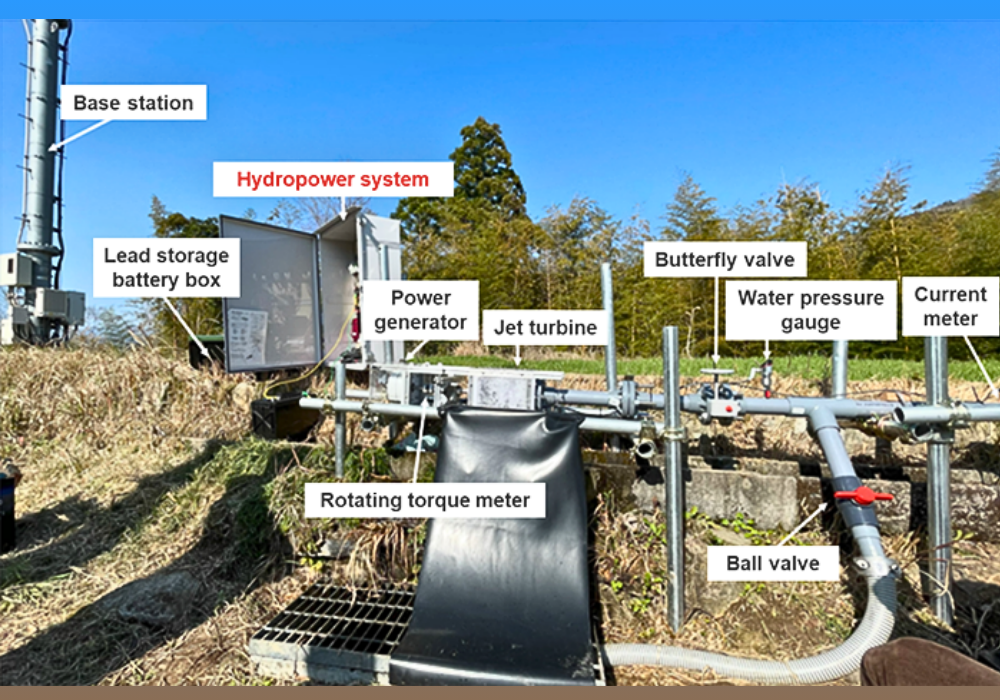
Base stations for mobile communications account for approximately 70% of the power consumed in Japan's NTT DOCOMO's operations in Japan. Hence, to use renewable energy such as hydropower in places where solar panels are not practical, NTT DOCOMO, INC. has launched Japan's first demonstration experiment of a self-powered hydropower cellular base station. The experiment began on May 30, 2024 and the company expect to start its implementation beginning in one year from now.

The experiment, which involves DOCOMO's hydroelectric power-generation system and a jet turbine developed by Professor Yukihiro Shimatani of the Prefectural University of Kumamoto, aims to prove the feasibility of a self-powered base station using water flowing in an irrigation canal, etc., as a sustainable, low-cost solution for mobile communication networks in rural areas.

The goal of this experiment is to demonstrate the feasibility of a self-powered base station using water flowing in an irrigation canal as a sustainable, low-cost solution for mobile communication networks, particularly in rural areas.

DOCOMO To Introduce 3D Printed Jet-Turbines for Irrigational Water-Powered Base Station of Mobile Communications N/w in Rural Areas


The jet turbine incorporates a nozzle that emits a stream of water, or "jet," to drive the turbine's rotation in the opposite direction and thereby generate electricity. While conventional hydroelectric systems use a separate nozzle and turbine, this device combines both components in a design so simple it can be manufactured with a 3D printer.

DOCOMO's Energy Management System (EMS) platform is being used to monitor and control the power driving the base station, as well as to visualize the amount of CO2 reduction achieved with this sustainable hydropower system. While DOCOMO's existing 286 green base stations mainly use solar power, this initiative aims to utilize renewable energy such as hydropower in locations where solar panels are not practical.

This experiment is a step towards DOCOMO's goal of achieving net-zero greenhouse gas emissions from its operations by 2030 and across its entire supply chain by 2040³. It's a significant move towards the adoption of renewable energy and the realization of a sustainable, carbon-neutral world.

There are similar initiatives in other countries that focus on integrating renewable energy sources into communication networks and other infrastructures. While the specific details of self-powered hydropower base stations like DOCOMO's experiment may not be widely reported, there are broader efforts to use sustainable energy solutions globally.

Notably, the International Renewable Energy Agency (IRENA) has discussed innovative operations of pumped hydropower storage (PHS) to provide greater flexibility to power sectors and integrate larger shares of variable renewable energy (VRE) into power systems. These initiatives often involve collaboration between technology developers, energy providers, and governments to create more resilient and sustainable energy infrastructures.

Additionally, telecom operators and technology companies worldwide are increasingly adopting green energy solutions, such as solar and wind power, to reduce their carbon footprint and ensure uninterrupted services in remote areas. These efforts are part of a global movement towards decarbonization and achieving net-zero emissions in various sectors, including mobile communications.

While the specific approach of using water from irrigation canals for powering base stations is unique to DOCOMO's experiment, the underlying principle of using renewable energy sources is a common thread in many international sustainability projects.

Indian-origin Techie Develops Technology to Charge Phones/Laptops in A Minute and EVs in 10 Minutes

Indian-origin Techie Develops Technology to Charge Phones/Laptops in A Minute and EVs in 10 Minutes

Ankur Gupta, an Indian-origin researcher and assistant professor of chemical and biological engineering at the University of Colorado Boulder, a public research university in Boulder, Colorado, United States, has made a significant breakthrough. His research has led to the development of a technology that can charge laptops and mobile phones in just one minute. Moreover, this technology also has the potential to charge electric vehicles in about 10 minutes.

The key to this innovation lies in the efficient movement of ions within a complex network of minuscule pores, which could lead to more efficient energy storage devices like supercapacitors. Supercapacitors are known for their rapid charging times and longer lifespans compared to traditional batteries. Gupta's work modifies Kirchhoff’s law, which has governed current flow in electrical circuits since 1845, by demonstrating how ions move due to both electric fields and diffusion.

This discovery is not only promising for personal electronic devices but also for power grids, where fluctuating energy demand requires efficient storage to avoid waste during periods of low demand and to ensure rapid supply during high demand¹. It's indeed an exciting development in the field of energy storage and could revolutionize how we charge our devices in the future.

The research is still in the development phase and has been published in the Proceedings of the National Academy of Science. Gupta's team at the University of Colorado Boulder has discovered how ions move within a complex network of minuscule pores, which is a significant step towards developing more efficient energy storage devices like supercapacitors

Technology

Ankur Gupta's technology is based on the efficient movement of ions within a complex network of microscopic pores, leading to rapid charging capabilities for devices like laptops, mobile phones, and electric vehicles.

Simplified Explanation of How Ankur Gupta's Tech works:

Supercapacitors: The technology utilizes supercapacitors, which are energy storage devices that store and release energy by accumulating ions in their pores.

Ion MovementUnlike traditional batteries, where ions move relatively slowly, Gupta's technology allows for a more efficient movement of ions. This is achieved by optimizing the flow within a complex structure of interconnected pores.

Charging Speed: By enhancing ion mobility, the charging process becomes much faster, allowing for a laptop or phone to be charged in just a minute and an electric vehicle in about 10 minutes.

Energy Storage: This method is not only beneficial for personal electronics but also for power grids, where efficient energy storage is crucial to handle fluctuating demands.

The breakthrough lies in modifying Kirchhoff’s law, which traditionally describes current flow in electrical circuits. Gupta's research demonstrates how ions move due to both electric fields and diffusion, which is a significant departure from the behavior described by Kirchhoff’s law in a single straight pore.

This discovery enables the simulation and prediction of ion flow in a complex network of thousands of interconnected pores within minutes, which was previously not possible¹. It's a leap forward in energy storage technology, promising faster and more efficient charging for a variety of applications.

The research is ongoing, and it may take some time before we see this technology implemented in everyday devices. However, the potential impact of such a technology on the market and our daily lives could be substantial, offering much faster charging times and longer-lasting energy storage solutions.

Source – Colorado.edu

Market Reports

Market Report & Surveys
IndianWeb2.com © all rights reserved