‏إظهار الرسائل ذات التسميات EV Charging. إظهار كافة الرسائل

India Accelerates Into Global EV Leadership: From Local Innovation to Worldwide Impact

India Accelerates Into Global EV Leadership: From Local Innovation to Worldwide Impact

India’s electric vehicle (EV) revolution is no longer a distant dream—it’s unfolding at speed, reshaping mobility, industry, and climate strategy. Over the past decade, EV adoption has surged 46 times since 2016, turning India into a rising global hub for clean mobility.

Electric mobility has rapidly evolved into a cornerstone of India’s economic growth, energy resilience, and sustainable future. Since 2016, EV sales have skyrocketed nearly 46 times, reflecting a decisive consumer shift. Exports too have surged—from just USD 1.2 million in 2020 to USD 84 million in 2024—cementing India’s position as a rising hub in the global EV landscape.

Strategic government initiatives such as the National Mission on Manufacturing, the PLI Scheme for Automobile & Auto Components, and the PM Electric Drive Revolution in Innovative Vehicle Enhancement (PM E‑DRIVE) are driving the creation of a self‑reliant, future‑ready eMobility ecosystem.  

The Shift to Electric Mobility

Electric mobility is now central to India’s climate and economic vision. EVs are reducing dependence on fossil fuel imports, strengthening energy security, and cutting urban air pollution. Government incentives, technological progress, and consumer awareness have made EVs a national priority.
  • National Electric Mobility Mission Plan (NEMMP 2020) – Roadmap for adoption and manufacturing.
  • FAME India scheme – Incentives for buyers, charging infrastructure, and manufacturing.
  • EV adoption grew from 0.08% in FY15-16 to 8.26% in FY25-26.

Types of EVs

  • Battery EVs (BEVs) – Fully electric.
  • Hybrid EVs (HEVs) & Plug-in HEVs – Engine + motor, rechargeable packs.
  • Fuel Cell EVs (FCEVs) – Electricity from chemical energy.

EV Growth Story

EV adoption in India has surged dramatically, rising from just 0.08% in FY15‑16 to 8.26% in FY25‑26. What began with a modest base of around 50,000 vehicles sold in 2016 has expanded into 2.3 million units by 2025—a staggering 46‑fold growth. This pace has outstripped global trends, where EV sales grew about 20 times over the same period, from 918,000 in 2016 to 18.78 million in 2024. Uttar Pradesh has emerged as the country’s largest EV market, accounting for more than 400,000 units or 18% of national sales, followed by Maharashtra with 266,000 units (12%) and Karnataka with 200,000 units (9%).  
  • From 50,000 units in 2016 to 2.3 million in 2025.
  • Uttar Pradesh, Maharashtra, Karnataka emerged as top markets.
  • Exports rose from USD 1.2 million (2020) to USD 84 million (2024).

Expanding Infrastructure

  • 52,718 public charging stations (July 2026), with 16,561 fast chargers.
  • Hyundai, Tata expanding ultra-fast networks across highways and cities.
  • e-Amrit tool helps locate charging stations nationwide.
India’s EV charging infrastructure is expanding at an unprecedented pace. As of July 2026, Bharat Heavy Electricals Limited (BHEL) reports that out of 52,718 public charging stations nationwide, 16,561 are equipped with fast‑charging facilities.

The government’s e‑Amrit platform further simplifies access by helping users locate nearby charging points. Industry leaders are also accelerating this build‑out—Hyundai Motor India, for example, added 11 ultra‑fast charging stations in 2024 across major cities including Mumbai, Pune, Ahmedabad, Hyderabad, Gurugram, and Bangalore, as well as along key highway corridors.  

India Electric Mobility Index (IEMI)

Launched in 2025 by NITI Aayog, IEMI tracks states’ progress across electrification, infrastructure, and innovation. Delhi, Maharashtra, Chandigarh are frontrunners with mature EV ecosystems.

Domestic Manufacturing & Startups

  • OEMs like Tata Motors, Mahindra, TVS, Bajaj Auto scaling R&D and gigafactories.
  • Global players like Tesla, VinFast, Suzuki investing in India.
  • Suzuki’s “e VITARA” (2025) marked India’s entry into global BEV exports.
  • 400+ EV startups driving innovation in batteries, charging, and AI mobility.
India is steadily transforming from an assembly‑driven market into a full‑fledged EV manufacturing powerhouse. Backed by a rapidly expanding supplier ecosystem, domestic production now spans critical components such as battery packs, motors, drivetrains, power electronics, wiring systems, and charging equipment. Leading OEMs including Tata Motors, Mahindra, TVS, and Bajaj Auto are scaling operations through investments in R&D, gigafactories, and dedicated EV platforms.

Over 400 EV startups are contributing to breakthroughs in battery recycling, AI‑enabled mobility, and charging solutions.

India’s role in EV supply chains is expanding, with exports of vehicles and components reaching USD 84 million in 2024, and Suzuki’s “e VITARA” becoming the first Made‑in‑India BEV exported to 100+ countries.

At the same time, global players like VinFast, Tesla, and major Korean and Japanese battery manufacturers are exploring large‑scale production in India. This wave of expansion is accelerating localization, reducing costs, and firmly embedding India within global EV supply chains.

Investment & Policy Push

  • India’s EV ecosystem raised USD 1.4 billion in FY25.
  • PM E-DRIVE Scheme – ₹10,900 crore, supporting 28 lakh EVs.
  • PLI Auto Scheme – ₹2,377 crore incentives for EV manufacturers.
  • PLI ACC Scheme – ₹18,100 crore for battery manufacturing, 50 GWh capacity target.
  • PM e-Bus Sewa – 10,000 buses via PPP model.

Climate & Future Outlook

  • Targeting 30% EV penetration by 2030.
  • Cutting 1 billion tonnes of carbon emissions by 2030.
  • 1.32 million charging stations by 2030.
  • EV market projected to grow from USD 3.71 billion (2025) to USD 191.04 billion (2034).
  • CAFE III & IV norms (2027–2037) to enforce stricter CO₂ limits.

Conclusion

India stands at the threshold of a transformative mobility era. With surging demand, expanding manufacturing, and robust policy support, the country is poised to become a global EV hub. The road ahead will be defined by deeper supply chain integration, battery localization, and charging infrastructure—cementing India’s leadership in the clean mobility revolution.

JSW MG Motor India Becomes the First OEM to Install 1,000 EV Chargers

JSW MG Motor India Becomes the First OEM to Install 1,000 EV Chargers
  • MG EVs Clock 290 Crore Green Kilometres in India; Save 4.17 Lakh Metric Tons of CO₂
On the occasion of World Environment Day, JSW MG Motor India announced the milestone of installing 1,000 community chargers under the MG Charge initiative across 470+ sites in India. With this achievement, the carmaker becomes the first OEM to build EV community charging infrastructure at this scale in the country. The installations span residential societies, condominiums, hospitals, campuses, hotels, and industrial parks.

In addition, the company informed that its EVs have cumulatively covered over 290 crore green kilometres on Indian roads, equivalent to saving 4.17 lakh metric tons of CO₂. The carmaker further noted that it is preparing an aggressive product onslaught for CY2026, with three new NEVs slated for launch, including the introduction of plug-in hybrid technology. JSW MG Motor India views India’s sustainability journey as one that can be driven by multiple technologies.

Aligned with the Government of India’s vision, JSW MG Motor India utilizes more than 78% renewable energy at its Halol manufacturing plant, resulting in savings of over 9,300 metric tons of carbon emissions. The plant meets nearly 95% of its total power requirements through renewable energy sources. Water consumption at the Halol facility has been reduced by 23% through process optimization and the reuse of recycled water. JSW MG Motor India has also adopted Industry 4.0 solutions, with digitization and IoT playing a crucial role in decarbonizing operations and enhancing energy efficiency.

Some key sustainability initiatives include:
  • Zero External Discharge Plant that utilizes 100% treated water
  • Usage of Cleaner fuel (PNG) in all processes. Green coverage with more than 11000 trees planted
  • Certified with Zero Waste to Landfill – Gold Maturity
  • Equipped with Bio Compost Machine for Canteen, Garden Waste Biogas Plant for Bio waste
  • Miyawaki Forest – 5700 Plants. 21 Recharge Wells

JSW MG Motor India Becomes the First OEM to Install 1,000 EV Chargers

TDB-DST Backs Mumbai-based Scharge to Drive Next-Gen EV Charging Innovation

TDB-DST Backs Mumbai-based Scharge to Drive Next-Gen EV Charging Innovation

The Technology Development Board (TDB), Department of Science & Technology (DST), Government of India, has signed an agreement with Scharge Pvt Limited for a pioneering project titled “Powering EV Charging Innovation.” Supported under the India–UK Collaborative R&D Programme for Industrial Sustainability, the initiative brings together Scharge Pvt Limited and UK-based Albright Product Design Limited to develop advanced solutions for electric vehicle (EV) charging infrastructure.

Transforming Fleet and Depot Charging

The project focuses on creating a next-generation EV charging solution tailored for commercial fleet and depot operations. At its core is an innovative EV charger charge controller developed by Scharge, integrated with Albright’s patented automated cable management system. This combined approach aims to improve operational efficiency, safety, and usability in high-demand charging environments.

A key highlight is the motorised overhead cable management system, designed specifically for fleet applications. By reducing manual handling, minimizing cable wear and tear, and enhancing user convenience, the system streamlines charging operations. Compatible with existing AC Type-2 EV chargers, it promises faster turnaround times and safer, more organized depot infrastructure.

Addressing Operational Challenges

The integrated solution tackles critical challenges such as:
  • Cable management – reducing clutter and manual intervention
  • Equipment protection – minimizing risks of damage and vandalism
  • Workflow optimization – enabling smoother fleet operations
By addressing these issues, the technology is expected to significantly enhance the efficiency of EV charging depots while raising safety standards.

Strengthening Indigenous Capabilities

Scharge Pvt Limited, headquartered in Mumbai, is an emerging Indian EV technology company specializing in power electronics and smart charging systems. Through this collaboration, the company aims to strengthen indigenous capabilities in EV charging technologies and deliver scalable, sustainable infrastructure for India’s growing electric mobility sector.

Voices from the Collaboration

Shri Rajesh Kumar Pathak, Secretary, TDB, stated: “Collaborative R&D initiatives such as the India–UK programme play a critical role in accelerating the development of advanced, industry-relevant technologies. Innovations in EV charging infrastructure are essential to support the rapid adoption of electric mobility and to build a robust, efficient, and future-ready ecosystem in India.”

The promoter of Scharge Pvt Limited expressed appreciation for the support, noting: “This project will enable us to bring innovative, globally competitive EV charging solutions to market, addressing the evolving needs of fleet operators and infrastructure providers.”

Editorial Note

This India–UK partnership represents a significant step toward building smarter, safer, and more efficient EV charging systems. By combining indigenous innovation with international expertise, the project not only addresses immediate operational challenges but also sets the stage for scalable adoption of electric mobility across commercial fleets.

Scharge Pvt Limited: Company Brief

  • Company Overview
  • Name: Scharge Pvt Limited
  • Founded: December 2021
  • Headquarters: Mumbai, Maharashtra, India
  • Industry: EV charging technology (AC/DC chargers, charge controllers, cable management systems, and software integration)
  • Status: Unfunded, privately held company

Founders & Leadership

  • Saloni Goliya Salecha – Co-founder and Director
  • Akshay Davendra Goliya – Co-founder and Director
Both founders are actively involved in steering Scharge’s product development and strategic collaborations, including the India–UK R&D programme for industrial sustainability.

Founders Background

Akshay Davendra Goliya
  • Role: Co-founder & CEO, Scharge Pvt Limited
  • Education: Illinois Institute of Technology (2007–2010)
  • Experience:
    • Founder & CEO at Scharge Pvt Limited (2021–present)
    • Leads engineering and design teams focused on EV charging innovation
Saloni Goliya Salecha
  • Role: Co-founder & CFO, Scharge Pvt Limited
  • Education:
    • Bachelor of Commerce (BCom) – Symbiosis College of Arts & Commerce
    • Chartered Accountant (CA) – The Institute of Chartered Accountants of India
  • Experience:
    • Scharge Pvt Limited – Co-founder & CFO (Sep 2021–present)
    • EY India – Manager (2018–2019), International Tax & Transfer Pricing (2014–2018)
    • EY Germany – Senior Consultant, Transfer Pricing (2017)
    • PwC India – Article Assistant, Assurance & Auditing (2010–2013)
  • Specialization: Finance, tax, auditing, and international transfer pricing

Investors & Fundraising

  • Funding Status: Scharge has not raised any external funding as of 2026
  • Investors: None reported; the company is self-financed
  • Fundraising Rounds: No venture capital or angel investment rounds disclosed

Products & Focus

  • AC and DC EV chargers for home, commercial, and fleet use
  • Charger management system (CMS) for managing networks of chargers
  • Mobile application for user interaction and monitoring
  • Smart power electronics integrated with automated cable management systems

Strategic Position

Scharge is positioning itself as a technology-first EV charging innovator in India.

Its collaboration with Albright Product Design Limited (UK) under the India–UK R&D programme highlights its ambition to deliver globally competitive, scalable EV charging solutions.

Despite being unfunded, Scharge is leveraging government-backed R&D support and partnerships to accelerate growth.

Summary

Scharge Pvt Limited is a young, Mumbai-based EV charging technology company founded by Akshay Goliya and Saloni Goliya Salecha. Akshay brings a technical background from Illinois Institute of Technology, while Saloni contributes financial expertise from her tenure at PwC and EY. The company remains unfunded, with no disclosed investors or fundraising rounds, and is building its reputation through innovation in smart charging systems and international collaborations.

Bengaluru Startup InfinityX Innovations Gets TDB Support For Next‑Gen EV Battery Swapping

Bengaluru Startup InfinityX  Innovations Gets TDB Support For Next‑Gen EV Battery Swapping

India’s electric mobility ecosystem received a major boost as the Technology Development Board (TDB), Department of Science & Technology (DST), signed an agreement with Bengaluru-based InfinityX Innovations Private Limited to support the commercialization of automated battery swapping stations for electric vehicles.

The project, backed by TDB financial assistance, aims to deploy IoT-enabled, automated battery swapping stations capable of completing a swap in under 40 seconds. This innovation directly addresses one of the biggest barriers to EV adoption—charging time—particularly for commercial fleets and last-mile delivery operators.

InfinityX’s solution integrates advanced battery systems with automated swapping infrastructure, offering high thermal stability and operational reliability across diverse Indian conditions. Its modular battery architecture ensures compatibility across multiple vehicle platforms, enabling interoperability and scalability. The system is designed for high-utilization use cases, making it especially relevant for gig economy workers and fleet operators transitioning to electric mobility.


With TDB’s support, InfinityX will establish a dedicated manufacturing facility in Bengaluru to scale production of next-generation battery packs and swapping stations. The initiative is expected to contribute to a standardized and interoperable battery swapping network, strengthening India’s domestic EV infrastructure and reducing reliance on imported technologies.

Shri Rajesh Kumar Pathak, Secretary, TDB, emphasized that accelerating deployment of efficient charging alternatives is critical for India’s EV growth. He noted that indigenous innovations such as automated battery swapping systems can play a transformative role in enabling faster adoption, particularly in high-demand commercial segments.

InfinityX CEO and Founder expressed gratitude for the support, highlighting that reducing battery transition time to under 40 seconds makes EV energy replenishment comparable to conventional refuelling, thereby improving operational efficiency and accessibility.

InfinityX Innovations is a Bengaluru-based EV technology startup founded in 2019, focused on automated battery swapping solutions. It has raised early-stage funding, including a pre-seed round of $80K in May 2022, and has received accelerator support and government backing through the Technology Development Board (TDB).

Profile – InfinityX Innovations

InfinityX Innovations is a Bengaluru-based EV technology startup founded in 2019, focused on automated battery swapping solutions. It has raised early-stage funding, including a pre-seed round of $80K in May 2022, and has received accelerator support and government backing through the Technology Development Board (TDB).

Company Overview

  • Name: InfinityX Innovations Private Limited
  • Founded: 2019
  • Headquarters: Vijinapura, Dooravani Nagar, Bengaluru, Karnataka
  • Industry: Electric Vehicles, Battery Swapping Technology
  • Employees: 1–10 (early-stage team)

Founders

  • Founder (name not publicly disclosed in available sources)
  • Leadership emphasizes indigenous innovation to reduce reliance on imported EV technologies

Funding & Investors

  • Pre-Seed Round: $80K raised in May 2022 at a valuation of $2.2M
  • Accelerator Support: Backing through accelerator programs, deal amount approx. $5.5K
  • Investors: Six early-stage investors (names not publicly disclosed)

Technology & Focus

  • Automated battery swapping stations capable of completing a swap in under 40 seconds
  • Modular battery packs compatible across multiple EV platforms
  • IoT-enabled infrastructure for real-time monitoring
  • High thermal stability and operational reliability in Indian conditions
  • Target market: commercial fleets, last-mile delivery operators, gig economy workers

Government & Institutional Support

  • TDB Agreement (2026): Signed with Technology Development Board (DST, Government of India) to scale automated battery swapping stations
  • Financial Assistance: Support to establish a dedicated manufacturing facility in Bengaluru
  • Policy Context: Aligns with PM E‑DRIVE scheme (₹10,900 crore outlay, extended till 2028)
InfinityX Innovations is emerging as a strategic player in India’s EV ecosystem, combining startup funding, accelerator backing, and government support to build a scalable, indigenous battery swapping network. Its technology directly addresses EV adoption barriers, making charging as fast as refuelling.

ThunderPlus Raises ₹3 Crore Debt from SBI to Scale EV Charging Infrastructure

  • Deploying capital with precision to accelerate high-demand expansion and maximize utilization-driven returns.
ThunderPlus, one of India’s fastest-growing EV charging infrastructure companies, has secured ₹3 Crore in structured institutional debt funding from the State Bank of India under the Government of India’s CGTMSE framework. With this milestone, ThunderPlus becomes the first profitable Charge Point Operator (CPO) in India to receive institutional bank debt, a strong validation of a model built on financial discipline, operational efficiency, and utilization-led growth.
 
ThunderPlus Raises ₹3 Crore Debt from SBI to Scale EV Charging Infrastructure


Founded in January 2024, ThunderPlus adopted a differentiated expansion strategy in a sector often characterized by high capital burn. Instead of prioritizing rapid footprint growth, the company focused on demand density, corridor connectivity, and strong unit economics. This disciplined approach enabled ThunderPlus to close FY24–25 with ₹10+ Crore in revenue and positive EBITDA, a rare achievement in India’s EV charging landscape. The company has since surpassed its first-year performance and is on track to close ₹16 Crore in revenue by March 2026, reflecting a sustained 60% growth trajectory while maintaining profitability.

The ₹3 Crore SBI facility followed comprehensive institutional due diligence, including detailed financial scrutiny, operational assessment, cash-flow validation, and long-term business model evaluation. The approval signals increasing institutional confidence that EV charging infrastructure, when built with governance and execution rigour, can qualify as a bankable and scalable infrastructure asset class.
It is very inspiring to witness the journey of ThunderPlus. What makes it even more remarkable is that this organization is based right here in Hyderabad and is fundamentally very strong. SBI is very proud to support ThunderPlus in its growth, and we look forward to actively participating in and contributing to this incredible growth story even more Srinivasu Pamu, Asst General Manager, Commercial Branch Secunderabad.

This is not just funding it is institutional validation. From day one, we focused on building a charging network rooted in profitability, operational efficiency, and responsible capital deployment. In a sector often perceived as capital-heavy and burn-driven, we chose disciplined growth supported by strong utilization and governance standards. We thank all our customers, partners & stakeholders for trusting us. This is just the beginning as we are continuing our conversations with other PEs and VC firms. The depth of due diligence undertaken by SBI reinforces our confidence in our systems, financial discipline, and long-term execution capability. We are building an infrastructure business designed to endure.” — Rajeev YSR, Executive Director & CEO, ThunderPlus.

The funds will be deployed toward:
  • Expanding charging infrastructure along high-demand corridors
  • Increasing ultra-fast charging capacity
  • Optimizing working capital cycles
  • Strengthening strategic ecosystem partnerships
ThunderPlus will continue to follow its measured expansion philosophy, ensuring each deployed asset enhances utilization and unit-level profitability before scaling further.

Beyond financial performance, ThunderPlus is also driving measurable environmental impact:
  • Dispenses ~16,000 units of clean energy daily
  • Enables nearly 60 million green kilometres annually
  • Offsets ~10,000 metric tonnes of CO₂ each year
  • Equivalent to planting ~300,000 trees
With institutional backing now secured and consistent profitability demonstrated, ThunderPlus stands at the forefront of India’s evolving EV infrastructure ecosystem setting a new benchmark for bankability, governance, and sustainable growth.

Bolt.Earth–Statiq Alliance Expands High-Speed EV Charging Across India’s Cities and Highways

Bolt.Earth–Statiq Alliance Expands High-Speed EV Charging Across India’s Cities and Highways

Bolt.Earth, India’s largest peer-to-peer (P2P) EV charging network, and Statiq, India’s fastest-growing EV charging network, which offers both AC & high-speed DC fast-charging for four-wheelers, today announced a strategic partnership to enhance nationwide EV charging access. The collaboration enables a seamless and interoperable experience, giving four-wheeler users more fast-charging options across the country.

Through this partnership, EV drivers can locate, access, and pay for chargers across both Bolt.Earth and Statiq networks directly within either app, making charging more convenient and universally accessible.

By integrating Statiq’s extensive four-wheeler fast-chargings (DC) infrastructure with Bolt.Earth’s universal charging platform, the partnership expands access to a growing network of high-speed charging locations across key cities and highways in India. This delivers a smoother, more reliable charging experience for EV users nationwide.

Statiq operates one of India’s largest and fastest-growing EV charging networks, offering both AC and high-speed DC fast-charging solutions for four-wheelers. With a strong presence across major cities, highways, and commercial hubs, Statiq enables reliable urban and intercity charging, helping EV drivers travel with greater confidence and reduced range anxiety.

Bolt.Earth–Statiq Alliance Expands High-Speed EV Charging Across India’s Cities and Highways

Speaking on the partnership, Akshit Bansal, Founder & CEO, Statiq, said, “At Statiq, our vision has always been to make public charging simple, reliable and widely accessible. Partnering with Bolt.Earth enables us to connect two strong networks and providing EV drivers with more fast-charging options through a seamless experience. By reducing the need for multiple apps and bringing more chargers onto a unified journey, we’re taking a meaningful step towards an open, interoperable charging ecosystem that supports faster EV adoption across India.”

The partnership also focuses on solving key user challenges. EV drivers will benefit from a seamless experience, with access to a wider network of chargers through a single app, supported by integrated payments and real-time charging updates.

Bolt.Earth brings a universal charging platform to the collaboration, serving users of two-wheelers, three-wheelers, and four-wheelers. Its network spans 1,900+ cities across India, ranging from standard chargers to fast-charging options. As a community-driven and P2P platform, Bolt.Earth empowers individuals, businesses, and fleets to participate in expanding EV infrastructure.

Speaking on the partnership, S Raghav Bharadwaj, CEO & Founder of Bolt.Earth, said, “Interoperability is the future of EV charging in India, and this partnership is a decisive step toward that future. By uniting Bolt.Earth’s universal network with Statiq’s robust, fast-charging infrastructure, we’re delivering unmatched accessibility and convenience to EV users. This integration aims to ease range anxiety, eliminate the hassle of multiple apps, and provide a single, real-time view of available charging points—making EV charging seamless, reliable, and user-friendly.”

The collaboration with Statiq is set to simplify the EV charging experience, enabling users across India to charge with greater ease and confidence. By bringing together interoperable networks and a seamless digital experience, the partnership helps remove everyday friction from EV charging—bringing India closer to a future where electric mobility is effortless, reliable, and an integral part of everyday life.

About Bolt.Earth:

Bolt.Earth India’s largest vertically integrated P2P electric vehicle (EV) charging network, with more than 1,00,000 chargers deployed across 1,900+ cities, serving a wide base of EV users. Founded in 2017, the company evolved from building connected IoT solutions to creating a vertically integrated EV ecosystem that combines hardware, software, manufacturing, deployment, and services under one roof. It's an open network that supports 2-, 3-, and 4-wheelers with both standard and fast-charging options, powered by the Bolt.Earth mobile app that enables a seamless scan, pay, charge experience and allows charger owners to generate passive income. Backed by collaborations with leading OEMs and ecosystem partners and supported by its proprietary Charger Management System (CMS), Bolt.Earth is positioned at the forefront of building smarter, sustainable, and connected mobility solutions in India and beyond.

For more information, visit https://bolt.earth/

About Statiq

Statiq is building one of India’s most extensive EV charging networks, with 10,000+ chargers across 1,000+ cities at highways, commercial hubs, workplaces and residential communities. Its app-led, interoperable platform brings together hardware, software and payments, helping EV drivers easily find, access and pay for charging, while enabling OEMs, developers, OMCs and fleets to deploy and operate reliable charging infrastructure at scale.

Mumbai Gets a MegaCharge! Tata Power & Tata.ev Launch City’s Largest EV Hub

Mumbai Gets a MegaCharge! Tata Power & Tata.ev Launch City’s Largest EV Hub

In a landmark move to accelerate India’s electric mobility infrastructure, Tata Power Company Limited and Tata Passenger Electric Mobility Limited have jointly inaugurated Mumbai’s first large-scale premium EV charging hub under the TATA.ev MegaCharger initiative. The launch coincided with World EV Day, marking a strategic milestone in the country’s clean energy transition.

A Flagship Collaboration for Urban EV Adoption

The co-branded charging facility was unveiled by Dr. Praveer Sinha, CEO & MD of Tata Power, and Mr. Shailesh Chandra, MD of Tata Motors Passenger Vehicles and Tata Passenger Electric Mobility. Located within the premises of The Leela Mumbai Hotel, adjacent to Terminal 2 of Chhatrapati Shivaji Maharaj International Airport, the hub is designed to serve a wide spectrum of EV users—from private car owners to commercial fleets.
This MegaCharger hub reflects our commitment to building a robust, accessible EV ecosystem that supports India’s net-zero ambitions,” said Dr. Sinha during the inauguration.

Infrastructure Highlights

  • Eight fast DC chargers with speeds up to 120 kW
  • 16 charging bays, enabling simultaneous charging for 16 EVs
  • 24/7 accessibility for private vehicles, taxis, ride-hailing services, and logistics operators
  • Strategically positioned to serve airport travelers, hotel guests, and professionals in the Andheri–BKC–South Mumbai corridor
The facility aims to eliminate long wait times and offer a seamless charging experience, especially during peak hours. Its location near a major transit hub also makes it a critical node in Mumbai’s evolving EV landscape.

Clean Mobility Meets Premium Access

The TATA.ev MegaCharger hub is part of Tata Power’s broader strategy to deploy 25,000+ EV charging points across India by 2028. With this launch, the company reinforces its leadership in both EV infrastructure and sustainable urban planning.
“This initiative not only supports our growing EV customer base but also sets a benchmark for future-ready urban mobility solutions,” said Mr. Chandra.

Power Theft Fuels Delhi’s E-Rickshaw Boom, At a Cost of ₹120 Crore

Power Theft Fuels Delhi’s E-Rickshaw Boom, At a Cost of ₹120 Crore

Delhi’s e-rickshaw sector is grappling with widespread electricity theft, with reports indicating that 60% of e-rickshaws are charged using stolen electricity. This illegal practice is causing an estimated ₹120 crore in annual losses for power companies.

Many e-rickshaw drivers rely on unauthorized charging points, often set up in shops, parking lots, or even residential buildings, leading to frequent fire hazards. The lack of dedicated charging infrastructure has forced drivers to seek alternative, often unsafe, charging methods.

Authorities are under pressure to crack down on illegal charging hubs and establish regulated fast-charging stations to curb theft and improve safety.

How this issue ties into Delhi’s clean-energy policies?

Delhi’s clean-energy push is at odds with the widespread electricity theft fueling its e-rickshaw sector. While e-rickshaws were introduced as a green alternative to fossil-fuel-powered transport, their reliance on illegal charging networks undermines the city’s sustainability goals.

The Delhi Electricity Regulatory Commission (DERC) has set a special tariff of ₹4.50 per unit to encourage legal charging. However, with over 60% of e-rickshaws tapping into stolen power, the city faces ₹120 crore in annual losses. This not only strains the grid but also increases fire hazards, as many illegal charging points operate without safety measures.

Experts argue that dedicated fast-charging stations and strict enforcement are crucial to aligning e-rickshaw operations with Delhi’s clean-energy vision. Without intervention, the sector risks becoming a liability rather than an asset in the city’s transition to sustainable transport.

TATA.ev Launches Its First 10 High-speed Megachargers Across India

Tata.ev and Statiq MegaCharger – launch in Hamzapur
TATA.ev has launched its first 10 high-speed MegaChargers across India, marking a major milestone in expanding the country’s EV charging infrastructure. TATA.ev had committed to installing 500 TATA.ev MegaChargers across India. 

TATA.ev MegaChargers are high-speed EV charging stations designed to accelerate India's electric vehicle infrastructure. These chargers, launched by TATA.ev in collaboration with ChargeZone and Statiq, are strategically placed along major highways and urban hubs to support long-distance and city commuters.

The flagship 400 kW charger in Vadodara can charge six vehicles simultaneously, adding 150 km of range in just 15 minutes.

Key Highlights:

Strategic Locations: Chargers have been installed along major routes like the Mumbai–Ahmedabad, Delhi–Jaipur, and Pune–Nashik highways, as well as urban centers like Bengaluru and Udaipur.

Ultra-Fast Charging: The Vadodara MegaCharger offers 400 kW charging, capable of powering up to six vehicles simultaneously and adding 150 km of range in just 15 minutes.

Enhanced EV Experience: Many locations feature cafés, Wi-Fi, restrooms, co-working spaces, and retail outlets, making charging stops more convenient.

Scaling Up: This initiative is part of TATA.ev’s broader commitment to install 400,000 charge points by 2027, significantly boosting India’s EV ecosystem.

This move is expected to reduce range anxiety and accelerate EV adoption across India.

Balaje Rajan, Chief Strategy Officer, Tata Passenger Electric Mobility Ltd., and Tata Motors Passenger Vehicles Ltd., said, “At a time when EV adoption is on its growth path, ubiquitous and dependable charging infrastructure is the need of the hour. These first 10 TATA.ev MegaCharger sites in key EV corridors of the country are the first tranche of a superfast charging network that we will have across major highways. The TATA.ev MegaCharger network will increasingly connect all major cities across India to remove charging anxiety. We are on a mission to provide fast, reliable, and effortless charging that enables seamless mobility across the country – and we are just getting started.”

TATA.ev Launches Its First 10 High-speed Megachargers Across India
Tata.ev and Statiq MegaCharger – Tata.ev and Statiq team at the Tata.ev MegaCharger launch in Hamzapur

TATA.ev Launches Its First 10 High-speed Megachargers Across India
Tata.ev and ChargeZone – launch in Shreenath Food Hub in Vadodara

Gurugram-based EV Charger Maker Exicom Tele-Systems Acquiring Australia-based Tritium for $29.6 Million

Gurugram-based EV Charger Maker Exicom Tele-Systems Acquiring Australia-based Tritium

Gurugram-based Exicom Tele-systems, a leading provider of EV charging solutions in India and Southeast Asia, is acquiring Tritium, an Australian company known for its DC fast chargers. This acquisition will allow Exicom to expand its global footprint in the EV charging market, for USD $29.6 Million (approx. ₹ 248.48 crore) 

With this acquisition Exicom will gain access to Tritium's manufacturing facility in Tennessee, USA, and its engineering center in Brisbane, Australia.

Exicom will pay up to USD 6.13 million between the signing of the agreement and completion of the acquisition, with the remaining USD 23.5 million to be paid at completion, subject to the terms of the agreement. The acquisition is expected to be completed by August 31, 2024.

This move aligns with Exicom's strategic vision to contribute to a sustainable, emission-free future for mobility. By combining their expertise and resources, Exicom and Tritium aim to enhance the adoption of EV infrastructure worldwide.

With Tritium’s established presence in key markets like the USA and Australia, Exicom will be able to expand its global footprint more effectively. This could lead to increased availability of advanced EV charging solutions worldwide.

Exicom Tele-Systems offers a wide range of products, including AC and DC chargers for homes, workplaces, and public spaces.

Founded in 1994, Exicom has deployed over 70,000 chargers across various regions. Their solutions are known for their robustness and ability to operate in harsh environmental and electrical conditions. They also provide batteries, rectifiers, and energy storage solutions, along with installation and maintenance services.

Tritium was founded in 2001 by three engineering graduates from the University of Queensland – Dr. David Finn, James Kennedy, and Dr. Paul Sernia. The company initially focused on developing motor control technology for solar racing cars before shifting its focus to DC fast chargers for electric vehicles.

Tritium is renowned for its advanced DC fast chargers, which are designed to be both powerful and reliable. Its chargers, such as the PK350, can deliver up to 350 kW of power, enabling them to provide up to 350 km (217 miles of range to an EV in just 10 minutes. These chargers are capable of charging any EV on the market, automatically adjusting to the correct power level for each vehicle's battery.

Tritium's chargers are engineered to operate in extreme temperatures, from -35°C to +50°C (-31°Fx to +122°F), making them suitable for various environments. These chargers are designed to maximize space efficiency, with power units that can be located away from the user units. They include standard cable management to reduce hazards and offer custom branding options.

Tritium has sold over 13,000 chargers worldwide and supports a wide range of industries, from highway rest stops to heavy-duty mining vehicles.

Researchers at IIT Madras Develop Universal Battery Charger for Electric Vehicles

Researchers at IIT Madras develop universal battery chargers for electric vehicles

Researchers at the Indian Institute of Technology Madras (IIT-M) have developed a universal battery charger for electric vehicles (EVs). This innovative charger is capable of providing a wide range of voltages from 120-900 V from a universal input power supply, which means it can potentially charge all types of EVs, including two-wheelers, three-wheelers, and four-wheelers, from a single unit.

The charger also features a controller programming that can be adapted for use in different countries based on the input power supply availability. This could significantly simplify the EV charging infrastructure and is akin to having a universal fuel pump for different types of vehicles.

Moreover, the charger is designed to be portable, serving as an emergency kit in case of vehicle breakdown or deep discharge of the battery pack. The research team, led by Dr. Deepak Ronanki, Assistant Professor at the Department of Engineering Design, IIT-M, aims to commercialize this charger for both onboard and offboard use, which could help reduce the production cost of chargers and promote wider adoption of EVs.

This development addresses one of the major hurdles in the widespread adoption of EVs, which is the lack of a seamless and quick charging infrastructure. By being able to modify the input power supply to meet the EV's requirements and deliver the appropriate output voltage, the universal charger by IIT Madras could play a crucial role in the EV ecosystem.

This development is particularly significant as one of the major barriers to the adoption of EVs is the lack of a seamless and quick charging infrastructure. The universal charger developed by IIT Madras addresses this issue by being able to modify the available input power supply according to the EV's requirements and deliver an output voltage based on the battery pack voltages.

The research is led by Dr Deepak Ronanki, Assistant Professor, Department of Engineering Design, IIT-M, and published in peer-reviewed journal IEEE Transactions on Power Electronics.

The IIT Madras innovators are currently in talks with multiple industry players to commercialize the product. "We will be finalising a company very soon and the commercial production could happen in about a year’s time", said Dr Deepak. 

Source ~ Deccan Herald

Tata Power Strengthens Its Nationwide e-Bus Charging Network With High-Capacity Fast Charging Points

Tata Power Strengthens Its Nationwide e-bus Charging Network With High-Capacity Fast Charging Points

  • 2300+ e-buses powered through 850+ bus charging points across Delhi, Mumbai, Bengaluru, Ahmedabad, Goa, Jammu and Srinagar to accelerate e-mobility in public transport
  • Enabling e-mobility across 30+ bus depots for State Transport Corporations like DTC, BEST, BMTC, JSCL, SSCL, BRTS-AJL through OEM partnerships
  • Expansive pan-India bus charging network led to the saving of more than 1 lakh tonne tailpipe CO2 emissions
Tata Power Renewable Energy Limited (TPREL), a subsidiary of the Company, one of India's largest integrated renewable energy companies and electric vehicle charging service providers, continues to spearhead the nation's transition towards e-mobility by deploying 850+ charging points in key metropolitan areas.

With charging points strategically located across 30+ bus depots in prominent cities such as Delhi, Mumbai, Ahmedabad, Bengaluru, Jammu, Srinagar, Dharwad, Lucknow, and Goa, Tata Power has enabled 2300+ public e-buses nationwide. The robust bus charging network has successfully led to more than 1 lakh tons of tailpipe CO2 emissions savings. Tata Power has also designed and built various bus depots across the country.

Tata Power Renewable's charging infrastructure boasts of high-capacity fast chargers with a range of 180 - 240 KW with average charging time being of 1 to 1.5 hours. Rapid charging capabilities support the demanding operational needs of public transport buses.

Tata Power Strengthens Its Nationwide e-bus Charging Network With High-Capacity Fast Charging Points


While Delhi leads in e-bus presence utilizing Tata Power's EV Charging points, it is followed closely by Mumbai, Bengaluru, Ahmedabad, Jammu, and Srinagar. Tata Power is dedicated to promoting e-mobility adoption and is fostering synergies with various OEM operators and enabling various state governments’ transport corporations.

The company offers an end-to-end solution for charging infrastructure development, ensuring the best charging experience, emphasizing lean, customized, and cost-effective design solutions, along with timely execution and comprehensive operation and maintenance (O&M) services for our clients. Additionally, Tata Power provides services such as effluent treatment plants and statutory NOC approvals to ensure smooth business operations.

In alignment with India's Net Zero goals, Tata Power is committed to achieving Net Zero emissions by 2040. As a leader in the country's green energy transition, Tata Power offers a comprehensive range of green energy solutions from Rooftop Solar, Home Automation, and Smart Metering to EV Charging, to promote the adoption of sustainable lifestyles. This commitment is further reinforced by the company's 'Sustainable Is Attainable' movement, which aims to foster the widespread adoption of green energy solutions and transform sustainability into a people's movement.

Indian-origin Techie Develops Technology to Charge Phones/Laptops in A Minute and EVs in 10 Minutes

Indian-origin Techie Develops Technology to Charge Phones/Laptops in A Minute and EVs in 10 Minutes

Ankur Gupta, an Indian-origin researcher and assistant professor of chemical and biological engineering at the University of Colorado Boulder, a public research university in Boulder, Colorado, United States, has made a significant breakthrough. His research has led to the development of a technology that can charge laptops and mobile phones in just one minute. Moreover, this technology also has the potential to charge electric vehicles in about 10 minutes.

The key to this innovation lies in the efficient movement of ions within a complex network of minuscule pores, which could lead to more efficient energy storage devices like supercapacitors. Supercapacitors are known for their rapid charging times and longer lifespans compared to traditional batteries. Gupta's work modifies Kirchhoff’s law, which has governed current flow in electrical circuits since 1845, by demonstrating how ions move due to both electric fields and diffusion.

This discovery is not only promising for personal electronic devices but also for power grids, where fluctuating energy demand requires efficient storage to avoid waste during periods of low demand and to ensure rapid supply during high demand¹. It's indeed an exciting development in the field of energy storage and could revolutionize how we charge our devices in the future.

The research is still in the development phase and has been published in the Proceedings of the National Academy of Science. Gupta's team at the University of Colorado Boulder has discovered how ions move within a complex network of minuscule pores, which is a significant step towards developing more efficient energy storage devices like supercapacitors

Technology

Ankur Gupta's technology is based on the efficient movement of ions within a complex network of microscopic pores, leading to rapid charging capabilities for devices like laptops, mobile phones, and electric vehicles.

Simplified Explanation of How Ankur Gupta's Tech works:

Supercapacitors: The technology utilizes supercapacitors, which are energy storage devices that store and release energy by accumulating ions in their pores.

Ion MovementUnlike traditional batteries, where ions move relatively slowly, Gupta's technology allows for a more efficient movement of ions. This is achieved by optimizing the flow within a complex structure of interconnected pores.

Charging Speed: By enhancing ion mobility, the charging process becomes much faster, allowing for a laptop or phone to be charged in just a minute and an electric vehicle in about 10 minutes.

Energy Storage: This method is not only beneficial for personal electronics but also for power grids, where efficient energy storage is crucial to handle fluctuating demands.

The breakthrough lies in modifying Kirchhoff’s law, which traditionally describes current flow in electrical circuits. Gupta's research demonstrates how ions move due to both electric fields and diffusion, which is a significant departure from the behavior described by Kirchhoff’s law in a single straight pore.

This discovery enables the simulation and prediction of ion flow in a complex network of thousands of interconnected pores within minutes, which was previously not possible¹. It's a leap forward in energy storage technology, promising faster and more efficient charging for a variety of applications.

The research is ongoing, and it may take some time before we see this technology implemented in everyday devices. However, the potential impact of such a technology on the market and our daily lives could be substantial, offering much faster charging times and longer-lasting energy storage solutions.

Source – Colorado.edu

Tata Power Installed Over 220 RFID-equipped EV Charging Stations Across Karnataka

Tata Power Installed Over 220 RFID-equipped EV Charging Stations Across Karnataka

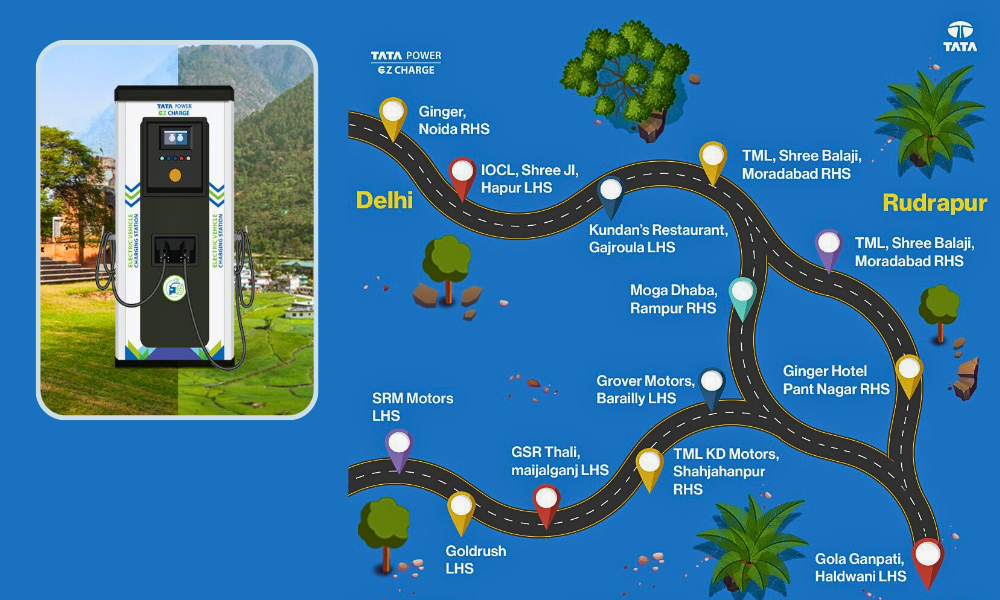
Tata Power is evidently spearheading the growth of sustainable mobility in Karnataka with its electric vehicle (EV) infrastructure in the state. The company has so far installed over 220 RFID-enabled EV charging stations across Karnataka, which are part of their EZ Charge network. These charging points are equipped with RFID card transactions for a seamless 'tap, charge, and go' system, making the charging process convenient for EV users.

The chargers are strategically placed along major highways connecting key cities like Bengaluru, Mangaluru, Davangere, and Mysuru, and also at popular tourist destinations such as Chikmagalur and Coorg. In Bengaluru alone, there are over 150+ charging points across various suburbs, ensuring that the capital city is well-covered.

This expansion by Tata Power is in line with Karnataka's vision to adopt clean and efficient transportation and positions the state as a leader in EV adoption in India. The initiative also includes collaborations with well-known public locations and commercial complexes to form a comprehensive charging network.

Other important cities with a notable EZ Charge presence include Mangaluru, Mysuru, Hubli, Belgaum, Gulbarga, and Davangere. EV Chargers have also been deployed at prominent public locations like Taj, Park, Oberoi, Gokulam Hotels, Tata Croma, and Tanishq, ensuring seamless accessibility for electric vehicle users.

With an extensive network of over 150+ charging points strategically positioned in Bengaluru across key suburbs like Devanahalli and Electronic City, Tata Power is committed to minimizing charging distances across the capital city also.

Tata Power has also collaborated with renowned builders and societies like Brigade Gardenia and Divyashree Elan Homes (RWA). This strategic approach extends to key commercial complexes, forming a comprehensive charging network in the state. Moreover, the company’s strategic collaborations with entities like Decathlon and Titan further strengthen its position in Karnataka's EV charging landscape.

Tata Power's EV charging stations, including those in Karnataka, are designed to be compatible with a variety of electric vehicle models. They have deployed a pan-India charging infrastructural solution with over 4000+ public and semi-public EZ CHARGE points that cater to diverse charging standards and specifications. This includes different EV vehicle categories and manufacturers, ensuring that a wide range of EVs can be accommodated.

Tata Power is actively advancing to fulfill the state government's visionary objectives. By strategically placing charging points in key locations, Tata Power not only facilitates the growing EV adoption but also contributes significantly to Karnataka's position as one of the leaders in EV adoption in the country.

Tata Power stands at the forefront of the electric vehicle charging domain, having forged impactful collaborations with state governments and municipal corporations nationwide. With a large market share, its commitment to sustainable mobility is exemplified through the extensive EZ Charge network spanning 530 cities and towns, 86,000 home chargers, 5300 public charging points, and 850 strategically positioned bus-charging stations. Present across prominent highways and diverse locations such as hotels, malls, offices, hospitals,residential complexes, etc., Tata Power is playing a pivotal role in accelerating e-mobility adoption across the country.

MG Motor and Epsilon Collab for EV Charging and Battery Recycling

MG Motor and Epsilon Collab for EV Charging and Battery Recycling

MG Motor India has collaborated with the Epsilon Group to enhance EV charging solutions and battery recycling.

MG Motor has signed a Memorandum of Understanding (MoU) with Power EV, a subsidiary of Epsilon Group, to provide Custom Charging technology for MG's electric vehicles (EVs). This technology will
include a range of AC and DC chargers capable of speeds from 22kW to 120kW.

Power EV aims to expand the availability of AC chargers and introduce high-capacity DC charging options by deploying 1,000 charging points in 1,000 days within residential communities and apartments across India.

Another Epsilon Group subsidiary, LICO, will assist MG Motor India in its Extended Producer Responsibility (EPR) obligations by providing comprehensive battery recycling and certification services. This partnership emphasizes a circular economy approach, focusing on second-life and end-of-life solutions for batteries.

MG Motor India's Chief Growth Officer, Gaurav Gupta, expressed that this collaboration signifies a strategic alliance aimed at realizing an efficient charging infrastructure that complements a circular economy. It's great to see companies working together to promote sustainable practices in the EV industry.

In India's First, Tata Power's EV Charging Network Surpasses 100 Million Green KMs Milestone

Tata Power's EV Charging Network Surpasses 100 Million Green KMs Milestone

Company’s comprehensive EV charging network serving 530 cities and towns to support the Government's vision for 1 crore annual EV sales by 2030

Tata Power, one of India’s largest integrated power companies and providers of electric vehicle charging solutions becomes the first EV Charging solutions provider to power 10 crore (100 million) green kilometers spanning public, semi-public, bus/fleet and home charger segments across India. This milestone achievement underscores Tata Power's pivotal role in promoting sustainable mobility solutions nationwide.

India's vision for sustainable transportation and the government's push for e-mobility through schemes such as FAME and the National Electric Mobility Mission aims to ensure that 30 percent of all vehicle sales in the country are electric by 2030. Recognizing the pivotal role of robust EV charging infrastructure in this transition, Tata Power has expanded its network under the name of EZ Charge (read easy) to over 86,000 home chargers, 5,300+ public, semi-public, and fleet charging points, along with 850+ bus charging stations across 530 cities and towns. These chargers have been strategically deployed at diverse and accessible locations such as highways, hotels, malls, hospitals, offices, residential complexes, etc. This concerted effort has been instrumental in facilitating the exponential growth of electric mobility in India.

According to an industry estimate, India is expected to reach annual sales of 1 crore electric vehicles by 2030. Tata Power, with its presence across the country, stands at the forefront of this transformative journey.

With a surge in demand for electric vehicles and an EV charging infrastructure, Tata Power is also ensuring tech-enabled customer-centric solutions such as the RFID card that enables EV users to tap.charge.go by making wireless payments.


Tata Power has received the prestigious 'Shoonya Infrastructure Champion' accolade for our unwavering dedication to zero-emission mobility. This recognition was recently bestowed upon the company during the 2nd Annual Shoonya Forum in New Delhi. Launched in 2021 by NITI Aayog, the Shoonya – Zero Pollution Mobility campaign has fostered crucial collaborations, including with MyGov, the Government of India's citizen engagement platform, and approximately 200 industry partners. These partnerships, spanning e-commerce and food delivery firms, ride-hailing services, vehicle manufacturers, fleet aggregators, infrastructure providers, and financiers, are instrumental in shaping the landscape of cleaner mobility within the electric vehicle (EV) ecosystem.

Adani TotalEnergies E-Mobility and MG Motor India Tie-up To Develop EV Charging Infrastructure

Adani TotalEnergies E-Mobility and MG Motor India Tie-up To Develop EV Charging Infrastructure

Adani TotalEnergies E-Mobility Limited, a wholly owned subsidiary of Adani Total Gas (ATGL), and MG Motor India have signed a Memorandum of Understanding (MoU) to collaborate on developing electric vehicle (EV) charging infrastructure.

This partnership aims to enhance the EV ecosystem by setting up CC2 60 kW DC chargers at upcoming MG dealerships, improving customer accessibility to charging facilities. Additionally, the two companies plan to integrate public charging stations across platforms using advanced application programming interfaces (APIs), which will contribute to a cleaner environment by reducing carbon emissions.

The collaboration between Adani TotalEnergies E-Mobility and MG Motor India addresses one of the major hurdles in EV adoption - the lack of charging infrastructure. By setting up fast-charging stations at MG dealerships, the collaboration will make it more convenient for EV owners to charge their vehicles. The partnership aims to improve customer experience by providing easy access to charging facilities, which can encourage more consumers to consider purchasing EVs.

In addition, a digital platform will be launched to facilitate a seamless customer experience, covering discovery, user authentication, charging, and billing settlement through a dedicated mobile application.

With this partnership, integrating public charging stations across platforms using APIs will likely lead to a more seamless charging experience for users, as they can locate and access chargers through a unified system.

By pomoting the use of EVs, this collaboration contributes to reducing carbon emissions, aligning with global efforts to combat climate change and promote sustainability. Such collaborations can stimulate the growth of the EV market in India, potentially leading to increased investment and innovation in the sector.

Overall, this MoU represents a strategic move to accelerate India's transition to a greener automotive landscape.

Tata Passenger Electric Mobility and Hindustan Petroleum Partner To Introduce RFID Payment Sustem and Setup 5000 EV Charging Stations

Tata Passenger Electric Mobility and Hindustan Petroleum Partner To Introduce RFID Payment Sustem and Setup 5000 EV Charging Stations

Tata Passenger Electric Mobility Ltd. has collaborated with Hindustan Petroleum Corporation Limited to setup 5,000 electric vehicle charging stations in India by December 2024.

The MoU was signed today, by (L – R) Mr. Balaje Rajan, Chief Strategy Officer, Tata Motors Passenger Vehicles Ltd., and Tata Passenger Electric Mobility Ltd., and Mr. Debashis Chakraverty, Chief General Manager- Retail Strategy and Business Development, Hindustan Petroleum Corporation Ltd.

Tata Passenger Electric Mobility Ltd. (TPEM), known for pioneering India’s electric vehicle revolution, has signed an MOU with Hindustan Petroleum Corporation Ltd. (HPCL) to collaborate in establishing 5,000 electric vehicle charging stations in India by December 2024.

This strategic partnership aims to improve the experience of EV owners across India by setting up chargers at locations frequently visited by Tata EV owners. HPCL, with its nationwide network of over 21,500 fuel stations, is committed to a sustainable future and aims to install 5,000 electric vehicle charging stations by the specified deadline.

Additionally, the two companies are exploring the introduction of a convenient payment system through a co-branded RFID card, which will make the charging experience hassle-free. Leveraging TPEM’s extensive insights into EV usage and HPCL’s extensive nationwide network, this partnership has the potential to transform the charging infrastructure landscape in the country.

Commenting on this partnership, Balaje Rajan, Chief Strategy Officer, Tata Passenger Electric Mobility Ltd. and Tata Motors Passenger Vehicles Ltd. said, “As the adoption of EVs increases, the availability of widespread and dependable charging infrastructure will play a crucial role in making EVs mainstream in India. This strategic partnership with HPCL emphasizes our dedication to advancing India’s EV ecosystem in which the growth of charging infrastructure plays a pivotal role. This collaboration is essential for facilitating infrastructure development to support the expanding EV customer base. Leveraging TPEM’s extensive insights into EV usage and HPCL’s extensive nationwide network, this partnership has the potential to transform the charging infrastructure landscape in the country.”

According to Debashis Chakraverty, Chief General Manager, Retail Strategy & BD, HPCL, “HPCL with its 21000+ fuel stations has entered into an alliance with Tata Motors that commands 68% market share in Indian EV market. Through this alliance, HPCL shall leverage Tata Motors’ vehicle base to enable our strategic expansion in EV Charging infrastructure at places with higher charging demand and will help in reducing range anxiety of EV customers

Case studies from across the world show that ubiquitous and convenient charging infrastructure is a prerequisite for driving EV adoption, and that growth in charging infrastructure results in exponential growth in EV adoption as well. To that effect, the collaboration between two leading companies in this space is sure to help catapult India’s EV growth to its next phase.

Mahindra Signs MoU with Adani Total Energies E-Mobility for Expanding EV Charging Infra Across India

Mahindra Signs MoU with Adani Total Energies E-Mobility for Expanding EV Charging Infra Across India

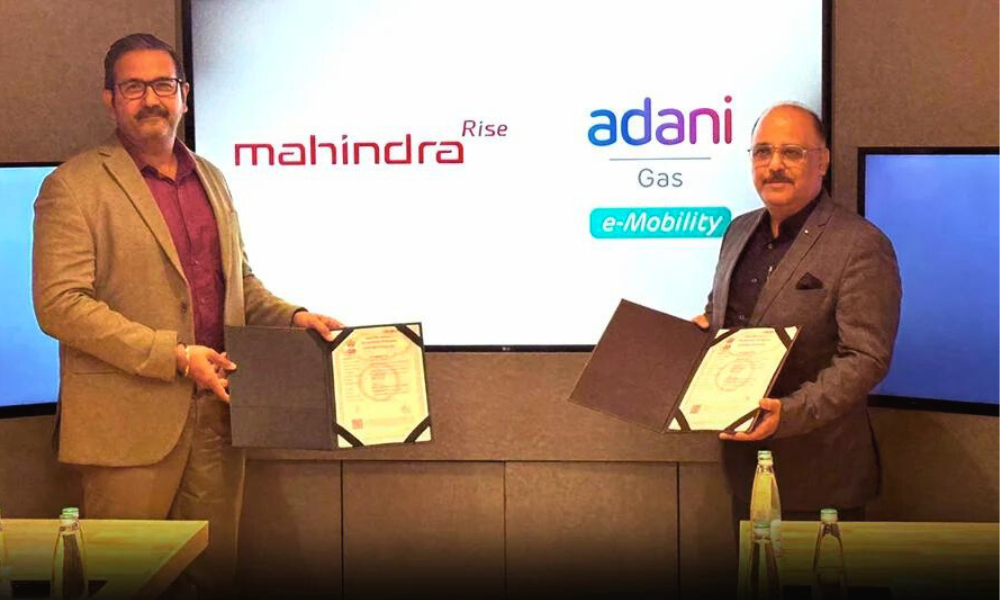
Mahindra & Mahindra, a leading SUV manufacturer in India, has signed a Memorandum of Understanding (MoU) with Adani Total Energies E-Mobility Limited (ATEL). This partnership aims to expand the electric vehicle (EV) charging infrastructure across India, enhancing the convenience and reach of EV charging for Mahindra EV owners.

The collaboration is part of a broader initiative to accelerate the adoption of EVs in line with India's climate action goals. It includes the integration of more than 1100 chargers into the Bluesense+ App, which will provide Mahindra's XUV400 customers with seamless access to the charging network.

This strategic alliance is a significant step towards building a sustainable future and decarbonizing transportation, in accordance with COP 26 commitments.

Moreover, the partnership will also entail rolling out e-mobility solutions to provide seamless access to the charging network for the customers covering discovery, availability, navigation, and transactions. With this association, the XUV400 customers will now have access to more than 1100 chargers on the Bluesense+ App, significantly enhancing the convenience and reach of electric vehicle charging for Mahindra EV owners.

Veejay Nakra, President - Automotive Division, M&M Ltd. said, "We are thrilled to partner with Adani Total Energies. This alliance is a cornerstone in enhancing the EV charging infrastructure, ensuring our customers enjoy seamless access to charging network and digital integration for an unparalleled EV experience. In line with our commitment to enhance customer experience with partner network, we are actively on-boarding multiple partners to broaden the EV ecosystem, driving the adoption of electric vehicles."

Mr. Suresh P Manglani, Executive Director & CEO of Adani Total Gas Ltd. said, "This is one more step towards expanding the footprint of Adani Total Gas Ltd in the EV space. The collaboration with M&M for the charging infrastructure will bolster the confidence of customers to embrace EV technology as part of the energy transition. Together, such steps will help reduce carbon emissions, and help India meet its climate action goals."

Tata Power Achieves A Milestone of 1000 Green Energy-powered EV Charging Points in Mumbai

Tata Power Achieves A Milestone of 1000 Green Energy-powered EV Charging Points in Mumbai

Tata Power, one of India’s largest integrated power companies and electric vehicle charging solutions providers, has made a notable stride towards sustainable mobility by transitioning over 1000 of its EV charging points in Mumbai to being powered by green energy.

With over 10000 EVs and growing four-wheelers on the roads, Mumbai is rapidly embracing e-mobility. To support this growth, Tata Power is spearheading the development of an extensive EV charging infrastructure throughout the city. Currently, Mumbai is equipped with over 1000 green charging points out of which 44 are public, 385 are in residential societies, 58 are across commercial locations such as malls, hotels, workplaces, etc, and 531 are fleet charging points. Their presence at strategic locations ensures convenient access for EV owners.

Moreover, the network also extends along major highways, facilitating seamless intercity travel for electric vehicle users. Tata Power has been providing EV charging services to players like Everest, CAB-E and also has EV charging points at prominent residential societies like Rustomjee Oriana, Rustomjee Elanza, Lodha The Park, Kalpataru Pinnacle, Lodha Primero, The Reserve by Runwal across the city.

To encourage intercity travel along popular routes, Tata Power has installed over 19 fast charging points on the Mumbai-Pune highway and about 26 fast charging points on the Mumbai-Goa (via Pune) highway. Tata Power's dedication to enhancing nationwide EV charging accessibility is evident through its comprehensive network that spans over 475 cities and towns, offering a variety of charging solutions tailored to meet the needs of home users, public and semi-public, and bus fleets. With more than 73,000 home chargers, 5,300+ public, semi-public, and fleet charging points, and 690+ bus charging stations, Tata Power is at the forefront of driving the transition towards environment- friendly transportation.

Tata Power has outlined an ambitious plan to expand its green energy footprint to an additional 4000 charging points across Maharashtra, in a phased manner. This expansion aims to not only extend the reach of accessible EV charging solutions but also to ensure that these facilities are powered by 100% renewable energy sources. This initiative is aligned with Tata Power's ‘Sustainable Is Attainable’ movement, positioning the company as a pioneer in the shift towards a greener future.

By focusing on renewable energy sources for EV charging, Tata Power is not just facilitating eco-friendly transportation but is also setting a benchmark for sustainability in the energy sector. This strategic move is poised to inspire a nationwide paradigm shift, encouraging other states to adopt similar green initiatives.

Market Reports

Market Report & Surveys
IndianWeb2.com © all rights reserved