‏إظهار الرسائل ذات التسميات Graphene. إظهار كافة الرسائل

IIT Mandi Creates Super-Flexible Material for Future Wearable Gadgets

  • The findings lay a strong foundation for building flexible electronics, wearable medical sensors, lightweight solar cells, next-generation strain sensors, and tunable optical devices.
  • This study addresses one of the major challenges faced in the field of atomically thin materials: poor stability in air and difficulties in flexible device fabrication.
  • This Work has published in advanced functional Materials
Globally, there is a major push toward flexible and wearable electronics, ranging from bendable smartphones to medical sensors that can monitor health in real-time. The success of these technologies depends heavily on advanced materials research. Graphene, a thin two-dimensional (2D) material with extraordinary properties, predicted to be the foundation for next-generation devices such as photodetectors, sensors, supercapacitors, and flexible electronics.

However, graphene has many limitations. Over a four-year period, oxidation and degradation of such thin 2D materials (WS2) were observed, leading to poor device efficiency. In addition, transfer techniques like those used for 2D materials often damaged the delicate flakes, resulting in slippage, weak adhesion, and loss of optical or electrical properties.

 
IIT Mandi Creates Super-Flexible Material for Future Wearable Gadgets

To address this, researchers at IIT Mandi developed a ground-breaking WS₂–PDMS composite fabrication. A long-lasting and flexible material that could power the next generation of wearable gadgets, bendable phones, and health-monitoring devices.

The development of WS₂–PDMS composite fabrication

The research, led by Prof. Viswanath Balakrishnan along with Yadu Chandran, Dr. Deepa Thakur, and Anjali Sharma from IIT Mandi, introduces a water-mediated, non-destructive transfer method that enables chemical vapor deposited WS₂ (a widely studied semiconductor) monolayers to be sandwiched within PDMS layers.

Speaking about the breakthrough, Prof. Viswanath Balakrishnan, Associate Professor, School of Mechanical and Materials Engineering, IIT Mandi, said, “This development a significant milestone toward flexible, wearable electronics from 2D materials. By protecting those atomically thin layers while not giving up their optical or electrical properties, we've defined a scalable, long-lived platform for the next generation of sensors, displays, and health-monitoring.” This research will be helpful in creating wearable health-monitoring sensors, flexible displays and smartphones, solar cells and light-harvesting devices, strain sensors, memristors, optoelectronic systems and quantum technologies such as valleytronics and photon emitters.”

The researchers demonstrated that encapsulating monolayer tungsten disulfide (WS₂) in polydimethylsiloxane (PDMS) maintained stability for over a year without any signs of oxidation and degradation. Furthermore, the vertical stacking of WS₂-PDMS layers enhanced optical absorption by more than fourfold while preserving the intrinsic properties of the monolayers. Additionally, the composite exhibited excellent flexibility and durability, withstanding thousands of bending cycles without delamination and ensuring efficient strain transfer.

Overall, this research addresses a key challenge in using atomically thin materials, their poor stability in air. By developing a simple composite strategy using PDMS, these materials can be preserved for long-term use while maintaining their unique properties. Since they are the foundation for flexible electronics, wearable health monitors, next-generation sensors, and efficient optoelectronic devices, this method directly contributes to technologies that will impact daily life in the near future.

National Importance of the Research

This innovation directly contributes to India’s National Quantum Mission, (an initiative by the Government of India to propel the nation to the forefront of quantum technology research and development with a budget allocation of ₹6,000 crore) by enabling durable 2D materials that are vital for quantum light sources, single-photon emitters, and secure communication technologies. It also aligns with the growing global demand for flexible electronics, wearable healthcare systems, and energy-efficient devices.

This initiative has the potential to establish India as a global leader in quantum computing, secure communications, and advanced quantum materials. Two-dimensional TMDs can play a pivotal role as single-photon emitters, valleytronics platforms, and quantum light sources, crucial elements of quantum computing and communication. The compatibility of such materials with flexible platforms also opens the possibility of integrated quantum devices on bendable and transparent substrates, offering design advantages that traditional bulk materials cannot achieve.

Practical Implications

The findings lay a strong foundation for building flexible electronics, wearable medical sensors, lightweight solar cells, next-generation strain sensors, and tunable optical devices. Since PDMS is biocompatible, the nanocomposite is especially promising for wearable health monitors that can be directly attached to the human body for real-time tracking.

The method also allows vertical stacking of layers to integrate multiple functionalities on a single compact platform. It is scalable, cost-effective, and free of complications, making it suitable for industrial adoption.

One highlight of this research is that the process avoids harmful chemicals, reducing environmental impact. With its long-term vision, the approach can accelerate the development of durable, high-performance devices that fit seamlessly into smart wearables, healthcare technologies, and energy-efficient systems, ultimately benefiting society at large.

IISc Proposes ₹500 Crore Plan for World's Smallest Semiconductor Chip

IISc Proposes ₹500 Crore Plan for World's Smallest Semiconductor Chip

Angstrom-scale chips are ultra-small semiconductor chips that go beyond the current nanometer-scale technology. These chips are designed using 2D materials like graphene and transition metal dichalcogenides (TMDs), allowing for extremely compact and efficient electronics.

For context, the smallest chips currently in production measure 3 nanometers, but angstrom-scale chips aim to be one-tenth that size. This breakthrough could lead to faster computing, energy-efficient devices, and next-generation Al systems.

India's Indian Institute of Science (IISc) has proposed a ₹500 crore project to develop these ultra-small chips, positioning the country as a leader in next-gen semiconductor technology, said a report by news agency PTI.

According to the report, India’s Ministry of Electronics and IT (MeitY) confirmed that the proposal has been under discussion.

The report also cites an official privy to the development and quotes the official saying, "MeitY is positive about the project. The Principal Scientific Adviser and Secretary, MeitY, have held meetings on it. MeitY is exploring the electronics applications where such technology can be deployed. This is a collaborative effort that requires due diligence at every step."

This comes within few days after IISc researchers recently announced that they have engineered a bacteria-based technique to repair bricks used in space habitats.

Scientists from IISc have proposed developing angstrom-scale chips using 2D materials like graphene and transition metal dichalcogenides (TMDs). These chips would be far smaller than the smallest chips currently in production, potentially revolutionizing semiconductor technology. The proposal, submitted to the government, aims to position India as a leader in next-generation semiconductor research.

The project seeks ₹500 crore over five years to develop indigenous technology, contrasting with India's 91,000 crore semiconductor project led by Tata Electronics in partnership with Taiwan's PSMC.

Globally, Europe, South Korea, China, and Japan have already invested heavily in 2D material-based semiconductor research.

To recall, last year in January a team of researchers at Georgia Tech and Tianjin University has claimed to have created the world’s first functional semiconductor made from graphene.

Angstrom-scale chips could unlock groundbreaking advancements across multiple industries. With significantly higher transistor density, these chips could enable Al models to process vast amounts of data faster and more efficiently, revolutionizing fields like quantum computing and Al-driven automation.

India’s push toward 2D semiconductor materials like graphene and transition metal dichalcogenides (TMDs) could position it as a leader in this post-silicon era.

Besides, it may also be recalled that Digital University of Kerala (DUK), along with Centre for Materials for Electronics Technology (C-MET) in Thrissur, launched India's first Graphene Innovation Centre, in January 2022.

Tata Steel To Go Beyond Steel and Diversify Into FRP Composites, Graphene and Medical Implant Materials

Tata Steel To Go Beyond Steel and Diversify Into FRP Composites, Graphene and Medical Implant Materials

Tata Steel is expanding its horizons beyond traditional steel production. The global steel company is venturing into knowledge-intensive materials to create parallel revenue streams. Specifically, Tata Steel is exploring areas like fibre-reinforced polymers (FRP) composites, graphene, and medical implant materials. By diversifying into these new materials, Tata Steel aims to counter the cyclicality of the steel business and drive revenue streams in parallel to steel business.

At the 68th Annual General Meeting (AGM) of the Madras Management Association held in Chennai, T. V. Narendran, the Managing Director and CEO of Tata Steel, addressed the audience. During his speech, he highlighted Tata Steel's strategic diversification into knowledge-intensive materials beyond steel production.

Used in aerospace, automotive, and construction Industries, Knowledge-intensive materials refer to substances or composites that are developed through advanced research, scientific understanding, and specialized expertise. These materials often exhibit unique properties or functionalities beyond what traditional materials offer.

While Fibre-Reinforced Polymers (FRP) Composites are combinations of fibres (such as glass, carbon, or aramid) embedded in a polymer matrix (like epoxy or polyester). Tata Steel's FRP business fetched a revenue of ₹375 crore in FY24, according to its latest annual report.

Graphene is a single layer of carbon atoms arranged in a hexagonal lattice. It is known for its exceptional strength, electrical conductivity, and flexibility. It finds its applications in electronics, energy storage, and materials Science. Tata Steel, a flagship company of the Tata Group, has been actively involved in graphene research and development. In 2016, Tata Steel launched its Graphene Initiative and established the Graphene Centre in Jamshedpur, India. This move had signaled Tata Steel's transition from a traditional steel company to a materials production company, emphasizing advanced materials like graphene. In 2017, Tata Steel released a graphene-based product range called "Tiscon Superlinks+". These were graphene-coated stirrups used in construction applications.

Tata Steel continues its research and commercialization efforts related to graphene. The company explores opportunities in graphene supply, processing, and applications.

Beside these, Tata Steel is also getting into Medical Ceramics, which according to Narendran, is imported from outside. 
Medical ceramics play a crucial role in healthcare due to their unique properties. The global medical ceramics market reached $11.3 billion in 2023. By 2032, it's expected to reach $17.3 billion, exhibiting a CAGR of 4.7% during 2024-2032.

By leveraging its expertise in material science, Tata Steel aims to create parallel revenue streams while continuing to build steel plants. This forward-thinking approach reflects their commitment to innovation and sustainable growth.

The Tata Steel CEO Narendran also mentioned Tata Steel’s previous attempt in the titanium business and the company's efforts to build a project in Tamil Nadu. The company had plans to set up a project near Thoothukudi due to the availability of rutile sand in the state and had even begun acquiring land. However, the project did not materialize due to several reasons. To recall, in 2003, Tata Steel initiated a feasibility study for an integrated titanium dioxide plant in Tamil Nadu through an agreement with Outokumpu-Lurgi, Pincock Allen Holt, and Larsen & Toubro.

Tata Steel's strategic diversification reflects its commitment to innovation and sustainable growth beyond traditional steel manufacturing.

Researchers Develop World's 1st Functioning Graphene-Based Semiconductor

Researchers Develop World's 1st Functioning Graphene-Based Semiconductor

Researchers at Georgia Tech, in Atlanta, have claimed to developed the world’s first functioning graphene-based semiconductor

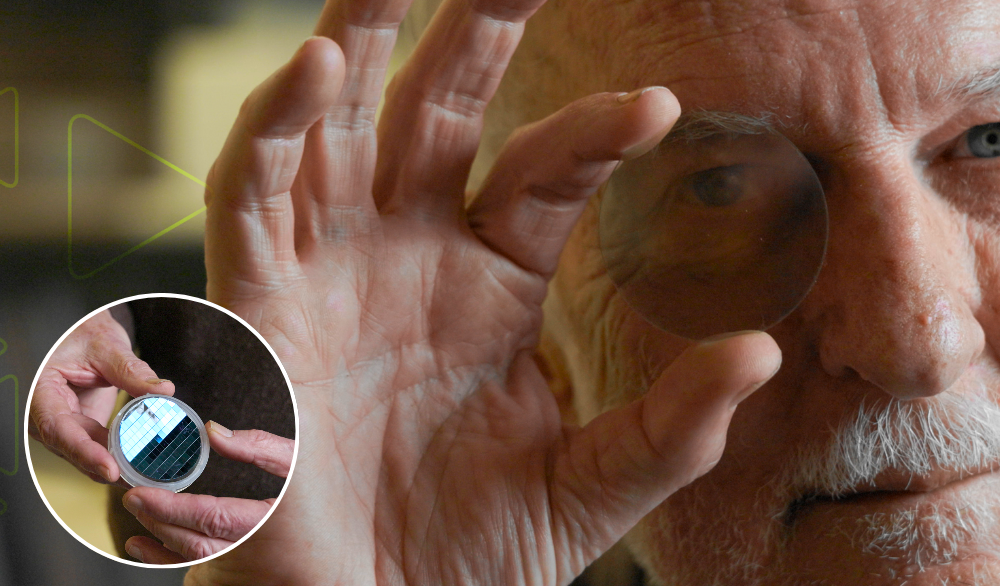
A team of researchers at Georgia Tech and Tianjin University has created the world’s first functional semiconductor made from graphene, a single sheet of carbon atoms held together by the strongest bonds known. Semiconductors are materials that conduct electricity under specific conditions and are foundational components of electronic devices.

Led by Walter de Heer, professor of physics at Georgia Tech, the research throws open the door to a new way of doing electronics. The breakthrough technology could allow for smaller and faster electronic devices and may have applications for quantum computing.

In a research, published on 3 January in Nature, focuses on leveraging epitaxial graphene, a crystal structure of carbon chemically bonded to silicon carbide (SiC). This novel semiconducting material, dubbed semiconducting epitaxial graphene (SEC) or — Epigraphene, which is graphene that spontaneously forms on silicon carbide crystals when silicon sublimates from the surface at high temperatures resulting in a carbon-rich surface that recrystallizes into graphene.

De Heer describes the method used as a modified version of an extremely simple technique that has been known for over 50 years. “When silicon carbide is heated to well over 1,000 °C, silicon evaporates from the surface, leaving a carbon-rich surface which then forms into graphene,” says de Heer.


Graphene, in a natural form, is neither a semiconductor nor a metal, but a sem-imetal. A band gap is a material that can be turned on and off when an electric field is applied to it, which is how all transistors and silicon electronics work. The major question in graphene electronics research was how to switch it on and off so it can work like silicon.

silicon and graphene models
Silicon and Graphene Models. 

semiconductor graphene wafer
Semiconductor Graphene Wafer 

The graphene revolution was originally driven by the search for electronic materials that could outperform silicon, Graphene, which is intrinsically a semi-metal (that is, a gapless semiconductor), was considered to be a probable candidate following predictions that, owing to quantum confinement, graphene nanoribbons can be semiconductors.

However, efforts to produce high-quality semiconducting ribbons were not successful". Therefore, research focused on altering the electronic structure of graphene chemically, but efforts failed to produce a viable semiconductor". After this, interest shifted away from graphene, towards other two-dimensional (20) materials that are intrinsically semiconducting".

The Georgia Tech researchers show that well-annealed epigraphene on a specific silicon carbide crystal face is a 20 semiconductor with very high mobility.

As a material, Epigraphene allows the quantum mechanical wave properties of electrons to be utilized, which is a requirement for quantum computing.

De Heer says that it will take time to develop this technology. “I compare this work to the Wright brothers’ first 100-meter flight. It will mainly depend on how much work is done to develop it.”

Ministry Setting Up Graphene Engg. and Innovation Centre for Startups

Ministry Setting Up Graphene Engg. and Innovation Centre for Startups

The Ministry of Electronics & Information Technology (MeitY) has launched the Graphene-Aurora program at a function in Maker Village Kochi in Kerala. MeitY Secretary Mr. Alkesh Kumar Sharma launched the program on Monday.

With this, a graphene engineering and innovation centre in Kerala will be setup to drive commercialisation of the advanced material and to empower emerging tech startups.

To recall, in January last year Digital University of Kerala (DUK), along with Centre for Materials for Electronics Technology (C-MET) in Thrissur, launched India's first Graphene Innovation Centre.

With the total budget outlay of Rs 94.85 Crore, the Graphene program shall be implemented by Digital University Kerala (DUK) with joint funding from MeitY, Government of India and Government of Kerala, and industry partners.

Carborundum Pvt Limited joined as one of the main industry partners. Earlier in May, Carborundum signed an MoU with the DUK to set up a Centre of Excellence, where further research and development on Graphene is going on.

The upcoming engineering & innovation Centre dedicated to Graphene, will be set up as section 8 company (not for profit) and is named —‘India Graphene Engineering and Innovation Centre (I-GEIC)’.

The initial operations of I-GEIC will start from the recently opened facility of Government of Kerala at Digital Science Park in Thiruvananthapuram. It shall fill the gap between R&D and commercialization by providing a complete facility to startup and industry.

Along with the startup products developed, the technologies and products also developed at research and development centers like India Innovation Centre Graphene (IICG), setup at Makers village, Kochi shall be considered for commercialization.

The upcoming Graphene Centre will nurture the deep/emerging Graphene technology & innovation ecosystem that can guide, develop, implement, and support SMEs and startups to commercialize developed graphene technologies for scale adoption.

The MeitY Secretary mentioned that creation of a commercialization eco-system for graphene as an emerging technology would help India take a pole position in the world’s new material market.

Chennai-based CUMI and Digital University of Kerala Setting Up CoE for Graphene

Chennai-based CUMI and Digital University of Kerala Setting Up CoE for Graphene
MoU signed with Digital University of Kerala to set up a Centre of Excellence for the large-scale commercialisation of graphene
  • Ultra-light, super strong, flexible, and impermeable, Graphene’s game-changing properties give this nanomaterial a myriad of futuristic application possibilities.
  • Building on a 70-year history of expertise in material science, CUMI has emerged as a pioneer in graphene research and applications by investing in research and development, setting up an exclusive production facility, exploring potential applications and creating new products.
  • CUMI’s special 12,000 sqft facility is equipped to manufacture various grades of graphene and allied products.
Carborundum Universal Ltd. (CUMI), a global leader in high-performance, advanced materials, has taken a significant leap in the field of new materials by exploring the immense potential of graphene. Towards this end, CUMI has signed a memorandum of understanding (MoU) with the Digital University of Kerala to set up a Centre of Excellence, where further research and development on the wonder material will be taken up.

This is another pioneering effort by CUMI to realise the immense potential of graphene following the setting up of a special 12,000 sqft facility commissioned in 2020 to manufacture various grades of graphene and allied products.

Despite the promising and myriad applications of this new material, large-scale commercialisation of graphene needs investment in research to overcome the challenges of cost, identifying the right type of graphene for each application along with consistent availability, and the expertise needed to process it.

CUMI is committed to realising the potential of this game-changing nanomaterial by developing application knowledge, ensuring consistent availability, and identifying the right type of graphene for the right application.

Dr. A P James, Professor-in-charge, Maker Village, Professor, AI-Chip Design Center, Digital University Kerala, said, “We believe that the possibilities for graphene are endless and that it can have a huge impact on every industry. Graphene is ultra-light, super strong, flexible, transparent, and impermeable. It is also a superconductor, allowing electricity to flow without any energy loss. All these properties will allow new and exciting innovations to emerge. We are happy to join hands with CUMI to set up a Centre of Excellence where further research on this new-age material can be taken up.”

M. V. Sivakumaran
M. V. Sivakumaran
M. V. Sivakumaran, Senior VP and Business Head, Electro Minerals Division, Carborundum Universal Limited said, “Graphene has the potential to revolutionise multiple industries, from electronics and energy storage to medicine and transportation, due to its exceptional strength, conductivity, and flexibility. As a pioneer in the field of materials science research and applications, CUMI is investing to develop the potential of this wonder material. The Centre of Excellence at the Digital University of Kerala will help us to advance our research and development efforts in graphene, perfect specific solutions for various applications and industries, and create new products.”

CUMI’s 12000 sqft facility is ready for commercial production of graphene

CUMI is a pioneer in the manufacture of graphene. A special facility was commissioned in 2020 to manufacture various grades of graphene and allied products suitable for applications in composites, coating and energy areas. The 12,000 sqft facility can process 6 lakh litres/ year of varying grades of graphene powders, besides producing master batches in different kinds of elastomers, thermosetting and thermoplastic polymers.

The facility also offers proprietary formulations of graphene additives useful for applications in concrete, anti-corrosion, and anti-microbial applications. The facility has a state-of-the-art application lab well equipped with various types of particle characterisation equipment like laser particle size analysers, Coulter Multisizer and BET surface area analysers. The lab also has an FTIR spectrometer, SEM and various electro-mechanical characterisation equipment.

Applications of graphene in industry and defence

Graphene is slated to be the game-changing nanomaterial of the 21st century due to its exceptional electrical, thermal, optical, and mechanical properties which can enhance the performance of various materials while reducing the carbon footprint. An extraordinarily light material, a single sheet of graphene large enough to cover a whole football field can weigh under one gram. It is 10,000 times thinner than a human hair and can take a billion stress cycles before it breaks, making it one of the most fatigue-resistant materials. Recent research has shown that graphene-based materials can profoundly impact composites, specialty coatings, electronic and optoelectronic devices, chemical sensors, nanocomposites, and energy storage.

CUMI’s innovations in graphene

CUMI’s scientists and experts are exploring the application of graphene in many areas including energy storage, renewable energy, automotive, manufacturing, construction, as well as defence and aerospace. With its lightweight, high strength, flexibility, and high thermal/electrical conductivity, graphene has emerged as the most ideal material for various applications in these industries.

For the aerospace and defence industry, CUMI is working on developing graphene-based composites which can be used to create lighter and stronger aerostructures and body armour products. CUMI’s research team has filed a patent for the preparation of highly conductive grades of nitrogen-doped graphene through instantaneous thermal processing. This grade of graphene finds applications in super-capacitors, batteries, and fuel cells.

With extensive R&D backing it, CUMI has emerged as a pioneer in the field of graphene research and applications, and the company is confident that graphene will revolutionise the materials industry in the years to come.

About Carborundum Universal Limited

Carborundum Universal Limited (CUMI), established as a tripartite joint venture in 1954, is a leading materials sciences engineering solutions provider. CUMI’s consolidated revenue is Rs. 3300 crores and PAT of Rs. 333 crores for the financial year 2022. CUMI, part of the 120-year-old Murugappa Group, is listed on the NSE and BSE. CUMI is a Mines to Market Company whose integrated operations include mining, power generation, fusion, manufacturing, marketing and distribution. CUMI has over 5,500 employees worldwide who collaborate, innovate and develop high-quality material solutions and world-class services in abrasives, electro minerals, ceramics, refractories and energy storage materials, serving customers in diverse industries including engineering, fabrication, auto and auto components, infrastructure, steel, glass, power generation and distribution, mining and aerospace. CUMI has a wide geographical presence spanning six continents and exports products to over 50 countries.


Indian Scientists Discover Special Nanoparticles that Capture CO2 in More Economical Way

Indian Scientists Discover Special Nanoparticles that Capture CO2

Carbon capture and utilization are growing fields of research focusing on reducing CO2 emissions. A recent United Nations report says that carbon capturing will no longer be an option if we have to save the planet from the increasing problem of Climate Crisis.

A group of Indian scientists at Indian Institutes of Science Education and Research (IISER), Kolkata, has discovered a new way to synthesize new solid adsorbents for CO2 capture and utilization. Here, Adsorption is a process in which pollutants are adsorbed on the solid surface.

For an uninitiated, Adsorbent is different from 'Absorbent' !. Adsorbent refers to a material which allows a dissolved solid, gas, or liquid to adhere to its surface. An absorbent, on the other hand, is a material which allows gases and liquids to permeate it uniformly.

Professor Rahul Banerjee’s group at IISER-Kolkata, with support from Department of Science & Technology (DST), Govt. of India under Mission Innovation program, has demonstrated a strategy to synthesize novel solid adsorbents, especially for CO2 capture and CO2 utilization.

Interestingly, this discovery of new material from IISER comes within a month after Professor Deepak Dhar of the same institute but different location (IISER-Pune) becomes first ever Indian physicist to receive the prestigious Boltzmann Medal for his contribution in the field of statistical physics.

Prof. Banerjee’s group has discovered special types of nanoparticles or microparticles which can capture CO2 in their micro and mesoporous voids.

To help you with few scientific vocabulary coming ahead in this article -- 'Zeolites' are microporous, 3-dimensional crystalline solids. And, 'Janus' particles are special types of nanoparticles or microparticles whose surfaces have two or more distinct physical properties. This unique surface of Janus particles allows two different types of chemistry to occur on the same particle.

This interestingly new materials with distinct physical properties on its surfaces have been synthesized include porous Covalent organic frameworks like Covalent Organic Framework (COF) -graphene Janus thin films, which are ultralight in weight, published in Journal of  'American Chemical Society , and porous covalent bonded organic nanotubes published in Nature Chemistry, while COF coated zeolite published in ‘Journal of American Chemical Society’.


The good choice of 2D graphene sheets as a grafter helped the researchers to design and create COF-graphene Janus thin films through the interactions (non-covalent) between the COF and graphene, rendering flexible porous Janus films at the DCM (Dichloromethane) -water interface.

This newly designed COF-coated zeolites could be an excellent candidate for CO2 storage in the industry due to their high surface area and increased chemical stability.

The high CO2 uptake for the COF coated zeolites, even after treatment with weak acids makes it appropriate for industrial purposes. The COFs coating prevented the degradation of zeolite structure from moisture, weak acids, and water. The CO2 uptake data for COF coated zeolite at 1 bar, 293K is 132 cc/g, supersedes the CO2 uptake data of zeolite under the same condition.

Kerala Gets India's 1st Graphene Innovation Centre


Kerala state government run Digital University Kerala (DUK), along with along with Centre for Materials for Electronics Technology (C-MET) in Thrissur, is ready to launch India's first Graphene Innovation Centre

Approved by Ministry of Electronics & Information Technology (MeiTY), Government of India and Kerala government, the upcoming centre will have incubation centre and facilities to create new Graphene products.

An amount of Rs 86.41 crore has been allocated for same.

Graphene is a one-atom-thick sheet of carbon atoms arranged in a honeycomb-like pattern. Graphene is considered to be the world's thinnest, strongest and most conductive material - of both electricity and heat.


Tata Steel Limited is set to be the industrial partner of the upcoming Graphene Innovation Centre. The other collaborators include scientists from the National Graphene Institute, University of Manchester, and other industrial partners from around the world.

To recall, for research in Graphene Tata Steel had also signed a deal for a CoE with IIT Madras in August 2016.


Digital University Kerala Technocity Campus, Thiruvananthapuram

Saji Gopinath, Vice Chancellor of DUK, said in a media statement, "We expect the centre to offer students, researchers, established industries and budding startups to test and experiment new innovative products, and make it a thriving environment for innovative graphene-based product development."

Graphene is one of the top most agendas on the list of big tech corporations in their search for finding the material that can serve as the next building block for electronic devices and transform the manufacturing sector and its various processes.

To date, Graphene the thinnest material one can imagine. It's just one atom thick! This means this material is mathematically 2-Dimensional nevertheless one can still hold this single layer of atoms in hands.

Surprisingly, graphene isn't a unique or rare substance. In fact, it has the same carbon structure as the graphite you use every day when you draw or write with your pencil But at the same time, in 0.03” of graphite, there are about 3 million graphene layers!

The emerging 2D materials will have a wide range of commercial and industrial applications in biomedical, defense, electronics, energy, and sensors, in the next decade. The centre will also develop the skilled manpower by anchoring Ph.D. and master students through Digital University, with an applied research focus in the areas of electronics product design, sensors, and energy applications, the statement added.

Last year, scientists from Institute of Nano Science and Technology, Mohali, developed a wrapping paper made of carbon (graphene oxide) loaded with preservatives that can be used as non-toxic and reusable wrappers to help extend shelf life of fruits.

To Wrap Fruits with Increased Shelf-Life, Scientist Develops Graphene Oxide-based Wrapper that is Non-Toxic and Reusable

Representational Image

Indian scientists have developed a composite paper made of carbon (graphene oxide) loaded with preservatives that can be used as wrappers to help extend shelf life of fruits. Unlike the present preservative dipping technology, where the preservatives are adsorbed by the fruit, causing chronic toxicity to the consumers; here preservatives the wrapper releases the preservative only when needed. The wrapper can be reused, which is not possible with the present technology.

Fruits are highly perishable, hence 50% of fruits produced are wasted, causing huge losses. Conventional preservation relies on coating the preservative with the resin, wax, or edible polymer, which may cause chronic health problems.

In order to address this problem, a team of researchers led by Dr. P. S Vijayakumar from Institute of Nano Science and Technology, Mohali, an Autonomous Institute of the Department of Science and Technology, Ministry of Science and Technology, Government of India looked for an alternative, that could be generated from waste and would not lead to adsorption of preservatives in the fruit.


The activated graphene oxide-loaded molecules were then loaded with preservatives. This high preservative-loaded graphene oxide, when cast into a paper used for fruit wrapping, ensures that the fruit is not loaded with toxic preservatives. But when the fruit over-ripens or gets infested by pathogens, the acidity increases by the secretion of acids, critic, and oxalic acids trigger the release of the preservatives for the preservation of the fruit. Otherwise, the preservative stays with the carbon wrapper. In the fruit dipping method, the preservative will be lost along with the fruit, whereas the wrapper can be re-used after the consumption of the fruit for the preservation of the next batch of fruits.

To develop this non-toxic and reusable wrapping paper, the team allowed carbon matrix to incubate with the preservative. After the incubation for 24 hr in room temperature, the resultant was washed several times to remove the extra preservatives. And finally, this carbon-preservative composite was cast into paper. This work has been published in the journal ‘ACS applied materials and interface’.

"Already waste-derived carbon materials are known to harbour huge amount of organic molecule loading, hence the preservative loaded carbon has been prepared and cast into paper for the fruit preservation. Increasing the capacity of carbon to hold organic molecules helped us to develop this product," adds Dr. Vijayakumar.

This novel product can benefit the farmers and food industry by extending the shelf life of fruits. Using this wrapper for the fruit will also ensure that the customer gets the fruits with healthy quality, as we have found improvement in the phenol content. The production of this graphene fruit wrapper requires only the carbon produced from the heating of biomass, hence it will also benefit in biomass consumption and employment generation.

Publication details:

Sharma S. B.; Biswal K.; Kumari D.; Pulkit Kumar, S.; Stobdan T. and Vijayakumar P. S.*Eco-friendly Fruit Switches: Graphene Oxide-Based Wrapper for Programmed Fruit Preservative Delivery To Extend Shelf Life. ACS applied materials and interface. 2018, 10, 18478–18488.

Jaipur Startup Nanomatrix Materials Unveils Graphene-based AC Filters for Protection Against Airborne Virus, Bacteria and Fungus


G1 AC Filters-A breakthrough in indoor air purification by Nanomatrix Materials for protection against airborne virus, bacteria and fungus

This new ASTM certified AC Filters can kill 99% of airborne viruses and bacteria and can even protect you from Black Fungus outbreak

New Delhi/Jaipur, 25/June/2021: Nanomatrix Materials, a Jaipur based startup that manufactures disruptive graphene nanotechnology and integrate it into smarter application, has recently introduced a new product range of G1 AC Filters for Air Conditioners using Graphene-silver nanotechnology which purifies in room air including sterilizing 99% airborne microbes along with filtration of dust particles, also capable to reduce harmful VOC/gases. This product will convert conventional air conditioner into air purifier.

In these recent times we have seen that first wave of SARS COVID-19 pandemic hitting the population in India, the second wave has proved to be an ominous report. With the development of new variants, COVID-19 has become a baffling situation with the rise of its derivatives, i.e Mucormycosis or black fungus complication caused by fungal infection. People catch mucormycosis by coming in contact with the fungal spores in the environment. These airborne widespread and prevalent diseases can only be controlled with sincere atmospheric precautions inside as well as outside the homes. As per the WHO guidelines, wearing masks and proper sanitisation can prevent the virus entering into our systems.


G1 wonder Air Conditioner Filters are in itself a breakthrough in air filtration domain as these filters will not just protect you from dust and pollution but will actively destroy airborne viruses & bacteria while purifying the air by removing VOCs. This newly launched air filter has a layer of NM graphene membrane which uses Graphene-Silver nanotechnology to protect you from viruses by killing them along with filtration of certain harmful gases. Graphene filters also prohibit the growth of number of microorganisms including fungus. The filter removes PM 2.5 and above particles from the air with the efficiency of more than 99%, also proven to remove volatile organic compounds (VOCs) such as formaldehyde (which secretes from the wooden furniture in most households), benzene etc. VOCs are a large group of chemicals that are found in different products used in our daily lives like cosmetics, fuel, gasoline, air fresheners, cleaning products, or used at home in building materials like paints, varnishes etc.

VOCs have harmful effects on health and once released in the air, they hamper the air quality thus making it unfit for breathing and may lead to breathing problems, and these air purifiers are specifically designed for VOC reduction. Particulate matter (PM) are micro particles of solids suspended in the air, they could be coarse or fine and are released from numerous sources, including dust and other small particles from construction. Acute exposure to particulate matter may lead to serious cardiovascular and respiratory diseases and that’s why this technology shall be taken into consideration during pandemic situations when airborne diseases are giving rise to different variants and their derivatives.

This technology can be used in any existing centralized HVAC system, AHUs or FCUs for crowded place like airports, malls, schools, hospitals where there is higher risk of contamination. The installation of these G1 AC filters is very easy and splendid. You have to clean your (screen) plastic mesh provided in the AC, then place G1 AC Filters vertically onto the centre of the screen allowing gap on each side, cut if extra. Then re-install the mesh screen with G1 AC filter back on the AC. These are the only filters that can be reused after washing. Replace G1 AC filters when they get clogged and/or there is a drop in the air flow.

Speaking on the occasion of the launch, Nanomatrix Materials founder Vikas Bardiya said --
After studying about the covid-19 virus and other communicable diseases caused due to microorganisms, we can briefly conclude Graphene is the shield for most airborne pathogens. In most cases, indoor air quality index is more disturbing than outside, due to closed or poor ventilation. After the successful launch of our G1 Wonder Masks which are for personal use, now G1 AC Filters is another addition to our 3600 protection drive that protects your surroundings. Graphene-silver nanotechnology membrane inside developed by Nanomatrix Materials is proven to destroy airborne diseases causing virus &bacteria’s along with filtering harmful gases and VOCs present in the atmosphere. This costs 10x cheaper than air purifiers and provides you protection on the go. G1 AC Filters has gone through the tests from the independent certified laboratories before getting launched in the market.


G1 AC Filters has an MRP of Rs. 1999 and is proved to be a successful variant to kill 99% airborne viruses, fungus and reduce pollution. You can order this product easily via our website www. g1wonders.com or through e-commerce website like Amazon and Flipkart.

About Nanomatrix Materials

Nanomatrix Materials (NM) is a Jaipur-based startup, which is a nano and advanced material manufacturer that uses proprietary disruptive graphene technology and its integration into smarter applications. The company was founded in February 2020, however the promoters are involved in the graphite space for the past decade and have been working on developing graphene based intellectual property for 2 years.

Nanomatrix Material Launches G1 Wonder Mask with Corona-Killing Graphene-Membrane


With the Covid-19 pandemic at its peak and the number of cases on the rise, facemask is one of those precautions which can save us from this deadly virus. Even after getting vaccinated, wearing a mask alongside following the social distancing norms is mandatory. But not every mask can assure your protection against SARS-CoV-2 due to their poor filtration quality. Thus, combating this issue, Jaipur-based startup Nanomatrix Materials, which specializes in R&D of graphene and a pioneer in integration of the wonder material into different applications, has launched the first range of masks in the world that has Graphene Membrane inside which has the potential to not just prevent but kill coronavirus. Named ‘G1 Wonder’ this newly introduced range of masks introduced by the company derives its power from a membrane that is infused with graphene-silver layered membrane (patent applied). Tested at government-approved laboratories as per ISO 18184 standard, the graphene-silver composite is a collection of millions of microscopic razor-sharp blades with electric charges that rip apart bacterial and virus cells.

The graphene-silver NM membrane used in G1 Wonder mask is breathable, washable, reusable, pollution resistant, anti-odour and destroys 99% virus and bacteria in just seconds of contact. The membrane continuously inactivates inhaled viruses, ensuring adequate safeguard for those venturing out of their homes. The mask also comes with the Bacterial Filtration Efficiency >99%. These are the only masks available that have the capability of absorbing harmful Volatile Organic Compound (VOC) as well.

Considering the current scenario Nanomatrix has developed the face mask for two particular segments of the society, the community mask and N95 mask range. Under the community mask which is for the general public, they have introduced washable antimicrobial masks known as Stylo and Eleganz which are reusable upto 30-50 times. These masks range between Rs. 299 - Rs. 399.

Another revolutionary development is in the domain of medical N95 face masks. This is the first N95 mask in the world that has two antimicrobial layers making the only N95 mask that stops as well as kills the microbes instantly upon contact. This newly developed mask can increase the safety level especially for front liners who are exposed directly to the infected patients. This N95 mask can be used for 6-7 days or 30 hours and is priced at MRP Rs. 199.

Performance: The mask has a layer of Graphene-Silver Membrane. When tested against the COVID-19 virus, this membrane showed, kill rate of >99% within 15s of contact and >4log reduction was observed for the H1N1 influenza virus. Further, the Bacterial Filtration Efficiency (BFE) of > 99% has also been observed for both Gram-positive and Gram-negative bacteria.

Speaking on the occasion of the launch, Nanomatrix Materials founder Vikas Bardiya said, “NM graphene-silver technology that powers the mask destroys viruses, bacteria and also filters harmful gases from the atmosphere. The alternatives currently available in the market merely filter viruses and do not destroy them, which is essential if we want to stop community transmission. Our team understands the subject deeply and have conducted thorough research along with third-party testworks before developing the G1 Wonder masks.” He further added, “Our company has decided on the pricing in accordance with India’s sensibility. We wanted these masks to be affordable to all, so that everyone can live safely.”

The masks are available on the company's website www.g1wonders.com and are also available on Amazon and Flipkart. The company is also in the process to set the distribution network across the country as there is a need for these types of masks across the country.

The company is set to launch a series of products made using their proprietary graphene technology. They plan to launch Air Conditioner filters that can filter airborne viruses and bacteria.

Tata Steel To Sponsore IIT Madras scientists' Research Into New-Gen Material Which Is Stronger Than Steel

A new-generation carbon material called Graphene has caught the interest of India's largest private sector steel company, Tata Steel. The company is currently considering about sponsoring a research being done by some meticulous IIT Madras scientists into graphene.

Graphene is one of the top most agendas on the agenda list of many corporations in their search for finding the material that can serve as the next building block for electronic devices and transform the manufacturing sector and its various processes.

Being lighter and stronger than steel, and just one-atom thick, the carbon material is nowadays being tested in a number of applications like substituting silicon being used in smartphones to the components in the bodies of the aircraft in an effort to make flying more fuel-efficient than it is currently.

Graphene's usage has already been successfully experimented in producing automotive lubricants and how the various memory devices (like hard drives in PCs) have the potential of being made much more stronger by the process of meticulously exploiting their special electrical properties.

According to industry sources, the deal between Tata Steel and IIT Madras is expected to be signed anytime next week at the IIT-Madras Research Park.

If the deal does go through, the partnership could end up opening further investment opportunities in next frontier technology spaces for IIT-Madras.

Sometime ago there were rumours floating in the media regarding IIT Madras' plans to open a Centre of Excellence for Graphene. But, now it has come to light, that the centre, which will be set up at the IIT-Madras Research Park, will be focusing on a number of other nano-materials but the primary focus will be on graphene.

Even though Tata Steel will be the anchor investor for the Centre of Excellence for Graphene, the research will also be done for a number of other Tata Group companies.

Some of the probable graphene applications for the Tata Group companies could be enhancements in coating, manufacturing processes, sensors and wearable devices. There is also a possibility to use graphene, or any other nano-material, in the new photo voltaic surfaces that will be used in solar panels.

Tata Steel is considering investing an initial capital of about Rs 10 crore in the year 2016. In addition to this, the corporate is expected to enter into a 5-year long relationship with the IIT for further investments in the future.

European universities like The University of Manchester, considered as graphene's birthplace, and some big companies like Samsung have almost redoubled their actions in finding graphene's commercial applications.

In a number of top Indian institutes, graphene research has now made a jump from the prototyping phase to the phase where its scalability is being tested for various industrial applications.

Recently, a team of scientists at the Alternative Energy and Materials department of IIT Madras had successfully rolled graphene sheets to make nanotubes for application in treatment of cancer.

Market Reports

Market Report & Surveys
IndianWeb2.com © all rights reserved