‏إظهار الرسائل ذات التسميات Spacetech Startups. إظهار كافة الرسائل

India’s Space Race: From State Power to Startup Breakthroughs

India’s Space Race: From State Power to Startup Breakthroughs

India’s space program has entered a transformative phase, evolving from a state‑dominated enterprise into a hybrid ecosystem where government missions and private deep‑tech startups complement each other. The Diplomat underscores this shift as central to India’s ambition to become a self‑reliant space power while simultaneously engaging in global partnerships.

Breakthroughs in Private Innovation

  • GalaxEye’s OptoSAR Satellite
    In May 2026, Bengaluru‑based GalaxEye launched the world’s first OptoSAR satellite, integrating optical and synthetic aperture radar imaging. This innovation addresses the persistent challenge of cloud cover in tropical regions, enabling clearer earth observation.
  • Pixxel’s Hyperspectral Imaging
    Pixxel has gained global recognition for its hyperspectral satellites, providing detailed imaging across hundreds of spectral bands. In May 2026, Pixxel secured a contract with the U.S. National Reconnaissance Office (NRO), marking a milestone in India’s commercial space diplomacy.

State Ambitions: From ISRO to BAS

  • Bharatiya Antariksh Station (BAS)
    India’s planned space station, with the first module targeted for 2028.
  • Launch Targets
    50 rocket launches annually within five years.
  • Startup Ecosystem
    Aiming to nurture five space‑tech unicorns in the same timeframe.
  • Global Alignment
    India joined the Artemis Accords in 2023, signaling commitment to lunar exploration while balancing autonomy.

Space Diplomacy and Strategic Positioning

  • Middle East Partnerships
    Collaborations with the UAE, Saudi Arabia, and Oman on space security.
  • France and Europe
    Expanding cooperation in defense and aerospace.
  • Mission DefSpace
    Opening defense space projects to private firms, strengthening India’s military‑industrial base.
  • Balancing Rivalries
    India’s alignment with the U.S. contrasts with China’s growing space presence, positioning India as a middle power in the global space race.

Comparative Snapshot

Focus AreaState InitiativesPrivate StartupsGlobal Partnerships
Space StationBAS module by 2028Unicorn ecosystemArtemis Accords, Quad
Earth ObservationISRO satellitesGalaxEye, PixxelNRO, ESA
Defense SpaceMission DefSpacePropulsion & aerospace firmsU.S., France, Japan
DiplomacyPolicy frameworksIndustry participationMiddle East, Europe

Challenges Ahead

  • Funding & Talent
    Sustaining R&D and retaining skilled engineers.
  • Diplomatic Balancing
    Aligning with the U.S. while maintaining autonomy vis‑à‑vis China.
  • Technology Sustainability
    Indigenous development of launch vehicles and station modules.
  • Commercial Viability
    Ensuring startups achieve profitability beyond strategic contracts.

Outlook

India’s space sector is at a crossroads. By combining state ambition with private innovation, India is building a dual track of strategic autonomy and global alignment. If successful, this approach could make India a pivotal player in the next decade’s space race, shaping not only technology but also geopolitics.

SpaceX IPO Could Deliver $60 Billion Windfall to Early Backers


SpaceX, Elon Musk’s privately held aerospace company, is widely expected to pursue an initial public offering (IPO) in the coming years. If realized, the IPO could generate returns exceeding $60 billion each for early investors, according to projections from industry analysts and venture capital insiders.

According to a report by media outlets including The Information, a SpaceX IPO could deliver more than $60 billion each to early backers Founders Fund and Valor Equity Partners, making it one of the largest venture capital windfalls in history. The figures are projections tied to a potential offering, as SpaceX has not yet formally announced IPO plans.

Early Investment and Stakes

  • Founders Fund, co‑founded by Peter Thiel, invested in SpaceX during its formative years when the company was still proving the viability of reusable rockets.
  • Valor Equity Partners, led by Antonio Gracias, was another early backer, supporting Musk’s vision of lowering launch costs and expanding access to space.
  • Both firms hold substantial equity stakes, which have appreciated dramatically as SpaceX’s valuation surged past $180 billion in private markets.

Market Context

  • SpaceX has become the dominant player in commercial spaceflight, with its Falcon 9 rockets accounting for the majority of global launches.
  • Its Starlink satellite internet service has expanded to millions of subscribers worldwide, creating a recurring revenue stream that strengthens IPO prospects.
  • Analysts suggest that a public listing could value SpaceX at $300 billion or more, rivaling the largest tech IPOs in history.

Strategic Implications

  • For Venture Capital: A $60B+ return would rank among the largest VC payouts ever, reshaping perceptions of risk and reward in deep‑tech investing.
  • For SpaceX: IPO proceeds could fund ambitious projects, including Mars colonization, Starship development, and expansion of Starlink.
  • For Markets: Institutional investors would gain direct exposure to the commercial space sector, potentially driving aerospace valuations higher.

Risks and Considerations

  • Regulatory hurdles: IPO timing depends on SEC filings and compliance with disclosure standards.
  • Market volatility: Valuations in the tech and aerospace sectors can fluctuate sharply.
  • Lock‑up periods: Early investors may face restrictions before realizing gains.

Investor Impact Table

InvestorFounder(s)Early RoleProjected IPO Return
Founders FundPeter Thiel & partnersSeed‑stage backer$60B+
Valor Equity PartnersAntonio GraciasEarly growth investor$60B+

Editorial Note

SpaceX’s potential IPO would mark a historic moment in venture capital, cementing Musk’s company as not only a technological leader but also a financial juggernaut. The scale of returns for Founders Fund and Valor Equity Partners underscores the transformative potential of early‑stage investing in frontier technologies.

Astrophel Aerospace to Test India’s First Privately Built Reusable Rocket Prototype on Independence Day 2026

Pune-based space tech startup Astrophel Aerospace, which has developed an in-house portfolio of ‘Made-in-India’ propulsion and cryogenic subsystems, today announced the upcoming test flight of its reusable suborbital rocket, targeting 15th August, 2026.

Astrophel Aerospace to Test India’s First Privately Built Reusable Rocket Prototype on Independence Day 2026

Designed as a vertical takeoff and vertical landing (VTVL) test prototype, a successful test not only represents a critical milestone towards the development of a fully operational and commercially viable reusable launch vehicle in India, but also as a flight-relevant validation platform for Astrophel’s cryogenic subsystems and components.

The 3-metre long prototype, also known as a hopper, weighs approximately 200kg, currently being designed, manufactured and assembled at Astrophel’s Pune facility. The space tech startup also recently developed high-performance cryogenic control valves, marking another key milestone in India’s private aerospace component manufacturing ecosystem. The valves are part of Astrophel’s broader portfolio of propulsion and cryogenic sub-systems, including turbopumps, vacuum-insulated cryogenic storage tanks and high-speed precision linear actuators.
We expect the upcoming test to mark one of the first instances of a privately developed reusable rocket prototype that’s been designed, manufactured and tested entirely from within India, said Co-founder and CEO, Suyash Bafna
.
Astrophel Aerospace was one of a handful of space tech startups to successfully conduct a cryogenic engine test just three years ago on 15th August 2023, raising more than USD 800,000 last year. By vertically integrating critical sub-systems, the startup is demonstrating a tightly integrated hardware ecosystem that enables faster development cycles, improved performance control and seamless integration across allied industries such as aerospace, defense, oil & gas and emerging energy applications such as green hydrogen.

Our in-house design and manufacturing approach borrows inspiration from automotive best practices and we’ll be able to develop subsystems at approximately 40% of the cost compared to global players, added Cofounder and COO, Immanuel Louis.


India’s space tech startups today rely heavily on imported subsystems and components. Astrophel aims to address this gap by developing and validating critical hardware in-house, while also building revenue through component sales and licensing partnerships. The approach enables the company to de-risk the path to orbit while making high-performance propulsion and cryogenic systems more accessible to a broader range of launch partners and customers.

Satellite operators today rely on rideshare programs that face multiple delays due to limited availability and scheduling constraints, while it is predicted that over 70,000 low Earth orbit (LEO) satellites will be launched over the next five years, as per Goldman Sachs Research. Demand for faster and more flexible launch solutions is set to grow exponentially with reusability emerging as a critical capability driving the future of accessibility to cost effective launch services. 

About Astrophel Aerospace

Astrophel Aerospace is an Indian space technology startup developing affordable, dedicated launch vehicles powered by advanced semi-cryogenic propulsion systems. The Pune- based startup is among the few private players in India to have independently built and successfully test-fired a semi-cryogenic rocket engine, on 15th August 2023, at a cost of just USD 6000, with zero external funding. Founded in 2022 by Suyash Bafna and Immanuel Louis, Astrophel is built on the belief that world-class aerospace technology should not cost billions. A core guiding principle at Astrophel Aerospace is, “To transform aerospace manufacturing the way the assembly line transformed automobiles.” While aiming for orbit, the startup is commercializing critical subsystems such as cryogenic valves, turbopumps, sensors, and actuators, producing them at a fraction of traditional costs using innovative engineering and automotive manufacturing methods. The startup combines principles from automotive manufacturing with advanced techniques such as 3D printing to reduce production time and costs by up to 40%. Beyond launch services, Astrophel is actively derisking R&D by commercialising high-value propulsion and aerospace components, enabling a sustainable revenue model ahead of full orbital missions. The startup is backed by deep-tech investors and supported by the Government of India’s MeitY SAMRIDH program, and an advisory board comprising veterans from ISRO, Hindustan Aeronautics Limited, and DRDO. Astrophel has also signed a strategic MoU with ISRO to access testing infrastructure and technical support. With India’s space economy projected to reach USD 44 billion by 2033, the startup is poised to build a globally competitive, export-ready launch and propulsion ecosystem from within India.

About Suyash Bafna

Suyash Bafna is the Co-Founder of Astrophel Aerospace, playing a key role in systems integration, operations, and strategic execution. With a background in mechanical engineering, Suyash bridges the gap between propulsion, avionics, and structural design, ensuring that Astrophel’s launch systems are optimised for performance and reliability. He has been instrumental in coordinating subsystem development for the Astra C1 vehicle and managing timelines for the company’s upcoming suborbital launch. His focus on mission-readiness, testing protocols, and cross-functional collaboration has helped streamline development despite limited resources. At Astrophel, Suyash also oversees external partnerships and vendor alignments, working to reduce costs while maintaining technical integrity. Passionate about building indigenous space capabilities, he is committed to enabling affordable access to space for small satellite operators. His systems-driven leadership contributes significantly to Astrophel’s goal of becoming India’s most cost-effective and agile launch provider.

About Immanuel Louis

Immanuel Louis is the Co-Founder of Astrophel Aerospace. An aerospace engineer by training and a lifelong aviation enthusiast, Immanuel holds a master’s degree from MIT Chennai. His journey began with building remote-control aircraft as a child and evolved into co-building one of India’s most affordable semi-cryogenic rocket engines. At Astrophel, he spearheads propulsion system design, engineering integration, and business strategy. He is committed to building India’s next-gen launch infrastructure and fostering a new wave of aerospace talent. His passion lies in combining indigenous innovation with global best practices to position Astrophel as an upcoming leader in the small satellite launch segment.

SatLeo Labs Secures $2.2M to Advance AI-Powered Thermal Satellite Constellation

SatLeo Labs Secures $2.2M to Advance AI-Powered Thermal Satellite Constellation

  • The funding will accelerate SatLeo’s flagship thermal satellite mission and fast-track its AI-powered platform for next-gen thermal intelligence.
SatLeo Labs, a leading space-tech startup focused on capturing high-resolution thermal & visible data from Low Earth Orbit (LEO) has raised $2.2Mn in a seed round led by Unicorn India Ventures. With this, SatLeo has raised $5.5M in total funding to date. The round also saw participation from existing investors Merak Ventures, Java Capital, IIMA-CIIE and Deep tech Investor Manish Gandhi. The funding will be deployed to advance SatLeo’s flagship thermal satellite mission and the development of its AI-powered platform for thermal intelligence applications.

Over the last 12 months, SatLeo has experienced significant growth across technology development, team expansion, funding, and commercial traction. The company has grown its team from 8 to 30 members, bringing together engineers and researchers with deep expertise in satellite missions, thermal sensing, and AI-driven geospatial analytics.

The company has achieved a major milestone by designing and delivering its first experimental thermal payload, TAPAS-1, for satellite integration within six months, reaching TRL-8 readiness and positioning the system for launch. In parallel, the company began translating its technology into real-world deployments through commercial pilot projects, including urban heat island and air-pollution monitoring initiatives with cities such as Ahmedabad and Tumakuru, impacting more than 400,000 citizens. Additionally, the company has built a strong commercial pipeline, with Letters of Intent (LOIs) growing from approximately $15Mn to over $42Mn within the year, reflecting strong market demand for SatLeo’s space-based thermal intelligence solutions.

“Sustainability has become imperative amid accelerating climate change, rapid urbanization, and increasing global uncertainties driven by heat anomalies," said Shravan Bhati, Co-founder & CEO, SatLeo Labs. At SatLeo Labs, we are developing a state-of-the-art thermal imaging satellite constellation designed to deliver actionable thermal intelligence at scale. This fundraise represents a critical milestone as we transition into the execution phase of our next mission—advancing payload performance, accelerating constellation deployment, and scaling our global thermal data capabilities.”

Bhaskar Majumdar, Managing Partner, Unicorn India Ventures, said, “We strongly believe that space is an arena where the next technological innovations and solutions will emerge from. This is our third space tech investment. The value of SatLeo presents a compelling opportunity, as it has a strong technological edge with very clear commercial applications aligning with the market needs. The company’s differentiated product is combining thermal and visible satellites to generate high value real-time insights and is well positioned to drive long-term value to become a key player in the space-tech ecosystem.”

In the next 12 months, SatLeo plans to focus on advancing its space-based thermal intelligence capabilities through satellite launch readiness, commercial expansion, and technology scaling

About SatLeo Labs

SatLeo Labs is a spacetech company building an advanced multi-spectral satellite constellation combining thermal (IR) and visible imaging to deliver continuous, high-resolution Earth observation insights. Its platform enables applications across defence, agriculture, disaster response, and urban climate intelligence, helping governments and enterprises make data-driven, sovereign decisions and build climate-resilient systems at scale.

About Unicorn India Ventures

Started in 2016 by Bhaskar Majumdar and Anil Joshi, Unicorn India Ventures is a deep tech focused early-stage fund that invests in emerging and visionary startups. Unicorn India Ventures launched its first fund with a corpus of Rs 100 crore and invested in 17 companies like SmartCoin, Open Bank, Sequretek, Pharmarack, Genrobotics, Clootrack, FutureCure to mention some. The Fund has emerged as the best performing early-stage fund in India with the stellar exits provided by the fund to its LPs. Fund II is a Rs 300 Cr fund launched in 2020 that has invested in 20 companies so far like Gamerji, Probus, Daalchini, Windo, Finsall. Most of the portfolio is scaling up fast and has had several uprounds.

Unicorn India Ventures has closed its Rs 1200 Cr Fund III surpassing the target of Rs 1000 Crore. With this Fund, UIV aims to build a portfolio of 20 startups that are focused mostly in the deep tech sector that includes semiconductor, space tech, and medical diagnostics apart from AI infrastructure and India digital platforms. Companies like Netrasemi, Kluisz, OrbitAID, TakeMe2Space, Aurassure, EyeROV, QubeHealth to name a few.

Recently, IIT-Madras and Unicorn India Ventures launched Rs 1000 crore “IITM Unicorn Frontier Fund I”. UIV is a fund with engineering DNA and has been backing deeptech companies for over a decade. The Fund has investors across the globe represented by institutions, family offices and UHNIs. The Fund has a global viewpoint while sourcing companies throughout the country.

Antariksh Venture Capital Fund to Fuel India’s Spacetech Startups from FY2027

Antariksh Venture Capital Fund to Fuel India’s Spacetech Startups from FY2027

India’s ₹1,005 crore Antariksh Venture Capital Fund, managed by SIDBI Venture Capital Limited, has completed its institutional setup and is expected to begin investing in spacetech startups from the first quarter of FY2027. The initiative aims to strengthen private sector participation and position India as a global space economy leader.

Union Minister Dr. Jitendra Singh said that India’s dedicated venture capital fund for the space sector is progressing steadily, with investment in selected startups expected to begin from the first quarter of FY2027.

Key Highlights of the Antariksh Venture Capital Fund

  • Fund Corpus: ₹1,005 crore committed corpus.
  • Manager: SIDBI Venture Capital Limited (SVCL).
  • Regulatory Milestones: SEBI registration on October 31, 2025; Initial closing on November 10, 2025.
  • Operational Setup: Appointment of custodian, registration with depositories, and constitution of Screening & Investment Committees completed.
  • Startup Pipeline: Four spacetech proposals have advanced after Pre-Investment Committee approval.
  • First Investments: Expected in early FY2027, following due diligence and documentation.

Strategic Objectives

  • Boost Private Sector Participation: Encourage startups to contribute to India’s growing space ecosystem.
  • Innovation Support: Provide structured guidance and “handholding” to help startups align with institutional investment processes.
  • Global Competitiveness: Strengthen India’s position in the global space economy by fostering innovation and commercialization.

Why This Matters

India’s space sector has traditionally been dominated by ISRO, but recent reforms have opened the door for private players. The Antariksh Fund represents a systematic financial mechanism to nurture startups in areas such as:
  • Satellite manufacturing and launch services
  • Space-based communication and navigation systems
  • Earth observation and data analytics
  • Emerging technologies like reusable rockets and deep-space exploration
By FY2027, India could see its first wave of venture-backed spacetech startups, potentially creating new employment opportunities and attracting global partnerships.

Challenges Ahead

  • Nascent Ecosystem: Many startups lack robust documentation and compliance readiness.
  • Due Diligence Requirements: Institutional investors demand structured data and financial transparency.
  • Global Competition: India must balance innovation with affordability to compete with established players in the US, Europe, and China.

Outlook

The Antariksh Venture Capital Fund is more than just a financing vehicle—it’s a policy-driven catalyst for India’s spacetech future. With investments slated to begin in FY2027, the fund could accelerate India’s transition from a government-led space program to a dynamic, private-sector-driven ecosystem, unlocking opportunities in both domestic and international markets.

New Cyber Rules to Raise Costs for India’s Space Startups

New Cyber Rules to Raise Costs for India’s Space Startups

India’s new CERT-In cybersecurity framework is set to significantly raise compliance costs for space startups, requiring rapid incident reporting, mandatory CISOs, and security-by-design systems. These rules will force operational restructuring, heavier audits, and governance upgrades, making cybersecurity a core cost center for emerging players.

CERT-In, under the Ministry of Electronics and IT, in collaboration with SIA-India, released a comprehensive Space Cyber Security Framework at the DefSat 2026 conference in New Delhi.  

Key Compliance Requirements for Space Startups

  • 6-hour breach reporting: Startups must report cyber incidents within six hours of detection, a sharp tightening compared to earlier flexible timelines.
  • Mandatory CISO appointment: Even small startups must designate a Chief Information Security Officer, adding leadership and payroll costs.
  • Security-by-design architecture: Systems must be re-engineered to embed cybersecurity at the design stage, not as an afterthought.
  • Regular audits and real-time checks: Continuous monitoring and third-party audits will be required, increasing operational overhead.

Strategic Implications for India’s Space Sector

  • Higher compliance costs: Startups will need to budget for governance structures, cybersecurity staff, and audit expenses.
  • Operational restructuring: Incident response teams, governance boards, and system redesigns will become standard.
  • Barrier to entry: Smaller startups may struggle to absorb these costs, potentially slowing innovation or pushing consolidation.
  • Alignment with global standards: The framework positions India’s space ecosystem closer to international cybersecurity norms, critical for satellite communications and defense-linked projects.

Industry Context

  • Collaboration with SIA-India: CERT-In worked with the Satcom Industry Association (SIA-India) to develop a comprehensive space cybersecurity framework, signaling government-industry alignment.
  • Push for Space Activities Act: The guidelines highlight the need for a formal Space Activities Act, which could further codify responsibilities and liabilities for private players.
  • National security dimension: With satellites supporting communication, navigation, disaster management, and defense, the framework reflects India’s strategic need to secure space assets.

Risks & Challenges

  • Cost burden on startups: Compliance may divert funds from R&D to governance.
  • Talent shortage: Finding qualified CISOs and cybersecurity professionals could be difficult for early-stage companies.
  • Innovation slowdown: Smaller players may delay launches or partnerships due to compliance overhead.
  • Global competitiveness: While aligning with international standards boosts credibility, it may also raise entry barriers compared to less regulated markets.

Bottom Line

The CERT-In cybersecurity framework is a double-edged sword: it strengthens India’s space ecosystem against cyber threats but imposes heavy compliance costs and structural changes on startups. For Gurugram-based and other Indian space ventures, success will hinge on balancing innovation with governance, possibly through shared compliance infrastructure or industry consortia.

IN-SPACe and SIDBI Launch ₹1,000 Cr VC Fund to Boost India’s Space Startup Ecosystem


The Indian National Space Promotion and Authorisation Centre (IN-SPACe) and the Small Industries Development Bank of India Venture Capital Ltd (SVCL) today signed the Contribution Agreement to operationalise the ₹1,000 crore Venture Capital Fund for the Indian space sector. This signing marks the formal beginning of the Fund’s investment activities following its approval by the Securities and Exchange Board of India (SEBI) on 31 October 2025.

The agreement was signed today between Shri Lochan Sehra, IAS, Joint Secretary, IN-SPACe and Shri Arup Kumar, Managing Director and CEO, SIDBI Venture Capital Limited (SVCL, a 100% subsidiary of SIDBI). The signing was also attended by Shri Ratnesh Kumar, Deputy Director (F&A), IN-SPACe, and Shri Rajesh Kohli, Assistant Director (F&A), IN-SPACe, who represented the financial and operational leadership involved in structuring the Fund. Dr. Pawan Goenka, Chairman, IN-SPACe, addressed the ceremony virtually and conveyed his support for the activation of the Fund and its role in catalysing India’s private space ecosystem.

IN-SPACe and SIDBI Launch ₹1,000 Cr VC Fund to Boost India’s Space Startup Ecosystem

The Union Cabinet, chaired by Hon’ble Prime Minister Shri Narendra Modi, had approved the establishment of the ₹1,000 crore Venture Capital Fund for the Indian space sector in October 2024. In March 2025, SIDBI Venture Capital was appointed as the Fund Manager, drawing from its deep experience in nurturing early-stage and technology-led enterprises across India.

The Fund is designed to provide critical early-stage and growth capital to startups working across launch technologies, satellites, payload systems, in-space services, earth observation, communication platforms and downstream applications, enabling them to scale and contribute to national space capability.

Shri Lochan Sehra, IAS, Joint Secretary, IN-SPACe, said, “This Fund is a major enabler for India’s private space sector. It will support startups with the financial runway needed to test ideas, build indigenous technologies, and scale confidently. Today’s signing strengthens our commitment to building a vibrant ecosystem where innovation flourishes and Indian enterprises become global leaders in space technology. We look forward to working closely with SIDBI as we implement this important national initiative.”

Shri Arup Kumar, Managing Director and CEO, SVCL, “SIDBI is committed to empowering India’s deep-tech and frontier technology entrepreneurs, and the space sector represents one of the most promising frontiers of national growth. This dedicated Fund will give young companies the capital and confidence to innovate boldly, commercialise breakthroughs and contribute to India’s emergence as a major space power. We are honoured to partner with IN-SPACe and the Govt of India in advancing this mission.”

IN-SPACe continues to drive India’s vision of a self-reliant and globally competitive space sector by enabling private participation, supporting startups, and catalysing technological development. The operationalisation of this fund represents a significant step toward building a strong, innovation-driven, and future-ready space industry for India.

Astrophel’s Cryogenic Pump Hits ISRO Test Bench—Paving the Way for India’s First Private Gas Generator Cycle

  • Astrophel Aerospace has successfully developed an indigenous cryo-pump capable of spinning at 25,000 RPM, to power its next-gen rocket engines.
  • It awaits testing and certification by ISRO, marking a significant technical milestone in propulsion technology.
  • The next stage of development will focus on upgrading it to a turbopump for integration into its in-house first and second stage engines by late 2026.
  • Referred to as the “heart of a rocket engine”, it requires more than 50 precision-engineered components.
Spacetech Startup Astrophel’s Cryogenic Pump Hits ISRO Test Bench—Paving the Way for India’s First Private Gas Generator Cycle
Suyash Bafna, Cofounder, Astrophel Aerospace, holding the cryo-pump for testing

Astrophel Aerospace, a Pune-based spacetech startup, is currently testing and characterising its indigenously developed cryogenic pump at ISRO facilities. Once successfully validated, the cryo-pump will be upgraded into a fully-fledged turbopump for integration into the startup's rocket engine, the Astra C1, by late 2026. The technical milestone positions Astrophel as one of the first private Indian space startups to develop an in-house cryo-pump.

Astrophel is also in the process of signing an MoU with a US-based partner and is actively exploring additional global collaborations, for export commercialisation at the sub-component level to service rising demand in the global space sector and industries such as oil and gas, which handle cryogenic fuels. Unlike other technical approaches, a turbopump draws power directly from the engine itself, eliminating the need for external batteries, making it a more sustainable long-term solution for space engine reusability and cost-efficient launches across all segments.

“This milestone is a testament to how India can indigenously develop advanced propulsion technologies at a fraction of global costs,” said Suyash Bafna, Co-Founder of Astrophel Aerospace. “ISRO’s certification will validate not just our pump, but India’s ability to innovate world-class space hardware with global export opportunities”, he added.

What began as fifty-plus separate, precisely engineered components comes together into a cryo-pump system that spins at 25,000 RPM, delivering cryogenic fuel that will power both Astrophel’s first and second-stage rocket engines. For context, at least 8-9 turbopumps are required just during the first-stage liftoff of an SSLV.

The announcement comes as India sets its sight on growing the space economy from $8.4 billion in 2022 to $44 billion by 2033, capturing 8% of the global market. With more than 250 startups entering the sector, propulsion milestones like Astrophel’s cryo-pump are vital to achieving this vision. “This milestone represents the culmination of years of frugal engineering and is a stepping stone toward India’s first privately developed gas generator cycle,” added Immanuel Louis, Co-Founder, Astrophel Aerospace.

Though the size of a one-litre bottle, the cryo-pump is powerful enough to generate 100 to 150 horsepower, equivalent to that of a family car, which will be scaled up to deliver 500 to 600 horsepower (turbopump) for larger launch vehicles. Acting as the “heart of the rocket,” a turbopump feeds cryogenic fuel into the engine at high pressure, ensuring efficient thrust control and lower material costs. Astrophel’s approach differs from other startups pursuing 3D-printed, electric pumps. Adopting lean manufacturing principles from the auto sector ensures cost efficiency, rapid assembly, and scalable production.

About Astrophel Aerospace

Astrophel Aerospace is an Indian space tech startup developing affordable, dedicated launch vehicles for small satellites, powered by semi-cryogenic propulsion systems. Its flagship Astra C1 series and Potentia engine position it among the few Indian private companies to have independently built and successfully test-fired a semi-cryogenic engine on 15th August 2023, without any external funding. By combining best practices from automotive manufacturing with 3D printing, Astrophel reduces production time and cost by up to 40%, making it potentially one of the most accessible launch providers in the segment.

The company has developed in-house capabilities across throttleable engine valves, regenerative nozzle design, cryogenic subsystems, and real-time avionics software. Astrophel is planning full orbital missions from Indian launchpads utilising reusable launchers to capitalise on the potential of India's space industry, projected to reach USD 44 billion by 2033. It is supported by a distinguished advisory board of propulsion experts with experience working at ISRO, Hindustan Aeronautics Limited and DRDO. Together, they bring technical oversight and strategic depth to Astrophel’s mission to democratise space access.

About Suyash Bafna

Suyash Bafna is the Co-Founder of Astrophel Aerospace, playing a key role in systems integration, operations, and strategic execution. With a background in mechanical engineering, Suyash bridges the gap between propulsion, avionics, and structural design, ensuring that Astrophel’s launch systems are optimised for performance and reliability. He has been instrumental in coordinating subsystem development for the Astra C1 vehicle and managing timelines for the company’s upcoming suborbital launch. His focus on mission-readiness, testing protocols, and cross-functional collaboration has helped streamline development despite limited resources.

At Astrophel, Suyash also oversees external partnerships and vendor alignments, working to reduce costs while maintaining technical integrity. Passionate about building indigenous space capabilities, he is committed to enabling affordable access to space for small satellite operators. His systems-driven leadership contributes significantly to Astrophel’s goal of becoming India’s most cost-effective and agile launch provider.

About Immanuel Louis

Immanuel Louis is the Co-Founder of Astrophel Aerospace. An aerospace engineer by training and a lifelong aviation enthusiast, Immanuel holds a master’s degree from MIT Chennai. His journey began with building remote-control aircraft as a child and evolved into co-building one of India’s most affordable semi-cryogenic rocket engines. At Astrophel, he spearheads propulsion system design, engineering integration, and business strategy. He is committed to building India’s next-gen launch infrastructure and fostering a new wave of aerospace talent. His passion lies in combining indigenous innovation with global best practices to position Astrophel as an upcoming leader in the small satellite launch segment.

About MD Taj Baba, Founding Member & Head of Aero Thermal Engineering

MD Taj Baba is a founding member of Astrophel Aerospace and currently leads aero-thermal engineering initiatives with a dedicated focus on liquid propulsion and rocket nozzle systems. With a Bachelor’s in Aeronautical Engineering from AeSI, New Delhi, and a Master’s in Thermal Engineering from Osmania University, Taj brings crucial expertise in thermodynamic analysis, engine heat transfer, and high-performance thermal system design. While instrumental in shaping Astrophel’s early vision and direction as a Co-Founder, Taj is now transitioning away from operational leadership to focus full-time on technical development within the propulsion team.

At Astrophel, he has played a pivotal role in the design and validation of critical cryogenic engine components, control valves, and regenerative cooling systems. An Associate Member of the Aeronautical Society of India and a mentor to aspiring aerospace engineers, Taj remains deeply committed to advancing indigenous semi-cryogenic propulsion technologies and scaling India’s capabilities in the global space sector.

EDII Incubated Omspace Rocket & Exploration Secures $3M Pre-Seed Funding to Build India’s Indigenous Small Satellite Launch Vehicle

EDII Incubated Omspace Rocket & Exploration Secures $3M Pre-Seed Funding to Build India’s Indigenous Small Satellite Launch Vehicle

Omspace Rocket & Exploration Private Limited, an Indian space-tech startup incubated at CrAdLE (Centre for Advancing & Launching Enterprises), Technology Business Incubator at the Entrepreneurship Development Institute of India (EDII), has successfully raised $3 million in a pre-seed funding round. The investment, led by a Family Office and an Angel Investor, marks a significant milestone in Omspace’s journey to develop Infinity One, an indigenous, modular launch vehicle designed for Low Earth Orbit (LEO) satellite missions.

Founded in 2020 by a passionate team of engineers and innovators — Dr Ravindra Raj Binod Mistri, Mr. Maulik Mota, and Ms. Stutika Padamshali, Omspace is headquartered in Ahmedabad, with an international presence in Dubai, UAE. Omspace's flagship innovation, Infinity One, aims to deliver payloads of approximately 350 kg to altitudes of up to 800 km. With an emphasis on fuel efficiency and cost-effectiveness, the launch system seeks to offer reliable launch solution for India’s growing space-tech sector.

The newly raised funds will be utilized to: Finalise and begin test launches of the Infinity One prototype, Expand Omspace’s research & development team, and hire specialised talent Strengthen the company’s manufacturing infrastructure and ground systems. 

CrAdLE, the Technology Business Incubator at the Entrepreneurship Development Institute of India (EDII), plays a pivotal role in nurturing early-stage ventures across sectors, especially in deep-tech and innovation-led domains. Backed by the Department of Science and Technology, Government of India, CrAdLE has been instrumental in guiding Omspace through technical validation, strategic mentoring, and business planning. With its support, Omspace is now accelerating the development and testing of its flagship launch vehicle, Infinity One.

Dr Mistry, Co-Founder of Omspace Rocket & Exploration Private Limited, said, “This funding is a major milestone in our mission to democratise access to space from India. We are deeply thankful to CrAdLE and EDII for believing in our vision and enabling us with the resources, mentorship, and environment to take bold leaps.”

Dr Satya Ranjan Acharya, Director, CrAdLE, EDII, said, “At CrAdLE (Centre for Advancing & Launching Enterprises), we’re proud to support ventures like Omspace Rocket & Exploration that are pushing the boundaries of technology and placing India on the global space-tech map. Their journey reflects the potential of indigenous innovation backed by the right ecosystem.”

As India strengthens its space-tech ecosystem with a vibrant private sector push, startups like Omspace are emerging as key contributors to building indigenous, scalable, and affordable space solutions.

Till date, CrAdLE has supported 135 startups, fostering technology and knowledge-based entrepreneurial ventures in four focus sectors: manufacturing, food processing, renewable energy, and healthcare.

About Entrepreneurship Development Institute of India (EDII)

The Entrepreneurship Development Institute of India (EDII), Ahmedabad, was set up in 1983 as an autonomous and not-for-profit Institute with the support of apex financial institutions - the IDBI Bank Ltd., IFCI Ltd., ICICI Bank Ltd., and State Bank of India (SBI). The Government of Gujarat pledged twenty-three acres of land on which stands the majestic and sprawling EDII Campus. EDII has been recognised as the CENTRE OF EXCELLENCE by the Ministry of Skill Development and Entrepreneurship, Government of India. For more information, visit: www.ediindia.org

About Omspace Rocket and Exploration Pvt. Ltd.

Omspace Rocket and Exploration Pvt. Ltd., an Ahmedabad-based aerospace startup, is revolutionizing access to space by developing cost-effective, reusable launch vehicles for small and nano satellites. With a strong focus on innovation and affordability, Omspace aims to democratize space exploration for emerging markets. Founded by Dr. Ravindra Raj BM along with co-founders Mr. Maulik, Ms. Stutika and Mr. Jayesh, the company recently expanded its international presence through its UAE branch, OSRE FZC. With a first commercial launch planned for January 2028, Omspace is poised to become a key player in the global space-tech ecosystem.

India’s SanchiConnect and KickSky Ink Pact to Accelerate Global SpaceTech Innovation

India’s SanchiConnect and KickSky Ink Pact to Accelerate Global SpaceTech Innovation
The accelerator program is designed to nurture and propel early-stage spacetech startups and is set to further unlock private sector support for pre-seed and seed-stage spacetech innovators

SanchiConnect, India’s leading DeepTech startup network, has entered into a strategic partnership with KickSky Space Lab, an accelerator program focused on early-stage SpaceTech startups. Facilitated by Riceberg Ventures, this collaboration aims to scale KickSky’s vision to propel space tech startups for the global landscape, and reach customers worldwide. KickSky is a joint initiative by venture capital funds Riceberg Ventures and E2MC Ventures, along with Aniara Consulting, and has already gained significant traction since its launch.

Dr. Sunil Shekhawat, CEO, SanchiConnect, remarked, "We are excited to join hands with Riceberg Ventures to accelerate the growth of India’s spacetech ecosystem. Our combined strengths will empower startups to move beyond proof-of-concept, access global markets, and attract the right capital partners. Together, we are committed to making India a powerhouse in the new space economy."

Riceberg Ventures, with offices in Bangalore, Zurich, London and San Francisco, has been at the forefront of deeptech investments globally. Its early-stage spacetech accelerator program has attracted some of the most promising founders in the sector. SanchiConnect, seeded within Baring PE Partner-India, has a proven track record of running high-impact investment and go-to-market (GTM) led accelerators for VC funds, consistently delivering successful cohorts and enabling startups to scale rapidly.

"KickSky was envisioned as a launchpad for the boldest minds in spacetech. With SanchiConnect’s unmatched network and accelerator expertise, we are poised to take KickSky to new heights, offering startups not just capital, but the strategic guidance and global connections needed to solve some of humanity’s most ambitious challenges," said Mr. Ankit Anand, Founding Partner, Riceberg Ventures.

Mr. Govindrajan, Director, KickSky Space Lab, commented, "Our mission at KickSky is to democratize access to the space economy for Indian founders. The partnership with SanchiConnect will help us provide a robust platform for founders to experiment, validate, and scale their ideas, while leveraging the best of industry, academia, and investor networks."

This partnership comes at a pivotal time for India’s spacetech sector, where IN-SPACe has been the public face of support for emerging startups. The SanchiConnect–Riceberg Ventures alliance aims to complement these efforts by unlocking new avenues of funding, mentorship, and global market access for the next generation of spacetech entrepreneurs. The team also plans to launch a global spacetech community of founders, investors, experts, and suppliers from around the world to be accessible and available for early-stage startups.

About Riceberg Ventures

Riceberg Ventures is a deeptech-focused venture capital fund with a presence in Bangalore, Zurich, London and San Francisco. The firm invests in transformative technologies across Spacetech, Life Sciences, AI, Quantum, and Advanced Engineering.

About SanchiConnect

SanchiConnect is India’s premier deeptech startup network, renowned for running investment and GTM-led accelerator programs. Seeded within Baring PE Partner-India, SanchiConnect has enabled the success of numerous deeptech startup cohorts across the country.

AWS Launches Its 1st Space Tech Accelerator Program in India, with T-Hub, and Minfy

AWS Launches Its 1st Space Tech Accelerator Program in India, with T-Hub, and Minfy

14-week dynamic program to propel innovation in India’s space economy, which is poised to reach USD 44 billion by 2033[1]

Amazon Web Services (AWS) India Private Limited* today announced the AWS Space Accelerator: India, a technical, business, and mentorship opportunity designed to foster startups focused on space technology, and accelerate their development, with support from, T-Hub, and Minfy. This is AWS’s first accelerator program in India focused on startups in the space sector, and follows the MoU it signed with ISRO and IN-SPACe in September last year, which envisions to nurture startups in space-tech, and support innovation in the sector.

The 14-week accelerator program will provide India-based startups dedicated business resources, expertise, and guidance around technology and business capabilities, and help them leverage AWS to build, grow, and scale their missions. The program is open to both early-stage and mature startups based in India whose missions support the space sector, who need a technology platform for their ideas, and are looking to accelerate their growth and investment opportunities.

Interested startups can learn more and register at this link by March 17th, 2024.

Space tech startups operate in a high-risk environment that requires significant capital investment and access to a skilled workforce, and need to undertake significant technology development and testing. The accelerator program seeks to address these challenges by providing space tech startups an opportunity to build and test their solutions using simulation technologies on AWS before making capital investments, allowing them to rapidly experiment at a low-cost, and enhance their solutions, before launching and scaling them.

Startups qualifying for the program can receive an array of benefits, including: up to US$100,000 in AWS credits, as well as guidance from experts at ISRO, IN-SPACe, and AWS, and business and technology support from T-Hub and Minfy, an AWS Premier Partner. Startups will learn about space domain technologies and applications, and how to leverage space data and build scalable solutions using cloud computing, data analytics, and machine learning, including the potential to apply generative artificial intelligence (AI).

There are various use cases for space technology, including in agriculture, aviation, climate change, disaster management, financial services, maritime, and wildlife and environment conservation, where startups can play a key role to develop impactful solutions. For example, as per an AWS commissioned report titled “Realizing a Cloud-enabled Economy: How Cloud Drives Economic and Societal Impact Through Small Businesses”, cloud-enabled small businesses in India can help unlock ₹1.1 trillion in annual productivity benefits in agriculture, and one in nine farms will use precision agriculture solutions that enhance productivity by 2030, representing a 300% increase compared to the current usage rate.

“Cloud computing is crucial to power the future of the space industry. It enables space-tech startups to harness high-performance computing resources to perform intensive data analysis, apply machine learning models, and innovate in their missions, while achieving lower cost of operations, faster time-to-market, and deployment at scale,” said Clint Crosier, Director, Aerospace and Satellite, AWS Inc. “Technologies such as generative AI open transformative opportunities for space-tech, and we are committed to help startups innovate and develop sustainable solutions for the space sector.”

“The launch of AWS’s first space accelerator for India-based startups directly supports our commitment to the Indian space industry through our MoU with ISRO, and IN-SPACe, announced last year,” said Shalini Kapoor, Director and Chief Technologist, Public Sector, AWS India Private Limited. “India has world-class talent in the space sector, and we look forward to collaborating with ISRO, IN-SPACe, T-Hub and Minfy through this initiative to nurture space-tech innovation in the country.”

ISRO, as part of its focus to create awareness on space-tech and develop India’s space sector, will explore the provisions of the MoU with AWS, and extend the necessary support, in line with the prevailing guidelines of the department, to foster startup innovation in the country, including supporting the accelerator program through educational workshops and seminars for startups. It will facilitate and inspire budding startups, nurturing the next generation of space technologists from India.

IN-SPACe, based on the Government of India’s vision to boost the country’s space economy and to promote private sector organisations in the space sector, will support the accelerator program as per the framework in place within the Department of Space, to collaborate with the space-tech community in India.

T-Hub will provide startups insights into essential aspects such as business establishment, fundraising strategies, and finetuning pitch presentations. “We are excited to support the AWS Space Accelerator program in India,” said Mahankali Srinivas Rao, CEO, T-Hub. “This program is set to propel innovation, foster collaboration, and strengthen the startup ecosystem in India. With T-Hub’s dedicated mentorship, hands-on technical support, and a vibrant alumni network, we are committed to helping startups reach new heights in the space sector."

Minfy will run a series of sessions by its technical experts, covering topics including foundational AWS knowledge, advanced cloud architecture, aligning with the AWS Well-Architected Framework, and securing workloads, enabling startups for accelerated development. “Through the AWS India Space Accelerator program, we aim to empower startups to build secure and scalable solutions by leveraging cloud and AI,” said Raj Chilakapati, global pre-sales leader, Minfy. “With our years of knowledge and experience of helping hundreds of customers build successfully on AWS, we are committed to help startups be well poised for innovation and growth.”

Applications for the AWS Space Accelerator: India program are now open for submission. Applications will be judged on several factors, including the unique or innovative scope of the startup’s solution, product-market fit, the overall value the solution can bring to space-tech innovation and space sustainability, the creative application of AWS technology to solve problems, and the team’s ability to deliver on the identified opportunity.

The AWS Space Accelerator: India is part of AWS’s commitment to support startup innovation in the space sector globally. AWS has previously conducted three editions of the AWS Space Accelerator program for startups to participate from around the world, which are being leveraged by multiple startups to strengthen and scale their solutions, including startups like Blue Sky Analytics, founded in India and based in the Netherlands, and Kawa, headquartered in San Francisco, with offices in India.

About Amazon Web Services (AWS) 

Since 2006, Amazon Web Services has been the world’s most comprehensive and broadly adopted cloud. AWS has been continually expanding its services to support virtually any workload, and it now has more than 240 fully featured services for compute, storage, databases, networking, analytics, machine learning and artificial intelligence (AI), Internet of Things (IoT), mobile, security, hybrid, media, and application development, deployment, and management from 105 Availability Zones within 33 geographic regions, with announced plans for 12 more Availability Zones and four more AWS Regions in Malaysia, New Zealand, Thailand, and the AWS European Sovereign Cloud. Millions of customers—including the fastest-growing startups, largest enterprises, and leading government agencies—trust AWS to power their infrastructure, become more agile, and lower costs. To learn more about AWS, visit aws.amazon.com.

*About Amazon Web Services (AWS) India Private Limited

AWS India Private Limited undertakes the resale and marketing of AWS Cloud services in India.

Satellite-based Survilience Provider PierSight Secures $6 Mn in Seed Round Led by Alpha Wave Ventures and Elevation Capital

Satellite-based Survilience Provider PierSight Secures $6 Mn in Seed Funding Round Led by Alpha Wave Ventures and Elevation Capital

PierSight Secures $6M in Seed Funding to Revolutionize Maritime Surveillance with Cutting-Edge Satellite Technology

The company is poised to accelerate its growth trajectory to provide persistent surveillance for the maritime industry.

PierSight, a satellite-based surveillance provider for the maritime industry, today announced the closing of a $6 million Seed funding round co-led by Alpha Wave Ventures and Elevation Capital with participation from existing investor Techstars. The funding will be used for the procurement and testing of critical hardware, the design and launch of demo and operational satellites, and to expand the company’s world-class team.

Earlier in September last year, PierSight had raised $600K in a pre-seed round led by All In Capital, along with participation from entrepreneurs, angel investors such as Andreas Klinger, Vismay Agrawal, and Nikunj Jalan, amongst others.

PierSight is creating a persistent and dynamic view of all human activity at sea through a constellation of Synthetic Aperture Radar (SAR) and Automatic Identification System (AIS) integrated satellite technology. This fresh capital underscores strong confidence in PierSight's vision to transform ocean monitoring and the maritime industry, which has historically grappled with limitations in tracking and visibility. With its SAR and AIS integration, PierSight’s technology will provide "eyes and ears" at sea, offering unparalleled 30-minute interval monitoring capabilities to shipping, insurance, defense, coastguard, oil & gas, and other organizations that rely on maritime intelligence.

Gaurav Seth and Vinit Bansal at NASA JPL 3

“Illegal fishing causes direct losses of $24 billion annually. Oil spills are difficult to monitor and combat, and are destroying delicate ecosystems. Terrorist infiltrations via sea are extremely hard to detect even for the most sophisticated of coastguards and naval forces. Persistent monitoring unlocks capabilities that weren’t previously available. Unlike traditional Earth observation solutions which are incremental, this is a step function change,” said Gaurav Seth, Cofounder & CEO and Vinit Bansal, Co-founder and CTO, PierSight. "In order to make situational awareness default, we are in advanced conversations with several government agencies, coastguards, ship liners, shipping insurance providers, and non-government environmental agencies who are aligned with our mission.”

This funding comes on the heels of a period of rapid growth for PierSight, positioning the company to further accelerate its trajectory to provide global maritime surveillance. PierSight plans to focus on the design and launch of a demo satellite on ISRO’s PSLV Orbital Experimental Module (POEM) platform, along with the deployment of its first operational satellite. The company's dynamic team is also set to expand, with plans to more than double its members in the coming year across various experience levels to fill roles in multiple functions, from electronics design, mechanical and thermal, mission design, SAR data processing, among others.

“What we liked about Piersight was the paradigm change that could be brought about to the Industry of Surveillance as we know it today. If successful, this endeavor can set a new industry standard and catalyze global efforts for sustainable marine resources usage, better oceanic logistics infra and overall align perfectly with a future where technology, sustainability and efficiencies converge for the well being of our oceans and nations. The ability to do this while also being able to form a formidable moat of being the lowest cost operator in the broader sector is what excites us. Alpha Wave has been an early backer of SpaceX and our first space investment is a testament to our belief in the ability of the high-pedigreed duo of Gaurav and Vinit as they embark on this exciting mission.” said Navroz D Udwadia, Co-founder, Alpha Wave Ventures

“India has made rapid progress in Spacetech in a short period of time and is poised to accelerate dramatically to become a true world leader in this industry. At Elevation Capital, we're thrilled to be part of this thriving momentum and are excited to partner with PierSight in developing a constellation of SAR satellites. We foresee a robust platform for persistent maritime monitoring, which will be used by multiple organizations. Our partnership with PierSight embodies our steadfast confidence in Gaurav and Vinit as industry veterans, leading a team that leverages their deep industry experience to redefine the boundaries of SpaceTech innovation,” said Mayank Khanduja, Partner, Elevation Capital.

"PierSight stood out immediately when we were evaluating companies for the Techstars Space program. Gaurav and Vinit have remarkable backgrounds in the space sector, and are extraordinary entrepreneurs,” said Matt Kozlov, Managing Director of Techstars Space Accelerator. “In the three months since we invested in PierSight, the company's pipeline of business both in the US and internationally has grown exponentially."

PierSight's journey is supported by a network of advisors including Kristi Bradford, Sherman Williams, and Andre Wilson. Further, the company’s participation in the Techstars Space Accelerator program has enabled access to the global space industry. PierSight has also secured access to IN-SPACe’s labs for satellite development under the mentorship of Rajeev Jyoti, Technical Director at IN-SPACe.

IAN Leads $3 Mn Pre-Series A Fund Raise in Manastu Space

IAN Leads $3 Mn Pre-Series A Fund Raise in Manastu Space

Manastu Space, a space tech company which is developing an environmentally friendly, first-in-world micro satellite thruster and fuel combination, has successfully secured $3 million Pre-Series A round, led by IAN. This fundraise marks a crucial milestone for Manastu Space, and will play a pivotal role in the company's developing cutting-edge space technology and scale its business, within the growing commercial space industry.

IAN investors such as KRS Jamwal, Executive Director of Tata Industries investing in his personal capacity, Jaideep Mehta, Sanjiv Bajaj, and Nitin Zamre, were active participants in this funding round. With this investment, Manastu Space is well poised to develop their green propulsion system for satellites, ranging from 100 to 500 kg.

The company is now poised to implement their eco-friendly propulsion system, autonomous collision avoidance system, and further its R&D program. Manastu is developing green propulsion systems for satellites and hopes to validate its technology during a test flight in the coming year. It is also designing a fuel station in space to provide in-orbit refueling service for satellites which otherwise have to be abandoned after the on-board fuel is exhausted

Padmaja Ruparel, Co-Founder at India Angel Network, said, "Manastu Space brings a complementary product to the commercial space ecosystem of the country. As they build and grow, I am sure Manastu will find its place in the global space tech industry. With this investment, IAN has taken another step to support an innovative product led by passionate founders, in the best of the next sectors, emerging out of India"

Tushar Jadhav, Co-Founder of Manastu Space, expressed deep gratitude for the trust their investors have placed in their mission of ensuring space sustainability and broad accessibility of its benefits. He emphasized the significance of India's Research and Development progress and cutting-edge technologies in achieving global prominence in the space sector, and Manastu Space is wholeheartedly committed to contributing to this vision.

He also highlighted the investors' recognition of the vital role that sustainable solutions play in space exploration. Their belief in Manastu Space's product reflects a shared aspiration for a future where advances in space technology align with environmental responsibility. Notably, the company has already secured key contracts, including one with the Indian Defense, established partnerships with entities such as Latitude, a French startup, and recently formalized an agreement with iDEX, the Defense Innovation Organization, underscoring the substantial potential of their product.

The company provides complete propulsion systems to satellite manufacturers including fuel, engine, tank and accessories to satellite manufacturers. With a 60% affordable propulsion system, customers can save as much as 30% cost per satellite or earn 30% more revenue due to increased payload while also saving their satellites from debris. They also plan on providing in-space services like In-Space Refueling, life-extension and De-orbiting at the end of life of the satellite to their customers as part of a product service ecosystem.

Ashtesh Kumar, Co-founder and CTO of Manastu Space, expressed, "We are actively developing a versatile Green Propulsion System designed for satellites, enhancing their manoeuvrability in space and safeguarding them from potential collisions with space debris. This solution is indispensable in meeting the current and escalating demands for space sustainability." We underscored the critical issue of space debris, which poses a significant threat to the future of space exploration. With over 160 million fragments of space debris hurtling through space at speeds of up to 8 km/s, the risk of collisions is substantial. Such collisions can generate even more debris, potentially triggering a chain reaction that could jeopardize the safe launch and operation of spacecraft in orbit. Manastu Space is also actively engaged in developing autonomous collision avoidance systems and satellite refueling capabilities in space. These advancements are designed to make satellites reusable, helping to ensure a sustainable and accessible space for future generations.

KRS Jamwal, Executive Director at Tata Industries, investing in his personal capacity, said, "The Manastu Founders are talented and focused scientists who have dedicated their career to space technology. Space represents a frontier of immense investment potential, and Manastu is solving a very real problem with an elegant and 1st in world solution in the field of propulsion systems. Overcrowding of orbits and environmental concerns can only be addressed by green propulsion systems usable by even micro-satellites."

Manastu Space will be filling the gap in the currently available propulsion systems that are either slow (electric propulsion), toxic and carcinogenic (hydrazine), or expensive (ADN and HAN propellants). This leaves a gap in the market for an agile, safe, efficient, and affordable propulsion system.

About IAN

IAN Group is the country’s single largest platform for seed and early stage investment platform with IAN Angel Group, BioAngels and IAN Fund I, the first in the series of VC Fund enabling entrepreneurs to raise from Rs. 50 lakhs to Rs. 50 crores from quality investors who provide funds, mentoring and global market access. The platform brings money, mentoring from successful entrepreneurs and dynamic CEOs. The platform is sector-agnostic and has funded innovative start-ups across 19 sectors in India and 7 other countries, thereby growing the global footprint of companies. IAN has been listed by Forbes as one of iconic business and economic events of Independent India, over 75 years along with LIC, NASSCOM, RBI, Naukri.com amongst others.

Ex-Chandrayaan-2 Scientist's SpaceTech Start-up PierSight Raises $600K in Pre-seed Funding

Ex-Chandrayaan-2 Scientist's SpaceTech Start-up PierSight Raises $600K in Pre-seed Funding
  • PierSight aims to build near real-time visibility for all human activity at sea
  • All In Capital has led the round with an infusion of $200K
PierSight, a pioneering start-up in the field of ocean surveillance, has raised $600K in a pre-seed round led by All In Capital. Along with an investment of $200K from All In Capital, the round also saw participation from entrepreneurs, angel investors such as Andreas Klinger, Vismay Agrawal, and Nikunj Jalan, amongst others. The globally renowned early-stage start-up investment firm and accelerator Techstars also participated in the round.

Co-founded by Gaurav Seth (Ex-ISRO), who was instrumental in the launch of India's lunar mission Chandrayaan-2, and Vinit Bansal (Ex-National Instruments), PierSight is on a mission to provide persistent ocean surveillance through a constellation of Synthetic Aperture Radar (SAR) Imaging and Automatic Identification System (AIS) satellites. PierSight’s central objective is to provide continuous monitoring of maritime operations in 30-minute intervals, a service unparalleled in the industry. Notably, this innovative Ahmedabad-based startup has earned distinction as the sole Indian company and one of 12 global start-ups selected to join the esteemed fall cohort of the Techstars Space Accelerator. Selection in this accelerator program, conducted in partnership with NASA's Jet Propulsion Laboratory and the United States Space Force, validates PierSight's exceptional potential and commitment to advancing the frontiers of maritime monitoring technology.

PierSight will deploy funding towards advancing its satellite subsystems by strengthening its talent pool and procuring essential electronic components for integration and comprehensive testing. One of PierSight’s top-most priorities is to enhance its Technology Readiness Level. In addition, it is also looking to partner with social and environmental agencies for solutioning, developing prototypes, and collaboration on studies.

L-R_Gaurav Seth & Vinit Bansal, Co-founders, PierSight
(L-R) – Gaurav Seth & Vinit Bansal, Co-founders, PierSight


Speaking on the funding, Gaurav Seth, Co-founder & CEO, PierSight said, “Our engagements span a diverse spectrum of clients, encompassing island nations, government commerce divisions, and environmental agencies, all of whom share a pressing concern about the pervasive exploitation of Exclusive Economic Zones. Our innovative approach combines Synthetic Aperture Radar (SAR) and Automatic Identification System (AIS) technologies deployed via satellite, providing a comprehensive solution to address this complex problem.”

Over the next two years, PierSight is poised to achieve a groundbreaking milestone with the launch of the world's first commercial satellite integrating SAR and AIS capabilities. This significant advancement in technology will enable the start-up to monitor maritime activity with unprecedented frequency, offering 30-minute intervals of real-time visibility at sea. PierSight’s commitment to this endeavour is fully aligned with the United Nations’ Sustainable Development Goal 14, which underscores the importance of conserving and sustainably utilising oceans and marine resources for the benefit of present and future generations.

To recall, in March of last year Tapan Misra, a retired Indian scientist and former director of Space Applications Centre- ISRO, announced "Sisir Radar Private Limited", a space technology startup co-founded by him. Sisir Radar is in making synthetic aperture radars (SAR) that can be fixed on drones for imaging smaller land areas. 

Commenting on the investment, Kushal Bhagia, Founder, All In Capital, said “Maritime surveillance presents an immense global challenge due to widespread issues such as illegal fishing, contraband smuggling, terrorism, and environmental offences like oil spills. Monitoring activities across the vast expanses of the ocean is a monumental task for humans alone. Therefore, we were incredibly enthused to learn about PierSight's innovative solution to this problem — commercialising defence technology like Synthetic Aperture Radar (SAR) to oversee every vessel, everywhere, around the clock. PierSight stands out as an extraordinary combination of profound technical expertise and sharp business insight. We are particularly excited about their pioneering approach in harnessing defence technology, specifically SAR, to achieve persistent ship monitoring.”

Kushal Bhagia, Founder, All In Capital
Kushal Bhagia, Co-Founder, All In Capital

Co-founded by Kushal Bhagia and Aditya Singh, All In Capital has a track record of backing over 40 start-ups at their earliest stages in the past year. Their founder-centric approach and unwavering commitment to providing invaluable support align perfectly with PierSight's vision and goals.

All In Capital, a leading player in the early-stage investment landscape is dedicated to nurturing Indian entrepreneurs at the pre-seed stage. Co-founded by Kushal Bhagia and Aditya Singh, All In Capital's approach is underpinned by a commitment to fostering a founder-centric culture, placing a premium on providing invaluable support where it truly matters. They have backed 40+ companies since last year as their earliest believers. Looking ahead, All In Capital is poised to identify and invest in 20 of the most promising companies in the next 12 months.

PierSight

PierSight provides persistent ocean surveillance through a constellation of Synthetic Aperture Radar (SAR) Imaging and AIS satellites. SAR allows for high-precision imaging in all weather conditions and even at night. PierSight is being built by Gaurav Seth (Ex-ISRO) and Vinit Bansal (Ex-National Instruments).

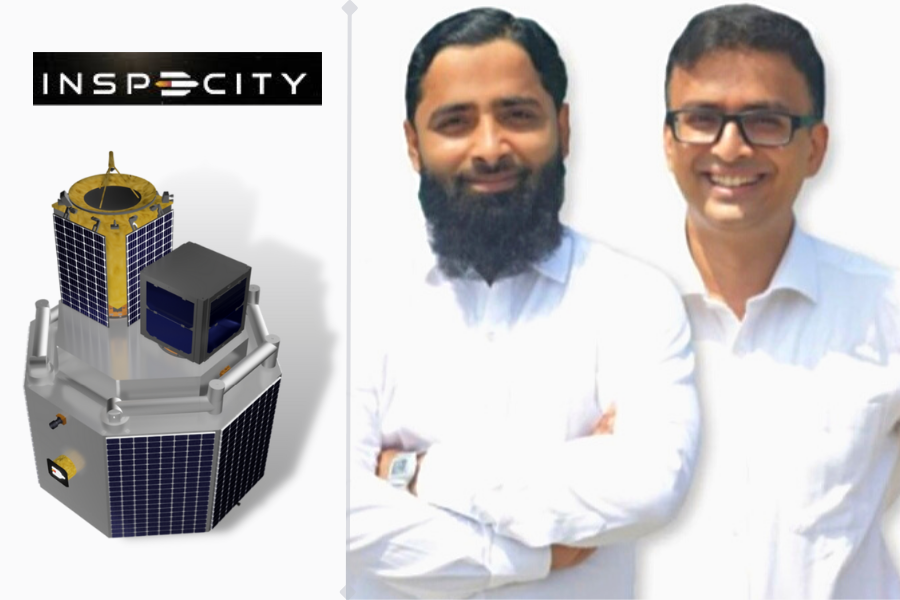
InspeCity Raises $1.5 Mn from Speciale Invest to Revolutionize In-Space Servicing and Build Earth 2.0 in the Near-Earth Space

InspeCity Raises $1.5 Mn from Speciale Invest to Revolutionize In-Space Servicing and Build Earth 2.0 in the Near-Earth Space
  • InspeCity raises $1.5 million from Speciale Invest to revolutionize in-space servicing and build Earth 2.0 in the near-earth space
  • The round was co-led by Antler India and Veda VC. Anicut Capital, DeVC India, and PointOne Capital also participated in the round
  • InspeCity is on a mission to build the first city in a suitable orbit between Earth and the moon to address the problem of resource scarcity on Earth.
  • The company is developing enabling technologies for building these cities, and autonomous robotic platforms are a key piece of technology that allows the company to service satellites in all orbits.
  • The new lease of funding would help the company to demonstrate its technology for in-orbit servicing by showing that a defunct satellite can be docked with Vehicle for life-Extension and Deorbiting Activities (VEDA) on an air-bearing platform.
InspeCity, a space tech startup, has raised $1.5 million in a pre-seed funding round led by Speciale Invest, a deep-tech venture capitalist. The round was co-led by Antler India and Veda VC. Other investors participating in the round include Anicut Capital, DeVC India and others. The recent pre-seed funding is a clear indication of the growing support for InspeCity's mission to build advanced autonomous robotic platforms for in-space servicing. It will also be channelised to develop the tech stack within the company and attract quality talent to accomplish the mission and vision.

Founded in mid-2022, InspeCity has a mission to build the first city in a suitable orbit between Earth and the moon, addressing the problem of resource scarcity on Earth. The company is currently developing enabling technologies for building those cities, with autonomous robotic platforms being a key technology that allows them to service satellites in all orbits. Such capabilities allow for easy manipulation and machining of larger structures in space. InspeCity envisions building space factories that support a true in-space economy and eventually building the city.

InspeCity's cutting-edge technology and long-term vision are well-suited to meet the increasing demand for non-GEO satellite constellations, making it an important player in the growing space industry. Northern Sky Search projects IoSM revenue to reach $14.3 billion by 2031, with life extension contributing $4.7 billion.

The investment raised will primarily be used to achieve two objectives. Firstly, InspeCity aims to demonstrate that a defunct satellite can be docked with a deorbited satellite using its Vehicle for life-Extension and Deorbiting Activities (VEDA) on an air-bearing platform, where both satellites will move without friction. VEDA will autonomously locate the defunct satellite and dock with it using a proprietary robotic mechanism named RAMA (Remotely Actuated Motorized Arm). The demonstration will prove the effectiveness of InspeCity's technology for in-orbit servicing. Secondly, the funding will be utilized to develop InspeCity's technology further and expand its team.

"We are grateful for the support of our investors as we pursue our mission to build the first city in space. This will tremendously help us further develop our technology for in-orbit servicing and autonomous robotic platforms. Our vision is to create a new economy in space and build human habitats that transcend the limitations of our current planetary systems. We are excited to have our investors join us in this journey towards the future of space exploration and development,” said Arindrajit Chowdhury, CEO, Inspecity.

"We are very excited to support InspeCity's ambitious mission to build cities in space. The company's innovative technology, particularly its autonomous robotic platforms and in-orbit servicing capabilities, holds promise for the future of space exploration and development. We have immense confidence in InspeCity's ability to achieve its goals and are proud to be part of its journey. We look forward to collaborating with the team and backing them to their success," said Vishesh Rajaram, Managing Partner at Speciale Invest.

With its focus on developing innovative solutions for in-space servicing and building large-scale human habitats beyond the constraints of current planetary systems, InspeCity is poised to make a lasting impact in the space industry.

Inspecity has raised INR 15 million grant from the iDEX platform for the development of micropropulsion systems for cubesats. The company has received a grant of INR 1 million from TIH Foundation at IIT Bombay for technological support to develop an inter-satellite link.

About Inspecity

Founded in mid-2022, InspeCity is building Earth 2.0 in near-earth space. In the near term, the engineers of InspeCity are creating a fleet of Vehicles for life-Extension and Deorbiting Activities (VEDA), equipped with Robotically Inserted Guidance systems (RIG) to cater to satellite-servicing, active debris removal, and satellite-deployment in all orbits. In the long term, the extensive fleet of RIG-equipped VEDAs will be leveraged to build innovative large-scale human habitats in space, free from the tyranny of solar-planetary environments.
https://www.inspecity.com/

About Speciale Invest

Founded in 2017 by Co-founders Vishesh Rajaram and Arjun Rao, Speciale Invest is a seed-stage venture capital firm that invests in founders building technologies of tomorrow. The firm backs ingenious entrepreneurs that use disruptive technologies to find innovative solutions that make an impact.

The fund's interests include Enterprise Software Products (emerging from deep tech in Data Infrastructure, Cloud, AI-led SAAS, and Developer tools) and Industrial Hardware Products (emerging from deep tech in Propulsion tech, Robotics, Rocket engines, Battery tech, Micro-electronics, Optical Communication tech).

India Space Congress 2022 is Set to Be a Launchpad for Space Startups

India Space Congress 2022 is Set to Be a Launchpad for Space Startups

Enable them to partnering in $ 1.5 trillion Space Economy – India in Amrit Kaal

To nurture the growing interest of deep space tech start-ups in India, ISC’22 announced number of initiatives to showcase excellence by engaging with ‘iDEX 75 Space Challenges uh’ which was announced by Prime Minister during the Defence Expo, partnering with Microsoft to extend Founders Hub benefits to the 15 shortlisted start-ups. As part of the Founders hub program 15 selected start-ups may apply to Founders Hub and avail up to $150,000 worth of free Azure credits. 5 finalists of SpaceTech startups will be pitching their ideas to industry leaders and investors at the session ‘Pitch Right for Skyrocketing Start-ups’ on October 27, 2022. A specially curated mentorship engagement with senior executives of leading companies is in store for the startups.

According to Anil Prakash, DG – SIA-India, “SIA-India welcomes these engagements to help start-ups to launch their ambition to the next orbit with sure chances of success. With iDEX and Microsoft onboard, we look forward to the beginning of a partnership that will reap benefits to the deep tech space start-ups. These alliances will work towards fostering, incubating and hand holding promising startups.” He further added, “The India Space Congress will have on the same platform decision makers, industry stakeholders and policy makers. The 3-day congress will not only pave way for deliberations but will also provide a learning curve to stakeholders.”

The three days India Space Congress 2022 is going to witness 500 + delegates, 180 Speakers, 35 thematic sessions from 20 nationalities. The platform is to open dialogue, discuss business models, talk about regulatory challenges and possible learnings from other geographies, generate interest in the new entrepreneurs- all this towards the goal of making 'ATMANIRBHAR BHARAT' a reality. Speakers from 30 countries will indulge in intense discussions and will touch upon various aspects of space segments and build up a new age space Ecosystem in the country.

Day 1 (October 26, 2022) will have sessions around space technology and satellite capabilities. From discussing ‘India’s Space Strategy for Future’ to ‘Pushing the Boundaries on Satellite Remote Sensing,’ each elite panel will threadbare discuss nuances of the satcom industry. Sessions on the first day include ‘Decoding Space Economy.’ ‘In-Orbit Technologies,’ ‘Leveraging Data from Space,’ and, ‘Demystifying U.S. Export Control Regulations ITAR and EAR for the India Space Sector.’

Day 2 (October 27, 2022) have power-packed sessions on funding, technology, emerging technologies and alliances. ‘Space Investment Outlook and Funding for New Ventures’ will take into cognisance recent investment trends in the commercial space market and how that will impact the immediate and long-term future of the industry. The day will also witness pitches by 5 SpaceTech startups to an elite panel at the session ‘Pitch Right for Skyrocketing Start-ups.’ ‘International Collaboration,’ ‘A Balanced approach to Spectrum Allocation,’ ‘Human Space Flights and Deep Space Opportunities,’ ‘Satellites in Mobility,’ ‘Satellites in the 5G Era and Beyond,’ and, ‘Dialogue on Satellite Role in Disaster Management and Resilient Infrastructures’ are some of the sessions on Day 2.

Defence and security will take centre stage on Day 3 (October 28, 2022) as veterans and experts will discuss on ‘Space: The Fourth Frontier of Warfare,’ along with sessions like ‘Leveraging dual use capabilities for National Security,’ ‘Protecting Space Capabilities and Cybersecurity Framework,’ ‘Navigating the Laws for Space Business in India,’ ‘Insurance and Liability Coverage for Space Business,’ and, ‘Spacecraft Design, Production and Mission Success,’ among others.

The India Space Congress 2022 is supported by ISRO, IN-SPACE, NSIL, DoT, MoD and the NITI Aayog apart from various domestic and international trade bodies. 

About SIA-India:

SIA INDIA
SIA-India is a non-profit association created to represent the interests of the communication satellite ecosystem in India. As a vibrant body, SIA-India represents satellite operators, satellite systems, launch vehicles and ground and terminal equipment manufacturers and application solutions providers to the Government, Regulators, Policymakers, and domestic and international standards bodies. As the apex representative body for the satellite communications ecosystem, we aim to present the industry's interest to the highest Government levels for policy-making and regulatory and licensing matters.

A unified voice for Satellite Communication Industry in India

https://www.sia-india.com/

Market Reports

Market Report & Surveys
IndianWeb2.com © all rights reserved