‏إظهار الرسائل ذات التسميات Battery Tech. إظهار كافة الرسائل

Indian Deep-Tech Startup Meine Electric's Fast-Charging Iron-Air Battery Clears Independent Validation, Paving the Way for 24/7 Renewable Energy Storage

Indian Deep-Tech Startup Meine Electric's Fast-Charging Iron-Air Battery Clears Independent Validation, Paving the Way for 24/7 Renewable Energy Storage
  • Independent validation by Customized Energy Solutions (CES), the parent company of the India Energy Storage Alliance (IESA), confirms the performance and cycle stability of Meine Electric’s breakthrough Fast-Charge Long-Discharge (FCLD) Iron-Air battery technology.
Indian deep-tech startup Meine Electric has developed the world's first fast-charging iron-air battery system, marking a significant technical advancement for long-duration energy storage (LDES). The technology, which features a proprietary Fast Charge Long Discharge (FCLD) capability allowing the battery to charge in 6 hours and discharge over 18 hours, has been independently validated by Customized Energy Solutions (CES), a US-headquartered global energy services and technology company and the parent organization of the India Energy Storage Alliance (IESA).

The independent testing was conducted by the CES Battery Laboratory through a structured testing protocol designed to assess electrochemical performance, capacity retention, and operational stability. Testing two iron-air electrochemical cells, the assessment validated the system's operational stability under an asymmetric duty cycle comprising a rapid 6 hours of charging followed by 18 hours of discharging per cycle.

Historically, iron-air battery chemistry has been limited by longer charge cycles, with existing approaches focused on multi-day storage applications. According to DataM Intelligence’s Iron Air Battery Market Size, Long-Duration Energy Storage Forecast 2035; 2026 Report, Iron-Air batteries are emerging as a promising solution for long-duration energy storage due to their ability to provide reliable and scalable storage using abundant materials such as iron. Global players, including Form Energy (US) and Ore Energy (Europe), have built Iron-Air systems focused on long-duration applications, with existing approaches demonstrating storage durations of up to 100 hours. However, these longer cycle times have restricted its suitability for daily renewable energy balancing.

Meine Electric has addressed this limitation through its proprietary Fast Charge Long Discharge (FCLD) technology, electrode development processes, and new system architecture. The technology enables a 6-hour charge and 18-hour discharge cycle, making it the world’s first fast-charging Iron-Air battery technology designed for daily-cycling renewable energy applications. The chemistry also offers fundamental advantages including inherent safety, reliance on abundant raw materials, and lower system costs compared to lithium-ion.

"Traditional iron-air systems are restricted to multi-day cycles, making them largely incompatible with the intermittent nature of renewable energy generation. Furthermore, solar-heavy grids don't need a 100-hour battery. Unlike regions that require seasonal storage, the renewable challenge across Asia and MEA is fundamentally a daily balancing problem. By engineering our system to capture a full charge within a tight 6-to-8-hour window, we are finally turning iron-air batteries from a sluggish backup chemistry into a foundational, daily-cycling asset," said Priyansh Mohan, Co-founder and CEO of Meine Electric.

This daily-cycling capability aligns precisely with the requirements of rapidly growing renewable energy markets like India, where the grid demands storage technologies that can consistently capture excess solar generation during the day and discharge it reliably overnight. For Meine Electric, it reinforces the company’s progress from laboratory-scale development towards real-world deployment of next-generation storage solutions.

Founded in 2023 by Priyansh Mohan and Stuti Kakkar, Meine Electric is the first company in APAC, and the third player globally, pioneering iron-air long-duration energy storage. As India races towards its 500 GW renewable energy target by 2030, Meine Electric is positioned to deliver key strategic advantages:
  • Market-Leading Costs: The proprietary technology operates at a levelised cost of storage (LCOS) of less than $0.05/kWh (~₹5/kWh).
  • Daily-Cycling Capability: Affordable, daily-cycling batteries that seamlessly complement lithium-ion to unlock true round-the-clock renewable power.
  • Grid Infrastructure: Systems capable of functioning as foundational assets to firm renewables and flexibilize thermal assets.
"The energy industry prioritizes lower costs and higher reliability, and iron-air technology is structurally positioned to deliver on both. We are betting on iron-air as a foundational infrastructure play to support the renewable grid," stated Stuti Kakkar, Co-founder and COO of Meine Electric.

The validation by CES adds critical third-party credibility to Meine Electric’s technology roadmap as the company moves towards larger-scale demonstrations, pilot deployments, and continues developing indigenous energy storage solutions to secure India’s transition to renewable energy.
About Meine Electric

Meine Electric is an Indian deep-tech startup pioneering the world’s first fast-charging Iron-Air battery for Long-Duration Energy Storage (LDES). By shrinking traditional charge times from 100 hours to just 6 hours, paired with an 18-hour discharge, the company utilizes a proprietary, low-cost "reversible rusting" chemistry to provide reliable & affordable 24/7 baseload power. Engineered specifically for the daily-cycling demands of modern power grids, Meine Electric's systems enable renewable firming and thermal asset flexibilization at a fraction of the cost of alternative storage technologies. As a first-mover in the high-growth APAC and MEA markets, the company is now working towards partnering with utilities and heavy industries to build the critical infrastructure required for a secure global energy transition. Backed by leading investors and institutional partners, Meine Electric is pioneering India-built, practical engineering to drive the shift to a future of limitless renewable energy. Meine Electric has won several industry awards, including The National Startup Award 2026, Nasscom Emerge 50 Award, besides others.

Vision: Limitless renewable energy.

Mission: Make iron-air batteries the backbone of long-duration storage and lead globally in this category.. 

Long-term goal: Enable $1B in revenue by 2032 through grid-scale Iron-Air Battery deployments.

Researchers Develop New Material That Makes Clean Energy Storage More Compact and Affordable

Researchers Develop New Material That Makes Clean Energy Storage More Compact and Affordable

Researchers at ARCI have developed a spinel nanocomposite phase change material (PCM) that boosts thermal battery efficiency by up to 45%, offering a cost‑effective solution for clean energy storage in concentrated solar power and industrial waste heat recovery systems. This breakthrough, published in Materials Today Chemistry, aligns with India’s Aatma Nirbhar Bharat initiative and global clean energy goals.

Breakthrough in Simple Words

Scientists have found a smart way to make thermal batteries—used to store heat for later—work better and cost less. These batteries save heat from the sun in solar power plants or capture wasted heat from factories, turning it into useful energy.

The ARCI team discovered that mixing just 1% of special spinel nanoparticles into the storage material helps batteries hold 45% more heat.

What This Means

  • Smaller tanks are needed to store the same amount of energy
  • Lower costs for building and running these systems
  • More efficient clean energy for homes, industries, and power plants
This breakthrough makes clean energy storage cheaper, more compact, and more powerful—helping India and the world move closer to reliable renewable energy.

Key Breakthrough

Researchers Develop New Material Makes Clean Energy Storage More Compact and Affordable


  • Institution: International Advanced Research Centre for Powder Metallurgy and New Materials (ARCI), under India’s Department of Science and Technology
  • Lead Scientist: Dr. Mani Karthik
  • Innovation: Spinel oxide nanoparticles added to PCM via a simple co‑precipitation method
  • Impact: Just 1% nanoparticle addition increased specific heat capacity by 45%, enabling more compact and efficient thermal energy storage

Why It Matters

  • Concentrated Solar Power (CSP): TES systems are critical for storing solar heat and releasing it when sunlight is unavailable
  • Industrial Waste Heat Recovery: Captures and reuses excess heat, reducing energy loss
  • Cost Savings: Higher energy density means smaller tanks, less construction material, and lower capital/operational costs. 
  • Scalability: The process is cost‑effective and scalable, making it suitable for large‑scale deployment

Global Relevance

  • Clean Energy Transition: Supports worldwide efforts to decarbonize power generation. 
  • Compact Design: Enables next‑generation thermal batteries that are lighter, cheaper, and more efficient. 
  • Indigenous Expertise: Strengthens India’s position in advanced energy materials research while contributing to global sustainability

Comparative Advantages

FeatureConventional PCMSpinel Nanocomposite PCM
Specific Heat CapacityBaseline+45% increase
Thermal StabilityModerateExcellent
Tank SizeLargerReduced by ~40%
Cost EfficiencyHigher material & construction costsLower capital & operational costs
ScalabilityLimitedScalable, cost‑effective process

Mechanism of Improvement

  • Nanoparticle Dispersion: Uniform distribution increases surface area. 
  • Stable Spinel Oxide Layer: Forms at the PCM interface, enhancing surface energy
  • Result: Higher energy storage per unit mass, improved thermal conductivity, and long‑term stability

Strategic Impact

  • India’s Energy Goals: Supports Aatma Nirbhar Bharat by advancing indigenous clean energy technologies. 
  • Global Adoption: Potential to revolutionize thermal batteries for CSP plants worldwide. 
  • Publication: Materials Today Chemistry (Elsevier), 2026, DOI: 10.1016/j.mtchem.2025.103282

Tata and JSW Pledge $1 Billion to Power India’s EV and Battery Future

Tata and JSW Pledge $1 Billion to Power India’s EV and Battery Future

Tata Group and JSW Group are jointly planning nearly $1 billion in investments to build India’s domestic EV and battery technology capabilities, with Tata’s Agratas unit focusing on advanced lithium chemistries in Bengaluru and JSW Motors establishing a $500 million R&D hub in Maharashtra.

Key Details

  • Total Investment: ~$1 billion (₹8,300 crore).
  • Tata Group (Agratas Ltd.):
    • Spending $400+ million on a new R&D facility in Bengaluru.
    • Focus: Lithium iron phosphate (LFP) and lithium manganese iron phosphate (LMFP) chemistries.
    • Goal: Reduce reliance on Chinese imports, build domestic IP, and support Tata’s upcoming gigafactory in Gujarat.
  • JSW Group (JSW Motors Ltd.):
    • Investing $500 million over 5–6 years in a Maharashtra research hub.
    • Focus: Localizing EV designs, proprietary software, and connected vehicle technologies.
    • Aim: Strengthen India’s EV ecosystem and reduce dependence on foreign tech.

Strategic Significance

  • Reducing China Dependence: Both conglomerates are targeting chemistries and systems currently sourced from China, aligning with India’s push for “chemistry sovereignty.”
  • Domestic Capability: Batteries are the costliest and most complex EV component; local R&D will help India secure supply chains and intellectual property.
  • Global Context: China is tightening controls on advanced tech exports amid trade tensions, making domestic innovation critical for India’s EV future.

Comparison of Tata vs JSW Plans

CompanyInvestmentLocationFocus AreasStrategic Goal
Tata Agratas Ltd.$400M+BengaluruLFP & LMFP battery chemistriesBuild IP, support gigafactory, reduce China reliance
JSW Motors Ltd.$500MMaharashtraEV localization, software, connected vehiclesDomestic EV systems, exportable designs

Risks & Challenges

  • Technology Scaling: Transitioning lab R&D into mass manufacturing is capital-intensive and risky.
  • Supply Chain: Securing critical minerals (lithium, cobalt, manganese) remains a challenge.
  • Global Competition: India must compete with established EV hubs in China, South Korea, and Europe.

Why This Matters

  • Strengthens India’s EV supply chain resilience.
  • Supports India’s 2030 target of 500 GW non‑fossil fuel capacity.
  • Positions Tata and JSW as leaders in domestic EV innovation, reducing vulnerability to external shocks.
JSW Group has forged multiple partnerships in the EV and automotive space, including a joint venture with MG Motor India (SAIC), a technology transfer agreement with China’s Chery Automobile, and a strategic alliance with Tata Elxsi to build connected, software‑defined mobility solutions. These collaborations position JSW as a new challenger in India’s fast‑growing EV market.

Tata Group has built a wide EV ecosystem through partnerships across charging, components, and battery technology—working with Tata Power, Tata AutoComp Systems, and Agratas—while also collaborating with global players like Jaguar Land Rover (JLR) to accelerate electrification.

China's Ultra‑Cheap Iron Flow Battery Delivers 6,000 Cycles, Outlasting Costly Lithium‑Ion

China's Ultra‑Cheap Iron Flow Battery Delivers 6,000 Cycles, Outlasting Costly Lithium‑Ion

Scientists in China have unlocked a major advance in energy storage by improving iron flow batteries, making them last more than 6,000 cycles without losing capacity. This could transform how we store renewable energy like solar and wind power.

According to a paper published in Advanced Energy Materials, researchers at the Chinese Academy of Sciences have developed an alkaline all-iron flow battery capable of more than 6,000 charge-discharge cycles without measurable capacity decay.

This innovation addresses long‑standing issues of reversibility and crossover, making iron‑based flow batteries far more viable for grid‑scale renewable energy storage.

What’s the Problem?

Traditional iron flow batteries suffer from poor electrochemical reversibility, ligand crossover, and active species decomposition, limiting cycle life.  In simple language - 
  • Renewable energy is clean but unpredictable — the sun doesn’t always shine, and the wind doesn’t always blow.
  • To use renewable energy reliably, we need batteries that can store huge amounts of power for long periods.
  • Lithium‑ion batteries dominate today, but they are expensive, rely on scarce materials, and carry fire risks.

The Breakthrough

  • Researchers redesigned the anolyte (the liquid inside the battery) to make it more stable.
  • They used bulky molecules (high steric hindrance) and added negative charges to block unwanted reactions.
  • This clever design prevents the battery from breaking down, allowing it to run smoothly for thousands of cycles.

Performance Highlights

  • 6,000+ cycles with no capacity loss.
  • 99.4% efficiency in charging and discharging.
  • Works even at high current densities, showing strong potential for large‑scale use.

Why It Matters Globally

  • Iron is cheap and abundant — far more available than lithium.
  • Safer chemistry — no risk of fire or explosion.
  • Perfect for grid storage — storing solar and wind energy for homes, cities, and industries.

Comparison: Iron Flow vs Lithium‑Ion

FeatureAlkaline All‑Iron Flow BatteryLithium‑Ion Battery
Cycle Life6,000+ cycles (no decay)1,000–3,000 cycles
Material CostVery low (iron abundant)High (lithium scarce)
SafetyIntrinsically safe, aqueousFire/explosion risks
Energy DensityLower (~40–60 Wh/kg)Higher (~150–250 Wh/kg)
Best Use CaseGrid‑scale, long‑durationPortable electronics, EVs


This breakthrough makes iron flow batteries a serious contender for powering the future. They may not replace lithium‑ion in phones or cars, but for large power plants and renewable grids, they could be the affordable, safe, and long‑lasting solution the world needs.

IAN Group Backs e-TRNL Energy with ₹27.4 Cr Seed Round for Next-Gen Battery Cells

IAN Group Backs e-TRNL Energy with ₹27.4 Cr Seed Round for Next-Gen Battery Cells
(Left to Right) Apoorv Shaligram (Co-founder & CEO) and Dr. Uttam Kumar Sen (Co-founder & CTO), e-TRNL Energy

IAN Group, the country’s single largest early-stage investment platform, has led a ₹27.4 crore seed round in e-TRNL Energy, a cleantech startup pioneering next-generation battery cell technology, through its 2nd VC Fund, IAN Alpha Fund. The round saw participation from Navam Capital, Speciale Invest, and other investors.

Founded in 2021 by Apoorv Shaligram (Co-founder & CEO) and Dr. Uttam Kumar Sen (Co-founder & CTO), e-TRNL Energy is led by founders with deep, hands-on experience across battery materials, cell engineering, and manufacturing. Apoorv brings over a decade of experience spanning lithium-ion research, cell fabrication, EV battery design, and scaling cell technologies for India, along with multiple technical publications in energy storage. Dr. Sen, a PhD in Energy Science & Engineering, is a seasoned battery researcher with over 2,700 academic citations and extensive experience in lithium-ion cell development and materials engineering.

While most battery innovation globally has focused on incremental chemistry improvements within legacy cell designs, e-TRNL Energy is taking a fundamentally different approach by rethinking the core cell architecture and manufacturing process itself. By redesigning the cell architecture, the technology enables safer batteries with significantly lower heat generation, faster charging, longer life, and higher energy density, while also improving manufacturing economics.

The funds raised will be used to complete product development, validate performance and safety, and demonstrate manufacturing capability in India.The company has already set up a 20,000 sq. ft. R&D and early manufacturing facility in Bengaluru to support testing and scale-up. It has been granted two patents for its battery cell design and has filed additional patent applications.

The company plans to establish a 250 MWh pilot manufacturing facility by 2027, with the intention of expanding it to a 2 GWh capacity later. Its first battery product will use LFP (Lithium Iron Phosphate) chemistry, with plans to develop LMFP and Sodium-ion batteries in the future. The company plans to supply its cells to battery pack manufacturers serving electric mobility and energy storage markets.

Apoorv Shaligram, Co-founder & CEO, e-TRNL Energy, said — Over the past three years, we've created a ground-breaking battery cell design and built precise machines and processes needed to realize it. With this funding round, we move towards demonstration, testing, and scaling our innovation for commercialization. Beyond positioning India as a leader in energy storage innovations, these efforts will also strengthen our resilience against global supply chain vulnerabilities in these changing times.

Rajnish Kapur, Managing Partner, IAN Alpha Fund, said, — India’s energy transition will depend not just on adopting batteries, but on owning core cell design and manufacturing capabilities. What stood out with e-TRNL Energy was their first-principles rethink of cell architecture and manufacturing, rather than incremental upgrades to legacy designs. This integrated approach tackles performance, safety, heating, and cost together, which is exactly the kind of deep-tech innovation we back at IAN.

India is rapidly adopting electric mobility and renewable energy, but it still depends heavily on imported battery cells and manufacturing equipment. This creates supply chain risks and increases costs. e-TRNL Energy aims to build an indigenous battery cell design and manufacturing platform to reduce this dependence and strengthen India’s position in advanced energy storage.

The Indian battery cell market is expected to grow to nearly 400 GWh per year by 2035, representing a significant economic opportunity. However, building this capacity using existing global technologies would require large capital investments and imported machinery. The company’s approach focuses on developing both the battery cell and the manufacturing equipment in-house, which can potentially lower capital costs and improve efficiency.

About e-TRNL Energy:

e-TRNL Energy is an Indian start-up company in the energy storage space. Founded by experienced technologists from IIT Bombay and IIT Roorkee, e-TRNL Energy is working on a fundamental battery cell technology that is chemistry agnostic and can adopt all present Li-ion and future Na-ion chemistries. The technology offers battery cells with higher energy density and lower heating compared to its peers, with better pricing economics.

About IAN Alpha Fund:

IAN Alpha Fund, a $100 Mn SEBI-registered Category II AIF VC Fund, is the 2nd fund in IAN Group’s series of funds. The Fund explores opportunities in diverse sectors such as healthtech, cleantech, deep tech, agritech, medtech, hardware and electronics, manufacturing, Web 3.0, Metaverse, Industry 4.0, SaaS, and other sectors where innovation is transformational. The Fund invests in innovative startups solving real problems for India and the world, with sustainable business models enabling scale by leveraging technology. With the IAN Alpha Fund, IAN Group continues its two-decade legacy of building a portfolio of technology-focused, innovative companies led by founders who not only understand customer needs but also have the leadership qualities to build large and valuable businesses.

About IAN Group: 

IAN Group is India’s largest horizontal platform for early-stage investments, comprising the IAN Angel Fund, BioAngels, and a series of SEBI-registered Venture Capital Funds, the latest being a US$100mn VC Fund, IAN Alpha Fund. IAN enables entrepreneurs to raise from Rs. 50 lakhs to Rs. 50 crores, supported by high-quality mentoring by successful entrepreneurs, enabling access to global markets. IAN Group backs founders across domains and helps them scale their companies across India and beyond. Forbes has recognised IAN as one of the most iconic business and economic developments of Independent India over the last 75 years, alongside institutions such as LIC, NASSCOM, the RBI, and Naukri.com.


Aloe Ecell Wins ₹3.5 Crore Backing on Bharat Ke Super Founders for World’s First Aloe Vera Batteries

Aloe Ecell Wins ₹3.5 Crore Backing on Bharat Ke Super Founders for World’s First Aloe Vera Batteries

Bharat Ke Super Founders, India’s founder-first entrepreneurial television series launched on Amazon MX Player, has facilitated a ₹3.5 crore funding commitment for Aloe Ecell, a climate-focused startup addressing the environmental impact of disposable dry-cell batteries.

The funding structure includes ₹2.5 crore raised through equity for a 4.16 percent stake and ₹1 crore in debt financing by Recur Club, aimed at supporting scale-up through quick commerce distribution and operational expansion. The deal reflects the show’s approach of matching capital structures to real business requirements, rather than symbolic investments.

The funding round on Bharat Ke Super Founders saw participation from the show’s Tycoons, a panel of seasoned business leaders backing high-potential founders. Dr. Velumani committed ₹1.25 crore for a 2.08 percent equity stake, while Nitish M invested ₹50 lakh for 0.83 percent equity. Aditya S participated with ₹25 lakh for 0.42 percent equity, and Shanti M committed ₹50 lakh for 0.83 percent equity. The remaining capital was structured as debt financing by Recur Club, enabling faster market access and operational scale-up.

Aloe Ecell works on sustainable alternatives in the primary battery segment, having developed 100 percent eco-friendly AA and AAA batteries that replace toxic chemical electrolytes with an aloe vera extract-based electrolyte. The batteries are targeted at low-power household devices such as remotes, clocks, toys, and cameras, and are positioned as leak-proof, longer-lasting, and cost-effective, with an integrated recycling programme.

The startup’s innovation addresses a largely overlooked environmental issue. In India, an average individual discards 15 to 20 batteries annually, resulting in nearly 230 crore used batteries each year. Studies indicate that a single discarded battery can contaminate up to 1.67 lakh litres of water, highlighting the need for scalable, consumer-friendly alternatives to conventional dry-cell batteries.

With this funding, Bharat Ke Super Founders continues to reinforce its positioning as a platform that goes beyond pitch-led entertainment, enabling founders to secure serious capital aligned with sustainability, scale, and long-term impact. The Aloe Ecell deal underlines the show’s focus on backing businesses that combine commercial viability with measurable environmental outcomes.

About Bharat Ke Super Founders:-

Bharat Ke Super Founders is India’s founder-first entrepreneurial television series that brings real, growth-stage capital to businesses solving meaningful, real-world problems. The show moves beyond symbolic pitch formats by facilitating structured funding outcomes, including equity and debt, aligned with the operational needs of each startup.

Hosted and mentored by Suniel Shetty, the series features a panel of seasoned business leaders, referred to as Tycoons, who evaluate founders on fundamentals such as market relevance, scalability, unit economics, and long-term impact. Investment decisions on the show are rooted in business viability rather than entertainment-driven moments.

About Aloe Ecell:-

Aloe Ecell
Aloe Ecell is an Indian sustainability-focused startup developing eco-friendly alternatives to conventional disposable dry-cell batteries. Founded in 2018, the company was born out of a recognition that discarded batteries represent one of the most overlooked contributors to India’s growing e-waste and water contamination challenge.

Aloe Ecell manufactures the world’s first 100 percent eco-friendly primary batteries, using an aloe vera extract-based electrolyte in place of the toxic and hazardous chemicals commonly found in traditional dry-cell batteries. The company currently offers 1.5V AA and AAA batteries, designed for low-power devices such as remotes, clocks, toys, and cameras. These batteries are engineered to be leak-proof, long-lasting, and cost-effective, while also supporting a built-in recycling programme.

Battery Tech Startup Volt14 Raises $1.87 Mn Led by Blume Ventures

Battery Tech Startup Volt14 Raises $1.87 Mm Led by Blume Ventures

Battery tech startup Volt14 has raised USD 1.87 million in a Pre-Series A round of funding led by Blume Ventures with participation from Beyond Next Ventures, Spectrum Impact, Supermorpheus and previous investor Cocoon Capital. This brings the total funding raised by the company so far to US $4.02M, inclusive of this investment. Since its last fundraise, Volt14 has made substantial progress from the development of its core material technology to now offering its anode products, ready for adoption and manufacturing, to cell producers.

Volt14 will utilise the funds raised for scaling up manufacturing of its anodes and to strengthen the team.

Silicon is a next generation anode material being adopted by the lithium ion battery industry to improve battery energy density which results in longer battery life of consumer electronics and a range of electric vehicles. Volt14 leverages its proprietary technology that allows it to boost silicon content in anodes while maintaining performance stability.The company has been engaging with multiple battery cell companies for the adoption of its silicon rich anode products for their next generation battery cell products. Volt14 has developed an in-house cylindrical EV-format battery cell that demonstrates state-of-the-art energy density using its silicon anode product.

Volt14 was founded in 2019 by Animesh Kumar Jha who has a materials science background and is a Forbes 30 Under 30 alumni. Last year, Dr Puneet Gupta, a veteran from the silicon industry with over two decades of management experience joined the company’s Board of Directors. Ex Tesla, Lucid and CTO of SERES and EV and battery industry veteran Yifan Tang has also joined Volt14 as an advisor.

Animesh Jha, Founder, Volt14, said, “We are delighted to have the backing and vote of confidence from such high-quality investors — Blume Ventures, Beyond Next Ventures, and Spectrum Impact. Over the past five years, our focused and resilient team has made outstanding progress in commercializing our high-performance silicon anode platform. Electrification is an irreversible trend, and in this paradigm we are excited to help our partners unlock tangible product advantages through superior battery performance. Volt14’s technology delivers a substantial boost to energy density, can leverage installed cell production capacity, and scales efficiently — positioning us strongly for the future.”

Arpit Agarwal, Partner, Blume Ventures, added, “We are excited to lead this investment round in Volt14, a company that is fundamentally reimagining the future of battery technology. Their breakthrough silicon anode innovation represents a step-change in energy storage capabilities that could push the boundaries of what's possible with Lithium-ion batteries. Under the very capable leadership of Animesh and Puneet, whose technical expertise and vision are world-class, we have full confidence in Volt14's ability to scale this company globally. We look forward to supporting their journey as they revolutionize energy storage solutions for a more sustainable future.”

“As Japan’s top deep tech fund, we invest early in startups that align with our fund thesis of Healthy Planet, Happy People. Our investment in Volt14 is a step in that direction. Volt14 and the founders’ disruptive vision for a sustainable world by innovating in the battery chemistry space perfectly resonates with our mission to back the pioneers building a happy planet, mentioned Jay Krishnan, Partner, Beyond Next Ventures.

The global lithium-ion battery market is experiencing rapid growth, driven by the accelerating adoption of electric vehicles (EVs) and expansion of renewable energy storage solutions. and is expected to surpass US$300 billion by 2034 with a compound annual growth rate (CAGR) of more than 15% (source). According to the International Energy Agency (source), nearly one out of every five cars sold in 2023 was electric with the global electric vehicle fleet expected to grow twelve fold by 2035. Lithium ion battery cell manufacturing is today a strategic national priority in key economies, including India and the United States with multiple incentive schemes and subsidies to blister domestic production.

Tesla to Introduce Major Battery Innovation in Its Cybertrucks This Year

Tesla to Introduce Major Battery Innovation in Its Cybertrucks This Year

Tesla is gearing up to introduce a significant battery innovation in its Cybertrucks this year. The company plans to implement dry cathode technology, which is expected to reduce manufacturing costs and streamline production. This innovation involves using dry powder for the cathode material instead of liquid solvents, making the process more eco-friendly and cost-efficient.

The dry cathode technology has been in development for years, facing challenges along the way. However, Tesla has made progress, and Cybertrucks equipped with this technology are expected to roll out soon. This marks a step toward Tesla's broader goals of cost reduction and advancing battery technology.

What is Dry Cathode Technology?

Dry cathode technology is a groundbreaking innovation in battery manufacturing, particularly in Tesla's 4680 battery cells. Unlike traditional wet processes that use toxic solvents and require extensive drying, the dry cathode method skips these steps entirely. Instead, it uses a dry powder mixed with binders to create electrode sheets, which are then pressed onto metallic foils. This approach simplifies production, reduces costs, and is more environmentally friendly.

The advantages of dry cathode technology include:
  • Higher energy density: It allows for thicker electrode materials, boosting battery performance.
  • Extended battery lifespan: Improved electrode activity enhances durability.
  • Cost efficiency: Eliminating solvents and drying ovens lowers production expenses.
  • Eco-friendliness: Reduces the environmental impact of battery manufacturing.
Tesla's dry cathode technology, spearheaded by its 4680 cells, is a game-changer in making batteries more sustainable, affordable, and powerful. It's a pivotal step toward revolutionizing the EV industry. 

It is to be noted that Tesla acquired Maxwell Technologies in 2019 to integrate this technology into its 4680 battery cells, aiming to revolutionize electric vehicle batteries. 

Traditional Vs Cathode Dry Technology

Dry cathode technology introduces several advancements when compared to traditional wet-process battery technologies. Let's break it down, as below:

Aspect Dry Cathode Technology Traditional Battery Technologies
Environmental Impact Eco-friendly; eliminates toxic solvents and VOC emissions Higher environmental footprint due to solvent use and VOC emissions
Production Efficiency Streamlined process; skips drying and solvent removal steps Complex process; requires solvent handling and drying infrastructure
Energy Density Supports thicker electrodes for higher energy capacity Limited energy density due to thinner electrode layers
Manufacturing Cost Lower costs; requires fewer materials and resources Higher costs due to solvents and energy-intensive processes
Battery Longevity Enhanced electrode activity improves lifespan Faster performance degradation due to residual solvents

In 2019, Tesla acquired Maxwell Technologies to integrate their dry cathode technology into Tesla's battery production. However, in 2021, Tesla sold Maxwell's ultracapacitor business and branding to UCAP Power, a San Diego-based startup.

Maxwell's innovations, especially in ultracapacitors and dry cathode technology, have had a significant impact on energy storage advancements.

While Tesla sold Maxwell's ultracapacitor business in 2021, it retained the intellectual property and expertise related to dry cathode technology. Elon Musk emphasized its importance as a key component in reducing battery costs.

Tesla has been working to incorporate dry cathode technology into its 4680 battery cells. These cells, introduced during Tesla's 2020 Battery Day, are designed to improve energy density, reduce costs, and streamline production.

Transitioning Maxwell's proof-of-concept into a scalable, high-quality production process required extensive engineering. Tesla has invested heavily in refining the technology to make it commercially viable.

Tesla's Cybertruck is expected to feature 4680 cells produced using dry cathode technology. This innovation aligns with Tesla's broader goals of enhancing battery performance and sustainability.

The company has ramped up production of 4680 cells at its Giga Texas facility, with improvements in energy density and reduced production waste. These advancements are critical for scaling the technology.

This innovative approach is set to redefine battery manufacturing and might have applications across various industries beyond electric vehicles.

Tata Elxsi and Minespider Launch MOBIUS+ A Blockchain-powered Battery Lifecycle Management Platform

Tata Elxsi and Minespider Launch MOBIUS+ A Blockchain-powered Battery Lifecycle Management Platform

Tata Elxsi and Germany-based Minespider have partnered to launch MOBIUS+, an advanced battery lifecycle management platform. This platform leverages blockchain technology to ensure traceability and sustainability in the battery industry.

Designed to address the growing need for sustainability, compliance, and performance optimization in the battery industry, MOBIUS+ aims to revolutionize the way batteries are managed from production to recycling.

Here are some key points about MOBIUS+:

Sustainability and Compliance: MOBIUS+ aims to optimize battery sustainability and compliance across global markets. It complies with evolving global battery passport regulatory mandates, such as the EU Battery Passport and the US Inflation Reduction Act.

Advanced Analytics: The platform integrates advanced data analytics and real-time monitoring to provide actionable insights for Original Equipment Manufacturers (OEMs) and the entire battery ecosystem.

Cost Savings and Emission Reduction: Battery passports are expected to deliver 10-20% cost savings in recycling and maintenance through predictive insights and advanced analytics. They also aim to reduce emissions across the battery lifecycle by up to 20%.

Seamless Integration: MOBIUS+ offers a seamless interface for vendors to upload and manage their data, ensuring compliance and accuracy across the supply.

This collaboration is a significant step towards creating a more transparent and sustainable battery industry.

Anil Radhakrishnan, Chief Product Officer, Tata Elxsi, said:
Our collaboration with Minespider is a commitment to drive innovation in sustainable mobility. With MOBIUS+, we aim to set a new benchmark for battery lifecycle management, providing customers with compliance-ready solutions, advanced tools, and data-driven insights to create a more sustainable and transparent future in mobility.
Partnering with Tata Elxsi enables us to bring our blockchain expertise to a comprehensive platform that supports the industry’s drive for transparency and compliance,” said Nathan Williams, Founder & CEO, Minespider. “By embedding battery passports into MOBIUS+, we’re providing a foundation for secure, reliable data that supports global sustainability goals.”

Hyundai Group Partners Three IITs for Battery-Tech, Electrification Research, Investing $7 Mn

Hyundai Group Partners Three IITs for Battery-Tech, Electrification Research Investing $7 Mn
  • Hyundai Motor Group partners with the Indian Institutes of Technology (IITs) to establish a collaborative research system in batteries and electrification
  • Group plans to invest around USD 7 million over five years, starting in 2025, to jointly conduct battery and electrification-related research with the IIT universities
  • The Hyundai CoE to facilitate technical and human exchanges between battery and electrification experts from Korea and India, fostering talent and promoting long-term employment
Hyundai Motor Group, on Tuesday, announced partnerships with the Indian Institutes of Technology (IITs) to establish a collaborative research system in the fields of batteries and electrification. The three institutes include IIT Delhi, IIT Bombay and IIT Madras.

Hyundai Motor Group Partners with Indian Institutes of Technology to Advance Battery and Electrification Research

Investment:

USD 7 million over five years (2025-2029) to support various research activities.

Hyundai Center of Excellence (COE):
  • Location: IIT Delhi
  • Objective: To drive advancements in batteries and electrification, specifically tailored to meet the unique requirements of the Indian market.
  • Activities: Conducting joint research, facilitating technical and human exchanges between Korean and Indian experts, and fostering talent development.
Collaboration Areas:
  • Battery Technology: Researching and developing advanced battery solutions.
  • Electrification: Innovating in electrification technologies.
  • Software Development: Enhancing software for electric vehicles (EVs)
  • Hydrogen Fuel Cells: Exploring hydrogen fuel cell technologies.
Impact:
  • EV Ecosystem: Contributing to the establishment of an EV ecosystem in India, in line with government policies for expanding EV distribution.
  • Academic-Industrial Cooperation: Promoting collaboration between academia and industry to drive innovation and growth.
Hyundai Motor Group plans to contribute to the establishment of an electric vehicle (EV) ecosystem in India. This will be done in conjunction with various policies for expanding EV distribution, implemented by the Indian government. The collaboration will involve the Centre for Automotive Research and Tribology (CART), the only EV-related research institute in India, located within IIT Delhi.

The Hyundai CoE will not only conduct joint research on academic-industrial cooperation tasks but also facilitate technical and human exchanges between battery and electrification experts from Korea and India. This will involve technical exchange meetings, special IIT lectures by Group battery and electrification experts, and operation of Korean visit training programs. The Group plans to continue efforts for, fostering talent and mid- to long-term employment.

This partnership aligns with Hyundai Motor Group's efforts to expand its presence in India and support the country's transition to sustainable mobility solutions.

Lucknow Startup Making Batteries from Aloe-Vera Gel Gets ₹1.91 Cr from TBD

Lucknow Startup Making Batteries from Aloe-Vera Gel Gets ₹1.91 Cr from TBD

Technology Development Board (TDB), a statutory body by Government of India that provides financial assistance to Indian industrial concerns and other agencies, has announced in early this month that it is collaborating with Aloe Ecell Pvt. Ltd., an innovative startup rooted in Lucknow, Uttar Pradesh, to commercialize Eco-friendly-1.5V AA size Aloe Vera-based batteries.

Of the startup's Aloe-Vera batteries project valued at Rs. 2.98 crores, TDB will contribute Rs. 1.91 crores as a soft loan to Aloe Ecell amplifying the startup's project's potential to drive eco-friendly innovation to new heights.

Lucknow Startup Making Batteries from Aloe-Vera Gel Gets ₹1.91 Cr from TBD
Aloe Ecell  Partners with Technology Development Board (TDB) under the Department of Science & Technology for the commercialization of eco-friendly batteries.

The Lucknow-based startup’s ingenious approach entails the creation of an eco-friendly 1.5V AA size battery, which may help in departure from conventional counterparts laden with heavy metals and toxic chemicals. Leveraging the inherent properties of Aloe-Vera, Aloe Ecell has formulated an electrolyte that not only matches the performance of established market standards but also champions environmental responsibility.

According to a 2018 research, Aloe-Vera contains acid, which has the potential to generate electric current. While an experiment by a Malaysian university researchers revealed that the electrical energy harvested from the Aloe Vera under a specific setup condition can produce an output of 3.49 V and 1.1 mA.

The Aloe Ecell's Aloe-vera battery is NABL (IS 8144:2018) certified primary non-rechargeable battery available in AA and AAA sizes. It has been created as a safer alternative to traditional hazardous dry-cell batteries.

Additionally, the Aloe Vera Battery is carbon negative, as the Aloe Vera plants used in the production of the gel electrolyte actively capture and store carbon dioxide from the atmosphere. This helps offset the emissions associated with the battery's production, transportation, and disposal.

Moreover, the use of eco-friendly materials and manufacturing processes further reduces the battery's carbon footprint.

The startup will create facilities for commercial production of primary batteries in Bundi, Rajasthan.

Mr. Rajesh Kumar Pathak, Secretary, TDB, emphasized, "Our collaboration with Aloe ECell Pvt. Ltd. epitomizes TDB's commitment to support sustainable innovation. This partnership signifies our dedication to supporting visionary projects that blend technological advancement with environmental stewardship. As the startup forges ahead bolstered by TDB's steadfast support, it exemplifies the capability of government-industry collaboration in shaping a more sustainable and prosperous future for our nation."

Last month, TDB committed financial support of ₹ 3.81 to Bengaluru-based hardware startup TIEA Connectors Pvt Ltd. Prior to that, TBD had pledged support of ₹3.94 Crores to Pune-based Noccarc for its indigenously developed technology innovation — A Digitally Enabled Advanced Universal ICU Ventilators.

The collaboration of the TDB with Aloe Ecell is in consonance with Prime Minister Narendra Modi's visionary initiative, 'Mission LiFE' (Lifestyle for Environment).

The core objective of the project harmonizes seamlessly with 'Mission LiFE's' ethos – to introduce lifestyle choices in harmony with ecological well-being. By spearheading the cause of eco-friendly primary batteries, Aloe ECell may contribute to a cleaner, healthier environment while addressing longstanding concerns tied to the toxic composition in conventional batteries.

IISc & IIT-Bombay Alumni Founded Graphene-based Non-Flammable Batteries Startup Raises $300K from Rebalance and CIIE.CO

IISc & IIT-Bombay Alumuni Founded Graphene-based Non-Flammable Batteries Startup Raises $300K from Rebalance and CIIE.CO

Bengaluru-based Dreamfly Innovations, a graphene battery startup, has raised $300,000 in a funding round led by Rebalance Angel Community, with participation from IIM Ahmedabad’s CIIE.CO (Center for Innovation Incubation and Entrepreneurship), announced Rebalance, an angel investors community, in a blog post. 

The battery-tech startup intends to utilize this capital for product commercialization and expanding its team. The startup was also the part of Rebalance’s Accelerator Cohort 05.

Currently focussing Drone and Aviation sector, Dreamfly Innovations is India’s first high-performance, non-flammable, 10x durable graphene-based battery solutions company.

Founded in 2022 by Dr. Saurabh Markendeya and Kajal Shah, Dreamfly’s flagship product, the Graphene Battery, addresses the battery-related challenges encountered by drone companies, including the risk of battery fires.

Kajal Shah, an IIT Bombay alumnus, was an Aviation technologist at GE Aviation and R&D Manager at Tata Motors. While, Dr. Saurabh Markendeya, an IISc alumnus was Electric Vehicles & Battery Architecture Expert at Tata & L&T. The founders vision is to reshape the future of energy through Software-Defined Battery (SDB) technology.

Dreamfly’s flagship product, the Graphene Battery, is set to revolutionize the Drone and Aviation industry with its extended lifespan, rapid charging, and operational cost efficiency.

Launched in 2019, Rebalance invests upto $100K through Rebalance Angel Community which comprises of 45% women who invest with it. Rebalance invests in early-stage companies with diverse founders through Rebalance Accelerator Program & Rebalance Angel Community.

Joy e-bike Establishes Its EV Ancillary Cluster with Next-Gen Cell Tech Partnership

WardWizard Cell

Wardwizard leaps ahead in the EV Ancillary Cluster Vision with Next-Gen Cell Tech Partnership

Wardwizard Innovations and Mobility Ltd., a pioneering electric vehicle manufacturer in India under the brand 'Joy e-bike', has taken a progressive step in the vision of establishing its EV Ancillary Cluster by signing a long-term Original Equipment Manufacturer (OEM) agreement with A&S Power, a renowned technology provider. This strategic partnership aims to drive research, innovation, and development of cutting-edge Next-Generation Li-ion cell technology and shall play a pivotal role in making Joy e-bike the home to India’s first EV Ancillary Cluster in Gujarat.

These developments exemplify the company's constant efforts to enhance product offerings for its customers and advancing its vision of establishing an EV Ancillary .This strategic advancement is in harmony with the establishment of Wardwizard Global Pte Ltd., the R&D Centre of Excellence in Singapore. Furthermore, a notable milestone of this journey has also been the commencement of 1GWh capacity, as a part of the Phase I development of EV Ancillary Cluster and in line with fulfilling the larger vision of sustainable EV manufacturing in India.

Wardwizard Cells has successfully achieved the coveted Bureau of Indian Standards (BIS) certification for Li-ion cells manufactured at their state-of-the-art production factory, demonstrating their dedication to excellence. Following thorough in-house testing for BIS certification, Wardwizard has adopted a new configuration for cells and its electrochemical properties are more promising with a higher absolute capacity and a lesser deterioration than others over long-term cycling. This certification recognises Wardwizard's Li-ion cells for its superior quality, dependability, and adherence to industry-leading standards.

This collaboration will be extended further for ongoing research and development, as well as joint technological innovation at the Wardwizard’s Global advanced Li-ion cell Research Centre in Singapore. This collaboration will also focus on increasing the production capacity and simplifying the efficient supply of high quality next-gen Li-ion cells. A&S Power will also give technical help in the establishment of a collaborative production line, allowing Wardwizard to expand its manufacturing capabilities in India.

Mr Yatin Gupte, Chairman & Managing Director, Wardwizard Innovations & Mobility Ltd . Shared his insights on the collaboration, stating, "Our alliance with A&S Power marks a significant milestone in our mission to drive innovation and propel technological advancements in the electric vehicle industry. With our combined expertise and shared vision, we are confident to unveil new possibilities and accelerate our research endeavours, thus revolutionizing the landscape of electric vehicles in India and redefining the fabric of Li-ion cell technology. This collaboration brings us a step near to setting up the EV Ancillary Cluster in Gujarat, providing sustainable mobility solutions and shaping a greener tomorrow."

The collaboration between Wardwizard & A&S demonstrates a shared commitment to revolutionizing the energy storage landscape while solidifying India's position as a leader in sustainable mobility solutions. With cutting-edge research, technological innovation, and expanded production capacity, Wardwizard is poised to meet the surging demand for electric vehicles while advancing towards its vision of establishing an EV Ancillary Cluster and propelling the industry to new heights.

Wardwizard Innovations & Mobility Ltd. is one of India’s leading auto manufacturing companies in the Electric Vehicle (EV) segment under the brand name Joy e-bike. Being the first listed entity on BSE in Electric Vehicle manufacturing, it is mainly focused on the growth potential in the Indian EV segment to have a positive impact in the future. Given the current state of the environment, where fuel-powered vehicles account for the vast bulk of carbon emissions, the company is promoting improvement by offering cleaner, greener options that produce no emissions. With more than 10 models in its portfolio in both high and low-speed categories, the Company has established a strong presence in more than 55 major cities across India and aspires to boost this number throughout the country.

Taiwan's Gogoro to Deploy $1.5 Billion Smart Battery Infrastructure in Maharashtra

Gogoro to Deploy $1.5 Billion Smart Battery Infrastructure in Maharashtra
India’s State of Maharashtra and Gogoro to Partner On ‘Ultra Mega Project’ to Manufacture and Deploy Smart Battery Infrastructure that Would Exceed $1.5 Billion Over Eight Years

Maharashtra’s Ultra Mega Project Offer Outlines an Eight Year Phase 1 Investment Plan that Includes More Than $500 Million Investment in Manufacturing and $1 Billion in Smart Battery Infrastructure Deployment by Gogoro supported by Financial Incentives and Reimbursements by the State of Maharashtra.

The Project Would be One of the Largest EV Investments in India’s History and

Follows an MOU Announcement at Davos in January 2023.

The Indian State of Maharashtra and Gogoro Inc. (Nasdaq: GGR), a global technology leader in battery swapping ecosystems that enable sustainable mobility solutions for cities, today announced that the Maharashtra government had presented Gogoro with an offer letter to enter into an ‘Ultra Mega Project’ agreement to manufacture vehicles, smart battery packs and battery swap stations, and deploy an open and accessible battery swapping infrastructure in the State beginning in late 2023. The announcement was made, at a Maharashtra’s State Government press conference, by Chief Minister Shri. Eknath Shinde.

The proposed Ultra Mega Project deal would exceed $1.5 billion and include financial incentives and support from Maharashtra. The offer letter follows a MOU between Maharashtra and Gogoro that was previously announced at Davos in January 2023.

Late last year, Gogoro debuted in India market with its electric scooter and also announced its collaboration with Hero Motocorp for battery swapping infrastructure.

The Maharashtra government categorizes Ultra Mega Projects as significant strategic investments exceeding $500 million that usually result in government incentives to ensure successful project execution. Gogoro’s request for financial incentives was approved and endorsed by the Maharashtra state cabinet and the two parties expect to complete the agreement soon.

As the leading State in India for electric vehicles, Maharashtra is demonstrating our strong commitment towards sustainable transportation for all. We are creating a smart battery ecosystem with Gogoro, a leader in sustainable vehicles and electric fuel technologies. As part of the project, Gogoro will establish its India vehicle, smart battery and battery swapping station manufacturing in Maharashtra and deploy their industry leading smart battery infrastructure in the state, generating approximately 10,000 direct and indirect jobs,” said Hon. Chief Minister Shri. Eknath Shinde.

In line with the vision set by our Hon Prime Minister Shri. Narendra Modi, Maharashtra is fully committed to help build a green and sustainable future for our state. I am delighted to announce that today we approved an ultra mega project with Gogoro, a Nasdaq listed, global two-wheel EV company," said Devendra Fadnavis, The Deputy Chief Minister of Maharashtra. "Gogoro aims to produce two-wheel EV’s that utilize its open and accessible battery swap technology which is absolutely state of the art. We have provided Gogoro with the necessary financial and other key incentives to usher in a new paradigm shift in the way we will move people across metros and cities. The EV revolution is gripping the world and our state is not far behind in its early adoption. With this project we anticipate creating a fertile ecosystem for local manufacturers who will avail the necessary tech transfer and help create world class products for our citizens."

Gogoro plans to build a smart energy infrastructure in Maharashtra that is open and accessible and establishes battery swapping and smart battery stations as a leading source for mobility and energy storage. The deployment is also expected to accelerate job growth throughout the smart energy, electric vehicle, and sustainability value chain. Gogoro is expected to lead the increase of foreign direct investment into the state of Maharashtra in both supply chain capabilities and smart battery infrastructure.

The Global EV Battery Swapping Market Size accounted for USD 134.1 Million in 2021 and is projected to occupy a market size of USD 1,123.9 Million by 2030 growing at a CAGR of 26.8% from 2022 to 2030. 

Building on Gogoro’s successful deployment of an open battery swapping network that supports multiple vehicle makers in Taiwan, we plan to proceed in partnership with the Maharashtra government to bring Gogoro vehicles, smart batteries and swap stations to India starting with the state of Maharashtra. We are focused on creating a domestic supplier ecosystem that allows for domestic growth and foreign market expansion,” said Horace Luke, founder, and CEO of Gogoro. It is essential that we transform industries and infrastructure to successfully enter a new era of clean, connected mobility. We are excited to be partnering with the Maharashtra government in its vision to transform urban transportation and provide a better path forward for its residents and businesses.”

The battery swapping infrastructure expects to begin deploying across Maharashtra in late 2023 which will leverage Gogoro’s smart energy ecosystem including smart battery stations, swapping technologies, network management solutions, and will provide numerous innovations to the State, contributing in the areas of smart city design and development, energy storage stations & systems, smart mobility sharing, smart electric vehicles, demand response services and distributed energy storage, among other applications.

With more than 120 million residents, Maharashtra is India’s largest economy and industrialized State with a gross domestic product of more than US$450 billion that accounts for 16-percent of India’s industrial output.

Cautionary Statement

Finalization and implementation of the Proposed Ultra Mega Project Investment Plan is subject to, among other things, the execution of mutually agreeable definitive agreement(s), completion of due diligence, procurement of necessary funding, approval by the board of directors of Gogoro, and obtaining governmental approvals that may be required in the State of Maharashtra or elsewhere in India and Taiwan where relevant. Although both parties are actively working to finalize the agreement, there can be no assurance that a definitive agreement will be entered into, the required approval will be obtained or that the Proposed Ultra Mega Project Investment Plan will be implemented or consummated on the terms set forth herein or at all.


About The State of Maharashtra

Maharashtra is one of the 28 states within the Republic of India. Maharashtra is known as India’s growth engine due to its large contribution to India’s GDP. It is also nationally recognized as the most advanced in terms of manufacturing and services sector. Maharashtra has consistently topped India’s ranking in terms of FDI received. Mumbai, the capital of Maharashtra is a global world class city.

https://maharashtra.gov.in/1125/Home

About Gogoro

Founded in 2011 to rethink urban energy and inspire the world to move through cities in smarter and more sustainable ways, Gogoro leverages the power of innovation to change the way urban energy is distributed and consumed. Gogoro Network is a new generation of distributed smart energy infrastructure that is optimized for swappable battery refueling and architected for intelligent bidirectional demand response and energy storage that is a key building block of a smart grid. Gogoro has quickly become an innovation leader in battery swapping, energy storage, connected vehicles, electric propulsion systems, smart battery design, and advanced cloud services that utilize artificial intelligence to manage battery availability and safety. The challenge is massive, but the opportunity to disrupt the status quo, establish new standards, and achieve new levels of sustainable growth in densely populated cities is even greater. For more information, visit www.gogoro.com/news and follow Gogoro on Twitter: @wearegogoro

Bootstrapped EV Batteries Startup Neuron Energy Investing INR 50 Cr in Lithium-Ion Battery Pack Segment

Neuron Energy Investing INR 50 Cr in Lithium-Ion Battery Pack Business Vertical

The investment is planned owing to an increase in the demand for Li-Ion Batteries

Large OEM orders will account for 40 percent of the investment

Neuron Energy Private Limited, a manufacturer of lithium-ion for electric 2W and 3W in India, plans to invest INR 50 Crore in the Li-Ion battery pack segment. The investment will be split between 35 crores of working capital financing and 15 crores of equity from the promoters and strategic partners. This move by the company is to cater to the increasing demand in their order book. The increase in demand for Li-Ion batteries is a testament to the fact that there is a substantial increase in demand for electric mobility owing to the rising eco-consciousness among consumers. Neuron also has plans for backward integration into stocking raw materials and handling production along with a contract manufacturer in the near future.

Besides increasing capacity, 40 per cent of the investment will be used to fulfil orders from large OEMs. As part of their growth strategy, the company intends to focus on the battery pack business. The investment is also expected to increase cash flow considering Neuron has always been a profitable company.

Commenting on this funding, Pratik Kamdar, Co-Founder of Neuron Energy Private Limited says, “At Neuron Energy, we are committed to facilitating the transition to a sustainable and eco-friendly future for India's automobile sector. Towards our mission of transforming the EV industry, we are planning to expand our production capacity and enhance research and development. Also, in order to further the EV 2W and 3W segment in the country, we have always been focused on producing high-quality, user-friendly batteries. This investment will help us equalise the demand-supply ratio for batteries. We are confident to fulfil the increase in demand in our order book through this financing at the designated time.”

Among the advantages of Neuron's Li-ion battery product line are the microprocessor-based BMS, the 4 temperature sensors, the appropriate cell spacing for thermal management, and the Neuron App for remote assistance.

The Depot network is expected to remain the same for the next six months in Mumbai, Delhi, Chennai, and Kolkata. In the near future, Neuron may venture into battery research for deep technology as a result of the increase in its R&D team. As part of its expansion plans, Neuron has planned to construct a mega-plant by 2025 that will serve the EV2W and EV3W segments.

About Neuron:

Neuron Energy was incorporated in the year 2018, having headquarters in Mumbai, Maharashtra. Neuron Energy intends to contribute significantly to the electric mobility landscape. Neuron provides lead-acid and lithium-ion technology batteries for E-Bike, E-Rickshaws, and Golf Carts. Neuron Energy has a large export and domestic network for sales in E-Bike batteries. Our Promoters, Mr. Pratik Kamdar, and Mr. Raj Shah have spearheaded our growth story. Neuron Energy has grown from having a presence only in Mumbai to having multiple Depots & Distributors across India. Neuron Energy has increased its export footprint to the Middle East, Europe, and South-East Asia.

Innovative Battery Tech Startup Clean Electric Raises $2.2 Mn Led by Kalaari Capital

Clean Electric
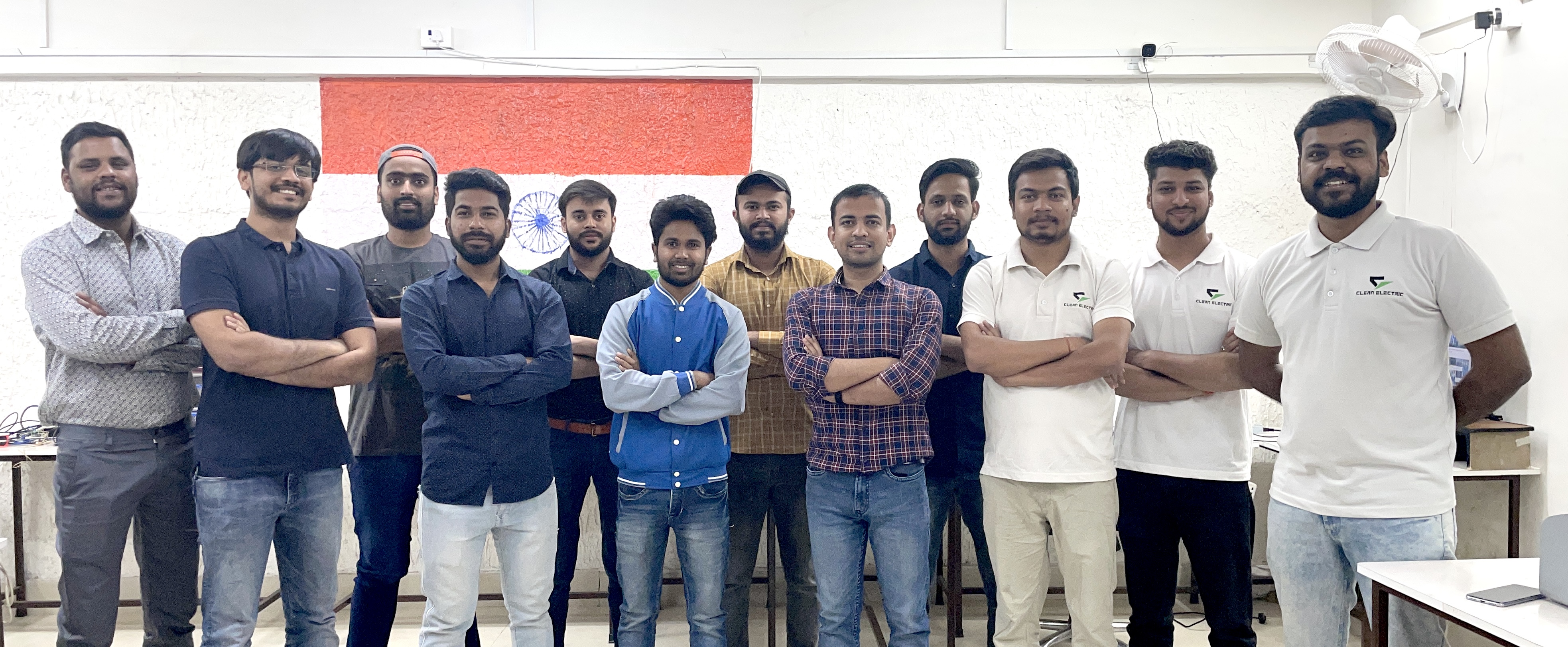
Team of Clean Electric

Clean Electric, an innovative energy storage solutions start-up, has raised $2.2M in a seed round led by Kalaari Capital, an early-stage venture capital firm based in Bengaluru.

The round also saw participation from Climate Angels, LV Fund, 7Square Ventures, and CIIE Regional Innovation Foundation. Clean Electric’s proprietary battery technology seeks to address pressing safety & performance issues for EVs like battery fires, long charging times and frequent battery replacement.

With the funding received, Clean Electric plans to set up a manufacturing facility in Pune to produce 5,000 battery packs per month.

Founded in 2020, Clean Electric manufactures, designs, develops, markets, supplies and provides after-sales of advance energy storage solutions for mobility & stationary storage applications as well as related energy infrastructure & services. The company has built liquid-cooled battery solutions for 2 Wheelers, 3 Wheelers, and Battery Swapping applications.

The company’s products have been in pilot testing with multiple vehicle OEMs across the country, having undergone more than 30,000 Kms of on-road testing. Compliant with AIS-156 Phase 2 guidelines (to be implemented from March 2023), the products are expected to be ready for certification tests before year-end.

Clean Electric also plans to use the funds towards expanding its R&D, sales, & operations teams, as well as for developing new products around Faster Charging, Renewable Energy Storage, and Battery Swapping.

Overall, EV penetration is less than 2%. In order to transition to an all-electric future, India needs robust electric vehicles and charging infrastructure. Current EVs take 3-4 hours to charge making it inconvenient for users, while unpredictable battery life makes it difficult for the NBFCs & Banks to finance these vehicles. On top of this, multiple reputed EV OEMs vehicles’ catching fire & resulting casualties have eroded the confidence of customers and created safety concerns in their mind.

Clean Electric’s proprietary battery technology seeks to address pressing safety & performance issues for EVs like battery fires, long charging times and frequent battery replacement. With the funding received, Clean Electric plans to set up a manufacturing facility in Pune to produce 5,000 battery packs per month.

Overall, EV penetration is less than 2%. In order to transition to an all-electric future, India needs robust electric vehicles and charging infrastructure. Current EVs take 3-4 hours to charge making it inconvenient for users, while unpredictable battery life makes it difficult for the NBFCs & Banks to finance these vehicles. On top of this, multiple reputed EV OEMs vehicles’ catching fire & resulting casualties have eroded the confidence of customers and created safety concerns in their mind.

“Our aim is to enable Mankind’s shift from Fossil Fuels, and batteries have been the hardest part of this transformation. By providing dependable, safe, and performant Energy Storage Solutions, we believe we can add immense value to the EV and RE ecosystems” said Abhinav Roy, Co-Founder, and CTO at Clean Electric.

“India’s EV solutions will become global postulates. Next decade is going to witness the surge of EVs, expected to grow from the current ~1.4M to ~50M by 2030. India’s expectations of efficiency, performance, and safety of batteries under diverse and extreme constraints ranging from terrain to climate will seed global innovation. Clean Electric’s direct liquid cooled battery packs will become the benchmark, offering the highest safety while maximizing its life and efficiency. IITians Akash and Abhinav have invented zero kelvin packs which have the potential to meet growing needs of today and future.” said Ravinder Singh, Partner at Kalaari Capital.

“Clean Electric is delivering on the much-needed innovation in battery technology suitable for India. The patents the team has filed introduce direct liquid cooling technology wherein the cells of the battery are 100% in contact with a coolant which ensures maximum safety (fireproof), 25-minute charging and a 1.5x longer life span. Their solutions can also be exported to several countries in the global south that are dealing with similar issues around EV safety and performance, ” said Sumeet Singh, Partner at Climate Angels.

Clean Electric is engaged inter alia, in the business of manufacturing, designing, development, marketing, supply and after-sales of advance energy storage solutions for mobility & stationary storage application and related energy infrastructure & services to accelerate mass electric vehicle usage.

Kalaari Capital is an early-stage, technology-focused venture capital firm based out of Bengaluru, India. Since 2006, Kalaari has empowered visionary entrepreneurs building unique solutions that reshape the way Indians live, work, consume and transact. The firm’s ethos is to partner early with founders and work with them to navigate the inevitable challenges of fostering ideas into successful businesses. At its core, Kalaari believes in building long-term relationships based on trust, transparency, authenticity, and respect.

Climate Angels is SEBI Cat-1 Angel AIF that invests only in early-stage pollution reduction & climate tech startups. Leading tech entrepreneurs & investors are now making climate investments through us. Some of our marquee LPs includes Vijay Shekhar Sharma (Paytm), Nipun Sahni (Apollo Global), Praveen Gandhi (Seedfund), Paula Mariwala (Aureolis Ventures) Phanindra Sama (Redbus Founder), Shailesh Vickram Singh (Massive), among 100+ others.

Ola Electric Invests in Israeli Battery-Tech Firm StoreDot

Ola Electric Invests in StoreDot

Ola Electric, the EV arm of Ola, has made an undisclosed multi-million-dollar investment in Israel-based StoreDot, a battery technology company that develops "extreme-fast charging" batteries for electric vehicles (EV), a press release said.

Storedot is bringing in XFC (extreme fast charging) technology which can charge EV battery in just 5-minutes. The company is planning to mass produce the same in a few years. The company is also working on a 2-minute charge technology that will be commercialized over the next 10 years.

The fresh funding from India's Ola comes as part of StoreDot's Series D investment round. It will be used for research and development and to accelerate the scaling up to mass production its silicon-dominant anode XFC lithium-ion cells, which will be initially capable of delivering 100 miles of range in 5 minutes of charge by 2024.

With this strategic investment, Ola Electric is planning to incorporate and manufacture StoreDot's extreme fast charging battery technologies for future vehicles in India.

StoreDot has claimed to have developed a battery for mobile phones based on organic compounds that fully charges in 30 seconds, a scooter battery based on germanium that fully charges in under five minutes, and a silicon-based electric vehicle battery that charges fast enough to add 300 miles of range in under five minutes.

However, it is to be noted that the CEO of StoreDot acknowledged in 2015 that its scientific claims  have not been scientifically peer-reviewed.

Ola is planning to set up a gigafactory to manufacture battery cells in the country to meet the demand created by the Futurefactory where its S1 and S1 Pro electric scooters are made. 

Ola had submitted bids for Advanced Chemistry Cell (ACC) battery storage under the government's PLI scheme and a recent report said that the company is eligible for the PLI exemption for the battery. The government approved the PLI scheme for ACC batteries to achieve 50 giga watt hour (GWh) of manufacturing capacity to augment the country's manufacturing capabilities with a budgetary outlay of Rs 18,100 crore.

Ipower Batteries Pvt Ltd Bags Award for Best Battery Manufacturer for EV by EV Battery Tech 2021 Organized by EMobility+

Pioneers and leading manufacturers of EV batteries in the country, Ipower Batteries has been awarded the best battery manufacturer for EV by EV Battery Tech 2021 organized by EMobility+ for the year 2021. The company has been working around manufacturing innovative battery products as solution for EV. The company specializes in record capacity manufacturing and offering tailor made solutions. The company also has pan-India after sales service with over 200+ sales and service centres.
 
Vikas Aggarwal - MD Ipower Batteries

The company with its large R&D (Govt recognized) team works on innovative and long-term solutions pertaining to different needs of various Electric Vehicle segments and businesses and offers tailor made solutions for each. They have designed innovative lithium-Ion battery solutions for Electric and smart mobility vehicles, with smart features like advanced tracking, geo-fencing and battery immobilization, remote monitoring & control features which is one of their sought-after products, highly in demand.

Elated over the achievement, Mr. Vikas Aggarwal, Founder & Managing Director, Ipower Batteries Pvt Ltd said, “We are elated that our efforts to create a long-term solution to the existing needs has been recognized and this has motivated us to build a strong supply network for such products. There is a huge existing demand for such products both at B2B and B2C level which we aim to fulfill over a period of time with our innovative research driven solutions for different segments at our state-of-the-art manufacturing unit”.

The company is determined to empower the electric mobility segment by providing smart batteries and allied solutions, in a bid to create an ecosystem to promote a pollution free future. They also offer tailor made battery solutions for 2- wheelers, 3- wheelers, OEM’s, solar energy solutions, industrial batteries, medical instrument batteries, weighing scale batteries and other segments. The company is aiming at fulfilling the demand for clean energy solutions with regards to India’s mobility and other crucial such requirements. The company’s Made in India technology has received an immense push and recognition with this award bestowed upon them as this is going to give a further push to India’s long-standing demand for such products which are ideated, engineered and developed in India.

For more information on their products and the company, please visit- www.ipowerbatteries.in

About Ipower Batteries Pvt Ltd

Incorporated in December 2019, with a full-fledged state of the art manufacturing unit in Kundli (Haryana) which has a large capacity energy storage per month, Ipower Batteries is aimed at fulfilling the need for such solutions. The company has a strong backing in R&D and experience for over three decades from its parent company which allows them to work on innovative product line for the market. The company’s manufacturing has IMS certified (ISO 9001-2015,14001:2015,45001:2018) for producing high-quality Lithium-Ion batteries. With this they are ready to become the largest Clean Energy Storage Provider in India.

IIT Hyderabad Researchers Developed Alternative for Conventional Lithium-ion Batteries

This more sustainable and low-cost Dual carbon battery may find potential uses in high voltage applications, sophisticated battery-run medical devices, regenerative braking systems in electric vehicles, and stationary grids.


Hyderabad April 05, 2021: Electrochemical Energy Storage (EES) Lab at IIT Hyderabad, under the supervision of Dr. Surendra Kumar Martha (Associate Professor, Department of Chemistry) has developed a 5V Dual Carbon Battery utilizing self-standing carbon fiber mats as both electrodes (cathode and anode). This new model sets aside the requirement of toxic, costly, and heavy transitional metals.

Energy economy based on renewable sources has been put forward as a way out to shrug off the dependence on fossil fuel. Rechargeable Lithium-ion batteries (LIBs) are projected to meet future electric mobility, electric aviation, and stationary grid energy storage targets within 2030. However, LIBs need toxic and costly metals like cobalt, nickel, manganese, etc., for functioning. Geologically unsymmetrical distribution of Lithium and cobalt along with geopolitics and unethical child labor centered on mining causes havoc fluctuations in raw material cost. It affects the market price stability of large LIB packs used in electric vehicles. In the dual-carbon battery, both the electrodes consist of carbonaceous materials, and the ions from the electrolyte intercalate and de-intercalate into the electrode matrix.

Dr. Surendra Kumar Martha

The novel dual carbon battery consisting of zero transition metal is environmentally benign. It may cut down the overall battery cost by 20-25% and is expected to curb the unpredictability in market price. The use of ubiquitous carbon as electrode active material as well as current collector replacing heavy metals brings in the aspects of lightness and flexibility. The fabricated 5.0 voltage (nominal voltage 4.6 V) cell provides an energy density of 100-watt hour per kilogram approximately and can be extended up to 150-watt hour per kilogram with further modifications. The research team believes that developed cells may find potential uses in high voltage applications, sophisticated battery-run medical devices, regenerative braking systems in electric vehicles, and stationary grids.


The leader of the investigation team, Dr. Surendra Kumar Martha, said, “The study will be extrapolated to push the energy density limits further, and their broad vision includes introducing the dual carbon system as a cheaper LIB alternative to the Indian Market.”

The research was carried out by Mr. Shuvajit Ghosh and Ms. Udita Bhattacharjee, PhD students at IIT Hyderabad, under the supervision of Dr. Surendra K. Martha, in collaboration with Oak Ridge National Laboratory (USA) and Naval Materials Research Laboratory (Mumbai, India). Naval Research Board (DRDO) supported this project.

The detailed experiments and discussions can be found in the article entitled ‘Multifunctional Utilization of Pitch‐Coated Carbon Fibers in Lithium‐Based Rechargeable Batteries - Ghosh, S., Bhattacharjee, U., Patchaiyappan, S., Nanda, J., Dudney, N.J. and Martha, S.K.’ published in Advanced Energy Material, 2021, 2100135 (DOI: 10.1002/aenm.202100135).

Market Reports

Market Report & Surveys
IndianWeb2.com © all rights reserved