‏إظهار الرسائل ذات التسميات Kerala. إظهار كافة الرسائل

TDB Backs Griva Health to Boost India’s Indigenous Medtech Manufacturing in Cervical Cancer Screening

TDB Backs Griva Health to Boost India’s Indigenous Medtech Manufacturing in Cervical Cancer Screening

The Technology Development Board (TDB) under India’s Department of Science & Technology (DST) has partnered with Visakhapatnam-based Griva Healthcare Pvt. Ltd. to commercialize GrivaVision, an AI-powered portable colposcope designed for early detection of cervical pre-cancerous lesions.

Founded in 2025, by Nidun Jacob and Parvathi Radhakrishnan, Griva Healthcare will establish manufacturing in Kollam, Kerala, strengthening India’s domestic medtech ecosystem.

Company Overview: Griva Healthcare Pvt. Ltd.

  • Founded: January 2025
  • Founders/Directors: Nidun Jacob, Parvathi Radhakrishnan
  • Headquarters: Visakhapatnam, Andhra Pradesh, India
  • R&D Base: AIC-AMTZ Medivalley, Visakhapatnam
  • Upcoming Manufacturing Hub: Kollam, Kerala
  • Capital Structure: Authorized capital ₹1 lakh; paid-up capital ₹1 lakh
  • Status: Active, unlisted private limited company

Technology: GrivaVision

  • Device Type: Portable digital colposcope with AI-assisted capabilities
  • Classification: Class B non-invasive medical device; CDSCO Class B manufacturing licence
  • Standards: ISO 13485 compliant; WHO-approved Automated Visual Evaluation (AVE) standards; ABDM-compliant software
  • Features: High-definition camera, in-built display, user-friendly interface, advanced optics, proprietary AI-enabled diagnostic software
  • Patent: Hardware architecture patented in India by Griva Healthcare
  • Localization: Over 50% of components sourced indigenously
The device is designated as a Class B non-invasive medical instrument and holds a CDSCO Class B manufacturing licence. It is being developed under ISO 13485 quality standards, ensuring compliance with international benchmarks for medical devices.


Griva Healthcare has secured a patent in India for its proprietary hardware architecture, reinforcing its innovation credentials. Currently, the company is conducting R&D at AIC-AMTZ Medivalley in Visakhapatnam, with support from TDB enabling the transition to commercial-scale manufacturing at its upcoming facility in Kollam, Kerala.

A defining aspect of the initiative is its emphasis on indigenous development and localization. More than 50% of the components are sourced domestically, underscoring India’s growing medtech capabilities. Scaling commercialization is expected to strengthen the national medical device value chain and deliver a cost-effective Indian alternative for cervical cancer diagnostics, reducing reliance on imported technologies.

TDB Backs GrivaVision to Boost India’s Indigenous Medtech Manufacturing in Cervical Cancer Screening
Image – YouTube/GrivaHealth

Strategic Significance

  • Healthcare Impact: Enables early detection of cervical pre-cancerous lesions
  • Accessibility: Designed for primary and community healthcare settings
  • Policy Alignment: Supports India’s self-reliance in medical technologies
  • Digital Integration: ABDM-compliant software ensures compatibility with India’s digital health ecosystem
  • Economic Impact: Strengthens domestic medical device value chain

Leadership & Government Statements

  • Rajesh Kumar Pathak, Secretary, TDB:Early detection can make a decisive difference in addressing cervical cancer. Indigenous technologies such as GrivaVision demonstrate how medical devices, digital health and artificial intelligence can come together to address a critical healthcare need at scale.”
  • Griva Healthcare Leadership: Expressed gratitude for TDB’s support, noting that the assistance will enable transition from R&D to commercial-scale manufacturing and expand access to AI-assisted cervical cancer screening.

Quick Reference Table

AspectDetails
FoundersNidun Jacob, Parvathi Radhakrishnan
HQVisakhapatnam, Andhra Pradesh
ManufacturingKollam, Kerala
DeviceAI-powered portable colposcope
StandardsISO 13485, WHO AVE, ABDM-compliant
ClassificationCDSCO Class B
PatentProprietary hardware architecture
Localization>50% components sourced indigenously

Tata Enters Shipbuilding with ₹10,000 Cr Kerala Yard

Tata Enters Shipbuilding with ₹10,000 Cr Kerala Yard

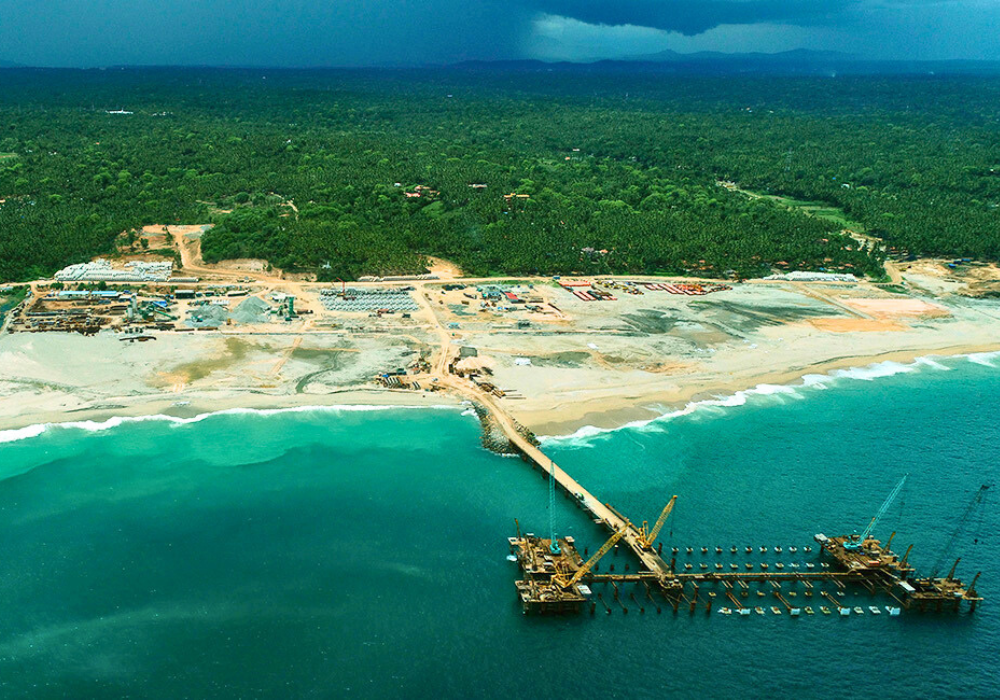
Tata Group is set to make its first-ever entry into shipbuilding with a massive ₹10,000 crore investment in Kerala, anchored around the Vizhinjam International Seaport, reported Deccan Herald and other local media outlets. The Kerala government has confirmed land allocation and expects to approve the project within a month, marking a historic expansion of Tata’s industrial portfolio.

According to the report, Kerala CM V.D. Satheesan said the state is looking at the proposal positively and aims to clear approval within a month.

The Kerala government has committed to providing land for the project, calling it a crucial investment in the state’s maritime future. Tata Group has submitted a proposal to establish a shipyard, though the exact location has not been disclosed. The company has yet to issue an official statement, while the government has asked Tata to furnish a detailed project report.

Notably, Vizhinjam International Seaport is owned and operated by Adani Vizhinjam Port Pvt. Ltd., a subsidiary of Adani Ports and Special Economic Zone (APSEZ). The project was developed under a Public‑Private Partnership (PPP) model with the Government of Kerala.

Adani Ports’ Vizhinjam International Seaport in Kerala is at the center of a major controversy after announcing a proposed 49% stake sale to Mediterranean Shipping Company (MSC) for $1.4 billion, triggering political backlash and government scrutiny. The Kerala government insists that such a transfer requires its prior approval.

Key Highlights of the Tata's Kerala Shipyard Deal

  • Investment Size: ₹10,000 crore (~$1 billion)
  • Sector Entry: Tata’s first venture into shipbuilding, diversifying beyond steel, autos, and aviation
  • Location: Likely near Vizhinjam International Seaport, though final site not disclosed
  • Government Role: Kerala will provide land and act as a proactive facilitator
  • Approval Timeline: Expected within one month
  • Strategic Context: Boosted by Vizhinjam port’s operationalization, part of Kerala’s Mission Samudra 2026

Strategic Importance

  • National Maritime Push: India aims to be among the top five shipbuilding nations by 2047
  • Kerala’s Vision: Mission Samudra integrates 600 km coastline, 2 international seaports, 17 mini ports
  • Global Competition: South Korea’s HD Hyundai investing ₹38,000 crore in Tamil Nadu
  • Complementary Industries: Tata Steel already supplies high-strength shipbuilding steel

Risks & Challenges

  • Approval Dependencies: Final clearance needed from both state and central government
  • Execution Timeline: No production start date announced; delays could slow rollout
  • Competitive Landscape: Adani’s Vizhinjam port and MSC’s $1.4 billion stake add pressure
  • Global Market: India faces stiff competition from China, South Korea, and Japan

Comparison: Tata vs Existing Players

CompanyInvestmentLocationFocusStatus
Tata Group₹10,000 crKerala (Vizhinjam)Commercial shipbuildingAwaiting approval
Cochin ShipyardPSUKochiDefence & commercial vesselsOperational (INS Vikrant built)
Adani Vizhinjam Port$1.4 bn (MSC stake)KeralaTransshipment hubOperational, expansion ongoing
HD Hyundai₹38,000 crTamil NaduGlobal shipbuilding hubAnnounced
AP Shipbuilding Hub₹30,000 crAndhra PradeshDefence & commercialIn planning

Outlook

  • If approved, Tata’s Kerala shipyard will be a game-changer for India’s maritime ambitions
  • It positions Kerala as a maritime powerhouse alongside Tamil Nadu and Andhra Pradesh
  • Diversifies Tata’s portfolio into a sector critical for India’s global trade strategy

India’s HEX20 Sends KOYO Satellite on Global Test Ride in Space

India’s HEX20 Sends KOYO Satellite on Global Test Ride in Space

Thiruvananthapuram-based startup HEX20 has successfully launched its second satellite, KOYO, aboard SpaceX’s Transporter-17 mission on July 7, 2026. The satellite is now conducting “test rides” in orbit, validating international payloads like Taiwan’s gyroscope and a U.S.-developed programmable power system.

HEX20's spacecraft Kinetic Optical Yaw Observer (KOYO) developed for National Central University of Taiwan was launched by SpaceX Transporter-17 last week.

SpaceX officially confirmed the successful launch of its Transporter‑17 rideshare mission on July 7, 2026, carrying 81 payloads — including HEX20’s KOYO satellite for Taiwan’s National Central University. The Falcon 9 lifted off from Vandenberg Space Force Base at 3:12 a.m. Eastern, with all deployments completed by 6:08 a.m. ET.

It may be recalled that HEX20’s previous launch was the NILA satellite mission in 2025, which marked the company’s debut in space operations. NILA was essentially HEX20’s proof-of-concept mission, laying the foundation for KOYO and the company’s upcoming constellation of satellites. It demonstrated that a small Kerala-based startup could deliver end-to-end satellite missions with global relevance.

Key Highlights of KOYO’s Mission

  • Launch Date & Vehicle: July 7, 2026, via SpaceX Transporter-17.
  • Developer: HEX20, a Thiruvananthapuram-based private space-tech startup.
  • Purpose: Acts as a “test bus” for international payloads, providing space qualification for devices before they are used in larger missions.

Payloads & Experiments

  • Fiber‑Optic Gyroscope (FOG): Developed by Aegiverse, Taiwan, this experiment measures angular velocity and helps validate precision attitude control for small satellites.
  • Configurable Power System (CPS): Built by Amplified Space, USA, it allows remote reconfiguration of voltage and current parameters for payloads in orbit.
  • Digipeater Payload: Amateur radio payload from Taiwan’s National Central University, enabling two‑way communication tests and data relay.
  • Solar Cell Qualification Module: From ET Space Power, Taiwan, integrated into HEX20’s custom solar panel assembly to test efficiency and degradation in low‑Earth orbit.

Mission Role

  • Multi‑Payload Test Bus: KOYO provides real‑time telemetry and command validation for partner institutions.
  • Sequential Operation: Each payload is operated independently during commissioning to ensure accurate data collection and fault isolation.

This payloads list reflects the official payload lineup verified by HEX20 and Technopark Kerala. It demonstrates the satellite’s role as a global collaborative platform for space qualification — bridging Indian engineering with Taiwanese and American research payloads.

Strategic Importance

  • Space Qualification: Devices tested on KOYO receive certification proving they can function reliably in space.
  • Kerala’s Space Sector: HEX20’s success highlights Thiruvananthapuram as a hub for private space innovation, leveraging local ISRO/VSSC expertise.
  • Global Partnerships: Collaboration with Taiwan and U.S. firms positions HEX20 as a trusted mission partner.

What’s Next for HEX20

MissionObjective
NILA IIICubeSat for propulsion system qualification
SAISIShip identification satellite for Taiwan
COSPAR-1Space weather measurement mission
MAYA-V1Inspired by comic character Mayavi
DINK-N1Imaging satellite weighing 30–35 kg
Asteroid Belt MissionLander module for UAE’s deep space program
Source - The Hindu

Risks & Challenges

  • Operational Reliability: Devices may work on Earth but fail in orbit; KOYO mitigates this risk by providing real-world validation.
  • Funding & Ecosystem: Kerala’s private space sector is still nascent; sustained investment and policy support are critical.
  • Global Competition: HEX20 must compete with established satellite integrators worldwide.

Takeaway

KOYO’s success is a milestone for India’s private space industry, especially Kerala, proving that small startups can deliver globally relevant missions. HEX20 is positioning itself as a key player in satellite validation and mission integration, with ambitious plans for Earth observation and deep-space exploration.

Adani Ports Quitely Deploying India’s First Fully Automated Container Cranes at Its Indian Ports

Adani Ports Quitely Deploying India’s First Fully Automated Container Cranes at Its Indian Ports

Adani Ports & Special Economic Zone (APSEZ) has begun deploying fully automated container cranes at Vizhinjam port, Kerala, operated remotely from climate‑controlled cabins, marking a major leap in India’s port automation and sustainability drive.

ABB is the technology partner behind Adani Ports’ automation at Vizhinjam, providing the control systems and automation solutions for quay and yard cranes, enabling India’s first fully automated container terminal. Their systems allow cranes to be operated remotely from climate‑controlled cabins, doubling productivity and enhancing safety.

The announcement about Adani Ports unveiling India’s first fully automated container cranes at Vizhinjam dates back roughly eight months. Even though the news is eight months old, it remains strategically relevant because Vizhinjam becoming India’s first fully automated container terminal is a milestone in South Asia.

ABB supplied the automation technology that allows cranes to be operated remotely from a centralized control room. Operators now work in climate‑controlled cabins using joysticks and screens, eliminating the need to sit in crane cabins 30–50 meters above ground.

Besides, APSEZ has expanded its partnership with Kaleris, a US-based supply chain execution software company best known for its Navis Terminal Operating System (TOS). Through this partnership APSEZ will deploy an AI-augmented, plug-and-play operating platform across a global network of 15 container terminals spanning 9 ports. The port is central to India’s transshipment strategy, reducing reliance on Colombo and Singapore.

Key Highlights of Vizhinjam Port Automation

  • Automated cranes: Quay cranes and yard gantry cranes are now remotely operated from air‑conditioned control rooms, eliminating the need for operators to sit in cabins 30–50 meters above ground.
  • Climate‑controlled cabins: Operators use joysticks and multiple screens in shared cabins, ensuring comfort, safety, and consistent productivity.
  • Community integration: Women from fishing and coastal communities have been trained to operate these advanced cranes, creating new employment opportunities.
  • ABB automation systems: ABB provided the technology for quay and yard crane automation, enabling India’s first fully automated container terminal.
  • Digital twin monitoring: IoT‑enabled systems collect real‑time operational data, displayed on large 3D video walls for proactive exception handling.

Benefits of Automation

FeatureImpact
Remote crane operationEliminates operator fatigue, improves safety
Climate‑controlled cabinsConsistent productivity, collaborative environment
AI & IoT integrationReal‑time monitoring, faster decision‑making
Automated gantry cranesNo human operator required, 24/7 efficiency
Community trainingEmployment for local women, social inclusion

Strategic Importance

  • India’s first deep‑sea trans-shipment hub: Vizhinjam is designed to handle Megamax containerships and reduce reliance on foreign hubs like Colombo and Singapore.
  • Capacity growth: Phase 1 capacity is 1 million TEUs, with expansion planned to 7.2 million TEUs.
  • Sustainability: APSEZ is embedding low‑carbon operations, afforestation, and renewable energy adoption into its port strategy.

Risks & Challenges

  • High capital costs: Automation requires significant upfront investment in AI, IoT, and digital twin systems.
  • Skill transition: Continuous training is needed to upskill local communities for advanced tech roles.
  • Cybersecurity risks: Increased reliance on digital systems makes ports vulnerable to cyber threats.
Adani Ports and Special Economic Zone (APSEZ) has expanded its partnership with US-based Kaleris, committing up to $100 million to deploy AI-powered automation across 15 container terminals at nine ports, as part of a broader $850 million investment in technology and decarbonisation by 2031.

Key Details of Adani’s AI Port Automation

  • Investment scale: Up to $100 million in two phases, part of a larger $850 million technology and decarbonisation plan.
  • Partnership with Kaleris: Deployment of the N4 Terminal Operating System (TOS) and AI-augmented optimisation solutions.
  • Coverage: Rollout across 15 container terminals spanning nine domestic and international ports.
  • Efficiency gains: Up to 20% improvement in RTG crane productivity and 14% improvement in terminal truck productivity.
  • Capacity expansion: Unlocking 91 million metric tonnes (MMT) of additional cargo handling capacity by 2030, supporting APSEZ’s goal of 1 billion tonnes per annum throughput.

Strategic Impact

Focus AreaDetails
AI-enabled automationDefines next frontier of competitiveness in ports and logistics
Unified digital backboneSeamless integration across yard, gate, and vessel workflows
DecarbonisationPart of $850M plan to modernise and reduce carbon footprint
Global footprintExpansion includes hubs in India, Australia, Israel, Tanzania, and Colombo
Customer experienceFaster turnaround, improved planning accuracy, superior service

Why It Matters

  • Global competitiveness: AI-driven automation positions APSEZ alongside leading global port operators.
  • Sustainability: Integration of AI, IoT, and optimisation aligns with decarbonisation goals.
  • Economic impact: Boosts India’s logistics efficiency, reducing costs and enhancing trade flows.
  • Technology leadership: Demonstrates India’s capability to deploy AI at scale in critical infrastructure.
The ambitious AI automation plan comes with significant hurdles. High upfront costs of $100 million demand strong returns on investment, while increased reliance on digital systems exposes ports to cybersecurity vulnerabilities. Workforce adaptation is another challenge, as employees must transition to AI-driven operations. Finally, scaling automation across diverse ports introduces execution complexity, requiring robust integration and continuous monitoring.

Global Port Automation Leaders 

The world’s leaders in port automation today are concentrated in Asia and Europe, with China’s Qingdao and Shanghai, Singapore, and Rotterdam consistently ranked at the top for fully automated container handling, AI-driven scheduling, and sustainability integration.

PortRegionKey Automation FeaturesGlobal Significance
Port of Qingdao, ChinaAsiaFully automated end-to-end terminal, electric AGVs, AI schedulingRanked #1 globally; benchmark for large-scale automation
Port of Shanghai, ChinaAsiaAutomated stacking cranes, digital twin systemsHandles world’s largest container throughput
Port of SingaporeAsiaAutonomous vehicles, AI-driven berth allocation, paperless customsGlobal hub for smart logistics and sustainability
Port of RotterdamEuropeAutomated cranes, IoT integration, hydrogen-powered equipmentEurope’s most advanced smart port
Port of Los Angeles, USANorth AmericaSemi-automated terminals, AI analyticsLeading US port despite labour constraints
Tanger Med, MoroccoAfricaAutomated stacking, smart cargo handlingAfrica’s largest and most advanced port
Port of Melbourne, AustraliaOceaniaAutomated yard cranes, smart energy systemsRegional leader in automation and sustainability

What Sets Them Apart

  • China’s dominance: Ports like Qingdao and Shanghai lead due to full-scale automation, electrified equipment, and AI-driven scheduling.
  • Singapore’s innovation: Known for autonomous vehicles, predictive analytics, and carbon-neutral goals.
  • Rotterdam’s sustainability: Europe’s leader in hydrogen-powered equipment and IoT integration.
  • North America’s lag: Despite advanced tech, governance and labour constraints slow full automation adoption.

Challenges

Global leaders face high capital costs, cybersecurity vulnerabilities, and workforce adaptation challenges. North American ports, in particular, struggle with labour union resistance, while Asian hubs must balance rapid scaling with sustainability goals.

India Expands Missile Manufacturing: Kerala Allocates Land to BrahMos Aerospace

India Expands Missile Manufacturing: Kerala Allocates Land to BrahMos Aerospace

Kerala has officially allotted 180 acres of land  in Thiruvananthapuram at free of cost to  BrahMos Aerospace, a joint venture between India’s DRDO and Russia’s NPO Mashinostroyenia, paving the way for a major advanced missile manufacturing unit. This decision marks a significant boost to India’s defence production capacity and positions Kerala as a strategic hub for aerospace and defence industries.

Key Details of the Allocation

  • Location: Kallikkad village, Kattakkada taluk, Thiruvananthapuram district.
  • Land Size: 180 acres, transferred from the Nettukaltheri open prison campus.
  • Approval: Supreme Court cleared the transfer of 257 acres in December 2025.
  • Distribution of Land:
    • 180 acres → BrahMos Aerospace Thiruvananthapuram Limited (BATL).
    • 45 acres → Sashastra Seema Bal (SSB) headquarters.
    • 32 acres → National Forensic Science University campus.

Strategic Importance

  • Expansion of Defence Manufacturing: The new unit will serve as a second manufacturing facility for BrahMos, complementing its existing operations in Thiruvananthapuram.
  • Boost to Indigenous Production: Strengthens India’s self-reliance in missile technology, aligning with the “Make in India” and Atmanirbhar Bharat initiatives.
  • Employment & Local Economy: Expected to generate thousands of skilled jobs in engineering, manufacturing, and support services.
  • Geopolitical Significance: Enhances India’s ability to produce and deploy supersonic cruise missiles, reinforcing deterrence capabilities in the Indian Ocean region.

Comparison of Land Allocation

Recipient Land Allocated Purpose
BrahMos Aerospace (BATL) 180 acres Advanced missile & strategic unit
Sashastra Seema Bal (SSB) 45 acres Battalion headquarters
National Forensic Science Univ. 32 acres Academic & research campus

Challenges & Considerations

  • Environmental Concerns: Nettukaltheri area is ecologically sensitive; development must balance defence needs with sustainability.
  • Local Community Impact: Land was part of an open prison campus; relocation and rehabilitation issues may arise.
  • Strategic Secrecy: High-security protocols will limit public access and transparency around operations.

Broader Context

  • BrahMos Aerospace is a joint venture between India’s DRDO and Russia’s NPO Mashinostroyenia, producing the world’s fastest supersonic cruise missile.
  • The new facility will likely focus on next-generation variants of BrahMos, including hypersonic sy stems under development.
  • Kerala’s move signals a shift toward defence industrialization in southern India, complementing hubs in Hyderabad and Bengaluru.

BrahMos Aerospace

BrahMos Aerospace is an Indo-Russian joint venture between India’s DRDO and Russia’s NPO Mashinostroyeniya, established in 1998, specializing in the design, development, and production of the BrahMos supersonic cruise missile system. Headquartered in New Delhi, it is one of India’s most prominent defense enterprises, with missiles deployable from land, sea, air, and submarine platforms.

Company Overview

  • Founded: 1998 (formal JV agreement signed on 12 February 1998)
  • Headquarters: New Delhi, India
  • Ownership: Joint venture between India’s Defence Research and Development Organisation (DRDO) and Russia’s NPO Mashinostroyeniya (NPOM)
  • CEO & MD (current): Dr. Jaiteerth Raghavendra Joshi
  • Industry: Aerospace & Defense
  • Core Product: BrahMos supersonic cruise missile system

BrahMos Missile System

India Expands Missile Manufacturing: Kerala Allocates Land to BrahMos Aerospace
  • Speed: Supersonic (Mach 2.8–3.0)
  • Range: Initially ~290 km, extended versions now exceed 400–500 km with ongoing upgrades.
  • Platforms:
    • Land-based mobile launchers
    • Naval ships
    • Submarines
    • Aircraft (Su-30MKI integration completed)
  • Targets: Designed for precision strikes against land and sea targets.

Adani Unveils ₹600 Crore Smart Logistics Park in Kochi — A Game-Changer for Kerala’s Industrial Future

Adani Unveils ₹600 Crore Smart Logistics Park in Kochi — A Game-Changer for Kerala’s Industrial Future

In a bold move to reshape Kerala’s logistics landscape, Adani Ports and Special Economic Zone Ltd. (APSEZ) has launched a cutting-edge logistics park in Kalamassery, Kochi—an investment exceeding ₹600 crore that signals a new era of smart, sustainable supply chain infrastructure.

Unveiled by Chief Minister Pinarayi Vijayan under the “Invest in Kerala” initiative, the park spans 70+ acres and houses 1.3 million sq. ft. of integrated logistics space. But this isn’t just another industrial facility—it’s a strategic leap toward making Kerala a hub for next-gen logistics.

Built for the Future: Smart, Green, and Sector-Ready

From EV charging stations to zero-touch operations and digital integration, the park is engineered for speed, sustainability, and scale. It’s tailored to serve high-growth sectors like:
  • E-commerce
  • FMCG/FMCD
  • Pharmaceuticals
  • Automotive
  • Retail
This isn’t just infrastructure—it’s an ecosystem designed to empower businesses and energize Kerala’s industrial ambitions, –said an APSEZ spokesperson.

1,500+ Jobs and a Boost for Local SMEs

The facility is expected to create over 1,500 jobs, with a strong emphasis on local employment and SME empowerment. By offering plug-and-play logistics solutions, Adani aims to help small and medium enterprises scale faster and compete smarter.

Adani’s National Logistics Vision

The Kochi park is part of Adani’s aggressive push to expand its logistics footprint across India. From 3.1 million sq. ft. today to 20 million sq. ft., APSEZ plans to build 30 logistics parks nationwide, transforming from a port-centric player into a fully integrated transport and logistics powerhouse.

Why It Matters

  • For Kerala: A strategic boost to industrial growth, job creation, and SME competitiveness
  • For India: A step toward smarter, greener logistics infrastructure. 
  • For Adani: A bold pivot from ports to pan-India supply chain dominance

IBM Ignites Kochi’s Tech Future with Ecosystem Incubation Center

IBM Ignites Kochi’s Tech Future with Ecosystem Incubation Center

IBM just made a bold move to supercharge Kerala’s tech scene. On July 15, the tech giant launched the Ecosystem Incubation Center (EIC) at Infopark Kochi—a strategic hub designed to fuel innovation, entrepreneurship, and collaboration across startups, enterprises, and academia.

What’s Inside the EIC?

  • Quarterly meetups with IBM Subject Matter Experts
  • Hands-on mentorship for proof-of-concept development
  • Technical workshops and hackathons
  • Academic integration for continuous learning and upskilling
  • A dedicated focus on Generative AI and Agentic AI, building on IBM’s existing Software Lab in Kochi

Why Kochi?

IBM sees Kochi as a rising deep tech hotspot, thanks to its blend of talent, infrastructure, and progressive social climate. The Kerala government is also exploring GenAI to streamline state administration, with a strong emphasis on privacy and data security.

Strategic Collaborations

IBM is partnering with:
  • Kerala Startup Mission
  • Infopark & Technopark
  • Universities and colleges (including those ranked in India’s top 100)
They’re even planning a watsonx-Gen AI curriculum to further embed AI into Kerala’s innovation ecosystem.

This feels like more than just a center—it’s a launchpad for the next wave of Indian tech leadership.

TCS is Setting Up A 37-Acre Campus in Kochi

TCS is Setting Up A 37-Acre Campus in Kochi

Tata Consultancy Services (TCS) is setting up a 37-acre campus at the Kinfra electronics manufacturing cluster in Kochi. This new campus is expected to create around 10,000 jobs. TCS will invest Rs 690 crore in this project, which aims to focus on electronics R&D and IT/ITeS.

Additionally, TCS is also looking for office space at InfoPark in Kochi to meet its immediate need for 5,000 seats. The government is facilitating this expansion by helping TCS find suitable space across tech parks in Kochi, Thiruvananthapuram, and Koz2whikode.

The Kerala government is in talks with a few large developers in the tech hub to help the company find space early.

Tata Consultancy Services (TCS) has been expanding its presence in Kerala. The state government is actively facilitating TCS's expansion by helping the company find suitable space across tech parks in Kochi, Thiruvananthapuram, and Kozhikode.

The government is expanding the Smart City project in Kakkanad to provide more space for IT companies. There are ongoing discussions to acquire land for the expansion of a cyberpark in Kozhikode to meet the increasing demand from investors.

TCS has a major development center at Technopark, Thiruvananthapuram, which is one of the largest IT parks in India. This center focuses on various IT services, consulting, and business solutions.

In 2014, TCS has set up the world's largest corporate learning and development center in Thiruvananthapuram. This campus has a capacity to train 50,000 IT professionals annually and is spread over 97 acres.

The Kinfra Electronics Manufacturing Cluster (EMC) in Kochi is a premier industrial zone aimed at advancing India's electronics manufacturing capabilities.

Situated in Kakkanad, Kochi, the park benefits from proximity to Cochin International Airport, Cochin Port, and NH 544, ensuring excellent connectivity for logistics and supply chain efficiency. The park supports high-quality manufacturing of electronic goods, including smartphones, LED lights, communication devices, and other consumer electronics.

Adani and US-based Panattoni to Setup Logistics Parks in Kochi

Adani and US-based Panattoni to Setup Logistics Parks in Kochi

Major companies including Adani Group and US-based industrial real estate company, Panattoni, are planning to set up logistics parks in Kochi, Kerala, reported the New India Express, citing Industries Minister P Rajeeve.

California-based Panattoni has chosen a 100-acre plot at Edayar Industrial Estate for its logistics park. The project is in the final stages of discussion, and work is expected to begin soon.

Adani Group plans to invest ₹500 crore to develop a logistics park on a 70-acre space near HMT in Kalamassery. The park will feature state-of-the-art warehouses and is expected to create hundreds of new jobs.

E-commerce giant Flipkart is nearing completion of its facility at Kalamassery Park, which will become operational by the end of the year.

A Bengaluru-based company is setting up a third logistics park at Parakadavu, Angamaly, covering an area of 2.5 lakh sqft. The logistics parks will enhance Kochi's infrastructure and connectivity, making it an attractive location for businesses

Kochi's warehousing market has seen significant growth, with transaction volumes increasing by 239% to 0.9 million sqft in 2022-23 from 0.3 million sqft the previous year.

Industries Minister P Rajeeve highlighted that Kochi's proximity to Cochin Port and Vizhinjam Port makes it an attractive location for logistics parks. He highlighted Kochi's strategic location, proximity to Cochin Port, and easy access to Vizhinjam Port as key attractions for setting up logistics parks. He also mentioned that the projects will help create hundreds of new jobs.
The Flipkart facility at Kalamassery Park is nearing completion and is expected to become operational by the end of the year, generating around 1,000 direct and 3,000 indirect jobs.

This development is a significant step towards boosting Kochi's logistics sector and creating new job opportunities.

Kerala State Industrial Development Corporation (KSIDC) has developed multiple logistics parks across the state to support industrial growth and enhance connectivity. Kalamassery Logistics Park is located near Kochi and is a key hub for warehousing and distribution activities. Edayar Industrial Estate is an another important logistics park in the Kochi region, providing essential infrastructure for various businesses.

Situated in Angamaly, Parakadavu Logistics Park is part of the ongoing development projects in the region.

These parks are strategically located near major transportation hubs, including Cochin Port and Vizhinjam Port, enhancing their accessibility and efficiency.

Tata Group Likely to Setup Subsidiary Semiconductor Plant in Malappuram, Kerala

Tata Group Likely to Setup Subsidiary Semiconductor Plant in Malappuram, Kerala

Tata Group is planning to set up a subsidiary semiconductor plant in Malappuram, Kerala, as part of its ambitious ₹91,000 crore project. This project aims to boost India's semiconductor manufacturing capabilities and is expected to create thousands of jobs.

The plant in Malappuram will be a part of a larger initiative that includes a primary facility in Gujarat. Tata Group is collaborating with Taiwan-based Powerchip Semiconductor Manufacturing Corporation for this venture. The Kerala government is currently in discussions with Tata Group to finalize the setup.

This development could significantly enhance Kerala's industrial landscape and contribute to India's push for self-reliance in high-tech manufacturing.

Tata Group Chairman N. Chandrasekaran revealed this information during an interview with a leading national media outlet.

Tata Group's ambitious ₹91,000 crore (about $11 billion USD) semiconductor project is a significant step towards bolstering India's semiconductor manufacturing capabilities. The project includes setting up multiple semiconductor fabrication plants, with the primary facility in Gujarat and a subsidiary plant in Malappuram, Kerala. This initiative aims to establish a robust semiconductor ecosystem in India.

Tata Group is collaborating with Taiwan's Powerchip Semiconductor Manufacturing Corporation for this venture. This partnership is expected to bring in advanced technology and expertise to the Indian semiconductor landscape.

The project is expected to create thousands of jobs and significantly contribute to the local economies of Gujarat and Kerala. It aligns with the Indian government's vision of self-reliance in high-tech manufacturing.

Tata Group is also establishing a semiconductor assembly and test facility in Jagiroad, Assam. This greenfield project, with an investment of ₹27,000 crore, will focus on key technologies like Wire Bond, Flip Chip, and Integrated Systems Packaging (ISP). The facility aims to serve global markets in automotive, mobile devices, AI, and other segments. The semiconductor plant is slated to become operational in 2025

By investing heavily in semiconductor manufacturing, Tata Group is positioning itself as a key player in the global semiconductor supply chain. This move is crucial given the increasing demand for semiconductors in various industries, including electronics, automotive, and telecommunications.

Recently, Tata Group and Analog Devices Inc (ADI), a global semiconductor leader, announced a collaboration involving Tata Electronics, Tata Motors, and Tejas Networks signing a Memorandum of Understanding (MoU) to explore potential cooperative manufacturing opportunities.

Notably, the Modi-led central government of India is providing substantial incentives and support for this project as part of its broader India Semiconductor Mission. This includes financial incentives, infrastructure support, and policy frameworks to facilitate the growth of the semiconductor industry in India.

This project is a major milestone for India's tech industry and could pave the way for more such investments in the future.

Vodafone Idea with Asianet Launch Integrated Fiber, Mobility Service in Kerala

Vodafone Idea with Asianet Launch Integrated Fiber, Mobility Service in Kerala

Vodafone Idea (Vi) on Wednesday launched its integrated fiber and mobility service in Kerala in partnership with broadband provider Asianet.

This strategic partnership aims to enhance connectivity for users in the region. Asianet's high-speed fibernet technology combined with Vi's broadband plans ensures seamless internet access, catering to various needs. Whether you're browsing casually or handling high-bandwidth tasks, these services offer reliable and fast connections.

Vi One is a bundled service offered by Vodafone Idea (Vi) that combines fiber broadband and prepaid mobile connectivity. Vi One will be available in Kerala at two data speed categories 40MBPS and 100MBPS.

The three-month plan with 40MBPS broadband speed has been priced at Rs 2,499, while the annual plan is available at Rs 9,555. For customers who want faster speed, the three- month 100MBPS plan is priced at Rs 3,399, while the annual plan will cost Rs 12,955.

Vi One includes access to three OTT subscriptions. Users enjoy internet access from 12 midnight to 6 am without deducting data from their daily quota.

The Vi One plans start at ₹2,192, making it an attractive option for users seeking combined broadband and mobile services.

Adani to Invest $1.2 Billion in Vizhinjam, Kerala Port to Attract Largest Ships

Adani to Invest $1.2 Billion in Vizhinjam, Kerala Port to Attract Largest Ships

Adani Ports and Special Economic Zone Ltd. is planning to invest Rs 10,000 crore (approximately $1.2 billion) in the Vizhinjam port in Kerala, India. This substantial investment aims to enhance the port's transshipment container facilities, positioning it as a key player in global trade routes.

The project, part of the second phase, is expected to be completed by 2028. Adani is actively wooing major container lines such as MSC Mediterranean Shipping Co, AP Moller - Maersk A/S, and Hapag-Lloyd to call at the port. This move reflects India's ambition to capture a larger share of international maritime trade, currently dominated by countries like China.

The port is set to welcome its first container vessel from Maersk on July 12 for a trial run at the 800-meter container berth.

The current capacity of Vizhinjam Port in its first phase is 1 million TEUs (twenty-foot equivalent units), making it India's deepest motherport with a water depth of 20 meters. In subsequent phases, an additional 6.2 million TEUs will be added. This strategic transshipment port is poised to handle larger container ships and play a crucial role in international maritime trade.

Vizhinjam Port, located near Thiruvananthapuram in Kerala, is India's first deepwater container transshipment port.

Vizhinjam is strategically positioned just 10 nautical miles from the busy international shipping route connecting Europe, the Persian Gulf, and the Far East. Its proximity to this East-West axis allows large vessels to access the port without deviation, making it an ideal global transshipment hub. The port boasts a natural draft of 18-20 meters, which means it can accommodate some of the largest container vessels in the world without capital dredging. Its curvilinear coast mitigates tsunami impact, and minimal erosion keeps maintenance costs low.

As the southern tip of India, Vizhinjam can consolidate and transfer Indian and regional origin cargo to mainline vessels at lower costs than routing them via Colombo. By being right on top of a core international shipping lane, Vizhinjam unlocks lasting maritime and economic advantages for India.

The Adani Group is the private partner responsible for developing Vizhinjam Port, and it aims to enhance India's blue economy and foster inclusive growth.

CSIR-NIIST Transfers Vegan Leather Producing Technology To Kerala-based Startup

CSIR-NIIST Transfers Vegan Leather Producing Technology To Kerala-based Startup

The Council of Scientific and Industrial Research - National Institute for Interdisciplinary Science and Technology (CSIR-NIIST) has partnered with a Kerala-based startup company, Alter Wave Eco Innovations Pvt. Ltd., to transfer the technology it developed for manufacturing vegan leather.

This collaboration aims to create an eco-friendly alternative to animal leather using plant sources like pineapple leaves, banana stems, and rice straws, without relying on plastic as a core material.

The technology developed by CSIR-NIIST allows for the conversion of agricultural waste from Kerala's pineapple farms, which is approximately 720,000 million tonnes, into sustainable biomaterials. This initiative not only provides an environmentally friendly product but also offers farmers an additional income stream by upcycling these resources.

It's a significant step towards sustainable manufacturing and could have a positive impact on both the environment and the local economy. The technology transfer agreement was signed at the NIIST campus in Thiruvananthapuram, marking it as the fifth such technology transfer from CSIR-NIIST and the first of its kind in Kerala.

CSIR-NIIST Transfers Vegan Leather Producing Technology To Kerala-based Startup

The Vegan Leather Technology of CSIR-NIIST is easily biodegradable, has good water retention and heat resistant capacities, Good strength, stiffness and microwave friendly.

AWEI is set to utilize the technology developed by CSIR-NIIST to manufacture eco-friendly replacements for animal leather using plant sources like pineapple leaves, banana stems, and rice straws. This innovative approach does not rely on plastic as a core ingredient, making it a sustainable option in the fashion and automotive industries

Incorporated in this year, the young start-up company AWEI is located in Malayattoor, in the Ernakulam district of Kerala, which is known for its extensive pineapple farms. These farms produce a significant amount of agricultural waste, estimated at 720,000 million tonnes, which can now be upcycled into non-toxic, durable, leather-like materials.

AWEI's mission aligns with sustainable manufacturing practices, focusing on plant-based, biodegradable, high-performing materials. By tapping into nature's abundant agricultural biomass, AWEI not only contributes to environmental conservation but also provides local farmers with an additional income stream.

The technology transfer agreement was signed at the NIIST campus in Thiruvananthapuram, with the presence of officials including C Anandharamakrishnan, Director of CSIR-NIIST, and Jeswin George. The initiative by AWEI and CSIR-NIIST is a step towards remaking materials with a focus on sustainability and performance.

Adani Group Gets Govt Nod for India's First TransShipment Port in Kerala

Adani Group Gets Govt Nod for India's First TransShipment Port in Kerala

Adani Group's Vizhinjam Port in Kerala has received approval to operate as India's first transshipment port. This port facilitates the transfer of cargo between ships and aims to tap into India's transshipment cargo, which is currently handled by foreign ports like Colombo.

The shipping ministry has given its nod for Vizhinjam Port to function as India's first transshipment port, reported Economic Times

The shipping ministry's approval allows customs to establish an office at Vizhinjam Port. The Central Board of Indirect Taxes and Customs (CBIC) is expected to provide the final nod within the next three months.

A transshipment port acts as a transit hub where cargo from one ship is transferred to another ship on its way to the final destination. Mostly transshipment happens to transfer smaller cargos on to bigger mother ships which saves shipment cost and time. Since all the ports in the world are not directly linked, transshipment ports are needed.

The project started in 2015 with the goal of completing the ₹7,700 crore deepwater seaport by 2019. However, it is now expected to start operations in the current financial year.

Vizhinjam Port boasts advanced infrastructure and can handle large vessels.

In its initial phase, the port's capacity is set at one million twenty-foot equivalent units (TEUs), with plans to expand further in subsequent phases. Large-scale automation ensures quick turnaround of vessels, and the port is equipped to handle Megamax containerships, which are currently the largest in operation globally.

Significances of Vizhinjam Port

Nearly 75% of India's transshipment cargo is currently handled by ports outside the country, including Colombo, Singapore, and Klang. By establishing Vizhinjam as a transshipment hub, India aims to retain a share of the more than a million containers transshipped annually through foreign Ports.

The vision for Vizhinjam Port is to be the preferred international transshipment gateway on the Indian subcontinent, known for operational excellence, industry leadership, and sustainability.

Leveraging cutting-edge infrastructure and technology, the port aims to boost India's blue economy and foster inclusive growth. With this development, Vizhinjam Port is set to become India's first full-fledged deepwater transshipment port.

The Port

Adani Group's Vizhinjam Port represents a significant milestone in India's maritime infrastructure, enhancing its capacity to handle transshipment cargo and reducing reliance on foreign ports.

Vizhinjam International Transhipment Deepwater Multipurpose Seaport, also known as the Adani Vizhinjam Port, is an ambitious project located near Kerala's capital, Thiruvananthapuram.

The Vizhinjam Port is designed primarily to cater to container transshipment along with multi- purpose and break bulk cargo. It operates under a landlord model with a Public Private Partnership (PPP) component, where the private partner is Adani Vizhinjam Port Private Limited.

Vizhinjam enjoys inherent locational advantages due to its proximity to the busy international shipping route connecting Europe, the Persian Gulf, and the Far East. It is strategically positioned on the East-West axis, which handles a substantial portion of global maritime trade.

The port's natural depth of 18 meters close to the shore requires no capital dredging, making it suitable for hosting ultra-large container ships with drafts of 20 meters or more. Its curvilinear coast helps mitigate tsunami impact, and minimal erosion reduces maintenance costs.

Kerala Engineer Secures Patent for Hand-Portable Kamikaze Drone

Kerala Engineer Secures Patent for Hand-Portable Kamikaze Drone

Late last month, C.J Varghese, a Kerala based engineer & innovator, received a patent (#515036) from Indian Patent Office for his pioneering invention of hand-portable Kamikaze drone.

Kamikaze drones, also known as loitering munitions or suicide drones, are weapons that can patrol over a battlefield before attacking a target.

The patent granted to Varghese is third patent by Indian Patent Office to him, out of six applications he has filed to date.

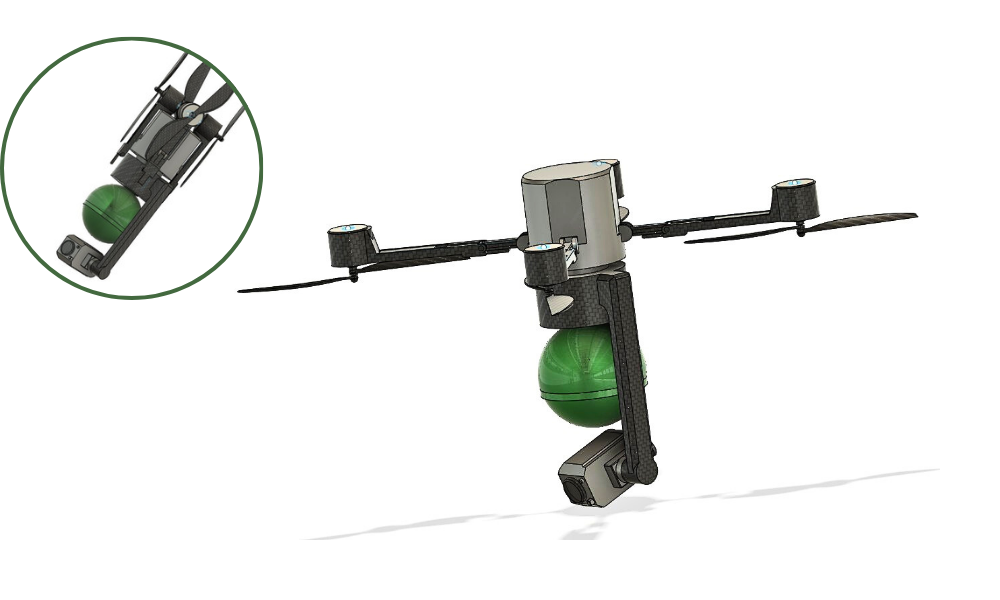
The Hand Portable Track and Kill Suicide Drone, designed by Varghese, to be operated by the army or special ops during war or in the chance of a terrorist attack. The main aim of this is to reduce casualties and allow the force to advance quickly in a face to face combat situation where the enemy is just few metres in front of the force. The enemy can be tracked and the user can decide whether to act or not.

Kerala Engineer Secures Patent for Hand-Portable Kamikaze Drone


Unlike other suicide drones and surveillance drones available in the market, its design is made simple and light so as to be operated with comfort and can be held in the palm of a soldier, which allows him to throw it like a grenade. Thus, it can also be called as a Smart Grenade. But this drone comes with less specs, short life time of about 5 to 10 minutes and a maximum range of about 400 to 700 meters within a limited altitude of 30 to 40 metres from the ground.

Varghese's Kamikaze drone resembles a capsule, or a smart grenade, featuring distinctive foldable and deployable mechanisms, along with an innovative engagement strategy.

The drone is operable by using small tablets that can be fixed on the arms and such drone's controls being partially automated and standard controls will only pop up if needed or on request.

The drone invented has throw mode or normal lift mode that can be selected before deployment by flicking a switch on the drone, wherein the control tablet will have the live feed from the drone; the drones can be taken out from its tube casings and hooked to the exterior part of the user"s backpack and a user in a 6-team unit can carry about three of these drones with the user.

The weight of the drone with warhead is about 1200g. The condition for lifting i.e. fly of Quadcopter is that the ratio of total thrust of the body to the total weight of the body should be minimum 1.5.

Total Thrust/ Total weight = X/1200 = 1.5 So total thrust X = 1.8 Kg. Thus, the minimum required thrust per motor is equal to 450g.

The foldable arm holds the motor and the propeller unit. Upon the deployment of the drone, on releasing the pin the arm is unfolded and for doing this it uses elastic cables or similar spring mechanisms.

The drone, claims Varghese in one of the patent documents, can be taken out from its tube casings and hooked to the exterior part of the soldier's backpack by giving such a mechanism on the drone, so that he can use them quickly and easily while advancing towards an enemy territory.

Delhi-based SFLC.in Moves Kerala High Court Against Recent Government Ban on 14 Open Source Apps

Delhi-based SFLC.in Moves Kerala High Court Against Recent Government Ban on 14 Open Source Apps

Delhi-based legal not-for-profit organization SFLC.in has filed a writ petition before Kerala High Court for producing and quashing the order passed by the Central Government under Section 69A of the Information Technology Act, 2000 banning the free and open source software.

The Kerala High Court today issued notice through court order to the Deputy Solicitor General of India on a challenge to the blocking of Element and Briar applications. The applications, which are Free and Open Source in nature, were blocked by the Central Government under Section 69A, IT Act, 2000 and Blocking Rules, 2009.

The matter will come up for hearing next on 29th May, 2023. SFLC.in provided legal assistance to the petitioners in the matter.

On 1st May, 2023, several news media outlets reported that the Central Government had blocked 14 mobile apps for messaging (under Section 69A of the Information Technology Act, 2000), on the grounds of these apps being allegedly used for communication between bad actors in the region of Jammu and Kashmir. The list of blocked applications include 2 widely- used FOSS applications, namely ‘Element’ and ‘Briar’ that software developers, technologists, innovators and entrepreneurs utilize on a daily basis.

In its petition, SFLC.in noted that the use of such FOSS applications enabled several benefits like enhanced interoperability, reduced costs, vendor independence, greater localization and developing local growth of the IT sector in India.

The petition also notes that the order for blocking the applications places unreasonable restrictions on the exercise of Freedom of Speech and Expression, and Freedom to Carry Out Trade and Business, as guaranteed under the Constitution of India. The order has also not been made public which suffers from the vice of gross violation of the Principles of Natural Justice insofar as no notice has been served to the Petitioners, nor has any opportunity of hearing granted till date, as mandated under the relevant rules, i.e., Blocking Rules, 2009.

The petition has been filed to produce the order banning these applications and staying the operation and implementation of the order. It also challenges Rule 16 of the Blocking Rules.

About SFLC.in:

SFLC.in is a donor-supported legal services organization that has united lawyers, policy analysts, technologists, business professionals, students and citizens to protect freedom in the digital world since 2010. In discussions of technology where Industry and Governments have representations, we endeavor to present the rights of Indian citizens. We fight the good fight in keeping the Internet open, secure and safe for all.

Our objective is to help Indian policymakers make informed and just decisions in the use and adoption of technology for production of pro-humanity IT. We promote innovation and open access to knowledge by helping developers make great Free and Open Source Software (FOSS), and protect privacy and civil liberties of citizens in the digital world. This is achieved through education, original research, policy engagement and provision of free legal services. For press queries, please drop a mail to press@sflc.in.


Healthtech Startup LifeSigns Partners with Amala Hospital, Launches Smart Ward

Hari Subramanium, Founder & CEO, LifeSigns at the inauguration of Smart Ward at Amala Hospital in Kerala

Amala Hospital partners with LifeSigns to provide revolutionary technology for the first time in the State

Amala Hospital, a leading multi-disciplinary chain of hospitals, based in Kerala, launched a new and innovative smart ward with wearable wireless technology. This smart ward, the first in Kerala, is equipped with advanced technology that provides continuous patient monitoring and aims to improve patient outcomes and reduce the risk of medical errors. The hospital chain has partnered with Chennai based health-tech startup, LifeSigns to implement their iMS technology across cardiology and medicine departments at its hospital based in Thrissur, Kerala.

Fr. Deljo Puthoor CMI, Associate Director of Amala Hospital, said, "We are thrilled to be introducing this new wearable continuous and innovative technology to our patients. Our commitment to providing top-notch care is unwavering, and this smart ward will help us to achieve that goal. At Amala Hospital, we are always looking for ways to improve patient care and provide a more efficient and effective healthcare experience”.

Hari Subramanium, Founder & CEO, LifeSigns at the inauguration of Smart Ward at Amala Hospital in Kerala

LifeSigns Product
LifeSigns Products
One of the key features of the smart ward is its wireless patient monitoring system, with early warning scores which allows for real-time monitoring of vital signs and other important health indicators. This technology eliminates the need for traditional wired monitoring systems, which can be cumbersome and uncomfortable for patients, and provides a more efficient and effective way to monitor patient health.

In addition to the wireless monitoring system, the smart ward is also equipped with monitors at Nursing station, and patient information systems for the hospital, all of which work together to improve patient care and streamline the healthcare process.

Patient monitoring at the right time and with accurate results is very important. With the deployment of wireless patient monitoring technology, the doctors and the hospitals can keep a real-time record of the patient’s vital stats which will eventually decrease the risk on the patient’s health because every patient matters. The smart ward at Amala is just one example of our commitment to deliver the best technology in the healthcare field”, says Hari Subramanian, Founder & Director, LifeSigns.

BioSensor patch can help the patients as well as the doctors to keep a track on the patients’ health, without being attached to the multiple wires making the patient even more uncomfortable during illness. The technology of this patch is incomparable, accurate and a real-time to taken action in time”, says Thomas Varghese, Managing Director, LifeSignals.

LifeSignals is a US based company which instals LifeSigns technology in to patches.

About Amala Hospital

Amala Institute of Medical Sciences (AIMS) is a multi-disciplinary medical network providing top-quality medical care with a full range of primary and specialty services. With a dedicated team of healthcare professionals and state-of-the-art facilities including 25 modern operating theaters, 210 equipped ICU beds, and a fully digital radiology department, AIMS is committed to delivering exceptional patient outcomes. As a "Home for Total Healing," AIMS strives to provide the best possible medical treatment and support for all.

About LifeSigns

LifeSigns is a leading provider of innovative healthcare solutions, collaborating with LifeSignals USA to bring advanced, multi-patient, multi-parameter real-time monitoring technology to India. With a focus on improving patient outcomes and reducing the risk of medical errors, LifeSigns offers a comprehensive, 24/7 monitoring solution that integrates seamlessly with existing healthcare systems. The company's custom alerts help detect and report any deterioration in patient condition, providing healthcare providers with the information they need to make informed decisions and deliver the best possible care. LifeSigns is committed to advancing healthcare technology and improving patient outcomes through innovative solutions.

Three Wheels United Launches Operations in Kerala

Three Wheels United launches Operations in Kerala

Over the next six months, Three Wheels United plans to finance 1000+ electric two and three wheelers in Kerala

Three Wheels United (TWU), a global fintech company for EV financing, has started operations in Kerala. TWU has flagged off its services in Kochi, Calicut, Thrissur, Trivandrum and Malappuram. Over the next six months, the company will finance 1000+ two and three-wheelers in Kerala.

Three Wheels United provides affordable financing solutions for drivers to easily make the switch from conventional vehicles to EV two and three-wheelers. Founded by Cedrick Tandong, Kevin Wervenbos, and Apurv Mehra in 2017, the company has been steadfastly working towards removing financial barriers in the adoption of EVs in India and now globally.

In 2019, Kerala’s Electric vehicle policy set an ambitious target of introducing 1 million EVs by 2022. Since then, several EV initiatives have been implemented in the state to drive the mass adoption of EVs. During the 2022 financial budget, the state government announced an incentive of Rs 25,000/- to Rs 30,000/- for every EV vehicle in the rollout of 10,000 e-autos in select cities. Furthermore, other initiatives to improve charging infrastructure and enable easy access to finance have also been introduced to effectively implement the state’s e-vehicle policy.

Three Wheels United launches Operations in Kerala

Cedrick Tandong, CEO and Co-Founder, Three Wheels United, said, “The adoption of Electric Vehicles has seen a steady increase in Kerala and the demand for EVs has significantly increased over the years. We believe that access to affordable financing can further contribute to the mass adoption of EVs in the state. After an overwhelming response in Karnataka and Delhi NCR, we are excited to launch operations in a key strategic market like Kerala. We look forward to supporting micro entrepreneurs to switch to cleaner and more economically viable last-mile alternatives”

Three Wheels United has developed a disruptive platform to finance light electric vehicles. The company leverages technology to provide the most comprehensive, affordable loans, and rent-to-own options to India’s micro entrepreneurs to help them easily switch to EV two and three-wheelers. TWU employs behaviour-informed proprietary technology to increase the accuracy of credit risk assessment and loan repayment rates, expanding access to financial products to populations that would be otherwise excluded from vehicle financing. Because of its platform, micro entrepreneurs can get a fair interest rate and loans covering up to 100% of the cost of the vehicle without any collateral. Unlike traditional banks that collect EMIs at the end of the month in a big chunk, the platform incentivises money collection on a daily/weekly basis in small amounts. In doing so, TWU is able to tap into the finances of the drivers when the drivers actually make money and in a way that is aligned with the lifestyle of the drivers.

Three Wheels United has over 50,000 drivers on its platform, offering them various products and services. The company has financed over 4000 auto-rickshaws resulting in the reduction of 1,72,000+ tonnes of CO2 emissions, and the generation of an extra $71M in income for the drivers.

Very recently, TWU raised $10 Million as a part of Series A Funding led by Delta Corp Holdings with participation from new and existing investors. With the new investment, Three Wheels United is in the process of scaling up two-wheeler and three-wheeler financing in India by partnering with the Government and other industry players. TWU has also started pilots in the Middle East, Africa, and other emerging markets with a goal to improve driver livelihoods and reduce air pollution globally.

As KSUM Starts 2-Day Conclave, Kerala To Intensify Gender Equal Entrepreneurship Vision

Gender equality key to entrepreneurial advancement: Minister at KSUM summit

Gender equality key to entrepreneurial advancement: Minister at KSUM summit

Kerala is intensifying its efforts to promote entrepreneurship with parallel focus on gender equality, Health Minister Smt Veena George said today. “The government’s vision and policy make it compulsory to implement steps that encourage women to enter entrepreneurship and innovation in stronger numbers. We have been increasingly organizing programmes to up-skill and re-skill talents to increase their confidence,” she said inaugurating a two-day conclave by Kerala Startup Mission (KSUM) in its efforts to further promote female participation in the founding companies.

“KSUM has been working for long to remove all obstacles towards gender neutrality in entrepreneurship. This event envisages the creation of a solid ecosystem for females,” the Minister pointed out in a video appearance at the ‘ Women Startup Summit 4.0,2022 ’ that began on Friday with seven key sessions in the run-up to the formal inauguration in Edappally on Saturday.

The two-day summit had sessions that promised to carry forward administrative ideas and make them fruitful, she said at the WSS 4.0, which overall hosted 30 live sessions addressed by 80-plus speakers in the presence of more than 500 delegates. The day’s proceedings featured a string of sessions with speakers who included founders and managing partners, predominantly women, of a range of successful companies.

The summit at Marriott Hotel, a day after its inaugural sessions in KSUM’s Technology Innovation Zone at Kalamassery outside the city, featured an expo of more than 100 products, while simultaneously conducting master-classes, workshops, pitch fest, SheLovesTech and Investor Café.

Actress-danseuse Remya Nambeesan speaks at '2022 Women Startup Summit 4.0’ organised by Kerala Startup Mission
Actress-danseuse Remya Nambeesan speaks at '2022 Women Startup Summit 4.0’ organised by Kerala Startup Mission at Edappally in Kochi on September 24, Saturday
Actress-dancer Ms Remya Nambeesan, addressing the inaugural ceremony, said conventional gender biases cannot anymore stop women from becoming entrepreneurs in a changed world marked by renewed fighting spirit amid institutional support.

All the same, the state’s film industry “has only 20 per cent female presence” even as the artistes “celebrate womanhood and our abilities”. “Each person has her unique performing capacity. We must not only recognize this fact, but respect it as well,” she said, capping up her talk by delivering with a popular Hindi song.

KSUM CEO Mr Anoop Ambika, addressing the inaugural ceremony, said entrepreneurship in the state merits newer ideas that cater to the needs of its geriatric people when Kerala has aged men and women contributing to 60 per cent of the population.

Kerala Startup Mission CEO Anoop P Ambika at the inaugural ceremony of Women Startup Summit 4.0, 2022, organised by the nodal agency at Hotel Marriott, Edappally in Kochi on Saturday, September 24, 2022

"Also, we are set to set up community innovation centres in the state’s rural parts to scout talents in the villages as well as small towns to groom them. Further, the government is to work with NRIs in a bigger way to create new enterprises in the state,” he revealed, while welcoming the inaugural session at WSS, through which KSUM provided a view of leaders in “real action” from all across the globe.

A session on 'Building Future India through Startups' on at 'Women Startup Summit 4.0 2022' organized by Kerala Startup Mission on at Edappally in Kochi on September 24, Saturday

The forenoon sessions of the day included a panel discussion on ‘Building Future India Through Startups’ after a dialogue on ‘Women Pulling the Indian Startup System.” The afternoon sessions were on ‘Leaders of Tomorrow’, ‘Overview about KSUM’, ‘Sustainable Future in Business’ and ‘Role of Media in Women Empowerment’.

The first day of the summit held a pivotal She Loves Tech India ’22. The day also hosted a pitching session on productization grant for women startups. The money will be for those Indian startups that have women holding more than half the ownership stake. The winners are set to get Rs 12 lakh. They will also be eligible for soft loans of Rs 15 lakh (6 per cent interest) and seed funds.

She Loves Tech India was addressed by the largest accelerator platform’s Co-founder Leanne Robers. The inaugural day of the summit chiefly held four panel discussions and three fireside chats.

The summit on Friday hosted a panel discussion on ‘Exploring the Plethora of Opportunities and Support to Promote and Encourage Women Startups and Entrepreneurship’. The afternoon sessions featured three workshops and a pitching under ‘Investor Café’, before a panel discussion on Smart Steps. This was followed by networking.

Market Reports

Market Report & Surveys
IndianWeb2.com © all rights reserved