‏إظهار الرسائل ذات التسميات Inventions. إظهار كافة الرسائل

Nokia Invents Groundbreaking 'Immersive' Phone Call Technology for Future

Nokia Invents Groundbreaking 'Immersive' Phone Call Technology for Future

Nokia's CEO, Pekka Lundmark, has made what's being touted as the world's first 'immersive' phone call. This groundbreaking call utilized a new Nokia-invented technology that enhances the call quality with immersive audio and video, providing a three-dimensional sound experience that makes interactions feel more life-like.

The call was enabled by the new Immersive Voice and Audio Services (IVAS) codec technology which is part of the upcoming 5G Advanced standard. The IVAS codec allows consumers to hear sound spatially in real-time instead of today’s monophonic smartphone voice call experience. Lundmark demonstrated the distinctive acoustic dimensions that can be experienced with the new IVAS technology to Lindström while calling him from Nokia’s campus in Espoo.

The IVAS codec allows consumers to hear 3D spatial sound in real-time instead of today’s monophonic smartphone voice call experience. Nokia is a leading contributor to the IVAS codec which is part of the upcoming 5G Advanced standard.

Innovation in immersive spatial communications also paves the way towards enhanced extended reality and metaverse applications.

This future technology is seen as a significant step in the evolution of phone calls, offering a massive improvement in call quality even on regular smartphones with 5G connectivity. It's an exciting development that could change how we experience voice calls in the future.

The immersive phone call technology developed by Nokia is not yet available to the public. It's part of the upcoming 5G Advanced standard and Nokia intends to secure licensing opportunities to ensure wider availability. However, it is expected that this technology will take several years to become readily available to the general public. So, it seems we'll have to wait a bit longer to experience this innovative communication advancement.
Kerala Engineer Secures Patent for Hand-Portable Kamikaze Drone

Kerala Engineer Secures Patent for Hand-Portable Kamikaze Drone

Late last month, C.J Varghese, a Kerala based engineer & innovator, received a patent (#515036) from Indian Patent Office for his pioneering invention of hand-portable Kamikaze drone.

Kamikaze drones, also known as loitering munitions or suicide drones, are weapons that can patrol over a battlefield before attacking a target.

The patent granted to Varghese is third patent by Indian Patent Office to him, out of six applications he has filed to date.

The Hand Portable Track and Kill Suicide Drone, designed by Varghese, to be operated by the army or special ops during war or in the chance of a terrorist attack. The main aim of this is to reduce casualties and allow the force to advance quickly in a face to face combat situation where the enemy is just few metres in front of the force. The enemy can be tracked and the user can decide whether to act or not.

Kerala Engineer Secures Patent for Hand-Portable Kamikaze Drone


Unlike other suicide drones and surveillance drones available in the market, its design is made simple and light so as to be operated with comfort and can be held in the palm of a soldier, which allows him to throw it like a grenade. Thus, it can also be called as a Smart Grenade. But this drone comes with less specs, short life time of about 5 to 10 minutes and a maximum range of about 400 to 700 meters within a limited altitude of 30 to 40 metres from the ground.

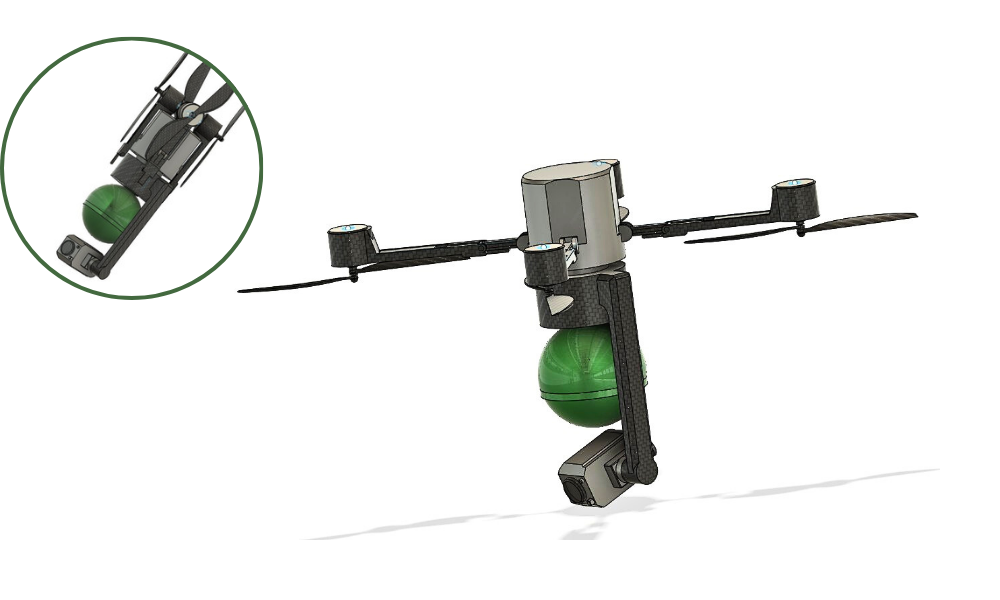
Varghese's Kamikaze drone resembles a capsule, or a smart grenade, featuring distinctive foldable and deployable mechanisms, along with an innovative engagement strategy.

The drone is operable by using small tablets that can be fixed on the arms and such drone's controls being partially automated and standard controls will only pop up if needed or on request.

The drone invented has throw mode or normal lift mode that can be selected before deployment by flicking a switch on the drone, wherein the control tablet will have the live feed from the drone; the drones can be taken out from its tube casings and hooked to the exterior part of the user"s backpack and a user in a 6-team unit can carry about three of these drones with the user.

The weight of the drone with warhead is about 1200g. The condition for lifting i.e. fly of Quadcopter is that the ratio of total thrust of the body to the total weight of the body should be minimum 1.5.

Total Thrust/ Total weight = X/1200 = 1.5 So total thrust X = 1.8 Kg. Thus, the minimum required thrust per motor is equal to 450g.

The foldable arm holds the motor and the propeller unit. Upon the deployment of the drone, on releasing the pin the arm is unfolded and for doing this it uses elastic cables or similar spring mechanisms.

The drone, claims Varghese in one of the patent documents, can be taken out from its tube casings and hooked to the exterior part of the soldier's backpack by giving such a mechanism on the drone, so that he can use them quickly and easily while advancing towards an enemy territory.

Solar Panels Built From Waste Crops Generate Energy Without Direct Sunlight


When the Sunlight strikes the Earth's surface, it has three major parts -- infrared, visible, and ultraviolet (UV) light. Among this, around 53% is infrared, 43% is visible light and 4% is ultraviolet.

A conventional Solar PV cells converts the visible light into energy and lack the capability to capture infrared and UV light. Though a recent hybrid-based PV material can absorb a portion of infrared light and convert them to electricity.

In a nutshell, solar panels mostly convert visible light into electrical energy and almost half the infrared energy. However, solar panels, despite of the fact that UV has most energy among all spectrum, use a small portion of UV, and this remains a problem...till now.

A new material, made from waste crop called "AuREUS" has been developed that converts UV light into renewable energy. AuREUS captures UV,  thus it can produce electricity even when not facing the sun -- or without direct sunlight.

AuREUS is made from upcycled crop waste that can be attached to existing structures to convert UV light into electricity.

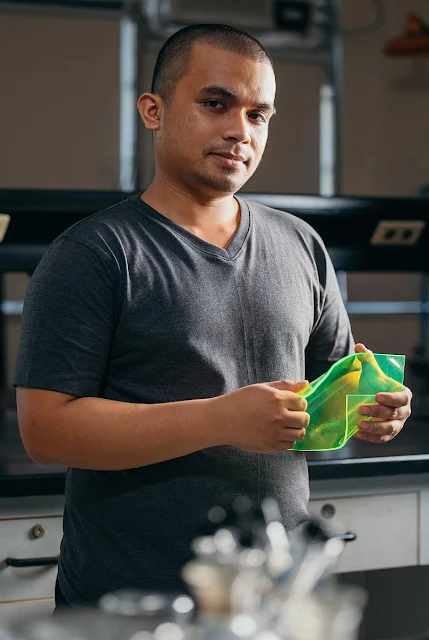
Carvey Ehren Maigue with invented materialA 29-year-old Filipino engineering student, Carvey Ehren Maigue, designed this revolutionary material using luminescent particles from fruit and vegetable waste. He has even won the James Dyson Foundation Sustainability Award in 2020 for the panels he constructed at Mapua University in the Philippines.

These AuREUS's particles absorb the sun’s ultraviolet rays and turn them into visible light. The panels are then able to convert this harvested light into electricity.

Since AuREUS harness Ultraviolet rays and notably the UV rays reach on the earth surface even in cloudy days, there is huge potential to scale the technology up in areas where conventional solar panel, that required direct sunlight, are not feasible.

Carvey got the inspiration for AuREUS from the phenomenon of "how Auroras are made". High energy(gamma, UV) are degraded to low energy state (visible light) by luminescent particles in the atmosphere. The tech is based on this concept and used similar functioning particles.

AuREUS upcycles fruit and vegetable scraps. [ Image credits - The James Dyson Foundation]

To upcycle the wasted crops of the farmers that were hit by natural disasters about 78 types of local crops tested, of which 9 showed high potential. These crop waste then crushed, juiced and filtered to extract the luminescent particles, which are then suspended in resin.

The resulting material can be moulded into cladding and clamped to walls, or sandwiched between two panes of double glazed window to start generating renewable energy for the building. 

How AuREUS Works


AuREUS, when hen hit by UV light, the particles absorb and re-emit visible light along the edges due to internal reflectance. PV cells are placed along the edges to capture the visible light emitted. The captured visible light are then converted to DC electricity. Regulating circuits will process the voltage output to allow battery charging, storage, or direct utilization of electricity.

AuREUS is essentially a material, or a technology, that allows other devices to harvest ultraviolet light and convert it into electricity. 

AuREUS is based on a plastic material, so it can be formed into different shapes. Carvey, the inventor, has made a 3 x 2 foot prototype panel installed in a window of his apartment, capable of generating enough electricity to charge two phones each day


Indian-American Chemist Sumita Mitra named European Inventor Award 2021 Finalist

Sumita Mitra, European Inventor Award 2021 Finalist


  • Indian-American chemist nominated for European Patent Office (EPO) innovation prize for her pioneering use of nanotechnology in dentistry
  • Her technique of incorporating nanoparticles into dental materials produces fillings with improved strength, wear-resistance and long-lasting polish
  • Invention has been used in more than one billion tooth restorations worldwide

New Delhi, 4 May 2021 – The European Patent Office (EPO) announces that the Indian-American chemist Sumita Mitra has been nominated as a finalist in the “Non-EPO countries” category of the European Inventor Award 2021. Mitra was the first to apply nanotechnology to the production of dental materials, leading to the creation of a new composite to repair teeth which has many advantages over conventional materials.

Mitra’s material overcomes many of the limitations of previous dental composites, which were either too weak to be used on biting surfaces, or quickly lost their polish and became physically unattractive. In addition, her invention is more versatile than other composites, meaning it can be used in any area of the mouth, and simplifies the filling procedure for dentists. Commercialised as Filtek™ Supreme Universal Restorative since 2002 by 3M, the US multinational for whom Mitra worked for more than 30 years, the technology and the products developed from it are today used by dentists around the globe.

"Mitra’s invention takes what was an emerging technology at the time – nanotechnology – and applies it to a new sector to provide a solution for dentists and relief for patients,” says EPO president António Campinos, announcing the European Inventor Award 2021 finalists. “Patents have protected Mitra’s material and helped ensure that her invention remains commercially successful nearly 20 years after its launch."

The winners of the 2021 edition of the EPO's annual innovation prize will be announced at a ceremony starting at 19:00 CEST on 17 June which has this year been reimagined as a digital event for a global audience.

Making a new nanomaterial

Until the late 1990s, dentists wishing to perform natural-looking tooth repairs relied on a combination of two materials: composite microfills, which were aesthetically-pleasing but too weak to be used in teeth towards the back of the mouth and biting surfaces; and stronger, but less attractive hybrid composites. A key problem was the size of the filler particles which are suspended in the resin to impart it with strength, colour, and opacity. Traditionally, these fillers consisted of dense, large particles, such as quartz or glass, milled down into finer particles – but as the resin gradually wore away, these particles begin to protrude from the material or were plucked from its surface, resulting in bumps and craters which scattered light. The result was a filling which quickly lost its reflectivity and polish.

It was while working in the oral care division of US multinational 3M that Sumita Mitra became aware of the limitations of existing composite materials. At the same time, nanotechnology was emerging as a field of research and Mitra decided to explore how these new developments could be applied to dentistry. She began working on nanotechnology-based solutions for a new dental material, driven by a desire to use her expertise in polymer chemistry and materials science to develop inventions that solve real-life problems for people.

Mitra’s idea was to replace composite fillers with nanoparticles – ultrafine particles measuring between 1 and 100 nanometres in diameter – which are smaller than the wavelength of visible light and do not therefore scatter it, resulting in a material which retains its shine. At first, Mitra and her team at 3M incorporated uniform nanoparticles measuring less than 20 nanometres in size (1 nm is a billionth of a metre) into resins, but although the materials they created were strong and attractive-looking, they were difficult to mould, making them unsuitable for dentistry.

She and the team therefore developed a technique for creating linked clusters of nanoparticles, which they called ‘nanoclusters’, combining these with single nanoparticle of varying diameters, resulting in a strong, durable and shiny material, with excellent handling properties. By adding tiny amounts of pigment, and altering the chemical composition of the nanoparticles, the team also created a range of different shades, which can be matched to individual patients’ teeth, and layered to create a more natural finish. “The use of nanotechnology gave me the opportunity of making a new material,” says Mitra. “It restores peoples smiles and improves the quality of their lives”.

Following the successful development process, Mitra worked closely with 3M’s patent attorneys to construct the patents to protect her ground-breaking work. Besides her contribution to the Filtek range, Mitra is named as inventor on 58 granted European patents for inventions that have resulted in various dental innovations including resin-modified glass ionomers and new adhesives which can be found in other 3M products. “The patent was essential for safeguarding the invention so that others could not infringe on the technology,” she says.

Lasting impact in dentistry innovation

The material based on Mitra’s work, Filtek™ Supreme Universal Restorative, was launched by 3M in 2002 and, although several new generations have been developed since, the current line of products is still based on Mitra’s European patents. 3M regards the material as unique because it combines durability with aesthetic qualities not reached by competitors’ products which rely on micro- or nano-hybrid fillers instead.

Mitra’s invention has contributed to the company being named as one of the top three manufacturers for the global composite filing in the dental restoration market in 2019. The material’s strength is its versatility according to her: “You have all the desired properties of a tooth filling in one material. That is why this technology has been used to make so many different types of tooth restorations around the world.”

Although Mitra retired from 3M in 2010, the enduring success of her invention continues with Filtek products used in one billion tooth restorations worldwide by dentists to date. Today she continues to contribute to research and development through her own consulting company. She also volunteers in her community and hopes to inspire young people to develop an interest in science.

About the inventor


Sumita Mitra is a partner at Mitra Chemical Consulting, LLC, a company she set up with her husband after leaving 3M in 2010, and which advises companies on new technology development, product design, commercialisation, mergers and acquisitions. She was named an American Chemical Society Hero of Chemistry in 2009, inducted into the US National Inventors Hall of Fame in 2018 and elected to the National Academy of Engineering in 2021 for her work related to inventions in nanotechnology for use in dental materials. Other awards include a Hollenback Memorial Prize from the Academy of Operative Dentistry (2020); a Peyton-Skinner Award for Innovation in Dental Materials from the International Association of Dental Research (2012); and a Top 25 Women in Dentistry Award (2010). Mitra was elected to the 3M Carlton Society 1998 - the highest 3M award given for lifelong contribution to R&D.

Sumita Mitra is named on 58 European patents, four of which are related to her nomination for the European Inventor Award 2021: EP1225867, EP1227782, EP1229886 EP1771143.

About the European Inventor Award

The European Inventor Award is one of Europe's most prestigious innovation prizes. Launched by the EPO in 2006, it honours individual inventors and teams of inventors whose pioneering inventions provide answers to some of the biggest challenges of our times. The finalists and winners are selected by an independent jury consisting of international authorities from the fields of business, politics, science, academia and research who examine the proposals for their contribution towards technical progress, social development, economic prosperity and job creation in Europe. The Award is conferred in five categories (Industry, Research, SMEs, Non-EPO countries and Lifetime achievement). In addition, the public selects the winner of the Popular Prize from among the 15 finalists through online voting on the EPO website.

About the EPO

With 6 400 staff, the European Patent Office (EPO) is one of the largest public service institutions in Europe. Headquartered in Munich with offices in Berlin, Brussels, The Hague and Vienna, the EPO was founded with the aim of strengthening co-operation on patents in Europe. Through the EPO's centralised patent granting procedure, inventors are able to obtain high-quality patent protection in up to 44 countries, covering a market of some 700 million people. The EPO is also the world's leading authority in patent information and patent searching.


TIME Names Carrier's OptiClean a Best Invention of 2020

Carrier’s OptiClean™ Dual-Mode Air Scrubber & Negative Air Machine has been named as one of TIME’s 100 Best Inventions of 2020. The OptiClean was developed through rapid innovation in early 2020 to help support infectious isolation rooms in hospitals. TIME featured OptiClean in the Medical Care category of its prestigious annual list that recognizes 100 ground-breaking inventions that are making the world better and smarter. Carrier is a part of Carrier Global Corporation (NYSE: CARR), a leading global provider of healthy, safe and sustainable building and cold chain solutions.
 
“We are honored the OptiClean is being recognized by TIME for a product we developed and brought to market in record time while maintaining strict standards to ensure the highest quality,” said Carrier Senior Vice President, Engineering, Chris Kmetz. “At Carrier, we’re committed to doing our part to develop smart, sustainable and efficient solutions that will address our most critical needs.”
 
At the onset of the pandemic, Carrier invented the OptiClean as a negative air machine for hospitals treating COVID-19 patients to help hospitals protect caregivers, workers, and patients. OptiClean can plug into standard wall outlets and has a footprint of less than three square feet. As an air scrubber OptiClean can improve the indoor air quality of classrooms, restaurants, dental offices, commercial buildings and more, by pulling in air, scrubbing it using a HEPA filter, and then exhausting cleaner air back into the room, reducing contaminants in the air and offering further protection as part of an overall mitigation strategy.
 
OptiClean is one of the solutions offered through Carrier's Healthy Buildings Program, an expanded suite of advanced solutions to help deliver healthier, safer, more efficient and productive indoor environments and is expected to be available in India market in early January. To view the full TIME 2020 Best Inventions list visit time.com/best-inventions-2020.

Anti-Viral Surface Coating to Prevent the Spread of Novel Corona Virus (COVID-19) Through Touch

As declared by World Health Organization (WHO), presently the whole world is facing a pandemic and a global crisis caused by a novel virus that was discovered to be the cause of a large and rapidly spreading outbreak of respiratory disease, including potentially fatal pneumonia, in Wuhan, China (starting January 9, 2020). The virus was provisionally designated 2019-nCoV and later given the official name SARS-CoV-2, the disease caused by the virus was officially named Coronavirus Disease 2019 (Covid-19) by WHO.

The SARS-CoV-2 is an enveloped, positive sense, single-stranded RNA virus. Coronaviruses are so named because of their characteristic solar Corona (crown-like) appearance when observed under an electron microscope. This appearance is produced by the peplomers of the surface (or spike; designated S) glycoprotein radiating from the virus lipidenvelope1.The SARS-CoV virion is spherical with an average diameter of 78 nm. 

[caption id="attachment_144363" align="aligncenter" width="437"] Figure 1: Anatomy of COVID-19 Virus (Figure from New Scientist Journal)[/caption]

SARS-CoV-2 is delicate but highly contagious virus capable of spreading primarily from person to person around the world. It also spreads when an infected person cough or sneezed and a droplet landed on a surface or object, a person when touches that surface has the virus on it, then touches nose, mouth or eyes, could pick it up. On the personal level hygiene measures are recommended to prevent the spread of disease, especially in the institutions where individuals are in contact with patients or contaminated fomites. Washing hands with soap and water or with alcohol-based hand rubs is effective for interrupting virus transmission. Although viruses don’t grow on any nonliving surfaces but recent studies show Corona viruses can  remain viable or infectious on metal, glass, wood, fabrics and plastic surfaces for several hours to days, irrespective of the surface looking dirty or clean. Though, the Coronaviruses are relatively easy to destroy, using simple disinfectants like ethanol (62-71%), hydrogen peroxide (0.5%) or sodium hypochlorite (0.1%)2by breaking the delicate envelope that surrounds the tiny microbe. However, it’s practically impossible to sanitize the surfaces all the time and it doesn’t guarantee that the surface won’t get contaminated again. It’s a much wiser solution in such a scenario if the surface can repel the pathogens, making it nonstick and/or ‘sanitize by itself’ by neutralizing the contaminated pathogens quickly, thus eliminating the possibilities of transfer of microorganism to human body and its subsequent spreads. Study shows that the spike glycoprotein of COVID-19 allows the virus to dock and bind to the ACE2 surface proteins of human epithelial cells in the respiratory track, thereby infecting these cells. Association of the COVID-19 spike glycoprotein with host ACE2 surface protein is a crucial step for infection.  

Our research aim is to create surface coating with relatively low surface energy value which may repel the spike glycoprotein to anchor the surfaces of landing, also use of active chemicals those could inactivates the spike glycoprotein as well as viral nucleotides. As we already have developed an anti-microbial coating solution virtually for all surfaces with effective combination of nano-actives, having proven literature support as anti-virus too, we are pretty convinced about its performance as an antiviral too and this should resist the transmission of virus from nonliving articles to living body cells by touch. 

Literature survey shows that the nano-particles (NPs) of various metals and metal oxides like Zinc Oxide nanoparticles (ZnONPs)3, Cuprous Oxide nanoparticles (CuONPs)4, Silver nanoparticles (AgNPs)5,6, Nano sized Copper (I) Iodide particles (CuINPs)7,Gold nanoparticles on Silica nanoparticles (Au-SiO2NPs)8 and also some Quaternary ammonium cations commonly called QUATs9 are very promising to inactivate virus and are well proven

The product we have developed, NANOVA® HYGIENE+TM as an antimicrobial coating for the surfaces like fabrics, plastics, metals and concretes contains the cocktails of non-migratory QUATs and positively charged AgNPs as bioactive nanoparticles and dispersing this into binder polymers. This anti-microbial coating also shows extremely low surface energy value (>20 mN/m)10 and behaves as an omniphobic surface by repelling water and oil together. Contact angels were>130o and >50o when measured against water and hexadecane as probes10, respectively. This coating has proven test reports11 on protection against bacteria pathogens up to 99.9% as per the global standard JIS Z2801. The coated surfaces also have evidence to work effectively against fungi12and algae pathogens.

From available published data in literatures, we can safely opine that NANOVA® HYGIENE+TM would be a potential coating candidate to repel and inactivate Virus on the surface, hence could be a potential material to address the present problem of COVID-19 spread through surface touch.

The plausible ways of functioning of the doped nano actives materials against COVID-19 viruses would be as follows:


  1. As AgNPs has been reported to inhibit the replication of virus nucleotides, main mechanism of its being virulent. It binds to electron donor groups such as Sulfur, Oxygen, and Nitrogen commonly found in enzymes within the microbe. This causes the enzymes to be denatured thus effectively incapacitating the energy source of the cell and the microbe will quickly die

  2. The cationic silver (Ag+)or QUATs might work to inactivate the SARS-CoV-2 by interacting with its surface (spike) protein S based on its charge like it works in HIV, Hepatitis viruses, etc.5,6.


[caption id="attachment_144362" align="aligncenter" width="512"] Figure 2 : Schematic repetition of anti-viral coating with our nano-actives for inactivation of any adhered virus on the surfaces[/caption]

As NANOVA® HYGIENE+TM omniphobic antimicrobial coating shows complete disablement of various pathogenic bacteria already and further on the basis of available scientific supports, we are in opinion that the present formula should work against a broad spectrum of viruses as well. However, test and validation are being conducted in war footing at South India Textile Research Association (SITRA), Coimbatore to establish its efficacy on inactivation of COVID-19 on different surfaces to stop the secondary spread from various surfaces to living cells through touch. Once find active, it has numerous applications virtually for all surfaces like fabric (mask, gloves, doctor coats, curtains, bed sheet), Metal (lifts, doors handle, nobs, railings, public transport), wood (furniture, floors and partition panels), concrete (hospitals, clinics and isolation wards), plastics (switches, kitchen and home appliances) and potentially could save many lives.

ACKNOWLEDGMENTS

I would like to thank Dr Santanu Dasgupta, Dr Chitranshu Kumar and Dr Manish R. Shukla of Reliance Industries Limited for their help in facilitating validation studies to test efficacy against different viruses and for their technical inputs in preparing this document.

Dayananda Sagar University Designs Face Shields for Medical Professionals

With the onset of COVID-19 and its uncontrollable spread, we need quick solutions to all possible hurdles to effectively fight the pandemic. While the demand for masks escalate rapidly, countries across the globe grapple to meet the requirement. Also, ensuring safety and protection of healthcare professionals is a priority. Management of the Dayananda Sagar University posed this challenge to the academicians in the University to come out with quickly implementable solutions, making use of the available resources.

Experts at the Autodesk Design and Innovation Centre, Innovation Labs at DSU have come up with a Face Shield which is an important part of the Personal Protective Equipment needed by the healthcare professionals. It involves two components (a) Support with quick attach-detach attachment points to rest on the forehead of user and (b) Transparent film which protects the face of the user from viral load.

Based on the design, several units have been 3-D printed by the DSU team and released to Doctors for evaluation. After some iterations involving evaluation, design and manufacture, it is proposed to transfer the technology for mass-production to achieve cost affordability by common users.

The Face shield has been manufactured using FDM (Fused Deposition Modelling), a 3D printing process that uses a filament of a thermoplastic material. It uses Polylactic Acid (PLA) as a filament material and 120 Micron Overhead Projector Film as a shield which is swappable for fitting new film after use. The product is developed by Mr. Vinayaka K, Manager, Autodesk Design and Innovation Centre, DSU; Dr. Suryanarayana, Professor - Aerospace Engineering, DSU and Ajay P, Student - Automobile Engineering, DSCE. The first product was launched on 28th March and utility started on 31st March.

"The Face Shield has been primarily developed for the medical professionals who face the greatest risk and are more vulnerable to catching the respiratory infections akin to the coronavirus. The aim is to give them extra coverage and protection. As there are lot of people who are in close proximity with the patients, the requirement of such safeguards is large. We already have multiple orders for the product and are continuously searching out for ways to enable mass production amidst limited access to resources and technology," says Vinayaka K, Dayananda Sagar University.

About Dayananda Sagar University

Dayananda Sagar University (DSU) is a multi-faculty and multi-disciplinary private university offering rich and diverse programmes in Engineering, Commerce & Management, Basic & Applied Sciences, Pharmaceutical Sciences, Nursing, Physiotherapy, Arts & Humanities, Computer Applications at the Bachelor and Master Levels. DSU also offers doctoral programmes in a wide variety of specialisations. Ranked as the best private university in the South, by ASSOCHAM in 2019, DSU ensures good quality teaching and learning leading to great outcomes of its graduating batches.

~ Newsvoir

IIT & AIIMS Alumni Invent Airlens Minus Corona to Battle Novel COVID-19

Amidst the panic across the world over the rapid spreading of pandemic Covid 19 disease, PerSapien comes up with a device, Airlens Minus Corona (-Corona) to counter the robust spreading of Coronavirus.


As corona has infected about 2.3 lakhs people worldwide while claiming over 9,357 lives, humanity is racing against time for their lives. At this point in a needful hour, PerSapien, an organization that strongly believes that good health is the birthright of each (Per) human being (Sapien), came up with a new technology to save the humans.

According to the technology, the device will fight the coronavirus with corona discharge. It has been devised into a “Robo Sapien” (a human-like) machine that operates on the mechanism of charged/ionized water droplets which is ionized using the corona discharge. The ionized water in return oxidizes the viral protein reducing it to a non-harmful molecule.


This about a duo an IIT Kharagpur & AIIMSian alumnus Debayan Saha & Shashi Ranjan respectively who develop a device "Airlens Minus Corona" that will travel on streets to sterilize the city. It will go to hospitals, bus stops, railway stations, shopping malls and other public places to sterilize the surfaces which may cause the spread of the coronavirus.

A new approach or technology is required for "Saving Sapiens" and therefore both came up with a solution naming this technology as Airlens Minus Corona (-Corona) as it clears up the Coronavirus using the electrical energy of Corona - Fighting Corona With Corona.

The device is a concept of Robo Sapien that will also inspire humanity to come together in this fight against coronavirus. Kindly share your thoughts on the above discovery and let me know if you'd be interested to connect with Founder for more information.

How Does it Work?


The power lies in electrifying water droplets to kill coronavirus. The duo invents a new way to kill coronavirus using charged/ionized water droplets. Water droplets can be ionized using Corona Discharge. Such ionized water droplets can help in the oxidation of viral proteins into non-harmful molecules. Oxidation is one of the most potent antimicrobial tools. This technique can potentially sterilize the entire city.

Benefits


There are several ways by which Viruses can be inactivated - Alcohols (such as ethanol or IPA) is one of them and alcohol-based hand sanitizer are useful for individuals or for sanitizing surfaces at a smaller scale but insufficient in such an emergency to use them for sanitizing cities.

Earlier, the duo inventors have also invented devices like PM Minus 2.5 to help curb vehicular pollution and Airlens which is a car air sanitizer. I hope this story is news material for you.

Dr. Sashi Ranjan, Co-Founder of PerSapien Innovations said, “Diving deeper into the scientific research I did at NUS, Singapore, I realized that oxidation is one of the most potent antimicrobial tools which can sterilize the entire city. Our technology uses an optimal combination of electric energy and water atomization techniques to induce a charge on water droplets while creating the most potent oxidative entities, Hydroxyl radicals that can oxidize and kill the coronavirus."

The “Robo-Sapien” machine will travel on the streets especially targeting the public gathering places like hospitals, bus stops, railway stations, shopping malls, etc. to sterilize the city from the spreading of the virus.

Speaking on the occasion, Debayan Saha, Co-Founder of PerSapien said, “Alcohols (like ethanol or IPA) are known to inactivate viruses by denaturing their protein coat. But the alcohol-based hand sanitizer is useful for individuals or for sanitizing surfaces at a smaller scale (home, offices, etc.) in the fight against Coronavirus. However, this is insufficient in such an emergency as it is impractical to use alcohol for sanitizing cities."

Thus, to combat the virus at a global scale/ national level, the entire city needs to be sanitized for which Airlens Minus Corona (-Corona) has been created.


Indian Engineer Invented Auto Engine that Runs on Water to be Launched in Japan

Sounthirajan Kumarasamy, a Class 9th drop-out but an engineer by profession from Coimbatore, Tamil Nadu has invented an automobile engine that he claims can run on distilled water, an alternative of petrol and fossil-fuel.

According to Kumarasamy, this "first of its kind" engine uses hydrogen as fuel source and releases oxygen. "It took me 10 years to develop this engine. It is the first-of-its-kind invention in the world. It uses hydrogen as the fuel source and releases oxygen," the engineer told news agency ANI.


"Utilising the thermal losses in the engine, hydrogen could be burned that helps vehicle run. I have currently designed the engine with the capacity of 100cc, which could emit oxygen while it's running. All the tests were successful," he told New Indian Express.

With his invention, one can run vehicle for 200 km with just 10 litres of distilled water. He had even tried running the engine with rainwater and bore fruit.

Sounthirajan kumarasamy water Automobile Engine

sounthirajan kumarasamy

Kumarasamy, who did his research at the District Central Library in Coimbatore, also claims that Indian government has granted him a patent in November 2018 for his Super Sonic Hydrogen IC Engine.

Kumarasamy, who wanted to launch his invention in India but failed to receive any "positive response" from the Indian authorities and eventually, in order to search for a new market to launch is engine, he approached Japanese authorities and received positive response from Japan government and now his "Automobile Engine is scheduled to be launched in Japan soon," claims Kumarasamy, as per ANI report.

Mr Kumarasamy said the engine will be introduced in Japan in a few days. He is hopeful of introducing it in India too.

"My dream is to introduce this engine in India. I knocked on all the doors of the administrators but could not get a positive response. So, I approached the government and got the opportunity. This engine will be introduced in the coming days," he said to ANI.


Sounthirarajan also owns and runs a company called NG Automobiles, which he established in 2010, and has even opened a branch in Tokyo a few months ago. He also runs an incubator cell at the PSG-Science and Technology Entrepreneurial Park (PSG-STEP), Coimbatore.

Sources - ANI News, New Indian Express

Indian Robotic Engineer Develops 'World’s Cheapest' Pocket Ventilator

Everyone has a right to live, whether rich or poor. Unfortunately, in medicine, sometimes the cost of a procedure, medicine or medical equipment ends up making a distinction between the same, which of course isn't fair. One such important but expensive piece of medical equipment is a portable ventilator.

Seeing that the needy weren't able to afford such an important machine for their survival, a robotic engineer from India set on a mission to develop the world’s smallest and cheapest ventilator. The the 25-year-old inventor Diwakar Vaish was joined by Dr Deepak Agarwal, professor of neuroscience at AIIMs in his mission.

Together, the two brainiacs ended up inventing a ventilator that is almost 450 times smaller than the conventional ventilators currently being using in medicine and can also be moved around much easily than their predecessors. They also managed to bring down the cost from INR 2 lakh-2.5 lakhs to INR 15,000-20,000.

For the uninitiated, a ventilator is a machine designed to move breathable air into and out of the lungs, to provide breathing for a patient who is physically unable to breathe, or breathing insufficiently.


Not only is the ventilator developed by the duo smaller and cheaper, it is also better than others. The portable ventilator makes uses of an artificial intelligence algorithm in order to adjust air supply to the normal breathing pattern of the patient. In order to provide the loved ones of the patient a complete control, the machine is programmed to be controlled by an Android app.

In order to test the portable ventilator, the inventors successfully used the ventilator for a couple of hours on six fully paralysed patients at AIIMS who have been unable to return home for the want of affordable ventilators.

Speaking to the Hindustan Times, Agarwal explained the physical working of the ventilator. He said," It works by pushing the atmospheric air into the lungs of the patients who cannot breathe on their own. The disposable ventilators currently in use also push in air, but they do it at a fixed frequency that does not necessarily match the patient’s breathing pattern, which may cause low oxygen saturation. This device synchronises ventilator air support with the normal breathing pattern."

Agrawal also shared that though there already is a FDA-approved disposable ventilator that costs between Rs 10,000 and Rs 15,000 in the market, but it has a maximum life of just four weeks. On the contrary, their invention will be a one-time investment and since it runs on room air, and not oxygen, the operational costs are close to zero. This means, no requirement for oxygen cylinders, which cost anywhere between Rs 3,000 and Rs 4,000 a day.

Three years ago, in 2014, we had reported how OneBreath, a medical device company, had invented a portable ventilator which though provides the same performance and functionality of the current market leaders in the technology but is still available at much cheaper rates and is more reliable and easy to use than them. The device developed by them at that time costed a whopping Rs 3 lakh, which was still way cheaper than the regular product in the market at that time which carried a price tag of around Rs 25 lakh. It is safe to say that the ventilator developed by Vaish and Agarwal is much more in budget for the general population of India. As for the performance, we will have to wait till the product debuts in the market.

As soon as the ventilator gets an approval from the drug controller general of India, the portable ventilator will hit the market priced somewhere between INR 15,000-20,000.

Indian Robotic Engineer Develops 'World’s Cheapest' Pocket Ventilator

Everyone has a right to live, whether rich or poor. Unfortunately, in medicine, sometimes the cost of a procedure, medicine or medical equipment ends up making a distinction between the same, which of course isn't fair. One such important but expensive piece of medical equipment is a portable ventilator.

Seeing that the needy weren't able to afford such an important machine for their survival, a robotic engineer from India set on a mission to develop the world’s smallest and cheapest ventilator. The the 25-year-old inventor Diwakar Vaish was joined by Dr Deepak Agarwal, professor of neuroscience at AIIMs in his mission.

Together, the two brainiacs ended up inventing a ventilator that is almost 450 times smaller than the conventional ventilators currently being using in medicine and can also be moved around much easily than their predecessors. They also managed to bring down the cost from INR 2 lakh-2.5 lakhs to INR 15,000-20,000.

For the uninitiated, a ventilator is a machine designed to move breathable air into and out of the lungs, to provide breathing for a patient who is physically unable to breathe, or breathing insufficiently.


Not only is the ventilator developed by the duo smaller and cheaper, it is also better than others. The portable ventilator makes uses of an artificial intelligence algorithm in order to adjust air supply to the normal breathing pattern of the patient. In order to provide the loved ones of the patient a complete control, the machine is programmed to be controlled by an Android app.

In order to test the portable ventilator, the inventors successfully used the ventilator for a couple of hours on six fully paralysed patients at AIIMS who have been unable to return home for the want of affordable ventilators.

Speaking to the Hindustan Times, Agarwal explained the physical working of the ventilator. He said," It works by pushing the atmospheric air into the lungs of the patients who cannot breathe on their own. The disposable ventilators currently in use also push in air, but they do it at a fixed frequency that does not necessarily match the patient’s breathing pattern, which may cause low oxygen saturation. This device synchronises ventilator air support with the normal breathing pattern."

Agrawal also shared that though there already is a FDA-approved disposable ventilator that costs between Rs 10,000 and Rs 15,000 in the market, but it has a maximum life of just four weeks. On the contrary, their invention will be a one-time investment and since it runs on room air, and not oxygen, the operational costs are close to zero. This means, no requirement for oxygen cylinders, which cost anywhere between Rs 3,000 and Rs 4,000 a day.

Three years ago, in 2014, we had reported how OneBreath, a medical device company, had invented a portable ventilator which though provides the same performance and functionality of the current market leaders in the technology but is still available at much cheaper rates and is more reliable and easy to use than them. The device developed by them at that time costed a whopping Rs 3 lakh, which was still way cheaper than the regular product in the market at that time which carried a price tag of around Rs 25 lakh. It is safe to say that the ventilator developed by Vaish and Agarwal is much more in budget for the general population of India. As for the performance, we will have to wait till the product debuts in the market.

As soon as the ventilator gets an approval from the drug controller general of India, the portable ventilator will hit the market priced somewhere between INR 15,000-20,000.

Indian-Origin Scientist Invents Camera That Can See Through Human Body

An Indian-origin scientist has helped invent a camera which can change the way doctors conduct internal examinations. Kev Dhaliwal, Professor of Molecular Imaging and Healthcare Technology at the University of Edinburgh, has successfully led a team to create a medical camera that is capable of seeing through the human body. Yes, you read that right. The camera can actually see through a human body.

The inventors are hopeful that their invention holds immense potential for doctors in tracking of internal examinations. The camera will help in keep a tracking of medical tools, known as endoscopes, that are used to detect a number of internal conditions during internal examinations.

The camera invented by the team functions by detecting light sources inside the body, such as the illuminated tip of the endoscope's long flexible tube.

proteus

Until the invention, doctors had to depend on expensive scans, such as X-rays, to trace the progress trajectory of these internal examinations.

While light from the endoscope is capable of passing through the human body, it ends up scattering or bouncing off the organs and tissues rather than going straight through. This ends up making it quite difficult to get a clean shot of endoscope's whereabouts.

The camera that the team has invented capitalizes on the advanced technology that is capable of detecting individual particles of light, called photons. In fact, the camera is so sensitive that it can even catch the tiny traces of light passing through tissue. Not only this, it is can also record the time taken for light to pass through the human body, allowing the device to also detect the scattered light.

camera-endoscope

The project, which is being led by the University of Edinburgh and Heriot-Watt University, is officially a part of the Proteus Interdisciplinary Research Collaboration, which is currently engrossed into developing a wide range of new technologies for diagnosing and treating lung diseases. Proteus is being funded by the Engineering and Physical Sciences Research Council and the latest research has already found a place in the esteemed journal ‘Biomedical Optics Express’.

According to the scientists, they wanted to make a camera that can be easily used at a patient's bedside, and they're happy they could achieve the same.

According to Dhaliwal, Project Lead of Proteus, their invention offers diverse applications. He said, “It has immense potential for diverse applications, such as the one described in this work. The ability to see a device’s location is crucial for many applications in healthcare, as we move forwards with minimally invasive approaches to treating disease."

Here's How Patenting Can Protect Your Ideas and Creativity

A unique idea, product, or service is born after much hard work. Hence, it becomes the creator's responsibility to protect their creativity and hard work at all times. For starters, they should always push towards working with companies that openly embrace independent product developers. One of the safest ways through which they can protect their ideas is by patenting them.

Here are ways through which one can ensure that their ideas remain theirs forever :

1) Keep looking for Warning Signs

Before submitting your hard work, make sure that you intensively investigate any potential licensees. The procedure is very simple, all you have to do is to Google the name of the company that you're in talks with the keywords 'complaints' and 'lawsuits.' Scout for any warning signs/red flags. Keep seeking out referrals. Don't worry, there will be numerous companies that will want to partner with you and extend you a fair treatment. Such companies will be easier to join hands with, especially when it comes to the part of contract negotiations.

So, what are the warning signs that you need to look for? For example, if a company says that it only considers looking at patented ideas, then it is quite clear that it hasn't actually embraced open innovation. Further, nowadays, a number of companies are accepting online submission of forms so as to systematically manage the numerous ideas they've received. Whenever you're requested to sign documents, do a thorough reading of it or let a lawyer look over it, if you find the legal language difficult to understand. When a company claims it's open to ideas, it doesn't necessarily mean that they're genuinely okay with independent product developers. There have been several cases in the past where certain companies had cleverly gotten people to sign documents where they had to give up all legal rights over their idea.

2) File a Provisional Patent Application

Filing a provisional patent application can quickly help you in protecting your unique idea/invention. When you file a provisional patent in India, you give yourself a 12 months’ time to decide if the idea is worth your time and money, and should you take the provisional patent application forward. It is always considered advisable to file a provisional patent application before disclosing one's unique, original ideas to any third party.

In order to file a provisional patent application with up to 30 pages, the government fee applicable is INR 1,600 for individuals, INR 4,000 for small entity applicants and INR 8,000 for large entity applicants.

While filing for provisional patent, you need to make sure that each provisional specification filed should include as much information the applicant has at the time of filing of the patent as according to the rules, new matter cannot be added by the applicant at a later stage.

3) Test the Waters Before Making the Final Jump

Once the provisional patent is in place, start testing if the market is really interested in your idea and if it has any future. Invest the 12 months allotted to you, courtesy the provisional patent, very carefully and test the markets reaction towards your idea. If it's not that positive, then it will be your call if you still wish to go forward and invest more time in developing your idea or abandon it then and there.

A Non-Profit Creates Open-Source Drinking Water Filter For 1/10th Of The Cost

Clean drinking water is a basic right of every human being, but it is unfortunately still considered a luxury in some developing parts of the world. Ensuring that something as basic as safe and clean water drinking water reaches every community, no matter how remote or difficult it is to reach, is a non-profit organization called OHorizons. It identifies itself to the world as an international coalition of innovators who are all working towards the sole aim of solving persistent global challenges.

New York-based OHorizons' latest product of hard work Wood Mold is a classic example of high-tech vision of open-source software meeting low-tech design. This open-source product gives even the least experienced person on the planet the power and opportunity to create a BioSand Filter themselves that can deliver clean water at a cost which is 1/10th of what a traditional method normally costs. OHorizons lay extra focus on the Wood Mold's design so that it can be easily accessed by anyone who has the DIY, open-source construction manual that the company makes available online absolutely free of cost.

[caption id="attachment_111831" align="aligncenter" width="700"]img_8231 Image - Ohorizons.org[/caption]

OHorizons' entire team, which consists of highly trained and creative technical, social, and commercial professionals, aims to create applications that are simple at heart, extremely easy to implement and less tech based. This is mainly because they want to empower even remotest of the remotest communities without needing any external expertise or capital. During the designing process of their products, OHorizons diligently follows a certain set of principles so as to make sure that they're readily adopted by everyone in any part of the world. The design needs to be locally sourced, low-cost, simple to use and understand, open-source, and easily be able to fulfil the needs of various communities. This line of thought was also made use of while coming up with Wood Mold. It doesn't require any technical, literacy skills, or even electricity to function or assemble. One just needs to get hold of its blueprint, which is available for free online.

In its effort to ensure that the benefits reaches to all, OHorizons joins hands with local organizations that are already working for local community development. For example, it has collaborated with LEDARS Bangladesh, which promotes the construction and distribution of the OHorizons Wood Mold manual in Bangladesh. Based on the current success rate of Wood Mold BioSand filters in the country, OHorizons has set a goal of providing 1 million Bangladeshis with safe drinking water access by the year 2021. Apart from Bangladesh, the New York-based company is also supporting projects in Mali, Ecuador, and Kenya.

According to data made available by the company, over the past one and a half year, more than 400 people/organisations have downloaded and made use of OHorizons' Wood Mold Construction Manual to make themselves their very own locally sourced BioSand filters for the purposes of having clean water access. As a result of this, so far in the year 2016, over 5,500 people have gained access to sustainable safe drinking water in their houses.

This New Technology Could Light The World Using Gravitation

Gravity is the miracle that keeps us grounded on this very planet Earth, but years pass by that we even acknowledge its presence. But, did you know this marvelous downward force also has the potential of lighting the whole wide world?

According to current statistics, till the year 2015, about 1.1 billion people all around the world were still living without access to energy. A majority of these people are surviving by depending on kerosene lamps, which a number of studies have claimed is immensely harmful to their health. In fact, inhaling the toxic fumes coming from these kerosene lamps is almost equivalent to smoking 170 cigarettes a year. This unintentional ingestion of kerosene is currently the leading cause of child poisoning in developing countries all around the world.

In addition to the respiratory issues, these kerosene lamps also pose a number of other problems. For example, in the Indian subcontinent alone, about a million people suffer moderate to severe burns by overturned kerosene lamps every year.

The GravityLight Foundation is focused at bringing a safe and bright future to all those areas of the world with limited or no electricity access through its innovative GravityLight lamps, which make use of the power of gravity. The Foundation is a UK Registered Charity that is working towards alleviating poverty and protecting environment through innovative designs.

karbonn-copy-copy-copy-copy-copy

Developed by designers Jim Reeves and Martin Riddiford, GravityLight is a simple, low-cost gear-train and generator that makes use of a descending weight to power a perpetual light source. The lamps give people who are currently living in a dark after the sun goes down a possibility to add new possibilities and dimensions to their lives.

By exploring the potential that the simple but infinite force of gravity has to offer, the GravityLight Foundation has been successfully able to substantially reduce a number of issues related to energy inaccessibility and risks to public health, and thus making way for a brighter and safer future for those who currently need it the most.

So, how does the GravityLight lamps work?


When gravity is doing its natural thing and pulling the rocks to planet Earth, the force ends up pulling a strap, which in turn spins gears, driving an electric generator to power an LED. Though it is a chain reaction, but it ends up working successfully. Each of such journeys to the ground ends up creating enough energy to keep the light running continuously for 20 minutes. The device can easily reduce the crucial issue of energy expense in the developing countries of the world as after the initial purchase of a GravityLight lamp, there are no operating costs, and the lamps last for several years.

After having its second successful crowdfunding campaign, The GravityLight Foundation is currently on a 50 Night Tour across 50 villages of Kenya. The tour aims to introduce the kerosene lamps using people of the Kenyan population the wonders of a GravityLight lamp.

Manipal Student Wins Prize for Designing Waterless, Odourless Loo for Railways

This happens with almost 80 percent of us Indians. One of the top most things that comes to our minds when we have to travel by the Indian Railways is the dismissal state of toilets in the national railways of the second largest population of the world. The situation becomes even more critical in case of journeys that last more than a day. Well, this might become a thing of past, all thanks to Vinod Anthony Thomas, a student of Manipal University.

Vinod has designed a waterless and odourless toilet in order to solve all the toilet issues currently being faced by the Indian Railways. In fact, Vinod has won himself a second prize for his this very invention. The competition was held by the Indian Railways keeping in line with India's Prime Minister Narendra Modi's much ambitious Clean India initiative.

The competition entailed designing waterless and odourless toilets in trains which are easy on operation and maintenance. Vinod Anthony Thomas, currently pursing his Xth semester at Faculty of Architecture (FOA), Manipal University took part in the competition organized by Research Designs and Standards Organization, Lucknow where Ten entries were finally made the cut to the shortlisted pile.

Vinod walked away with the second prize position and a prize money of Rs 75,000. He shared the position with another designer, Rahul Garg and teammate Saurabh Hans.

Vinod's design says goodbye to the old, unhygienic way of disposal of human waste on the railway tracks. His project also talks about how the current being used model of toilets in the railways aren't subjected to effective flushing, which leads to accumulation of the waste and results in foul smell.

The award-winning design takes care of this problem by introducing a system of waste management that replaces the system of flushing with water and generation of foul smell with a conveyor system carrying waste in a hermetically sealed pocket to a large collection bin to store waste. This is run manually by a crank wheel. The bin effectively reduces the amount of waste by way of forced ventilation, and decomposition.

[Image-facebook.com/ManipalUniversity]

Indian-American Scientists Duo Might Be Able To Make Water Out of Thin Air!

Have you ever heard of water coming out of thin air? Well, I am not talking about a magic show rather about a newly discovered phenomenon. We know that water is present in the air in the form of vapors which we call as humidity, but what if I tell you there might be a way convert that vapor into actual liquid water. It was a eureka moment for the scientists when the discovered this phenomenon, more so over because this is not what they had set out to do! It was discovered by accident while performing another experiment which did not go as it was planned and voila!

This phenomenon was witnessed by chemistry scientist Satish Nune and chief scientist David Heldebrant of the US Department of Energy’s Pacific Northwest National Laboratory (PNNL) while conducting experiments with carbon-rich nanorods -- nanorods are one morphology of nanoscale objects. Each of their dimensions range from 1–100 nm. They all saw that the weight of the nanorods they were working with seemed to be decreasing with increasing humidity. They attributed this to sponge-like behavior! Unlike other materials that take up more water with an increase in the humidity (till about 50% - 80% relative humidity) in their surrounding, this specific carbon-rich nanorod to their surprise started expelling water. With this, they have been able to actually see the two-decade-old theory explaining the phenomenon.

This phenomenon was very shocking to the scientists-duo but they have come to realize that this might prove to be very useful in our lives. This could help end the water crisis in various places across the world and be especially useful in deserts to harvest water out of thin air like magic !

nanorods

Notably, Satish, an alumnus of India's University Hyderabad, and David Heldebrant are corresponding authors on a Nature Nanotechnology paper that describes the first experimental viewing of a phenomenon called "solvent cavitation under solvo-phobic confinement."

The Video below recorded under the microscope is shaky at the beginning shows the first experimental viewing of a phenomenon called "solvent cavitation under solvo-phobic confinement," as they quickly moved the view finder to capture the surprising event again.


The findings and their potential future uses are laid out in a paper in the latest issue of the journal Nature Nanotechnology. Possible uses include systems that could literally harvest drinking water from thin air in deserts and under-served areas. We can also imagine fabrics that are essentially self-wringing when they get wet by spontaneously releasing liquids into the air as a vapour.

Another aspect of this might be in making the materials worn during adventure sports more efficient and comfortable. Though this is in a very nascent stage, but with time we can sure find lots of applications this phenomenon. This seems to have a great deal of potential for the future and might lead to something really big!

An Indian Invents A Telecommunications Technology That Everyone Said Would Never Work

The happiness of doing something which a majority of people assumed can't ever be done, is hugely sweet. Well, most of us might not have tasted this feeling yet, but 28-years old IIT Kanpur alumnus (2010) Dinesh Bharadia, who moved to CSAIL at MIT after a Ph.D. from Stanford University, has been able to achieve this feat by developing a telecommunications technology that can simultaneously transmit and receive data on the same frequency.

In a layman terms, Dinesh has invented a seemingly impossible radio design which will double wireless data capabilities.

Everyone till now, even the textbooks, assumed that transmitting and receiving data on the same frequency was a task that was just not possible. This was inferred because the signal from broadcasting a radio transmission can be 100 billion times louder than the receiving one, and hence everyone always thought that the incoming signals will be drowned out by outgoing signals.

However, Bharadia decided to start from the beginning and didn't let the assumptions already made regarding the feasibility of task come in his way. He achieved success by developing software and hardware that are capable of selectively cancelling out the far louder outgoing transmission so that a radio is easily able to decipher the incoming message. The first full-duplex radio created, which might be incorporated into mobile phones in the near future, should successfully double available wireless bandwidth just by easily using it two times. This could prove to be a great thing for telecom companies and its consumers alike.

bharadia

In order to commercialize the radio research, Bharadia even took an absence leave from his PhD studies at Stanford and from 2013 to 2015, he was a Principal Scientist for Kumu Networks, where he worked to commercialize his research in practical full-duplex communication systems.

Deutsche Telekom, a Germany based company, even started testing it in 2015, but since the prototype circuit board created by Bharadia is too large in size to easily fit into a phone, the task of miniaturising it has now befallen on other engineers.

We, at IndianWeb2.com, certainly believe that this is just the beginning of the journey for the genius called Dinesh Bharadia, and very soon, we will have a number of ground-breaking inventions to write about, courtesy him.

Way to go, Dinesh!

An Indian Invents A Telecommunications Technology That Everyone Said Would Never Work

The happiness of doing something which a majority of people assumed can't ever be done, is hugely sweet. Well, most of us might not have tasted this feeling yet, but 28-years old IIT Kanpur alumnus (2010) Dinesh Bharadia, who moved to CSAIL at MIT after a Ph.D. from Stanford University, has been able to achieve this feat by developing a telecommunications technology that can simultaneously transmit and receive data on the same frequency.

In a layman terms, Dinesh has invented a seemingly impossible radio design which will double wireless data capabilities.

Everyone till now, even the textbooks, assumed that transmitting and receiving data on the same frequency was a task that was just not possible. This was inferred because the signal from broadcasting a radio transmission can be 100 billion times louder than the receiving one, and hence everyone always thought that the incoming signals will be drowned out by outgoing signals.

However, Bharadia decided to start from the beginning and didn't let the assumptions already made regarding the feasibility of task come in his way. He achieved success by developing software and hardware that are capable of selectively cancelling out the far louder outgoing transmission so that a radio is easily able to decipher the incoming message. The first full-duplex radio created, which might be incorporated into mobile phones in the near future, should successfully double available wireless bandwidth just by easily using it two times. This could prove to be a great thing for telecom companies and its consumers alike.

bharadia

In order to commercialize the radio research, Bharadia even took an absence leave from his PhD studies at Stanford and from 2013 to 2015, he was a Principal Scientist for Kumu Networks, where he worked to commercialize his research in practical full-duplex communication systems.

Deutsche Telekom, a Germany based company, even started testing it in 2015, but since the prototype circuit board created by Bharadia is too large in size to easily fit into a phone, the task of miniaturising it has now befallen on other engineers.

We, at www.indianweb2.com, certainly believe that this is just the beginning of the journey for the genius called Dinesh Bharadia, and very soon, we will have a number of ground-breaking inventions to write about, courtesy him.

Way to go, Dinesh!

Kerala Girl Invents Pedal-Powered Washing Machine

Aren't laundry and exercising the two vices of your life which you are forced to fight with almost on a daily basis? But, what if I tell you that a girl in India has managed to kills both these vices from one arrow. How, you ask? Well, Remya Jose from Kizhattoor Panchayat, Kerala has invented a pedal-powered washing machine when she was just 14 year-old.

The story behind Remya's inspiration to invent the innovative washing machine is equally inspiring. Remya, a class 10th student, had to commute for four hours a day to get to and from school everyday. Yet, she was always a top performer in her class, winning prizes at science exhibitions and scoring phenomenal marks year after year. Then one day, Remya's mother's health deteriorated while her father was undergoing his cancer treatment, so the responsibility of taking care of the house cores fell on Remya and her twin sister. Since four hours of their lives were being spent daily on commuting to and fro from school, Remya decided to think of ways through which she could decrease the burden of her and her sister. Since the house didn't have a washing machine and laundry was a chore that took a lot of time, Remya decided to take matters into her own hands.

She started by understanding how a washing machine functions, and then decided to make one for her house that functions on human power rather than the expensive electricity.

While her parents tried lecturing her about not to waste her time and learn to wash clothes by hand, Remya kept strong and believed she could make this wonder washing machine a reality.

remya

Replacing mechanical power with electrical power, she drew up a basic diagram of a washing machine that functions when someone works the pedals attached to it. Seeing Remya's dedication, her father pitched in and searched and founded all the parts that she wanted to make the machine. He then took the diagram that Remya drew and the parts he found to a nearby auto shop and asked them to assemble them according to Remya's diagram.

The final outcome was an aluminium cabin like structure with a cylinder placed inside it to put the dirty clothes in and wash. One needs to soak the clothes first for a minimum of ten minutes in detergent and hot water, and then cycle the pedals for another 2-3 minutes.

The innovative washing machine model can be of much use in the Indian rural areas where people have to suffer from frequent electricity cuts.

This was a few years ago, now in her 20s, Remya has found herself a job in the esteemed National Innovation Foundation as a serial innovator in order to fulfil her thrust for innovation and technology.

  • [Top-Most Photo Credits - gene driskell]
  • Market Reports

    Market Report & Surveys
    IndianWeb2.com © all rights reserved