‏إظهار الرسائل ذات التسميات Indian Railways. إظهار كافة الرسائل

India’s Green Rail Tech Breakthrough, Covering 1,200 km with Zero Emissions and Saving 3,200 Litres of Diesel

India’s Green Rail Tech Breakthrough, Covering 1,200 km with Zero Emissions and Saving 3,200 Litres of Diesel

This month, India entred into the circle of nations like Germany, Japan, China, and the U.S. that are pioneering hydrogen transport, while highlighting the indigenous innovation and sustainability impact. It’s concise, authoritative, and optimized for a worldwide readership.

India’s first hydrogen train, flagged off on July 17, 2026, between Jind and Sonipat, has now covered 1,200 km while saving over 3,200 litres of diesel. This milestone places India alongside Germany, Japan, China, and the United States in pioneering hydrogen rail mobility, each advancing unique models of clean transport.

India’s hydrogen train covering 1,200 km is vital because it demonstrates sustained, real‑world reliability and efficiency comparable to or exceeding benchmarks set by Germany, Japan, China, and the U.S., where ranges vary widely from 70 km in Japan’s prototype to 1,200 km in China’s CINOVA H2.

Global Benchmark

India’s hydrogen train covering 1,200 km places it firmly among the world’s leaders in clean rail mobility. In Germany, the Coradia iLint has been in commercial service since 2018, achieving ranges of 800–1,000 km per refuelling, proving hydrogen’s viability for regional routes. Japan’s HYBARI prototype, developed by JR East, currently manages 80–140 km per charge, reflecting its early‑stage trials with commercial rollout expected by 2027. China’s CINOVA H2 hydrogen train, unveiled by CRRC, boasts an impressive 1,200–2,000 km range, making it the longest‑range hydrogen rail project globally. Meanwhile, the United States is funding pilots through the Federal Railroad Administration, with Stadler’s FLIRT H2 offering 380–460 km range and setting a Guinness World Record of 2,803 km in testing.

Global Comparison

  • India: Hydrogen train has already covered 1,200 km seamlessly, saving 3,200 litres of diesel. Matches China’s advanced intercity hydrogen trains and surpasses Germany’s rollout.
  • Germany: Coradia iLint hydrogen trains in commercial service since 2018, achieving ranges of 800–1,000 km per refuelling.
  • Japan: HYBARI prototype developed by JR East, currently achieves 80–140 km per charge, with commercial rollout expected by 2027.
  • China: CINOVA H2 hydrogen train unveiled by CRRC, boasting 1,200–2,000 km range, the longest globally.
  • United States: Stadler FLIRT H2 (ZEMU) offers 380–460 km range, but set a Guinness World Record of 2,803 km in testing.

India’s achievement of 1,200 km is therefore vital—it matches China’s advanced intercity hydrogen trains, surpasses Germany’s commercial rollout, and far exceeds Japan’s prototype stage. It signals that India is not only catching up but positioning itself as a credible global contender in zero‑emission rail technology.

India’s Hydrogen Train Milestone

India’s Hydrogen Train Milestone
  • Launch Date: July 17, 2026, flagged off between Jind and Sonipat.
  • Route: Covered 1,200 km seamlessly, saving over 3,200 litres of diesel.
  • Train Specs: 10 coaches, 2 Hydrogen Driving Power Cars delivering 2,400 kW total power.
  • Fuel & Storage: Green hydrogen stored at 500 bar, dispensed at 350 bar, with a 3,000 kg facility at Jind.
  • Safety: Leak, flame, and smoke detectors; automatic shut-off; continuous ventilation; international standards validation.
  • Impact: Zero tailpipe emissions, only water vapour released.

Global Hydrogen Rail Developments

CountryKey ProjectHighlights
GermanyH2goesRail (DB + Siemens)Mireo Plus H trains, range up to 1,000 km, refuelling time equal to diesel.
JapanHYBARI (JR East)Hydrogen hybrid train, commercial service planned by 2027, 70 km per charge.
ChinaCRRC ChangchunUrban hydrogen train tested at 160 km/h, range over 1,000 km.
United StatesFRA-funded pilots$97M grants for hydrogen locomotives in California, Colorado, Pennsylvania.

Why This Matters

  • India’s Position: Launching a fully indigenous hydrogen train places India among global leaders.
  • Global Leadership: Germany leads commercial rollout, Japan advances hybrid systems, China scales urban hydrogen trains, U.S. funds pilots.
  • Strategic Value: Crucial for non-electrified routes, reducing fossil fuel reliance, aligning with net-zero targets.

Challenges & Trade-offs

  • Hydrogen Production: Sustainability depends on renewable electrolysis, not fossil fuels.
  • Infrastructure Costs: High-pressure storage and refuelling facilities require major investment.
  • Safety Concerns: Hydrogen’s volatility demands rigorous detection and validation.
  • Global Lessons: Germany’s refuelling innovation, Japan’s hybrid approach, China’s long-range testing offer pathways for India.
In short, India’s 1,200 km hydrogen train trial is vital because it proves indigenous technology can perform at par with global leaders, offering a scalable, zero‑emission solution for long non‑electrified routes.

Alstom-Indian Railways JV Secures €107M 5‑Year Contract to Maintain 250 WAG‑12B Locomotives at Nagpur Depot

Alstom-Indian Railways JV Secures €107M 5‑Year Contract to Maintain 250 WAG‑12B Locomotives at Nagpur Depot
  • The contract covers five-year maintenance services agreement for 250 high-powered WAG-12B electric locomotives at the Madhepura Electric Locomotive Private Limited (MELPL) Nagpur Depot.
  • The €107 million contract reaffirms Indian Railways' trust in Alstom’s world-class service capabilities, following four years of highly successful operations.
Alstom, a global leader in smart and sustainable mobility, today announced that its joint venture with Indian Railways, Madhepura Electric Locomotive Private Limited (MELPL), has been awarded a new five-year maintenance services contract. Valued at €107 million, the agreement covers the comprehensive maintenance of 250 WAG-12B electric locomotives at the MELPL Nagpur Depot. This contract renewal follows the successful execution of the previous four-year agreement and underscores Indian Railways' continued confidence in Alstom’s high-quality services. The Nagpur depot has become a benchmark for collaborative excellence and operational success in the Indian rail sector.
Olivier Loison, Managing Director – Alstom India said – This contract renewal is a strong validation of our commitment to Indian Railways and the success of our partnership. We are proud that the trust placed in us has translated into proven performance and reliability of the WAG-12B e-loco, which are vital to India’s freight revolution.

The 12,000 HP Prima T8 WAG-12B locomotives are fundamental to India’s green mobility goals, capable of hauling 6,000-tonne loads at speeds of up to 120 kph. They serve as the workhorses of the Dedicated Freight Corridors, significantly increasing freight capacity while lowering carbon emissions.

Alstom-Indian Railways JV Secures €107M 5‑Year Contract to Maintain 250 WAG‑12B Locomotives at Nagpur Depot
NGP Depot

Under the agreement, MELPL’s scope includes the full maintenance of the 250 locomotives and the depot’s infrastructure. To ensure rapid issue resolution and maximize fleet availability, Alstom will continue to deploy its specialized Prompt Response Teams (PRTs) equipped with tools and spares at strategic locations across the country. The contract also reinforces Alstom’s commitment to skill development through ongoing training programs at the depot.

India’s Ist Hydrogen Fuel Cell Trainset Approved, Showcasing Cutting‑Edge Clean Rail Tech

India’s Ist Hydrogen Fuel Cell Trainset Approved, Showcasing Cutting‑Edge Clean Rail Tech

Indian Railways has approved India’s first indigenous hydrogen fuel cell trainset, a 10‑car formation on the Jind–Sonipat route in Haryana, marking a historic step towards zero‑emission rail mobility and aligning with India’s clean energy and net‑zero goals.

Key Highlights

  • Trainset Details: 10‑car hydrogen fuel cell trainset, powered by a 1200 KW propulsion system, maximum speed 75 kmph.
  • Pilot Route: Jind–Sonipat section of Northern Railway, chosen for initial deployment.
  • Global Context: India joins Germany, Japan, China, and the US in testing hydrogen rail technology.
  • Indigenous Infrastructure: Hydrogen storage and refuelling facility established at Jind, licensed by PESO.
  • Safety Protocols: Leak detectors, flame sensors, standby compressor, 24×7 monitoring, and trained technical staff during initial operations.
India’s Ist Hydrogen Fuel Cell Trainset Approved, Showcasing Cutting‑Edge Clean Rail Tech

Why It Matters

  • Environmental Impact: Hydrogen fuel cells emit only water vapour, eliminating harmful pollutants compared to diesel traction.
  • Energy Efficiency: Supports India’s net‑zero carbon emission targets and reduces dependence on fossil fuels.
  • Innovation Leadership: Positions India among a select group of nations pioneering hydrogen rail technology.
  • Scalability Potential: Government has allocated ₹2,800 crore for development of 35 hydrogen trains, expected to operate on heritage and hill routes.

Safety & Operations

  • Hydrogen Compression System: Ensures reliable refuelling with backup compressor units.
  • Maintenance Facility: Shakurbasti depot equipped with RDSO‑approved manuals, audits, and SOPs.
  • Personnel Deployment: Certified staff to accompany trains during early phases for operational reliability.

Comparative Snapshot

AspectHydrogen Train (India)Germany (Coradia iLint)Japan (Hydrogen Hybrid)
Speed75 kmph140 kmph~100 kmph
Power1200 KW600 KW800 KW
EmissionsWater vapour onlyWater vapour onlyWater vapour only
StagePilot (Jind–Sonipat)Operational since 2018Testing phase

Outlook

The hydrogen train project is not just a pilot but a strategic leap in India’s rail modernization. If successful, it could pave the way for wider adoption across non‑electrified routes, reduce oil imports, and establish India as a global leader in sustainable rail technology.

Indian Railways Approves ₹398 Cr Optical Fibre Backbone Project in W. Railway to Boost Kavach Rollout

Indian Railways Approves ₹398 Cr Optical Fibre Backbone Project in W. Railway to Boost Kavach Rollout

Indian Railways has sanctioned a ₹398.36 crore project to strengthen communication infrastructure in Western Railway by laying a 4×48 Optical Fibre Cable (OFC) backbone across Ahmedabad and Ratlam divisions. This initiative is part of the larger ₹27,693 crore Kavach-LTE umbrella work under the 2024–25 programme, aimed at modernising signalling and enhancing safety.

Kavach is India’s indigenous Train Collision Avoidance System (TCAS) developed by the Research Designs and Standards Organisation (RDSO). It prevents train collisions by automatically controlling train speed and braking in case of danger. Features include automatic braking, speed restriction enforcement, neutral section protection, and RFID-based train tracking.

Project Highlights

  • Total sanctioned cost: ₹398.36 crore
  • Umbrella work: “Provision of Kavach with communication backbone of LTE on balance routes of Indian Railways (2024–25)”
  • Overall umbrella cost: ₹27,693 crore
  • Western Railway sub-umbrella allocation: ₹2,800 crore
  • Coverage: 1929 Route Kilometres (RKm)
    • Ahmedabad Division: 1456RKm
    • Ratlam Division: 473 RKm

Purpose and Benefits

  • Enhanced communication backbone to improve capacity, reliability, and efficiency
  • Support for Kavach, India’s indigenous Train Collision Avoidance System
  • Modern signalling systems with LTE-based backbone
  • Operational efficiency for passenger safety and freight operations

Government Context

  • PIB highlighted record capital expenditure of ₹2,62,200 crore in FY 2024–25
  • Kavach implementation is a national priority with LTE rollouts across zones
  • RDSO has published specifications for Kavach and LTE integration

Strategic Significance

  • Digital transformation towards a world-class railway network
  • Safety enhancement through collision prevention and train control
  • Regional impact on key industrial and passenger corridors
  • Alignment with national freight loading goals for 2030
The Kavach-LTE umbrella work is a large-scale Indian Railways programme approved for 2024–25, with a sanctioned cost of ₹27,693 crore, aimed at deploying the indigenous Train Collision Avoidance System (Kavach) across balance routes by building a robust Long Term Evolution (LTE)-based communication backbone. It integrates modern optical fibre cable (OFC) infrastructure to enable seamless, reliable data transmission for signalling and safety systems.

Optical fibre is the backbone of Kavach-LTE because it provides the high-speed, reliable, and low-latency communication channels needed for real-time signalling, train control, and safety data transmission across Indian Railways. Without fibre, Kavach’s automatic train protection features cannot function seamlessly at scale.  

Why Optical Fibre is Critical for Kavach-LTE

  • High Bandwidth: Optical fibre supports massive data flows, enabling Kavach to transmit train location, speed, and braking commands instantly.
  • Low Latency: Fibre ensures near real-time communication, which is essential for collision avoidance systems where milliseconds matter

Kavach-LTE Umbrella Work in Indian Railways

The Kavach-LTE umbrella work is a large-scale Indian Railways programme approved for 2024–25, with a sanctioned cost of ₹27,693 crore. It aims to deploy the indigenous Train Collision Avoidance System (Kavach) across balance routes by building a robust Long Term Evolution (LTE)-based communication backbone. This integrates modern optical fibre cable (OFC) infrastructure to enable seamless, reliable data transmission for signalling and safety systems.

What is Kavach?

  • Kavach is India’s indigenous Train Collision Avoidance System (TCAS) developed by RDSO.
  • It prevents train collisions by automatically controlling train speed and braking in case of danger.
  • Features include automatic braking, speed restriction enforcement, neutral section protection, and RFID-based train tracking.

Role of LTE Backbone

  • LTE (Long Term Evolution) is a modern wireless communication standard providing high-speed, low-latency connectivity.
  • Indian Railways is deploying LTE-based backbone networks to support real-time signalling, train control, and Kavach data transmission.
  • This ensures interoperability, reliability, and scalability across different railway zones.

Umbrella Work 2024–25

  • Title: “Provision of Kavach with communication backbone of LTE on balance routes of Indian Railways”
  • Sanctioned cost: ₹27,693 crore under Works Programme 2024–25 (PH-33)
  • Scope: Covers balance routes not yet equipped with Kavach, ensuring nationwide rollout.
  • Western Railway sub-umbrella: ₹2,800 crore allocation, under which the ₹398.36 crore OFC project in Ahmedabad and Ratlam divisions has been sanctioned.

Strategic Importance

  • Safety: Kavach reduces human error risks, preventing collisions and enhancing passenger security.
  • Modernisation: LTE backbone supports digital signalling systems and future upgrades.
  • Efficiency: Improved communication infrastructure boosts freight and passenger operations.
  • Scalability: Umbrella work ensures uniform deployment across Indian Railways, avoiding fragmented systems.

Conclusion

The ₹398.36 crore OFC backbone project in Ahmedabad and Ratlam divisions is not just a communication upgrade—it is a critical enabler for Kavach. By integrating LTE-based signalling and modern fibre infrastructure, Indian Railways is reinforcing its commitment to passenger safety, operational efficiency, and digital modernization.

Indian Railways Launch Tech-Driven Overhaul: AI Surveillance, QR Codes, and Cooperative Ride-Hailing

Indian Railways Launch Tech-Driven Overhaul: AI Surveillance, QR Codes, and Cooperative Ride-Hailing

Union Minister for Railways, Information & Broadcasting and Electronics & IT, Shri Ashwini Vaishnaw, chaired a high-level review meeting at Rail Bhawan to accelerate reforms aimed at transforming India’s busiest railway stations into safer, smarter, and more passenger-friendly spaces. The meeting focused on station access, passenger amenities, security reinforcements, and crowd management, with New Delhi Railway Station chosen as the pilot site for these innovations.

These reforms will first be implemented at New Delhi Railway Station and, based on the lessons learned, will subsequently be rolled out to other stations.

Key Highlights of the Reforms

1. AI-Powered Surveillance Network

  • Comprehensive camera coverage across platforms, concourses, entry-exit points, and funnel areas.
  • Real-time monitoring through an Exception Event Display-based control room, where AI alerts staff to unusual or unsafe events.
  • Minister Vaishnaw described cameras as the “eyes” and AI as the “brain” of the system.
  • Railway Protection Force (RPF) to shift from manual checks to surveillance-led monitoring, ensuring only ticketed passengers gain entry.

2. Colour-Coded Uniforms & ID Cards

  • Fluorescent jackets for railway employees.
  • Distinct colour-coded jackets for non-employees such as vendors, sahayaks, IRCTC staff, and contractual workers.
  • Mandatory ID cards with detailed identification to enhance accountability and streamline security checks.
  • System to be replicated across the North Zone and later nationwide.

3. QR Code-Based Access Control

  • Pilot project at New Delhi Station ahead of Diwali & Chhath festival rush.
  • Segregated entry for Reserved ticket holders, Monthly Season Ticket holders, and Unreserved passengers.
  • Designed to reduce congestion and improve passenger flow.

4. RailOne App Integration with Bharat Taxi

  • Seamless last-mile connectivity through integration with Bharat Taxi, India’s first cooperative-led ride-hailing platform.
  • Developed in collaboration with RailTel to reduce chaos outside station premises.
  • Supports the government’s “Sahkar se Samriddhi” vision by strengthening cooperative-led mobility solutions.

5. Holding Areas for Crowd Management

  • Designated holding zones for Unreserved travellers at 76 stations.
  • Controlled, phased access to platforms to prevent overcrowding.
  • Improved signage and upgraded train information services to keep passengers informed.

Broader Impact

These reforms reflect Indian Railways’ commitment to leveraging technology and infrastructure upgrades to enhance passenger safety, comfort, and convenience. By piloting innovations at New Delhi Station and scaling them across the network, the Railways aims to deliver a seamless travel experience from station entry to last-mile connectivity for millions of daily commuters.

The initiative also underscores the government’s push towards AI-driven governance, cooperative-led solutions, and citizen-centric infrastructure development, setting a new benchmark for urban mobility in India.

Concord Control Systems and NTPC Join Forces for the World’s First 3100 HP Hydrogen Locomotive, Setting New Global Benchmarks in Sustainable Rail Mobility

Representative Image

Concord Control Systems Limited (CNCRD), India’s leading manufacturer of embedded electronic systems and critical electronic solutions, today announced their plans for developing the world’s largest 3100 HP hydrogen-fueled locomotive propulsion system through their wholly owned subsidiary Advance Rail Controls Pvt. Ltd (ARCPL). This milestone represents a historic breakthrough in sustainable rail mobility, a step towards the future of freight and the development of next-generation railway engines. The announcement came right after ARCPL bagged the prestigious work order valued at ₹47 Cr. from NTPC Limited, India’s largest integrated power utility company. Concord Control Systems, through its subsidiary, ARCPL and in collaboration with Railway Engineering Works, is excited to win this opportunity.


NTPC has been leading the Green Hydrogen space for India, and this hydrogen-fuelled locomotive project is a flagship project of its kind. This is the first time a diesel locomotive will be converted to a 3100 HP hydrogen-powered locomotive, marking the highest-ever horsepower diesel locomotive conversion globally to hydrogen-based propulsion. This initiative is being undertaken for the first time not only in India but also worldwide, placing India at the forefront of heavy-duty green locomotive innovation.

With this milestone, India becomes the first nation globally to attempt hydrogen propulsion at such high horsepower, far surpassing the earlier global benchmark of 1,600 HP for hydrogen rail systems. Importantly, Concord’s propulsion system is not a laboratory prototype, but a commercially deployable solution designed for freight scale operations, targeting to demonstrate hydrogen’s real-world viability for heavy-duty rail transport.

Speaking on the announcement, Gaurav Lath, Joint Managing Director, Concord Control Systems Limited, said, “At Concord, we are proud to pioneer the world’s first 3,100 HP hydrogen locomotive propulsion system for the Public Sector giant NTPC on this nationally significant green hydrogen initiative. As a research-backed railway technology company, our conviction is to push the boundaries of innovation, and our promise is to deliver propulsion systems that meaningfully advance the global journey towards zero emissions. Hydrogen-powered locomotives represent a decisive step in creating future-ready, sustainable railway starting in India, aiming for the world.”

In addition, Nitin Jain, Joint Managing Director, Concord Control Systems Limited, said, “This landmark project represents a significant step forward in India’s clean mobility journey. The development of a high-horsepower hydrogen and battery-powered locomotive underscores the strength of indigenous engineering and cross-sector collaboration. We are proud to work with NTPC as our customer to deliver a solution that supports India’s decarbonization goals while setting new global benchmarks in sustainable rail technology.”

Commenting on the successful award of the Hydrogen Locomotive project, Dr. Ritwick Ghosh, at NTPC, said, “This is a dream realized as a Mechanical Engineer and a passionate hydrogen enthusiast, building from a conceptual thought to a project award. The project will also solve the hydrogen off- taker deficit. This is also the moment where we see how Public Sectors make a difference in developing the country’s infrastructure in energy transition by taking a step beyond the regular limits and how private sectors support things through taking risks. I am now excited to see how we go from Paper to Track.”

The initiative links itself with the vision of Union Railway Minister Shri Ashwini Vaishnaw, and aligns with Indian Railways’ ambitious target of achieving net-zero carbon emissions by 2030,placing India decades ahead of its national 2070 net-zero commitment. It also strongly supports India’s broader focus on decarbonisation, green energy adoption, and sustainable transportation infrastructure.

Globally, the announcement comes at a time when the European Union is targeting climate neutrality by 2050, the United States is working towards net-zero rail by 2050, and countries including Japan, Australia, Brazil, South Africa, Indonesia, and China are advancing hydrogen and electrified rail pilots. India’s move into high-horsepower hydrogen locomotives positions the country not merely as a participant, but as a global technology leader in zero-emission heavy rail.

Beyond domestic impact, Concord’s breakthrough opens a new chapter in global expansion, with the company aiming to partner with countries actively committed to net-zero transport, including the European Union, Japan, Australia, the Middle East, Africa, and North America. From hydrogen- and battery-powered propulsion systems to advanced locomotive electronics and subsystems, Concord is well-positioned to contribute to the world’s clean mobility transition.

This NTPC–Concord project reinforces India’s standing as a hub for next-generation railway innovation under the Make in India initiative, while unlocking future export opportunities for hydrogen-powered locomotives. Together, the project emerge as key enablers of India’s clean energy, clean mobility, and climate commitments, reshaping the future of zero-emission heavy-duty transportation at a global scale.

About Concord Control Systems Limited:

Concord Control Systems Limited (CNCRD) is India’s leading manufacturer of embedded electronics systems and critical electronic solutions supporting India’s next-generation rail infrastructure. CNCRD is an RDSO-approved OEM and technology leader delivering advanced electrical and electronic systems for Indian Railways. Aligned with the government’s Gati Shakti initiative, Concord leverages state-of- the-art R&D, testing, and manufacturing facilities to deliver products that meet global quality and safety benchmarks, while ensuring zero- defect production and environmentally responsible practices.

CNCRD is a trusted partner in India’s railway modernization and digital transformation journey aspires to step in railway technology on a global scale, expanding its footprint and tapping international markets. Its portfolio of robust, durable and high-performance systems is tailored-made for the extreme conditions of railway environments. CNCRD is shaping the future of mobility by anticipating emerging railway challenges and transforming them into opportunities through tech-enabled, innovative solutions.

Uber Partners with Indian Railways for First-Ever Station Integrations at Ahmedabad and Howrah

Uber Partners with Indian Railways for First-Ever Station Integrations at Ahmedabad and Howrah

Uber, India’s leading ride-hailing platform, today announced its partnership with Indian Railways at Ahmedabad Railways Station and Howrah Railway Station, marking the first-ever railway station integrations by a ride-haling platform in India.

This collaboration aims to improve passenger connectivity at major transportation hubs, and marks a significant step in Uber’s ongoing commitment to improving multimodal mobility and simplifying how people get to and from the railway stations.

Ranked as the 7th largest station in India, Ahmedabad Railway Station currently serves over 1.2 lakh passengers daily, with capacity projected to grow to over 3 lakh passengers per day by 2053. Howrah Railway Station, India's largest and a vital entry point to Eastern India, serves over 10 lakh passengers daily, making it one of the country's busiest transportation hubs. These collaborations mark Uber’s first-ever assisted operations at railway stations in India, setting a new benchmark for integrated urban mobility.

Shiva Shailendran, Director of Consumer Growth & Categories at Uber India and South Asia, commented on the partnership, “Our exclusive collaboration with Indian Railways at Ahmedabad and Howrah Railway Stations is a step forward in strengthening urban mobility infrastructure and ensuring reliable connectivity for millions of travellers. By integrating Uber’s technology with key public transport hubs, we are working towards building a seamless, multimodal transportation ecosystem that simplifies how people move across cities.”

To enhance passenger experience, Uber operates from dedicated parking areas connected directly to station infrastructure, ensuring smooth access for riders and drivers alike. In Ahmedabad, Uber has a dedicated parking area on an elevated section linked to the station’s main foot-over bridge, while in Howrah, Uber has established designated kiosks to manage the high volume of railway passenger traffic. Both locations feature on-ground teams and rider support to assist throughout the journey.

With these partnerships, Uber drivers in both these cities will benefit from increased trip opportunities at the stations, enhancing their overall earning potential. By combining well-planned infrastructure with real-time assistance, Uber aims to offer a convenient, stress-free, and reliable mobility experience for travellers.

Maruti Suzuki Rides the Rails: 1 in 4 Cars Dispatched by Indian Railways in FY 24-25

Maruti Suzuki Rides the Rails: 1 in 4 Cars Dispatched by Indian Railways in FY 24-25

Maruti Suzuki dispatched 5.18 lakh vehicles through Indian Railways in FY 2024-25, marking its highest-ever rail dispatches. This accounts for about one-fourth of the company's total vehicle dispatches for the fiscal year.

The automaker has been steadily increasing its reliance on rail transport, citing environmental benefits such as avoiding over 1.8 lakh tonnes of CO₂ emissions and saving more than 630 lakh liters of fuel. Since FY 2014-15, Maruti Suzuki has cumulatively dispatched around 24 lakh vehicles via rail.

Looking ahead, the company aims to increase the share of vehicle dispatches through railways to 35% by FY 2030-31. This shift aligns with its broader sustainability goals and efforts to reduce carbon emissions in logistics.
 
Maruti Suzuki Rides the Rails: 1 in 4 Cars Dispatched by Indian Railways in FY 24-25

Rail transport produces significantly less CO₂ per ton-kilometer compared to road transport. In Europe, rail accounts for only 0.6% of diesel emissions and less than 2% of total transport emissions, making it one of the cleanest freight options.

Speaking on the milestone, Mr. Hisashi Takeuchi, MD & CEO, Maruti Suzuki India Limited said, “Reducing carbon emissions is a top priority for us, both in our products and in our operations. Maruti Suzuki was the first company in India to obtain an Automobile-Freight-Train-Operator license, in 2013. Since then, we have dispatched nearly 24 lakh vehicles through rail mode. By FY 2030-31, we plan to increase the share of vehicle dispatches through railways to 35%.

Notably, trains can move large volumes of goods with far less energy consumption than trucks. Electrified rail systems further reduce reliance on fossil fuels.

Since FY 2014-15, Maruti Suzuki vehicle dispatches through railways have grown by nearly 8 times. In 2024, the Hon’ble Prime Minister of India, Shri Narendra Modi inaugurated India’s first automobile in-plant railway siding at the Gujarat manufacturing facility of the Company. Currently, Maruti Suzuki operates over 40 flexi deck rakes, each with a capacity of carrying around 300 vehicles per trip.

It's an interesting move in India's automotive supply chain that gradually shifting toward rail-based logistics. 

Indian Railways Crew to Get Advanced AI Simulation based Training as Subsidiaries of L&T and US-based Union Pacific Sign MoU

Indian Railways Crew to Get Advanced AI Simulation based Training as Subsidiaries of L&T and US-based Union Pacific Sign MoU

L&T Technology Services Limited (LTTS) and PS Technology (PST), a wholly owned subsidiary of Union Pacific Railroad, have joined forces to revolutionize railways in India and adjacent geographies. Their strategic partnership focuses on introducing cutting-edge AI-based simulation technology to the railway sector. As part of this initiative, they've established a Customer Experience and R&D Center (CXC) in Faridabad near New Delhi.

This center will drive advancements in simulation, training capabilities, and crew management, ultimately enhancing operational efficiency and safety for Indian Railways.

The collaboration between PST and LTTS will enhance safety and provide real-time insights for modern-day transportation.

This new center will simulate real-time data collection, proactive decision-making, and improved resource management, establishing superior standards in rail simulation, immersive learning, training, and crew management. By leveraging AI & augmented reality technologies, the center aims to make rail transportation safer, more secure, and faster.

Through this partnership, LTTS will bring its considerable domain expertise in the rail engineering segment to assist in the localization and Indianization of PST’s technology, ensuring it meets the specific needs of the Indian railways. By integrating PST’s simulation technology, the partnership aims to set new standards in operational excellence and safety within the Indian rail sector.

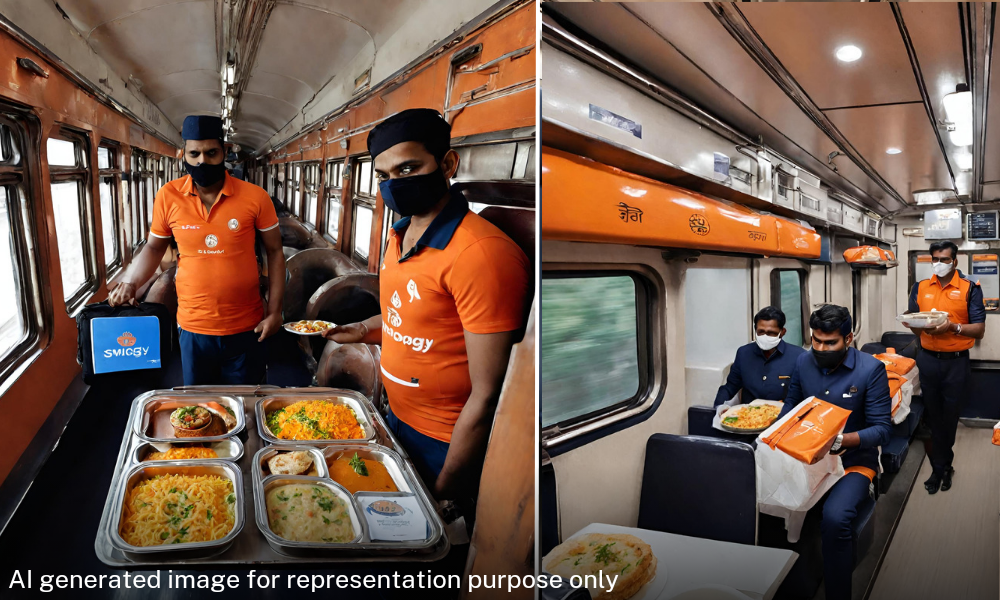
Swiggy To Provide Food Delivery Service on Indian Railways Starting 12 March

Swiggy To Provide Food Delivery Service on Indian Railways Starting 12 March

Starting March 12, Swiggy will deliver to passengers travelling via Bangalore, Bhubaneshwar, Visakhapatnam and Vijayawada

The service is likely to expand to over 50 stations in the coming weeks

Swiggy, India’s leading online food ordering and delivery platform, and the Indian Railway Catering and Tourism Corporation (IRCTC) have signed a Memorandum of understanding (MoU) to deliver pre-ordered food on trains. The MoU was exchanged between Mr Sanjay Kumar Jain, Chairman and Managing Director, IRCTC and Mr Rohit Kapoor, CEO, Swiggy Food Marketplace, in the presence of senior officials from both organisations.

As part of the MoU, Swiggy will deliver food from its extensive restaurant network to passengers on the Indian railways starting with Bangalore, Bhubaneshwar, Visakhapatnam and Vijayawada. The service is likely to expand to 59 additional city stations in the coming weeks.

Speaking about partnership, Mr Sanjay Kumar Jain, Chairman and Managing Director, IRCTC, said, “At IRCTC our focus has always been to explore new ways to make train journeys comfortable and convenient for the billions of passengers aboard the Indian railways every year. This partnership with Swiggy will bring more convenience and food options to our passengers, making their journeys more memorable.”

“Swiggy’s mission is to bring convenience to the lives of consumers. The Indian Railways are the lifeline of our nation, transporting more than 8 billion passengers annually. If during these rail journeys, which traverse across states and districts, one has the option to order meals to explore the culinary diversity of India, it would make the experience more convenient and enjoyable, and add to the overall vividness of the train travel,” said Mr Rohit Kapoor, CEO, Food Marketplace, Swiggy.

One of the challenges encountered by travellers during extended journeys is the paucity of diverse culinary options. Through this integration, passengers aboard designated trains now have the option to savour good-quality, warm meals delivered right to their seats, thereby transforming their travel into a convenient and delightful culinary experience.

"IRCTC and Swiggy collaboration is natural in several ways. Both the organisations have built a reputation of leveraging technology to improve consumer experience. Both have a pan-India presence. In the first phase, we are starting with deliveries on stations of Bengaluru, Vijayawada, Visakhapatnam and Bhubaneswar. We are hopeful of a buoyant response from passengers and restaurant operators on this route, which will hopefully lead to us providing services on more stations and on newer routes,” added Kapoor.

Passengers can avail pre-ordered food services via Swiggy by following the below steps:
  • Input the PNR on the IRCTC app
  • Select the preferred station for food delivery
  • Browse through an extensive list of restaurants on Swiggy
  • Choose a restaurant that is delivering at the specified location and time
The food delivered to passengers will be packed in insulated Swiggy bags to keep the meal warm and fresh. Swiggy’s delivery partner would reach the selected platform X mins before delivery, hand over the food to the customer and mark the food delivered. To ensure smooth operations, effective issue resolution and maximum comfort for the passengers, Swiggy’s support agents will be trained in resolution process, gratification & cancellation policies. The support agents will also be equipped to connect with restaurants and delivery partners based on the order status and the nature of the customer issue.

Siemens Provides Electrification for Indian Railways’ Longest Rail Tunnel

Siemens Provides Electrification for Indian Railways’ Longest Rail Tunnel
State-of-the-art rail electrification technologies for 42-kilometer-long stretch on Udhampur-Srinagar-Baramulla Rail Link including the longest rail tunnel (12.8 kilometers) at Pir Panjal range

Siemens Limited  has provided rail electrification technologies for a 42-kilometer-long stretch, including the longest rail tunnel (12.8-kilometers) at Pir Panjal range, on the Udhampur-Srinagar-Baramulla Rail Link, announced the German technology company in an official press release.

The Electrification project is part of the Jammu-Udhampur-Katra-Quazigund-Baramulla Railway line of the Indian Railways, the largest construction of mountain railway line since India’s independence, with a length of 345 kilometers and at a height of approximately 1,700 meters above sea level.

The Udhampur-Srinagar-Baramulla Rail Link (USBRL) is a 272-kilometer railway project that connects the Kashmir valley with the Indian Railways network. The project aims to connect remote Himalayan areas with the rest of India.

Siemens Limited’s scope included the design, engineering, supply, installation, testing and commissioning of 25kV overhead equipment and associated works.

Gunjan Vakharia, Head of Mobility Business, Siemens Limited, said, “We are extremely proud to be associated with this project, which is of national importance. The installation team overcame challenges such as extreme temperatures and unexplored terrain to ensure a successful execution of the project. We would like to thank the Indian Railways for their continued trust and support to Siemens.”

Siemens Limited is a technology company focused on industry, infrastructure, transport as well as transmission and generation of electrical power. From more resource-efficient factories, resilient supply chains, and smarter buildings and grids, to cleaner and more comfortable transportation, the company creates technology with purpose adding real value for customers. By combining the real and the digital worlds, Siemens empowers its customers to transform their industries and markets, to transform the everyday for people. Siemens Limited is the flagship listed company of Siemens AG in India. As of September 30, 2023, Siemens Limited had Revenue from continuing operations of Rs. 17,701 crore and 8,888 employees.

L&T Construction Secures Order from Japanese Agency for the Mumbai-Ahmedabad "Bullet Train" Project's Electrification System Works

L&T Construction Secures Order from Japanese Agency for the Mumbai-Ahmedabad "Bullet Train" Project's Electrification System Work

The Railway Strategic Business Group of L&T Construction has secured a Mega Contract from an authorised Japanese agency to construct 508 Route Km of High-Speed Electrification System Works (Package No: EW 1) for the Mumbai-Ahmedabad High-Speed Rail (MAHSR) Project, popularly referred to as the Bullet Train Project.

According to the company’s classification of projects, the value of the order is between 10,000 to 15,000 crore INR.

The scope of this package includes Design, Manufacture, Supply, Construction, Installation, Testing and Commissioning of 2 x 25 kV Power Supply Electrification System including Traction Substations, High-Speed Overhead Equipment and MV/LV Power Distribution Equipment Works on Design-Build Lump Sum Price basis.

It is a first of its kind railway electrification project for India involving the implementation of Japanese Shinkansen High Speed Electrification Technology with sophisticated equipment including Heavy Compound Catenary System, Change Over Switches, etc.

Upon completion, this electrification system will enable trains to travel at up to 320 KMPH speed.

The project is being funded by the Japan International Cooperation Agency (JICA) and is being implemented by an authorised Japanese agency acting for and on behalf of the National High Speed Rail Corporation Ltd (NHSRCL).

L&T is India’s leading player in the Railway Electrification domain, possessing expertise across various types of Electrification Systems i.e., Conventional 1X25 kV system, high rise and low-rise 2X25 kV System for Mainline & Freight Railways, 25 kV AC Rigid & Flexible Overhead Catenary Systems for Metros, 750/1500 V DC Overhead Catenary systems for Metros & LRTs, Special Japanese type Feeder Messenger Systems for DC Overhead Electrification, DC Third Rail Electrification systems, etc.

Commenting on this win, L&T Chairman & Managing Director Mr S N Subrahmanyan said, “This MAHSR Systems Package is critical for the success of the Bullet Train Project. Proud to say that this win shall place L&T’s Railways Business amongst the top global Railway System Integrators covering Mainline, Metro and High-Speed Rail segments. This success, on top of the earlier Trackworks & Civil Packages, reflects the customer’s and the Japanese government’s huge trust on L&T’s design and execution capabilities. Realisation of MAHSR Project will change the paradigm of long-distance transportation in the country.”

Adding to this, Mr Rajeev Jyoti, Advisor to Chairman & Managing Director for Railways Business, said: “This is the largest single railway electrification project order ever placed in India. Our Railways Business is now in a unique position to leverage our strengths in design, procurement, construction capabilities as well as our relationship with various Japanese stakeholders for successful execution. The experience & technology transfer from this project shall help L&T in developing credentials for such future High-Speed Rail projects in India and abroad.

L&T is currently executing various electrification projects in India and abroad including Mauritius LRT, Dhaka Metro, Western & Eastern DFCCs, Mumbai Metro, Agra Metro, Chennai Metro and the Indian Railways projects. It has earlier successfully delivered various Electrification Projects for Indian Mainline Railways and Metros.

L&T is currently executing several Civil Viaduct, Station Packages, Track & Depot Packages and Special Steel Bridges Packages for the Mumbai-Ahmedabad High-Speed Rail (MAHSR) project.

Indian Railways Selects Siemens to Manufacture 1,200 Electric Locomotives

Indian Railways Selects Siemens to Manufacture 1,200 Electric Locomotives

Hon’ble Prime Minister of India laid the Foundation Stone on 20th April 2022 at Railway’s Factory at Dahod, Gujarat

1200 Electric Locomotives will be Manufactured over a Period of 11 Years

Indian Railways has issued the Letter of Award (LoA) for Manufacturing and Maintenance of 9000 HP Electric Freight Locomotives to Siemens, India.

As a technology partner, Siemens will provide training to Railway Staff at Dahod for manufacturing the 9000 HP locomotives and at four depots at Vishakhapatnam, Raipur, Kharagpur and Pune for maintenance of the locomotives over the design life of 35 years.

Railways factory at Dahod, Gujarat, will manufacture 1200 high horse power (9000 HP) electric locomotives over a period of 11 years. It would entail manufacturing of 1200 locomotives and maintenance of these locomotives for 35 years.

The estimated value of contract is about INR 26000 Crore (about 3.2 Billion USD), excluding taxes and price variation.

Agreement with Siemens India will be signed within 30 days of issue of LoA. The proto-type locomotives are to be delivered in the coming two years.

Dahod Unit will be fully constructed for manufacturing these locomotives within a period of two years. Siemens, selected as technological partner, will manufacture these locomotives at Dahod and maintain these locomotives at four maintenance depots - Vishakhapatnam, Raipur, Kharagpur, Pune for a period of 35 years utilising Railway’s Manpower.

These 9000 HP locomotives will be the future workhorse for freight operation on Indian Railways. These locomotives are planned for use primarily on Western DFC and on graded sections of Railways for hauling container freight trains in double stack configuration of 4500 Tonnes at 75 kmph at 1 in 200 gradient and improve the average speed of such trains to around 50-60 kmph over the existing 20-25 kmph.

The quantum jump in the operating parameters will lead to increase in the throughput and also enhance line capacity. These locomotives, equipped with state of the art IGBT based propulsion technology, will provide savings in energy consumption due to regenerative braking technology.

Suitable economic drivers will ensure complete indigenization of the manufacturing which in turn will lead to development of ancillary manufacturing units making it a true ‘Make in India’ initiative.

The project will also lead to development of the Dahod region and generate employment. Dahod is a city on the banks of the Dudhimati River in Dahod District in the State of Gujarat.

redBus & Karix Together Launch ‘redRail’, An Initiative for Live Train Status Tracking Service on WhatsApp


Karix Mobile, a wholly-owned subsidiary of Tanla Platforms, India’s largest CPaaS provider, today announced the deployment of a first-of-its-kind WhatsApp LTS (Live Train Status) service for redBus as part of their redRail initiative.

This new service will allow travelers across India to reach +91 9538039911 on WhatsApp for up-to-the-minute information on the location, running status, ticket confirmation and the arrival of all intercity passenger trains in the country. Travelers can also use the redRail service to track their live location on the go during their journey and share it with their loved ones. WhatsApp is one of the leading, most secure messaging platforms in the world and has millions of Indian subscribers which made it an obvious pick as the platform of choice for the LTS implementation. Since the service is WhatsApp-based, it does not require the installation of any additional software other than WhatsApp, making it memory-efficient, battery-efficient, and hassle-free for travelers.


The WhatsApp Business Platform powered by Karix enables the redRail LTS service to seamlessly initiate conversations with customers and relays customer-initiated messages back to the redRail platform for processing incoming customer requests. In addition, the robust WhatsApp platform empowers the redRail initiative by offering higher delivery rates, better analytics and a 3D view of complete conversations happening with customer ROI metrics.

“Train travel is the most widely used mode of public transportation in India. We’ve always wanted to impact and better the lives of as many people as possible with our products, and that’s how we initially came up with the concept for redRail. This service is aimed at providing a convenient way for people all across the country, especially in rural areas, to have a real-time information window on trains. The idea was massive in scope, and we were aware that it will require significant technical expertise to deploy. Thankfully, with the help of our fantastic team and our channel partners Karix and WhatsApp, we were able to bring the idea to fruition. We are confident that this service will go a long way in alleviating concerns about pre-boarding and train travel for the 22 million people traveling on intercity trains every day.” said Parikshit Choudhury, Chief Business Officer, redRail by redBus.

Deepak Goyal, Chief Business Officer, Karix Mobile said in the release, “We commend redBus for the foresight and vision they have shown with the redRail initiative that stands to benefit millions of people. Being part of the first-ever LTS implementation on WhatsApp with redBus is an exciting undertaking for us too, given our penchant for cutting-edge technology. Partnering with an initiative like redRail that is making use of the latest technology to deliver real value for consumers and travelers is what keeps us going. With our advanced platform capabilities and the dedicated efforts of our teams, we are committed to innovating and building the next generation of digital customer experiences.”

The benefits and reach of redRail go beyond just the urban and tech-savvy populace. To use the redRail service, travelers simply need to send a message to +91 9538039911 on WhatsApp. As a response to this, a chatbot flow gets initiated which directs the user to enter their booking PNR or the number of the train that needs to be tracked.

Indian Railways Launches Innovation Policy To Fund Startups and Innovators with Upto Rs. 1.5 Cr Investment Each

Indian Railways Launches Innovation Policy To Fund Startups and Innovators

On Friday, Ministry of Railways has released an innovation policy, according to which Indian Railways will invest in startups, individual innovators and R&D institutions in order to co-develop innovative products and solutions with startups & entrepreneurs, that address issues of Indian Railways while promoting Innovation Culture in the country for co-creation and co-innovation in the railway sector.

On funding the eligible startups, the policy document says - "Considering the major constraint of capital inadequacy in Startup ecosystem, primarily in the seed and “Proof of Concept” developmental stage, this policy aims at providing necessary seed fund support, of up to Rs. 1.5 Cr (on matching contribution basis), to the Startups showing capability, intent and promise to produce functional prototypes, based on new innovative concepts, for potential use on Indian Railways.

This policy document lays down a broad framework for engagement of Ministry of Railways with Innovators for development of technology, products and need based solutions for Indian Railways.

Under this policy, funding scheme for startups/innovators will be on cost sharing basis in equal proportion i.e. 50:50 by Indian Railways and Innovator. Maximum amount of grant of up to Rs. 1.5 Crore can be given per innovator.
 
"Even for cases where the total cost of project exceeds Rs 3.0 Cr, the funding from Indian Railways shall be limited to a maximum of Rs. 1.5 Cr only. The exact quantum of grant and installments for each Innovator shall be decided by the PEC ((Proposal Evaluation Committee), based on its evaluation," mentions the policy.

Complete process, from initiation to completion, will be dealt online through a dedicated Indian Railway Innovation Portal. The innovators can apply through a dedicated Innovation Portal, which is likely to be functional by the end of this month, and once chosen for the grant, its disbursement shall be linked to pre-decided milestones (proposed stages during project execution). The project execution stages should be divided in a minimum of 4 (Four) milestones and maximum amount of disbursement at any milestone shall not exceed Rs. 25 lacs.

Under this policy, the ownership of IPR (Intellectual Property Rights) generated under the project shall be owned exclusively by the Innovator. However, it can be extended to include any associates as joint owners only after obtaining prior approval from Railway Board (E&R Directorate).

To recall, Indian Railways has earlier explored the feasibility of retrofitting the trains (that presently run o­n diesel) with hydrogen fuel and for same it invited bids for "hydrogen fuel cell-based technology" for retrofitting the existing Diesel units, in November last year.

Collaboration/co-development of govt.-owned units and private firms and startups is gaining momentum of-late. While Indian space agency ISRO has already working with private companies and startups for various space activities. Indian Oil Corporation, (IOC) has recently signed a binding term sheet with two private firms -- Larsen & Toubro (L&T) and ReNew Power (ReNew) -- to set up a Joint Venture (JV) company that will develop the green hydrogen sector in India.

Soon Hydrogen Fuel-based Trains in India

Representational

Indian Railways (IR) is exploring the feasibility of retrofitting the trains (that presently run o­n diesel) with hydrogen fuel and for same it has invited bids for "hydrogen fuel cell-based technology" for retrofitting the existing Diesel Electric Multiple Unit (DEMU) and will be test it out in 89 km Sonipat-Jind section of Northern Railway.

The bids have been invited by Indian Railways Organization of Alternate Fuel (IROAF), Green Fuel vertical of IR. The bidding date for hydrogen fuel cell-based DEMU rake will start o­n September 21, 2021, and the closing date will be October 5, 2021.

Initially, two DEMU rakes will be converted, and later two-hybrid narrow gauge locomotives will be converted based o­n hydrogen fuel cell power movement. After conversion, the train will run o­n hydrogen fuel, the greenest mode of transport as hydrogen can be generated by electrolysing the water from solar energy. 

The retrofitting of diesel-powered Diesel Electric Multiple Unit (DEMU) and converting it into hydrogen fuel-powered train set will not o­nly save the cost to the tune of Rs 2.3 crore annually by converting from diesel to hydrogen, but also save the carbon footprint (NO2) of 11.12-kilo tons per annum and particulate matter of 0.72-kilotonnes per annum.

This initiative is part of the National Hydrogen Energy Mission to launch and promote the concept of Hydrogen Mobility in India. Rs.8 crore has been allocated for the project in 2021-22.

Earlier in June, to use hydrogen as an alternative fuel researchers from the IIT Bombay have devised an economical method for extracting hydrogen from water.

Hydrogen fuel cell-based technology is part of  "Advanced Chemistry Cell (ACC) Batteries” and "National Hydrogen Mission" --- the two flagship programs of the Government of India to meet out the targets of reducing Green House Gas (GHG) emission under Paris Climate Agreement 2015 and "Mission Net Zero Carbon Emission Railway" by 2030.

Last month, NTPC too had invited a tender for setting up India’s first Green Hydrogen Fuelling Station in Leh, Ladakh. In February this year, Nitin Gadkari, Union Minister for Road Transport & Highways, announced that NTPC is planning to start a premium hydrogen fuel bus service on Delhi to Jaipur route.

As A Cheap Alternative To Bio-Toilets, Indian Scientist Develops Automated Train Toilet Disposal System


Automated Train Toilet Sewerage Disposal System - A Cost-effective Alternative To Bio-toilets

An automated technology for collection of toilet waste which is easy to maintain and seven times cheaper alternative to the bio-toilets, developed by an Indian scientist, can be used to maintain the toilet system of the Indian Railways.

Existing Bio toilets use anaerobic bacteria for converting human waste to gas, but that bacteria can’t decompose plastic and cloth materials dumped into toilets by passengers. Hence maintenance and removing of such non decomposed materials inside the tank is difficult.

The technology developed by Dr. R.V. Krishnaiah from Chebrolu Engineering Collegeisan automated system for collection of toilet waste from running trains and segregation of different materials and processing into usable things.

The Front View of the System

The technology developed with support from the Advanced Manufacturing Technologies programme of the Department of Science & Technology (DST), aligned with the 'Make in India' initiative has been granted five National patents and is in the testing phase.

The automated system consists of three simple steps -- the septic tank (which is placed under the track, i.e., train line) top cover gets opened when train approaches to the septic tank place by using Radio Frequency Identification (RFID) sensor and reader placed at Engine and septic tank position respectively, sewerage material in toilet tanks is dropped into the septic tank when they are mutually synchronized, and finally the septic tank cover gets closed when train departs away from it.

The collected sewerage material from train toilets is segregated such that human waste is stored in one tank, and other materials such as plastic materials, cloth materials, and so on are stored in another tank. The human waste is further processed separately to convert into usable material. The plastic and cloth materials are processed separately.

This technology has been developed targeting the Indian Railways specifically with the aim of cost reduction and to obviate the necessity of time-consuming anaerobic bacteria generation. In contrast with Bio toilets which cost one lakh per unit, the new technology brings down the cost to Fifteen thousand rupees only. Dr. R.V. Krishnaiah has tied up with MTE Industries for further upscale of this technology.

Indian Railways Finance Corporation (IRFC) IPO: First IPO Of 2021 To Open On January 18


State-owned Indian Railways Finance Corporation (IRFC) has opened its first public offer for subscription on January 18, 2021, setting the price band at Rs 25-26 per share.

IRFC primarily involved in financing the acquisition of rolling stock assets, leasing of railway infrastructure assets, and lending to entities under the Railway Ministry. The term "rolling stock" is a generic term that is used in the railroad industry to denote anything on rail wheels. The term includes locomotives, freight cars, flat cars, and other vehicles that use steel wheels on railroad tracks.

The Rs 4,633.4 crore ( about US $634 million) initial public offer (IPO) has become the first public issue for the calendar year 2021.

The price band of the issue, being in the range of Rs 25-26 per share is of the face value of Rs 10 each. The three-day public issue will close on January 20, 2021. 

The initial public offering of up to 1,78,20,69,000 equity shares consists of a fresh issue of 1,18,80,46,000 equity shares and an offer for sale of 59,40,23,000 equity shares by the government.

The bids for the issue can be made for a minimum of 575 equity shares and in multiples afterward. The shares are proposed to be listed on BSE and NSE. The IRFC IPO listing date is not yet announced. 

The Indian Railway Finance Corporation was incorporated in 1986 and is a public-sector enterprise, wholly owned by the central government.

Being the financing arm of Indian Railways, IRFC is responsible to mobilise funds from domestic or overseas market for the Railway Ministry, required to procure rolling stock assets such as wagons, trucks, electric multiple units, locomotives, coaches, along with its improvement, expansion, as well as assets management.

The primary objective of IRFC is to meet the predominant portion of extra-budgetary resources requirement of the Indian Railways through market borrowings at the most competitive rates and terms.

Source - NDTV

Indian Railways Going Futuristic, Introduces 14 New Academic Programmes including AI, Machine Learning and Hybrid Electric Vehicle

National Rail & Transportation Institute (NRTI) launches 7 new Programmes, 2 B. Tech UG Programmes, 2 MBA and 3 MSc Programmes on core applied sector.

The 2 B.Tech Programs are focused on Rail Infrastructure, Rail Systems and Communications Engg

While the MBA programs are focused at Transportation and Supply Chain Management which are of highest priority in the coming years, the MSc Programs are focused on the Systems Engineering and Integration, Systems and Analytics, Policy and Economics which are the core areas the Nation is looking forward to.

Of this, the M.Sc Program on Systems Engineering and Integration is offered in association with the University of Birmingham, UK and is highly promising. The international exposure to the students will be unparalleled.


National Rail and Transportation Institute (NRTI), Vadodra has launched 7 new Programmes, 2 B. Tech UG Programmes, 2 MBA and 3 MSc Programmes on core applied sector.

The 2 B Tech Programs are focused on Rail Infrastructure, Rail Systems and Communications Engg, while the MBA programs are focused at Transportation and Supply Chain Management which are of highest priority in the coming years, the MSc Programs are focused on the Systems Engineering and Integration, Systems and Analytics, Policy and Economics which are the core areas the Nation is looking forward to. ]

The MSc Program on Systems Engineering and Integration is offered in association with the University of Birmingham, UK and is highly promising. The international exposure to the students will be unparalleled.

These programmes are highly inter-disciplinary and application oriented and not being offered by any other Institute in India and thus, unique in its contents.

Related - Railways to Use AI in IRCTC Website and ISRO Satellite Data for Tracking Trains

Speaking on the occasion, Shri V.K.Yadav, Chairman & CEO, Railway Board said, -

NRTI has adopted an interdisciplinary approach for research of transport systems -it is bringing together academicians, scientists and engineers from various backgrounds, and plans to leverage its academic and industry partnerships and collaborations. It intends to develop a set of core values—dedication to nation building, commitment to innovation and academic excellence, compassion towards people and society and responsibility towards the environment. It offers project-based learning at Railway establishments. Indian Railways will be at the core of implementing the key features of the programmes.

It will serve as an experiential learning laboratory for the student community as well as the faculty development initiatives, thereby creating a distinct character for the University: through a highly experiential and application-based learning approach. The students passing out of these programs as tomorrow’s citizens could add great value in nation building."


Unique features of Academic Programmes at NRTI

S. No.

Name of the Programme

Duration

Unique feature of the programme

1.

BBA in Transportation Management


3 year

This is a specialized programme focused on management practices in the context of thetransportation sector. The key focus areas of the programme include urban planning models, supply chain management, project management, Sociological Contexts and Transportation and financial models for transportation systems.

2.

BSc in Transportation Technology


3 year

This programme focuses on technology and its application in the field of transportation. The key focus areas of the programme include Transportation Technologies of the 21st Century, Vehicle Systems Design, Urban Traffic Management andControl, Hybrid Electric Vehicle Theory and Design and Transportation Systems Design.

3.

B.Tech. in Rail Infrastructure Engineering


4 year

The programme intends to develop knowledge and skills for the design and development of rail infrastructure. The key focus areas of the programme include Vehicle Systems Design, Bridge Design andStructures, Safety and Reliability, Geotech, Railway Electrification, and HVAC Systems for Railways.

4.

B.Tech. in Rail Systems & Communication Engineering

4 year

The programme develops knowledge and future skills in the domain of rail systems and communication technologies. The key focus areas of the programme include Railway Control Systems Engineering, Computer Networking & Management, Mobile communication, Passenger Information Systems, Big Data & Data Analytics and Artificial Intelligence & Machine Learning.

5.

MBA in Transportation Management

2 year

The programme intends to develop skills in designing, organizing, and supervising the transportation systems with a key focus on future sustainability. The key focus areas of the programme includes managing investments oftransportation systems, designing multi-modal transportation models,intelligent transportation systems, environmental impact of transportationsystems and traffic management & control.

6.

MBA in Supply Chain Management

2 year

The programme focuses on the development of key managerial and analytical skills for design, integration and coordination of supply chains at multiple levels for improving the competitiveness of businesses through innovative and dynamic solutions. The key focus areas of the programme includes logistics & warehousing systems, supply chain strategy, freight transportation and revenue management.

7.

MSc in Railway Systems Engineering & Integration (International degree programme offered in collaboration with University of Birmingham, UK)

2 year

This is a unique programme offered in collaboration with University of Birmingham, UK. The students will study at University of Birmingham in second year. An international exposure will help the student to enhance their learning experience in the domain of railway systems and specific technological challenges involved in engineering designs.  The programme has an intention to develop skills and knowledge in railway engineering knowledge, systems integration skills and understanding of the complex interactions between subsystems Specialized courses at the University of Birmingham in areas such as strategic management of railway operations, railway rolling stock systems design, railway traction systems design, railway control systems engineering and railway business management.

8.

MSc in Transport Technology and Policy

2 year

The programme addresses key challenges involved in integration of transport technology and policy measures required for a sustainable economic development of the country. The key focus areas of the programme include transportation finance, issues in integrating behavior and policy in transport planning, urban planning models, information policy and multi-modal transportation.

9.

MSc in Transport Information Systems and Analytics

2 year

The programme intends to develop advanced knowledge in information systems, data science, and analytics in the context of transportation. The key focus areas of the programme include data models & decisions, information policy, big data and network theory to develop an interdisciplinary perspective.


Railways Develops Low-Cost Ventilator 'Jeevan', Seeks ICMR Approval

The Indian Railways has developed a low-cost ventilator, Jeevan, at its Kapurthala Rail Coach Factory that could save thousands of lives at a time the country is grappling with a shortage of the medical equipment in its fight against coronavirus.

The prototype is now awaiting ICMR clearance to go into production, the Railways said.

"It will cost around Rs 10,000 without the compressor. Once we have the ICMR approval, if we have all the materials, we will be able to produce 100 such ventilators a day," Ravinder Gupta, general manager of the RCF and the brain behind Jeevan, told PTI.

"Overall, the cost will still be a fraction of what regular ventilators cost," he said.

A ventilator is a device used to pump air and oxygen into the lungs, and it can be critical for a patient with severe COVID-19 infection which can lead to lung failure.

India might need anywhere between 110,000-220,000 ventilators by May 15 in the worst-case scenario. The number of ventilators today available in the country is a maximum of 57,000 and come with a cost of Rs 5-Rs 15 lakh, according to a Brookings report.

Gupta said the heart of the device is the compressed air container to work the Ambu bag with air without any moving parts like servo motor or piston or link mechanism. It has a microprocessor-based controller and the circuit has been designed by the RCF team.

A valve has been installed to regulate breathing of the patient and the device can be optimized to more compact size. The machine is a silent operator, according to the Railways.

Gupta said the prototype has been made from materials he found in the factory — the portable compressor is made from an air cooling machine, the body from coach components, the argon flow metre is taken from a laser welding machine and the microprocessor from the coach information system.

The 11-member team behind Jeevan needed to source only two parts — a regulator valve and a microprocessor — from vendors in Delhi and Noida. The RCF used emergency transit services to get the two components by road and train during the lockdown.

The machine, Gupta said, provides control on breathing rate, expiratory ratio, and tidal volume - all key parameters for any ventilator and has a microprocessor-based controlling system.

"Today we have made some final tests and now we have a fully functional emergency ventilator which we have manufactured at one-third the cost of ventilators in the market," said the 1984-batch mechanical engineering officer of the Railways.

"Even if we add a few additional indicators, the cost will not rise over Rs 30,000. Also, in this machine, all the aspects can be independently controlled."

According to the Health Ministry, the number of confirmed novel coronavirus cases in the country climbed to 3,374 on Sunday while the death toll rose to 79.

Of them, the number of active COVID-19 cases stood at 3,030, it said.

RCF is the premier coach production unit which manufactures the German design Link Hofmann Busch coaches. PTI ASG/CHS/VSD

Market Reports

Market Report & Surveys
IndianWeb2.com © all rights reserved