‏إظهار الرسائل ذات التسميات Freight. إظهار كافة الرسائل

India Launches World’s First Hyperloop Cargo Trial in Mumbai

India Launches World’s First Hyperloop Cargo Trial in Mumbai

India is set to conduct its first hyperloop freight trial in Mumbai, where the state-owned Central Warehousing Corporation (CWC) will test moving a fully loaded shipping container using indigenous technology developed by IIT Madras-incubated TuTr Hyperloop. The ₹230 crore pilot will run on a 650‑metre track at Jawaharlal Nehru Port, marking a major step toward commercial cargo deployment.

The Central Warehousing Corporation (CWC) confirmed the Mumbai hyperloop freight pilot in September 2026, and TuTr Hyperloop also signed collaboration agreements with partners like Titagarh Rail Systems in July 2026.

This Mumbai hyperloop freight pilot is being called the world’s first trial because it’s the first time a fully loaded shipping container will be moved on a real hyperloop track under an official government‑backed project. CVC has already placed a formal order for the pilot in 2026, making it the first commercial hyperloop cargo order globally.

Most hyperloop efforts worldwide (Virgin Hyperloop in the US, HyperloopTT in Europe, etc.) have focused on passenger transport. None have yet demonstrated a full‑scale freight container movement.

While other countries have tested hyperloop pods or vacuum tubes, none have yet attempted cargo deployment at port scale.

Key Details of the Mumbai Hyperloop Freight Trial

  • Project Lead:Central Warehousing Corporation (CWC), a government enterprise.
  • Technology Partner:TuTr Hyperloop, incubated at IIT Madras.
  • Location:Container Freight Station Logistics Park,Jawaharlal Nehru Port (JNPT), Mumbai.
  • Track Length:650 metres.
  • Investment:Around₹20–23 crore.
  • Timeline:Order placed in March–April 2026; implementation expected withinone year.
  • First Test:Movement of a single fully loaded shipping container.
  • Objective:Research & development exercise to evaluate feasibility of short-haul container transport between ports and logistics hubs.

Strategic Context

  • Cargo Focus:Unlike passenger hyperloop projects, this trial prioritizesfreight logistics, aiming to reduce inefficiencies in port-to-warehouse transport.
  • Government Backing:Union Minister Sarbananda Sonowal highlighted hyperloop’s potential to connect ports, logistics parks, warehouses, and industrial clusters.
  • Technology:Uses Linear Induction Motor (LIM) propulsion, with future plans to integrate magnetic levitation.
  • Global Positioning:India is among the first countries to attempt real-world hyperloop cargo deployment.

Comparison: India’s Hyperloop Cargo Projects

ProjectLocationFocusStatusCost
Mumbai Freight TrialJNPT, MumbaiCargoPilot ordered, 650m track₹20–23 crore
Delhi–Mumbai CorridorDelhi–MumbaiCargoProposal (DGWHyperloop)~₹70,000 crore
Bengaluru–Chennai CorridorBengaluru–ChennaiPassengerEarly-stage proposalTBD
IIT Madras Test TubeChennaiR&D410m tube operationalIndigenous tech

Risks & Challenges

  • High Costs:Even pilot projects requirehundreds of crores; scaling to corridors could exceed₹70,000 crore.
  • Safety:Container stability and emergency braking at high speeds remain unproven.
  • Policy Gaps:India lacks a dedicatedhyperloop certification framework.
  • Scalability:Moving from one container to multiple units at high throughput will require significant engineering advances.

Outlook

This Mumbai trial is a critical milestone: if successful, it could pave the way for short-haul hyperloop cargo systems linking ports with inland logistics hubs, potentially transforming India’s freight ecosystem.

How Libera by ElasticRun Is Redefining Freight Management for India's Shippers

How Libera by ElasticRun Is Redefining Freight Management for India's Shippers

India's logistics sector is at an inflection point. With e-commerce volumes surging, supply chains growing more complex by the day, and customer expectations for faster, more transparent deliveries at an all-time high, the teams that move freight face a pressure they've never quite felt before: do more, spend less, and make fewer mistakes, all simultaneously.

For most shippers from e-commerce platforms, D2C brands, manufacturers, freight forwarders, and courier, express, and parcel operators, the answer has long been fragmented: a mix of spreadsheets for rate comparisons, siloed software for tracking, WhatsApp groups for transporter coordination, and manual invoice reconciliation that eats up hours every week. The result is a system that's reactive rather than proactive, one that puts out fires instead of preventing them.

Enter Libera, the AI-powered supply chain platform developed by ElasticRun, one of India's most battle-tested logistics unicorns, and now available as a global SaaS offering. Built on the same technology stack that has handled over 2 billion shipments, generated 97 billion+ operational checkpoints, onboarded 400,000+ vendors, and sustained a 99.96% on-time delivery rate, Libera brings enterprise-grade freight intelligence to businesses of every size.

The Freight Problem Shippers Know Too Well

Ask any logistics head what their day looks like, and you'll hear a familiar story: chasing trip status updates, manually verifying documentation, scrambling to match invoices against contracts, and dealing with transporter disputes that could have been avoided with better data. Traditional transport management systems address parts of this problem but rarely all of it, and almost never in real time.

Libera's Freight Transport Management System was built differently. Rather than being designed for an ideal logistics environment, it was forged in the heat of running one of India's largest fulfillment networks, where the cost of failure is measured in missed deliveries, lost revenue, and damaged customer relationships. Its promise is deliberately narrow and deliberately hard: lower freight costs and control over every trip.

One System, Four Stages: Procurement to Settlement

What distinguishes Libera's approach is that it treats freight as a single continuous workflow rather than a set of disconnected tasks. The platform covers four stages end to end.

Procurement. Teams can allocate loads directly to contracted partners or run contract and spot bids when capacity is tight, without the back-and-forth of manual RFQ cycles.

Planning. The system selects the right vehicle, route, and loading sequence for each load, balancing cost against service commitments.

Execution. Compliance checks, live tracking, exception handling, and electronic proof of delivery all run inside the same system that planned the trip.

Invoicing. Contract-aligned invoices are generated automatically, with the audit trail attached, so settlement stops being a month-end reconciliation exercise.

Because these four stages share one data layer, a rate agreed at bidding is the rate that appears on the invoice, and a delay flagged in execution is visible to the people who planned the load. For shippers who have traditionally stitched these stages together across separate tools and separate teams, that continuity is where most of the savings sit.

Dynamic Bidding and Transporter Management: Get the Best Rate, Every Time

Managing transporter relationships is a constant negotiation. Libera's built-in bidding engine supports both spot and contract bidding, enabling shippers to secure competitive freight rates without running a manual tender for every lane.

The platform supports bidding across multiple rate types such as per kilometer, per ton, and full freight and automatically generates contracts for successful bids. AI-assisted bid evaluation ranks transporters on a combination of performance history and commercial terms, so every load is assigned to the most reliable and cost-effective partner available rather than the one who replied first.

For businesses that manage large transporter networks, this capability alone can meaningfully reduce procurement costs while improving service quality.

End-to-End Trip Control: From Indent to Delivery, Nothing Slips Through

At the heart of the platform is a unified trip view that consolidates every transportation order into a single dashboard. Logistics teams get real-time visibility from the moment an indent is raised to the moment a shipment is delivered, without toggling between systems or chasing status updates over phone calls.

Crucially, Libera does not depend on a single tracking method. It supports GPS, SIM-based tracking, FASTag, and IoT devices, which matters enormously in an Indian freight environment where the transporter fleet is fragmented and no single standard holds across partners. Lightweight transporter and driver apps keep participation friction low, so visibility does not quietly degrade the moment a smaller partner is added to the network.

AI-driven trip monitoring flags exceptions as they emerge rather than after the fact, and automated stakeholder updates cut down the follow-up calls that consume a dispatch team's day.

Compliance Without the Headaches: Automated Documentation

One of the most underappreciated sources of delay in logistics is documentation failure. Missing e-way bills, expired insurance certificates, and incomplete LRs aren't just administrative nuisances; they can result in vehicle detentions, regulatory penalties, and shipment delays that ripple through the entire supply chain.

Libera tackles this with an automatic documentation check that runs before every trip, alongside a centralized repository for both physical and digital shipping records, auto-generated e-way bills, and real-time updates for part-B details. Teams can be confident that every vehicle that leaves the yard is fully compliant without manually verifying each document.

The result is the elimination of compliance bottlenecks and administrative overheads on every transportation journey.

AI Where It Pays, With a Human in the Loop

Perhaps the most transformative aspect of the platform is where it chooses to apply AI. Libera uses it for capacity planning and demand-based indents, bid evaluation, load planning, exception detection during trips, and proof-of-delivery verification through computer vision. A freight intelligence layer lets teams ask questions of their own operational data in natural language instead of waiting on a reporting cycle.

Just as important is what the platform doesn't do: it doesn't hand the operation over to a model. AI decisions are designed for human-in-the-loop control, so planners can review, override, and adjust. That design choice reflects the company's own operating experience in freight; the cost of an unreviewed automated decision is a truck in the wrong place.

Route Planning That Works in the Real World

Libera's capacity and route planning engine is built for the complexity of actual logistics operations, not sanitized test scenarios. The planning engine is highly configurable, supports single and multi-location operations and generates optimized routes that are genuinely usable rather than theoretically perfect.

Teams can set personalized routing profiles that avoid U-turns, restricted roads, or traffic-heavy corridors and choose between the shortest, fastest, or easiest route options. Confirmed routes can be pushed directly to driver apps with a single click, minimizing navigation errors and simplifying execution on the ground.

For multi-lane, long-distance operations, the platform supports ETA calculation for every load across lanes, configurable contracted and system-proposed lanes, and flexible planning scenarios. In early deployments, the system has helped operators achieve an 8% reduction in fuel costs and increase vehicle utilization by up to 20%.

Electronic Proof of Delivery: Close the Loop on Every Shipment

Cash reconciliation and proof of delivery have historically been pain points for anyone managing cash-on-delivery shipments or high-value freight. Libera resolves this with a robust electronic proof of delivery system that supports OTP verification, geocode verification, digital signatures, and image proof, all captured through the driver's mobile app.

Geofenced auto-arrivals ensure deliveries are logged accurately, and computer-vision-based POD verification means both customers and operations teams get real-time confirmation the moment a shipment is handed over — and finance gets a settlement-ready record instead of a shoebox of paper.

Live in a Week, Not a Quarter

Enterprise logistics software has a reputation for long, painful implementations. Libera is designed to go live in seven days: configuration on days one and two, system connections on days three and four, validation on days five and six, and go-live on day seven. For teams that have watched TMS rollouts slip across quarters, that timeline is itself a feature.

Why Libera Is the Freight TMS Indian Shippers Have Been Waiting For

What sets Libera apart from other TMS solutions in the market is not any single feature — it's the combination of depth, reliability, and real-world validation. ElasticRun hasn't built a product based on market research and customer interviews alone; it has built it by running one of India's most demanding logistics networks for years, generating 97 billion+ operational checkpoints along the way.

That experience is embedded in every aspect of the platform: in the way the bidding engine is calibrated, in the documentation checks that reflect actual compliance requirements, in the tracking options that assume a fragmented carrier base, and in the analytics that surface the metrics that actually matter to the people running freight on the ground.

For companies looking to move beyond patchwork solutions and build a freight operation that can scale and is efficient, compliant, and continuously improving, Libera represents a compelling, proven choice.

About the Author:

Sheetal Kumar Ajamera is Senior Principal Architect at Libera, where he leads the engineering behind the platform’s freight procurement, planning, execution, and invoicing modules. He has spent his career architecting large-scale supply chain and ERP systems, with a focus on turning fragmented logistics processes into connected, data-driven platforms. At Libera, his work centers on the AI agents that power real-time rate benchmarking, load optimization, and billing reconciliation for shippers across India.

Connect with Sheetal on LinkedIn

Air India SATS and CONCOR Forge MoU to Link Inland Cargo with Noida International Airport, Strengthening India’s Role in Global Air Freight Networks

Air India SATS and CONCOR Forge MoU to Link Inland Cargo with Noida International Airport, Strengthening India’s Role in Global Air Freight Networks
  • Air India SATS Signs MOU with CONCOR Air Limited (wholly owned subsidiary of CONCOR) to Speed Up Cargo Movement from ICD Dadri to NIA. 
  • Collaboration to facilitate seamless handling of customs-cleared transhipment cargo for onward international dispatch~

Air India SATS Airport Services Private Limited (AISATS) has entered into a Memorandum of Understanding (MoU) with CONCOR Air Limited (CAL) to facilitate the seamless movement and handling of customs-cleared transhipment (TP) cargo from CONCOR’s Inland Container Depot (ICD) at Dadri to AISATS’ Integrated Cargo Terminal (ICT) at Noida International Airport (NIA), for onward international dispatch.

The collaboration strengthens AISATS’ air cargo terminal operations at NIA by deepening its connectivity with inland freight networks, bringing together CONCOR's inland logistics and customs-cleared cargo handling capabilities to create a more efficient, integrated pathway for cargo moving from inland facilities to international air freight.

Sharing his vision, Mr. Bob Chi, CEO, APAC Gateway Services, SATS and Director, AISATS said:“ India is at an important inflection point in the evolution of its logistics and air cargo ecosystem. As global trade volumes grow, as supply chains become increasingly time-sensitive, and as more air cargo is routed to and from India, the aviation ecosystem in India has much to gain as one of the world’s fastest growing aviation freight markets. We recognise India’s strategic strengths and are committed to developing capabilities, infrastructure and partnerships that can help build this future. The collaboration between AISATS and CONCOR Air Limited is a step towards creating a more connected logistics network, linking inland cargo with international air gateways more seamlessly. With Noida International Airport emerging as a new gateway for global trade, we see significant potential to build an integrated cargo ecosystem that is faster, smarter and more competitive.”

Air India SATS and CONCOR Forge MoU to Link Inland Cargo with Noida International Airport, Strengthening India’s Role in Global Air Freight Networks

Air India SATS and CONCOR Forge MoU to Link Inland Cargo with Noida International Airport, Strengthening India’s Role in Global Air Freight Networks

Commenting on the collaboration, Shri Ramanathan Rajamani, CEO, AISATS, said: "Noida International Airport is fast emerging as a critical gateway for international air cargo, and this partnership strengthens that ambition by deepening our connectivity with inland freight networks. Working with CONCOR Air Limited allows us to build a more seamless link between inland logistics and international dispatch and reinforces our commitment to positioning NIA as a hub that global shippers can rely on."

Shri Vijoy Kumar Singh, Director International Marketing & Operations (DIMO), added: “AISATS and CONCOR Air Limited will leverage their collaboration to facilitate seamless cargo transhipment between ICD Dadri and the AISATS Integrated Cargo Terminal, supported by efficient cargo handling protocols, customs coordination, and streamlined terminal processes. The arrangement is designed to enhance supply chain efficiency, minimise turnaround times, and maintain reliable service for exporters and shippers relying on the route.”

Shri Narmadeshwar Jha, CEO, CONCOR Air Limited, added: "This collaboration marks an important step in strengthening the inland-to-air logistics chain for India's EXIM trade. By closing the gap between our container depot at Dadri and the international gateway at Noida, we're able to offer exporters and shippers a faster, more reliable pathway for customs-cleared cargo. As India's logistics infrastructure continues to scale, partnerships like this one will be central to building the speed and dependability our customers expect."

The AISATS facility has been developed to handle a diverse range of cargo including perishables, pharmaceuticals, electronics, engineering goods, e-commerce shipments and express cargo. Strategically located within the National Capital Region and connected to key industrial and consumption centres, it is poised to play a significant role in strengthening cargo capacity, improving logistics efficiency and supporting India's growing trade and export ecosystem.

Alstom-Indian Railways JV Secures €107M 5‑Year Contract to Maintain 250 WAG‑12B Locomotives at Nagpur Depot

Alstom-Indian Railways JV Secures €107M 5‑Year Contract to Maintain 250 WAG‑12B Locomotives at Nagpur Depot
  • The contract covers five-year maintenance services agreement for 250 high-powered WAG-12B electric locomotives at the Madhepura Electric Locomotive Private Limited (MELPL) Nagpur Depot.
  • The €107 million contract reaffirms Indian Railways' trust in Alstom’s world-class service capabilities, following four years of highly successful operations.
Alstom, a global leader in smart and sustainable mobility, today announced that its joint venture with Indian Railways, Madhepura Electric Locomotive Private Limited (MELPL), has been awarded a new five-year maintenance services contract. Valued at €107 million, the agreement covers the comprehensive maintenance of 250 WAG-12B electric locomotives at the MELPL Nagpur Depot. This contract renewal follows the successful execution of the previous four-year agreement and underscores Indian Railways' continued confidence in Alstom’s high-quality services. The Nagpur depot has become a benchmark for collaborative excellence and operational success in the Indian rail sector.
Olivier Loison, Managing Director – Alstom India said – This contract renewal is a strong validation of our commitment to Indian Railways and the success of our partnership. We are proud that the trust placed in us has translated into proven performance and reliability of the WAG-12B e-loco, which are vital to India’s freight revolution.

The 12,000 HP Prima T8 WAG-12B locomotives are fundamental to India’s green mobility goals, capable of hauling 6,000-tonne loads at speeds of up to 120 kph. They serve as the workhorses of the Dedicated Freight Corridors, significantly increasing freight capacity while lowering carbon emissions.

Alstom-Indian Railways JV Secures €107M 5‑Year Contract to Maintain 250 WAG‑12B Locomotives at Nagpur Depot
NGP Depot

Under the agreement, MELPL’s scope includes the full maintenance of the 250 locomotives and the depot’s infrastructure. To ensure rapid issue resolution and maximize fleet availability, Alstom will continue to deploy its specialized Prompt Response Teams (PRTs) equipped with tools and spares at strategic locations across the country. The contract also reinforces Alstom’s commitment to skill development through ongoing training programs at the depot.

Amazon Launches Supply Chain Services to Extend Its Logistics Network to Businesses Worldwide

Amazon Launches Supply Chain Services to Extend Its Logistics Network to Businesses Worldwide

Amazon has officially launched Amazon Supply Chain Services (ASCS), opening its logistics network—including freight, distribution, fulfillment, and parcel shipping—to businesses worldwide. Leading brands like Procter & Gamble, 3M, Lands’ End, and American Eagle Outfitters are among the first adopters.

Global Expansion of Amazon’s Logistics

  • Launch Date: May 4, 2026
  • Ticker: Amazon (NASDAQ: AMZN)
  • Scope: Extends Amazon’s logistics infrastructure to retail, healthcare, automotive, manufacturing, and more
  • Analogy: ASCS is positioned as the AWS of logistics

Core Offerings

ServiceKey FeaturesScale
FreightOcean, air, ground, rail transport; customs clearance; shipment visibility80,000+ trailers, 24,000+ containers, 100+ aircraft
Distribution & FulfillmentBulk storage, inventory positioning, unified inventory pool, multi-channel fulfillmentSupports ecommerce, social media, physical stores
Parcel Shipping2–5 day delivery, 7-day service, flexible pickup/drop-off, photo-on-deliverySame network delivering billions of Amazon packages annually

Early Adopters

  • Procter & Gamble: Using Amazon freight for raw materials and finished goods
  • 3M: Leveraging freight services for global distribution
  • Lands’ End: Unified inventory pool for multi-channel fulfillment
  • American Eagle Outfitters: Parcel shipping for direct-to-customer deliveries

Strategic Impact

  • Efficiency & Reliability: Access to Amazon’s AI forecasting and operational expertise
  • Scalability: Solutions grow with evolving business needs
  • Resilience: Handles peak demand and disruptions with predictive inventory placement
  • Growth Opportunity: ASCS mirrors AWS’s diversification impact

Access

Businesses can sign up via supplychain.amazon.com.

Takeaway

Amazon Supply Chain Services marks a transformational moment in global logistics, democratizing access to Amazon’s infrastructure for industries far beyond retail. Much like AWS reshaped cloud computing, ASCS aims to redefine supply chain management by offering speed, reliability, and cost efficiency at scale.

Domestic Shipping Companies Could See Decline in Revenues by 5-7% Next Fiscal: CRISIL

Domestic Shipping Companies Could See Decline in Revenues by 5-7% Next Fiscal: CRISIL

Shippers see a further revenue dip of 5-7% next fiscal as charter rates course correct

Healthy profits and modest capex spend to support credit profiles

Domestic shipping companies could see their revenue decline 5-7% next fiscal as charter rates continue to normalise. This follows a steep fall of 23-25% this fiscal, after the 35% growth spurt in fiscal 2023 when charter rates had surged because of geopolitical conflicts (including the Russia-Ukraine war) and higher demand from China post-pandemic.

While the margin profile may vary widely across players operating in different segments, average operating margin may continue to moderate to 33-35% in the next fiscal driven mainly by the correction in charter rates. However, it will remain higher than the pre-pandemic levels of 25-30%. This along with modest capital expenditure (capex) plans, should sustain the healthy credit risk profiles of shipping companies.

Charter rates for tankers and dry bulk carriers in USD/day

A CRISIL Ratings study of five shipping companies, which account for about half of the ~20 million metric ton (MMT) deadweight tonnage (DWT)1 of shipping fleet in India, indicates as much.

Shipping fleet of domestic companies is dominated by tankers that carry crude oil and petroleum products (contributing to ~70% of total DWT), followed by dry bulk carriers carrying unpackaged commodities such as coal, iron ore and grains (~20%). The balance is distributed between container ships, gas carriers and others.

The charter rates correlate with the global demand-supply dynamics.

Anuj Sethi, Senior Director, CRISIL Ratings, said, “We are seeing charter rates for crude and product tankers correcting 20-25% this fiscal from the average of ~$50,000/day last fiscal, as global uncertainties (caused by Covid-19 followed by geopolitical conflicts) ease. Expecting the current trend in global trade continues, charter rates could further moderate next year, but will remain higher than the pre-pandemic level, supported by buoyant tonne-mile2 demand and limited new fleet deliveries.”

Charter rates for crude oil and petroleum product tankers will be supported by growing imports by China and India; also, to be aided by better fleet utilisation given higher tonne-mile demand due to change in trade routes following the Russia-Ukraine conflict. On the supply side, capacity addition for tankers is expected to remain limited given the decadal-low orderbook, which will keep charter rates much higher than the pre-pandemic level of $15,000-25,000/day.

As for dry bulk, charter rates are expected to remain range-bound this fiscal and the next, with moderate growth in demand for key commodities, especially iron ore and coal (accounting for 40-45% of the global dry-bulk trade), and moderate fleet orders. Average charter rates had declined last fiscal due to lower demand of these and other key commodities due to subdued industrial/construction activities in major economies.

These corrections seen in charter rates will also impact operating profitability of shipping companies.

Says Joanne Gonsalves, Associate Director, CRISIL Ratings, “We expect average operating margins of shipping companies to moderate 300-500 basis points to around 38-40% this fiscal and further to 33-35% in fiscal 2025 as charter rates normalise. Albeit, operating margins will continue to remain higher than pre-pandemic levels. We also expect credit profile of shipping companies to remain stable, benefited by healthy cash flows and limited debt addition as no major fleet addition is planned. This will ensure comfortable debt metrics, despite a slight moderation from fiscal 2023 levels.”

Trucking Marketplace RAAHO Raises Rs.20 Cr As An Extension to Pre-Series A Funding

Trucking Marketplace RAAHO Raises Rs.20 Cr As An Extension to Pre-Series A Funding

With existing investors like IPV, Roots Ventures and New investors such as Blume Founders Fund , Vijay Shekhar Sharma, Kunal Shah and others

The marketplace for Inter City Trucks plans to use these funds to strengthen its Data Science and ML capabilities to further accelerate future expansion

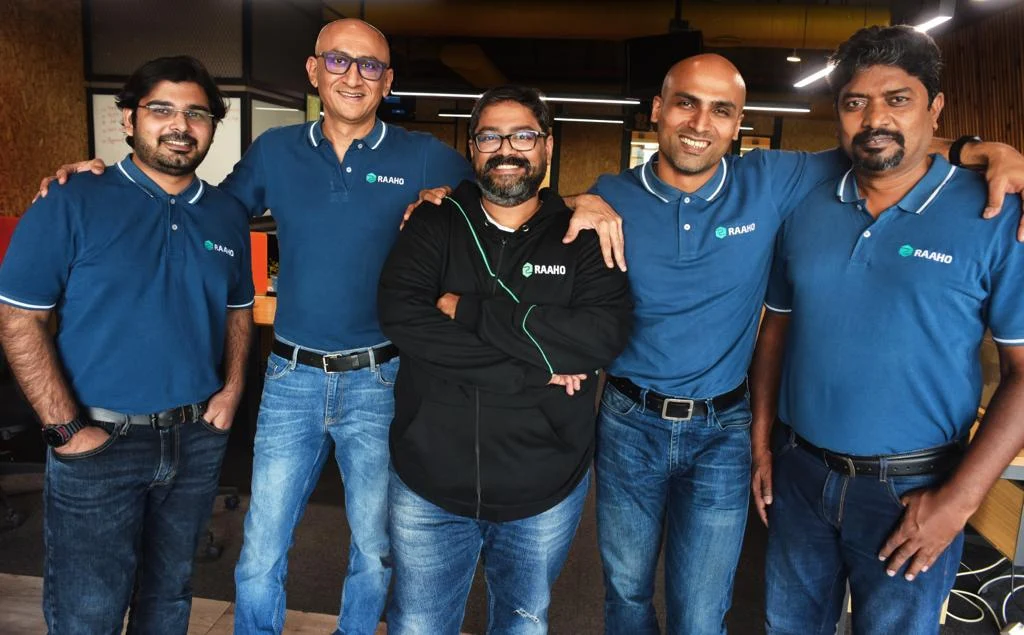
Raaho, India’s leading Digital Freight Network, has secured funding worth INR 20 crore in extension to the Pre-Series A round at a valuation of 4X over the last year. The round was led by Inflection Point Ventures (IPV), Roots Ventures, Blume Founders Fund and prominent Angels like Vijay Shekhar Sharma , Kunal Shah, K Krishna Kumar, Venkatesh Vijayaraghavan , Aseem Khurana amongst others. The fresh capital infused will be used to increase Raaho’s geographical presence across the country and strengthen its Data Science and ML capabilities to automate Freight matching.

Imthiaz, Co-Founder & CEO, Raaho, said, “We are delighted to continue our mission of making lives better for Truckers and Drivers of India. With this fund raise , we plan to expand our reach to more geographies in India, while also strengthening our data science and machine learning capabilities to enhance our freight matching efficiency. At Raaho, we're committed to building a better tomorrow for all."

Vinay Bansal , Founder & CEO, IPV said "We are thrilled to continue our investment in Raaho, as we see enormous potential for growth in the largely untapped market of digitized trucking. The Raaho team has shown exceptional dedication in building a sustainable business model with strong fundamentals, and we are excited to be a part of their journey towards success."

Vijay Shekhar Sharma, "I've known Imthiaz for over 15 years, and I'm excited to personally invest in Raaho’s mission to enhance the well-being of truckers and drivers. As we see more industries impacted by digitisation, the potential to improve the efficiency of the trucking market is immense and I look forward to this ride with Raaho"

The Gurgaon-based company has operations across 15+ cities in India with presence in major cities like NCR, Chennai, Bengaluru, Coimbatore, Mumbai, Hyderabad, Kolkata, Pune, Ahmedabad , Kanpur, Karnal and more. With the fresh funds, the startup aims to expand their network further and build efficiency in the trucking space to reduce empty miles.

About Raaho:

Established in 2017 and founded by Imthiaz (Co-founder and CEO) along with his colleagues Muralidharan C. (Technology), Vipul Sharma (Product), Fahad (Operations) and Joshua Jebakumar (HR & Customer Experience), RAAHO is India’s most reliable and fastest growing marketplace connecting shippers and truckers nationwide. Headquartered in Gurgaon, it has marked its presence across India in 15+ cities including NCR, Chennai, Bengaluru, Coimbatore, Mumbai, Hyderabad, Kolkata, Pune, Ahmedabad , Kanpur, Karnal and more. Raaho is successfully combining tech and data science to create operational and cost efficiencies for the Indian trucking industry that is traditionally unorganised, opaque and highly complex to navigate. Raaho offers its on-demand trucking solution through its complete suite of apps (Shipper App, Trucker App, and Driver App) to offer closeby discovery, verified vehicles, credible shippers, real-time tracking of freight-loaded vehicles and instant digital payments. Asset-light and capital-efficient Raaho aims to level-up the current freight marketplace with better processes, consistency and transparency.

Kuehne+Nagel Named Best Freight Forwarder By Ministry of Commerce and Industry

Hosted by the Ministry of Commerce and Industry, Government of India, the first ever National Logistics Excellence Awards recognise the contributions of the private sector

Kuehne+Nagel won amidst 169 submissions across 12 categories from logistics companies in India

Kuehne+Nagel, the leading global logistics service provider, was named Best Freight Forwarder at India's first National Logistics Excellence Award, held in New Delhi by the Ministry of Commerce & Industry, Government of India.

The awards are intended to spotlight the change-makers driving innovation and transformation in the logistics sector in the country. The Ministry of Commerce and Industries undertook a year-long process of identifying, categorizing, and selecting qualified applications from 169 entries in 12 award categories.

Mr. Piyush Goyal, Union Minister for Commerce & Industry, Consumer Affairs, Food and Public Distribution and Textiles, presented the award while commending the logistics industry's efforts during the Covid-19 outbreak by developing resilient and efficient supply chains, overcoming the challenges of the pandemic and supporting trade growth as seen over the last two years. Kuehne+Nagel won the award amidst stiff competition from logistics companies in India.

Mr. Coen van der Maarel, Managing Director – India, Sri Lanka and Maldives at Kuehne+Nagel, comments: “We are very pleased to have won the accolade. Among the pandemic's vulnerabilities and challenges, the award is a huge recognition and encouragement for our team and a testament to all of our efforts to deliver consistent, reliable and timely services to our valued customers.”

Kuehne+Nagel provides integrated logistics solutions across sea logistics, air logistics, road logistics, and contract logistics from a team of highly experienced professionals.

About Kuehne+Nagel

With over 78,000 employees at almost 1,300 sites in over 100 countries, the Kuehne+Nagel Group is one of the world’s leading logistics providers. It operates in sea logistics, air logistics, road logistics and contract logistics, with a clear focus on integrated logistics solutions.

Freightify, The Shopify For Maritime Freight, Raises $2.5 Mn in Pre-series A Funding Led By Nordic Eye Venture Capital


Freightify, the ocean rate management platform bringing advanced e-booking functionality to freight companies of all sizes, today announced it has secured $2.5mn in Pre-Series A funding led by Nordic Eye Venture Capital with the participation of Tradeworks VC, Venture Catalysts, 9Unicorns, and Blume Founders Fund. Existing Investor Mr. Vinod Kumar Talreja also participated in the round.

Freightify features a suite of pricing and sales tools for the ocean freight industry and already serves customers in over 10 countries. The firm will use the proceeds to invest in expansion into the US and Europe. The company also plans to invest in its product ecosystem covering other stakeholders of the container supply chain.

Freightify’s platform handles more than $400mn in freight revenue for customers and a corresponding GMV of $2 billion while the SaaS model can scale as the customers grow.

“Exciting to follow a dynamic and ambitious organization that has great chances of making a huge digital impact in International freight forwarding. We encourage the global outlook and is impressed about the common vision for the company” said Nordic Eye’s Investment Manager Ib Drachmann

“We invest in ‘Digital Trade Enablers’ that drive trade through innovation, by solving important problems in Logistics and eCommerce. One of these important problems is the lack of structured commercial data that can be used across the freight forwarding value chain, from freight rate procurement, standardisation, automation & quotation, to e-bookings and visibility” said Niklas Holck, CEO at Tradeworks.vc

“We founded Freightify with the belief that the future of technology in freight forwarding should be democratised and made available for everyone.” Said Raghavendran Viswanathan, CEO and Co-founder, Freightify. “The current capital expansion from the right partners cements this belief and helps us add value to the maritime industry across the world.”

Freightify makes it simple for small and mid-size freight forwarders with little to no technology expertise to set up an online own branded storefront. This store is powered by data from various sources including live prices from ocean carriers like Maersk, CMA CGM, Evergreen, etc. At the same time, offline contract rates from other carriers are automated in real-time for easy comparison. Further, this can be easily integrated with the freight forwarders’ TMS systems for operations and fulfilment.

About Freightify:

Freightify (formerly FreightBro), enables freight forwarders of any size for the digitization of global trade. The brand empowers freight forwarders by providing white labelled rate automation solutions to digitize their rate procurement, rate management, and quotation processes with ease. Freightify is backed by marquee accelerators like the Betatron Group, JioGenNext, and Alchemist Accelerator.
For more information visit: https://www.freightify.com/about-us

Market Reports

Market Report & Surveys
IndianWeb2.com © all rights reserved