‏إظهار الرسائل ذات التسميات Maruti Suzuki. إظهار كافة الرسائل

India’s Emission Rules Spark Automaker Rift

India’s Emission Rules Spark Automaker Rift

India’s draft Corporate Average Fuel Efficiency (CAFE-III) norms have ignited a sharp divide among automakers. While the new rules aim to tighten fuel efficiency and CO₂ targets for passenger vehicles, a proposed concession for small cars has triggered controversy — with Hyundai, Tata Motors, Mahindra & Mahindra, and JSW MG Motor urging the government to scrap it.

The Concession at the Heart of the Debate

Under the draft, vehicles under 909 kg, shorter than 4 meters, and with engines below 1,200cc would face lenient emission requirements. Industry data suggests this clause would disproportionately benefit Maruti Suzuki, India’s largest small-car manufacturer.

  • Critics’ view: The concession risks tilting the market toward petrol cars, undermining India’s push for electrification.
  • Maruti’s defense: The company argues small cars naturally consume less fuel and emit less CO₂, and notes that similar provisions exist in Europe, the U.S., China, Korea, and Japan.

Automakers’ Positions at a Glance

Automaker Position Key Arguments Strategic Implication
Hyundai Opposes Concessions unfairly benefit Maruti Suzuki; undermines EV transition Wants stricter, uniform rules to support EV investments
Tata Motors Opposes Small-car leniency distorts competition; hurts companies investing in EVs Protects its EV leadership in India
Mahindra Opposes Rules tilt market toward petrol cars; slows electrification Seeks level playing field for larger SUVs and EVs
MG Motor (JSW MG) Opposes Concessions weaken India’s climate credibility; unfair advantage to Maruti Aligns with global EV positioning
Maruti Suzuki Supports Small cars naturally emit less; similar concessions exist globally Protects dominance in affordable petrol cars; delays EV pressure

Broader Implications

  • Policy tension: India must balance affordability (small cars for mass consumers) with climate goals (EV adoption).
  • Industry split: EV-focused automakers vs. small-car champion Maruti Suzuki.
  • Global optics: Concessions could weaken India’s credibility in climate negotiations, especially as it positions itself as an EV hub.

Editorial Takeaway: The clash over CAFE-III norms is more than a technical dispute — it’s a battle for India’s automotive future. Policymakers now face a critical choice: protect affordability or accelerate electrification. The outcome will shape not just the auto industry, but India’s climate credibility on the global stage.

Maruti Suzuki Rides the Rails: 1 in 4 Cars Dispatched by Indian Railways in FY 24-25

Maruti Suzuki Rides the Rails: 1 in 4 Cars Dispatched by Indian Railways in FY 24-25

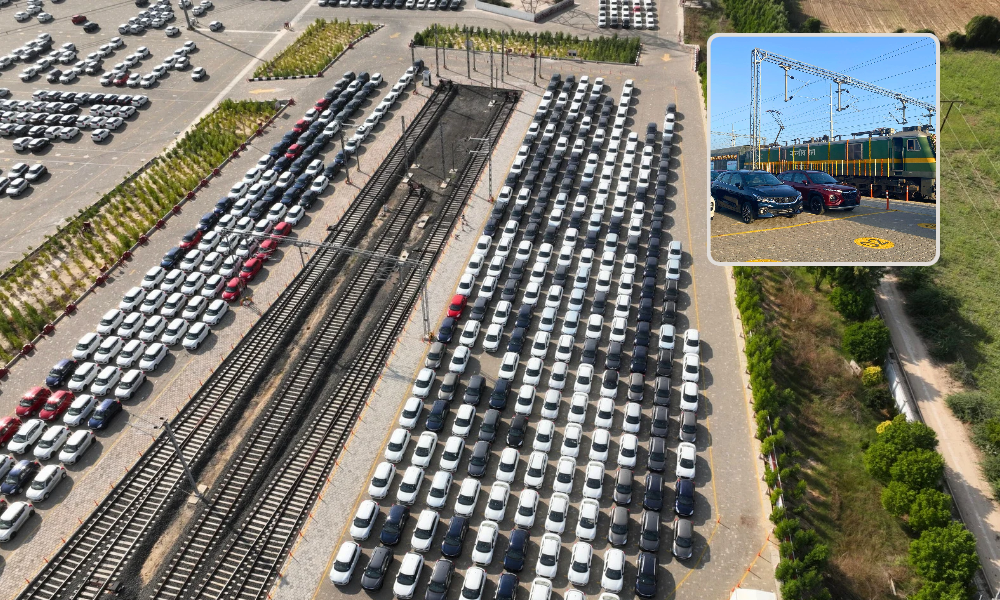
Maruti Suzuki dispatched 5.18 lakh vehicles through Indian Railways in FY 2024-25, marking its highest-ever rail dispatches. This accounts for about one-fourth of the company's total vehicle dispatches for the fiscal year.

The automaker has been steadily increasing its reliance on rail transport, citing environmental benefits such as avoiding over 1.8 lakh tonnes of CO₂ emissions and saving more than 630 lakh liters of fuel. Since FY 2014-15, Maruti Suzuki has cumulatively dispatched around 24 lakh vehicles via rail.

Looking ahead, the company aims to increase the share of vehicle dispatches through railways to 35% by FY 2030-31. This shift aligns with its broader sustainability goals and efforts to reduce carbon emissions in logistics.
 
Maruti Suzuki Rides the Rails: 1 in 4 Cars Dispatched by Indian Railways in FY 24-25

Rail transport produces significantly less CO₂ per ton-kilometer compared to road transport. In Europe, rail accounts for only 0.6% of diesel emissions and less than 2% of total transport emissions, making it one of the cleanest freight options.

Speaking on the milestone, Mr. Hisashi Takeuchi, MD & CEO, Maruti Suzuki India Limited said, “Reducing carbon emissions is a top priority for us, both in our products and in our operations. Maruti Suzuki was the first company in India to obtain an Automobile-Freight-Train-Operator license, in 2013. Since then, we have dispatched nearly 24 lakh vehicles through rail mode. By FY 2030-31, we plan to increase the share of vehicle dispatches through railways to 35%.

Notably, trains can move large volumes of goods with far less energy consumption than trucks. Electrified rail systems further reduce reliance on fossil fuels.

Since FY 2014-15, Maruti Suzuki vehicle dispatches through railways have grown by nearly 8 times. In 2024, the Hon’ble Prime Minister of India, Shri Narendra Modi inaugurated India’s first automobile in-plant railway siding at the Gujarat manufacturing facility of the Company. Currently, Maruti Suzuki operates over 40 flexi deck rakes, each with a capacity of carrying around 300 vehicles per trip.

It's an interesting move in India's automotive supply chain that gradually shifting toward rail-based logistics. 

Maruti Suzuki and JETRO Collab to Facilitate Business Opportunities for Startups from India & Japan

Maruti Suzuki and JETRO Collab to Facilitate Business Opportunities for Startups from India & Japan

Maruti Suzuki has signed a Memorandum of Understanding (MoU) with the Japan External Trade Organization (JETRO) to foster innovation and create business opportunities for startups in India and Japan. This collaboration aims to provide Indian startups access to Japan’s innovation ecosystem while enabling Japanese startups to explore opportunities in India.

Startups selected through Maruti Suzuki’s four innovation programs—Accelerator, Incubation, Mobility Challenge, and Nurture—will be eligible to participate in networking events and activities facilitated by this partnership. The initiative aligns with India's Make in India and Startup India programs, reinforcing cross-border innovation.

Hisashi Takeuchi, MD & CEO of Maruti Suzuki, emphasized that startups are key drivers of innovation and economic growth, and this MoU will help promising Indian startups explore the Japanese business landscape. Meanwhile, Takashi Suzuki, Chief Director General of JETRO India, highlighted that Maruti Suzuki exemplifies the successful partnership between India and Japan, and this collaboration will further strengthen business ties.

Maruti Suzuki and JETRO Collab to Facilitate Business Opportunities for Startups from India & Japan

This partnership could be particularly interesting given industry trends and strategic analysis.

Startups chosen through Maruti Suzuki’s four innovation programs:
  1. Accelerator,
  2. Incubation,
  3. Mobility Challenge and
  4. Nurture, will be eligible to participate in these events. 
Startups from Japan can explore the Indian startup ecosystem by participating through JETRO.

Mr. Hisashi Takeuchi, Managing Director & CEO, Maruti Suzuki India Limited, said, “Startups are key drivers of innovation and economic growth. Through our multi-format innovation programs, we have been engaging with startups in India to co-create technology-driven solutions relevant to the automobile manufacturing and mobility space. We see great potential in Indian startups, and with this MoU with JETRO, we will be able to provide a platform for these promising startups to explore the Japanese business landscape.”

Mr. Takashi Suzuki, Chief Director General, JETRO India said, “Maruti Suzuki stands as one of the finest examples of the successful partnership between India and Japan. With this MoU, we are creating opportunities for even more fruitful business collaborations between our two nations. This MoU aims to foster innovation, drive economic growth, and further strengthen the deep-rooted ties between India and Japan.”

Maruti Suzuki’s Innovation Programs:

The Company, through the Maruti Suzuki Innovation programs, is proud to partner with the Government of India’s Startup India initiative. To spur innovation in the automotive space, the Company has built multiple programs - 1) Accelerator, 2) Incubation, 3) Mobility Challenge and 4) Nurture - that provide the right direction and support to startups in developing innovative solutions that help solve business and societal problems. In the journey of 6 years, over 5,000 startups have been screened, 150 startups were engaged and 25 of these startups have been onboarded as partners delivering value to our business.

About JETRO:

JETRO, or the Japan External Trade Organization, is a government-related organization that works to promote mutual trade and investment between Japan and the rest of the world. Originally established in 1958 to promote Japanese exports abroad, JETRO's core focus in the 21st century has shifted toward promoting foreign direct investment into Japan and helping small to medium size Japanese firms maximize their global export potential.

Maruti Suzuki is Now Exporting Its Made-In-india SUV Fronx to Japan

Maruti Suzuki is Now Exporting Its Made-In-india SUV Fronx to Japan

Maruti Suzuki has started exporting its award-winning SUV, the Fronx,— which is its ‘Made-in-India’ SUV— to Japan. This marks the first time Maruti Suzuki is launching an SUV in the Japanese market, highlighting the success of the 'Make in India' initiative. The Fronx is exclusively manufactured at Maruti Suzuki’s advanced facility in Gujarat.

The award-winning Fronx is the second model from Maruti Suzuki to be exported to Japan, after Baleno in 2016. Fronx is planned to be launched in Japan by Suzuki Motor Corporation, Maruti Suzuki’s parent company, in the autumn of 2024. The historic milestone symbolizes the growing strength and global reach of the Indian manufacturing industry.

The first consignment of over 1,600 vehicles has already been shipped from Gujarat’s Pipavav port. This move not only showcases Maruti Suzuki's manufacturing capabilities but also underscores India's growing strength in the global automotive industry.


The Maruti Suzuki Fronx is a subcompact crossover SUV that has gained significant attention since its launch.

Unveiled globally at the Auto Expo 2023, Fronx was launched in India on 24th April 2023. Fronx stands out with its modern SUV design, spirited performance, and tech-loaded premium persona. The SUV has caught the fancy of Indian consumers and became the first model in the country to clock the fastest 1 lakh sales within 10 months from launch. In July 2023, the company commenced export of Fronx to destinations like Latin America, Middle East, and Africa. Cumulatively since launch, Fronx has recorded total sales of over 2 lakh units in domestic and export markets.

Maruti Suzuki exports vehicles to nearly 100 countries. Some of the key markets include South Africa, Saudi Arabia, Chile, Mexico, Philippines, Indonesia, and Ivory Coast, among others. 

These exports highlight Maruti Suzuki's strong global presence and its commitment to the 'Make in India' initiative.

Maruti Suzuki India's Accelerator Program Now Open for Global Startups as Well

Maruti Suzuki India's Accelerator Program Now Open for Global Startups as Well

Maruti Suzuki India Limited has opened applications for the 9th Cohort of its Maruti Suzuki Accelerator program, which now includes global startups. This initiative aims to create an enabling ecosystem for startups with technology-driven innovations in the automobile manufacturing and mobility space. Here are the key benefits for startups:

1. Guidance from Mentors: Startups receive guidance from mentors associated with domestic and international startup ecosystems, as well as domain experts from Maruti Suzuki.

2. Paid Proof of Concept: Qualified startups have the opportunity to conduct a Paid Proof of Concept with Maruti Suzuki.

3. Educational Visits to Japan: Participants can engage in educational visits to Japan, fostering global market connections.

4. Funding: Startups may secure funding through the Maruti Suzuki Innovation Fund.

Since its inception, the program has screened over 2,000 startups across 8 cohorts, engaging with 56 startups. Notably, 18 of these startups have become business partners, generating a combined business of over INR 1 billion. Starting with Cohort 9, the program has been rebranded as the Maruti Suzuki Accelerator, emphasizing its commitment to innovation and growth. Interested startups can apply [here].

In the previous cohorts of the Maruti Suzuki Accelerator program, several startups have made significant strides. Here are some notable success stories:
  1. Woloo: Woloo emerged as one of the winners in the program. Their innovative solutions likely address specific challenges within Maruti Suzuki's business verticals. 
  2. Hala Mobility: Hala Mobility, another winning startup, showcased promising technology relevant to the automobile manufacturing and mobility space.
  3. SwitchON: SwitchON, the third winner, impressed with their solutions. Their contributions may enhance customer convenience or improve business processes for Maruti Suzuki.
Maruti Suzuki has engaged with a total of 56 startups across eight cohorts. Out of these, 18 startups have become business partners, collectively generating over INR 1 billion in business. These success stories demonstrate the program's commitment to fostering innovation and driving technological advancements in the automotive industry.

Maruti Suzuki Adds New Assembly Line at Its Manesar Plant To Manufacture Additional 1 Lakh Units

Maruti Suzuki India Limited, India’s leading passenger vehicle manufacturer commissioned another vehicle assembly line at its Manesar facility today. This assembly line has been added to the existing Plant-A of the 3 manufacturing plants at Manesar. The new vehicle assembly line has the capability to manufacture 100,000 units per annum. With this additional assembly line, the total manufacturing capability at Manesar stands at 900,000 vehicles per annum.

Maruti Suzuki Adds New Assembly Line at Its Manesar Plant To Manufacture Additional 1 Lakh Units
The first Ertiga rolled out at the new vehicle assembly line at Manesar plant. This new line enhances existing capability at plant by an additional 100,000 units per annum.


Cumulatively, the Manesar facility has contributed over 95 lakh units in Maruti Suzuki’s 3 Crore production milestone. Several best-selling vehicles like Brezza, Ertiga, XL6, Wagon R, Dzire, S-Presso, Ciaz and Celerio are manufactured at this facility.

Speaking at the commissioning of the new assembly line, Mr. Hisashi Takeuchi, Managing Director & CEO, Maruti Suzuki India Limited said, “Maruti Suzuki is deeply committed to Government of India’s vision of `Make in India’. We aim to nearly double our capacity to 4 million vehicles per annum over the next 7-8 years and this capacity addition of 100,000 vehicles per year is a step towards this goal. It will help us serve our customers faster and enhance our overall capability to manufacture up to 23.5 lakh units per annum.”

Mr. Takeuchi added, “This new assembly line adopts technologies that enhance human ergonomics, improve productivity and enhance traceability.”

Maruti Suzuki Manesar facility was inaugurated in February 2007 with the start of Plant A. As customer demand increased, the Company added Plant-B in 2011 and Plant-C in 2013.

Maruti Suzuki Invest Over INR 1.99 Cr in Amlgo Labs, An ML & AI-based Startup

Maruti Suzuki Invest Over INR 1.99 Cr in Amlgo Labs, An ML & AI-based Startup

Maruti Suzuki India Limited has recently made a significant investment in Amlgo Labs Private Limited. The investment amounts to over INR 1.99 crore, which will give Maruti Suzuki an equity stake of over 6.44% in the startup.

The investment is aligned with the Government's #StartUpIndia initiative and represents Maruti Suzuki's active role in strengthening the startup ecosystem and encouraging innovation relevant to the automobile industry.

Amlgo Labs specializes in data analytics, cloud engineering, Machine Learning (ML), and Artificial Intelligence (AI), providing data-driven decision-making assistance to companies. This investment is part of Maruti Suzuki's Innovation Fund, aimed at strategic investments in technologically innovative startups. It's also noteworthy that this is not Maruti Suzuki's first foray into the startup space, as they previously invested in Sociograph Solutions Private Limited in June 2022.

Maruti Suzuki India Limited has shown a keen interest in the startup ecosystem, particularly in technology-driven companies. Apart from the recent investment in Amlgo Labs Private Limited, Maruti Suzuki has previously invested in Sociograph Solutions Private Limited, in June 2022, and marked the company's entry into supporting startups with innovative mobility solutions.

These investments are part of Maruti Suzuki's Innovation Fund, which aims to back startups exhibiting high levels of technological innovation. The focus is on startups that can contribute to the automobile industry with advancements in areas like data analytics, artificial intelligence (AI), machine learning (ML), and cloud engineering.

Maruti Suzuki has been actively participating in the startup ecosystem, particularly in the mobility and technology sectors. They have established the Maruti Suzuki Innovation Platform, which is designed to support startups by offering benefits like faster go-to-market strategies, refining offerings with Maruti Suzuki's test bed, winning paid proof of concept opportunities, and attracting compelling investments.

Moreover, Maruti Suzuki has collaborated with IIM Calcutta Innovation Park (IIMCIP) to strengthen the startup ecosystem, particularly focusing on eastern India. They have also engaged with multiple startups under their MAIL initiative, which is an accelerator program launched in January 2019 to co-create innovative business solutions in the mobility space.

PM Modi Inaugurates India's 1st Automobile In-Plant Railway Siding at Suzuki Motor Gujarat

PM Modi Inaugurates India's 1st Automobile In-Plant Railway Siding at Suzuki Motor Gujarat
  • This initiative is a part of Prime Minister’s flagship Gati Shakti programme
  • Aligned with India’s carbon net zero emissions target
  • Significant initiative to cut down fossil fuel consumption and reduce congestion on roads
Honourable Prime Minister Shri Narendra Modi inaugurated India's first automobile in-plant railway siding at Suzuki Motor Gujarat Private Limited, a wholly-owned subsidiary of Maruti Suzuki India Limited (MSIL) via video conferencing today. As part of Prime Minister’s flagship Gati Shakti programme, this in-plant railway siding aims to reduce carbon footprint in logistics, bring down fossil fuel consumption, and reduce road congestion.

Once fully operational, the Gujarat railway siding facility can dispatch 300,000 cars annually to 15 destinations across India.

PM Modi Inaugurates India's 1st Automobile In-Plant Railway Siding at Suzuki Motor Gujarat


PM Modi Inaugurates India's 1st Automobile In-Plant Railway Siding at Suzuki Motor Gujarat

The project is a collaboration between Gujarat Rail Infrastructure Development (G-RIDE), a Government of Gujarat and Indian Railways partnership along with Gujarat Industrial Development Corporation (GIDC), and MSIL.

"Dedicating the project to green logistics, Mr. Hisashi Takeuchi, Managing Director & CEO, Maruti Suzuki India Limited said, “We are honoured to be part of the Prime Minister’s ambitious Gati Shakti programme that fosters efficiencies in logistics. Today marks a significant milestone as we become India’s first automobile company to have a railway siding facility within its manufacturing plant.”

Mr. Takeuchi added, “As we gear to double our production capacity from present 2 million units per annum to 4 million units per annum by 2030-31, the dispatches of vehicles from railways too will increase multifold. This in-plant railway facility reinforces our commitment towards sustainable mobility.”

PM Modi Inaugurates India's 1st Automobile In-Plant Railway Siding at Suzuki Motor Gujarat


Maruti Suzuki To Build New Automobile Production Plant in Gujarat, To Invest Over ₹380 Bn

Maruti Suzuki To Build New Automobile Production Plant in Gujarat, To Invest Over ₹380 Bn

Maruti Suzuki plans more investments in Gujarat with a New Greenfield Plant and a fourth line in SMG

In the Vibrant Gujarat Global Summit 2024, currently being held under the auspices of the Honourable Prime Minister, Shri Narendra Modi, the President of Suzuki Motor Corporation (SMC), Mr Toshihiro Suzuki today announced two major investments in the state of Gujarat.

In the first one, Maruti Suzuki India Ltd has reached an non-binding understanding with the State of Gujarat for construction of a new automobile production plant. This new plant in Gujarat is aimed to start operation in FY2028-29. In the future, the annual production capacity is expected to become 1 million units with total investment amount of 350 billion rupees (excluding land acquisition cost). The details of location and the models to be produced will be shared in due course.

Maruti Suzuki also announced the establishment of a fourth production line in its wholly owned subsidiary Suzuki Motor Gujarat Private Limited ("SMG") by investing 32 billion rupees, in view of increasing production of electric vehicles in the future. The fourth line is expected to start operation from FY2026-27. With the completion of the fourth line, annual production capacity of SMG will increase from the current 750,000 units to 1 million units. Combined with the new plant in Gujarat, the total annual production capacity in the State of Gujarat will be 2 million units.

Outline of new investments

Maruti Suzuki To Build New Automobile Production Plant in Gujarat, To Invest Over ₹380 Bn

Maruti Suzuki plans to secure a production capacity of approximately 4 million units in India by FY2030-31 to prepare for future expansion of automobile market in India. The new plant in Kharkhoda, Haryana which is planned to start operation in 2025, the new plant in Gujarat and the fourth production line of SMG will help achieve the milestone of 4 million.

Speaking at the Vibrant Gujarat Global Summit, Mr Toshihiro Suzuki, said, “In this ever-growing country, we will provide a variety of sustainable mobility options by focusing on Indian customers.”

Maruti Suzuki To Set Up 4th Japan-India Institute for Manufacturing (JIM) at Rohtak, Haryana

  • Maruti Suzuki to set up its 4th Japan-India Institute for
  • Manufacturing (JIM)
  • Company’s JIM in Kansala, Rohtak to train over 200 youth annually.
  • Five specialized automotive trade courses offered.
Maruti Suzuki India Limited (MSIL) signed a Memorandum of Agreement (MoA) with the Government of Haryana to set up 2nd Japan-India Institute for Manufacturing (JIM), in Haryana, at Kansala, in Rohtak. Spread over 5 acres, the existing ITI Kansala will be upgraded to a JIM with an investment of Rs. 5.8 crore as a CSR activity of the company.

Maruti Suzuki To Set Up 4th Japan-India Institute for Manufacturing (JIM) at Rohtak, Haryana

The MoA was signed by Dr. Vivek Aggarwal, Director General, Skill Development & Industrial Training, Government of Haryana and Mr. Rahul Bharti, Executive Director, Corporate Affairs, Maruti Suzuki India Limited.

On this occasion, Mr. Rahul Bharti, Executive Director, Corporate Affairs, Maruti Suzuki India Limited, said, “ The Indian passenger vehicle industry is now world’s third largest and growing. It is our responsibility to prepare human capacity corresponding to manufacturing capacity to meet this growth. Skilling our youth with industry ready skills will help us realize the vision of an Atmanirbhar Bharat. We are glad to partner with the Haryana Government and share the common vision of training and skilling the youth so that they can contribute towards the growth of Haryana.”

Mr. Bharti added: “We have been operating Japan-India Institutes for Manufacturing (JIMs) since 2017. The key feature of the JIM is that the equipment on which the students are trained is almost similar to that in a modern production factory. In addition there is a focus on safety, quality, discipline, punctuality, Kaizen, and other Japanese shop floor practices along with the core curriculum prescribed by the National Council for Vocational Training(NCVT). That helps better employability.”

Located about 16 kms from the upcoming automobile hub Kharkhoda, JIM Kansala will offer extensive career opportunities to the students trained at the ITI.

The government of Haryana has provided the land and building for the JIM, Kansala. Maruti Suzuki will provide equipment, training modules, trained teachers, and will manage this institute for 15 years.

About Japan-India Institute for Manufacturing (JIM)

Japan-India Institute for Manufacturing (JIM) is born out of a collaboration between the Governments of Japan and India to create a pool of skilled workforce for manufacturing in India. It follows from a Memorandum of Cooperation (MoC) signed in 2016 between the Ministry of Economy, Trade and Industry, Government of Japan (METI) and Ministry of Skill Development and Entrepreneurship, Government of India (MSDE), for a “Manufacturing Skill Transfer Promotion Programme” to train 30,000 youths in India over 10 years.

Committed to effectively contributing to Skill Development in India, Maruti Suzuki additionally supports around 50 government ITIs across the country to impart industry-relevant skills to youth and make them employable.

Maruti Suzuki Inks MoU with UP Govt To Automate Driving License Test Tracks Using Video Analytics, RFID Tags

Maruti Suzuki Inks MoU with UP Govt To Automate Driving License Test Tracks Using Video Analytics, RFID Tags

Under the aegis of Hon’ble Chief Minister of Uttar Pradesh, Shri Yogi Adityanath, Maruti Suzuki signs Memorandum of Agreement with Transport Department, Government of Uttar Pradesh to automate driving license test tracks

Ayodhya, Gorakhpur, Mathura, Prayagraj and Varanasi to benefit from the initiative

Initiative at existing Driver Training and Testing Institutes is to make driving testing process comprehensive, efficient, and transparent.

The DTTIs will be equipped with scientifically laid test tracks, high-definition cameras, and an integrated IT system for accurate testing of driving skills. The driving license aspirants will be assessed at these advanced facilities. With a strong focus on encouraging safe driving, only aspirants with proficient driving skills will be able to secure a driving license. Under the MoA, driving license test tracks for Heavy Motor Vehicles (HMV), Light Motor Vehicles (LMV) and 2-wheelers will be automated by Maruti Suzuki.

Shri Chandra Bhushan Singh (IAS), Transport Commissioner, Government of Uttar Pradesh said, “We are extremely delighted to partner with Maruti Suzuki in making the issuance of driving license more scientific and transparent. Under the MoA, test tracks at Driver Training and Testing Institutes (DTTIs) at Ayodhya, Gorakhpur, Mathura, Prayagraj and Varanasi will be automated. This will make our roads safer, help bring down road accidents and save lives.”

Automation at DTTIs:
  • Use video analytics technology, leading to complete automation of the testing process
  • Camera set-up on the track, and RFID tags used to monitor aspirants
  • Automation ensures the testing is comprehensive, transparent, fool-proof, and efficient
  • Eliminates chances of human discretion in testing
Mr. Rahul Bharti, Executive Officer, Corporate Affairs, Maruti Suzuki India Limited, who also attended the signing ceremony, said, “We are excited to partner with Government of Uttar Pradesh under the vibrant leadership of Hon’ble Chief Minister Shri Yogi Adityanath, to strengthen driving testing system in the state by deploying state-of-the-art technology. For over two decades, Maruti Suzuki has been working tirelessly towards 5Es of road safety (Engineering, Education, Evaluation, Enforcement and Emergency care) and have trained over 44 lakh people in safe driving training through our 8 Institutes of Driving and Traffic Research across India.”

He added, “The automation of driving license test tracks at DTTIs is an important reform in license issuance system as it ensures zero human intervention in testing. Driver license aspirants are comprehensively assessed in an objective and transparent manner with video analytics all within ten minutes, thus ensuring that only those with requisite skills are issued a driving license. We thank Government of Uttar Pradesh for this opportunity to collaborate towards safe and responsible driving.”

As part of the project, Maruti Suzuki will undertake automation of the driving license test track using requisite technology in line with the Central Motor Vehicles Rules (CMVR) to accurately evaluate essential driving skills of the aspirants. The Government of Uttar Pradesh will be responsible for the civil work & operation of the center for issuance of the driving licenses to eligible aspirants.

Maruti Suzuki’s efforts in Road Safety:

Maruti Suzuki identifies Road Safety as a key area of intervention for its CSR efforts, under which the Company has undertaken multiple initiatives. In partnership with the Transport Departments of Delhi, Uttarakhand, Bihar & Haryana, the Company has set up Automated Driving Test Tracks (ADTTs), of which the Company has facilitated 100% computerized driving license testing across all centers in Delhi.

Maruti Suzuki has set up Institutes of Driving & Traffic Research (IDTRs) and Road Safety Knowledge Centers (RSKCs), where over 44 lakh drivers have been trained & evaluated since 1999. The Company has also partnered with the Delhi Government to implement Traffic Safety Management System (TSMS) where high-resolution cameras and radar systems have been placed at 13 junctions in the city, through which traffic violations have been identified, and more than 33 lakh challans have been issued between 2019 and March 2022.

Saving Money on Car Insurance: Tips and Tricks for Maruti Suzuki Drivers

Saving Money on Car Insurance: Tips and Tricks for Maruti Suzuki Drivers

Owning a Maruti Suzuki car in India offers a sense of practicality, reliability, and affordability. However, one aspect of car ownership that many Maruti Suzuki drivers may find less cost-effective is car insurance. While insurance is essential for protecting your vehicle and complying with legal requirements, it can sometimes strain your budget. In this article, we'll explore various tips and tricks for Maruti Suzuki drivers to save money on their car insurance without compromising on coverage. Whether you drive a Maruti Suzuki Alto, Swift, or any other model, these strategies can help you reduce your car insurance price.

Understanding Maruti Suzuki Insurance

Maruti Suzuki, one of India's most popular car manufacturers, offers a wide range of vehicles, from compact hatchbacks to SUVs. When it comes to insuring your Maruti Suzuki car, you have two primary options:

1. Third-Party Insurance: This is the minimum insurance required by law in India. It covers damages to third parties, including property damage and bodily injuries, caused by your Maruti Suzuki vehicle. While it fulfills legal obligations, it does not cover damages to your own car.

2. Comprehensive Insurance: A comprehensive car insurance policy offers more extensive coverage. It includes third-party liability coverage as well as protection for your own vehicle in case of accidents, theft, natural disasters, and other unforeseen events. Comprehensive insurance provides comprehensive protection and is highly recommended for Maruti Suzuki drivers.

Tips and Tricks for Saving Money on Maruti Suzuki Car Insurance

1. Compare Quotes: When it comes to saving money on car insurance, one of the most effective strategies is to compare quotes from multiple insurance providers. Different insurers offer varying premiums and coverage options, so it's essential to shop around and find the best deal. Online comparison tools can help simplify this process.

2. Choose the Right Coverage: Ensure that you select the coverage that matches your needs and your Maruti Suzuki's value. Opting for excessive coverage can lead to higher premiums. By customizing your policy to your vehicle and requirements, you can save money.

3. Maintain a Clean Driving Record: Safe and responsible driving is not only crucial for your well-being but also for your car insurance costs. A clean driving record with no accidents or traffic violations can lead to lower premiums and savings over time.

4. Increase Your Deductible: Your deductible is the amount you pay before your insurance coverage kicks in. Choosing a higher deductible can lower your premium. However, make sure you can comfortably cover the deductible in case of an accident.

5. Install Safety Features: Enhance the security and safety of your Maruti Suzuki by installing anti-theft devices, airbags, and other safety features. Many insurance companies offer discounts for vehicles with additional safety measures.

6. Bundle Policies: If you have other insurance policies, such as home or health insurance, consider bundling them with your car insurance from the same provider. Many insurers offer discounts for multiple policies, which can result in cost savings.

7. Maintain a Good Credit Score: Insurance companies often use credit scores to assess the risk of policyholders. A higher credit score can lead to lower premiums. Therefore, maintaining a good credit score is essential for saving money on your car insurance.

8. Drive Less: If you have the flexibility to reduce your annual mileage, it can result in lower car insurance premiums. Fewer miles driven generally equate to a lower risk of accidents and claims.

9. No Claim Bonus (NCB): The No Claim Bonus (NCB) is a discount on the premium that policyholders receive for not filing any claims during the policy period. NCB can lead to substantial cost savings over time, making it a valuable consideration when choosing your insurance provider.

10. Regularly Review and Renew: Periodically review your car insurance policy to ensure that it still meets your requirements. Adjust your coverage and add-ons as necessary. Additionally, renew your policy on time to avoid a lapse in coverage, which may result in the loss of No Claim Bonus.

11. Opt for a Voluntary Excess: Some insurers offer an option to choose a voluntary excess in addition to the compulsory excess. This means you agree to pay a higher amount in the event of a claim, which can result in lower premiums.

12. Drive Safely and Responsibly: Adopting safe and responsible driving practices can lead to fewer accidents and claims. Being cautious on the road can help you maintain a clean driving record and lower insurance costs.

13. Avail of Online Discounts: Some insurers offer discounts for customers who purchase or renew their policies online. Take advantage of these discounts to save money on your Maruti Suzuki car insurance.

14. Check for Affiliation Discounts: Some organizations, clubs, or employers may have partnerships with insurance companies that offer discounts to members or employees. Check if you qualify for any affiliation discounts.

15. Pay Annually: While many insurance companies offer monthly or quarterly payment options, paying your premium annually often results in cost savings. It can help you avoid additional processing fees associated with frequent payments.

The Significance of Regular Policy Reviews

Regularly reviewing your car insurance policy is a fundamental practice for Maruti Suzuki drivers looking to save money. As your needs change and your vehicle ages, your coverage requirements may evolve. By conducting annual policy reviews, you can:

1. Adjust Coverage: Ensure that you have the right level of coverage based on your current needs and the value of your Maruti Suzuki. You can reduce coverage on older vehicles or enhance protection as required.

2. Add or Remove Add-Ons: Assess whether you need any additional add-on covers, such as zero depreciation, engine protection, or roadside assistance. Add or remove these options based on your needs.

3. Update Personal Information: Verify that your personal details, such as your address and driving record, are accurate and up-to-date. Any changes can impact your premium, so it's crucial to provide correct information.

4. Explore New Discounts: As you renew your policy, check if you qualify for any new discounts or promotions offered by your insurance company. It's an excellent opportunity to maximize your savings.

Conclusion

Car insurance is a vital aspect of car ownership, but that doesn't mean you have to overpay for coverage. Maruti Suzuki drivers can take advantage of various tips and tricks to save money on their car insurance. By comparing quotes, choosing the right coverage, and maintaining a clean driving record, you can enjoy cost savings without compromising on protection.

Remember to regularly review your policy to ensure it aligns with your current needs, and consider implementing safety features, maintaining a good credit score, and driving safely and responsibly to further reduce your car insurance costs. Whether you drive a Maruti Suzuki Celerio, Maruti Suzuki Vitara Brezza, or any other model, these strategies can help you make car ownership more affordable while ensuring your peace of mind on the road.

Maruti Suzuki Announces 5 Startups As Winners of Its MAIL Cohort 8; Winners Earn Proof-of-Concept

Maruti Suzuki Announces Winners of MAIL Cohort 8; Winning Startups Earn Proof-of-Concept


Maruti Suzuki announced the winners of Cohort 8 of its Mobility & Automobile Innovation Lab - a program part of Maruti Suzuki Innovation umbrella. This initiative aims to offer innovative solutions to enhance efficiency across business areas. At Cohort 8, five startups were declared as the winners namely — Metadome.ai, Only Good, YeppAR, Twyn and Pushpak.

Cohort 8 saw 14 startups from across the country demonstrating their ideas. Here, startups proposed solutions relevant to manufacturing, Service, Parts Accessories & Logistics, Digital Enterprise, and Quality Assurance business domains.
 
Maruti Suzuki Announces Winners of MAIL Cohort 8; Winning Startups Earn Proof-of-Concept

Encouraging the participants, Mr. Hisashi Takeuchi, Managing Director & CEO, Maruti Suzuki India Limited said, “Practically implemented innovation is helping to bring-in social benefits, improve quality of life, and create jobs. Realizing the huge potential of startups to drive innovation, the Government of India undertook the Startup India initiative. At Maruti Suzuki, we realize this potential and are actively working with startups to co-create tech-enabled solutions relevant to the mobility industry. Our startup program continues to play a significant role in bringing a positive impact in business.”

Maruti Suzuki started the MAIL initiative in 2019 to identify and create a bustling ecosystem of startups to encourage tech-enabled innovative solutions in the automobile and mobility space. The startups join hands with experts from Maruti Suzuki to co-create solutions across domains such as Engineering, Information Technology, Logistics, Marketing & Sales, Production, Service, Spare Parts, and Supply Chain. During the period of association, the startups are provided mentoring and access to test beds to assess the feasibility of their ideas, as well as help add value to Maruti Suzuki’s business operations. Through the program, the selected startups collaborate with Maruti Suzuki to see their innovative ideas be implemented in the real-world conditions, while the participants get to hone their entrepreneurial capabilities. Aligned to Government’s ‘Start-up India’ and ‘Digital India’ initiatives, Maruti Suzuki runs multiple innovation programs to engage with startups at different stages of maturity. These programs are, 1) Pre- Incubation Program (Nurture), 2) Incubation Program, 3) Mobility and Automobile Innovation Lab (MAIL), and 4) Mobility Challenge.

Maruti Suzuki Recorded Its Highest-Ever Quarterly Sale Volume, Net Sales and Net Profit in Q2 (July-September) FY2023-24

Maruti Suzuki Recorded Its Highest-Ever Quarterly Sale Volume, Net Sales and Net Profit

The Board of Directors of Maruti Suzuki India Limited today approved the financial results for the period Q2 (July-September) FY2023-24.

Highlights: Q2 (July-September), FY 2023-24

The Company recorded its highest-ever quarterly sale volume, net sales and net profit in this quarter.

During the quarter 552,055 vehicles were sold. Sales in the domestic market were 482,731 units while 69,324 cars were exported. The same period in the previous year had seen total sales of 517,395 units comprising 454,200 units in domestic and 63,195 units in export markets.

During the quarter, the Company registered net sales of INR 355,351 million against INR 285,435 million in the same period the previous year owing to higher sales volume and product mix.

The net profit for the quarter was INR 37,165 million, an increase of 80.3% over INR 20,615 million in Q2FY 2022-23. This was on account of higher Net Sales, softening of commodity prices, cost reduction efforts and higher non-operating income.

Highlights: H1 (April-September), FY 2023-24

In H1FY2023-24, the Company recorded its highest-ever half-yearly sales volume, net sales and net profit.

The Company sold a total of 1,050,085 units during the period, a growth of 6.6% over H1FY2022-23. Sales in the domestic market stood at 917,543 units and exports at 132,542 units.

The Company registered net sales of INR 663,803 million in H1FY2023-24 as compared to INR 538,298 million in H1FY2022-23.

The Company made a net profit of INR 62,016 million in H1FY2023-24 as against INR 30,743 million in H1FY2022-23.

Maruti Suzuki Commences Export of India-manufactured Jimny 5-Door

Maruti Suzuki commences export of India-manufactured Jimny 5-Door
Jimny 5-Door is exclusively manufactured in India

Further contributes to Government of India’s ‘Make in India’ initiative

Maruti Suzuki, the number one passenger vehicle exporter (As per industry body SIAM’s report) for two consecutive years, has started exports of its much-loved off-roader, the Jimny 5-Door. The vehicle will be shipped to destinations including Latin America, Middle East, and Africa regions. Unveiled at Auto Expo 2023, the Jimny 5-Door is manufactured exclusively in India. Jimny is a shining example of ‘Make in India, for the world’.

Earlier, in November 2020, Maruti Suzuki started production of the 3-door Jimny exclusively for exports to areas including Latin America and Africa. In June 2023, it launched Jimny 5-Door for the domestic market.

Mr. Hisashi Takeuchi, Managing Director & CEO, Maruti Suzuki India Limited said, “The Jimny has strengthened Maruti Suzuki’s presence in SUV segment. This lifestyle SUV has especially appealed to customers who enjoy off-roading experience through tough terrains. The India-manufactured Jimny 5-Door in our export portfolio will surely create excitement among our overseas customers. Aligning with the Government of India’s ‘Make in India’ initiative, our Company now exports an extensive range of 17 vehicles across segments. We remain committed in our efforts to sustain leadership in export of Indiamanufactured passenger vehicles.”

Specifications (Indian spec.)

  • Overall Length 3,985mm x Width 1,645mm x Height 1,720mm
  • Wheelbase 2,590mm
  • Engine: 1.5L Petrol
  • Transmission: 5-Speed MT/4-Speed AT

Maruti Suzuki Commences Export of India-manufactured Jimny 5-Door

Maruti Suzuki Commences Export of India-manufactured Jimny 5-Door


Maruti Suzuki Selects 6 Early-Stage Startups from East and Northeast India Under Its Nurture program

Maruti Suzuki Selects 6 Early-Stage Startups from East and Northeast India Under Its Nurture program
These startups offer solutions in the domains of driver aggregation services, jute-based accessories, hyperlocal delivery services, development of a micro electric car, wearable hearing devices and safety apparel

Initiated in November 2022, Nurture program aligns to Government’s Startup India initiative

Giving an impetus to the startup ecosystem in the East and Northeast India, Maruti Suzuki India Limited declared the names of the six startups selected under its Nurture program, conducted jointly with IIM Calcutta Innovation Park (IIMCIP). The selected startups were DriverShaab, Route2Jute, OiHelp, Hopun Innovations Pvt. Ltd., Backyard Creators Pvt. Ltd. and Salutem Ridegear. These startups extend solutions in the domains of driver aggregation services, jute-based accessories, hyperlocal delivery services, development of micro electric cars, non-surgical wearable hearing devices and safety apparel.

The startups were judged on competencies like innovation, business model, relevance to Maruti Suzuki’s business operations, leadership & team structure, and revenue model. The six selected startups will now undertake a paid Proof-of-Concept to assess the viability of their proposed business solutions in a real-world scenario. They were also presented with a cash reward of Rs. 50,000 each and secured further mentorship opportunities under Maruti Suzuki’s innovation programs. The Grand Idea Hunt finale took place in the presence of senior leadership of Maruti Suzuki and IIM Calcutta.

Sno Startup Business Description
1. DriverShaab Next generation agile driver aggregation platform
2. Route2Jute Revival of jute industries and social entrepreneurship- Jute-based sustainable accessories and fashion apparels, made by prisoners
3. OiHelp Robust last mile hyperlocal delivery service and logistics- pick up and drop service as well as ride hailing
4. Hopun Innovations Pvt Ltd Building a 2-seater micro electric car for intracity travel for private as well as commercial use
5. Backyard Creators Pvt Ltd Impulse- World?s first non-surgical wearable hearing device for individuals with congenital hearing loss 
6. Salutem Ridegear Manufacture of safety apparels for two-wheeler riders, defence personnel and agricultural safety gear 

Aiming to augment the startHhup ecosystem across the country through co-creating solutions relevant to the automobile industry, Maruti Suzuki has undertaken multiple initiatives. The Company collaborates with startups across level of maturity:
  • Incubation program is targeted towards startups that are in the ideation to proof-of-concept stage
  • Nurture program extends mentorship opportunities and an enabling growth environment to early-stage startups from the East and Northeast region to shape their ideas to reach a viable product stage
  • Mobility & Automobile Innovation Lab (MAIL) engages technology-based startups that are at the budding stage
  • Mobility Challenge focuses on growth-stage startups
Depending on the level of maturity, the startups are provided an enabling ecosystem with the right mentorship, networking, and growth opportunities under Maruti Suzuki Innovation programs. Selected startups also get an opportunity to test the viability of their solutions across various business verticals of Maruti Suzuki.

Maruti to Launch Its 1st Hybrid Car in Partnership With Toyota

Maruti to Launch Its 1st Hybrid Car in Partnership With Toyota
Representational Image Via - Adrian Balasoiu on Unsplash

While almost all automobile manufacturers are switching from fossil fuels to Lithium-ion based electric vehicles, India's largest auto manufacturer, Maruti Suzuki India is instead betting on hybrid cars vehicles powered by hybrid technology, natural gas and biofuels.

Quoting Maruti Suzuki Chairman R.C. Bhargava, an Economic Times (ET) report says that the company is planning to launch its first hybrid car under a partnership between its parent Suzuki Motor Corp. and Toyota within 12 months.

To recall, in August of 2009, Maruti partnered with Toyota to develop all kinds of green technologies and electric cars as well as CNG and hybrid cars, in order to cut oil imports and reduce air pollution. 

Hybrid cars are also a better alternative than EVs given India lacks adequate charging infrastructure, according to the Maruti Chairman.

Mentioning that India generates about 75% of its electricity from dirty coal, Bhargava said that the company reckons that vehicles powered by hybrid technology, natural gas and biofuels present a better path toward a cleaner future than electric cars. A recently released whitepaper do highlight that India would continue to rely on coal power, at least in the near future. 

The report further said that Maruti will additionally move “aggressively” into cars that run on compressed natural gas (CNG) because they’re cleaner than petrol or diesel models and cheaper than EVs, making them a viable option for low-income consumers who want to upgrade from a two-wheeler, he said. Although compressed natural gas is a fossil fuel, it’s one of the cleanest burning in terms of emissions. 

The ET report further quote the Maruti Chairman, saying — "Talking about electric cars without looking at the greenness of the electricity generated in the country is an inadequate approach to this problem.

However, according to a previous report of October last year, Maruti Suzuki is expected to launch its first all-Electric Vehicle (EV) by fiscal 2025.

Notably, India’s shift to electric vehicles is also much slower than other major markets like China and the US. According to an estimates, by 2030, electric passenger cars will make up only about 5% of total EV sales. More progress on the two- and three-wheeler front will bring the automobile battery-powered total to about one-third. 

Charging electric vehicles with clean energy and reducing dependence on coal is difficult in India. The country was forced to import millions of tons of coal after electricity demand soared amid scorching summer temperatures and rising industrial activity after the pandemic.

Last month, Suzuki Motor Corporation, Japan (SMC), Maruti Suzuki India Limited (MSIL), and IIT Hyderabad (IITH) have teamed up to research India-specific vehicle usage scenarios based on futuristic V2X (Vehicle-to-Everything) communication technology.

Suzuki, Maruti Suzuki and IIT Hyderabad Jointly Showcase India’s 1st Research Demonstration of V2X (Vehicle-to-Everything) Communication

Image - Nxtbook.com

In an industry first effort, Suzuki Motor Corporation, Japan (SMC), Maruti Suzuki India Limited (MSIL), and IIT Hyderabad (IITH) have teamed up to research India-specific vehicle usage scenarios based on futuristic V2X (Vehicle-to-Everything) communication technology. V2X communications technology, when used in conjunction with appropriate infrastructure, traffic rules, and driver education, can help reduce traffic incidents and road congestion.

The first prototypes showcasing these applications were displayed at the IIT Hyderabad campus here today. 5 vehicle usage scenarios were demonstrated to Mr Munisekhar Avileli, Advisor, Telecom Regulatory Authority of India, Government of India, Mr Kishore Babu YGSC, Deputy Director General (Standardization-R&D-Innovation), Department of Telecommunications, Government of India, Mr V.J. Christopher, Director (Wireless Monitoring Organization), Department of Telecommunications, Government of India and Mr Jayesh Ranjan (IAS), Principal Secretary, Industries & Commerce and IT, Government of Telangana. From IITH Chairman Mr BVR Mohan Reddy and Prof B S Murty Director, IITH graced the occasion.

At the technology demonstration, Mr Kazunobu Hori representing Suzuki Motor Corporation, Japan was joined by Mr Tarun Aggarwal, Executive Director, Maruti Suzuki, and Mr Rahul Bharti, Executive Director, Maruti Suzuki.

Some of the use case scenarios showcased were:
  • Ambulance Alerting System: Car drivers are alerted about an approaching emergency vehicle and its path through V2X communication. It helps the driver to safely plan maneuvers and make way for an emergency vehicle. The alert system will also share minute details like the distance between the vehicles on a real-time basis.
  • Wrong-way Driver Alerting system: Car drivers get a pre-alert about the existence of a wrong-way-driver approaching using V2X communication.
  • Pedestrian Alerting System: This alert assists car drivers about a pedestrian nearby, using V2X communication, who could be coming in the way of the car. This will help the drivers to take precautionary measures to avoid a potential collision.
  • Motorcycle Alerting System: Car drivers learn through V2X communication about a fast-moving 2-wheeler approaching from a blind spot and likely to collide. Real-time information is shared with the driver about the distance and direction of the approach.
  • Road Condition Alerting System: The driver receives an alert of bad road conditions and cautions the driver to tread carefully ahead in the journey.
  • Car as a computer: Enables all interested car users to share the idle computing capacity of the microprocessor in the car when it is not being used for driving
This is purely an exploratory project to study the applicability of V2X communication technology to the Indian context. The demonstration presented an array of possible solutions and use cases on futuristic innovative technologies. This research project has no linkage with the company’s product plan as of now.

In A 1st, IIT Hyderabad Ties with Japan's Suzuki for Innovation Centre Enabling Knowledge Exchange


IIT Hyderabad starts first of its kind innovation center for knowledge exchange with Suzuki Motor Corporation (Japan) to further Academic and Technology Collaboration between India and Japan.

  • It is the first Centre for Innovation, by way of knowledge exchange, by IIT Hyderabad with a company outside India. 
  • The Centre will address broad challenges on and beyond mobility, in India and Japan.
  • The Centre will also support skill development and exchange of human resources between India and Japan.

Indian Institute of Technology Hyderabad (IITH) and Suzuki Motor Corporation (SMC), Japan, which is the parent company of the biggest automaker in India, signed a 3-year contract to start Suzuki Innovation Centre (SIC) with the vision of “creating innovations for India and Japan” by way of providing a platform for the exchange of knowledge between the two organizations.

SIC will be operated as a platform for open innovation among Industries, Academia, and Startups. The Centre will also support skill development and the exchange of human resources between India and Japan.

IITH Suzuki Team during an MoU signing, in the year 2020 (File Photo)

SIC is yet another milestone for IITH to play an important role in strengthening the India-Japan relationship. As a part of this initiative, IITH has offered the necessary support for the Centre within the Technology Research Park.

Speaking on this initiative, Prof B S Murty, Director of IITH, said “It is a result of cumulative success stories between Suzuki Motor Corporation and IITH over the years. The philosophy of this program is to create inclusive value for the Indian and Japanese societies. IITH will work closely with Suzuki Motor Corporation and other upcoming stakeholders to identify and address broad challenges on and beyond mobility, in India and Japan, on top of the synergistic combination of technology and design. The Centre is also a testament to the leaders we are producing at our campus. Very young & dynamic alumni of IITH: Vipul Nath Jindal and Prathyusha Thammineni, who have led the whole initiative from ground-up.”

The detailed activities in Suzuki Innovation Centre are planned to be publicly launched in the second quarter this year.

Indian Institute of Technology Hyderabad (IITH) is one of the eight new IITs established by the Government of India in 2008. In a short span of 13 years, the institute has become a top ranker and currently has 260+ full-time faculty, 3,900+ students (26% women), nearly 200+ state-of-the-art laboratories, and five research and entrepreneurship centers. The institute has a strong research focus with approx. Rs 575+ crore of sanctioned research funding with Ph.D. scholars accounting for about 30% of total student strength. IITH has to its credit more than 7200+ research publications, 210+ patent disclosures, 1600+ sponsored/consultancy projects, and about 100+ startups.


Maruti Suzuki's 1st EV in India By 2025 - Report


Maruti Suzuki India (Maruti), owned by Suzuki Motor Corporation, which is India's largest car manufacturer with a market share of 49% in the Indian passenger car market (as of September 2021) will launch its first all-Electric Vehicle (EV) by fiscal 2025, said a report by Nikkei Asia.

Notably, the company has been reportedly testing a WagonR based EV since long. The report further said that the new EV will be released first in India followed by launches in home market Japan and Europe.

Maruti had earlier announced that it would invest 1 trillion yen (US$9 billion) by March 2026 for research and development in the area of automotive electrification. As part of a shift to electric powered vehicles, Suzuki has already been offering hybrid cars in India.

In addition, Maruti is also setting up a lithium-ion batteries production plan, which will be for the company's hybrid cars. Maruti has recently tied up with Denso, a car parts maker, and Toshiba.

A couple of days back, Maruti has launched an industry-first AI (Artificial Intelligence) based 24x7 virtual car assistant app, called “S-Assist” for its NEXA customers.

To recall, in August of 2009, Maruti partnered with Toyota to develop all kinds of green technologies and electric cars as well as CNG and hybrid cars, in order to cut oil imports and reduce air pollution.
.

Read more at: https://gaadiwaadi.com/maruti-suzuki-to-launch-its-first-ev-by-2025-in-india/  

Market Reports

Market Report & Surveys
IndianWeb2.com © all rights reserved