‏إظهار الرسائل ذات التسميات Clean Technology. إظهار كافة الرسائل

Neo San Launches SafeDispose Bengaluru to Tackle Sanitary and Biomedical Waste with WEF Support

Neo San Launches SafeDispose Bengaluru to Tackle Sanitary and Biomedical Waste with WEF Support
BBMP Maternity Hospital, Halasuru 
  • As part of an initiative by the World Economic Forum, Neo San will install their futuristic smart-bins, ‘Neo-X’, across Bengaluru over the next few months, in collaboration with the Greater Bengaluru Authority, Government of Karnataka.
Neo San, a Bengaluru-based clean-technology company that develops a range of highly efficient, on-site thermal waste-processors, has been awarded for their patented innovation by UpLink, the early-stage innovation engine of the World Economic Forum (WEF). In collaboration with the Government of Karnataka, the program aims to address the various challenges in our growing cities, and Neo San has been selected as a strategic partner to deploy its solutions across Bangalore to manage reject-waste on-site, at various facilities.

Launching soon under the name ‘SafeDispose Bengaluru', this solution will bring certified, on-site sanitary and biomedical waste-processing to government and private institutions across the city, taking away one of the most challenging aspects of waste management.

As a winner of the Yes/Bengaluru Urban Innovation Challenge, Neo San is a part of a structured collaboration between UpLink- World Economic Forum’s Centre for Urban Transformation, and strong partners like United Way Bangalore, Deloitte, Anthill Ventures, Amazon Web Services (AWS), Cisco, Salesforce, SAP, the Government of Karnataka, the Greater Bengaluru Authority, with more than 15 additional organisations. The programme supports innovative urban solutions across sustainability, sanitation, and public health. Bengaluru is only the second city in the world, after San Francisco, to host this global initiative.

Neo-X Unit by Neo San

A grant provided to Neo San will fund the deployment of Neo-X units that safely treat sanitary and biomedical waste at the point of waste generation. The units will be deployed phase-wise, at various institutions; colleges, schools, primary health centres, women’s hostels, government housing and other official buildings around Bengaluru, reaching over 5,000 women. This will also dignify waste collectors on-ground, who are often left sorting through such waste with their hands.

Neo San Launches SafeDispose Bengaluru to Tackle Sanitary and Biomedical Waste with WEF Support
Manyata Tech Park

Across government schools, primary health care centres, and women’s hostels, waste like sanitary pads, bandages, soiled tissues and clinical consumables, is generated daily with no certified on-site disposal route. The most common outcome is open burning, which creates serious air quality challenges for surrounding communities. Open waste burning accounts for 11% of Bengaluru's total PM2.5 emissions*, making it the city's third-largest source of particulate pollution after transport and industry. Sanitation workers handle this waste manually, without protection or protocol. Girls in government schools have no safe, dignified disposal option during menstruation. Neo San is tackling this from a gender inclusion perspective as well as an environmental one, closing a gap that sits at the intersection of public health, worker dignity and clean air.

Every Neo-X unit has real-time IoT monitoring of each cycle run and every kilo processed, thereby creating robust data for urban planning for the city. The SafeDispose Bengaluru initiative is aimed at eliminating open burning and manual waste handling at all these sites, conducting source segregation workshops, and generating India’s first field-verified compliance data under the Solid Waste Management Rules 2026 — creating a replicable template for institutional rollout across Karnataka and beyond. Karnataka State Pollution Control Board has reviewed and validated the technology for deployment across the city.

Commenting on the initiative, Dhwaj Bagrecha, Founder, Neo San, said, “Waste infrastructure has a large gap nobody talks about. The third stream - sanitary, biomedical, contaminated reject-waste - is generated daily with no certified on-site disposal route. The most common outcome is open-burning at low temperatures or dumping, since it has no economic incentive for material recovery. This creates some serious air quality challenges around our cities, polluting water bodies and soil-health without check. More so, sanitation workers handle this waste manually, causing an invisible spread of health risks for them and others. SafeDispose Bengaluru is what closing that gap actually looks like in practice. Through this initiative, our aim is the on-site treatment of this waste, in a controlled manner, eliminating open burning and reducing overall process emissions by 98%. This is the first step of a much larger deployment in India, something we’ve been building quietly for years

With more than 200+ machines deployed across India under managed service contracts — including at organisations such as SAP India, Taj Hotels, Airtel, Royal Enfield, RMZ,, Embassy Group and others. Neo San is now expanding its presence across government and institutional infrastructures.

About Neo San Private Limited

Neo San is a Bengaluru-based clean-technology company building India's most advanced on-site waste management infrastructure. The company is focused on addressing a structural gap in India’s formal waste management system at the institutional level. While dry recyclables have collection systems and organic waste has composting infrastructure, sanitary, biomedical, and contaminated waste often has no certified processing route. As a result, such waste is frequently openly burned or dumped — releasing pollutants such as PM2.5, dioxins, and furans, handed to contractors without verified downstream processing or dumped on land, destroying land value and leaching into the water table. The Solid Waste Management Rules 2026, which came into force on April 1 this year, now mandate separate certified processing for this waste stream at every bulk waste-generating institution, though a large number of institutions remain non-compliant.

Founded in 2022, the company develops, manufactures, and operates a range of sealed, sensor-driven thermal waste processors — from the most compact model, the Neo-X for use at Bulk Waste Generators, to the Neo-XT and Neo-AX that target biomedical and industrial applications at up to one tonne of waste per day. Neo San's combustion technology sustains 1,200°C through adaptive sensor-based control, achieving emissions 98% cleaner than CPCB norms. The technology is backed by 11 global patents (certified) and supported by the Karnataka Pollution Control Board as an ultra-low pollution initiative.

The company is seed-funded, and is in talks for a Series A round, and receives support from UpLink and the World Economic Forum with the right connections to deploy, hire and grow in Bengaluru.

Website: https://neosan.in/

Linkedin: https://www.linkedin.com/company/neosan/

Sources: *Guttikunda, S. et al. (2019). Air quality, emissions, and source contributions analysis for the Greater Bengaluru region of India. UrbanEmissions.Info / ScienceDirect. Available at: https://urbanemissions.info/wp-content/uploads/docs/2019-01-APR-AQ-Bengaluru.pdf


Haryana’s Clean Air Push with World Bank

Haryana’s Clean Air Push with World Bank

Air pollution is one of the biggest problems in Haryana, especially in areas near Delhi. To fight this, the Haryana government has teamed up with the World Bank on a massive ₹3,600 crore project called the Haryana Clean Air Project for Sustainable Development.

Here’s what it means in simple terms:
  • Cleaner factories: About 1,000 industries will get help to switch from dirty fuels to cleaner options like natural gas.
  • Less smoke from generators: Diesel generators will be converted to hybrid systems that pollute less.
  • Greener buses: The state will buy electric buses to cut down on traffic pollution.
  • Farm solutions: Farmers will be encouraged to stop burning crop stubble, which causes huge smoke clouds every winter.
  • Better monitoring: New systems will track air quality more closely so rules can be enforced.
Why it matters: This project could make the air healthier to breathe, reduce diseases, and even create new green jobs. It’s one of Haryana’s biggest-ever environmental efforts, and if it works, it could inspire other states to follow.


Haryana’s Clean Air Push with World Bank

Technical Policy Brief: Haryana–World Bank Clean Air Project

Project overview

  • Name: Haryana Clean Air Project for Sustainable Development
  • Funding: ₹3,600 crore (part of a $600 million World Bank programme for Haryana & Uttar Pradesh)
  • Duration: 5 years
  • Objective: Reduce air pollution across the NCR airshed through industrial, agricultural, and transport interventions.

Key interventions

  • Industrial transition:
    • Incentivize 1,000 industries to replace coal/FO-based boilers with PNG/CNG/gaseous fuel systems.
    • Retrofit 1,000 diesel generator sets to hybrid/dual-fuel modes.
  • Transport sector:
    • Procurement of electric buses.
    • Promotion of clean mobility infrastructure.
  • Agriculture:
    • Enforcement against stubble burning.
    • Support for alternative residue management technologies.
  • Monitoring & governance:
    • Strengthen air quality monitoring networks.
    • Enhance enforcement capacity at state and district levels.

Expected outcomes

  • Health: Reduction in respiratory and cardiovascular disease burden.
  • Economic: Increased productivity, improved investment climate.
  • Environmental: Significant reduction in PM

Hylenr and TakeMe2Space to Test & Experiment Low-energy Nuclear Reaction (LENR) Tech for Space-based Compute Infrastructure

Hylenr and TakeMe2Space to Test & Experiment Low-energy Nuclear Reaction (Lenr) Tech for Space-based Compute Infrastructure
(L–R) Ronak Kumar Samantray, Founder of TakeMe2Space and Siddhartha Durairajan Hylenr Founder and CEO
  • Hylenr and TakeMe2Space to test LENR Powered Compute Modules
  • Ink MoU to test and experiment Hylenr’s Low-Energy Nuclear Reaction (LENR) technology for space-based compute infrastructure
Hyderabad based startup Hylenr Technologies, a leader in clean energy innovation, has signed a Memorandum of Understanding (MoU) with TakeMe2Space, a pioneering space-tech company, to develop and test LENR powered compute modules in space.

TakeMe2Space is actively exploring multiple energy technologies, including LENR, to assess efficient methods for heat extraction and potential reuse in its compute-focused satellites. This technology could also be applicable for deep space missions which traditionally use radioisotope based thermoelectric generators (RTGs).

Hylenr and TakeMe2Space to Test & Experiment Low-energy Nuclear Reaction (LENR) Tech for Space-based Compute Infrastructure
Hylenr The ASTROGEN 250 — a 250 kW space-based energy generator specifically engineered to operate in extraterrestrial environments (think: the Moon, Mars, deep space missions). It’s like the HYTHERM 250’s intergalactic cousin, but tailored for the harsh, no-nonsense conditions of outer space.

As the first step of this collaboration, Hyderabad based startup TakeMe2Space, which is building LEO satellite infrastructure will provide the satellite platform and subsystems required to test Hylenr’s LENR-based thermo-electric generator in space.

"Validating our LENR technology in space is a crucial milestone, and TakeMe2Space’s platform and expertise provides the perfect opportunity to test our system in a real operational environment," said Hylenr Founder and CEO Siddhartha Durairajan. "This could open new possibilities for long-duration missions and off-grid power solutions in space."

Ronak Kumar Samantray, Founder of TakeMe2Space, added,
We are actively exploring alternative energy solutions for our in-space compute infrastructure and are excited to take this first step with Hylenr to test their technology in space. We are particularly interested in assessing how this approach can be leveraged for efficient heat management and energy reuse in our satellites.
This partnership represents a step toward exploring LENR for space, with TakeMe2Space bringing expertise in space systems and Hylenr demonstrating the viability of its LENR-based power system.

Furthermore, accomplishing this goal, will help deliver a compact, long-lasting, and clean energy source for space-based computing, possibly enabling: Long-duration missions. high-power computing in space, reduced reliance on solar power or other energy sources.

About Hylenr

Hylenr
Hyderabad based Startup HYLENR’s has demonstrated world’s first and a ground-breaking cold fusion technology to generate Clean Energy. This innovation has received a patent from the Government of India for its Low Energy Nuclear Reactor Technology. HYLENR’s Low Energy Nuclear Reactor is a promising alternative for power generation, by amplifying input electricity to produce heat for Space Application (MMRTG), Steam generation for multiple applications, Room Heating across cold regions globally, Induction heating for Domestic and Industrial requirements. Also, HYLENR devices can drastically decrease the risk profile for space missions. For more information : https://hylenr.com/

Gurugram and NTPC to Ink Agreement for Waste-To-Charcoal Plant Using Torrefaction Tech

Gurugram and NTPC to Ink Agreement for Waste-To-Charcoal Plant Using Torrefaction Tech

The Municipal Corporation of Gurugram (MCG) is set to sign a memorandum of understanding (MoU) with the National Thermal Power Corporation on July 10 for the establishment of its first 'waste-to-charcoal plant' at the Bandhwari landfill, said media reports including Hindustan Times.

Once fully operational, this plant will convert 600 metric tons of waste generated from the city into 200 metric tons of coal daily. The initiative follows the cancellation of Ecogreen Energy’s contract for solid waste management, which had left MCG in a bind over new waste processing tenders.

To recall, in mid of the last month, the Haryana state government has declared a municipal solid waste exigency in Gurugram due to alarming levels of untreated waste adversely affecting the environment and public health. Under Section 22 of the Disaster Management Act, 2005, the state government has launched the Solid Waste Environment Exigency Program (SWEEP).

The Urban Waste to Charcoal Plant will utilize torrefaction technology, making the resultant flue gases easier to clean and the final product, torrefied charcoal, hydrophobic with a high heating value similar to conventional coal.

The Plant will be established by NTPC and is expected to be completed within 18 months. In a recent test, 50 metric tons of waste has successfully converted into green charcoal.

Torrefaction technology is a thermal treatment process that converts biomass (such as wood, agricultural residues, or organic waste) into a more energy-dense and stable material. To give the overview of process involved in Torrefaction technology, biomass is heated in the absence of oxygen (anaerobic conditions) at temperatures typically between 200°C and 300°C. The process removes moisture and volatile compounds from the biomass, leaving behind a solid product known as "torrefied biomass" or "biochar."

Torrefied biomass has a higher energy content per unit weight compared to raw biomass. It can be used as a renewable fuel for heat and power generation.

The torrefaction process reduces the hygroscopic nature of biomass, making it less prone to absorbing moisture during storage and transportation.

Torrefied biomass produces fewer emissions (such as sulfur and nitrogen compounds) during combustion. It can replace coal in existing power plants, reducing greenhouse gas emissions. Moreover, torrefied biomass can be compressed into pellets or briquettes for residential heating or industrial use.

In one of its green applications, Biochar resulting from torrefaction can enhance soil quality and carbon sequestration.

In summary, torrefaction improves biomass properties, making it a valuable resource for sustainable energy and waste management.

Cisco and Morgan Solar Piloting Project That Powers Office Spaces with Solar Energy

Cisco and Morgan Solar Piloting Project That Powers Office Spaces with Solar Energy

Cisco and Morgan Solar have teamed up for an innovative pilot project that aims to power collaboration and meeting spaces using solar energy. This project is a part of their efforts to unlock clean energy adoption in office spaces.

Below is the brief overview of the project:
  • Energy Blinds: The project features Morgan Solar’s Energy Blinds, which are photovoltaic, algorithmically controlled window shades designed to capture clean, solar energy.
  • Power-over-Ethernet: Cisco’sPower-over-Ethernet (PoE) switch is used to distribute the energy within the room efficiently.
  • Webex Integration: The system is integrated with Cisco’s Webex platform, which detects when the room is not in use, thereby maximizing energy generation and minimizing consumption.
  • Sustainability Goals: The solution offers businesses a new way to approach their path to net zero, providing innovative methods that can be used in commercial office spaces to advance sustainability goals through technology.
The pilot project, which is currently deployed at Cisco’s Toronto Innovation Centre, has shown promising initial results, producing up to 50W of renewable energy per window. This energy is sufficient to run the required equipment and devices in the pilot room. When the room is not occupied, the system stores excess solar energy for later use or during peak times when grid energy may be more expensive.

This initiative not only supports sustainability but also offers tangible business value, including cost savings and enhanced productivity. It could also contribute to achieving LEED certification in older buildings. With Canada committed to achieving net-zero emissions by 2050, projects like this represent a creative approach to meeting national sustainability goals.

The two companies are also planning to expand the Cisco and Morgan Solar project. The first pilot project is currently deployed at Cisco’s Toronto Innovation Centre, and there are plans to include two additional customer sites. While the current information does not specify the exact locations or timeline for the global expansion, the inclusion of more sites indicates a move towards broader implementation.

The project's success at the initial site could pave the way for further expansion, potentially on a global scale. This would enable greater energy efficiency and on-site energy generation than rooftop solar alone, providing businesses with innovative approaches to achieve their sustainability goals.

Keep an eye out for updates from Cisco and Morgan Solar, here at IndianWeb2.com, as they continue to develop and potentially expand this promising clean energy initiative.

India Partners with Germany's Fraunhofer ISE for Developing Indigenous Hydrogen and Clean Energy Technologies

India Partners with Germany's Fraunhofer ISE for Developing Indigenous Hydrogen and Clean Energy Technologies

Department of Science and Technology (DST), Government of India, has signed a letter of intent (LoI) with Germany based Fraunhofer Institute for Solar Energy Systems (Fraunhofer ISE) for a long-term collaboration focusing on hydrogen technologies.

This collaboration will pave the way to forge active engagements & collaborations based on mutual needs and strength to further research & technological capabilities in the hydrogen & clean energy sector.

Both countries have committed to develop a national green hydrogen economy to facilitate achievement of the Paris Agreement targets.

The LoI will trigger development of higher Technology Readiness Level (TRL) for hydrogen energy clusters being set up by DST and identify existing technologies and potential interventions from Fraunhofer in green hydrogen, integrate them with indigenous technologies, and deploy /calibrate them for Indian conditions.

DST will provide the enabling framework for cooperation in the hydrogen valley cluster projects, support activities, and facilitate the resources needed wherever applicable and possible. Meanwhile Fraunhofer acts as a technology partner for the hydrogen valley /cluster, provides information and access to technologies of TRL 5 – 8, scientific and technical experts, collaboration in preparing technology roadmaps and guidelines for innovation ecosystem/cluster.

The LoI was signed on 25th February, 2023, by Dr. Anita Gupta, Scientist G and Head, Energy Technologies Cell, DST and Prof. Dr. Christopher Hebling, Director, Division Hydrogen Technologies, Fraunhofer ISE in the presence of Secretary, DST, Dr. S. Chandrasekhar.

The event was also attended by Mr. R. Madhan, Director, Indo-German Science & Technology Centre (IGSTC), Ms Anandi Iyer, Director Fraunhofer India and officials representing both the sides.

Innovative Battery Tech Startup Clean Electric Raises $2.2 Mn Led by Kalaari Capital

Clean Electric
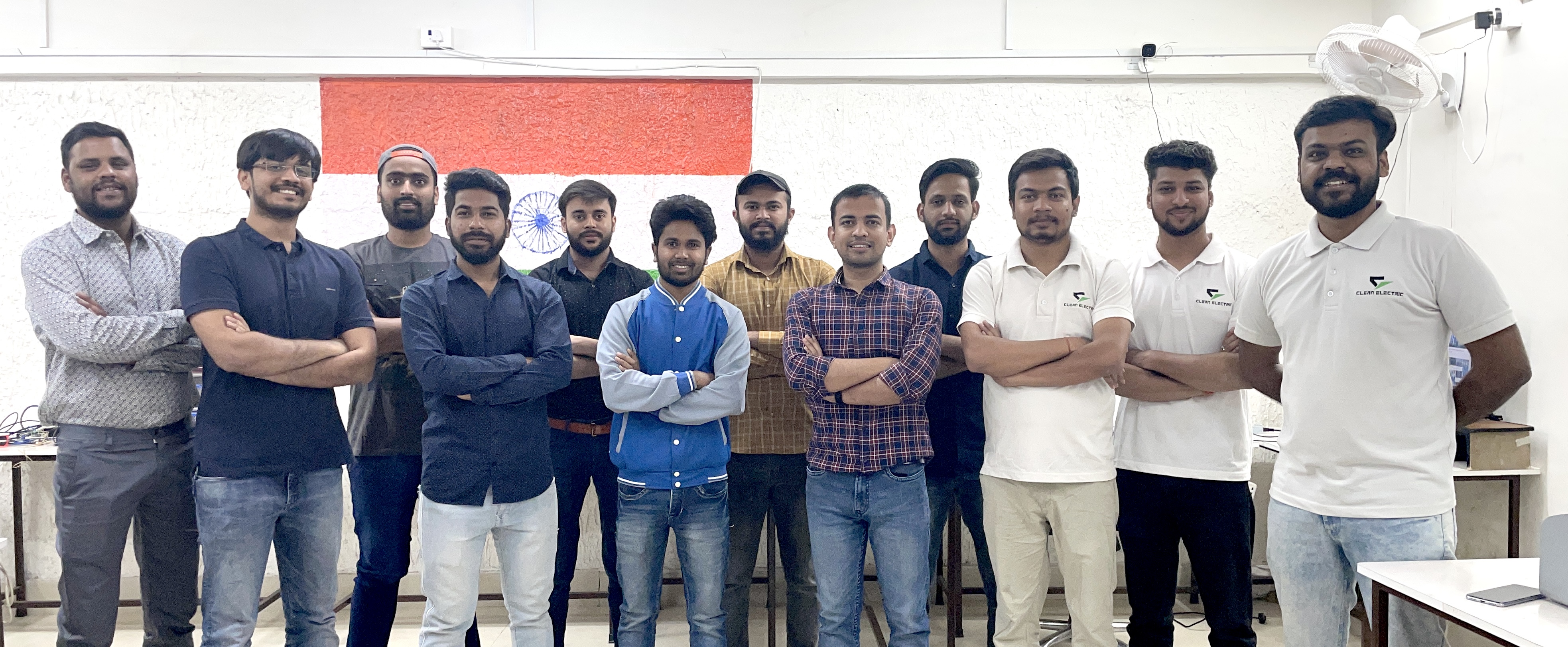
Team of Clean Electric

Clean Electric, an innovative energy storage solutions start-up, has raised $2.2M in a seed round led by Kalaari Capital, an early-stage venture capital firm based in Bengaluru.

The round also saw participation from Climate Angels, LV Fund, 7Square Ventures, and CIIE Regional Innovation Foundation. Clean Electric’s proprietary battery technology seeks to address pressing safety & performance issues for EVs like battery fires, long charging times and frequent battery replacement.

With the funding received, Clean Electric plans to set up a manufacturing facility in Pune to produce 5,000 battery packs per month.

Founded in 2020, Clean Electric manufactures, designs, develops, markets, supplies and provides after-sales of advance energy storage solutions for mobility & stationary storage applications as well as related energy infrastructure & services. The company has built liquid-cooled battery solutions for 2 Wheelers, 3 Wheelers, and Battery Swapping applications.

The company’s products have been in pilot testing with multiple vehicle OEMs across the country, having undergone more than 30,000 Kms of on-road testing. Compliant with AIS-156 Phase 2 guidelines (to be implemented from March 2023), the products are expected to be ready for certification tests before year-end.

Clean Electric also plans to use the funds towards expanding its R&D, sales, & operations teams, as well as for developing new products around Faster Charging, Renewable Energy Storage, and Battery Swapping.

Overall, EV penetration is less than 2%. In order to transition to an all-electric future, India needs robust electric vehicles and charging infrastructure. Current EVs take 3-4 hours to charge making it inconvenient for users, while unpredictable battery life makes it difficult for the NBFCs & Banks to finance these vehicles. On top of this, multiple reputed EV OEMs vehicles’ catching fire & resulting casualties have eroded the confidence of customers and created safety concerns in their mind.

Clean Electric’s proprietary battery technology seeks to address pressing safety & performance issues for EVs like battery fires, long charging times and frequent battery replacement. With the funding received, Clean Electric plans to set up a manufacturing facility in Pune to produce 5,000 battery packs per month.

Overall, EV penetration is less than 2%. In order to transition to an all-electric future, India needs robust electric vehicles and charging infrastructure. Current EVs take 3-4 hours to charge making it inconvenient for users, while unpredictable battery life makes it difficult for the NBFCs & Banks to finance these vehicles. On top of this, multiple reputed EV OEMs vehicles’ catching fire & resulting casualties have eroded the confidence of customers and created safety concerns in their mind.

“Our aim is to enable Mankind’s shift from Fossil Fuels, and batteries have been the hardest part of this transformation. By providing dependable, safe, and performant Energy Storage Solutions, we believe we can add immense value to the EV and RE ecosystems” said Abhinav Roy, Co-Founder, and CTO at Clean Electric.

“Clean Electric is delivering on the much-needed innovation in battery technology suitable for India. The patents the team has filed introduce direct liquid cooling technology wherein the cells of the battery are 100% in contact with a coolant which ensures maximum safety (fireproof), 25-minute charging and a 1.5x longer life span. Their solutions can also be exported to several countries in the global south that are dealing with similar issues around EV safety and performance.” said Sumeet Singh, Partner at Climate Angels.

“India’s EV solutions will become global postulates. Next decade is going to witness the surge of EVs, expected to grow from the current ~1.4M to ~50M by 2030. India’s expectations of efficiency, performance, and safety of batteries under diverse and extreme constraints ranging from terrain to climate will seed global innovation. Clean Electric’s direct liquid cooled battery packs will become the benchmark, offering the highest safety while maximizing its life and efficiency. IITians Akash and Abhinav have invented zero kelvin packs which have the potential to meet growing needs of today and future.” said Ravinder Singh, Partner at Kalaari Capital.

Clean Electric is engaged inter alia, in the business of manufacturing, designing, development, marketing, supply and after-sales of advance energy storage solutions for mobility & stationary storage application and related energy infrastructure & services to accelerate mass electric vehicle usage.

Kalaari Capital is an early-stage, technology-focused venture capital firm based out of Bengaluru, India. Since 2006, Kalaari has empowered visionary entrepreneurs building unique solutions that reshape the way Indians live, work, consume and transact. The firm’s ethos is to partner early with founders and work with them to navigate the inevitable challenges of fostering ideas into successful businesses. At its core, Kalaari believes in building long-term relationships based on trust, transparency, authenticity, and respect.

Climate Angels is SEBI Cat-1 Angel AIF that invests only in early-stage pollution reduction & climate tech startups. Leading tech entrepreneurs & investors are now making climate investments through us. Some of our marquee LPs includes Vijay Shekhar Sharma (Paytm), Nipun Sahni (Apollo Global), Praveen Gandhi (Seedfund), Paula Mariwala (Aureolis Ventures) Phanindra Sama (Redbus Founder), Shailesh Vickram Singh (Massive), among 100+ others.


Clean Tech Pioneer AirOK Kickstarts ‘Claim Your Right to Clean Air’ Campaign

AirOK, a pioneer in clean air technology in India and manufacturer of indigenous cutting-edge air purifiers, has launched ‘Claim Your Right to Clean Air’, an awareness campaign with a mission to provide purified air to all individuals. With Clean Air for Every Individual as their motto, they plan to raise awareness about the harmful effects of pollution and how one can save themselves.

The campaign enables individuals to become an active part of the clean air mission through crowd funding, being carried out by AirOK in association with Tykeinvest with an objective to raise funding. Stating that the sum gathered would be utilized towards clean energy, AirOK Co-Founder and CEO V Deekshith Vara Prasad said, “The campaign intends to inspire people who feel that clean air is a right, not just a need for every individual, to come forward and do their bit. As the contribution would aid R&D into clean energy, we encourage corporate and industries too to walk together with us in the mission to ensure pure air for all Indians.”

AirOK’s Claim Your Right to Clean air campaign comes just days ahead of that time of the year when the air is laden with pollutants, turning the sky murky grey and forcing us to breathe in an air that is equivalent to smoking 10 cigarettes. Pointing that even the indoors have hazardous air. AirOK co-founder said, Air pollution is something that can easily be misunderstood by many people, the only reason it is invisible. water is something visible and even a particle floating over surfaces will make us not to drink and raises quality issues, but just imagine how many times have you had to breathe vehicle fumes, construction site dust particles, particles that arise while in our offices or home cleaning. I’m sure many times even we don’t remember it. Air is the most important element because without it you only have 3 minutes to live. You literally remove years from your life when pollution is inhaled.We aim to provide people tools & options that can minimize health hazards under these circumstances.”

The campaign also comes alongside the brand’s foray into the B2C space, as it has till now majorly carried out B2B operations. AirOK, which was incubated by IIT Chennai a few years ago, offers a wide range of state-of-the-art air purifiers, powered with its patented Efficient Granular Adsorbent Particulate Arrester (EGAPA) technology. The purifiers are designed to reduce CO2 levels in the air, can arrest several acidic gases and Particulate Matter up to 0.1 microns, bacterial contamination and air borne fungal infections too.

Now! Anyone can be an investor for a clean environment at (https://www.tykeinvest.com/campaign/AirOK-1IgF8iRy).

About AirOK Technologies:
AirOK Technologies Pvt Ltd is a company Headquartered at Delhi, focused on addressing the rising levels of air pollution with innovative solutions in air purifiers, filters, face masks, purifying bags and others. The company specializes in providing customized solutions for indoors, outdoors and for both residential as well as commercial setups, including data centres. Their flagship solution is EGAPA, a patented filter technology that efficiently reduces high levels of CO2, PM2.5, PM10, VOCs, Odours and other toxic chemicals, thereby providing a comprehensive indoor air quality solution. Besides providing innovative solutions, the company is also focused on unique designs of the products to enhance user experience and align with today's design sense of homes and offices.

https://airoktech.com/

Green Steel - Vedanta Exploring Tying-up with IIT-Bombay To Research on Using Hydrogen in Steel Manufacturing

Vedanta Exploring Tie-up with IIT-Bombay To Research Using Hydrogen in Steel Manufacturing

Amid climate change crisis, when companies engaged in manufacturing using coal or other fossil-fuels is looking to reduce their carbon footprints, Sesa Goa Iron Ore, a Vedanta Group company engaged in exploration, mining and processing of iron ore, is looking for a tie-up with IIT-Bombay to carry out a research for manufacturing pig iron ore using hydrogen in place of coke (a type of coal).

Steel is combination of iron and carbon, and while the iron is obtained from iron-ore the carbon in steel is obtained from coke. Pig iron is an intermediary product before the Steel is produced. Pig Iron has high amount of carbon content then required for the end-product - 'Steel'.

Vedanta subsidiary, Sesa Goa Iron Ore, is looking to realize "Green Steel". For the same, the company is exploring to collaborate with IIT-Bombay for a study on the use of hydrogen in its steel production. Its in a nascent stage however.

Notably, Steelmaking is one of the most carbon emission intensive industries in the world. According to a last year's report, steelmaking is estimated to be responsible for 7-9% of all direct fossil fuel greenhouse gas emissions across the world.

If a steel manufacturing company is using a non-electric process for steelmaking and instead using coke/coal then there's too much of carbon emission in the process. First - using coke in melting raw iron (iron ore ) is itself increases carbon footprints and Second - releasing CO and CO2, when decarbonizing the pig iron, to convert it into proper steel. 

To make steel, the iron needs to be separated from the oxygen and a tiny amount of carbon needs to be added, which is accomplished by melting the iron ore at a very high temperature (1,700 degrees Celsius) in the presence of air and coke. Here the pig iron is obtained.

This Pig Iron is then converted to Steel by blowing oxygen through molten pig iron. In this process, some of the carbon in the iron converted into CO− and CO2, to turn it into steel.

Last year, consulting firm McKinsey identified a number of technologies for decarbonization including hydrogen usage, carbon capture and reuse, and maximizing use of electric arc furnaces powered by clean energy.

Sujal Shah, Deputy CEO, who is Vedanta's Sesa Goa Iron Ore Business, told news agency PTI, "We have our own vision of going towards the green steel. So my coke ovens will become green coke very soon, where I will be having all the coke-making through a green process, extracting, harnessing... 
and it will simply float over the grid. I would not require power from the grid, rather I would give power to the grid."

Vedanta has earlier committed to reduce carbon emissions to zero by 2050 or sooner and pledging US$5 billion over the next 10 years to accelerate the transition to net zero operations.

IIM-B Graduates' Green Energy Firm GPS Renewables Raises Series B Funding From Neev Fund II of SBICap Ventures

GPS Renewables Raises Series B Funding From Neev Fund II of SBICap Ventures
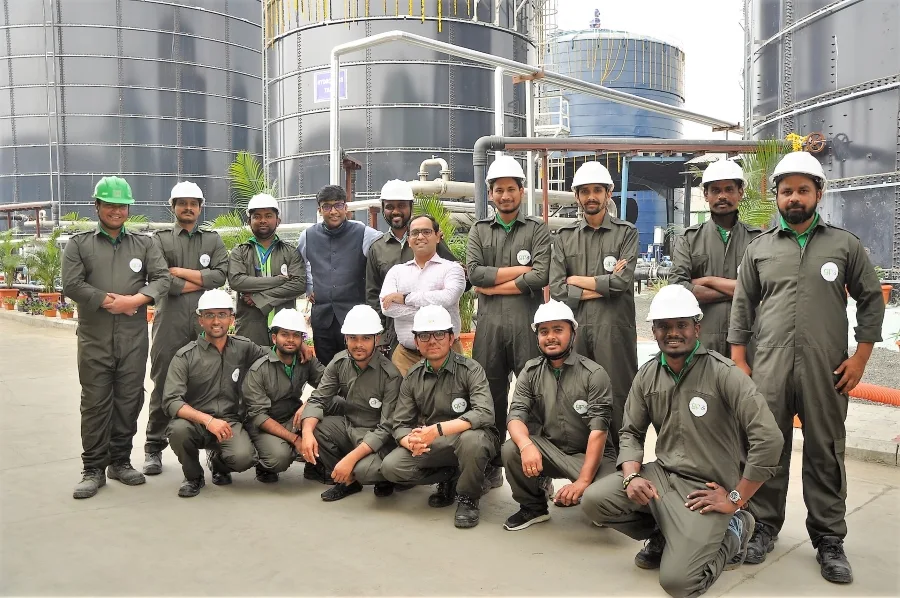
Team GPS Renewables

GPS Renewables, a Bengaluru based bioenergy technology firm, has closed its Series B funding from Neev Fund II, managed by SBICap Ventures, an alternative asset manager and a wholly owned subsidiary of SBI Capital Markets Limited, which in turn is a wholly owned subsidiary of SBI, the largest public sector bank in India. 

The latest round of funding will be used by GPS Renewables towards R&D and to support GPS Renewables’ next phase of growth and expansion.

With the current round, GPS has cumulatively raised close to $20 Million in the form of equity. The earlier round was led by Netherlands based Hivos-Triodos Fund and Hyderabad-based Caspian Impact Investments in September 2020.

GPS Renewables started off with a captive biogas product called the ‘BioUrja’. Today, the company has 100+ BioUrja installations across South Asia, with Fortune 500 companies such as Microsoft, Intel, Bosch, Cummins, Saint Gobain, Reliance, and several other leading hospitality chains such as Oberoi, Taj, ITC, Marriott, Hyatt and Accor Groups as clients. The Company has successfully expanded its capacity by over 5000x over the last couple of years, thereby positioning itself as the go-to project integrator in the bioenergy space, covering BioCNG, Bioethanol and Green Hydrogen.

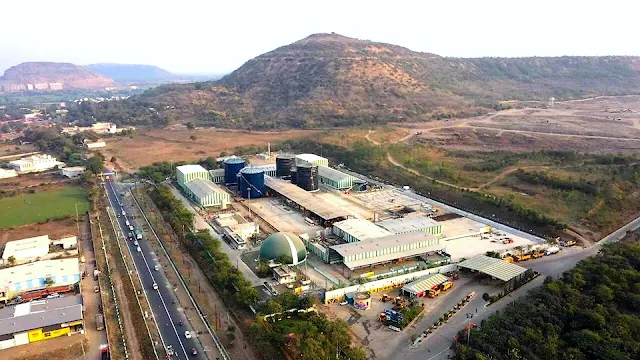
Very recently, GPS Renewables commissioned Asia’s largest BioCNG plant based on SSO (Source Separated Organics) in Indore, Madhya Pradesh, which was inaugurated by Honourable Prime Minister Narendra Modi. Setup over 15 acres of land, this biogas plant is expected to produce 17 tonnes of BioCNG everyday from 550 tonnes of organic household waste. Nearly 400 city buses in Indore will soon run on the BioCNG generated from this biogas plant. The company is in the process of setting up the world's largest BioCNG plant in Hyderabad in association with project development partners from Japan.
Asia’s largest BioCNG plant in Indore
GPS Renewables commissioned Asia’s largest BioCNG plant in Indore

GPS Renewables Raises Series B Funding From Neev Fund II of SBICap Ventures
Asia’s largest BioCNG plant in Indore

Commenting on the investment, Mainak Chakraborty, Co-founder and CEO of GPS Renewables, said, “Untreated organic waste streams, ranging from urban waste to paddy straw, are one of the biggest contributors to global warming and it poses serious health concerns for the current and future generations alike. Climate positive solutions to these problems are the need of the hour, and that’s where GPS’ bioenergy solutions suite comes in. We are excited to partner with Neev II as we further strengthen our mission towards making the world cleaner and more sustainable. This partnership will help accelerate our growth while capitalising on the organic feedstock to bioenergy market.”

Manav Bansal, CIO, Neev Funds, said, “This investment into GPS resonates with our mission to decarbonise and to support the next generation of climate entrepreneurs. We will continue to open the gates of capital to climate-focused purpose driven businesses”

Akshay Panth, Principal, Neev Funds, said, “We look forward to our partnership with GPS. It has been a great story of entrepreneurship, and we are impressed with the strong product the team has built from scratch. Neev is proud to partner with GPS in their journey to help the world transition to a more sustainable way of living.”

About GPS Renewables

GPS Renewables is a Bangalore based cleantech firm founded in 2012 by IIM-B graduates Mainak Chakraborty and Sreekrishna Sankar. The company currently focuses on biomethanation technologies to solve the organic waste management challenge, accelerate substitution of fossil fuel with bioenergy and play a key role in mitigating climate change.

For more information: http://www.gpsrenewables.com/

About Neev Fund II

SVL-SME Fund (Neev II Fund), the successor fund of Neev I, was launched in May 2021 and seeks to provide growth and capital expansion to SMEs offering solutions for clean energy, electric vehicles, efficient use of raw materials, and water and circular economy projects in the country. Neev Fund II aims to provide growth capital to emerging and innovative SMEs that focus on mitigating climate risks, promoting social development, job creation, and gender equality.

Mining Firm Building World's Most Efficient Electric Train That Charges Itself Using Gravity

Fortescue Railway [Image credits - www.fmgl.com.au]

Australian mining firm, Fortescue, has acquired UK-based Williams Advanced Engineering (WAE) as part of its green-energy subsidiary called "Fortescue Future Industries", which aims to develop clean technologies to reduce its operations’ carbon emissions by 2030.

Post this acquisition, WAE and Fortescue together announced that they will jointly develop the world first, zero emission "Infinity Train" that charges itself using the Earth's gravitational force. The companies believe that "Infinity Train" will be the world’s most efficient battery electric locomotive.


The Infinity Train will have regenerating battery electric iron ore that will use gravitational energy to recharge its battery electric systems without any additional charging requirements for the return trip to reload. This also makes "Infinity Train" a capital efficient solution for eliminating diesel and emissions from rail operation.

The cost of developing the Infinity Train is expected to be US$50 million over the next two years and will be classified as operating cost efficiencies. The cost can be refined over the time of the development of the Infinity Train.

While full-details and specs are insufficient at this point, its been speculated that the upcoming zero-emission train will be utilize for one or more of Fortescue's mining sites.

Being 4th-largest iron ore producer in the world, Fortescue has mining operation located within the Pilbara region of Western Australia, England and Israel.

Fortescue’s rail operations consumed 82 million litres of diesel in financial year 2021 accounting for 11 per cent of Fortescue’s Scope 1 emissions. This diesel consumption and associated emissions will be eliminated once the Infinity Train is fully implemented across Fortescue’s operations, significantly contributing to Fortescue’s target to be diesel free by 2030.

Last year, Fortescue Future Industries announced a plan to build a hydrogen-manufacturing facility in Queensland, Australia. The first stage, due for completion in 2022, is expected to double the world's green hydrogen capacity. When the plant is completed, it is expected to be the largest of its type in the world. In 2020, the subsidiary also started 60 MW solar farm at its Chichester Hub, England, in 2020.

Besides Fortescue, an another mining firm, BHP, had also announced in last year that it is considering selling its petroleum business in order to cut ties with the oil and gas sector and reduce its carbon footprint.

iTIC Incubator at IIT Hyderabad Announced CLEAN-A-THON Winners

Clean-a-Thon is a Hackathon to support Clean India mission

Winners are supported by iTIC incubator to build successful prototypes

Clean-a-Thon provide a vital platform to all the students, researchers, innovators and individuals who are working in cleantech sector


Hyderabad, June 18, 2021: iTIC Incubator at IIT Hyderabad organized Clean-a-Thon, a cleantech hackathon with a motive to provide innovative solutions to the most challenging problems and create a clean environment and contribute to the clean India mission. This hackathon focused on finding solutions for the most challenging problems in the area of water/air/noise pollution, elimination of single use of plastic, water body cleaning, waste disposal, upcycling, circular economy, plastic recycling, plastic alternatives, and other related areas.

Clean-a-Thon was launched virtually in March end and received very good response from students, researchers, academia, and entrepreneurs from across the nation with solutions. Out of all the applications, few made it to the final round of selection. After a round of virtual interviews, the jury selected three prominent winners for the hackathon.

The winners of Clean-a-thon are:

  • Gautami Chati, Winner
  • Khushbu Baid, Runner-up
  • Yalla Omkar Venkata, 2nd Runner-up
Congratulating the winners of Clean-a-thon, Prof. B. S. Murty, Director, IIT Hyderabad, said --
From banning the use of single use plastic inside the campus to offering unique MTech programs like E-Waste Resource Engineering and Management, IIT Hyderabad has always been committed to encourage clean and green solutions.

Further Prof. S. Suryakumar, Faculty-in-Charge, Incubation, Innovation & Startup at IIT Hyderabad shared, “The winners will be supported by the iTIC incubator by grants, access to pre-incubation support, mentorship, co-working space, and network for building successful prototypes. The Deeptech startup ecosystem is witnessing an unprecedented move with a lot of startups trying to disrupt the cleantech business sector. Through clean-a-thon, we are hoping more startups are going to join this league in the future.

About iTIC Incubator at IIT Hyderabad

iTIC is a Technology Business Incubator (TBI), under the aegis of Indian Institute of Technology Hyderabad (IITH) and supported by the Department of Science and Technology (DST), Government of India. iTIC is a Not-For-Profit Society, which focuses on creating a supportive and nourishing environment for budding entrepreneurs in the field of technology. 

The focus areas of iTIC incubator are Deep tech sectors such as Healthcare, AI/ML, Quantum Computing, AR/VR, Cybersecurity, Robotics, IOT, Industry 4.0, Blockchain, Electronics, Advanced materials, Drones, Biotechnology, etc. iTIC aims to help entrepreneurs leverage a premier quality research and startup ecosystem with the goal of building a comprehensive platform to practice innovation and entrepreneurship so that these entrepreneurial ideas can be turned into sustainable, scalable profit-making business ventures. iTIC provides support to startups such as Mentoring, Financial Aid, IP Support, Networking, and access to Dedicated office/ Coworking space, Software’s, IITH Technological Infrastructure, and Makerlab.

Soon Hydrogen Fuel-Cell Bus To Run on Delhi-Jaipur Highway Route

Representational Image

In order to boost green mobility, India's largest power company National Thermal Power Corporation Limited (NTPC) is planning to start a premium hydrogen fuel bus service on Delhi to Jaipur route. The plan for the upcoming bus service was announced by Nitin Gadkari, Union Minister for Road Transport & Highways along with R. K. Singh, the Union Minister of State (IC) for Power and New & Renewable Energy, during the "Go Electric" campaign to spread awareness on the benefits of e-mobility and EV Charging Infrastructure as well as electric cooking in India.


Currently, a study for the bus service is underway to test the viability of fuel cell buses for the intercity commute, and no timeline for the bus to start plying the roads has been announced yet. Even though, similar bus services were tested in metro cities like Mumbai earlier, this bus service will be the first of its kind in India to be used for intercity commute.

Power minister RK Singh announced --

We are planning to start premium hydrogen fuel bus service from Delhi to Jaipur and gradually we will also try experimenting running electric bus on the same route.
 
At the same event, the announcement of an all-new electric tractor was made by Union Minister Nitin Gadkari. “I will be launching an electric tractor in the next 15 days,” Gadkari said.

The government at the centre is also trying to procure 40,000 battery-powered buses in Maharashtra for an intracity commute. This comes at a time when the government is trying to make a gradual shift towards alternative fuels in a bid to reduce its dependence on the import of crude oil as prices of petrol and diesel skyrocket in the country.

In October last year, DST launched report on Hydrogen and Fuel Cells research across India.

Clariter's Unique Plastic Recycling Solution Achieves a Net Negative Carbon Footprint


LUXEMBOURG , Dec. 1, 2020 /PRNewswire/ -- Clariter, an international clean-tech company, has announced that its unique plastic recycling solution has achieved a net negative carbon footprint according to the results of a new study, meaning it does not add to, but rather depletes carbon from the planet.

The results stem from an independent initial Life Cycle Analysis (LCA) carried out by CE Delft, the renowned research and consultancy firm. The LCA determined that Clariter's carbon footprint is below zero indicating a net environmental benefit, with the solution actually reducing carbon emissions.

The purpose of the study was to better understand Clariter's sustainability offering to its customers and other stakeholders and to further inform them of its engineering design activities.

Unlike the majority of the recycling industry which focuses on recycling plastic waste mechanically, Clariter recycles chemically. As a result, the innovative technology transforms unwanted plastic waste into high-value, ready-to-use pure industrial products, thereby providing a breakthrough solution for the plastic waste epidemic.

Clariter complements mechanical recycling by upcycling plastic waste streams that cannot be processed mechanically. The company's patented 3-step chemical process results in the upcycling of plastic waste into sulphur-free, odourless, and pure chemicals: aliphatic solvents, white mineral oils, and paraffinic snow-white waxes. These are further used as ingredients for more than 1000 end- and consumer products.

Clariter's near-term plan is to build and operate full-scale plants, each of which will recycle 60,000 tons of plastic waste and produce 50,000 tons of clean products annually. The LCA study also highlighted that the Clariter process offers significant benefits for the treatment of plastic waste that cannot be recycled mechanically.

Geert Bergsma , Manager Supply Chain Analysis, CE-Delft said: "CE Delft performed a life cycle assessment for Clariter, from cradle-to-gate. The results indicate that their solution looks more attractive than alternative, non-mechanical recycling polyolefin disposal routes and an even stronger CO₂ negative footprint is well within reach. If fully renewable utilities are used, this statement can be made even more so."

When comparing the recycling of plastic waste (polyolefins) by Clariter, with other waste treatment routes for polyolefins, the outcome includes both the impact of the production processes and the environmental benefits of avoiding conventional products or energy. The LCA results prove that:

Clariter's carbon footprint is negative (below zero), which indicates a net environmental benefit. Compared to others, Clariter is not polluting or depleting but rather cleaning the planet. The impact and benefits of Clariter's solution supersede those of the pyrolysis[1] process, which produces intermediates, e.g. energy, fuel, or new plastics. The pyrolysis process prolongs the life of plastics, whereas Clariter ends it for good. Clariter's Full-scale Plants are expected to show favourable energy generation to that of incineration in Municipal Solid Waste Incineration (MSWI). It is also expected that they will be competitive against best-case pyrolysis processes, as Clariter's solution has a lower carbon footprint. Petra Koselka , Clariter COO, said:  "Being net carbon negative is a unique and strong position. With further optimization of our plants, and using renewable energy sources and possibly green hydrogen in the future, we expect Clariter's process to have an even more advantageous carbon footprint. Delivering such green products to our customers – offering the industry "a clean slate" - is at the heart of what we do. The outcome is not only an important step for us but the entire chemical recycling sector."

Clariter works with REYL & Cie as financial advisor.

About CE Delft

Through its independent research and consultancy work, CE Delft is helping build a sustainable world. In the fields of energy, transport and resources, their expertise is leading-edge. With their wealth of know-how on technologies, policies, and economic issues, they support government agencies, NGOs, and industries in pursuit of structural change. For 40 years now, the skills and enthusiasm of CE Delft's staff have been devoted to achieving this mission. For more information visit: www.cedelft.eu .

About Clariter

Clariter has created a revolutionary chemical recycling (upcycling) process that provides a large-scale solution for the worlds' plastic waste problem. The technology accepts the majority of plastic waste streams, and not only helps to clean the planet effectively but also creates a strongly profitable business opportunity. Rather than recycling plastic waste into intermediates which require further processing, Clariter transforms it into 3 industrial, ready-to-use product families: oils, waxes, and solvents. These pure fossil-fuel alternatives are used as ingredients to make over 1000 clean, everyday end- and consumer products. 

The footprint of Clariter's process is net carbon negative and preferable to landfill, incineration and other pyrolysis-based solutions. Their technology is proven through an operational Pilot Plant in Gliwice, Poland , and a Demonstration Plant in East London , South Africa . Their offices are based in Israel , Poland , Luxembourg , and The Netherlands . Without compromise on profitability or sustainability – Clariter unlocks the value of the Circular Economy. For more information visit: www.clariter.com .

Pyrolysis is a chemical process also known as thermal cracking.

India Launches Report on Hydrogen and Fuel Cells Research Across the Country


A compilation of ongoing research activities in the country related to hydrogen being carried out by several scientists, industry, utilities, and other stakeholders from R&D laboratories and academia was launched by Secretary, Department of Science and Technology Professor Ashutosh Sharma recently.

The compilation titled India Country Status Report on Hydrogen and Fuel Cells was an outcome of a brainstorming discussions and presentations on various issues for developing programmes and strategies to accelerate the ushering in of hydrogen economy as part of India’s commitment as a participating country in Mission Innovation Renewable and Clean Hydrogen Challenge.

Greater utilization of renewable in our energy mix is our policy objective to achieve decarbonization. While there are several pathways for decarbonisation varying in time frames, Hydrogen produced from renewables is considered as the cleanest energy source.

Hydrogen as an energy source will play a key role in transforming climate-neutral systems over the next few decades. Hydrogen has high energy content per unit mass, which is three times higher than gasoline. Hydrogen is being used for energy applications with suitable fuel cells. However, in order to make renewable hydrogen a viable option, several key challenges related to materials, including new material development, electrolytes, storage, safety, and standards, need to be addressed. Since hydrogen technologies can help to reduce global warming, further acceleration of efforts is critical to ensuring a significant share of hydrogen in the energy system in the coming decades.

Two key developments have contributed to the growth of hydrogen in recent years-- the cost of hydrogen supply from renewables has come down and continues to fall, while the urgency of greenhouse gas emission mitigation has increased, and many countries have begun to take action to decarbonise their economies.

Hydrogen can help tackle various critical energy challenges, decarbonize a range of sectors including intensive and long-haul transport, chemicals, and iron and steel, where it is proving difficult to meaningfully reduce emissions and also help improve air quality and strengthen energy security. In addition, it increases flexibility in power systems. It is one of the best options for storing energy from renewables and looks poised to become the lowest-cost option for storing large quantities of electricity over days, weeks, or even months.

Currently, there are around 11,200 hydrogen powered cars, 20,000 forklifts operating on hydrogen, 381 hydrogen refueling stations worldwide, said the report.

The report further said -- Ministry of Non-Conventional Energy Sources have supported many demonstration projects through Indian Oil Corporation and Society of Indian Automobile Manufacturers. The first demonstration project was for setting up a dispensing station by the Indian Oil Corporation. The dispensing station at their R&D centre Faridabad, has been commissioned during 2008-09 and has an electrolyser with 5 Nm3/hr hydrogen production capacity (about 11 kg/day). Hydrogen produced from the electrolyser is being blended with CNG for use in demonstration and test vehicles. The project is dedicated to acquire working experience in handling hydrogen for use in
vehicles and also provide field performance feed back on hydrogen-CNG blends as a fuel in automobiles.

The other demonstration project is being implemented by the Society of Indian Automobile Manufacturers (SIAM) in association with five automobile manufacturers (Tata Motors, Ashok Leyland, Eicher Motors, Mahindra and Mahindra and Bajaj Auto) and Indian Oil Corporation
was towards demonstrating the use of hydrogen blend with CNG in automobiles.

Hydrogen fuelled 3-wheeler developed jointly by IIT Delhi and Mahindra & Mahindra in New Delhi

In major activities in hydrogen utilisation other than for fuel cell based applications, The report describe one of the project at IIT Delhi, where the institute is working on Mission mode project on development and demonstration of hydrogen fuelled internal combustion engines for vehicles, multi cylinder IC engine introduced into Mahindra’s tourist or model mini bus, three wheelers based on hydrogen with Mahindra and Mahindra, Development & demonstration of hydrogen fuelled multicylinder spark ignition engine generator set for stationary power generation. Demonstration and field trials of hydrogen fuelled three wheelers conducted in New Delhi. 

Detailed report here(PDF).

NuScale becomes 1st Nuclear Tech Firm to Receive US Govt.'s Design Approval for its Small Modular Reactors


Oregon, United States -based NuScale Power, that designs and markets small modular reactors (SMRs) -- nuclear reactors that generates generally 300 MWe equivalent of energy or less, has announced today that the U.S. Nuclear Regulatory Commission (NRC) completed Phase 6 review—the last and final phase—of the Design Certification Application (DCA) for the company’s groundbreaking small modular reactor (SMR) with the issuance of the Final Safety Evaluation Report (FSER), which means the completion of the technical review and approval of the NuScale SMR design.

With this final phase of NuScale’s DCA now complete, customers can proceed with plans to develop NuScale power plants with the understanding that the NRC has approved the safety aspects of the NuScale design.

NuScale's SMR designs are for its 65 feet tall x 9 feet high reactor vessels that use conventional light water cooling methods and runs on low enriched uranium fuel assemblies based on existing light water reactor designs.

Earlier in April 2019, NuScale announced that it was developing a 1-10 MWe "simple and inherently safe compact heat pipe cooled reactor" that "requires little site infrastructure, can be rapidly deployed, and is fully automated during power operation." Partners include Additech, INL, and Oregon State University. The project follows solicitation of ideas and designs from the US Department of Defense and the Department of Energy. 
A diagram depicting a NuScale reactor. [ credit - NuScale / CC BY-SA ]
An artist’s rendering of NuScale Power’s small modular nuclear reactor plant. Photo courtesy of NuScale

NuScale’s DCA was completed in December 2016 and accepted by the NRC in March 2017. The review process demonstrated both the simplicity of NuScale’s SMR design and the thoroughness of the company’s application. As an example, during the rigorous Phase 1 review process, which included 115,000 hours spent reviewing the DCA, the NRC issued far fewer requests for additional information compared to other design certification applications. NuScale spent over $500 million, with the backing of Fluor, and over 2 million labor hours to develop the information needed to prepare its DCA application. The company also submitted 14 separate Topical Reports in addition to the over 12,000 pages for its DCA application and provided more than 2 million pages of supporting information for NRC audits.

This is a significant milestone not only for NuScale, but also for the entire U.S. nuclear sector and the other advanced nuclear technologies that will follow. This clearly establishes the leadership of NuScale and the U.S. in the race to bring SMRs to market. The approval of NuScale’s design is an incredible accomplishment and we would like to extend our deepest thanks to the NRC for their comprehensive review, to the U.S. Department of Energy (DOE) for its continued commitment to our successful private-public partnership to bring the country’s first SMR to market, and to the many other individuals who have dedicated countless hours to make this extraordinary moment a reality.

said NuScale Chairman and Chief Executive Officer John Hopkins.
"Additionally, the cost-shared funding provided by Congress over the past several years has accelerated NuScale’s advancement through the NRC Design Certification process. This is what DOE’s SMR Program was created to do, and our success is credited to strong bipartisan support from Congress."

The simulator control room at NuScale Power's small modular reactor design facility in Oregon. Photo courtesy of NuScale


NuScale Power has developed a new modular light water reactor nuclear power plant to supply energy for electrical generation, district heating, desalination, and other process heat applications. This groundbreaking small modular reactor (SMR) design features a fully factory-fabricated NuScale Power Module™ capable of generating 60 MW of electricity using a safer, smaller, and scalable version of pressurized water reactor technology. NuScale's scalable design—a power plant can house up to 12 individual power modules—offers the benefits of carbon-free energy and reduces the financial commitments associated with gigawatt-sized nuclear facilities. The majority investor in NuScale is Fluor Corporation, a global engineering, procurement, and construction company with a 60-year history in commercial nuclear power.

NuScale is headquartered in Portland, OR and has offices in Corvallis, OR; Rockville, MD; Charlotte, NC; Richland, WA; and London, UK.

NuScale competes with other similar SMR makers like Hyperion, Holtec, General Atomics, and Hybrid Power Technologies, among others.

Last year in June, Holtec signed a partnership agreement with Ukraines Energoatom and Ukraine's national nuclear consultant, State Scientific and Technical Centre for Nuclear and Radiation Safety (SSTC-NRS), to establish a consortium to explore the environmental and technical feasibility of qualifying a 'generic' SMR-160 system that can be built and operated at any candidate site in the country. This would establish a reactor design capability in Ukraine, with a view to it becoming a regional hub for selling such reactors in Europe, Asia and Africa.
~ with inputs from Businesswire

Industry Body CII Claims to have Recycled 25,000 Tonne of Rice Straw in Punjab

Industry body Confederation of Indian Industry (CII) on Sunday said its crop residue management project in Punjab has helped in the recycling of nearly 25,000 tonne rice straw.

"Nearly 25 thousand tonne rice straw was recycled back into the soil in 2018 and 115 tonne fine particulate matter (PM2.5) was saved from being released into the air," Confederation of Indian Industry (CII) said in the impact report of its 'Crop Residue Management' project.

CII worked with the Ministry of Environment Forest & Climate Change to design a plan of action for biomass management (CII-NITI, 2018) in North Western states.

A subsidy scheme was launched by the central government to support North Western states in their efforts to curb crop residue burning.

CII said it galvanised the industry action on Crop Residue Management (CRM) in 2018, following which a pilot project was launched in 19 villages in Punjab.

CII Foundation, along with local partners in Punjab, engaged with the farmer community to demonstrate solutions in a highly participatory manner.

These villages were made free of burning in 2018, and farmers were provided technical hand-holding for adopting sustainable agricultural practices.

As per the report, the project led to avoidance of environmental impacts on local as well as regional scale and led to nutrient savings worth more than Rs 1 crore.

The project improved the farmer's resilience to adverse impacts of climate change due to water conservation, improved farm biodiversity, and resilience of crops to extreme climatic events.

"About 30 kilo tonne CO2e of GHG and 13 tonne BC (black carbon) which would have otherwise been released into the atmosphere are estimated to be fed back into the soil," the statement said.

The project led to avoidance of estimated, 140 tonne volatile organic compounds, 82 tonne ammonia, 39 tonne oxides of nitrogen and 6 tonne oxides of sulphur, which could have impacted the ambient air quality across Indo-Gangetic Plains, it added.

The CII pointed out that agricultural burning in North Western States (Punjab, Haryana and Delhi) costs the Indian economy a whopping USD 30 million every year due to health impact. PTI MJH

Maruti bats for Green Tech, Developing Electric Cars with Toyota

The country's largest car maker Maruti Suzuki India (MSI) has said that usage of all kinds of green technologies, including CNG and hybrid cars, should be encouraged in order to cut oil imports and reduce air pollution.

Addressing shareholders in the company's annual report for 2018-19, MSI Chairman R C Bhargava said the company is fully committed to helping the government's programme for reducing the consumption of oil and achieving cleaner environmental standards.

"We had started in this direction many years ago with the introduction of factory-fitted CNG vehicles. The production of such cars increased by 40 per cent in 2018-19 and this year is targeted to increase by near 50 per cent," he said.

The government has also announced a large programme to increase CNG outlets and this should result in the steady increase in CNG vehicle sales, he noted.

On electric vehicles, he said MSI with the support of Toyota is working on developing such models.

"However, the challenges for electric vehicles in India, arising mainly from battery technology, and infrastructure limitations are likely to result in electric vehicle acceptance by customers being slow in the short term," Bhargava said.

Meanwhile, the objective of reducing oil consumption and pollution would be met by CNG vehicles, hybrid cars and the increasing use of biofuels, he added. Since India is a fast-growing market for cars, unlike most parts of the world, there is a need for using all these technologies, Bhargava said.

Echoing similar sentiments, MSI Managing Director and Chief Executive Officer Kenichi Ayukawa said India has a major challenge of oil imports and needs to pursue technologies to minimise the use of oil in automobiles.

"Different vehicle segments will have different solutions over different time perspectives. Electrification is being pursued with full effort. However, till the time charging infrastructure spreads sufficiently to give confidence to consumers and battery technology becomes competitive to liquid fuels, we will need some strong measures to reduce oil consumption and imports," he added.

CNG vehicles and hybrid electric vehicles can help reduce oil consumption significantly as compared to internal combustion engine-powered vehicles, Ayukawa said. Hybrid vehicles can run without charging infrastructure and so can prepone oil import reduction, he added.

"In this context, the business partnership between Suzuki Motor Corporation and Toyota Motor Corporation will help the company gain access to the technologies which are important to keep the company future ready," Ayukawa said. PTI MSS

DST-backed SRI-TBI and Polyplex Launch Startup Accelerator for Environmental Sustainability, Waste Management & Renewable

Polyplex Corporation Limited, one of world's largest manufacturers of packaging film, and Shriram Institute - Technology Business Incubator (SRI-TBI), a Delhi-based business incubator of Shriram Institute for Industrial Research and supported by Department of science & technology (DST), Government of India, have announced that they have joined hands to run an Accelerator Program - 'CleanEdge' for Environmental Sustainability, Waste Management & Renewables. This is a four month program and will run from February 2019 till May 2019.

CleanEdge Accelerator program has started accepting applications. With rigorous evaluation 15 startups will be shortlisted to participate in this program.

Key offerings under this program are 1) High quality intensive mentorship by Startup Experts, Functional Strategy Experts, domain related technical & sector specific experts. 2) Access to State-of-the-Art pilot lab facility at SRI-TBI in Delhi & Co-working facility at Aspirelabs. 3) Access to 'Appropriate' Technology, Opportunity to raise Seed-Capital upto 25 lakhs. 4) Access to Impact investors and Potential Customers. 5) Post acceleration support.

With Polyplex and SRI-TBI as anchors, this program is also being significantly supported by Department of Science & Technology (DST), Government of India under its umbrella of National Initiative for Developing and Harnessing Innovations (NIDHI) scheme launched in 2016.

Who can apply - Startups working in Clean technology but not limited to -- Circular Economy, Waste Management, Recycling & Up-cycling, Plastic & Rubber, Clean water & Clean air Technologies, Renewables, 3D Printing, Smart City Solutions, Environment Sustainability.

Polyplex Corporation Limited is among the world's largest manufacturers of packaging film with manufacturing facilities in five countries and employs over 2000 people globally. Apart from Infrastructural support, Polyplex through its network brings a high-quality business mentor pool, global linkages and market access for young startups.

Shriram Institute for Industrial Research is an organization providing research and testing services in the field of plastics, rubbers, specialty chemicals and waste management. It also helps startups grow through nurturing innovative ideas into technologies and incubating entrepreneurs through its Technology Business Incubator.

This program would be executed by Aspirelabs Accelerator - founded by Ranjit Singh - Director at Polyplex Corporation Limited and an alumnus of IIM Ahmedabad and BITS Pilani. Applications for CleanEdge Accelerator are now open. Program details are accessible at https://aspirelabs.com/clean-tech. Also anyone can share this article with budding entrepreneurs working in clean-tech areas in their network to help drive innovation, growth and collaboration in a socially impactful field.

Aspirelabs is a starup accelerator centrally located in Delhi-NCR with ten thousand square feet of premium office space and having access to high quality business and startup mentors. It is designed to foster entrepreneurship and innovation, and has a range of customized programs to enable young businesses and startups scale up to large profitable businesses. Aspirelabs is closely associated with Startup Oasis - a Jaipur based incubation centre of Centre for Innovation Incubation and Entrepreneurship (CIIE) which is India's leading incubator operating under the aegis of IIM Ahmedabad.

In last few years there have been number of initiatives and programs launched by organizations, young businesses, startups and even by Government of India to tackle challenges in area of environmental sustainability, Waste Management and renewable energy.

In June last year, India's Union science & technology minister Harsh Vardhan had announced that India will soon have its first international incubator to promote innovation in the field of clean energy and stimulate research, innovation, and entrepreneurship for the global initiative on clean energy. With a total investment of around $5 million, the incubator is being set up in a public-private partnership.

At the same time, Yes Bank has also launched multi sector accelerator program called YES SCALE which offers a 15 week program for startups in the areas of clean tech and Agritech, among others.

[Top Image Source - Aspire Labs@Facebook.com]

Hydro Nano Gas (HNG) Could Be The Answer For Neutralizing Carbon Fuel Emissions

carbon_emission

Hydro Infra Technologies (HIT), a Swedish clean tech company based in Stockholm, has developed an innovative patent pending approach for neutralizing carbon fuel emissions by generating a novel gas called Hydro Nano Gas (HNG).

In spite of all the advancement happening in the energy sector, global economies are still dependent on fossil fuels as the interlinked chain of costs to completely replace the burning of fossil fuels with more clean and sustainable options is beyond the financial resources of even the richest nations.

This in turn effects the climate change scenario which has been continuously increasing as more pollution and green house gases are created from burning fossil fuels on a daily basis.

This dilemma requires a new approach with safe, cost effective and smart solutions; the solution in sight? Making any fossil fuel climate neutral – and this is exactly what HIT’s Hydro Nano Gas proposes to do.

Water contains 2 basic elements, Hydrogen and Oxygen. These 2 basic elements can be split, divided and utilized. Splitting water (H2O) is a known science. But the energy costs to perform splitting outweigh the energy created from hydrogen when the Hydrogen is split from the water molecule H2O. This is where mainstream science usually closes the book on the subject.

HIT took a different approach by postulating that it was not only possible but indefinitely sustainable to split water in an energy efficient way to extract a high yield of Hydrogen at very low cost.

The process of creating HNG involves pulsing an range of low energy frequencies in a very specific sequence into water. The pulsing treatment effectively manipulates the molecules to line up in a certain structure which are then put through a splitting process. The result is HNG.

Being exotic as it is, HNG displays some very different properties from normal hydrogen. For instance: HNG instantly neutralizes carbon fuel pollution emissions; HNG can be pressurized up to 2 bars; HNG combusts at a rate of 9000 meters per second while normal Hydrogen combusts at a rate 600 meters per second; oxygen values actually increase when HNG is inserted into a diesel flame; and finally, HNG acts like a vortex on fossil fuel emissions causing the flame to be pulled into the centre thus concentrating the heat and combustion properties.

Injecting HNG into a combustion chamber produces several effects that increase the burn efficiency of the fuels. HNG gasification effectively burns unburned residue/cluster while completing the burn process quicker. The long term impact of using HNG in the burning of fossil fuels can provide the balanced solution for the on going economic-climate change debate.

The new technology is also found to be effective in the treatment of polluted water; when HNG Nano bubbles are injected into polluted water, a microbe chain reaction is initiated that rapidly triggers and boosts the waters’ own organic repairing process. While further testing and validation are required, the discovery creates new potential in providing solutions to critical areas of global pollution.

HIT is also developing a Smoke Eliminator for all sorts of plants and facilities. The process reduces the need for smoke analysis as it results in a clean wet scrubber technology where CO2 becomes a clean by-product ready to be reused.

Further, a miniaturized version of the standard HNG reactor will help HIT achieve its goal of gassing 9,000 cubic meters of smoke volume per second. Using Nano technology, the reactor will see the beginning of a new technology phase for each HNG application, reports HIT.

The HIT innovation story begins in the 1980’s when a small team of dedicated technicians, researchers and engineers came together to innovate real world solutions based on the theoretical research conducted by Nobel prize winner Professor Yuan Tse Lee. The goal was clear - to ‘crack’ the Hydrogen code.

In late 2012, after years of on / off research and experimentation, they finally cracked the code and HNG was born.

HIT was formed to spread their discoveries to the world as Information Technology via joint venture partners.

HIT has also selected SGS – the worlds leading testing/validation and certification company – to be its' permanent testing-validation protocol partner, providing certification that enables HIT to expand into global markets.

Market Reports

Market Report & Surveys
IndianWeb2.com © all rights reserved