‏إظهار الرسائل ذات التسميات Nanotech. إظهار كافة الرسائل

India’s Ist Nano Surface Care Brand Invisel Raises ₹4 Crore in Funding Led By IAN Angel Fund

India’s Ist Nano Surface Care Brand Invisel Raises ₹4 Crore in Funding Led By IAN Angel Fund
(Left to Right) Atharva Ulangwar (Founder & CEO) and Sumedh Yeolekar (Co-founder & CMO); Invisel

IAN Angel Fund, the evergreen fund of IAN Group, has led a ₹4 crore funding round in Invisel, India's first nanotechnology-based home surface protection brand, along with BeyondSeed, with participation from FAAD Capital. The investment marks the company's first external funding after building a profitable business entirely through bootstrapped operations.

Founded by Atharva Ulangwar (Founder & CEO) and Sumedh Yeolekar (Co-founder & CMO), Invisel is introducing a new way for homeowners to care for their living spaces. Instead of repeatedly cleaning surfaces after they get damaged, the company's invisible protective coatings help prevent stains, hard water marks, and everyday wear before they happen.

The idea emerged from a simple observation. While working with industrial nano coatings for several years, founder Atharva saw cutting-edge formulations being supplied to businesses across sectors, but rarely reaching end consumers. Homeowners facing common problems such as stained bathroom glass, fading marble, or damaged upholstery had no practical solution to prevent the damage in the first place.

The company was created to change that by bringing industrial-grade surface protection directly into consumers' hands through products that can be applied in minutes without professional expertise.

Within just over a year of commercial operations, the company has served more than 60,000 customers across 900+ pin codes, generated ₹5.2 crore in FY26 revenue, and achieved profitability all without raising external capital. Alongside its D2C business, they also work with institutional partners who are leading OEMs in the Furniture industry, while offering professional application services across multiple cities.

The fresh capital will be used to establish a dedicated manufacturing and research facility in Pune, strengthen the company's materials science capabilities, accelerate product innovation, build greater consumer awareness around preventive surface care, and support domestic and international expansion.

Atharva Ulangwar, Founder & CEO, Invisel, said,We spent years making nano coatings that were genuinely world class, and then handing them over to other brands to put their name on. The technology worked, the market access didn't exist. Invisel was built to close that gap: to take industrial grade surface science and put it directly in the hands of an Indian homeowner, in a form they can use themselves.
This round lets us do three things we've been unable to do while bootstrapped: scale up our manufacturing and R&D facility, deepen the formulation science with senior research talent, improve marketing and distribution across online and offline channels, and take the Invisel brand to households across the world. We've grown to over 60,000 customers without external capital and while remaining profitable. With this investment, our focus is on building this new category from scratch and becoming the category leaders. Whenever anyone thinks of Nano Coatings, they should think of Invisel
.”

Sumedh Yeolekar, Co-founder & CMO, Invisel, said,We’re not building another home-care brand; we’re building an entirely new category around preventive care. For decades, consumers have been taught to clean, repair and replace after something gets damaged. We believe the future is about protecting surfaces before that damage happens. Our ambition is to make surface protection as fundamental to owning a home as cleaning itself and make Invisel the brand that defines that shift.”

India's home care industry is evolving rapidly as consumers invest more in premium homes, interiors and long-lasting products. Yet almost every solution available today focuses on cleaning surfaces after they have been damaged. They are taking a different approach by making protection the first step rather than the last.

Its invisible coatings form a protective layer on surfaces such as glass, marble, tiles, fabric, leather and metal, helping reduce cleaning effort while extending the life of household materials. A single application lasts between 6-12 months and can be completed within minutes.

Unlike most nano coating businesses that primarily serve industrial customers, Invisel has built a fully integrated consumer brand with in-house formulation, manufacturing and multiple distribution channels spanning e-commerce, institutional partnerships and professional services.

The company plans to expand its professional application network from three cities to twelve, establish its first international presence in the UAE later this year, introduce five new product categories, and grow its team across research, manufacturing, sales and marketing. It is also investing in advanced materials research and patent development to strengthen its long-term innovation pipeline.

About Invisel

Invisel is India’s first nanotechnology-based home surface protection brand. Founded in November 2024 and headquartered in Pune, Invisel manufactures invisible nano coatings that protect everyday home surfaces including glass, tile, fabric, leather, marble and metal from stains, hard water damage and everyday wear. Alongside its Direct-to-consumer business, Invisel works with institutional partners, including leading OEMs in the furniture industry, while offering professional application services across multiple cities. Invisel manufactures all its formulations in-house and has served over 60,000 customers across India. For more information, visit www.invisel.in

About IAN Angel Fund

IAN Angel Fund, the evergreen fund of IAN Group, is a SEBI-registered Category I AIF and part of India's leading early-stage investment platform, which pioneered angel investing in the country. Today, IAN invests through its Angel Fund and venture capital funds, backed by a network of approximately 500 investors, including iconic entrepreneurs and industry leaders from India and overseas. The platform enables founders to raise capital from ₹50 lakh to ₹50 crore as they scale, while offering investors a diversified early-stage portfolio across both emerging and growth-stage startups.

About IAN Group

IAN Group is India's largest horizontal platform for early-stage investments, comprising the IAN Angel Fund, BioAngels, and a series of SEBI-registered venture capital funds, including the US$100 million IAN Alpha Fund. IAN supports entrepreneurs with capital, mentoring by experienced founders, and access to global markets. Forbes has recognised IAN as one of the most iconic business and economic developments of Independent India over the last 75 years, alongside institutions such as LIC, NASSCOM, the RBI, and Naukri.com.

Nanotechnology Startup Vimano Raises ₹ 25 Crore Led by Ankur Capital

Nanotechnology Startup Vimano Raises ₹ 25 Crore Led by Ankur Capital

Nanotechnology and advanced materials startup Vimano has raised INR 25 crore in its seed round, led by Ankur Capital. This marks Ankur Capital’s first investment out of its newly launched third fund. The funding will support Vimano’s mission to power the energy transition, with its membranes serving as key backbones for redox flow batteries, electrolyzers for green hydrogen production, as well as PEM fuel cells.

While the global energy transition is firmly under way powered by ever reducing cost of solar energy, key technological issues remain, some of the most important being the high cost of producing green hydrogen and the lack of cost effective long-duration energy storage (LDES) options. These gaps are major impediments to the decarbonization of heavy manufacturing industries and a move towards a fully renewables-powered grid.

Founded in 2019 by materials scientists Murari Ramkumar (CEO) and Dr. Nagesh Kini (CTO), Vimano was built on the belief that cutting-edge materials can unlock a new era of energy storage. Its tunable ion-conductive membrane platform has led to the development of membranes that significantly lower the cost of electrolyzers, which are used in green hydrogen production and other LDES systems. Over the past five years of research, Vimano has solved the significant problem of increasing the conductivity and performance of membranes while maintaining high efficiency, low crossover and long life.

The investment will enable Vimano to initiate pilot projects with strategic partners in the energy ecosystem, expand its team and establish a scalable manufacturing process for its membranes.

Murari Ramkumar, CEO of Vimano, said, “At Vimano, we believe that membrane electrolytes are the unsung heroes of the energy transition. Over the past five years, we have worked relentlessly to develop a platform that can significantly improve efficiency and reduce costs for long-duration energy storage and green hydrogen production. This investment will enable us to accelerate our commercialization efforts and bring our high-performance membranes to market at scale. We’re thrilled to have Ankur Capital backing us as we take the next big leap.”

Ritu Verma, Managing Partner at Ankur Capital, added, “We are excited to partner with Vimano as they hit a crucial inflection point. Their groundbreaking work in nanotechnology aligns perfectly with our commitment to backing deep science innovations that tackle pressing global issues like the energy transition. We believe Vimano’s membranes can reshape how energy is stored across multiple formats — with green hydrogen alone projected to grow nearly 10X to over $60B by 2030.”

About Vimano


Vimano

Vimano is a nanotechnology startup focused on transforming energy systems through advanced membrane technology. By enhancing how energy is stored, converted, and deployed, Vimano is committed to accelerating the global shift to sustainable energy. https://www.vimano.biz/

About Ankur Capital

Founded in 2014, Ankur Capital is an early-stage venture capital firm in India, investing in digital and deep science technology companies. Ankur Capital has backed over 30 companies across sectors including category leaders such as Captain Fresh (B2B commerce), Vegrow ( B2B commerce), StringBio ( Synthetic biology), OffGrid Energy (Battery Chemistry), Agrizy (B2B commerce), Superfone (Neo-telco) and Niramai (AI Medtech) among others. The firm has offices in Mumbai, Delhi and Bangalore. More at www.ankurcapital.com

IIT Delhi Startup Nanoclean Launches 'Cigibud' – World’s 1st Smoking Cessation Filter

IIT Delhi Startup Nanoclean Launches Cigibud World’s 1st Smoking Cessation Filter
The product makes use of patented nanofiber technology directed at making the user accustomed to lower levels of nicotine

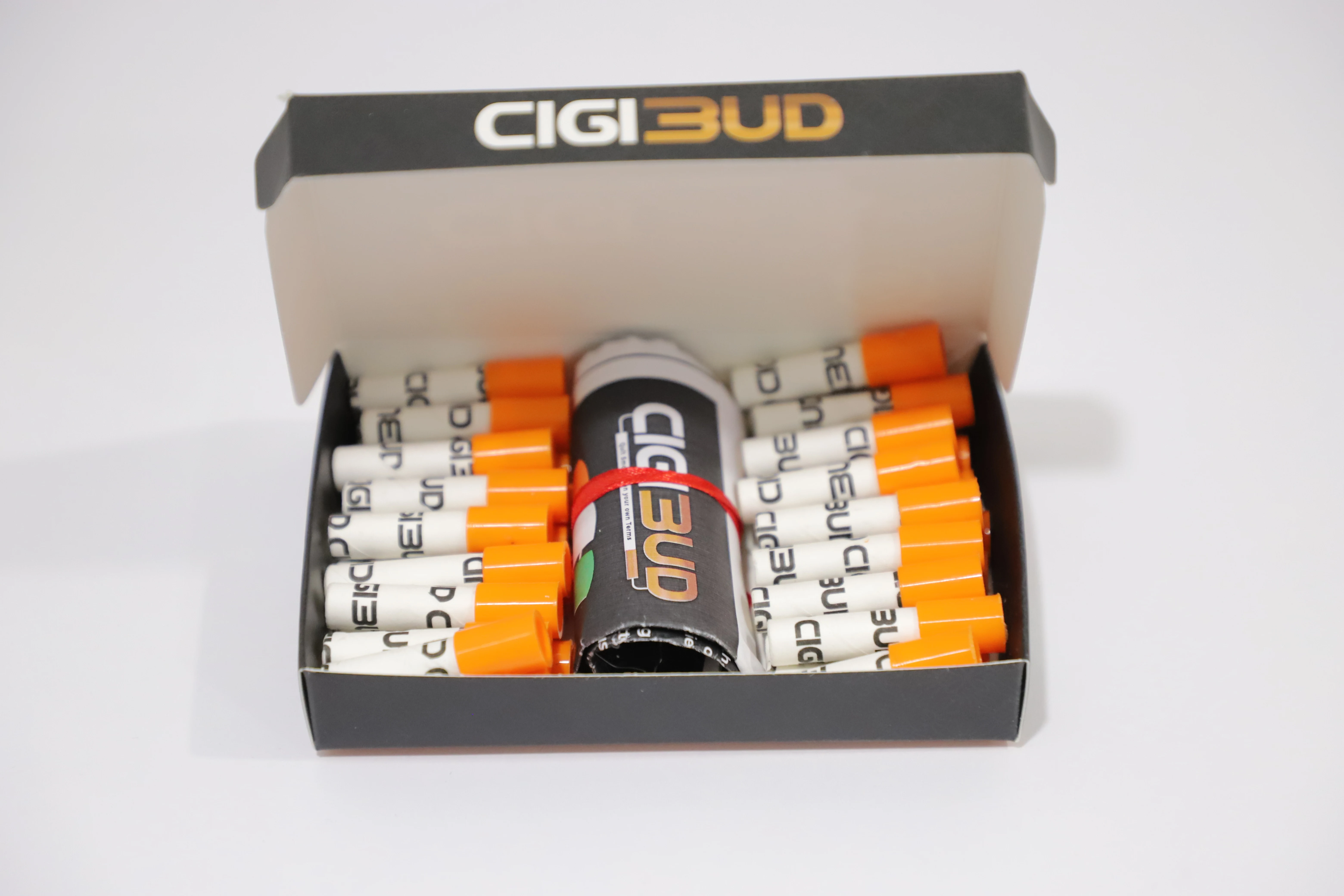
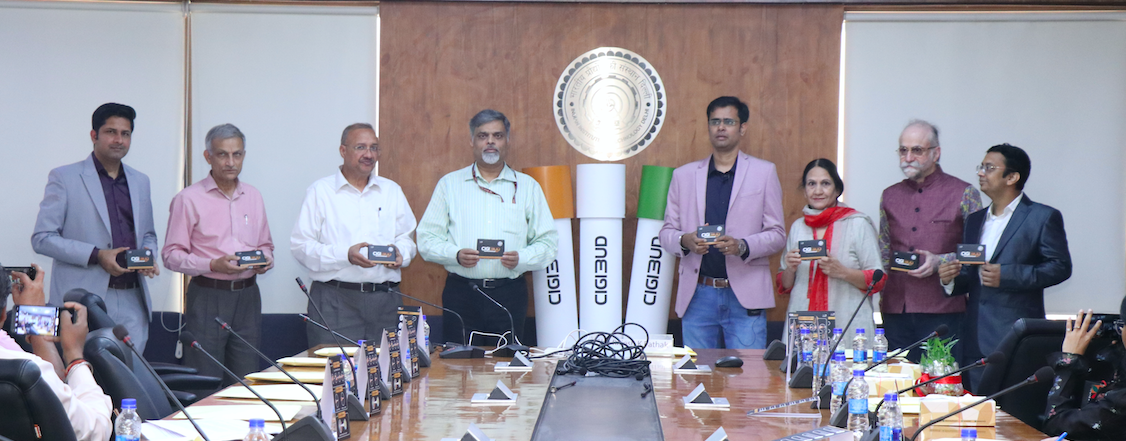
Nanoclean, the organization engineering advanced air filtration solutions launched Cigibud which is the World’s first Smoking Cessation Filter. The product has been developed in IIT Delhi employing the patented nanofiber technology for aiding in quitting smoking.

It is a scientifically proven therapy aimed at smoking cessation over a span of 3 months. The product has been curated taking inspiration from WHO-recommended Nicotine Replacement Therapy that majorly focuses on reducing nicotine levels. The nanofiber technology helps in filtering out a significant quantity of tar and nicotine that eventually makes the user accustomed to lower levels of nicotine.

Cigibud comes in a pack to Light, Ultra, and Pro levels to help quit smoking step-by-step. It is a three-stage process where 60% & 30% tar and nicotine are reduced at the Light level respectively. Increasing the effectiveness at every level, 70% tar and 50% nicotine are compromised at the Ultra level. And at the Pro level, the tar and nicotine are brought down by 80% individually.

Cigibud Launch
Cigibud Launch

Cigibud

Cigibud

Smoking inherently has unwelcome repercussions on health with the potential to cause deadly diseases such as cancer, heart disease, chronic bronchitis, COPD, lung disease, stroke, etc. in a person. Understanding that smoking is a form of addiction that takes time to recede, the product was devised meticulously to check the perils of smoking throughout the quitting regime and afterward as well. For which the nanofibers have been used in Cigibud to make smoking up to 80% less injurious to health. In the meantime, it ensures smoothness in the throat and naturally reduces the urge to smoke. It is compatible with all types of cigarettes. The effect is such that after using Cigibud, people find normal cigarettes bitter and ultimately very repulsive to smoke.

Speaking on the occasion, Prateek Sharma, the Founder & CEO of Nanoclean Global Private Limited said, “Smoking is quite addictive, and even though people are aware of the health repercussions, they find it difficult to break free from the vicious cycle. Therefore, we devised Cigibud to help them quit smoking systematically by making them used to the lower levels of nicotine while making it a smooth experience for them. With the help of Cigibud, we at Nanoclean strive to contribute to society and humankind by giving them advanced solutions to help them quit smoking effortlessly. We continuously work towards abating the lethal effects of smoking by harnessing the benefits of technology available at our disposal.”

Pune Startup To Launch Alcohol-Free, Non-Toxic, Gentler, Long-Lasting Hand Sanitizer Developed from Silver Nanoparticles

Representational Only

An environment friendly hand sanitizer that is gentle on the hands and does not dry them, will soon be available in the market. The alcohol free, aqueous, non-inflammable and non-toxic hand sanitizer has been developed from Silver Nanoparticles by a Pune based start-up.

Recurrent drying up of hands due to repeated application of hand sanitizers is a challenge which people have faced during the COVID 19 pandemic.

The hand sanitizer developed by Weinnovate Biosolutions prolongs antimicrobial activity thus obviating the need for repeated applications. Silver nanoparticles give slow and sustained release of silver ions to kill microorganisms that come in contact. Besides, it can be stored in ambient conditions.

It has successfully completed Central Drugs Standards Control Organisation (CDSCO) approved clinical trial for the hand sanitizer and demonstrated high efficiency in killing viruses.


Weinnovate Biosolutions was supported by CAWACH 2020 grant of National Science and Technology Entrepreneurship Development Board (NSTEDB) under the Department of Science and Technology (DST) and incubated at Entrepreneurship Development Centre (Venture Centre), Pune. They developed the colloidal silver solution-based hand sanitizer. The technology operates on the ability of the silver nanoparticles to prevent the synthesis of viral negative-strand RNA and viral budding.

“We are very confident of the study outcomes and waiting to get the license for our hand sanitizer formulation from CDSCO, India. We are sure that such innovation will push India towards its 'Atmanirbhar Bharat' mission and make India a self-sustained nation to face such pandemics in future”, said Dr. Anupama Engineer, Cofounder & COO Weinnovate Biosolutions.

Silver nanoparticles have been found to be an effective antiviral which act against many deadly viruses like HIV, Hepatitis B, Herpes simplex virus, Influenza virus, and so on. Recent reports have suggested the role of Glutathione capped-Ag2S NCs (Silver nanoclusters) in inhibiting the proliferation of Coronavirus by preventing the synthesis of viral negative-strand RNA and viral budding. The colloidal silver on which the technology of the sanitizers of Weinnovate Biosolutions is based can help arrest Covid -19 spread by blocking the RNA replication and infectivity by blocking the surface glycoproteins.

A study to evaluate the efficacy of hand sanitizer on different types of viruses is also currently underway by the group.


Nanomatrix Material Launches G1 Wonder Mask with Corona-Killing Graphene-Membrane


With the Covid-19 pandemic at its peak and the number of cases on the rise, facemask is one of those precautions which can save us from this deadly virus. Even after getting vaccinated, wearing a mask alongside following the social distancing norms is mandatory. But not every mask can assure your protection against SARS-CoV-2 due to their poor filtration quality. Thus, combating this issue, Jaipur-based startup Nanomatrix Materials, which specializes in R&D of graphene and a pioneer in integration of the wonder material into different applications, has launched the first range of masks in the world that has Graphene Membrane inside which has the potential to not just prevent but kill coronavirus. Named ‘G1 Wonder’ this newly introduced range of masks introduced by the company derives its power from a membrane that is infused with graphene-silver layered membrane (patent applied). Tested at government-approved laboratories as per ISO 18184 standard, the graphene-silver composite is a collection of millions of microscopic razor-sharp blades with electric charges that rip apart bacterial and virus cells.

The graphene-silver NM membrane used in G1 Wonder mask is breathable, washable, reusable, pollution resistant, anti-odour and destroys 99% virus and bacteria in just seconds of contact. The membrane continuously inactivates inhaled viruses, ensuring adequate safeguard for those venturing out of their homes. The mask also comes with the Bacterial Filtration Efficiency >99%. These are the only masks available that have the capability of absorbing harmful Volatile Organic Compound (VOC) as well.

Considering the current scenario Nanomatrix has developed the face mask for two particular segments of the society, the community mask and N95 mask range. Under the community mask which is for the general public, they have introduced washable antimicrobial masks known as Stylo and Eleganz which are reusable upto 30-50 times. These masks range between Rs. 299 - Rs. 399.

Another revolutionary development is in the domain of medical N95 face masks. This is the first N95 mask in the world that has two antimicrobial layers making the only N95 mask that stops as well as kills the microbes instantly upon contact. This newly developed mask can increase the safety level especially for front liners who are exposed directly to the infected patients. This N95 mask can be used for 6-7 days or 30 hours and is priced at MRP Rs. 199.

Performance: The mask has a layer of Graphene-Silver Membrane. When tested against the COVID-19 virus, this membrane showed, kill rate of >99% within 15s of contact and >4log reduction was observed for the H1N1 influenza virus. Further, the Bacterial Filtration Efficiency (BFE) of > 99% has also been observed for both Gram-positive and Gram-negative bacteria.

Speaking on the occasion of the launch, Nanomatrix Materials founder Vikas Bardiya said, “NM graphene-silver technology that powers the mask destroys viruses, bacteria and also filters harmful gases from the atmosphere. The alternatives currently available in the market merely filter viruses and do not destroy them, which is essential if we want to stop community transmission. Our team understands the subject deeply and have conducted thorough research along with third-party testworks before developing the G1 Wonder masks.” He further added, “Our company has decided on the pricing in accordance with India’s sensibility. We wanted these masks to be affordable to all, so that everyone can live safely.”

The masks are available on the company's website www.g1wonders.com and are also available on Amazon and Flipkart. The company is also in the process to set the distribution network across the country as there is a need for these types of masks across the country.

The company is set to launch a series of products made using their proprietary graphene technology. They plan to launch Air Conditioner filters that can filter airborne viruses and bacteria.

Useful in NanoTech, Indian Scientists Finds Clue to Exceptional Behaviour of Self-propelled Fluctuations like Fish Schools, Flocking Birds, Bacterial Colonies

DST Scientists find clue to anomalous behaviour of self-propelled fluctuations like fish schools ,flocking birds, bacterial colonies

This understanding can be useful in nanotechnology applications like building small-scale energy-efficient bio-devices as well as biomedical applications like characterizing infection spreading in organs, antibiotic resistance and so on.


Scientists have found a clue to dynamical origin of fluctuations in systems like fish schools, swarm of insects, flocking birds and bacterial colonies, which are called active matter systems. This understanding can be useful in nanotechnology applications like building small-scale energy-efficient bio-devices as well as biomedical applications like characterizing infection spread in organs, antibiotic resistance and so on.

Such systems are made up of self-driven components which extract energy from their surroundings to generate mechanical work. Due to continuous energy input, such systems are driven far from equilibrium and exhibit, unlike in equilibrium, fascinating collective behaviours, like clustering, “giant” mass fluctuations and anomalous transport. Particularly, their transport properties (molecular properties, analogous to viscosity, thermal conductivity and mobility that indicate the rate at which momentum, heat, and mass are transferred from one part of a system to another) can be perplexing at times.

The anomalous behaviour of such systems can be understood by considering a cup of coffee, stirred with a spoon. If one stops stirring, the coffee will eventually come to rest, due to the internal viscous forces, which resist the fluid motion. In contrast, imagine “stirring” a bacterial solution, which, under suitable conditions (bacterial concentration), can exhibit perpetual or unceasing collective directed motion; in that case, the viscosity would vanish in such “active” bacterial fluids.


Probing into this anomalous behaviour, Scientists from the S N Bose National Centre for Basic Sciences, an autonomous institute of the Department of Science &Technology, Government of India, led by Punyabrata Pradhan studied a toy model of self-propelled particles and explained the dynamical origin of ‘giant’ mass fluctuations in the system, providing insights into the emergent properties of such active matters in general. The findings of the study have been published in the journal ‘PHYSICAL REVIEW E’ recently.

The team studied a toy model of self-propelled particles where the ballistic motion of bacteria (like Escherichia coli) was mimicked through long-ranged particle hopping. They showed that, upon tuning concentration beyond a critical value, the conductivity, or the mobility, of the particles diverges; in other words, the resistance becomes zero. Moreover, they demonstrated an intimate relationship between the zero resistance and the diverging mass fluctuations in the system, thus explaining the dynamical origin of “giant’’ mass fluctuations in the system.


Publication link:DOI: https://doi.org/10.1103/PhysRevE.101.052611

For more details, Punyabrata Pradhan Associate Professor (punyabrata.pradhan@bose.res.in) can be contacted.]


IIT Roorkee Researchers Develop Anti-Microbial Nanocoating System for Facemasks to Tackle COVID-19

A team of researchers at IIT Roorkee has developed a nano-coating system to be used for facemasks and PPE for reducing the transmission risk of COVID-19. This coating has been tested to effectively kill pathogens within 10-15 minutes.


The formulation is highly effective against clinical pathogens such as Staphylococcus aureus and Escherichia coli O157. This formulation will be beneficial to frontline medical personnel for coating their existing facemasks and can be scaled up further for coating on their gowns.

“Facemask is a core component of the personal protective equipment (PPE), along with gown, gloves, and eye protection for frontline healthcare personnel. This nano-coating provides an additional layer of protection against pathogens in existing masks and can curb the transmission risk of the disease,” said Prof. Naveen K Navani of Department of Biotechnology and Centre of Nanotechnology who led the research.


The formulation also contains silver nanoparticles and plant-based antimicrobials which show synergistic killing effect against the pathogens. The combined effect of more than three antimicrobial compounds was used for the development of formulation which can be coated on any surface. Since the phytochemicals used in the formulation are known to destroy viruses, it has the potential to inhibit the Corona virus too. 

It was developed by a four-member team including Mr. Pardeep Kumar, Dr. Arun Beniwal, and Mr. Ajmal Hussain.

IIT Roorkee is an institute of national importance imparting higher education in engineering, sciences, management, architecture and planning, and humanities and social sciences. Since its establishment in 1847, the Institute has played a vital role in providing technical human resources and know-how to the country.

Australia to Commercialize A Rare Nanoparticle with Huge global Potential

Large deposits of halloysite-kaolin clay found on the Eyre Peninsula of South Australia are yielding unique microscopic tubular particles with sought-after absorption properties.

Natural Nanotech Pty Ltd, a startup based in the South Australian capital of Adelaide, is now launching research and development work to take the product to market.

“We’ve just signed a three-year agreement to scale up laboratory test work completed previously to a commercial scale,” company director Dr Tony Belperio said.

“If successful, it could position Australia as the dominant global manufacturer and supplier of a new product with diverse environmental applications.”

The tiny particles found in natural clay are called halloysite and Dr Belperio said they could potentially replace expensive manufactured versions of nanotubes currently being used in a wide range of new technologies.

“With the rest of the world’s supply of natural halloysite limited, South Australia is uniquely home to large deposits near Streaky Bay,” Dr Belperio said of the deposit on the west coast of the Eyre Peninsula.

“(This potential) has been known about for a few years but the halloysite is very rare globally, what we’ve found in southern Australia, near Streaky Bay, are really big deposits, hundreds of millions of tonnes.”

Natural Nanotech Pty Ltd is jointly owned by South Australian junior exploration companies Minotaur Exploration and Andromeda Metals.

Its first research project will focus on developing a commercially attractive solution to carbon capture from the atmosphere and to selective pollutants in water.

Dr Belperio said these applications already had been successfully demonstrated at laboratory scale by the team at the University of Newcastle in New South Wales and the up-scaled test work at industrial sites and commercialisation trials was now planned.

Kaolin clay is used for high-end ceramics with demand in China and Southeast Asia for making expensive vases or tea sets along with being used for brightening paint or paper.

“Instead of selling this as a bulk product we decided we should extract the nanotubes,” Dr Belperio said.


The ceramic industry would still be a prime customer for the product, the nanotubes have strengthening ability, and other target markets would include the water filtration industry for cleaning poor quality water.

“What is just hitting the headlines is the capture of CO2 out of the atmosphere, there’s a company in the United States experimenting and we believe they are using (manufactured) carbon nanotubes,” Dr Belperio said.

He said there was potential for the nanotubes to be used in air conditioner-sized units that could reduce a company’s carbon footprint by capturing carbon out of the air.

Natural Nanotech is also applying for a research and development grant.

Once the current research project was up and running, Dr Belperio said the company was also looking at starting research into the use of halloysite for safe storage of hydrogen.

Andromeda Metals Ltd and Minotaur Exploration entered a formal joint venture agreement over Minotaur’s Poochera tenements in 2018.

Poochera is a kaolin district of global significance. It contains many kaolin deposits with unique characteristics, including the deposit of “bright white” kaolin at Carey’s Well, some 45km east of Streaky Bay on western Eyre Peninsula.

How Nanotechnology has the Potential to Reshape Wood Industry?

Nanotechnology has immense potential when it comes to wood preservation and forestry. A few years ago, nanotechnology was focused on improving wood durability, settling of wood extractives, and moisture control with the help of nano-manipulation of wood fibers. Over the years, this focus has shifted to major commercial applications across various industries including food and beverage, packaging, automotive, healthcare, sensors and electronics, and construction among others owing to rapid technological advancements. Investments in research and development along with introduction to advanced techniques are anticipated t impel the business opportunities in near future.

Nanotechnology, the Enabler of Woodworking and Forestry


Relatively a new branch of technology, nanotech encompasses the knowledge of chemistry, physics, technology, and biology of objects at less than 100 nanometer scale. Cellulose is a vital structural component of plants and the most common natural polymer available. Cotton and wood pulp are the primary source of this renewable and biodegradable material. It is also extracted from other sources like flax, jute, sisal, and types of algae among others. Wood waste can also be used to produce cellulose.

Latest advancements in wood production and technology with regards to nanotechnology has made it one of the most promising areas of wood utilization around the world. Cellulose nanomaterials can be produced using wood chips and wood scraps. Nanotechnology has the potential to prove advantageous across various aspects of forest sector ranging from operations, plants, harvesting, forest management, and wood-based products such as furniture.

Thermal Conductivity, Water Resistance, and Fireproofing


The primary problem with using wood-composite materials and wood products is their susceptibility towards biological agents leading to deterioration. These materials are prone to damage caused by moisture, fungi, termites, insects, and extreme temperatures. Researchers have been working on developing wood preservatives and other commercially-advanced processes to overcome these problems. Heat treatment is one of the most popular techniques used to modify molecular structure of wood. This technology can improve durability of large wood members with the application of nano-copper (NC) and nano-silver (NS).

Wood products are vulnerable to moisture, vapor, and water as the material. Its properties depend on relative humidity, temperature, and mechanical load. Nanotechnology can improve water resistance of wood. Application of nano-zycosil (NZ) can reduce liquid permeability of wood and fiberboards to a significant degree. Nano-fibers, nano-silver, and nano-copper can improve durability and fungus resistance of wood. Nano-fibers can build an impermeable physical barrier for fire and preserves wood. Nanotechnology is also found useful in reducing production time of wood composites.

Future of Nanotechnology in Wood Industry


[caption id="attachment_126484" align="aligncenter" width="626"]nanocoating Global nanocoatings market volume, by product, 2012 - 2020 (Kilo Tons) (Source: Grand View Research)[/caption]

Forestry, wood, and wood-processing sectors are utilizing nanotechnology and metal nanoparticles to achieve higher levels of excellence. Top players are investing in research and development (R&D) and innovation to create business opportunities across different consumer segments around the world. The focus on boosting durability of wood can reduce the environmental effects of using wood and wood-composites on industrial scale. Use of nanotechnology can make wood virtually immune to discoloration, molds, moisture, water, fire and even ultraviolet (UV) radiation. Rising adoption of hydrophobic coatings for household furniture make these materials desirable for consumers.

Recently, a team of researchers from India, Czech Republic, Korea, and Austria studied the effects of nanotechnology on wood. As per the results of this study, use of metal nanoparticles on wood can prove to be antifungal, antibacterial, and anti-abrasive. It also appeared to reduce emission of volatile organic compounds or VOCs. However, the team concluded that more tests and regulatory reforms are needed before bulk wood preservation or industrial level application of these products is done.

In another recent development, Arpa Industriale has introduced Fenix-NTM, a new smart material for interior design applications. This material is suitable for both horizontal and vertical uses and is obtained through next-gen thermoplastic resins. The product has thermal healing properties and low light reflectivity. The product is touted to be highly resistant to scratches, staining, and abrasion. According to the market research and consulting company Grand View Research, high demand for luxury furniture across high-class offices and deluxe domestic settings can boost such innovations in near future.

The Bottom Line


It can be concluded that nanotechnology has a great potential and projected application in forestry, wood, and wood-composite materials. However, multi-disciplinary research projects, collaboration of research institutes and conglomerates, and investments in innovations can help discover advanced materials to be used for the preservation of wood.

The Rise and Fall of Nanotech Industry and Why No Body Is Talking About It

Is Nanotechnology sector outperforming like other sectors? Is government offering a right amount of funds for research and development? Where had Nanotechnology startups gone? What is scope for nanotechnology startups in India? Who is a good option for entrepreneurs for quicker and reliable funding support? Let’s take a look where this industry is leading!

Nanotechnology is India’s one of the most promising industries as it carries high potential all along having a great importance in research work. It has wide applications and several national and international companies like the Tata Group, Reliance Industries, Mahindra & Mahindra and Intel etc. are investing in it. A number of startup companies are also working on how to apply it in the multidisciplinary domains like electronics, biotechnology, electronics, communication, food, energy, computer science and others. Many of them are using this technology to improve their traditional products portfolio to compete with market challenges and ensure rapid growth by boosting the sales.

A Gist of Nanotechnology


Well, Nanotechnology is changing the world and lifestyle! It is the science of small particles which are less than 100 nm in size. It involves in the engineering of functional systems at the nano level and expected to influence a wide range of products and processes which will influence the national development and economic growth in the future.

Few Initiatives Supporting Nano Technology


A few years back this segment was expected to be huge as it directly give impact on socio economic growth and social environment. In 2007, the Indian Government has launched a mission on Nano Science & Technology called Nano Mission and allocated Rs. 1000 crore under the 11th Five Year Plan to promote nanotechnology in India. To continue with same mission the Union Cabinet allocated Rs. 650 crore in the Nano Mission Phase-II during the 12th Five Year Plan in 2012 (2012-2017). The Nano Mission works under the Department of Science and Technology to promote collaborative efforts taking along institutions, scientists, and industry players. The Nano mission also claims to make many other efforts to produce application oriented products. This mission supported India to get entry in the list of the top five nations in terms of nano technology publications. It has also produced more than 900 Ph.Ds, 5000 research papers and a huge range of useful products for various industries over the years. It is helping to establish a good ecosystem in the country to pursue nano technology research. The Indian government has initiated different programme under this mission but somehow nanotechnology failed to catch attention in a big way.

Why Nanotechnology Is Falling Down?


Despite the fact that "Nano Mission" has financed many projects over the time, it had never lead to hopeful results. Actually, all the taken steps are not sufficient or are just few drops in the ocean.

Bangalore based NoPo’s founder, Gadhadar Reddy (http://nopo.in/web/) gave an interesting outline of nanotechnology sector. He said, “Nanotechnology innovations have a bright future as it is gaining interest fast. However there is an increasing number of research papers but practical applications are limited.” He also raised a concern, “Government funding has mostly been controlled and cornered by a few researchers and bureaucrats. Whereas global investors are not yet forthcoming as there are no true nanotech products in India. On the other hand, Indian investors are least interested to invest in the development of technology.” Reddy, Founded NoPo with a group of experts including Changalaray Reddy, Chairman & Director, NoPo and Dr. Robert Kelly Bradley , Director of Technology, NoPo in 2011. The company is producing a high-quality Single Walled Carbon Nanotubes in large quantity.

“Nanotechnology” searches on Google have also trended down over the time. However, people are searching continuously all those products and technologies which are benefiting by nanotechnology and are better alternatives for many things. Clearly, it needs to do much more—and also provide long-term fiscal and other incentives—if India is to realize its potential in this breakthrough science.

Challenges for Nanotech Companies


Nanotechnology can contribute to strengthen the Indian Economy. It offers a wide range of employment opportunities to youths and scientists. However there are some key hurdles in the ways of startups/companies that are serving in this segment. Vivek Gupta who founded Nanoshel (https://www.nanoshel.com) in March 2007 with Bio Nano conjugation projects for targeted drug delivery applications said, “As per my experience, Nanotech industry is at a very nascent stage in India. It will take another 10 years to grow because of many reasons.” His company is specialized in developing the nano drugs for Cancer, Aids, Malaria, and Typhoid etc. People are not very receptive for this technology. According to him, “There is lack of understanding and unwilling to change the products with new technology. Indians are not willing to change and understand the usage and benefits of nanotechnology."He feels disappointed at times because as there is lack of adequate support from the Government and investors as regards to promotion of nanotech industry and it makes really difficult for nanotech startups to survive in India for a long time period.

Reddy added, “The field has an inherent high barrier to entry. For example: The most basic tool required for any nanotech startup is an Electron MIcroscope. They cost between $500, 000 - $10 Million, are not developed in India, require extensive support and trained operators. So, startups are forced to use private labs which take time for results thus reducing scope for rapid development. An access to low cost instrumentation is essential for rapid development of the field all over the world.” Most of the startups don’t know where to use this technology and what to do to create demand and increase their products performance. Reddy said that electronics in the only sector where nanotech is making an impact in a big way. India does not have fabs nor any strength in advanced electronics at this time. This is where Nanotech will head in the next decade. The industry will go a long way in putting resources to achieve specific goals. Reddy added, “Nanotechnology is currently being pursued by private individuals and nano products will have a huge scope everywhere in the future."

Some Companies Supporting the Future of Nano Technology


Although nanotechnology startups are not much visible but there are some who are doing really good all along helping many older industries by providing inventions. Few names in this category include Velbionanotech, Nanoshel, Micromaterials Private Limited, Nanobio chemicals, Yashnanotech and lots more.

Velbionanotech is using nanotechnology in designing drugs for various diseases such as heart problems, kidney stones, AIDS, cancer etc.. It uses Nanochips and nano particles for drug development and delivering them into human body. It is also designing bionano products with traditional machinery. It was established in March 2002 to promote R&D in nanotechnology and biotechnology segment worldwide by making use of proven latest throughput technologies. Nanoshel has a research center in Haryana by the name the Intelligent Materials Private Limited where it is producing more than 50 types of nano products including metal, carbon nanotubes, oxides and allied nanoparticles etc.

Bangalore-based Micromaterials Private Limited is involved in the production of nano particles for different applications. Mumabi based Nanobio Chemicals is experimenting in the production of Nano science education kits, nanocomposites, iron oxide nano-particles, nano-chains and antimicrobial products etc for promoting health and hygiene. Another Mumbai based startup Yashnanotech is offering nanotechnology business consulting worldwide all along the intelligence services to investors and industry leaders. It is connecting Indian nanotechnology startups and big companies worldwide to explore more scope and opportunities.

If you know and is part of a Nanotech Startup in India then do let us know in comments below.

[Top Image - Shutterstock]

Market Reports

Market Report & Surveys
IndianWeb2.com © all rights reserved