‏إظهار الرسائل ذات التسميات Telescope. إظهار كافة الرسائل

Indian Scientists with the Help of James Webb Telescope Formulate Model To Trace Elusive Exo-Moons

Indian Scientists With The Help of James Webb Telescope Formulate Model To Trace Elusive Exo-Moons

This may also help detect habitable exo-moons in the future and understand new worlds beyond our own.

NASA’s James Webb Space Telescope (JWST), which is touted as the most powerful telescope ever built, was successfully placed in outer space last year in December. And, with the help of this JWST, scientists at the Indian Institute of Astrophysics (IIA), Bangalore, have developed a model to trace the so far elusive exomoons – natural satellites that revolve around exoplanets (planets orbiting stars other than the Sun).

So far, five thousand exoplanets --- planets orbiting stars other than the Sun, have been discovered by using several ground-based and space telescopes such as Kepler, CoRoT, Spitzer, and Hubble space telescopes. However, the natural satellites or exomoon around any of these planets still remain untraced.

Scientists at the IIA, Bangalore, which is an autonomous institute of the Department of Science and Technology (DST), have demonstrated that the newly launched James Webb Space Telescope (JWST) is sufficiently powerful to detect the transit signal of exomoons in the photometric light curves of moon hosting exoplanets.

Schematic diagram of moon hosting exoplanet and its model photometric transit light curve


Professor Sujan Sengupta and his graduate student Suman Saha have developed an analytical model that uses the radius and orbital properties of the host planet and its moon as parameters to model the photometric transit light curve of moon-hosting exoplanets by incorporating various possible orientations of the moon-planet-star system. 

The co-alignment or non-coalignment of the orbits of the planet and the moon are used as parameters (using two angular parameters), and they can be used to model all the possible orbital alignments for a star-planet-moon system. Using these generic models and the analysis of photometric transit light curves of exoplanets that is being obtained by JWST, a large number of exomoons can be detected in near future. 

According to the researchers, an exo-moon around a gas giant planet like Jupiter in the habitable zone of the host star where temperature is appropriate for water to exist in liquid state may harbour life. Under favourable alignment of moon-planet-star, such exomoon may also be detected by JWST. The research has been accepted for publication in The Astrophysical Journal, which is published by the American Astronomical Society (AAS).
India's 1st and Asia's Largest Liquid Mirror Telescope Formally Launched in Uttarakhand

India's 1st and Asia's Largest Liquid Mirror Telescope Formally Launched in Uttarakhand
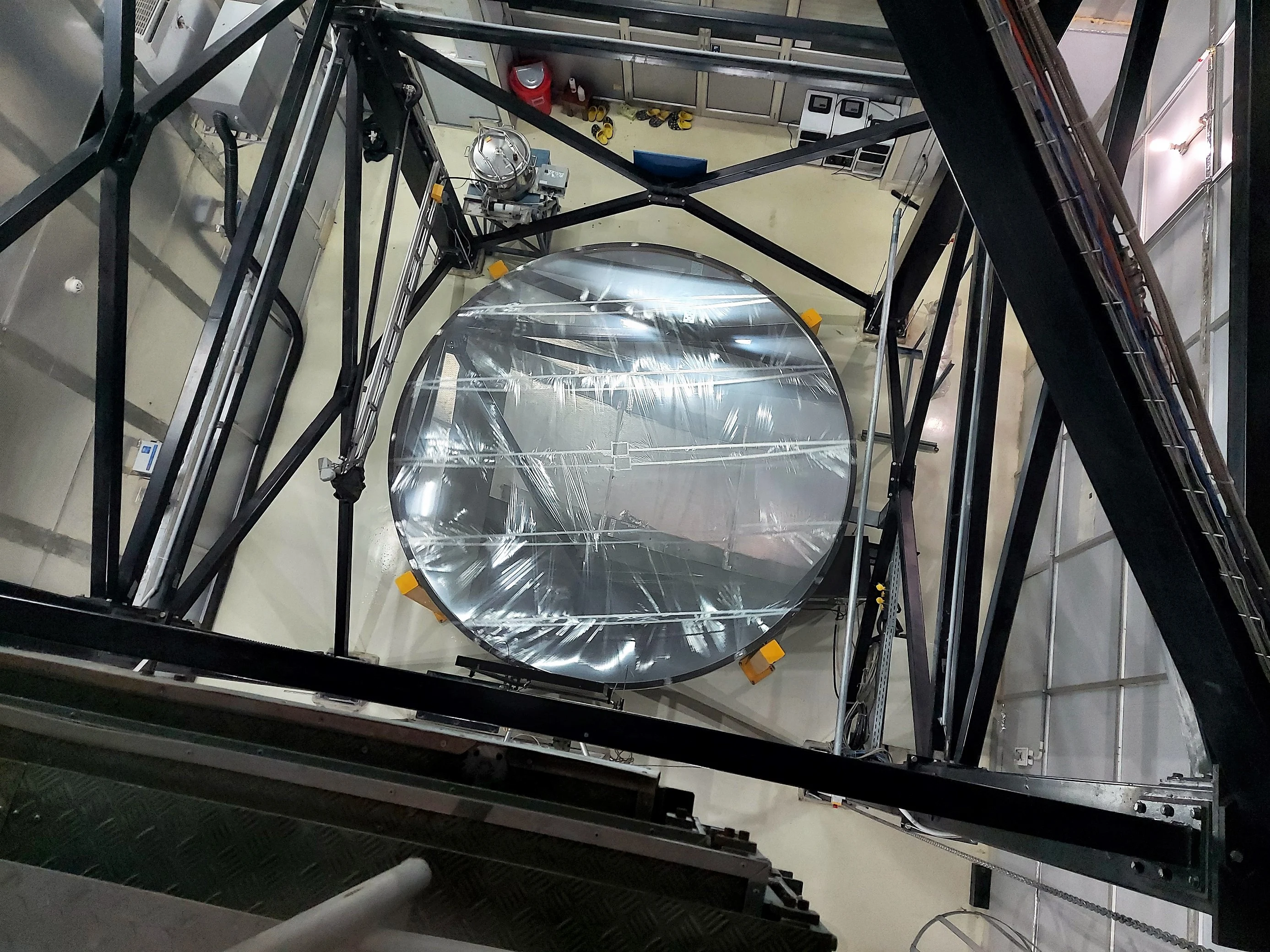
Top view of the ILMT showing the liquid mercury mirror covered by a thin mylar film.

A new telescope facility — International ​Liquid Mirror ​Telescope (ILMT) — has been formally launched in Uttarakhand at campus of Aryabhatta Research Institute of Observational Sciences (ARIES) to keep a watch on the overhead sky to identify transient or variable objects such as supernovae, gravitational lenses, space debris, and asteroids.

This new telescope is first liquid mirror telescope in India and the largest in Asia. It will help in surveying the sky making it possible to observe several galaxies and other astronomical sources just by staring at the strip of sky that passes overhead.

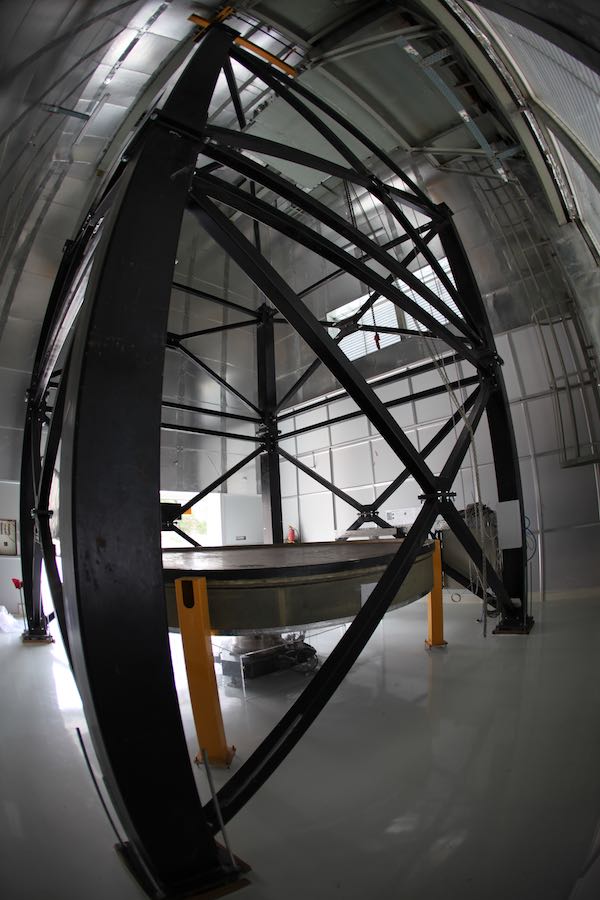
Built by astronomers from India, Belgium and Canada, the novel instrument employs a 4-meter-diameter rotating mirror made up of a thin film of liquid mercury to collect and focus light.

Prof. Dipankar Banerjee, Director, ARIES, said, "ILMT is the first liquid-mirror telescope designed exclusively for astronomical observations installed at the Devasthal Observatory of ARIES. The ILMT and the Devasthal Optical Telescope (DOT). Both are the largest aperture telescopes available in the country."

A ​4Kx4K ​CCD ​camera ​manufactured ​by ​'Spectral ​Instruments' ​and ​which ​can operate ​over ​the ​4000 ​to ​11000 ​Å ​spectral ​range ​(SDSS ​filters ​g', ​r', ​i' ​are ​available), ​will be ​positioned ​at ​the ​prime ​focus ​of ​the ​ILMT ​at ​about ​8m ​above ​the ​mirror. ​The ​mirror ​being parabolic ​in ​shape ​requires ​an ​optical ​corrector ​to ​get ​a ​flat ​focal ​surface ​of ​about ​27 ​arcminute in ​diameter. ​All ​these ​elements ​are ​mechanically ​coupled ​by ​an ​external ​structure ​and ​a ​spider.

India's 1st and Asia's Largest Liquid Mirror Telescope Formally Launched in Uttarakhand

Dr. Kuntal Misra, Project Investigator of ILMT at ARIES, said, "The wealth of data generated with the ILMT survey will be exemplary. In the future, several young researchers will be working on different science programs utilizing the ILMT data. When regular science operations begin later this year, the ILMT will produce about 10 GB of data every night, which will be quickly analyzed to reveal variable and transient stellar sources,” said Dr. Brajesh Kumar, ILMT Project Scientist at ARIES. The 3.6 metre DOT, with the availability of sophisticated back-end instruments, will allow rapid follow-up observations of the newly-detected transient sources with the adjacent ILMT."

The data collected from ILMT will be ideally suited to perform a deep photometric and astrometric variability survey over a period of typically 5 years,” notes Project Director Prof. Jean Surdej (University of Liège, Belgium and University of Poznan, Poland).

The ILMT achieved first light in the 2nd week of May 2022. Using the first light observations through the g, r and i Sloan filters, a colour composite image (shown below) of a small portion of the sky was prepared. 

To highlight the features of galaxies and other stellar objects, the green colour has been slightly enhanced in the image. NGC 4274 Galaxy can be seen in the top right corner.

Colour composite image obtained from first light observations of ILMT.

The ​4m ​International ​Liquid ​Mirror ​Telescope ​(ILMT) ​project ​results ​from ​a collaboration ​between ​Aryabhatta ​Research ​Institute ​of ​Observational ​Sciences ​(ARIES, ​India), the ​Institute ​of ​Astrophysics ​and ​Geophysics ​(Liege ​University), ​the ​Canadian ​Astronomical Institutes, ​University ​of ​Montreal, ​University ​of ​Toronto, ​York ​University, ​University ​of ​British Columbia ​and ​Victoria ​University.


Max Planck Institute Uses Spectrum's Digitizer Cards in the World's Most Sensitive Cherenkov Telescopes

 MAGIC (Major Atmospheric Gamma-Ray Imaging Cherenkov) are the world's largest air-Cherenkov-telescopes each with a diameter of 17m. 

Max Planck Institute uses Spectrum's digitizer cards to measure diameters of distant stars

Ultra-clean signal handling and nanosecond data precision leads to unprecedented sensitivity of the world's largest Cherenkov telescopes

The MAGIC telescopes on the Canary Island of La Palma were built to observe cosmic objects that emit high-energy gamma rays, i.e. supernovae or black holes. Astronomers also use the twin telescope to measure the diameter of stars to investigate the processes throughout their life cycle. This is a challenging task for earthbound telescopes, since the angular diameter of stars is extremely small: only a few milli-arc-seconds. That is about the size of a coin on top of the Eiffel Tower as seen from New York! Not even the largest telescopes in the world are able to measure them directly. Instead, the researchers record the light intensity of an object by combining the light from several telescopes at a distance of tens of meters – a technique called intensity interferometry. However, the signals are very weak so any spurious signals and crosstalk would swamp them. Having evaluated several makes of digitizer card, Spectrum Instrumentation M4i.4450-x8 digitizer cards were selected.

For the uninitiated, Cherenkov Telescope Array (CTA) is a worldwide project for the next generation ground-based observatory for gamma-ray astronomy at very-high energies. With more than 100 telescopes located in the northern and southern hemispheres, CTA will be the world’s largest and most sensitive high-energy gamma-ray observatory.

In India, a cherenkov telescope is located in Hanle, Ladakh called "Major Atmospheric Cerenkov Experiment Telescope (MACE)". It is the highest (in altitude) and second largest Cerenkov telescope in the world.

"We found that these cards not only had the lowest levels of spurious signals and crosstalk of all the PC cards that we tested," said David Fink from the Max Planck Institute for Physics, who is in charge of Electronic Development on the project, "but the performance of each card was also identical. The latter is so important as you are trying to compare the differences between the signals from each telescope. The technique is very sensitive to correlated signals and crosstalk between channels including anything picked up along the way from the optical sensors through to the computer that the digitizer cards are mounted in. To put it into perspective, these Spectrum cards enable us to precisely measure fluctuations of the light intensity on nanosecond time scales giving unprecedented sensitivity that is around ten times better than that achieved in the 1970s with the Narrabri interferometer."

The twin telescope MAGIC at an altitude of over 2200m on the island La Palma.

"The other important factor in choosing Spectrum digitizer cards is their excellent reputation for reliability. The cards are located by the two telescopes that are high up in the mountains on the island of La Palma, one of Spain's Canary Islands, so it is not a simple matter to swap in a new card if there is an issue. Plus, there is the cost of instrument downtime and lost observation time. The fact that Spectrum provides a five-year warranty shows their faith in the high quality and reliability of their cards which was supported when we checked with other users in the scientific community. Lastly, Spectrum assured us that they can repair cards long after the five years have passed. That i very reassuring as long-term experiments can often be confronted with a large effort to redevelop a system because the original hardware at the heart of it is no longer available."

Spectrum M4i.4450-x8  2-channel digitizer with 500 MS/s speed
 
Because of the large quantities of data being handled, the system uses Spectrum's SCAPP software (Spectrum's CUDA Access for Parallel Processing). This is a way of sending all the collected data from the digitizer not to the CPU of a PC with 8 or 16 processor cores, but to an NVIDA PC graphic card because the GPU graphic processor has up to 5000 cores giving much faster data processing. This enables recordings to be run in high resolution with 500 Megasamples per second.

The diameter of a distant star is measured by digitizing the variations in the light received from a star. The cross correlation is then computed and averaged during observation to determine its variation as a function of the separation between telescopes. The geometry changes as the star moves across the sky. Measuring a shape requires observations along multiple axes. 

Background

Imaging Atmospheric Cherenkov Telescopes (IACTs) have large mirrors and in the order of one nanosecond time response to signals of a few photo-electrons produced by optical photons. This means that they are ideally suited for optical interferometry observations. Thanks to their sensitivity to visible wavelengths and long baseline optical intensity interferometry with IACTs, angular resolutions of tens to microarcseconds can be achieved. This project has installed a simple optical setup on top of the cameras of the two 17m diameter IACTs and observed coherent fluctuations in the photon intensity measured at the two telescopes for three different stars.

The link to the Institute's paper on this project that is called MAGIC (Major Atmospheric Gamma-Ray Imaging Cherenkov) is at: https://arxiv.org/abs/1911.06029

Further reading on Interferometry is at: https://arxiv.org/abs/1204.3624

The telescopes in the north of the island are currently not threatened by the volcanic eruption, as the volcano is located in the south of La Palma.

Photos courtesy of MAGIC Collaboration, photo 1 by Robert Wagner and photo 2 by Giovanni Ceribella.


About Spectrum Instrumentation

Spectrum Instrumentation, founded in 1989, uses modular design to create a wide range of digitizers and generator products as PC-cards (PCIe and PXIe) and stand-alone Ethernet units (LXI). In over 30 years, Spectrum has gained customers all around the world, including many A-brand industry-leaders and practically all prestigious universities. The company is headquartered near Hamburg, Germany, and known or its outstanding support that comes directly from the design engineers. More information about Spectrum can be found at www.spectrum-instrumentation.com


IIT Hyderabad Established Its First Astronomical Observatory With a Large Telescope for Public Outreach


The telescope due to its immense size will not only allow amateur astronomical observations including deep sky objects, planetary systems, stars, and nebulae but also provide research quality images with potential discoveries

  • The 14-inch telescope is the second largest among IITs dedicated for the outreach
  • Large mirror size provides a detailed view of the night sky
  • Study of millions of faint and deep sky objects can be achieved with the telescope
  • Recorded images and data will be useful to support astronomical research
  • IITH will contribute significantly to the Indian astronomical community

Hyderabad, August 16, 2021: As a first step towards starting astronomical activities as well as a student’s training program, a large telescope facility has been established in the IITH campus. The telescope is equipped with a huge mirror with an optical diameter of 355 mm (second largest among IITs after IIT Kanpur) with a focal length of 1650 mm. Such a large mirror along with a Crayford focuser and elegant truss tube design will enable observation of the deep sky and faint objects which were never possible to detect with a small telescope. Small craters on the lunar surface, rings of Saturn are some of the small features that can be resolved with the telescope. An advanced digital camera will be used to record images and transient astronomical phenomena like meteor showers. Although the telescope would primarily aim for the outreach and night sky observational training programs, it has the capabilities of delivering research level performance which will be explored subsequently.

Moon image captured by 14inch telescope at IIT Hyderabad


With this Telescope, IITH will be a part of the Indian astronomical community hosting a large telescope for an effective outreach with high-quality deliverance. The project is funded by Prof B S Murty, the Director, IIT Hyderabad, and managed by Dr Mayukh Pahari, Department of Physics. The facility was inaugurated by Padmashri and Padmabhushan, Dr B N Suresh, Chancellor and the Founding Director of the Indian Institute of Space Science and Technology, Thiruvananthapuram.

Expressing his delight at the setting up this facility, Prof Murty added, “The enthusiasm and the curiosity of young students about objects in the sky are limitless. With this large telescope, we will provide them an opportunity to study celestial objects in greater detail than other small telescopes conventionally used for outreach programs. Activities like stargazing training programs, observing astronomical transients, working with celestial images will enhance their knowledge and add to their sense of human connection with space. We would also ensure that students from schools and various colleges in and around Hyderabad also get the advantage of this large telescope through various programs organized by the Astronomy Club of IITH."

Telescope inauguration at IITH

Due to its superior quality images, the data from the observatory may serve the national and international astronomical researchers by supplying supportive data. Such collaboration will provide a rare opportunity for the facility to become a part of the international observatory community so that IITH will be a part of major astronomical discoveries and become a recognized center for astronomy in India.

Citing the importance of such facilities, Dr Mayukh Pahari, Assistant Professor, Department of Physics said, “Unlike other observatories designed for the outreach program, our facility will provide a chance to work with high-quality astronomical images from deep sky objects as well as transient events so that school/ college students may have opportunities to contribute to the astronomical research.”

Indian Institute of Technology Hyderabad (IITH) is one of the eight new IITs established by the Government of India in 2008. In a short span of 12 years, the institute has become a top ranker and currently has 243 full-time faculty, 3,397 students (20% women), and nearly 200 state-of-the-art laboratories and five research and entrepreneurship centers. The institute has a strong research focus with more than Rs 575 crore of sanctioned research funding with PhD scholars accounting for about 30% of total student strength. IITH has to its credit more than 6000 research publications, 195 patent disclosures, 1440 sponsored/consultancy projects, and about 50 startups.

To know more, please visit: https://www.iith.ac.in

The Most Powerful Telescope Ever Built and Worth $10 Bn To Launch in October

Image ~  James Webb Space Telescope

NASA’s James Webb Space Telescope (Webb), which is touted as the most powerful telescope ever built, remains on schedule for a launch readiness date no earlier than Oct. 31, 2021. However, Webb has no launch date constraints; hence, it can launch almost any day of this year, said NASA in a release.

A premier observatory of the next decade, the James Webb Space Telescope is fully booked by scientist around the world to peer at other planets and the origins of the universe. These include about 400 studies that are scheduled and could reveal secrets about the oldest galaxies, inhabitable planets and even the dawn of the universe, scientists said.

The Webb telescope, named for NASA’s second administrator, James E. Webb, is years behind schedule and billions of dollars over budget, with the cost approaching $10 billion.

Webb is an international collaboration among NASA, the European Space Agency (ESA), and the Canadian Space Agency (CSA). It as a 5-layer sunshield that protects the telescope from the infrared radiation of the Sun, Earth, and Moon; like having sun protection of SPF 1 million.

Webb will orbit the Sun 1.5 million kilometers from the Earth. (Hubble orbits 560 kilometers above the Earth)

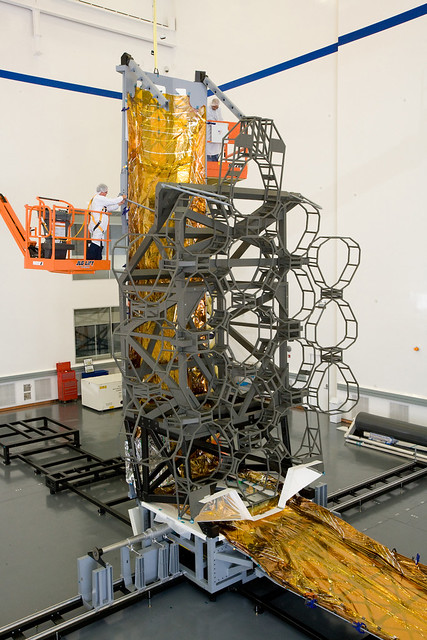
Webb’s Golden Mirror Wings Open One Last Time on Earth
[Image ~  James Webb Space Telescope]

Webb will be the largest telescope ever placed in space; 100 times more powerful than Hubble. So big it has to fold origami-style to fit in the rocket and will unfold like a "Transformer" in space. It will peer back in time over 13.5 billion years to see the first galaxies born after the Big Bang.

Once launched, Webb will be the largest, most powerful and complex space telescope ever built and launched into space. It will fundamentally alter humans' understanding of the universe. The powerful telescope will orbit the sun, a million miles away from Earth at the second Lagrange point. (L2 is four times further away than the moon!)

The Story of Webb

NASA aims to finally launch it Oct. 31 aboard a European Ariane 5 rocket made by France-based Arianespace from Europe’s Guiana Space Center in French Guiana, a region of France in South America. This is the European Space Agency’s contribution to the international project, which also involved the Canadian Space Agency.

The Webb observatory will be much larger the Hubble Space Telescope, which was launched in 1990. Webb’s main mirror, or light-gathering surface, is 21 feet across, compared to Hubble’s at 7.8 feet. Webb’s solar shield, which will keep its infrared instruments cold in space, is about the size of a tennis court. The telescope will orbit the sun, almost one million miles from Earth.

The longer wavelengths enable Webb to look much closer to the beginning of time and to hunt for the unobserved formation of the first galaxies, as well as to look inside dust clouds where stars and planetary systems are forming today.

Astronomer and physics professor at Arizona State University, Rogier Windhorst, said --
It’s going to be like Galileo first looking at the sky through a telescope. Our eyes are going to be reopened to the universe. …So, we’re going to see new and unexpected things that we’ve never dreamed of before.

Webb will ship to the launch site in August with little to no schedule margin; launch processing will take two months. The observatory has completed all the post-environmental testing deployments, and it is in its final integration and folding stages. Final stow, closeout, and pack and ship are imminent. 

NASA is working closely with the European Space Agency (ESA) and Arianespace on establishing the launch date. 

Webb will study every phase in the history of our universe, including the first luminous glows after the creation of the cosmos, the formation of solar systems capable of supporting life on planets like Earth, and the evolution of our own solar system.

Indian Astronomers Collab with 2020 Physics Nobel Laureate for Proposed World's Largest Telescope Project

The Thirty-meter telescope (TMT) project is an international partnership between CalTech, Universities of California, Canada, Japan, China, and India

2020 Physics Nobel Laureate Prof. Andrea Ghez had worked closely with Indian astronomers on the design of back-end instruments and possible science prospects of the Thirty Meter Telescope (TMT) project being installed at Maunakea in Hawaii, which can revolutionized the understanding of the universe and the enigmas in it. 

Besides, Prof. Ghez’s remarkable contribution in the discovery of a super massive compact object at the center of our Galaxy along with Prof. Roger Penrose and Prof. Reinhard Genzel for which they shared the Nobel prize in physics, Prof. Ghez was deeply involved in the development of the related instrumentation and possible science prospects for the TMT, the next-generation observatory. She was part of the team working towards evaluating possible front-line science cases and instrumentation for TMT utilizing associated front-line cutting edge technologies like adaptive optics. 

To recall, in October 2013, India along with the US, China and Japan have all committed funds towards this the-$1.2 billion TMT project. And, though the share of India's funding is not available but it was said that it was close to USD $250 million. 

The Thirty-meter telescope (TMT) project is an international partnership between CalTech, Universities of California, Canada, Japan, China, and India; through the Department of Science and Technology (DST) and Department of Atomic Energy (DAE). Some of the Indian astronomers like Dr. Annapurni Subramanium, Director of the Indian Institute of Astrophysics (IIA) and Dr. Shashi Bhushan Pandey, a scientist at Aryabhatta Research Institute of Observational Sciences (ARIES) along with many others collaborated with Prof. Ghez in the ongoing research and developmental activities of the TMT project.

It had resulted in two significant papers, among many others. The scientific prospects and simulations by the first generation instrument for the TMT called the Infrared Imaging Spectrograph (IRIS), were described in one of the SPIE proceedings in 2016. The latest end-to-end data simulator on Solar System bodies, the Galactic center, energetic transient objects, active galactic nuclei, and distant gravitationally-lensed galaxies were used. 

It showed the capabilities of IRIS/TMT to continue front-line scientific research in the near future to understand the nature of the supermassive compact object at the centre of our Galaxy and many more new aspects to discover "unknown-unknowns". The scientists highlighted the necessity of an advanced data management system and data reduction pipeline.

Another such collaborative publication in the journal Research in Astronomy and Astrophysics in 2015 has underlined versatile usage for future multi-messenger astronomy for various Galactic and extra-galactic objects using TMT includes many other Indian astronomers as a part of larger team along with Prof. Ghez.

The Thirty Meter Telescope, which seeks to advance scientific knowledge while fostering connection among the partner countries and their citizens, and in which Indian astronomers worked closely with Prof. Andrez Ghez, is expected to provide facilities with even greater capabilities to gather the observations needed to answer new and emerging questions in astronomy and physics in general.

Indian Astronomers Uncover Mystery Behind Decline of Star Formation Rate after its Peak 8-10 Bn Yrs Ago

Giant Metrewave Radio Telescope (GMRT) located at a site about 80 km north of Pune

For long, scientists have been intrigued by the decrease in the rate at which stars were formed in galaxies after it peaked about 8-10 billion years ago. They have now deciphered the mystery behind this decline in star formation activity by measuring the atomic hydrogen of the galaxies.

Galaxies are made up mostly of gas and stars. Gas converts to stars with time. Understanding this conversion requires measurement of the atomic hydrogen gas, the primary fuel for star formation in galaxies in early times. Astronomers have long known that galaxies formed stars at a higher rate when the universe was young than they do today. But the cause of this decline is unknown, mostly because there was no information about the amount of atomic hydrogen gas at that time.

A team of astronomers from the National Centre for Radio Astrophysics (NCRA-TIFR), Pune, and the Raman Research Institute (RRI), Bangalore, an autonomous institute of the Department of Science & Technology (DST), Government of India has used the upgraded Giant Metre wave Radio Telescope (GMRT), operated by NCRA-TIFR, to measure the atomic hydrogen content of galaxies seen as they were 8 billion years ago. 

The research carried out by Aditya Chowdhury, Nissim Kanekar, and Jayaram Chengalur of NCRA-TIFR, and Shiv Sethi, and K. S. Dwarakanath of RRI and published in the journal Nature records the earliest epoch in the universe for which atomic gas content of galaxies has been measured. 

A GMRT antenna at night. Picture by Rakesh Rao


The custom code used to calibrate the GMRT data is publicly available at https://github.com/chowdhuryaditya/calR.

The research was funded by the Department of Atomic Energy, India, and DST, India.

“Given the intense star formation in these early galaxies, their atomic gas would be consumed by star formation in just one or two billion years. And, if the galaxies could not acquire more gas, their star formation activity would decline, and finally cease”, said Aditya Chowdhury, a Ph.D. student at NCRA-TIFR and the lead author of the study. “The observed decline in star formation activity can thus be explained by the exhaustion of the atomic hydrogen,” he added.

The measurement of the atomic hydrogen mass of distant galaxies was done by using the upgraded GMRT to search for a spectral line in atomic hydrogen. K. S. Dwarakanath of RRI, a co-author of the study, mentioned, “We had used the GMRT in 2016, before its upgrade, to carry out a similar study. However, the narrow bandwidth before the GMRT upgrade meant that we could cover only around 850 galaxies in our analysis, and hence were not sensitive enough to detect the signal.”

“The big jump in our sensitivity is due to the upgrade of the GMRT in 2017”, said Jayaram Chengalur, of NCRA-TIFR, a co-author of the paper. “The new wideband receivers and electronics allowed us to use 10 times more galaxies in the stacking analysis, giving sufficient sensitivity to detect the weak average 21 cm signal.”

Detecting the 21 cm signal from the most distant galaxies in the universe was the main science goal of the GMRT when it was designed and built by a team led by Govind Swarup in the 1980s and 1990s. “Govind Swarup was very interested in this work and was following it keenly. Sadly, he passed away shortly before it was published. This work would not have been possible without him and the wonderful team that he put together to first build and then upgrade the GMRT”, said Nissim Kanekar of NCRA- TIFR, a Swarna Jayanti Fellow of DST and co-author of the study.

Technical explanation of GMRT upgradation

Unlike stars, which emit light strongly at optical wavelengths, the atomic hydrogen signal lies in the radio wavelengths, at a wavelength of 21 cm, and can only be detected with radio telescopes. Unfortunately, this 21 cm signal is very weak and difficult to detect from distant individual galaxies even with powerful telescopes like the upgraded GMRT. To overcome this limitation, the team used a technique called “stacking” to combine the 21 cm signals of nearly 8,000 galaxies that had earlier been identified with optical telescopes. This method measures the average gas content of these galaxies.

An image of the stacked 21 cm signal detected with the upgraded GMRT, arising from atomic hydrogen gas in galaxies 22 billion light-years away.


The spectrum of the stacked 21 cm signal detected with the upgraded GMRT, arising from atomic hydrogen gas in galaxies 22 billion light-years away. The width of the signal gives an indication of the average rotation of galaxies 8 billion years ago.


India Gets Its First Robotic Telescope To Catch Infinite Universe

GROWTH-India telescope at Hanle, Laddakh

Stars and galaxies in the universe may appear to be static to us as they are located millions of light years away but they are moving part from each other along with lot of interesting objects and events such as supernovae, gamma ray bursts, active galactic nuclei, and many more are occurring every second in the dynamic and infinite universe. To catch this, India has got its newest telescope to start observing the skies using robotic operations.

The remote village of Hanle in Ladakh, in the Indian state of Jammu and Kashmir, now houses the Indian Astronomical Observatory (IAO), which at 4,500 metres above sea level is one of the world’s highest, and affords some of the clearest views of the skies. Since June 12, it’s also been home to India’s first robotic telescope, a device with a 70-cm lens that will also join network of 17 other countries across the globe. This network program is called as GROWTH -- Global Relay of Observatories Watching Transients Happen. Observatories in this network are located in a way that will allow uninterrupted observation of transient events.

A robotic telescope is an astronomical telescope and detector system that makes observations without the intervention of a human.

Also Read - India Funding for World's Largest Telescope TMT in Hawaii

Interestingly, fully robotic telescope will be remotely operated from 3,000 km away Indian Institute of Astrophysics's Centre For Research and Education in Science and Technology near Bangalore. The facility houses the control room for remote operations of the HCT and is the data hub for the telescope. The new telescope will be programmed to directly communicate with various ground-based and space-based surveys that are searching for transient sources.

The fully robotic telescope at Hanle costing Rs. 3.5 crore has been funded by the Science and Engineering Research Board (SERB) of the Department of Science and Technology. “The telescope is equipped with a sensitive camera that can detect some of the faint transients found by our partner survey telescopes like the Zwicky Transient Facility at Palomar, California.

For astronomers tracking transient events (short-lived cosmic occurrences that can last mere hours or days), this is a bonanza. When a survey telescope detects the start of something interesting, all GROWTH telescopes respond, says GC Anupama, an astrophysicist with the Indian Institute of Astrophysics (IIAp), who heads the project. “Rapid and constant communication within the network ensures a quick follow-up by the facilities that are suitably located. It allows researchers to gather data in the first 24 hours of an event to understand, on a physics level, what’s happening and why."

Universities and research institutes from the United States of America, the United Kingdom, Japan, India, Germany, Taiwan and Israel are part of the initiative. The primary research objective of the project is time domain astronomy, which entails the study of explosive transients and variable sources in the universe.

Also Read - Meet The Four Indian Scientists Behind Gravitational Waves Discovery

“Together with partner telescopes strategically located around the world, we can continuously monitor any interesting object in the sky - uninterrupted by daylight,” Anupama said.

By 2004, robotic observations accounted for an overwhelming percentage of the published scientific information on asteroid orbits and discoveries, variable star studies, supernova light curves and discoveries, comet orbits and gravitational microlensing observations.

It must also be noted that all early phase Gamma ray burst observations were carried by robotic telescopes.

See - https://sites.google.com/view/growthindia/first-light

Source - Vigyanprasar.gov.in | Hindustan Times

India Funding for World's Largest Telescope TMT in Hawaii

The 30-metre telescope, called the TMT (Thirty Meter Telescope) is proposed to be built on Mauna Kea in Hawaii, US. India along with China, Japan and U.S. have all committed funds towards this $1.2 billion project of world's largest telescope. However the share of India's funding is not available but its said that it is close to USD $250 million.

The TMT project is led by the California Institute of Technology and the Associated Canadian Universities for Research in Astronomy.


TMT Observatory Corporation is also partnered with Department of Science and Technology of India. In year 2010, a consortium of Indian Astronomy Research Institutes joined TMT project as an observer. The observer status is the first step in becoming a full partner in TMT and participating in the engineering development and scientific use of the observatory (Subject to approval of funding from Indian Government).

In 2012, India and China became partners, with representatives on the TMT board. China and India will pay a share of the telescope construction costs, expected to top $1 billion. Japan, which has its own large telescope at Mauna Kea, the 8.3-metre Subaru, is also a partner.

The question here rises for India as being only developing nation which other ground things to offer for its population other than throwing so much of money in science project of telescope which will not be deployed in India infact. India is only developing nation among all funding countries why India came as desperate funding source as rest of the countries - US, Japan and China are already developed and they can fund such luxurious projects.

But if anything to go by news sources India hopes that this TMT partnership will allow the country to acquire critical technology that would help it build a 10-meter telescope in India itself.

TMT may not hold the title of world's largest for long, however, as a partnership of European countries plans to build the European Extremely Large Telescope, which would have a 42-meter, or 138-foot, mirror.

Market Reports

Market Report & Surveys
IndianWeb2.com © all rights reserved