‏إظهار الرسائل ذات التسميات Astronomy. إظهار كافة الرسائل

Everything You Should Know About Jantar Mantar

Everything You Should Know About Jantar Mantar

Jantar Mantar is not only a heritage site but also a scientific marvel — a set of giant masonry instruments built in the 18th century to measure time, track celestial bodies, and refine astronomical tables. While its essence has been overshadowed by political protests in Delhi since the late-20th century or 1993 to be precise, the observatories remain extraordinary examples of naked-eye astronomy.

Built in the 18th century by Maharaja Sawai Jai Singh II, Jantar Mantar is one of India’s most fascinating scientific and cultural landmarks having a set of monumental stone observatories. Spread across Delhi, Jaipur, Ujjain, Varanasi, and Mathura (now lost), these structures were designed to measure time, track celestial bodies, and predict eclipses with remarkable accuracy, all using the naked eye.

A Lost Essence

The essence of Jantar Mantar has been steadily eroded since the 20th century. Once a pristine scientific marvel, it became entangled in India’s political life. As Delhi grew into the nation’s capital, Jantar Mantar’s open grounds turned into a rallying point for major political protests. Crowds, dust, and litter transformed this observatory into what many describe as the “metaphorical murder of Indigenous ancient science” — a place where astronomical instruments now stand as silent witnesses to slogans and demonstrations rather than celestial calculations.

To your surprise, Mathura once had its own Jantar Mantar built by Maharaja Sawai Jai Singh II in the 18th century, but unlike Delhi and Jaipur, it did not survive. The observatory was eventually lost due to neglect, urban encroachment, and centuries of invasions and temple destructions that devastated Mathura’s scientific and cultural landscape.

Scientific Foundations

Jantar Mantar
Nadivalaya Yantra, a double equatorial sundial located at the Jantar Mantar observatory in Jaipur. The structure features two circular discs inclined to the equatorial plane, allowing for precise time measurement during different seasons of the year.

  • Purpose: To compile accurate astronomical tables (Zij-i Muhammad Shahi) and predict planetary movements.
  • Systems Used: Instruments operate across three classical celestial coordinate systems:
    • Horizon-Zenith Local System (altitude and azimuth).
    • Equatorial System (declination and right ascension).
    • Ecliptic System (longitude and latitude along the Sun’s path).
  • Innovation: Jai Singh II enlarged traditional brass instruments into architectural-scale masonry devices, reducing observational errors.
  • Accuracy: Sundials like the Samrat Yantra in Jaipur measure time to within 2 seconds.

Jantar Mantar Delhi (1724)

Jantar Mantar


  • Samrat Yantra: Giant sundial, 70 ft high.
  • Jai Prakash Yantra: Hemispherical bowls mapping celestial positions.
  • Ram Yantra: Cylindrical towers for altitude/azimuth.
  • Misra Yantra: Calculates solstices and local noon.
Modern Role: Heritage site + protest ground.

Jantar Mantar Jaipur (1728–1734)

Jantar Mantar
Samrat Yantra (Supreme Instrument) located at the Jantar Mantar observatory in Jaipur. It is a massive stone sundial designed to measure time and track celestial bodies.Standing 27 meters tall, it is known as the largest stone sundial in the world and can measure time to an accuracy of two seconds. 

  • UNESCO World Heritage Site (2010).
  • 19 instruments spread across 18,700 sq. m.
  • Highlights:
    • Vrihat Samrat Yantra: World’s largest stone sundial (27 m high).
    • Laghu Samrat Yantra: Smaller sundial, 20-second accuracy.
    • Ram Yantra: Measures altitude and azimuth.
Rama Yantra
Rama Yantra - It accurately measures the altitude and azimuth of celestial objects (planets and stars).
    • Jai Prakash Yantra: Inverted celestial map.
    • Digamsa: Predicts sunrise/sunset.
    • Nadivalaya: Represents Earth’s hemispheres.
Prakash Yantra
Prakash Yantra, tracks movement of the Sun. It 
includes two hemispherical bowls like sundials with graded marble slabs. The elevation, azimuth, hour angles and exact position of heavenly bodies are detected using the inverted image of the sky, and the movement of the inverted shadows on the slabs.

Delhi vs Jaipur

FeatureDelhi Jantar MantarJaipur Jantar Mantar
Year Built17241728–1734
Number of Instruments4 major19
HighlightSamrat Yantra sundialVrihat Samrat Yantra (largest sundial)
UNESCO StatusNot listedWorld Heritage Site (2010)
Modern RoleHeritage + protest siteHeritage + tourism hub

Legacy and Significance

Jantar Mantar
  • Scientific Value: Demonstrates pre-telescope astronomy with naked-eye precision.
  • Cultural Value: Fusion of Rajput architecture and scientific innovation.
  • Tourism: Jaipur’s observatory is a global attraction; Delhi’s remains politically symbolic.
  • Legacy: A reminder of India’s knowledge traditions, where geometry, shadow, and stone revealed the cosmos.
In short, Jantar Mantar is both a scientific masterpiece and a cultural paradox — a place where astronomy once thrived, but where politics now dominates

Dr. Jitendra Singh Lays Foundation for ₹75 Crore Astronomy Hub at IIA Bengaluru

Dr. Jitendra Singh Lays Foundation for ₹75 Crore Astronomy Hub at IIA Bengaluru

Union Minister of State (Independent Charge) for Science & Technology, Earth Sciences, and MoS PMO, Dr. Jitendra Singh, laid the foundation stone of a ₹75 crore state‑of‑the‑art building at the Indian Institute of Astrophysics (IIA), Bengaluru. The upcoming seven‑storey facility, spanning nearly one lakh square feet, is set to become one of India’s premier hubs for advanced astronomy research and space science instrumentation.

Ceremony Highlights

  • Event held at IIA’s Koramangala campus with dignitaries including Dr. S. Somanath, Dr. Annapurni Subramanian, senior faculty, scientists, DST and CPWD officials.
  • Programme included plaque unveiling, inauguration of a medium‑size Aspheric Grinder & Polisher in the Optics Laboratory, garlanding of the founder’s bust, and presentations on IIA’s projects.
  • New building to be named “M.K.V. Bappu Bhavana” in honour of Prof. Manali Kallat Vainu Bappu.

Strategic Importance

  • IIA’s legacy dates back three centuries to the historic Madras Observatory.
  • New facility will support students, researchers, and national missions.
  • Strengthens India’s position in cutting‑edge observational science.
  • Enhances IIA’s role in ISRO missions and international collaborations.

Contributions to Space Science

  • Developed the UltraViolet Imaging Telescope onboard AstroSat.
  • Contributed to the Aditya‑L1 solar mission.
  • Operates observatories across Kodaikanal, Kavalur, Gauribidanur, and Hanle for solar and night‑time astronomy.

Future Projects Announced in Union Budget 2026

  • National Large Solar Telescope
  • National Large Optical‑Infrared Telescope
  • Himalayan Chandra Telescope upgrade
  • COSMOS‑2 Planetarium

Government’s Vision

  • Enhanced budgetary support for science and technology.
  • Promotion of public‑private partnerships.
  • Establishment of the National Research Foundation and RDI Fund.
  • Outreach programmes to connect institutions with youth via digital platforms.

Conclusion

The new IIA facility, executed by CPWD with a two‑year completion timeline, represents a critical investment in India’s scientific future. It will expand infrastructure and empower India’s ambitions in astronomy, astrophysics, and space instrumentation, reinforcing the nation’s global standing in space science.

99.9% Dark Matter: Hubble Spots a Truly Bizarre Galaxy

99.9% Dark Matter: Hubble Spots a Truly Bizarre Galaxy
A field of space with a dozen white foreground stars and a number of small, yellow background galaxies. [Image Credit: NASA, ESA, D. Li (Utoronto), Image Processing: J. DePasquale (STScI)] 

Astronomers using the Hubble Space Telescope have discovered a galaxy, dubbed Candidate Dark Galaxy-2 (CDG-2), located about 300 million light-years away, that appears to be composed of at least 99.9% dark matter. This makes it one of the most extreme examples of a dark-matter-dominated galaxy ever observed.

Key Facts About CDG-2

99.9% Dark Matter: Hubble Spots a Truly Bizarre Galaxy
At left, a field of space with a dozen white foreground stars and a number of small, yellow background galaxies. An unremarkable area at centre is outlined with a dashed circle surrounded by a white box. Lines extend from the box to a pullout at right containing faint, grainy white light surrounded by a circle labeled “Candidate dark galaxy – diffuse emission.” Four white dots are circled in blue and labeled globular clusters. [ Image Credit: NASA, ESA, D. Li (Utoronto), Image Processing: J. DePasquale (STScI)] 
  • Discovery Tool: Hubble Space Telescope
  • Distance: ~300 million light-years from the Earth
  • Composition: At least 99.9% dark matter, with vanishingly few visible stars
  • Detection Method: Identified through the presence of four globular clusters orbiting an otherwise invisible mass
  • Visibility: Nearly invisible in optical wavelengths

Why This Matters

  • Dark Galaxies: CDG-2 is a strong candidate for the long-hypothesized class of “dark galaxies.”
  • Cosmological Significance: Dark matter outweighs normal matter in the universe by about 5-to-1.
  • Scientific Opportunity: Studying CDG-2 could help astronomers understand galaxy formation when star birth is suppressed.

Comparison: Typical Galaxy vs. CDG-2

Feature Typical Spiral Galaxy (e.g., Milky Way) CDG-2 (Candidate Dark Galaxy)
Dark Matter Fraction ~85–90% ~99.9%
Visible Stars Hundreds of billions Almost none (detected via clusters)
Detection Method Direct observation of stars & gas Indirect, via globular clusters
Brightness High, easily visible Extremely faint, nearly invisible

Challenges & Open Questions

  • Verification: Further observations needed, possibly using radio telescopes or gravitational lensing.
  • Formation Myst ery: Why did CDG-2 fail to form stars?
  • Implications: More galaxies like CDG-2 could reshape our understanding of cosmic structure.

Takeaway

CDG-2 is one of the most compelling candidates yet for a “dark galaxy,” offering a rare glimpse into a realm where dark matter reigns almost completely unchecked. Its discovery underscores how much of the universe remains hidden and how vital tools like Hubble are in uncovering these cosmic mysteries.

Starscapes and Gujarat Tourism Join Forces to Build India’s 1st Dark-Sky Astro Villages

Starscapes and Gujarat Tourism Join Forces to Build India’s 1st Dark-Sky Astro Villages
  • Starscapes to conduct a detailed study to identify potential stargazing locations across the state
Starscapes, India’s leading astro-tourism company, has signed a Memorandum of Understanding with Gujarat Tourism to jointly develop Gujarat as a key astro-tourism destination over the next five years.

As a part of the collaboration, Starscapes will conduct a detailed study to identify potential stargazing locations across the state, starting with North Gujarat. The selected sites will be evaluated based on light pollution levels, accessibility, and suitability for astro-tourism infrastructure. Gujarat Tourism’s approach to categorizing various types of tourism such as adventure, heritage and nature tourism provides a clear advantage in designating specific areas as dark-sky zones. This will play an important role in exclusively developing astro-tourism without interference from other tourism activities that may contribute to light pollution.

The identified astro-tourism zones will later be developed into Astro Villages, where local communities will play a key role in reducing light pollution and preserving dark skies. The initiative aims to generate employment opportunities for local communities, improve livelihood while creating sustainable astro tourism experiences.
 
Starscapes and Gujarat Tourism Join Forces to Build India’s st Dark-Sky Astro Villages

Commenting on the partnership, Ramashish Ray, Founder, Starscapes, said, “ "From the vast salt deserts of Kutch to the clear skies around Gir National Park, Gujarat offers some of the most pristine and untouched dark-sky locations with immense potential for astro-tourism. Our goal is to work closely with the local communities, empowering them to become ambassadors of dark skies and to create a model of responsible, sustainable tourism. We’re excited to partner with Gujarat Tourism to develop the state into a leading astro-tourism destination."

This initiative builds on Starscapes’ ongoing efforts to promote astro-tourism across India. After a successful ‘Nakshatra Campaign’ with Uttarakhand Tourism Development Board (UTDB), Starscapes has recently launched ‘Astro-Tourism Guides’ Skill Development Program in collaboration with UTDB and Tourism & Hospitality Skill Council (THSC).

About Starscapes:

Starscapes is India’s premier experiential astronomy venture, dedicated to promoting sustainable live and online celestial exploration. With a nationwide network of observatories, skilled teams, school and hospitality affiliates, and eco-friendly initiatives, Starscapes strives to enrich education and provide unforgettable cosmic experiences.

Starscapes and Uttarakhand Govt Launch India’s First Statewide Astro-Tourism Guide Training Program

Starscapes and Uttarakhand Govt Launch India’s First Statewide Astro-Tourism Guide Training Program

Starscapes, India’s leading astro-tourism company, has partnered with the Uttarakhand Tourism Board (UTTB) and the Tourism & Hospitality Skill Council (THSC) to launch a comprehensive skill development initiative aimed at training 500 aspiring Astro-Tourism Guides across the state over the next six months. This fully funded program, supported by the Government of Uttarakhand, combines astronomy education with practical skills in hospitality, marketing, and community engagement.

Under the tripartite agreement, UTTB will serve as the sponsoring authority, Starscapes as the training partner, and THSC as the executing partner.

Recognizing the importance of community involvement in conserving dark skies and reducing light pollution, Starscapes has collaborated with the Tourism and Hospitality Skill Council, a government-recognized body under India’s Skill Development Mission, to certify its training curriculum as an official course. This ensures that participants not only gain in-depth knowledge of astronomy and telescope handling but also acquire employable skills that can empower them to pursue careers in astro-tourism and related hospitality services.

The training will be conducted across multiple locations in Uttarakhand, including Dehradun, Rishikesh, Loha Ghat (Champawat), Munsiyari (Pithoragarh), Ramnagar (Nainital), Powri Lansdowne, Almora, Kausani, Karnaprayag, Tehri, Udham Singh Nagar, Nainital, and Chopta.

Targeting local youth, the program is designed to support community-driven tourism initiatives such as homestays. Participants will learn to operate independently while promoting sustainable astro-tourism, contributing to dark sky conservation, and generating income for their communities.

Vivek Shandilya, Vice President, Business Development, Tourism & Hospitality Skill Council (THSC),Initiatives like these play a significant role in building a future of community-led and responsible tourism. The ‘Astro-Tourism Guides’ Skill Development Program will equip local youth with the right skill set for promising careers in the field of tourism, empower local economies and help preserve our dark skies. We look forward to working with Uttarakhand Tourism Board and Starscapes to bring formal recognition and certification to this unique program."

Mrs Poonam Chand, Additional Director, Uttarakhand Tourism Development Board, "This initiative aligns perfectly with our vision of promoting responsible and community-based tourism in Uttarakhand. By supporting local youth, we are fostering both economic development and environmental conservation."

Commenting on this Ramashish Ray, Founder of Starscapes, said, "At Starscapes, we believe that sustainable impact comes from engaging communities directly. By training local youth astro tourism guides and empowering them with employability skills, we are building a network of advocates who can help conserve our dark skies while creating meaningful livelihood opportunities."

Participants who complete the program will receive government-certified certification, making them eligible for employment within the tourism and hospitality sector, as well as opportunities to collaborate with Starscapes in ongoing community and astro-tourism initiatives.

The program will officially commence in October, and training will continue through March 2026, ensuring a thorough and impactful learning experience across the state.

About Starscapes:

Starscapes is India’s premier experiential astronomy venture, dedicated to promoting sustainable live and online celestial exploration. With a nationwide network of observatories, skilled teams, school and hospitality affiliates, and eco-friendly initiatives, Starscapes strives to enrich education and provide unforgettable cosmic experiences.

Blood Moon 2025: Science, Spectacle & Spiritual Shifts

Blood Moon 2025: Science, Spectacle & Spiritual Shifts

On the night of September 7–8, 2025, the skies over India and much of the Eastern Hemisphere were set ablaze by one of the most mesmerizing celestial events of the year—a Blood Moon, also known as a total lunar eclipse. For 82 minutes, the Moon bathed in a deep crimson glow, captivating skywatchers and stirring ancient myths and modern reflections alike.

The Science Behind the Scarlet Glow

Blood Moon 2025: Science, Spectacle & Spiritual Shifts
  • Earth aligns perfectly between the Sun and Moon, casting its shadow across the lunar surface.
  • Sunlight filters through Earth’s atmosphere, scattering shorter blue wavelengths and allowing longer red wavelengths to bend toward the Moon.
  • The result: a coppery-red Moon, visible to the naked eye and safe to observe without any special equipment.
This year’s eclipse was especially notable because:
  • It lasted 82 minutes, making it one of the longest total lunar eclipses since 2022.
  • It was visible across India, Asia, Africa, Europe, and Australia, reaching nearly 85% of the global population.
  • The Moon was near apogee (its farthest point from Earth), which slowed its transit and extended the eclipse duration.

Cultural Echoes & Ancient Lore

  • In Incan mythology, a jaguar was believed to devour the Moon.
  • In Hindu tradition, the demon Rahu swallows the Moon, causing eclipses.
  • Ancient Greeks saw the Moon goddess Selene veiled in darkness, prompting rituals to ward off ill omens.
Today, while science explains the phenomenon, the spiritual symbolism remains potent.

Astrological Insights: Pisces & Aquarius Energy Collide

This year’s Blood Moon occurred at 15° Pisces, opposing the Sun in Virgo—a cosmic tug-of-war between dreams and practicality. Astrologers interpret this eclipse as a powerful emotional reset, urging us to:
  • Release illusions and outdated beliefs.
  • Heal emotional wounds and embrace transformation.
  • Step into new chapters with clarity and courage.

Zodiac Highlights

Zodiac Sign Astrological Impact
Aries Let go of impulsiveness; embrace patience and long-term vision.
Leo Relationships mirror your ego—seek balance and humility.
Pisces Expect deep emotional revelations and spiritual growth.
Virgo Your routines may shift—prioritize health and inner harmony.

How to Experience It

  • No gear needed—just clear skies and curiosity.
  • Best viewed from rooftops, open fields, or hilltops.
  • Binoculars enhance the view, revealing lunar textures and color gradients.
Whether you're a scientist, a stargazer, or a seeker of cosmic meaning, the Blood Moon of 2025 offered more than just a visual treat, it was a moment to pause, reflect, and realign. As the Moon glowed red, it reminded us that even in shadow, there is beauty, mystery, and transformation.

Twin Meteor Showers to Illuminate Global Skies on July 29–30

Twin Meteor Showers to Illuminate Global Skies on July 29–30
Two meteor showers — Southern Delta Aquariids and Alpha Capricornids — will peak together, offering a rare double feature of shooting stars visible across the globe.

What to Expect

  • Combined meteor rate: Up to 25 meteors per hour
  • Best viewing time: Midnight to 3 a.m., local time
  • Moon phase: Nearly moonless night for optimal visibility
  • Visibility: Best in Southern Hemisphere, but visible worldwide

Meet the Showers

Meteor Shower Origin Comet Meteor Traits Peak Activity
Southern Delta Aquariids 96P/Machholz Fast, faint streaks July 29–31
Alpha Capricornids 169P/NEAT Slow, bright fireballs (often colorful) July 29–30

Viewing Tips

Twin Meteor Showers to Illuminate Global Skies on July 29–30
  • Look southward in the sky, especially from rural or dark-sky locations
  • No equipment needed — just your eyes and patience
  • Avoid city lights and let your eyes adjust for 20–30 minutes
  • Recline comfortably and bring warm clothes or snacks

Countries with Best Naked-Eye Visibility

Best Visibility Zones

  • Southern Hemisphere: Australia, New Zealand, South Africa, Argentina, Chile, Brazil
  • Southern Latitudes (Northern Hemisphere): India, Mexico, Southern U.S. (Texas, Florida), Southern Europe (Spain, Italy, Greece), Southeast Asia (Thailand, Indonesia)

Also Visible (Lower Meteor Rates)

  • Northern Hemisphere: United States (northern states), Canada, UK, Germany, France, China, Japan

🇮🇳 India-Specific Viewing

  • Excellent visibility across India, especially in rural areas
  • Best times: 3–4 AM and 7–8 PM on July 29–30
  • Look toward the southern horizon, near the constellation Aquarius

Bonus: Perseids Incoming

  • The Perseid meteor shower will peak around August 12
  • July and August are prime months for stargazing

NASA Discovers Heart-Shaped Wonders on Mars

NASA Discovers Heart-Shaped Wonders on Mars

In a delightful twist to planetary science, NASA's Mars Reconnaissance Orbiter has captured images of dozens of heart-shaped landforms sprinkled across the Martian surface—turning the cold, red expanse into a gallery of cosmic affection.

These curious shapes have appeared in various regions, from Arabia Terra to the southern highlands. While they might evoke sentiments of love and whimsy, scientists assure us they’re no extraterrestrial Valentine’s messages. Instead, they’re crafted by natural forces over millions of years.

How Does Mars Carve Out a Heart?

  • Impact Craters: Small meteoroids collide with Mars, revealing lighter sediment underneath and sculpting crater patterns that coincidentally resemble hearts.
  • Erosion & Volcanism: Mesas and depressions, shaped by erosion or volcanic activity, also contribute to heart-like silhouettes.
  • Lighting & Shadows: Martian sunlight plays visual tricks—enhancing ridges and dips to accentuate these romantic outlines.
It's one of those moments where science meets poetry,” remarked Dr. Alisha Grant, a planetary geologist at NASA's Jet Propulsion Laboratory.We're interpreting nature’s randomness as a symbol of something very human.”

Mars: The Solar System’s Secret Romantic?

NASA has been sharing these striking visuals each year around Valentine’s Day, fueling public fascination. One post even quipped, “Looks like Mars has been secretly playing Cupid all along.”

The trend has gained momentum online, with space enthusiasts tagging their favorite heart-shaped formations and debating whether the Red Planet deserves a new nickname: ‘The Loveliest Planet.’

What It Means for Science & Storytelling

While the formations are scientifically valuable—helping researchers analyze erosion patterns, geological layering, and ancient water flows—they also serve a purpose beyond data. They invite the public to engage with space exploration in a playful, emotional way.

After all, when a distant planet 225 million kilometers away starts resembling symbols of love, it’s hard not to feel a cosmic connection.

ISRO & TIFR Join Forces to Advance Space Science and Astronomy Research

ISRO & TIFR Join Forces to Advance Space Science and Astronomy Research

ISRO and TIFR recently held a collaboration meet to strengthen India's capabilities in space science and astronomy. The meeting, attended by fifty scientists and engineers, focused on integrating the scientific and technological expertise of both institutions. Discussions covered various domains, including millimeter-wave astronomy, space weather, radio astronomy, cosmic ray physics, and planetary science.

This initiative aligns with India's evolving space ecosystem and Space Vision 2047, aiming to establish a structured framework for scientific collaboration with clear targets and milestones. The meeting concluded with an action plan to advance joint research efforts.

The ISRO–TIFR collaboration aims to enhance India's capabilities in space science and astronomy by integrating their scientific and technological expertise. Some key objectives include:
  • Strengthening research in millimeter-wave astronomy, space weather, radio astronomy, cosmic ray physics, and planetary science.
  • Establishing a structured framework for scientific collaboration with clear targets and milestones, aligning with India's Space Vision 2047.
  • Leveraging India's radio astronomy observatories for modular integration into international mega-projects.
  • Expanding joint research efforts through domain-specific breakout sessions to identify new areas of cooperation.
This initiative marks a significant step toward building a strong national network for space sciences and achieving global excellence in space research.

World's Fastest Supercomputer Reveals the Largest-Ever Universe Simulation

World's Fastest Supercomputer Reveals the Largest-Ever Universe Simulation

The world's fastest supercomputer, Frontier at Oak Ridge National Laboratory, has recently unveiled the largest-ever simulation of the universe!. This groundbreaking simulation models both atomic matter and dark matter across vast universe-sized scales.

In early November 2024, researchers at the Department of Energy’s Argonne National Laboratory used Frontier, the fastest supercomputer on the planet, to run the largest astrophysical simulation of the universe ever conducted.

Frontier can perform up to 1.1 exaFLOPS (1.1 quintillion calculations per second). The Hardware/Hybrid Accelerated Cosmology Code (HACC) was used, which models the evolution of the universe.

The simulation tracks the formation and movement of galaxies over billions of years. This simulation will help match observational data with theoretical models, providing deeper insights into cosmic structures and the role of dark matter.

In the video below, it shows the formation of the largest object in the Frontier-E simulation. The left panel shows a 64x64x76 Mpc/h subvolume of the simulation (roughly 1e-5 the full simulation volume) around the large object, with the right panel providing a closer look. In each panel, we show the gas density field colored by its temperature. In the right panel, the white circles show star particles and the open black circles show AGN particles.


Scientists Detect Mysterious Plasma Bubble Over Egyptian Pyramids That Can Disrupt Satellite Communications

Scientists Detect Mysterious Plasma Bubble Over Egyptian Pyramids That Can Disrupt Satellite Communications

Chinese scientists have detected massive plasma bubbles over the Egyptian pyramids and Midway Islands using advanced radar technology developed by the Chinese Academy of Sciences.

These plasma bubbles, which can interfere with satellite communications and GPS, were observed on a large scale following a solar storm in November.

The formation of plasma bubbles is influenced by factors such as geomagnetic activity, atmospheric conditions, and the Earth’s magnetic field. Scientists study these bubbles to better understand and mitigate their impact on communication systems.

The detection was made using the Low Latitude Long Range Ionospheric Radar (LARID), which has an impressive detection range of 9,600 kilometers. This radar system allows scientists to track and observe the movement and formation of plasma bubbles in greater detail than ever before.

It's fascinating how advancements in radar technology are enabling such detailed observations of phenomena that can impact our communication systems.

Why Only Over Egyptian Pyramids?

The answer is No, the plasma bubbles detected over the Egyptian pyramids were not at all exclusive to that location. These bubbles can form in various regions around the equator and are influenced by solar activity and geomagnetic conditions. The detection over the pyramids was likely due to the specific timing and location of the solar storm that triggered the formation of these bubbles.

The word 'Mysterious' is tied to it because it is relatively new phenomena, detected only 83 years ago, and scientists are still understanding these bubbles.

The first irregularities in the ionosphere, now called as "Plasma Bubble", were observed as diffuse echoes in ionosonde observations. These observations were made by Booker and Wells in 1938. The phenomenon was initially referred to as equatorial spread-F.

The radar technology used by Chinese scientists has a wide detection range, allowing them to observe these phenomena over large areas, including the pyramids and other regions like the Midway Islands. The occurrence over the pyramids was coincidental and not unique to that location.

Effect on Satellite Communications

Plasma bubbles can significantly impact communication systems in several ways.

Plasma bubbles can cause rapid fluctuations in the ionosphere’s electron density, leading to signal fading and loss. This affects high-frequency (HF) radio communications, which rely on ionospheric reflection. The irregularities caused by plasma bubbles can distort GPS signals as they pass through the ionosphere. This can lead to errors in position calculations, affecting navigation systems used in aviation, maritime, and personal devices.

Satellites that communicate with ground stations via radio waves can experience signal degradation or loss when plasma bubbles are present. This can impact services like satellite TV, internet, and military communications.

The variability in the ionosphere can cause phase and amplitude scintillation, which disrupts the transmission of data over long distances. This can affect both civilian and military communication networks.

Understanding and predicting plasma bubbles is crucial for space weather forecasting. Accurate forecasts can help mitigate the impact on communication systems by allowing operators to take preventive measures.

ISRO, ESA and NASA Team Up to Study Asteroid Apophis During Its 2029 Flyby

ISRO, ESA and NASA Team Up to Study Asteroid Apophis During Its 2029 Flyby

An asteroid, named after Egyptian deity of destruction, — Apophis — will come remarkably close to Earth during its flyby in 2029. At its closest approach, it will be about 19,000 miles (30,500 kilometers) from our planet's surface. To put this in perspective, that's closer than some of our geostationary satellites.

This close encounter provides a unique and rare opportunity for detailed observations and scientific study. Space agencies of USA and Europe – NASA and ESA – are gearing up to learn more about this intriguing asteroid.

In a latest now Indian Space Research Organisation (ISRO), ESA and NASA have team up to Study Asteroid Apophis During Its 2029 Flyby. 

Asteroid 99942 Apophis is a near-Earth object (NEO) estimated to be about 1,100 feet (335 meters) across. Initially considered one of the most hazardous asteroids, its impact assessment changed after precise orbit analysis. Recent radar observations ruled out any impact risk for at least a century, including the close approaches in 2029 and 2036.

ESA's Rapid Apophis Mission for Space Safety (Ramses) mission aims to closely study Apophis during its safe but exceptionally close flyby of Earth in 2029. Ramses will provide valuable insights into this large asteroid, enhancing our preparedness for future asteroid threats.

NASA already has a probe to study Apophis after its 2029 flyby, complementing ESA's efforts.

While ISRO is not directly involved in the collaborative study of asteroid Apophis in 2029, their contributions to space exploration and scientific research are noteworthy. ISRO is India's national space agency, known for its successful satellite launches, lunar missions (such as Chandrayaan-2), and Mars Orbiter Mission (Mangalyaan). The Indian Space agency has expertise in remote sensing, communication
satellites, and interplanetary exploration.

However, according to reports ISRO may send its own spacecraft or collaborate with NASA and ESA to enhance the overall mission's scientific return. The Indian Space agency plans to observe Apophis during its 2029 flyby, though specific mission details are still under consideration.

ISRO has emphasized the real possibility of an asteroid impact on Earth, and the space agency is actively working on planetary defense efforts.

ISRO continues to expand its capabilities, and future collaborations may involve joint efforts in planetary defense and space science

Remember, space exploration is a collective endeavor, and each agency's contributions enhance our understanding of the cosmos. 

Lal, Mursan and Hilsa – The Names of 3 Craters on Mars Discovered by ISRO Associated PRL, Ahmedabad

Lal, Mursan and Hilsa – The Names of 3 Craters on Mars Discovered by ISRO Associated PRL, Ahmedabad

Scientists from the Physical Research Laboratory (PRL) in Ahmedabad, a facility associated with ISRO, have named three craters on Mars after places in India. The craters were discovered by PRL scientists and have been named after the former director of PRL, Devendra Lal, and two Indian small towns, Mursan (Hathras district) in Uttar Pradesh and Hilsa (Nalanda district) in Bihar. The naming was approved by the International Astronomical Union (IAU) earlier this month.

The largest crater, named Lal, spans 65 km and is located in the Tharsis volcanic region of Mars. The other two craters, Mursan and Hilsa, are each about 10 km wide and are situated on the eastern and western sides of the rim of the Lal Crater. This discovery not only honors the contributions of Indian scientists but also provides compelling evidence that Mars once had water, which flowed on its surface.

The entire area of the Lal crater is within the Tharsis volcanic region on Mars, which is a geologically young surface as it is covered with lava flows. There is geophysical evidence of material other than the lava flows in this crater, with a 45 metre thick sedimentary deposit beneath the crater. The evidence of this material was obtained by the subsurface radar, Mars SHAllow RADar sounder (SHARAD) on board the Mars Reconnaissance Orbiter, NASA's eyes in the skies of Mars.

Craters are bowl-shaped depressions found on the surface of planets, moons, and other celestial bodies. They can be formed by several processes which include meteorite, asteroid, comet collides, or as a result of volcanic activity and are typically found at the summit of volcanoes.

Mars, the Red Planet, is home to a fascinating variety of craters, many of which are named after notable scientists and science fiction authors. The red planet has hundreds of thousands of impact craters. These are formed by collisions with meteoroids, asteroids, or comets. Only about one thousand of these craters have names, and they are usually named after famous scientists and authors.

Huygens is the largest named crater with a diameter of 467.25 km. Schiaparelli is the second largest, measuring 458.52 km in diameter.

The study of Martian craters provides valuable insights into the planet's geology and history, including the frequency of impacts and volcanic activity over time. For more detailed information, you can explore the [List of craters on Mars] on Wikipedia, which includes coordinates, diameters, and the year of official name adoption for each crater.


ISRO Begins 2024 with The Successful Launch of xPoSat Satellite

ISRO Begins 2024 with The Successful Launch of xPoSat Satellite

Indian space agency ISRO begins the new year with a successful launch of X-Ray Polarimeter Satellite (XPoSat) Satellite. The PSLV-C58 vehicle placed the satellite precisely into the intended orbit of 650 km with 6-degree inclination.

With this launch, India becomes the second nation in the world to launch an advanced astronomy observatory specifically geared to study black holes and neutron stars.

After injection of XPOSAT, the PS4 stage will be re-started twice to reduce the orbit into 350 km circular orbit to maintain in 3-axis stabilized mode for Orbital Platform (OP) experiments. The PSLV Orbital Experimental Module-3 (POEM-3) experiment will be executed meeting the objective of 10 identified payloads, supplied by ISRO and IN-SPACe.

The spectroscopic and timing information of sources such as blackhole, neutron star etc by various space based observatories provide a wealth of information, however the exact nature of the emission from such sources still poses deeper challenges to astronomers. XPoSat is touted as Indian science community's major contribution to understand the emission mechanism of these astronomical sources – blackhole, neutron stars, active galactic nuclei, pulsar wind nebulae etc.


XPoSat (X-ray Polarimeter Satellite) is India’s first dedicated polarimetry mission to study various dynamics of bright astronomical X-ray sources in extreme conditions. The spacecraft carried two scientific payloads in a low earth orbit (LEO) — POLIX and XSPECT.

POLIX is realized by Raman Research Institute and XSPECT is by Space Astronomy Group of URSC.

The primary payload POLIX (Polarimeter Instrument in X-rays) will measure the polarimetry parameters (degree and angle of polarization) in medium X-ray energy range of 8-30 keV photons of astronomical origin. The XSPECT (X-ray Spectroscopy and Timing) payload will give spectroscopic information in the energy range of 0.8-15 keV.

Asteroid Hit By NASA's Spacecraft Behaving Unexpectedly

NASA's spacecraft – Double Asteroid Redirection Test (DART), porposefully crashed into an Asteroid called 'Dimorphos', in September last year. Now after almost a year, the asteroid is behaving unexpectedly.

ASI/NASA

Now in a latest, a high school teacher and his students have discovered that an asteroid hit by a NASA spacecraft, in a test run for saving Earth from a collision, is behaving unexpectedly. The find could have implications for future planetary defence missions.

DART, which was the size of a golf CART and worth $300 million, collided with a Great Pyramid-sized asteroid 'Dimorphos'. The impact caused the asteroid's orbit around another space rock (Dydymos) to shrink — Dimorphos now completes an orbit 33 minutes faster than before the crash of DART.

The goal of DART was to slow the space rock's nearly 12-hour orbit around a parent asteroid, called Didymos, and see if the momentum of the spacecraft could alter the asteroid's trajectory. The mission was successful, with Dimorphos' orbit shortening by 33 minutes in the weeks after the collision.
Asteroid Hit By NASA's Spacecraft Behaving Unexpectedly
The Asteroid passes by, and then continues to around 200 miles away. The video clearly shows the ejection of material streaming off of Dimorphos due to the impact. This movie uses images from the LUKE camera on ASI’s LICIACube. [Image Credits: ASI/NASA] 

However, according to a new research, Dimorphos' orbiting time has decreased by another full minute compared to NASA's numbers, New Scientist reported.

Jonathan Swift, a math and science teacher at the Thacher School, and his students conducted a research from September to November 2022. The research study said the asteroid's orbital period, initially 11 hours 55 minutes, has decreased by 34 minutes. His team presented their findings at a meeting of the American Astronomical Society in New Mexico in June, receiving positive responses.

One of the theories to prove the Asteroid's unexpected behavior suggests that Dimorphos was once tidally locked to its parent rock 'Didymos' , meaning, like Earth's moon, the same side of the satellite always faced its host. However, the DART mission might have changed its alignment, causing Dimorphos to tumble around as the system's tidal forces changed its orbit. If this theory is true, Dimorphos will likely settle back into a tidally locked state over time, a DART team member said.

NASA will also be releasing a report soon on the DART mission's latest update, a spokesperson told New Scientist. The United States space agency will however needs to compete with the school teacher and his students, whose findings were shared with the American Astronomical Society, which is publishing their paper soon.


ISRO Launching Aditya-L1, India’s 1st Solar Mission This Week

ISRO Launching Aditya-L1, India’s 1st Solar Mission This Week

The first Indian space-based observatory-class solar mission to unlock the mysteries of the Sun

ISRO today announced that Aditya-L1, India's first space-based observatory to study the Sun, will be launched on this week on Saturday (September 2) at 11.50 AM from Andhra Pradesh's Satish Dhawan Space Centre, Sriharikota.

Late last week, ISRO Chairman S. Somnath, told reporters that the satellite had been integrated with the PSLV launch vehicle at Sriharikota. The spacecraft would take 125 days to reach the Lagrangian Point L1.

Initially, Aditya-L1 was scheduled to launch on August 26, but as per the latest update, the mission will now be launched on 2nd September.

The Aditya-L1 mission, aimed at studying the Sun from an orbit around the L1, would be launched by PSLV-C57 rocket and will be carrying 7 payloads to observe the photosphere, chromosphere and the outermost layers of the Sun, the corona, in different wavebands. Aditya-L1 is a fully indigenous effort with the participation of national institutions.

ISRO Launching Aditya-L1, India’s 1st Solar Mission This Week

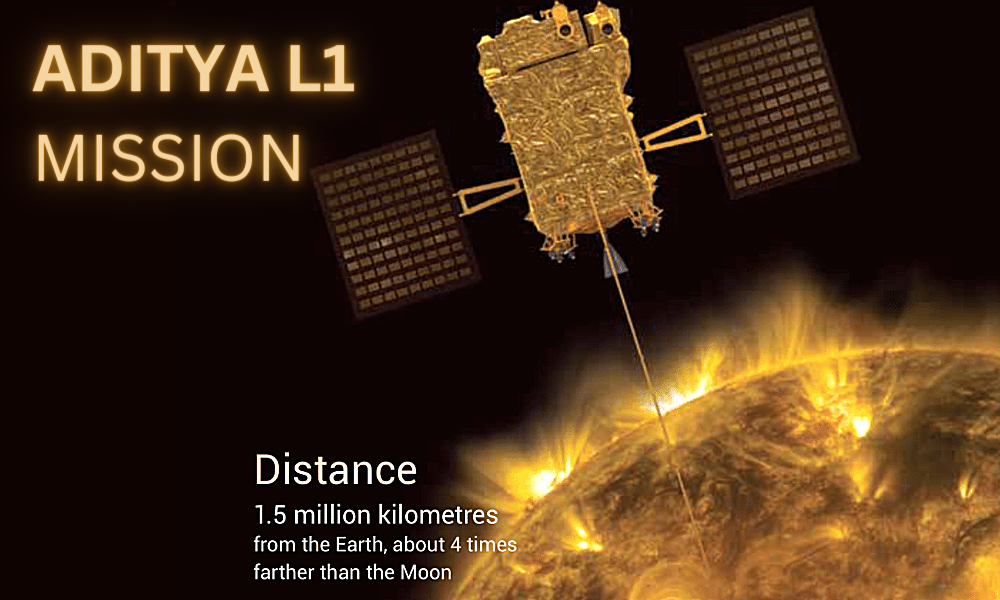
The spacecraft is planned to be placed in a halo orbit around the Lagrangian point 1 (L1) of the Sun-Earth system, which is about 1.5 million km from the Earth.

The Aditya L1 spacecraft will be equipped with a Visible Emission Line Coronagraph (VELC) which will be used for imaging and spectroscopy of the Sun to better understand the science powering the star.

Uniqueness of Aditya-L1

  • First-time spatially resolved solar disk in the near UV band
  • CME dynamics close to the solar disk (~from 1.05 solar radius) thereby providing information in the acceleration regime of CME, which is not observed consistently
  • Onboard intelligence to detect CMEs and solar flares for optimised observations and data volume
  • Directional and energy anisotropy of solar wind using multi-direction observations
ISRO Launching Aditya-L1, India’s 1st Solar Mission This Week

ISRO Prepares for Its Next Launch 'Aditya-L1', India's 1st Space-based Mission To Study the Sun

After the sucessful launch of the Chandrayaan-3, the Indian Space agency, Indian Space Research Organisation (ISRO), is now preparing for its next launch — Aditya-L1— the first space-based Indian observatory to study the Sun.

ISRO Prepares for Its Next Launch 'Aditya-L1', India's 1st Space-based Solar Mission

The mission is scheduled to launch on 26th of this month or early next month, aboard a PSLV-XL launch vehicle.

ISRO has shared the first images of the Aditya-L1 satellite. 


On Monday ISRO announced that the spacecraft was assembled and integrated at the UR Rao Satellite Centre (URSC) in Bengaluru and has arrived at Satish Dhawan Space Centre in Sriharikota in Andhra Pradesh.

According to ISRO, the satellite shall be placed in a halo orbit around the Lagrange point 1 (L1) of the Sun-Earth system, which is about 1.5 million km from the Earth. A satellite placed in the halo orbit around the L1 point has the major advantage of continuously viewing the Sun without any occultation/eclipses. This will provide a greater advantage of observing the solar activities, and its effect on space weather in real time.

The Aditya-L1 mission will take around 109 Earth days after launch, to reach the halo orbit around the L1 point.

The mission will obtain near simultaneous images of the different layers of the Sun's atmosphere, which reveal the ways in which the energy may be channeled and transferred from one layer to another. Thus the Aditya-L1 mission will enable a comprehensive understanding of the dynamical processes of the Sun and address some of the outstanding problems in solar physics and heliophysics.

National Space Innovation Challenge 2023 Launched by AIM, NITI Aayog in Collab with ISRO and Navars Edutech

National Space Innovation Challenge 2023 Launched by AIM, NITI Aayog in Collab with ISRO and Navars Edutech

Atal Innovation Mission (AIM), NITI Aayog in collaboration with the Indian Space Research Organisation (ISRO) and Navars Edutech successfully launched the National Space Innovation Challenge (NSIC) 2023.

NSIC 2023 is a National-level campaign designed to ignite next generation space enthusiast to understand and contribute towards growing Indian space economy and future space workforce. It’s a National platform to get inspired by industry leaders, seek opportunities for exploration and showcase ones innovation to the world.

NSIC 2023 is a unique challenge for school students across India that aligns with the nationwide excitement around the successful launch of Chandrayaan III by ISRO.

School Teachers, ATL In-Charges and mentors are encouraged for active participation.

With the goal of fostering innovation and curiosity among school students across the nation, the Atal Innovation Mission is proud to announce National Space Innovation Challenge (NSIC) open for all the school students across the country. Students of Classes 5 to 12 are given an open platform where they can innovate and enable themselves to solve modern-day space technology problems from August 11 to September 20, 2023.

Students (from ATL and Non-ATL schools) can submit their entries on the automated technology platform implemented by Navars Edutech through the link -https://navarsedutech.com/nsic/. Each student based on their interest and understanding, must select one problem which falls under any one of the Challenge themes.

NSIC offers integrated content from Industry mentor videos, resources and challenges for Junior Scientists (Grade 5-8) & Senior Scientists (Grade 9 -12) which the students can use to ideate and submit a short research report on a solution across diverse topics like Space Junk Collection Robot, Reusable Rocket Design, Satellite Design, Indian Spaceship Design for Mars, and more.

Navars Edutech is a Hyderabad-based astronomy and space edtech company that caters to school students.

Chandrayaan-3: Passenger Aboard Flight Captures Mesmerising Video of The Lift-off

Chandrayaan-3: Passenger Aboard Flight Captures Mesmerising Video of The Launch

Chandrayaan-3, India’s third lunar exploration mission, on board the heavy-lift GSLV Mark 3 (LVM 3) rocket was launched on July 14 by the Indian Space Research Organisation (ISRO). 

The day when India's lunar mission Chandrayaan-3 was launched, a passenger from the aboard IndiGo plane made a video of this special launch sight. An Indigo flight was going from Chennai to Dhaka when the pilot made the announcement to the passengers that "history is being made on your left". That's when people in the flight captured this historical and amazing sight in their mobile phones.


Chandrayaan-3 passing through the clouds is the witness of how glorious that moment would be for India.

About 40 days later, on August 24, the robotic device of the Chandrayaan 3 mission will land on the south pole of the Moon, which has not yet been discovered. So far only three countries, the US, China and Russia have been successful in landing on the surface of the Moon.

In an another instance, a picture of Chandrayaan-3 lighting up Australia's night sky is doing the rounds on social media and is captivating people with its beauty.

The picture was shared on Twitter by Dylan O’Donnell, who photoshoots from the Byron Bay Observatory, Australia, for Deography photo blog, writes for Celestron & Photographing Space, and provides science outreach for schools and students.

IIT Hyderabad Researchers Help Find Evidence for the Humming of the Universe by Low Frequency Gravitational Waves

  • IITH researchers, as part of the Indian Pulsar Timing Array (InPTA) consortium, find evidence for ultra-low frequency gravitational waves
  • The results could not have been possible without the NSM (National Supercomputing Mission) facility Param Seva installed at IIT Hyderabad
  • Such waves are expected to originate from a large number of dancing monster black hole pairs more than a million times more massive than the Sun.
  • Link to papers: https://doi.org/10.1051/0004-6361/202346844 and https://doi.org/10.1051/0004-6361/202346842
A team of researchers from IIT Hyderabad (IITH) are part of an international team of astronomers from India, Japan, and Europe has published results from monitoring pulsars, nature’s best clocks, using six of the World's most sensitive radio telescopes, including India’s largest telescope uGMRT. These results provide a hint of evidence for the relentless vibrations of the fabric of the universe, caused by ultra-low frequency gravitational waves. Such waves are expected to originate from a large number of dancing monster black hole pairs, crores of times heavier than our Sun. The team’s results are a crucial milestone in opening a new, astrophysically-rich window in the gravitational wave spectrum.

IIT Hyderabad Researchers Help Find Evidence for the Humming of the Universe  by Low Frequency Gravitational Waves
Representative image

Such dancing monster Black Hole pairs, expected to lurk in the centres of colliding galaxies, create ripples in the fabric of our cosmos, and astronomers call them nano-hertz gravitational waves as their wavelengths can be many lakhs of crores of kilometres. The relentless cacophony of gravitational waves from a large number of supermassive black hole pairs creates a persistent humming of our universe. The team, consisting of members of the European Pulsar Timing Array (EPTA) and Indian Pulsar Timing Array (InPTA) consortia, published their results in two papers in the Astronomy and Astrophysics journal, and their results hint at the presence of such gravitational waves in their data set. These results include an analysis of pulsar data collected over 25 years with six of the world’s largest radio telescopes.

The IITH team which took part in this discovery consists of Dr Shantanu Desai, faculty in the Department of Physics and Department of AI, Mr Aman Srivastava, Physics PhD student, Mr Divyansh Kharbanda (2023 BTech graduate in Engineering Physics), Ms Swetha Arumugam (rising BTech senior in EE). Another B Tech student in EE, Ms Pragna Mamdipaka, is also part of InPTA and is playing an active role in ongoing InPTA efforts. IITH has been part of InPTA since 2018, and some of the past InPTA students from IITH are pursuing higher studies in Astrophysics and related industries.

Emphasizing the importance of this result and IITH’s contribution, Prof B S Murty, Director, IITH, said, “Congratulations to the InPTA collaboration and the IITH team involved in this discovery. I am delighted that the state-of-the-art NSM Param Seva computing facility at IITH has helped to create these path-breaking results. This achievement also underscores the power of collaboration in attaining scientific benchmarking results’’.

I am elated that IITH students from both Physics and Electrical Engineering could be part of this historical discovery. These results are due to many years of painstaking efforts from many scientists. I am grateful for the support received from IITH. In particular, the results could not have been possible without the NSM (National Supercomputing Mission) facility Param Seva installed at IIT Hyderabad’’, said Prof Shantanu Desai, IITH.

The InPTA experiment involves researchers from NCRA (Pune), TIFR (Mumbai), IIT (Roorkee), IISER (Bhopal), IIT (Hyderabad), IMSc (Chennai) and RRI (Bengaluru) along with colleagues from Kumamoto University, Japan. More details about InPTA can be found at https://inpta.iitr.ac.in/

This combined IPTA data set is expected to be more sensitive, and scientists are excited about the constraints they can place on the GWB (Gravitational Wave Background) along with understanding various other phenomena that may have taken place when the Universe was in its infancy, just a few seconds old, which can also produce gravitational waves at these astronomically long wavelengths.

Market Reports

Market Report & Surveys
IndianWeb2.com © all rights reserved