‏إظهار الرسائل ذات التسميات Zomato. إظهار كافة الرسائل

Blinkit Faces Maharashtra FDA Action as 18,405 Expired Food Items Are Detected

Blinkit Faces Maharashtra FDA Action as 18,405 Expired Food Items Are Detected

The Maharashtra Food and Drug Administration (FDA) has suspended the food business licence of Blinkit’s Bhiwandi facility after inspectors allegedly found major lapses in the handling and disposal of expired, damaged and rejected food products. The action follows an inspection that uncovered 18,405 food items worth more than ₹32.71 lakh for which the company could not provide adequate traceability records or proof of destruction.

What Triggered the FDA Action?

According to Maharashtra FDA officials, an inspection conducted on 21 October at Blinkit's warehouse facility in Bhiwandi, Maharashtra, revealed that the company was unable to provide end-to-end traceability and documentation showing the disposal of approximately 18,405 expired, damaged or rejected food products valued at more than ₹32.71 lakh.

Regulators stated that the absence of proper records raised concerns about whether the inventory had been safely destroyed as required under food safety regulations. As a result, the FDA ordered the immediate suspension of licensed food operations at the premises.

Public Health Concerns at the Centre

The FDA said its primary concern was the possibility that food items classified as unsaleable could potentially re-enter the consumer market. Officials argued that expired or damaged products pose a direct risk to public health if they are diverted back into commercial channels instead of being scientifically destroyed.

The regulator described the situation as a serious compliance failure because businesses handling food products are required to maintain complete records regarding the storage, movement and destruction of non-saleable inventory.

FIR Filed Against Executives and Vendors

The matter has gone beyond regulatory action and entered the criminal investigation stage.

Following the licence suspension, the Maharashtra FDA registered an FIR at Bhiwandi Taluka Police Station against key Blinkit personnel, including a whole-time director, facility managers and several scrap-disposal vendors.

The accused have reportedly been booked under provisions of the Bharatiya Nyaya Sanhita (BNS), 2023, including sections related to cheating and criminal conspiracy, along with Section 59(i) of the Food Safety and Standards Act, 2006. Authorities have alleged a conspiracy involving the possible resale of expired food products for financial gain. These allegations remain under investigation, and the filing of an FIR does not establish guilt.

Why Bhiwandi Matters

The development is significant because Bhiwandi is one of India's largest warehousing and logistics hubs, serving e-commerce companies, retailers and quick-commerce platforms. The region houses large fulfilment centres that support rapid delivery operations across Mumbai and neighbouring markets.

Any disruption in operations at a major warehouse can have implications for inventory management and supply-chain processes, particularly in the fast-growing quick-commerce industry where speed and inventory turnover are critical.

Part of a Wider FDA Crackdown

The action against Blinkit appears to be part of a broader enforcement drive by the Maharashtra FDA under Food and Drug Administration Commissioner Tukaram Mundhe. The regulator has recently intensified inspections of warehouses, dark stores and waste-disposal networks amid concerns that expired or rejected food products may be finding their way back into retail channels.

Authorities have conducted multiple raids targeting suspected diversion networks and have reportedly booked several individuals connected to food companies, disposal agencies and local traders in related investigations.

A Fresh Setback for Blinkit

The latest suspension comes just months after another FDA action involving a Blinkit facility in Mumbai's Malad area, where inspectors reported hygiene and food-safety violations, including the presence of expired products and poor storage conditions.

While the Bhiwandi case centres on inventory traceability and disposal records rather than hygiene issues, both incidents underscore increasing regulatory scrutiny of quick-commerce operators that handle large volumes of food products.

Industry-Wide Implications

The Maharashtra FDA's action signals a tougher regulatory stance toward food inventory management across the e-commerce and quick-commerce ecosystem. The case highlights the growing importance of:
  • Maintaining complete traceability of food products.
  • Proper destruction of expired and damaged inventory.
  • Robust record-keeping and compliance systems.
  • Preventing unsaleable food stock from re-entering the market.
  • Strengthening oversight of third-party disposal vendors.
As investigations continue, regulators are expected to closely monitor how food businesses manage expired inventory and comply with food safety norms.

Conclusion

The suspension of Blinkit's Bhiwandi food licence marks one of the most significant enforcement actions taken by the Maharashtra FDA against a quick-commerce operator in recent months. With 18,405 food items worth ₹32.71 lakh at the centre of the case, and an FIR now lodged against company personnel and vendors, the investigation could become a defining test of inventory traceability and food-safety compliance standards within India's rapidly expanding quick-commerce sector.

Blinkit Secures ₹450 Cr Infusion from Eternal in 2026’s First Funding Round

Blinkit Secures ₹450 Cr Infusion from Eternal in 2026’s First Funding Round

Eternal (formerly Zomato) has infused ₹450 crore (~$50 million) into its quick commerce arm Blinkit via a rights issue, marking its first capital injection in 2026. This follows a massive ₹2,600 crore investment in 2025, underscoring Eternal’s aggressive push to dominate India’s fast-growing 10-minute delivery market.

Key Highlights

  • Amount Invested: ₹450 crore (~$50 million)
  • Mode: Rights issue; Blinkit allotted 2,799 equity shares to Eternal at ₹16,07,161 per share
  • Timing: First capital infusion in 2026
  • Past Investments: Eternal pumped ₹2,600 crore in 2025 (₹500 crore in Jan, ₹1,500 crore in Feb, ₹600 crore in Nov)
  • Competition: Rising rivalry with Zepto and Instamart in the quick commerce space

Strategic Context

  • Market Dynamics: Quick commerce is one of India’s fastest-growing segments, with 10-minute delivery becoming the industry benchmark.
  • Blinkit’s Growth: Reported 117% YoY revenue growth in Q3 FY25, but continues to face profitability pressures due to rapid expansion and high operational costs.
  • Eternal’s Strategy: By consistently infusing capital, Eternal is signaling long-term commitment to Blinkit, positioning it as a core pillar alongside food delivery.

Comparison of Eternal’s Investments in Blinkit

Year Infusion Amount Mode Strategic Intent
2025 ₹2,600 crore (3 tranches) Rights issue Scale operations, expand delivery network
2026 ₹450 crore Rights issue Strengthen position amid intensifying competition

Risks & Challenges

  • Profitability Concerns: Despite revenue growth, Blinkit’s unit economics remain weak, with high delivery costs.
  • Competitive Pressure: Zepto and Instamart are aggressively expanding, forcing Eternal to keep investing heavily.
  • Capital Dependence: Blinkit’s reliance on Eternal’s funding raises questions about sustainability if external capital markets tighten.
India’s quick commerce sector is booming, with Blinkit, Zepto, and Instamart competing for dominance. Zepto and Instamart are expanding aggressively, forcing Eternal to keep funding Blinkit’s growth. Despite strong revenue growth (117% YoY in Q3 FY25), Blinkit continues to face challenges with unit economics and high delivery costs.

Blinkit’s reliance on Eternal’s capital raises sustainability concerns. Zepto and Instamart’s expansion could erode Blinkit’s market share if Eternal slows funding.

Despite revenue growth, Blinkit’s path to profitability remains uncertain. Eternal must balance aggressive expansion with profitability, as rivals are raising funds and scaling rapidly.

In 2026, as Eternal has already infused ₹450 crore into Blinkit, its rivals Zepto and Swiggy Instamart are pursuing aggressive funding and IPO strategies. Zepto is preparing for a ₹11,000 crore IPO, and Swiggy is targeting Instamart break-even by mid-2026 despite heavy losses.

Zepto (2026)

  • Funding: Raised $450M (~₹3,750 Cr) in late 2025 at a $7B valuation, led by CalPERS.
  • IPO Plans: Filed confidential DRHP with SEBI, aiming for a ₹11,000 crore IPO in 2026 at $7–8B valuation.
  • Cash Position: Holds ~$900M net cash, giving strong liquidity ahead of IPO.

Swiggy Instamart (2026)

  • Financials: Reported ₹908 Cr loss in Q3 FY26, highlighting profitability challenges.
  • Growth: Gross Order Value (GOV) grew 108% YoY, with Average Order Value (AOV) up 26% YoY.
  • Profitability Target: Swiggy aims for Instamart break-even by June 2026, supported by a planned ₹10,000 crore fundraise.

Competitive Snapshot

Company 2026 Update Funding/IPO Strategic Focus
Eternal–Blinkit ₹450 Cr infusion (Mar 2026) Rights issue Expansion, working capital
Zepto Preparing IPO ₹11,000 Cr IPO planned Liquidity & market leadership
Swiggy Instamart ₹908 Cr Q3 FY26 loss ₹10,000 Cr fundraise Break-even by June 2026

Risks & Challenges

  • Eternal–Blinkit: Heavy reliance on Eternal’s capital; profitability remains elusive.
  • Zepto: IPO execution risk; valuation pressure in volatile markets.
  • Instamart: Large losses despite growth; break-even target ambitious.

Gig Workers Halt Deliveries: Nationwide Strike Hits Christmas & New Year’s Eve

Gig Workers Halt Deliveries: Nationwide Strike Hits Christmas & New Year’s Eve

Gig workers from Swiggy, Zomato, Amazon, Blinkit, Zepto, and Flipkart have announced a nationwide strike on December 25 (Christmas) and December 31 (New Year’s Eve), 2025, to protest deteriorating working conditions, low wages, lack of safety, and absence of social security protections.

Key details of the strike

  • Dates: December 25 (Christmas) and December 31 (New Year’s Eve), 2025
  • Platforms affected: Swiggy, Zomato, Blinkit, Zepto, Amazon, Flipkart
  • Organizers: Indian Federation of App-Based Transport Workers (IFAT) and Telangana Gig and Platform Workers Union (TGPWU)
  • Nature of protest: Delivery partners will stop work for two hours nationwide, disrupting services during peak demand.

Why gig workers are protesting

  • Deteriorating working conditions: Workers cite longer hours, higher delivery loads, and unsafe environments.
  • Low wages: Many claim earnings have stagnated despite rising living costs.
  • Lack of social security: No access to health insurance, pensions, or job security.
  • Safety concerns: Delivery partners face risks on roads without adequate protections.
  • Dignity and recognition: Workers argue they are treated as disposable labor rather than essential service providers.

Impact on consumers

  • Food delivery delays: Swiggy and Zomato orders may face disruptions during the strike hours.
  • Quick-commerce interruptions: Blinkit and Zepto deliveries of groceries and essentials could be delayed.
  • E-commerce logistics: Amazon and Flipkart deliveries may also be affected, especially last-minute holiday shopping.
  • Peak demand timing: The strike coincides with Christmas celebrations and New Year’s Eve parties, when demand for food and quick deliveries is at its highest.

Comparison of platforms affected

Platform Sector Likely impact during strike
Swiggy Food delivery Delays in restaurant orders
Zomato Food delivery Disruption in festive meal deliveries
Blinkit Quick-commerce Grocery & essentials delayed
Zepto Quick-commerce Similar disruptions in urban centers
Amazon E-commerce Logistics delays, especially last-minute gifts
Flipkart E-commerce

Unions have issued official statements, while platforms themselves have remained largely silent so far. The strike was formally announced by the Indian Federation of App-Based Transport Workers (IFAT) and the Telangana Gig and Platform Workers Union (TGPWU), who framed it as a protest against “deteriorating working conditions, denial of fair wages, workplace safety, dignity, and social security”.

Prashant Desai Takes the Gloves Off; A ₹1-Crore Challenge to Deepinder Goyal’s 180-year Vision

Prashant Desai Takes the Gloves Off; A ₹1-Crore Challenge to Deepinder Goyal’s 180-year Vision

Moving beyond boardroom gravitas, healthspan and longevity educator Prashant Desai has issued a dramatic public wager on the lofty promises of the new longevity economy. On LinkedIn, Desai challenged Deepinder Goyal — best known as the co-founder of Zomato — over his latest venture Continue’s vision, which aims to help people live 100 more years up to 180 years in good health.


Known for his science-first approach to and ageing, Desai called the GOAL “biologically challenging” and cautioned that such visions risk creating “false hope” at a time when modern lifestyles already shorten lifespans. Citing science backed metabolic laws and proven disease risks, he framed his ₹1-crore wager as a test of conviction, not spectacle.

On one hand, you have Goyal — the tech disruptor turned wellness evangelist, envisioning a world where lifespan and healthspan can dramatically expand. On the other, Desai plays the role of counter-voice, questioning the hubris of “live to 180” rhetoric and urging a return to biological realism.

The post has since ignited a spirited debate across the business, health, and wellness community — where optimism meets realism, and longevity meets accountability.

How the Platform Fee Led the Zomato Founder To Become A Billionare

How the Platform Fee Led the Zomato Founder To Become A Billionare

Deepinder Goyal, the founder and CEO of Zomato, recently joined the coveted billionaire club thanks to a sharp rally in the company's stock. Zomato's stock surged over 300% from its low of ₹73 in July 2023. As of now, Zomato's market capitalization exceeds ₹1.8 trillion, making Goyal India's wealthiest professional manager with a net worth exceeding ₹8,300 crore. He holds 36.95 crore shares, representing a 4.24% stake in Zomato.

Interestingly, this milestone occurred shortly after Zomato and Swiggy increased their platform fees to ₹6 per order in key markets like Bengaluru and Delhi-NCR. The company's stock price reached a new peak of ₹232, contributing to its market cap crossing ₹2 trillion. Zomato's remarkable rise is attributed to the promising performance of its quick commerce division, Blinkit, which is expected to achieve EBITDA break-even by the first quarter of FY25. Goyal's journey from a middle-class background to leading a global food delivery brand is truly inspiring.

Zomato's impressive stock performance has been largely driven by Blinkit and the multiple increments in its platform fee.

Series of Events

Zomato reportedly raised its platform fee to ₹6 per order in metro cities. Interestingly, the Investors responded positively to this platform fee increase, reflecting "confidence in Zomato's business model" and growth prospects. The stock climbed 4% to reach an all-time high of ₹232 on the BSE. This made Zomato's market cap crossed ₹2 lakh crore ($2.394 billion) for the first time, and its shares hit a 52-week high (up 4% from the previous closing price) on the BSE.

Zomato had gradually increased its platform fee from ₹2 to ₹6 per order in select cities. Ironically, the investors feel that — the consistent adjustments signaled the company's commitment to revenue optimization.

Deepinder Goyal's Net Worth: With 36.95 crore shares of Zomato (around 4.24% holding), Deepinder Goyal's net worth has risen to more than ₹8,424 crore, which is approximately US $1.01 billion, making him a billionaire at the age of 41.

Notably, Zomato processes an impressive number of orders daily, and to give an idea about how an increase of platform fee can churn out revenue vis-a-vis profits for Zomato like a tap of a button,  the Goyal promoted platform delivered a staggering 647 million orders across 800 cities in India, in the financial year 2022-2023 (FY23). That translates to over 1,200 orders delivered every minute! These orders served approximately 58 million customers, with a total value of ₹263 billion. Quite a feast, isn't it?

Overall, Zomato's strategic fee adjustments, market sentiment, and growth projections collectively drove its share price upward.

Analysts anticipate strong revenue growth for Zomato in the June quarter. Factors such as continued expansion in food delivery and quick commerce (qCommerce) businesses contribute to this positive outlook.

Before this recent increase, Zomato had gradually raised its platform fee from ₹2 in August 2023 to ₹5 per order in April 2024. The company suspended its inter-city food delivery service, 'Intercity Legends,' during this period.

Zomato's impressive growth and strategic decisions have propelled it into the billionaire league, reflecting the impact of platform fees and market dynamics.

With Zomato frequently increasing the platform fees, this has sparked mixed reactions among its customers. One Bengaluru user, Sumukh Rao, expressed frustration on social media. He mentioned that the reduced free delivery range (now 7 km) and the increased platform fee (₹6 per order) prompted him to stop using the app altogether. Another user, Jay Prashanth, echoed the sentiment, emphasizing that it's not just about the money but the feeling of being price-gouged. Zomato's goal is to enhance profitability, but it remains to be seen how users adapt to this change.

Apart from the platform fee, Zomato also charges for delivery, GST, and restaurant fees. Additionally, there's a packing charge that restaurants/ shopkeepers typically don't impose.

As per few media outlets, Zomato apparently plans to evaluate the results of this trial and gather user feedback before making long-term decisions about the fee structure. Balancing revenue generation with maintaining a positive user experience remains crucial.

Zomato Hikes Platform Fee Again by 25% to Rs 5, Suspends Intercity Delivery Service

Zomato Hikes Platform Fee Again by 25% to Rs 5, Suspends Intercity Delivery Service

Zomato has again increased its platform fee by 25% to Rs 5 per order. This hike comes alongside the suspension of their intercity delivery service, Intercity Legends. The changes are part of Zomato's ongoing adjustments in their business model and pricing strategy.

It's worth noting that the platform fee was introduced in August 2023 at Rs 2 and has seen incremental increases since then.

The company has been focusing on improving profitability and adjusting to tax demands and penalties. To recall, Zomato has recently received a tax demand notice. The online food delivery platform has been issued a tax demand and penalty order of ₹11.82 crore. This is related to the Goods and Services Tax (GST) on export services provided to its subsidiaries outside India from July 2017 to March 2021. The order was passed by the Additional Commissioner, Central Goods and Services Tax, Gurugram.

Zomato believes they have a strong case on merits and will be filing an appeal against the order. The company had responded to the show cause notice with clarifications and supporting documents, which they feel were not appreciated by the authorities while passing the order.

Zomato has hiked its platform fee multiple times since its introduction.
  1. August 2023: Zomato introduced a flat platform fee of Rs 2.
  2. October 2023: The fee was increased to Rs 3.
  3. January 2024: Another hike brought the fee to Rs 4.
  4. April 2024: The most recent hike has taken the fee to Rs 5.
So, Zomato has hiked its platform fee a total of three times since its introduction.

The decision by Zomato to increase its platform fee could be seen as a strategic move to address its financial challenges. While some may view this as a way to distribute the burden of losses among customers and partner restaurants, companies often argue that such measures are necessary to sustain and improve the services they offer.

It's important to note that businesses regularly reassess their pricing strategies to reflect changes in the market, operational costs, and regulatory environment. The introduction or increase of fees like Zomato's platform fee can be part of these adjustments. The company might also consider it a step towards achieving long-term profitability and ensuring the quality of service.

However, it's also essential for businesses to maintain a balance to ensure that the additional costs do not significantly impact customer loyalty or the viability of partner restaurants. The reaction of customers and partners to such changes can vary, and companies typically monitor these responses closely to make further strategic decisions.

In a conclusion, while the increase in platform fees can be seen as a way to offset losses, it's also a common business practice aimed at financial sustainability and service enhancement. The success of such a strategy depends on how well it is received by the stakeholders involved.

SoftBank To Sell Its Stakes in Paytm and Zomato – Report

SoftBank To Sell Its Stakes in Paytm and Zomato – Reports

Japan's SoftBank is reportedly set to sell its, stakes in Indian digital payments giant Paytm and food aggregator Zomato, as it looks to compensate the losses it incurred in last 2 years or so. SoftBank is reportedly looking for partial exits from high-performing companies like these two.

SoftBank Group is facing losses from the SoftBank Vision Fund, which had widened 70% to a record $32 billion from a year ago. Now the Japanese investment firm is aiming to turn a profit on its bets following a recent rally in their share prices. Softbank reported a record annual loss of $7.2 billion (₹58,962.60 crore) for the fiscal year ending March 2023.

According to media reports, SoftBank may sell its shares, in Paytm and Zomato, in small tranches on the open market rather than in block deals. Softbank holds 11.17% stake in Paytm and 3.4% in Zomato.

Notably, Paytm and Zomato's shares have been rising substantially since the beginning of this month, owing to better market sentiment about them as a result of both startups exceeding their EBITDA profitability targets ahead of expectations.

In November last year, SoftBank sold a 4.5% stake in Paytm through block deals for $200 million, which led to a sharp fall in the shares of the Indian payment company.

Paytm went public in 2021, in India's biggest-ever IPO, but the shares skidded as low as 70% below listing price in the months after the listing. SoftBank has invested $1.6 billion in Paytm over the years, among its biggest investments in India

SoftBank had also recently sold a part of its stake in eyewear company Lenskart to private equity firm ChrysCapital, and made cash of over $70 million (₹573.16 crore) from the stake sale.

SoftBank’s active investments in Indian startups have slowed this year after a series of losses incurred by its Vision Fund. Even though, in last month it was reported that Softbank is in talks with four to five Indian Startups, to invest about $4-$5 million in each, with valuations of around $400 to $500 million.


Zomato and Zypp Electric Associates for 1 Lakh e-Scooters Deployment for Last-Mile Deliveries

Zomato and Zypp Electric Associates for 1 Lakh e-Scooters Deployment for Last-Mile Deliveries

Zypp Electric, India’s largest tech-enabled EV-as-a-service platform has announced its association with Zomato for deploying 1 lakh e-scooters by 2024. As part of the association, Zypp will also provide delivery partners to Zomatofor the last-mile deliveries in various cities in India.

Zypp Electric has made significant strides in sustainable transportation by deploying over 13,000 electric vehicles on the roads. Zypp aims to significantly reduce carbon emissions by up to 35 Million+ kg and targets to achieve more than 1 Crore deliveries through its electric vehicles by 2024. This association is a part of a larger plan of Zomato to go completely electric by 2030 as part of its commitment to “The Climate Group’s EV100” initiative. With over 50 major clients, Zypp is transforming the delivery and ride-sharing industry with their sustainable and efficient tech enabled EV solutions.

Commenting about the association, Mohit Sardana, COO, Food Delivery at Zomato said, "We are excited to associate with Zypp Electric to take another step towards our goal of going completely electric by 2030. This association will enable us to significantly reduce carbon emissions and bring more sustainable last-mile delivery options to our customers. We look forward to working together to create more efficient and environment friendly deliveries."

Commenting on the partnership, Tushar Mehta, COO & Co-founder, Zypp Electric said, "The association between Zypp and Zomato represents an enormous opportunity to revolutionise the food ordering and delivery industry and transform the way food is delivered. Food delivery is all on 2-wheelers and is mostly running on petrol and at the same time wanting to shift to EVs to save costs. By leveraging our EV Fleet Management technology and innovative partner solutions, we aim to create a more efficient, sustainable, and customer-centric delivery experience that will set a new standard in the industry. Through this association, we aim to drive growth and expansion into multiple markets. Our approach will empower gig workers and provide them with exciting earning opportunities, while also ensuring environmentally responsible and socially conscious operations for customers like Zomato."

Zypp is currently serving Zomato, Swiggy, BigBasket, Amazon, Flipkart, Zepto, Blinkit, and many more with EV solutions as well as delivery partners. Their Internet of Things enabled electric scooters are perfect for last-mile logistics, offering in-house build fleet management technology and features to drive utilisation. Its commitment to sustainability has resulted in a positive impact on the environment, as they strive to create a cleaner, greener future for all.

ABOUT ZYPP ELECTRIC:

Zypp Electric is India’s Leading Tech-Enabled EV-as-a-Service platform, founded in 2017 with a Mission Zero-Emission and to make India carbon-free by using an ecosystem of Electric Vehicles and EV-based technology to make last-mile logistics sustainable and emission-free. Zypp Electric's business model is to make carbon-free last-mile delivery for local merchants to e-commerce giants to delivery executives and thereby reduce delivery cost and pollution on an asset-light model. The company currently delivers groceries, medicines, food, and e-commerce packages from point A to point B through their fully automated IoT and AI-enabled scooters which are low on maintenance and high on performance. The technology tracks batteries that can be replaced at Zypp swapping stations which are installed at key touchpoints. Eco-friendly EV services also reduce the cost per delivery and help to make the city pollution-free.

Yulu and Zomato Join Hands to Make Last-Mile Deliveries Green

Yulu and Zomato Join Hands to Make Last-Mile Deliveries Green
  • Committed to sustainability, both companies have a vision to take this association to scale the usage of electric vehicles (EV) for deliveries in 2023
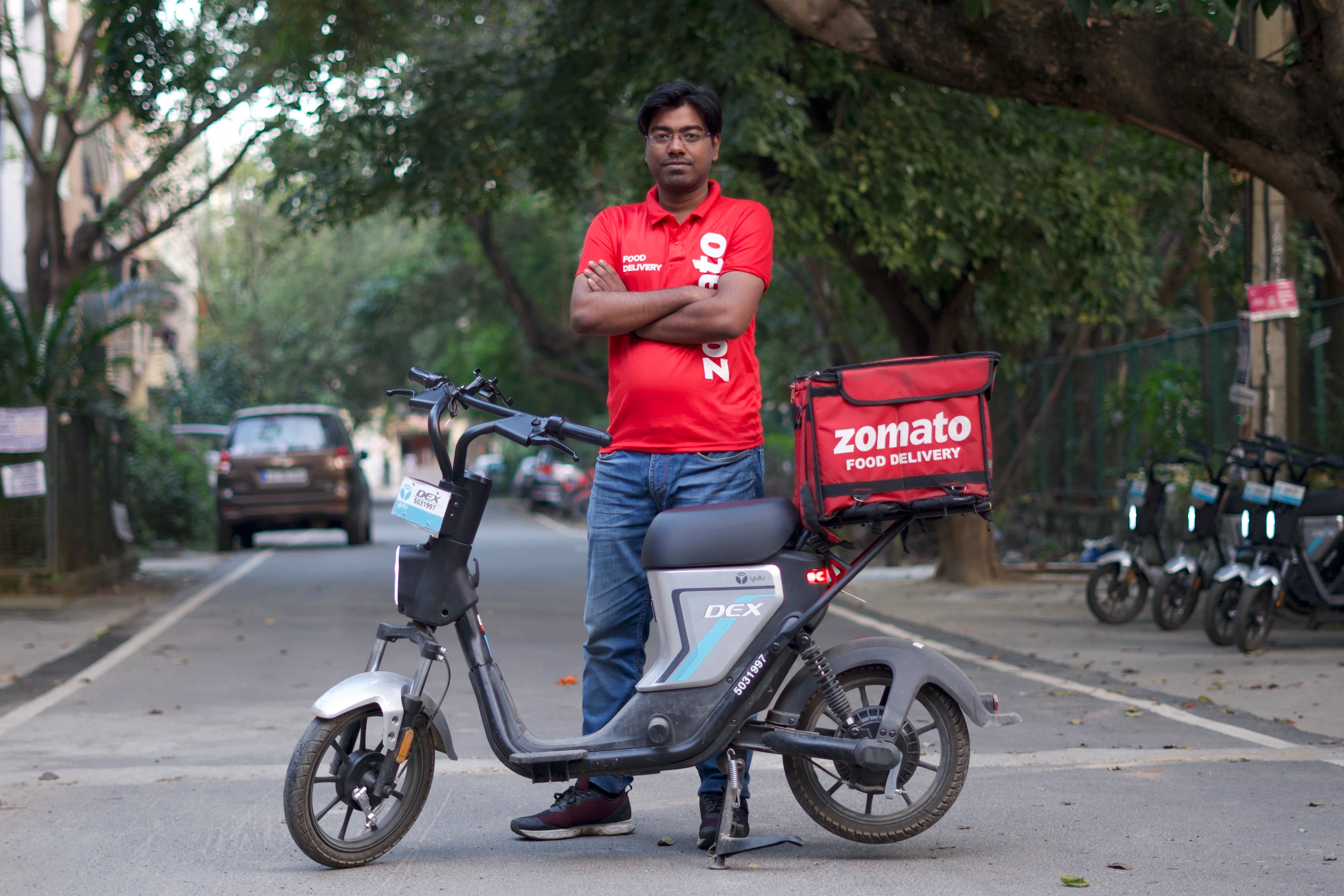
  • Powered by Yulu’s purpose built for delivery electric vehicle - the DeX, that allows delivery partners to deliver in comfort and maximize their earnings
Yulu, India’s largest shared electric Mobility-as-a-Service (MaaS) player today announced its association with Zomato for using Yulu DeX EV for intra-city deliveries. Kicking off this project, about 25,000 - 35,000 Yulu DeX will be given to delivery partners onboarded on Zomato’s platform for last-mile deliveries on custom-made rental plans. Yulu is committed to making urban transportation sustainable and the association with Zomato is a significant step towards making last-mile delivery green and efficient.

Rising fuel prices and financial challenges are significant barriers for youth who want to onboard themselves as delivery partners. Yulu DeX solves most of these challenges, and provides a mobility solution that is very easy to access for all. Yulu has flexible rental packs and allows delivery partners to earn higher earnings compared to ICE-vehicles. Along with this, the delivery partners get access to Yuma Energy’s wide network of battery swapping stations to minimise their downtime during last-mile deliveries. Once deployed, these 25,000+ Yulu DeX have the potential of serving 3 Lakh green deliveries every day by 2026.

Pradeep Puranam, Head - Revenue & Operations, Yulu said, “We are excited to associate with Zomato given our mutual concern towards the environment and the need of giving delivery partners a safe, dependable, and sustainable mode of commute for daily deliveries. With Yulu’s deep understanding of the delivery ecosystem, purpose-built product DeX, robust operations and a wide network of battery swapping stations, our solutions can improve earnings of delivery partners by up to 40%. There is an increasing desire towards reducing carbon footprint among customers as well, so this is a win-win for customers, delivery executives and both the companies.”

Mohit Sardana, COO, Food Delivery at Zomato said, “At Zomato, we are committed to making a positive impact on the environment and the communities we serve. We are thrilled to associate with Yulu, to make the last-mile delivery operations more sustainable and efficient. As part of The Climate Group's EV100 initiative, we have committed to transitioning our delivery fleet to 100% electric, and with Yulu's support, we are glad to be on the right path to achieve this target. We are excited to continue our efforts to create a greener Zomato and a better world for all.”

This association with Zomato bears greater significance in Yulu’s endeavour to offer smart and affordable green mobility solutions to the delivery partners over the next few years. Over 4,000 delivery partners as of February 2023, onboarded on Zomato’s platform organically utilise Yulu’s EVs to make the last-mile deliveries.

Till date, Yulu has enabled 75 Mn+ green deliveries and benefited 50,000+ delivery partners.

Yulu is India’s largest shared electric mobility & Battery-as-a-Service company, founded in 2017 by seasoned & serial entrepreneurs with the mission to reduce traffic congestion & air pollution while improving livelihood for millions of people. Yulu offers accessible, equitable, and sustainable mobility to a large section of society with its purpose-built smart vehicles, cutting-edge technology, and efficient on-ground operations. Yulu is backed by very credible & deeply committed investors who share the same long-term vision. Already a pioneer in the EV industry, Yulu has influenced several progressive policies that have accelerated the pace of adoption of sustainable mobility in India. Yulu is also significantly contributing to the United Nations Sustainable Development Goals for a better planet now & for the future.

For further information, please visit www.yulu.bike or follow us on Twitter @YuluBike.

Zomato's mission is better food for more people. Started in 2010, Zomato, a tech-first company, offers services like restaurant search & discovery, reviews, ordering and home delivery of food, online table reservation, and digital payments when dining out. It also works with restaurant partners to provide tools to engage and acquire more customers while empowering them with a last-mile delivery service and a one-stop procurement solution - Hyperpure, for ingredients and kitchen products.

Apart from this, Zomato has been focusing on providing transparent and flexible earning opportunities to its delivery fleet and contributing towards a more sustainable society through its collaboration with Hunger Heroes, a not-for-profit - Feeding India.

magicpin Raises $60 Mn in Funding Round Led by Zomato; To Expand into New Markets and Categories

magicpin Founders

Zomato led the round with participation from existing investors

magicpin will use funds for deepening presence in existing markets, launching new markets and expanding across categories

6M active app users, 6M monthly transactions and 170K paying merchants across 50 cities

magicpin, India’s largest platform for discovery and savings in offline retail, has raised a Series D round of $60M led by Zomato. The round also saw participation from existing investors including Lightspeed Venture Partners.

magicpin drives discovery of brands and retailers across categories - fashion, food, electronics, grocery, pharma, nightlife and entertainment. Users transact on the app using multiple methods and earn points on every transaction. The app shows relevant offers from merchants where these points can be used to make savings. The app currently serves 6M active users with nearly 25 sessions per user per month, and provides savings on nearly 170K merchants across big brands and local retailers.

Deepinder Goyal, Zomato said: “What Zomato did with restaurants, magicpin is doing for the entire offline shopping experience. magicpin is one of the most

important players in the nascent hyperlocal e-commerce space (both offline and online) – and we expect magicpin to create a tremendous amount of value for its merchant partners as well as customers going forward”.

Bejul Somaia, Lightspeed said: “Lightspeed is proud to have supported magicpin in every round of financing since the company was founded. The creativity, determination and resilience of the team has led them to pioneer a truly unique “made for India” business at the intersection of commerce, loyalty and payments that creates meaningful value for small merchants. We’re excited for their next phase of growth and innovation”.

magicpin was started in 2015 by Anshoo Sharma and Brij Bhushan and has grown to 6M monthly consumer transactions. The company also started home delivery from nearby stores to complete the full cycle from offline discovery to at-home fulfillment.

Anshoo Sharma, CEO & Co-Founder said -
Local retail is the lifeblood of our country. magicpin is helping drive omni-channel growth for local retail and enabling them to leverage the fast growing digital world. We are excited about welcoming Zomato into the company - this round puts us in a position to own and transform the offline shopping experience across India.

Zomato’s CEO Deepinder Goyal Joins the Board of magicpin


IPO-bound Zomato’s co-founder and CEO Deepinder Goyal has joined the board of magicpin, as an independent director. Founded by Anshoo Sharma & Brij Bhushan, and backed by Lightspeed Venture Partners, Waterbridge and Samsung, magicpin is India’s #1 savings app that connects hyperlocal merchants and brands with consumers.

Deepinder Goyal joins the existing board and advisors that consist of Bejul Somaia, MD, Lightspeed Venture Partners; Vivek Gambhir, CEO boAt Lifestyle; and Manish Kheterpal, MD, Waterbridge. Since launching in 2016, magicpin today has over 1.5 lakh merchants on the platform, serving 50 lakh consumers across fifty cities. It has also launched the OrderHere platform that enables local merchants to set up their online store within minutes, and serve online customers. magicpin simplifies catalog creation and management for local merchants/brands and offers seamlessly integrated payments and logistics from top logistics providers in India including Shadowfax, Dunzo, Rapido and Loadshare.

Speaking on joining the board, Deepinder Goyal said, “I am delighted to join the magicpin board. They are a high-quality team and I am excited about how they are being a driver of growth for local merchants across categories. I am looking forward to contributing to the company's success.”


Anshoo Sharma, co-founder and CEO of magicpin, said, “We are excited about Deepinder joining our board. He brings a wealth of experience from scaling up Zomato into the tech giant it is today. We are looking forward to his guidance and mentorship as we step into our next phase of growth.”

As lockdown measures ease across the country, magicpin is poised to scale up merchants and brands on its platform for online and in-store demand. It is already driving over USD 1 billion in annual revenues for its existing partners and continues to grow at a rapid pace.

About magicpin:

magicpin is India’s #1 savings app that spans from local merchants to large brands, online and offline. We bring the local market alive on our user’s phone and let people discover and save through our magicpin rewards programme, powered by over 150K partner stores.

magicpin drives over $1B of annual business that covers local merchants and brands like Pantaloons, Lifestyle, Westside, Levis, Jockey, Titan, Fastrack, McDonald’s, CCD, KFC, Pizza Hut, Taco Bell, Flipkart, Boat, Amazon, Samsung, Biba, ITC, Zandu, P&G and many more. Know more about us here - https://magicpin.in/about-us/


Zomato Reportedly Planning IPO Filing Next Month


Food delivery startup, Zomato is planning to file the draft prospectus by April for its initial public offering (IPO) that could raise about $650 million, said a report by Bloomberg, citing people familiar with the matter.

Citing it sources, the report further said that the Gurgaon-based company could complete the listing in Mumbai before the end of September, the people said, asking not to be identified as the information is private. Discussions are ongoing and details of the offering such as size and timeline could change. 

Last month, Zomato raised US$250 million from five investors, including Tiger Global Management, at a valuation of $5.4 billion. Backed by Jack Ma’s Ant Group, Zomato acquired its rival Uber Eats' business in India, in January last year, in an all stock deal, giving Uber Eats 10% of the combined business

Founded in 2008 in Delhi, the company employs more than 5,000 people, according to its website. Zomato recently raised $250 million from investors including Kora Management and Fidelity Management & Research Co., valuing the startup at $5.4 billion, according to an exchange filing in February by Info Edge India Ltd., an existing backer.

Food Delivery Platforms Struggle, Slow Recovery Compare To Pre-Lockdown


2020 was an interesting year for food delivery, both for aggregators (Zomato/Swiggy) and standalone brands (Pizza Hut/Dominos). Even as peak lockdowns shut restaurants, the dependence of many consumers on delivered food possibly increased. However, the larger theme has been that of a slowdown; the end-March to end-April lockdowns were the strictest, and its impact can be seen in plummeting reach of the two largest players.


(Source: KalaGato)


Open rates and monthly active users show recovery towards pre-lockdown levels, but…users who open apps don't count; paying customers do.

(Source: KalaGato)


(Source: KalaGato)

On this count, demand has not recovered much from April. Monthly Active Customers are the unique number of monthly customers transacting on a particular platform. To that extent the performance of Domino's has been most consistent (more on that later).

(Source: KalaGato)


This begs the question(s):
  • Have a lot of people made a permanent adjustment to home-cooked food?
  • Or is it an ongoing concern for safety?
  • Or is a lower transacting population representative of lowered spending power/ disposable income?
All of the above perhaps…

For the sticky users who continue to transact, there hasn't been much change in how often or how much they order; the lockdown period saw frequency and value hold steady thanks in part to the outlets that remained open for takeaway:

(Source: KalaGato)

(Source: KalaGato)


The pandemic is a hiccup, not a show-stopper. According to a joint report by BCG & Google online food delivery in India as a percentage of total dineout stands at just 4%, far behind developed countries like the U.S. and U.K. (at around 9.5%), and China (13%). So plenty of room to grow with a much larger addressable market (albeit with lower spending power).

Platform Extensions / What Else can My Riders Deliver?

The uptick in usage towards the end of 2020 for aggregators like Zomato/Swiggy is likely coming from a focus on new categories like alcohol (gives 'Swiggy' a whole new meaning!), grocery (Swiggy Instamart moving into Amazon Fresh/BigBasket territory), and wellness products.

Cross-selling products and improving network utilization makes inherent sense. Two questions businesses ask themselves:
  1. Why can't we keep our riders busy through the day and not just at meal times?
  2. What else can we 'credibly' sell to our customers?
Being category agnostic clearly helps utilize scale. Uber did this with Uber Eats in 2015 and more recently bought out alcohol marketplace Drizly for $1.1bn to sweat its network more. (Read More).

Speed is a drug- even next day delivery is too late and in the post-pandemic world, hyperlocal offers more opportunities than just food & grocery. As with jokes, hyperlocal success is all in the 'delivery'! This is a space the delivery giants are stepping into (Swiggy Stores hosts products from small stores), while holding onto the food delivery business, which is somewhat less competitive now thanks to the 'exit' of players like FoodPanda and UberEats.

Building war chests

Aggregators are clearly building their war chests for this expansion (Source: Press reports):


Diversification away from food delivery was always on the anvil and perhaps a long time coming; the pandemic precipitated it.

As always, do share your thoughts / feedback and get in touch for data!

Zomato Raises ₹456 Crores in Funding from Temasek 's Subsidiary MacRitchie Investments


Zomato Private Limited,  the online food restaurant discovery and delivery platform, has raised ₹456 Crores (~ US $62.4 million) in funding from MacRitchie Investments Pte. Ltd., according to financial data accessed by business intelligence platform, Toflera.


MacRitchie Investments is a Singapore-based investment firm and a wholly owned subsidiary of Temasek Holdings (Private) Limited.


In January 2020, Gurugram-based Zomato raised $150 million from Alibaba-affiliate Ant Financial. According to an estimate by HSBC Global Research, Zomato's valuation has improved to nearly $5 billion, an addition of nearly $2 billion over its valuation during the previous fundraising round.


In 2018, Ant Financial invested $210 million in Zomato for 14.7 per cent stake and later raised the stake to 23 per cent.


Other Zomato investors include Info Edge India, Vy Capital, Sequoia Capital and Singapore-based Temasek.


Zomato May Acquire Grofers for $750 Mn - Report

Gurugram-based food delivery and restaurant discovery platform Zomato is reportedly in talks to acquire online grocery firm Grofers in an all-stock deal, reported Economic Times, citing two people privy to the matter.

Japan's SoftBank Vision Fund, which is the largest shareholder in Grofers, may look to invest around $100-200 million in the merged entity, said the report. Notably, SoftBank is also an investor in Uber, and in February, Uber sold its India food delivery business UberEats to Zomato.

The development comes at time when Zomato launched 'Zomato Market' for delivery of essential products and announced a tie-up with Grofers to deliver essential items during the nationwide lockdown due to Coronavirus. Zomato launched 'Zomato Market' was launched around the country amid the lockdown.

Venture capital fund Sequoia Capital is a common investor in both Zomato and Grofers. Zomato is currently valued at around $3.2 billion, while Grofers is valued at around $750 million (around Rs 5,700 crore) post its last funding round led by SoftBank Vision Fund in December.

In September last year, Grofers had announced to add 700 Kirana Stores onto its network and targeting $1 Billion in revenue by 2019-end.

If the deal materializes, it will be the second big acquisition made by Zomato which acquired the Indian operations of UberEats earlier this year to bolster its food-delivery offering in the domestic market.

In an event in December last year, Zomato Founder & CEO Deepinder Goyal had said that Zomato is looking to raise up to USD 600 million (around Rs 4,276 crore) by January this year.

Marico Ties up with Swiggy, Zomato to Deliver Goods During Lockdown

FMCG firm Marico on Friday said it has tied up with online food ordering platforms Swiggy and Zomato to deliver essential food items to consumers during the lockdown period.

Under this partnership, Swiggy and Zomato would deliver essential food items under the Marico portfolio which includes Saffola Oils, Saffola Plain Oats, Saffola Masala Oats and Coco Soul Virgin coconut oil, at doorsteps of the customers.

"Through this collaboration, in line with its commitment to provide safe and nutritious food, Marico Ltd aims to supply necessary food items to consumers without having them to step out of their homes, in these times of turmoil,” said a joint statement.

This service is available on Zomato in Delhi-NCR and Bengaluru. It will be activated in other cities such as Mumbai, Kolkata, Chandigarh and Ahmedabad from next week, it said.  

While Swiggy stores have started the delivery in Gurugram, the service in Delhi-NCR, Bengaluru and Mumbai will begin this weekend, it added.

"As one of India's leading consumer companies, we are working towards ensuring the availability and easy access of essential food items to consumers. In an effort towards this, we have partnered with Swiggy and Zomato to provide Saffola and Coco Soul products to individuals' doorstep in a safe manner,” Marico Chief Operating Officer- India Sales & Bangladesh Business Sanjay Mishra said.

Swiggy Chief Operating Officer Vivek Sunder said through this partnership , Swiggy will leverage and engage its extensive delivery fleet to ensure that essential products such as cooking oil and oats reach consumers quickly and in a safe manner.
 
On Thursday, ITC Foods announced its partnernship with Domino's Pizaa by launching “Domino's Essentials” to deliver groceries and packaged foods to customers during the lockdown period.

The government has imposed a 21-day nationwide lockdown till April 14 to stem the spread of coronavirus infections. PTI KRH.

Zomato Acquires Uber Eats Business in India

Zomato on Tuesday said it has acquired the Indian business of Uber Eats in an all-stock deal that will give Uber 9.99 per cent stake in the Indian food delivery and restaurant discovery platform.

Uber Eats in India will discontinue operations and direct restaurants, delivery partners, and users of the Uber Eats apps to the Zomato platform, effective Tuesday, a statement said.

In a regulatory filing to BSE, Info Edge (India) - a shareholder in Zomato - said its shareholding in Zomato will stand reduced to about 22.71 per cent on fully converted and diluted basis upon closing of the transaction.

The deal comes days after Zomato had raised USD 150 million in funding from existing investor Ant Financial, an Alibaba affiliate, at a USD 3 billion valuation.

"We are proud to have pioneered restaurant discovery and to have created a leading food delivery business across more than 500 cities in India. This acquisition significantly strengthens our position in the category," Zomato CEO Deepinder Goyal said.

Uber Eats, which entered India in 2017, has about 26,000 restuarants listed on its platform from 41 cities.

Zomato's restaurant discovery and food delivery platform has information for over 1.5 million restaurants across 24 countries and serves more than 70 million users every month.

Discussions between Zomato and Uber have been on for months. Facing stiff competition from Zomato and Swiggy, Uber Eats had been making losses.

Uber had projected an operating loss of Rs 2,197 crore in its food delivery business for the five months through December 2019, according to a valuation report prepared by KPMG affiliate BSR and was part of regulatory filings.

According to sources, Uber Eats India business contributed three per cent of the global gross bookings but accounted for over 25 per cent of adjusted EBIDTA losses for the first three quarters of 2019.

With the sale of the food business in India, Uber can now focus on the rides business and driving it towards profitability, one of the persons said.

"India remains an exceptionally important market to Uber and we will continue to invest in growing our local Rides business, which is already the clear category leader. We have been very impressed by Zomato's ability to grow rapidly in a capital-efficient manner and we wish them continued success," Dara Khosrowshahi, CEO of Uber, said in the statement. PTI SR

Zomato Raises $150 Mn from Existing Investor Ant Financial

Online restaurant guide and food ordering platform Zomato on Friday said it has raised USD 150 million (over Rs 1,065 crore) from existing investor Ant Financial as part of a larger funding round.

According to a regulatory filing by Info Edge India, which is also an existing shareholder in Zomato, this transaction is at a pre-money valuation of USD 3 billion.

The investment is part of a larger funding round of up to USD 600 million, announced by Zomato Founder and CEO Deepinder Goyal in December.

"We have raised USD 150 million from Ant Financial as a part of a larger round. Ant Financial has been a steadfast partner in our journey towards achieving market leadership in on-demand food delivery in India, and dining out globally," a Zomato spokesperson said in a statement.

The filing by Info Edge India said Zomato Media has signed a definitive agreement to undertake a primary fund raising of up to USD 150 million from its existing shareholder, Antfin Singapore Holding Pte Ltd, and/or any of its affiliates.

"...upon closing as a consequence of this fund raise, our shareholding in Zomato shall stand reduced to about 25.13 per cent on fully converted & diluted basis. The transaction values Zomato at a pre-money valuation of USD 3 billion," it added.

In December last year, Goyal had told PTI that Zomato is looking to raise USD 500-600 million by January 2020 or so. PTI AKT AKT

Online Food Platforms to Redesign Schemes to Check Deep Discounts: NRAI

The National Restaurant Association of India (NRAI) on Tuesday said food aggregators have agreed to redesign their schemes to rein in deep discounts offered to customers and asserted that discount is a privilege not a right.

The NRAI stressed on the need to "detox" the restaurant-customer ecosystem from the addiction of deep discounts that has crippled the industry.

The association, which represents leading restaurant chains, independent eateries, bars and diners, was in talks with online food delivery platforms like Zomato and Swiggy for the past two days to resolve the confrontation over discounting schemes, dine-in programmes and table reservation schemes.

Launching a logging out campaign in protest against dine-in schemes, around 1,200 restaurants in major cities had reportedly delisted from the dine-in programmes of food aggregators, saying that deep discounting offered by the platforms was unsustainable and was hurting their business.

"Over the past two days, NRAI held extensive meetings with all restaurant aggregators and we were bemused to learn that the aggregators were promoting deep-discounts to stay competitive amongst each other," the association said in a statement.

What hurts the most is that these deep-discounts are funded by the restaurant industry and not the aggregators, it added.

"Moreover, as opposed to general perception, restaurants do not get any share of the proceeds that aggregators generate from guests as subscription fees," the statement said.

NRAI and aggregators were in agreement that technology is the backbone to enable restaurant discovery and a friction-less experience to the guests. However, guests should not be lured by devaluing the core product at a restaurant, it added.

"Therefore it was decided, that all aggregators will rejig their features which will allow the restaurant-customer ecosystem to detox from addiction of deep-discounts that has crippled the industry," the statement said.

The idea of scoring a discount should make guests feel special and not give them a sense of beating the system. Discount is a privilege and not a right, it added.

Discounting works well in the retail space, because brands can limit supply or at least make it look like supply is limited, and therefore create a sense of urgency in the eyes of the consumer, the statement said.

"Unlike retail, where end of season sale is to clear leftovers, a restaurant doesn't serve leftovers at a discounted price. It's all prepared fresh and made to order," NRAI said, highlighting the difference between the two sectors.

When asked about the future steps that the association plans to take on the issue, NRAI said: "When we hear back from all the aggregators on the changes/tweaks they will do, we will review if the objective of curbing deep discounting has been achieved." PTI AKT

Zomato Lays Off 60 from Customer Support in Gurugram for 'Redundancies'

Online restaurant guide and food ordering firm Zomato has laid off around 60 employees mainly from its customer support department in Gurugram on account of 'redundancies'.

"Over the last few months, our service quality has improved, and the percentage of orders requiring support has come down significantly creating redundancies for about 1 per cent (60 people) of our workforce," a company spokesperson said in a statement.

Most of these redundancies are in the customer support department and also include movements to other departments as part of our internal job placement (IJP) exercise, it added.

"As we've expanded to over 500 cities across India we also expanded our workforce by over 2,000 and this requires constant realignment to new departments and results in some redundancies with the scaling of technology," the statement said.

Zomato provides in-depth information for over 1.4 million restaurants across 24 countries and serves more than 70 million users every month. PTI AKT

Market Reports

Market Report & Surveys
IndianWeb2.com © all rights reserved