‏إظهار الرسائل ذات التسميات Robots. إظهار كافة الرسائل

US Startup Rovex Launches World’s First Autonomous Patient Transport Robot

US Startup Rovex Launches World’s First Autonomous Patient Transport Robot

Florida, United States-based startup Rovex has unveiled Rovi, the world’s first autonomous in-hospital patient transport robot. Designed to attach to existing stretchers, Rovi navigates hospital corridors independently, aiming to reduce delays in patient transfers and improve hospital efficiency. The launch comes amid rapid growth in the global hospital robotics market, projected to reach $4.6 billion by 2030.

Rovi is essentially a patient transport robot that attaches to stretchers, autonomously moving them around healthcare facilities. The systems include a screen that keeps patients informed of where they are going and why.  Rovi will eventually bring similar functionality to hospital beds and wheelchairs.

Rovi: World’s First Autonomous Patient Transport Robot

US Startup Rovex Launches World’s First Autonomous Patient Transport Robot
Rovi [Image - gorovex.com]
  • Universal stretcher fit: Rovi attaches to any brand of stretcher, with future compatibility for beds and wheelchairs.
  • Autonomous navigation: Equipped with 360° obstacle detection, computer vision, and elevator/door navigation without major infrastructure changes.
  • Pre-programmed simulation: Runs millions of virtual transports to learn hospital layouts and workflows.
  • Efficiency analytics: Captures logistics data to identify bottlenecks (e.g., imaging backups at peak hours).
  • Deployment scale: 9–10 Rovis can handle transport needs for a large hospital.
  • Patient experience: Moves at walking speed, greets patients, announces destinations, and keeps them connected to care teams.
  • Safety focus: Designed for low-acuity patients, ensuring dignity and comfort.

Market Context: In-Hospital Robots

  • Market size: $2.26 billion in 2025 → $2.59 billion in 2026 (CAGR 14.3%). Expected to reach $4.6 billion by 2030 (CAGR 15.5%).
  • Drivers: Staff shortages, rising surgical volumes, infection control needs, and demand for automation in logistics and labs.
  • Trends: Deployment of robots for non-clinical tasks (transport, delivery, disinfection); integration of AI-driven navigation and telemedicine capabilities; focus on contactless healthcare solutions post-pandemic.
  • Challenges: High upfront costs, regulatory hurdles, and training requirements for staff acceptance.

Comparative Positioning

RobotPrimary RoleStrengthsLimitations
RoviPatient transportUniversal stretcher fit, autonomous corridor navigationLimited to low-acuity patients
TUG (Aethon)Supply deliveryProven logistics automation, elevator integrationNo patient transport
Moxi (Diligent)Nurse assistantFetches supplies, supports staffNot designed for patient movement

Key Takeaways

US Startup Rovex Launches World’s First Autonomous Patient Transport Robot
  • Rovi is unique: Unlike supply-delivery robots, it directly addresses patient transport bottlenecks.
  • Hospitals benefit: Faster transfers, improved bed turnover, and reduced staff workload.
  • Market timing: Launch aligns with rising demand for automation in hospital logistics, positioning Rovex as a first mover in patient transport robotics.
Founded in 2024, Rovex is emerging as a first-mover in patient transport robotics, combining AI-driven navigation with hospital workflow integration. With strong VC backing and a niche focus, it is well-positioned to scale globally as hospitals increasingly adopt automation to address staffing shortages and efficiency challenges.


Via ~ Interesting Engineering

World’s First Fully Automated Medicine Lab: All Robots No Humans

World’s First Fully Automated Medicine Lab: All Robots No Humans

Japan has unveiled a world-first fully automated medicine laboratory, operating entirely without human researchers. Located at the Institute of Science Tokyo’s Yushima campus, this facility is staffed exclusively by humanoid robots and autonomous machines, marking a radical shift in medical research.

The facility developed by the Institute of Science Tokyo operates with 10 robots, including the humanoid Maholo LabDroid, and no on-site human staff.

Key Highlights

  • Location: Yushima campus, Institute of Science Tokyo
  • Robots in operation: 10 autonomous machines, including Maholo LabDroid with dual robotic arms
  • Functions: Automated cell culture, reagent transfer, temperature-controlled experiments, and repetitive lab tasks
  • Expansion goal: 2,000 robots by 2040, aiming to automate the entire medical research pipeline
  • No human staff: Operates 24/7 without on-site researchers

Inside the Robot-Run Lab

  • Maholo LabDroid: A humanoid robot capable of performing delicate tasks such as stem cell culture and drug testing.
  • Other autonomous systems: Handle repetitive lab work with precision, ensuring consistency across experiments.
  • Current scale: 10 robots are already in operation.
  • Future vision: Expansion to 2,000 robots by 2040, creating a fully autonomous medical research ecosystem.

Maholo LabDroid was among the earliest humanoid robots specifically built for biomedical research. It was first unveiled in 2017 by Japan’s Robotic Biology Institute (RBI), marking the debut of a humanoid laboratory robot designed to automate complex
biological experiments.  

Why It Matters

  • 24/7 operation: Robots can run experiments continuously, accelerating discovery.
  • Error reduction: Automation minimizes human mistakes in sensitive procedures.
  • Drug development speed: Timelines for testing and discovery are compressed significantly.
  • AI integration: Plans include combining robotics with AI for hypothesis generation and experimental validation.

Human vs. Robot Labs

FeatureHuman-Staffed LabsFully Automated Robot Lab
StaffingScientists, technicians10 robots (scaling to 2,000)
Operation HoursLimited (8–12 hrs/day)24/7 continuous
Error RiskHuman error possibleMinimized via automation
ScalabilityWorkforce-dependentExpandable via robotics
Research SpeedWeeks/monthsCompressed timelines

Challenges Ahead

  • Ethical oversight: With no humans on site, accountability for results becomes complex.
  • Technical reliability: Robots must adapt to unexpected experimental variables.
  • Cost barrier: High investment may limit adoption outside elite institutions.
  • Human role shift: Researchers may transition into supervisory, AI-integration, and oversight positions.
This lab represents a paradigm shift in medical research, where robots not only assist but fully replace human presence. If successful, it could redefine the future of drug discovery and biomedical innovation worldwide.

A Robot That Gives Birth? China’s Kaiwa Sparks Global Debate

A Robot That Gives Birth? China’s Kaiwa Sparks Global Debate

Kaiwa Technology, a Guangzhou, China-based firm led by Dr. Zhang Qifeng, has unveiled plans to launch the world’s first humanoid robot equipped with an artificial womb by 2026. The project was introduced at the 2025 World Robot Conference in Beijing and is being hailed as a potential revolution in reproductive science.

What Makes This Robot Unique?

  • Artificial Womb Integration: Carries a fetus from fertilization to full-term birth using synthetic amniotic fluid and nutrient-delivery tubes.
  • Interactive Pregnancy: Mimics the entire gestation process—from implantation to delivery.
  • Affordability: Target price under 100,000 yuan (~$13,900), far cheaper than traditional surrogacy.

Feature Overview

Feature Description
Artificial Amniotic Fluid Maintains fetal hydration and temperature
Nutrient Tubes Delivers oxygen and nutrients similar to an umbilical cord
Temperature Regulation Simulates womb-like warmth and stability
Oxygen Monitoring Ensures safe fetal development

Ethical & Legal Challenges

  • Surrogacy Ban: Surrogacy is illegal in China; Kaiwa is negotiating with Guangdong authorities.
  • Embryo Research Limits: Restricted to 14 days under current law.
  • Concerns:
    • Parental rights and legal guardianship
    • Psychological impact on robot-born children
    • Potential misuse for mass reproduction or genetic engineering

Societal Reactions

  • Some hail it as a lifeline for infertile couples.
  • Others call it “dehumanizing” or a “dystopian nightmare.”
  • Feminist critiques warn it could undermine maternal identity

Amazon's Global Robotic Workforce of 750,000 Robots, Job Losses and How Amazon Addressing It

Amazon's Global Robotic Workforce of 7,50,000 Robots, Job Losses and How Amazon Addressing It

Amazon recently informed that it employs over 750,000 robots in its operations and, out of these number 400,000 robots were added in the last two years. These robots work collaboratively with employees, handling highly repetitive tasks to improve efficiency, safety, and delivery speed. Amazon's continued investment in robotics technology indicates a significant shift towards automated processes in the company's operations.

Amazon's robots perform a variety of tasks aimed at improving efficiency and safety within their operations which include moving and organizing products within Amazon's fulfillment centers, picking and packing items to fulfill customer orders, sorting packages for delivery, and to transport oversized and unwieldy items through the fulfillment center, navigating around obstacles and working alongside human associate.

Amazon has been at the forefront of incorporating robotics into its operations, and here's a brief overview of the latest advancements:

An image of the new robotic solution —Sequoia — that will support workplace safety and help Amazon deliver to customers faster

Sequoia and Digit: These are new robotic solutions introduced to assist employees and expedite deliveries. Sequoia is designed to improve inventory management, allowing Amazon to store and process inventory up to 75% faster.

Digit Robot
An image of the bi-pedal robot — Digit — working alongside an Amazon employee
Titan Robot
An image of Amazon's new Titan robot. It's blue, plate-like robot with black details, including a camera on the front, a name plate that says "T333333" and a large, circular plate on top.

Titan: A new mobile robot capable of lifting up to 2,500 pounds, Titan is used for moving heavy and bulky items within fulfillment centers, enhancing safety and operational efficiency.

Proteus: Amazon's first autonomous mobile robot, which can navigate through facilities using advanced safety, perception, and navigation technology.


These robots are part of Amazon's ongoing efforts to improve workplace safety and efficiency while also ensuring faster delivery for customers.

Job Displacement Due to Robots & Automation

Regarding job displacement, Amazon recently announced the elimination of over 18,000 jobs, which is the largest layoff in the company's history. These layoffs mostly affected administrative roles and are part of a broader trend of job cuts across the tech industry. While Amazon maintains that its investment in robotics and automation has not impacted its human workforce negatively, and claims to have increased both hourly pay and the number of people working for the company in addition to the robots, there are concerns about the long-term implications of automation on employment.

An analysis suggests that despite Amazon's growth and hiring numbers, the overall retail job losses that it helped cause will still result in a net decline of 24,000 jobs at Amazon and related retail companies. This reflects the complex relationship between automation, job creation, and job displacement, highlighting the need for strategies to manage the transition for workers whose jobs are at risk due to automation.

How Amazon is addressing the impact of automation on its workforce?

Amazon's "Hands off the Wheel" program aims to automate repetitive jobs and reassign employees to more creative roles where they can add more value. This approach helps retain workers and move them into new roles, allowing the company to be more nimble and find new ways to stay ahead of competitors.

Amazon has partnered with the Massachusetts Institute of Technology (MIT) to study the impact of automation on work. This partnership supports MIT's automation clinic and involves research to understand how employees and organizations are affected by emerging technologies like robots and Al.

In addition, Amazon is also teaming up with polling firm Ipsos to study public sentiment around the impact of robotics and Al in industrial settings. This research will inform both MIT and Amazon as they develop collaborative technologies that support employees.

Robotization Can Lead to Decline of Work Meaningfulness and Autonomy

Robotization Can Lead to Decline of Work Meaningfulness and Autonomy

The impact of robotization on work meaningfulness is a topic of current research and debate. A recent study has found that increasing robotization in the workplace correlates with a decrease in perceived work meaningfulness and autonomy.

Specifically, the study suggests that doubling robotization could lead to a 0.9% decrease in work meaningfulness and a 1% decrease in autonomy. If the robotization intensity of certain industries were to align with the leading industry's level, it could result in a 6.8% reduction in work meaningfulness and a 7.5% decrease in autonomy.

This reflects a significant concern, as meaningful work is closely linked to job satisfaction and worker well-being. The introduction of robots can affect various aspects of meaningful work, such as pursuing a purpose, social relationships, exercising skills and self-development, self-esteem and recognition, and autonomy. While there are potential negative impacts, it's also possible for robotization to enhance the meaningfulness of work by relieving workers from repetitive and physically demanding tasks, thereby allowing them to engage in more complex and fulfilling roles.

It's a complex issue with both challenges and opportunities, and the ethical implications of how robots are implemented in workplaces are crucial to consider.

The research paper released is the first to examine the impact of robotization on work meaningfulness, autonomy, competence, and relatedness, which are essential to motivation and well-being at work. Using surveys of workers and robotization data for 14 industries in 20 European countries spanning 2005–2021.

The statement that robotization can lead to a decline in work meaningfulness is a concern that has been raised in the context of increasing automation. The introduction of robots in the workplace can indeed change the nature of work, potentially reducing the opportunities for employees to engage in tasks that they find meaningful.

When robots take over routine, repetitive tasks, it can lead to a reduction in autonomy and a sense of accomplishment for workers, as they may have fewer opportunities to use their skills and creativity. This can affect their perception of the value and significance of their work, leading to a decline in work meaningfulness.

However, it's also important to consider that robotization can have positive effects on work meaningfulness when implemented thoughtfully. By automating mundane tasks, robots can free up human workers to focus on more complex, engaging, and fulfilling aspects of their jobs. This can enhance their sense of purpose and contribution, potentially increasing the meaningfulness of work.

The key is to find a balance where robotization supports human workers, allowing them to grow and find satisfaction in their roles, rather than replacing or diminishing the human aspect of work. It's a nuanced topic that requires careful consideration of the social, psychological, and economic impacts of automation on the workforce.

Amazon’s New Mobile Robot Titan Can Lift Over 1,100 Kg


In 2013, Amazon launched SAT1 fulfillment center in San Antonio, Texas, to process larger, bulkier items. The facility is now deploying a new technology called 'Titan', a new robot to take on the extra-heavy lifting.

Built over a decade of innovations in mobile robotics at Amazon, Titan can lift up to two times more weight than Hercules, the most broadly deployed robot within operations of Amazon. With this strength, Titan’s task is to carry larger, bulkier items like small household appliances or pallets of pet food and gardening equipment.

Titan Robot
Titan robot 

Amazon’s New Mobile Robot Titan Can Lift Over 1,100 Kg

Titan can ferry up to two times more weight than Amazon’s widely deployed Hercules robot, which can lift up to 1,250 pounds (~ 567 Kilograms). Titan can lift up to 2,500 pounds (~1134 Kilograms), making it the perfect robot for the heavy-lifting.

Amazon manufactures Titan and other robots at its innovation hub in Massachusetts.

The mobile robot integrates several technologies from previous mobile robots, including the battery and charging management solution from Hercules, and the computer vision, obstacle detection, and user control systems from the Xanthus mobile robot.

Titan also uses hardware components from Proteus to manage its operating system as it plans, executes, and interfaces with other technologies within the facility.

Titan work collaboratively with other robotics systems to reduce repetitive motions, eliminates the need for employees to walk long distances or move heavy objects, and allows employees to focus on new tasks that require new skills.

Amazon has developed an entire suite of mobile robots with multiple components, like Pegasus which has a conveyor attached to the mobile robot allowing it to ferry individual packages from one part of a facility to another.

The company deployed over 750,000 robots across its fulfillment centers globally.

S. Korea's EveR 6 Becomes World's 1st Robotic Orchestra Conductor

S. Korea's EveR 6 Becomes World's 1st Robotic Orchestra Conductor

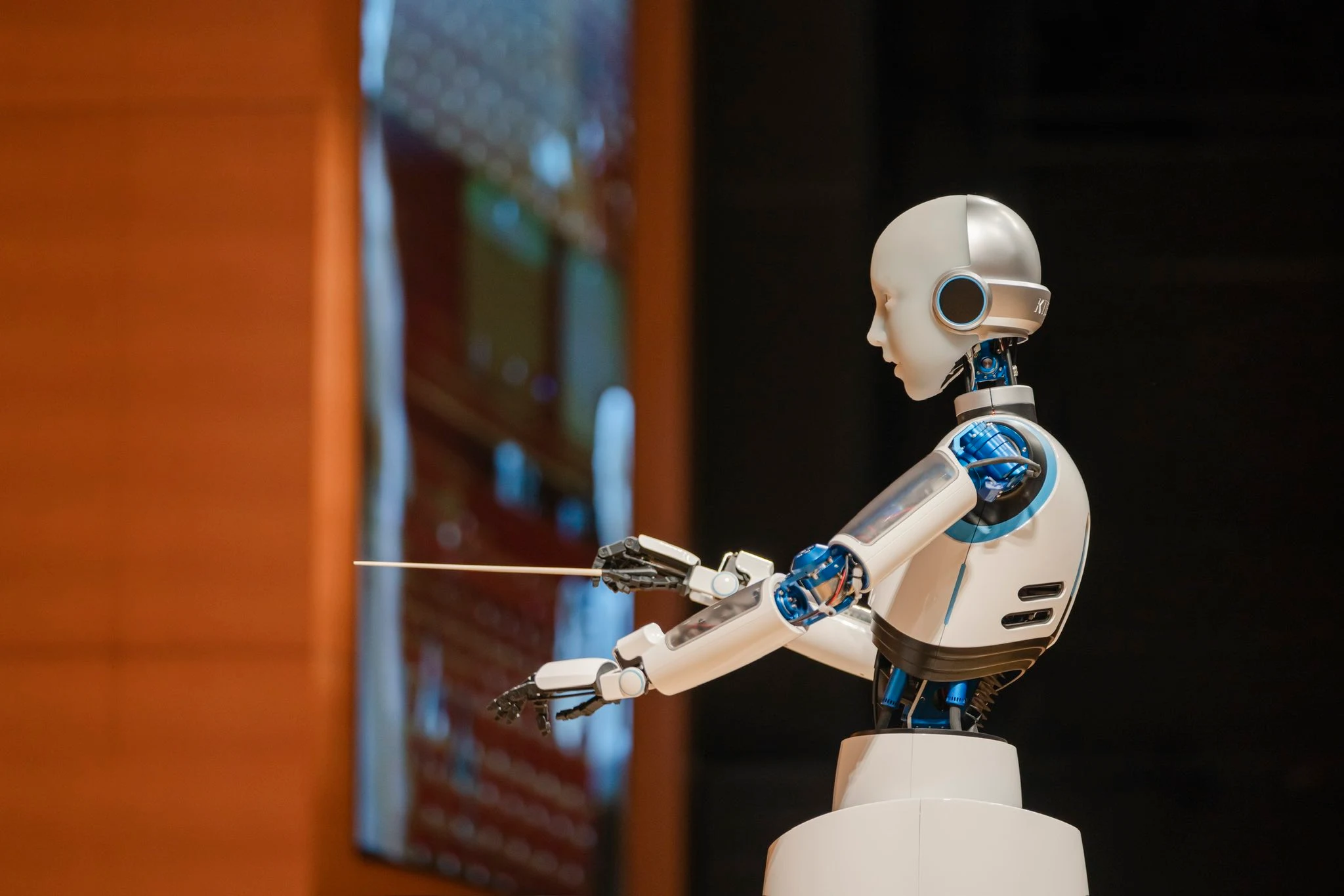
EveR 6, a robot conductor, led a practice session of the Korean National Orchestra at the National Theater of Korea in central Seoul on Monday of last week.

Later on Friday evening, the android robot took the conductor's podium in Seoul to lead a performance by South Korea's national orchestra, marking the first such attempt in the country, reported news agency Reuters.

Leading two of the five musical compositions by itself and another one with a human conductor, the robot, with a humanoid face, first bowed to the audience and started waving its arms to control the tempo of the live show.

EveR 6 was developed by the Korea Institute of Industrial Technology and is now touted as the world's first robotic orchestra conductor.

S. Korea's EveR 6 Becomes World's 1st Robotic Orchestra Conductor

S. Korea's EveR 6 Becomes World's 1st Robotic Orchestra Conductor

The 1.8-meter and two-handed EveR 6 robot guided more than 60 musicians of the National Orchestra of Korea who were playing traditional Korean instruments.

Ironically, EveR 6's critical weakness is that it cannot listen.

Citing Lee Young-ju, an audience member who studies traditional Korean music, the Reuters report further said that "the robot's moves, though impeccable in keeping the rhythm, lacked "breath" - or the ability to keep the orchestra ready to engage collectively and instantly - which he said was essential in performance". "It seemed there was some work to be done for the robot to do the job," Lee said.


All images from — National Theater of Korea@Twitter

Amazon Developing Game To Study Human-Robot Interaction

Amazon Developing Game To Study Human-Robot Interaction

Tech giant Amazon is developing a computer game called Alexa Arena which involves users interacting with virtual robots to train machines on how to behave around humans. The game involves getting virtual robots to do tasks for you and will gather data on robot-human interactions.

With this computer game, Amazon can train the machines on how best to go about their duties in offices and homes.

Qiaozi Gao, Applied Scientist of the Amazon Alexa AI team, describes Alexa Arena as an initiative supporting the development of gamified robotic tasks readily accessible to general human users.

According to a recent paper prepared by Gao and his team, the game will become publicly available in order to conduct a widespread study related to the creation of such embodied assistants like robots.

The game, yet to be launched, will feature “user-friendly” graphics and control mechanisms. Gao and his team claim that the game will open a new venue for high-efficiency HRI data collection and Embodied AI system evaluation. Embodied AI relates to AI systems which control a physical object, such as a robotic arm or autonomous vehicle.

Last month, Amazon had organised Alexa Prize SimBot Challenge BootCamp in the US, wherein 10 university teams were selected to participate in the live interactions phase of the Alexa Prize SimBot Challenge. These university teams competed to develop a bot that best responds to customer commands in a virtual world.

At last year’s International Conference on Intelligent Robots and Systems (IROS), Gao and his team presented two papers that advance Embodied artificial intelligence (EAI).

In the first paper published, “DialFRED: Dialogue-enabled agents for embodied instruction following”, the team presented DialFRED, an embodied-instruction-following benchmark containing 53,000 human-annotated dialogues that enables an agent to — (1) to engage in an active dialogue with the user and (2) use the resulting information to better complete tasks. 

Last year in August, Amazon unveiled its “first fully autonomous mobile robot” called Proteus, in its industrial robots category. 

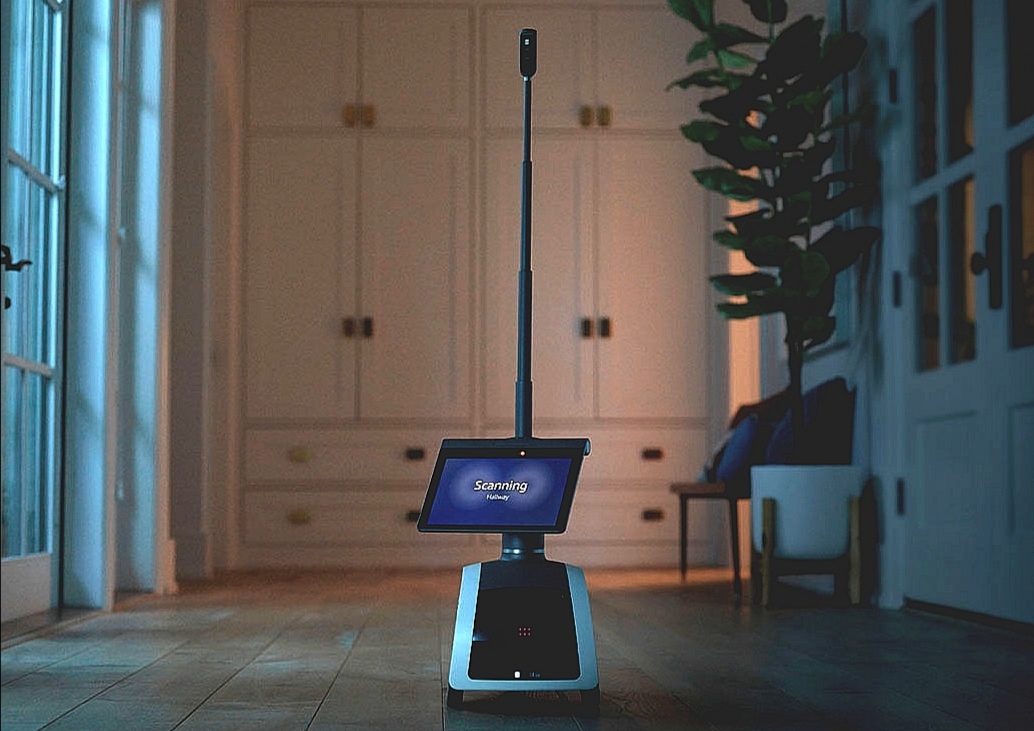
Notably, besides having industrial robots for its vast warehouses, Amazon also develops consumer robots such as the Astro home robot, which was launched in late 2021. 

Astro
Astro home robot

Astro Home robots are Household robot for home monitoring, with Alexa. With Astro robot, users can monitor home, while away from home, using its Astro app that allows to see a live view of users' home, check in on specific areas, and get activity alerts. When you're home, Astro can follow you from room to room playing your favorite music, podcasts or shows, and find you to deliver calls, reminders, alarms, and timers set with Alexa.

Coming back to the computer game, Alexa Arena will be made publicly available to facilitate research in building generalisable and assistive embodied agents such as virtual assistants and robots.

Genrobotic’s Bandicoot Robot Emerged as the Winner of Swachhata Startup Challenge 2022 by Ministry of Housing and Urban Affairs

Genrobotics, the leading Indian robotic company has emerged as the winner of The Swachhata Startup Challenge for their product Bandicoot, as the best innovative solution to eliminate manual scavenging, which also transforms the sanitation workers lives.

Genrobotic’s Bandicoot Robot Emerged as the Winner of Swachhata Startup Challenge 2022
Nikhil NP (Director of Genrobotics), Rashid K (Director of Genrobotics), Manoj Joshi (Secretary of Ministry of Housing & Urban Affairs), Mr Emmanuel Lenain, Ambassador of France to India, Kaushal Kishore (Minister for Housing and Urban Affairs of India), Roopa Mishara (Joint Secretary & National Mission Director, Swachh Bharat Mission- Urban)

The program launched by the Ministry of Housing and Urban Affairs (MOHUA) and Agence Francaise de Development (AFD), at Dr Ambedkar International Centre, New Delhi is For Leveraging innovation and technology to eliminate social stigma and challenges. The event was felicitated by Shri. Hardeep Singh Puri, Hon’ble Minister for Housing and Urban Affairs of India, Shri. Kaushal Kishore, Hon’ble Minister of State, Ministry of Housing and Urban Affairs, Emmanuel Lenain, Ambassador of France to India, Roopa Mishra, Joint Secretary and National Mission Director, Swachh Bharat Mission (MOHUA), and Manoj Joshi, Secretary, Ministry of Housing and Urban Affairs.

Genrobotics is addressing the issue of manual scavenging in India with Bandicoot, their flagship robotic product. Lauded by Prime Minister Modi, these robots are designed to completely eliminate manual scavenging and empower manual scavengers by turning them into robot operators along with many other positive social, economic and environmental impacts.


These advanced robots are well-equipped with gas sensing systems to detect hazardous gases thereby eliminating risks of accidents inside manholes. The interactive and user-friendly interface for manual scavengers’ aids in rehabilitation and uplift their life by making them robot operators to help them live a respectful and better life.

“Bandicoot is the most scientific and effective solution for removing manual intervention from manhole cleaning compared to any other grabbing and suction machines. It has special attributes including robotic arms, legs, and vision that aid sanitation workers in precise cleaning from outside the manholes. Bandicoots offer a cost-effective solution for the ULBs as well as efficiency and safety for the workers." said Nikhil NP, Director of Genrobotics.

In addition to many social-environment benefits, it brings huge financial advantages for the governments. Robotic scavenging is more efficient as it can cover up to 10 manholes every day against 1 or 2 being covered by manual scavenging. With huge savings on wages and operational costs, a municipal corporation can save approximately Rs 8000 Inr on cleaning 10 manholes a day.

Other cleaning techniques, such as sucking and grabbing machines, are also available, however, they are unable to remove solid waste, and the grabbing machine can only clean around 20% of the space inside the manhole. The authorities are required to use human labour in this case, however, Bandicoot outperforms other techniques of cleaning manhole blockages by a 100% cleaning efficiency because of its robotic arms that resemble human arms and bigger opening bucket design. For bandicoot to win the Swachhata Startup Challenge 2022, this was a significant turning point.

The initiative has experienced excellent success So far, it has rehabilitated over 1700+ workers across 17 states. It is currently being used by ULBs, smart cities, and refineries. Bandicoot Robot meets 9 out of 17 SDG goals set by the United Nations including good health, clean water and sanitation, good jobs and economic growth, innovation and Infrastructure, reduced inequalities, peace, justice and strong institutions. For its path-breaking efforts, the company has earned the trust of renowned business tycoons Anand Mahindra and Zoho Company as its investors. This technology won the AMRUT Tech Challenge Award as the Most Promising Innovative Solution for Sanitation by the Ministry of Housing and Urban Affairs, Government of India.

Sparsh Hospital Introduces Robotic-Arm Assisted Surgery for Joint Replacement


Dr. Ashwath Narayan CN, Minister of Higher Education, IT & BT, Govt of Karnataka. unveils Mako Robotic-Arm Assisted Surgery for Joint Replacement

SPARSH introduces Mako Robotic-Arm Assisted Surgery for Joint Replacement along with many other tech and digital transformation initiatives. 

In the endeavour to redefine healthcare and offer the most advanced treatment options for patients, SPARSH Group of Hospitals has unveiled a series of initiatives as a part of its technology adoption and digital transformation journey. 

SPARSH Mako Robot
SPARSH Robot (L to R) Dr Sharan, Dr Ashwath (IT BT Minister) and Dr Gurava Reddy
SPARSH has introduced five key healthcare technologies that comprises the following
  • Mako: A Robotic Arm used for Joint Replacement Surgeries that enables surgeons to deliver more predictable surgical outcomes with increased accuracy.
  • 3D Printing Technology: The future of high accuracy surgery and customised implants is a game changer in surgical intervention.
  • O-arm and StealthStation S8: A high-precision surgical imaging and navigation system for brain surgeries: The O-arm System provides high-quality 2D and 3D images which are automatically synced to the StealthStation S8 Navigation system. Using these high-definition intraoperative scans, the StealthStation S8 navigation system allows surgeons to visualise the patient's anatomy in 3D and localise instruments and implants throughout the procedure. 
  • Kinevo 900 - 3D Microscope: The Kinevo 900 is a robotic visualisation system that offers a unique micro-inspection tool and surgeon-controlled robotics. 
  • SPARSH patient portal app: An integrated patient app to store all patient information, services, reports, and test results. Patients can also schedule virtual doctor consultations, download e-prescription and make payments through a wallet available within the app. 
SPARSH Mako Robot
SPARSH Mako Robot in the background (L to R) Dr Ashwath Narayan and Dr Sharan Shivaraj Patil

SPARSH Mako Robot

Commenting on the new initiatives, Dr. Sharan Shivaraj Patil, Chairman, SPARSH Hospital, said, “At SPARSH, we have been early adopters of cutting-edge technology that can offer precision, faster recovery, and better experience for our patients. We believe that technology-assisted procedures unquestionably offer more precision and accuracy as compared to conventional manual surgeries. The expertise and acumen of our clinicians, coupled with the finesse and meticulousness offered by smart tech tools will allow us to offer the highest quality of care to our patients. We will continue to introduce many more such initiatives that have the potential to reinvent healthcare” 

Over the last decade,technologies such as advanced imaging, robotics, and artificial intelligence have played a key role in enhancing the standard of care and making surgical science more precise.  The concept of technology-enabled hospitals is slowly becoming an essential part of improving patient experience and elevating the quality of care, resulting in faster recovery and better outcomes.  SPARSH has been an early adopter of many of these technologies that have helped redefine the quality of care and offer high-precision surgical procedures.

The newly introduced Mako Robotic-Arm Assisted Technology allows surgeons to reproduce precise bone cuts for patients, every single time, first on a virtual 3D model and then in the operation theatre. In case of a knee or hip surgery, Mako System’s software helps create a 3D model of the diseased joint based on the patient’s CT scan. The software then allows creating a personalized virtual surgical plan for each patient, based on their specific disease condition. This planning, done even before entering the operation theatre, helps in deciding the most accurate bone cuts and alignment of implants. The technology, with its insightful data analytics, allows the surgeon to modify the plan during the surgery if required. And once the plan is locked, the Mako System assists the surgeon in executing the bone cuts in the operation theatre.  Mako SmartRoboticsTM platform has shown, through published clinical studies, that patients experienced improved early function, lower pain, less postoperative pain, less need for analgesics, and fewer physiotherapy sessions compared to manual surgery for Total Knee surgery.

Dr. Ashwath Narayan CN, Minister of Higher Education, IT & BT, Govt of Karnataka, said, “As the IT capital of the country, Bengaluru has been a leader in introducing and implementing technology-driven solutions that have transformed people’s lives. In the field of healthcare, technology has the potential to improve care quality and create easier accessibility. I would like to congratulate Dr. Sharan and his team for implementing these solutions. We need more initiatives like this that can help Bengaluru become a sought-after destination for advanced medical procedures” 

Waste Sorting Robots Market Size to Reach USD 10,286 Million by 2030 Owing to the Rising Solid Waste across the World Report By Acumen Research and Consulting

Acumen Research and Consulting recently published report titled “Waste Sorting Robots Market Size, Share, Analysis Report and Region Forecast, 2022 - 2030”

TOKYO, July 04, 2022 (GLOBE NEWSWIRE) -- The Global Waste Sorting Robots Market size accounted for USD 2,191 Million in 2021 and is projected to achieve a market size of USD 10,286 Million by 2030 budding at a CAGR of 19.1%.

Waste Sorting Robots Market Size to Reach USD 10,286 Million by 2030

Waste sorting robots have piqued the interest of industry leaders due to rising environmental concerns about solid waste. Globally, more than 2.3 billion tonnes of solid waste were generated in 2020, according to World Bank data. According to the World Bank's "What a Waste" report, solid waste generation will increase by more than 70% from 2020 levels to 3.9 billion tonnes by 2050. A large portion of this solid waste was generated by the municipal sector. According to the above-mentioned report data, the world produces more than 2 billion tonnes of municipal solid waste each year. About 33% of that waste is not managed in an environmentally safe manner. As a result, both public and private organizations desired more efficient procedures for managing waste releases around the world. As a result, demand for waste sorting robots increased rapidly.

Increasing digitalization across the world is one of the recent waste sorting robots market trends that are driving the industry demand. According to our waste sorting robots industry analysis, the high initial and maintenance cost of these robots would hamper the market from growing. However, the rising technological advancements and strict government guidelines for waste management are two major growth opportunities that will lead to considerable market demand in the coming years.

Request For Free Sample Report @

https://www.acumenresearchandconsulting.com/request-sample/2988

Report Coverage:

Market Waste Sorting Robots Market
Market Size 2021 USD 2,191 Million
Market Forecast 2030 USD 10,286 Million
CAGR During 2022 - 2030 19.1%
Analysis Period 2018 - 2030
Base Year 2021
Forecast Data 2022 - 2030
Segments Covered By Waste Sorting Type, By End-User, And By Geography
Regional Scope North America, Europe, Asia Pacific, Latin America, and Middle East & Africa
Key Companies Profiled ABB Ltd., AMP Robotics Corp., Bollegraaf Recycling Machinery, Clean Robotics, General Kinematics Corporation, Greyparrot, Machinex Industries Inc., Tomra, Waste Robotics Inc., and Zen Robotics Oy.
Report Coverage
Market Trends, Drivers, Restraints, Competitive Analysis, Player Profiling, Regulation Analysis
Customization Scope 10 hrs of free customization and expert consultation

COVID-19 Impact on the Global Waste Sorting Robots Market Value

The waste sorting robots demand decreased in 2020, due to low demand from various industries as a result of government lockdowns in many countries. Because of the prolonged lockdown in major global countries, the COVID-19 pandemic resulted in the shutdown of the manufacturing of numerous products in the waste sorting robots industry. This has hindered the growth of the waste sorting robots market. However, in order to reduce the spread of viruses, many industries have shifted their focus to automation, increasing the waste sorting robots market value. Looking at previous pandemics and current events, it is clear that demand for robotics will skyrocket. As a result, the global waste sorting robots market revenue is expected to rise in the coming years.


Check the detailed table of contents of the report @

https://www.acumenresearchandconsulting.com/table-of-content/waste-sorting-robots-market

Growing waste recycling process supports the waste sorting robots market growth

As the world's population grows, so does the strain on our planet's resources. Recycling is one important way that we can all aim to decrease impact on the environment, and with the increasing demand for recycled materials, labor availability for sorting and handling recyclables is becoming an important factor in recycling capacity. Luckily, waste sorting robots contribute to the solution. These intelligent machines can relieve some of the burdens placed on human workers by using AI technology to detect what is recyclable. This not only helps to alleviate labor shortages in this industry, but it also enhances efficiency and accuracy in recycling activities.

Waste Sorting Robots Market Segmentation

The global market has been divided into three categories: waste sorting type, end-user, and region.

Plastic product sorting, wood and brick sorting, metallic waste sorting, and other sorting comprise the waste sorting type segment. According to the waste sorting robots market forecast, plastic product sorting is expected to generate a significant market share from 2022 to 2030. This is primarily due to the increasing amount of plastic waste produced around the world. Furthermore, plastic wastes are much more harmful to the environment; land animals, and aquatic animals, resulting in a larger market share.

In addition, the end-user segment is divided into municipal and industrial. The municipality sector held the largest share in 2021 and is expected to maintain its dominance throughout the forecast timeframe of 2022 to 2030. However, the industrial sector is expected to grow at the fastest rate in the coming years.

Waste Sorting Robots Market Regional Outlook

North America, Asia-Pacific, Europe, Latin America, the Middle East, and Africa are the regional classification of the waste sorting robots market. According to our waste sorting robots regional analysis, North America leads the market in terms of market share and growth rate. The high adoption rate of robotics, rising technological advancements in automation, and private and public focus on a waste-free environment are supporting the North America waste sorting robots market. However, the Asia-Pacific region is expected to grow at a rapid pace due to increased awareness of the benefits of these robots and growing adoption in countries such as China, Japan, and India.

Buy this premium research report –

https://www.acumenresearchandconsulting.com/buy-now/0/2988

Waste Sorting Robots Market Players

Some key waste sorting robots companies covered in the industry include AMP Robotics Corp., ABB Ltd., Bollegraaf Recycling Machinery, General Kinematics Corporation, Clean Robotics, Greyparrot, Waste Robotics Inc., Tomra, Machinex Industries Inc., and Zen Robotics Oy.

AMP Robotics Corp., a pioneer in AI, robotics, and waste and recycling infrastructure, is spreading its footprint in Europe with the establishment of a display facility at SIGMA SA facilities in Poland. The facility is open to waste management and recycling companies from across Europe who needs to use one of AMP's artificial intelligence-guided robotics systems to separate different types of plastics, paper, and metals.

Browse More Research Topic on Automation Industry:

The Healthcare Robots Market is expected to grow at a CAGR of around 21.3% from 2020 to 2027 and predicted to reach the market value of around USD 32.5 Billion by 2027.

The Military Robots Market is anticipated to grow at a CAGR of around 7.5% from 2020 to 2027 and expected to reach the market value of around USD 28.1 Billion by 2027.

The Global Surgical Robots Market Size is expected to reach around USD 13.7 Billion by 2026 and growing at a CAGR of around 10.4% over the forecast period 2019 to 2026.

About Acumen Research and Consulting:

Acumen Research and Consulting is a global provider of market intelligence and consulting services to information technology, investment, telecommunication, manufacturing, and consumer technology markets. ARC helps investment communities, IT professionals, and business executives to make fact-based decisions on technology purchases and develop firm growth strategies to sustain market competition. With the team size of 100+ Analysts and collective industry experience of more than 200 years, Acumen Research and Consulting assures to deliver a combination of industry knowledge along with global and country level expertise.

For Latest Update Follow Us on Twitter and, LinkedIn

Contact Us:

Mr. Richard Johnson

Acumen Research and Consulting

USA: +14079154157

India: +918983225533

E-mail: sales@acumenresearchandconsulting.com

Robotix to Showcase a New Affordable AI Powered Robot in a Global Event - ISTE 2022

Robotix USA | India to showcase a new affordable AI powered Robot at ISTE 2022, New Orleans USA.

Robotix, a renowned name in the edtech world in India & Internationally, is all set to showcase a new educational AI robot at ‘ISTE Live 22’ a global event to be held from 27th to 29th June 2022 in New Orleans, USA. The event will witness the active participation of top educationists, Schools, coordinators, K12 school education leaders, and teachers from around the world.

Building on the success of its past STEM products, Robotix India is going to unveil a new and unique educational device for young minds. It will help students to immerse themselves into the world of artificial intelligence-driven robotics to explore and experience features such as face recognition and detection, sense perception, multilingual AI, machine learning, camera vision, and much more.
 
Robotix to Showcase a New Affordable AI Powered Robot at ISTE 2022


Mr. Ramana Prasad, Chairman of Robotix and AI World School mentioned that events like ISTE 2022 are a great opportunity and a wonderful platform for edtech companies like Robotix to showcase their products globally. He was hopeful of being able to connect with potential distributors, channel partners and K12 schools to grow the business in North America.

Robotix USA | India has made a name for itself by developing and successfully launching a wide range of STEM products for the school student community and for K12 schools. Some of the products include CSTEM Math Kit, STEM Maker Kit, Robobricks, Playbits, and Phiro. These products from Robotix help children learn STEM skills and other 21st century skills through interactive and hands-on experiential learning. The use of AI & Coding tools and STEM & Robotics products empowers children around the world to develop logical reasoning and critical thinking skills and be future ready.

https://www.robotixedu.com/

H-Bots launches H-Labs, the first and biggest Robotics R&D Ecosystem

H-Bots launches H-Labs, the first and biggest Robotics R&D Ecosystem

Hyderabad is now known as the city for emerging technologies while Bangalore is known as IT city: Mr Shrikanth Sinha, CEO, Telangana Academy for Skills and Knowledge (TASK), Govt of Telangana

Dr. Shanta Thoutham, Chief Innovation Officer, TSIC, Govt of Telangana tells youth to be change makers

H-Bots Robotics unveils H-Labs, the first and the biggest Robotics R & D ecosystem in a brief function held at T-Hub at Gachibowli on Thursday evening.

Mr Shrikanth Sinha, CEO, Telangana Academy for Skills and Knowledge (TASK), Govt of Telangana and Dr. Shanta Thoutham, Chief Innovation Officer, TSIC, Govt of Telangana launched H-Labs

The launch was graced by representatives of various colleges, management, students and Robotics Researchers and Robotics enthusiasts.

Mr Shrikanth Sinha, Shanta Thoutham along with kishan seen at the launch of H-Labs

H-Labs is a Research lab owned and operated by H-Bots Group. 24 colleges across Telangana state have come forward to set up H-Labs. Nearly 40 to 50 lakh rupees will be invested in each lab. These H-Labs will become functional in the next couple of months. By next year each college or job is expected to come out with one product to begin with. Once this model clicks, we will soon go national, announced Mr PSV Kishan, Founder and CEO of H-Bots.

H-Labs research program is aimed to make people ready for the 4.0 generation Industrial Revolution, Kishan added.

At H-Labs, we incubate new concepts and apply the latest technologies to deliver breakthrough solutions for business and society, Kishan informed.

Addressing the 100 plus gathering immediately after unveiling the H-Lab, Mr Shrikanth Sinha, CEO, Telangana Academy for Skills and Knowledge (TASK), said that people have misconception that Robots replace people to do repetitive jobs. But in reality they support and do not replace people.

15% of the population is disabled. So you must make Robots that assist disabled to lead a normal life. Shrikanth Sinha asked H-Bots to focus on this area.

Mr Sinha expressed his happiness as Hyderabad has got national recognition as the city for emerging technologies. as the. Bangalore is the IT city, but we are one step ahead and we are known as the city for emerging technologies.

The 7.5 billion Population of the entire world is influenced by just 1000 people. Would be interested in being the follower or influencer Dr. Shanta Thoutham, Chief Innovation Officer, TSIC, Govt of Telangana asked the gathering. She told the youth to be change makers. We at Innovation cell are working to build innovation culture in the state. There should be an innovator from every house she said.

Speaking on the sidelines of the launch with the media Kishan said H-Bots is now getting fully involved in Robos and Robotics as a service. Post the pandemic many Robotics companies were exploring alternative players out of China to manufacture Robots. H-Bots rose to the occasion and started manufacturing robots in bulk for their clients in the UK and USA. They have manufactured 140 robots both Health and Education Robots In the next one year they are planning to Manufacture 2500 Robots for their clients.

H Bots is also manufacturing 500 Outdoor Delivery Robots for one of their clients. These robots can take delivery of the goods at the gate and deliver the same internally to individual homes in gated communities.

H-BOTS Research has been exploring Robotics, artificial intelligence, machine learning and 3D printing technologies and techniques for decades. It believes Robotics will transform the world in dramatic ways in the coming years. It is building Robots that can combine different forms of knowledge, unpack causal relationships, and learn new things on its own.

BLR Airport Introduces AI-driven Robots for an Enhanced Passenger Experience

BLR Airport Introduces Robots for an Enhanced Passenger Experience

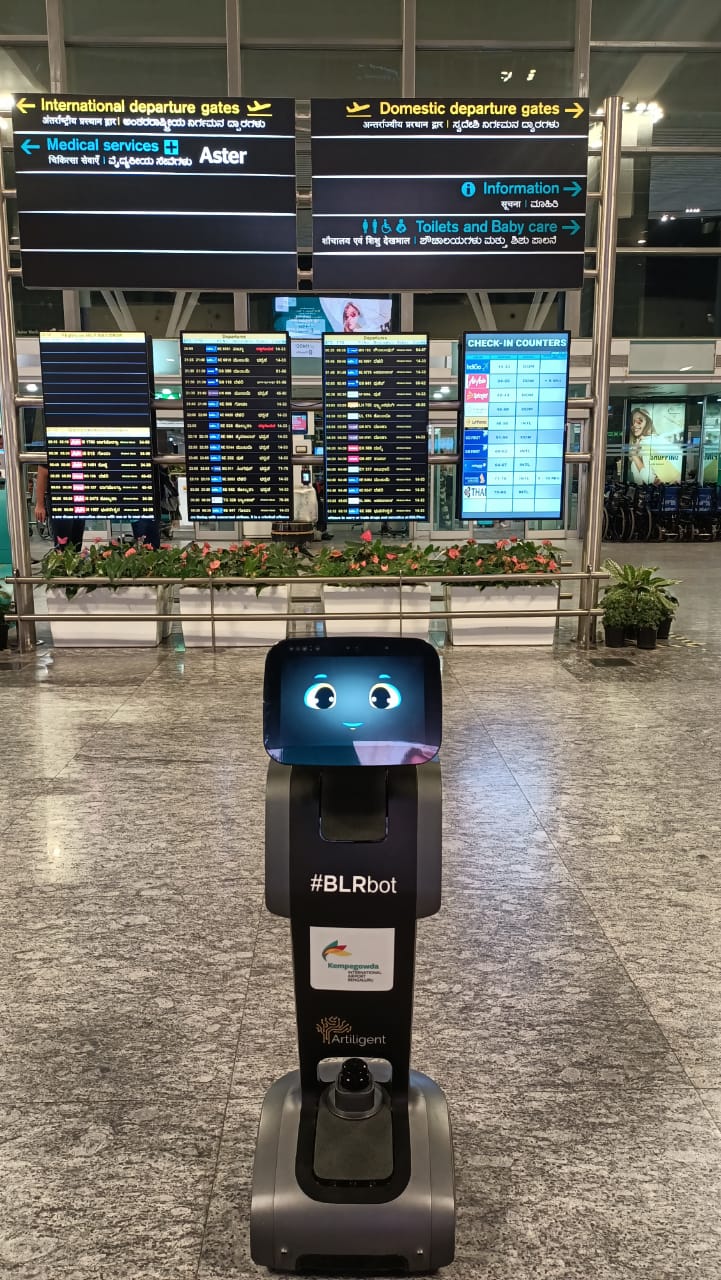
Innovation being the hallmark of its services, Kempegowda International Airport, Bengaluru (BLR Airport) has introduced the first-of-its-kind AI-driven, assistance robots to enhance passenger experience at BLR Airport.

Currently, at the trial stage, 10 robots have been deployed to help guide passengers through the airport and answer basic queries. The robot count will be increased in a calibrated manner and will be further developed over a period in terms of functionality and features, after gauging customer feedback.

BLR Airport Introduces Robots for an Enhanced Passenger Experience

BLR Airport Introduces Robots for an Enhanced Passenger Experience
#BLRbots
BLR Airport has partnered with Artiligent Solutions Pvt. Ltd. – specialists in AI and Robotics, to model the robots along with creating a customised passenger services software. The default language of communication will be English, with additional regional and international languages in the offing.

Jayaraj Shanmugam, Chief Operating Officer, BIAL, said that the airport prides itself on being a trendsetter when it comes to blending innovation and providing a seamless experience to passengers. “Pre-empting passenger requirements and complementing new-age technology with a focused customer-centric team approach has been our winning combination. These smart robots are the latest addition to our offering which shall further boost our concentrated endeavor to provide exceptional customer service.”

Rupesh Sawant, Chief Executive Officer, Artiligent said: “Innovative technology is revolutionising airtravel across the world. Artiligent ideated the AI_PORT concept to develop an enhanced airport experience for travellers. We are proud to associate with BLR Airport, the first airport in India to launch our solution and take a leap in their digital transformation journey.”

#BLRbots
The robots will provide a variety of services which include providing information on the flight status, passenger convenience services, directional assistance, Retail and F&B information. They shall navigate autonomously through the terminal and escort passengers to their desired locations. If due to any reason, the robot is unable to answer queries, passengers shall be immediately connected to the ‘Airport Help Desk’ via video call, on the robot screen itself.

Addverb To Open World’s Largest Robot Manufacturing Factory in India

Addverb To Open World’s Largest Robot Manufacturing Factory in India

Noida-based automation & robotics company, Addverb Technologies, has announced that will open world’s largest robot manufacturing factory in Noida, India. In January this year, Mukesh Ambani-promoted Reliance Industries acquired a 54% stake in Addverb Technologies, for $132 million funding in Addverb.

With the upcoming robot manufacturing facility, Addverb seeks to disrupt manufacturing technology in India by employing highly innovative production techniques in which “Human-Robot Collaboration” the robots of tomorrow.

Last year in March, Addverb inaugurated robot manufacturing facility called “Bot-Valley” in Noida, which is spread over 2.5 acres of land. The upcoming robot-factory will be 10-times bigger than Bot-Valley, with which Addverb plans to deliver innovative automation solutions made in India, for the world, turning India into the capital of global robotics industry.

According to the company press release, the new plant will spread over 60,000 sq. mtr. and create highly skilled job opportunities leading to direct and indirect employment for over 3,000 people.

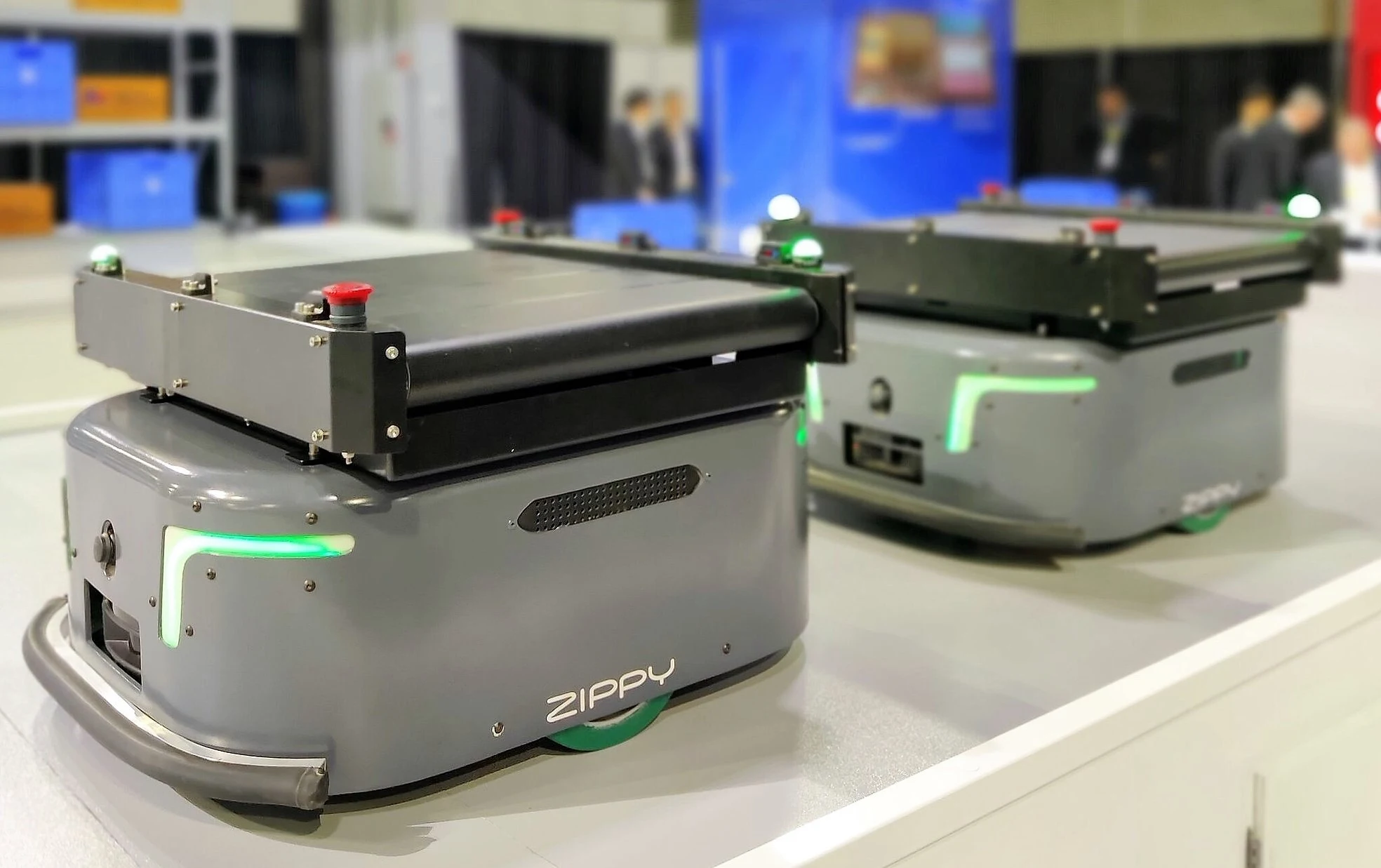
This upcoming facility will be able to manufacture up to 60,000 robots per year of different specifications and categories namely Autonomous Mobile Robot (Dynamo), Sorting Robot (Zippy), Multi-Carton Picking Mobile Robot (Veloce), Carton Shuttle (Quadron), Pallet Shuttle (Cruiser), Stacker Crane and Mother Child ASRS (Multi-Pro) system.

Sangeet Kumar, CEO of Addverb Technologies, said that “This brand-new facility will make Addverb a giant robot manufacturer on global fronts, by delivering cutting edge software and robust hardware systems, along with a mix of innovative fixed and flexible automation solutions.”

In September 2020, Addverb established its first offshore entity in Singapore to expand of its footprints in South East Asia.

Hyderabad-based All India Robotics Association Announced the Commencement of a Project to Make India’s Indigenously Built Defence Robots

Representational Image

Hyderabad based All India Robotics Association today on the eve of Republic Day, announced the commencement of a project to make India’s indigenously built Defence Robots

The robot will be formally unveiled on 15th August 2022, and will be dedicated to the Country.

The All India Robotics Association (AIRA), a Hyderabad based trade body of the Robotics industry in India today announced the commencement of making India’s indigenously built Defence Robots. Mr. Kisshhan P.S.V, Chairman of the two years old AIRA. This announcement was made at Hyderabad on Wednesday on the eve of India’s Republic Day.

Defense robots are professional service robots that are deployed by the military in combat scenarios. They are often intended to enhance a soldier's existence. While India is making much advancement in the defence sectors, AIRA would like to contribute with Advanced Defence Robot on behalf of the robotics sector, disclosed in a press note issued by AIRA.

The robot will be formally unveiled on 15th August 2022, and will be dedicated to the Country. Their aim is to develop a couple of them and send them for testing. Once they are proved effective, more will be manufactured depending on the needs of the army. These are made only for the Indian Army by AIRA on its own.

AIRA as a trade body is also encouraging various startups across the country to be part of this prestigious project. This is to show the unity of robotics startups around the country and also to dedicate this robot to the nation by every robotics startup in the country, the release added. .

AIRA will soon call startups for participation in this project. 60% of the robots will be developed by engineers in AIRA and 40% of the robots will be developed by all the robotics startups collectively.

AIRA is developing the robots with inputs from veterans, however AIRA will soon take inputs from the Indian Army and develop this project.

We will strive hard and will not leave any option which will make India the global leader in Robotics, the release stated.

On the other hand AIRA is also working closely with Last Mile Delivery Robotics startups and working closely with organisations and governments in creating policies. Robots have just started transforming the logistics industry. AIRA will fuel and revolutionize the way goods are moved and delivered in India added Srinivas Madhavam, Board of Director, AIRA & Founder, Exprs

AIRA is also initiating establishment of free robotics labs across the state of Telangana. It is aiming to create both engineers and technicians in the next 5 years to support the robotics industry. The program, according to Mr. Charan Lakkaraju, Director Education of AIRA, is designed by many experts and this will be a milestone for making robotics for everyone and robots for good.

According to him, AIRA will create it’s chapters across educational institutions in the state to impart latest skills and make them interact with robotics experts and learn firsthand information from them. These chapters will also run hackathons to build the skill pool needed for the robotics industry in future.

AIRA is thankful to every stakeholder, member, board members and especially Shri Jayesh Ranjan, for his vision on robotics and his constant support, the release added.

The All-India Robotics Association, AIRA, is a not-for-profit trade body of Robotic enterprises, the first in the country. The purpose of AIRA is to support, nurture and create robotics business opportunities in India.

It’s vision is to make India the global leader in robotics production and technologies, in Telangana AIRA works with and under the guidance of Mr. Jayesh Ranjan, Principal Secretary, IT & EC, Govt of Telangana.

In An India's First, Madurai-based MMHRC Deploys 16 TeleDoc Robots Allowing Doctors To Treat Patients from Anywhere 24x7


In a first in India, Madurai, Tamil Nadu-based Meenakshi Mission Hospital and Research Centre (MMHRC) has deployed 16 mobile Teladoc Health Robots. The robots, which the hospital claims are the preferred choice of the world’s top-6 hospitals, and MMHRC is the only Indian healthcare institution to deploy these.

The Teledoc Robots will be used for clinical examinations, diagnosis, and monitoring of health parameters of both out-patients and in-patients.

The hospital has procured these robots from the US-based Teladoc, a multinational telemedicine and virtual healthcare company based in New York.

The Teladoc telemedicine robots have capabilities to carry out basic clinical examinations (such as checking blood pressure and heart rate) on their own, as instructed by the doctors. As IoT devices, they can be used to control other advanced diagnostic equipment such as CT and MRI scan machines. 

Applying Artificial Intelligence, these Teledoc robots can collect and process data from other diagnostic equipment and present it to the doctors to help them make precise clinical decisions. The robots can also enhance patient relations, as they are fitted with cameras and display monitors to enable patient-doctor interaction.

Dr. S. Gurushankar, Chairman, Meenakshi Mission Hospital, Madurai said, "The adoption of such telemedicine robots is not going to take away jobs of paramedical staff. Their primary objective is to augment the diagnostic abilities of doctors and improve access, quality, and efficiency of healthcare delivery for patients irrespective of their physical location – whether they are admitted at the hospital or are miles away at their home."

2.5 Acre Robots Manufacturing Facility "Bot-Valley" Opens in Noida

With the establishment of 2.5 acre Bot-Valley, Addverb aims to make India the Capital of Global Robotics in the World- a place where ‘Robots build Robots’

This facility has a capacity to manufacture more than 50,000 Robots of varied types in a year & is equipped with the best-in-class electronics and mechanical machines.


04/03/2021, Noida - Addverb Technologies - one of India’s biggest Automation and Robotics companies in India, mentored by Shri. Jalaj Dani inaugurated its world class manufacturing facility “Bot-Valley” in Noida today with a vision to ‘Pioneer Human-Robot Collaboration to touch human lives’ today. “Bot-Valley'' is a creative workplace that inspires innovation and boosts collaboration among the best technopreneurs of the country. With the establishment of this facility, Addverb intends to create a self-sustaining ecosystem for the Robotics industry in India that can also export innovative products & disruptive technology solutions to the world. Mr. Amitabh Kant, CEO, NITI Aayog facilitated the event as a chief guest and inaugurated ‘Bot-Valley’.

Spread over 2.5 acres of land, this new manufacturing unit is equipped with the best-in-class electronics and mechanical machines and has a capacity to manufacture more than 50,000 Robots of varied types in a year. This one-in-a-kind manufacturing hub will employ 450 workforce and provide equality and empowerment to both men and women. Established in 2016, Addverb Technologies have streamlined the process for many retail giants of the country through its innovative products & solutions. Not only this, just in a span of 4.5 years, Addverb Technologies established a global footprint by acquiring customers in Europe, South-East Asia & Australia and established 100% subsidiary companies in Singapore, Australia & Netherlands.


Present at the occasion, Mr. Amitabh Kant, CEO, NITI Aayog said, “The past decade witnessed precipitous changes spanning from the way of life to the technologies that emerged. We have entered a nascent paradigm shift (industry 4.0) where technology will help Addverb meet the growing needs and demand of the present business ecosystem. Robotics holds huge potential in streamlining the processes across industries right from retail to healthcare and from warehousing to supply chain."

He further added “I want to congratulate Addverb technologies for the establishment of the state-of-the-art facility and unleashing the power of India on global fronts. This facility is a benchmark to global standards and the epitome of Atmanirbhar Bharat. It will give a major push to Prime Minister Narendra Modi's mission of Make-In-India and position our country as the capital of the Global Robotics Industry."

Addressing the occasion Mr. Sangeet Kumar, Founder and CEO, Addverb Technologies said, “This new facility will unleash the power of India on global fronts and will strengthen the overall robotics ecosystem of the country. Even with increased demand for automation, the penetration of robotics, especially in small and medium enterprises is still low in India compared to the global average. With the establishment of this world-class facility, we will be able to project India as a R&D epicentre of the world and share knowledge and encourage Indian manufacturers to embrace our game changing technologies and become best-in-class manufacturers for local and global markets."

Addverb firmly believes in, ‘Make In India & Make for the World‘ and has established this facility to develop several material handling robots indigenously. The facility houses state-of-the-art equipment and compliments the benefits of Industry 4.0 including cutting-edge robotics and digitalization technologies that enable rapid innovation, adaption, optimization and agile delivery of made-to-order robotics.

About Addverb Technologies - With a vision to disrupt the Indian manufacturing and supply chain industry, the home-grown company ‘Addverb Technologies’ is a pioneer in implementing state-of-the-art robotic and automation solutions across factories and warehouses. 

The company has been building robotics and automation technologies in India which are suitable for a wide range of businesses from Fortune-500 companies to small and medium-sized businesses. It leverages technologies such as AI, Machine Learning, Robotics, Automated Storage and Retrieval System (ASRS), Shuttles, IoT along with their in-house software solutions such as Warehouse Management System, Warehouse Control System, Warehouse Execution System etc to improve the performance and accuracy of warehouse and factory operations. They provide end to end automation solutions using a unique approach of 4D’s (discovery, design, develop and dedicate), i.e., discovering the right automation for a customer’s problem, designing the solution to manufacturing the product and project execution and dedicated after-sales support.

Market Reports

Market Report & Surveys
IndianWeb2.com © all rights reserved