‏إظهار الرسائل ذات التسميات Politics. إظهار كافة الرسائل

Indian Politicians Using Their Audio, Video Deepfakes to Reach Voters

Indian Politicians Using Their Audio, Video Deepfakes to Reach Voters

The use of deepfake technology by Indian politicians to reach voters has been a significant development in the country's election campaigns and for the first time, it’s happening on a large scale. 

Companies like The Indian Deepfaker has been creating AI-generated avatars and deepfake videos for political campaigns, enabling personalized messaging on a large scale. These deepfakes have been used to present politicians positively, and even deceased leaders have been digitally resurrected to garner support.

Headquartered in Ajmer, Rajasthan, the Indian Deepfaker company has created personalized messaging and holographic avatars for political campaigns. The company counts Netflix as one of its clients.

The 2021-founded company is reportedly handling handling more than a dozen election-related projects, including creating holographic avatars of politicians, using audio cloning and video deepfakes to enable personalised messaging in groups, and deploying a conversational AI agent that identifies itself as AI, but speaks in the voice of a political candidate during calls with voters.

Just like any of the sector or industries saw exponential use of technology, the Indian politics is no less than an industry, metaphorically. In 2014, India’s current prime minister, Narendra Modi used 3D hologram technology to broadcast prerecorded speeches at multiple campaign rallies around India. Years later now, PM Modi's AI-generated avatar speaks to voters by name in WhatsApp videos as the use of AI technology in Indian politics has ballooned

However, the Election Commission of India has advised political parties to refrain from using deepfakes and other forms of misinformation during elections, highlighting the potential risks associated with such practices. The impact of deepfakes on voter decisions and the democratic process is still being assessed, with experts expressing concerns about the spread of misinformation and its influence on the electorate.

The Election Commission of India has issued guidelines directing political parties to take down deepfakes within three hours during the Model Code of Conduct (MCC) period in general elections. These guidelines emphasize responsible and ethical.

It's important to note that while deepfakes can be a powerful tool for political communication, they also raise ethical questions and the need for responsible use to ensure the integrity of democratic processes.

Besides, there have been several case studies highlighting the impact of deepfakes on past and the ongoing elections. The ongoing India's 2024 General Elections has seen many deepfake misuse cases that extensively used AI-generated deepfakes of politicians, including deceased ones, to reach voters. Concerns were raised about misinformation and its potential to influence voters and fuel protests.

During Telangana State Elections, a deepfake video was circulated on social media showing a political leader endorsing the opposition party. The video was released on election day, leaving no time for the opposition to control the damage.

In Slovakia, during last elections, a number of AI-generated audio recordings impersonated a liberal candidate discussing plans to raise alcohol prices and rig the election. These deepfakes circulated on social media platforms, creating confusion and eroding voter trust just before the polls.

These cases demonstrate the disruptive potential of deepfakes in the electoral process, highlighting the need for vigilance and regulatory measures to safeguard democratic integrity.

Center for Countering Digital Hate, a nonprofit organization has successfully created examples of harmful Al-generated election disinformation content to warn about the technology's potential to undermine democracy. It raises questions about the usefulness of such technology against the potential harm it may cause.

With elections this year in over 50 countries involving half the globe’s population, there are fears deepfakes could seriously undermine their integrity.

105 Years Old Indian Historical Records Commission (IHRC) Adopts a New Logo and Motto

105 Years Old  Indian Historical Records Commission (IHRC) Adopts a New Logo and Motto

The Indian Historical Records Commission (IHRC), an apex advisory body on archival matters in India, has recently adopted a new logo and motto.

In order to visually communicate the unique identity of IHRC and the ethos that it represents, an online competition was launched in 2023 on MyGov portal to invite the designs for logo and motto, and in response a total 436 entries were received.

The winning logo design was submitted by Shaurya Pratap Singh from Delhi. The winning entry will be awarded a prize money of Rs. 50,000/- while consolation prizes of Rs. 5,000/- each will be given to all four shortlisted entries for logo and moto respectively.

The logo features:

  • Lotus Petals: These represent IHRC as a resilient nodal institution for maintaining historical records.
  • Sarnath Pillar: Symbolizing India's glorious past.
  • Brown Color Theme: Reinforcing the organization's mission of preserving, studying, and honoring India's historical records.
The logo signifies the theme and uniqueness of IHRC entirely.

Motto:

The motto translates as: "Where history is preserved for the future."

It holds great significance for the IHRC and its work.

Established in 1919, IHRC plays a vital role in identifying, collecting, cataloging, and maintaining historical documents and manuscripts.

IHRC has diligently preserved various historical records that offer valuable insights into India's past including original Chargesheet of the Kakori Case (1925). The Kakori conspiracy was a significant event during India's struggle for independence.

The IHRC's commitment to safeguarding historical documents and making them accessible for the benefit of present and future generations is reflected in this new logo and motto.

Role of IHRC?

The Indian Historical Records Commission (IHRC) plays a crucial role in preserving and safeguarding India's historical records. The IHRC is responsible for collecting, cataloging, and maintaining historical documents, manuscripts, and records. It ensures the proper storage and preservation of these materials to prevent deterioration over time.

The Commission also facilitates research and study related to historical records. Scholars, historians, and researchers can access IHRC's archives to explore India's past, analyze trends, and gain insights into various aspects of history.

As an advisory body, IHRC provides recommendations to the government on archival policies, practices, and legislation. It contributes to shaping policies related to historical records management.

The Commission aims to digitize historical records, making them accessible online. This digital transformation ensures wider availability and ease of access for researchers and the public.

IHRC collaborates with other archival institutions, libraries, and universities to enhance historical research and knowledge dissemination.

In summary, the IHRC serves as a custodian of India's past, ensuring that valuable historical information is preserved, studied, and made available for future generations.

Foxconn Founder Terry Gou To Run for Taiwan President As An Independent Candidate

Foxconn Founder Terry Gou To Run for Taiwan President Aa An Independent Candidate

Foxconn Founder, Terry Gou, has announced that he'll run for president of Taiwan as an independent candidate in upcoming elections in next January.

At a news conference, Gou criticised the governing Democratic Progressive Party, saying its policies have brought Taiwan into the risk of war with China, which claims the self-ruled island democracy as part of its territory.

Interestingly, this will be Foxconn founder's second attempt to lead the opposition Kuomintang (KMT). In 2019, Gou resigned from Foxconn and joined the Kuomintang (KMT) to run for president, declaring he was instructed by the sea goddess Mazu in a dream to contest the election. Notably, Gou is also the main owner of HMD Global, which is a company founded in 2016 to sell Nokia branded phones.

However, Gou now needs to get 2,90,000 signatures from voters by 2 November to make his bid official.

Taiwan's current president—Tsai ING-wen, the first female president of Taiwan, has more anti-China stance contrasts with the KMT, which supports closer ties with mainland China.

The Foxconn founder said that he was running to prevent Taiwan from becoming “the next Ukraine,” promised to bring “50 years of peace to the Taiwan Strait,” and pledged to help the island overtake Singapore in terms of GDP per capita.

In 2019 however Gou had contrast point of view towards China when he told reporters that Apple should move its manufacturing out of China.

Owing to his business background and image as a political outsider, Gou has been compared in international media to former U.S. President Donald Trump.

Poland's Govt Sued By Young Activists, A Grandfather and A Farmer Over Climate Change

Image - ClientEarth

Young climate activists, a grandfather and a farmer have sued the Poland government for failing to deal with climate change.

The Polish citizens argue that extreme weather events worsened by the warming of the planet are threatening their individual rights and their livelihoods, in lawsuits filed at first-instance courts in the East European country this week. Environmental law firm ClientEarth, which is the people, said two more cases will follow.

“A few years, back climate litigation was a complete fantasy, especially in Poland, and now it’s becoming a reality,” said Janusz Buszkowski, ClientEarth’s lead lawyer on the cases. “Examples of climate litigation with spectacular results outside of Poland were an encouragement for us.”

Founded in 2008, ClientEarth is an environmental law charity, with offices in London, Brussels, Warsaw, Berlin, and Beijing. 

The cases are the first to expose the effects of climate change on people living in Poland and to ask courts to find that the country’s inadequate climate policies violate individual rights.

Climate litigation has soared worldwide after governments in most countries signed the Paris Agreement in 2015, which commits them to cut greenhouse-gas emissions to keep planetary warming below 2ºC or close to 1.5ºC by the end of the century. Using the courts to force states and companies to pursue more ambitious climate goals is gaining momentum after landmark victories in recent weeks.

Last month, a court in the Netherlands ordered oil giant Royal Dutch Shell to cut its greenhouse-gas emissions by 45% by 2030 compared with 2019 levels. In April, the German supreme court ruled that the government’s 2019 climate law was incompatible with fundamental rights. Claimants in the two cases were young climate activists and environmental organizations who argued that their individual rights were being violated.

“I’ve been engaged in climate action for several years and I’ve exhausted many paths of action, so I decided to take a step forward,” said Monika Stasiak, one of the five Polish claimants.

Aleksander Brzozka, spokesperson for Poland’s Climate Ministry, didn’t answer a phone call to his office on Thursday, and ministry didn’t immediately respond to an e-mail requesting comment.

Monika Stasiak is a 34-year-old ethnologist from central Poland. Intense drought and dwindling water levels in the nearby Pilica river in recent years have meant local the local ferry was unable to operate, farms have suffered crop failures and Stasiak had to change her plans to start an agro-tourism business.

Monika Stasiak said -- 
During summers it often happens that there’s not enough water for kayaks to get through the river. The drought also affects our plans to be self-reliant—we’re afraid of what is going to happen.

Poland’s current policies are inadequate to slow the pace of climate change and that’s already having an impact on individuals, ClientEarth said. Poland is Europe’s most carbon-intensive nation, with about 70% of the electricity it generates coming from burning coal, the most-polluting fossil fuel. That makes the EU’s largest eastern economy one of the region’s worst when it comes to air quality — it’s home to 36 of the 50 most-polluted cities in the bloc.

The country has agreed to join EU efforts to cut emissions 55% by 2030, compared with 2019 levels. It wants to reduce coal usage to 11% by 2040 and has agreed with coal unions to close the last mine in 2049. It is also seeking to stop production at the EU’s biggest lignite-fired power plant in Belchatow in 15 years.

“Something is slowly being done, but it’s not adequate to the scale of the crisis or the norms indicated by the scientists,” Stasiak said. “Both the country’s energy policy and the agreement with miners are internally contradictory and are completely against science.”

Poland should cut its emissions 61% by 2030 relative to 1990 and achieve climate neutrality by 2043 to comply with the commitment it took when it signed the Paris Agreement, ClientEarth said in the lawsuits. The cases were filed in five different local courts in the hope that at least one will either rule that claimants have a right to a safe climate, or end up in the country’s Supreme Court.

“We have quite a few Polish examples of climate cases and so far the courts have treated them seriously,” Buszkowski said. “We believe that the time has come to go at a larger scale and to sue the only entity that’s responsible for the emissions from the whole territory of Poland, which is the Polish state.”

Original Source -  Businesslive.co.za (Bloomberg) [With 4th paragraph added and other minor edits] 

Russia's "Sputnik V" Vaccine Will Have "Made in China" Label - CNN Report


Hundreds of millions of doses of Russia-made Sputnik V Covid-19 vaccine, which reportedly showed a 97.6% efficacy, will come with the label "Made in China", said a report by CNN.

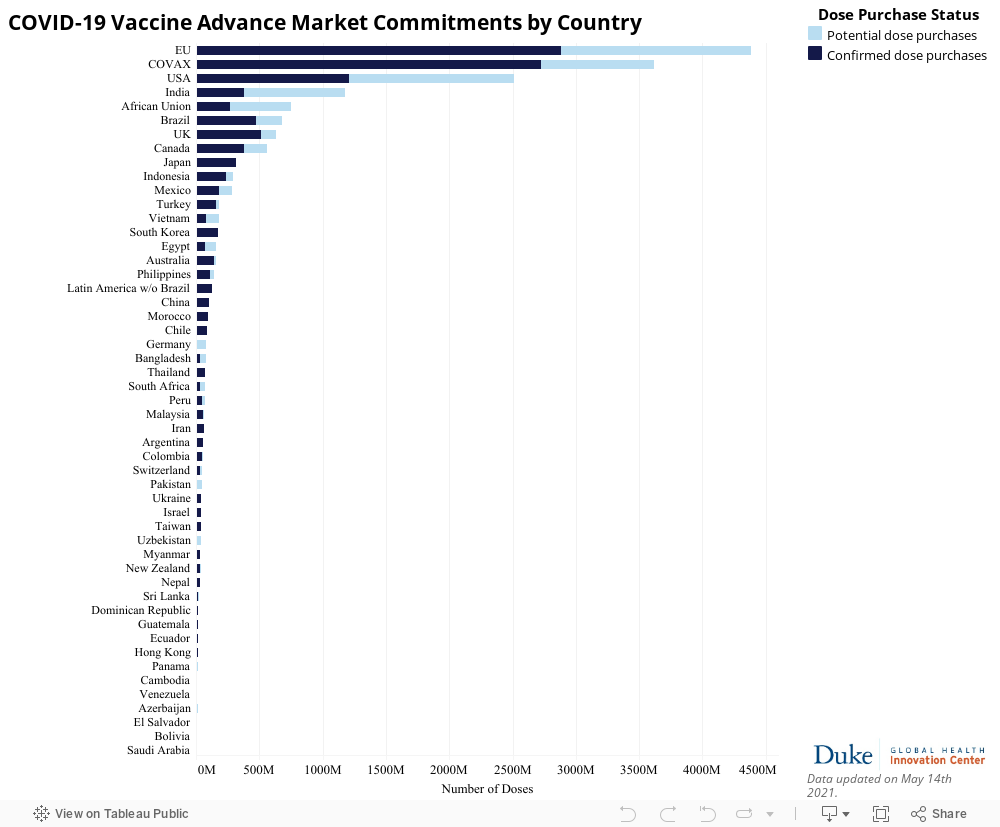
Over the past month, companies in China have made agreements to manufacture more than 260 million doses of Russia's Sputnik V vaccine, which has been approved for use in more than 60 countries including a large number of developing nations such as Mexico, India and Argentina.

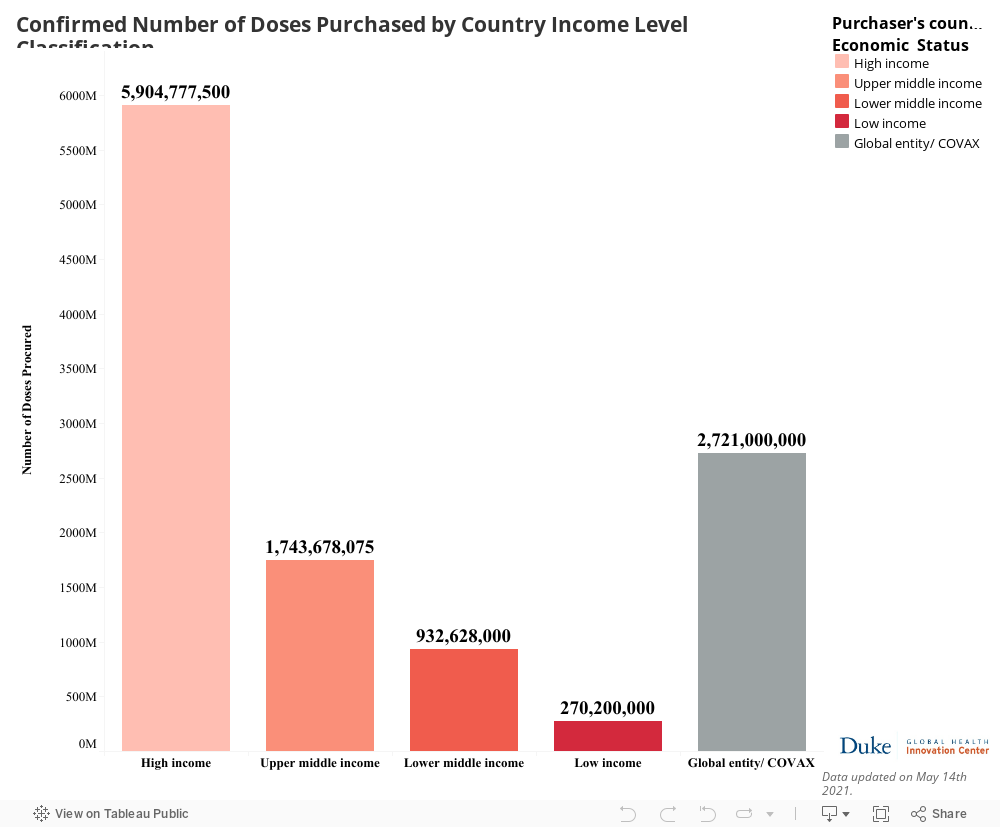
This deals between China and Russia shows an aligned vaccine goals which assist in neglection of developing countries, like India, Mexico and Argentina, by their traditional Western partners (like the US and Canada) who have been accused of hoarding shots.

According to a research by Duke University, Countries such as Canada, the UK and New Zealand, have bought enough vaccines to cover their population more than 3-times over, while the vast majority of countries have barely got doses for half their citizens, including some of the nations worst hit by Covid-19. [check this screenshot link if your browser/antivirus blocking this Duke University's research website]

In recent months, Russian disinformation efforts have tried to undermine confidence in US and UK vaccines, such as those made by Pfizer and AstraZeneca, according to Judyth Twigg, professor of political science at Virginia Commonwealth University, according to Judyth Twigg, professor of political science at Virginia Commonwealth University. China with its state-run media is also exaggerating reports of deaths from US and European-made vaccines.

Bobo Lo, an expert on China-Russia relations and former deputy head of mission at Australia's embassy in Moscow, said both Russia and China saw an opportunity for geopolitical gains in the pandemic, winning favor and influence for their autocratic systems.

The Duke University research further states --
Several middle-income countries, including India, also have robust vaccine development programs and are putting forward vaccine candidates, though these are not as far along in the process as the leading candidates from high-income countries. If any of the candidates from middle-income countries achieve regulatory approval, the landscape will likely shift significantly.


According to the models by Duke University predict that there will not be enough vaccines to cover the world's population until 2023 or 2024. Manufacturing capacity can be expanded with targeted investment but only to an extent and it will remain a rate limiter.
 

Japan Has the Most Powerful Passport but Only in a Post-Pandemic World


LONDON, April 13, 2021 /PRNewswire/ -- As vaccination program rollouts gather momentum in certain countries, the resumption of regular international travel is no longer an abstract hope. The latest results from the Henley Passport Index — the original ranking of all the world's passports according to the number of destinations their holders can access without a prior visa — provide exclusive insight into what post-pandemic travel freedom might look like as countries around the world selectively begin to open their borders to international visitors.

Without taking temporary and constantly evolving Covid-19 travel restrictions into account, Japan firmly holds onto the number one spot on the index — which is based on exclusive data from the International Air Transport Association (IATA) — with Japanese passport holders theoretically able to access a record 193 destinations around the world visa-free. Singapore remains in 2nd place, with a visa-free/visa-on-arrival score of 192, while Germany and South Korea again share joint-3rd place, each with access to 191 destinations.

As has been the case for most of the index's 16-year history, the majority of the remaining top 10 spots are held by EU countries. The UK and the US, both of which continue to face steadily eroding passport strength since they held the top spot in 2014, currently share joint-7th place, with a visa-free/visa-on-arrival score of 187.

The latest results indicate that the gap in travel freedom is now at its largest since the index began in 2006, with Japanese passport holders able to access 167 more destinations than citizens of Afghanistan, who can visit only 26 destinations worldwide without acquiring a visa in advance.

Although there has been very little movement in the Henley Passport Index for the past five quarters since the outbreak of Covid-19, taking a step back reveals some interesting dynamics over the past decade. Q2 2021 saw China entering the biggest climbers in the past decade for the first time. China has risen by 22 places in the ranking since 2011, from 90th position with a visa-free/visa-on-arrival score of just 40 to 68th position with a score of 77. The most remarkable turnaround story on the index by far, however, is the UAE, which continues its stellar ascendance. In 2011, the UAE was ranked 65th with a visa-free/visa-on-arrival score of 67, while today, thanks to the Emirates' ongoing efforts to strengthen diplomatic ties with countries across the globe, it is ranked 15th with a score of 174.

Dr. Christian H. Kaelin, Chairman of Henley & Partners and the inventor of the passport index concept, says the past year has demonstrated that no government is infallible — even the world's superpowers and wealthiest nations floundered — and many failed their citizens. "While nobody expects a return to pre-pandemic mobility levels anytime soon, the outlook now is certainly more hopeful than it was even a few months ago. The latest ranking is a reminder that economic recovery and development are dependent on global mobility, including personal travel freedom, and that passport power should never be taken for granted."

Looking ahead to what the rest of 2021 holds, experts commenting in the Global Mobility Report 2021 Q2 released by Henley & Partners today, suggest that adaptability and responsiveness will be critical to future survival and success. Dr. Parag Khanna, Founder and Managing Partner of FutureMap, says the second half of the year may well see millions of people scattering again. "The shifting patterns of migration in the post-Covid world (when it comes) will be non-linear and perhaps unpredictable. They will mimic the reality of a world in which there are many unfolding crises, from pandemics to climate change to political polarization. Countries facing fiscal pressures as well as skilled labor and investment shortages will seek to attract and recruit everyone from start-up entrepreneurs who can stimulate innovation to doctors and nurses who can boost public health services. The global war for talent is now well underway."

Read the full Global Mobility Report 2021 Q2 and the full Press Release.

Our regret for Dolma Gyari

Dolma Gyari


According to the current regulations of the Electoral Commission of the Central Tibetan Administration (CTA), Dolma Gyari has failed to reach the final round of the 2021 Tibetan General Elections. Having lost at the preliminaries to Kelsang Dorjee Aukatsang by a thin margin of less than a thousand votes, we are deeply sorry for Ms. Gyari’s downfall.

Over and above Dolma Gyari, the entire Gyari family has contributed significantly to the exile Tibetan community, and the entire Tibetan people. Within her family sit monks and parliamentarians. Whether they are public officials, or envoys of His Holiness the Dalai Lama, they faithfully follow His Holiness, dutifully serve the government, and wholeheartedly dedicate themselves to the entire Tibetan community. The Tibetan people value this virtue of gratitude and unity. In the passage of time, we Tibetans should not forget her family. They deserve our respect.

I believe that many people are familiar with Dolma Gyari’s public life. She once served as a parliamentarian’s representative from Dotoe and later as Nangsi Kalon (Home Minister) of the CTA. She has used her influence to seek more Indian resources for Tibetans in exile. It can be said that she is an excellent female representative from Dotoe. Looking around the global political arena, whether it is Hillary Clinton in the United States, or Merkel in Germany, women's governance is becoming a worldwide trend. Even if I regret having to say goodbye before the final election, she is completely capable of entering the final election and qualified to be the Sikyong with her ability and standing. Whether in terms of objective laws, or straight talking, Dolma Gyari's defeat is odd. What caused this anomalous event?

Personally, I think Dolma Gyari’s failure mainly results from her identity as a Dotoe female. Kelsang Dorjee Aukatsang is also from a Dotoe background. Therefore, the female candidate was ejected when two candidates with the same background received similar shares of the vote. That is, Ms. Gyari was a political victim. A victim of who? Obviously, Lobsang Sangay and Kelsang Dorjee Aukatsang. They colluded to create this political travesty. Two Khampa men oppressed a Khampa woman!

Lobsang Sangay had privately visited Dolma Gyari. What kind of deal did they reach? It is not difficult to imagine. Lobsang Sangay must have promised to vote for Dolma Gyari, or told her he would give up, with Kelsang Dorjee Aukatsang being brought in to help her win. However, what was the outcome? In the early stages of the preliminaries, Kelsang Dorjee Aukatsang trailed Dolma Gyari by a large margin. Yet later his votes soared with incredible momentum. It is not difficult to find that Dolma Gyari was the one that was ultimately abandoned. Everyone knows that the relationship between Kelsang Dorjee Aukatsang and Lobsang Sangay is unusual. Dolma Gyari’s sacrifice attests to this.

In regards to Kelsang Dorjee Aukatsang, is he capable of being Sikyong? The answer is definitely not. He did not even abide by the CTA’s Electoral Commission regulations, such that “No campaign and propaganda activities shall be carried out before March 21”. Instead, he has remained busy beautifying and promoting himself. On March 10 in particular, he took to the streets campaigning, wearing Tibetan costumes, and holding the national flag. We don’t know if he had a Tibetan freedom cause on March 10, but we are pretty sure that he was using March 10 to canvass for himself. His noble ally, Lobsang Sangay, also made the best of so-called pre-retirement gratitude activities in various Indian states to solicit votes for Kelsang Dorjee Aukatsang. There is another point that deserves our special attention. In order to win votes, Kelsang Dorjee Aukatsang even colluded with the Shugden followers. This violated the Dalai Lama’s teachings and once again profoundly proves that we cannot trust him, and that he is not worthy to be our leader.

His deeds are in sharp contrast with that of Dolma. In order to succeed in the election and follow through on his secret pact with Lobsang Sangay, he did not take Charter of Tibetans in exile, the wellbeing of Tibetans, or even the teachings of His Holiness to heart. How can we choose him to lead us?

As it stands, the candidates shortlisted in the final round of the Sikyong election have been announced. It is a pity that an outstanding female Tibetan was eliminated. Or more accurately, Dolma Gyari was a victim of politics; the culprits are two Khampa men. How can we trust these two in the future?

Dolma Gyari believed to stand with Penpa Tsering


As the final round of the 2021 Tibetan General Elections approaches, the two candidates, Penpa Tsering and Kelsang Dorjee Aukatsang, have begun to publicize their governance principles and future plans, both online and offline. Their campaign teams also spare no effort to cheer and holler for them. At the same time, numerous commentaries emerge involving the performance of another candidate from the preliminary poll, Dolma Gyari, along with her team, with much focus being on which of the final candidates she will support.

Without any doubt, Dolma Gyari will vote for Penpa Tsering in the final round, because he has more integrity, talent, capability, and courage to undertake major challenges than Kaydor. Dolma Gyari has clearly seen through the conspiracy between Lobsang Sangay and Kaydor. 

Actually, Lobsang had promised to stand by Dolma Gyari in the Sikyong election, but he lied. Instead, he secretly recommended and backed Aukatsang with all his might. Dolma Gyari was ignored. Therefore, she will definitely stand with Pemba Tsering and her team.


GovernEye App Formally Launched to Engage Citizens and Politicians for Better Governance


  • A unique citizen engagement app for the self-governed
  • More than 100 MPs and MLAs across party lines and regions have already signed up with GovernEye
  • The beta version of the app was also used by 22 candidates in the 2019 Lok Sabha elections and each one of them won


GovernEye Systems has formally launched its first-of-its-kind, citizen engagement app GovernEye to engage citizens and politicians for better governance. This is the first exclusive application in India which offers citizens an app to engage with each other and with elected representatives across India. It is available on web browsers across desktops, laptops and Smartphone and also as an Android and iPhone app.


Development issues related to the local area, circulation of fake news through social apps, and other society and law concern related issues in this pandemic have become a major concern in today’s life. This app has overcome these issues with added features like public discussions, lawmaker updates, news flash, fake news alerts, online protest march, and national pulse. It's totally different from other available apps of this sort because it actively brings elected representatives to the table.


Speaking on the launch, Mr. Dijin K. Devaraj, General Manager, GovernEye Systems, said, “We truly believe that the most important thing in a democracy is a well-informed electorate. The app provides the ideal platform for the Indian electorate to be well informed. It allows users to post in audio or video apart from the text in any of the languages recognized by the Indian Constitution. That ensures that language and writing skills are not a barrier anymore for our citizens to share their concerns and opinions on policy matters, local development, and politics."


https://youtu.be/A4ddzXC51yI


The bedrock of the app is a triad of principles that GovernEye adheres to strictly: no foul language, no echo chambers, and no invasion of user privacy. The app does not collect or track user data and does not use it for advertising as a revenue model. GovernEye app was first launched in its trial mode in mid of 2018. And after a successful trial run, the app is now being formally launched and is available on the browser, iPhone, and Android phones. During the trial version over 3 lakh users had joined it. And their overall positive review and feedback motivated the company to formally launch the app all over the country. To date, over 100 MPs and MLAs across party lines and regions have signed up with GovernEye. The beta version of this app was also used by 22 candidates in the 2019 Lok Sabha elections and each one of them won their seats.


Facebook Launches Email-based Hotline for Indian 'Netas' Data Security

To prevent Indian politicians and their political parties from cyber attack, social networking giant Facebook has launched 'Cyber Threat Crisis', under which it will provide e-mail based hotline to India's politicians and political parties in order to secure their data.

Under the hotline, compromised accounts and even the Computer Emergency Response Team (CERT-IN), which works under union ministry of electronics and IT, can write to indiacyberthreats@fb.com in the event of cyber interference including suspected hacks. In a contrast, it is seen that political parties in India is itself using data of millions of users in India to target potential voters and change their political opinions, exactly like what Cambridge Analytica did in the last presidential election in the US.

Facebook also released a “cyber hygiene guide” for political accounts. These include best practices for politicians and political parties on how to keep Facebook Pages and accounts secure.

"At times, a few sophisticated bad actors will seek to target high-profile political figures and those connected to them to undermine democratic discourse online. This cyber security guide provides best practices for politicians and political parties on how to keep your Facebook pages and Facebook accounts secure. We are also making available to politicians and political parties in India a special Cyber Threats Crisis Email Line for compromised Facebook pages and accounts." says a note attached to the guide.

These efforts are part of Facebook’s broader Indian Election Integrity Initiative.

The announcement comes a day after the company, co-founded by Mark Zuckerberg, submitted its responses to the union government’s questions on user privacy and election integrity, which is Indian government’s second such round of questions to the company.

Through the Indian elections integrity microsite, Facebook will be putting out dynamic updates to what the social network is doing in terms of education, enforcement, and what we are doing with fact-checking partners.

Last month, Facebook partnered with BOOM, a Bengaluru-based fact-checking website, to flag pieces of misinformation on the website. Content reported as fake news is down-ranked on the social network to prevent it from going viral.

Last October, Facebook had announced that it would roll out a feature, where political and issue-based ads would be marked as such, and carry a disclosure on sponsorship. This feature will be extended to India ahead of the 2019 general elections.

“The entire purpose of ads transparency is disclosure. So if you’re running an issue campaign in support of a candidate, and if it’s an issue ad, that ad will have to have a disclosure saying who’s paid for it. There has to be an assignment of interest and that will help you say that well, this surrogate is actually supported by so-and-so,” said Ankhi Das, who is Facebook's public policy director for India and South and Central Asia.

Earlier last year, Election Commission of India partnered with Facebook to launch first nationwide voter registration reminder by showing the 'Register Now' button to people on Facebook in India who are eligible to vote.

Via - Times of India | Top Image - usatoday.com

Facebook Launches Email-based Hotline for Indian 'Netas' Data Security

To prevent Indian politicians and their political parties from cyber attack, social networking giant Facebook has launched 'Cyber Threat Crisis', under which it will provide e-mail based hotline to India's politicians and political parties in order to secure their data.

Under the hotline, compromised accounts and even the Computer Emergency Response Team (CERT-IN), which works under union ministry of electronics and IT, can write to indiacyberthreats@fb.com in the event of cyber interference including suspected hacks. In a contrast, it is seen that political parties in India is itself using data of millions of users in India to target potential voters and change their political opinions, exactly like what Cambridge Analytica did in the last presidential election in the US.

Facebook also released a “cyber hygiene guide” for political accounts. These include best practices for politicians and political parties on how to keep Facebook Pages and accounts secure.

"At times, a few sophisticated bad actors will seek to target high-profile political figures and those connected to them to undermine democratic discourse online. This cyber security guide provides best practices for politicians and political parties on how to keep your Facebook pages and Facebook accounts secure. We are also making available to politicians and political parties in India a special Cyber Threats Crisis Email Line for compromised Facebook pages and accounts." says a note attached to the guide.

These efforts are part of Facebook’s broader Indian Election Integrity Initiative.

The announcement comes a day after the company, co-founded by Mark Zuckerberg, submitted its responses to the union government’s questions on user privacy and election integrity, which is Indian government’s second such round of questions to the company.

Through the Indian elections integrity microsite, Facebook will be putting out dynamic updates to what the social network is doing in terms of education, enforcement, and what we are doing with fact-checking partners.

Last month, Facebook partnered with BOOM, a Bengaluru-based fact-checking website, to flag pieces of misinformation on the website. Content reported as fake news is down-ranked on the social network to prevent it from going viral.

Last October, Facebook had announced that it would roll out a feature, where political and issue-based ads would be marked as such, and carry a disclosure on sponsorship. This feature will be extended to India ahead of the 2019 general elections.

“The entire purpose of ads transparency is disclosure. So if you’re running an issue campaign in support of a candidate, and if it’s an issue ad, that ad will have to have a disclosure saying who’s paid for it. There has to be an assignment of interest and that will help you say that well, this surrogate is actually supported by so-and-so,” said Ankhi Das, who is Facebook's public policy director for India and South and Central Asia.

Earlier last year, Election Commission of India partnered with Facebook to launch first nationwide voter registration reminder by showing the 'Register Now' button to people on Facebook in India who are eligible to vote.

Via - Times of India | Top Image - usatoday.com

How I Met Your Neta - Video

The current Lok Sabha elections in our country has been an emotional roller coaster for everybody. The number of first time and youth voters casting their ballots has led to a big splurge in the percentage of voter turnouts across the country.

Just like recent times, Popular Media has played a very crucial part in changing the mindsets and fueling the debate for good governance and due credit should be given to them.

In the video above by TVFRecycleBin in association with ADR- Association For Democratic Reforms, the TVF guys ask the youth of India simple questions to test their political awareness. With everybody having opinions about politics and politicians it was interesting see very basic knowledge about current politics.

But under this entire garb of sensationalism lies a truth that is not only stark but very difficult to comprehend. "TVF online entertainment network, part of TVFGroup, a leading company, at the edge of media innovations..." The Viral Fever with its underlying power of creating original and unbiased content in association with ADR- Association For Democratic Reforms launched a survey/campaign called "How I Met your Neta". The idea was simple: To ask the young voters of our country of the basic knowledge about electorate like candidates, issues, manifestos, etc and most of them were clueless.

An initiative by TVF, FAQ's "How i Met Your Neta" aims at fulfilling that void between "Cast your Vote" and "Cast your Vote responsibly after finding out, who are you voting for?"

The video has been trending on twitter, Facebook and youtube for the last week or so and has already garnered over 3,25,000 views

Arunabh Kumar, Founder of TVF Group was quoted as saying "With this, we have been able to make at least half a million people more politically aware. We look forward to make "TVF-RecycleBin" a one stop channel for all cool non-fiction content."

Market Reports

Market Report & Surveys
IndianWeb2.com © all rights reserved