‏إظهار الرسائل ذات التسميات Foxconn. إظهار كافة الرسائل

Schneider Electric and Foxconn Unite to Build AI Factories

Schneider Electric and Foxconn Unite to Build AI Factories

Schneider Electric, a global energy technology leader, today announced a strategic collaboration with Hon Hai Technology Group (Foxconn), the world’s largest electronics manufacturer, to help define and scale the next generation of AI data centers.

As AI adoption surges, the demands on digital infrastructure are being fundamentally reshaped. This collaboration brings together Foxconn’s unmatched expertise in advanced compute platforms, AI rack integration, and global manufacturing with Schneider Electric’s leadership in power systems, cooling, and energy management. Together, the companies aim to deliver integrated, ready-to-deploy solutions that enable customers to build and operate AI infrastructure with greater speed, efficiency, and predictability across regions. Production will begin later this year.

At the pace AI is evolving, the industry requires a new model for how infrastructure is designed, built, and delivered,” said Young Liu, Chairman of Foxconn. “By combining Foxconn’s strength in AI systems and global manufacturing with Schneider Electric’s deep expertise in power and energy, we are creating a path for customers to deploy AI capacity at scale—faster, smarter, and more sustainably.”

"AI demand continues to accelerate, and as compute scales to keep pace, the energy behind it becomes a fundamental enabler,” said Olivier Blum, CEO of Schneider Electric. If we want to scale AI responsibly, these systems must be connected. This is where energy intelligence becomes essential. At Schneider Electric, we are advancing energy tech to build the most efficient and sustainable AI factories by bringing integrated power, cooling, and digital capabilities into AI data centers. Working with Foxconn, we are helping customers build capacity with real speed, resilience, and efficiency, as energy technology partners to an industry that is firmly entering the era of intelligence."

Through this collaboration, Foxconn and Schneider Electric will co-develop next-generation reference architectures for AI data centers. The partnership will also explore innovations in closed-loop energy optimization, modular power and cooling skids, and standardized design frameworks, creating repeatable, high-performance blueprints for AI factories worldwide. By aligning manufacturing excellence with energy intelligence, the two companies are setting the foundation for a new class of AI infrastructure that is scalable by design, efficient by default, and ready to meet the accelerating demands of the AI era. 

About Foxconn

Hon Hai Technology Group (Foxconn) (TWSE:2317) is the world’s largest electronics manufacturer and leading technology solutions provider, ranking 28th in Fortune Global 500. In 2025, revenue totaled TWD8.1 trillion (approx. USD260 billion). The Group’s market share in electronics manufacturing services (EMS) exceeds 40% and covers four major product segments: smart consumer electronics; cloud and networking; computing; and components and other. Operating over 240 campuses across 24 countries, Foxconn is one of the world’s largest employers with approx. 900,000 employees during peak manufacturing season. We are committed to sustainability in the manufacturing process and serving as a best-practice model for global enterprises. The Group is guided by its 3+3+3 strategy, actively investing in industries of electric vehicles, digital health, and robotics; in technologies of artificial intelligence, semiconductors and next-generation communications; in intelligent platforms of Smart Manufacturing, Smart EV and Smart City. Foxconn is dedicated to becoming a comprehensive, world-class enterprise, with AI as its core driving force. Learn more at www.foxconn.com/en-us

About Schneider Electric

Schneider Electric is a global energy technology leader, driving efficiency and sustainability by electrifying, automating, and digitalizing industries, businesses, and homes. Its technologies enable buildings, data centers, factories, infrastructure, and grids to operate as open, interconnected ecosystems, enhancing performance, resilience, and sustainability. The portfolio includes intelligent devices, software-defined architectures, AI-powered systems, digital services, and expert advisory.

With 160,000 employees and one million partners in over 100 countries, Schneider Electric is consistently ranked among the world’s most sustainable companies.

www.se.com

Tata Surpasses Foxconn as Apple’s Largest Manufacturer in India

Tata Surpasses Foxconn as Apple’s Largest Manufacturer in India

Tata Electronics has overtaken Foxconn to become Apple’s largest contract manufacturer in India, employing about 75,000 workers—up from just 15,000 two years ago—thanks to acquisitions of Wistron and Pegatron’s local operations and rapid expansion at its Hosur plant in Tamil Nadu.

Foxconn however is longstanding global partner of Apple and still a major assembler of iPhones in India. With its new Sriperumbudur (Tamil Nadu) facility and a massive upcoming plant in Devanahalli, Bengaluru, Foxconn is expected to regain ground once these new facility scales.

Foxconn's new Bengaluru plant likely to challenge Tata’s lead later in 2026. Wistron and Pegatron have been absorbed into Tata, consolidating Apple’s India supply chain.

India’s role in Apple’s global strategy is expanding rapidly, with iPhone exports hitting $23 billion in 2025 and continuing to grow.  
  • Tata Electronics Workforce: ~75,000 employees (2026), up from 15,000 in 2023
  • Foxconn Workforce: Currently smaller in India, but expected to rise once its Devanahalli, Bengaluru plant ramps up
  • Facilities: Tata’s growth driven by its 500-acre Hosur plant (Tamil Nadu) plus acquisitions of Wistron and Pegatron’s India operations
  • Apple’s India Strategy: India now produces ~55 million iPhones annually, accounting for 14% of global output
  • Exports: iPhones made in India contributed ₹2 lakh crore in FY26 exports, India’s single largest branded export
FactorTata ElectronicsFoxconn
Employees (India)~75,000Fewer, but expanding
Major SitesHosur (Tamil Nadu), Wistron & Pegatron facilitiesSriperumbudur (Tamil Nadu), upcoming Devanahalli (Bengaluru)
Growth DriverAcquisitions + aggressive hiringNew mega plant under construction
Apple RoleLargest India contract manufacturerLongstanding global partner, temporarily second in India
  • Temporary Lead: Tata’s dominance is by headcount; Foxconn’s upcoming Bengaluru plant could reclaim the top spot
  • Execution Challenges: Rapid expansion risks operational inefficiencies if not managed carefully
  • Global Competition: India still lags China in local value addition (15–20% vs. China’s 40%). Scaling beyond assembly into semiconductors and advanced packaging will be critical
To summarize, Tata’s rise marks a turning point in India’s electronics manufacturing story, positioning it as Apple’s strongest local partner. But the contest with Foxconn is far from settled—2026 will likely see intense competition as both firms expand capacity in India.

The information above is first reported by the Economic Times based (April 30, 2026) based on industry sources directly involved in Apple’s India supply chain, including executives familiar with Tata Electronics’ hiring surge and Apple’s contract manufacturing arrangements.

India Launches $445M Chip Plant with HCL-Foxconn Partnership

India Launches $445M Chip Plant with HCL-Foxconn Partnership

Prime Minister Narendra Modi has laid the foundation stone for India Chip Pvt. Ltd., a ₹3,700 crore semiconductor facility being developed in Jewar, Greater Noida by a joint venture between HCL Group (60%) and Foxconn (40%). The plant will function as an Outsourced Semiconductor Assembly and Test (OSAT) facility, with a planned capacity to process 20,000 wafers per month. It is expected to be operational by 2028.

Key Highlights

  • Investment: ₹3,700 crore
  • Partnership: HCL Group (India) and Foxconn (Taiwan)
  • Location: Yamuna Expressway Industrial Development Authority (YEIDA), Jewar, Greater Noida
  • Timeline: Operational by 2028
  • Capacity: 20,000 wafers/month
  • Jobs: Estimated 3,500 new employment opportunities

Strategic Importance

  • Strengthens India’s semiconductor ecosystem and reduces dependence on imports
  • Supports the government’s “Techade” vision of technological self-reliance
  • Positions India as a competitive player in the global chip supply chain
This project is being seen as a milestone in India’s push to become a hub for advanced electronics manufacturing, especially amid global supply chain realignments.

Notably, the distinction between an OSAT facility and a semiconductor fabrication plant (fab) is central to understanding India’s chip strategy.
Aspect OSAT (Outsourced Semiconductor Assembly & Test) Fab (Fabrication Plant)
Role in supply chain Handles post-fabrication processes: cutting wafers into chips, packaging, assembly, and testing Manufactures chips from raw silicon wafers using advanced processes like lithography, etching, deposition
Complexity Less capital-intensive; focuses on packaging and quality assurance Extremely complex; requires cleanrooms, precision tools, and multi-billion-dollar investments
Investment scale Hundreds of millions of dollars (e.g., India’s ₹3,700 crore plant) Tens of billions of dollars (TSMC, Intel fabs often exceed $10–20B)
Technology focus Ensures chips meet specifications, reliability, and performance standards Actually creates the semiconductor devices (transistors, circuits)
Strategic value Builds ecosystem resilience, supports fabless companies, and reduces dependency on foreign packaging/testing Core of semiconductor sovereignty — enables full control of chip design and production
Examples ASE Group, Amkor, JCET TSMC (Taiwan), Samsung (Korea), Intel (US)

In short: OSAT = finishing school for chips; Fab = birthplace of chips. India is starting with OSAT to build capacity before attempting full-scale fabs.

Foxconn’s Engineer Recall Exposes India’s Manufacturing Growing Pains

Foxconn’s Engineer Recall Exposes India’s Manufacturing Growing Pains

Foxconn’s recent and repeated recall of 300 Chinese engineers from its Tamil Nadu facility has cast a spotlight on India’s evolving role in global tech manufacturing—and the growing pains that come with it.

The first recall of Chinese engineers by Foxconn from its Indian facilities occurred between May and July 2025, according to Bloomberg reports. This initial wave involved over 300 engineers and technicians, primarily from the Yuzhan Technology unit in Tamil Nadu, which manufactures enclosures and display modules for older iPhone models.

The second recall, involving another 300 engineers, took place in August 2025, making it the second such incident in just a few months.

What Happened?

  • Foxconn, Apple’s key assembly partner, recalled 300 Chinese engineers from its Yuzhan Technology unit in Tamil Nadu.
  • This is the second such recall in recent months, reportedly prompted by Chinese government pressure to limit technology transfer and equipment exports to India and Southeast Asia.
  • Foxconn is now replacing the Chinese engineers with Taiwanese counterparts, signaling a strategic pivot in its workforce sourcing.

Impact on Apple’s India Expansion

  • The Yuzhan facility produces metal enclosures and display modules for older iPhone models—not the latest iPhone 17 line.
  • Apple plans to manufacture all four iPhone 17 models in India, marking a major milestone in its supply chain diversification.
  • However, the loss of experienced Chinese technicians could slow down efforts to localize production and maintain quality standards.

Spotlight on Indian Workforce

  • Apple has consciously chosen to work with Indian suppliers, notably the Tata Group, which is now the only Indian iPhone assembler.
  • While Indian firms are scaling up, they still face teething issues in precision manufacturing compared to their Chinese counterparts.
  • The recall underscores both the opportunity and challenge of building a high-tech manufacturing ecosystem in India.

Geopolitical Undercurrents

  • China’s move is seen as a silent sanction to discourage manufacturing migration to India.
  • India and China are attempting to reset diplomatic ties, including easing visa rules and exploring cooperation in strategic sectors like rare earths.
  • Meanwhile, Apple is balancing its global strategy with $100 billion in new U.S. manufacturing investments, aiming to appease American policymakers.

UP Govt Allocates 48 Acre Land to HCL-Foxconn Semiconductor Plant

UP Govt Allocates 48 Acre Land to HCL-Foxconn Semiconductor Plant

The Uttar Pradesh government has allocated approximately 48 acres of land to the HCL-Foxconn semiconductor plant at a new location under the Yamuna Expressway Industrial Development Authority (YEIDA), which is part of Greater Noida, Uttar Pradesh. This decision was made to cut down on infrastructure and procedural delays that were anticipated at the previously allocated site in Sector 10.

The new land parcel is located in Sector 28 of YEIDA, which already has the required infrastructure due to the presence of the Medical Device Park and other industries. This move is expected to expedite the establishment of the semiconductor plant, which will be the first chip production unit in Uttar Pradesh.

The HCL-Foxconn joint venture, Vama Sundari Investments, plans to invest around ₹3,706 crore in an outsourced semiconductor assembly and test (OSAT) facility, generating close to 4,000 jobs. This development is a significant step towards bolstering India's semiconductor manufacturing capabilities.

The new location for the plant is in Sector 28 of YEIDA, which already has the necessary infrastructure due to the presence of the Medical Device Park and other Industries. This strategic move is expected to expedite the establishment of the semiconductor plant, making it the first chip production unit in Uttar Pradesh.

The HCL-Foxconn joint venture, known as Vama Sundari Investments, is a collaboration between the HCL Group and Taiwanese electronics manufacturer Foxconn Hon Hai Technology India. This partnership aims to establish an outsourced semiconductor assembly and test (OSAT) facility in Uttar Pradesh, India. The project is expected to involve an investment of around ₹3,706 crore and create approximately 4,000 jobs.

Foxconn Launches Its First AI Large Model 'FoxBrain'

Foxconn Launches Its First AI Large Model 'FoxBrain'

Hon Hai Research Institute announced today the launch of the first Traditional Chinese Large Language Model (LLM), setting another milestone in the development of Taiwan’s AI technology with a more efficient and lower-cost model training method completed in just four weeks.

The institute, which is backed by Hon Hai Technology Group (“Foxconn”) (TWSE:2317), the world’s largest electronics manufacturer and leading technological solutions provider, said the LLM – code named FoxBrain – will be open sourced and shared publicly in the future. It was originally designed for applications used in the Group’s internal systems, covering functions such as data analysis, decision support, document collaboration, mathematics, reasoning and problem solving, and code generation.

FoxBrain not only demonstrates powerful comprehension and reasoning capabilities but is also optimized for Taiwanese users' language style, showing excellent performance in mathematical and logical reasoning tests.

"In recent months, the deepening of reasoning capabilities and the efficient use of GPUs have gradually become the mainstream development in the field of AI. Our FoxBrain model adopted a very efficient training strategy, focusing on optimizing the training process rather than blindly accumulating computing power,” said Dr. Yung-Hui Li, Director of the Artificial Intelligence Research Center at Hon Hai Research Institute. ”Through carefully designed training methods and resource optimization, we have successfully built a local AI model with powerful reasoning capabilities."

The FoxBrain training process was powered by 120 NVIDIA H100 GPUs, scaled with NVIDIA Quantum-2 InfiniBand networking, and finished in just about four weeks. Compared with inference models recently launched in the market, the more efficient and lower-cost model training method sets a new milestone for the development of Taiwan's AI technology.

FoxBrain is based on the Meta Llama 3.1 architecture with 70B parameters. In most categories among TMMLU+ test dataset, it outperforms Llama-3-Taiwan-70B of the same scale, particularly exceling in mathematics and logical reasoning (For TMMLU+ benchmark of FoxBrain, please refer to Fig.1). The following are the technical specifications and training strategies for FoxBrain:
  • Established data augmentation methods and quality assessment for 24 topic categories through proprietary technology, generating 98B tokens of high-quality pre-training data for Traditional Chinese
  • Context window length: 128 K tokens
  • Utilized 120 NVIDIA H100 GPUs for training, with total computational cost of 2,688 GPU days
  • Employed multi-node parallel training architecture to ensure high performance and stability
Used a unique Adaptive Reasoning Reflection technique to train the model in autonomous reasoning test results, FoxBrain showed comprehensive improvements in mathematics compared to the base Meta Llama 3.1 model. It achieved significant progress in mathematical tests compared to Taiwan Llama, currently the best Traditional Chinese large model, and surpassed Meta's current models of the same class in mathematical reasoning ability. While there is still a slight gap with DeepSeek's distillation model, its performance is already very close to world-leading standards.

FoxBrain's development – from data collection, cleaning and augmentation, to Continual Pre-Training, Supervised Finetuning, RLAIF, and Adaptive Reasoning Reflection – was accomplished step by step through independent research, ultimately achieving benefits approaching world-class AI models despite limited computational resources. This large language model research demonstrates that Taiwan's technology talent can compete with international counterparts in the AI model field.

Although FoxBrain was originally designed for internal group applications, in the future, the Group will continue to collaborate with technology partners to expand FoxBrain's applications, share its open-source information, and promote AI in manufacturing, supply chain management, and intelligent decision-making.

During model training, NVIDIA provided support through the Taipei-1 Supercomputer and technical consultation, enabling Hon Hai Research Institute to successfully complete the model pre-training with NVIDIA NeMo. FoxBrain will also become an important engine to drive the upgrade of Foxconn’s three major platforms: Smart Manufacturing. Smart EV. Smart City.

The results of FoxBrain is scheduled to be shared for the first time at a major conference during NVIDIA GTC 2025 Session Talk “From Open Source to Frontier AI: Build, Customize, and Extend Foundation Models” on March 20.

Foxconn Partners Albamen Capital to Establish A Green Energy Asset Management Company

Foxconn Partners Albamen Capital to Establish A Green Energy Asset Management Company

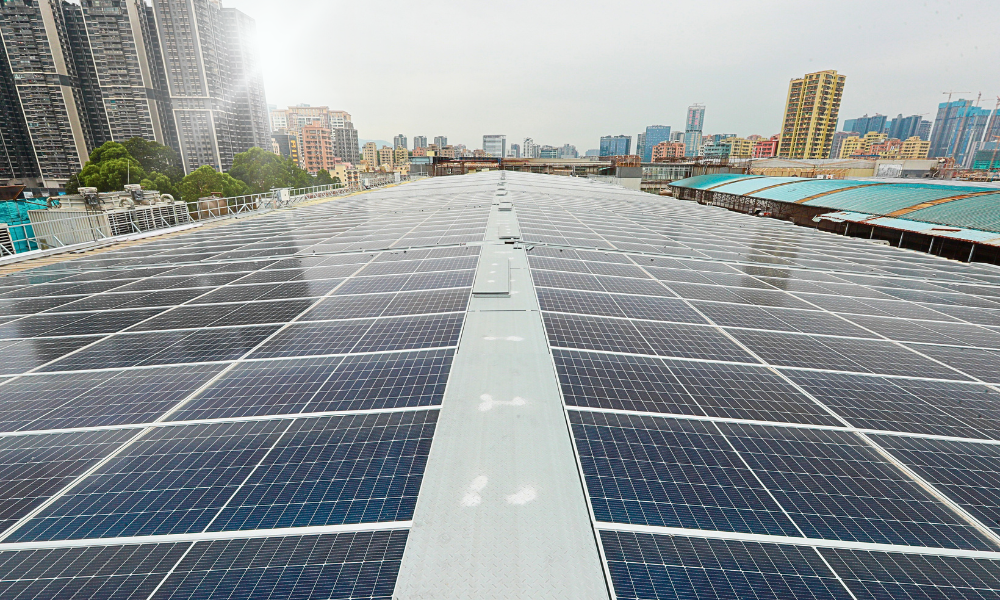
Hon Hai Technology Group (Foxconn) partnered with Albamen Capital, a private equity infrastructure investment manager, to establish a green energy asset management company and propose a green energy development fund in China. The partnership is worth RMB 2 billion.
The two companies will form a renewable energy joint venture investment platform and a target size RMB 7 billion green infrastructure fund, aimed at accelerating Foxconn’s supply chain toward its net zero goals.

The JV investment platform will have a total equity capital of RMB 2 billion and aims to acquire operating renewable energy and related infrastructure assets across China, with the ultimate goal of generating 2 terawatt-hours (TWh) of renewable energy every year.

The two parties also plan to form a green infrastructure fund with a target size of RMB 7 billion to invest in a portfolio of renewable energy development projects such as solar power, wind power, energy storage and related infrastructure. Once fully invested and operational, the portfolio will generate circa 6 TWh of renewable energy per year. By tapping the green infrastructure fund, Foxconn’s upstream supply chain will have a pathway to clean energy.

Facing the urgent challenges of global climate change and energy sustainability, Foxconn deeply understands the key role it plays in achieving net-zero goals in the global technology industry supply chain. The Group has pledged to achieve net-zero emissions in the value chain by 2050, a move that has been welcomed by institutional investors and stewardship providers engaging with the company through the Climate Action 100+ initiative. Foxconn’s near-term emission reduction pathway has been validated under the Science Based Target initiative (SBTi). By the end of last year, Foxconn’s renewable energy ratio exceeded 40%.

Foxconn has pledged to reduce greenhouse gas emissions by 42% by 2030, and achieve net zero emissions by 2050. As a major supplier of Apple, Foxconn has also been required to shift to renewable energies and minimize the environmental impacts of its factories.

Albamena Capital Partners, also known as Albamen, is a private equity infrastructure investment firm that focuses on digital infrastructure and renewable energy in China. The firm is based in Hong Kong and Central, and emphasizes secular infrastructure themes and embedded ESG practices. Albamen Capital Partners has spun off from JIDA Capital, and its investments include data centers, renewable energy, and other infrastructure assets.

Foxconn Plans To Invest Additional $1.7 Bn in Karnataka

Foxconn Plans To Invest Additional $1.7 Bn in Karnataka

Apple supplier Foxconn plans to invest an additional 139.11 billion rupees ($1.67 billion) in India's Karnataka state, the state government said in a statement on Tuesday.

The State High Level Clearance Committee (SHLCC) headed by Chief Minister Siddaramaiah has given the approval to the company.

The additional investment is earmarked for a manufacturing facility within the Information Technology Investment Region (ITIR) industrial area at Doddaballapur in Devanahalli Taluk. In May 2023, Hon Hai Precision Industry (Foxconn) acquired the land for Rs 300 crore ($37 million).

Foxconn is also expected to start manufacturing iPhones in Karnataka by April 2024 - a project expected to create around 50,000 jobs.

The Taiwan-based company, which assembles around 70% of iPhones and is the world's largest contract manufacturer, has been diversifying production away from China following COVID19 disruptions and geopolitical tensions.

Other major projects receiving government approval include JSW Renew Energy Four Limited (Rs 4,960 crore investment), JSW Steel Limited (Rs 3,804 crore), Toyota Kirloskar Motor Private Limited (Rs 3,237.3 crore), TRIL Bengaluru Real Estate Six Limited (Rs 3,273 crore) and Janki Corp Limited (additional investment of Rs 607 crore), said Karnataka's minister for large and medium industries and infrastructure development MB Patil, in media statement.


NVIDIA and Foxconn Join Hands to Build AI Factories and Systems for the AI Industrial Revolution

NVIDIA and Foxconn Join Hands to Build AI Factories and Systems for the AI Industrial Revolution

Partnership To Fuel Digitalization of World’s Industries through NVIDIA AI, DRIVE AV, Isaac Robotics and Omniverse Platforms

NVIDIA has just made an announcement that it is collaborating with world's largest contract manufacturer Hon Hai Technology Group (Foxconn), to accelerate NVIDIA coined – "AI industrial revolution" .

With this collaboration, Taiwanese manufacturer Foxconn will integrate NVIDIA technology to develop a new class of data centers powering a wide range of applications — including digitalization of manufacturing and inspection workflows, development of AI-powered electric vehicle and robotics platforms, and a growing number of language-based generative AI services.

Announced in a fireside chat with NVIDIA founder and CEO Jensen Huang and Foxconn Chairman and CEO Young Liu at Hon Hai Tech Day, in Taipei, the collaboration starts with the creation of AI factories — an NVIDIA® GPU computing infrastructure specially built for processing, refining and transforming vast amounts of data into valuable AI models and tokens — based on the NVIDIA accelerated computing platform, including the latest NVIDIA GH200 Grace Hopper™ Superchip and NVIDIA AI Enterprise software.

Foxconn is also developing its smart solution platforms based on NVIDIA technologies:
  • Foxconn Smart EV will be built on NVIDIA DRIVE Hyperion™ 9, a next-generation platform for autonomous automotive fleets, powered by NVIDIA DRIVE Thor™, its future automotive systems-on-a-chip.
  • Foxconn Smart Manufacturing robotic systems will be built on the NVIDIA Isaac™ autonomous mobile robot platform.
  • Foxconn Smart City will incorporate the NVIDIA Metropolis intelligent video analytics platform.
Most importantly, NVIDIA and Foxconn are building these factories together. We will be helping the whole industry move much faster into the new AI era,” said Foxconn Chairman and CEO Young Liu.

A new type of manufacturing has emerged — the production of intelligence. And the data centers that produce it are AI factories,” said Huang. “Foxconn, the world’s largest manufacturer, has the expertise and scale to build AI factories globally. We are delighted to expand our decade-long partnership with Foxconn to accelerate the AI Industrial revolution."


Foxconn Eyes Potential AI Factory

In addition to equipping its customers with NVIDIA technology-powered AI factories, Foxconn is eyeing its own that will tap into the NVIDIA Omniverse™ platform and Isaac and Metropolis frameworks to meet the strict production and quality standards of the electronics industry.

Advances in edge AI and simulation are enabling deployment of autonomous mobile robots that can travel several miles a day and industrial robots for assembling components, applying coatings, packaging and performing quality inspections.

An AI factory with these NVIDIA platforms can give Foxconn the ability to accomplish AI training and inference, enhance factory workflows and run simulations in the virtual world before deployment in the physical world. Simulating the entire robotics and automation pipeline from end to end provides Foxconn with a path to operational efficiency gains, saving time and costs.

Enabling Foxconn Customers to Build AI Data Factories

Working closely with NVIDIA, Foxconn is expected to build a large number of systems based on NVIDIA CPUs, GPUs and networking for its global customer base, which is looking to create and operate their own AI factories, optimized with NVIDIA AI Enterprise software.

Among the key NVIDIA technologies Foxconn is using to create these custom designs are NVIDIA HGX™ reference designs featuring eight NVIDIA H100 Tensor Core GPUs per system, NVIDIA GH200 Superchips, NVIDIA OVX™ reference designs and NVIDIA networking.

With these systems, Foxconn customers can leverage NVIDIA accelerated computing to deliver generative AI services as well as use simulation to speed up the training of autonomous machines, including industrial robots and self-driving cars.

Developing Safe, AI-Powered EVs

Foxconn will also deliver a range of NVIDIA DRIVE™ solutions to global automakers, serving as a tier-one manufacturer of NVIDIA DRIVE Orin™-based electronic control units (ECUs) today and scaling to NVIDIA DRIVE Thor-based ECUs in the future.

As a contract manufacturer, Foxconn will offer highly automated and autonomous, AI-rich EVs featuring the upcoming NVIDIA DRIVE Hyperion 9 platform, which includes DRIVE Thor and a state-of-the-art sensor architecture. This will enable Foxconn and its automotive customers to realize a new era of functionally safe and secure software-defined cars.

Foxconn Founder Terry Gou To Run for Taiwan President As An Independent Candidate

Foxconn Founder Terry Gou To Run for Taiwan President Aa An Independent Candidate

Foxconn Founder, Terry Gou, has announced that he'll run for president of Taiwan as an independent candidate in upcoming elections in next January.

At a news conference, Gou criticised the governing Democratic Progressive Party, saying its policies have brought Taiwan into the risk of war with China, which claims the self-ruled island democracy as part of its territory.

Interestingly, this will be Foxconn founder's second attempt to lead the opposition Kuomintang (KMT). In 2019, Gou resigned from Foxconn and joined the Kuomintang (KMT) to run for president, declaring he was instructed by the sea goddess Mazu in a dream to contest the election. Notably, Gou is also the main owner of HMD Global, which is a company founded in 2016 to sell Nokia branded phones.

However, Gou now needs to get 2,90,000 signatures from voters by 2 November to make his bid official.

Taiwan's current president—Tsai ING-wen, the first female president of Taiwan, has more anti-China stance contrasts with the KMT, which supports closer ties with mainland China.

The Foxconn founder said that he was running to prevent Taiwan from becoming “the next Ukraine,” promised to bring “50 years of peace to the Taiwan Strait,” and pledged to help the island overtake Singapore in terms of GDP per capita.

In 2019 however Gou had contrast point of view towards China when he told reporters that Apple should move its manufacturing out of China.

Owing to his business background and image as a political outsider, Gou has been compared in international media to former U.S. President Donald Trump.

Foxconn's Indian Arm Achieves Turnover of ~ $10 Billion

Foxconn's Indian Arm Achieves Turnover of ~ $10 Bn

Taiwan's Hon Hai Precision, trading as Foxconn Technologies in India, has revealed that its Indian business has already hit close to $10 billion on an annual basis and there is a lot of investment potential in India.

With this, India Accounts for more than 5% of Foxconn's Global Business, and as per the group Chairman & CEO, "their is space for more investment."

Speaking on the company’s second quarterly financial results in Taipei on Monday Hon Hai Technology Group Chairman and CEO Young Liu said "Foxconn annual revenue was $200 billion. From the perspective of India's potential market size and if we can fully implement our plans there, several billion dollars in investment is only the beginning."

In India, Foxconn operates about 9 campuses, 30 factories and 20 dormitories that shelter tens and thousands of employees that work with Foxconn in the country, informed Liu. In addition to existing operations in Andhra Pradesh and Tamil Nadu, Foxconn will also deploy in Karnataka, Telangana and other states.

Foxconn has 137 campuses and offices in 24 countries and areas across the world.

Seemingly, India is currently a 'Hotspot' for Foxconn as earlier this month a top official of Foxconn-led open electric vehicle development platform, Mobility in Harmony Consortium, said that the company is targeting India for the production of a small battery-powered car, which is currently under development.

The group's CEO also shared that the Taiwanese firm also planning to establish industrial parks and optimize the business environment in terms of infrastructure, policies and laws, by cooperation with central and local governments in India.

Last month, Foxconn made a decision to exit a semiconductor joint venture project with Vedanta Group, citing a number of issues including external ones.

Foxconn's Open EV Platform MIH Targeting India for Its Small Cars Priced Under $20,000

Foxconn's EV Unit MIH Targeting India for its Small Cars Priced Under $20,000

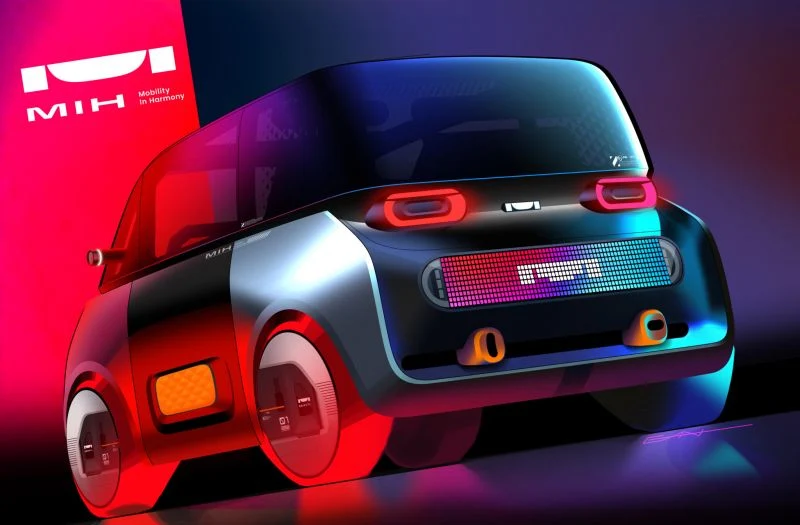
Foxconn led open electric vehicle development platform, Mobility in Harmony Consortium, also known as the MIH Consortium, is targeting India or Thailand for the production of a small battery-powered car under development, reported Reuters citing the unit's CEO Jack Cheng.

Unveiled in 2020, Mobility in Harmony (MIH) platform would be willing to work with its parent or another company to build the new three-seat EV priced below $20,000 and tailor-made for a corporate delivery fleet, MIH CEO Jack Cheng told Reuters in an interview.

MIH will be unveiling its first prototype EV at Japan's largest auto trade show in October. The car would be priced between $10,000 and $20,000

The Taiwanese company's EV platform unit has been in talks with convenience stores, car rental companies and courier companies.

In an interview with Reuters, Cheng said that India and Thailand are likely contenders for production sites, and he expected India to be crucial to MIH's longer-term growth.

"You build where the potential market is...In India or Southeast Asia, you have a huge volume opportunity right now," Cheng said, calling India a potential "emerging power for the next generation" in the EV sector.

Foxconn established the MIH consortium of some 2,600 suppliers two years ago with the aim of creating an open platform that could become the equivalent of Google's Android operating system for EVs.

Till July last year, MIH consortium had members from 65 countries including Microsoft, and Tata Technologies from India.

MIH says the modular EV platform enables innovators to create the future of mobility with an open EV ecosystem with its Build Your Own Vehicle ("BYOV") model.


MIH was developed by MIH, Arm Ltd, Microsoft, and Trend Micro. Interestingly, Arm has recently inked deal with India's CDAC to support Indian Semiconductor Startups. 

iPhone Manufacturer Foxconn To Make Electric Cars in India for American EV Startup Fisker


Taiwanese multinational electronics contract manufacturer, Foxconn, that mnufactures Apple's iPhone in India, will reportedly going to manufacture electric cars in the country, for California, U.S. -bsased Electric Vehicle (EV) Startup Fisker Inc., in the next couple of years.

According to a report by Economic Times, Fisker Inc will initially set up a technology centre in Hyderabad, with a roster of over 300 engineers, and within two years, in a manufacturing alliance with Foxconn, make the electric 'global vehicle' Pear in India.

Fisker Inc is an EV startup promoted by Henrik Fisker,  a renowned car designer known for designing luxury car models like BMW Z8, Aston Martin DB9. The startup was founded in 2016 by Fisker and his wife Geeta Gupta-Fisker, an India-born veteran financier and biotech PhD holder. 

Fisker is developing the Fisker Ocean, an all-electric SUV made from recycled and vegan materials, with an estimated range of 300-350 miles. The startup had even filed a patent (in 2017) for a car battery that has a range of 500 miles and can be charged in one minute.

Its Ocean model Ocean, is set for a global launch in November and will be imported in India as a completely built unit. The company is in the process of setting up a local entity, starting with the tech centre before it locally manufactures its second model called 'Pear', through its collaboration with Foxconn.

Fisker is Nasdaq-listed public company that raised more than $1 billion in its October 2020 IPO.

With the global electric cars adoption and as the all-electric SUV sector heats up with more competition, Fisker's Ocean SUV will compete with Tesla Model Y, Ford Mustang Mach-E.

Backed By Foxconn, Delhi-based MoMagic's Pickaboo Is Trying To Become Bangladesh's Flipkart

Arun Gupta, a technology veteran turned first generation serial entrepreneur, with 25+ years of experience and multiple patents to his credit, founded MoMagic in the year 2011. Presently operating in 6 markets in Asia, MoMagic has done successful app installations to the tune of 400 million out of which approx 150 million are transacting users and has a significant share of the online and offline distribution of mobile apps /content in India.

MoMagic with strategic investments by MediaTek and Foxconn, has been consistently innovating-developing own products, applications services to cater to mobile users of every segment and is set for aggressive expansion.

Started from the software differentiation business for mobile handset companies, MoMagic has successfully transitioned to data-driven online user acquisition marketing platform with technological prowess.

Under Gupta’s visionary leadership, MoMagic has achieved a significant market share of the Mobile Internet market in India, within a short span of 5+ years. His expansive experience and profound knowledge base in product development and mobile technology ensure that MoMagic offers a business edge to its partners.

360 Degree Approach In Digital Marketing


[caption id="attachment_102563" align="aligncenter" width="700"]Momagic team Team Momagic[/caption]

MoMagic is a leading Online and Offline mobile digital marketing company based on data driven technology to help their business partners, e-commerce and content players to acquire quality users and drive effective revenue growth. The Company has a 360-degree approach to gather user-insight; understand and predict user behaviour with 24/7 constant optimization on user acquisition and boosting business revenue.

Powered by big data technology towards AI marketing capability, MoMagic has become a key online user acquisition solution expert and made a mark in the digital marketing segment with a reputed clientele that includes names like Flipkart, MakeMytrip, Uber, OLX and Opera and the recent one in news - Super Boxing league.

The strong business presence in Asian Market along with Strategic tie-ups with multiple mobile OEMs, MoMagic started joint venture companies with Leading OEMs.

Apart from this, the firm has backed Delhi based, mChamp Entertainments. It has invested Rs 5 crore in a seed funding round. It has also invested $1 million in Lucknow-based education startup EduAce Services in a seed funding round.

The Delhi-based company has recently launched Pickaboo, an e-commerce portal in Bangladesh. IndianWeb2 interacted with Gupta to know more about Pickaboo, its expansion plans and their vision and mission. Here is the excerpt from the interview.

On Pickaboo Launch in Bangladesh


[caption id="attachment_119186" align="aligncenter" width="700"]Pickaboo Team in Bangaldesh Team Pickaboo[/caption]

Pickaboo is promoted by MoMagic Technologies and promoters of Symphony mobile, a Bangladesh-based mobile handset company. MoMagic launched Pickaboo in 2016 Bangladesh. It is a shopping destination wherein you can shop the widest selection of home appliance, smart and feature phones, camera and computing accessories by sitting in your drawing room. They offer free returns and various payment methods including cash on delivery, online payments, swipe on delivery and bKash with affordable price and quality products.

On asking Gupta, why did they choose Bangladesh to launch their product, he says, “E-commerce market in Bangladesh is still evolving and we saw an early mover advantage. We knew the market and business and government dynamics of the region well. We were sure of capitalizing on our strengths and learning’s and become leaders in the market.”

Not a Smooth Ride


To establish a brand in any other part of the world is not a cake walk. For Gupta and his team, getting right talent pool on board and training them with right skill set was the challenging the task. Apart from this major one, creating the acceptability awareness on e-commerce in the masses, infrastructural and policy challenges, operational hiccups were some other initial roadblocks which they faced. But their determination and focus towards their goal helped them to overcome them with ease.

Currently, Pickaboo has more than 100 people in their team in Dhaka led by COO Shahrear Sattar. “It was initially difficult, as we had to spot the right resources and then train them too. Also, create awareness about online marketing – e-commerce etc. As a team, we have the ability to turn around future potentials into the big businesses,” says Gupta.

Safe and Secure Transaction


According to the company website, Pickaboo.com is a licensed, authorised, and fully protected website which offers safe and secure checkout for all. Their business is licensed and regulated with the sole purpose of your security and convenience. The company claims that users information is 100% safe and secure on their website as well as the payment processing is highly encrypted.

Huge Opportunity


According to a report by Frontera, e-commerce sector in Bangladesh is expected to grow by more than 15% annually through 2017. The number of businesses operating in the e-commerce sector is expected to grow exponentially to more than 61K over the next five years. Currently, annualised volume of e-commerce is estimated at $50 million with seasonality peaks during yearly religious festivals.

According to a media report, there are 50,000 people actively engaged in e-commerce sector with projections of 1,000,000 people being employed in the sector over the next 10 years.

These figures indicate that startup has enormous opportunity to strengthen its foot print in the Bangladesh market. “We are well accepted by the ‘high expectation population’ which typically is seen to have high expectation and demands. Our customer satisfaction is very good and it is indicated by lower return rate and higher returning users,” says Gupta.

On asking Gupta about the competition, he says, “We are currently the only players who own both the back-end as well as the front-end in Bangladesh. So in that sense, there is no competition per se. But yes we have.”

Road Ahead:


E-commerce sector nowadays is one of the hot topics in the business world. Where Flipkart and Snapdeal deal has become a tug of war in India, Pickaboo is on a ride where they are hoping to accelerate and see tremendous growth in the times to come. In last one year, the startup claims that it has achieved the second position in Bangladesh market with over 20% market share.

“We would like to be at #1 position in Bangladesh market and also achieve $1 billion GMV latest by 2022,” says Gupta.

Currently, Pickaboo.com is looking to raise $10 million as series A. They will use this fund to enhance the technology, build the local market and reach $8~10 million monthly GMV. They are further looking to add other verticals in their current categories. “Currently we are focused on only electronic and planning to expand to other verticals in another 6-8 months,” says Gupta.

Pickaboo current monthly revenue (GMV) is $600k with a gross margin of 5~6%. “We should be doing 8~9 million revenue in 2017. To reach current status we have spent $1.5 million and our current monthly burn is $100K~120K. Our ASP is $100 plus and well accepted by ‘high expectation population’ in Bangladesh,” concludes Gupta.

Cisco, Bosch, Foxconn, Others Tie-up To Develop Open Blockchain Protocol For IoT

Business world biggies Cisco Systems Inc, Bosch Ltd and several others have come together to form a consortium to brainstorm on how blockchain technology can be used to secure and improve "internet of things" applications.

As sectors beyond finance are now seeking to look for ways through which they can benefit from bitcoin’s underlying technology, setting up such a consortium is a welcome move.

The group, which also includes Foxconn Technology Group, Bank of New York Mellon Corp, security company Gemalto and several blockchain startups like BitSE, Consensus Systems and Chronicled Inc apart from Cisco Systems Inc and Bosch Ltd, have said that they will join hands to come up with a shared blockchain protocol for IoT - the concept that makes everyday objects, right from shipping containers to washing machines, to connect to the internet and send and receive data.

While having more and more internet connected devices spells a golden period for both businesses and consumers, but it also increases the scope of the devices that can be hacked.

For the unversed, a blockchain is basically an anonymous online ledger that makes use of a data structure to make the process of transaction an easier and simpler process. It provides users the ability to manipulate the ledger in a safe way without seeking the support of a third party.

While a bank's ledger has connections to a centralised network, a blockchain is anonymous as it helps in protecting the identities of the users. This is what makes the technology of blockchain a safer way to carry out transactions than any other existing processes. Blockchain's algorithm reduces the dependence on people to verify the transactions. This technology, which is currently being used for recording various transactions, has the true potential of completely disrupting the financial system in the near future.

According to experts, the technology, which is still in its nascent stages, could provide additional security and better identity management features to internet of things applications.

The newly formed IoT consortium is one of the several collaborative efforts being made by big companies to advance the development of blockchain technology. Last year, we reported about how R3 CEV, a famous New-York based financial technology company, has formed a consortium of more than seventy of the biggest financial institutions in the world to focus on ways to make use of the blockchain technology in the global financial markets. Tech companies such as IBM Corp and Hitachi Ltd are also a part of a consortium being led by the Linux Foundation.

While companies from different sectors are working towards ways through which they can use the blockchain technology, it is the financial sector that is currently fairing better than any sector in making efficient use of the technology. In fact some financial firms have announced that they are planning to deploy new blockchain systems by the end of this year.

The formation of the internet of things consortium highlights how companies are planning to make bigger moves in blockchain technology this year.

[Image: Shutterstock]

Apple To Manufacture iPhones in India

Tech biggie Apple seems to have big plans for India in the year 2017. According to reports, Apple supplier Wistron Corp, a Taiwanese contract manufacturer, is seeking to expand its factory in the city of Bengaluru and has applied for a fast-tracked approval for the same.

Wistron has been recently added as Apple’s third manufacturer for Apple's 2017 incoming iPhone 8. Prior to this, the company had gained experience and credibility as an Apple supplier on secondary iPhone handsets such as the iPhone 5s and, the iPhone SE as well.

It is interesting to note that the news comes just a few weeks after its was reported that Apple is currently in the midst of talks with the Indian government regarding the possibility of assembling its products in India, one of the world’s biggest smartphone markets, where the United States tech firm makes up for less than 2 percent.

While it is still a little too early to say whether or not Apple will consider moving majority of its manufacturing from China to India, but the Wistron news does add another piece of credible evidence suggesting that this could soon be the case. Prior to the Wistron news, there were reports about both Pegatron and Foxconn — both of which are big suppliers of iPhone orders — are considering expanding to the Indian subcontinent.

If Apple ends up setting up its production in India, it would be a big win for the current Indian government which has been campaigning to attract global manufacturers to India under its famous “Make in India” slogan since taking over the power reigns in 2014. Apple's foreign investment in India will help create jobs and boost the country's economy.

While India stands to gain in terms of foreign investment and jobs, a manufacturing unit in India would also be a positive for Apple as it could help in mitigating the accelerating wage inflation in China where the majority of Apple’s devices are currently being made.

According to industry analysts, local manufacturing could be a small but crucial part of wider strategy of Apple to expand in India and even lower the prices of its products in the country after Apple's Chief Executive Tim Cook visited India in May last year and met Prime Minister Narendra Modi.

Apple's interest in India is a known thing in the tech world. The tech giant has recently announced about its plans to invest a whopping $25 million in a new office complex in India. In addition to this, it also has plans of opening a new office in Hyderabad, which is considered as an India's tech hub, that will be especially focusing on improving Apple Maps.

Hike Messenger Raises a Series D Financing of Over $175M Led by Tencent and Foxconn

Hike Messenger, India’s only homegrown messaging platform and the largest Indian internet company by users, announced that it has raised a Series D financing of over $175 million in a new funding round led by Tencent Holdings Limited and Foxconn Technology Group valuing the company close to $1.4 billion. Existing investors Tiger, Bharti and the SoftBank Group also participated in this round. This is the fourth venture capital round and the biggest to date for Hike, taking the total investment to over $250 million so far.

Talking about Tencent’s investment in Hike, Tencent President Martin Lau said, “Hike deeply understands India; a highly diverse market with many nuances. It is on a mission synergistic to ours, which is to enhance the quality of human life through internet services. With our investment, Hike will be able to leverage our deep domain expertise in the messaging platform space to provide more value to its users in India.”

Talking about Foxconn’s investment in Hike, FIH Mobile CEO, Calvin Chih, said, “Messaging platforms are where consumers and their social networks reside and represent significant investment potential, particularly in a market like India, where most people will access the internet for the first time on their mobile phones. As a leading provider of mobiles technology and Internet of Things solutions, FIH Mobile understands the value that mobile platforms, such as Hike Messenger, bring to our business portfolio and our strategy for delivering cutting-edge products and solutions that meet the needs of our customers and consumers, enabling us to achieve sustainable business growth. Hike with its hyperlocal strategy is clearly the company of choice for us to co-invest with our partners, SoftBank and Tencent.”

Hike also has a roster of some of the most prominent people in the technology space as angel investors such as Adam D’Angelo, Founder and CEO, Quora; Aditya Agarwal, Vice President Engineering, Dropbox; Ruchi Sanghvi, erstwhile Vice President, Operations, Dropbox and Matt Mullenweg, Founder and CEO of Automattic Inc. and Co-Founder, WordPress.

In January 2016, Hike had announced that it has a user base of a 100 million users. 95% of Hike users are based in India and 90% of them are young and below the age of 30. Hike users, on an average, exchange 40 Billion messages per month and spend 120 min. per user per week on the platform. Hike has been built for these young consumers around 3 key pillars:

  1. Local Expressive Content that includes Hike’s very popular 10,000+ stickers available in 40 languages, themes and multi-lingual user interface. The availability of the Platform adds to this piece as it makes relevant local content available for customers to enjoy and share with their network of friends. The Platform includes News in English and Hindi, Games (Beta) on Hike, Live Cricket, Coupons, Just for Laughs and Hike Daily.


  1. Emphasis on Privacy that includes the innovative feature Hidden Mode that hides chats quickly and elegantly and Favorites so customers can choose who sees last seen, display pictures and status updates.


  1. Data Constraints. Features such as Hike2SMS and Hike Direct are built for India. Hike2SMS helps send free SMS when there is no internet connectivity and Hike Direct helps share files without the use of internet.


Hike is simplifying how people connect and interact with content and services on mobile. Hike believes that messaging will do for mobile what the browser did for the desktop times a 100.

Market Reports

Market Report & Surveys
IndianWeb2.com © all rights reserved