Showing posts with label Future Technology. Show all posts

Nvidia Teaches Self-Driving Cars to Think, Not Just React

Nvidia Teaches Self-Driving Cars to Think, Not Just React

Nvidia’s new self-driving car model, Alpamayo, takes a clever leap by focusing on reasoning rather than just reaction—making cars think more like humans and handle unpredictable road scenarios safely.

Nvidia’s Alpamayo: The “ChatGPT of Self-Driving

- Reasoning over reaction: Unlike traditional AV systems that rely on pattern recognition, Alpamayo introduces a vision-language-action (VLA) model that can interpret, reason step-by-step, and decide the safest driving action.

- Human-like judgment: It’s designed to handle the “long tail” of rare, risky scenarios—like sudden roadworks or erratic driver behavior—that older models struggle with.

- Transparency & trust: Alpamayo explains its decisions, making it easier for regulators and passengers to understand why a car acted a certain way.

- Open ecosystem: Nvidia released Alpamayo as an open-source portfolio of models, simulation frameworks, and datasets, allowing developers to build on it without starting from scratch.

Key Features of Alpamayo

Feature Why It’s Clever Impact
Vision-Language-Action (VLA) Model Breaks down problems into reasoning steps Safer navigation in complex traffic
Chain-of-Thought AI Mimics human decision-making Handles unpredictable “edge cases”
Open-Source Tools Available via Hugging Face Accelerates industry adoption
Simulation Frameworks Test rare scenarios virtually Faster validation & training
Explainability Cars can justify their actions Builds trust with regulators & riders

Challenges & Trade-Offs

Computational demand: A 10-billion parameter model requires immense processing power, which could raise costs.

Regulatory hurdles: While explainability helps, regulators may still be cautious about approving reasoning-based autonomy.

Edge-case reliance: Success depends on how well Alpamayo generalizes across diverse geographies and driving cultures.

Why This Matters

Nvidia’s approach is clever because it shifts the narrative from “self-driving cars that react” to “self-driving cars that think.” By making reasoning explicit, Alpamayo could become the backbone of Level 4 autonomy, where cars drive themselves in most conditions without human intervention.
This is being hailed as the “ChatGPT moment for physical AI”—bringing conversational reasoning into the world of machines that move. If successful, Alpamayo could redefine trust in autonomous vehicles, making them safer, more transparent, and more adaptable to real-world chaos.

The Future of Internet Speed: Hollow-Core Fibre Promises Faster, Greener Connections

The Future of Internet Speed: Hollow-Core Fibre Promises Faster, Greener Connections

Hollow-Core Fibre (HCF) is redefining optical transmission by enabling ultra-low latency, higher bandwidth, and reduced signal loss compared to conventional glass fibres. It represents a paradigm shift in telecom and data infrastructure, with major players like Microsoft Azure and VIAVI already scaling production and testing solutions.

The leading researchers and companies behind Hollow-Core Fibre (HCF) technology include the University of Southampton, Microsoft Azure, Corning, and Heraeus. These groups are at the forefront of developing, scaling, and commercializing HCF for next-generation optical transmission.  

What Makes HCF Revolutionary

  • Speed Advantage: Light travels ~30% faster in air than in glass, giving HCF up to 45% faster signal transmission.
  • Lower Latency: HCF reduces latency by ~30%, critical for financial trading, cloud computing, and AI workloads.
  • Reduced Loss: Attenuation is ~35% lower than standard fibres, meaning signals travel longer distances without amplification.
  • Dispersion Control: Chromatic dispersion is cut by up to 70%, improving signal integrity for high-capacity links.
  • Energy Efficiency: Less need for repeaters and amplifiers reduces power consumption, aligning with sustainability goals.

Comparison: Conventional Fibre vs Hollow-Core Fibre

Feature Conventional Glass Fibre Hollow-Core Fibre (HCF)
Signal Medium Solid silica core Air-filled hollow core
Transmission Speed ~30% slower than air Nearly speed of light in air
Latency Higher ~30% lower
Attenuation (Signal Loss) Stable but limited improvement ~35% lower
Chromatic Dispersion Significant Up to 70% reduced
Energy Use High (repeaters needed) Lower (fewer repeaters)
Applications General telecom AI, cloud, finance, ultra-low latency networks

Applications & Outlook

  • Telecom & Internet Backbones: Faster, more reliable long-haul links.
  • Cloud & AI Workloads: Microsoft Azure is scaling HCF to support massive data throughput.
  • Financial Trading: Millisecond-level latency reduction can transform high-frequency trading.
  • Specialty Environments: Precision photonics, quantum communication, and secure military networks.

Challenges & Risks

  • Manufacturing Complexity: HCF requires advanced fabrication (photonic bandgap, anti-resonant designs).
  • Integration Issues: Compatibility with existing fibre infrastructure is still evolving.
  • Polarization Stability: Environmental perturbations can cause drift, though new antiresonant designs are addressing this.
  • Cost: Currently higher than conventional fibre, but expected to drop as scaling improves.

Trump Administration Invests $150M in Startup Aiming to Break ASML’s Chip Monopoly

Trump Administration Invests $150M in Startup Aiming to Break ASML’s Chip Monopoly

The Trump administration has announced plans to inject up to $150 million into xLight, a U.S. chip laser startup developing next-generation semiconductor manufacturing tools. The investment will come through the Department of Commerce’s CHIPS Research and Development Office under the CHIPS and Science Act, with the government taking an equity stake in the company.

xLight is a startup that is trying to change how the most advanced computer chips are made. Today, chip factories use a very special kind of light called extreme ultraviolet, or EUV, to print tiny patterns on silicon wafers. The only company that makes these EUV machines is ASML in the Netherlands, and their system works by firing powerful lasers at droplets of tin to create the light.

xLight wants to do this differently. Instead of hitting droplets with lasers, it is developing what’s called a free‑electron laser. This machine speeds up electrons and makes them release light directly, which can be tuned to the exact wavelength needed for chipmaking. If successful, this approach could be simpler, more efficient, and potentially cheaper than the current method.

The particle accelerator approach is at the heart of what xLight is trying to do with its free‑electron laser technology. The particle accelerator approach that xLight is pursuing is essentially about using beams of electrons to generate the special light needed for advanced chipmaking. In a particle accelerator, electrons are sped up to extremely high speeds and then passed through a series of magnets that make them wiggle. As they wiggle, they release light energy. By tuning the accelerator and the magnets carefully, that light can be produced at the extreme ultraviolet wavelength, which is the type of light semiconductor factories use to etch the tiniest patterns onto silicon wafers.  

This method is different from the current system used by ASML, which relies on firing powerful lasers at droplets of tin to create plasma that emits EUV light. The accelerator approach could be cleaner and more efficient because the EUV light comes directly from the electron beam rather than from a messy plasma process. It also offers the possibility of scaling up power more easily, since accelerators can be designed to produce stronger beams.  

xLight’s Electron Source
xLight’s Electron Source (Image - www.xlight.com) 

The challenge is that particle accelerators are usually very large machines found in physics labs, not compact systems that can fit inside a chip factory. Shrinking them down and making them reliable enough for continuous industrial use is a massive engineering hurdle. That is why xLight’s work is still experimental and why government funding is being directed toward it. If successful, this approach could give the United States its own homegrown EUV technology and reduce reliance on foreign suppliers.

The reason this matters is that chips are the brains inside phones, computers, cars, and even satellites. Whoever controls the tools to make the most advanced chips has a huge advantage in technology and national security. Right now, the United States depends on Europe’s ASML for this critical equipment. By backing xLight, the U.S. hopes to build its own version and reduce reliance on foreign suppliers.

The catch is that xLight’s technology is still experimental. It looks promising, but it hasn’t yet proven it can run reliably in a factory. That’s why the government is investing money: to give xLight a chance to develop and test this new kind of “super‑light bulb” for chipmaking. If it works, it could reshape the global semiconductor industry.

Comparative Table: xLight vs ASML EUV Systems

Feature / Aspect xLight (Free-Electron Laser Approach) ASML (Current EUV Laser Systems)
Technology Core Uses free-electron lasers (FELs), where high-energy electrons generate EUV light directly Relies on laser-produced plasma (LPP), where a CO₂ laser hits tin droplets to create EUV light
Maturity Level Experimental / early-stage; still in R&D with high technical risk Commercially proven; ASML has shipped EUV systems used in advanced chip fabs worldwide
Efficiency Potential for higher efficiency and more stable EUV output if FEL tech succeeds Less efficient, requiring massive laser power and complex optics
Scalability Could enable scalable, modular EUV sources if FELs are miniaturized Already scaled for mass production, but systems are extremely large and complex
Cost Outlook High upfront R&D costs; long-term promise of lower operating costs if FELs reduce power needs Extremely expensive machines (~$200M+ each), with high operating and maintenance costs
Supply Chain Dependence Aims to create a domestic U.S. alternative, reducing reliance on European suppliers Dominated by ASML (Netherlands) with critical components from Trumpf (Germany)
Strategic Positioning Backed by U.S. government funding ($150M) to break ASML’s monopoly and secure national security Holds a global monopoly on EUV lithography, critical for advanced semiconductor nodes
Risk Factors Technology risk: FELs are unproven in commercial chipmaking Market risk: ASML’s dominance creates supply chain bottlenecks, but technology is proven

Key Details

  • Funding amount: Up to $150 million in federal incentives.
  • Mechanism: A non-binding preliminary letter of intent signed by the Commerce Department.
  • Equity stake: The U.S. government will take a stake in xLight, though the size has not been disclosed.
  • Strategic importance: This is the first CHIPS R&D award under the Trump administration, signaling a priority shift toward early-stage, high-potential semiconductor technologies.

What xLight Does

  • Focus area: xLight is working on free-electron lasers for extreme ultraviolet (EUV) lithography, the critical technology used to etch patterns onto silicon wafers for advanced chips.
  • Global competition: Currently, Dutch company ASML dominates EUV lithography, sourcing laser technology from Germany’s Trumpf. xLight aims to create a domestic alternative, reducing reliance on foreign suppliers.
  • Leadership: The startup is chaired by Pat Gelsinger, former Intel CEO, adding credibility and industry expertise.

Strategic Implications

  • For U.S. semiconductor policy: Reflects the administration’s push to rebuild domestic chipmaking capacity and reduce dependence on foreign technology.
  • For industry: If successful, xLight could become a direct competitor to ASML, reshaping the global semiconductor supply chain.
  • For geopolitics: Strengthening U.S. control over EUV lithography tools is seen as a national security priority, given their role in advanced computing and AI hardware.

Challenges Ahead

  • Technology risk: Free-electron lasers are still experimental compared to ASML’s proven systems.
  • Capital intensity: Competing with ASML’s decades of R&D will require sustained funding beyond the initial $150M.
  • Global supply chain: Even with domestic innovation, semiconductor manufacturing remains deeply interconnected internationally.
In short: The Trump administration’s $150M bet on xLight is both a strategic gamble and a signal of intent — aiming to break ASML’s monopoly on EUV lithography and bring critical chipmaking technology back under U.S. control.

xLight’s FEL approach is a high‑risk, high‑reward bet that could revolutionize EUV lithography if successful. ASML’s LPP systems are proven but costly and monopolized, making them the current industry standard.

No Mobile Towers Needed: Starlink to Bring Internet Directly to Phones

No Mobile Towers Needed: Starlink to Bring Internet Directly to Phones

SpaceX CEO Elon Musk has announced a major technological milestone for Starlink, the company’s satellite internet division. Within the next two years, Starlink will enable standard mobile phones to connect directly to its satellite network, bypassing traditional cell towers and regional carriers.

This innovation marks a transformative leap in global connectivity, promising high-bandwidth internet access anywhere on Earth, including remote, rural, and disaster-stricken regions.

Key Highlights
  • Direct-to-Cell Technology: Phones will connect directly to Starlink satellites without hardware modifications, using standard LTE protocols.
  • Global Coverage: Seamless internet access across five continents, including areas currently underserved by mobile networks.
  • Spectrum Acquisition: SpaceX has secured a $17 billion deal with EchoStar, acquiring 50 MHz of S-band spectrum in the U.S. and global Mobile Satellite Service licenses.
  • Technical Milestone: On January 8, 2024, Starlink successfully sent and received text messages using T-Mobile spectrum via its new Direct-to-Cell satellites.

Technology Behind the Breakthrough

Direct-to-Cell Technology

Starlink’s Direct-to-Cell satellites are equipped with:
  • Custom silicon optimized for low-power mobile signals
  • Advanced phased array antennas for precise beam steering
  • Regenerative networking to support voice, video, and IoT services
These satellites orbit at 360 km, lower than competing constellations, enabling stronger and faster links to mobile devices.

The top six Direct to Cell Satellites stacked and ready for launch

Global Partnerships

Starlink has partnered with major mobile operators including:
  • T-Mobile (USA)
  • Optus & Telstra (Australia)
  • Rogers (Canada)
  • KDDI (Japan)
  • Salt (Switzerland)
These alliances allow Starlink to act as a roaming partner, extending coverage into previously unreachable geographies.

Impact & Outlook

Musk stated, “You’ll be able to watch videos anywhere on your phone,” underscoring the potential to revolutionize mobile connectivity. The service is expected to roll out:
  • Text messaging in 2024
  • Voice, data, and IoT services by 2025
This development could disrupt legacy telecom providers and redefine how billions access the internet.

IIT Mandi Creates Super-Flexible Material for Future Wearable Gadgets

  • The findings lay a strong foundation for building flexible electronics, wearable medical sensors, lightweight solar cells, next-generation strain sensors, and tunable optical devices.
  • This study addresses one of the major challenges faced in the field of atomically thin materials: poor stability in air and difficulties in flexible device fabrication.
  • This Work has published in advanced functional Materials
Globally, there is a major push toward flexible and wearable electronics, ranging from bendable smartphones to medical sensors that can monitor health in real-time. The success of these technologies depends heavily on advanced materials research. Graphene, a thin two-dimensional (2D) material with extraordinary properties, predicted to be the foundation for next-generation devices such as photodetectors, sensors, supercapacitors, and flexible electronics.

However, graphene has many limitations. Over a four-year period, oxidation and degradation of such thin 2D materials (WS2) were observed, leading to poor device efficiency. In addition, transfer techniques like those used for 2D materials often damaged the delicate flakes, resulting in slippage, weak adhesion, and loss of optical or electrical properties.

 
IIT Mandi Creates Super-Flexible Material for Future Wearable Gadgets

To address this, researchers at IIT Mandi developed a ground-breaking WS₂–PDMS composite fabrication. A long-lasting and flexible material that could power the next generation of wearable gadgets, bendable phones, and health-monitoring devices.

The development of WS₂–PDMS composite fabrication

The research, led by Prof. Viswanath Balakrishnan along with Yadu Chandran, Dr. Deepa Thakur, and Anjali Sharma from IIT Mandi, introduces a water-mediated, non-destructive transfer method that enables chemical vapor deposited WS₂ (a widely studied semiconductor) monolayers to be sandwiched within PDMS layers.

Speaking about the breakthrough, Prof. Viswanath Balakrishnan, Associate Professor, School of Mechanical and Materials Engineering, IIT Mandi, said, “This development a significant milestone toward flexible, wearable electronics from 2D materials. By protecting those atomically thin layers while not giving up their optical or electrical properties, we've defined a scalable, long-lived platform for the next generation of sensors, displays, and health-monitoring.” This research will be helpful in creating wearable health-monitoring sensors, flexible displays and smartphones, solar cells and light-harvesting devices, strain sensors, memristors, optoelectronic systems and quantum technologies such as valleytronics and photon emitters.”

The researchers demonstrated that encapsulating monolayer tungsten disulfide (WS₂) in polydimethylsiloxane (PDMS) maintained stability for over a year without any signs of oxidation and degradation. Furthermore, the vertical stacking of WS₂-PDMS layers enhanced optical absorption by more than fourfold while preserving the intrinsic properties of the monolayers. Additionally, the composite exhibited excellent flexibility and durability, withstanding thousands of bending cycles without delamination and ensuring efficient strain transfer.

Overall, this research addresses a key challenge in using atomically thin materials, their poor stability in air. By developing a simple composite strategy using PDMS, these materials can be preserved for long-term use while maintaining their unique properties. Since they are the foundation for flexible electronics, wearable health monitors, next-generation sensors, and efficient optoelectronic devices, this method directly contributes to technologies that will impact daily life in the near future.

National Importance of the Research

This innovation directly contributes to India’s National Quantum Mission, (an initiative by the Government of India to propel the nation to the forefront of quantum technology research and development with a budget allocation of ₹6,000 crore) by enabling durable 2D materials that are vital for quantum light sources, single-photon emitters, and secure communication technologies. It also aligns with the growing global demand for flexible electronics, wearable healthcare systems, and energy-efficient devices.

This initiative has the potential to establish India as a global leader in quantum computing, secure communications, and advanced quantum materials. Two-dimensional TMDs can play a pivotal role as single-photon emitters, valleytronics platforms, and quantum light sources, crucial elements of quantum computing and communication. The compatibility of such materials with flexible platforms also opens the possibility of integrated quantum devices on bendable and transparent substrates, offering design advantages that traditional bulk materials cannot achieve.

Practical Implications

The findings lay a strong foundation for building flexible electronics, wearable medical sensors, lightweight solar cells, next-generation strain sensors, and tunable optical devices. Since PDMS is biocompatible, the nanocomposite is especially promising for wearable health monitors that can be directly attached to the human body for real-time tracking.

The method also allows vertical stacking of layers to integrate multiple functionalities on a single compact platform. It is scalable, cost-effective, and free of complications, making it suitable for industrial adoption.

One highlight of this research is that the process avoids harmful chemicals, reducing environmental impact. With its long-term vision, the approach can accelerate the development of durable, high-performance devices that fit seamlessly into smart wearables, healthcare technologies, and energy-efficient systems, ultimately benefiting society at large.

A Robot That Gives Birth? China’s Kaiwa Sparks Global Debate

A Robot That Gives Birth? China’s Kaiwa Sparks Global Debate

Kaiwa Technology, a Guangzhou, China-based firm led by Dr. Zhang Qifeng, has unveiled plans to launch the world’s first humanoid robot equipped with an artificial womb by 2026. The project was introduced at the 2025 World Robot Conference in Beijing and is being hailed as a potential revolution in reproductive science.

What Makes This Robot Unique?

  • Artificial Womb Integration: Carries a fetus from fertilization to full-term birth using synthetic amniotic fluid and nutrient-delivery tubes.
  • Interactive Pregnancy: Mimics the entire gestation process—from implantation to delivery.
  • Affordability: Target price under 100,000 yuan (~$13,900), far cheaper than traditional surrogacy.

Feature Overview

Feature Description
Artificial Amniotic Fluid Maintains fetal hydration and temperature
Nutrient Tubes Delivers oxygen and nutrients similar to an umbilical cord
Temperature Regulation Simulates womb-like warmth and stability
Oxygen Monitoring Ensures safe fetal development

Ethical & Legal Challenges

  • Surrogacy Ban: Surrogacy is illegal in China; Kaiwa is negotiating with Guangdong authorities.
  • Embryo Research Limits: Restricted to 14 days under current law.
  • Concerns:
    • Parental rights and legal guardianship
    • Psychological impact on robot-born children
    • Potential misuse for mass reproduction or genetic engineering

Societal Reactions

  • Some hail it as a lifeline for infertile couples.
  • Others call it “dehumanizing” or a “dystopian nightmare.”
  • Feminist critiques warn it could undermine maternal identity

Vodafone Teams Up With Scientists for New Light-Powered Chip That Beam Stronger Signals


Ever wondered how your phone magically connects you to the world, even when you're on a moving train or deep inside a shopping mall? It’s all thanks to a complex dance of invisible waves, antennas, and a bit of tech wizardry. But now, Vodafone and scientists at the University of Málaga are taking that magic to the next level—by swapping electricity for light.

Vodafone has recently announced that it is developing an advanced speed-boosting computer chip design that can direct a mobile signal straight to a user’s smartphone using light, in collaboration with the Photonics and Radiofrequency Research Lab - part of the Research Institute of Telecommunications at the University of Málaga (TELMA). 

How Mobile Signals Work Today

Right now, your phone talks to the world using radio waves. When you make a call or stream a video, your phone sends signals to the nearest cell tower, which is part of a vast network of base stations. These towers use electronic chips to process and direct your signal, bouncing it from one tower to another until it reaches its destination.

To make this work smoothly, especially in crowded areas, mobile networks use a technique called beamforming. Think of it like a spotlight that focuses the signal toward your phone instead of blasting it in all directions. This helps reduce interference and improves speed—but it still relies on electricity and traditional hardware.

Enter the Light: Vodafone’s Photonic Leap

Vodafone Teams Up With Scientists for New Light-Powered Chip That Beam Stronger Signals
Now imagine replacing those electronic chips with ones that use light instead of electricity. That’s exactly what Vodafone and the University of Málaga are doing with their new photonic computer chips.

Vodafone These chips use a technique called optical beamforming, which harnesses the precision of light to steer mobile signals directly to your device. It’s like upgrading from a flashlight to a laser pointer—more focused, more efficient, and far less wasteful.

Two types of chips are in development:
  • A passive chip for early testing.
  • An active chip that could eventually replace the beamforming tech in today’s radio units, controlling up to 32 antennas on a single mast.

Why It Matters

Vodafone Teams Up With Scientists for New Light-Powered Chip That Beam Stronger Signals
Representative Image

This light-based approach brings some serious perks:
  • Stronger, more stable signals, even in packed stadiums or busy train stations.
  • Lower energy use, which is great for both the planet and your phone’s battery.
  • Less interference, meaning fewer dropped calls and smoother streaming.
And it’s not just about better phone calls. This tech could power future 5G-Advanced and 6G networks, support autonomous vehicles, and even improve satellite communications.

Backed by the European Commission’s IPCEI program and Spain’s Ministry of Industry and Tourism, the project is still in its early stages. But Vodafone plans to release a blueprint for these chips within two years—a big step toward making light-powered mobile networks a reality.

Tata YU Concept: How Tata Motors is Reinventing Urban Mobility

Tata YU Concept: How Tata Motors is Reinventing Urban Mobility

In a rapidly evolving world of smart mobility, Tata Motors has unveiled a bold new concept—the Tata YU autonomous vehicle. Designed for the future, YU is not just a car; it’s a dual-purpose transport solution, catering to both passenger commuting & cargo delivery. With urban landscapes becoming increasingly congested, Tata YU aims to redefine last-mile logistics while embracing cutting-edge autonomous technology.  

What is Tata YU?

Tata YU is a compact, self-driving vehicle designed to seamlessly transition between cargo transport and passenger mobility. The concept, patented in March 2025, reflects Tata Motors' ambitions for next-gen urban mobility solutions.

The concept vehicle has been developed in a 6-month Tata Motors-sponsored project at Strate School of Design, Bangalore with design ideas of Ansuman Mallik and Atmaj Verma under the mentorship and guidance of Tata Motors and Design School experts — Ajay Jain (Tata Motors), Edmund Spitz (HOD of the Transportation Design, Strate School of Design, Bangalore), and Thomas Dal (Dean, Strate School of Design Bangalore).
Tata YU Concept: How Tata Motors is Reinventing Urban Mobility
Image – Rushlane.com

Unlike traditional autonomous vehicle concepts focused solely on passenger transport, YU merges self-driving technology with smart logistics, catering to India's rapidly growing gig economy and e-commerce boom.

For daily commuters, Tata YU promises hassle-free rides, eliminating dependence on human drivers while ensuring a smooth, Al-driven experience. For businesses, YU enhances delivery efficiency, tackling last-mile logistics with precision, making e-commerce more cost-effective.

Key Features:  

  • Autonomous Driving: AI-powered sensors andadvanced navigation systems allow YU to operatewithout human intervention.  
  • Dual-Mode Operation: The vehicle canswitch between delivery mode and passenger mode, making it adaptable for different uses.
  • Smart Logistics Integration: AI-driven automation helps sort, prioritize, and optimize deliveries for maximum efficiency.  
  • Compact Urban Design: At 3,700 mm long, 1,500 mm wide, and 1,800 mm high, YU is perfect for dense city environments.
  • Hub-Mounted Motors: Innovative wheel hub motors enhance maneuverability and efficiency.  

YU’s Role in India’s Autonomous Mobility Revolution

Tata YU Concept: How Tata Motors is Reinventing Urban Mobility
Image - Behance.net (Ansuman Malik and Atmaj Varma)

Tata YU Concept: How Tata Motors is Reinventing Urban Mobility
Image - Behance.net (Ansuman Malik and Atmaj Varma) 

Tata YU Concept: How Tata Motors is Reinventing Urban Mobility
Image - Behance.net (Ansuman Malik and Atmaj Varma) 

India’s urban mobility is undergoing a transformation, with companies racing to develop autonomous vehicle solutions that suit local conditions. Tata YU stands out as a versatile approach, addressing challenges in gig economy transport, smart city logistics, and last-mile deliveries.  

Currently, Tata YU is in its concept stage, with no confirmed production timeline. However, as India moves toward autonomous mobility regulations, YU could become a game-changer for urban transport, shaping smarter cities and next-gen logistics networks.

Whether it's a ride to work or a package arriving at your doorstep, Tata YU is built for a future where mobility is autonomous, Al-driven, and effortlessly efficient.

Future Prospects  

While Tata YU remains a concept vehicle, its potential in driverless transport and smart logistics could make it a cornerstone of India's mobility evolution. As government regulations on autonomous vehicles and Terahertz-based sensing technologies progress, YU might become a reality by 2030 or beyond.  

The era of AI-driven transport has arrived, and Tata YU could be at the heart of it.

All Images except Rushlane.com's sourced from Behance.net/Ansuman Malik & Atmaj Varma 

Indian Scientists Use Bacteria to Repair Space Bricks—Set for Gaganyaan Mission

Indian Scientists Use Bacteria to Repair Space Bricks—Set for Gaganyaan Mission

Transporting construction materials from Earth to space is one of the biggest challenges in space exploration due to high costs, logistical constraints, and extreme environmental conditions. According to NASA, launching materials into space can cost in range from $10,000 to $15,000 per kg.

Researchers at the Indian Institute of Science (IISc) have engineered a bacteria-based technique to repair bricks used in space habitats. The bacterium, Sporosarcina pasteurii, produces calcium carbonate, which helps fill cracks in bricks exposed to the Moon’s extreme conditions.

These bricks, made from lunar soil simulants, can suffer damage due to temperature swings from 121°C to -133°C, solar radiation, and meteorite impacts. To counter this, IISc scientists introduced artificial defects in sintered bricks and injected a slurry containing the bacteria, guar gum, and lunar soil simulant. Over time, the bacteria solidified the slurry and reinforced the bricks, making them more resilient.
 
Indian Scientists Use Bacteria to Repair Space Bricks—Set for Gaganyaan Mission
Bricks with artificially created flaws, alongside bricks repaired using the bacteria-filled slurry (Photo: IISc/ Amogh Jadhav)

Now, a sample of this bacteria is set to be sent into space aboard India’s Gaganyaan mission to study its behavior in microgravity.

What problem does this solves?

This bacteria-based method solves multiple challenges in space habitat construction, making structures stronger, self-healing, and more sustainable. Here's what it tackles:

Problems Solved by Bacteria-Modified Bricks

  1. Cracking & Structural Weakness
    • Space bricks suffer from cracks due to extreme temperature shifts, radiation, and micrometeorite impacts.
    • Traditional bricks require frequent repairs, which is difficult in space.
    • The bacteria self-heal cracks, restoring up to 54% of strength.
  2. Costly Transport of Materials from Earth
    • Carrying construction materials from Earth is prohibitively expensive.
    • These bricks form on-site using lunar soil simulants, reducing payload costs.
  3. Fragility of Traditional Sintered Bricks
    • Sintering bricks makes them brittle and prone to damage.
    • Bacteria-modified bricks reinforce weak spots, making them stronger and durable.
  4. Challenges of Long-Term Space Habitats
    • Current materials need replacements over time, increasing dependency on Earth.
    • This method could lead to self-sustaining lunar and Martian habitats, reducing maintenance.

Big Picture Impact

  • Enables self-repairing structures, reducing astronaut workload.
  • Improves the feasibility of permanent settlements on the Moon & Mars.
  • India's Gaganyaan mission will test how bacteria behave in microgravity, potentially paving the way for off-world construction.

Vodafone Creates New Technology That Allows Its Mobile Network to "Sense" and Identify Objects Around It

Vodafone Creates New Technology That Allows Its Mobile Network to "Sense" and Identify Objects Around It

Vodafone has created a technology that allows their mobile network to "sense" and identify objects around it. Think of it like having a super-powerful radar that can detect things like drones, birds, or even cars within a three-kilometre range.

Vodafone is working on an innovative technology called Integrated Sensing and Communication (ISAC), which uses its mobile network to detect and identify objects like drones or birds within a three-kilometre radius.

With ISAC technology, a drone or a similar unmanned aerial vehicle (UAV) could be more easily detected, Vodafone said.

One of the many innovations on show on Vodafone’s stand at Mobile World Congress 2025 (MWC25), this new technology, called Integrated Sensing and Communication (ISAC), leverages radio signals, similar to sonar, to calculate the range, speed, and angle of both moving and static objects in the surrounding area. By integrating AI capabilities, the system can automatically identify objects and determine whether to ignore them or alert someone to a potential threat.

Here’s how it works in simpler terms:
  1. Radio Waves: Vodafone's network sends out radio signals, much like how your phone connects to cell towers.
  2. Echo Effect: When these radio signals hit an object, they bounce back, just like an echo in a canyon.
  3. Detection: By analyzing the bounced-back signals, the network can figure out what kind of object it is, how far away it is, and how fast it's moving.
Vodafone Created New Technology That Allows Its Mobile Network to "Sense" and Identify Objects Around It

Now, imagine this technology being used in everyday life:
  • Home Security: Your house could have an invisible shield that detects any unexpected movement outside.
  • Traffic Management: Traffic lights and road systems could automatically adapt based on real-time traffic conditions.
  • Smart Devices: Your smartwatch could sense if you fall and send an alert for help.
This technology could provide an additional layer of security in strategically important places such as airports, ports, and campuses. It could also be used by machines or connected devices to interpret sign language or raise alarms if someone is in distress. Vodafone envisions this technology being part of the upcoming 6G standards, which are expected to be finalized by June 2025.

This ‘network as a radar’ technology is being discussed within industry-led research and 6G forums, and new common standards under the umbrella organisation 3GPP (Release 19) are expected to be finalised by June 2025.

Vodafone said that this new technology will eventually integrate mobile communication and sensing functions into a single system, which will be made accessible to third party organisations via a network Application Programming Interface (API).

This development is perhaps a milestone in history of Telecommunications where in mobile networks are evolving beyond communication to include sensing capabilities.

NTT Develops Real-Time Voice Conversion GenAI Tech That Can Instantly Change Your Voice and Speaking Style

NTT Develops Real-Time Voice Conversion GenAI Tech That Can Instantly Change Your Voice and Speaking Style

NTT Corporation has recently announced that it has developed a remarkable real-time voice conversion technology based on deep learning that achieves both high sound quality and low latency.

This technology enables voice conversion in a variety of voice communications, whether face-to-face or remotely, and contributes to the realization of communication that is free from physical, intellectual, and psychological constraints, for example, converting the intonation and voice quality of a speaker into easy-to-understand speech at a call center.

High Sound Quality and Low Latency: The technology achieves both high sound quality and low latency. Unlike conventional methods, it doesn't require a buffer for future speech signals, resulting in real-time conversion without delays.

Voice Feature Extraction: A newly devised voice feature extraction process ensures high sound quality. It flexibly converts voice quality, intonation, and rhythm using paired data of the same utterance of the source and target speakers.

Applications

This breakthrough enables voice conversion in various scenarios, whether face-to-face or remote. Imagine converting the intonation and voice quality of a speaker into easy-to-understand speech at a call center or during web conferencing.

NTT Develops Real-Time Voice Conversion GenAI Tech That Can Instantly Change Your Voice and Speaking Style
Communication Enhancement through Voice Conversion

The technology opens doors for web conferencing, live streaming, and smartphone applications. It contributes to communication free from physical, intellectual, and psychological constraints.

This technology is expected to enrich speech communication in various business and real-life situations, whether face-to-face or remote, such as the use of this technology for dysphonia, fluent English pronunciation close to native English, persuasive speech, and removing of nervousness-induced voice tremors, etc.

In the future, NTT says that it will work to improve noise-resistance and stability in real environments, as well as countermeasures against impersonation, with the aim of creating a future in which users can communicate with their favorite voices more securely.

Nokia Invents Groundbreaking 'Immersive' Phone Call Technology for Future

Nokia Invents Groundbreaking 'Immersive' Phone Call Technology for Future

Nokia's CEO, Pekka Lundmark, has made what's being touted as the world's first 'immersive' phone call. This groundbreaking call utilized a new Nokia-invented technology that enhances the call quality with immersive audio and video, providing a three-dimensional sound experience that makes interactions feel more life-like.

The call was enabled by the new Immersive Voice and Audio Services (IVAS) codec technology which is part of the upcoming 5G Advanced standard. The IVAS codec allows consumers to hear sound spatially in real-time instead of today’s monophonic smartphone voice call experience. Lundmark demonstrated the distinctive acoustic dimensions that can be experienced with the new IVAS technology to Lindström while calling him from Nokia’s campus in Espoo.

The IVAS codec allows consumers to hear 3D spatial sound in real-time instead of today’s monophonic smartphone voice call experience. Nokia is a leading contributor to the IVAS codec which is part of the upcoming 5G Advanced standard.

Innovation in immersive spatial communications also paves the way towards enhanced extended reality and metaverse applications.

This future technology is seen as a significant step in the evolution of phone calls, offering a massive improvement in call quality even on regular smartphones with 5G connectivity. It's an exciting development that could change how we experience voice calls in the future.

The immersive phone call technology developed by Nokia is not yet available to the public. It's part of the upcoming 5G Advanced standard and Nokia intends to secure licensing opportunities to ensure wider availability. However, it is expected that this technology will take several years to become readily available to the general public. So, it seems we'll have to wait a bit longer to experience this innovative communication advancement.

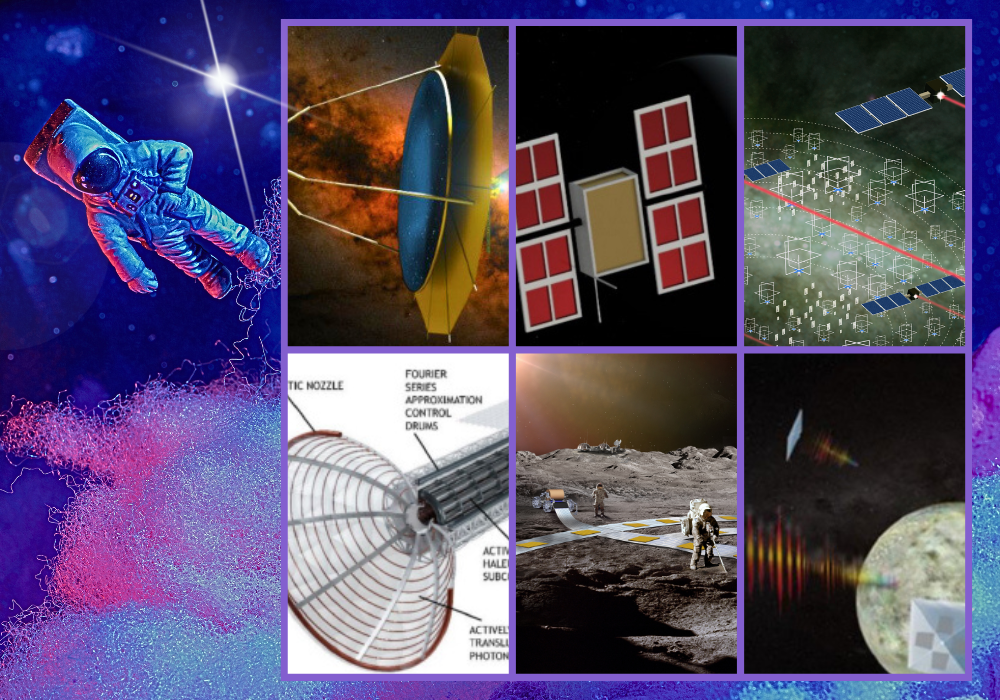
From Levitating Transport System on Moon to Plasma Rocket, NASA Updates on 6 Groundbreaking Space Technology Concepts

From Levitating Transport System on Moon to Plasma Rocket, NASA Updates on 6 Groundbreaking Space Technology Concepts

American space agency, NASA, has a program called "NASA Innovative Advanced Concepts (NIAC)", and this program has taken a significant step by advancing six groundbreaking space technology concepts to a new phase of development. These concepts, which seem like they're straight out of science fiction, have completed their initial phase and have been selected for Phase II, which includes additional funding and development.

The NIAC Phase II conceptual studies will receive up to $600,000 (~ ₹5 Crores) to continue working over the next two years to address key remaining technical and budget hurdles and pave their development path forward.

When Phase II is complete, these studies could advance to the final NIAC phase, earning additional funding and development consideration toward becoming a future aerospace mission.

Here's a brief overview of the six innovative tech concepts:

1. Fluidic Telescope (FLUTE):

The Fluidic Telescope (FLUTE) is a revolutionary concept being developed by NASA in collaboration with the Technion Israel Institute of Technology. It represents a significant leap forward in the design and construction of space observatories.

Artist’s depiction of the Fluidic Telescope (FLUTE) Edward Balaban

The FLUTE concept aims to create a large optical observatory in space using fluidic shaping of ionic liquids. It could potentially help investigate high-priority astrophysics targets, such as Earth-like exoplanets, first-generation stars, and young galaxies.

One of the most intriguing aspects of FLUTE is the concept of self-healing mirrors. These mirrors would be able to maintain their shape and repair themselves from minor damages, which is a significant advantage in the harsh environment of space.

FLUTE is designed to study high-priority astrophysics targets, including Earth-like exoplanets, first-generation stars, and early galaxies. By peering farther into space, FLUTE could help answer one of humanity's most profound questions: "Are we alone in the universe?".

2. Pulsed Plasma Rocket:


From Levitating Transport System on Moon to Plasma Rocket, NASA Updates on 6 Groundbreaking Technology Concepts


The Pulsed Plasma Rocket (PPR) is an advanced propulsion system under development that could significantly reduce travel times for human missions to Mars and beyond. The propulsion system utilizes nuclear fission, where atoms split apart to release energy. This energy is then used to create bursts of plasma for propulsion, pushing the rocket forward in space.

It may generate up to 100,000 N of thrust with a specific impulse (Isp) of 5,000 seconds. This exceptional performance combines high Isp and high thrust, which is crucial for efficient space travel over large distances.

The high efficiency of the PPR allows for manned missions to Mars to be completed within just 2 months. It also enables the transport of much heavier spacecraft equipped with shielding against Galactic Cosmic Rays, reducing crew exposure to negligible levels.

3. The Great Observatory for Long Wavelengths (GO-LoW):

The Great Observatory for Long Wavelengths (GO-LoW) is a visionary project proposed by NASA to explore the low-frequency radio sky, which has been largely inaccessible until now due to the Earth's ionosphere.

GO-LOW aims to measure the magnetic fields of terrestrial exoplanets by detecting their radio emissions at frequencies between 100 kHz and 15 MHz.

From Levitating Transport System on Moon to Plasma Rocket, NASA Updates on 6 Groundbreaking Technology Concepts
Artist concept highlighting the novel approach proposed by the 2024 NIAC Phase II awardee for possible future missions. Credits: Mary Knapp

The observatory will consist of an interferometric array of thousands of identical SmallSats located at an Earth-Sun Lagrange point, such as L5. These autonomous SmallSats satellites will measure magnetic fields emitted from exoplanets and the cosmic dark ages.

GO-LOW is part of a long-term vision to map out the technological development required to make such an observatory feasible in the next 10-20 years.

4. Radioisotope Thermoradiative Cell Power Generator:

This study investigates new in-space power sources that could operate at higher efficiencies than NASA's legacy power generators.
 
From Levitating Transport System on Moon to Plasma Rocket, NASA Updates on 6 Groundbreaking Technology Concepts
Artist’s depiction of Radioisotope Thermoradiative Cell Power Generator Stephen Polly

The Radioisotope Thermoradiative Cell (TRC) Power Generator is an innovative power source being developed for space missions, particularly those targeting the outer planets.

The TRC operates on a novel principle of thermal power conversion, somewhat akin to a solar cell working in reverse. It converts heat from a radioisotope source into infrared light, which is then emitted into the cold expanse of space. This process generates electricity.

This technology could significantly improve the capabilities of small spacecraft, enabling missions that were previously not feasible due to power constraints. It's particularly suited for operations in areas where sunlight is scarce, such as polar lunar craters or the outer reaches of our solar system. The ongoing research aims to refine the TRC technology, focusing on system size, weight, and power (SWaP), and to integrate the effects of potential power and efficiency loss mechanisms developed in Phase.

This power generation concept study is from Stephen Polly at the Rochester Institute of Technology in New York.

5. Lunar Railway System:

A concept being developed at NASA’s Jet Propulsion Laboratory for a railway system to provide payload transport on the Moon.

From Levitating Transport System on Moon to Plasma Rocket, NASA Updates on 6 Groundbreaking Technology Concepts
Artist concept of novel approach proposed by a 2024 NIAC Phase II awardee for possible future missions depicting lunar surface with planet Earth on the horizon. Credit: Ethan Schaler

The FLOAT (Flexible Levitation on a Track system) employs unpowered magnetic robots that levitate over a 3-layer flexible film track: a graphite layer enables robots to passively float over tracks using diamagnetic levitation, a flex-circuit layer generates electromagnetic thrust to controllably propel robots along tracks, and an optional thin-film solar panel layer generates power for the base when in sunlight.

This would be a lunar railway system, providing reliable, autonomous, and efficient payload transport on the Moon. This rail system could support daily operations of a sustainable lunar base as soon as the 2030s. Ethan Schaler leads FLOAT at NASA’s Jet Propulsion Laboratory in Southern California.

FLOAT robots have no moving parts and levitate over the track to minimize lunar dust abrasion / wear, unlike lunar robots with wheels, legs, or tracks.

FLOAT will operate autonomously in the dusty, inhospitable lunar environment with minimal site preparation, and its network of tracks can be rolled-up / reconfigured over time to match evolving lunar base mission requirements.

6. ScienceCraft for Outer Planet Exploration (SCOPE)

Artist’s depiction of ScienceCraft, which integrates the science instrument with the spacecraft by printing a quantum dot spectrometer directly on the solar sail to form a monolithic, lightweight structure. Mahmooda Sultana

The ScienceCraft for Outer Planet Exploration (SCOPE) is a groundbreaking mission concept developed by NASA. It aims to revolutionize the exploration of the outer planets, particularly the ice giants Neptune and Uranus, which are believed to hold secrets about the formation and evolution of our solar system.

SCOPE integrates a science instrument and spacecraft into one monolithic structure, which is a significant departure from traditional spacecraft design.

The mission utilizes a quantum dot-based spectrometer printed directly onto the solar sail material. This allows the spacecraft to not only propel through space but also to conduct scientific measurements.

These visionary studies will receive up to $600,000 each to continue working over the next two years to address technical and budget hurdles and pave their development path forward. When Phase II is complete, these studies could advance to the final NIAC phase, earning additional funding and development consideration toward becoming future aerospace missions.

Future Medicines To Be Completely Designed by AI

Future Medicines To Be Completely Designed by AI

Generative Al will be designing new drugs all on its own in the near future

Generative AI is making significant strides in the field of drug discovery. It's being used to design new drugs by analyzing vast datasets and generating novel molecular structures that could potentially be strong drug candidates. For instance, scientists at pharmaceutical giant, Eli Lilly, have been surprised by the unique molecules that AI
has produced, which could not have been envisioned by human researchers.

Citing executives working at the industry of Al & healthcare cross-over, a CNBC report said that the AI-powered healthcare field is on a path that will see medicines completely generated by Artificial Intelligence (AI) in the near future.

Moreover, AI is expected to not only conceive new drugs but also create ones that humans might not be able to, thus expanding the horizons of medical science. The technology is advancing rapidly, and experts believe that within a few years, it will become a norm in drug discovery. This could significantly reduce the time and cost associated with developing new medications, leading to faster and more efficient healthcare solutions.

According to some, within a few years at most it will become a norm in drug discovery. Experts at Eli Lilly and NVIDIA say that within a few years, Al will not only think up new drugs, but ones that humans could not create.

Generative Al is rapidly accelerating its applicability to the developments and discovery of new medications, in a move that will reshape not only the pharmaceutical industry but ground-level ideas that have been built into the scientific method for centuries.

AlphaFold

A major precedent for AI-generated breakthroughs in biology was set in 2021 when Google’s DeepMind AI, came up with a novel protein called AlphaFold.

Google DeepMind and EMBL-EBI (European Bioinformatics Institute) have partnered to create the AlphaFold Protein Structure Database. This database provides open access to over 200 million protein structure predictions generated by AlphaFold.

Exscientia

Exscientia is a leading pharmatech company that uses Al to design and optimize molecular properties of drugs for patients, revolutionizing drug discovery. Exscientia combines advanced Al design with exacting experimental validation to rapidly progress a pipeline of drug discovery assets. The pharmatech company is spearheading the drug discovery revolution by creating the first Al-designed molecules to reach clinical trials.

Similarly, Insilico Medicine, a company with headquarters in Hong Kong and New York, has used AI to develop an experimental drug for idiopathic pulmonary fibrosis, an incurable lung disease. The treatment is in mid-stage trials in the US and China with some results expected early 2025.

However, the success of any AI-designed drugs will ultimately be tested by the traditional final step in drug development —performance in human trials.

Intel Research Opens Door for Mass Production of Silicon-based Quantum Processors, A Requirement for Making Fault-Tolerant Quantum Computer

Intel has made a significant advancement in quantum computing by demonstrating high fidelity and uniformity in single-electron control on spin qubit wafers. This achievement, as reported in a recent research paper, published in Nature, indicates a major step towards the scalability of silicon-based quantum processors, which are essential for the development of fault-tolerant quantum computers.

Quantum computing researchers at Intel Foundry Technology Research developed a 300-millimeter (mm) cryogenic probing process to collect high-volume data on the performance of spin qubit devices across full wafers, resulting in state-of-the-art uniformity, fidelity, and measurement statistics of spin qubits.

Intel Research Opens Door for Mass Production of Silicon-based Quantum Processors, A Requirement for Making Fault-Tolerant Quantum Computer
Otto Zietz, quantum hardware engineer at Intel Corporation, stands near a quantum cryoprober in Hillsboro, Oregon. The cryoprober can plunge a 300- millimeter silicon wafer to the extraordinarily low temperature of 1.7 kelvins just a hair above absolute zero. (Credit: Intel Corporation)


For an uninitiated, Spin qubits are a type of quantum bit, or qubit, which are the fundamental building blocks of quantum computers. They are based on the quantum property of electron spin. In classical computing, a bit can be in one of two states: 0 or 1. However, in quantum computing, due to the principle of superposition, a qubit like a spin qubit can be in a state that is a complex combination of both 0 and 1 simultaneously.

Spin qubits are particularly promising for quantum computing because they can be made using existing semiconductor manufacturing techniques, and they can potentially operate at higher temperatures than other types of qubits.

With this, Intel advances in controlling single-electron spins with high fidelity and uniformity across a wafer. This is significant because it suggests the possibility of scaling up the production of spin qubits using established semiconductor fabrication methods, which is a crucial step towards building practical quantum computers.

The key highlights from Intel's breakthrough include:

  • The development of a 300-mm cryogenic probing process to collect high-volume data on the performance of spin qubit devices across full wafers.
  • Achievement of 99.9% fidelity for qubits fabricated using CMOS manufacturing techniques.
  • The potential for mass production and continued scaling of silicon-based quantum processors due to the high device yield and automated testing process.
This research opens the door for the mass production of quantum processors and brings us closer to realizing fault-tolerant quantum computers, which will have a profound impact on various fields, including cryptography, materials science, and complex problem-solving. Intel's approach leverages its expertise in CMOS manufacturing, which is traditionally used for creating billions of transistors per chip, to now also create highly uniform and reliable qubit devices.

Intel is taking steps toward building fault-tolerant quantum computers by improving three factors — (1) Qubit density, (2) Reproducibility of uniform qubits, and (3) Measurement statistics from high volume testing.

Intel Research Opens the Door for Mass Production of Silicon-based Quantum Processors, a Requirement for Making Fault-tolerant Quantum Computer
This 300-millimeter Intel silicon spin qubit wafer. In May 2024, Nature published an Intel research paper, "Probing single electrons across 300-mm spin qubit wafers," demonstrating state-of-the-art uniformity, fidelity and measurement statistics of spin qubits. (Credit: Intel Corporation)

The concept of probing single electrons across 300-mm spin qubit wafers is a significant advancement in quantum computing. This method provides rapid feedback for optimizing the CMOS-compatible fabrication process, which is crucial for achieving high yield and low process variation.

This research is being conducted by Samuel Neyens and colleagues and demonstrates the application of CMOS industry techniques to the fabrication and measurement of spin qubits. The researchers successfully automated measurements of the operating point of spin qubits and probed the transitions of single electrons across full wafers. Their analysis of the random variation in single-electron operating voltages indicated that this fabrication process leads to low levels of disorder at the 300 mm scale.

This breakthrough is a key step towards scalable quantum computers capable of tackling real-world applications, as it leverages the mature chipmaking industry's methods for fabricating and testing conventional computer chips. The ability to probe single electrons with such precision is essential for the development of fault-tolerant quantum computers that require vast numbers of physical qubits.

The practical applications of probing single electrons in spin qubit wafers are still largely in the developmental stage, but the technology holds significant promise for the future of quantum computing. The ability to probe single electrons with high precision is crucial for creating scalable quantum computers, which could revolutionize various fields by performing complex computations much faster than traditional computers.

Market Reports

Market Report & Surveys
IndianWeb2.com © all rights reserved