Showing posts with label Processor. Show all posts

Intel’s Lunar Lake Processors for AI PCs Arriving by September This Year

Intel’s Lunar Lake Processors for AI PCs Arriving by September This Year

Intel's Lunar Lake processors, which is the company's upcoming 16th generation CPU and a part of Intel's client processor lineup, are set to make a significant impact in the market with their launch in Q3 2024.

The Core Architecture of Lunar Lake will feature a hybrid core architecture with 4 Performance (P) cores and 4 Efficiency (E) cores, providing a balanced design for both power and performance.

Lunar Lake will power more than 80 new laptop designs across more than 20 original equipment manufacturers (OEMs), delivering AI performance at a global scale for Copilot+ PCs. Lunar Lake will get the Copilot+ experiences, like Recall, via an update when available.

These processors are built on Intel's advanced 20A process node (which is equivalent to 2nm), enhancing performance and power efficiency, especially for mobility devices.

Lunar Lake is expected to be a groundbreaking mobile processor for AI PCs with more than 3 times the AI performance compared with the previous generation. An AI PC has a central processing unit (CPU), a graphic processing unit (GPU) and a neural processing unit (NPU), each with specific AI acceleration capabilities. An NPU is a specialized accelerator that efficiently handles AI and machine learning (ML) tasks right on your PC instead of sending data to be processed in the cloud. The AI PC is increasingly important as the need to automate, streamline and optimize tasks on the PC grows.

Lunar Lake's AI Capabilities is expected to give a significant boost in AI performance, thanks to the inclusion of a new Neural Processing Unit (NPU) capable of over 45 TOPS (Tera Operations per Second), making it four times more powerful than the NPU on Meteor Lake rated at 11 TOPS.

Lunar Lake will also feature the Xe2 GPU architecture, similar to Intel’s upcoming Battlemage discrete GPUs. This includes the Xe Matrix eXtension (XMX) cores, which should improve graphics capability significantly.

Key Features —

Performance: It is claimed to be 40% faster in Stable Diffusion 1.5 running on the GIMP photo editor when compared to the Snapdragon X Elite.

Power Efficiency: It promises the lowest power consumption seen from an x86 processor, which could be a game-changer for battery life in laptops and other portable devices.

Intel's Lunar Lake processors are poised to be a major step forward in the evolution of CPUs, offering improvements in AI, graphics, and power efficiency that could redefine the capabilities of next-generation laptops and other computing devices.

Intel's announcement comes as a competitive response to Qualcomm's Snapdragon X Elite processors, highlighting the intensifying race to dominate the Al and PC market. With such advancements, Lunar Lake processors are poised to power the next generation of Al personal computers, including the Microsoft Copilot+ PCs. 

Intel Research Opens Door for Mass Production of Silicon-based Quantum Processors, A Requirement for Making Fault-Tolerant Quantum Computer

Intel has made a significant advancement in quantum computing by demonstrating high fidelity and uniformity in single-electron control on spin qubit wafers. This achievement, as reported in a recent research paper, published in Nature, indicates a major step towards the scalability of silicon-based quantum processors, which are essential for the development of fault-tolerant quantum computers.

Quantum computing researchers at Intel Foundry Technology Research developed a 300-millimeter (mm) cryogenic probing process to collect high-volume data on the performance of spin qubit devices across full wafers, resulting in state-of-the-art uniformity, fidelity, and measurement statistics of spin qubits.

Intel Research Opens Door for Mass Production of Silicon-based Quantum Processors, A Requirement for Making Fault-Tolerant Quantum Computer
Otto Zietz, quantum hardware engineer at Intel Corporation, stands near a quantum cryoprober in Hillsboro, Oregon. The cryoprober can plunge a 300- millimeter silicon wafer to the extraordinarily low temperature of 1.7 kelvins just a hair above absolute zero. (Credit: Intel Corporation)


For an uninitiated, Spin qubits are a type of quantum bit, or qubit, which are the fundamental building blocks of quantum computers. They are based on the quantum property of electron spin. In classical computing, a bit can be in one of two states: 0 or 1. However, in quantum computing, due to the principle of superposition, a qubit like a spin qubit can be in a state that is a complex combination of both 0 and 1 simultaneously.

Spin qubits are particularly promising for quantum computing because they can be made using existing semiconductor manufacturing techniques, and they can potentially operate at higher temperatures than other types of qubits.

With this, Intel advances in controlling single-electron spins with high fidelity and uniformity across a wafer. This is significant because it suggests the possibility of scaling up the production of spin qubits using established semiconductor fabrication methods, which is a crucial step towards building practical quantum computers.

The key highlights from Intel's breakthrough include:

  • The development of a 300-mm cryogenic probing process to collect high-volume data on the performance of spin qubit devices across full wafers.
  • Achievement of 99.9% fidelity for qubits fabricated using CMOS manufacturing techniques.
  • The potential for mass production and continued scaling of silicon-based quantum processors due to the high device yield and automated testing process.
This research opens the door for the mass production of quantum processors and brings us closer to realizing fault-tolerant quantum computers, which will have a profound impact on various fields, including cryptography, materials science, and complex problem-solving. Intel's approach leverages its expertise in CMOS manufacturing, which is traditionally used for creating billions of transistors per chip, to now also create highly uniform and reliable qubit devices.

Intel is taking steps toward building fault-tolerant quantum computers by improving three factors — (1) Qubit density, (2) Reproducibility of uniform qubits, and (3) Measurement statistics from high volume testing.

Intel Research Opens the Door for Mass Production of Silicon-based Quantum Processors, a Requirement for Making Fault-tolerant Quantum Computer
This 300-millimeter Intel silicon spin qubit wafer. In May 2024, Nature published an Intel research paper, "Probing single electrons across 300-mm spin qubit wafers," demonstrating state-of-the-art uniformity, fidelity and measurement statistics of spin qubits. (Credit: Intel Corporation)

The concept of probing single electrons across 300-mm spin qubit wafers is a significant advancement in quantum computing. This method provides rapid feedback for optimizing the CMOS-compatible fabrication process, which is crucial for achieving high yield and low process variation.

This research is being conducted by Samuel Neyens and colleagues and demonstrates the application of CMOS industry techniques to the fabrication and measurement of spin qubits. The researchers successfully automated measurements of the operating point of spin qubits and probed the transitions of single electrons across full wafers. Their analysis of the random variation in single-electron operating voltages indicated that this fabrication process leads to low levels of disorder at the 300 mm scale.

This breakthrough is a key step towards scalable quantum computers capable of tackling real-world applications, as it leverages the mature chipmaking industry's methods for fabricating and testing conventional computer chips. The ability to probe single electrons with such precision is essential for the development of fault-tolerant quantum computers that require vast numbers of physical qubits.

The practical applications of probing single electrons in spin qubit wafers are still largely in the developmental stage, but the technology holds significant promise for the future of quantum computing. The ability to probe single electrons with high precision is crucial for creating scalable quantum computers, which could revolutionize various fields by performing complex computations much faster than traditional computers.

Intel Says Its Gaudi 2 Accelerator is Nvidia H100's Only Benchmarked Alternative for Generative AI

Intel Says Its Gaudi 2 Accelerator is Nvidia H100's Only Benchmarked Alternative for Generative AI

Intel Gaudi 2 continues to shine as the sole benchmarked alternative to Nvidia's H100 in the realm of generative AI (GenAI) performance. Intel's ambitious goal to deliver competitive AI solutions across its portfolio is evident through the latest MLPerf v4.0 benchmark results. "The Intel Gaudi 2 AI accelerator remains the only benchmarked alternative to Nvidia H100 for generative AI (GenAI) performance and provides strong performance-per-dollar," said Intel, in an official news release. 

In a recent MLPerf GPT-J inference benchmark, Intel's Gaudi 2 achieved near-parity performance with Nvidia's H100, reinforcing its position as a formidable alternative.

The Intel® Gaudi® 2 accelerator is a heavyweight contender in the AI accelerator arena, designed specifically for deep learning training and inference. It delivers two times the performance of A100 on Computer Vision, NLP, and large scale models.

Gaudi 2 shrinks the process from 16nm to 7nm, increases the number of Al-customized Tensor Processor Cores from 8 to 24, adds FP8 support, and integrates a media compression engine.

Additionally, Intel remains the exclusive server CPU vendor to submit MLPerf results. The 5th Gen Intel Xeon processors have shown an impressive 1.42x improvement compared to their 4th Gen counterparts in MLPerf Inference v3.1.

Intel Says Its Gaudi 2 Accelerator is Nvidia H100's Only Benchmarked Alternative for Generative AI
Intel Gaudi 2 

Developed by Habana Labs, now part of Intel, the Gaudi 2 is equipped with a whopping 96GB of HBM2E memory offering ample space to store and process massive datasets. Additionally, the high bandwidth of 2.45 TB/s ensures smooth data flow during training and inference processes, minimizing bottlenecks.

Habana Labs is considered the center of excellence for AI solutions at Intel, and Intel acquired the company in 2019 for approximately $2 billion.

It is said that Habana Labs is now working on Gaudi 3, which is expected to offer a significant performance boost.

Intel Gaudi 2 Vs NVIDIA H100 / A100

Gaudi 2 vs. NVIDIA H100

Performance: Gaudi 2 remains the only benchmarked alternative to Nvidia H100 for generative AI (GenAI) performance.

Price-to-Performance: It provides strong performance-per-dollar.

MLPerf Results: Intel is the exclusive server CPU vendor to submit MLPerf results, showcasing Gaudi 2's capabilities.

Scalability: Gaudi 2 integrates 24 100-gigabit RDMA over Converged Ethernet (RoCE2) ports, making it cost-effective and easy to scale out training capacity.

Networking: These ports enable efficient communication within the server, enhancing throughput.

Intel Gaudi 2 vs. NVIDIA A100

Inference: Gaudi 2 matches the latency of Nvidia H100 systems on decoding and outperforms the Nvidia A100 in large language model (LLM) inference.

Performance: Gaudi 2 is about twice faster than the NVIDIA A100 80GB for both training and inference. 

Available on the Intel Developer Cloud for easy access.

Memory Bandwidth: Gaudi 2 achieves higher memory bandwidth utilization than H100 and A100.

In summary, Intel Gaudi 2 offers compelling performance-per-dollar and can be a respected alternative to Nvidia's offerings. While Nvidia A100 remains a powerhouse, Gaudi 2 provides better value in many scenarios.

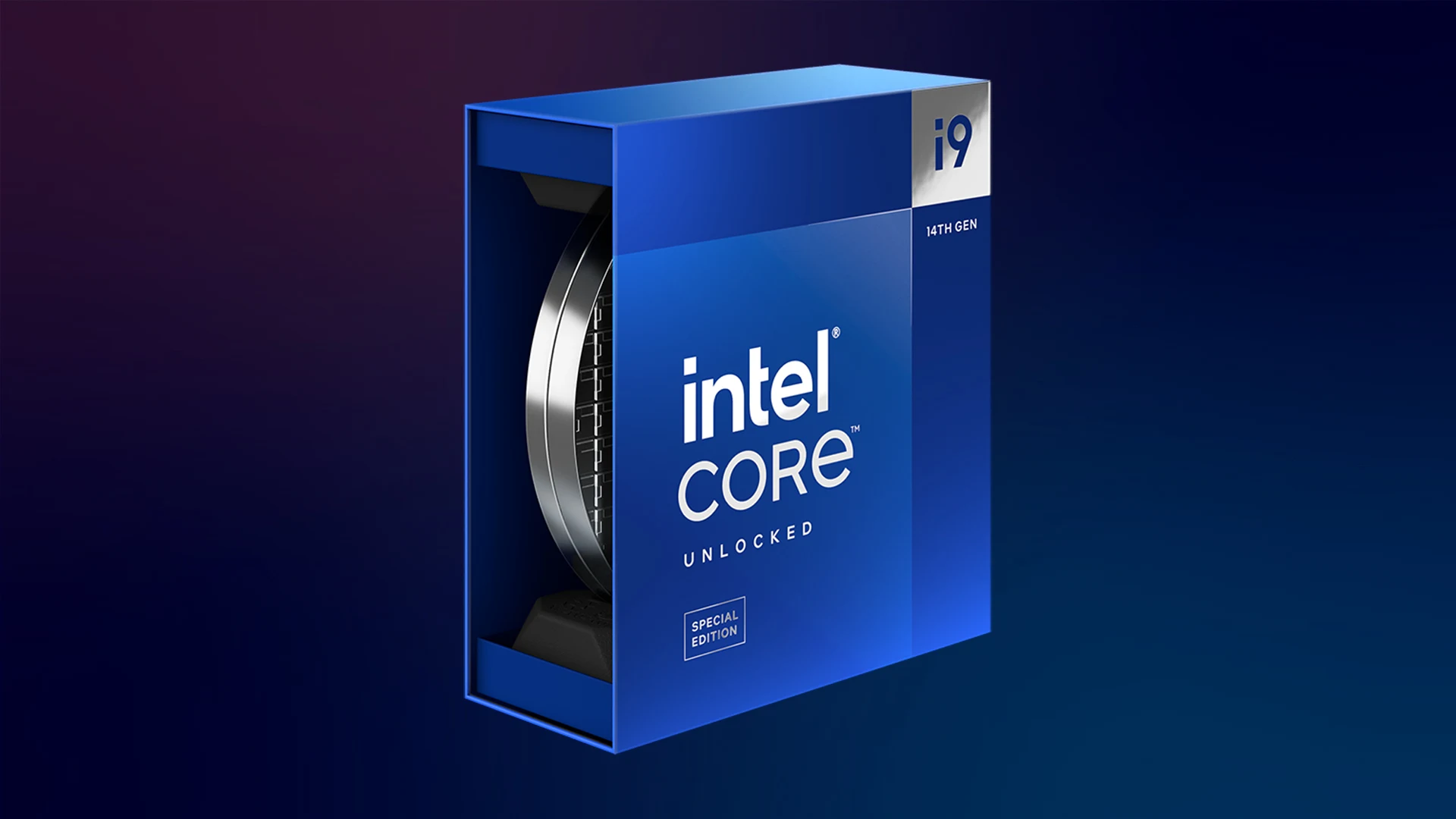
Intel Retains Title of World’s Fastest Desktop Processor With New I9-14900KS Processors

Intel Retains Title of World’s Fastest Desktop Processor With New I9-14900KS Processors

At 6.2 GHz frequency out of the box, the i9-14900KS gives PC enthusiasts top-end power for desktop systems.

On Thursday, Semiconductor giant Intel announced full specifications and availability of Intel® Core™ 14th Gen i9-14900KS processors, reaching the cutting edge of CPU frequency to retain the title as the world’s fastest desktop processor.

Intel claims that at 6.2 GHz Max Turbo Frequency, the Intel® Core™ i9 processor 14900KS is the fastest desktop processor, as of March 2024.

The processors deliver up to 6.2 gigahertz (GHz) max turbo frequency out of the box, ensuring a world-class gaming and creating experience for desktop enthusiasts who want the most power possible.

The Intel Core i9-14900KS showcases the full power and performance potential of the Intel Core 14th Gen desktop processor family and its performance hybrid architecture. Extreme PC enthusiasts – especially gamers and creators – can now enjoy the i9-14900KS’ record-breaking 6.2 GHz frequency while taking their desktop experience to higher levels of performance than ever before.”– Roger Chandler, Intel vice president and general manager, Enthusiast PC and Workstation Segment, Intel Client Computing Group.

The unlocked i9-14900KS processor pushes the Intel Core 14th Gen desktop processor family to its fastest speeds yet – building on last year’s industry-first 6.0 GHz Core i9-13900KS. In addition to record-breaking frequencies, the i9-14900KS boasts 24 cores/32 threads and 36 megabytes (MB) of Intel® Smart Cache for powerful performance in gaming and content creation workloads that desktop enthusiasts expect from Intel’s latest-gen desktop processors.

With the Intel Core 14th Gen 14900KS, gamers can experience up to 15% better performance gen-over-gen thanks to its blazing speeds and Intel’s Application Performance Optimization (APO) feature, as measured on an Intel® Core™ i9 processor 14900KS vs. a 13th Gen Intel® Core™ i9-13900KS processor. Results may vary And content creators will benefit from the 14900KS’ performance, which can provide up to 73% performance improvement in compute-intensive workflows, such as 3D production multitasking versus competition (As measured by Unreal Engine 5 MetaHuman & CapturingReality RealityCapture Multitasking Virtual Production Workflow on an Intel® Core™ i9 processor 14900KS vs. an AMD Ryzen™ 9 7950X processor. ​Other names & brands may be claimed as the property of others). 

Key features and capabilities of the i9-14900KS include:
  • Up to 6.2 GHz max turbo frequency with Intel® Thermal Velocity Boost – the fastest desktop processor speeds available on the market.
  • Twenty-four cores (eight Performance-cores and 16 Efficient-cores), 32 threads, 150 watt processor base power, 36MB Intel Smart Cache and 20 PCIe lanes (16 PCIe 5.0 and four PCIe 4.0 lanes).
  • Expanded Intel® APO support for the i9-14900KS – providing up to 11% performance uplift in supported titles.4 Intel continues to expand support for APO, which now includes 14 gaming titles.
  • Support for up to 192GB of DDR5 5600 megatransfers per second (MT/s) or DDR4 3200 MT/s memory.
  • Compatibility with Z790 and Z690 motherboards, with the latest BIOS recommended for the best gaming and content creation experience.
When It’s Available: This special edition processor will be available beginning March 14, 2024, with a recommended customer price (RCP) starting at $699. It can be found at retailers worldwide as a boxed processor and integrated into systems from Intel’s channel and original equipment manufacturer (OEM) partners.


Market Reports

Market Report & Surveys
IndianWeb2.com © all rights reserved