‏إظهار الرسائل ذات التسميات Azure. إظهار كافة الرسائل

Microsoft and Atom Computing Partner to Bring New Generation of Reliable Quantum Hardware to Customers

Microsoft and Atom Computing Partner to Bring New Generation of Reliable Quantum Hardware to Customers

Microsoft recently announced a significant milestone in quantum computing by demonstrating the best performing logical qubits on record. This achievement is part of their efforts to advance Azure Quantum, a platform designed to provide reliable quantum computing at scale.

In collaboration with Quantinuum, Microsoft created and entangled 12 highly reliable logical qubits, the largest number of entangled logical qubits with the highest fidelity recorded so far. This development is crucial as it addresses the noise and error issues prevalent in current quantum systems, making them more practical for real-world applications.

Additionally, Microsoft is integrating Atom Computing's neutral-atom hardware into Azure Quantum, further enhancing the platform's capabilities. This integration aims to bring best-in-class solutions to customers, enabling advanced hybrid quantum applications that could tackle complex challenges, from sustainable energy solutions to next-generation Therapeutics.

In collaboration with Atom Computing, Microsoft is bringing a new generation of reliable quantum hardware to customers. Bringing together it’s enhanced qubit-virtualization system with Atom Computing’s neutral-atom hardware, Microsoft has jointly generated logical qubits and are optimizing the system to enable reliable quantum computation. The companies believe that this new commercial offering will be the world’s most powerful quantum machine on record and will scale to scientific advantage and beyond.

The reliability of logical qubits is a critical factor in advancing quantum computing. Logical qubits are constructed from multiple physical qubits and are designed to be more robust against errors.

Integrating different types of quantum hardware, such as neutral-atom hardware from Atom Computing, into platforms like Azure Quantum can further enhance reliability. These hybrid systems combine the strengths of various technologies to create more robust and versatile quantum solutions.

One of the main advantages of neutral-atom technology is its potential for scalability. Atom Computing has demonstrated arrays with over 100 qubits, and their systems are designed to scale up to thousands of qubits.

Logical qubits use error-correcting codes to detect and correct errors that occur in physical qubits. This process significantly reduces the error rates, making computations more reliable. The fidelity of a qubit refers to how accurately it can represent quantum information. Higher fidelity means fewer errors and more reliable operations. Microsoft’s recent achievement with 12 highly reliable logical qubits represents a significant improvement in fidelity.

Entangling multiple logical qubits increases their computational power and reliability. The entanglement of 12 logical qubits by Microsoft and Quantinuum is a record-setting achievement that enhances the stability and performance of quantum systems.

Reliable logical qubits are essential for scaling up quantum computers. As the number of qubits increases, maintaining reliability becomes more challenging. Advances in logical qubit technology are crucial for building larger, more powerful quantum computers.

Microsoft is pioneering a new computing paradigm by bringing the power of the cloud and AI together with quantum. Microsoft's Azure Quantum compute platform enables the seamless execution of quantum applications that leverage hardware across a variety of qubit architectures and chips, while offering integration with cloud HPC and AI.

Over this past year, Microsoft has announced new breakthroughs and collaborations in pursuit of this platform mission, including offering Generative Chemistry and Accelerated DFT and advancing the industry to reliable quantum computing by demonstrating highly reliable logical qubits.
Wipro and Microsoft Launch a Suite of GenAI-powered Virtual Assistants for Financial Services

Wipro and Microsoft Launch a Suite of GenAI-powered Virtual Assistants for Financial Services

Wipro has partnered with Microsoft to launch a suite of Generative AI-powered virtual assistants specifically designed for the financial services sector. These virtual assistants will operate on Microsoft Azure Open AI and will be accessible through Azure App Services. The suite includes Wipro GenAI Investor Intelligence, Wipro GenAI Investor Onboarding, and Wipro GenAI Loan Origination.

These AI-powered assistants aim to provide deep market intelligence and relevant, timely information on investment products and investor behavior. They are expected to help accelerate the investor onboarding process, reduce the time taken for documentation, and resolve queries more efficiently. This collaboration is a significant step in the integration of advanced AI technologies in the financial services industry, offering innovative solutions to enhance customer experience and operational efficiency.

The Wipro GenAI-powered cognitive assistants for financial services, developed in collaboration with Microsoft, are designed to enhance the efficiency and experience of financial professionals. Here's how you can access them:
  1. Wipro GenAI Investor Intelligence: This virtual assistant provides in-depth market insights and timely updates on investment options and customer behavior. It aims to empower financial advisors with better and faster market and product intelligence, enabling them to deliver personalized and timely service to clients.
  2. Wipro GenAI Investor Onboarding: Streamlining the investor onboarding process, this assistant reduces the time taken for documentation. It assists in validating documents efficiently and offers helpful responses to investor queries.
  3. Wipro GenAI Loan Origination: For loan origination, this virtual assistant simplifies the process by cutting down paperwork and repetitive steps. It ensures a smoother experience for both financial professionals and their clients.

Integration with Existing Platforms:

  • These cognitive assistants are integrated with existing digital platforms, ensuring a seamless experience for users.
  • They operate on Microsoft Azure Open AI and are accessible through Azure App Services.
  • Leveraging Microsoft Azure Document Intelligence, they extract text, key-value pairs, and structures from documents to turn them into actionable data.
Wipro's commitment to cutting-edge solutions in the financial services sector, combined with Microsoft's technology, promises exceptional client experiences and increased productivity.

Wipro’s new GenAI-powered cognitive assistants will run on Microsoft Azure Open AI and will be available on Azure App Services.

Sarvm AI Collaborates with Microsoft to Bring Indian Languages to Azure

Sarvam AI Collaborates with Microsoft to Bring Indian Languages to Azure

Sarvam AI collaborates with Microsoft to bring its Indic voice large language model (LLM) to Azure

The collaboration aims to enable Sarvam AI to leverage Azure AI and Azure Infrastructure to build and deploy their voice LLM stack

It also aims to enable developers to build generative AI apps at scale and empower enterprises to adopt generative AI quickly and responsibly

Indian generative AI startup Sarvam AI has announced that it is working with Microsoft to make its Indic voice large language model (LLM) available on Azure. The collaboration reinforces Microsoft’s commitment to enabling AI-driven growth and innovation in India.

Sarvam AI is building generative AI models targeting Indic languages and contexts. The startup aims to make the development and deployment of generative AI apps in India more accurate and cost effective.

Sarvam AI’s Indic voice LLM, which intends to provide a natural voice-based interface to LLMs, will initially be available in Hindi. Sarvam AI is working to expand coverage to more Indian languages while ensuring support for colloquial language use.

Pratyush Kumar, co-founder of Sarvam AI, said, “We are very excited to collaborate with Microsoft to make advanced AI technology accessible and impactful for everyone in India. This partnership embodies our vision of ‘Sarvam’ – meaning ‘all’ – by enhancing AI’s reach across various Indian languages and sectors.

Voice is one of the most natural interfaces for generative AI applications in Indian languages and can be applied in sectors such as education, finance, healthcare, and customer service. By working to make Sarvam AI’s Indic voice LLM available on Azure, Microsoft is laying the foundations for more India-focused developers to build real-time, voice-based generative AI apps at scale.

The companies will also collaborate to help enterprises adopt generative AI quickly and responsibly. Vivek Raghavan, co-founder of Sarvam AI, said, “We see great synergy in combining the deep-tech expertise at Sarvam AI with Microsoft’s leadership in frontier models and the Copilot stack to empower enterprises to be successful in Generative AI”.

Sarvam AI will use Microsoft’s cutting-edge cloud and AI infrastructure – including Azure OpenAI Service and Azure Machine Learning – to train, host, and scale its LLMs quickly and efficiently. As part of the collaboration, Sarvam AI and Microsoft are also researching ways to better support Indian languages in Microsoft’s Generative AI frontier language models and to deploy them at scale.

At Microsoft, we are committed to enabling AI for everyone, empowering India’s transformation into an AI-first nation,” said Puneet Chandok, president of Microsoft India & South Asia. “Through our collaboration with Sarvam AI, we are not just supporting homegrown innovation – we are fostering a future where every individual, regardless of their language or background, can benefit from the power of voice-driven AI solutions. Together, we are taking a significant step toward enabling India’s people, communities, and organizations to achieve more.”

Click here to learn more about Satya Nadella’s visit and how Microsoft is empowering organizations in India with AI.

About Sarvam AI

Sarvam AI is on a mission to lead transformative research in AI to make the development, deployment, and distribution of generative AI applications in India more robust, better performing, and cheaper. The company aims to develop a full stack of generative AI solutions, including efficient large-scale Indic language models and an enterprise-grade platform for building generative AI apps. Sarvam AI is also committed to fostering a generative AI ecosystem through open-source contributions and large-scale data curation for the public good.


NVIDIA Introduces Generative AI Foundry Service on Microsoft Azure for Enterprises and Startups Worldwide

NVIDIA Introduces Generative AI Foundry Service on Microsoft Azure for Enterprises and Startups Worldwide

SAP, Amdocs, Getty Images Among First to Build Custom LLMs With NVIDIA AI Foundation Models, Train on NVIDIA DGX Cloud, Deploy With NVIDIA AI Enterprise Software

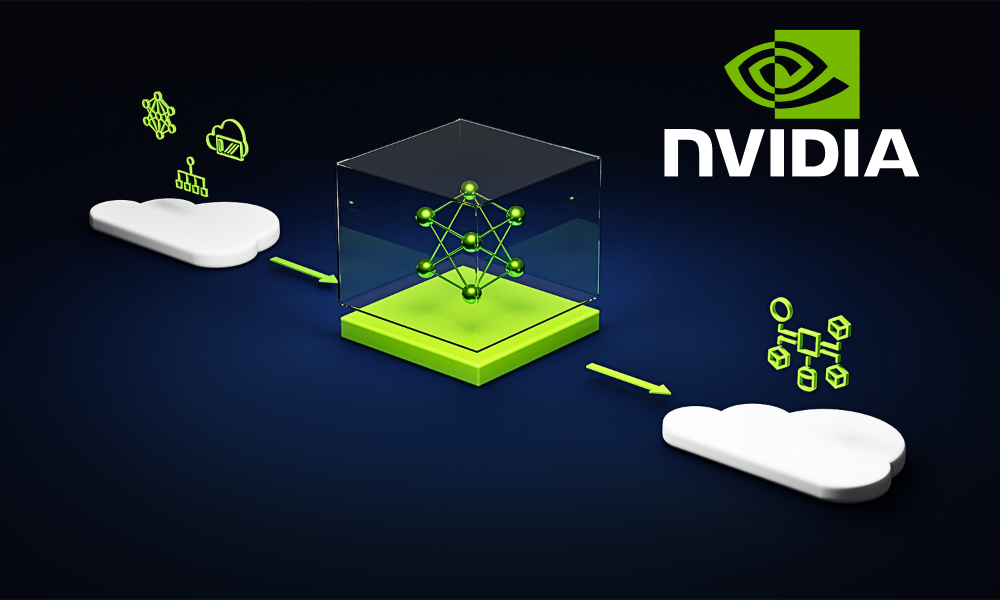
NVIDIA has recently introduced an AI foundry service to supercharge the development and tuning of custom generative AI applications for enterprises and startups deploying on Microsoft Azure.

The NVIDIA AI foundry service pulls together three elements — a collection of NVIDIA AI Foundation Models, NVIDIA NeMo™ framework and tools, and NVIDIA DGX™ Cloud AI supercomputing services — that give enterprises an end-to-end solution for creating custom generative AI models. Businesses can then deploy their customized models with NVIDIA AI Enterprise software to power generative AI applications, including intelligent search, summarization and content generation.

Industry leaders SAP SE, Amdocs and Getty Images are among the pioneers building custom models using the service.

Enterprises need custom models to perform specialized skills trained on the proprietary DNA of their company — their data,” said Jensen Huang, founder and CEO of NVIDIA. “NVIDIA’s AI foundry service combines our generative AI model technologies, LLM training expertise and giant-scale AI factory. We built this in Microsoft Azure so enterprises worldwide can connect their custom model with Microsoft’s world-leading cloud services.”

Our partnership with NVIDIA spans every layer of the Copilot stack — from silicon to software — as we innovate together for this new age of AI,” said Satya Nadella, chairman and CEO of Microsoft.With NVIDIA’s generative AI foundry service on Microsoft Azure, we’re providing new capabilities for enterprises and startups to build and deploy AI applications on our cloud.”

Industry Leaders Building Tailored, Timely LLMs

NVIDIA’s AI foundry service can be used to customize models for generative AI-powered applications across industries, including enterprise software, telecommunications and media. Once ready to deploy, enterprises can use a technique called retrieval-augmented generation (RAG) to connect their models with their enterprise data and access new insights.

As the first customer of NVIDIA DGX Cloud on Microsoft Azure, SAP plans to use the service and optimized RAG workflow with NVIDIA DGX Cloud and NVIDIA AI Enterprise software running on Azure to help customize and deploy Joule®, its new natural language generative AI copilot.

Joule draws on SAP’s unique position at the nexus of business and technology, and builds on our relevant, reliable and responsible approach to Business AI,” said Christian Klein, CEO and member of the Executive Board of SAP SE. “In partnership with NVIDIA, Joule can help customers unlock the potential of generative AI for their business by automating time-consuming tasks and quickly analyzing data to deliver more intelligent, personalized experiences.”

Amdocs, a leading provider of software and services to communications and media companies, is optimizing models for the Amdocs amAIz framework to speed adoption of generative AI applications and services for telcos globally.

Generative AI technology presents an incredible opportunity for service providers to reinvent the way they engage with customers,” said Shuky Sheffer, president and CEO at Amdocs. “Leveraging NVIDIA’s and Microsoft's technology to power the Amdocs amAlz framework will bring new GenAI-powered applications to customers faster and enable them to benefit from the immense potential of generative AI, while also providing enterprise-grade security, reliability and performance.”

Curated, Optimized Models for Custom Generative AI

Customers using the NVIDIA foundry service can choose from several NVIDIA AI Foundation models, including a new family of NVIDIA Nemotron-3 8B models hosted in the Azure AI model catalog. Developers can also access the Nemotron-3 8B models on the NVIDIA NGC™ catalog, as well as community models such as Meta’s Llama 2 models optimized for NVIDIA for accelerated computing, which are also coming soon to the Azure AI model catalog.

Optimized with 8 billion parameters, the Nemotron-3 8B family includes versions tuned for different use cases and have multilingual capabilities for building custom enterprise generative AI applications.

NVIDIA DGX Cloud Now Available on Microsoft Azure Marketplace

NVIDIA DGX Cloud AI supercomputing is available today on Azure Marketplace. It features instances customers can rent, scaling to thousands of NVIDIA Tensor Core GPUs, and comes with NVIDIA AI Enterprise software, including NeMo, to speed LLM customization. 

The addition of DGX Cloud on the Azure Marketplace enables Azure customers to use their existing Microsoft Azure Consumption Commitment credits to speed model development with NVIDIA AI supercomputing and software.

NVIDIA AI Enterprise software is now integrated into Azure Machine Learning, adding NVIDIA’s platform of secure, stable and supported AI and data science software. This brings NeMo and NVIDIA Triton Inference Server™ to Azure’s enterprise-grade AI service.

NVIDIA AI Enterprise is also available on Azure Marketplace, providing businesses worldwide with broad options for production-ready AI development and deployment of custom generative AI applications.

Classiq and Microsoft Collab for Quantum Computing Program for Academic Institutions Globally

Classiq and Microsoft Collab for Quantum Computing To Academic Institutions Globally

On Wednesday, Quantum software company Classiq and tech giant Microsoft announced their collaboration to launch a global quantum research and education program that offers educational institutions access to Classiq’s state-of-the-art Quantum software platform coupled with Azure Quantum cloud access to diverse quantum hardware.

The global program is for quantum software research and education, dedicated to universities and educational institutions offering Classiq’s advanced quantum computing platform and Microsoft Azure Quantum’s cloud access to quantum computers.

Tel Aviv, Israel-based Classiq, which provides a leading platform for designing, analyzing, and executing quantum circuits, selected Microsoft's Azure Quantum to be its launch partner for its global academic program.

The program offers a one-stop-shop from creation of quantum circuits through to visualization, analysis, optimization and hardware access. Whether you are a researcher, a student or teaching a quantum computing course this program facilitates creation of state-of the-art circuits that are ready to be seamlessly executed on gate-based hardware.

Through integration with Azure Quantum, Classiq enables university professors, students, and researchers to speed up algorithm design on quantum computers, bypassing quantum assembly-level language so that users can focus on designing applications instead of gate-level code.

For Students —

For students studying quantum computing, computer science or quantum information science? The Classiq Platform allows students to learn how to design and experiment with different circuits and visualize them in detail. This can help students better understand the principles of quantum computing as well as to progress more quickly on their quantum journey.

For Researchers —

Researchers can take their quantum computing research to a higher level by Designing and testing quantum algorithms and circuits without having to manually construct the low-level circuit descriptions. Quantum circuit synthesis can optimize circuit descriptions to improve performance or reduce resource requirements of the quantum algorithm on a specific hardware platform. The Classiq Platform lets researchers implement scientific, large or complex circuits that might otherwise to too difficult to work on.

According to the press release, the classiq.io/academia offering, already used by leading universities, targets two major goals:
  1. Accelerating quantum software education by providing an advanced platform for automated quantum software design and execution.
  2. Advancing quantum computing by giving researchers a scalable, robust quantum software design platform with seamless access to computation.
This new academic program supports application development-focused teams, with only nominal quantum software programming experience required. Due to its functional descriptive approach, Classiq makes it easy to upskill domain experts with little quantum experience and integrate them into high-performing quantum teams.

Early this year, DARPA, the U.S. Defense Advanced Research Projects Agency, has selected Microsoft as a partner to explore scaled quantum computing in support of DARPA’s broader quantum strategies.

Microsoft Announces Programme for Agritech Startups in India

Microsoft announced on Wednesday the launch of a programme for agritech startups in India that it
said are committed to driving transformation in agriculture.

It is designed to help startups build industry-specific solutions, scale and grow with access to deep technology, business and marketing resources, the company said in a statement.

Agritech startups in India are transforming agriculture by developing innovative digital solutions to maximise productivity, improve market linkages, increase supply chain efficiency and provide greater access to inputs for agri-businesses, according to the company.

Start-ups can also get access to Azure FarmBeats, which can help them focus on core value-adds instead of the undifferentiated heavy lifting of data engineering, the statement said.

Available on the Azure Marketplace, Azure FarmBeats enables aggregation of agricultural datasets across providers and generation of actionable insights by building AI/ML models based on fused datasets, it said.

Qualified Seed to Series C startups can boost their businesses with Azure benefits (including free credits), unlimited technical support and help with Azure Marketplace onboarding, the company said.

Startups with enterprise-ready solutions can scale quickly with joint go-to-market strategies, technical support and new sales opportunities with Microsofts partner ecosystem.

Startups that are looking to create digital agriculture solutions have the opportunity to co-build customised solutions with Azure FarmBeats without investing in deep data engineering resources, the statement added.

Microsoft Built One of the World's Top-5 Supercomputers to Train Enormous AI Models

Recently, Microsoft has announced that it has built one of the top five publicly disclosed supercomputers in the world, making new infrastructure available in Azure to train extremely large artificial intelligence (AI) models, the company announced.

The supercomputer developed is a single system with more than 285,000 CPU cores, 10,000 GPUs and 400 gigabits per second of network connectivity for each GPU server.

The supercomputer is built by Microsoft in partnership with and exclusively for OpenAI, a San Francisco-based non-profit research organization that aims to make human-friendly AI. OpenAI counts Elon Musk as one of its founders. In July last year, Microsoft invested $1 billion in OpenAI to jointly develop new super-computing technologies on Microsoft's Azure cloud computing platform.

Compared with other supercomputers listed on the TOP500 supercomputers in the world, it ranks in the top five, said Microsoft. Hosted in Azure, the supercomputer also benefits from all the capabilities of a robust modern cloud infrastructure, including rapid deployment, sustainable datacenters and access to Azure services.

It is Microsoft's first step toward making the next generation of very large AI models and the infrastructure needed to train them available as a platform for other organizations and developers to build upon.


As part of its 'AI at Scale' initiative, Microsoft has built its own family of large AI models, which it calls the Microsoft Turing models, which it has used to improve many different language understanding tasks across Bing, Office, Dynamics and other productivity products. Earlier this year, the company also released to researchers the largest publicly available AI language model in the world, the Microsoft Turing model for natural language generation.

Microsoft is also exploring large-scale AI models that can learn in a generalized way across text, images and video. That could help with automatic captioning of images for accessibility in Office, for instance, or improve the ways people search Bing by understanding what’s inside images and videos.

The goal, Microsoft says, is to make its large AI models, training optimization tools and supercomputing resources available through Azure AI services and GitHub so developers, data scientists and business customers can easily leverage the power of AI at Scale.


"As we've learned more and more about what we need and the different limits of all the components that make up a supercomputer, we were really able to say, 'If we could design our dream system, what would it look like?'" said OpenAI CEO Sam Altman. And then Microsoft was able to build it.

"We are seeing that larger-scale systems are an important component in training more powerful models," Altman added.

Microsoft has also unveiled a new version of DeepSpeed, an open-source deep learning training optimization library, and ZeRO (Zero Redundancy Optimizer), a novel memory optimization technology in the library, which vastly advances large model training by improving scale, speed, cost, and usability.

The update is significantly more efficient than the version released just three months ago and now allows people to train models more than 15 times larger and 10 times faster than they could without DeepSpeed on the same infrastructure.

Eros Now Ties with Microsoft for Next-Gen Online Video Platform powered by Azure AI Tools

Eros Now, a South Asian entertainment OTT (over-the-top) video platform by Eros International Plc, a Global Indian Entertainment Company, the ultimate one-stop destination for the internet generation to consume captivating content, today announced a collaboration with Microsoft to build a next generation online video platform on Microsoft Azure targeted at its consumers across the globe. This is a unique collaboration for Microsoft in India in the online video space.

Building on its history of innovation, Eros Now will leverage Microsoft Azure on three areas of technology development:


  1. Intuitive Online Video Platform: Using Microsoft Azure and Azure Media Services, Eros will develop a new, intuitive online video platform. The new platform will provide seamless delivery of content for its consumers across geographies and languages, supported by a robust infrastructure including Azure Content Delivery Network (CDN).

  2. Interactive Voice Offerings: Eros will work to create new interactive voice offerings for consumers, powered by Azure AI tools, including OTT app video search experiences and voice search for video content across 10 Indian languages.

  3. Personalized Recommendation Engine: To increase consumer satisfaction and loyalty, Eros will create an engine to deliver personalized content recommendations for consumers by leveraging its own user data, combined with Azure AI, analytics, Cloud Data Warehousing solutions and Azure Media Services


Commenting on the announcement, Rishika Lulla Singh, CEO- Eros Digital, said, “The Online Video market has brought a paradigm shift in the way technology is used and will be used to enhance the customer journey and user experience. We at Eros Now have been the earliest movers in the adoption of technology which is a core strength of the brand. The objective and the goal of this collaboration is to ensure we become the primary innovators for the video business and a gold standard for the others to follow. We have immense respect for Microsoft as a company to help us innovate and pave the path for the next generation of online video."

Peggy Johnson, Executive Vice President, Microsoft, Corp. said, “As an innovator in on-demand video, Eros Now has been transforming the way millions of people access and consume content. By using our combined expertise across technology and media, we have an opportunity to build on that foundation and re-imagine entertainment for the rapidly growing audience of digitally-connected consumers in India."

“India is one of the fastest-growing digital entertainment and media markets worldwide, driven by the growth in online video content.  AI and intelligent cloud tools will be the next drivers of the media business and will impact everything from content creation to consumer experience.  We are very excited to work with Eros Now to redefine the online video watching experience for consumers,” said Anant Maheshwari, President, Microsoft India.

Eros’ work with Microsoft will help it transform not only how it delivers streaming services to its consumers but also to reimagine the offerings it can provide. This news today is a step forward in the age of digital transformation to enhance the online video streaming experience and better serve its users globally.

About Eros International Plc 

Eros International Plc (NYSE: EROS) a Global Indian Entertainment company that acquires, co-produces and distributes Indian films across all available formats such as cinema, television and digital new media. Eros International Plc became the first Indian media company to list on the New York Stock Exchange. Eros International has experience of over three decades in establishing a global platform for Indian cinema. The Company has an extensive and growing movie library comprising of over 3,000 films, which include Hindi, Tamil, and other regional language films for home entertainment distribution. The Company also owns the rapidly growing OTT platform Eros Now. For further information, please visit: www.erosplc.com.

About Eros Now 

Eros Now is Eros International Plc’s On-Demand South Asian Entertainment Video Service accessible worldwide to viewers across internet enabled devices including mobile, web and TV. With 12,000 plus Movie titles, Music Videos, Television Programming and others Eros Now caters to more than 154.7 million registered users and 18.8 million paying subscribers worldwide with the promise of endless entertainment Product features, such as video in HD, multi-language subtitles, movie downloads, and high-quality original drama series differentiate the Eros Now entertainment offering. To see, watch now: www.erosnow.com

About Microsoft's India presence, currently the Microsoft entities in India have over 10,000 employees, engaged in sales and marketing, research, development and customer services and support, across 11 Indian cities – Ahmedabad, Bangalore, Chennai, New Delhi, Gurugram, Noida, Hyderabad, Kochi, Kolkata, Mumbai and Pune. Microsoft offers its global cloud services from local data centers to accelerate digital transformation across Indian start-ups, businesses, and government organizations.

Microsoft Launches Public Cloud Services From Local Data Centres In Chennai, Pune & Mumbai

microsoft_data_centes_india

Technology giant Microsoft's Tuesday launch event proved to be a good news for India. The company launched its public cloud services from local data centres yesterday and as a part of this new launch, the company will inaugurate its three data centres - Chennai, Pune and Mumbai - in the country, serving Central India, South India, and West India Azure cloud regions respectively, making Microsoft the first hyper-scale public cloud provider in India, Jason Zander, corporate VP for Microsoft Azure, wrote in a blog post.

The launch is aimed at aiding businesses and organisations to encourage inclusive growth and spur innovation.

The three new data centres are expected to start their operations after the facility is inaugurated by the respective chief ministers - J Jayalalithaa and Devendra Fadnavis.

According to Gartner, a market research firm, the public cloud market is expected to hit the $2 billion mark in another three years.

Speaking at the launch, Tyler Bryson, general manager, marketing and operations, Microsoft India, said, "More organisations and governments will adopt the public cloud which will open up more opportunities for Microsoft."

He further added, "Enterprise-grade performance, flexibility and hybrid capability, openness and trustworthiness are differentiating factors of the Microsoft cloud. In addition, comprehensive higher-level business services enable new business possibilities for customers."

A public cloud is basically based on the standard cloud computing model. Under this model, a service provider makes resources, such as storage and applications, available to the general public over the net.

Microsoft may make these Public cloud services available absolutely free or offer them to customers on a pay-per-usage model.

Market Reports

Market Report & Surveys
IndianWeb2.com © all rights reserved