Showing posts with label Autonomous Vehicles. Show all posts

Tesla and Samsung Ink $16.5 Billion Chip Deal to Power Next-Gen AI Ambitions

Tesla and Samsung Ink $16.5 Billion Chip Deal to Power Next-Gen AI Ambitions

In a landmark move that could reshape the global semiconductor landscape, Elon Musk’s Tesla and South Korean tech major Samsung Electronics have signed a US$ 16.5 billion agreement to produce Tesla’s next-generation AI6 chips, marking a deepening alliance between the electric vehicle giant and the South Korean tech powerhouse.

The chips will be manufactured at Samsung’s new Texas fabrication facility, with production slated to run through 2033. These AI6 chips are designed to power Tesla’s expanding AI ecosystem, including its Full Self-Driving (FSD) systems, Optimus humanoid robots, and AI training infrastructure.

Strategic Synergy

The deal reflects Tesla’s growing push toward vertical integration, allowing it to exert greater control over chip design and manufacturing. Notably, Samsung has agreed to let Tesla assist in optimizing fab efficiency, with Elon Musk reportedly taking a hands-on role in the process.

For Samsung, the partnership offers a much-needed boost to its struggling foundry business, which posted $3.6 billion in losses in the first half of 2025. The company’s global foundry market share had dipped to 7.7%, trailing far behind TSMC’s 67.6%. This deal could help Samsung regain momentum and reinforce its position in the high-stakes AI chip race.

Chip Roadmap

Tesla’s chip strategy has evolved rapidly:
  • AI4: Currently in production by Samsung, used in existing FSD systems
  • AI5: Designed by Tesla, manufactured by TSMC in Taiwan and Arizona
  • AI6: A unified chip for vehicles, robots, and data centers, to be produced by Samsung in Texas
The AI6 chip is expected to consolidate Tesla’s hardware stack across its product lines, reducing reliance on external suppliers like Nvidia.

Market Reaction

The announcement sent Samsung shares soaring 6.8% on the Seoul exchange—their biggest single-day gain in months. Tesla stock rose 1.5% in premarket trading, with analysts viewing the deal as a long-term strategic win despite short-term execution risks.

Geopolitical and Industry Impact

The deal aligns with Washington’s push for onshore semiconductor production, reinforcing US–South Korea tech ties amid ongoing tariff negotiations. It also signals Tesla’s intent to become a full-stack AI company, integrating hardware, software, and manufacturing under one roof.

As the race for AI supremacy accelerates, the Tesla–Samsung partnership could become a blueprint for future cross-border tech alliances.

China’s Hellobike, Ant, and CATL Team Up to Reboot Urban Mobility with Robotaxis

China’s Hellobike, Ant, and CATL Team Up to Reboot Urban Mobility with Robotaxis

In a bold stride toward redefining urban transportation, China's Hellobike has teamed up with Ant Group and CATL to launch a dedicated robotaxi venture. With an investment of over 3 billion yuan (approximately $417 million), this collaboration aims to go beyond autonomous vehicles, laying the foundation for a green, intelligent, and deeply integrated mobility ecosystem.

Founded in 2016 by Han Mei, Jiang Wei, Li Kaizhu, and Yang Lei, Hellobike—officially Hello TransTech—has rapidly evolved from a modest bike-sharing startup into a shared mobility powerhouse. Headquartered in Shanghai, the company initially caught attention with its focus on accessible and scalable bike services. Its acquisition by Youon Bike in 2017 didn’t slow its pace; instead, Hellobike expanded into e-bikes, carpooling, and ride-hailing—building the operational backbone that now supports its robotaxi ambitions.

So, what’s behind this high-octane trio?
  • Hellobike contributes its deep operational know-how and user-facing mobility infrastructure.
  • Ant Group injects cutting-edge digital technologies like AI, blockchain, and carbon credit tracking into the venture.
  • CATL, the battery titan, powers the vision with its advanced energy solutions—including sodium-ion batteries and battery-swap innovation.
Their combined goal is a smart “vehicle-battery-cloud” system aimed at slashing 150,000 tons of carbon emissions annually while increasing operational efficiency by 30%. The first phase includes deploying 100,000 electric vehicles and 500 intelligent battery-swap cabinets across 20 cities, including Shanghai and Chengdu.

This isn’t just another autonomous driving experiment—it’s a blueprint for how fintech, clean energy, and shared mobility can converge to create scalable solutions for 21st-century cities. For markets like India watching from afar, the Hellobike model might offer inspiration for how homegrown mobility players and tech giants could team up to catalyze similar change.

Tata YU Concept: How Tata Motors is Reinventing Urban Mobility

Tata YU Concept: How Tata Motors is Reinventing Urban Mobility

In a rapidly evolving world of smart mobility, Tata Motors has unveiled a bold new concept—the Tata YU autonomous vehicle. Designed for the future, YU is not just a car; it’s a dual-purpose transport solution, catering to both passenger commuting & cargo delivery. With urban landscapes becoming increasingly congested, Tata YU aims to redefine last-mile logistics while embracing cutting-edge autonomous technology.  

What is Tata YU?

Tata YU is a compact, self-driving vehicle designed to seamlessly transition between cargo transport and passenger mobility. The concept, patented in March 2025, reflects Tata Motors' ambitions for next-gen urban mobility solutions.

The concept vehicle has been developed in a 6-month Tata Motors-sponsored project at Strate School of Design, Bangalore with design ideas of Ansuman Mallik and Atmaj Verma under the mentorship and guidance of Tata Motors and Design School experts — Ajay Jain (Tata Motors), Edmund Spitz (HOD of the Transportation Design, Strate School of Design, Bangalore), and Thomas Dal (Dean, Strate School of Design Bangalore).
Tata YU Concept: How Tata Motors is Reinventing Urban Mobility
Image – Rushlane.com

Unlike traditional autonomous vehicle concepts focused solely on passenger transport, YU merges self-driving technology with smart logistics, catering to India's rapidly growing gig economy and e-commerce boom.

For daily commuters, Tata YU promises hassle-free rides, eliminating dependence on human drivers while ensuring a smooth, Al-driven experience. For businesses, YU enhances delivery efficiency, tackling last-mile logistics with precision, making e-commerce more cost-effective.

Key Features:  

  • Autonomous Driving: AI-powered sensors andadvanced navigation systems allow YU to operatewithout human intervention.  
  • Dual-Mode Operation: The vehicle canswitch between delivery mode and passenger mode, making it adaptable for different uses.
  • Smart Logistics Integration: AI-driven automation helps sort, prioritize, and optimize deliveries for maximum efficiency.  
  • Compact Urban Design: At 3,700 mm long, 1,500 mm wide, and 1,800 mm high, YU is perfect for dense city environments.
  • Hub-Mounted Motors: Innovative wheel hub motors enhance maneuverability and efficiency.  

YU’s Role in India’s Autonomous Mobility Revolution

Tata YU Concept: How Tata Motors is Reinventing Urban Mobility
Image - Behance.net (Ansuman Malik and Atmaj Varma)

Tata YU Concept: How Tata Motors is Reinventing Urban Mobility
Image - Behance.net (Ansuman Malik and Atmaj Varma) 

Tata YU Concept: How Tata Motors is Reinventing Urban Mobility
Image - Behance.net (Ansuman Malik and Atmaj Varma) 

India’s urban mobility is undergoing a transformation, with companies racing to develop autonomous vehicle solutions that suit local conditions. Tata YU stands out as a versatile approach, addressing challenges in gig economy transport, smart city logistics, and last-mile deliveries.  

Currently, Tata YU is in its concept stage, with no confirmed production timeline. However, as India moves toward autonomous mobility regulations, YU could become a game-changer for urban transport, shaping smarter cities and next-gen logistics networks.

Whether it's a ride to work or a package arriving at your doorstep, Tata YU is built for a future where mobility is autonomous, Al-driven, and effortlessly efficient.

Future Prospects  

While Tata YU remains a concept vehicle, its potential in driverless transport and smart logistics could make it a cornerstone of India's mobility evolution. As government regulations on autonomous vehicles and Terahertz-based sensing technologies progress, YU might become a reality by 2030 or beyond.  

The era of AI-driven transport has arrived, and Tata YU could be at the heart of it.

All Images except Rushlane.com's sourced from Behance.net/Ansuman Malik & Atmaj Varma 

Hyundai's AI-based Autonomous IONIQ 5 Robotaxi Successfully Passes Driver’s License Test

Hyundai's AI-based Autonomous IONIQ 5 Robotaxi Successfully Passes Driver’s License Test

The Hyundai IONIQ 5 robotaxi has recently made headlines by successfully completing a process akin to a U.S. driver's license test. This achievement showcases the vehicle's advanced autonomous driving capabilities and marks a significant step towards the future of mobility.

The Hyundai IONIQ 5 robotaxi is an innovative autonomous vehicle designed to provide safe and convenient public ride-hailing services. It's a Level 4 autonomous vehicle, which means it can operate safely without a driver under certain conditions. This robotaxi is a collaboration between Hyundai Motor Company's automotive R&D and Motional's driverless technology, combining electrification and autonomy.

The robotaxi met all the necessary evaluation criteria to earn its license, demonstrating 'uncompromised safety' in the process. This event not only highlights Hyundai's technological prowess but also its commitment to creating accessible and inclusive mobility solutions.

In the driving test, conducted by the highly experienced professional examiner, the IONIQ 5 robotaxi excelled, impressing with its speed control, lane changes and maneuvering, its ability to accurately stop at a stop sign, perform left turns, and its reaction time to developing hazards.


Captured in the video, the IONIQ 5 robotaxi effortlessly navigated the Las Vegas Strip, as well as the city’s suburban areas.

The IONIQ 5 robotaxi is the embodiment of transformative technologies in mobility coming together in one vehicle. It signifies the extensive collaboration between Hyundai Motor Group and autonomous driving technology developer Motional, spanning years of development and rigorous testing of advanced automotive platforms and self-driving technology. The IONIQ 5 robotaxi achieves consistent driving performance in various driving environments thanks to its suite of advanced sensors, combining LiDAR, radar and cameras.

The video features the IONIQ 5 robotaxi completing a series of public-level driving tests, including road driving in Las Vegas, U.S., demonstrating outstanding performance. This achievement underscores the IONIQ 5 robotaxi’s reliability as well as the inclusivity of its autonomous vehicle technology, highlighting its potential to safely provide freedom of mobility to all.

The film ‘Hyundai gets its driver's license’ can be seen on Hyundai Motor Company’s official YouTube channel.

"As a company that pursues freedom of mobility, we at Hyundai aim to exhibit the safety and trustworthiness of the IONIQ 5 robotaxi through this campaign,” said Sungwon Jee, Senior Vice President and Global Chief Marketing Officer at Hyundai Motor Company. “We will continue our efforts to communicate our AI-based autonomous driving technology, which is set to provide positive changes to our customers’ everyday lives.”

The Hyundai IONIQ 5 robotaxi stands out in the autonomous vehicle landscape for several reasons:

Level of Autonomy: It is an SAE Level 4 autonomous vehicle, meaning it can operate without a driver under certain conditions¹.

Electrification: The IONIQ 5 robotaxi is fully electric, aligning with the push towards sustainable transportation¹.

Safety and Accessibility: It emphasizes safety and aims to provide more accessible transportation options, potentially improving mobility for a broader range of users. 

Design: The design is based on Hyundai's Electric Global Modular Platform (E-GMP), offering a spacious and comfortable interior for passengers. 

These features position the IONIQ 5 robotaxi as a strong competitor in the autonomous vehicle market, combining advanced driverless technology with eco-friendly aspects to enhance the overall transportation experience.

Hyundai, Kia Partner KAIST To Develop LiDAR Sensors for Advanced Autonomous Vehicles


Hyundai Motor, Kia and KAIST Form Joint Research Laboratory to Develop Next–Generation Autonomous Driving Sensors
  • Hyundai Motor Group–KAIST On–Chip LiDAR Joint Research Lab at the KAIST HQ in Daejeon to develop LiDAR sensors for advanced autonomous vehicles
  • Lab aims to develop essential high–performance, compact on–chip sensors and new signal detection technology
  • On–chip sensors to reduce the size of LiDAR system compared to conventional methods and secure price competitiveness through mass production using semiconductor fabrication processes
Hyundai Motor Company and Kia Corporation have announced that they are partnering with KAIST (Korea Advanced Institute of Science and Technology), to develop next–generation autonomous driving sensors.

Established in 1971, by the Korean government, KAIST is Korea's first public, research-oriented science and engineering institution. It may be recalled that, in 2009, KAIST researchers unveiled an electric transport system where the vehicles get their power needs from cables underneath the surface of the road via non-contact magnetic charging.

It may be recalled that in 2018, researchers from 30 countries boycotted KAIST due to an allegation that KAIST was starting an AI weapons research project together with the Korean arms manufacturer Hanwa. The allegations were of developing lethal autonomous weapons. Later the institute denied the existence of such project.

Years later, now Hyundai Motor, Kia and KAIST are joining together to establish the ‘Hyundai Motor Group–KAIST On–Chip LiDAR Joint Research Lab’ at KAIST in Daejeon to develop LiDAR sensors for advanced autonomous vehicles.

The joint research lab aims to develop high–performance and compact on–chip sensors and new signal detection technology that are essential in the increasingly competitive autonomous driving market.
On-Chip LiDAR joint laboratory establishment and agreement ceremony

On–chip sensors, which utilize semiconductor manufacturing technology to add various functions, can reduce the size of LiDAR compared to conventional methods and secure price competitiveness through mass production using semiconductor fabrication processes.

In addition, the current LiDAR sensors measure the distance to objects by emitting and measuring the time it takes for light to return. However, the next–generation signal detection method, called Frequency Modulated Continuous Wave (FMCW), emits light with a frequency that varies over time and analyzes the frequency shift of the returning light to detect distance.

Compared to existing methods, this technology has less signal noise, can calculate relative speed with objects, and can exclude interference from external light sources such as sunlight, making it relatively advantageous in severe weather conditions.

The joint research lab will consist of about 30 researchers, including the Hyundai–Kia Institute of Advanced Technology Development research team and KAIST professors Sang–Hyeon Kim, Sangsik Kim, Wanyeong Jung and Hamza Kurt from KAIST’s School of Electrical Engineering, and will be in operation for four years until 2028.

KAIST will be leading the specialized work of each research team, such as the development of silicon optoelectronic on–chip LiDAR components, fabrication of high–speed, high–power integrated circuits to run the LiDAR systems, and the optimization and verification of LiDAR systems.

Hyundai Motor and Kia, together with Hyundai NGV, a specialized industry–academia cooperation institution, will oversee the operation of the joint research lab and provide support, such as monitoring technological trends, suggesting research directions, deriving core ideas and recommending technologies and experts to enhance research capabilities.

Tata Technologies and TiHAN-IIT Hyderabad Collaborate on Software Defined Vehicles (SDVs) and Advanced Driver Assistance Systems (ADAS)

Tata Technologies and TiHAN-IIT Hyderabad Collaborate on Software Defined Vehicles (SDVs) and Advanced Driver Assistance Systems (ADAS)

Tata Technologies, a global engineering and product development digital services company, has signed a Memorandum of Understanding (MoU) today with TiHAN, IIT Hyderabad, to collaborate in the areas of Software Defined Vehicles (SDV) and Advanced Driver Assistance Systems (ADAS). As Automotive companies strive to develop SDVs with autonomous technologies, they look for innovative solutions and accelerators that help them reduce technology incubation time and cost. Tata Technologies and TiHAN will collaborate towards solutions that address these specific challenges being faced by companies in developing SDVs that incorporate the latest technologies. The collaboration will specifically focus on:
  • Development of platform/s and Proofs of Concept (POC) that optimize product development timelines.
  • Enabling upskilling and hands-on training for Tata Technologies engineers at TiHAN in new technology areas.
We believe that this collaborative approach to innovation will help drive the future of automotive technology and contribute to a more sustainable, connected, and technologically advanced industry.

Tata Technologies and TiHAN-IIT Hyderabad Collaborate on Software Defined Vehicles (SDVs) and Advanced Driver Assistance Systems (ADAS)
TTL & TiHAN-IITH Team during Signing Ceremony

Reflecting on the collaboration with IIT Hyderabad TiHAN, Mr Warren Harris, MD, and CEO of Tata Technologies, said, "We believe that automotive companies rely on Tata Technologies to address their product development challenges and enable them to conceptualize, develop and realize better products that are safer, cleaner, and connected. Through this collaboration with TiHAN, IIT Hyderabad, we aim to collaborate and support innovations in the area of SDVs and associated technologies that help automotive manufacturers develop and manufacture great products. We will leverage our 25+ years of automotive domain knowledge and access to customers across the globe to help TiHAN-IIT Hyderabad develop a comprehensive set of solutions and accelerators for the automotive industry and upskill engineers on emerging technologies.”

Prof B S Murty, Director, IIT Hyderabad, expressed his congratulations to both TiHAN-IITH and Tata Technologies on their collaboration. “He emphasized the potential for significant innovation in the automotive industry that can result from this collaboration. Prof Murty also highlighted the TiHAN Testbed, a state-of-the-art facility and the first-of-its-kind in the nation, which is a dedicated facility for testing and validating a wide range of use cases of autonomous vehicles. He expressed his confidence that this collaboration will propel the progress of innovative solutions for autonomous navigation with potential global impact.”

Mr Sriram Lakshminarayanan, President & Chief Technical Officer of Tata Technologies, expressed his enthusiasm for the collaboration, stating, "We can leverage our collective expertise and resources to explore use cases for SDV by adopting modern System on Chip (SoCs), Artificial Intelligence (AI), Machine Learning (ML), Over the Air (OTA) frameworks, and Connected technologies within the realm of Software Defined Vehicles. We believe that this collaboration will support the creation of solutions in SDVs, reaffirming our commitment to advancing the industry towards a technologically advanced future."

Prof P Rajalakshmi, Project Director, Dept. of Electrical Engineering at IIT Hyderabad, stated, "TiHAN at IITH has been established to focus on the research and development of autonomous & intelligent navigation systems. We believe that the collaboration with Tata Technologies is set to create valuable collaborative research focusing on innovative smart mobility solutions such as ADAS and SDVs.”

About IIT Hyderabad:

Indian Institute of Technology Hyderabad (IITH) is one of the eight new IITs established by the Government of India in 2008. In a short span of 15 years, the institute has become a top-ranker. It has 300+ full-time faculty, ~4,200 students, 18 Departments + Centre for Interdisciplinary Programs, nearly 200+ state-of-the-art laboratories, and five research and entrepreneurship centres. The institute has a strong research focus with approx. Rs ~700 crores of sanctioned research funding, with PG+PhD students accounting for about 60% of total student strength. IITH has more than 8700+ research publications with 1,30,000+ Citations, 190+ Published Patents, 2,000+ sponsored/consultancy projects with 500+ running projects, and about 125+ startups that have generated 1000+ jobs and a revenue of Rs. 800+ Cr. 
To know more, please visit https://www.iith.ac.in/

You can view all press releases/ notes from IIT Hyderabad at: https://pr.iith.ac.in/pressrelease.html

About TiHAN-IITH

Department of Science and Technology (DST), under National Mission on Interdisciplinary Cyber-Physical Systems (NM-ICPS), has sanctioned the prestigious Technology Innovation Hub (TIH) in the technology vertical of Autonomous Navigation and Data Acquisition Systems (UAVs, ROVs, etc.).

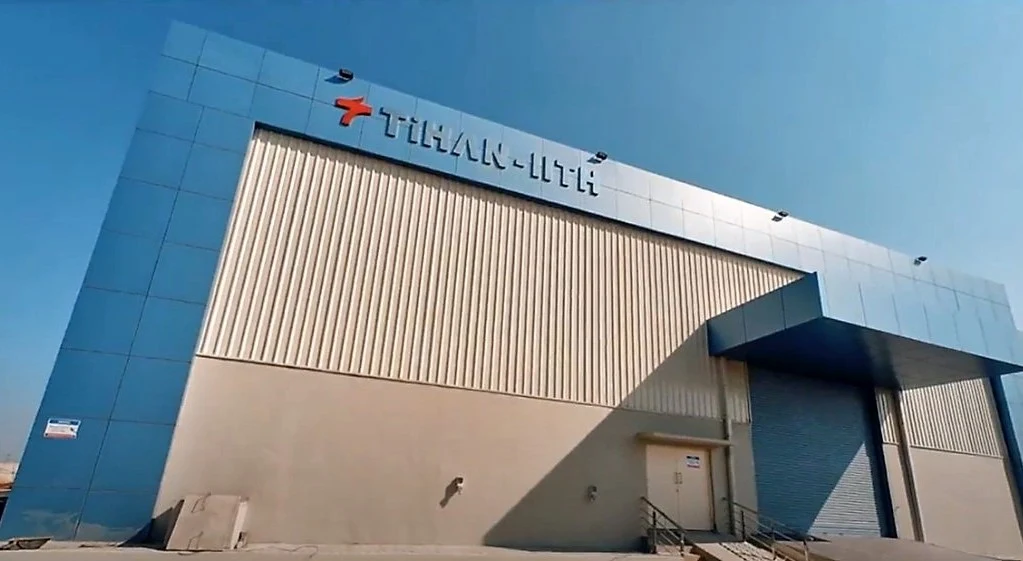
Technology Innovation Hub on Autonomous Navigation (TiHAN) at IITH is a multi-departmental initiative, including researchers from Electrical Engineering, Computer Science and Engineering, Mechanical and Aerospace Engineering, Civil Engineering, Mathematics, Design, Entrepreneurship at IITH with collaboration and support from reputed institutions and industry. A first-of-its-kind integrated testbed on Autonomous Navigations (Aerial/Terrestrial) on the IITH campus was setup, which has state-of-the-art facilities such as Proving Grounds, Test tracks, Mechanical integration facilities like Hangers, Ground control stations, State of the art Simulation tools (SIL, MIL, HIL, VIL), Test tracks/circuits, Road Infra – Smart Poles, signalized & unsignalized Intersections, Environment Emulators like Rainfall Simulators, V2X Communications, Drone Runways & Landing area, Control Test center. TiHAN-IITH is envisaged as the destination for collaborative research for next-generation mobility solutions between academia, industry, and R&D Labs, both national and international. Follow us on Instagram, LinkedIn, Twitter, and Facebook for the latest updates.

To know more, please visit: https://www.tihan.iith.ac.in/

About Tata Technologies:

Tata Technologies is a global product engineering and digital services company focused on fulfilling our mission of helping the world drive, fly, build, and farm by enabling our customers to realize better products and deliver better experiences. Tata Technologies is the strategic engineering partner businesses turn to when they aspire to be better. Manufacturing companies rely on us to enable them to conceptualize, develop and realize better products that are safer, cleaner, and improve the quality of life for all the stakeholders, helping us achieve our vision of #EngineeringABetterWorld. For more, visit us at https://www.tatatechnologies.com/in or learn more here. Follow us on Instagram, LinkedIn, Twitter, Facebook and YouTube for the latest updates. 

Disclaimer

“Tata Technologies Limited is proposing, subject to receipt of requisite approvals, market conditions and other considerations, to make an initial public offer of its equity shares and has filed a draft red herring prospectus (“DRHP”) with the Securities and Exchange Board of India (“SEBI”). The DRHP is available on the website of the SEBI at www.sebi.gov.in as well as on the websites of the book running lead managers JM Financial Limited at www.jmfl.com, Citigroup Global Markets India Private Limited at www.online.citibank.co.in/rhtm/citigroupglobalscreen1.htm, BofA Securities India Limited at www.ml-india.com, the website of the National Stock Exchange of India Limited at www.nseindia.com and the website of the BSE Limited at www.bseindia.com, respectively. Investors should note that investment in equity shares involves a high degree of risk. For details, potential investors should refer to the red herring prospectus (“RHP’”) which may be filed with the Registrar of Companies, Maharashtra at Pune (“RoC”), in future, including the section titled “Risk Factors”. Potential investors should not rely on the DRHP filed with SEBI in making any investment decision.”

TiHAN Foundation at IIT Hyderabad and ICAT To Collaborate in the Area of Autonomous Navigation

TiHAN Foundation at IIT Hyderabad and ICAT To Collaborate in the Area of Autonomous Navigation

  • MoU signed between TiHAN and ICAT for collaboration in R&D on the verticals of autonomous navigation
  • Joint offering for collaboration with industry to work in autonomous navigation utilizing the technical expertise and infrastructure
  • Training and capacity-building programs
  • Startup programs and design challenges, including challenges for problem statements by industry and ministry
A Memorandum of Understanding (MoU) has been signed between the DST NMICPS Technology Innovation Hub on Autonomous Navigation (TiHAN) at IIT Hyderabad (IITH) and the International Centre for Automotive Technology (ICAT) for collaboration in research and development in the emerging field of autonomous navigation. By combining the organization’s strengths and capabilities, this partnership will support the innovation ecosystem, skill development, and entrepreneurship activities in the field of autonomous navigation systems. TiHAN-IITH and ICAT will collaborate to pool their technical expertise, infrastructure, expertise, and experience in the field of technological advancements.

“MoU signing between TiHAN-IITH and ICAT is a wonderful moment which has initiated a long-standing partnership between the organizations. The motto of IITH is Inventing and Innovating in Technology for Humanity, and TiHAN, which has been established with the vision of supporting activities related to Autonomous Navigation, is a feather in the cap of IITH. TiHAN Testbed is a state-of-the-art facility and the first of its kind in the nation for testing and validating different use cases of autonomous vehicles. Our association with ICAT will be a game-changer and will help both TiHAN and ICAT grow significantly together and for the nation”, said Prof B S Murty, Director, IITH.

“The area of focus of TiHAN is a very important subject for the automotive industry currently. Autonomous vehicles are being talked about globally, and levels of autonomy are being implemented in Indian vehicles as well. ICAT is a flagship initiative under the Ministry of Heavy Industries and is focused on developing world-class infrastructure for full vehicle development, automotive testing, and certification. However, there is a void in creating an ecosystem for research and development to deliver services for generating IPs, innovation with Industry -academia collaboration, etc. ICAT is already developing an Incubation centre where the space and services will be provided to entrepreneurs for automotive development and testing. Academic courses in collaboration with IITH and ICAT can also be looked into under this agreement. Though this is a small step, if there is a will and wish, this association can make big ideas possible, beneficial to industry and academia. ”, said Ms Pamela Tikku, Director, ICAT.

Explaining TiHAN- IITH efforts in Autonomous Navigation, Prof P Rajalakshmi, Project Director, TiHAN-IITH, said, “The collaboration would not have been possible without the support and guidance of Prof Murty and Prof Mohan, Advisor-Innovation & Translational Research, IITH. TiHAN at IITH is working towards the vision of being the destination of next-generation mobility solutions providing a collaborative research platform for academia, industry, and R&D labs at both national and international levels. We look forward to timely and relevant collaborations and joint research initiatives with ICAT.”

Speaking about ICAT and future collaborations with TiHAN, Mr Ankit, Manager -Powertrain and Lead ICAT Incubation and Acceleration centre, “Under ASPIRE, ICAT has taken a great initiative of implementing the interventions under the Capital goods scheme of Ministry of Heavy industry for reducing the import into the country. Autonomous navigation is going to have widespread applications across the domains where ICAT and TiHAN can synergize and collaborate. ICAT being a neutral entity and an active contributor to the regulatory framework of the country can seek and facilitate necessary interventions so that the products developed are not only market-ready but can also ensure compliance with the regulations of the country and reduce reiteration of work. Future collaborative works between ICAT and TiHAN include webinars, training and capacity building programs, startups, and design challenges for problem statements from the industry as well as the ministry.”

Fully Electric, Autonomous Shuttles Set to Launch in US in 2024


Benteler Electric Vehicle Systems, Beep and Intel's Mobileye have together announced a strategic collaboration to develop and deploy automotive-grade, fully electric, autonomous movers/shuttles in public and private communities across North America. These shuttles are expected on public roadways in the U.S. starting in 2024.

These electric and autonomous (SAE Level-4 ) shuttles will be built by Benteler EV Systems having Mobileye’s self-driving system called "Mobileye Drive™ ", and supported by Beep’s proven deployment and operations systems, technology and services.

BENTELER Electric Vehicle Systems is an independent business unit of German auto maker Benteler focused on e-mobility systems,

The shuttles will feature 12 to 14 seats and no steering wheel or pedal. The vehicles will be operated in “contained geo-fenced areas” where speed limits are 35 miles an hour or less.

Production will take place in the U.S., with the ambition to roll out these driverless e-shuttles to other countries helping deliver the mobility of the future.

Marco Kollmeier, managing director of Benteler EV Systems GmbH, said, "Autonomous movers are the solution for future public transportation, solving the mobility challenges of increasing urbanization and emissions. These movers need to be robust for 24/7 public or commercial use, at optimized costs and with excellent riding comfort. Consequently, we decided to go for this strategic collaboration with our partners Mobileye and Beep, to build autonomous movers delivering exactly against these market demands. Another example of how we make the mobility of tomorrow lighter, safer and more sustainable."

Mobileye, a market leader in autonomous driving solutions, is already operating in Israel, Germany, Japan, China, France and the U.S. Intel Corp. acquired Mobileye in 2017, for about USD 15 billion. Intel later acquired an another Israel -based mobility startup, Moovit, in 2020 and merged it with Mobileye.

A Fully Autonomous, AI powered Marine Ship with Its Own 7-Limb Robotic Chatbot Assistant


A team of researchers from the marine research non-profit organization ProMare in technology collaboration with IBM built the world’s first Artificial Intelligence (AI) ship, the ‘Mayflower 400’, which is on a mission to be first full-sized marine craft to cross the Atlantic autonomously, relying on artificial intelligence, robotics and clever computer work to cross 3,000 miles of ocean — without even single sailor on board.

A 15-m-long trimaran (a kind of a yacht) that weighs 9 tons, the Mayflower Autonomous Ship (MAS) is a grass roots initiative led by marine research non-profit ProMare with support from IBM and a global consortium of partners

The ship also has its own 7-armed, stowaway octopus chatbot called Artie, which is touted as the world's first AI octopus. Powered by IBM Watson Assistant technology and created in partnership with European start-up Chatbotbay, Artie has been trained to provide information about MAS and its adventures in a lively, and accessible format.

Artie


Users can even help Artie the Octopus fish out surgical masks, cigarette butts and other increasingly common forms of ocean litter from a virtual ocean of facts and data.

Working in tandem with oceanographers and other vessels, MAS provides a flexible, cost-effective and safe option for gathering critical data about the ocean. It can spend long durations at sea, carrying scientific equipment and making its own decisions about how to optimize its route and mission.

The ship has been equipped with a smart captain, an artificial intelligence (AI) technology which can performs a similar role to a human captain. The ship is also installed six high-tech cameras and radars to help the ship learn during its course. The ship, however, is yet to be work at its best under the worst weather conditions.

The so called "AI Captain" can assimilate data from a number of sources, it constantly assesses its route, status and mission, and makes decisions about what to do next. Cameras and computer vision systems scan the horizon for hazards, and streams of meteorological data reveal potentially dangerous storms. Machine learning and automation software ensure that decisions are safe and in-line with collision regulations.

MAS will begin the transatlantic voyage on May 15, 2021 subject to good weather conditions. The initial launch was meant to commemorate the sailing of the original Mayflower that pilgrims from England took to seek a new settlement in America in 1620.


Baidu Launches Driverless RoboTaxi in Beijing

Baidu Apollo Robotaxis move on a street at the Shougang Park in Beijing, Sunday, May 2, 2021. [Image - The Associated Press]


Chinese tech giant Baidu rolled out its paid driverless taxi service on Sunday, making it the first company to commercialize autonomous driving operations in China.

Unlike previous Baidu autonomous driving demonstrations in Beijing, this was the first time there was no safety driver sitting behind the wheel. Instead, a safety member was seated in the front passenger seat to deal with any emergencies.

Baidu is one of the largest Artificial Intelligence (AI) and Internet companies in the world

Up to 10 Apollo “robotaxis” are now operating simultaneously in an area of about 3 square kilometers (1.2 square miles), picking up and dropping off passengers at eight stops in Shougang Park in western Beijing. Each ride costs 30 yuan ($4.60), and is open to passengers ages 18 to 60.

The park is a former site of iron and steel plants that’s been redeveloped into a sightseeing destination and a future venue for the 2022 Beijing Winter Olympics. Although traffic flows aren’t heavy, an influx of tourists was seen in the park on the second day of China’s international labor day holiday.

The robotaxis were repeatedly forced to brake when encountering jaywalkers or curious tourists who came close to the vehicles for photos.

Kelly Wang and her husband, who both work in the artificial intelligence industry, said they had a smooth riding experience.

“I would recommend people experience this. There is a strong sense of technology, because nobody is in the driver’s seat,” Wang said. Her husband was even considering buying such a car for their household.

Passengers can order a robotaxi on an app called Apollo Go. When the taxi arrives, passengers must have their identities verified before getting in. The taxi will start to move after it detects the passengers have fastened their seat belts.

One visitor, Amy Li, still had concerns about autonomous driving, because driving behavior on the road can be complex.

“We’ve all had experiences such as other cars jumping the queue or making a sudden lane change. People have emotions while robots don’t, at least at present,” she said “The robots may not be able to deal with such changes.”

Baidu, known for its search engines, has been testing autonomous driving on the open road since last year. Its Apollo Go robotaxi service has carried more than 210,000 passengers in three cities across China and aims to expand to 30 cities in the next three years, the company said in a press release.

“In the future, Baidu Apollo will launch driverless robotaxis in more cities, enabling the public to access greener, low-carbon and convenient travel services, while continuing to improve the unmanned service process and user experience,” said Wang, vice president and general manager of autonomous driving technology at Baidu in a statement.

Original Source - Associated Press

Atmanirbhar Bharat: India Designs & Develops Its 1st Indigenous Driverless Metro Car


India's Defence Minister, Shri Rajnath Singh, yesterday unveiled state-of-the-art ‘Driverless Metro Car’ for Mumbai Metropolitan Region Development Authority (MMRDA) at a function held at BEML’s Bangalore Complex on 15 January 2021. Indigenously designed & developed state-of-the-art Driverless Metro trains are being manufactured at BEML Bangaluru Complex.

Citing the government’s recent decision to procure 83 Tejas fighter aircrafts from HAL at the cost of nearly Rs. 50 thousand Crore, Raksha Mantri said it will create over 50000 new job opportunities and “about 500 Indian companies including MSMEs as well as private companies will get a business boost with the HAL’s Tejas project.”

Shri Rajnath Singh expressed hope that MMRDA driver-less technology will lead to its expansion into other fields of defence such as tanks and fighter planes in the future. While appreciating BEML, Raksha Mantri termed the company as a true ‘Atmanirbhar Warrior’. He expressed his happiness that the Covid-19 pandemic, which has halted progress across the world, has had almost no impact on the production activities of BEML and DPSUs.


Welcoming Raksha Mantri, Chairman & Managing Director, BEML Dr. Deepak Kumar Hota, said,” Raksha Mantri’s visit to BEML is a true reflection of the unstinted support and encouragement that he is providing to BEML. BEML’s foray into metro manufacturing has been a defining moment for the urban transportation scenario of the country. With a major market share in the country in direct competition with well-established international players, BEML has made its mark as the only Indian company in this high technology field.”

Shri Rajnath Singh also virtually launched the Aerospace Assembly Hangar, situated within BEML’s Bangalore Complex, and unveiled first indigenously manufactured Tatra Cabin by BEML.

Secretary, Defence Production Shri Raj Kumar and other senior officials of MoD and BEML were also present on the occasion.

Market Reports

Market Report & Surveys
IndianWeb2.com © all rights reserved