‏إظهار الرسائل ذات التسميات Smart Farming. إظهار كافة الرسائل

Krish-e, a Mahindra’s AgTech Business Launches IoT Based Smart Kit for Farm Equipment

Krish-e, a Mahindra’s AgTech Business Launches IoT Based Smart Kit for Farm Equipment
With the Krish-e Smart Kit, Mahindra aims to track & digitise every acre & kilometre of rental activity carried out in the country


Krish-e Mahindra’s AgTech business launched the Krish-e Smart Kit (KSK).

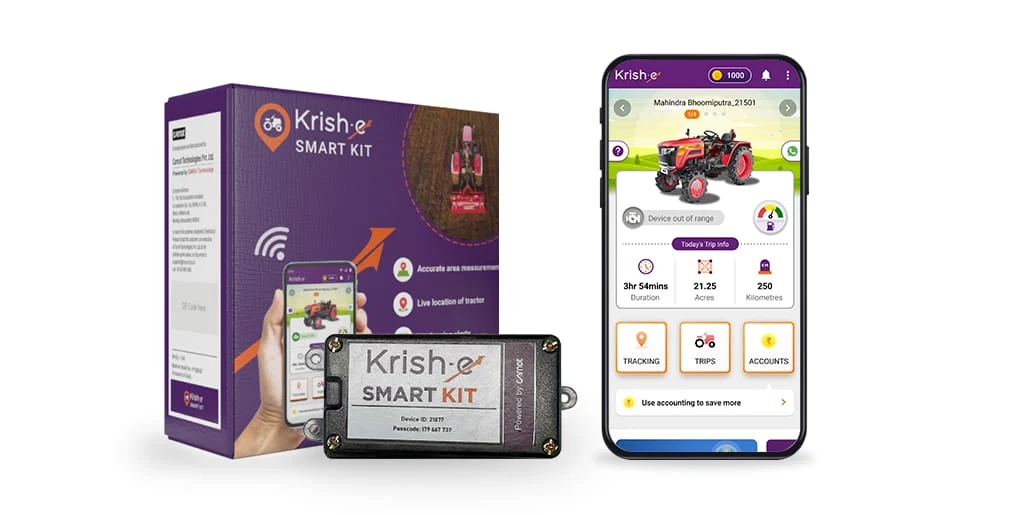
An after-market device, the Krish-e Smart Kit is the first-of-its-kind smart device that provides equipment owners with detailed insights of their tractors and farm equipment, through GPS enabled time tracking and remote monitoring of various parameters from the comfort of a smart phone.

Krish-e Smart Kit


  • Easy tracking of all brands of tractors, harvesters & rice transplanters via a smart phone or desktop 


  • Increases operator revenue with accurate acreage measurement  


  • Reduces fuel cost by monitoring fuel levels and alerting for fuel theft 


  • Tracks total fleet expenses and reduces fleet maintenance cost


  • Increases equipment security through geofencing alerts


  • Offers advanced trip replay features


  • Retails at an introductory price of INR 4,995


A cutting-edge offering, the Krish-e Smart Kit is developed by Carnot Technologies, an Ag-Tech start-up, founded in 2015 by four alumni from IIT Bombay in their mid-20s, who as part of the IITB racing team, developed solutions to monitor the performance of race vehicles from the pit. Today Carnot Technologies is engaged in manufacturing and retailing products and services related to internet-connected devices for monitoring performance of vehicles and equipment, with M&M Ltd. having acquired a significant stake in the company.

Krish-e, a Mahindra’s AgTech Business Launches IoT Based Smart Kit for Farm Equipment

The Krish-e Smart Kit enables equipment owners and rental entrepreneurs to sustainably improve fleet performance, improve incomes and manage maintenance costs, while reducing tractor downtime and preventing unauthorised usage of their tractors. The Smart Kit also includes an advanced trip replay feature for tracking commercial transportation and trolley activity.

The kit is brand agnostic and can be installed on any new or old brand of tractor or farm equipment, such as harvesters, rice transplanters and self-propelled sprayers. The kit is paired with an app called the Krish-e Rental Partner App and is available on the Google Play Store. In addition to tracking and monitoring, the app also offers users access to an inventory of high-end farm machinery on a pay per use basis

Ramesh Ramachandran – Senior Vice President and Head Krish-e – Farm Equipment Sector, M&M Ltd. said, “An industry first aftermarket IoT solution, the Krish-e Smart Kit presents the smartest, most affordable and sustainable way for farmers and businesses to connect and monitor their farm equipment on the go. In its scale-up phase, with over 25,000 active users we will officially launch the Krish-e Smart Kit. Besides farmers, we invite institutions, FPO’s, government bodies and start-ups in the state to partner with us on this connected journey as we aim to digitise every acre and kilometre of rental activity. Going forward we aim to become the leading provider of connectivity for farm equipment in India.”

Pushkar Limaye – CTO, Carnot Technologies commented, “With a vision of building world-class products out of India, we came up with a small plug-and-play device for tractors to help improve their productivity using IoT, with real-time updates on smartphones. And today we are glad to see over 25,000 kits having already helped farmers digitise their businesses and adding real value on ground. And today with the official launch of the Krish-e Smart Kit, together with Mahindra, we aim to digitise Indian farming with an India-based solution, while reaching a larger audience of tractor owners and rental business owners."

So far Krish-e has over 25,000 active subscribers, 85% DAU (daily active users), spending about 55 minutes per day on the app (in season), with 70% resubscriptions post expiry of the free subscription period.

Individual farmers, institutional buyers, FPOs, and start-ups can purchase the Krish-e Smart Kit from the nearest Krish-e center, the Krish-e website, or Krish-e Sahayaks by calling 1800-266-1555 at an early bird price of INR 4,995 (including taxes and a six-month subscription package for the aforementioned services).

Launched in 2020, Krish-e is a new business vertical from Mahindra. Krish-e offers technology driven services, to minimise income potential of farmers and other value chain players sustainably. Carrying the tag line – ‘Expert Takneek. Naye Upay. Parinaam Dikhaye’, Krish-e services currently focus on the areas of Farm Advisory, Equipment Rental & Used Equipment through an omni channel presence which includes 150 Krish-e centers and app-based touch points.

Krish-e efforts have been recognised and included in the World Economic Forum’s (WEF’s) January 2023 White Paper on “Accelerating Business Action on Climate Change Adaptation” as an example on how businesses can collaborate with communities to ensure the sustainability of critical natural resources.

About Mahindra

Founded in 1945, the Mahindra Group is one of the largest and most admired multinational federation of companies with 260,000 employees in over 100 countries. It enjoys a leadership position in farm equipment, utility vehicles, information technology and financial services in India and is the world’s largest tractor company by volume. It has a strong presence in renewable energy, agriculture, logistics, hospitality and real estate.

The Mahindra Group has a clear focus on leading ESG globally, enabling rural prosperity and enhancing urban living, with a goal to drive positive change in the lives of communities and stakeholders to enable them to Rise.
Agritech Startup Fasal Wins Patent for Fasal Kranti, a Solar-powered IoT Device for Precision Farming

Agritech Startup Fasal Wins Patent for Fasal Kranti, a Solar-powered IoT Device for Precision Farming

Fasal, India’s earliest full-stack agri-tech solutions company, today announced that it has won a patent for its innovative solar-powered IoT device for precision farming — Fasal Kranti. The patent, granted by the Indian Patent Office, recognizes Fasal Kranti for its innovation, novelty and application. 

With this, Fasal becomes the first company in India to offer a patented precision farming device for horticulture farmers.

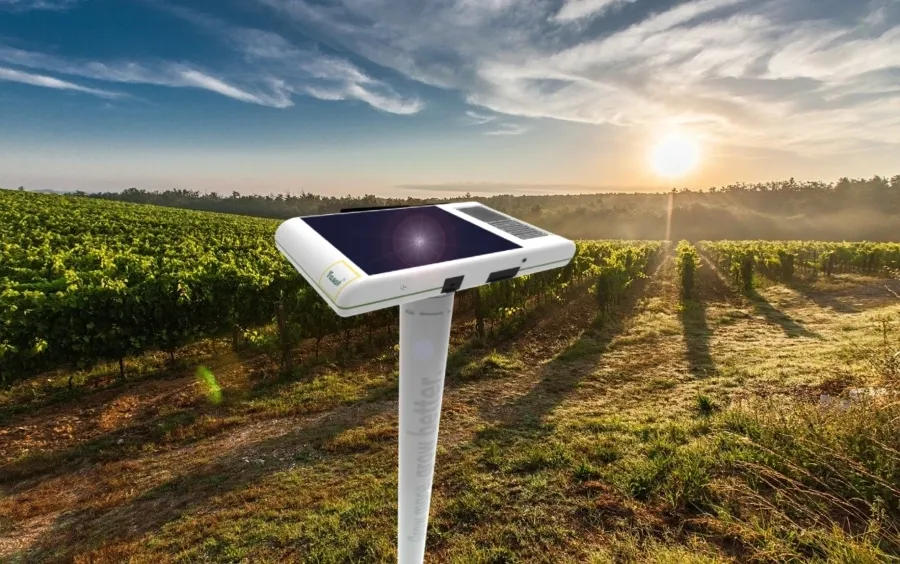
The plug-and-play Internet of Things (IoT) device, Fasal Kranti, which runs on solar and battery power, is installed in horticulture farms (fruits, vegetables, flowers, etc). Through its sensors, it measures various farm level macroclimatic, microclimate conditions along with rainfall, soil moisture, soil temperature, wind direction, leaf wetness, etc. The data collected from the hardware device is processed into actionable advisories for farmers using agronomic models, Artificial Intelligence (AI) and Machine Learning (ML). Horticulture farmers are then alerted on these farm-specific advisories via an app on their mobile phones — lending them a comprehensive picture of their farms.

Fasal Kranti

Fasal Kranti
Fasal Kranti IoT Device

Fasal Kranti provides disease and pest control preventive assistance by alerting farmers on which treatment to use and when to use it. Its irrigation advisory helps save water, allowing farmers to provide their farms with the right amount of water required at the right time. 

By equipping farmers with crop intelligence, Fasal has impacted 50,000 plus acres of farm land across the country mitigate production risks and achieve higher yields and profitability. 

Since its inception in 2018, Fasal’s real-time insights have helped farmers collectively save 10 billion litres of water (about 30-50% lower irrigation water use), achieve upto 15-30% reduction in pesticide costs and about 15-30% rise in yield — thereby empowering farmers to achieve predictable incomes. Through Fasal, farmers have been able to achieve upto 40% increase in their incomes.

Shailendra Tiwari & Ananda Verma - Fasal Founders


Commenting on the patent win, Ananda Verma, the Founder and CEO of Fasal, said, “The grant of patent for Fasal Kranti, which has been in development by our team since March 2019, is a testament to Fasal’s commitment to innovation and supporting farmers with actionable farm-level advisories. For generations together, farmers have relied upon guesswork in farming — leading to unpredictable yields and incomes. Fasal Kranti’s tech-backed insights eliminate the unpredictability to bring higher yields and predictable incomes. We are driven to take Fasal Kranti globally to many more farmers and look forward to helping them grow more and better."

Fasal Kranti has also won the IMARK 2021 award by India Design Mark. The company has also won the Next Gen Product of the Year 2021 award by NASSCOM.

More About Fasal

Fasal is India’s earliest full-stack agritech solutions company. It helps horticulturists reduce the cost of cultivation and increases quality and yield through its AI-powered patented IoT device, Fasal Kranti, that delivers farm-level actionable advisories. Through precision farming, Fasal aims to remove guesswork out of farming and empower horticulture farmers with predictable incomes. 

The company propagates sustainable horticulture practices and solutions that impact the social, economic, and environmental facets, thereby making a big impact on the UN's Sustainable Development Goals. Started in 2018 by Ananda Verma and Shailendra Tiwari, the company is on a mission to drive a horticulture-led farming revolution globally.

To Increase Agriculture Productivity Ambee Brings Data Science to Farming, Launches ‘SmartFarming Data’, an Environmental Intelligence Suite

Ambee Brings Data Science To Farming, Launches ‘SmartFarming Data’
Representational Image (credits - Thomas Richter on Unsplash)

Ambee launches ‘SmartFarming Data’ to increase agriculture productivity using environmental intelligence

Ambee’s ‘SmartFarming Data’ ​​is a suite of agro-weather, satellite imagery, and farm analytics that help farmers monitor and manage farms.

Ambee, an environmental intelligence company that supplies hyperlocal environmental data in real-time, has launched ‘SmartFarming Data’, a new offering that brings data science techniques to farmers and agribusinesses to improve the health of their farms. ‘SmartFarming Data’ by Ambee will help farmers understand their farms better, mitigate the impact of climate change on agriculture, take measures to monitor and mitigate soil degradation, and increase agricultural productivity using environmental data.

A recent report by the United Nations indicates that the world population is expected to grow to 10 Billion by 2050. According to the same report, the world loses around 12 million hectares of productive land each year, resulting in widespread implications such as poor agricultural yields, food scarcity, forced migration, and more. Year-on-year there has been a 40% decline in crop yield and crop quality due to depleting soil nutrition, climate change, and intensive farming techniques that cause significant greenhouse gas emissions.
 
SmartFarming Data - Ambee

There is a dire need to confront the requirement of increased agricultural production to feed a growing population. The answer as we have come to realise is not aggressive over farming, but sustainable agricultural practices while soldiering through climate change, depletion of natural resources, increased erosion, and more. We have to ensure access to a sufficient supply of healthy, diverse, and safe food for a growing global population while limiting the impact on the environment and coping with climate change. In order to do so, we need to adopt better and smarter farming techniques that not only improve production capacity but also minimise the overuse of water resources, chemicals, and other unsustainable practices that impact the environment.

‘SmartFarming Data’ by Ambee has been designed with a two-fold goal in mind - one, to increase agricultural productivity using environmental data, two, to assist in the implementation of sustainable farming practices to reduce the environmental impact of agriculture. The product provides historical and forecast agro-weather data to improve crop yield, detailed soil data to monitor soil productivity and mitigate the impact of climate change on agriculture. Furthermore, the product can also be used by agri companies to make critical business decisions based on historical and forecast yield quality, and researchers can use SmartFarming Data to find solutions to agricultural concerns.

Commenting on the new offering, Madhusudhan Anand, CTO and Co-Founder, Ambee, said, “The impact of climate-related events is universal. It affects everyone, everywhere, and in every industry. Among the many possible concerns caused by climate change, the threats to global agriculture stand out as one of the most serious. It impacts agricultural yield which will, in turn, cause severe food shortages. The food and agriculture organisation of the United Nations states that the global supply of food will need to increase by 70% by 2050 to meet the demands of the growing population. In order to cater to this demand, farmers need to have an informed and intimate understanding of their fields while ensuring efficient and responsible utilisation of natural resources.”

“At Ambee, we are on a mission to address the interlinked challenges of food security and climate change. Through our ‘SmartFarming Data’, our goal is to create easy access to environmental intelligence to help our farmers grow more with efficient utilisation of natural resources'' added Madhusudhan Anand.

Product features of ‘SmartFarming Data’
  • Hyperlocal agro-weather data: Historical and forecast weather data to improve yield.
  • Satellite imagery: Satellite images in true and false colours, high resolution, and downloadable formats.
  • Real-time soil data: Soil data to monitor soil fertility, control moisture, and temperature level.
  • NDVI data: NDVI (Normalised Difference Vegetation Index) and EVI (Enhanced Vegetation Index) are typically used to identify vegetation greenness. Ambee’s ‘SmartFarming Data’ offers NDVI and EVI data to assess vegetation health and behaviour.
Sectors using ‘SmartFarming Data’
  • Farmers and Agricultural companies can use ‘SmartFarming Data’ for output enhancement and predictability.
  • Crop insurance providers and financial lending institutions can use this for risk prediction and management.
  • Government agri agencies and advisory can use this information for output predictability and implementation of sustainable agriculture practices.
  • Seed production companies can use this information for quality maximization.
For more details visit: https://www.smartfarmingdata.com/

GreenSat Innovation Labs Inks MoU with Gramin Vikas Trust & IndiaHub e-Governance To Launch A Smart Farmer Producer Organization (FPO) Initiative


  • The Smart FPO model will provide farmers with complete end to end tech-support through the GreenSat Innovations and IndiaHub app right from gathering information, to connecting farmers with financial service providers
  • The targeted project size for 2021-22 is 100 FPOs with 500 FPOs planned for each successive year
  • GreenSat aims to on-board 5 lakhs farmers by March 2022
Mumbai, July 8th 2021: GreenSat Innovation Labs Pvt. Ltd. a leading agritech company signed an MoU with Gramin Vikas Trust (GVT), a rural welfare organization, and IndiaHub e-Governance Pvt. Ltd., an innovation-driven start-up, as a technology partner for their Smart FPO (Farmer Producer Organization) initiative.

Under the initiative, the GreenSat Innovation App will offer end-to-end support that extends from precision farming to banking, market linkages, and innovative crop insurance products. In addition, it will offer direct access to National Commodity and Derivatives Exchange (NCDEX) wherein the latter will offer a commodity trading platform for the bigger FPOs, providing farmers with direct access to the market.

The targeted project size for the first year (2021-22) is 100 FPOs with 500 FPOs planned for each successive year. More than 10,000 farmers have already signed up for the project with an additional 5,00,000 farmers expected to be on-boarded by March 2022.

Speaking about the initiative, Deepak Yadav, Founder, GreenSat Innovation Labs Pvt. Ltd., said, “At GreenSat our focus has been on utilizing the power of technology and data to offer innovative solutions to our farmers. We believe that technology is the game-changer that can revolutionize agriculture, removing bottlenecks that have crippled the sector for decades. This partnership is the result of our determination to offer complete end-to-end solutions for farmers where they can find information, finance, insurance cover, and a market for their products. We are glad that Gramin Vikas Trust (GVT) picked us as their partner for this project with their proven track record in successfully implementing rural welfare projects. IndiaHub shares our passion for utilising technology to bring sustainable solutions for farmers. Together, we hope to revolutionize farming as we know it, providing farmers with a single platform for all their requirements."

Co-curated by GreenSat Innovation Labs Pvt Ltd, the initiative is aimed at developing an Atmanirbhar Kisan - Smart FPO model to offer low-cost user-friendly technology to address the four major challenges faced by most farmers today, namely, crop management, gathering funds, ensuring adequate insurance cover, and market linkages for sales. These challenges will be addressed through two of GreenSat’s innovative tech-based solutions, namely, precision farming services and its faceless agri-banker concept.

Shri Shiv Shanker Singh, Chief Executing Officer, Gramin Vikas Trust further explained, “When GreenSat approached us with the Smart FPO initiative, we immediately realised that it would fit with

GVT’s vision of bringing sustainable improvement into the lives of our rural poor and marginalised communities. It would bring the power of technology to our farmers’ doorstep, providing them with critical information, while connecting them with much-needed financial and market support. With this comprehensive support on one platform, it will also help in transforming rural communities, giving people the power to harness technology and bring change into their own lives."

The app will offer users access to both precision farming services and the faceless agri-banker concept. Precision farming services will offer farmers critical information such as weather forecast, detection of diseases and pests, crop growth monitoring, nutrient tracking, irrigation management, and agri-doctor assistance. The faceless agri-banker concept integrates all financial support services in one place, including, loans, insurance, sales, commodity research, and access to NCDEX.

Elaborating on the initiative Mr. Shekhar Tyagi, Director Operations, IndiaHub E-Governance Pvt. Ltd., added, “We have already seen the power of data and technology in the corporate sector. Today, no business decision is taken without a careful analysis of all the data available. The Smart FPO initiative takes these essential tools to the agricultural sector, giving farmers critical support in every aspect, from crop management to trading in commodities. With all the necessary data at their fingertips, they can make informed decisions in areas like procuring finance or connecting with the nearest markets. It will also help them avoid the pitfalls that have plagued the sector, such as lack of insurance and poor market linkages."

The project will initially be marketed in, Haryana, Gujarat, Himachal Pradesh, Rajasthan, Uttar Pradesh, Madhya Pradesh, Chhattisgarh, Bihar, Jharkhand, Odisha, Telangana, Andhra Pradesh, West Bengal, Sikkim, Assam, Meghalaya, Mizoram, Arunachal, J&K and Nagaland.

Fluence Launches New Modules of LED VYPR Top Light Series with Innovated PhysioSpec™ Spectra for Greenhouse Cultivators

Fluence by OSRAM (Fluence), a leading global provider of energy-efficient LED lighting solutions for commercial agriculture production, announced today the launch of four additional spectra on its VYPR top light series, featuring market-leading efficacies up to 3.8 mol/J. From broad white to high red, Fluence's extended PhysioSpec™ spectra enable growers to optimize lighting strategies for any crop in any growth stage or geographic location.

"In our relentless pursuit of innovative lighting solutions for crop cultivation, we've conducted in-depth research on plant response under various spectra with a range of crops," said David Cohen, CEO of Fluence. "One of the biggest challenges for cultivators around the world is the ability to tailor lighting strategies to their specific crops and environments. We're excited to help them solve that challenge with a greater variety of light spectra to meet their unique needs."

With expanded PhysioSpec™ spectra, the VYPR top light series offers higher efficacies (up to 3.8 mol/J) and higher photosynthetic photon flux (PPF) (up to 2330 mol/s) per fixture over comparable lighting technologies.

The PhysioSpec™ BROAD spectra offers continuous spectral emission across PAR 400 to 700 nm wavelength range, balancing energy efficiency with quality of light for desired plant response and human work environment.

The PhysioSpec™ DUAL spectra features red and blue spectral emission bands that maximize energy efficiency, helping to reduce energy costs and operational expenses for growers.

The latest VYPR top lighting system also features a patented thermal management technology, more compact and efficient power supplies, three new mounting options for flexible installation and new reflectors. Built for greenhouses and high-bay indoor cultivators producing year-round, the VYPR series enables growers to maintain predictable production, increase crop yields and improve plant quality compared to conventional production systems.

"Growers have the best understanding of their crops in their respective cultivation environments," said Timo Bongartz, Fluence's General Manager for Europe, Middle East and Africa. "Choosing and implementing a supplemental lighting strategy should be a collaborative process. With our expanded spectra and new top light features, we are empowered with more tools to help our customers achieve their growing targets, enabling growers to save energy when possible, optimize light uniformity and increase light levels."

About Fluence by OSRAM

Fluence Bioengineering, Inc., a wholly-owned subsidiary of OSRAM, creates the most powerful and energy-efficient LED lighting solutions for commercial crop production and research applications. Fluence is committed to enabling more efficient crop production with the world's top vertical farms and greenhouse produce growers. Fluence global headquarters are based in Austin, Texas, with its EMEA headquarters in Rotterdam, Netherlands.

For more information about Fluence, please visit www.fluence.science.

Vertical Farming Envisages Profitable and Suitable Agriculture Business

A silent revolution is underway in the agriculture sector which is going to be quite evident in the days to come. With the global population is set to reach near 10 billion mark by 2050 the food production must increase by 70 per cent estimates the United Nations.

[caption id="attachment_140599" align="alignleft" width="355"] Dr. Shivendra Bajaj Executive Director of Federation of Seed Industry of India (FSII)[/caption]

However there is a global appeal seeking restrictions on the forests getting converted into the farmlands in the wake of global warming.

There comes the need of technological innovation in the farming processes. And the idea of vertical farming is among them. It is in the accordance with the principles of sustainable development which beseeches judicious use of environmental resources.

Vertically farming is a practice of growing crops in vertical stacked layers in controlled-environment.

It does not just reduce the requirement of water but also increases yield and ability to cultivate a larger variety of crops.

The concept of indoor vertical farming facilitates cultivation of all crops even those that are not suitable to the local climatic conditions. It means growing tomatoes near Delhi or potatoes near Chennai.

According to the Food and Agriculture Organisation of the United Nations (FAO) the vertical farming system consumes 75 per cent less raw material than traditional farming and just 60 watt of power daily to grow 150 kg of vegetables in a month.

To obtain this quantity vertical farming needs just 6 m2 space while traditional farming requires at least 72 m2land area. Also the requirement of water would be just 12 L to produce 1 kg of vegetables due to recycling as against 300-400 L under traditional farming.

More importantly the vertical farming ecosystem holds a key to the major problem of weather-related crop losses.

Effects of climate change such as erratic rain events prolonged droughts and frequent floods in the country are causing farmers to incur heavy financial losses.

There have been many instances when ready-to-harvest crops were destroyed due to the unseasonal rains.

Plants can be grown indoors with or without soil under vertical farming which assures the protections from unruly winds incessant rains dry climate.The key environmental elements such as light temperature humidity and micro-nutrients are controlled to optimize plant growth.

Vertical farming can be carried out in the areas with scarcity of water as well as in urban areas as it can be set up in small plots.

There are a few different gardening methods. The most dominant is hydroponics in which the roots are submerged in water infused with nutrients.

Another method is Aeroponics. It has potential to reform the farming practices in the drylands and drought-prone areas as plants are grown in mist environment with no soil and very little water.

Some research say plants grown with the Aeroponics method uptake more nutrients such as vitamins and minerals. It translates into healthier plants and higher yield.

Vertical farming facilitates more crop cycles compared to that through conventional ways.

The fruits vegetables grown in vertical farming are fresh nutritious and safe as they are grown in controlled environment with least possible exposure to contaminants

From the view of reducing carbon foot print the food procured locally reduces food miles- roughly means the distance the agriculture produce has travelled to reach your plate.

If fruits and vegetables are imported or procured from far away locations the transportation leads to higher carbon emissions.

Transportation and agriculture are among the largest five emitters of green houses gases finds the Emission Gap Report ndash; 2019 of the United Nations Environment Programme (UNEP).

One may think that vertical farming also leads to emissions as it requires energy for indoor lighting and air-conditioning.

However the high-efficiency lighting low-carbon electricity nano cost climate control can even achieve a relatively low carbon footprint. Additionally the higher crop yield offsets the emissions caused to operate indoor vertical farming unit.

Many entrepreneurs in India and other parts of the worlds have found interest in the concept of vertical farming. It is a profitable business that promotes the sustainable development - a win-win situation for all.Vertical farming is set to herald a new era of urban and compact agriculture sectors.

Cisco to bring Benefits of IoT & Data Science to Kerala Farming Communities

Global computer networking giant Cisco has signed an MoU with the Kerala State IT Mission (KSITM) to bring the benefits of digital technology including Internet of Things (IoT) and data science to farming communities in Kerala, as part of its Country Digitization Acceleration (CDA) programme.

The first phase of this initiative will be rolled out in 15 panchayats across Kannur district.

As per the the MOU, Cisco will build an Agri-Digital Infrastructure (ADI) Platform and set up Village Knowledge Centres (VKCs) for knowledge delivery and provide access to e-learning and advisory services to the farming and fishing communities in Kannur.

The ADI Platform will provide access to a datastore with complete farming data of paddy and prawns farms in the region along with land and farmer profile databases.

This datastore will run Cisco's robust analytics and computer engines to extract insights on crop yields, weather patterns, plant disease patterns, soil quality, moisture content, forecasting and other data, and make it available to farmers and government officials through the VKCs.

This Cisco ADI Platform, which will eventually become a centralised knowledge hub, will provide data-based recommendations and insights to improve agriculture planning, reduce the risk of crop mortality and overall operational costs.

To provide a a custom-built Smart Agricultural Platform to Kerala farmers, the ADI Platform will utilize IoT sensors, Non-IoT databases, and satellite/UAV images to gather and relay real-time intelligence on soil content, moisture, weather conditions and other parameters.

The Village Knowledge Centres (VKCs) will allow farmers to access essential information on government policy updates, crop advisory services, market trends, rates and best practice videos. Farmers will also gain accessibility to government-provisioned financing on a Content Management System through a mobile application and web portal.

Cisco’s Harish Krishnan said the impact of technology can be transformational for those who need it most, elevating standards of living and foster economic development.

M Sivasankar, IT Principal Secretary, said the government's vision is to turn the state into a knowledge society with sustainable economic growth, technological advancements and better quality of life for all.

To recall, in 2016 Cisco had signed an MoU with Gujarat International Finance Tec-City (GIFT), and iCreate, to establish an Internet of Things (IoT) Innovation hub in order to accelerate digital transformation progress in the state of Gujarat.

Source - Mathrubhumi

With Growing IoT Systems in Agriculture, Farmers & Businesses Want To Resolve Security Concern as Primary Challenge

Today’s farmers confront a set of difficult challenges such as an increasing worldwide demand for food, a changing climate and a limited supply of water, fossil fuels and arable land. Against this backdrop, Internet of Things (IoT) is empowering the digital transformation of the agriculture industry. While IoT systems in agriculture are growing exponentially, security issues have emerged as a major cause of concern for agribusinesses, says leading data and analytics company GlobalData.

The company’s 2017 IoT project insight survey reveals that with the concept of smart farming and digitization, IoT is gaining a significant popularity with the potential to offer high precision crop control, data collection, and automated farming techniques. However, the farming and food chain data being generated with the implementation of IoT by farming machinery creates more entry points for hackers and leaves sensitive information vulnerable.

As a consequence, many customers are now concerned about data ownership, privacy and security, which often lead to lack of confidence among customers. This reflects in the survey findings, which show that 26% of the agribusinesses cite resolving security concerns as the most significant challenge for them.


Also Read - Tel Aviv University and Tata Trusts Join Hands to Bring Israeli Tech to Indian Farmers

Alok Singh, Senior Analyst at GlobalData, comments: “IoT technology in agriculture has opened up new avenues for security incursions, with more complex and sprawling connections between components. Not entirely does each component represent an opportunity for exploitation, but, as technologies and deployments changes, they bring new threats to each component and to the overall IoT ecosystem.”

The survey further highlights that justifying the overall cost and return on investment (ROI) is another vital challenge, as 16% of respondents are not clear about the costs and ROI they’re going to get from IoT implementations.

Singh concludes: “While IoT systems in agriculture are growing exponentially, security issues are also surfacing at a high rate. IoT security ought to be a blend of complex security strategies and activities that must be implemented at all levels of IoT architecture. Moreover, IoT security frameworks have to be dynamic, being fit for self-learning in light of the fact that new threats to IoT appear every day.”

[Top Image - ForbesIndia.com]

With Growing IoT Systems in Agriculture, Farmers & Businesses Want To Resolve Security Concern as Primary Challenge

Today’s farmers confront a set of difficult challenges such as an increasing worldwide demand for food, a changing climate and a limited supply of water, fossil fuels and arable land. Against this backdrop, Internet of Things (IoT) is empowering the digital transformation of the agriculture industry. While IoT systems in agriculture are growing exponentially, security issues have emerged as a major cause of concern for agribusinesses, says leading data and analytics company GlobalData.

The company’s 2017 IoT project insight survey reveals that with the concept of smart farming and digitization, IoT is gaining a significant popularity with the potential to offer high precision crop control, data collection, and automated farming techniques. However, the farming and food chain data being generated with the implementation of IoT by farming machinery creates more entry points for hackers and leaves sensitive information vulnerable.

As a consequence, many customers are now concerned about data ownership, privacy and security, which often lead to lack of confidence among customers. This reflects in the survey findings, which show that 26% of the agribusinesses cite resolving security concerns as the most significant challenge for them.


Also Read - Tel Aviv University and Tata Trusts Join Hands to Bring Israeli Tech to Indian Farmers

Alok Singh, Senior Analyst at GlobalData, comments: “IoT technology in agriculture has opened up new avenues for security incursions, with more complex and sprawling connections between components. Not entirely does each component represent an opportunity for exploitation, but, as technologies and deployments changes, they bring new threats to each component and to the overall IoT ecosystem.”

The survey further highlights that justifying the overall cost and return on investment (ROI) is another vital challenge, as 16% of respondents are not clear about the costs and ROI they’re going to get from IoT implementations.

Singh concludes: “While IoT systems in agriculture are growing exponentially, security issues are also surfacing at a high rate. IoT security ought to be a blend of complex security strategies and activities that must be implemented at all levels of IoT architecture. Moreover, IoT security frameworks have to be dynamic, being fit for self-learning in light of the fact that new threats to IoT appear every day.”

[Top Image - ForbesIndia.com]

Market Reports

Market Report & Surveys
IndianWeb2.com © all rights reserved