Showing posts with label Internet. Show all posts

Cloudflare Launches Precursor, a First Privacy-First Defense Platform Against Bad Bots

Cloudflare Launches Precursor, a First Privacy-First Defense Platform Against Bad Bots
  • Built on one of the world’s largest networks, Precursor is the only defense of its kind to replace disruptive checkpoints to stop evasive bots without slowing down users
Cloudflare, Inc. (NYSE: NET), the leading connectivity cloud company, today announced the general availability of Precursor, a next-generation, continuous behavioral validation engine for bot management. Built directly on Cloudflare’s edge, Precursor runs seamlessly inside web browsers to monitor entire user sessions in order to detect bot automation. Unlike traditional, static CAPTCHAs, it analyzes ongoing interactions in real time to catch advanced bots, improving detection precision without interrupting legitimate users.


For the first time, automated bot traffic has eclipsed human activity on the Internet, now generating roughly 57% of all web requests. This milestone emphasizes a seismic evolution from an Internet built for human clicks to a digital landscape now dominated by AI agents. For organizations and everyday consumers, this means that legacy defenses are blind to a new breed of automated threats that drive up infrastructure costs, manipulate inventory, and compromise data. While a modern bot can easily fake a single action to pass a one-time security check, replicating an entire human journey remains a massive engineering hurdle. To protect the integrity of the global Internet, organizations must move away from static, point-in-time defenses and embrace continuous behavioral validation - analyzing telemetry across an entire session to unmask automated imposters trying to blend into the crowd.

"Traditional security checks look at a single moment in time, but modern bots have gotten smart enough to fake their way through the front door," said Dane Knecht, CTO of Cloudflare. "Instead of just checking an ID at the gate, we are looking at behavior over the entire visit. This makes life seamless for real users, while making it incredibly difficult and expensive for bad actors to fake human behavior. Cloudflare already protects users billions of times a day at critical moments like login and checkout, but until now, the space between those moments was a black box. With Precursor, we’re now eliminating that blindspot."

Now generally available, Precursor provides a session-level view of site activity by continuously collecting robust browser signals to block unwanted automated traffic through:
  • Privacy-Led Defense: Built to protect end user confidentiality, Precursor logs aggregate behavioral patterns rather than recording specific user inputs. For example, keyboard activity is recorded exclusively as timing rhythm and cadence - never capturing actual keystrokes.
  • Zero-Code, One-Click Setup: Precursor is enabled with one click, automatically allowing Cloudflare to inject a compact, dynamic script passing through the network, requiring no modifications to underlying code. The script evaluates interaction trail dimensions such as mouse movement, scrolling rhythm, typing cadence, clipboard activity, and page visibility duration.
  • A Real-Time Analysis Engine: Cloudflare's servers instantly unpack the telemetry data sent from a user's browser and scan it for signs of faked or computer-generated activity. We then validate whether interaction streams map rationally to human behavior, such as cross-referencing that pointer activity aligns with page visibility or text fields are focused during typing events.
  • Session-Long Security Measures: Unlike traditional defense challenges that reset per every request, Precursor continuously evaluates the visitor’s user journey across a web or single page application. Automated agents cannot reset their behavioral signatures by refreshing a page, allowing defensive algorithms to adjust a session's Bot Score with compounding context.
To learn more, please check out the resources below:

Blog: Introducing Precursor: detecting agentic behavior with continuous client-side signals


Cloudflare Precursor

About Cloudflare

Cloudflare, Inc. (NYSE: NET) is the leading connectivity cloud company. It empowers organizations to make their employees, applications and networks faster and more secure everywhere, while reducing complexity and cost. Cloudflare’s connectivity cloud delivers the most full-featured, unified platform of cloud-native products and developer tools, so any organization can gain the control they need to work, develop, and accelerate their business.

Powered by one of the world’s largest and most interconnected networks, Cloudflare blocks billions of threats online for its customers every day. It is trusted by millions of organizations – from the largest brands to entrepreneurs and small businesses to nonprofits, humanitarian groups, and governments across the globe.

Learn more about Cloudflare’s connectivity cloud at cloudflare.com/connectivity-cloud. Learn more about the latest Internet trends and insights at radar.cloudflare.com.

Cloudflare Collaborates With Leading Browsers to Develop a Privacy-First Protocol For the Global Internet

Cloudflare Collaborates With Leading Browsers to Develop a Privacy-First Protocol For the Global Internet

Cloudflare, Inc. (NYSE: NET), , the leading connectivity cloud company, today announced a new initiative with major Web browsers - Mozilla Firefox, Google Chrome, and Microsoft Edge - committing to developing and submitting for standardization a privacy-preserving protocol to help humans and bots prove that their traffic is not malicious. As the Internet shifts from human-driven clicks to agent activity, website operators must now figure out how to stop aggressive automated traffic, without resorting to invasive tracking. This initiative will lay the foundation for a more frictionless, secure, and private experience for every Internet user and website owner alike.

“The way we interact with the Internet is facing a fundamental shift. Normal everyday tasks like ordering food previously required a user to personally navigate menus and payment gateways. Now, autonomous agents are starting to orchestrate these workflows on behalf of people," said Dane Knecht, CTO of Cloudflare. "As AI-powered traffic becomes widespread, existing tools to support its use are too generic and coarse. Now this collaboration lets us eliminate the friction caused by security protocols for every visitor - whether they are human or agent - without sacrificing privacy."

For decades, website operators have relied on a patchwork of imperfect defense mechanisms to manage automated abuse, but these imperfect techniques are increasingly failing to keep pace with modern threats. Now, with the explosion of Generative AI, the battlefield has shifted yet again. Malicious automation is more widespread, sophisticated, and economically damaging to site owners. As we move toward an era of agentic AI, the line between human behavior and bot activity is blurring, leaving the digital world with an unprecedented privacy problem. When websites attempt to verify that a request originates from a legitimate human or authorized bot, the traditional solutions - forced logins and invasive tracking - compromise user trust.

“In commerce, every extra challenge, delay, or false positive can turn a purchase into an abandoned cart. Merchants need effective protections against automated abuse, but buyers shouldn’t have to pay for them with unnecessary friction or invasive tracking. Shopify is proud to help develop PACT as an open, privacy-preserving standard that can help the millions of businesses on our platform distinguish legitimate shoppers and authorized agents from abusive traffic while preserving buyer privacy." – Ilya Grigorik, Distinguished Engineer at Shopify.

Private Access Control Tokens (PACT) are designed to allow sites with strong knowledge of “personhood” to issue anonymous tokens. A user's browser can then provide these tokens to other sites to prove that a human is in the loop, reducing the need for annoying and clunky captchas or invasive tracking. PACT is designed so that sites cannot leverage it to track or identify users or their browsing history.

"The health of the web depends on effective, interoperable, privacy-preserving tools that enable sites to combat abuse without unnecessary user friction. Microsoft is excited to collaborate on developing new standards and helping ensure their deployment across the open web." – Erik Anderson, Director of Engineering, Web Platform at Microsoft Edge.

"Mozilla is committed to defending openness and user privacy on the web. An avalanche of automated traffic is pushing sites to adopt blunt defenses - paywalls, identity checks, CAPTCHAs, and invasive tracking - simply to tell whether a request comes from a human. We can build a better solution that maintains strong privacy and provides a much less annoying experience for real humans using the web. This project requires collaboration across the ecosystem, and we're thrilled to work with Cloudflare and other like-minded partners to bring it to life." – Bobby Holley, CTO for Firefox at Mozilla.

PACT will further empower businesses to identify genuine visitors, ensuring they can focus their resources on the traffic that matters to them. PACT leverages trusted information from contexts that have authentic relationships with people while keeping that information private. This provides businesses with high-integrity assurances about their audiences with minimal friction. Using PACT on Cloudflare’s network raises the bar for trustworthiness and integrity online without the traditional costs.

About Cloudflare

Cloudflare, Inc. (NYSE: NET) is the leading connectivity cloud company. It empowers organizations to make their employees, applications and networks faster and more secure everywhere, while reducing complexity and cost. Cloudflare’s connectivity cloud delivers the most full-featured, unified platform of cloud-native products and developer tools, so any organization can gain the control they need to work, develop, and accelerate their business.

Powered by one of the world’s largest and most interconnected networks, Cloudflare blocks billions of threats online for its customers every day. It is trusted by millions of organizations – from the largest brands to entrepreneurs and small businesses to nonprofits, humanitarian groups, and governments across the globe.

Learn more about Cloudflare’s connectivity cloud at cloudflare.com/connectivity-cloud. Learn more about the latest Internet trends and insights at https://radar.cloudflare.com.
Indian Policy Leader Dr. Rajendra Pratap Gupta Nominated to UN Advisory Group Shaping Future of Internet Governance

Indian Policy Leader Dr. Rajendra Pratap Gupta Nominated to UN Advisory Group Shaping Future of Internet Governance

Dr. Rajendra Pratap Gupta, a globally respected public policy leader, digital governance expert, AI researcher, and healthcare futurist, has been nominated by the Secretary-General of the United Nations to serve on the Multistakeholder Advisory Group (MAG) of the United Nations Internet Governance Forum (IGF).

The MAG plays a pivotal role in advising the United Nations Secretary-General on global Internet governance and digital policy issues, while also shaping the programme, strategic direction, and multistakeholder dialogue of the Internet Governance Forum — the world’s foremost platform for dialogue on the future of the Internet and digital cooperation.

The official announcement by the United Nations Internet Governance Forum can be accessed here: United Nations IGF MAG 2026 Members Announcement

Dr. Gupta’s nomination comes at a particularly critical juncture in the evolution of the digital world. As artificial intelligence, digital platforms, cybersecurity, data governance, and digital public infrastructure increasingly shape economies, societies, healthcare systems, and democracies, the role of global digital governance has become central to humanity’s future.

Commenting on the nomination, Dr. Gupta said:
It is an honour to be nominated by the United Nations Secretary-General to serve on the MAG of the Internet Governance Forum. We are at a defining moment in human history where digital governance will shape economies, social systems, public trust, and global cooperation. This role offers an opportunity to collaboratively contribute towards building an inclusive, secure, equitable, and innovation-driven digital future for the world.

Dr. Rajendra Pratap Gupta has the unique distinction of being associated with multiple multilateral bodies and global initiatives working at the intersection of technology, governance, economy, and human development. Over the years, he has worked extensively with governments, international organizations, academia, and industry leaders to shape conversations around digital transformation, artificial intelligence, Internet governance, and inclusive growth.

In 2019, he was invited by the Office of the Prime Minister of Bangladesh to contribute to the drafting of Bangladesh’s Artificial Intelligence policy framework. He currently chairs the Commonwealth AI Consortium for Capacity Building, which focuses on strengthening AI readiness, policy frameworks, and human capacity across nations.

An AI researcher and thought leader, Dr. Gupta is the creator of the “Functional AI Pyramid – The AI Maturity Model,” a pioneering framework that explains the progression of artificial intelligence from conversational systems to organizational intelligence. The model is increasingly being viewed as a practical roadmap for AI adoption and integration across governments, enterprises, healthcare systems, and institutional value chains.

He is also the architect of Project CREATE, a global movement advocating the use of technology for employment generation, inclusion, and connecting the unconnected. The initiative promotes the idea that digital infrastructure and AI must become tools for equitable development and decentralized economic participation rather than instruments of exclusion.

Dr. Gupta is a former Advisor to the Union Minister of Health & Family Welfare, Government of India, and has contributed to several landmark public policy and digital transformation initiatives.

He currently serves in leadership roles across several global initiatives and institutions, including as:
  • Summit Chair of the Global Digital Health Summit
  • Chairman of the Academy of Digital Health Sciences
  • Chair of Health Parliament
  • Chair of multiple Dynamic Coalitions under the Internet Governance Forum ecosystem
Widely regarded as one of the leading voices advocating the use of technology for inclusive human development, Dr. Gupta has consistently emphasized that digital technologies must serve humanity through ethical governance, equitable access, and responsible innovation.

His nomination to the MAG further reinforces the growing importance of voices from the Global South in shaping the future architecture of global digital governance and multistakeholder cooperation.

About the Internet Governance Forum (IGF)

The Internet Governance Forum (IGF), convened by the United Nations Secretary-General, is a global multistakeholder platform that facilitates discussions on public policy issues related to the Internet. It brings together governments, private sector leaders, civil society, academia, and technical communities to collectively shape the future of the digital ecosystem.

Policy Push Boosts Rural Wi-Fi Access: PM-WANI Crosses 4 Lakh Hotspots Milestone

Policy Push Boosts Rural Wi-Fi Access: PM-WANI Crosses 4 Lakh Hotspots Milestone

The Government of India’s flagship Prime Minister Wi-Fi Access Network Interface (PM-WANI) Scheme has achieved a major milestone in expanding public internet access across the country. Hon’ble Union Minister of Communications and Development of North Eastern Region, Shri Jyotiraditya M. Scindia, informed the Rajya Sabha that as of February 28, 2026, more than 4,09,403 Public Data Offices (PDOs) — or public Wi-Fi hotspots — are operational under the PM-WANI framework across States and Union Territories.

Alongside these hotspots, 207 Public Data Office Aggregators (PDOAs) and 113 App Providers have registered under the scheme, creating a robust ecosystem for public Wi-Fi services. States such as Delhi, Maharashtra, Karnataka, and Uttar Pradesh have emerged as leaders in hotspot deployment, reflecting strong regional adoption.

Rising Adoption and Data Consumption

The Union Minister highlighted that 2.44 crore internet users have accessed PM-WANI hotspots to date, consuming approximately 58.64 petabytes of data since the scheme’s launch. This surge underscores the growing reliance on public Wi-Fi networks for affordable and accessible broadband services.

Decentralised, Market-Driven Model

The PM-WANI framework is designed around a decentralised and market-driven approach, encouraging local entrepreneurs to set up and operate Wi-Fi hotspots based on techno-commercial viability. The Government’s role remains focused on policy enablement, ensuring affordability and scalability.

Policy Interventions to Boost Growth

  • Cost Reduction: PDOs can now use Fibre-to-the-Home (FTTH) connections and aggregate multiple access points to a single backhaul.
  • Revenue Enhancement: PDOs may offer mobile data offloading services to telecom operators, while PDOAs and App Providers can deliver promotional and branded content with user consent.
  • Improved User Experience: Existing home and business Wi-Fi networks can be integrated into PM-WANI, and roaming among PDOAs has been enabled for seamless connectivity.
Additionally, the Telecom Regulatory Authority of India (TRAI), through a tariff order issued on June 16, 2025, mandated that Internet Service Providers offer retail FTTH broadband plans up to 200 Mbps to PDOs at tariffs not exceeding twice the consumer broadband rate, further improving affordability.

Driving Digital Inclusion

The PM-WANI initiative is seen as a cornerstone in India’s digital inclusion journey, bridging connectivity gaps and empowering citizens with affordable internet access. By fostering entrepreneurship and enabling rural connectivity, the scheme is expected to play a pivotal role in achieving the Government’s vision of a digitally empowered society.

The Future of Internet Speed: Hollow-Core Fibre Promises Faster, Greener Connections

The Future of Internet Speed: Hollow-Core Fibre Promises Faster, Greener Connections

Hollow-Core Fibre (HCF) is redefining optical transmission by enabling ultra-low latency, higher bandwidth, and reduced signal loss compared to conventional glass fibres. It represents a paradigm shift in telecom and data infrastructure, with major players like Microsoft Azure and VIAVI already scaling production and testing solutions.

The leading researchers and companies behind Hollow-Core Fibre (HCF) technology include the University of Southampton, Microsoft Azure, Corning, and Heraeus. These groups are at the forefront of developing, scaling, and commercializing HCF for next-generation optical transmission.  

What Makes HCF Revolutionary

  • Speed Advantage: Light travels ~30% faster in air than in glass, giving HCF up to 45% faster signal transmission.
  • Lower Latency: HCF reduces latency by ~30%, critical for financial trading, cloud computing, and AI workloads.
  • Reduced Loss: Attenuation is ~35% lower than standard fibres, meaning signals travel longer distances without amplification.
  • Dispersion Control: Chromatic dispersion is cut by up to 70%, improving signal integrity for high-capacity links.
  • Energy Efficiency: Less need for repeaters and amplifiers reduces power consumption, aligning with sustainability goals.

Comparison: Conventional Fibre vs Hollow-Core Fibre

Feature Conventional Glass Fibre Hollow-Core Fibre (HCF)
Signal Medium Solid silica core Air-filled hollow core
Transmission Speed ~30% slower than air Nearly speed of light in air
Latency Higher ~30% lower
Attenuation (Signal Loss) Stable but limited improvement ~35% lower
Chromatic Dispersion Significant Up to 70% reduced
Energy Use High (repeaters needed) Lower (fewer repeaters)
Applications General telecom AI, cloud, finance, ultra-low latency networks

Applications & Outlook

  • Telecom & Internet Backbones: Faster, more reliable long-haul links.
  • Cloud & AI Workloads: Microsoft Azure is scaling HCF to support massive data throughput.
  • Financial Trading: Millisecond-level latency reduction can transform high-frequency trading.
  • Specialty Environments: Precision photonics, quantum communication, and secure military networks.

Challenges & Risks

  • Manufacturing Complexity: HCF requires advanced fabrication (photonic bandgap, anti-resonant designs).
  • Integration Issues: Compatibility with existing fibre infrastructure is still evolving.
  • Polarization Stability: Environmental perturbations can cause drift, though new antiresonant designs are addressing this.
  • Cost: Currently higher than conventional fibre, but expected to drop as scaling improves.

Mobile Internet in India Costs Less Than a Cup of Chai

Mobile Internet in India Costs Less Than a Cup of Chai

The cheapest mobile internet in the world in 2025 is found in India, where the average cost of 1 GB of mobile data is less than $0.10. Other countries with extremely low costs include Israel, Nepal, and China.

Countries with the cheapest mobile internet (2025)

Rank Country Avg. Cost of 1 GB (USD) Why It’s Cheap
1India~$0.09Huge competition among telecoms, massive user base, government regulation
2Israel~$0.11Strong infrastructure, competitive market
3Nepal~$0.12Affordable plans, regional competition
4China~$0.14Scale of operations, government-backed infrastructure
5Sri Lanka~$0.17Low-cost packages, regional affordability
6Bangladesh~$0.18High demand, competitive telecom sector
7Vietnam~$0.20Expanding infrastructure, affordable plans
8Pakistan~$0.21Large user base, competitive pricing
9Iran~$0.22State-regulated pricing
10Russia~$0.23Economies of scale, strong domestic providers

Sources: global relocate 

India is often ranked as the country with the cheapest mobile internet because of its ultra-low per‑GB pricing (around ₹7–8 per GB), while Israel sometimes appears at the top in other reports due to differences in methodology.

Why Rankings Differ: India vs. Israel

Criteria Used India’s Position Israel’s Position Explanation
Absolute price per GB Cheapest globally (~$0.09 or ₹7.30 per GB) Much higher (~$1.20 per GB, ~13× India) India dominates when measuring raw cost.
Average monthly broadband cost Low, but varies by provider Competitive in OECD context Some rankings mix mobile + broadband averages.
Price per Mbps (speed-adjusted) Lower speeds in rural areas reduce efficiency Advanced infrastructure gives better Mbps per dollar Israel can appear “cheaper” when factoring speed.
Market competition Reliance Jio, Airtel, Vodafone Idea drive prices down Multiple operators but smaller market India’s scale keeps costs ultra-low.
Government policy Digital India push, spectrum pricing reforms Liberalized telecom market, but higher living costs India’s regulatory push favors affordability.


Key Insights

  • India leads on raw affordability: At less than ₹10 per GB, India is unmatched in absolute cost.
  • Israel leads in efficiency metrics: Some global reports rank Israel higher because they normalize cost by speed or quality of service.
  • Methodology matters: If the ranking is “cheapest per GB,” India is #1. If it’s “best value per Mbps,” Israel can appear on top.
  • Consumer experience differs: In India, rural coverage and speed gaps remain, while Israel offers more consistent high-speed access.

Merits & Demerits 

  • India’s ultra-low cost: Patchy rural coverage, occasional congestion, and slower average speeds compared to OECD countries.
  • Israel’s higher nominal cost: Offset by faster, more reliable service, which some rankings interpret as “better value.”

Key insights

  • India leads globally: Reliance Jio and Airtel drive down costs through aggressive competition and infrastructure investments.
  • South Asia dominates: Nepal, Sri Lanka, Bangladesh, and Pakistan offer ultra-cheap data.
  • Israel’s surprise entry: Advanced infrastructure and competition keep prices low in a high-income market.
  • China’s scale effect: Massive population and demand with large-scale infrastructure keeps costs low.

Trade-offs & considerations

  • Speed vs. price: Cheaper markets like Nepal or Bangladesh may see slower speeds; India and Israel balance affordability with better performance.
  • Coverage gaps: Rural areas may have weaker connectivity despite low prices.
  • Regulatory influence: Government policies (e.g., digital inclusion efforts) significantly shape pricing.

Maharashtra Becomes 1st State to Partner with Starlink for Rural Connectivity

Maharashtra Becomes 1st State to Partner with Starlink for Rural Connectivity

Maharashtra has officially become the first Indian state to sign a partnership with Elon Musk’s Starlink for satellite internet, marking a major step in bridging the digital divide across rural and underserved regions. The agreement was formalized on November 5, 2025, through a Letter of Intent (LOI) signed in Mumbai.

Key highlights of the partnership

  • Historic first: Maharashtra is the first state in India to partner with Starlink, positioning itself as a pioneer in satellite-based connectivity.
  • Digital Maharashtra mission: The collaboration supports the state’s flagship initiative to make the state future-ready by expanding internet access to remote communities.
  • High-speed, low-latency internet: Starlink’s satellite technology will deliver fast, reliable internet to areas where traditional telecom infrastructure is limited or absent.
  • Focus areas:
    • Rural education: e-learning platforms and school connectivity
    • Telemedicine: remote diagnostics and healthcare access
    • Government services: digital governance and citizen services
    • Disaster resilience: coastal development and emergency connectivity

Who was involved

  • Chief Minister Devendra Fadnavis: Led the signing ceremony, highlighting transformative potential for state development.
  • Lauren Dreyer (Starlink VP): Attended the event in Mumbai, underscoring Starlink’s commitment to India.
  • Starlink Satellite Communications Pvt Ltd: The Indian arm that signed the LOI.

Strategic implications

  • Complementary to telecom: Meant to fill connectivity gaps rather than replace existing providers.
  • Digital inclusion: Expected to reduce the digital divide and enable access to education, e-commerce, and government services.
  • Global signal: Indicates India’s openness to next-gen satellite internet solutions and may spur other states to follow.

Broader context

  • Last-mile connectivity: Addresses persistent access challenges in rural and tribal regions.
  • LEO constellation: Uses low-Earth orbit satellites to leapfrog infrastructure hurdles and accelerate adoption.
  • Alignment with DPI: Complements India’s digital public infrastructure like Aadhaar, UPI, and BharatNet.

Summary

Maharashtra’s deal with Starlink is a landmark move that could redefine rural connectivity in India, serving as a test case for integrating satellite internet with national digital strategies.

From Mumbai to Kolkata: Starlink to Establish 9 Gateway Stations Across India

From Mumbai to Kolkata: Starlink to Establish 9 Gateway Stations Across India

Starlink is gearing up for its satellite internet debut in India by establishing nine gateway earth stations across key cities. This infrastructure is crucial for enabling high-speed, low-latency satellite broadband access nationwide—even in remote areas with limited mobile coverage.

Key Highlights

  • Cities targeted: Mumbai, Noida, Chandigarh, Hyderabad, Kolkata, Lucknow, and others
  • Purpose: These stations will serve as ground infrastructure to connect Starlink’s Gen 1 satellite constellation with users across India
  • Spectrum access: Starlink has applied for 600 Gbps capacity and received provisional spectrum clearance to begin testing
  • Regulatory status: The Department of Telecommunications (DoT) has allowed Starlink to import 100 satellite terminals for testing
  • Launch timeline: Full-scale rollout expected by late 2025 or early 2026

Gateway Station Deployment Overview

Feature Details
Number of Stations 9 planned across major cities
Cities Identified Mumbai, Noida, Hyderabad, Lucknow, Chandigarh, and Kolkata among others
Purpose To connect Starlink’s satellite constellation to India’s terrestrial internet backbone
Spectrum Clearance Provisional approval for 600 Gbps capacity from the Department of Telecommunications (DoT)
Terminal Imports 100 satellite user terminals approved for testing (not commercial use)
Launch Timeline Commercial rollout expected in late 2025 or early 2026
Regulatory Status Awaiting full licensing under India’s new satellite communication framework

Strategic Implications

  • Rural Connectivity Boost: Enables coverage in remote and underserved areas, bypassing the need for fiber or mobile towers
  • Competitive Landscape: Starlink will compete with Bharti-backed OneWeb and Jio’s satellite JV with SES
  • Security & Sovereignty: Government monitoring for compliance with national security and data localization norms
  • Tech Stack: Gen 1 satellites use Ku-band; Gen 2 may introduce laser interlinks and higher throughput
This move positions India as a major market for Starlink’s global expansion, potentially transforming connectivity for underserved regions.

Last month, Starlink received trial spectrum clearance from the DoT to conduct tests at its Navi Mumbai terminal. Starlink has applied for high-capacity spectrum (600 Gbps Spectrum Request) to support its Gen 1 satellite constellation.

The company has received approval to import 100 satellite terminals for testing purposes. Services are expected to begin by early 2026, pending final SATCOM licensing and spectrum allotment.

Starlink Begins Internet Trials in Navi Mumbai, Plans 20 Satellite Hubs Across India

Starlink Begins Internet Trials in Navi Mumbai, Plans 20 Satellite Hubs Across India

Elon Musk’s satellite internet venture, Starlink, is gearing up for a major infrastructure push in India. Starlink has received trial spectrum clearance from the DoT to conduct tests at its Navi Mumbai terminal. These tests aim to meet security compliance and regulatory standards before commercial rollout.

This move positions Starlink to compete with players like Jio-SES and Eutelsat OneWeb, who are also racing to build satellite broadband infrastructure in India.

Union Minister Jyotiraditya Scindia publicly confirmed that Starlink has received its operating license to launch satellite internet services in India. He shared details of his meeting with Gwynne Shotwell, President & COO of SpaceX, calling it a “great start to the journey”.

The Department of Telecommunications (DoT) granted temporary spectrum approval, allowing Starlink to begin trial runs and set up ground stations across India.

20 Earth Stations Planned

  • Starlink plans to set up 20 earth stations across India, including Noida, Chennai, and Navi Mumbai.
  • Three sites are already under construction.
  • Deployment will require at least 50,000 user terminals imported from Texas, LA, and Seattle.

Regulatory Landscape

  • Starlink holds a GMPCS licence and has IN-SPACe authorization to operate satellites in India.
  • DoT and TRAI are still finalizing spectrum pricing and long-term licensing terms.

Comparison Table: Satellite Internet Players in India


Company Key Moves Status
Starlink 20 earth stations, Navi Mumbai trials Testing phase
Jio-SES Joint venture with SES for satellite broadband Infrastructure buildout underway
Eutelsat OneWeb Merger completed, targeting enterprise and rural markets Operational in select regions

Interestingly, Jio has signed a strategic agreement with SpaceX to integrate Starlink into its broadband ecosystem. The partnership aims to extend Jio’s reach into underserved regions and offer Starlink hardware via Jio retail outlets.

Airtel has also inked an agreement with SpaceX to bring Starlink’s high-speed internet to its customers in India. The collaboration explores retail distribution, enterprise solutions, and rural connectivity, pending SpaceX’s full commercial authorization.

Starlink has identified 17 ground station sites across India and is working with data center operators like Equinix, Sify, and CtrlS.

Expected pricing includes — ₹30,000–₹35,000 one-time equipment cost. And, ₹3,000–₹4,200 monthly subscription fee. 

Internet speeds will range from 25 Mbps to 220 Mbps. 

6 Countries that Implemented or Considering Ban on Social Media for Users Under Certain Age

6 Countries that Implemented or Considering Ban on Social Media for Users Under Certain Age

Recently, Australia has passed a bill to ban children under 16 from using social media platforms like TikTok, Facebook, Instagram, and others. The legislation aims to address concerns over online safety and the negative impact of social media on young people's mental health.

This legislation, which was approved by the Australian Senate on November 29, 2024, imposes fines of up to 50 million Australian dollars (approximately Rs 275 crore) on social media companies that fail to prevent underage users from creating accounts. Messaging apps and online gaming platforms are exempt from this ban.

Besides Australia, more countries have implemented or are considering age restrictions for social media use to protect young people from potential online harms.

Here are some examples:

1. United Kingdom:

While the UK does not currently have plans for an Australia-style ban, it has passed the Online Safety Act, which sets stricter standards for social media platforms, including age-appropriate restrictions. The UK is considering a similar ban for individuals under 16. The Online Safety Act aims to enforce the removal of detrimental posts and protect young people from harmful content.

2. France:

In France, children under 15 cannot create a social media account without parental consent. The government requires legally documented parental consent for accessing social media platforms.

Social media firms that fail to comply with these regulations face fines of up to 1% of their global revenues. France is also advocating for an EU-wide adoption of similar regulations, urging other European countries to follow its lead.

3. United States:

The Children's Online Privacy Protection Act (COPPA) mandates that children under 13 cannot legally have a social media account. Some states, like Ohio and Florida, have required parental permission for minors to use social media.

In a proposed Federal Legislation, the Protecting Kids on Social Media Act would set a minimum age of 13 for social media use and require parental consent for users aged 13 to 17.

Montana has banned TikTok within the state. New Jersey has established a commission to study the effects of social media on adolescent.

4. South Korea:

South Korea had a "shutdown law" that limits children under 16 from accessing gaming sites after midnight. However, this law has faced challenges with enforcement.

Initially introduced in 2011, the Cinderella Law or shutdown law banned children under 15 from playing online games between midnight and 6 a.m. to prevent tiredness in school. However, it was replaced in 2021 with a "choice permit" system, allowing parents to set approved playing times.

In August this year lawmakers in South Korea proposed a bill aimed at regulating use of social media by under-16.

5. Norway:

Norway is set to enact a strict age minimum of 15 for social media use following a government campaign against social media giants.

The current minimum age limit to use social media in Norway is 13, which is in line with the requirements of TikTok, Instagram and Snapchat’s terms of service.

Last month, Norway has announced plans to raise the minimum age for social media use from 13 to 15. This decision aims to protect children from harmful online content and data collection practices. Social media platforms will need to implement age verification measures to ensure that users are at least 15 years old.

In India, the country has Digital Personal Data Protection Act, 2023, requires data fiduciaries to collect verifiable parental consent from parents of children under the age of 18 for processing their data online.

In 2023, the Karnataka High Court suggested to the Union Government to implement an age limit of 21 for accessing social media, citing concerns about excessive addiction among schoolchildren and its negative impact.

In the EU, parental consent is required for processing personal data for children under the age of 16, although member states can lower this limit to 13.

These measures reflect a growing global effort to protect young people from the potential negative effects of social media.

Modi Govt Issues Notice to Wikipedia Over Alleged Bias and Inaccuracies

Modi Govt Issues Notice to Wikipedia Over Alleged Bias and Inaccuracies

The Narendra Modi-led central government of India has issued a notice to Wikipedia, raising concerns about alleged bias and inaccuracies in its content. The notice questions Wikipedia's editorial control and whether it should be classified as a publisher rather than an intermediary. This move follows complaints from Indian users and a Delhi High Court ruling that criticized Wikipedia's open editing feature as "dangerous".

The government highlighted that a small group of editors appears to have significant control over the content, which could lead to skewed narratives on sensitive topics. The notice is part of a broader effort to regulate online platforms in India and ensure the accuracy and neutrality of Information.

It's a significant development in the ongoing debate about the responsibilities of online platforms in managing user-generated content.

Wikipedia has not yet issued an official statement in response to the Indian government's notice. However, in previous instances, Wikipedia's legal representatives have assured that the platform has established policies to govern user contributions and ensure compliance with legal guidelines. They emphasized that users must adhere to these guidelines when creating or updating content.

In July 2024, news agency ANI filed a defamation lawsuit against Wikipedia in the Delhi High Court. ANI alleged that the Wikipedia page about it contained defamatory content, describing the news agency as a "propaganda tool for the incumbent central government" and accusing it of distributing materials from fake news websites and misreporting events.

The Delhi High Court has ordered Wikipedia to disclose information about the users who made the edits on ANI's page. This case has raised concerns about online free speech in India and the responsibilities of online platforms in managing user-generated content.

Notably, there is an existing research, including the analysis of Wikipedia’s co-founder Larry Sengar, which has detailed how Wikipedia is not neutral.

The research cites three prior researches to bolster its case. Research by the Manhattan Institute published in June 2024 by David Rozado concluded that Wikipedia heavily leans towards the Left.

Beside these development, a very recent dossier published by media outlet, OpIndia, on Wikipedia highlights several concerns regarding the platform's content and editorial practices.

OpIndia alleges that Wikipedia exhibits significant bias against India and Hindus, often blocking corrections perceived as biased against India.

The dossier claims that Wikipedia censors content that does not align with certain ideological perspectives, leading to skewed narratives. It points out that a small group of editors wields significant control over the content, which can lead to biased information.

Moreover, OpIndia raises concerns about the sources of funding for Wikipedia, suggesting potential conflicts of interest. OpIndia also argues that Wikipedia's open editing model lacks accountability, making it difficult to ensure the accuracy and neutrality of content.

These points have contributed to the Indian government's decision to issue a notice to Wikipedia, questioning its status as an intermediary and raising concerns about its editorial practices.

It's a complex situation that highlights the challenges of balancing free speech and accountability on the internet.

Founded on January 15, 2001, by Jimmy Wales and Larry Sanger, Wikipedia is owned by the Wikimedia Foundation, a non-profit organization based in San Francisco, California. The foundation was established in 2003 to support Wikipedia and its sister projects, such as Wiktionary and Wikibooks. 

Nokia, Vodafone Conduct World’s 1st Trial of A New Tech That Greatly Enhances Internet Experiences

Nokia, Vodafone Conduct World’s 1st Trial of A New Tech That Enhances Internet Experiences

Nokia and Vodafone conduct world’s first trial of L4S technology over an end-to-end PON network

Nokia and Vodafone have announced, on Tuesday, that the two companies have conducted the world's first trial of L4S technology over an end-to-end Passive Optical Network (PON), demonstrating its potential to enhance the internet experience for activities like video conferencing and gaming.

L4S is ideal for latency-dependent applications such as cloud gaming, virtual/ augmented reality (VR/AR), and high-quality video conferencing. It helps in managing network congestion, reducing jitter, and preventing packet loss.

What is L4S?

L4S, which stands for "Low Latency, Low Loss, Scalable throughput," is a technology that aims to significantly improve internet traffic management. This new technology ix developed and pioneered by Nokia Bell Labs and is now an Internet Engineering Task Force (IETF) standard.

This technology represents a significant step forward in creating a smoother and more reliable online experience for users, especially as we move towards more real-time and interactive applications on the internet.

The Lab Test

Nokia’s research arm Nokia Bell Labs and Vodafone’s Fixed Access Center of Excellence (CoE) performed this world’s first demonstration of L4S running over PON in Vodafone’s lab in Newbury, U.K.

The demonstration was performed on an end-to-end fixed access network built with Nokia technology. It consisted of a broadband network gateway (BNG), a PON optical line terminal (OLT), multiple PON optical network terminals (ONTs) and WiFi access points. The tests showed extremely low and consistent end-to-end latencies when travelling across every element of the network.

L4S achieves almost zero packet queuing delay, which is a common cause of latency on the internet. This is particularly beneficial when the network is under heavy load.

In tests, L4S showed extremely low and consistent end-to-end latencies across various network elements, including fully congested access networks and WiFi links.

In the lab tests, Vodafone and Nokia Bell Labs measured consistent latencies of 1.05ms at local Ethernet ports running over a fully congested access network (BNG to ONT), and just 12.1ms when including a fully congested WiFi link as the final connection.

Latency can affect the quality and speed of online activities, such as browsing, streaming, gaming, or video calling. Low latency means less delay and a smoother internet experience. For example, low latency ensures that video calls are synced and that your connection has minimal delay. Online gamers typically covet low lag or latency because delays cause losses. Low latency also reduces buffering and allows for better video quality.

While the tests were conducted on PON networks, L4S can be implemented over any access technology, whether wireless or wireline.

Nokia is also working on an another research initiative called UNEXT. L4S is a prime example of the network-application symbiosis that is a key component of UNEXT.

UNEXT is a research initiative from Nokia Bell Labs that aims to redefine network software and systems by evolving the network into an operating system. UNEXT is self-regulating and interactive, and includes Natural-Language Networking, which allows for voice-based network capabilities. Nokia believes that UNEXT will pave the way for the 6G era and enable smooth support for users and applications.

For the 1st Time Since Independence, Lakshadweep Getting Connected Through Submarine Optic Fibre Cable

For the 1st Time Since Independence, Lakshadweep Getting Connected Through Submarine Optic Fibre Cable

  • PM inaugurates Kochi-Lakshadweep Islands Submarine Optical Fibre Connection
  • Project will ensure 100 times faster Internet for the people of Lakshadweep: PM
  • Enable faster and more reliable internet services, telemedicine, e-governance, educational initiatives, digital banking, digital currency usage, digital literacy, etc.
  • The project is funded by Universal Services Obligation Fund (USOF), Department of Telecommunications

Prime Minister, Mr Narendra Modi today, in Kavaratti, Lakshadweep, inaugurated Kochi-Lakshadweep islands submarine optical fiber connection (KLI-SOFC) project among various developmental projects worth more than Rs 1,150 crore covering a wide range of sectors including technology, energy, water resources, healthcare and education.

The KLI-SOFC project will lead to an increase in internet speed unlocking new possibilities & opportunities. For the first time since independence, Lakshadweep will be connected through Submarine Optic Fibre Cable. The dedicated submarine OFC will ensure a paradigm shift in communication infrastructure in the Lakshadweep islands, enabling faster and more reliable internet services, telemedicine, e-governance, educational initiatives, digital banking, digital currency usage, digital literacy etc.

Addressing the gathering, the Prime Minister recalled the guarantee given by him in 2020 about ensuring fast internet within 1,000 days. He said, “Kochi-Lakshadweep Islands Submarine Optical Fiber Connection (KLI - SOFC) project has been dedicated to people today and will ensure 100 times faster Internet for the people of Lakshadweep”. He added, “This will improve facilities like government services, medical treatment, education and digital banking. The potential of developing Lakshadweep as a logistics hub will get strength from this”.

The Prime Minister assured the people of Lakshadweep that the government will continue to take every possible step to ensure their ease of living, ease of travel and ease of doing business. The Prime Minister highlighted that “Lakshadweep will play a strong role in the creation of a Viksit Bharat”.

Administrator of UT of Lakshadweep, Shri Praful Patel was present on the occasion among others.

Background of Kochi-Lakshadweep Submarine OFC (KLI) Project

Background of Kochi-Lakshadweep Submarine OFC (KLI) Project

The need for digitally connecting the Lakshadweep Islands through a high capacity submarine cable link with the main land has been felt for some time. Earlier, the only means of communication with the Islands was through Satellite medium, which had limited bandwidth capacity and was not able to meet the growing bandwidth demand.

The Department of Telecommunications (DOT) took immediate action and conceptualized the Kochi-Lakshadweep Submarine OFC Project (KLI project). The KLI project has been completed well within the timelines.

In the Kochi-Lakshadweep Islands Submarine Cable (KLI) project submarine cable connectivity from Mainland (Kochi) to eleven Lakshadweep Islands namely, Kavaratti, Agatti, Amini, Kadmat, Chetlet, Kalpeni, Minicoy, Androth, Kiltan, Bangaram and Bitra has been extended.
The project is funded by Universal Services Obligation Fund (USOF), Department of Telecommunication.

Bharat Sanchar Nigam Limited (BSNL) was the Project Executing Agency and the work was awarded to M/s NEC Corporation India Pvt Ltd through Global Open Tendering process. Major activities related to the project includes Marine Route Survey, Submarine Cable laying, Civil Construction of CLS stations, Installation, Testing and Commissioning of End Terminals (SLTE).

Highlights of the KLI Project:
  • Total link distance: 1,868 kilometres.
  • Total cost of project : Rs 1072 crore plus taxes.

Benefit of the KLI Project:

The project will play a significant role in achieving the objective of ‘Digital India’ and ‘National Broadband Mission’ and for rolling out of various e-governance projects of Government of India in Lakshadweep Islands.

E-Governance, Tourism, Education, Health, Commerce and Industries will get a boost. It will also help in further improvement in standards of living of the people in Island and will accelerate overall social and economic development in these areas.

Population of Lakshadweep Islands will be provided high speed wireline broadband connectivity.

High speed broadband will be provided through FTTH and 5G/4G Mobile network.
The bandwidth created under this project will be available to all Telecom Service Providers (TSPs) to strengthen their telecom services in the Lakshadweep Islands.

With 1200 GB/s Speed, China Launches World's Fastest Internet

With 1200 GB/s Speed, China Launches World's Fastest Internet

China claims to have launched the world's first ultra-high-speed next-generation Internet backbone with a bandwidth of 1,200 GB per second (1.2 Terrabytes), reported China’s national daily Xinhuanet.

The speed of 1.2 TB per second means one can download more than 100 movies within a second.

Jointly developed by Tsinghua University, Huawei Technologies Co., China Mobile Ltd., and CERNET.com, this ultra-high-speed next-generation Internet backbone has a 3,000 kilometer (1,860-mile) internet network linking Beijing to the south, which China is touting as its latest technological breakthrough.

China claim it as the world's first internet network to achieve a "stable and reliable" bandwidth of 1.2 terabits per second, several times faster than typical speeds around the world. Trials began July 31 and it's since passed various tests verifying that milestone, the university said in a statement.

China started trials of its ambitious – Future Internet Technology Infrastructure (FITI) project, on July 31 this year. FITI is built by 40 Chinese universities including the Tsinghua University. FITI has been running stably and reliably, successfully passing various tests.

Tsinghua, Chinese President Xi Jinping's alma mater, is plugging the project as an industry-first built entirely on homegrown technology, and credits Huawei prominently in its statement.

The FITI backbone is operated based on China's domestically-owned key technologies such as the next-generation Internet core router 1.2T ultra-high-speed IPv6 interface and the ultra-high-speed multi-path aggregation. Both the software and hardware of the FITI backbone are made domestically.

Google's Alphabet and Bharti Airtel Bringing New Laser Internet Technology in India

Google's Alphabet and Bharti Airtel Bringing New Laser Internet Technology in India

Google's parent Alphabet and Indian telecom and internet provider, Bharti Airtel, are working together to deploy a new laser internet technology in India, reported news agency Reuters.

This is being done under a project known as — Taara, a part of Alphabet's innovation lab called X, also nicknamed the "Moonshot Factory."

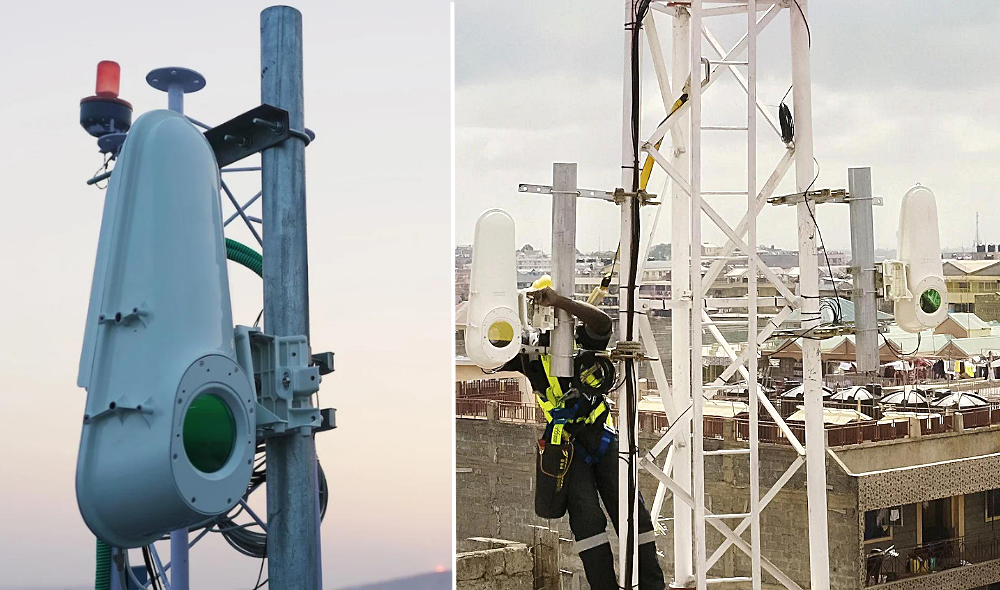
Based on open standards to work with existing infrastructure, including radio and fiber, Taara uses light to transmit information at super high speeds through the air as a very narrow, invisible beam.

The Taara team is implementing 20 Gbps connectivity over distances up to 20 km with units that are fast and easy to deploy. The team is working with telcos, internet service providers (ISPs), and governments around the world to significantly accelerate the deployment of the extensive, high-throughput networks necessary to support the future of the web.

The Taara team is currently deploying their light beam internet technology in India, Africa, and other locations around the world.

For Project Taara, the deployment with Bharti Airtel is its largest deployment in India to date, following several pilot projects including rural villages in Andhra Pradesh, downtown Nairobi, and remote areas of Fiji and Tonga. 

Notably, last year in January Google invested $700 million for a 1.28% stake in Bharti Airtel. Although, Taara's partnership with Bharti Airtel is separate from the Google investment.

In an official blog post, Mahesh Krishnaswamy, General Manager, Project Taara at X said, "Over the coming months Airtel will be deploying Taara’s links across their network in rural and urban areas in an effort to bring fast affordable internet to more people. This rollout follows a number of pilots with Airtel and is the largest deployment of Taara in India to date."

To recall, in a similar lines of laser based communications, Transcelestial, a Singapore-based startup which makes wireless laser communications equipment, had raised $10 million in a funding round led by Airbus Ventures and others, in February this year. 

Govt of India, MeitY Organizes 2-Day Event on Universal Acceptance Day to Promote Multilingual Internet for Digital Inclusion in India

  • Government of India, Ministry of Electronics and Information Technology (MeitY) organizes two-day event on Universal Acceptance Day to promote multilingual internet for digital inclusion in India
  • India was the flag bearer this year to promote and promulgate Universal Acceptance for digital inclusion.
  • Being celebrated globally, this inaugural UA Day was aimed at driving efforts for inclusive and multilingual internet.
  • Adoption of UA in India can add another 500 million broadband users to add value to the digital economy, promote startup ecosystems and generate employment opportunities.
  • Next 1 billion internet users are likely to come from non-English speaking countries, heightening the importance of multilingual internet, noted experts.
National Internet Exchange of India (NIXI), a non-for-profit company, under the aegis of the MeitY, successfully organized a 2-day event (27-28th March) on Universal Acceptance Day to drive collaborative efforts for an inclusive and multilingual internet in India.

Govt of India, MeitY Organizes 2-Day Event on Universal Acceptance Day to Promote Multilingual Internet for Digital Inclusion in India

Elaborating on the importance of Universal Acceptance, Bhuvnesh Kumar, IAS, Additional Secretary, MeitY said, "India is home to more than 18,000 dialects. As we move from one city to another, pronunciation and ways of speaking change completely. The country has the most internet users but it must be noted that language barriers also make it a base of the largest numbers of non-users who do not speak English. It is very important that we not just provide internet services but also create emails and websites in native languages. Providing a multilingual internet user interface is crucial for bridging the current digital divide. Through Universal Acceptance, we can connect with non-internet users and promote digital inclusion across the country and the world.”

Various experts who engaged in thought-provoking sessions during the event noted that the next 1 billion internet users are likely to come from non-English speaking countries, heightening the need towards achieving a multilingual internet to make it accessible for all. Additionally, adoption of UA in India can add another 500 million broadband users which can add value to the digital economy, promote startup ecosystems and generate employment opportunities in the country.

Addressing a session during the event , Tripti Sinha, ICANN Board Chair said," The Internet is a powerful tool for equalizing access to information, but its full potential cannot be realized until it becomes multilingual. It is also important to include multiple genders in this initiative."

In her address during a session, Sally Costerton, Interim President and CEO, ICANN, said "The Indian government can lead the way in promoting multilingual internet systems, similar to their efforts in the financial sector with Unicode. This move will enable more people to access the internet in their native languages, making it easier for them to communicate and access information. It is also important to have top-level domain names in local languages and scripts and ensure that the multilingual systems are safe and secure to use."

India, which is fast-turning into a digital economy, has been chosen as the flag bearer this year to promote and promulgate Universal Acceptance for digital inclusion. The event was a serious effort to initiate thought-provoking, meaningful and result-oriented dialogues to raise awareness, break the language barriers and make the internet accessible to a larger population and bring every citizen in the ambit of economic progress.

Dr Ajay Data, UASG Chair said, "I am very thankful of NIXI, MeitY and ICANN to support and make UA Day a reality in 42 countries.UA is a solution to multilingual issues. It ensures that all valid domain names and email addresses can be used equally by all internet-enabled applications, devices, and systems, regardless of script, language, or character length. This is a significant step towards creating a more inclusive internet that caters to the needs of all users."

“This is an important moment in Indian history, because we want to lead conversations on Universal Acceptance. India is the perfect example of diversity & I can't think of a better nation to lead the dialogue on Acceptance, inclusivity & bridging the digital divide. Internet needs to be made inclusive to enable women to get online, use digital tools & services, and contribute to the global economy. UA is the 1st step towards a safe, secure & accessible Internet. UA is going to be about bringing the next billion users online and there will be three things that will be essential in bring and then keeping them online: acesss to devices and data at affordable rates, local language content, and capacity building through digital and cyber literacy” Said Dr Subi Chaturvedi, Global SVP & Chief Corporate Affairs & Public Policy Officer, InMobi speaking at the inaugural panel of global UA day.

The country is home to the most internet users in the world however, it also houses a large-base of non-users who do not speak English. Acknowledging the high importance and urgent need of inclusive internet, the event hosted policy and decision makers, government officials, thought-leaders, industry experts from India and across the globe who deliberated on building multilingual internet, including emails and websites in native languages to bridge digital divide, connect non-internet users and promote digital inclusion.

The first-of-its-kind initiative registered the participation of dignitaries including Bhuvnesh Kumar- IAS, Additional Secretary, MeitY, Abhishek Singh- President & CEO- NeGD, MeitY, Edmon Chung- Board Director, ICANN, Ajay Data - Chair UASG,Tripti Sinha- ICANN Board Chair, Sally Costerton- CEO, ICANN, Jia-Rong Low- Vice President & MD, APAC, ICANN, Anil Kumar Jain- CEO, NIXI, Asha Nangia- Scientist G (MeitY), T Santhosh- Scientist ‘E’, Internet Governance Division, MeitY, Nitin Wali - Senior Director of Stakeholder Engagement, ICANN, and others who shared their views with students, developers, researchers, content creators, participants and guests.

It hosted engaging sessions and workshops on relevant and important topics such as “Socio-Economic aspects of UA and Multilingual Internet and its impact on public policy’, ‘Technology enablement for universal acceptance - challenges and mitigation’, ‘Introduction to Universal Acceptance (UA),’ ‘Making your website Universal Acceptance ready: Way Forward’, ‘Universal Acceptance work in India’, ‘Importance of UA for multi-cultural society in India,’ and others.

Universal Acceptance means building a technical environment to allow computing devices, operating systems, browsers, social media or e-commerce to accept instructions in local language other than English and ensure valid domain names and email addresses, regardless of script, language or character length. India has set a target of becoming a USD 1 trillion digital economy soon and it is important for the country to widen the cover of digital inclusion with UA.

Achieving it can ensure every Indian has the ability to experience the full social and economic power of the internet by choosing domain name and email address in any language that best aligns with their interests, business, culture, language, and script.

Celebrated globally on 28th March, this inaugural UA Day was organized by UASG and ICANN and it successfully engaged and mobilized top technical and language communities, companies, governments and DNS industry stakeholders to better understand the benefits of UA and how they can make their systems UA-ready. It was reported that more than 40 countries participated in celebrating 1st Global UA day.

About ICANN

ICANN's mission is to help ensure a stable, secure, and unified global Internet. To reach another person on the Internet, you need to type an address – a name or a number – into your computer or other device. That address must be unique so computers know where to find each other. ICANN helps coordinate and support these unique identifiers across the world. ICANN was formed in 1998 as a non-profit public benefit corporation with a community of participants from all over the world. For more information please visit: https://www.icann.org/

About NIXI

NIXI is a not-for-profit organization under section 8 of the Companies Act 2013, and was registered on 19th June, 2003. NIXI was set up for peering of ISPs among themselves for the purpose of routing the domestic traffic within the country, instead of taking it all the way to US/Abroad, thereby resulting in better quality of service (reduced latency) and reduced bandwidth charges for ISPs by saving on International Bandwidth. NIXI is managed and operated on a Neutral basis, in line with the best practices for such initiatives globally. .IN is India’s Country Code Top Level domain (ccTLD). The Govt. of India delegated the operations of INRegistry to NIXI in 2004. The .INRegistry operates and manages India’s .IN ccTLD. To know more about NIXI and its other business units please visit: www.nixi.in

About the UASG

The UASG is a community-led initiative that was formed in 2015 and funded by ICANN. It consists of representatives from more than 120 companies, governments, and community groups. The UASG works to raise awareness of the importance of UA globally, provide free resources to organizations to help them become UA-ready and measure the progress of UA adoption. To learn more, visit https://uasg.tech/

eMudhra Launches emSign; Becomes the 1st and Only Indian Provider to Issue SSL/ TLS Certificates Globally

eMudhra Launches emSign; Becomes the 1st and Only Indian Provider to Issue SSL/ TLS Certificates Globally
Issued under the globally accredited Trust Services offering emSign, will help eMudhra compete on a global scale with a state-of-the-art managed PKI offering

eMudhra Limited, (Listed on BSE & NSE, EMUDHRA) a technology, digital identity, and transaction management company, has launched its services to issue its own Secured Sockets Layer (SSL) / Transport Layer Security (TLS) certificates for large enterprises, IoT manufacturers, SMEs and retail customers. eMudhra is the first & only company from India to get accredited by Webtrust, and its offering emSign is recognized by all the major browsers in the world.

SSL/TLS Certificates play a major role in the Cyber Security space, where they help encrypt every communication on the internet. This includes use-cases such as E-commerce websites for secure online transactions, online banking sites, social media and other websites that require login credentials, Email services, online marketplaces, payment gateways, healthcare portals, online government services, mobile applications, OTT streaming portals and apps, API Services including Digital Public Infrastructure Services (e.g.: UPI), and others.

These certificates use PKI (Public key infrastructure) technology and are widely used in the form of SSL (or TLS) issued by global trust service providers. Certificates issued by emSign are trusted by prominent web browsers of today to enable secure, trusted communication between a web server and the website. This enables organizations and consumers to enhance encrypted network connections, thereby protecting both the end users’ information and the service provider. The SSL/TLS certificates issued by emSign – eMudhra’s Global Trust Root, is a fully made in India solution for the world with local data residency capabilities.

V. Srinivasan, chairman of eMudhra said, “With this latest initiative, eMudhra expects to enhance secure encryption across sectors like BFSI, Government, Education, logistics, healthcare, E-commerce, etc. Through our SSL and TLS certificates, customers can ensure accountability while browsing the web for their needs and be confident while making transactions. A seamless and secure digital experience is a priority for everyone, and SSL/TLS certificates issued under emSign will instill confidence and trust amongst businesses and government authorities, as the data stays in India with limited or no reliance on foreign players”.

Operated under the brand “emSign”, Businesses can get the certificates online from the website, or through eMudhra resellers. emSign certificates support modern ACME APIs, as well as web server agents to adopt automation. Domain validated certificates are issued instantly and meet the global compliance requirements. Enterprises/Businesses can also get Organization/Extended validated certificates to display their identity as part of the certificates. This offering is also available in wildcard and Unified Communication Certificates (UCC) categories for multiple website support and is compatible with all major browsers in the world.

About emSign

emSign by eMudhra is a Managed PKI Ecosystem and a Globally Trusted Root to issue X.509 certificates for a multitude of use-cases across industries. From issuance of SSL/TLS certificates that are trusted by all major web browsers to SMIME and Code Sign Certificates, emSign powers businesses to achieve identity assurance through seamless issuance and management of public certificates at scale. Businesses, large enterprises and IoT companies across the globe can deploy certificates issued by emSign to make safe transactions, protect network and device, and all communication from cyber-attacks.

Certificate lifecycle Management (CLM) offered by emSign is best suited for enterprises looking for scale and would like to manage millions of digital identities on an intuitive dashboard. With an end-to-end automation of authentication and encryption, emSign offers to make the digital world secure, trusted and agile.

National Internet Exchange of India (NIXI) wins the Prestigious SAFA Awards

National Internet Exchange of India (NIXI) wins the Prestigious SAFA Awards

The National Internet Exchange of India, a not-for-profit (Section 8) Company, under Ministry of Electronics & Information Technology, Government of India has been awarded by the South Asian Federation of Accountants (SAFA) as the recipient of ‘Certificate of Merit’ in ‘Communication & Information Technology Sector’. The SAFA BPA Award is considered as the most prestigious accolade for financial reporting in the entire South Asian region.

As announced by the South Asian Federation of Accountants (SAFA), which had 118 nominations from 7 countries, awarded NIXI for the best-presented annual report. This honour was presented in recognition of excellence in presentation and disclosure of high quality, relevant, reliable and objective financial statements in accordance with the establish international framework.

On this occasion CEO - NIXI, said “A transparent financial reporting is critical not only for stakeholders of company but also provides a path for sustainable development of company. This also helps NIXI for effective corporate governance which brings confidence amongst customers and the Government.”

About NIXI

NIXI is a not-for-profit Organization under Section 8 of the Companies Act 2013, and was registered on June 19th, 2003. NIXI was set up for peering of ISPs among themselves for the purpose of routing the domestic traffic within the country instead of taking it all the way to the US/Abroad, thereby resulting in better quality of service (reduced latency) and reduced bandwidth charges for ISPs by saving on International Bandwidth. NIXI is managed and operated on a neutral basis, in line with the best practices for such initiatives globally. NIXI has three business verticals under them:

IXP - Internet Exchange Points (IXPs) are the most critical part of the Internet's Infrastructure. An Internet Exchange Point is a facility that allows Internet Service Providers to "meet" and exchange traffic, also called peering. This saves money on International bandwidth for the ISPs and improves connectivity for their customers by reducing latency.

IRINN - IRINN is a division functioning under NIXI and provides allocation and registration services of Internet Protocol addresses (IPv4 & IPv6) and Autonomous System numbers to its Affiliates.

.IN Registry - Government of India has authorized NIXI as .IN Registry. It is India's top-level domain on the Internet. Like .COM, .IN can be used for email, Web sites, and other applications. But unlike other domains, .IN is a unique symbol of India and its role in the world. The .IN Registry by itself will not carry out registrations. It will do so through a number of Registrars to be appointed by it through an open process of selection on the basis of transparent eligibility criteria. Now .IN domain names are available to anyone on a first-come-first-served basis.

Website Link: https://www.nixi.in

World’s 1st Context Aware P2P Protocol, MOI, Brings New Dynamics to Web3


My Own Internet (MOI), a personalized Web3 internet protocol, is focused on driving web3 development and adoption to new heights with their path-breaking IP, Interaction State Machine (ISM), allowing participation at Layer 0.

MOI is a global network that enables sustainable transactions across millions of decentralized nodes and billions of transactions in an interoperable network. With hyper parallelism mechanism, complete user ownership and personalization, cross platform transfers of digital assets, data storage, and web2 to web3 migration processes, this ecosystem is highly efficient for users and developers alike.

A primary offering of Sarva Labs, a deeptech web3 startup focused on simplifying digital interactions through emerging technologies such as blockchain and AI, MOI is forging a path towards a pioneering user-centric consensus mechanism that will give the power back to the users in a simple and effective manner. With a human-centric sybil mechanism, MOI has introduced participant context as a new dimension to computation and settling of transactions in distributed networks. This unique and fresh concept generates personalized value states, truly owned by the users, with a high degree of security and scalability.

The ISM based technology that powers MOI has facilitated a participant centric consensus mechanism and enables Web3 networks to shift focus from a programmatic and system oriented approach to user first model. With a strong community of 35K and 680+ global validators, MOI is steadily moving towards building a true P2P global internet that accommodates user needs and behavior along with having a sustainable, equitable, and scalable structure.

“We as a society have gotten complacent into the pervasiveness of intermediaries and the intermediated interactions and transactions. Today, with the rapid advancement of technology, we are steadily moving towards less personalization in our everyday interactions. This makes us insecure and lacks transparency. With MOI, our aim is to have a user centric future that is personalized, context aware, sustainable, and secure. Our focus through our 5 years of research and development was to create a next generation technology that is foundationally human-centric, enables complete user ownership of assets and participation, and personalization of digital networks in a simple, secure and sustainable way - as each user sees it. A confluence of next generation technologies leading us into a constantly connected and aware world.` Anantha Krishnan, CEO, Sarva Labs

Winners of the Building Future Cities Hackathon held in August 2022, organized by CoinSwitch Kuber, MOI is already supporting 15+ builders on its platform. They have also recently launched a holistic NFT platform, Mint Valley, a personalized ecosystem for artists, creators, technologists to create, list, sell, and share digital assets. Additionally, they have launched their College Ambassador program to foster Web3 awareness, knowledge sharing, and mentorship to ensure continued augmentation of the sector and support the resultant innovations.

About My Own Internet (MOI):

MOI, the primary offering of Sarva Labs, is a decentralized global web3 network that supports humanized interactions on the internet enabling true P2P value transfers and personalized digital interactions. MOI is built using Interaction State Machine (ISM), a revolutionary new computational model created by Sarva Labs for the web3 world. Using the ISM technology, MOI delivers a simple, secure, and sustainable web3 experience for users by enabling a single web3 network capable of hosting millions of nodes to support billions of transactions with complete user privacy, ownership and control. With a practical and equitable governance model, the value generation in MOI is democratic, while offering flexibility to support the regulatory norms of respective environments.

For more, visit: https://moi.technology/

About Sarva Labs:

Sarva Labs is a DeepTech web3 startup focused on simplifying digital interactions by developing user-centric technologies in blockchain and AI. Sarva ‘s vision is to help build an equitable, sustainable, and happy digital society and is doing foundational research to create new computational models, design methodologies, and governance frameworks to make the emerging web3 ecosystem practical, personalized and useful.

For more, visit: https://www.sarva.ai/

About Mint Valley:

Powered by MOI, Mint Valley is a personalized ecosystem for artists, creators, technologists to create, list, sell, and share digital assets. A holistic NFT platform, Mint Valley allows users to create, customize, and sell NFTs with no transaction fees, easy wallet access, and a simple and fast user experience.


For more, visit: https://mintvalley.ai/

Internet Service from Space will be Available in India Very Soon: Dr. P Chauhan, Director, National Remote Sensing Centre


Dr. K. V. Rao Scientific Society held its 22nd Annual Science Awards and Memorial Oration Function virtually on Zoom on Saturday till late in the night

The Memorial Oration was given by Chief Guest, Dr. Prakash Chauhan Director, National Remote Sensing Centre, Hyderabad.

Internet Service from Space will be available in India very soon said Dr. Prakash Chauhan Director, National Remote Sensing Centre while giving his oration lecture on subjected “Satellites for Society”.

There is a lot of curiosity of human race about space. He spoke what is space where it begins. He spoke about exciting journey of space, its applications, how modern and new wave of technologies is changing space science. We at ISRO have the capability of identifying from 500 kms above surface an object of 50x50 cms in size on earth’s surface, he said. We can study images of weather patterns taken from the satellite hundreds of kilometers away from earth’s surface, he added.

Prakash Chouhan, Ratna, Ramoorthy, Anil Kumar Kutty seen at 22nd Annual Science Awards of KV Rao Scientific Society

Dr. K Ratna, Secretary of the society while Welcoming the gathering said what was started small in then combined states of Andhra Pradesh, the Dr KV Rao Scientific Society now has gone national.

Giving her annual report, Dr. K. Ratna, Secretary of Dr K. V. Rao Scientific Society said the society has embarked on its journey of science promotion and popularization since 2001. And it has been involved in encouraging child scientists, young scientists in pursuit of science and research.

This was an event Celebrating excellence in Science commented Dr. K. Ratna. The Annual Science Awards included: Science Quiz, School Talent, SPARK Innovation, and Research Awards.

Mr.Anil Kumar Kutty, President and Mr K. Ramamurthy, Vice President of the Society graced the occasion.

The two ambitious projects Science Innovation Centre and Science Mobile Labs have reached out 200 plus schools and 3000 plus students said AMr Kutty. Many government schools do not have science labs. For them knowledge of science is through reading books. Mobile science lab helped many students, he added.

The Society was founded by the family in memory of Dr. K.V. Rao, an eminent Scientist of yester years who worked with Geological Survey of India. Dr. K.V Rao Society has been working hard for the past 18years for the cause of popularizing science among school children and enthusing young minds towards pursuing a career in science.

Market Reports

Market Report & Surveys
IndianWeb2.com © all rights reserved