Showing posts with label Alphabet. Show all posts

Google Parent Alphabet Doubles Down on India with Mega Bengaluru Hub

Google Parent Alphabet Doubles Down on India with Mega Bengaluru Hub

Google’s parent company, Alphabet inc. , is making one of its biggest bets in India yet, with a massive Bengaluru expansion that could add up to 20,000 jobs and more than double its footprint in the country. The company has leased one office tower and secured options on two more in Alembic City, Whitefield, Bengaluru totaling about 2.4 million square feet.

Key Highlights of Alphabet’s Bengaluru Expansion

  • Location: Alembic City, Whitefield technology corridor, Bengaluru
  • Scale: ~2.4 million sq. ft. across three towers
  • Jobs: Up to 20,000 new positions expected, significantly boosting India’s tech workforce
  • Timeline: First tower opening to employees in the coming months; additional towers under option for future growth
  • Strategic Context: Expansion comes as U.S. visa restrictions push Alphabet to grow talent bases abroad, with India emerging as a critical hub

Why Bengaluru?

  • Tech Ecosystem Strength: Bengaluru is India’s leading tech hub, home to startups, IT majors, and global R&D centers.
  • Talent Pool: Large base of engineers, developers, and AI specialists.
  • Infrastructure: Whitefield corridor offers modern office complexes, connectivity, and proximity to other multinational campuses.
  • Policy Environment: India’s push for digital transformation and AI adoption aligns with Alphabet’s global strategy.

Impact on India’s Tech Landscape

  • Job Creation: 20,000 roles could range from engineering and AI research to cloud services and support.
  • AI & 5G Integration: Expansion coincides with India’s 5G rollout, positioning Alphabet to lead in AI-driven workloads and edge computing.
  • Global Strategy: Strengthens India’s role as a key offshore base for Alphabet amid tightening U.S. immigration policies.
  • Local Economy: Boosts Bengaluru’s commercial real estate market and reinforces its status as a global innovation hub.

Comparison: Alphabet’s India Footprint vs. Global Strategy

Region Expansion Focus Scale Strategic Driver
India (Bengaluru) AI, Cloud, Workforce 2.4M sq. ft., 20K jobs Talent availability, visa restrictions
US (HQ) AI R&D, Cloud infra Existing campuses Core innovation, leadership
Europe (Dublin, Zurich) Cloud services, Ads Smaller expansions Regulatory compliance, EU market
Asia (Singapore) Regional HQ Limited Southeast Asia market access

Risks & Considerations

  • Talent Competition: Bengaluru’s tech talent is in high demand; Alphabet will compete with Amazon, Microsoft, Infosys, and startups.
  • Real Estate Costs: Large-scale leasing could drive up commercial rents in Whitefield.
  • Policy Shifts: India’s evolving data protection and AI regulations may affect operations.
  • Global Dependencies: Expansion partly driven by U.S. visa restrictions—future policy changes could alter strategy.

Alphabet Soars After Berkshire Reveals $5B Stake

Alphabet Soars After Berkshire Reveals $5B Stake

Alphabet’s shares surged over 5% after Berkshire Hathaway disclosed a multibillion-dollar stake, signaling one of Warren Buffett’s rare and final big bets on a tech giant.

The market reaction

  • Premarket jump: Alphabet stock rose 5.2–6.1% in premarket and after-hours trading.
  • Current price: $284.76 per share, up 3.02% from the previous close of $276.41.
  • Investor signal: The rally reflects confidence in Buffett’s endorsement despite his historic caution toward high-growth tech.

Berkshire Hathaway’s stake

  • Position size: $4.3–$4.93 billion stake, totaling 17.9 million shares.
  • Portfolio rank: Now Berkshire’s 10th-largest U.S. equity holding.
  • Timing: Coincides with leadership transition to Greg Abel, marking one of Buffett’s last major investment calls.

Portfolio shifts

  • Apple trim: Berkshire reduced its Apple holdings, selling billions in shares.
  • Diversification: Apple remains the largest holding, but exposure is being balanced.
  • Banking move: Berkshire also cut its stake in Bank of America.

Strategic context

  • Buffett’s tech stance: Historically cautious, but Alphabet’s advertising, AI, and cloud dominance proved compelling.
  • AI capex: Investment arrives amid heavy spending on data centers and chips.
  • Past regret: Buffett previously acknowledged missing Google early despite Geico’s ad insights.

Why it matters

  • Symbolic shift: Reflects how AI and digital platforms are central to modern value investing.
  • Alphabet boost: Buffett’s seal of approval may strengthen investor confidence during AI buildout.
  • Berkshire pivot: Balances traditional value plays with future-facing bets as leadership transitions.

Google in Advanced Talks to Acquire Cybersecurity Startup Wiz for Whopping $30 Bn

Google in Advanced Talks to Acquire Cybersecurity Startup Wiz for Whopping $30 Bn

Google's parent company, Alphabet, is reportedly in advanced negotiations to acquire the cloud cybersecurity startup Wiz for approximately $30 billion. This deal, if finalized, would mark one of the largest acquisitions in 2025 and significantly bolster Google Cloud's cybersecurity capabilities.

Wiz, founded in 2020 by former Israeli military officers, specializes in AI-powered cloud security solutions and has rapidly grown to become a major player in the industry.

Notably, Wiz had previously turned down an acquisition offer from Google in 2024, opting instead to pursue independent growth. However, renewed interest from Google has led to these ongoing discussions.

The cloud cybersecurity startup has received investments from several prominent entities. Among its key investors are Sequoia Capital, Index Ventures, Insight Partners, Cyberstarts, and Andreessen Horowitz. These firms have contributed significantly to Wiz's rapid ascent and impressive valuation in the cybersecurity sector.

Headquartered in New York city, Wiz has strong ties to Israel, as it was co-founded by a team of Israeli entrepreneurs, including Assaf Rappaport, Yinon Costica, Ami Luttwak, and Roy Reznik. These founders previously worked together at Microsoft, where they led the Azure Cloud Security Group. Additionally, they had earlier founded Adallom, another cybersecurity company, which was acquired by Microsoft in 2015.

Although Wiz is headquartered in New York City, it maintains a significant presence in Israel, with a substantial portion of its workforce based there. This connection highlights Israel's reputation as a global hub for cybersecurity innovation.

Google's potential acquisition of Wiz for $30 billion would be a landmark deal in the cybersecurity industry, significantly outpacing most recent acquisitions in terms of value.

Last year, Thoma Bravo's Acquisition of Darktrace for $5.3 billion, which was considered a major deal at the time. However, it pales in comparison to the scale of Google's proposed deal.

Another notable acquisition in 2024 was CyberArk's $1.5 billion acquisition of Venafi, aimed at enhancing its security offerings.

Sophos announced its intent to acquire SecureWorks for $859 million, focusing on expanding its managed detection and response capabilities.

Fortinet's Acquired Next DLP to bolster its secure access service edge (SASE) platform, though the financial terms were undisclosed.

Google's move to acquire Wiz would not only dwarf these deals in monetary terms but also underscore the growing importance of cloud security in the tech landscape. It reflects a broader trend of tech giants investing heavily in cybersecurity to address evolving threats and secure their cloud ecosystems.

Alphabet's X Division Unveils 'Taara Chip' to Revolutionize Internet Connectivity Using Light Beams

Alphabet's X Division Unveils 'Taara Chip' to Revolutionize Internet Connectivity Using Light Beams

The Taara chip is a groundbreaking innovation from Alphabet's X division, designed to revolutionize internet connectivity using light beams.

In July 2023, IndianWeb2 reported that Google's parent Alphabet and Indian telecom and internet provider, Bharti Airtel, working together to deploy a new laser internet technology in India, under a project known as — Taara, a part of Alphabet's X division.

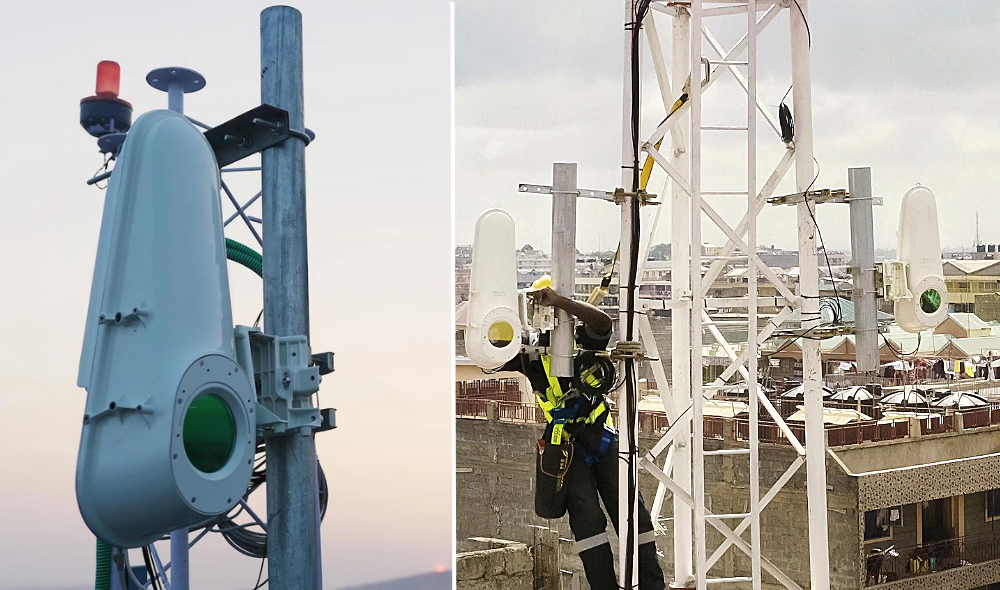
This silicon photonic chip, about the size of a fingernail, leverages light to transmit high-speed data, making it a cost-effective and efficient solution for providing internet access, especially in remote and underserved areas.
 

Here are some key highlights of Taara Chip system:
  • High-Speed Data Transmission: The Taara chip can transmit data at speeds of up to 10 Gbps over a distance of 1 kilometer.
  • Software-Based Beam Steering: Unlike its predecessor, the Taara Lightbridge, which used mechanical components, the Taara chip relies on software to steer, track, and correct light beams with extraordinary precision.
  • Cost-Effective and Quick Deployment: The chip can be set up in a matter of days, making it a viable solution for areas where laying traditional fiber-optic cables is impractical or too costly.
  • Potential Applications: The technology could bring high-speed internet to underserved regions, rethink data center operations, and enable faster, safer communication for autonomous vehicles.
The first commercial iteration of the Taara chip is expected to be available by 2026.

How does Taara technology compare to fiber-optic solutions?

Let's break down the comparison between Taara technology and traditional fiber-optic solutions:
 
Feature Taara Technology Fiber-Optic Solutions
Data Transmission Light beams, up to 10 Gbps over 1 km Light through cables, high-speed over long distances
Deployment Quick and cost-effective, set up in days Time-consuming and costly, especially in tough terrains
Flexibility Ideal for remote or challenging areas Suited for urban and suburban areas with infrastructure
Maintenance Software-based, reducing potential points of failure Requires regular upkeep of physical infrastructure
Geographical Suitability Remote and geographically challenging areas Urban and suburban areas
Key Advantages Cost-effective, quick to deploy, flexible Gold standard for high-speed connectivity


Alphabets X team says that it imagines a future where connectivity is not bound by cables or constrained by cost. By dramatically reducing the size and complexity of Taara Chip-powered systems, the team's aim is to eventually drastically reduce the cost of connectivity, creating a network effect within the industry.

Using chips deployed in a global mesh network, the Google's parent firm sees opportunities to bring high-speed internet to underserved regions, rethink the way data centers are built and operated, enable faster, create safer communication for autonomous vehicles, and so much more. The possibilities are as boundless as light itself.


Taara’s chip will be available in Alphabet's next product launching in 2026. However, before then, the company is inviting researchers and innovators interested in exploring new applications for this technology to get in touch.

Youtube is One of the World's Most Valuable Media Companies with Worth at Least $455 Billion

Youtube is One of the World's Most Valuable Media Companies with Worth at Least $455 Billion

YouTube is one of the world's most valuable media companies and worth at least $455 billion on its own, which is more than 50% above Netflix's market cap, according to analysts at Needham & Co., reported Bloomberg.

Parent company Alphabet's revenue from subscriptions, platforms and devices, which includes YouTube subscriptions, is also poised to expand in the coming years.

YouTube's dominance in online video sharing and content creation is undeniable. With over 2 billion monthly active users, it remains the go-to platform for video content, generating substantial revenue through ads, sponsorships, and other monetization methods.

YouTube, often overshadowed by its parent company Alphabet Inc., is a media giant hiding in plain sight. According to analysts at Needham & Co., the streaming unit is worth at least $455 billion on its own, which is more than 50% above Netflix Inc.'s market cap. Despite this massive valuation, YouTube's true worth remains underappreciated due to Alphabet's conglomerate structure.

If even a small portion of YouTube were separately tradable, it could add significant value to Alphabet stock. However, there are no immediate signs of Alphabet considering such a separation. Regardless, YouTube's impact on the media landscape is undeniable, and its dominance in streaming continues to shape the industry.

YouTube primarily generates revenue through advertisements. It embeds targeted ads directly into the video clips users watch and promotes featured content. In the first three months of 2023, YouTube earned $6.69 billion from advertising, and in 2022, it generated $29.23 billion.

Additionally, YouTube's other revenue sources include YouTube Premium subscriptions, channel memberships, Superchat donations, YouTube TV, and merchandise commissions.

YouTube has a dominant and growing share in streaming, as consumers shift to such platforms and away from broadcast and cable TV. Ad revenue from the platform is expected to grow by nearly 17% to $37 billion in 2024 and by another 14% to $42 billion in 2025, according to estimates compiled by Bloomberg.

Alphabet’s revenue from subscriptions, platforms and devices, which includes YouTube subscriptions, is also poised to expand in the coming years. At Netflix, revenue is expected to be about $38.7 billion in 2024, with almost all of that derived from streaming, while YouTube accounts for about 10% of its parent’s total sales.

A recent survey of streaming platforms by TD Cowen showed that while Netflix still dominates in most TV categories, YouTube is often not far behind. And, it’s the top choice for watching content on a mobile phone.

Google in Talks to Acquire Cloud Security Company Wiz for $23 Billion

Google in Talks to Acquire Cloud Security Company Wiz for $23 Billion

Google's parent company, Alphabet, is reportedly in advanced talks to acquire the cloud security company Wiz for approximately $23 billion. If this deal goes through, it would be Google's largest acquisition ever.

Previously, it was reported that Alphabet was in talks to acquire HubSpot, which too was said to be Google's biggest acquisition ever, if happened. However, the deal was eventually shelved by Alphabet Inc.

The Wall Street Journal reports that Alphabet is in advanced talks to acquire Wiz for around $23 billion. While the deal isn't finalized, the WSJ says it could come together soon.

Wiz offers an all-in-one approach to cloud security, scanning data from major cloud platforms like Amazon Web Services, Microsoft Azure, and Google Cloud for security risk factors. The move could strengthen Google's cloud business, which saw a 28% growth to $9.57 billion in Q1 2024. Wiz, founded by former Microsoft employees, had recently raised $1 billion in a Series E funding round at a $12 billion valuation.

Wiz provides a single cloud security command center for full control. It covers various security domains, including: Container & Kubernetes, Continuous Workload Protection (CWPP), Compliance, Vulnerability Management, Cloud Entitlements Analysis (CIEM), Misconfiguration Detection (CSPM), Sensitive Data Protection (DSPM) and Infrastructure as Code (IaC) Scanning.

Wiz connects to every cloud environment (AWS, Azure, Google Cloud, etc.) and scans every layer, even elements that typically require installing agents.

Originally established in Israel and now headquartered in New York, Wiz specializes in cloud-based cybersecurity services. Its offerings include artificial intelligence-driven real-time threat detection and response systems. In 2023, Wiz generated approximately $350 million in revenue, and its clientele reportedly includes 40% of Fortune 100 companies.

Wiz recently secured $1 billion in a funding round, which brought its valuation to $12 billion. Investors included Andreessen Horowitz, Lightspeed Venture Partners, and Thrive Capital.

Wiz's operations span across various cloud platforms, including services from Microsoft and Amazon. Its diverse customer base includes companies like Morgan Stanley and DocuSign.

This potential acquisition aligns with Alphabet's strategic moves in the tech sector, especially as regulatory scrutiny on Big Tech mergers continues under the current US administration.

Google to Buy Hubspot in Its Largest Acquisition Deal Ever

Google to Buy Hubspot in Its Largest Acquisition Deal Ever

Google's parent Alphabet Inc is reportedly in talks to acquire HubSpot, which would mark its largest acquisition to date. The acquisition is seen as a strategic move to bolster Google's competitiveness against Microsoft in the customer relationship management (CRM) sector. This move could significantly shake up the market, as Google Workspace already challenges Microsoft's Office platform, and adding HubSpot would further intensify this rivalry.

In a research note seen by Reuters, Cowen analyst Derrick Wood said, "It does appear that Google has aspirations to try to take market share from Microsoft in the productivity suite, and they can use HubSpot to bundle applications together for clients."

HubSpot, known for its marketing software catering to small and medium-sized businesses, could provide Google with additional leverage in the cloud-based applications space. The potential deal has been a topic of discussion among analysts and investment bankers, highlighting the implications it could have on the industry.

Looking at Google or its parent Alphabet's largest acquisition to date. In 2011, before Alphabet Inc was incorporated, Google acquired Motorola Mobility for a staggering $12.5 billion, this was primarily a strategic move to gain Motorola's vast trove of Patents. In 2006, Google purchased YouTube (2006) for $1.65 billion in Google stock, YouTube has grown to become one of the most visited websites globally.

Hubspot's current market cap is $30 Billion. So, if Hubspot deal got sealed it will be largest acquisition, till date, for Google as well as its parent.

It's worth noting that while talks are ongoing, no official deal has been announced yet. This acquisition could have a considerable impact on the CRM market, where Microsoft currently offers Dynamics 365 products. It will be interesting to see how this potential acquisition unfolds and what it means for the future of cloud services and CRM solutions.

Financial Terms

While discussions are ongoing, no definitive agreement has been reached yet regarding the financial terms of the potential acquisition of HubSpot by Alphabet Inc, Google's parent company.

HubSpot's shares surged by approximately 32% over the past year, elevating its market capitalization to $30 billion.

Notably, HubSpot reported a first-quarter FY24 revenue of $617.4 million, which represents a 23% increase compared to the first quarter of FY23. The subscription revenue, which makes up a large part of HubSpot's business, gained 23% to reach $603.8 million.

The company anticipates full-year 2024 revenue in the range of $2.55 billion to $2.56 billion. As of March 31, 2024, HubSpot had $447.79 million in cash and equivalents.

An acquisition of HubSpot by Alphabet would represent a significant move, potentially enhancing Alphabet's competitiveness in the customer relationship management (CRM) sector, particularly targeting smaller businesses. This strategic move could help Alphabet better compete with major CRM players like Microsoft Corp, Oracle Corp, and Salesforce Inc. However, regulatory scrutiny and integration challenges remain factors to consider in this potential deal. Stay tuned with IndianWeb2.com for further updates as the situation develops.

Google's Parent Alphabet To Pay Its First-Ever Dividend of 20 Cents Per Share

Google's Parent Alphabet To Pay Its First-Ever Dividend of 20 Cents Per Share

Alphabet, Google's parent company, has made a significant move by issuing its first-ever dividend. Shareholders will receive 20 cents per share as part of this dividend payout. Additionally, Alphabet has authorized a $70 billion share repurchase program. This decision comes alongside better-than-expected first-quarter earnings, which has led to a 12% increase in Alphabet's shares.

With this, Alphabet now joins Meta (formerly Facebook) as one of the large-cap tech companies that have begun paying dividends.

While it's Alphabet's first-ever dividend, other tech companies have been paying dividends for some time. For instance, Microsoft has consistently paid dividends to its shareholders over the years. In terms of the dividend yield, which is the dividend amount relative to the stock price, Alphabet's initial dividend is relatively modest compared to some other tech companies. However, it's essential to consider the broader context, including the company's financial health, growth prospects, and investor expectations. Alphabet's decision to initiate a dividend signals confidence in its future performance and a commitment to returning value to shareholders.

Notably, Alphabet Inc. (GOOGL) reported robust financial results for the first quarter of 2024. The company's Q1 2024 revenue reached $80.5 billion, representing a 15% increase compared to the same period in 2023. This growth reflects strong performances across major segments, particularly in Search, YouTube, and Google Cloud.

Alphabet achieved a net income of $23.66 billion, significantly exceeding the estimated $19.1 billion. This impressive performance underscores Alphabet's financial strength and operational efficiency. The company delivered an Earnings Per Share (EPS) of $1.89, comfortably above the estimated $1.51. This outperformance reflects the company's ability to generate value for shareholders.

Additionally, Alphabet also authorized an additional $70 billion in Class A and Class C share repurchases, highlighting confidence in its financial stability and future growth.

Under the leadership of CEO Sundar Pichai, Alphabet continues to advance its initiatives in the Al space, consolidating Al model development teams to accelerate progress.

This strategic move aims to fortify Alphabet's leadership in Al innovation and maintain its competitive edge in the rapidly evolving tech landscape.

Google's Alphabet and Bharti Airtel Bringing New Laser Internet Technology in India

Google's Alphabet and Bharti Airtel Bringing New Laser Internet Technology in India

Google's parent Alphabet and Indian telecom and internet provider, Bharti Airtel, are working together to deploy a new laser internet technology in India, reported news agency Reuters.

This is being done under a project known as — Taara, a part of Alphabet's innovation lab called X, also nicknamed the "Moonshot Factory."

Based on open standards to work with existing infrastructure, including radio and fiber, Taara uses light to transmit information at super high speeds through the air as a very narrow, invisible beam.

The Taara team is implementing 20 Gbps connectivity over distances up to 20 km with units that are fast and easy to deploy. The team is working with telcos, internet service providers (ISPs), and governments around the world to significantly accelerate the deployment of the extensive, high-throughput networks necessary to support the future of the web.

The Taara team is currently deploying their light beam internet technology in India, Africa, and other locations around the world.

For Project Taara, the deployment with Bharti Airtel is its largest deployment in India to date, following several pilot projects including rural villages in Andhra Pradesh, downtown Nairobi, and remote areas of Fiji and Tonga

Notably, last year in January Google invested $700 million for a 1.28% stake in Bharti Airtel. Although, Taara's partnership with Bharti Airtel is separate from the Google investment.

In an official blog post, Mahesh Krishnaswamy, General Manager, Project Taara at X said, "Over the coming months Airtel will be deploying Taara’s links across their network in rural and urban areas in an effort to bring fast affordable internet to more people. This rollout follows a number of pilots with Airtel and is the largest deployment of Taara in India to date."

To recall, in a similar lines of laser based communications, Transcelestial, a Singapore-based startup which makes wireless laser communications equipment, had raised $10 million in a funding round led by Airbus Ventures and others, in February this year. 

Google Holding $11 Billion in Its Startup Investments

Google's parent company Alphabet Inc. has shared a result from its years of sizeable startup investing for the first time on Monday: The holdings are worth about $11 billion, according to the company estimates.

A new accounting rule prompted Alphabet Inc. to disclose the fair value for its private stock holdings in earnings reports starting this year. The figure includes the company’s stake in some of Silicon Valley’s most highly valued startups, such as Uber Technologies Inc., Airbnb Inc. and Stripe Inc.

Previously, Alphabet reported private stock holdings based on the price it paid for the shares. Last quarter, the company said those holdings were worth $7.81 billion. After the accounting change this quarter, Alphabet valued them at $11 billion. That contributed $3.40 to the company’s earnings per share.

Alphabet’s largest stake on paper is likely Uber. GV (formerly Google Ventures), the company’s venture capital arm, led a $258 million investment investment in the ride-hailing startup in 2013 when it was valued at less than $4 billion. A recent deal led by SoftBank Group Corp. pegged Uber’s valuation at about $54 billion. Alphabet sold some shares in that offering, and then added some more in a legal settlement in February over self-driving cars, a transaction that valued Uber at $72 billion.

Alphabet has three main investment arms through which it keep investing in startups built beyond the Googleplex, including GV, CapitalG (formerly Google Capital) and Gradient Ventures, a VC fund focused on artificial intelligence, as well as strategic investments made out of its corporate arm and individual business units.

Taken together, Alphabet is one of the most prolific corporate investors in startups. In 2017, Crunchbase data shows that these three main investing arms of Alphabet along with Google itself has invested in 103 deals.

Alphabet invests in privately held companies through a variety of entities, including GV and Google, as well as CapitalG, a private equity fund, and Gradient Ventures, a VC fund focused on artificial intelligence, as well as strategic investments made out of its corporate arm and individual business units.

Taken together, Alphabet is one of the most prolific corporate investors in startups. In 2017, Crunchbase data shows that these three main investing arms of Alphabet along with Google itself has invested in 103 deals.

In India, Google made its first direct investment in an Indian startup, picking up a minority stake in Bengaluru-based hyper-local concierge and delivery startup Dunzo. CapitalG, when it was Google Capital, has had invested in India's health-tech startup Practo.

In 2016, Google launched Project Sand Hill to track hottest startups in 30 Countries including India, Israel and China.

Source - Bloomberg

Google (Alphabet) Will Soon Compete With Elon Musk's Tesla

With world population and environmental concerns growing at the same pace, the current inhabitants of the Earth have to do whatever they can to come up with alternatives that can increase their longevity on the planet. Renewable energy is one such way to curtail the damage we the humans are currently making. The latest to join the renewable energy cause is Google's parent company, Alphabet.

According to a recent report in Bloomberg, Alphabet’s secretive research lab X is currently in the midst of brainstorming and developing a new and innovative way to store renewable energy that otherwise might have gone wasted. They're doing so by making use of salt and antifreeze.

The report revealed that lab X researchers are creating a system that has the potential of outperforming lithium-ion batteries, both in terms of performance and price. The system being developed by the researchers is capable of operating irrespective of the fact where it is located and can go head-to-head with new hydroelectric plants and other energy storage methods when it comes to the price point.

The project is reportedly named “Malta,” but since it hasn't been inducted as an official X project yet, it doesn’t have the same benefits as a full-blown project under the research lab X such as Project Loon.

[caption id="attachment_119514" align="alignnone" width="700"] Image Source: X
[/caption]

The Malta team is currently developing an early test prototype in Silicon Valley, which features four cylindrical tanks connected via pipes to a heat pump. While two cylindrical tanks have salt in them, the other two are filled with hydrocarbon liquid or what we call antifreeze. The system is said to consume energy as electricity by creating two streams of air: cold air that cools the antifreeze, and hot air that heats up the salt. After this, a switch is flipped which helps in giving a reverse direction to the entire process meaning the hot and cold air now move towards each other. This results in creating gusts which are powerful enough to spin a turbine and produce electricity whenever needed. The system's energy storage time period depends on how the cylindrical tanks have been insulated.

According to a statement given by Raj Apte, Malta's head engineer to Bloomberg, the thermal salt-based storage is capable of being several times cheaper than lithium-ion batteries and other existing grid-scale storage technologies.

Apparently, the idea of using salt and antifreeze to store renewable energy isn't something original to Malta. Scientists working in the field have earlier proven this as a plausible technique in storing energy, but Malta has contributed in making the operating temperature lower and price point much cheaper than what the scientists had apprehended.

When the entire state of South Australia had to suffer through a blackout earlier this year, the world realised that even in today's age of technological innovation, existing electrical grids still struggle with renewable energy. The Australia episode even prompted Tesla's Elon Musk to commit to build the world’s largest lithium-ion battery in the region. The company has teamed up with French-based renewable energy company Neoen for the same. But, it seems, Musk has now got a competitor in the field in the form of Alphabet's Malta.

"If the moonshot factory gives up on a big, important problem like climate change, then maybe it will never get solved," said Obi Felten, a director at X tonBloomberg. He further added, "If we do start solving it, there are trillions and trillions of dollars in market opportunity."

Google (Alphabet) Will Soon Compete With Elon Musk's Tesla

With world population and environmental concerns growing at the same pace, the current inhabitants of the Earth have to do whatever they can to come up with alternatives that can increase their longevity on the planet. Renewable energy is one such way to curtail the damage we the humans are currently making. The latest to join the renewable energy cause is Google's parent company, Alphabet.

According to a recent report in Bloomberg, Alphabet’s secretive research lab X is currently in the midst of brainstorming and developing a new and innovative way to store renewable energy that otherwise might have gone wasted. They're doing so by making use of salt and antifreeze.

The report revealed that lab X researchers are creating a system that has the potential of outperforming lithium-ion batteries, both in terms of performance and price. The system being developed by the researchers is capable of operating irrespective of the fact where it is located and can go head-to-head with new hydroelectric plants and other energy storage methods when it comes to the price point.

The project is reportedly named “Malta,” but since it hasn't been inducted as an official X project yet, it doesn’t have the same benefits as a full-blown project under the research lab X such as Project Loon.

[caption id="attachment_119514" align="alignnone" width="700"] Image Source: X
[/caption]

The Malta team is currently developing an early test prototype in Silicon Valley, which features four cylindrical tanks connected via pipes to a heat pump. While two cylindrical tanks have salt in them, the other two are filled with hydrocarbon liquid or what we call antifreeze. The system is said to consume energy as electricity by creating two streams of air: cold air that cools the antifreeze, and hot air that heats up the salt. After this, a switch is flipped which helps in giving a reverse direction to the entire process meaning the hot and cold air now move towards each other. This results in creating gusts which are powerful enough to spin a turbine and produce electricity whenever needed. The system's energy storage time period depends on how the cylindrical tanks have been insulated.

According to a statement given by Raj Apte, Malta's head engineer to Bloomberg, the thermal salt-based storage is capable of being several times cheaper than lithium-ion batteries and other existing grid-scale storage technologies.

Apparently, the idea of using salt and antifreeze to store renewable energy isn't something original to Malta. Scientists working in the field have earlier proven this as a plausible technique in storing energy, but Malta has contributed in making the operating temperature lower and price point much cheaper than what the scientists had apprehended.

When the entire state of South Australia had to suffer through a blackout earlier this year, the world realised that even in today's age of technological innovation, existing electrical grids still struggle with renewable energy. The Australia episode even prompted Tesla's Elon Musk to commit to build the world’s largest lithium-ion battery in the region. The company has teamed up with French-based renewable energy company Neoen for the same. But, it seems, Musk has now got a competitor in the field in the form of Alphabet's Malta.

"If the moonshot factory gives up on a big, important problem like climate change, then maybe it will never get solved," said Obi Felten, a director at X tonBloomberg. He further added, "If we do start solving it, there are trillions and trillions of dollars in market opportunity."

Google Joins the $1,000 Club

Google's parent company Alphabet has joined the prestigious $1,000 a share club. Monday saw the California-based company’s Class-A shares crossing the $1,000 per share threshold and climbing as much as 1.13 per cent to $1,007.4. The news comes just six days after US e-commerce biggie Amazon accomplished the same milestone.

For one's keeping a close tab on Alphabet, they must have noticed that the tech giant's shares have surged by a quarter since the start of 2017.

Surging pass the $1,000 a share marker is considered a momentous achievement as it is doesn't happen quite often. The only prime example is, Berkshire Hathaway, whose Class-A shares are currently trading at about a quarter million a pop.

Apart from Alphabet, there is only one other stock on the S&P 500 index that has a stock price in the quadruple digits. With a $687 billion market value, Alphabet is said to be second only to Apple.

Alphabet's stock success can be attributed largely to its continued dominance in the search engine market with Google search, and the ad revenue that comes along with it. Some of other initiatives that are working out well for the company includes Waymo, its driverless car company, and connected device marker, Nest.

In addition to all this, YouTube and Android are also making good money for the company, despite the predictions made that YouTube would end up losing about $750 million-$1 billion of projected profit after its ad controversy earlier in the year when brands decided to arrange a boycott against Google over ads on extremist videos.

But, one needs to understand that share price alone is not considered as a significant barometer to measure a company's success since there have been times that companies have tried manipulating their stock price by changing their share count through so-called splits.

According to business experts, Market capitalisation, which measures the total value of a company’s equity, is a better barometer than stock price. With a market cap of $802bn, Apple acquires the top spot and is followed by Alphabet at second place and Amazon at third place with $687bn and $481bn, respectively.

[Top Image: Yahoo Finance]

Google's Alphabet Beats Apple To Become World's Most Valuable Company

google_alphabet

Tech giant Google dropped a shocker on all of us last year by declaring its parent company Alphabet. And, now the company has successfully occupied the top position on the list of world's most valuable companies, dethroning Apple from the valuable position.
It seems, it's now the fight of the two big A's.

In early trading on Tuesday, 2nd Feb, Google's Alphabet pulled ahead of Apple.

Google's parent company first acquired the numero uno position on the 1st of the second month this year during Monday's extended session following its excellent fourth-quarter earnings. Meanwhile, Apple Inc.'s iPhone has its first downturn since it debut eight years ago.

Alphabet's shares increased by about 4 percent in the first regular hours of trading, this helped in pushing the company's market capitalisation to a whopping $539 billion. With the constant rumours about investors being unhappy about iPhone sales, Apple ended up dropping its market capitalisation to a mere $530 billion, behind Google's Alphabet's $539 billion.

Google has formed a new parent company of its own in August last year, which it named it - 'Alphabet'

Take a bow, Alphabet.

Google's Alphabet Beats Apple To Become World's Most Valuable Company

google_alphabet

Tech giant Google dropped a shocker on all of us last year by declaring its parent company Alphabet. And, now the company has successfully occupied the top position on the list of world's most valuable companies, dethroning Apple from the valuable position.
It seems, it's now the fight of the two big A's.

In early trading on Tuesday, 2nd Feb, Google's Alphabet pulled ahead of Apple.

Google's parent company first acquired the numero uno position on the 1st of the second month this year during Monday's extended session following its excellent fourth-quarter earnings. Meanwhile, Apple Inc.'s iPhone has its first downturn since it debut eight years ago.

Alphabet's shares increased by about 4 percent in the first regular hours of trading, this helped in pushing the company's market capitalisation to a whopping $539 billion. With the constant rumours about investors being unhappy about iPhone sales, Apple ended up dropping its market capitalisation to a mere $530 billion, behind Google's Alphabet's $539 billion.

Google has formed a new parent company of its own in August last year, which it named it - 'Alphabet'

Take a bow, Alphabet.

Market Reports

Market Report & Surveys
IndianWeb2.com © all rights reserved