Showing posts with label Hydropower. Show all posts

Adani Power Gets CCI Nod to Fully Acquire GVK Energy

Adani Power Gets CCI Nod to Fully Acquire GVK Energy

Adani Power Ltd has secured approval from the Competition Commission of India (CCI) to fully acquire GVK Energy, marking a significant step in its diversification strategy and expansion into hydropower.

Deal Overview

  • Acquirer: Adani Power, India’s largest private power producer
  • Target: GVK Energy via subsidiary Alaknanda Hydro Power Ltd
  • Asset: 330 MW Srinagar Hydroelectric Project in Uttarakhand
  • Process: Acquisition under the Insolvency and Bankruptcy Code
  • Regulator: CCI approval granted on May 12, 2026

Strategic Importance

  • Diversification: Adani Power strengthens its renewable portfolio by entering hydropower
  • Geographic Expansion: Adds Uttarakhand to Adani’s footprint across multiple states
  • Energy Security: Hydropower provides clean, reliable baseload energy

Recent Acquisitions by Adani Power (2025–2026)

AcquisitionLocationCapacityStrategic Value
GVK Energy (AHPL)Srinagar, Uttarakhand330 MW hydroelectricEntry into hydropower; diversification under IBC resolution
Vidarbha PowerMaharashtra600 MW thermalStrengthens western India footprint; adds baseload capacity
Druk Green JVBhutan570 MW hydro (JV project)Expands cross-border clean energy cooperation
Greenfield Thermal PlantBihar2,400 MW (planned)Expands eastern India presence; long-term supply contracts

Regulatory Context

  • CCI Clearance: Ensures the acquisition does not distort competition
  • IBC Framework: Highlights Adani’s role in rescuing distressed assets
  • Other Deals Cleared: Thriveni Earthmovers’ stake in Lloyds Engineering Works and merger of three entities into LEWL

Implications for India’s Power Sector

  • Boost to Hydropower: Strengthens India’s renewable energy mix
  • Adani’s Expansion: Reinforces dominance across thermal, solar, and hydroelectric power
  • Regional Impact: Uttarakhand gains investment and operational stability
  • Capacity Growth: Portfolio set to exceed 16 GW post-acquisitions

This acquisition signals Adani Power’s transition from a thermal-heavy portfolio to a diversified energy leader, positioning it at the forefront of India’s clean energy ambitions.

Tata Power, Bhutan & World Bank Drive $515M Clean Energy Boost with Dorjilung Project

Tata Power, Bhutan & World Bank Drive $515M Clean Energy Boost with Dorjilung project

Bhutan has signed $515 million in financing agreements with the World Bank, alongside Tata Power, to build the 1,125 MW Dorjilung Hydroelectric Power Project—its largest hydropower initiative, expected to generate one-third of the nation’s electricity and boost GDP by 2.4%.

Project Overview

  • Capacity: 1,125 MW
  • Location: Kurichhu River, eastern Bhutan
  • Annual Generation: Over 4,500 GWh of clean electricity
  • Completion Target: 2031
  • Economic Impact: Expected to raise Bhutan’s GDP by 2.4%

Financing & Structure

  • Total Project Cost: $1.7 billion
  • World Bank Financing: $300M from IDA (includes $150M grant), $215M from IBRD, up to $300M from IFC
  • Public-Private Partnership: Druk Green Power Corporation (60%) and Tata Power (40%)
  • Private Sector Catalyzation: Expected to mobilize $900M additional financing

Regional Impact

  • Exports to India: Nearly 80% of annual generation
  • Carbon Reduction: Displacement of 3.3 million tons of CO₂ annually
  • Energy Security: Reduces winter imports, provides surplus summer power for export

Economic & Social Benefits

  • Jobs: Direct and indirect employment opportunities
  • Sectors Boosted: Manufacturing, tourism, and small businesses
  • Revenue Use: Export revenues reinvested in health, education, and infrastructure

Leadership Statements

  • Dasho Tshering Tobgay, PM of Bhutan: “This project is a cornerstone of Bhutan’s 13th Five-Year Plan… advancing our carbon-negative commitment.”
  • Johannes Zutt, World Bank VP South Asia: “The financing model sets a new standard for sustainable infrastructure development.”
  • Dr Praveer Sinha, CEO Tata Power: “This landmark project will strengthen regional energy security and deepen India–Bhutan clean energy cooperation.”

Key Takeaways

  • Bhutan’s largest hydropower venture under PPP
  • Model for sustainable financing with minimal sovereign debt exposure
  • Transforms Bhutan’s energy sector, reinforces carbon-negative status
  • Deepens regional clean energy trade with India

India’s $1.5B Hydro Push in Arunachal Strengthens Grid, Border with China

India’s $1.5B Hydro Push in Arunachal Strengthens Grid, Border with China

The Cabinet Committee on Economic Affairs (CCEA), chaired by Prime Minister Narendra Modi, has cleared an investment of ₹14,105.83 crore (approximately USD 1.52 billion) for the construction of the Kalai-II Hydro Electric Project on the Lohit River in Anjaw district of Arunachal Pradesh. With an installed capacity of 1200 MW, the project is expected to generate nearly 4,853 million units of electricity annually and will be completed within 78 months.

As the first hydroelectric project in the Lohit Basin, Kalai-II is expected to significantly enhance power supply in the Northeast, support peak demand management, and contribute to balancing the national grid. The project will be implemented through a joint venture between THDC India Limited and the Government of Arunachal Pradesh. The Centre will provide ₹599.88 crore for enabling infrastructure such as roads, bridges, and transmission lines, along with ₹750 crore in equity support for the state government.

Key Highlights of the Project

  • Approval Date: April 8, 2026
  • Investment Outlay: ₹14,105.83 crore (≈USD 1.52 billion at current rates)
  • Location: Lohit River, Anjaw District, Arunachal Pradesh
  • Completion Timeline: 78 months (~6.5 years)
  • Installed Capacity: 1200 MW (6 × 190 MW + 1 × 60 MW)
  • Annual Generation: 4,852.95 million units (MU) of clean energy

Implementation & Support

  • Joint Venture: THDC India Limited + Government of Arunachal Pradesh
  • Budgetary Support: ₹599.88 crore for enabling infrastructure (roads, bridges, transmission lines)
  • Central Financial Assistance: ₹750 crore towards equity share of the State
  • Local Benefits:
    • 12% free power to the State
    • 1% earmarked for Local Area Development Fund (LADF)
    • Development of ~29 km of roads and bridges, largely available for local use
    • Employment opportunities, compensations, and CSR activities for local communities


Prime Minister Narendra Modi described the approval as a “major boost to clean energy and development in the Northeast,” underlining that the project will not only strengthen India’s renewable energy capacity but also accelerate socio-economic growth in Arunachal Pradesh. He emphasized that the initiative reflects the government’s commitment to both energy transition and regional development in frontier states.

Union Minister for Information and Broadcasting Ashwini Vaishnaw highlighted the project’s role in enhancing power availability and stabilizing the national grid. He noted that the Kalai-II project would “help meet peak demand, improve grid reliability, and ensure that the benefits of clean energy reach communities in Arunachal Pradesh.” Vaishnaw also pointed to the broader impact on infrastructure, with nearly 29 kilometres of new roads and bridges being developed, which will remain accessible for local use.

The state of Arunachal Pradesh will receive 12 percent free power from the project, with an additional one percent earmarked for the Local Area Development Fund (LADF). Local communities are expected to benefit through employment opportunities, compensations, and corporate social responsibility initiatives. The government underscored that the project will bring significant improvements to infrastructure in Anjaw and Namsai districts, while also reinforcing India’s presence in a strategically sensitive region bordering China.

By combining clean energy generation with regional development and strategic infrastructure, the Kalai-II Hydro Electric Project represents a landmark investment in India’s Northeast, aligning with both national energy goals and geopolitical priorities.

How the Kalai-II Hydropower Project Strengthens the China Border


The Kalai‑II Hydro Electric Project strengthens India’s position along the China border by combining strategic infrastructure development with energy security in a sensitive frontier region. Its location in Arunachal Pradesh’s Anjaw district—close to the Line of Actual Control (LAC)—makes it both a clean‑energy initiative and a geopolitical asset.

Strategic and Geopolitical Significance

  • Border Infrastructure Reinforcement: The project site lies near the India‑China border in the Lohit Basin, where connectivity and logistics have historically been limited. The construction of 29 km of new roads and bridges will improve troop mobility, civilian access, and disaster response capabilities in Anjaw and Namsai districts.
  • Energy Security in Frontier Areas: Generating 4,852.95 million units of electricity annually ensures reliable power for remote military and civilian installations, reducing dependence on diesel and enhancing sustainability for border operations.
  • Symbol of Territorial Integration: Large‑scale projects like Kalai‑II signal India’s administrative and developmental presence in Arunachal Pradesh, countering China’s claims over the region. The joint venture between THDC India Limited and the Government of Arunachal Pradesh demonstrates active governance and long‑term investment.
  • Grid and Connectivity Advantage: The project will feed clean power into the national grid, strengthening the Northeast’s integration with India’s energy network and ensuring frontier states are not isolated.

Broader Developmental Impact

  • Socio‑economic Upliftment: Employment generation, CSR activities, and compensation packages will benefit local communities, stabilizing populations in border districts and reducing migration away from sensitive zones.
  • Environmental and Logistical Resilience: The run‑of‑river design minimizes ecological disruption while providing sustainable energy. Improved infrastructure will facilitate faster movement of goods and services, indirectly supporting defense logistics.
  • Strategic Signaling: The project’s approval by the Cabinet Committee on Economic Affairs chaired by Prime Minister Narendra Modi underscores India’s intent to pair renewable energy expansion with strategic infrastructure buildup in the Northeast.

Summary

Kalai‑II is more than a hydropower project—it’s a strategic infrastructure anchor that enhances India’s energy independence, strengthens logistical networks near the LAC, and asserts developmental sovereignty in Arunachal Pradesh. By combining clean‑energy generation with frontier connectivity, India is reinforcing its presence and resilience along one of its most geopolitically sensitive borders.

Modi Govt Launches ₹2,584 Cr Small Hydro Power Scheme to Boost Clean Energy & Rural Jobs

Modi Govt Launches ₹2,584 Cr Small Hydro Power Scheme to Boost Clean Energy & Rural Jobs

The Union Cabinet chaired by Prime Minister Narendra Modi has approved the Small Hydro Power (SHP) Development Scheme for FY 2026-27 to FY 2030-31, with an outlay of ₹2,584.60 crore. The scheme aims to install SHP projects with a cumulative capacity of approximately 1,500 MW, giving a major push to India’s clean energy transition.

Under the scheme, small hydro projects ranging between 1–25 MW will be supported across states, with special emphasis on hilly and North Eastern regions that hold high untapped potential. Central financial assistance will be provided at ₹3.6 crore per MW or 30% of project cost (up to ₹30 crore per project) in North Eastern states and border districts. In other states, support will be ₹2.4 crore per MW or 20% of project cost (capped at ₹20 crore per project).

An allocation of ₹2,532 crore has been earmarked for project development, expected to attract nearly ₹15,000 crore of investment in the small hydro sector. The scheme will also ensure 100% indigenous sourcing of plant and machinery, aligning with the Atmanirbhar Bharat vision.

Additionally, ₹30 crore has been set aside to help states and central agencies prepare detailed project reports (DPRs) for about 200 future projects, creating a strong pipeline for the sector.

The initiative is projected to generate 51 lakh person-days of employment during construction, alongside long-term jobs in operations and maintenance, particularly in rural and remote areas. With decentralized power generation, SHP projects minimize the need for long transmission lines, reducing losses and ensuring sustainable energy delivery.

Officials highlighted that the scheme will rejuvenate India’s small hydro sector, accelerate exploitation of available potential, and promote socio-economic development in remote regions. Environmentally sustainable by design, SHP projects avoid large-scale land acquisition, deforestation, and displacement, while offering lifespans of 40–60 years.

Tata Power Commissions 400 kV Koteshwar–Rishikesh Line, Boosting North India’s Renewable Energy Corridor

Tata Power Commissions 400 kV Koteshwar–Rishikesh Line, Boosting North India’s Renewable Energy Corridor
Representative Image
  • Benefiting 6 Northern States and 3 UTs, project’s on-time commissioning reflects Company’s excellence in precision-driven execution
In a major enhancement to India’s northern power corridor, Tata Power today announced the commissioning of the 400 kV Koteshwar–Rishikesh transmission line, a critical link that will enable the evacuation of 1,000 MW of hydropower from the Tehri–Koteshwar generation complex in Uttarakhand to multiple northern states and Union Territories.

The project was executed under NRSS XXXVI Transmission Ltd., acquired by Resurgent Power Ventures Pvt. Ltd.- a joint venture promoted by Tata Power, ICICI Bank Limited and global investors.

The new line will channel clean, renewable energy not only to Uttarakhand but also to Haryana, Punjab, Uttar Pradesh, Jammu & Kashmir, Himachal Pradesh, Chandigarh, Rajasthan, and Delhi significantly strengthening regional energy security and grid reliability.

Constructed across some of the most challenging Himalayan terrain in New Tehri and Dehradun districts, the transmission line climbs to altitudes exceeding 1,816 meters above sea level. The project demanded extraordinary engineering ingenuity, from transporting materials through head-loading in remote mountainous regions to adhering to strict environmental norms while operating in forested zones.

Despite the logistical and geographical hurdles, more than 500 skilled personnel completed the project’s physical work within a single year (November 2024 to December 2025), following land clearance for 103 hectares. The successful, on-time commissioning of the project demonstrates Tata Power’s strong capabilities in safety, high-precision execution and sustainable infrastructure development.

This line represents the third major commissioning milestone under the NRSS XXXVI project. Earlier elements include the 400 kV LILO Sikar–Neemrana Double Circuit line (3.1 circuit km) and the 400 kV LILO Babai–Bhiwani Double Circuit line (222 circuit km).

With its addition, Tata Power now has 7,083 circuit km of transmission lines operational / under execution across India, further reinforcing its role in fortifying the nation’s electricity transmission backbone.

NTPC, EDF to Collaborate on Pumped Storage, Hydro Projects & RE Opportunities

NTPC, EDF to Collaborate on Pumped Storage, Hydro Projects & RE Opportunities

NTPC Limited, a Maharatna company of India and EDF India Private Limited, owned by Électricité de France SA, a French multinational electric utility company owned by the Government of France, have signed a non-binding Term Sheet and collaborated to develop (including construction), own, operate and maintain pumped storage project(s) and/or any other hydro power project(s) or Hydro Project(s) bundled with other Renewable Energy projects and explore opportunities in distribution business.

The agreement was signed by Mr Federico D’Amico, CEO (EDF India) and Shri J C Kakoti, GM-Hydro Engineering (NTPC) in the presence of Shri Gurdeep Singh, CMD (NTPC) and Mr Luc Rémont, Chairman and CEO (EDF France). The MOU signing ceremony was graced by Shri Pankaj Agarwal, Secretary (Ministry of Power, GOI). Mr Patrick Charignon, Executive Vice President, APAC (EDF), Shri Goutam Deb, RED-Hydro (NTPC), Ms Sangeeta Kaushik, ED-Corporate Planning (NTPC) and senior officials from NTPC and EDF were also present on the occasion.

Subsequent to the signing of the term sheet on 23rd February 2025, during Elecrama 2025, NTPC and EDF propose to form a JVC with 50: 50 Partnership after requisite approval from the Government of India.

This JVC will undertake such Project(s) on its own and / or may create JV and Subsidiaries (“Project SPV”) for undertaking such Project(s) within India and neighbouring countries. Considering their domain expertise and resources, both NTPC & EDF are poised to contribute significantly to India's renewable energy landscape, driving innovation and fostering environmental stewardship and will leverage its expertise for tailormade offers, drive the decarbonization and global performance of electrical systems.

NTPC Ltd. is India's largest integrated power utility, contributing one-fourth of the India’s power requirements and has an installed capacity of over 77 GW, with an additional capacity of 29.5 GW under construction, including 9.6 GW of renewable energy capacity. The company is committed to achieving 60 GW of renewable energy capacity by 2032.

With a diverse portfolio of thermal, hydro, solar, and wind power plants, NTPC is dedicated to delivering reliable, affordable, and sustainable electricity to the nation. The company is committed to adopting best practices, fostering innovation, and embracing clean energy technologies for a greener future.

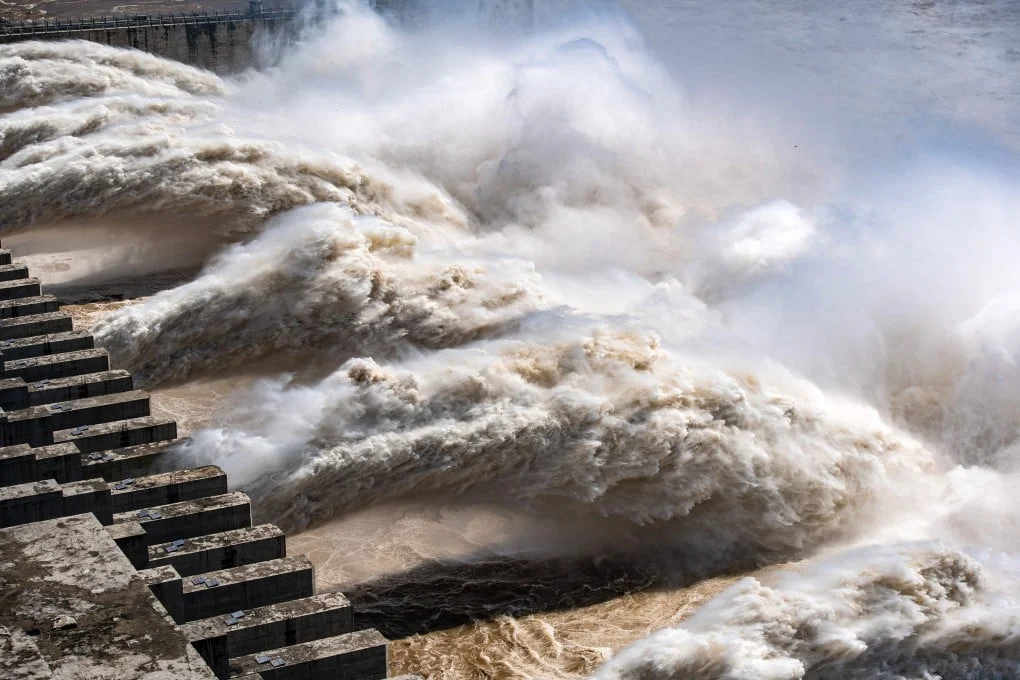
China Approves World's Biggest Hydropower Dam Close To India Border

China Approves World's Biggest Hydropower Dam Close To India Border

China has recently approved the construction of the world's largest Hydropower dam on the Brahmaputra River, also known as the Yarlung Zangbo River in Tibet.

This project is part of China's 14th Five-Year Plan and is expected to cost around $137 billion. The dam aims to generate 300 billion kWh of electricity annually, which could power over 300 million people.

The Brahmaputra River a.k.a Yarlung Zangbo River has a steep descent of approximately 25,152 feet (7,667 meters) from its source to India, making it one of the most "hydropower-rich" rivers in the world. The project will take advantage of this steep gradient to maximize energy production.

However, this project has raised concerns in India and Bangladesh, as it could give China control over the flow of the river, potentially impacting water availability downstream. Both the countries have expressed concerns about the potential impact on water flow and local ecology. Any alteration in water flow could disrupt agriculture and water availability in both India and Bangladesh.

Large dams often block the flow of silt, which is essential for maintaining fertile agricultural land downstream. Changes in river flow can also affect local biodiversity and ecosystems, potentially disrupting the livelihoods of communities that depend on the river.

There are also concerns about the dam's location in a seismically active region, which could pose significant engineering challenges. The project will require drilling multiple long tunnels to divert the river, which flows at a rate of 70,600 cubic feet per second (2,000 cubic meters).

The dam is expected to generate 300 billion kilowatt-hours (kWh) of electricity annually, which is nearly three times the capacity of the current record-holder, the Three Gorges Dam.

This ambitious project is part of China's efforts to boost renewable energy and achieve its carbon neutrality goals. However, it has raised concerns in India and Bangladesh about potential impacts on water flow and local ecology downstream.

Indian officials have expressed their concerns regarding the Yarlung Tsangpo Hydroelectric Project. Randhir Jaiswal, spokesperson for India's Ministry of External Affairs (MEA), stated that India has consistently raised its concerns through expert-level and diplomatic channels. India has urged China to ensure that the interests of downstream states are not harmed by activities in upstream areas. The Indian government has emphasized the need for transparency and consultation with downstream countries to protect their interests.

India will continue to monitor the situation and take necessary measures to safeguard its interests. The MEA has also highlighted the importance of maintaining dialogue with China on trans-border rivers to address any potential issues.

It's a delicate situation that requires ongoing communication and cooperation between the two countries.

This project is a significant step towards China's renewable energy goals, but it also brings a host of environmental and geopolitical challenges.

Tata Power to Develop 600 MW Khorlochhu Hydropower Project in Bhutan

Tata Power to Develop 600 MW Khorlochhu Hydropower Project in Bhutan

Tata Power to partner with Druk Green Power Corporation Ltd. for developing the 600 MW Khorlochhu Hydropower Project in Bhutan
  • This strategic partnership is a step towards strengthening the clean energy collaboration between India and Bhutan
  • The project aligns with Bhutan's ambitious goal of achieving 15 GW of hydropower generation capacity by 2040
With the support of the Royal Government of Bhutan and the Government of India, Tata Power, one of India's largest integrated power companies, has entered into a strategic partnership with Druk Green Power Corporation Ltd (DGPC) of Bhutan for the development of the 600 MW Khorlochhu Hydropower Project. The Project is located in the Trashiyangtse Dzongkhag (District) in Eastern Bhutan on the Kholongchhu river. While the clean power from the project will help meet Bhutan's increasing electricity requirements, it will also complement and contribute to India's energy transition to renewables.

The partnership involves a 40% equity investment by Tata Power in the Public Private Partnership Company, Khorlochhu Hydro Power Limited. The estimated project cost including financing charges is approximately Rs. 6900 Crore (approx US $821 millions) with a construction timeline of 5 years. All the statutory approvals are in place for construction work to start immediately.

This announcement comes in a couple of months after Adani Group announced the signing of an agreement with Bhutan for a 570 MW green hydro plant, which also included transformative infrastructure initiatives in the neighboring country.

This alliance between Tata Power and DGPC is an extension of the existing partnership in the 126 MW Dagachhu Hydropower Plant in Bhutan. Once operational, the Khorlochhu Hydropower Project will help Bhutan meet its winter electricity requirements which is increasing rapidly. It will also export electricity to India to support the increasing power demands of Indian utilities during the summer months.

This marquee investment underscores Tata Power's commitment to its "Sustainable is Attainable" intiative, striving towards carbon neutrality and providing alternative clean energy to India.

The MoU for the project has already been signed between Tata Power and DGPC and the Definitive Agreement will be executed shortly.

Dr. Praveer Sinha, CEO & MD, Tata Power said, “This is a landmark alliance for Tata Power and Druk Green Power Corporation. The development of the 600 MW Khorlochhu Hydropower Project in Bhutan will provide energy security to the region. This project marks a significant step towards building a sustainable energy landscape underscoring Tata Power’s commitment to a greener future.”

Mr. Dasho Chhewang Rinzin, MD, DGPC, said, “This strategic partnership with Tata Power to develop the Khorlochhu hydropower project is a significant step towards Bhutan’s energy security and economic development as the country seeks to become a High Income GNH Economy by 2034. This partnership with Tata Power opens new avenues for sourcing investments to harness Bhutan’s huge hydropower and solar potential. It further ensures access to and complements the evolving Indian energy market for surplus generation in the summer months with opportunities to expand in future to the regional market. Looking forward, DGPC hopes to not only build on this partnership with Tata Power but also emulate similar partnerships with other interested partners.”

The Khorlochhu Hydro Power Ltd will also sign long-term Power Purchase Agreements (PPA) with Tata Power Trading Corporation Ltd, a wholly owned subsidiary of Tata Power Company Ltd, for export of the summer surplus power to the Indian market and with Bhutan Power Corporation Ltd (a subsidiary of Druk Holding & Investments Ltd) for the domestic sale of power in the winter months.

Tata Power also has a successful Joint Venture with Power Grid Corporation of India Limited for a 1,200 km long Tala transmission line to bring electricity from Bhutan to Delhi.

Adani To Enter Bhutan To Build 570 Mw Green Hydro Plant

Adani To Enter Bhutan to Build 570 Mw Green Hydro Plant

Gautam Adani, Chairman of the Adani Group, recently announced the signing of an agreement with Bhutan for a 570 MW green hydro plant. This collaboration also includes transformative infrastructure initiatives in the neighboring country.

The Adani Group aims to work closely on hydro and other infrastructure projects in Bhutan, inspired by the vision of Bhutan King Jigme Khesar Namgyel Wangchuck and Prime Minister Dasho Tshering Tobgay. Additionally, they plan to contribute to green energy management for Bhutan, which aspires to be a carbon-negative nation.

The project will be located in Chukha province. During his visit to Bhutan, Adani also had the honor of meeting Bhutan's King, Jigme Khesar Namgyel Wangchuck. Adani expressed admiration for Bhutan's vision and commitment to eco-friendly initiatives, including the ambitious masterplan for the Gelephu Mindfulness City, which includes large computing centers and data facilities. This collaboration aims to contribute to green energy management and transformative infrastructure development in Bhutan.

Bhutan has significant solar energy potential. According to the Renewable Energy Management Master Plan, the country could produce up to 12 gigawatts (GW) of solar energy in technical terms. However, the current installed capacity for solar energy, apart from large hydro plants, is only 9 megawatts (MW).

Bhutan's wind energy potential is estimated at 760 MW. While wind energy is still in its early stages, the country is gradually exploring wind power as a complementary source to reduce reliance on hydropower during winter and dry months.

While hydropower remains the dominant renewable energy source in Bhutan, the country is also exploring other options to diversify its energy mix.

DOCOMO To Introduce 3D Printed Jet-Turbines for Irrigational Water-Powered Base Station of Mobile Communications N/w in Rural Areas

DOCOMO To Introduce 3D Printed Jet-Turbines for Irrigational Water-Powered Base Station of Mobile Communications N/w in Rural Areas

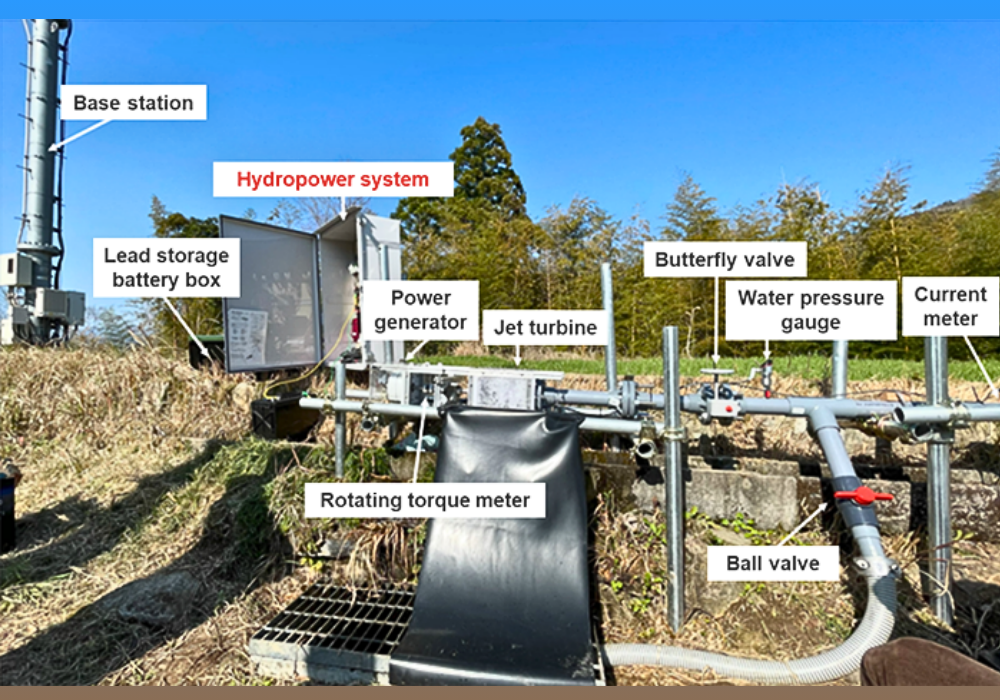
Base stations for mobile communications account for approximately 70% of the power consumed in Japan's NTT DOCOMO's operations in Japan. Hence, to use renewable energy such as hydropower in places where solar panels are not practical, NTT DOCOMO, INC. has launched Japan's first demonstration experiment of a self-powered hydropower cellular base station. The experiment began on May 30, 2024 and the company expect to start its implementation beginning in one year from now.

The experiment, which involves DOCOMO's hydroelectric power-generation system and a jet turbine developed by Professor Yukihiro Shimatani of the Prefectural University of Kumamoto, aims to prove the feasibility of a self-powered base station using water flowing in an irrigation canal, etc., as a sustainable, low-cost solution for mobile communication networks in rural areas.

The goal of this experiment is to demonstrate the feasibility of a self-powered base station using water flowing in an irrigation canal as a sustainable, low-cost solution for mobile communication networks, particularly in rural areas.

DOCOMO To Introduce 3D Printed Jet-Turbines for Irrigational Water-Powered Base Station of Mobile Communications N/w in Rural Areas


The jet turbine incorporates a nozzle that emits a stream of water, or "jet," to drive the turbine's rotation in the opposite direction and thereby generate electricity. While conventional hydroelectric systems use a separate nozzle and turbine, this device combines both components in a design so simple it can be manufactured with a 3D printer.

DOCOMO's Energy Management System (EMS) platform is being used to monitor and control the power driving the base station, as well as to visualize the amount of CO2 reduction achieved with this sustainable hydropower system. While DOCOMO's existing 286 green base stations mainly use solar power, this initiative aims to utilize renewable energy such as hydropower in locations where solar panels are not practical.

This experiment is a step towards DOCOMO's goal of achieving net-zero greenhouse gas emissions from its operations by 2030 and across its entire supply chain by 2040³. It's a significant move towards the adoption of renewable energy and the realization of a sustainable, carbon-neutral world.

There are similar initiatives in other countries that focus on integrating renewable energy sources into communication networks and other infrastructures. While the specific details of self-powered hydropower base stations like DOCOMO's experiment may not be widely reported, there are broader efforts to use sustainable energy solutions globally.

Notably, the International Renewable Energy Agency (IRENA) has discussed innovative operations of pumped hydropower storage (PHS) to provide greater flexibility to power sectors and integrate larger shares of variable renewable energy (VRE) into power systems. These initiatives often involve collaboration between technology developers, energy providers, and governments to create more resilient and sustainable energy infrastructures.

Additionally, telecom operators and technology companies worldwide are increasingly adopting green energy solutions, such as solar and wind power, to reduce their carbon footprint and ensure uninterrupted services in remote areas. These efforts are part of a global movement towards decarbonization and achieving net-zero emissions in various sectors, including mobile communications.

While the specific approach of using water from irrigation canals for powering base stations is unique to DOCOMO's experiment, the underlying principle of using renewable energy sources is a common thread in many international sustainability projects.

Market Reports

Market Report & Surveys
IndianWeb2.com © all rights reserved