Showing posts with label BRICS. Show all posts

India Pushes BRICS Space Alliance as Strategic Global Growth Driver

India Pushes BRICS Space Alliance as Strategic Global Growth Driver


Union Minister Dr. Jitendra Singh pitched the idea of a BRICS Space Economy as the next frontier of global growth, urging member nations to embrace collective action to unlock new opportunities in innovation, investment, entrepreneurship, and sustainable development.

The future of the space economy will not be shaped by nations working in isolation. It will be shaped by partnerships, shared innovation and collective ambition. - Dr. Jitendra Singh 

Dr. Jitendra Singh said the BRICS Remote Sensing Satellite Constellation has already demonstrated the value of collaborative space applications through satellite data sharing among member countries. He expressed confidence that ongoing discussions on institutional mechanisms, including the proposed BRICS Space Council, would provide greater momentum and continuity to future cooperation in the space sector.

Key Highlights of the Meeting

  • Indian Space Industry Brochure released, showcasing the country’s growing NewSpace sector.
  • Exchange of mementoes and interactions with Indian startups and private enterprises.
  • Participation from Brazil, China, Egypt, Ethiopia, Indonesia, Iran, Russia, South Africa, and the UAE under India’s BRICS Chairship 2026.
  • Deliberations on space sustainability, debris‑free missions, strengthening the BRICS Remote Sensing Satellite Constellation (RSSC), and advancing discussions on the proposed BRICS Space Council.
  • Collaboration prospects in disaster management, Earth observation, capacity building, and knowledge sharing.

India’s Space Achievements

India’s transformative reforms in the space sector have opened unprecedented opportunities for private industry, startups, academia, and global partnerships. Landmark missions such as Chandrayaan‑3, Aditya‑L1, and the ongoing Gaganyaan mission were cited as examples of India’s expanding frontiers in science and technology.

Sustainability and Global Challenges

The Minister stressed that the long‑term future of space activities depends on preserving outer space as a safe, secure, and sustainable domain. He welcomed discussions on debris‑free missions and sustainable operations as vital steps toward safeguarding the space environment for future generations.
He also linked space technology to solutions for pressing global challenges such as climate change, disaster preparedness, food and water security, and sustainable urbanization.

From Coordination to Co‑Creation

Calling for a more ambitious vision, Dr. Singh urged BRICS nations to move beyond consultation toward co‑development, co‑innovation, and co‑creation. By bringing together scientists, engineers, industries, startups, and young innovators, BRICS can develop solutions for global challenges, create new economic opportunities, and build a stronger framework for scientific advancement and shared prosperity.

Conclusion

India reaffirmed its commitment to working closely with BRICS partners to transform shared aspirations into concrete outcomes. Dr. Singh’s vision positions space not only as a driver of economic growth but also as a powerful force for resilience, sustainability, and international cooperation.

E‑Rupee Pilots Put India at Forefront of BRICS Digital Currency Push

E‑Rupee Pilots Put India at Forefront of BRICS Digital Currency Push

India is accelerating adoption of its central bank digital currency (CBDC), the e‑rupee, by routing welfare payments through pilot programs, while simultaneously preparing to showcase a BRICS‑wide digital currency initiative at the bloc’s 2026 summit. The move aims to reduce subsidy leakage, create a clear use case for the e‑rupee, and position India as a leader in cross‑border CBDC integration.

Key Highlights of India’s E‑Rupee Push

  • 10 pilot programs are underway, channeling parts of India’s $80 billion welfare system through the e‑rupee.
  • Maharashtra (Phulenagar village): Farmers receive programmable subsidies covering up to 80% of drip‑irrigation costs, spendable only at approved vendors.
  • Gujarat: Target to onboard 7.5 million households eligible for subsidized food by June 2026, using e‑rupee transfers.
  • Adoption figures: About 10 million users as of April 2026, with cumulative transactions of $3.6 billion since launch in December 2022 — small compared to UPI’s $300 billion monthly volume.

Strategic Context: BRICS Digital Currency Plan

  • The Reserve Bank of India (RBI) is urging the government to advance a CBDC linkage proposal across BRICS economies (Brazil, Russia, India, China, South Africa).
  • Goal: Streamline cross‑border trade and reduce reliance on the U.S. dollar.
  • Risk: The initiative faces geopolitical pressure, with U.S. tariffs already imposed on Indian imports tied to Russian crude purchases.

Comparative Snapshot: E‑Rupee vs UPI

FeatureE‑Rupee (CBDC)UPI (Unified Payments Interface)
LaunchDec 20222016
Users (Apr 2026)~10 million300+ million
Monthly Transactions~$0.3 billion~$300 billion
ProgrammabilityYes (restricted use cases)No (open payments)
Adoption StrategyWelfare pilots, subsidiesOrganic consumer/business uptake

Risks & Challenges

  • Adoption gap: Welfare pilots may create a captive user base but not necessarily genuine enthusiasm.
  • Geopolitical backlash: U.S. opposition to BRICS currency alternatives could trigger trade tensions.
  • Competition with UPI: The e‑rupee must prove utility beyond welfare transfers to compete with India’s already dominant digital payments ecosystem.

Outlook

  • Short term (2026): Welfare pilots will expand, especially in agriculture and food distribution.
  • Medium term (2026 BRICS Summit): India will push for a CBDC interoperability framework across BRICS.
  • Long term: Success depends on whether the e‑rupee can evolve from a welfare‑linked instrument into a mainstream payment option with cross‑border utility.

India To Accept Local Currencies For Trade, Sideline US Dollar

India To Accept Local Currencies For Trade, Sideline US Dollar

India and the United Arab Emirates (UAE) have taken a significant step by initiating trade using their respective local currencies, moving away from the dominant use of the US dollar in international transactions.

The decision to accept native currencies could be taken at the upcoming BRICS summit in October in the Kazan region of Russia. Notably, India is keen on using local currencies only when they are "non-binding". 

Recently, Indian Oil Corporation purchased one million barrels of oil from the Abu Dhabi National Oil Company using Indian rupees instead of the US dollar. Similarly, a UAE gold exporter sold 25 kg of gold to an Indian buyer for approximately ₹12.8 crore ($1.54 million) in a similar currency-to-currency exchange.

This trend reflects a broader global effort to reshape the international financial system and reduce dependence on the US dollar. Other influential countries, including China and Russia, have also expressed interest in de-dollarization due to concerns over aggressive US sanctions and foreign policies.

While the US dollar remains dominant, this shift highlights the growing importance of local currencies in cross-border trade and investment transactions.

Using local currencies for trade offers several advantages. For an instance, when trading in local currencies, businesses avoid exposure to exchange rate fluctuations. This stability can enhance predictability and reduce financial risk.

Moreover, by bypassing the need to convert currencies, companies save on transaction fees, currency conversion charges, and other related costs.

To recall, in March it was reported that BRICS, the five Nations group comprising Brazil, Russia, India, China, and South Africa, will work to create an independent payment system based on digital currencies and blockchain.

In May this year, Iran confirmed its collaboration with Russia on developing Central Bank Digital Currencies (CBDC) and tokenized assets for payments.

BRICS To Create Blockchain-based Payments To Reduce US Dollar Reliance

BRICS To Create Blockchain-based Payments To Reduce US Dollar Reliance

BRICS, the five Nations group comprising Brazil, Russia, India, China, and South Africa, will work to create an independent payment system based on digital currencies and blockchain, reported Russian news agency TASS, citing Yury Ushakov, who is the Assistant to the President of Russia for Foreign Policy.

Ushakov said that the specific task for this year is to increase the role of BRICS in the international monetary and financial system.

BRICS officials emphasised the importance of establishing an autonomous BRICS payment system, leveraging state-of-the-art tools like digital technologies and blockchain. The priority is to ensure convenience for governments, individuals, and businesses, along with cost-effectiveness and non-political influences.

The goal is to make sure it is convenient for governments, common people and businesses, as well as cost-effective and free of politics.

In the 2023 BRICS Summit's Johannesburg Declaration, the leaders set the focus of BRICS countries on increasing settlements in national currencies and strengthening correspondent banking networks to secure international transactions. "Work will continue to develop the Contingent Reserve Arrangement, primarily regarding the use of currencies different from the US dollar."

TASS also reported that Russia’s Finance Ministry, the Bank of Russia, and BRICS partners will create the BRICS Bridge multisided payment platform in an effort to improve the global monetary system.

In the last BRICS Summit, Brazil's President called for the BRICS nations to create a common currency for trade and investment between each other, as a means of reducing their vulnerability to dollar exchange rate fluctuations.

FIA Global One of 4 Winners from India among the BRICS Countries


FIA Global wins the prestigious BRICS women's innovation contest, Mulan 2022

FIA Global was one of 4 winners from India among the BRICS countries, to have been awarded the BRICS WBA award for 2022

FIA Global, India’s leading financial services organization with a mission to bring financial inclusion to every doorstep in the subcontinent, has won the international BRICS Women Innovation Contest 2022, held in Beijing in June 2022.

Seema Prem, the CEO and Co-founder of FIA Global, has been recognized as an outstanding, and dynamic woman entrepreneur, committed to the vision of making financial inclusion simple for banks and their rural customers. Seema has been instrumental in creating socially impactful products and services to meet the needs of unserved communities and markets and lead FIA’s efforts to expand its global footprint. Emphasizing technology driven, integrated solutions, her focus is on building high impact, sustainable programs to reach the last mile. She is also responsible for advocacy, governance, and building strategic relationships with governments, financial institutions and other key partners to support and scale social innovations.

Seema is the recipient of the UN Women Transforming India Awardee, 2018 and is the finalist in the Social Entrepreneur of the Year Award 2021, by the Schwab Foundation.

About BRICS Awards

The BRICS Women’s Business Alliance (WBA) aims to promote women’s entrepreneurship and women’s potential in the BRICS countries. The Contest is open to all business women in BRICS countries, and will recognize outstanding business women devoted to promoting social welfare and economic development in different fields across BRICS nations, and promote the exchange of best practices and innovative initiatives led by women, thus advancing the cooperation among business women across BRICS nations. This year, the BRICS WBA Mulan Award was granted to 15 candidates as part of the BRICS Women Innovation Contest and FIA Global was one of 4 winners from India to have won the prestigious award this year.

The BRICS Women Innovation Contest is co-sponsored by the Indian, Russian, Brazilian and South African Chapters of the WBA. The contest is for all women entrepreneurs across the BRICS countries to unleash women's potential and innovation in the market.

About FIA Global:

FIA Global, founded in 2012 and headquartered in Gurgaon, India, is in the business of making financial inclusion simple by leveraging technology through its neobanking solution, FINTAP, and creating avenues of outreach for the delivery of financial services to the unbanked and underserved. FIA is enabling and empowering millions of people deprived of banking services by bringing it to their doorstep. For more, please visit https://fiaglobal.com/

ISRO To Contribute 2 Satellites for BRICS Remote Sensing Satellite Constellation

ISRO To Contribute 2 Satellites for BRICS Remote Sensing Satellite Constellation

Last year in August, BRICS, which stands for Brazil, Russia, India, China, and South Africa, signed an agreement on cooperation in sharing remote sensing satellite data. This Agreement enables building a virtual constellation of specified remote sensing satellites of BRICS space agencies and their respective ground stations will receive the data. This will contribute in strengthening multilateral cooperation among BRICS space agencies in meeting the challenges faced by mankind, such as global climate change, major disasters and environmental protection.

In a latest, a Joint Committee on Space Cooperation has been launched by BRICS, under the BRICS Remote Sensing Satellite Constellation agreement. This committee was launched during a virtual meeting of top officials of BRICS space agencies on Wednesday this week.

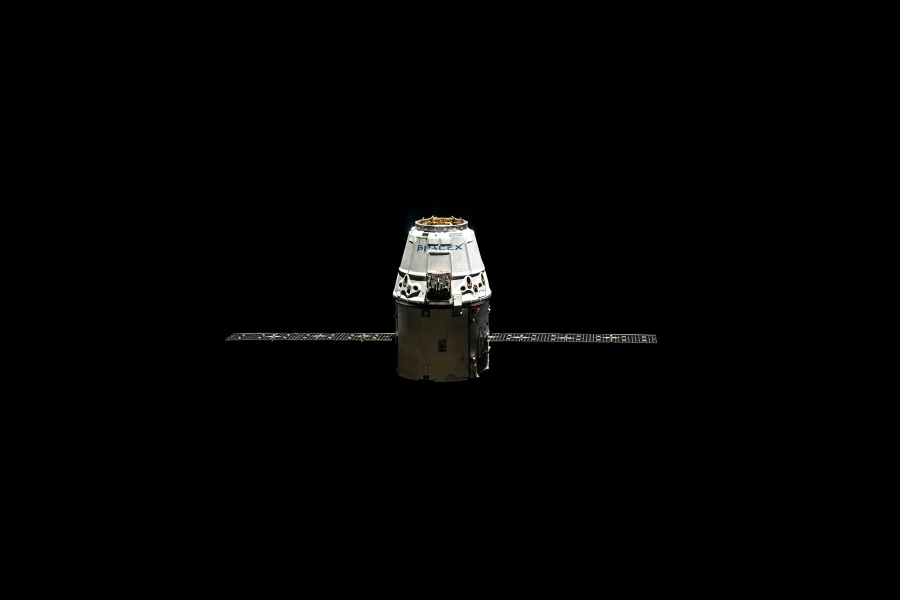
BRICS space agencies include — Indian Space Research Organisation (ISRO), China National Space Administration (CNSA); South African National Space Agency (SANSA), Brazilian Space Agency (AEB), and State Space Corporation “Roscosmos” of Russia.On August 18, 2021, Indian space agency, ISRO had signed an agreement with other BRICS space agencies to develop a virtual remote sensing constellation. The constellation consists of 6 existing satellites, two of which- Resourcesat-2 and 2A- are contributions of ISRO.

Other satellites in the constellation are Gaofen-6 and Ziyuan III 02, both developed by China, CBERS-4, jointly developed by Brazil and China, and the Kanopus-V type developed by Russia. Ahead of the launch of Resourcesat-2 in 2016, ISRO had said that it is extremely useful for monitoring vegetation and water resources and also has applications in mapping and monitoring land resources, rural and urban development plans, crop production estimation, forest cover mapping and disaster management support

BRICS CCI Announces Launch of BRICS CCI Women's Wing to Create an Enabling Support System for Women Entrepreneurs and Professionals Across Geographies

The BRICS Chamber of Commerce Industry (BRICS CCI) announced the launch of the BRICS CCI Women Wing with focus on women empowerment initiatives and policies across geographies. The objective of the women wing is to create an enabling support system for women entrepreneurs and professionals across geographies. Founded in 2012 BRICS CCI is empanelled with NITI Aayog and recognized by the United Nations. While the BRICS nations will remain at the centre of all activities the chamber has taken in its credo to reach out to and enable young entrepreneurs from other friendly nations too and bring stakeholders associated with women entrepreneurship across key countries under one platform.

[caption id="attachment_142329" align="aligncenter" width="605"] Dr. BBL Madhukar Director General- BRICS CCI with representatives of the newly launch BRICS CCI Women Wing[/caption]

The BRICS CCI Women wing will be led by Ms. Shabana Nasim Governing Body Member BRICS CCI Ms. Shormishtha Ghosh Director - Business Advisory BRICS CCI and Ms. Ruby Sinha Convenor BRICS CCI Women wing and Hony. Advisor BRICS CCI. One stop knowledge hub for women entrepreneurs globally sheatwork.com will be the knowledge partner for the BRICS CCI Women wing. An eminent advisory board comprising of eminent women professionals from across countries is also being set up.

Announcing the launch of BRICS CCI Women; s wing from L ndash; R - Ms. Ruby Sinha Convenor BRICS CCI Women wing and Hony. Advisor BRICS CCI Dr. BBL Madhukar Director General- BRICS CCI Ms. Shabana Nasim Governing Body Member BRICS CCI and Ms. Shormishtha Ghosh Director- Business Advisory BRICS CCI

Announcing the launch Dr. BBL Madhukar Director General - BRICS CCI said We are very pleased to announce the launch of our exclusive wing for enterprising women entrepreneurs and professionals looking at creating a global presence through our advisory and support services. It will be our endeavour to create a supportive eco-system to enable women to realise their full potential which in turn will help in generating employment and growing the economy.

The BRICS CCI women wing will be building a credible repository of working professionals entrepreneurs business partners across different geographies and industry verticals and promoting business interactions among members by organizing regular events platforms and other forms of interactions. It will also facilitate mentoring/training programs for women professionals.

For any additional information please write to info@bricscci.com.

About BRICS CCI

Brazil Russia India China and South Africa have emerged as the protagonistsin the world economy significantly and rapidly. The BRICS Chamber of Commerce and Industry is a parent organization which promotes commerce and industry in the BRICS nations. The Chamber founded in 2012 with the efforts of eminent professionals and entrepreneur is a not-for-profit and non-governmental organization. BRICS CCI is a registered body under Societies Registration Act 1860 Government of India and empanelled with NITI Aayog and recognized by United Nations. The objective of BRICS CCI is to create an enabling support system especially for the MSME segment of businesses and young entrepreneurs from across all geographies. While the BRICS nations will remain at the centre of all activities the chamber has taken in its credo to reach out to and enable young entrepreneurs from other friendly nations too. It proposes to be the voice; of entrepreneurs and helps them cultivate their business with due regard to social cultural and security issues.

India To Surpass China In Innovation Growth, Predicts BRICS Report

In what could be considered as an excellent news for people of the country, India might soon be leaving behind its close rival/neighbour China when it comes to innovation competitiveness. According to the latest BRICS Innovative Competitive Report 2017 released by China Science and Technology Exchange Center, come 2025, the Indian subcontinent might start surpassing China in innovation.

“The average score of innovation index of each BRICS country would be on the rise for 2017-2025 as the overall national innovation competitiveness of BRICS countries would be constantly strengthened over time. It is predicted that the innovation competitiveness of India would see a significant rise with its growth rate probably surpassing China between 2025-2030," reads the report.

In addition to the amazing news for India and its economy, the BRICS report also shared that the growth rate of Russia would see a downward trend in the coming years. In fact, the Indian subcontinent would even take over Russia in terms of its comprehensive STI competitiveness by the year 2030.

The report reveals that the BRICS nations over the years have really pulled their weight when it comes to building a reputation amongst other developing countries as leading centres of Science and Technology development. It mentions that these nations-Brazil, Russia, China, India and South Africa-have evolved to become a “globally important STI force”.

The BRICS report might come as a huge relief for the Modi government which has recently been facing some harsh reviews from citizens asking for a concrete proof of the work they have done since gaining power.

The report states: “international community lacks an in-depth strategic study on international collaboration among BRICS countries. It is urgent to set up a regular network for technology collaboration and transfer as both the governments and a regularly organized conference on technology transfer could no longer satisfy the needs for the transfer and flow of technology, funding, and talents under new circumstances."

Slated to be held next month in China, the BRICS Summit will see Prime Minister Narendra Modi's presence in spite of the growing tension between the two countries on their borders.

Market Reports

Market Report & Surveys
IndianWeb2.com © all rights reserved