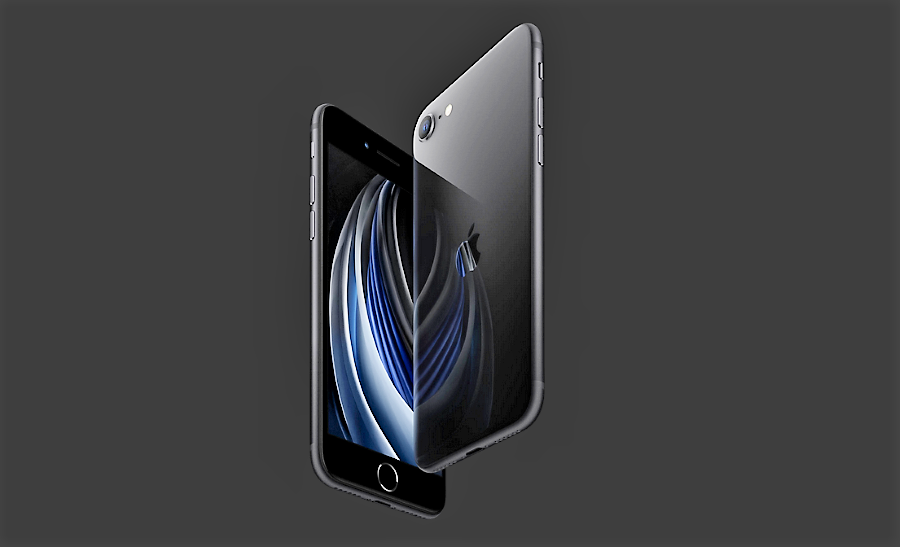
Showing posts with label iPhone. Show all posts

iPhone 17 Pro Max Powers New Wave of Global Filmmakers

iPhone 17 Pro Max Powers New Wave of Global Filmmakers

The Mumbai Academy of Moving Image (MAMI) has unveiled its latest MAMI Select: Filmed on iPhone program, spotlighting four emerging filmmakers who are redefining cinema with the help of the iPhone 17 Pro Max.

MAMI Select is a flagship program by the Mumbai Academy of Moving Image (MAMI) that empowers emerging filmmakers to create short films using iPhones, showcasing how accessible technology can democratize cinema and redefine storytelling.

This year’s slate of short films explores diverse themes — from a clandestine romance in Mumbai, to divinity and chaos in Kerala, to a migrant girl’s dream in Goa, and the haunting silence of a Bengali woman losing her voice. Each filmmaker harnessed the iPhone’s advanced camera system, ProRes RAW, Cinematic Mode, Action Mode, and 8x optical zoom to craft visually striking stories that resonate far beyond India. 

The Four Voices

iPhone 17 Pro Max Powers New Wave of Global Filmmakers
Cinematographer Ramananda Sarkar (left) and filmmaker Ritesh Sharma (left background) frame a shot on iPhone 17 Pro Max while filming She Sells Seashells on location in Goa. [Image - apple.com]
  • Shreela Agarwal (11.11): A love letter to Mumbai at night, filmed with ProRes RAW to capture vivid details in low light.
  • Ritesh Sharma (She Sells Seashells): A migrant girl’s dream in Goa, blending reality and imagination through Cinematic Mode and precise sound design.
  • Robin Joy (Pathanam): A surreal tale of an angel’s fall, brought to life with Action Mode and AI-powered editing.
  • Dhritisree Sarkar (Kathar Katha): A haunting story of a news anchor losing her voice, shot with 8x optical zoom to capture inner trauma.

Mentorship and Impact

Guided by acclaimed directors Sriram Raghavan, Chaitanya Tamhane, Dibakar Banerjee, and Geetu Mohandas, the program demonstrates how accessible technology is democratizing filmmaking.

MAMI director Shivendra Singh Dungarpur notes: “The fact that these films have been captured with iPhone has inspired hundreds of people to go out there and start making short films. It’s creating a new generation of filmmakers.”

Democratizing Cinema

iPhone 17 Pro Max Powers New Wave of Global Filmmakers
Ritesh Sharma uses the Blackmagic Camera app on iPhone 17 Pro Max while framing Maruti, his film’s protagonist, selling trinkets on the beach. [Image - apple.com]


For these storytellers, the iPhone is more than a tool — it’s a gateway. By removing barriers of cost and equipment, it allows new voices to tell stories that might otherwise remain untold.
As filmmaker Agarwal puts it: “The freedom, simply put, is unmatched.”

All four shorts are now streaming on MAMI’s YouTube channel, offering audiences worldwide a glimpse into the future of cinema — one where creativity, not equipment, defines the art.

Key Takeaway

The iPhone 17 Pro Max isn’t just a smartphone — it’s becoming a serious filmmaking instrument, empowering diverse voices and reshaping global storytelling.


India’s iPhone Engine: Apple’s 45-Company Supply Chain Revealed

India’s iPhone Engine: Apple’s 45-Company Supply Chain Revealed

Apple has dramatically expanded its supply chain footprint in India, integrating nearly 45 companies as of 2025. This includes large domestic firms, global vendors, and over 20 Indian MSMEs (micro, small, and medium enterprises), spanning component manufacturing, subassembly, and equipment supply.

Key Indian Companies in Apple’s Supply Chain

Company Name Role / Contribution
Tata ElectronicsiPhone assembly, precision components
Bharat ForgeMachinery and tooling for electronics
HindalcoAluminum casings and materials
Titan Engineering & Automation LtdManufacturing automation systems
Wipro PARIRobotics and automation
VVDN TechnologiesElectronics design and manufacturing
AequsPrecision engineering and components
MicroplasticsPlastic components
ATL (Anand Teknow Aids Ltd)Battery packs and modules
Motherson GroupWiring harnesses and connectors
Avary TechnologiesPrinted circuit boards (PCBs)
SFO TechnologiesEMS (Electronics Manufacturing Services)
Jyoti CNC AutomationCNC machinery for Apple vendors

Global Suppliers Operating in India

Company Name Origin Role in India
FoxconnTaiwanMajor iPhone assembler in Tamil Nadu
PegatronTaiwaniPhone assembly in Tamil Nadu
Wistron (now Tata)Taiwan/IndiaiPhone assembly, now under Tata Group
JabilUSAComponent manufacturing
SalcompFinlandChargers and power components
FoxlinkTaiwanCable assemblies

Geographic Spread

  • Assembly hubs: Tamil Nadu, Karnataka
  • Component ecosystem: Maharashtra, Uttar Pradesh, Gujarat, Andhra Pradesh, Haryana
Apple’s India strategy is driven by the Production Linked Incentive (PLI) scheme and geopolitical shifts, with India now producing one in five iPhones globally.

India Becomes Apple’s Growth Engine as Sales Hit All-Time High

India Becomes Apple’s Growth Engine as Sales Hit All-Time High

Apple has just notched a major milestone in India: annual sales surged to a record $9 billion in the last fiscal year, marking a 13% year-over-year increase. This leap underscores how Apple’s strategic retail expansion and rising consumer demand are reshaping its footprint in one of the world’s fastest-growing tech markets.

Key Drivers Behind the Surge
  • Retail Expansion: Apple opened new stores in Bengaluru and Pune, with upcoming outlets planned in Noida and Mumbai.
  • Localized Strategy: India was made a dedicated sales region in 2023, reflecting its growing importance to Apple’s global operations.
  • Affordability Push: Despite high import duties (iPhone 16 starts at ₹79,900 vs. $799 in the US), Apple boosted accessibility via:
    • Student discounts
    • Trade-in offers
    • Bank cashback partnerships

Strategic Implications

  • Manufacturing Shift: Now, 1 in 5 iPhones is made in India, with Apple expanding production across five factories, including two new ones.
  • Market Share Growth: iPhones now hold ~7% of India’s smartphone market, seen as aspirational status symbols.
  • China Diversification: With geopolitical tensions and slowing growth in China, India is emerging as a retail and manufacturing hedge.

Why It Matters

For a company facing plateauing global smartphone sales, India offers a rare blend of rising incomes, a tech-savvy middle class, and policy tailwinds. Apple’s retail-first, locally attuned strategy is not just about selling more devices—it’s about embedding itself into the fabric of India’s digital economy.

India’s iPhone Production Lags Behind China: Scaling Bottlenecks and Supply Chain Realignment

India’s iPhone Production Lags Behind China: Scaling Bottlenecks and Supply Chain Realignment

Journalist Patrick McGee's book Apple in China highlights how India's iPhone production ramped up much more slowly than China's. Between 2016 and 2023, India produced 15 million iPhones, accounting for 7% of global shipments, whereas China, between 2006 and 2013, surged from zero to 153 million units—ten times India's pace.

A key reason is that India's role in Apple's supply chain is still largely Final Assembly, Test, and Pack (FATP), meaning most components are imported from China and assembled locally by partners like Wistron and Foxconn. This dependency limits India's ability to scale as rapidly as China did.

Apple has made progress—India now assembles flagship models, including the iPhone Pro, and distribution timelines have improved. However, full supply chain independence could take another 5–10 years, as India builds up infrastructure and local component sourcing.

McGee’s book, Apple in China, highlights both the loopholes and strengths in India’s iPhone manufacturing journey.

To start with, China's factories operate with highly optimized workflows, allowing rapid scaling. In contrast, India’s iPhone Production, as mentioned above, is still largely Final Assembly, Test, and Pack (FATP), meaning most components are imported from China. This dependency slows scaling efforts.

Unlike China’s deep manufacturing ecosystem, India lacks the same level of supplier clustering, making logistics more complex. Moreover, China builts a vast electronics manufacturing ecosystem over decades, while India is still developing its supply chain. Most components are imported from China, adding logistical complexity and costs.

Apple’s diversification into India hasn’t fully reduced reliance on China. The Shanghai lockdown in 2022 accelerated India’s role, but parallel operations have increased complexity rather than true supply chain independence.

Apple initially faced hurdles due to India’s 30% local sourcing requirement, which was relaxed in 2017 but still affects supply chain efficiency.

As of now, India has moved beyond entry-level models and now assembles iPhone Pro variants, matching China’s distribution timeliness.

Meanwhile, Apple’s $22 billion investment in India signals long-term commitment, with Foxconn and Tata playing key roles in scaling production. Apple aims to make India a full-fledged manufacturing hub, but experts estimate it could take 5–10 years before India reaches China's scale.

Rising US-China tensions and tariff policies make India a more attractive alternative for Apple’s supply chain diversification.

India’s expanding middle class and increasing iPhone adoption create a strong domestic market, encouraging further investment.

Foxconn’s recent $1.5 billion investment in India signals progress, but deep manufacturing (chips, displays, batteries) is still lacking.

India is making strides, but full-scale manufacturing independence could take another 5–10 years. It's an interesting case study, for the world to see, in manufacturing dynamics. Do you think India can eventually match China's scale, or will structural challenges persist? Do comment below....

India Ramps Up iPhone Production to 60%, Captures 20% of Apple's Global Output

India Ramps Up iPhone Production, Captures 20% of Apple's Global Output

Apple's iPhone production in India has seen a massive 60% surge, reaching 1.89 lakh crore in the financial year 2024-25, reported news agency IANS. Of this, ₹1.5 lakh crore worth of iPhones were exported, marking a significant shift in Apple's global supply chain.

This growth is largely driven by Apple's expanding manufacturing footprint in India, with Foxconn, Tata Electronics, and Pegatron playing key roles. The US-China tariff war has also contributed to Apple's decision to ramp up production in India, as lower US tariffs on India-made smartphones give the company a strategic advantage.

India's smartphone exports hit ₹1.75 lakh crore ($21 billion) in April-February 2024-25, with Apple accounting for 70% of these exports. The Production Linked Incentive (PLI) scheme has been instrumental in attracting foreign tech giants like Apple, helping India emerge as a major electronics manufacturing hub.
 
India Ramps Up iPhone Production, Captures 20% of Apple's Global Output

This shift could mean more locally assembled iPhones for Indian consumers and a stronger presence for Apple in the Indian market.

In February this year, India —for the first time — started exporting electronic components for Apple products to China and Vietnam, marking a notable shift from a net importer to an exporter of these components.

India's iPhone production has grown significantly, but it still lags behind China in overall scale. Apple has assembled $22 billion worth of iPhones in India in the past year, marking a 60% increase. Now, 20% of Apple's global iPhone output comes from India.

China, however, remains Apple's largest manufacturing hub, with nearly 200 suppliers deeply embedded in its supply chain. While Apple is diversifying, experts estimate it could take up to eight years to shift just 10% of its production capacity away from China.

One major advantage for India is zero tariffs on iPhones exported to the U.S., while China faces cumulative tariffs of massive 145%. This makes India a cost-effective alternative for Apple, especially as geopolitical tensions continue to impact global trade.

In February this year, it was reported that Apple Intelligence is launching in India in April 2025. Initially, it will support localized English tailored for Indian users. 

Besides, in early this month, Air India integrated Apple AirTag with its baggage-tracking system and mobile app to securely track the location of its flyers' baggage.

Apple and Alibaba Collaborate for AI Features for China's iPhone Users

Apple and Alibaba Collaborate for AI Features for China's iPhone Users

Apple has partnered with Alibaba to develop AI features specifically for iPhone users in China. This collaboration aims to address Apple's declining market share in China, where competitors like Huawei have already integrated AI tools into their devices.

The partnership is significant because it allows Apple to navigate China's strict regulatory landscape by leveraging Alibaba's extensive experience in AI and its vast user data from platforms like Taobao and Tmall. The jointly developed AI features are currently awaiting regulatory approval, and if approved, they could be integrated into future iOS updates.

This move is seen as a potential game-changer for Apple's position in the Chinese market, where iPhone sales have been struggling since 2024. It could also help Apple regain lost ground by offering more personalized and intuitive AI-powered features for Chinese users.

The partnership between Apple and Alibaba could lead to several AI features for iPhone users in China. Some potential features include Enhanced Siri Responses where in Siri could provide more accurate and context-aware responses by leveraging Alibaba's AI models and vast user data.

With this partnership, Apple Intelligence, which has been unavailable in China, could be reintroduced with features tailored specifically for Chinese users. Notably, Apple has set an internal target to roll out Apple Intelligence in simplified Chinese by April for users outside China. However, bringing the service to mainland China still requires regulatory approval.

Besides, with this partnership iPhone users in China might receive personalized content recommendations based on their browsing and purchasing habits from platforms like Taobao and Tmall.

This collaboration aims to address Apple's declining market share in China by integrating localized AI services that comply with the country's strict regulatory landscape. Apple has been facing declining market share in China, partly due to the lack of AI features in its devices. Competitors like Huawei have already integrated AI tools into their smartphones, putting Apple at a disadvantage.

Before partnering with Alibaba, Apple explored collaborations with other Chinese tech giants like Baidu, Tencent, and ByteDance. However, these partnerships did not meet Apple's standards due to various reasons, including privacy concerns and technical challenges.

Alibaba was chosen as the ideal partner due to its extensive experience in AI and its vast user data from platforms like Taobao and Tmall – two of the largest e-commerce platforms in China, both owned by Alibaba Group.

The jointly developed AI features are currently awaiting regulatory approval, but if approved, they could significantly enhance user experiences with smarter Siri responses, improved search capabilities, and more personalized services.

These features aim to provide a more personalized and intuitive user experience, helping Apple regain its competitive edge in the Chinese market.

Apple Introduces Apple Invites, a New iPhone App to Create Custom Invitations

Apple Introduces Apple Invites, a New iPhone App to Create Custom Invitations
Introducing Apple Invites, a new app that brings people together for life’s special moments

Apple, on Tuesday, announced the Apple Invites, a new app for iPhone that helps users create custom invitations to gather friends and family for any occasion. With Apple Invites, users can create and easily share invitations, RSVP, contribute to Shared Albums, and engage with Apple Music playlists. Starting 4th February, users can download Apple Invites from the App Store, or access it on the web through icloud.com/invites. iCloud+ subscribers can create invitations, and anyone can RSVP, regardless of whether they have an Apple Account or Apple device.

With Apple Invites, an event comes to life from the moment the invitation is created, and users can share lasting memories even after they get together,” said Brent Chiu-Watson, Apple’s senior director of Worldwide Product Marketing for Apps and iCloud. “Apple Invites brings together capabilities our users already know and love across iPhone, iCloud, and Apple Music, making it easy to plan special events.”

Beautiful Invitations That Create and Capture Shared Moments

Apple Introduces Apple Invites, a New iPhone App to Create Custom Invitations
With Apple Invites, bringing events to life is easy and fun. Users can create, share, and RSVP to invitations through the Apple Invites app, or on the web from any device.


To get started with Apple Invites, users can choose an image from their photo library or from the app’s gallery of backgrounds — a curated collection of images representing different occasions and event themes. Integrations with Maps and Weather give guests directions to the event and the forecast for that day.

Additionally, participants can easily contribute photos and videos to a dedicated Shared Album within each invite to help preserve memories and relive the event. And collaborative playlists allow Apple Music subscribers to create a curated event soundtrack that guests can access right from Apple Invites.

Apple Introduces Apple Invites, a New iPhone App to Create Custom Invitations
Integrations with Maps and Weather give guests directions to the event and the forecast for that day.

Apple Intelligence Makes Invites Even More Fun

Apple Introduces Apple Invites, a New iPhone App to Create Custom Invitations
Image Playground is built right into Apple Invites, giving users an easy way to generate original images that make their invitation even more unique.


With Apple Intelligence, creating unique event invitations is easy. Users can tap in to the built-in Image Playground experience to produce original images using concepts, descriptions, and people from their photo library. And when composing invitations, users can use Writing Tools to help find just the right turn of phrase to meet the moment.¹

Simple Ways to Manage and Join Events

Hosts get full control of their invite experience: They can easily view and manage their events, share invitations with a link, review RSVPs, and choose the details they want included in the preview, like the event background or a home address. Guests can view and respond to an invitation using the new iPhone app or on the web without needing an iCloud+ subscription or an Apple Account. Attendees control how their details show up to others, and have the ability to leave or report an event at any time.

Apple Introduces Apple Invites, a New iPhone App to Create Custom Invitations
Hosts can easily view and manage their events, share invitations with a link, review RSVPs, and choose the details they want included in the preview, like the event background or a home address.

Additional iCloud+ Premium Features

In addition to event creation in Apple Invites, iCloud+ subscribers have access to many more premium features:
  • Expanded storage allows users to keep large libraries of original, high-resolution photos, videos, and files safe in iCloud, and easily accessible across all of their devices and the web.
  • Private Relay keeps browsing in Safari entirely private from network providers, websites, and even Apple.
  • Hide My Email generates unique, random email addresses whenever needed.
  • HomeKit Secure Video allows users to capture and review home security footage in an end-to-end encrypted format.
  • Custom email domains enable users to personalise their iCloud email address.
Family Sharing allows users to share their iCloud+ subscription with up to five people at no extra cost.

Users can learn more about subscribing to iCloud+ at apple.com/icloud, with plans starting at just INR 75.

Availability

Apple Invites is available today as a free download from the App Store for all iPhone models running iOS 18 or later, and can be accessed on the web at icloud.com/invites. Some features are not available in all regions or in all languages. For more information, visit apple.com/ios/feature-availability.

¹Apple Intelligence is available on iPhone 15 Pro, iPhone 15 Pro Max, iPhone 16, iPhone 16 Plus, iPhone 16 Pro, and iPhone 16 Pro Max running iOS 18.2 and later, and can be accessed in most regions around the world when the device and Siri language are set to localised English for Australia, Canada, New Zealand, South Africa, the U.K., or the U.S

Tata Electronics Acquires Majority Stake in Pegatron’s Only iPhone Manufacturing Unit in India

Tata Electronics Acquires Majority Stake in Pegatron’s Only iPhone Manufacturing Unit in India

Tata Electronics has acquired a 60% majority stake in Pegatron's only iPhone manufacturing unit in India, located in Chennai.

This acquisition is part of Tata's strategy to strengthen its position in the global technology manufacturing landscape and support Apple's efforts to diversify its production base outside of China.

Tata Electronics will hold a 60% stake and manage the daily operations, while Pegatron retains a 40% share and provides technical support.

The Chennai plant employs around 10,000 workers and has an annual production capacity of 5 million iPhones.

This move positions Tata as a key player in the iPhone supply chain and aligns with Apple's strategy to diversify its manufacturing bases.

Tata Electronics is also constructing another iPhone component plant in Hosur, Tamil Nadu, and has plans to launch around 100 small, exclusive Apple stores across India.

This acquisition is a significant step for Tata Electronics as it expands its footprint in the tech manufacturing sector and strengthens its partnership with Apple Inc., which is reportedly increasing its iPhone production in India, i.e. potentially double its production to over $30 billion annually within the next two years, 

To recall, Apple Inc has recently established its first subsidiary in India, that marked Apple's first direct presence in India. This move aimed at expanding its operational footprint beyond assembly and sales.

Tata Electronics has been expanding its footprint in iPhone manufacturing with several plants in India. Last year, Tata Electronics took over an iPhone assembly plant in Karnataka from Taiwan's Wistron. Besides these two plants, Tata Electronics is constructing another iPhone component plant in Hosur, Tamil Nadu. This facility will further enhance Tata's production capabilities and support Apple's supply chain diversification efforts.

These plants collectively strengthen Tata Electronics' position as a key player in the global iPhone supply chain and support Apple's strategy to diversify its manufacturing bases.

Apple Inc To Increase Its iPhone Production in India

Apple Inc To Increase Its iPhone Production in India

Apple Inc is significantly increasing its iPhone production in India. The company aims to potentially double its production to over $30 billion annually within the next two years, said a report by the Economic Times.

This move is partly driven by the potential imposition of tariffs on Chinese imports by the US, which could make India a more attractive manufacturing hub.

Currently, Apple manufactures iPhones worth approximately $15-16 billion annually in India. This expansion is expected to create up to 200,000 jobs and increase India's share in iPhone production to over 26% from the current 12-14%.

Major contractors like Foxconn, Pegatron, and Tata Electronics are involved in the production process.

As of 2024, approximately 85% of iPhones are still manufactured in China. Chinese suppliers form the largest group within Apple's supply chain, with 52 suppliers based in China. This includes major manufacturers like Foxconn, which is a key partner in iPhone Production.

While Apple is expanding its production capabilities in other countries like India and Vietnam, China continues to play a crucial role in its global manufacturing operations.

Apple Likely to Open 4 New Retail Stores in India by End of 2025

Apple Likely to Open 4 New Retail Stores in India by End of 2025

The technology giant Apple is set to enhance its retail presence in India by opening four new stores by the end of 2025. This strategic move aligns with Apple's growing commitment to the Indian market, which has seen a surge in demand for its products.

As the company expands, it aims to provide a more immersive experience for its customers while also fostering a local ecosystem that supports its brand identity. The anticipated new stores will not only bolster Apple's footprint but also transform the retail landscape in the region.

The planned stores are set to open in major metropolitan areas, targeting cities such as Mumbai, Delhi, Bangalore, and Pune. The new retail outlets will be in the cities of Bengaluru and Pune, while Apple is said to be building second outlets in Delhi and Mumbai.

These locations have been strategically chosen based on the consumer demographics and the increasing demand for Apple products.

Each store will be designed to reflect the local culture while maintaining Apple's signature aesthetic. By establishing stores in these vibrant cities, Apple aims to enhance accessibility for its expanding customer base.

The existing stores in Delhi and Mumbai first opened in 2023, which was delayed by two years due to the coronavirus pandemic.

Currently, Apple operates a handful of premium resellers and an online store in India. The brand's limited physical presence has often been viewed as a barrier to reaching a wider audience. However, the introduction of flagship stores in key cities will mark a significant shift in Apple's strategy, allowing direct engagement with consumers. The physical stores are expected to showcase the full range of Apple products, supported by expert advice and service.

The new retail locations are expected to incorporate innovative design elements that encourage customer interaction. Features like interactive displays, hands-on experiences, and workshops will enhance the shopping journey.

Furthermore, these stores will likely emphasize sustainability, utilizing eco-friendly materials in their construction and operations. Apple's goal is to create an environment that not only sells products but also fosters community engagement and learning.

India's consumer market is rapidly evolving, with an increasing number of middle-class households seeking premium electronics. As smartphone penetration grows, Apple's product lineup, including iPhones, iPads, and MacBooks, is becoming more appealing. The company aims to leverage this trend to position itself as a leading choice among Indian consumers. By providing local stores, Apple can better cater to the preferences and aspirations of this growing demographic.

Apple's 1st Made-In-India iPhone Pro and Pro Max Coming This Year

Apple's 1st Made-In-India iPhone Pro and Pro Max Coming This Year

Apple is set to achieve a significant milestone by manufacturing its most expensive iPhone Pro and Pro Max models in India for the first time this year.

Key partner Foxconn Technology Group will begin assembling these marquee devices within weeks of their global launch this fall. The production of the entire iPhone range in India marks a major step in Apple's local push, which began gaining momentum in 2021.

By making iPhones in India, Apple aims to diversify beyond China and reduce risks related to tensions between Beijing and Washington. India, with its rising middle class, is becoming an increasingly important market for Apple, where annual sales are approaching a record $8 billion. Local assembly is expected to help cut prices of the Pro models by up to 10% compared to imported devices, despite the challenges posed by expensive component imports and local taxes.

Apple has been diversifying its manufacturing efforts beyond China and has made significant strides in India.

Earlier this month, Google has also started producing its Pixel 8 devices in India, marking a significant step in its commitment to local manufacturing.

Apple already manufactures several iPhone models in India, including the iPhone 13, iPhone 12, and iPhone SE. The company collaborates with three partners for assembling iPhones: Wistron, Foxconn, and Pegatro. In 2023, Apple exported five iPhone models (11, 12, 13, 14, and 15) manufactured in India. Foxconn led the way, exporting about 58% of the total production, while Pegatron and Wistron exported 80% and 96% of their iPhone production, respectively.

Apple now assembles approximately 14% of its iPhones in India, accounting for $14 billion worth of devices. This represents a doubling of production compared to the previous fiscal year, signaling the company’s commitment to diversifying its manufacturing beyond China.

Apple Developing Its Own In-House Modem for iPhone, To Reduce Dependence on Qualcomm

Apple Developing Its Own In-House Modem for iPhone, To Reduce Dependence on Qualcomm

In a significant move towards reducing its dependence on third-party suppliers, Apple has embarked on an ambitious project to design and develop its own in-house cellular modem. This strategic decision is expected to have far-reaching implications for the tech giant's future products, particularly the iPhone.

For years, Apple has relied on Qualcomm, a leading modem manufacturer, to provide the crucial component that enables iPhones to connect to cellular networks. For example, the iPhone 13 Pro features the Qualcomm X60 modem.

However, Apple-Qualcomm partnership has been marred by legal disputes and supply chain constraints.

By developing its own modem, Apple aims to:

1. Enhance Performance: An in-house modem will allow Apple to optimize the component's performance, leading to faster data speeds, better battery life, and improved overall user experience.

2. Reduce Dependence: By controlling its own modem design, Apple will no longer be subject to Qualcomm's pricing and supply whims, ensuring a more stable and predictable component pipeline.

3. Foster Innovation: An in-house modem will give Apple the freedom to experiment with new technologies and features, driving innovation and differentiation in its products.

Challenges

While the benefits are clear, developing a cutting-edge modem is a complex task. Apple faces significant technical challenges, including:

1. Engineering Expertise: Modem design requires specialized knowledge and expertise, which Apple will need to acquire or develop in-house.

2. Testing and Validation: Ensuring the modem meets stringent industry standards and works seamlessly across various networks and regions will be a daunting task.

3. Supply Chain Management: Apple will need to establish a reliable supply chain to manufacture and deliver the modems in large quantities.

Timeline and Implications

Apple's in-house modem is expected to debut in 2025, starting with niche iPhone models. However, widespread adoption across all iPhone models may take several years. This development will have significant implications for:

1. Qualcomm: The loss of Apple's business will likely impact Qualcomm's revenue and market share.

2. Competitors: Other smartphone manufacturers may follow Apple's lead, leading to a shift in the modem market landscape.

3. 5G Advancements: Apple's in-house modem could accelerate the development and adoption of 5G technology, driving innovation in areas like IoT, AR, and more.

Overall, Apple's decision to develop its own in-house modem marks a significant milestone in the company's pursuit of self-reliance. While challenges lie ahead, the potential benefits of enhanced performance, reduced dependence, and fostered innovation make this a strategic move worth undertaking.

On the other side, Qualcomm might face increased pressure to innovate and offer more competitive products to retain its market position.

Top Image – Neway.mobi

Foxconn Plans To Invest Additional $1.7 Bn in Karnataka

Foxconn Plans To Invest Additional $1.7 Bn in Karnataka

Apple supplier Foxconn plans to invest an additional 139.11 billion rupees ($1.67 billion) in India's Karnataka state, the state government said in a statement on Tuesday.

The State High Level Clearance Committee (SHLCC) headed by Chief Minister Siddaramaiah has given the approval to the company.

The additional investment is earmarked for a manufacturing facility within the Information Technology Investment Region (ITIR) industrial area at Doddaballapur in Devanahalli Taluk. In May 2023, Hon Hai Precision Industry (Foxconn) acquired the land for Rs 300 crore ($37 million).

Foxconn is also expected to start manufacturing iPhones in Karnataka by April 2024 - a project expected to create around 50,000 jobs.

The Taiwan-based company, which assembles around 70% of iPhones and is the world's largest contract manufacturer, has been diversifying production away from China following COVID19 disruptions and geopolitical tensions.

Other major projects receiving government approval include JSW Renew Energy Four Limited (Rs 4,960 crore investment), JSW Steel Limited (Rs 3,804 crore), Toyota Kirloskar Motor Private Limited (Rs 3,237.3 crore), TRIL Bengaluru Real Estate Six Limited (Rs 3,273 crore) and Janki Corp Limited (additional investment of Rs 607 crore), said Karnataka's minister for large and medium industries and infrastructure development MB Patil, in media statement.


Apple Introduces Spatial Video Capture on iPhone 15 Pro


With iOS 17.2, iPhone 15 Pro and iPhone 15 Pro Max users can now record spatial videos — a groundbreaking new capability that helps users capture life’s precious moments — and relive those memories on Apple Vision Pro, starting early next year.

“iPhone 15 Pro and iPhone 15 Pro Max feature the most powerful camera systems we’ve ever developed, including the best video quality in any smartphone,” said Greg Joswiak, Apple’s senior vice president of Worldwide Marketing. “And now, we’re setting a new bar for what’s possible, enabling users to record special moments just as they happened. Spatial videos are magical, and we can’t wait for users to experience them on Apple Vision Pro early next year.”

Enable Spatial Video Capture on iPhone

Once spatial video capture is enabled in Settings, users can leverage the advanced camera systems on iPhone 15 Pro and iPhone 15 Pro Max to capture their favourite moments in three dimensions. Spatial videos are captured in 1080p at 30 frames per second in standard dynamic range. With advanced computational videography techniques and HEVC compression, iPhone 15 Pro and iPhone 15 Pro Max deliver stunning spatial memories in a compact file size.¹

Spatial videos are captured using the Main and Ultra Wide cameras on iPhone 15 Pro and iPhone 15 Pro Max while in landscape orientation.

Capturing Great Spatial Videos

Capturing spatial videos on iPhone is as easy as capturing regular videos on iPhone: With the Camera app open in Video mode, rotate iPhone to landscape orientation, tap the spatial video icon, and then tap record. iPhone starts recording video from both the advanced Main and Ultra Wide cameras, and scales the field of view from the Ultra Wide camera to match that of the Main camera, which is then saved into a single video file.

For the best results, users are encouraged to keep iPhone steady and seek out balanced lighting conditions while recording spatial videos.

Viewing Spatial Videos

On iPhone and other devices, spatial videos appear as regular, 2D videos and can be watched or shared just like any other video using apps like Messages. Users can find all of the spatial videos they capture within a new Spatial album in the Photos app, and all of their spatial videos will sync across their devices with iCloud.

Spatial videos come to life on Apple Vision Pro. With iCloud, users will be able to access their entire library in the Photos app and view their videos at life-size scale with brilliant colour and spectacular detail. On Apple Vision Pro, spatial videos can be played back in a window or expanded into an immersive view that transports users back to each moment in time, like a celebration with friends or a special family gathering.

Spatial video capture on iPhone arrives ahead of the debut of Apple Vision Pro, so iPhone 15 Pro and iPhone 15 Pro Max users can begin capturing moments with family and friends to enjoy on Apple Vision Pro from day one.
A minute of spatial video is approximately

Tata To Be 1st Indian iPhone Maker As It Near To Take Over Apple's Supplier Wistron's Factory in Karnataka

Tata To Be 1st iPhone Maker As It Near To Take Over Apple's Supplier Wiston Factory in Karnataka

India's largest conglomerate, Tata Group, is close to an agreement wherein it can become the country's first iPhone maker.

Tata is nearing a deal to take over a factory owned by Apple supplier Wistron in Karnataka, according to a report by Bloomberg citing people privy with the matter, marking the first time an Indian company would move into the assembly of iPhones.

A takeover of the Wistron factory in Karnataka, potentially valued at more than $600 million (roughly Rs. 4,900 crore), is a result of about a year of negotiations, said a report by Bloomberg citing people privy to the matter.

The report claims that Wistron has promised Apple to ship $1.8 billion dollar worth of iPhones by March 2024. The iPhone maker had also committed to triple the workforce of the factory by next year. The report suggests that Tata Group will deliver these commitments once it finalizes the deal.

Wistron, along with its fellow-Taiwanese companies Foxconn and Pegatron Corp, manufactures Apple's iPhones in India. Wistron entered India in 2008 with a repair facility servicing PCs, laptops, servers and other devices it manufactured. In 2017, it started making iPhones for Apple including iPhone 14, iPhone 13, iPhone 12 and the iPhone SE.

In April, Apple launched its first retail store in India — Apple BKC, in Mumbai with over 100 Apple team members to cater to the customers, and even Tim Cook visited the country to inaugurate the store.

In May, reports of Wistron exiting its Apple business in India came up citing reasons that its struggling to make profits under Apple’s terms.

Apple has been trying to reduce manufacturing dependence on China and move to India since its biggest contract manufacturer and partner Foxconn witnessed unrest in China at the Zhengzhou manufacturing plant last year.

In A Bundle of Assistive Tech Features, Apple Devices To Speak Your Voice After 10-Minutes of Training

Apple Devices To Speak Your Voice After 10-Minutes of Training

Apple has announced that by the end of the year, users of iPhones and iPads will be able to hear their devices speaking in their own voice as part of a collection of new bundle of software features for cognitive, speech, vision, and mobility accessibility, the tech giant provided a preview of 'Personal Voice' on May 16th. This upcoming feature will display random text prompts to generate 15 minutes audio and capture user's voice.

Furthermore, Apple's 'Live Speech' tool will allow users to save commonly used phrases, which can then be spoken by the device on their behalf during phone calls, FaceTime conversations, and in-person interactions.

In a press release, Apple previewed software features for cognitive, vision, hearing, and mobility accessibility, along with innovative tools for individuals who are nonspeaking or at risk of losing their ability to speak.

For people with cognitive disabilities, Apple's "Assistive Access" uses innovations in design to distill apps and experiences to their essential features in order to lighten cognitive load.

For users at risk of losing their ability to speak — such as those with a recent diagnosis of ALS (amyotrophic lateral sclerosis) or other conditions that can progressively impact speaking ability — Personal Voice is a simple and secure way to create a voice that sounds like them.

Users can create a Personal Voice by reading along with a randomised set of text prompts to record 15 minutes of audio on iPhone or iPad. This speech accessibility feature uses on-device Machine Learning to keep users’ information private and secure, and integrates seamlessly with Live Speech so users can speak with their Personal Voice when connecting with loved ones.

Apple – Personal Voice
Personal Voice allows users at risk of losing their ability to speak to create a voice that sounds like them, and integrates seamlessly with Live Speech so users can speak with their Personal Voice when connecting with loved ones. 

Personal Voice can be created using iPhone, iPad, and Mac with Apple silicon, and will be available in English.

In addition, Apple highlighted a number of other features coming to the Mac as well, including a way for deaf or hard-of-hearing users to pair Made for iPhone hearing devices with a Mac. The company is also adding an easier way to adjust the size of the text in Finder, Messages, Mail, Calendar, and Notes on Mac.

For users who are blind or have low vision, Apple is introducing "Detection Mode in Magnifier", which offers Point and Speak, which identifies text users point toward and reads it out loud to help them interact with physical objects such as household appliances.

Point and Speak in Magnifier makes it easier for users with vision disabilities to interact with physical objects that have several text labels. For example, while using a household appliance — such as a microwave — Point and Speak combines input from the camera, the LiDAR Scanner, and on-device machine learning to announce the text on each button as users move their finger across the keypad. Point and Speak is built into the Magnifier app on iPhone and iPad.

Point and Speak will be available on iPhone and iPad devices with the LiDAR Scanner in English, French, Italian, German, Spanish, Portuguese, Chinese, Cantonese, Korean, Japanese, and Ukrainian.

Apple Launching iPhone's Low-Cost Version with 5G Feature

Apple Launching iPhone's Low-Cost Version with 5G Feature

Today, in its product launch event, Apple Inc. will likely to announce a new low-cost version of its iPhone SE with 5G capabilities, reported Reuters. Dubbed as iPhone SE3, the new iPhone will broadly be the same design as the iPhone SE but will have an upgraded processor and camera, along with 5G features.

Apple is also expected to launch a new version of the iPad Air and a high-end Mac Mini at the event.

The new iPhone would be the first update to the iPhone SE model in two years and is rumored to come with an improved camera and a faster processor.

The iPhone SE model is currently priced at $399 and with the speculated low-cost iPhone model, Apple may attract price-sensitive consumers if the SE 3 is relatively cheap, like other SE models.
 
Ming-Chi Kuo, an analyst who predicts technology industry trends, tweeted some of his predictions for the new upcoming iPhone -
  • Mass production in Mar'22.
  • Estimated shipments of 25-30 mn units in 2022.
  • Storage: 64/128/256GB.
  • A15 & 5G support (mmW & Sub-6 GHz).
  • Casing: white, black, and red.
  • Similar form factor design to current SE.
Usually, Apple hosts three events every year to launch new products, starting in spring (March-June) and announcing the launch of its latest iPhone range just before the holiday shopping season.

How to Wipe An iPhone Clean and Clear Cache Permanently

Introduction


Have you ever felt like getting rid of some data or junk files on your device?. This demand is common with Android phones and iPhone. Going about this, one might think they need loads of technical know-how, at least after several common known methods must have failed. This is actually not easy to go by, and that means you must know what to do, and specifically, the details of how to wipe an iPhone.

Also, you may deem it necessary to keep your memory as clean as possible and even after deleting the history log, you want to permanently delete the cache. Here, you would need to know how to clear cache on iPhone.

iPhone Wiping With dr.fone-erase (iOS)


Every once in a while, we all might be faced with the challenge of erasing stuff from our devices permanently. This even becomes more complex if you are an iPhone user. With the tremendous offers that come with iOS devices, some of the apps store information for future use, and they form a special memory called "Cache"- where you can retrieve any information quickly. Unfortunately, this seemingly beautiful feature begins to pose space troubles later on. You start noticing that your phone’s efficiency has reduced and your device isn’t even functioning as optimally as you would expect.

It must be stated that the background apps in iPhone do not get any space at all in the cache, and once you close them down, they do not use any other storage. That means, to free up some space in your device, you can simply remove the junk files and even do basic elementary tasks such as reducing your photo size. The truth, however, is that the numerous conventional methods do not suffice. Nonetheless, you can make your device work faster by freeing the memory of junks and clearing the cache permanently with the help of dr.fone- Erase (iOS) software.

If you fall within the category of people that seek special and accurate ways of wiping their iPhone, and at the same time, clearing the cache permanently- be reminded that so many people are familiar with a complete solution. Perhaps you even wonder if there’s any out there.

You really have to try dr.fone - Erase (iOS) software. This software, produced by dr.fone, is the absolute therapy for wiping or permanently erasing the data on your phone. It allows you to do selective wiping and clearing of your cache, private chat history, etc.

Benefits of Using dr.fone- Erase (iOS)


If your device has suddenly become slower than usual, there are 1,001 that could be responsible for this. Meanwhile, it is logical to attribute this setback to the apps on your device. Other than apps, cancelled or incomplete downloads consume unnecessary space in your device memory. To enhance the performance of your device and wipe the cache clean completely, it's high time you deployed dr.fone- Erase (iOS) to use. It will do a clean job and a magnificent one.

The tool is:


  1. Easily usable

  2. Allows you to do a selective deletion


All app generated files, temp files, log files and cached files would be completely cleaned off.

Wiping or Clearing Steps


Download the software- dr.fone- Erase (iOS) on your laptop and install.. Then, start the tool and click on "Erase"


Connect your iPhone with a compatible cable to the PC. Then, select "iOS optimizer"


A new interface pops up. Choose the cleaning services you want, and click on "Start Scan".


Once the scan is done, click "Clean Up". This does entire cache clearing.


Now, you will get a display of the amount of data or junks that have been released from your memory upon completion of the cleanup.


Conclusion


For incredible spring-clean speed boost, and to get your device running faster than it ever was, try this software. Even though you do not need the same dose of maintenance as you would give to Windows or Androids, your best shot here certainly would be to get the dr.fone- Erase (iOS) software.

Evidently, it is not easy to start clearing the caches or data app from the setting app, and while there are diverse easy-fix methods to solve these problems, the dr.fone- Erase (iOS) software is proven to offer much more- providing a full data eraser with the iOS Full Data Eraser option, and others such as iOS Private Data Eraser and iOS Space Saver.

Apple To Manufacture iPhones in India

Tech biggie Apple seems to have big plans for India in the year 2017. According to reports, Apple supplier Wistron Corp, a Taiwanese contract manufacturer, is seeking to expand its factory in the city of Bengaluru and has applied for a fast-tracked approval for the same.

Wistron has been recently added as Apple’s third manufacturer for Apple's 2017 incoming iPhone 8. Prior to this, the company had gained experience and credibility as an Apple supplier on secondary iPhone handsets such as the iPhone 5s and, the iPhone SE as well.

It is interesting to note that the news comes just a few weeks after its was reported that Apple is currently in the midst of talks with the Indian government regarding the possibility of assembling its products in India, one of the world’s biggest smartphone markets, where the United States tech firm makes up for less than 2 percent.

While it is still a little too early to say whether or not Apple will consider moving majority of its manufacturing from China to India, but the Wistron news does add another piece of credible evidence suggesting that this could soon be the case. Prior to the Wistron news, there were reports about both Pegatron and Foxconn — both of which are big suppliers of iPhone orders — are considering expanding to the Indian subcontinent.

If Apple ends up setting up its production in India, it would be a big win for the current Indian government which has been campaigning to attract global manufacturers to India under its famous “Make in India” slogan since taking over the power reigns in 2014. Apple's foreign investment in India will help create jobs and boost the country's economy.

While India stands to gain in terms of foreign investment and jobs, a manufacturing unit in India would also be a positive for Apple as it could help in mitigating the accelerating wage inflation in China where the majority of Apple’s devices are currently being made.

According to industry analysts, local manufacturing could be a small but crucial part of wider strategy of Apple to expand in India and even lower the prices of its products in the country after Apple's Chief Executive Tim Cook visited India in May last year and met Prime Minister Narendra Modi.

Apple's interest in India is a known thing in the tech world. The tech giant has recently announced about its plans to invest a whopping $25 million in a new office complex in India. In addition to this, it also has plans of opening a new office in Hyderabad, which is considered as an India's tech hub, that will be especially focusing on improving Apple Maps.

iPhone 7 - Here's Everything You Need To Know

Apple finally launched the much-awaited and deliberated iPhone7 and iPhone7 plus in a launch event in San Francisco on 7th September. After months of rumours, leaks and deliberations, we finally know what the latest iPhone looks like and how different is it from its predecessors.

Here's everything that you should know about the latest iPhone, iPhone 7.

Size-


iphone7-size

iPhone 7 sports a 4.7-inch screen, which is similar to its predecessor, iPhone 6. It seems, Apple finally realised that anything bigger and the phone wouldn't be able to fit into its user's palms. Good thinking, Apple!

Feel-


iphone-feel

The new iPhone comes with a HD Retina display which is 25% brighter than the last iPhone model. According to Apple, the new iPhone 7 uses the same color space as the digital cinema industry, so what the users will see will be noticeably more brilliant and vibrant. The new Retina HD display also deeply integrates 3D Touch throughout iOS. The pressure-sensitive 3D Touch layer will buzz slightly whenever the user presses and holds the screen. This means, iPhone 7 users will be able to interact with Messages, Calendar, Mail, and other apps in a more responsive and powerful way.

Water-resistant-


iphone_water_resistant

Finally, Apple realised that a phone as expensive as the iPhone requires to be water-resistant. Of course, Apple is very late to the party but as they say "better late than never."

Two sizes. Five Options. -
iphone-sizes

The latest iPhone 7 comes in two sizes. The 4.7 inch iPhone 7 and the 5.5-inch iPhone 7 Plus. Both the models will be available in Apple's signature signature silver, gold, and rose gold finishes. In addition to these three finishes, Apple has also introduced two more options, a beautiful black with a matte finish and a deep, high-gloss jet black. Unfortunately, the new jet black will only be available in 128GB and 256GB models.


New & Improved camera-


iphone-7_camera

Apple has retained its 12-megapixel camera in the new iPhone 7. But, in order to give its users a little extra, the tech giant has added a larger aperture and optical image stabilisation that helps keep the images steadier. The iPhone 7 Plus users do get an extra something when it comes to the rear camera. They get a second camera, a 56mm telephoto lens on the phone's back that functions as a built-in zoom feature.

Upping the 5 megapixels front-facing camera on the iPhone 6S to 7-megapixel in the new iPhone 7, Apple has also added auto-image stabilization to the front camera.

Storage -


Doing away with its 16 GB models, iPhone 7 and iPhone 7 Plus comes in 32GB, 128GB and 256GB capacities.

Faster Processor-


iphone-7_chip

iPhone 7 comes with a A10 Fusion chip, which according to Apple is the most powerful chip ever in a smartphone. The A10 Fusion chip is a 64-bit, quad-core processor that runs a jaw-dropping 40 percent faster than last year's A9 processor.

Stereo speakers-


iphone_stereo_speakers

Apple adds a second speaker to iPhone 7 in order to give its users stereo speakers. The new iPhone now has one speaker at the bottom and one at the top.

Static home button-


iphone_home_button

Now, this one is a biggie. Apple has decided to make the home bottom on its iPhone static, meaning one would no longer be able to physically press or click it anymore. The home button is an advanced solid-state button which has been designed to be durable, responsive, and pressure sensitive. Working along with its Taptic Engine, it gives you precise tactile feedback as you press. The amazing part, it can even be customised.

No headphone jack-


iphone7_no_headphone_jack

Apple has decided to dump the headphone jack, and has introduced new EarPod headphones that connect through the Lightning connector port. But, if one still wants to listen using their old headphones, they can do it by plugging them in using a 3.5 mm headphone jack adapter, that is also included in the box. In addition to the EarPods, Apple has also launched AirPods headsets that will connect wirelessly through auto-pairing.

earpods

Improved battery life-


Apple has finally also paid heed to its customers constant complaints about iPhone's battery life. According to Apple, the new iPhone packs in a greater battery capacity for providing longer battery life. Apple estimates that iPhone 7 would be able to pull off 12 hours of LTE browsing, while the iPhone 7 Plus might be able to mint out two more hours.

Availability


People living in the United States, United Kingdom and China will be able to preorder both the iPhone 7 and iPhone 7 Plus from Friday, September 9.

iPhone 7 costs USD 649 for the 32 GB model, USD 749 for the 128 GB model and USD 849 for the 256 GB model. On the other hand, iPhone 7 Plus starts at USD 769 for the 32 GB model and goes on till USD 969 for the 256 GB model.

The new iPhones are expected to hit the India markets on October 7, with a starting price of Rs 60,000 for the base 32GB variant of the iPhone 7.

Market Reports

Market Report & Surveys
IndianWeb2.com © all rights reserved