Showing posts with label disabled. Show all posts

IIT Madras Unveils NeoStand, A Customizable Electric Standing Wheelchair Made with Indigenous Technology

IIT Madras Unveils NeoStand, A Customizable Electric Standing Wheelchair Made with Indigenous Technology

IIT Madras Develops India’s Most Customizable, Indigenously-Developed Electric Standing Wheelchair

The project was sponsored by Tata Elxsi under its CSR initiative

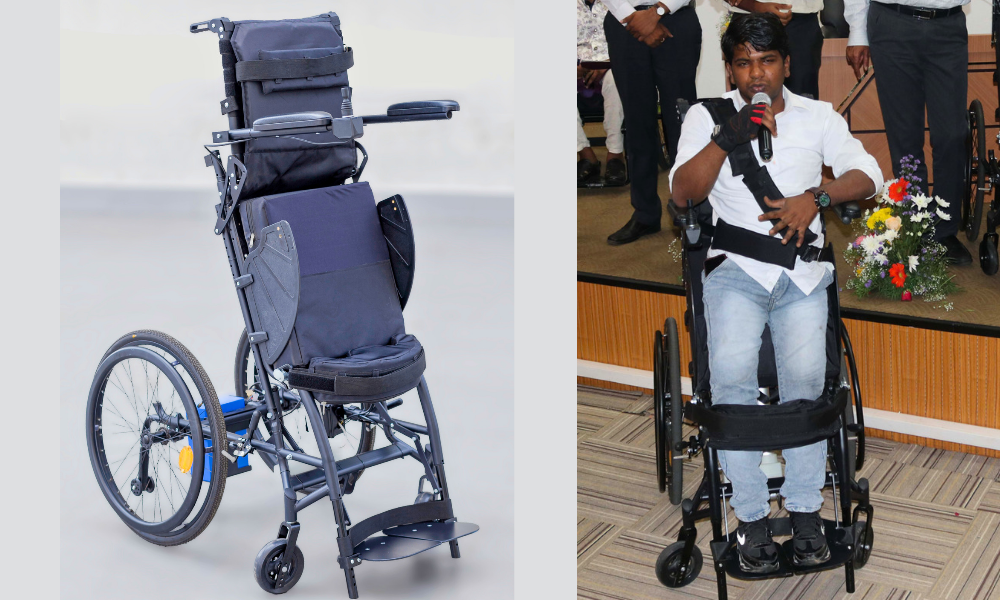
On Wednesday, the Indian Institute of Technology Madras (IIT Madras) launched the NeoStand — an electric standing wheelchair that's customizable and made with indigenous technology. The wheelchair is designed to help users sit for long periods of time and then stand comfortably, reducing the risk of secondary health issues.

This electric wheelchair allows users to stop at intermediate positions using a switch, which can help with therapeutic aspects. For example, a caregiver or therapist can help the user practice standing gradually.

Launched at the IIT Madras campus on 20th March 2024 in the presence of Prof. V. Kamakoti, Director, IIT Madras, NeoStand is India’s most customizable Electric Standing Wheelchair, and has been developed indigenously to enhance the quality of life for wheelchair users.

At the touch of a button, wheelchair users can effortlessly transition from sitting to standing, opening a world of possibilities - be it engaging in eye-level conversations, reaching for a book, or simply enjoying a cup of coffee standing by a counter.

NeoStand
NeoStand 

Key features of the NeoStand:

1. Customizability: NeoStand is designed to be highly customizable, catering to the specific needs of individual users. This adaptability ensures that it can accommodate a wide range of requirements.

2. Motorized Standing Mechanism: With the touch of a button, wheelchair users can seamlessly transition from a sitting position to standing. This functionality opens up new possibilities, such as engaging in eye-level conversations, reaching for objects, or enjoying a cup of coffee while standing at a counter.

3. Compact Design: NeoStand's compactness allows easy maneuverability even in tight spaces, enhancing accessibility for users.

4. Health Benefits: By providing the freedom to sit for prolonged hours and stand comfortably when needed, NeoStand reduces the risk of secondary health complications associated with prolonged sitting.

5. Innovative Approach: The wheelchair offers a seamless transition between sitting and standing, with the option to pause midway. This approach underscores its commitment to improving users’ quality of life and social participation.

 
NeoStand


Mr. Justin Jesudas using NeoStand

Justin Jesudas, who has had quadriplegia for 14 years, says that the ability to stand with the push of a button makes the wheelchair more inclusive and helps quadriplegics stand independently.

The journey of NeoStand from concept to reality was supported by a collaborative ecosystem. The project was sponsored by Tata Elxsi under its corporate social responsibility initiative. The development and design were spearheaded by the TTK Center for Rehabilitation Research and Device Development (R2D2) at IIT Madras and NeoMotion, which took the lead in bringing this product to the marketplace.

The project development was led by Prof. Sujatha Srinivasan, Head, TTK Center for Rehabilitation Research and Device Development (R2D2), IIT Madras, who also led the development of ‘Arise,’ India’s first manual standing wheelchair, and NeoBolt, the country’s first motorized add-on for wheelchairs. This device has been commercialized and is being taken to the market through NeoMotion, an IIT Madras-incubated start-up.

For the majority of wheelchair users across the globe, the ability to stand is far-fetched. Standing is essential for better blood circulation, and digestion, preventing health issues like pressure sores and crucial for daily activities. Currently, users are often dependent on external help and some need to use orthoses. For persons with severe disabilities who have compromised upper body strength, this is a significant challenge, and a manual standing wheelchair is inadequate.

This groundbreaking initiative demonstrates the impact of translational research guided by IIT Madras faculty. NeoStand redefines the wheelchair experience, emphasizing user-centric design and empowering individuals with mobility challenges. As we navigate the complexities of accessibility and societal attitudes, let us recognize that advancements in assistive technology are not only technological imperatives but also moral imperatives.
Amazon and A Not-for-Profit Launch Resource Center for Peoeple with Disabilities; To Provide Training, Mentorship, and Job Placement

Honorable Vice President of India Inaugurates Global Resource Centre for People with Disabilities

Amazon India and Sarthak Education Trust have partnered to launch the Global Resource Center, providing comprehensive training, mentorship, and job placement services to empower people with disabilities.

Amazon.in and Sarthak Education Trust, a leading non-profit organization working for the cause of People with Disabilities (PWDs), have joined forces to launch the Global Resource Center (GRC). The center, which was inaugurated in the presence of Hon’ble Vice President of India, Shri Jagdeep Dhankhar, aims to empower people with disabilities across India.

This collaboration between Amazon and Sarthak Education Trust (SET) marks a significant step forward in creating a more inclusive and empowering world for people with disabilities. The Global Resource Center stands as a testament to the transformative potential of collaboration, and its impact promises to resonate across the globe. Located in Gurugram, Haryana, GRC will act as a central hub, providing access to specialized training programs, assistive technologies, mentorship opportunities, and customized job placement services. The GRC will serve as a beacon of inclusivity, offering a comprehensive suite of resources tailored to the specific needs of people with disability who are Deaf and Hard of hearing (DHH), Blind low vision (BLV) or have locomotor disability. This collaboration leverages Amazon’s technology expertise and Sarthak’s expertise in skill development, training, and job placement for people with disabilities.

"This initiative signifies a giant leap towards inclusivity," said Hon'ble Vice President of India, Shri Jagdeep Dhankhar. "By offering invaluable resources and opportunities to people with disabilities, the GRC reflects our nation's commitment to creating a society where everyone can contribute meaningfully. I commend corporates for their vision and dedication to fostering empowerment and embracing diversity."

The GRC's impactful programs will encompass capacity building in technology, e-commerce, logistics, and beyond, ensuring that people with disabilities have the skills and support needed to thrive in the digital economy. The Rozgarsarthi app, an integral part of the program, connects candidates with disabilities with opportunities at Amazon and other organizations. Additionally, Amazon equips people with disabilities with English language skills, provides mobile devices, a monthly remuneration of up to INR 20,000 and assists with travel and accommodation.

Abhinav Singh, VP of Customer Fulfilment, Amazon Transportation Services, Global Specialty Fulfilment, and Supply Chain at Amazon India, said, "The launch of the Global Resource Center marks a significant milestone in our commitment to empowering people with disabilities worldwide. This collaboration with Sarthak Education Trust will provide them with the skills, resources, and opportunities they need to thrive in today's digital economy. We are proud to play a part in creating a more inclusive and accessible world for all."

The joint effort between Sarthak Education Trust and Amazon has so far collectively impacted over 15,000 people with disabilities through training of talent pool of disabled people at GRC and job creation by influencing corporates through assistance with Rozgarsarthi app. They further aim to impact close to 70,000 and 72,000 people with disabilities by 2023 and 2024, respectively.

Dr. Jitender Aggarwal, Founder & CEO of Sarthak further added, ""Our Vision 2027 includes Empowerment of 10 Million PwDs across India, Sustainable Employment & Entrepreneurship for 0.2 Million skilled Youth with Disabilities, Expanding the CSO partner network under IDEA with 1000 partners; Supporting organizations in 50 developing countries; State-of-the-Art Global Resource Center in Gurugram and Hosting the 11th International Abilympics in India in 2027.Our strategic shift to focus on Tier 2-3 cities and in-house training aims to bridge the gap between demand and availability of skilled people with disabilities. We are determined to place 7500 people with disabilities including in Amazon India and other corporates next year, aligning with our mission of creating inclusive opportunities and empowering every individual, regardless of location."

In 2022, Amazon India signed a Memorandum of Understanding (MoU) with the Department of Empowerment of Persons with Disabilities (DePwD), Ministry of Social Justice and Empowerment, to provide skilling and employment opportunities through job fairs to tens of thousands of people with disabilities across the country. The tripartite agreement between DePwD, Skill Council for Persons with Disability (SCPwD) and Amazon focuses on skilling, certification, entrepreneurship and is designed to enable people with disabilities’ participation in mainstream society. This is in line with Prime Minister Narendra Modi’s Aatmanirbhar Bharat vision. In addition, Amazon also signed a MoU with Thiruvananthapuram-based non-profit Sarthak Educational Trust (SET) for reducing the skill gap in employable young people with disabilities. The launch of GRC is part of the MoU signed with Sarthak Educational Trust.

Earlier this year, in September 2023, Amazon India signed a three-year Memorandum of Understanding (MoU) with the state governments of Haryana, Maharashtra, Gujarat, Tamil Nadu and Karnataka to provide skilling and employment opportunities across Amazon India’s operations network including in Amazon’s fulfilment centres, sortation centres and delivery stations for various roles including stowing, picking, packing, and sorting to candidates with disabilities.

Recently on December 3, 2023, Amazon India was honored with the prestigious National Award for Empowerment of Persons with Disabilities, awarded by the Government of India and presented by Smt. Droupadi Murmu, Honourable President of India. This esteemed recognition, bestowed by the Department of Empowerment of Persons with Disabilities (DoEPwD), and Ministry of Social Justice and Empowerment, acknowledges the company's outstanding contributions toward creating an inclusive and accessible environment for individuals with disabilities.

About Amazon.in

Amazon is guided by four principles: customer obsession rather than competitor focus, passion for invention, commitment to operational excellence, and long-term thinking. Amazon strives to be Earth’s Most Customer-Centric Company, Earth’s Best Employer, and Earth’s Safest Place to Work. Customer reviews, 1-Click shopping, personalized recommendations, Prime, Fulfilment by Amazon, AWS, Kindle Direct Publishing, Kindle, Career Choice, Fire tablets, Fire TV, Amazon Echo, Alexa, Just Walk Out technology, Amazon Studios, and The Climate Pledge are some of the things pioneered by Amazon. For more information, visit www.amazon.in/aboutus.

AssisTech Foundation (ATF) welcomes 10 Assistive Technology Start-ups to ATF Enable Acceleration Program Cohort 5

AssisTech Foundation (ATF) welcomes 10 Assistive Technology Start-ups to ATF Enable Acceleration Program Cohort 5!

Bengaluru based AssisTech Foundation (ATF) has announced the portfolio of India’s first Assistive Technology Start-up Acceleration Program : ATF Enable Acceleration Program Cohort 5.

ATF received an overwhelming response from aspiring disability technology start-ups who applied for the program. It is more enriching that the applications were diverse in nature, covering all areas of disabilities, impact areas, and were in different stages of their start-up journeys. Over the past weeks we have discussed & debated a lot while reviewing so many quality Assistive Technology (AT) solutions.

Congratulating all the passionate technologists for the innovative ideas and aspirations, ATF announced, "We are happy to note that this year’s cohort winners are diverse in terms of covering different disabilities including visual, mobility, speech, cognitive, neural and hearing impairment alongwith one focussing on geriatric care too. They are based not only in the metros but are spread out across Tier 2 and 3 Indian cities and are in various stages of their entrepreneurial evolution."

AssisTech Foundation (ATF) welcomes 10 Assistive Technology Start-ups to ATF Enable Acceleration Program Cohort 5

The list of 10 winners are as follows (in alphabetical order):

Backyard Creators Pvt. Ltd.

Backyard Creators is building a world's first Adhesive Non Surgical hearing device for by birth and severe hearing loss patients without the hearing implant surgeries. They are overcoming all the disadvantages of Implantation surgery by providing a non-surgical adhesive hearing aid.

Dextroware Devices

Dextroware Devices is a startup that is developing a head mouse for people with upper-limb disabled to control smart devices.

H Vision & Innovations LLP

Vision has invented a wallet that allows blind people to identify currency notes and also determine if they are authentic or fraudulent. Vision has also invented the world's most compact currency note checker for the sighted people which is so compact that one can use it as a key chain, attachment on smart phone cover, wallet/ purse etc.

Kidaura Innovations Pvt Ltd

A startup developing a digital game based screening tool for autism and developmental conditions. They are also creating a child therapy delivery platform for providing assistance in home-reinforcement of therapies.

Learn and Empower Pvt Ltd.

Startup that developed a game based teaching and assessment platform that enables the deaf and hard of hearing kids practice and understand what they learn at school 4-6x better while enabling the educators to use it as a teaching aid and assessment tool.

NEMA Artificial Intelligence Pvt Ltd.

NEMA AI is India’s first EEG based special education platform for the children with special needs that helps in assessment and curation of learning content based on their strengths and weaknesses.

Ripple Healthcare Pvt Ltd

A startup developing a product “HIP PRO+” is a smart wearable device that protects elderly from the traumatic and often deadly fall-induced hip injuries. With an acceptable design offered at a fractional cost, it empowers the elderly to lead a dignified lifestyle.

Punarjeeva Technology Solutions

A startup reimagining the rehabilitation of society through gamified physiotherapy by exploiting the technological tentacles and providing opportunities that help them lead an independent and supreme life by stitching knowledge into the tasks. Their portfolio of products include Samatved (Balancing Gamified Exercises for Lower Body), Hasth (Handtracking based system for fine motor skills), Tatvika (VR based solution for physio motor, cognitive and music therapy) and Nibodh (Blended Learning product for problem solving and creative skill development.)

Robo Bionics

Assistive Tech Solution company with a focus on Rehabilitation of Hand related issues like Amputation, Limb Difference, Nerve Damage, Paralysis, Tendon Injury etc. Their Core competency involves providing a Sense of Touch to such solutions to improve the user experience and accelerate rehabilitation and User Independence.

Vifr

Vifr Tech is harnessing the power of VR for training and educating neurodiverse young adults in a fun way. Their product, Halara is a complete virtual reality special education platform to train and teach young adults with autism and other neurodevelopmental conditions.

ATF congratulates all the startups and a warm welcome to the ATF family! We are inspired and impressed by your passion and sincerity. As a next step, we will conduct a workshop to induct the winners into the ATF acceleration program and will start sessions by industry veterans, the best brains from the fields of disability, technology, start-up and business.

AssisTech Foundation (ATF) is working towards growth of the Assistive Technology ecosystem and helping millions of people with disabilities around the world to live their lives with dignity. Collectively, it has empowered its portfolio start-ups to do just that through access to customers, government and investors and other stakeholders. Cumulative efforts of ATF and its portfolio start-ups have impacted over 4.6 lakhs people with disabilities.

The ATF's objective is to create a conducive ecosystem in a structured and programmatic manner and help the start-ups develop a milestone based operating plan and investment strategy which will essentially shape the course of their business.

Unifarm Collaborates With Deepalaya to Support Children With Differential Abilities From Urban Slum Communities

UniFarm in collaboration with Dapps announced a purpose-driven humanitarian alliance with Deepalaya, a Delhi-based NGO, to support slum children with special abilities. Through this partnership, UniFarm will provide materials like stationary, lunch boxes, winter clothes, etc to children from Deepalaya’s Sambhav centre that offers care and development facilities to differentially abled children from across 27 urban slum communities in Delhi.

Unifarm Collaborates With Deepalaya to Support Children With Differential Abilities From Urban Slum Communities

In the first chapter of the association, the UniFarm team distributed 120 lunch boxes and stationery items to special children from Sambhav centre in Delhi. UniFarm will also ensure that the educational needs of these special children are fulfilled promptly. UniFarm plans to organize a series of socially responsible events across India to raise awareness around autism.


Commenting on the development, Tarusha Mittal, COO, and Cofounder of UniFarm and Dapps said “UniFarm is a socially responsible brand and our initiative to support children with special needs is extremely close to my heart. I strongly believe that new-age start-ups and their founders need to do their bit for the communities we serve. This is just a small beginning of a larger initiative to give back to society”.

Commenting on the development Dr. George John, Secretary & Chief Executive, Deepalaya, said “Children with differential abilities are special and have all the right for equal accessibility and opportunity. Strong emphasis and efforts are needed for their social inclusion and mainstreaming. Besides the Civil Society bodies, it’s the society at large that plays a vital role in creating a social change towards this cause. We urge all individuals to be socially sensitive and cautious towards all diversities.”

Autism is the world’s 3rd most common developmental disability which manifests at the age of three. Early detection of the illness enables the parents to start therapy sessions which are highly beneficial for the child’s recovery. As per a recent study, every 1 in 100 children below 10 years has autism in India, which means we need to prepare at a war level.

About UniFarm:

UniFarm is a collaborative wealth creation platform where the best projects in DeFi space come together to provide value to investors. With its diverse range of services offering group staking, IDO Launchpad, and liquidity pool farming, UniFarm allows investors to earn high APYs while automatically diversifying their returns.

About Deepalaya:

Deepalaya is the largest operational NGO in Delhi-NCR region, started in 1979 with 7 founding members with the objective of educating the underprivileged children.Over the years, our thematic areas grew to incorporate projects that helps destitute and marginalised community members including youth, women, specially abled, orphans, children on street etc. Today, the organisation actively operates projects in the area of Education, Vocational Training, Women Empowerment & Livelihood, Institutional Care, Differentially Abled, Environment Sustainability across Delhi, Haryana, Uttar Pradesh and Punjab.


STEM Curriculum Introduced to the Visually Impaired Students in Govt Schools of Karnataka

STEM Curriculum Introduced to the Visually Impaired Students in Govt Schools of Karnataka
Teachers from multiple government schools are getting trained by Vision Empower and Sankara Eye Foundation to teach STEM curriculum to visually impaired students.
Curriculum introduced by Vision Empower in collaboration with Microsoft India, Sankara Eye Hospital, CII – Young Indians

To make education more accessible to the visually impaired students in government special schools, Vision Empower in collaboration with Sankara Eye Hospital have introduced STEM education across 5 districts in Karnataka. Vision Empower is a Not-for-profit Organisation incubated at IIIT Bangalore.

The curriculum is introduced to 64 schools that includes both government and government-aided special schools across Kolar, Doddaballapura, Devanahalli, Nelamangala & Hoskote.

Speaking on the initiative, Vidhya Y, Co-founder & Trustee of Vision Empower said,“Children with special needs particularly from the rural areas often do not have access to an inclusive education. Our goal is to make STEM approachable to the visually impaired students. We create STEM content for students in the form of Braille books, audio books, and tactile diagrams for students at all grades. By introducing them to the government schools in rural areas of Karnataka we aim to empower the visually impaired students. We are glad to collaborate with Sankara Eye Hospital for this initiative.”

We are delighted to be part of this unique initiative by Vision Empower and to introduce STEM Education to the visually impaired students in the government special schools of Karnataka for the economically weaker sections. Learning curriculum through customised content for the visually impaired students ensures STEM learning is fun and an enriching experience at the same time. We hope this initiative will make learning more interactive and engaging for the students enabling a colourful future to the visually impaired students”, said Dr. Kaushik Murali- President Medical Administration, Quality And Education, Sankara Eye Foundation India.

Vision Empower and Sankara Eye Hospital, Bangalore aims to implement STEM curriculum with specially designed content for visually impaired students across all government special schools in Karnataka by the next academic year.

About Sankara Eye Hospital, Bangalore

Sankara Eye Hospital, Bengaluru an NABH accredited tertiary hospital is a unit of Sankara Eye Foundation. The hospital was established in 2008 with a vision to provide highest quality and value for money in eye care services. It is a centre of excellence in ophthalmology. The Department of Vision Rehabilitation at the Hospital provides comprehensive vision rehabilitation services –early intervention, training in activities in daily living, educational guidance, environmental modifications, training in use of low vision devices, training in use of assistive software, vocation guidance, guiding in getting supportive benefits from the government, library for the visually impaired with braille, large print and audio books. Sankara Eye Foundation has its presence across India and is synonymous for World Class Eye Care with a Social Impact.


Women Entrepreneurs Platform WE HUB Held Workshop for 85 Differently Abled Women To Spark Thoughts On World Disability Day

Women Entrepreneurs Platform WE HUB Held Workshop for 85 Differently Abled Women To Spark Thoughts On World Disability Day
Differently abled Women were under four categories (locomotor disability, hearing impairment, dwarfism, and visually impaired) from the Network of Persons with Disabilities (NPD), Hyderabad, who visited WE Hub for an exposure visit on women entrepreneurship and guidance on business interventions.

WE Hub CEO, Ms. Deepthi Ravula, interacted with the group and spoke about WE Hub programs for women entrepreneurs.

WE Hub organised the event in coordination with NPD Founder Mr. M. Srinavasulu and Secretary Ms Koppula Vasundhara.

WE HUB, Government of Telangana’s first and only state-led incubator to foster and promote women entrepreneurship, facilitated an exposure visit to 85 Women with Disabilities on account of World Disability Day. WE HUB designed the workshop to help initiate thought processes on women entrepreneurship. The women were encouraged to share any ideas they had that they might later develop into profitable business ventures at the end of the session.

The women also interacted with student innovators from WE Hub’s in-house program WE Alpha and other students of B. Vissam Raju Institute of Information and Technology Hyderabad (BVRITH), who showcased their prototypes on assistive technology. The prototypes included ST-AN-DE (Stress, Anxiety, Depression), Learning Videos, an Automatic Ventilator, Walk-Mate, Touch Me Not, Move Trash, Smart Stick, and Smart Shoe.

In her interaction with the women, Deepthi Ravula, CEO of WE HUB, said, “In the four years of WE Hub’s work, we have noticed that the number of women entering into technological entrepreneurship is minimal. This has prompted us to plan for a mechanism that addresses the critical need for women to develop their skills and mindsets, thereby creating a way to ensure gender parity. Entrepreneurship for persons with disabilities effectively reduces their unemployment rates and increases their competencies and social inclusion. Moreover, entrepreneurship is an effective way to introduce people with disabilities to self-employment opportunities so they can become self-sufficient and independent.


We look forward to nurturing confidence and competence in this specific sector and developing capabilities such as problem-solving, creativity and social skills amongst the selected.”

Over the past four years, WE-HUB has been actively working towards enabling Women-led start-ups across sectors to scale and accelerate through global market access. Till now, WE-HUB has incubated 238 technology-enabled start-ups by Women founders.

About WE HUB:

WE HUB is the first-of-its-kind and only state-run platform for women entrepreneurs by the Government of Telangana. WE HUB supports women entrepreneurs with innovative ideas, solutions, and entities focusing on emerging areas in technology and allied sectors. WE HUB also supports under-explored/unexplored sectors, such as FMCG, retail, and e-commerce, including the service sector. The mandate and goal of WE HUB are to eliminate financial and societal barriers for women and help them succeed in their enterprises. WE HUB aims to create a supportive community for aspiring and existing women entrepreneurs where they can interact with VCs for funding, connect with corporates for scaling up their business, get advice from mentors to fine-tune ideas; and benefit from technical mentoring.


Edtech Company LawSikho Has Announced 100% Scholarships for 500 Persons With Disabilities (PWD)

Gurugram-based legal edtech company LawSikho has announced 100 percent scholarships for 500 persons with disabilities (PWD). The candidates who complete the courses successfully will be co-certified by National Skill Development Corporation(NSDC).

Law graduates and law students will take an online admission test to  decide who is eligible for the scholarships, which will cover LawSikho’s test prep courses for government jobs, upskilling courses focused on jobs in the private sector, and remote freelance work courses focused to international markets like US, UK and Canada.

To qualify for the admission test, candidates must produce a government-issued disability card or certificate of disability. Out of 500 seats, 300 will be reserved for law graduates and law students, while 200 will be open to non-law candidates interested in remote freelance work. The admission test will be held in October, but candidates can appear for an online on-demand admission test even later. The goal is to roll out all 500 scholarships before December 2022.

“A small scale pilot project has already been tested and over a hundred candidates have benefited from it so far. This expansion will benefit from the learnings of the existing programme. Also, when we benefit from feedback from learners from different backgrounds, we are able to make our services more inclusive” said Ramanuj Mukherjee, CEO at LawSikho.

Masoom Reza, 24, an LLB from Jamia Millia Islamia who is currently enrolled at NLSIU Bengaluru as an LLM student, is among the many outstanding students who have already been part of LawSikho’s scholarship programme for PWD. Completely visually impaired since the age of seven, Masoom took our Judiciary Test Prep course in 2021 as part of his preparation for the Judiciary Services Competitive Examination and applied for a full scholarship, which he received.

Speaking about his LawSikho experience in general, Masoom, who stood third in the Indian Law Institute CAT for LLM, says the method of teaching is “amazing”, and adds that he has particularly benefited from Lawsikho’s practice sessions and the faculty’s approach of interlinking various laws for better understanding.

“Many job seekers with disabilities find remote work much more suitable and convenient, but very few programmes exist for them. Given LawSikho’s success in helping Indian graduates secure remote work opportunities across the world, we felt that it would be a great time to formally announce scholarships for candidates who are also Persons with Disabilities (Divyangjan). We have given free admission to over a hundred candidates already, and based on this initial success, we decided to expand the programme,” said Vibhas Sen, Head of Marketing, LawSikho, an IIM-C alumni and Paralympian himself, who was affected by polio in both legs.

Around 700 job seekers receive internships, jobs and freelance work while pursuing or after completing their courses from LawSikho every month. Candidates interested in the scholarship programme may write to support@lawsikho.in attaching their Statement of Purpose and resume, along with a government-issued proof of disability.

About LawSikho

LawSikho is India’s leading online education company that creates advanced and practical legal courses and customised training programmes catering to lawyers, law students leading businesses and universities. We bridge the gap between theory and practice in legal education, bringing industry and practical insights into legal learning. We also offer a number of courses from foreign universities at affordable rates for Indian students. With talent arbitrage being one of our focal points, we equip Indian lawyers to build high-profile careers in the international remote job market.

ISRO Develops An Intelligent Artificial Limb Likely to Be Commercialised Soon

ISRO Develops An Intelligent Artificial Limb Likely to Be Commercialised Soon

Indian Space agency ISRO has just announced that it has developed a spin-off intelligent artificial limb for above-knee amputees to walk with a comfortable gait. A 1.6 kg Microprocessor-controlled knee(MPK) enabled an amputee to walk ~100 m in a corridor with little support.

These microprocessor-controlled knees (MPKs) consists of a microprocessor, hydraulic damper, load & knee angle sensors, composite knee-case, Li-ion battery, electrical harness, and interface elements. The microprocessor detects the state of gait based on the sensor data. The control software estimates the real-time damping needed to attain the desired gait by changing the stiffness of the system that is achieved by a hydraulic damper operated by a DC motor

ISRO is incorporating more intelligence into the system to help the amputee walk through uneven terrains with advanced features for more comfort.

Walking parameters specific to amputees can be set using PC-based software to improve one’s comfort. The interface plots the parameters in real time during walking.

The device was tested with an amputee, identified by NILD for conducting walking trials.

Walking trials with an amputee

Initial walking trials were conducted with the support of parallel bars. Subsequently, the amputee could walk about 100 m in the corridor with minimum support.

These MPKs being developed, once commercialised, are expected to cost around Rs. 4 Lakh to Rs. 5 Lakh.

Notably, similar device for amputees currently available commercially in India are imported and range from Rs. 10 Lakh to Rs. 60 Lakhs, depending on the complexity and functionality.

7 Fixable PDF Accessibility Errors to Avoid

7 Fixable PDF Accessibility Errors to Avoid

PDF remediation is vital for making any PDF document accessible for people with disabilities. However, this is not an easy process to carry on. On your way to making documents accessible, there are several common mistakes that you could easily make, which are preventable.

Testing PDF for accessibility and carrying out PDF remediation can come with mistakes and issues. However, these remediation issues are easily fixable or, in fact, entirely avoidable if you know what they are. The main challenge is locating the error and understanding how to fix it.

7 Common Accessibility Issues in PDF Remediation

Testing PDF for accessibility and carrying out PDF remediation can come with mistakes and issues. However, these remediation issues are easily fixable or, in fact, entirely avoidable if you know what they are. The main challenge is locating the error and understanding how to fix it.

Here are some of the most common PDF remediation issues that cause difficulties in your PDF documents:

1. Missing Alternative Text

Missing an image alt text while remediating a file is not uncommon. These texts are the trickiest ones to tackle when you’re not well-versed in the specialized subject.

Every image must include an alt text to comply with the WCAG 2.0. It makes image reading easier for visually impaired people. If you skip or make a mistake in adding alt texts, screen readers won’t be able to understand what the image represents.

2. Not Embedding Fonts

When performing remediation for a document, embedding fonts is the most crucial step that cannot be avoided. Skipping this step in the beginning and performing it at the end of remediation can corrupt your document. Once your file is corrupted, you may have to start it all over again.

3. Getting Errors in Heading Structure

Losing track of the heading level while working on a large document is one very common mistake that happens frequently. It’s essential to get it right and understand when your heading structure is illogical.

4. Using Adobe Auto Tag Features

When a PDF is tagged logically, the reader can comprehend the content without difficulties. Programs such as text-to-voice need correctly structured documents that follow logical reading order. Moreover, people relying on a keyboard rather than a mouse find document navigation easier through tagged PDFs. Hence, tagging documents correctly without making any mistakes is vital.

But auto-tagging software like the one Adobe offers isn’t always your friend. It may work well but can also corrupt your document. So, relying on an auto tag feature is not always a correct choice.

Also Read — Edit PDF Documents Directly on Google Chrome Browser

5. Lacking Table Summary

A tabular format is easily understood in a PDF document. A user can easily navigate through a document with the help of a table of contents. But setting tables in a PDF document is not easy. It is time-consuming and is often easy to get it wrong.

Moreover, if you get it wrong or get the data mixed up, your document can become corrupted.

6. Disappearing Content

Tagging content in the wrong format may sometimes cause it to disappear. This “disappearance” happens when the PDF hides in several layers. To fix this, you will need to rearrange these layers, search for the hidden content with the content panel and rearrange it to make it visible.

7. Keeping Pages Untagged

When the content structure is divided into meaningful sections, the document is given a proper structure. Screen readers can read it conveniently and navigate it with ease. But when a document is not tagged, it comes with several other accessibility errors.

Moreover, if a document holds a blank page that needs to be remediated, you might miss it. To avoid this, using a tool meant for remediating PDFs is recommended.

8. Making PDFs Accessible

Automating your PDF accessibility process proves to be a great option to eliminate these errors. There are several PDF accessibility tools you can try out and save your time and efforts while being accurate and as quick as possible.

Author Bio: Emilie Brown works with the Digital Marketing team at PREP, an AI-based remediation software that enables businesses to create WCAG and ADA compliant PDFs in minutes. Her approach and methodology is simple, concise and to-the-point and connects with readers seeking for solution-driven content on topics related to accessibility and remediation. Apart from her time at work, she loves to spend time with her dog, volunteer and play her guitar.

Toyota Kirloskar Motor Employees Help Build e-Library for Visually Impaired Students

Representational Image


In furtherance of its mission to enable its employees to make a difference to society, Toyota Kirloskar Motor (TKM) today organized a virtual audiobook recording event in collaboration with Samarthanam Trust, an award-winning NGO, which works for the empowerment of the differently abled.

More than over 100 TKM volunteering employees and their family members lent their voices to record more than 100 language books as audiobooks that will be made available to over 10,000 visually impaired students supported by the Samarthanam Trust across the country. The virtual activity was held through an e-enabled platform as part of ‘ICARE’, an employee voluntary initiative, which aligns with the TKM’s commitment to sustained community development.


Talking about the initiative , Mr. Sudeep S. Dalvi, Senior Vice President, Director & Chief Communication Officer, TKM, said, “The activity served the dual purpose of sensitizing our employees to visual disability and provide them with an opportunity to build a repository of audiobooks, considering very little published material is accessible to those with visual impairment. We are hopeful that the efforts will play a role in helping visually impaired students to explore books that were so far out of bounds for them. Further, we are delighted with the enthusiastic participation by our employees and their families, a trend we have seen for all ICARE activities since we introduced the voluntary initiative a few years ago. As a responsible corporate citizen, TKM will continue to implement more such employee-led activities to address the vital needs of different communities within our CSR framework."

Since its launch in 2017, ICARE has grown manifold and managed to create a substantial impact on society, touching 57,000 lives. Currently, 1000 employees are registered under ICARE, and all activities are implemented with the objective to further support and make a difference to the society while being aligned to TKM’s CSR vision in the areas of education, environment, health & hygiene, road safety, skill development and disaster management thereby providing an enriching experience to employees. The platform enables passionate employees’ who believe in volunteering their personal time for social causes.

On the occasion, TKM employee volunteers also took a COVID pledge promising to remain safe and healthy during the pandemic.

Inclusive Education: In A First Govt Releases Guidelines for E-Content Development for Children with Disabilities, Divyang


Union Education Minister Shri Ramesh Pokhriyal ‘Nishank’ today approved the release of the guidelines for the Development of e-Content for Children with Disabilities today.

A comprehensive initiative, PM e-VIDYA was launched on 17th May 2020, with an aim to unify all efforts related to digital/online/on-air education. The programme, among other things, envisages development of special e-content for the Divyang (Children with Disabilities-CwDs). In pursuance of this vision, the Department of School Education and Literacy, Ministry of Education had constituted a Committee of experts, for recommending guidelines for developing e-content for these children.

For the first time, an attempt was made to prepare guidelines for CwD also referred to as Children with Special Needs (CWSN) children so that the goal of inclusive education is fulfilled. The Committee submitted a report titled "Guidelines for the Development of e-Content for Children with Disabilities" comprising of eleven Sections and two Appendices. This report was shared, presented, discussed and accepted by the Ministry of Education (MoE).

The salient highlights of the e- content guidelines in the report are:
  • e-Content for CwDs should be developed based on the four principles namely: perceivable, operable, understandable and robust.
  • e-Content including text, tables, diagrams, visuals, audios, videos etc. should comply with accessibility standards: national standards (GIGW 2.0) and international standards (WCAG 2.1, E-Pub, DAISY etc).
  • Distribution platforms on which content is uploaded (e.g. DIKSHA) and Reading platforms/devices on which content is accessed and interacted (e.g. e-pathshala) must comply with technical standards
  • Reasonable pedagogical accommodations have been recommended to meet specific needs of CwDs
  • The technical standards and guidelines have been detailed out in Section 4 of the report.
    • The Committee has also recommended that in a phased manner textbooks may be adapted into Accessible Digital Textbooks (ADTs). The content of ADTs should be provided in multiple formats (text, audio, video, sign language etc) with turn-on and turn-off features. Further ADTs should provide flexibility to CwDs to respond to its content/exercises in multiple ways. The detailed guidelines for developing ADTs along with existing international and national experience, in the development of prototypes including the recent NCERT’s experience: Barkha:A Reading Series for All (in print and digital forms), Accessible Textbooks for All and UNICEF’s “Accessible Digital Textbooks using Universal Design for Learning ( for Learners with and without Disabilities ) have been presented in Section 5 of the report.
  • In addition to ADTs, in Sections 6 to 9 the Committee has recommended specific guidelines for development of supplementary e-Content as per 21 disabilities specified in the RPWD Act 2016 for students having Intellectual and Developmental Disabilities, Multiple Disabilities, Autism Spectrum Disorders, Specific Learning Disabilities, Blindness, low vision, Deafness and Hard of Hearing and others.
  • A summary of the recommendations has been presented in Section 10 of the report for sharing widely with content creators, content designers, developers, publishers.
  • The implementation roadmap along with the suggestions to strengthen compliance to the accessibility guidelines have been presented in Section 11 of the report.
  • Comprehensive guidelines and technical standards for the production of Sign Language videos have been provided at Appendix-1 of the Report.
  • Universal Design for Learning( UDL)guidelines for content development and pedagogical accommodations are given in Appendix 2 of the report.
These guidelines will initiate the creation of high quality content for digital education to Children with Special needs. They are dynamic by nature, to be improved based on experience and advent of better technology.

NIUA and IIT Roorkee Holds Public Consultation Meetings to Build Accessible, Safe and Inclusive Cities (BASIIC) - A Program Supported By UK Govt


The consultations will support the goal of refining Guidelines and standards for universal accessibility, as envisaged under the BASIIC program


Roorkee, 8th May 2021: National Institute of Urban Affairs (NIUA) in collaboration with the Indian Institute of Technology (IIT) Roorkee, and support from Ministry of Housing and Urban affairs have successfully conducted public consultation meetings for revisions in guidelines and standards areas of universal accessibility in built environment in India. The consultation meetings were in the backdrop of 'Building Accessible Safe Inclusive Indian Cities' (BASIIC) program(supported by FCDO, UK government).

The meetings, were held with persons with disabilities, elderly and their caregivers on 22nd April, 2021 and women, children (With or without disabilities) and their caregivers on 24th April, 2021, on virtual platform. The broad objectives of the consultation were to 1. Understand the diverse needs of identified groups in different facets of independent life; 2. Understand the problems faced by them in the everyday life due to inaccessibility of urban infrastructure and services 3. Gain insights from their experience and take suggestions for improvement in the guidelines. The discussion was divided into housing/residential, healthcare, mobility, education, employment and recreation - five critical components of urban life with an overarching theme of assistive/smart technologies. The consultations had more than 40 participants from across the country on each day sharing their views and experiences.

Prof. Ajit K Chaturvedi, Director, IIT Roorkee said --
In collaboration with NIUA, IIT Roorkee aims to foster the creation of accessible built environments with a human-centric approach. The workshops witnessed meaningful participation from diverse groups including persons with disabilities, the elderly, caregivers, women, and children. These sessions will lead to the development of Harmonised Guidelines for Universal Accessibility in Built Environments.


Major concerns discussed in these consultations included: age- appropriate features in housing/apartment design; housing/ facilities for care-givers, safety of personal information, significance of mixed land-use development, anthropometrical mismatch in housing, maintenance of streets and public spaces, absence of ramps and use of slipper materials in flooring etc. Suggestions like: Planning age-friendly components in housing, improvement of information system in public transport, resting areas at regular intervals, senior citizen corners in neighbourhood parks, use of appropriate materials and careful design of play areas for children, improving access in market spaces, accessibility auditing frameworks for educational institutions, accessible family toilet and public buildings and easy communication systems, proper signage and facilities for child and nursing mothers in health care institutions were discussed. Improper Implementation, lack of sensitivity in society/practitioners and need for stringent monitoring mechanisms were identified as overlapping concerns in both the consultations.

Mr. Hitesh Vaidya, Director, NIUA said --
A city is for everyone. It is important for us to be more cognizant of the needs of vulnerable population groups i.e. children, elderly, and persons with disabilities. One of the key elements of Inclusive planning is participatory approach. The consultations will not only act as an insightful tool to mainstream the inclusivity and universal accessibility, but will also provide inputs to develop strategies, to make future cities more accessible and inclusive.

This consultation was led by Mr.Utsav Choudhary and Ms.Kanika Bansal from NIUA along with Dr. Gaurav Raheja, Professor from Dept. of Architecture & Planning, IIT Roorkee. The endeavour is part of an existing MoU between both institutions, aiming for devising strategies in making Indian cities more accessible, safe, and inclusive for Persons with Disabilities (PwDs), elderly, women, and children among others. The activity is constantly supported guided by Ministry of Housing and Urban affairs. The insights from these consultations will support in suggesting appropriate revisions in existing Harmonised Guideline and space standards for persons with disabilities and elderly, from the lens of universal design and inclusive planning.

BASIIC program of NIUA, supported by UK Government, endeavours to promulgate aspects of “Accessibility, Safety, Inclusivity” in the Indian Smart Cities. Under the program, NIUA has setup the “Technical Assistance &Support Unit” to ensure that timely technical support and guidance can be extended to Indian cities on the tenets of accessibility, safety and inclusivity.


About NIUA (https://www.niua.org/)

Establish in 1976, NIUA has been supporting the Government of India in policy formulation, research, and capacity building for the successful implementation of urban development projects such as the Smart Cities Mission, Swachh Bharat Mission, Heritage City Development and Augmentation Yojana (HRIDAY), Atal Mission for Rejuvenation and Urban Transformation (AMRUT).


About IIT Roorkee (https://www.iitr.ac.in/)

IIT Roorkee is an institute of national importance imparting higher education in engineering, sciences, management, architecture and planning, and humanities and social sciences. Since its establishment in 1847, the Institute has played a vital role in providing technical human resources and know-how to the country.


Innovate for Accessible India launched to Harness the Power of Technology to Empower People with Disabilities


  • Microsoft India and NASSCOM Foundation launch the program in partnership with the Department of Empowerment of Persons with Disabilities (DEPwD), Ministry of Social Justice & Empowerment; Department of Science & Technology (DST), Ministry of Science and Technology and ERNET.

  • The nation-wide innovation challenge to serve as an aggregator of technology-led solutions for empowering people with disabilities


Microsoft India and NASSCOM Foundation today announced the launch of the Innovate for Accessible India campaign in partnership with the Department of Empowerment of Persons with Disabilities (DEPwD), Ministry of Social Justice & Empowerment, Department of Science & Technology (DST), Ministry of Science and Technology and ERNET (National Research and Education Network under MeitY).

Innovate for Accessible India is a nation-wide innovation challenge aimed at empowering people with disabilities with the technology and tools required for better integration into society and access to equal opportunities. The campaign will be an aggregator of workable technology solutions developed using Microsoft Cloud, Artificial Intelligence and other technologies that address gaps faced by people with disabilities, especially in acquiring services and support in education, skill building, employment, mobility, rehabilitation and other government services.

The campaign will invite applications from students, citizens and social impact organizations to build customized solutions that address challenges faced by people with disabilities across the 21 officially recognized disabilities. The key areas of focus that developers are encouraged to address include mobility, e-governance and access, education, skilling and livelihood and health. Applicants can send in their ideas to https://iai.nasscomfoundation.org/, on or before April 15, 2020.

Speaking about the launch, Anant Maheshwari, President, Microsoft India, said, “With over a billion people around the world living with some form of disability, it is critical that we find new ways to use technology to enable everyone to fully participate in the socio-economic environment around us. Innovate for Accessible India presents an amazing opportunity to bring new ideas for building an inclusive future. Using the power of Microsoft Cloud, Artificial Intelligence and other technologies, developers can create products and solutions in the areas of education, skilling, employment, mobility and other citizen services for greater accessibility. We are very excited to partner on this effort and look forward to some ground-breaking ideas.”

The applications will be screened by a jury consisting of top subject matter experts, in cross-city pitch sessions, of which 10 ideas will be selected as the winning innovations. After a six month screening process, finalists will be provided support for another six months to roll out their solutions in the market.

The 10 best solutions that address key challenges faced by people with disabilities will be provided mentoring support by Microsoft and NASSCOM Foundation, along with grants to develop and scale their solution. The winning innovations stand to win a grant of INR 10 lakhs each in the established projects category (pilot testing with a group of more than 25 beneficiaries) and a grant of INR 5 lakhs each in the early stage category (working prototype tested by less than 25 people).

Ashok Pamidi, CEO - NASSCOM Foundation, said, "We may soon be able to replace braille dots with electrostatic charges allowing the visually impaired to use touch screen smartphones; facial recognition software coupled with home assistants may now help reveal who else is in the room; sounds and vibrations may be used to tell if there is danger ahead and with IoT, the objects may soon be able to describe themselves. We are living in exciting times where innovative technology solutions can finally make the world better for persons with disabilities. With Innovate for an Accessible India, we hope to capture all possible tech-based innovations that can make the lives of people with disabilities easier. We are grateful to Microsoft to provide an opportunity to all innovators working in the accessibility space to scale up their solutions using grants and mentorship and are thankful to Ministry of Social Justice and Empowerment, Dept. of Technology and ERNET to support this initiative wholeheartedly."

Speaking on the occasion, Smt. Shakuntala Doley Gamlin, Secretary, Department of Empowerment of Persons with Disabilities, Ministry of Social Justice and Empowerment, said, “In line with the Accessible India campaign, which is a flagship programme of the Department launched by the Hon’ble Prime Minister as a nation-wide campaign for achieving universal accessibility for persons with disabilities, with a vision to build an inclusive society in which equal opportunities are provided for the growth and development of persons with disabilities so that they can lead a productive, safe and dignified life, the Ministry will provide guidance and awareness to the program to keep it aligned to the disability policy framework and the department’s vision to empower persons with disabilities with equal access and opportunity."

Dr. Neeraj Sharma, Advisor and Head, NEB Division, Department of Science and Technology, MST, said, “DST has been supporting public-private partnership programs on idea scouting and start-up promotion. Programs like IAI strike a deep chord with us given our role in promoting science and technology to develop solutions, products and services to address challenges faced by the masses. The IAI program will offer workable solutions that can address problems faced by the differently abled and help in acquiring services and support in the areas of education, skill building, employment, mobility, rehabilitation etc. The program will integrate entrepreneurship, business thinking, design thinking, mentoring and other support activities to address challenges and have affordable and sustainable solutions."

Smt. Geeta Kathpalia, Director General, Education and Research Network (ERNET), Ministry of Electronics and Information Technology (MeITY), said, “The most important element for the success of any program is ownership and acceptance of the cause. ERNET owns the program for working solutions for accessibility. Accurate research and access to information are critical when developing any good solution. We, at ERNET, will help consult, select and mentor the Innovate for Accessible India finalists as well as provide the much needed research support and guidance. Additionally, we will also help spread the message and crowd source innovations amongst our extensive network."

About Microsoft India

Founded in 1975, Microsoft (Nasdaq “MSFT” @microsoft) is the leading platform and productivity company for the mobile-first, cloud-first world, and its mission is to empower every person and every organization on the planet to achieve more. Microsoft set up its India operations in 1990. Today, Microsoft entities in India have over 11,000 employees, engaged in sales and marketing, research, development and customer services and support, across 11 Indian cities – Ahmedabad, Bangalore, Chennai, New Delhi, Gurugram, Noida, Hyderabad, Kochi, Kolkata, Mumbai and Pune. Microsoft offers its global cloud services from local data centers to accelerate digital transformation across Indian start-ups, businesses, and government organizations.

New Scheme for Entrepreneurship Development of Disabled Persons: Gadkari


The MSME Ministry will soon announce a new scheme on entrepreneurship and skill training for disabled persons as it looks to expose their talents and provide market for their products, said Union Minister Nitin Gadkari on Monday.

Inaugurating "EKAM Fest", a week-long exhibition and sale of handicrafts, textiles and hand-looms products of artisans, traders/ entrepreneurs, belonging to 'people with disability', Gadkari said the scheme will be worked out in consultation with the ministries of Social Justice and Empowerment (SJE) and Textiles.

"I assure you that the MSME (Micro, Small and Medium Enterprises) ministry will work (out) a special scheme for the entrepreneurial and skill development of persons with disabilities very soon as the government wants to encourage, expose and provide opportunities for the products of such persons. The scheme will be worked out in consultation with the ministries of SJE and Textiles," the MSME minister said.

Gadkari also assured that the ministry would arrange business loans through the financial institutions to the disabled entrepreneurs without any collateral security. He also said that 29 per cent of the country's GDP and 48 per cent of exports are contributed by MSMEs.

Textiles Minister Smriti Irani has assured international marketing assistance to the textile/handloom products produced and marketed by the disabled entrepreneurs.

She has also promised free distribution of handloom tool kits for the disabled weavers through the textile ministry.

Social justice minister Thaawarchand Gehlot said the exhibition, organised by the National Handicapped Finance and Development Corporation (NHDFC) under his ministry, was aimed at providing an avenue for the display and marketing of the products made by people with disabilities.

The ministry is providing assistance by way of supplying raw materials, production and marketing of products generated by the disabled entrepreneurs, he added. PTI JBL

Healthcare Startup GenElek Developing Affordable Exoskeletons for Specially-Abled

With an aim to provide affordable exoskeletons in India, GenElek Technologies, a healthcare startup is developing externally worn robotic exoskeletons that enhance a human's limbic capabilities. The technology helps people suffering from paralysis, stroke, spinal cord injury (SCI) and other neurological conditions to meet eye to eye with the obstacles they face in their day-to-day life. The exoskeleton assists specially-abled people to walk again while making them self-reliant and independent. This not only benefits them physically but also mentally. One such possibility is it will increase their employability.

Some of the benefits of using an exoskeleton include preventing chronic diseases including diabetes and high blood pressure. Additionally, problems like bed-sores are a cause of concern in paralyzed persons which can be avoided if they use exoskeletons. It also helps to maintain normal bowel movement of the user which is the primary reason for becoming prone to life-threatening diseases.

[caption id="attachment_140491" align="alignleft" width="338"] Genelek Exoskeleton[/caption]

The exoskeleton model is lightweight and modular which enables the physiotherapist to increase the much-needed care and standards of therapy required by the affected persons. At home accessibility to healthcare is also a benefit with our exoskeleton. RnD regarding enabling the specially-abled persons is deficient and hence the devices available have limited relevance, with independence a significantly ignored focus.

John Kujur, Founder, GenElek Technologies said, "We at GenElek Technologies are on a mission to make this technology affordable therefore collaborations with leading hospitals with Physical Medicine and Rehabilitation facilities and NGOs are being actively pursued. After, having discussions with many Doctors, Specially-abled persons, and Medical Institutions, we have come up with added intangible benefits for the persons willing to purchase the exoskeleton such as access to dedicated medical experts, occupational therapy, counseling, etc. which will help them to become employable along with the therapy”.

GenElek is incubated at Electropreneur Park which is an initiative of the Ministry of Electronics and IT and managed by STPI and implemented by IESA.

GenElek Technologies at CYBATHALON 2020

GenElek Technologies will now represent India in CYBATHLON 2020, Zurich in the Powered Exoskeleton Race discipline. GenElek’s exoskeleton will compete with 17 other teams in the 'Powered Exoskeleton Race' discipline. It is for the first time that a team from India has been selected for the ‘Powered Exoskeleton Race’. Over 79 Teams from across the globe will come together in Zurich for CYBATHLON. The pilots for the exoskeleton race are ex-Indian army men who were injured for life in the line of duty.

CYBATHLON is a unique competition where specially-abled people compete against each other using the most advanced assistive systems. The latest developments assistive systems including wearable exoskeletons are put to the test at the CYBATHLON. The technologically-advanced assistive systems are pushed to their limits at CYBATHLON. Specially-abled people compete in specially designed racecourses that include solving everyday tasks like- getting up from the sofa, climbing stairs, walking on a slant path and rough terrain and many others.

You can support Team GenElek to participate in CYBATHLON 2020 by donating on the following link: https://www.ketto.org/fundraiser/help-team-india-win-cybathlon-2020-zurich

The National CSR Award Winning Program of Spark Minda Enabled 1000 Persons with Disability


  • 1335 assistive aid provided to Persons with Disability in 7-day camp organised at Chambali Phata, Pune

  • 118 employment and 162 UDID registration facilitated during 20th to 26th Dec 2019.


Spark Minda with their special program "Saksham - Empowerment of Persons with Disability Camp" under the CSR arm of the Group - Spark Minda Foundation, has organized a 7 day Empowerment of  Persons with Disability Camp at Chimbali Phata, Pune from 20th - 26th December, 2019.  The Group is striving to bring change, however big or small, in the lives of 1000 persons with disabilities this year.

In past five years, the Group has enabled changes to more than 8000 lives of persons with disabilities. This year, the scope of the program has been expanded and the foundation has tied up with CII (Confederation of Indian Industries) and a job fair was organized to facilitate the employment of persons with different types of disabilities in empaneled companies of CII such as Minda Corporation, Aegis Global, Godrej Agrovet, Sodexo, Sarovar Hotel and Accor Group. Employment of 118 Persons with disabilities was facilitated during the camp. Collaboration has been established with respective Sector Council for Persons with Disability, Government of India for the camp, who facilitated the skill linkages to the aspiring youth. Unique Disability Identification (UDID) desk was also created during the Camp, where 162 registrations were done.

Overwhelming footfall of the Persons with Disabilities from different parts of Maharashtra in the National CSR Award Winning Program of Spark Minda

One of the main purposes of the camp is to provide assistive devices to persons with locomotive disability by providing end-to-end support in Limb fitment, Calliper fitment, providing Walkers, Elbow Crutches etc. all in same day. Skilling and employment support and facilitation is also planned for persons with other types of disabilities. These all services were offered free of cost to the beneficiaries.

Passionate CSR Team of Spark Minda enhancing sustainability of persons with disabilities

‘Saksham’ - A CSR program started in year 2015 by Spark Minda Group to help Persons with Disabilities (PWDs) has also won National CSR Award 2019 conferred by Honourable Minister of Finance and Corporate Affairs Ms. Nirmala Sitharaman in the presence of the President of India. Under Saksham, the Group aims to provide accessible and assistive technology, impart skill training through OJT (On the job training), create inclusive workplace and ergonomics, train them for 5s and life skills, employ PWDs (Persons with Disability). During the camp, more than 118 persons with disability were also provided employment linkage and more than 162 persons were facilitated to obtain UDID Card, which is a unique identification of Person with Disability in India to avail related benefits.

Speaking at the Felicitation Ceremony of Empowerment of Persons with Disability Camp, Mr. Ashok Minda, Group CEO, said, “This is indeed a moment of great pride for Spark Minda Group to reach to the Persons with Disability in the rural bends of Maharashtra. He also thanked more than 30 program partners for supporting the camp selflessly."

Adding to Mr. Minda, Mrs. Sarika Minda, Chairperson, Spark Minda Foundation, said, “Our association with Pune has now been well known and long established. Starting with putting up a production belt in Yerwada Jail and now setting up “Saksham-Divyang Empowerment Center” in Chimbali Phata, we have enabled to provide a sustainable life to community at a whole. Spark Minda Foundation has been enigmatically working to provide better life, means and income support to people who have been left alone in different strides of life. We are proud to say that within a span of 7 days we have been able to reach out to more than 1000 people in and around Pune. Jaipur Foot has been indispensable part of our Empowerment of Persons with disability camp; we believe such associations are made once in lifetime with a common aim for rehabilitation of citizens to the best of their capacities."

Gracing the occasion Chief guest Mr. Pradeep Shrivastava, Executive Director, Bajaj Auto Limited added, “I must compliment the efforts of Spark Minda to make the life sustainable for persons with disability."

Key Highlights about Spark Minda Foundation

The vision of Spark Minda Foundation is to build a sustainable society through improving the quality of life, protecting the planet through affirmative action and establish integrated and inclusive growth of people and environment.

BETiC Innovator Develops FractoAid to Prevent Disability post Severe Accident

In India, 10%-30% of hospital registrations are due to road traffic injuries and a majority of these people tend to develop varying levels of disabilities.

An accident victim may just have a fracture- but due to improper handling while transferring them to a hospital, the condition may worsen. A simple splint could prevent matters from getting worse. Award winning innovator Mayur Sanas wanted to find a solution. A native of a small village located in Satara district of Maharashtra, he joined an engineering college in Kolhapur. After his master’s in mechanical engineering from IIITDM, Kanchipuram, he planned to pursue a PhD in Taiwan, but after seeing an advertisement stating a position vacant at BETiC, he was intrigued and joined BETiC.

[caption id="attachment_138904" align="aligncenter" width="700"] Innovator Mayur Sanas demonstrating his innovation FractoAid[/caption]

Mayur explains, “ The tendency of a fracture to cause swelling during the first few days, prevents a full plaster cast from being applied to immobilise the limb. Hence, doctors use a splint (essentially a half-cast) to accommodate tissue volume changes due to swelling and subsiding, after which a full plaster cast is applied. The splints available in the market were either ineffective or expensive. So I developed an alternative design using paper as the base material, stacking it with plaster rolls, enclosing both in a fabric envelope, and attaching Velcro straps."

The split is dipped in water, placed at the fractured area, gently pressed to give it the desired shape, and tied up with the straps. It dries within a few minutes, giving ample support to the fracture site. The material allows the skin to breathe. Initially called ‘hybrid plaster splint’, the product is now called as FractoAid after a few technical upgradations with respect to its fabric and packaging.

This innovation is important because a majority of victims of road traffic injuries are men in the peak working age group of 15-44 years and belong to the poorer sections of society.

Prof B Ravi, founder of BETiC- Biomedical Engineering and Technology Incubation Center, IIT-B, who has mentored Mayur explains, “the challenge was to select the right type and thickness of paper and other required materials, so that the desired strength could be achieved with the least possible weight. The product has developed 6 variants up to date, suitable for different age groups, that is, a small size splint for individuals between 6-10 years of age, a medium size splint for individuals between 11-21 years of age and a large size splint for individuals above 21 years of age."

In early 2018, Mayur won the Biotechnology Ignition Grant. He also won the award for social innovation at national conference of social innovations in November 2019.

BETiC innovators have also developed -

1. Clubfoot Brace Monitor

1 in 500 children in India are affected by Clubfoot deformities- is a birth deformity where the feet get rotated at the ankle. It can be corrected using leg braces, where the feet of the child are placed in a series of plaster casts and changed every week for 6 weeks. However, the results are varied as parents do not always follow the instructions properly. BETiC developed a clubfoot brace monitor with touch sensors- that capture and help to monitor the time span for which the child wears the braces. For the first three months the child wears the braces round the clock, the duration is then reduced to 8 hours by the age 4. This data is tracked every 15 mins and is recorded in the device software. Doctors can then access the actual usage of the brace and suggest accurate treatment. In some cases, the child’s feet get completely cured.

2. Ratna Nidhi prosthetic leg

The Ratna Nidhi Leg, derived from the Jaipur Foot, has been created using a new process that enables rehabilitation engineers to deliver prosthetic legs to the amputees and landmine victims in the most rural and vulnerable populations in a shorter time. The new process uses mobile 3D parametric modelling to accurately capture and transmit 3D models of the residual limb, to design comfortable and yet affordable trans-femoral sockets. This is in the pilot phase right now.

“Low cost accessible medical devices are a priority for BETiC,” affirms Prof B Ravi.

Market Reports

Market Report & Surveys
IndianWeb2.com © all rights reserved