‏إظهار الرسائل ذات التسميات TASL. إظهار كافة الرسائل

India’s Rajak ULR 50 Sees Beyond 50 km


India’s defence ecosystem has taken a significant leap forward with the Rajak ULR 50, a long-range electro-optical surveillance system designed and manufactured domestically by Tata Advanced Systems Limited (TASL), a wholly owned subsidiary of Tata Sons and a key player in India’s aerospace and defense industry.  This cutting-edge platform can detect vehicles at over 50 km, humans at 40 km, and small drones at 10 km, making it one of the most advanced indigenous systems for border and strategic monitoring.

Rajak ULR 50 bridges the gap between radar (excellent for aircraft/missiles) and short-range EO systems (good for tactical surveillance), and as it spots drones at 10 km, giving security forces crucial minutes to respond, it thud extends counter-drone envelope.

Essentially, Rajak ULR 50 is the EO “eye” of India’s surveillance grid, complementing radar “ears” and counter-drone “shields.” It ensures that India’s layered defence architecture can detect threats across the spectrum — from infiltrators on foot to drones and vehicles — well before they reach sensitive areas.

Rajak ULR 50 — Technical Edge

Rajak ULR 50
Rajak ULR 50 
  • Detection Range:
    • Vehicles: 50 km+
    • Humans: 40 km+
    • Small drones: 10 km+
  • Technology Base: Advanced electro-optical sensors for day/night surveillance.
  • Applications: Border security, counter-drone defence, and protection of critical infrastructure.
By achieving ranges comparable to or exceeding imported Israeli and European systems, Rajak ULR 50 demonstrates India’s ability to deliver world-class surveillance technology at home.

Rajak ULR 50
Rajak ULR 50 

Comparison with Other Indian Surveillance Systems

SystemDetection Range (Vehicles)Detection Range (Humans)Detection Range (Drones)Key Use Case
Rajak ULR 5050 km+40 km+10 km+Long-range border & drone surveillance
BEL Electro-Optical Sensors~20–25 km~15–20 km~5 kmTactical surveillance
DRDO D4 Drone Detection RadarN/AN/A4–6 kmAnti-drone operations
Imported Israeli EO Systems40–50 km30–40 km8–10 kmHigh-end border monitoring

Rajak ULR 50 matches or exceeds imported systems in range, making it a strategic leap for India’s defence industry.

Positioning Within India’s Surveillance Grid

LayerSystem TypeExamplesRajak ULR 50’s Role
Long-range radarGround-based radarsRohini, Aslesha, RevathiComplements radar by spotting smaller, low-RCS targets
Electro-optical (EO)Imaging sensorsBEL EO systems, imported Israeli EOExtends EO range to 50 km+, reducing blind spots
Counter-droneRF jammers, radarsDRDO D4, BEL anti-droneAdds early detection at 10 km, giving jammers more reaction time
Command & ControlFusion centersIACCSFeeds EO data for layered situational awareness
Border monitoringStatic & mobile sensorsThermal imagers, UAVsProvides persistent, long-range human/vehicle detection

Rajak ULR 50 acts as the EO “eye” of India’s surveillance grid, complementing radar “ears” and counter-drone “shields” to create a multi-layered detection net.

Strategic Importance

  • Border Security: Crucial for northern frontiers like Ladakh and Arunachal Pradesh.
  • Counter-Drone Defence: Extends detection envelope, giving forces more time to respond.
  • Critical Infrastructure: Protects airbases, naval stations, refineries, and defence facilities.
  • Indigenous Capability: Reduces reliance on foreign imports, strengthening India’s defence autonomy.

Made-in-India Initiative

Rajak ULR 50 is more than just a surveillance system — it is a symbol of Atmanirbhar Bharat (self-reliant India). By developing advanced defence technologies domestically, India:
  • Enhances national security resilience.
  • Builds sovereign capability in sensitive sectors.
  • Opens export opportunities to friendly nations seeking affordable, high-performance surveillance systems.

Outlook

The Rajak ULR 50 represents a game-changer for India’s surveillance ecosystem. Its ability to detect threats across the spectrum — from infiltrators on foot to drones and vehicles — ensures that India’s layered defence architecture remains robust, responsive, and future-ready.

As deployment scales up, it will not only strengthen India’s borders but also showcase the country’s growing prowess in indigenous defence innovation.

Tata Advanced Systems’ 1st Expansion Abroad as a Defence OEM, To Assemble Wheeled Armoured Platform in Morocco

Tata Advanced Systems’ 1st Expansion Abroad as a Defence OEM, To Assemble Wheeled Armoured Platform in Morocco

  • Kingdom of Morocco’s Royal Armed Forces and Tata Advanced Systems sign deal for local production of Wheeled Armoured Platform
  • TASL platform 8x8 jointly developed by Tata Advanced Systems with Defence Research and Development Organisation (DRDO) and Tata Motors, will be assembled in Morocco under an agreement with Government of Morocco
  • Marks Tata Advanced Systems’ first expansion abroad as a Defence OEM
The Kingdom of Morocco’s Royal Armed Forces and Tata Advanced Systems Limited (TASL) announced a strategic partnership for the final assembly and integration of the TASL Wheeled Armoured Platform 8x8 in Casablanca, Morocco. Tata Advanced Systems’ local unit will produce a significant number of the specialised vehicle systems for Morocco and potentially for other countries in Africa. This will be Morocco’s first large defence manufacturing plant, and the first defence manufacturing plant by an Indian defence OEM situated outside India. The TASL platform 8x8, which has been developed jointly by Tata Advanced Systems and Tata Motors with DRDO, is itself a successful example of Indian private sector and government partnership. This will generate production in India while also starting final assembly of a defence platform in Morocco.

The production facility is expected to be operational over the next 12 months to deliver the contracted quantity of units thereafter over time. Significant content of the TASL platform 8x8 will be exported from India, while also meeting a commitment for local employment, value addition and support in Morocco. The production facility in Casablanca covering 20,000 sq. m. has been identified. While the initial contracted quantity is entirely to meet the needs of Royal Moroccan Army, this facility will be a 100% subsidiary of Tata Advanced Systems and become an export hub to meet the requirements of other countries especially in Africa.

During the signing, Mr. Abdeltif Loudyi, Honourable Minister Delegate to the Head of Government in charge of the Administration National Defence, said,” This partnership with Tata Advanced Systems marks a new era in the development of our defence industry. It is a strategic step that will not only contribute to our national self-reliance but also our ability to scale up our defence industry quickly and reliably. We are committed to creating a robust industrial ecosystem that drives economic growth and delivers tangible benefits to our investors and industry partners similar to the successful model of the automobile industry.”

Mr. Sukaran Singh, Chief Executive Officer and Managing Director, TASL, said, “TASL is extremely proud to sign this partnership with the government of the Kingdom of Morocco. This contract is of significant size and of strategic importance for us. This not only enables TASL to help initiate Morocco’s defence ecosystem but also acts as a launch point for TASL into rest of Africa for select defence systems. We would like to acknowledge the progressive and industry friendly policies of the Kingdom of Morocco that made it viable for TASL to sign this landmark production and supply agreement.”

Tata Advanced Systems will work closely with the government of the Kingdom of Morocco to develop a robust ecosystem which would include engaging with the local supply chain partners and vendors, training and skill development of the workforce and building related capabilities, and to maintain the systems in-country. Further, the facility will adopt global standards in line with international best practices.

TASL platform 8x8 incorporates state-of-the-art critical technologies like a high power, integrated power pack with automatic transmission, with modularity and scalability which can be easily customised to cater to various missions and operating conditions of Morocco’s Royal Armed Forces.

Tata Advanced Systems Limited, a wholly owned subsidiary of Tata Sons, is a significant player for aerospace and defence solutions in India. Tata Advanced Systems offers a full range of integrated solutions across: Aerostructures & Aeroengines, Airborne Platforms & Systems, Defence & Security, and Land Mobility. Tata Advanced Systems has a strong portfolio of partnerships and joint ventures with leading global aerospace and defence firms, making it an integral partner in the international supply chain and in some instances, a global single source provider for leading aerospace and defence OEMs. With the requisite capabilities, resources and scale, Tata Advanced Systems is equipped to deliver end-to-end innovative solutions throughout the entire aerospace and defence value chain from design to full platform assembly, and is well positioned in areas that include satellites, missiles, radars, unmanned aerial systems, artillery guns, command and control systems, optronics, homeland security and land systems, in addition to aircraft and helicopters.

Tata Group's TASL and Satellogic Successfully Place Built-in-India Satellite TSAT-1A into Space

Tata Group's TASL and Satellogic Successfully Place Built in India Satellite TSAT-1A into Space

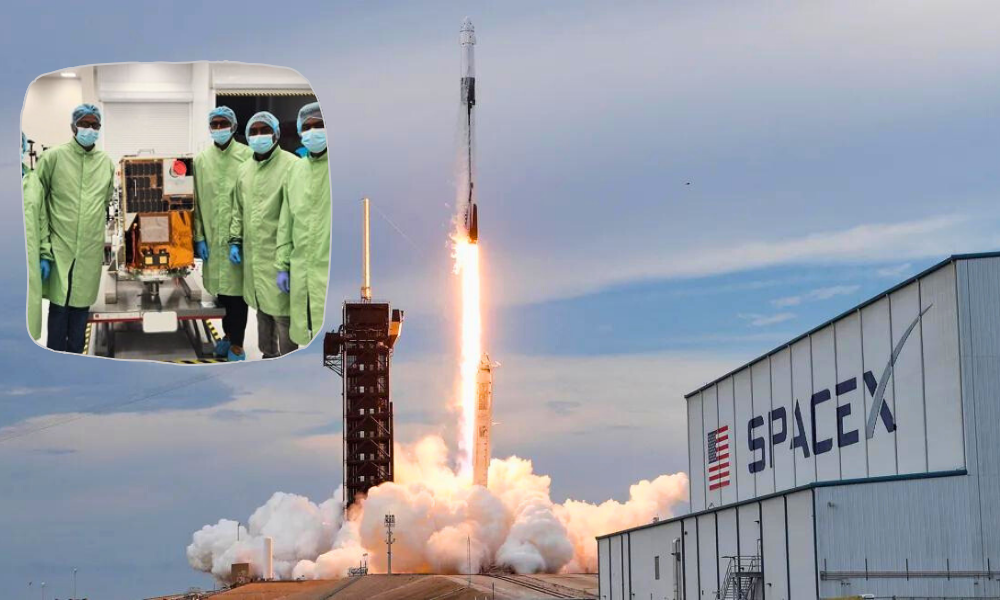
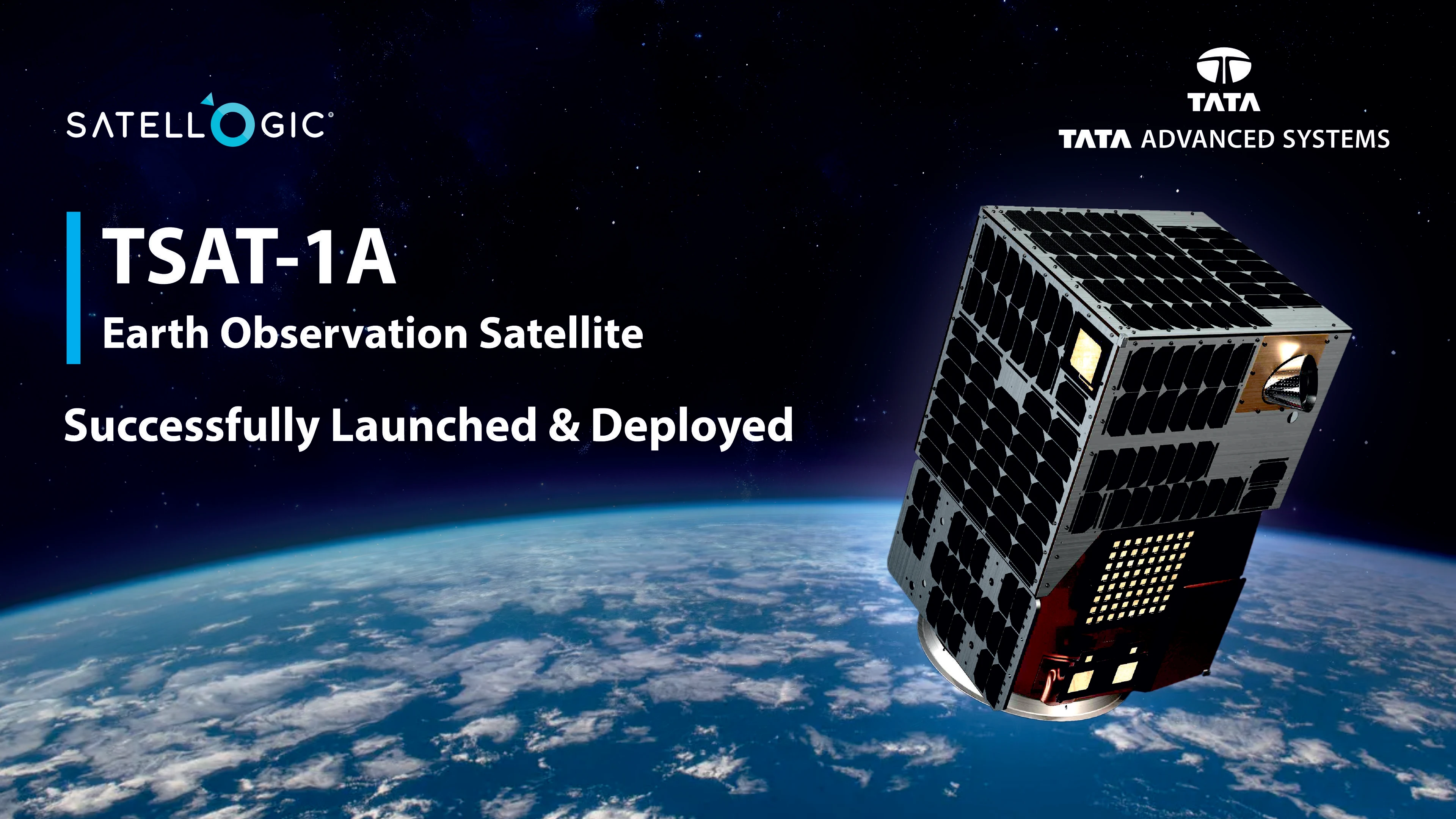
Tata Advanced Systems Limited (TASL) and Satellogic have announced the successful launch of the TSAT-1A satellite. The satellite was deployed into space aboard SpaceX's Falcon 9 rocket from the Kennedy Space Center in Florida, USA. This marks a significant achievement for TASL, showcasing their commitment to the space sector and their capability to deliver a fully integrated sub-meter optical satellite assembled and tested in India.

TSAT-1A is designed to provide high-resolution optical satellite images and features multispectral and hyperspectral capabilities, which will enhance image collection capacity, dynamic range, and low-latency delivery. This successful launch is a result of the collaboration between TASL and Satellogic, leveraging their combined expertise in satellite development and system integration.


TSAT-1A has been assembled in TASL’s Assembly, Integration and Testing (“AIT”) plant at its Vemagal facility in Karnataka. This achievement follows the collaboration signed between TASL and Satellogic in November 2023, leveraging Satellogic’s expertise to develop and integrate an advanced EO satellite in India and TASL’s capability to undertake complex system integration.

Indianweb2.com first reported about TASL building this military grade spy satellite, in February this year.

TASL is a strategic entity of the Tata Group in the aerospace and defense industry. It was founded in 2007 and is located in Hyderabad, Telangana.

TSAT-1A will deliver high-resolution optical satellite images with increased collection capacity, dynamic range, and low-latency delivery through its multispectral and hyperspectral capabilities.

South-America's Uruguay-based Satellogic provided industry knowledge transfer, foundational components, IP licensing terms, and support in constructing an AIT facility in India – features of its Space Systems offering for direct satellite sales.

TSAT-1A stands out among Earth observation satellites due to its sub-meter resolution imaging capabilities, which allow for extremely detailed images of the Earth's surface. This precision is particularly beneficial for applications requiring high-resolution data, such as urban planning and environmental monitoring.

Compared to other satellites, TSAT-1A's multispectral and hyperspectral imaging technologies provide a broader range of data collection possibilities. These capabilities enable the satellite to capture images across multiple bands of the electromagnetic spectrum, offering more detailed information than traditional optical images.

Furthermore, TSAT-1A is noted for its increased collection capacity, dynamic range, and low-latency delivery. This means it can capture more images in a shorter amount of time, with a wider range of light sensitivities, and deliver these images quickly to users on the ground.

Overall, TSAT-1A's advanced features make it a competitive option in the global market for Earth observation satellites, particularly for customers who require high-quality, detailed imagery with rapid delivery times.

SpaceX To Launch India’s 1st Private Spy Satellite Built by Tata Group's TASL, in April

SpaceX To Launch India’s 1st Private Spy Satellite Built by Tata Group's TASL

Elon Musk promoted SpaceX will soon be launching India's first private spy satellite — TSAT-1A, which has been built by Tata Group's Tata Advance Systems Limited (TASL). The launching is slated to happen in April.

TASL has built this military grade spy satellite and it has been shipped to Florida for assembling in the SpaceX rocket. With the help of TSAT-1A Indian defence forces will be able to get more accurate secret information and dependence on foreign vendors will be reduced.

TSAT-1A will have 0.5 meter spatial resolution and can provide sharp imagery. TASL can produce 25 such satellites annually and will develop multiple payloads as per requirements of armed forces.

To date, Indian armed forces have to rely on foreign vendors to obtain accurate co-ordinates and timings. But once the TSAT-1A satellite will be placed successfully in the orbit, the foreign reliance would nearly end. India will monitor this satellite and have full control of this spy satellite.

SpaceX To Launch India’s 1st Private Spy Satellite Built by Tata Group's TASL, in April

For monitoring the satellite, the ground control center is being built in Bengaluru and will be operational very soon. It will be used in the guidance and processing of satellite photographs. The Tata Company is building this center in association with the Latin-American company Satellogic (Satellogic). The imagery obtained from this satellite will also be shared with friendly countries. 

It is to be noted that, the Indian Space Research Organisation (ISRO) has its own satellites capable of capturing images, but their use is somewhat restricted.

TSAT-1A, which is a Low Earth Orbit (LEO) satellite, falls into the category of spy satellites because it has some sophisticated technologies. A spy satellite is essentially a camera in space, circling the Earth and taking detailed pictures of strategic places. These advanced satellites gather important information that’s useful for military and intelligence needs. They give key insights into things like troops’ movements what’s happening with infrastructure development near border areas, and any potential dangers.

Airbus and Tata Group To Produce H125 Helicopter, the Only to Have Landed on Mt. Everest

Airbus and Tata Group To Produce H125 Helicopter, the Only to Have Landed on Mt. Everest

On this year's Republic Day of India French President Emmanuel Macron visited India as Chief Guest at the Republic Day celebrations. During his this visit, Airbus Helicopters, (formerly Eurocopter Group) the helicopter manufacturing division of Airbus, announced that it is partnering with the Tata Group to establish a Final Assembly Line (FAL) for helicopters in India.

The FAL, which will be India’s first helicopter Final Assembly Line in the private sector, will produce Airbus’ best-selling H125 helicopter from its civil range for India and will even export to few of India’s neighbouring countries.

The H125-series helicopters (previously designated the AS350 B3e) is a single-engine helicopters for performance, versatility, low maintenance, and low acquisition costs. It is a member of Airbus’ Ecureuil family, which has accumulated 38 million flight hours worldwide.

Airbus claims that the H125-series helicopters have made number of world records. In 2005, the H125 set the world record for the highest-altitude landing and takeoff, performed on Mount Everest at 8,848 metres (29,029 feet). And in May 2013, the AS350 B3 (H125) performed the world's highest long-line rescue operation on Lhotse, the world's 4th-highest mountain, located in the Himalayas at 7,800 metres (25,590 feet).

H125 helicopter (Image - Stephane KERVELLA)
H125 helicopter (Image - Stephane KERVELLA) 

H125 helicopter (Image - Stephane KERVELLA)
H125 helicopter (Image - Stephane KERVELLA) 

The H125 series helicopters can operate in high-and-hot and extreme environments and can be easily reconfigured for various missions, including aerial work, firefighting, law enforcement, rescue, air ambulance, passenger transport, and many others.

Headquartered in Marignane, France, Airbus Helicopters will set up the helicopter manufacturing facility in India in partnership with Tata Advanced Systems Limited (TASL), a subsidiary of Tata Group.


H125 helicopter (Image - Stephane KERVELLA) 

 
To recall, TASL has also inked a contract with Airbus rival firm Boeing recently, to manufacture and supply advanced composite assemblies for Boeing 737 MAX, 777X, and 787 Dreamliner. Tata's TASL will manufacture these components from its manufacturing facilities located in Bengaluru and Nagpur.

The FAL in India will undertake the integration of the major component assemblies, avionics and mission systems, installation of electrical harnesses, hydraulic circuits, flight controls, dynamic components, fuel system and the engine.

The proposed H125 helicopter manufacturing facility will be the second FAL to be established in India by Airbus, leveraging Tata Group's TASL’s capabilities in aerospace and defence. The two companies are already building the C295 military transport aircraft FAL in Vadodara, Gujarat.

N. Chandrasekaran, Chairman, Tata Sons, said, “The Tata Group is delighted to set up India’s first helicopter assembly facility in the private sector. This facility will have the final assembly line in partnership with Airbus for the world’s bestselling Airbus H125 single engine helicopter for the Indian as well as export markets.”

Undisputed in its class, the H125 produced in India will catalyse the use of helicopters in the country. This multi-mission workhorse will revolutionise passenger and goods transportation and will also be used for segments such as emergency medical services (HEMS), disaster management, law enforcement, tourism and aerial work missions. Providing last mile connectivity to remote areas, the H125 will significantly contribute to the Government of India’s regional connectivity scheme – Ude Desh ka Aam Naagrik (UDAN) that will further promote the tourism sector in the country.

Market Reports

Market Report & Surveys
IndianWeb2.com © all rights reserved