Showing posts with label SoC. Show all posts

India Joins Global Automotive Semiconductor Supply Chain with Qualcomm–Tata Partnership

India Joins Global Automotive Semiconductor Supply Chain with Qualcomm–Tata Partnership

Qualcomm Technologies and Tata Electronics have announced a strategic partnership to manufacture Qualcomm Automotive Modules in India. Qualcomm Automotive Modules are system-in-package solutions designed to power next-generation vehicles with advanced digital and connected features.

With Qualcomm partnering Tata Electronics to manufacture these modules in Assam, India is stepping into the global automotive semiconductor supply chain, strengthening local capabilities and aligning with the “Make in India” initiative. This collaboration is significant for several reasons:

Key Highlights

  • Manufacturing Location: Production will take place at Tata Electronics’ upcoming outsourced semiconductor assembly and test (OSAT) facility in Jagiroad, Assam.
  • Scope of Modules: These modules will support advanced automotive technologies such as digital cockpits, infotainment systems, connectivity solutions, and intelligent vehicle systems.
  • Global Integration: Tata Electronics will join Qualcomm’s global network of module manufacturing partners, strengthening India’s role in the global semiconductor supply chain.
  • Economic Impact: The partnership aligns with India’s “Make in India” initiative, boosting domestic semiconductor capabilities and enhancing supply chain resilience.
  • Investment Scale: Tata’s Assam facility is a $3 billion project, designed for high-volume production to serve both Indian and international automakers.

Why It Matters

  • For India: This marks a major step in building a local semiconductor ecosystem, reducing reliance on imports, and positioning India as a hub for automotive electronics.
  • For Automakers: Local production means faster supply, reduced costs, and greater resilience against global disruptions.
  • For Qualcomm: Expanding manufacturing partnerships diversifies its supply chain and strengthens its presence in emerging markets.

Qualcomm Automotive Modules vs Traditional Automotive Electronics

Below is a clear comparison table showing how Qualcomm Automotive Modules stack up against traditional automotive electronics (ECUs and standalone chips):
Feature / Aspect Qualcomm Automotive Modules Traditional Automotive Electronics (ECUs / Standalone Chips)
Integration Highly integrated system-in-package combining compute, connectivity, and software Separate ECUs and chips for each function (engine, infotainment, safety, etc.)
Scalability Scalable across multiple vehicle models and segments Limited scalability; each ECU is often custom-designed for a specific function
Connectivity Built-in support for 5G, Wi-Fi, Bluetooth, and V2X Connectivity requires additional modules or separate chips
Software Updates Supports over-the-air (OTA) updates for new features and security Updates often require physical servicing or firmware reflashing
Development Speed Faster time-to-market with turnkey modular solutions Longer development cycles due to fragmented hardware and software integration
Cost Efficiency Reduces overall system cost by consolidating functions Higher costs from multiple ECUs and redundant hardware
User Experience Enables advanced digital cockpits, immersive infotainment, and seamless connectivity Limited to basic infotainment and control functions
Global Supply Chain Role Part of Qualcomm’s global manufacturing network (e.g., Tata Electronics in India) Traditionally localized or fragmented supply chains

Key Takeaway

Qualcomm Automotive Modules represent a next-gen, software-defined vehicle approach, consolidating multiple functions into a single scalable platform. Traditional ECUs and standalone chips remain functional but are less efficient, slower to update, and more costly to integrate across modern vehicles.

Qualcomm and Tata Elxsi Partner to Accelerate Cloud‑Native Automotive Innovation


Tata Elxsi has partnered with Qualcomm to accelerate the development of Software-Defined Vehicles (SDVs) by leveraging Qualcomm’s Snapdragon Digital Chassis™ and cloud-native platforms. This collaboration focuses on creating virtual ECUs and system-on-chips (VSoCs) to enable faster, more flexible automotive software innovation.

What This Partnership Means

  • Core Collaboration: Tata Elxsi will use Qualcomm’s Snapdragon Ride Flex SoC and Digital Chassis solutions to build cloud-native, virtualized automotive platforms.
  • Virtual ECUs: Tata Elxsi is developing virtual ECU platforms for automakers and Tier-1 suppliers, allowing them to test and deploy software faster without relying solely on physical hardware.
  • Demonstration at CES 2025: Tata Elxsi showcased its AVENIR™ SDV suite integrated with Qualcomm’s Snapdragon Ride Flex SoC.
  • Target Segments: Streamlining SDV development across passenger, commercial, and off-highway vehicles.

Why It’s Important

  • Shift to SDVs: Cars move from hardware-defined to software-driven, enabling updates and personalization.
  • Cloud-Native Approach: Virtualization accelerates prototyping, reduces costs, and improves reliability.
  • Future Mobility: Positions Tata Elxsi and Qualcomm at the forefront of next-gen mobility solutions.

Comparison: Traditional vs. Software-Defined Vehicle Development

Aspect Traditional Vehicle Development Software-Defined Vehicle Development (SDV)
Hardware Dependence Functions tied to physical ECUs Functions virtualized, cloud-native
Update Cycle Slow, requires hardware changes Fast, OTA (over-the-air) updates
Flexibility Limited customization Highly customizable, modular
Cost Efficiency High due to hardware reliance Lower via virtualization and cloud testing
Innovation Speed Years-long cycles Rapid prototyping and deployment

Challenges & Risks

  • Integration Complexity: Automakers must adapt legacy systems to cloud-native platforms.
  • Cybersecurity Concerns: SDVs increase exposure to vulnerabilities and hacking risks.
  • Standardization Needs: Industry-wide standards for virtual ECUs are still evolving.

Strategic Outlook

This partnership is a strategic leap for Tata Elxsi, positioning it as a key player in the global SDV ecosystem. For Qualcomm, it strengthens the role of Snapdragon Digital Chassis™ as the backbone of connected, intelligent vehicles. Together, they are setting the stage for faster innovation cycles, safer mobility, and more personalized driving experiences.

IndieSemic and Prizor Partner on Indigenous CCTV Chip Collaboration

IndieSemic and Prizor Partner on Indigenous CCTV Chip Collaboration
  • IndieSemic Pvt Ltd and Prizor Viztech Ltd have signed an MoU for the development, validation and commercial deployment of a CCTV-specific System-on-Chip (ISC-S2-PZ).
  • The agreement grants Prizor exclusive rights to procure, use and distribute the chipset in India and international markets for three years post-validation.
  • Prizor has committed to purchase 50 lakh ISC-S2-PZ units annually for a minimum period of three years.
  • The partnership focuses on indigenous semiconductor design, field validation, product integration and large-scale deployment in the security and surveillance sector.
IndieSemic Private Limited, an India-based semiconductor design company, and Prizor Viztech Limited, a security and surveillance solutions provider, have signed a Memorandum of Understanding (MoU) for the development, validation and commercial deployment of ISC-S2-PZ, a CCTV-specific System-on-Chip (SoC) designed by IndieSemic. The collaboration aims to strengthen India’s indigenous semiconductor ecosystem for the security and surveillance sector. The scope of the MoU includes joint testing, field trials, validation support and market deployment of the ISC-S2-PZ chipset through Prizor’s manufacturing and supply network.

Under the agreement, IndieSemic will supply the ISC-S2-PZ SoC based on the VEGA processor architecture, while Prizor will undertake validation, field testing and integration into its surveillance products. Prizor has secured exclusive rights to procure, use and distribute the chipset in India and international markets for three years post-validation and has committed to purchase 50 lakh units per year for a minimum period of three years.

Commenting on the development, Nikul Shah, Founder and CEO, IndieSemic Pvt Ltd, said, “We are pleased to partner with Prizor to take an indigenously designed CCTV-specific SoC from development to large-scale commercial deployment. The ISC-S2-PZ has been developed to address the requirements of the security and surveillance industry, including performance, security and system integration. This collaboration provides a clear pathway for validation, field deployment and volume adoption of a domestically designed chip, while also strengthening India’s semiconductor design capabilities and reducing reliance on imported solutions.

The partnership also enables Prizor to move towards deeper technology integration by incorporating a domestically designed SoC into its CCTV product portfolio, supporting long-term supply continuity and localisation goals.

Mitali Goswami, Managing Director, Prizor Viztech Limited, said, “This partnership marks a strategic milestone for Prizor. By validating and bringing IndieSemic’s indigenous ISCS2-PZ chipset to market, we are aligning cutting-edge semiconductor design with our extensive surveillance manufacturing capabilities. The ISC-S2-PZ has been architected for high-performance video analytics, data security and next-generation AI-enabled CCTV features, which fit perfectly with our future product roadmap. Our exclusive rights to distribute and our large-volume purchase commitment underscore our confidence in this technology’s success. With this collaboration, Prizor takes one more step toward backward integration beyond our SMT line, strengthening control over our technology stack and enhancing long-term competitiveness. This partnership supports our commitment to ‘Make in India’ innovation and further strengthens India’s presence in the global security-camera industry.”

IndieSemiC is an India-based semiconductor company engaged in the design and development of integrated circuits, RF modules, and system-level solutions for embedded and industrial applications. The MoU is expected to enable both companies to work closely on the localisation of critical semiconductor components for the surveillance sector. The partnership supports the development of an end-to-end domestic value chain covering chip design, validation, manufacturing integration and market deployment, with a focus on long-term scalability and supply assurance.

Key Highlights

  • Prizor granted exclusive rights to procure, use and distribute ISC-S2-PZ for three years post-validation.
  • Prizor committed to purchase 50 lakh units annually for a minimum of three years.
  • Focus on indigenous semiconductor design, validation, integration and deployment in security and surveillance.
  • ISC-S2-PZ based on VEGA processor architecture.
  • Strengthens India’s semiconductor ecosystem and supports ‘Make in India’ innovation.

About IndieSemic Pvt Ltd

IndieSemic Pvt. Ltd. is an India-based semiconductor design and technology company specialising in indigenous chip development across ASICs, RF modules and high-performance mixed-signal devices. With expertise across advanced semiconductor architectures, IndieSemic focuses on enabling India’s transition towards self-reliant, next-generation semiconductor capabilities.

About Prizor Viztech Ltd

Prizor Viztech Ltd, established in 2017, operates in the security and surveillance sector with a range of CCTV solutions serving retail, government, education and infrastructure. The company expanded into LED televisions, monitors and touch panels in 2022 and distributes its products across 18 states and 2 union territories in India, led by promoters with over 15 years of industry experience.

boAt to Co-Develop India-Made Semiconductor with HrdWyr; Tata Electronics to Lead Assembly

boAt to Co-Develop India-Made Semiconductor with HrdWyr; Tata Electronics to Lead Assembly
Representative Image
In a landmark move for India’s consumer electronics and semiconductor ecosystem, homegrown audio-tech giant boAt has made a strategic collaboration with Bengaluru-based chip design startup HrdWyr to co-develop a domestically designed and packaged chip, dubbed Indus 1011. The news was first reported by Moneycontrol on August 28, 2025, 9:44 AM IST.

The chip will be assembled and tested by Tata Electronics, marking a full-stack Indian effort in semiconductor innovation.

Inside the Chip: Indus 1011

The Indus 1011 is a MCU-class system-on-chip (SoC) engineered specifically for headset charging cases, with a focus on power and battery management. According to boAt, the chip delivers 20–30% improved charging efficiency, and future iterations will incorporate AI-powered battery optimization.

This is not just a chip—it’s a signal that India is ready to lead in fabless innovation,” said Aman Gupta, Co-founder of boAt, in an interview with Moneycontrol.

Made in India, for India

  • Design & IP: Led by HrdWyr, a fabless startup specializing in low-power SoCs
  • Assembly, Packaging & Testing (APT): Managed by Tata Electronics at its Hosur facility. 
  • Deployment: boAt plans to integrate the chip into 25% of its product portfolio by 2026, starting with its premium Nirvana range

Strategic Implications

This collaboration marks the first India-designed and India-packaged chip for the wearables segment, reducing dependency on imports from Taiwan and China. It also shortens lead times and tightens supply chains for boAt, which has been scaling aggressively across global markets.

Ecosystem Ripple Effect

  • The chip will be made available to other OEMs, fostering a broader domestic semiconductor ecosystem
  • It sets a precedent for consumer brands investing in IP, not just product design
  • The move aligns with India’s Semicon India initiative, which aims to position the country as a global semiconductor hub
HrdWyr is already prototyping a second-generation chip with Bluetooth stack integration, while Tata Electronics is expanding its APT capacity to support future consumer-grade silicon.

SiMa.ai Advances Physical AI with Modalix™: Compact MLSoC for Robotics, AVs, and Automation

  • SiMa.ai Launches Modalix™ to Tackle Power, Performance, and Integration Challenges in Physical AI
SiMa.ai, a leader in Physical AI solutions, today announced the production and immediate availability of its second-generation Machine Learning System-on-Chip (MLSoC™) – Modalix™ – designed to accelerate the scaling of Physical AI across industries.

SiMa.ai Launches Modalix™ to Tackle Power, Performance, and Integration Challenges in Physical AI

As sectors such as robotics, autonomous vehicles, industrial automation, and aerospace increasingly push AI to the edge, they face a common challenge: achieving high performance within the strict power, size, and integration constraints of edge devices. Cloud-based AI often falls short due to latency and high energy consumption. Modalix™ addresses this gap by delivering high performance and accuracy under 10 watts, capable of running LLMs, transformers, CNNs, and GenAI workloads efficiently.

Performance, Flexibility, and Low Power

Built on a flexible Arm-based architecture with a native GenAI software stack, Modalix™ supports real-time perception, decision-making, and natural language interaction. Its compatibility with key interfaces such as camera, Ethernet, and PCIe makes it adaptable for use in robotics, automotive, industrial automation, aerospace and defense, smart vision, retail, and healthcare applications.

Complete Platform for Physical AI

Alongside Modalix™, SiMa.ai introduced:
  • Pin-Compatible System-on-Module (SoM) – Developed with Enclustra, the compact, power-efficient SoM offers a drop-in replacement for leading GPU SoMs, integrating MIPI, memory, and essential I/O for rapid deployment.
  • LLiMa™ Framework – A unified on-device platform for running LLMs, LMMs, and VLMs entirely offline, with features such as curated model zoo access, automated quantization/compilation, and support for agent-to-agent systems, MCP, and RAG.
The integrated Palette™ SDK software, enables developers to move from prototype to production quickly and cost-effectively.

Industry Partnerships Driving Innovation

SiMa.ai’s Modalix showcases the scale of innovation possible on Arm’s flexible, high-performance, power-efficient compute platform,” said Ami Badani, Chief Marketing Officer, Arm. “By bringing AI and LLM capabilities to Physical AI applications at the edge, SiMa.ai is enabling smarter, faster, and more sustainable systems across industries.”

The development of Physical AI applications requires validated, purpose-built silicon and software, only possible using advanced design solutions,” said Ravi Subramanian, Chief Product Management Officer, Synopsys. “Achieving a successful first tapeout of MLSoC Modalix illustrates the mission-critical role of Synopsys AI-powered design and IP.”

This Enclustra–SiMa.ai SoM is more than just a module – it’s a ready-to-deploy Physical AI platform,” added Philipp Baechtold, CEO of Enclustra.

Leadership Perspective

The era of Physical AI is here,” said Krishna Rangasayee, Founder and CEO of SiMa.ai. “With Modalix™ now in production, we’re accelerating its global adoption and simplifying on-device LLM deployment. Demand for our Modalix SoM is strong, and we’re enabling developers worldwide to bring GenAI to Physical AI systems faster than ever.”

TSMC’s advanced N6 process technology powers Modalix™, ensuring it meets stringent embedded power, thermal, and reliability demands. “TSMC is proud to collaborate with SiMa.ai to deliver advanced SoCs that meet the growing demand for Physical AI,” said Sajiv Dalal, President of TSMC North America.

About SiMa.ai

SiMa.ai is a leader in Physical AI, delivering a purpose-built, software-centric platform that brings best-in-class performance, power efficiency, and ease of use to Physical AI applications. Focused on scaling Physical AI across robotics, automotive, industrial automation, aerospace & defense, smart vision, and healthcare, SiMa.ai is led by seasoned technologists and backed by top-tier investors. Headquartered in San Jose, California. Learn more at www.sima.ai.

L&T Semiconductor and C-DAC Collab to Create Make-In-India Integrated Circuits, SoCs and ESDM Solutions for Global Market

L&T Semiconductor and C-DAC Collab to Create Make-In-India Integrated Circuits, SoCs and ESDM Solutions for Global Market

L&T Semiconductor Technologies (LTSCT) recently signed a Memorandum of Understanding (MoU) with the Centre for Development of Advanced Computing (C-DAC).

This strategic collaboration aims to drive indigenization efforts and accelerate innovation in areas of mutual interest. Specifically, they will focus on creating Make-in-India Integrated Circuit (IC) / System-on-Chip (SoC) and Electronics System Design & Manufacturing (ESDM) solutions for automotive, industrial, and energy applications.

By reducing reliance on electronic imports, this partnership contributes to strengthening India's economic foundation. Kudos to both organizations for fostering innovation and positioning India as a leader in the semiconductor sector.

By focusing on Make-in-India ICs and SoCs, the collaboration aims to reduce dependency on imports, fostering a more self-reliant semiconductor ecosystem.

Moreover, the focus on automotive, industrial, and energy applications means that critical sectors will benefit from advanced, locally-produced semiconductor solutions, enhancing their efficiency and competitiveness.

The partnership will likely spur innovation and research in advanced semiconductor technologies, positioning India as a hub for cutting-edge developments in this field.

Enhanced local manufacturing and design capabilities can lead to job creation and economic growth, contributing to India’s GDP.

Congratulating both the organisations, Dr Sunita Verma, Group Coordinator, (R&D E&IT) from the Ministry of Electronics and Information Technology (MeiTY), said: “The signing of this MoU between L&T Semiconductor Technologies and C-DAC indicates the Government’s commitment to fostering public-private partnerships that drive innovation and economic growth. This collaboration not only underscores the importance of indigenisation in the semiconductor sector but also paves the way for India to take a leadership role on the global stage. We look forward to the transformative impact that this partnership will have on the nation’s technological landscape.”

Mr Magesh E, Director General – C-DAC, highlighted that the collaboration will significantly boost the semiconductor industry and strengthen the Digital India RISC-V (DIR-V) ecosystem. “The partnership in developing Vega based indigenous ICs and SoCs is set to accelerate the vision of Atmanirbhar Bharat by enabling the development of cutting-edge products and solutions for automotive, industrial, ICT infrastructure and the energy sectors. With a shared vision and the capability to deliver world-class solutions, this collaboration is expected to break new ground in semiconductor and related domains,” he said.

Mr Sandeep Kumar, Chief Executive – LTSCT, said: “This collaboration, led by LTSCT, will create a powerful commercialisation programme for advanced technologies created by C-DAC in semiconductor design & development, embedded software, open-source OS, HPC and power systems. C-DAC’s deep pipeline of indigenous IPs, including the VEGA processor, application design and FPGA validation will be turned into global product opportunities by LTSCT. The joint efforts are anticipated to yield innovative products and solutions that will benefit diverse sectors of the Indian economy while significantly enhancing the nation’s technological capabilities and positioning India as a leader in each of the sectors.”

Intel is Teaming Up with Chinese Tech Co.s to Develop Innovative Solutions for Intelligent Cockpits in Vehicles

Intel is Teaming Up with Chinese Tech Co.s to Develop Innovative Solutions for Intelligent Cockpits in Vehicles

Intel Corporation has announced a collaboration with two of China's technology companies — Neusoft and ThunderSoft — to develop innovative solutions for the next generation of intelligent cockpits in vehicles. This collaboration will leverage Intel's AI-enhanced software-defined vehicle (SDV) system-on-chip (SoC) to create advanced cockpit designs that offer AI customization and can scale across different vehicle generations.

The partnership aims to integrate Intel's compute platform into intelligent cockpit systems that will enhance driving experiences with a focus on comfort and safety. The Intel SDV SoC will support features like multiple screen sizes, multimodal interaction, 3D user interfaces, augmented reality navigation, and driver and occupant monitoring. It's designed to enable offline deployment of large models within the vehicle, addressing the increasing demand for privacy and a low-latency experience.

The collaboration will impact automotive market with new developments in AI & privacy by providing ability to deploy large Al models offline within the vehicle addresses the increasing demand for privacy and a low-latency experience. This ensures that users' data is processed within the vehicle, enhancing data privacy protection while still benefiting from Al's capabilities.

ThunderSoft's platform, in particular, will support multiple high-definition screens capable of simultaneous 3D rendering, providing a PC-quality gaming experience for vehicle occupants. The integration of AI large language models on Intel solutions will also allow for faster response times and more seamless interactions with the vehicle, all while ensuring enhanced data privacy protection.

This collaboration is a significant step for Intel in strengthening its automotive ecosystem and supporting automakers in creating cutting-edge in-vehicle experiences. It's exciting to see how this partnership will contribute to the evolution of software-defined vehicles and the automotive industry as a whole.

Intel’s efforts in China, the world's largest auto market, offer a massive testing ground for the next-gen intelligent and software-defined vehicle technologies. Intel’s open architecture is providing the flexible foundation electric vehicle disruptors are seeking to centralize more functions in modern electric vehicles at scale and across generations of vehicle models – from entry level to luxury.

Chennai Startup Mindgrove Launches India's 1st Commercial System on Chip (SoC)

Chennai Startup Mindgrove Launches India's 1st Commercial System on Chip (SoC)

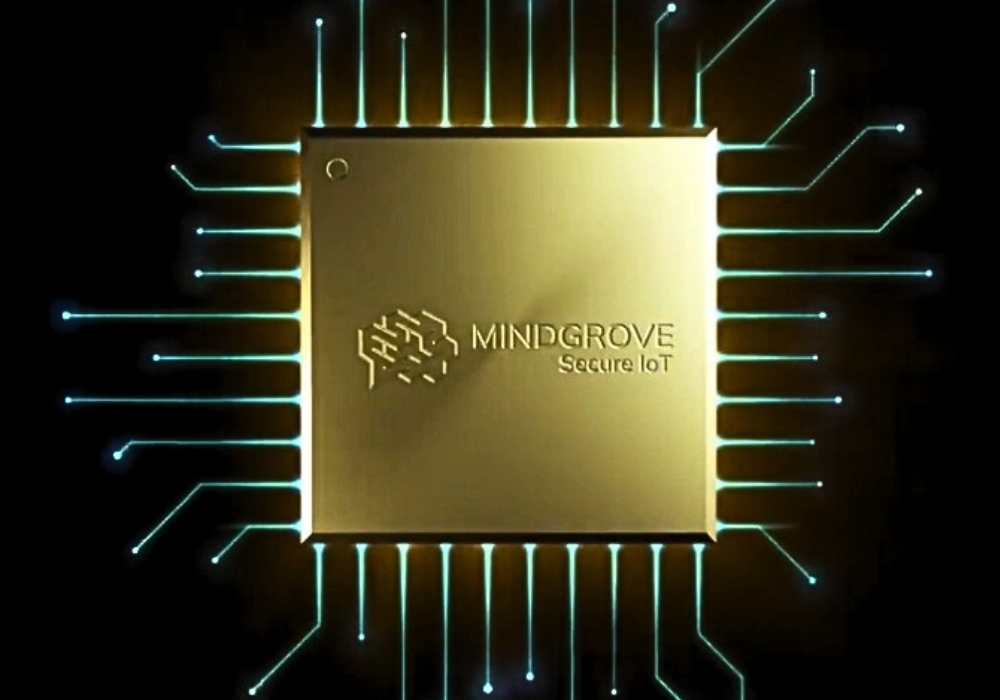
Chennai headquartered Mindgrove Technologies, a semiconductor startup backed by Peak XV Partners, has introduced Secure IoT, India's first commercial System on Chip (SoC) designed specifically for Internet of Things (IoT) devices.

Named as Secure IoT, this high-performance SoC is tailored for controlling applications on a wide range of connected smart devices. It offers programmability, flexibility, security, and superior computing power. Notably, it operates at a clock speed of 700 MHz.

Secure IoT is expected to be priced approximately 30% lower than other chips in similar segments. By using this chip, local Indian companies can reduce the cost of their devices without compromising on high-end features.

Under its applications, the SoC can control various devices, including wearables like smartwatches, smart city devices (such as connected electricity, water, and gas meters), connected home devices (like smart locks, fans, and speakers), as well as electric vehicle (EV) battery management systems and control systems.

The company said it is the only Indian chip that is commercially available in this segment. Mindgrove is now looking for all Indian OEMs and ODMs who might be interested.

Availability: The chip has successfully undergone an MPW tape-out (prototyping) at the 28nm node, and reference boards will be available for original equipment manufacturers (OEMs) to test in the coming weeks.

Mindgrove Technologies not only sells the chip but also offers design support to Indian brands, helping accelerate innovation and production scale within India. It also designs specialized Al accelerators for edge computing. These chips are optimized for running machine learning models directly on devices, reducing latency and enhancing privacy. Applications include smart cameras, robotics, and industrial automation.

Backed by IITM Pravartak Technologies Foundation and incubated in the IIT-Madras Incubation Cell, Mindgrove aims to put India on the map for semiconductor design. Leveraging the SHAKTI open-source processor program, the startup create new possibilities and keep the world on the edge

India's growing demand for microchips, coupled with the need for cost-effective solutions, makes Secure IoT a significant milestone in the country's semiconductor industry. Global buyers may also find this new option from India appealing.

AMD Launches New Spartan UltraScale+ Family FPGAs, Built for Cost-Sensitive Edge Applications

AMD Launches New Spartan UltraScale+ Family FPGAs, Built for Cost-Sensitive Edge Applications

New FPGAs offer high I/O counts, power efficiency, and state-of-the-art security features for embedded vision, healthcare, industrial networking, robotics, and video applications


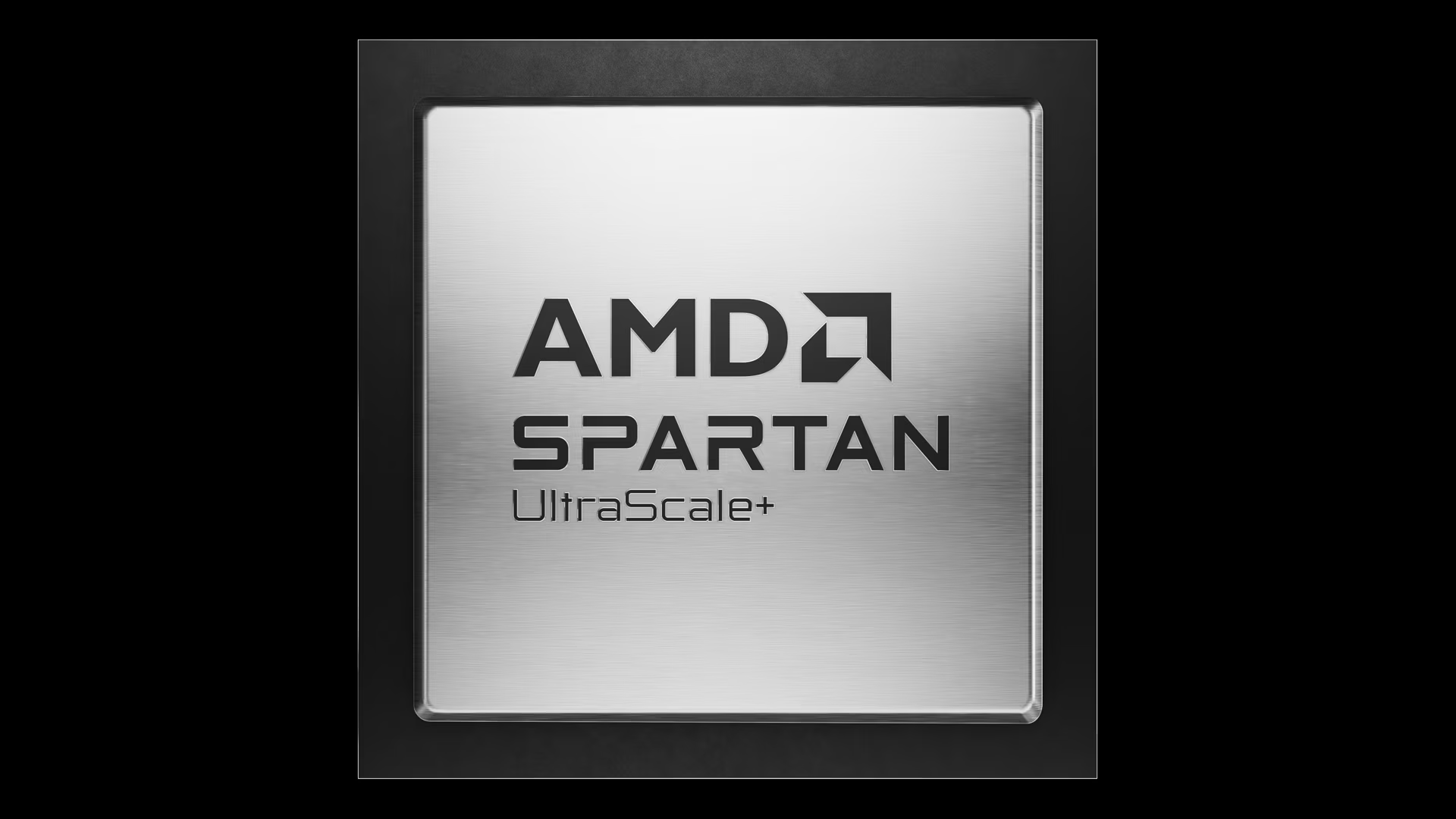
AMD (NASDAQ: AMD) has announced the AMD Spartan™ UltraScale+™ FPGA family, the newest addition to the extensive portfolio of AMD Cost-Optimized FPGAs and adaptive SoCs. Delivering cost and power-efficient performance for a wide range of I/O-intensive applications at the edge, Spartan UltraScale+ devices offer the industry’s highest I/O to logic cell ratio in FPGAs built in 28nm and lower process technologyi, deliver up to 30 percent lower total power consumption versus the previous generationii, and contain the most robust set of security featuresiii in the AMD Cost-Optimized Portfolio.

“For over 25 years the Spartan FPGA family has helped power some of humanity’s finest achievements, from lifesaving automated defibrillators to the CERN particle accelerator advancing the boundaries of human knowledge,” said Kirk Saban, corporate vice president, Adaptive and Embedded Computing Group, AMD. “Building on proven 16nm technology, the Spartan UltraScale+ family’s enhanced security and features, common design tools, and long product lifecycles further strengthen our market-leading FPGA portfolio and underscore our commitment to delivering cost-optimized products for customers.”

Flexible I/O Interfacing and Power Efficient Compute

Spartan UltraScale+ FPGAs are optimized for the edge, delivering high I/O counts and flexible interfaces which allow the FPGAs to seamlessly integrate and efficiently interface with multiple devices or systems to address the explosion of sensors and connected devices.

The family offers the industry’s highest I/O to logic cell ratio of FPGAs built on 28nm and below process technology, with up to 572 I/Os and voltage support up to 3.3V, enabling any-to-any connectivity for edge sensing and control applications. The proven 16nm fabric and support for a wide array of packaging, starting as small as 10x10mm, provide high I/O density in an ultra-compact footprint. The extensive AMD FPGA portfolio also provides the scalability to start with cost-optimized FPGAs and continue through to midrange and high-end products.

The Spartan UltraScale+ family is estimated to offer up to a 30 percent reduction in power compared to the 28nm Artix™ 7 family, through 16nm FinFET technology and hardened connectivity. They are the first AMD UltraScale+ FPGAs with a hardened LPDDR5 memory controller and PCIe® Gen4 x8 support, providing both power efficiency and future-ready capabilities for customers.

State-of-the-Art Security Features

Spartan UltraScale+ FPGAs offer the most state-of-the-art security features in the AMD Cost-Optimized FPGA portfolio.
  • Protecting IP: Support for Post-Quantum Cryptography with NIST-approved algorithms offers state-of-the-art IP protection against evolving cyber-attacks and threats. A physical unclonable function provides each device with a unique fingerprint for added security.
  • Preventing tampering: PPK/SPK key support helps manage obsolete or compromised security keys while differential power analysis helps protect against side-channel attacks. The devices contain a permanent tamper penalty to further protect against misuse.
  • Maximizing uptime: Enhanced single-event upset performance helps fast and secure configuration with increased reliability for customers.
The entire AMD portfolio of FPGAs and adaptive SoCs are supported by the AMD Vivado™ Design Suite and Vitis™ Unified Software Platform, allowing hardware and software designers to leverage the productivity benefits of these tools and included IPs via a single designer cockpit from design to verification.

AMD Spartan UltraScale+ FPGA family sampling and evaluation kits are expected to be available in the first half of 2025. Documentation is available today with tools support starting with the AMD Vivado Design Suite in the fourth quarter of 2024.

About AMD

For more than 50 years AMD has driven innovation in high-performance computing, graphics, and visualization technologies. Billions of people, leading Fortune 500 businesses, and cutting-edge scientific research institutions around the world rely on AMD technology daily to improve how they live, work, and play. AMD employees are focused on building leadership high-performance and adaptive products that push the boundaries of what is possible. For more information about how AMD is enabling today and inspiring tomorrow, visit the AMD (NASDAQ: AMD) website, blog, LinkedIn, and Twitter pages.

SiMa.ai Develops the Industry’s First Purpose-Built Machine Learning System-on-Chipwith TSMC’s Power Efficient Technology

Business Wire India

SiMa.ai, the machine learning company enabling effortless deployment and scaling at the embedded edge, today announced it has delivered a software-centric MLSoC Platform that enables quick and Effortless ML experiences for the embedded edge, benefiting from TSMC’s power efficient process technology and most comprehensive design ecosystem.

The SiMa.ai MLSoC, which is shipping to customers now, addresses any computer vision application and delivers a 10x better performance/watt solution – operating at the most efficient frames per second/watt. SiMa.ai’s push-button software experience allows users to effortlessly scale machine learning in minutes for robotics, smart vision, government, autonomous vehicles, drones, and healthcare applications.

As SiMa.ai’s foundry partner, TSMC manufactured SiMa.ai’s first-generation design of its MLSoC on the TSMC 16nm technology, which provides superior performance and optimal power consumption – an advantage for high-end edge applications.

“We partnered with TSMC to manufacture our MLSoC Platform because we wanted to work with the best. Our first-time-right silicon success allowed us to begin shipping products to customers immediately,” said Gopal Hegde, SVP Engineering & Operations, SiMa.ai. “Our customers have been waiting for a purpose-built software and hardware MLSoC platform and we are thrilled to work with TSMC to deliver the industry’s first and only solution that enables Effortless ML.”

For over three decades, TSMC has collaborated with countless innovative technology companies, helping them quickly launch their differentiated products to market with TSMC’s industry-leading process technology and manufacturing excellence. To help customers address design complexity and improve first-time silicon success, TSMC also works with its ecosystem partners via the most comprehensive design ecosystem, the TSMC Open Innovation Platform® (OIP).

“TSMC has long-partnered with industry innovators to help them achieve the best possible power, performance and area (PPA) for their next-generation designs,” said Lucas Tsai, Director of Market Development and Emerging Business Management, TSMC North America. “We look forward to our continued collaboration with innovators like SiMa.ai to transform their forward-looking idea from inspiration into real products and enable advances in machine learning and countless other applications.”

The SiMa.ai MLSoC Platform is available today. For more information, visit https://sima.ai/get-10x-now/.

About SiMa.ai
SiMa.ai is a Machine Learning company delivering the industry’s first software-centric, purpose-built MLSoC platform. With push-button performance, we enable Effortless ML deployment and scaling at the embedded edge by allowing customers to address any computer vision problem while achieving 10x better performance at the lowest power. Initially focused on computer vision applications, SiMa.ai is led by technologists and business veterans backed by a set of top investors committed to helping customers bring ML on their platforms.


© Copyright 2022 SiMa Technologies, Inc. SiMa.ai logo and other designated brands included herein are trademarks in the United States and other countries.


Market Reports

Market Report & Surveys
IndianWeb2.com © all rights reserved