Showing posts with label SAIL. Show all posts

India Inaugurates 84,000 m³ RCC Water Reservoir to Power Burnpur’s Historic IISCO Steel Plant Expansion

India Inaugurates 84,000 m³ RCC Water Reservoir to Power Burnpur’s Historic IISCO Steel Plant Expansion

Union Minister for Steel and Heavy Industries H.D. Kumaraswamy inaugurated a new 84,000 m³ RCC Water Reservoir at the IISCO Steel Plant in Burnpur, West Bengal, marking a major step in strengthening India’s oldest integrated steel facility under SAIL.

For an uninitiated, Water reservoirs are critical in steel plants because steelmaking processes require massive volumes of water for cooling, cleaning, dust suppression, and sustaining closed‑loop circulation systems. Blast furnaces, coke ovens, and rolling mills generate extreme heat. Large volumes of water are needed to cool equipment and maintain safe operations.

At IISCO Burnpur, the newly inaugurated 84,000 m³ RCC reservoir ensures water security for expansion projects, supports coke oven batteries, and strengthens sustainability by conserving resources.

Key Highlights of the Inauguration

  • Capacity: 84,000 cubic metres reinforced cement concrete (RCC) reservoir.
  • Purpose: Meets water requirements of COB‑10 (Coke Oven Battery) and supports the upcoming 4.08 MTPA expansion project.
  • Integrated System: Includes a Booster Pump House, a dedicated Pump House for COB‑10, and a Process Water Pump House under construction.
  • Closed‑Loop Circulation: Designed to maximize water conservation, minimize losses, and improve operational efficiency.

Sustainability & Industrial Impact

India Inaugurates 84,000 m³ RCC Water Reservoir to Power Burnpur’s Historic IISCO Steel Plant Expansion

The reservoir is part of IISCO’s modernization drive, aligning with India’s push for sustainable steel production.
  • Supports resource efficiency by establishing a closed‑loop water system.
  • Enhances environmental responsibility while boosting operational performance.
  • Complements flagship projects like COB‑12 (Stamp Charge Coke Oven Battery) with advanced environmental protection systems.

Performance & Expansion

  • Hot Metal Production: IISCO achieved 2.9 million tonnes in FY 2025‑26.
  • Capital Expenditure: Rose to ₹1,860 crore in FY 2025‑26, up from ₹689 crore the previous year.
  • Expansion Projects: Focused on capacity augmentation, modernization of blast furnaces, and adoption of AI‑enabled safety systems.

Minister’s Remarks

India’s journey towards becoming a global steel powerhouse depends not only on expanding capacity but also on building modern, sustainable and technologically advanced steel plants. Every strategic investment we make today strengthens the foundation of a self‑reliant India.
— H.D. Kumaraswamy, Union Minister for Steel and Heavy Industries
Resource efficiency and environmental responsibility must go hand in hand with industrial growth. Projects like these demonstrate how modern infrastructure can simultaneously improve operational performance and conserve precious natural resources.
— H.D. Kumaraswamy

Centre–State Cooperation

The Minister also met West Bengal’s Urban Development Minister Agnimitra Paul, discussing stronger Centre–State coordination to accelerate industrial development, attract investments, and generate employment.

Conclusion

The inauguration of the 84,000 m³ RCC Water Reservoir at IISCO Steel Plant is a landmark in India’s steel sector modernization. It strengthens water security, supports expansion, and reflects the Government’s dual focus on industrial growth and sustainability.

SAIL Supplies 4,000 Tonnes of Indigenous Steel for INS Taragiri, Strengthening India’s Defence Manufacturing

SAIL Supplies 4,000 Tonnes of Indigenous Steel for INS Taragiri, Strengthening India’s Defence Manufacturing

INS Taragiri, the fourth Nilgiri-class (Project 17A) stealth frigate, was commissioned into the Indian Navy on April 3, 2026, at Visakhapatnam. Built by Mazagon Dock Shipbuilders Limited (MDL) and powered by 4,000 tonnes of indigenous steel from Steel Authority of India Limited (SAIL), the warship marks a major milestone in India’s defence indigenisation and maritime self-reliance.

The Nilgiri-class (Project 17A) frigates are India’s latest generation of indigenous stealth warships, designed as versatile multi-mission platforms with advanced stealth, automation, and firepower. They represent a major leap in self-reliant naval shipbuilding under the Atmanirbhar Bharat initiative.  

SAIL Supplies 4,000 Tonnes of Indigenous Steel for INS Taragiri, Strengthening India’s Defence Manufacturing

Key Highlights of INS Taragiri Commissioning

  • Commissioning Date & Venue: April 3, 2026, Naval Dockyard, Visakhapatnam
  • Presiding Dignitary: Defence Minister Rajnath Singh led the ceremony
  • Shipbuilder: Mazagon Dock Shipbuilders Limited (MDL), Mumbai
  • Class & Project: Fourth vessel of the Nilgiri-class (Project 17A)
  • Displacement: Approx. 6,670 tonnes
  • Steel Supply: 4,000 tonnes of special-grade steel supplied by SAIL

Role of SAIL in Defence Indigenisation

SAIL has been a consistent contributor to the Indian Navy, supplying thousands of tonnes of indigenous, special‑grade steel for key warships like INS Taragiri (2026), INS Arnala (2025), and INS Androth (2025). These supplies have enabled India to reduce dependence on imports and strengthen defence self‑reliance.  
  • Supplied DMR 249A grade hot-rolled sheets and plates
  • Earlier contributions include INS Vikrant, INS Nilgiri, INS Himgiri, INS Udaygiri
  • Reinforces Atmanirbhar Bharat and Make in India

Project 17A – India’s Stealth Frigate Program

  • Total of seven frigates under construction at MDL and GRSE
  • Successor to Shivalik-class with enhanced stealth and automation
  • INS Taragiri named after the erstwhile Leander-class frigate (1980–2013)

Ships in the Class

  1. INS Nilgiri – Lead ship, launched 2019, commissioned 2025.
  2. INS Himgiri – Delivered July 2025 (GRSE). 
  3. INS Udaygiri – Commissioned 2025. 
  4. INS Taragiri – Commissioned April 3, 2026 (MDL). 
  5. INS Dunagiri – Delivered March 30, 2026 (GRSE). 
  6. INS Vindhyagiri – Launched August 2023.  
  7. INS Mahendragiri – Under construction.  

Strategic Significance

  • Strengthens India’s ability to safeguard its 11,000 km coastline
  • Demonstrates domestic capacity to design and build complex warships
  • Showcases collaboration between MDL and SAIL
Below is a comparison table between the Nilgiri-class (Project 17A) and its predecessor, the Shivalik-class (Project 17) frigates. This highlights the technological leap India has made in stealth warship design:

Nilgiri-class (Project 17A) Vs Shivalik-class (Project 17)

The Nilgiri-class (Project 17A) frigates represent India’s latest generation of indigenous stealth warships, building on the foundation of the Shivalik-class (Project 17).

Key Features of Nilgiri-class (Project 17A)

  • Advanced stealth shaping, infrared suppression, and acoustic quieting
  • Displacement of ~6,670 tonnes
  • High automation with reduced crew workload
  • 75% indigenous content including SAIL steel
  • Equipped with BrahMos missiles, Barak-8 SAM, and advanced CIWS

Comparison Table

FeatureShivalik-class (Project 17)Nilgiri-class (Project 17A)
Commissioning Period2010–20122025–2026 (ongoing)
Number of Ships3 (INS Shivalik, INS Satpura, INS Sahyadri)7 planned (INS Nilgiri, Himgiri, Udaygiri, Taragiri, Dunagiri, Vindhyagiri, Mahendragiri)
Displacement~6,200 tonnes~6,670 tonnes
Length~142 meters~149 meters
Beam~16.9 meters~17.8 meters
PropulsionCODOG (LM2500 gas turbines + Pielstick diesels)CODOG (LM2500 gas turbines + MAN diesels)
Speed~30 knots~32 knots
Range~5,000 nautical miles~2,500 nautical miles
Stealth FeaturesBasic radar signature reductionAdvanced stealth shaping, infrared suppression, acoustic quieting
WeaponsKlub missiles, Barak-1 SAM, AK-630 CIWSBrahMos missiles, Barak-8 SAM, advanced CIWS
AutomationModerate digital integrationHigh automation, reduced crew workload
Indigenous Content~60%~75% (including SAIL steel)
ShipbuildersMDL (Mumbai)MDL (Mumbai) & GRSE (Kolkata)

Key Takeaway

  • Shivalik-class was India’s first indigenous stealth frigate program
  • Nilgiri-class builds on that foundation with greater stealth, automation, and indigenous content
  • Represents one of the most capable frigate classes in Asia
The Nilgiri-class (Project 17A) frigates are central to India’s naval modernization, combining indigenous design, advanced weapons, and strategic self-reliance.

The commissioning of INS Taragiri is not just a naval milestone but a symbol of India’s growing industrial and defence ecosystem. With SAIL’s indigenous steel at its core, the frigate embodies the nation’s push toward Atmanirbhar Bharat, ensuring that India’s maritime strength is forged at home.

And, SAIL’s contributions — from 4,000 tonnes for INS Taragiri to entire steel requirements for INS Arnala and INS Androth — highlight its pivotal role in India’s naval modernization. By supplying indigenous, special‑grade steel, SAIL strengthens both the Indian Navy’s fleet and India’s strategic goal of defence self‑reliance.  

India’s Coal Backbone Holds Firm Amid Global Gas Disruptions

India’s Coal Backbone Holds Firm Amid Global Gas Disruptions

India’s energy ecosystem is witnessing early signs of stress amid ongoing geopolitical disruptions in West Asia, even as the government maintains that the country remains well-prepared to manage the situation. The ongoing conflict in the region has significantly impacted global supply chains, particularly energy flows through critical routes such as the Strait of Hormuz, which carries a large share of India’s crude oil, gas, and fertiliser imports. Addressing the Parliament on March 23, Hon’ble Prime Minister Shri Narendra Modi described the situation as “concerning” and acknowledged its adverse impact on the global economy and daily life, while assuring that India is taking proactive steps to safeguard energy security.

Industrial clusters across India are already experiencing localized stress, with shortages and disruptions in CNG and LPG supply pushing businesses to explore alternative fuels, including coal. India imports nearly 45–50% of its natural gas requirement as LNG, making industrial gas consumers highly sensitive to global supply disruptions and shipping route uncertainties. This shift is further reinforced by constrained LNG supplies and rising global uncertainties. At the same time, the government has highlighted that India has significantly strengthened its energy resilience over the past decade through diversification of import sources, expansion of strategic reserves, and improved supply chain preparedness.

Gas-based power capacity in India remains underutilised at below 25% PLF, as coal and renewables continue to dominate the generation mix. While the power sector remains relatively insulated, owing to its strong reliance on coal and renewables, the industrial sector continues to feel the pressure of gas shortages. In this context, coal has emerged as a critical fallback option, reinforcing its role as the backbone of India’s energy security.

India’s Coal Backbone Holds Firm Amid Global Gas Disruptions

India’s overall coal demand has been rising steadily, with annual consumption crossing 1.25 billion tonnes, driven primarily by the power sector, cement, sponge iron, and captive industrial users. Early signals from coal markets indicate tightening demand–supply dynamics. Coal India’s e-auction premiums have risen to around 35% over notified prices in February 2026, reflecting increased urgency among buyers to secure supply. This marks a shift from softer demand trends earlier in the fiscal year. The demand uptick is being driven by multiple factors, including substitution from gas amid LNG disruptions, seasonal ramp-up in power demand, and reduced imports leading to greater reliance on domestic coal. However, coal’s substitution potential remains largely limited to the power sector in the short-to-medium term. Structural and technological constraints continue to restrict its widespread adoption in industrial applications such as fertilisers and chemicals.

Commenting on the evolving scenario, Mr. Vinaya Varma, MD & CEO, mjunction services limited stated, “What we are witnessing is an early but clear behavioural shift in fuel consumption patterns. As LNG availability tightens and CNG/LPG supplies face disruption in several industrial clusters, buyers are increasingly turning to coal to secure operational continuity. The rise in e-auction premiums and improved offtake reflects this urgency. Coal will continue to play a critical role in ensuring India’s energy security, especially in times of global uncertainty. While we are witnessing localized tightening in demand and firming of prices, the overall market remains balanced due to strong domestic availability and adequate stock levels.”

Importantly, the situation remains measured rather than overheated. Only about 47% of auction volumes have been sold so far this year, and current premiums remain below historical peaks, indicating controlled but firming demand. Current coal stock levels at power plants remain comfortable at 18–20 days of consumption, preventing panic buying despite tightening spot demand signals in auction markets. Overall, while India is not facing an immediate energy crisis, evolving global disruptions are beginning to test the system.

About mjunction:

mjunction services limited, a 50:50 joint venture between Tata Steel and SAIL, is India’s largest B2B e-commerce company, leveraging technology to create value across industries for over two decades. Founded in 2001 with the launch of its pioneering metaljunction platform to bring transparency and efficiency to steel sales, mjunction has since diversified into multiple sectors, offering a comprehensive portfolio that includes e-auctions, e-procurement, loyalty solutions, e-marketplaces, agri-commodities, financing, and specialized services. With innovative offerings like mjGRO for loyalty management, mjunction serves over 140 marquee clients in both public and private sectors. With a strong focus on innovation, transparency, and customer success, mjunction continues to drive digital transformation in B2B commerce, enabling businesses to trade and procure with greater efficiency, scale, and trust.

SAIL's Bhilai Plant Pioneers Next-Gen Steel for S5 Nuclear Ballistic Missile Submarines (SSBNs)

SAIL's Bhilai Plant Pioneers Next-Gen Steel for S5 Nuclear Ballistic Missile Submarines (SSBNs)

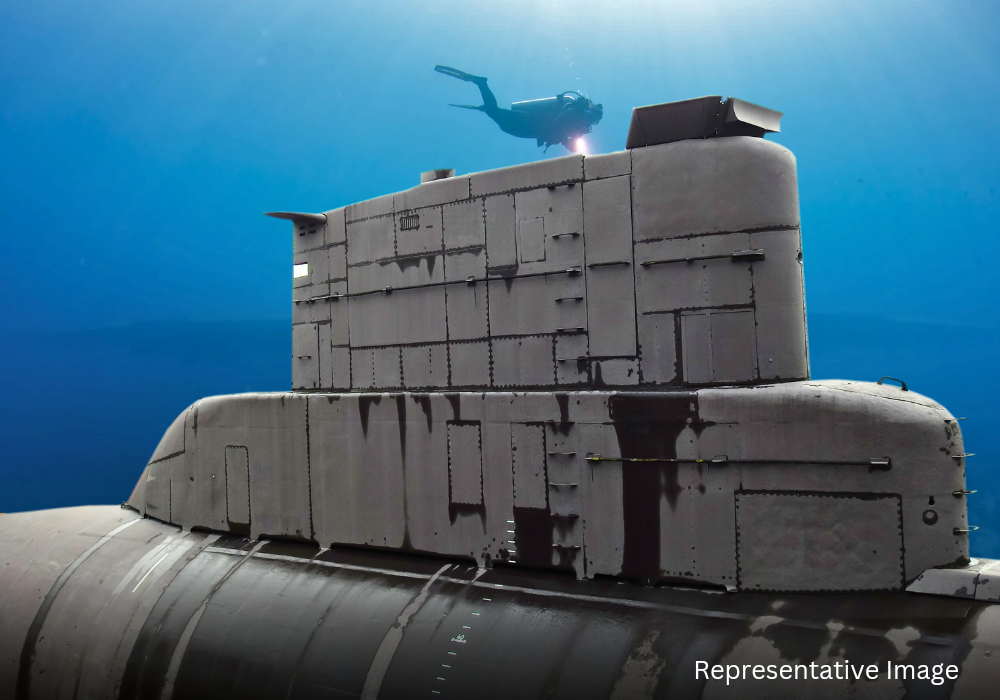
The Steel Authority of India Limited's (SAIL) Bhilai Steel Plant (BSP) has made a significant advancement in the development of strategic defense materials. They have pioneered the creation of next-generation steel designed specifically for the S5 class of nuclear-powered ballistic missile submarines (SSBNs).

The S5-class submarine is a planned class of Indian nuclear-powered ballistic missile submarines (SSBNs) currently under development for the Indian Navy.

This new steel is currently undergoing a comprehensive multi-year testing phase to ensure it meets the stringent performance requirements necessary for underwater applications.

Once the testing phase is successfully completed and the steel is cleared for use, it will be utilized in the construction of the S5 class SSBNs. These submarines are reported to be true underwater giants with an estimated submerged displacement exceeding 12,000 tons and a length of nearly 150 meters.

The S5 class submarines are expected to significantly enhance India's underwater deterrence capabilities and reinforce its position as a leading maritime power.

The S5 class submarines project was assessed by the Government of India in 2006, and production is expected to start by 2027. These submarines are part of India's strategic nuclear deterrent and are expected to play a crucial role in the country's defense strategy by providing a second-strike capability. The S5- class will contribute to the triad of India's nuclear deterrence, which comprises land- based missiles, strategic bombers, and SSBNs.

The next-generation steel developed is designed to meet the specific demands of modern submarine construction. While official details on the composition and properties of this new steel are classified, it is undergoing rigorous testing to ensure it surpasses the performance requirements for underwater applications.

Compared to existing materials, this new steel variant is likely to offer improved strength, corrosion resistance, and longevity, which are critical for the harsh conditions submarines encounter in deep-sea environments. The development process for this steel is more extensive than that for the steel used in the INS Vikrant aircraft carrier, indicating a significant advancement in quality and performance.

This specialized steel is expected to enhance the structural integrity and safety of the S5 class submarines, contributing to India's strategic defense capabilities and supporting the nation's goal of self-reliance in defense technology.

This initiative is part of India's strategic move towards self-reliance in defense capabilities. The steel produced by BSP will undergo extensive testing and inspection by the Defence Metallurgical Research Laboratory (DMRL) and the Indian Navy before it is used in the construction of the Submarine.

The development of this steel is a testament to SAIL-Bhilai's commitment to contributing to major defense projects, following their previous work on special steel plates for the INS Vikrant aircraft carrier. The testing for the submarine steel is reported to be ten times more rigorous than that for the steel used in INS Vikrant, highlighting the critical nature and high standards required for submarine construction.

This project is a significant step in bolstering India's defense infrastructure and enhancing its maritime security. The indigenous development of submarines using materials produced within the country not only strengthens national security but also supports the growth of domestic Industries.

Source – Times of India | Via – Idrw.org

SAIL Partners SaaS Startup Sentra.World for Carbon Emission Tracking and Reduction

SAIL Partners SaaS Startup Sentra.World for Carbon Emission Tracking at Durgapur Plant

The Steel Authority of India Limited (SAIL) has partnered with the Bengaluru-based SaaS startup Sentra.world to pioneer carbon emission reduction in steel production.

This collaboration involves using Sentra.world's advanced carbon tracking software at SAIL's Durgapur Steel Plant and its Environment Management Division.

sentra.world is a B2B SaaS carbon accounting software company that helps industrial businesses measure, report, certify, and reduce their carbon emissions.

The initiative is a significant step towards sustainable and eco-friendly practices in the steel industry, aiming to comprehensively monitor and manage carbon dioxide emissions across various production facilities. This partnership aligns with global efforts to decarbonize economies and minimize the environmental impact of industrial activities.

Founded in 2023 by two ex-McKinsey junior partners — Harsh Choudhry and Vikas Upadhyay — each with 16+ years of experience in sustainability, industrial manufacturing and digital technology, Sentra.world's software help industrial companies track and reduce their CO2 emissions. It uses a combination of AI and blockchain technology to provide a comprehensive view of emissions, employing various methods for accurate assessments.

The software uses recognized methodologies like the GHG protocol and standards set by the World Steel Association to measure CO2 emissions.

The startup is headquartered in Bangalore and has received a total funding of $2.0 million from investors such as Avaana Capital, Golden Sparrow Ventures and RPG Ventures.

Sentra.world's software is gaining traction in the industrial sector, particularly among companies focused on sustainability and carbon emission reduction. The software is designed to cater to industries such as Steel, Aluminum, Cement, Chemicals, and Utilities. These sectors are critical for decarbonization efforts due to their significant greenhouse gas emissions. Sentra.world's approach, which combines AI and blockchain technology, is particularly suitable for businesses looking to meet ESG compliance, access new markets, and reduce costs while managing their environmental footprint.

Market Reports

Market Report & Surveys
IndianWeb2.com © all rights reserved