‏إظهار الرسائل ذات التسميات Nandan Nilekani. إظهار كافة الرسائل

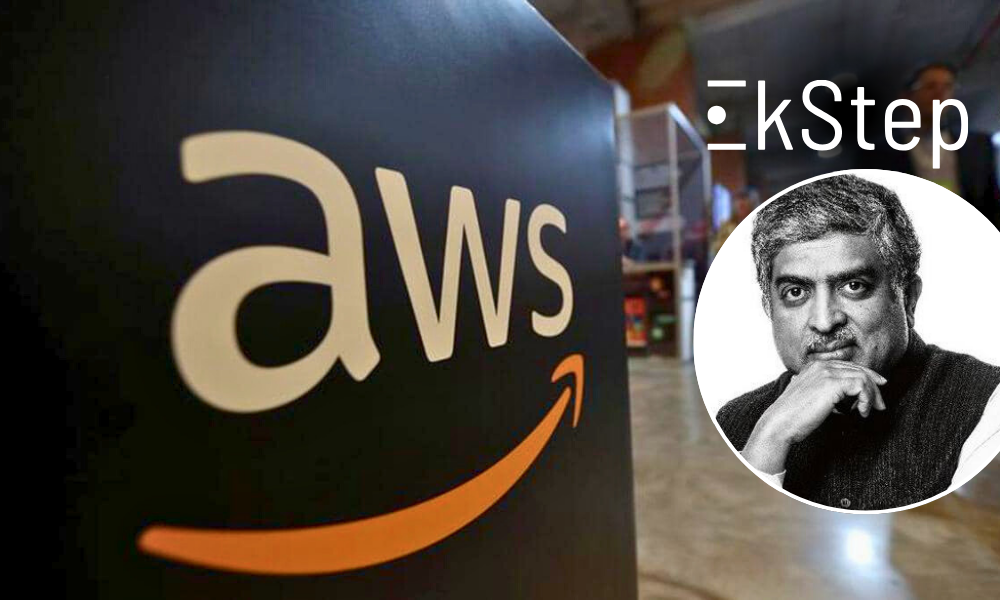
AWS and Nandan Nilekani's EkStep Establish Joint Innovation Center To Create Digital Public Goods Infrastructure

AWS and Nandan Nilekani's EkStep Establish Joint Innovation Center To Create Digital Public Goods, Infrastructure

Amazon Web Services (AWS) India Private Limited and EkStep Foundation, a philanthropic initiative founded by Nandan Nilekani, Rohini Nilekani, and Shankar Maruwada, have established a Joint Innovation Center (JIC) to foster and accelerate the creation of digital public goods and digital public infrastructures. This collaboration aims to support public sector and commercial entities in developing digital solutions for large-scale use and help governments build socially and digitally inclusive economies.

The JIC will focus on sectors such as education, agriculture, finance, healthcare, and climate change, and it will leverage technologies like cloud computing, generative AI, and analytics from AWS. The initiative is part of a broader vision to use technology to create a more equitable and inclusive society.

According to the Nasscom-Arthur D. Little report Digital Public Infrastructure of India – Accelerating India’s Digital Inclusion, the economic value addition from DPIs to India’s GDP has the potential to grow 3x – from 0.9% in 2022 to 2.9 – 4.2% by 2030. The JIC by AWS and EkStep will be a mechanism to bring together key stakeholders who are committed to driving digital cooperation for a more equitable and sustainable world. These stakeholders include owners and developers of DPGs/ DPIs; enablers like startups, independent software vendors (ISVs), and system integrators (SIs); and adopters/ implementers like governments, multilateral organisations, and private sector entities. The JIC will promote collaboration among these stakeholders to develop DPGs and DPIs for sectors such as education, agriculture, finance, healthcare, and climate change, and help accelerate societal transformation.

The JIC will focus on supporting startups, ISVs, and SIs to leverage the power of technologies such as cloud computing, generative artificial intelligence (AI), and analytics from AWS; help them imagine and invent new use cases for DPGs and DPIs, incubate them, and enhance existing ones; and offer comprehensive starter kits for states and countries interested in such solutions.

To enable ease-of-use and faster adoption, the DPGs and DPIs will be packaged for one-click deployment via the AWS Partner Network (APN), which features more than 130,000 partners from more than 200 countries. AWS will explore featuring the DPGs on AWS Marketplace, providing a global channel to showcase and distribute the solutions.

AWS will further explore featuring the DPGs and DPIs on the Open Government Solutions Catalog, which provides government organisations with valuable resources such as digital solutions, policies, and standards, enabling them to explore and reuse proven approaches to digital transformation.

Governments and organisations serving the public at large are increasingly seeing how DPIs using cloud computing and open-source solutions can provide scalable, secure, agile, and efficient services to people, accelerating public service transformation programs”, said Shalini Kapoor, Director and Chief Technologist, AWS India Private Limited. “Building newer DPGs and DPIs requires collective focus from stakeholders on solving problems of scale, and we are pleased to have EkStep’s visionary thinking and commitment in this initiative. The two organisations share a belief that technology should cut across barriers and enable the creation of a more equitable and inclusive society.”

EkStep Foundation, a philanthropic initiative founded by Nandan Nilekani, Rohini Nilekani, and Shankar Maruwada, aims to utilise technology to build population scale public goods, empower communities, and orchestrate sharing of resources, enabling civil society, governments, and the private sector to make meaningful decisions for societal benefits.

A prime example of this approach is EkStep’s Sunbird, an open-source, modular, and configurable digital infrastructure that can help organisations scale the delivery of resources to users. Sunbird can be applied for a variety of applications such as capacity building and professional development in education, and credentialing, accreditation, and capturing health records in healthcare. It can be used to record crop quality, standards, soil quality, and inventory, in agriculture; supporting financial inclusion by capturing people’s income certificates and credit worthiness; and driving climate-positive actions by recording carbon credits and sustainability scores for products and organisations.

“EkStep is committed to accelerating inclusive innovation that can address profound challenges and drive positive change on a national level,” said Shankar Maruwada, Co-founder and CEO, EkStep Foundation. “The establishment of a Joint Innovation Center with AWS marks a significant leap towards the adoption and scaling of India's Digital Public Infrastructure with the extensive reach and expertise of AWS’s Partner Network. It truly takes a collaborative effort to come together with deep conviction to build and implement digital solutions at population-scale, especially in the era of AI . We look forward to delivering on this vision by building on AWS’s proven global abilities of scale, resilience, and security, and the innovation community.”

The JIC further propels the scope for innovation and driving scalable impact from India, where a wide range of open-source based digital solutions have been pioneered to benefit citizens at scale. Examples include Modular Open Source Identity Platform (MOSIP), a global DPG developed for issuing trusted foundational identifications, currently at different stages of adoption in 17 countries serving more than 110 million people, where MOSIP’s development and pilot environments use AWS for rapid deployment and scale.

Another example is Namma Yatri, a popular autorickshaw booking application built on the Beckn protocol, which enables the creation of open, peer-to-peer decentralized networks for pan-sector economic transactions. Namma Yatri is committed to the vision of open mobility; building on AWS has helped Namma Yatri to scale the application to serve 5 million commuters across eight cities in six months, and generate INR 4.5 billion as commission-free earnings to drivers.

Open Credit Enablement Network (OCEN) will Revolutionise Micro Lending: Nandan Nilekeni


The first day of Global Fintech Fest 2020 - the largest two-day, virtual fintech meet-up witnessed the grand confluence of industry veterans and thought leaders in the Fintech & BFSI ecosystems across the globe. The two-day fest is organised by National Payments Corporation of India (NPCI), Fintech Convergence Council (FCC) and Payments Council of India (PCI).


Speaking at the largest two-day, virtual fintech meet-up – Global Fintech Fest 2020, Shri Amitabh Kant, CEO, NITI Aayog said the future of lending will be Phygital. Betting big on digital lending he stated the latter will be the next big driver in fintech, driven by retail loans. Digital lending will constitute 50% of total lending by 2023. Kant said that the financial technology sector has been the shining star of India’s startup and technology ecosystem, enabling seamless transition from physically connected to a physically distant but socially connected environment.   


Addressing the delegates, Nandan Nilekani - Co-founder and Non-Executive Chairman of the Board, Infosys stated that democratising credit in India is the need of the hour as he captured the remarkable journey of the Indian fintech industry which had now become a global hot bed for innovation. According to him, for reviving the economy India needs to kick-start consumption, offer credit a larger role whilst lubricating small businesses with capital. 


India needs to go that extra mile in offering credit to the most deserving, smallest businesses and individuals. With most credit directed to large companies in large volumes, smaller companies and micro enterprises are left in the lurch with little or no access to credit at all which is a huge concern for the next growth phase of the industry he said. According to Nilekani, Open Credit Enablement Network (OCEN) which enables to connect lenders to marketplaces and thereby to borrowers is a technology system, currently under discussion. If implemented, the technology can democratise lending to micro enterprises and street vendors in a big way.


Moreover, with the cost of lending being too high, small value loans become unfeasible. He therefore suggested, account aggregator service protocols developed and backed by RBI can be the game changer. While it can be implemented across fintech firms like wealth management, broking and banking, he highlighted the fact that the latter, most importantly and immediately, needs to be implemented in lending so the well-deserving smaller and micro businesses are able to opt for loans. 


Citing the examples of home-grown innovations such as – UPI and AEPS, he highlighted the fact that there is a need to realise that public systems need to be designed keeping in mind not just the top 50 million users but the 1 billion users, the masses. 


State Bank of India (SBI) chairman Rajnish Kumar said “Mobile banking may become the most preferred banking channel, even more than internet banking, in the days to come. Out of 100 transactions at SBI, only 9 transactions are being made in branches. While transactions at ATMs at the time of demonetisation were around 55 per cent, now they are down to around 30 per cent and digital, mobile banking has seen a rise from 25-30 to 55 per cent now. Going ahead it is going to be internet banking and mobile banking that will flourish, Kumar said delivering a key note address at the Global Fintech Fest.


In his opening address, Dilip Asbe, Managing Director and CEO, NPCI said: “The phenomenal success of our home-grown platform of UPI and the global recognition it received is a testimony in itself as to how far we have come as a nation - from being followers to innovators and pioneers in the industry. The pandemic has been a great catalyst for the industry and we aim to develop an eco-system where digital transactions are executed remotely, possibly by majority of our population. We appreciate the concerted efforts of the government authorities in offering the necessary tailwinds in promoting the industry.” 


Earlier in the day, Naveen Surya, Chairman, Fintech Convergence Council said “India, currently, is a very fertile ground for the progression of collaborations between banks and fintech, accelerating the growth of nascent sectors like - neo-banking and digital lending. The role of non-banks in growth of UPI, BBPS and PPI has been sizeable. The phenomenal funding and global attention attracted by sectors like – payments, lending and wealth-tech speaks volumes of the kind of impact the Indian fintech has had on the society and the world at large. With low-cost, high-volume transactions across payment technology, digital banking and lending, fintech has helped serve millions in a way that the legacy systems couldn’t. Aadhaar kyc and video kyc is the future and will pick up pace extensively in the near term.”


The Global Fintech Fest has witnessed a participation from 50+ countries, 100+ speakers and 10000+ registered delegates in attendance. Significantly, 45% are international speakers and 30% women speaker participation. Of the total delegate participation, around 30% are from international community. In addition, there are 75 Indian and international 75 exhibitors showcasing their products and services in the two-day fest. Global Fintech Festival has brought together representatives of banking, financial technology and investment industries from across the globe to host impactful dialogues, public discussions and a curated exhibition of the latest disruptive technologies.


About Fintech Convergence Council (FCC)


FCC is formed under Internet and Mobile Association of India (IAMAI) and represents the FinTech industry and traditional companies in the BFSI space. The purpose of the council is to encourage collaboration, seek complementarities and build synergy between leading BFSI companies and the emerging FinTech start-ups. The council has worked towards interpreting the regulatory and legal framework, aggregating the concerns and feedback of the various players within the larger FinTech community, communicating it to regulators and lawmakers, and organizing events and gatherings for the industry participants to meet, share ideas and work together in the interest of creating a safer, more open and more collaborative operating environment through a transparent forum.


IntrCity by RailYatri Raises ₹100Cr+ from Nandan Nilekan, Samsung Venture to Expand SmartBus Network and Train Vertical

IntrCity RailYatri announced its intent to dominate the inter-city mobility space with their latest funding round, led by Nandan Nilekani and Samsung Venture Investment coming onboard as a strategic investor.

This round also saw participation from other existing investors, Omidyar Network and Blume Ventures. The Intercity mobility startup has so far raised a total of $30 Million. This round comes at the right time with the IntrCity SmartBus fleet achieving PAN India scale, driven by growing demand for standardized high service quality buses, backed by the multi-modal RailYatri.in platform which contributes bulk of the bookings.

Mr. Nandan Nilekani, one of the early backers of this venture stated, “We are impressed by the rapid momentum of IntrCity RailYatri and it is on a successful path to create the scale which a leader in inter-city mobility deserves. This initiative will be of great benefit and convenience to millions of domestic intercity travellers."

[caption id="attachment_142175" align="aligncenter" width="1024"] Mr Kapil Raizada, co-founder, IntrCity by RailYatri & Mr Manish Rathi , co-founder[/caption]

Commenting on the development, Manish Rathi, CEO and CO-founder, IntrCity by RailYatri said, “We could create India’s leading multi-modal inter-city mobility network due to our deep understanding of how Bharat travels, gained due to focused execution of last four years. We have been expanding exponentially and now positioned ourselves quite firmly in the inter-city mobility segment with our brand, IntrCity. The latest investments will help us further expand our IntrCity SmartBus network and enhance our tech platform. We intend to expand our SmartBus fleet to 300 from the current 84 in the next few months and are on track for a managed fleet of 2000 by 2022.”

In addition, Kapil Raizada, Co-Founder, IntrCity by RailYatri said, “We have grown 500+% in the last year with the entire growth costs being met from our internal revenue generation, and we are projecting 300% growth over next three consecutive years. We have onboarded a number of top operators on our platform in the past 18 months across North, South and West India, which coupled with our natural capability to acquire intercity travelers, has helped fuel growth on a fundamentally strong economic model. We hope to solidify our leadership in the intercity mobility space and maintain the industry leading satisfaction ratings given to us by our customers.” 

IntrCity by RailYatri is a leader in the multi modal intercity mobility segment and has revolutionized intercity bus travel through IntrCity SmartBus branded fleet of buses. The unique full stack marketplace model provides a complete traveler experience with several bus operators as its marketplace partners. Currently, the brand is running a fleet of 84 IntrCity SmartBus across 18 hubs, covering 65 destinations and serving nearly 400,000 travelers per month. IntrCity SmartBuses offer a wide range of features that make travelling a comfortable experience for the travelers. All buses are equipped with on-board washrooms, full Wi-Fi connectivity, Automatic passenger information system and on-board infotainment. To ensure the safety of the passengers, each bus has CCTV cameras, GPS, a state of the art AI enabled driver alert system and alcohol tests for the drivers. All the Buses are constantly monitored from a central command center, which tracks and monitors the buses. 

About IntrCity by RailYatri-

Parent company of IntrCity by RailYatri is a multi-modal intercity mobility network, based in Delhi NCR, India. The company started with the concept of simplifying rail travel and emerged as India's top online destination for inter-city travelers. It subsequently extended its offering to surface transport and operates a popular, asset-less bus brand "IntrCity SmartBus". With the aim of providing a standardized-yet-affordable bus service, connecting major routes across India.

Used Cars Marketplace Spinny Raises $50 Mn from US-based Investors, Fundamentum

Gurgaon-based Valuedrive Technologies, which owns and operates used car buying & selling platform Spinny, has raised about $50 million in a Series B round led by a US-based investor and Fundamentum, a growth capital fund by Infosys Co-founder Nandan Nilekani, reported Entrackr, citing three sources aware with details of the transaction of fundraise.

Some new investors from India also participated in the round.

Spinny's existing investors SAIF Partners and Accel Partners have also participated in the round on a pro-rata basis i.e. on the basis of the number of shares already held by each shareholder.

With this latest round of funding, which is yet to be officially confirmed, Spinny has raised a total of $68 million in funding over 4 rounds to date.

In June this year, Spinny had raised $13.2 million (about Rs 92 crore), from SAIF Partners and Accel Partners, in which India's largest angel network Indian Angel Network, had successfully received full exit from the startup.

Founded in 2015, by Mohit Gupta, Niraj Singh and Ramanshu Mahaur, Spinny is a tech powered new age used car buying platform where customers can shortlist a car of their choice from its online platform, and then can visit Spinny's physical car hubs for a no obligation test drive.

Within a year of its launch, Spinny has had acquired HopCar.in, an another startup in the same industry, in June 2016.

Nandan Nilekani To Invest $10- $25 Million In Consumer and Enterprise Tech Startups

In what could be considered as a sure short good news for the Indian tech industry, two of India's most acknowledged businessmen, Infosys co-founder and tech billionaire, Nandan Nilekani and venture capital veteran and founder of BPO-firm Daksh, Sanjeev Aggarwal have come together and set up a whopping USD 100 million venture fund.

Being called as ‘The Fundamentum Partnership’, the venture fund will act as a scale up platform for startups that have successfully achieved a certain product market fit and are now looking to grow. It will be leading investments rounds ranging between USD 10-25 million in such aforementioned startups.

Though initially Fundamentum is being set up with an initial corpus of USD 100 million but if the demand arises, the two businessmen are ready to extend it by another USD 100 million, taking the total amount of the fund to USD 200 million.

The venture fund, which will be backed by long-term institutional investors, has decided to specifically focus its attention on the consumer technology space, especially ventures are working towards solving problems unique to India and its citizens, and enterprise technology/outsourcing companies that cater to global corporations.

Further, what makes this venture fund stand out from others in the industry is the fact that the Fundamentum founders have decided not to charge any fund management fee or carried interest.

Both Both Nilekani and Aggarwal are well-respected names in the Indian business world, having played crucial rules in building big technology firms in the South Asian country.

In the past, Nilekani has invested in a number of startups like ShopX, RailYatri, LetsVenture, Sedemac and Power2SME in his personal capacity, but going forward, he has decided to invest in the Indian startup ecosystem only through Fundamentum.

On the other hand, Aggarwal has had a record worthy trajectory at scaling up investments at Helion Venture Partners (which he co-founded) with several Indian startup biggies like BigBasket, MakeMyTrip and ShopClues, among many others. Aggarwal has decided to continue to managing the portfolio of Helion Venture Partners along with other co- founders.

Talking about the venture fund, Aggarwal said, "Ten years ago, with Helion, the attempt was to participate in creating a ‘startup’ ecosystem in India and now with Fundamentum, we want to help build a much needed ‘scale up’ ecosystem in the country."

Voicing his excitement about Fundamentum, Nilekani said, “India continues to be blessed with phenomenal entrepreneurial talent and the attempt with this platform will be to see how we can amplify their success. At Fundamentum, we are committed to building companies to last, with speed and at scale."

RailYatri.in Raises Fresh Funding from Nandan Nilekani, Helion Ventures, Omidyar Partners and Others

RailYatri.in, the train traveling consumer app startup, has raised fresh funding with participation from all its existing investors - Nandan Nilekani, Helion Ventures, Omidyar Partners and Blume Ventures. This round comes on the back of the round which the company had raised in March this year. With this fresh funding, RailYatri.in is looking at aggressively pushing towards growth and new services to enrich the traveling experience of travellers.

“We have witnessed an unprecedented organic growth over the last several months and are quickly moving in the direction of becoming the largest travel app in the country.” says Manish Rathi, CEO & Co-founder RailYatri.in. “In many ways, such an enthusiastic participation from our investors revalidates our strong value proposition to the largest travel segment in India. Over the next 12 months we plan to establish RailYatri.in as a household name across the country”, he added.

RailYatri.in uses deep-analytics technology to make intelligent predictions that help travelers make smart decisions for their upcoming travel. The app uses a traveler's mobile GPS to predict a train's delay, in addition to platform number, coach position, on-time history of a train and wait list confirmations. “My ongoing interactions with the extended RailYatri team has made me all the more excited about the impact which RailYatri can bring in using smart combination of mobile, data, payments and analytics to the common man in India. Their prediction algorithms are already delivering time & money savings for the travelers.” added Nandan Nilekani, former Chairman of UIDAI.

RailYatri’s recently forayed into becoming a train-travel oriented marketplace. It is now enabling travellers to book essential services such as high-quality onboard meals, bus tickets, budget rooms, etc..“RailYatri’s strength lies in their ability to drive huge organic acquisitions at near zero costs. This positions them strongly to scale positive unit-economics transactions, and is one of the reasons they have been able to stand apart from the rest,” says Rahul Chandra of Helion Ventures.

“We're inspired by RailYatri's innovative technology-led solution catering to a massive population of long distance rail passengers through a content, commerce and community strategy. We believe the company is well poised to generate impact at scale while achieving financial success,” says Siddharth Nautiyal, investment partner at Omidyar Network.

The brainchild of seasoned experts from IITs and IIM – Kapil Raizada, Sachin Saxena and Manish Rathi with over 20 years of engineering experience – RailYatri is changing the ecosystem of train travel in India. The travel app provides the most comprehensive information on trains, passenger amenities at stations, platform information, speed of the train, personalized alerts, and much more via the mobile apps, mobile web and SMS.

Image : Nandan Nilekani, former Chairman of UIDAI

9 Richest Indian Tech Billionaires

While being rich might not have been a priority for them, but it is for sure an excellent byproduct of being super successful that these 9 Indian tech honchos are currently enjoying.

Forbes recently announced its annual list of World's Billionaires, which is a well-known guide to the richest people on planet Earth. The list which has seen Microsoft co-founder Bill Gates sitting comfortably at the numero uno position for several years now, saw 9 Indians making the cut this year.

Here are the Indians who made India shine on the Forbes World's Billionaires 2016 Annual list.

1) Azim Premji


Ranking on the list- 55
Net worth - $15 billion

The first Indian visible on the list. He is the man behind India's third-largest software exporter, Wipro. Premji Invest, his family office, has made strategic investment in some of the biggest companies like PolicyBazaar, Cyanogen, Snapdeal and Myntra, to name a few.

2) Shiv Nadar


Ranking on the list- 88

Net worth - $11.1 billion

Acquiring the 88th global position, the 2nd Indian on the list is Shiv Nadar, the founder and chairman of India's fourth-largest software services exporter, HCL. Nadar also doubles up as a philanthropist with his much famous Shiv Nadar Foundation.

3) NR Narayana Murthy


Ranking on the list- 959
Net worth - $1.9 billion

The 3rd Indian on the Forbes list is Narayana Murthy, the man who co-founded India's second-largest software services exporter, Infosys. He served as Infosys' CEO from the year 1981 to 2002 and as its chairman from the year 2002 to 2011. Apart from being the brains behind the conception of Infosys, Mr. Murthy has a private investment firm Catamaran Ventures, which has invested in companies like Coverfox, Hector Beverages, Innoviti and Yebhi etc. The firm has also launched a joint venture with e-commerce giant Amazon called Cloudtail, which has been acknowledged as the largest seller on Amazon India.

4) Kris Gopalakrishnan


Ranking on the list- 1121
Net worth - $1.6 billion

Following the footsteps of his Infosys co-founder NR Narayana Murthy is, Kris Gopalakrishnan. The co-founder of Infosys served at the company as its chief executive for four years from the year 2007 to 2011. He has reportedly contributed a whopping amount of Rs 225 crore for the setting up of the Centre for Brain Research at the IISc in Bengaluru city.

5) Nandan Nilekani


Ranking on the list- 1121
Net worth - $1.6 billion

Another Infosys co-founder has made the cut. Nilekani who is currently the chairman of EkStep, was Infosys chief executive for five years from the year 2002 to 2007 and chairman of UIAI until March 2014. He's said to have backed companies like Juggernaut, Systemantics, Team Indus, Power2SME, Fortigo and Mubble, to name a few.

6) Binny Bansal


Ranking on the list- 1476
Net Worth- $1.2 billion

The sixth Indian making waves on the list is the co-founder of India's largest e-commerce company, Flipkart. Binny was recently appointed as Flipkart's chief executive in January this year after his co-founder Sachin Bansal gave up the position. As a CEO, he's overlooks all of the company's business areas and is responsible for taking care of its operations.

7) Sachin Bansal


Ranking on the list- 1476
Net Worth- $1.2 billion

Sachin Bansal, co-founder of Flipkart, India's largest e-commerce startup, gave up his role as the company's chief executive in January this year. Since then he's providing his services to the company as its executive chairman. Along with Binny Bansal, Sachin has made some major investments in startups with huge potential like InShorts, Ather Energy, Tinystep and Tracxn, to name a few.

8) K Dinesh


Ranking on the list- 1476
Net Worth- $1.2 billion

Another Infosys legend on the list, K Dinesh is the co-founder of the software company and was its board member from the year 1981 to 2011. In 2011, he decided to retire from Infosys as its head of quality, Information Systems and the Communication Design Group.

9) SD Shibulal


Ranking on the list- 1577
Net Worth- $1.1 billion

The last Indian on the list, Shibulal also owes his fortune to Infosys, India's second-largest software services exporter. A co-founder of the company, he worked as its chief executive for a period of three years from 2011 to 2014. Post that, he launched a startup incubator Axilor Ventures along with Kris Gopalakrishnan, another Infosys co-founder.

Noida-Based RailYatri.in Gets Funding From Billionaire Nandan Nilekani

railyatri

Noida-based Stelling Technologies Pvt Ltd, the parent company that owns and operate RailYatri.in, a crowd-sourced platform that provides train-related travel information, has raised an undisclosed amount in a Series A round of funding from India's billionaire Nandan Nilekani. 60-year-old Nilekani is Infosys co-founder and former UIDAI chairman and ranked 69 in the Forbes India Rich List 2015 with a net worth of $1.61 billion.

The funding round also saw participation of existing investors Helion Ventures, Omidyar Networks and Blume Ventures. The startup will use the funding for marketing and enhancing technology, it said in a statement.

Founded by Manish Rathi, Kapil Raizada and Sachin Saxena in 2011, RailYatri is a Web and mobile-based tool that provides consumers with all rail travel-related information, including, live train status, platform locator and seat availability.

"What excites me about RailYatri is the fact that this is a new-age product made by Indians for Indians," said Nilekani in a statement issued on Wednesday. “The RailYatri app, which intelligently harnesses the power of smartphones, data and mobile payments, has a huge opportunity of impacting the lives of millions of travellers."

With over 24 million passengers travelling daily by train in India, RailYatri.in uses deep-analytics to make intelligent train travel related predictions. For example, a passenger travelling from Delhi to Ahmedabad can access information on which is the best train to take based on parameters such as ticket availability, delays and service.

RailYatri has mobile app that uses a traveller's mobile GPS to predict a train's delay, in addition to platform number, and coach position. It also has a feature that informs a passenger if a waitlist ticket would get confirmed. Recently, RailYatri.in launched an option whereby travellers can pre-book their meals.

Nilekani has previously invested in online buying hub for SMEs Power2SME, industrial robots maker Systemantics India, mobile startup Mubble, aviation tech startup Team Indus, online deal-making platform LetsVenture, logistics firm Fortigo and book publisher Juggernaut.

[Top Image - Shutterstock]

Flipkart's Founders now as rich as Infosys Co-founders

Flipkart's Founders now as rich as Infosys Co-founders

The Bansals of Flipkart are in the news for all the right reasons. Sachin and Binny Bansal of Flipkart now have a net worth of more than $1 billion which has made these two nearly as rich as the co-founders N R Narayana Murthy and Nandan Nilekani of Bangalore’s tech giant Infosys.

A fresh fund raiser of $1 billion has resulted in raising the values of Sachin and Binny Bansals’ combined stake of approximately 15% at over Rs. 6000 Crore. On the other hand, the Murthy family which consists of four members has a net worth of about Rs. 8,700 crore in Bangalore’s Infosys, while the other founder’s family net worth is valued at about Rs. 6,500 Crore.

The trend all over the world clearly shows that consumer internet ventures have been successful in attracting awesome valuations. The Chinese and the United States internet markets have promoted or raised many billionaire entrepreneurs as soon as they went public with their ventures.

According to the Bloomberg Billionaires Index, the famous CEO of Facebook, Mark Zuckerberg, is valued at a whopping $33 billion, while Jack Ma of Alibaba boosts of a net worth of $ 12.5 billion which is up $ 8. 9 billion year to date.

The Bansals may be nearly as rich as Murthy or Nilekani but they have been successful in superseding one of the co-founders of Infosys in net worth.  Sachin Bansal and Binny Bansal who are not related by blood have a higher net worth than Infosys’ outgoing CEO and co-founder S D Shibulal. He along with his family had a net worth of around Rs. 4,300 crore in the IT services Company as of Tuesday. Its other co-founder Kris Gopalkrishnan’s family net worth stands around Rs. 6,500 crore.

Infosys has been on the scene for over four decades now with a market cap of about $30 billion, while Flipkart in just seven year of its existence has been successfully able to reach $7 billion. The Bansals are even in talks to create a $ 100 billion worth e-commerce Company. Flipkart has been successful in growing its sales from $ 10 million to an annualized $ 2 billion in a three year period from 2011 to 2014.

Flipkart's Founders now as rich as Infosys Co-founders

Flipkart's Founders now as rich as Infosys Co-founders

The Bansals of Flipkart are in the news for all the right reasons. Sachin and Binny Bansal of Flipkart now have a net worth of more than $1 billion which has made these two nearly as rich as the co-founders N R Narayana Murthy and Nandan Nilekani of Bangalore’s tech giant Infosys.

A fresh fund raiser of $1 billion has resulted in raising the values of Sachin and Binny Bansals’ combined stake of approximately 15% at over Rs. 6000 Crore. On the other hand, the Murthy family which consists of four members has a net worth of about Rs. 8,700 crore in Bangalore’s Infosys, while the other founder’s family net worth is valued at about Rs. 6,500 Crore.

The trend all over the world clearly shows that consumer internet ventures have been successful in attracting awesome valuations. The Chinese and the United States internet markets have promoted or raised many billionaire entrepreneurs as soon as they went public with their ventures.

According to the Bloomberg Billionaires Index, the famous CEO of Facebook, Mark Zuckerberg, is valued at a whopping $33 billion, while Jack Ma of Alibaba boosts of a net worth of $ 12.5 billion which is up $ 8. 9 billion year to date.

The Bansals may be nearly as rich as Murthy or Nilekani but they have been successful in superseding one of the co-founders of Infosys in net worth.  Sachin Bansal and Binny Bansal who are not related by blood have a higher net worth than Infosys’ outgoing CEO and co-founder S D Shibulal. He along with his family had a net worth of around Rs. 4,300 crore in the IT services Company as of Tuesday. Its other co-founder Kris Gopalkrishnan’s family net worth stands around Rs. 6,500 crore.

Infosys has been on the scene for over four decades now with a market cap of about $30 billion, while Flipkart in just seven year of its existence has been successfully able to reach $7 billion. The Bansals are even in talks to create a $ 100 billion worth e-commerce Company. Flipkart has been successful in growing its sales from $ 10 million to an annualized $ 2 billion in a three year period from 2011 to 2014.

Market Reports

Market Report & Surveys
IndianWeb2.com © all rights reserved