‏إظهار الرسائل ذات التسميات Azim Premji. إظهار كافة الرسائل

Akasa Air in Talks to Raise ~ $125 Mn from Consortium that includes Premji Invest, Family Offices of Azim Premji and Ranjan Pai

Akasa Air in Talks to Raise ~ $125 Mn from Consortium that includes Premji Invest, Family Offices of Azim Premji and Ranjan Pai

Premji Invest, a venture capital firm led by Wipro's Azim Premji, and Claypond Capital, the family offices of Azim Premji again, and Manipal Group's Ranjan Pai, respectively, are in discussions to invest approximately $125 million for a significant minority stake in Akasa Air, said a report by Economic Times. 

This investment would value the airline at over $350 million. The funds will be used for expansion and payments for the airline, with new shares issued by diluting the shareholding of the Jhunjhunwala family and Vinay Dube, who together own 65% of Akasa Air.

The proposed investment is approximately $125 million (over ₹1,000 crore), aimed at supporting the airline’s expansion and financing pre-delivery aircraft payments.

Additionally, Akasa Air is reportedly seeking additional funding of up to $400 million to increase its value from $650 million to $1 billion.

Akasa Air is backed by Rakesh Jhunjhunwala, who co-founded the company and owns 40% of it. Additionally, the former President of IndiGo, Aditya Ghosh, holds a 10% stake in Akasa Air. The Jhunjhunwala family currently holds the largest stake in the airline, with 40%, and will remain the largest shareholder even after the new investment by Premji Invest and Claypond Capital.

Indian billionaire trader Rakesh Jhunjhunwala invested $35 million for a 40% stake in Akasa Air in July 2021. Aditya Ghosh, former President of IndiGo, owns 10% of the airline, while Vinay Dube holds 31%.

The low-cost airline commenced commercial operations on 7 August 2022, flying its first service from Mumbai to Ahmedabad using a Boeing 737 MAX 8 aircraft. Akasa Air has rapidly expanded its fleet, adding 24 aircraft since its launch in August 2021—a record pace for any new airline in India.

The airline initially ordered 76 Boeing 737 Max aircraft, followed by an additional 150 orders in January. Production delays and regulatory scrutiny have impacted these plans. In March, Akasa Air and Canada-based CAE Inc., signed a 15-year agreement to provide pilot training for Akasa Air's Boeing 737MAX aircraft in India.

With a delivery rate of one aircraft every 15 days, Akasa Air now boasts a fleet of 18 aircraft and has flown over 11 million passengers since its launch in August 2022. 
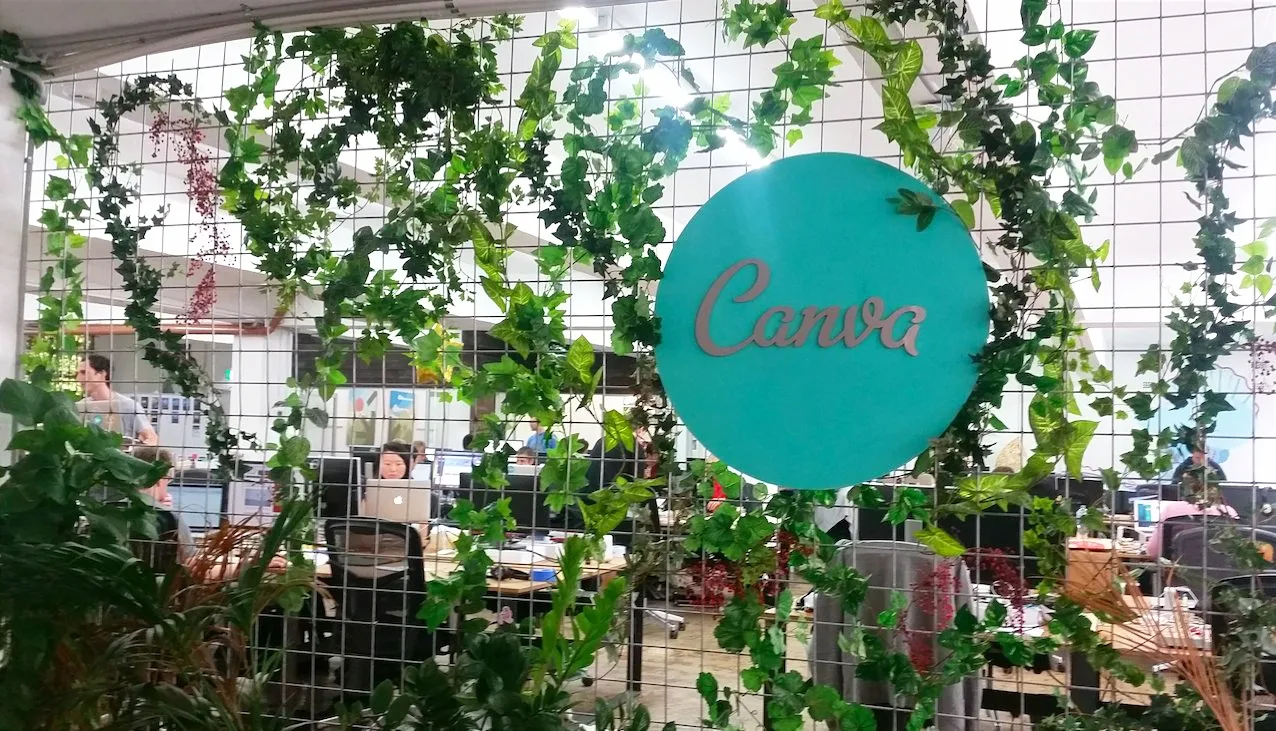
Azim Premji's PremJi Invest Considering Investing $50–$70 Mn in Canva

Azim Premji's PremJi Invest Considering Investing $50–$70 Mn in Canva

Azim Premji's investment fund, Premji Invest, is considering investing $50–$70 Million in the Australian graphic design platform Canva. This investment is part of Canva's recent secondary market sale, where shares worth $1.6 billion changed hands between existing and new shareholders, valuing the company at $26 billion.

Premji Invest's interest in Canva aligns with the booming creator ecosystem, where Canva has a competitive edge. Additionally, this investment is a strategic move, as Canva is expected to go public within the next two years. Premji Invest is focussing on generative AI and its recent investment in California-based generative AI healthcare startup Hippocratic AI demonstrate its commitment to leveraging AI technologies.

Canva, which has a significant presence in India, continues to invest heavily in the country. India boasts one of the largest creator communities on Facebook, making it a crucial market for Canva's growth. As the company expands its offerings and embraces AI, it remains at the forefront of graphic design tools and creative software.

Additionally, Canva's recent acquisition of Affinity Suite, a creative software, aims to enhance its Al capabilities and leverage the power of Al tools within its platform, as well to compete with the rival Adobe.

As the world embraces Al-driven innovations, Premji Invest's strategic move underscores the potential of generative Al and its impact across various industries. With Canva's impressive valuation and growth trajectory, this investment could prove to be a valuable addition to Premji Invest's portfolio.

Premji Invest is a multi-family office specializing in private equity and venture capital investments, has an impressive portfolio of companies across various sectors. Here are some notable companies that Premji Invest has invested in — Policy Bazaar, Flipkart, Snapdeal, Byju's, PharmEasy, The Sleep Company, Dezerv, Oro Money, KreditBee and Contlo.

These investments reflect Premji Invest's diverse interests and strategic bets across different sectors, contributing to its evergreen capital and long-term vision.

Azim Premji University Launches Open Access Early Learner Assessment Tool for Children Between 3-5 Years


Azim Premji University today launched Early Learner Assessment (ELA) – an open access handbook for developmental assessment of children between 3-5 years.

Developed by early childhood education experts, the handbook will help professionals engaged in research of young children and parents to gather information about a child’s development across a broad spectrum, including physical-motor, cognitive, language and communication, socio-emotional, creative thinking, and aesthetic expression.


The ELA tool, which is evidence-based, comprehensive, culturally sensitive and set in the Indian context, has been developed based on extensive data analysis and field tested widely. The tool has the capacity to cover all major domains of a child’s development.

It will help assess a child within an hour spread across two days irrespective of whether she is attending an early childhood programme such as anganwadi, balwadi, nursery school, kindergarten or any other centre that provides preschool education.

Assessing a child’s developmental and learning outcomes will allow us to understand her current level of competencies and the quality of the preschool programme. This will help in designing and modifying the preschool environment to help children achieve their developmental potential,” said Kinnari Pandya, Associate Professor, Azim Premji University.

Azim Premji Foundation, which has been working towards improving the public education system in India, supports the public preschool programme, the Integrated Child Development Services Scheme, in providing quality preschool education. It is essential to capture the children’s current level of development to design a curriculum that will help them achieve their potential. The ECE tool was developed to understand the learning levels of children in a rural context and track the changes in the quality of preschool education.

You can download the handbook here: https://azimpremjiuniversity.edu.in/ece-resources-and-publications

Azim Premji University, Bengaluru, was established under the Azim Premji University Act 2010 of the Government of Karnataka. Azim Premji Foundation, the sponsoring body, set up the University as a fully philanthropic and not-for-profit entity, with a clear social purpose of contributing to the realization of a just, equitable, humane and sustainable society

6th National Social Enterprise Idea Challenge By Azim Premji University Won By Students of PES University, B'lore

6th National Social Enterprise Idea Challenge By Azim Premji University Won By Students of PES University, Bangalore

Students of PES University, Bangalore won the 6th edition of Azim Premji University’s National Level Social Enterprise Idea challenge organized at University Campus, Bengaluru

The Social Enterprise Cell of Azim Premji University organizes the Idea Challenge event every year with a purpose to provide students of Colleges and Universities across India an opportunity to explore social entrepreneurship and share their innovative social impact ideas in a rigorous and competitive manner. The event also acts as a great networking platform for young minds to meet each other, exchange thoughts and showcase their talent and skills to some of the early stage mentors and funders.

In the 6 year of the event, more than 100 teams participated and submitted their innovative social impact models in the first round. The submissions were broadly in the domains of education, livelihood, health, sustainability and governance. 16 teams were shortlisted for the finale round which was held in the University campus on 30th April Saturday.

The jury members for the event were 1) Dr. Gayathri Vasudevan, Executive Chairperson, LabourNet 2) Dr.Suresh Nair, Chief Technology Advisor, Foundation for Innovation and Social Entrepreneurship, an initiative of Tata Trust and 3) Dr. Richa Govil, Director, School of Development, Azim Premji University.

Team Sitara from PES University, Bangalore won the 1st Prize in the 6th National Idea Challenge event

Team Members: 1. Shriya Shankar 2. Srushti Jayaraman 3. Ananya V

Summary of the Idea: Sitara is proposed to be a for-purpose nonprofit organization working towards helping children from underserved communities become self-sufficient, through an equitable education. They want to leverage their processes through YouTube and WhatsApp, and use the power of local language communication, to bring about improved learning outcomes in the children.

The 2nd Prize went to Team Abyaan from College of Vocational Studies, Delhi university

1ST RUNNER UP

Team Members: 1. Riddhi Oberoi 2. Shrutika Gambhir 3. Arsh Bhatia 4. Pranav Hoon

Summary of the Idea: Project Abyaan aims to address the problem of disposal of Used Cooking Oil 
(UCO), which usually ends up blocking drainage pipes or sewers, contaminating landfills leading to soil pollution. They aim to use this to make soaps and other products.

3rd Prize went to Team Khwab from Ramjas College, Delhi

2ND RUNNER UP

Team Members: 1. Manya Vats 2. Vanshikha Gourisaria

Summary of the Idea: Khwab aims to fight the menace of plastic pollution and unsustainable consumption. They create a range of sustainable products for personal care, substantially reducing non-biodegradable waste. They make “zero-waste” alternatives to everyday alternatives like shampoo, deodorants, etc.

Nazrul Haque, Mentor for the Social Enterprise Cell at Azim Premji University noted that "It is always encouraging to see that young students are disturbed by social issues around them and are not only complaining but actively thinking how can they contribute towards solutions. In the last 5 years, the Idea challenge event has become a brand name in the social enterprise ecosystem."

Out of the 18 winning teams from the past 5 years, 11 have gone on to pursue their ideas after they completed their studies. The ones who do pursue the entrepreneurial journey benefit from the media coverage and the award resulting from the competition and most have gone on to receive additional financial or mentoring support from incubators and other organizations such as IIT Kanpur, IIM Bangalore, YCombinator etc.” 

Indians Tops The List of World's Top-50 Donors of the Century


India may be at number 11 in the list of the world's richest, but tops the list of most donors in the world. This has been revealed in a report released on June 23 by Hurun Research and EdelGive Foundation. In the list of biggest donors around the world in the last 100 years, the name of Tata Group's founder Jamsetji Tata is at number one.

Jamsetji Tata has achieved the status of the biggest donor in the last 100 years by donating 102.4 billion dollars, i.e. about 7.60 lakh crore rupees. This amount is more than the total net worth of Reliance Group Chairman Mukesh Ambani at $ 84 billion, i.e. about Rs 6.25 lakh crore.


According to a report by Hurun Research and EdelGive Foundation, donations made in the name of Jamsetji Tata account for 66% of the value of Tata Sons' listed companies. Tata started the Central India Spinning Weaving and Manufacturing Company in the 1870s. Then in 1892 for higher education, J.N. The Tata Endowment was established, which was the beginning of the Tata Trusts. India's first Prime Minister Jawaharlal Nehru always remembered Jamsetji Tata as the 'One Man Planning Commission'.


Ratan Tata carried forward his legacy by handling legacy of Jamsetji, is also not behind in terms of donation. In March last year, the Tata group donated Rs 1500 crore to fight Corona, which was the biggest donation made by Indian business houses. Anas Rehman Junaid, Managing Director and Chief Researcher, Hurun India said, "It is a matter of pride for India that Jamsetji Tata has been named as the world's largest philanthropist."

Azim Premji donates 67% of Wipro's earnings. Azim Premji is the second Indian in the list of top-50 donors. He signed the Giving Pledge in 2010. Since then he transfers 67% of Wipro's earnings to the Azim Premji Foundation. This foundation works on school education in rural areas, which is valued at Rs 1.5 lakh crore. Azim Premji Foundation and Wipro have also donated 1 thousand crore rupees to deal with Kovid-19.

The world's top-50 donors together donate Rs 2.2 lakh crore annually. McKinsey Scott donates the most every year with 63 thousand crores. Ford Foundation is at number one with 7.4 thousand crores for donating for Kovid-19. After this W.K. Kellogg Foundation, A W Mellon Foundation. Tata has donated 1500 crore rupees for Corona.

Azim Premji is currently the country's largest donor according to Hurun and EdelGive Foundation released a list of India's donors in 2020. According to the report, Wipro's founder Azim Premji has been at number one in the list of donors in the country. In the financial year 2020, he donated Rs 7,904 crore, that is, about 22 crores donated every day.

After Premji in the Philanthropy list, Shiv Nadar is the founder of HCL Technologies. He donated Rs 795 crore in a year. At the same time, Mukesh Ambani, Asia's richest and chairman of Reliance Industries Limited, was at number three with a donation of 458 crores.

Azim Premji Tops Edelgive Hurun India Philanthropy List-2020

AZIM PREMJI TOPS EDELGIVE HURUN INDIA PHILANTHROPY LIST 2020

FOLLOWED BY SHIV NADAR & MUKESH AMBANI

  • Total donations in the list increase by 175% to INR 12,050 crore in 2020
  • Number of individuals who have donated more than INR 10 crore increases from 37 to 78 this year
  • With a donation of INR 27 crore, Amit Chandra,52, and Archana Chandra, 49, of A.T.E. Chandra Foundation are the first and only professional managers to ever enter the Edelgive Hurun India Philanthropy List
  • Kumara Mangalam Birla and Anil Agarwal moved into the top 5
  • At age 37, Binny Bansal is the youngest in the list
  • With 36 individuals, Mumbai is home to most of the philanthropists in Edelgive Hurun India philanthropy list 2020, followed by New Delhi (20) and Bengaluru (10)
  • Education the most favored cause with 90 philanthropists cumulatively donating INR 9,324 crores
  • With 84 donors, healthcare registered a 111% increase in cumulative donation, followed by disaster relief & management, which had 41 donors
  • With a donation of INR 47 crore, Rohini Nilekani, 61, was the most generous woman philanthropist in the list


Hurun India and EdelGive today released the seventh edition of EdelGive Hurun India Philanthropy List 2020. Azim Premji & family, the Founder-Chairman of Wipro topped the 2020 list, while Shiv Nadar, Founder-Chairman of HCL Technologies, ranked second; followed by richest Indian Mukesh Ambani, Chairman, Reliance Industries at the third spot. The fourth spot was earned by Kumar Mangalam Birla, Chairman, Aditya Birla Group followed by Anil Agarwal, Chairman, Vedanta Group at the 5th spot.

The 2020 EdelGive Hurun Philanthropy List showcases 112 people, up 12% against the 2019 edition. Mumbai topped the preferred city of residence for top philanthropists with 36 names from the city being a part of this edition. Delhi and Bengaluru followed as second and third cities respectively. Education remained the biggest cause supported by the donors in India but - mirroring Hurun's Global Philanthropy List. Healthcare and water conversation witnessed a spike in donations compared to last year.

"Reports of this nature are rare, but give us deep insight into the philanthropic sector and the patterns of giving that are ever-evolving. This year, we also looked at our methodology very closely – ensuring we keep the process transparent and proactively invite leaders of a diverse group to participate in the list. I am certain the EdelGive Hurun India Philanthropy List will inspire a lot of new philanthropists towards strategic giving." – Vidya Shah, Chairperson and CEO, EdelGive Foundation. 

Vidya Shah, CEO of EdelGive Foundation


Twenty-eight philanthropists entered EdelGive Hurun India Philanthropy List 2020 for the first time. The top new additions in the list are S D Shibulal of Infosys with a donation of INR 32 crore, followed by Amit and Archana Chandra of A.T.E. Chandra Foundation who donated INR 27 crore, and Shri Ram Beriwala & Shyam Sunder Beriwala of Shyam Steels who donated INR 19 crore.

Anas Rahman Junaid, MD and Chief Researcher of Hurun India said: "The preferred cause of India's top philanthropists has been education, although poverty alleviation has grown dramatically to become the second most popular cause this year.  I hope the Hurun Philanthropy List can help people understand the mindset of some of India's most successful entrepreneurs and philanthropists, as well as inspire future generations to give back."

Rohini Nilekani, who donates through Rohini Nilekani Philanthropies, is India's most generous woman, followed by Anu Aga & family of Thermax. While Binny Bansal is the only philanthropist under the age of 40 to enter the philanthropy list. 

EdelGive Hurun India Philanthropy List tracks donations measured by the value of their cash or cash equivalents from April 2019 to March 31, 2020. This year's EdelGive Hurun India Philanthropy List 2020 features individuals who have donated INR 5 crore or more during the period under review.

The average age is 66, three years older than entrepreneurs on the Hurun India Rich List, and two years older than philanthropists on last year's EdelGive Hurun India Philanthropy List.

Methodology

To put together a comprehensive list of the largest philanthropists of India is an almost impossible task. However, we believe at Hurun Report that, the EdelGive Hurun India Philanthropy List is the most serious and authoritative effort to date, identifying the individuals and highlighting the causes they donate to. To make this list, the Hurun Report surveyed India's most successful entrepreneurs, including those from the Hurun India Rich List 2020, meticulously cross-referencing the results with media reports and charitable foundations. In the course of the research, Hurun Report attended non-profit related seminars, as well as meeting with scholars, experts, philanthropists, and senior members of charitable foundations.

Hurun Report includes cash and cash equivalents pledged with legally binding commitments for the twelve months from 1 April 2019 to 31 March 2020 and the latest available CSR data filed with the Ministry of Corporate Affairs. Since most of the PM Care Fund donations were announced after the cutoff date, the same is not considered for arriving at the total donation unless it is mentioned in FY 20 CSR spend in the annual report of the respective companies.

Hurun Report included donations made by companies in which an individual had a significant share by applying the percentage the individual has of the company on the donations. So, for example, Biocon for the period made donations of INR 8 crore, and Kiran Mazumdar-Shaw holds 60.68% of the shares of the company, so Hurun Report recorded Shaw's donations as INR 4.92 crore. In 2015, Azim Premji had transferred a significant part of his shareholding amounting to 39% of the shares of Wipro to trust and foundation, which has been taken into account that year. Since this is a one-time philanthropic donation, it has not been included this year.

The list includes the only individual born and bred in India regardless of the passport they currently hold. Values are rounded, and past figures are subject to exchange rate fluctuations.

Flipkart-Snapdeal Merger Now Needs Go-Ahead from Ratan Tata, Azim Premji

A few days back, we reported how finally after 3 months-long deliberations that included more than 15 board meetings and a giant payout of at least $210 million, the Flipkart-Snapdeal merger was finally happening. But, now comes the news that there is still one bump in the road. According to people familiar with the deal, the merger still requires a go-ahead from two of India’s most powerful businessmen magnets, Ratan Tata and Azim Premji.

The merger, which is being deemed as India's biggest consolidation in the e-commerce sector, took a long time to materialise initially mainly because of Snapdeal’s early-stage investor Nexus Venture Partners (NVP) not being happy with the payout being offered by the Tokyo-headquartered telecom and internet giant SoftBank.

The final deal has ended up valuing Snapdeal at around $1 billion, which is a major fall from its $6.5 billion last year, which was the e-commerce firm's peak valuation in its short lived lifespan of seven years. Though the founders, Kunal Bahl and Rohit Bansal and the early-stage investors Kalaari Capital and Nexus Venture Partners have reached a non-binding preliminary agreement wit SoftBank, but that still requires due diligence to be completed in a few weeks.

According to sources close to Snapdeal, the company still has a huge task of getting some of its important investors to agree to sign the papers of the deal. This includes the family offices of Ratan Tata's Tata Group and Azim Premji's Wipro Ltd. It's still not clear if this could act as a major hurdle in the closing of the deal.

According to people familiar with the deal, if the process of duel diligence goes as planned, a term sheet specifying stock and cash for each Snapdeal shareholder will be furnished with the final agreement getting signed by by mid- to late June this year.

According to the terms specified in the preliminary pact, Snapdeal’s two founders Kunal Bahl and Rohit Bansal, who hold approximately 6.5 per cent together in the company, can be expected to get richer by a whopping $60 million when the merger comes through. Though, they might not be given any stake in the merged entity. Nexus has reportedly been given around $80 million for its single-digit stake in Snapdeal, with the exit amount to be provided in a combination of cash and stock in the Flipkart-Snapdeal merged company. Kalaari Capital, on the other hand, is expected to get around $70 million in exit money.

The merged entity is expected to give a major push to the current cut throat competition going on between Jeff Bezos' Amazon and India's very own homegrown e-commerce leader, Flipkart. Reportedly, Bezos' has recently decided to spend a whopping amount of $5 billion in India to gain significant share as the e-commerce market surges in the Indian subcontinent.

According to Masayoshi Son, SoftBank founder, the deal will prove to be a win-win situation for both homegrown e-commerce players. Sources inform that the Son, whose company owns about a third of Snapdeal parent Jasper Infotech Pvt. Ltd. could contribute that equity to the merged entity and infuse another $500 million to $1 billion in Flipkart through a transaction with Flipkart backer Tiger Global Management. The amount will give Flipkart more fuel to battle it out with Amazon.

According to a report in the livemint, not all small investors in Snapdeal are happy with the proposed Flipkart acquisition and some are said to be even dragging their feet. No one knows as of now if this could end up being a deal breaker for the final leg of Flipkart-Snapdeal merger.

Flipkart-Snapdeal Merger Now Needs Go-Ahead from Ratan Tata, Azim Premji

A few days back, we reported how finally after 3 months-long deliberations that included more than 15 board meetings and a giant payout of at least $210 million, the Flipkart-Snapdeal merger was finally happening. But, now comes the news that there is still one bump in the road. According to people familiar with the deal, the merger still requires a go-ahead from two of India’s most powerful businessmen magnets, Ratan Tata and Azim Premji.

The merger, which is being deemed as India's biggest consolidation in the e-commerce sector, took a long time to materialise initially mainly because of Snapdeal’s early-stage investor Nexus Venture Partners (NVP) not being happy with the payout being offered by the Tokyo-headquartered telecom and internet giant SoftBank.

The final deal has ended up valuing Snapdeal at around $1 billion, which is a major fall from its $6.5 billion last year, which was the e-commerce firm's peak valuation in its short lived lifespan of seven years. Though the founders, Kunal Bahl and Rohit Bansal and the early-stage investors Kalaari Capital and Nexus Venture Partners have reached a non-binding preliminary agreement wit SoftBank, but that still requires due diligence to be completed in a few weeks.

According to sources close to Snapdeal, the company still has a huge task of getting some of its important investors to agree to sign the papers of the deal. This includes the family offices of Ratan Tata's Tata Group and Azim Premji's Wipro Ltd. It's still not clear if this could act as a major hurdle in the closing of the deal.

According to people familiar with the deal, if the process of duel diligence goes as planned, a term sheet specifying stock and cash for each Snapdeal shareholder will be furnished with the final agreement getting signed by by mid- to late June this year.

According to the terms specified in the preliminary pact, Snapdeal’s two founders Kunal Bahl and Rohit Bansal, who hold approximately 6.5 per cent together in the company, can be expected to get richer by a whopping $60 million when the merger comes through. Though, they might not be given any stake in the merged entity. Nexus has reportedly been given around $80 million for its single-digit stake in Snapdeal, with the exit amount to be provided in a combination of cash and stock in the Flipkart-Snapdeal merged company. Kalaari Capital, on the other hand, is expected to get around $70 million in exit money.

The merged entity is expected to give a major push to the current cut throat competition going on between Jeff Bezos' Amazon and India's very own homegrown e-commerce leader, Flipkart. Reportedly, Bezos' has recently decided to spend a whopping amount of $5 billion in India to gain significant share as the e-commerce market surges in the Indian subcontinent.

According to Masayoshi Son, SoftBank founder, the deal will prove to be a win-win situation for both homegrown e-commerce players. Sources inform that the Son, whose company owns about a third of Snapdeal parent Jasper Infotech Pvt. Ltd. could contribute that equity to the merged entity and infuse another $500 million to $1 billion in Flipkart through a transaction with Flipkart backer Tiger Global Management. The amount will give Flipkart more fuel to battle it out with Amazon.

According to a report in the livemint, not all small investors in Snapdeal are happy with the proposed Flipkart acquisition and some are said to be even dragging their feet. No one knows as of now if this could end up being a deal breaker for the final leg of Flipkart-Snapdeal merger.

9 Richest Indian Tech Billionaires

While being rich might not have been a priority for them, but it is for sure an excellent byproduct of being super successful that these 9 Indian tech honchos are currently enjoying.

Forbes recently announced its annual list of World's Billionaires, which is a well-known guide to the richest people on planet Earth. The list which has seen Microsoft co-founder Bill Gates sitting comfortably at the numero uno position for several years now, saw 9 Indians making the cut this year.

Here are the Indians who made India shine on the Forbes World's Billionaires 2016 Annual list.

1) Azim Premji


Ranking on the list- 55
Net worth - $15 billion

The first Indian visible on the list. He is the man behind India's third-largest software exporter, Wipro. Premji Invest, his family office, has made strategic investment in some of the biggest companies like PolicyBazaar, Cyanogen, Snapdeal and Myntra, to name a few.

2) Shiv Nadar


Ranking on the list- 88

Net worth - $11.1 billion

Acquiring the 88th global position, the 2nd Indian on the list is Shiv Nadar, the founder and chairman of India's fourth-largest software services exporter, HCL. Nadar also doubles up as a philanthropist with his much famous Shiv Nadar Foundation.

3) NR Narayana Murthy


Ranking on the list- 959
Net worth - $1.9 billion

The 3rd Indian on the Forbes list is Narayana Murthy, the man who co-founded India's second-largest software services exporter, Infosys. He served as Infosys' CEO from the year 1981 to 2002 and as its chairman from the year 2002 to 2011. Apart from being the brains behind the conception of Infosys, Mr. Murthy has a private investment firm Catamaran Ventures, which has invested in companies like Coverfox, Hector Beverages, Innoviti and Yebhi etc. The firm has also launched a joint venture with e-commerce giant Amazon called Cloudtail, which has been acknowledged as the largest seller on Amazon India.

4) Kris Gopalakrishnan


Ranking on the list- 1121
Net worth - $1.6 billion

Following the footsteps of his Infosys co-founder NR Narayana Murthy is, Kris Gopalakrishnan. The co-founder of Infosys served at the company as its chief executive for four years from the year 2007 to 2011. He has reportedly contributed a whopping amount of Rs 225 crore for the setting up of the Centre for Brain Research at the IISc in Bengaluru city.

5) Nandan Nilekani


Ranking on the list- 1121
Net worth - $1.6 billion

Another Infosys co-founder has made the cut. Nilekani who is currently the chairman of EkStep, was Infosys chief executive for five years from the year 2002 to 2007 and chairman of UIAI until March 2014. He's said to have backed companies like Juggernaut, Systemantics, Team Indus, Power2SME, Fortigo and Mubble, to name a few.

6) Binny Bansal


Ranking on the list- 1476
Net Worth- $1.2 billion

The sixth Indian making waves on the list is the co-founder of India's largest e-commerce company, Flipkart. Binny was recently appointed as Flipkart's chief executive in January this year after his co-founder Sachin Bansal gave up the position. As a CEO, he's overlooks all of the company's business areas and is responsible for taking care of its operations.

7) Sachin Bansal


Ranking on the list- 1476
Net Worth- $1.2 billion

Sachin Bansal, co-founder of Flipkart, India's largest e-commerce startup, gave up his role as the company's chief executive in January this year. Since then he's providing his services to the company as its executive chairman. Along with Binny Bansal, Sachin has made some major investments in startups with huge potential like InShorts, Ather Energy, Tinystep and Tracxn, to name a few.

8) K Dinesh


Ranking on the list- 1476
Net Worth- $1.2 billion

Another Infosys legend on the list, K Dinesh is the co-founder of the software company and was its board member from the year 1981 to 2011. In 2011, he decided to retire from Infosys as its head of quality, Information Systems and the Communication Design Group.

9) SD Shibulal


Ranking on the list- 1577
Net Worth- $1.1 billion

The last Indian on the list, Shibulal also owes his fortune to Infosys, India's second-largest software services exporter. A co-founder of the company, he worked as its chief executive for a period of three years from 2011 to 2014. Post that, he launched a startup incubator Axilor Ventures along with Kris Gopalakrishnan, another Infosys co-founder.

Market Reports

Market Report & Surveys
IndianWeb2.com © all rights reserved