‏إظهار الرسائل ذات التسميات Microprocessor. إظهار كافة الرسائل

VIHAAN: India’s Homegrown Broadband Chip Tapes Out for 2027 Production

VIHAAN: India’s Homegrown Broadband Chip Tapes Out for 2027 Production
VIHAAN Chip (Image ~ www.aheesa.com) 

Chennai-based Aheesa Digital Innovations has achieved first-pass silicon success with its indigenous broadband networking chip ‘VIHAAN’, built using India’s VEGA microprocessor. The milestone, backed by the Design Linked Incentive (DLI) Scheme, positions VIHAAN for production tape-out in 2027 and strengthens India’s domestic semiconductor ecosystem.

The Design Linked Incentive (DLI) Scheme is empowering Indian startups to design semiconductors for diverse strategic and commercial uses. Applications span satellite communications, drones, surveillance systems, defence and aerospace platforms, automotive electronics, IoT devices, LED drivers, AI solutions, telecom infrastructure, and smart meters.

Aheesa Digital Innovations, an Indian fabless semiconductor startup, develops chips for broadband networking and security. Its flagship SoC ‘VIHAAN’, purpose‑built for fibre broadband, was taped out on Republic Day and achieved first‑pass silicon success on Independence Day 2026. The chip now advances toward production tape‑out, targeted for 2027.

Key Highlights

  • Startup: Aheesa Digital Innovations (Chennai-based, fabless semiconductor firm)
  • Chip: VIHAAN – broadband networking System-on-Chip (SoC)
  • Processor Core: Built on VEGA microprocessor (RISC-V architecture, developed by C-DAC under MeitY)
  • Milestone: Taped out on Republic Day 2026, achieved first-pass silicon success on Independence Day 2026
  • Target: Production tape-out scheduled for 2027
  • Funding: Raised ₹40 crore earlier in 2026 from TNIFMC via TNESSF and private investors
  • Applications: Designed for fiber broadband networks, enabling last-mile connectivity for homes and offices

Technical & Strategic Significance

FeatureDetails
ArchitectureRISC-V based VEGA processor core
Process Node28nm broadband networking SoC
FunctionsIntegrates compute, broadband access, and system control
Target UseOptical fiber access networks, telecom operators
Strategic ValueReduces reliance on foreign chip designs; supports Atmanirbhar Bharat goals
Ecosystem ImpactPart of >30 chip tape-outs under DLI Scheme; contributes to India’s $100M+ VC-backed semiconductor design growth

Broader Context

  • DLI Scheme Impact: Over 30 chip design tape-outs achieved across foundries; startups raised $100M+ venture capital
  • Government Support: Chip-design tools provided to 455 organizations (350 academic institutions + 105 startups)
  • C2S Programme: 245 chip designs taped out by 71 academic institutions, building skilled manpower for India’s semiconductor future

Challenges & Trade-offs

  • Production Timeline: Commercial rollout only expected post-2027, leaving a gap before market adoption
  • Global Competition: Competing against established players (ARM, Intel, Broadcom) with mature ecosystems
  • Scaling Risks: Transition from prototype to mass production requires robust fabrication partnerships and supply chain resilience

Takeaway

The VIHAAN chip marks a strategic leap for India’s semiconductor ambitions. By combining indigenous design (VEGA) with government-backed funding (DLI Scheme), Aheesa Digital Innovations is helping India reduce dependence on foreign chipmakers and strengthen its digital infrastructure for broadband and 5G expansion.

Intel Launches Starfire: AI‑Powered Chip to Transform Space Computing

Intel Launches Starfire: AI‑Powered Chip to Transform Space Computing

Intel has unveiled Starfire, its first space‑grade chip built on the advanced Intel 18A process, designed to power AI workloads directly aboard satellites and spacecraft. The processor is engineered to withstand radiation, extreme temperatures, and long missions, marking Intel’s bold entry into the aerospace computing market.

Currently, most satellites and spacecraft use  radiation‑hardened processors like BAE Systems’ RAD750 and RAD5545, but newer missions are increasingly adopting commercial off‑the‑shelf (COTS) chips such as NVIDIA Jetson Orin and ARM‑based SoCs for AI workloads. NASA and Microchip are also developing next‑generation high‑performance spaceflight computing systems.

The space computing market has long relied on BAE Systems’ RAD750 and RAD5545, with Microchip developing NASA’s next‑gen processor. Starfire is Intel’s bid to disrupt this dominance.

Starfire chip was developed under Intel Government Technologies with strong alignment to U.S. defense and aerospace programs, but it is not restricted to government use alone. While U.S. manufacturing and security programs are central, Intel has signaled broader availability for international partners once qualification is complete.

Starfire is part of Pentagon‑linked initiatives like RAMP‑C and SHIP, ensuring trusted supply chains and radiation‑hardening standards. Intel has positioned Starfire for private operators who want onboard AI inference for navigation, imaging, and scientific data processing.

Starfire is designed first for U.S. government and defense applications, but Intel intends it to be a dual‑use technology — serving both national security and commercial satellite markets worldwide. Its U.S. manufacturing under the Trusted Foundry program ensures compliance with defense standards, while its AI capabilities make it attractive for global space operators.

Key Highlights of Intel’s Starfire Chip

  • Space‑grade design: Built to survive radiation, thermal cycling, and 10+ year missions in orbit.
  • AI acceleration: Up to 75 TOPS of performance via a three‑tile neural processing unit.
  • CPU architecture: Eight cores (4 performance + 4 efficiency) on Intel’s 18A node.
  • GPU integration: Four‑core Xe GPU with 64 execution units, built on Intel 3.
  • Packaging: Uses Intel’s Foveros 3D stacking for compact, resilient design.
  • Variants: Low‑power (10 W, up to 45 TOPS) and Performance (35 W, up to 75 TOPS).

Key Specs from Intel Starfire Datasheet

FeatureDetails
CPU8 cores (4 performance + 4 efficiency) on Intel 18A
GPU4 Xe cores, 64 execution units (Intel 3)
NPU3‑tile design, up to 75 TOPS
MemoryLPDDR5 / DDR5 support
Connectivity12 PCIe Gen4 lanes
Thermal Range−55°C to 125°C
Mission Life10+ years
Source - Intel 

Comparison: Starfire vs Legacy Space Chips

ChipPerformanceProcess NodeAI CapabilityMission Lifespan
Intel StarfireUp to 75 TOPSIntel 18A (CPU/NPU), Intel 3 (GPU)Dedicated NPU for AI inference10+ years
BAE RAD750110–200 MHz150–250 nmNoneProven on Mars rovers
BAE RAD5545Multi‑core, higher throughputMature nodeLimitedLong‑duration missions
NASA/Microchip Next‑Gen100× current throughput (in development)TBDAI‑readyFuture missions

Strategic Impact

  • National Security: Aligns with U.S. government’s emphasis on space as a defense domain.
  • Commercial Satellites: Enables autonomous navigation, onboard image processing, and scientific data analysis without ground reliance.
  • Market Disruption: Competes with aerospace chips like BAE’s RAD750, offering modern AI capabilities.

Challenges & Risks

  • Radiation qualification pending: Validation against total ionizing dose and single‑event effects still in progress.
  • Yield concerns: Intel’s 18A node may face production yield issues until 2027.
  • Adoption timeline: Engineering samples ship in Q3 2026, broader deployment post‑qualification.

Bottom Line

Intel’s Starfire chip represents a major leap in space computing, bringing modern AI and high‑performance processing into orbit. If radiation testing succeeds, it could redefine how satellites and spacecraft handle data, shifting from ground‑based reliance to autonomous, onboard intelligence.

ISRO Achieves Major Milestone With Indigenous Microprocessors for Space Missions

ISRO Achieves Major Milestone With Indigenous Microprocessors for Space Missions

India has achieved a significant milestone in space-grade electronics with the development of two fully indigenous 32-bit microprocessors, VIKRAM3201 and KALPANA3201, designed specifically for ISRO's launch vehicle applications.

On March 5, 2025, the first production lots of the 32-bit microprocessors developed for space applications, VIKRAM3201 & KALPANA3201, were handed over to Dr. V. Narayanan, Secretary, DOS /Chairman, ISRO by Shri S. Krishnan, Secretary, MeitY, in a function organised at New Delhi by the Semiconductor Laboratory (SCL), Chandigarh.
  • VIKRAM3201: This is the first fully indigenous, space-qualified 32-bit microprocessor fabricated in India. It supports custom instruction sets, floating-point computation, and high-level language support for Ada. It has already proven its space-worthiness in the PSLV-C60 mission.
  • KALPANA3201: Based on the SPARC V8 RISC architecture, this microprocessor is versatile and compatible with open-source software tool sets.
These chips were developed by the Vikram Sarabhai Space Centre and manufactured at the Semiconductor Laboratory in Chandigarh. They represent a generational leap from the earlier 16-bit processors and mark a step forward in India's self-reliance in critical space technologies.

Notably, VIKRAM1601 was ISRO's first indigenous 16-bit microprocessor, operational in launch vehicle avionics since 2009. A fully "Make-in-India" version was introduced in 2016 after domestic fabrication capabilities matured.

Four other devices that were jointly developed with SCL were also handed over towards significant miniaturisation of the launch vehicle Avionics system. This includes two versions of a Reconfigurable Data Acquisition System (RDAS) integrating multiple indigenously designed 24-bit Sigma-Delta Analog to Digital Converters on a single chip along with a Relay driver Integrated Circuit & a Multi-Channel Low Drop-out Regulator Integrated Circuit for high reliability applications.

AMD Unveils New Desktop Processors for Extreme PC Gaming and Creator Performance

AMD Unveils New Desktop Processors for Extreme PC Gaming and Creator Performance

Ryzen™ 8000G Series desktop processors bring immense performance for gamers and creators and unlocks new personal AI experiences with Ryzen AI

AMD bolsters desktop portfolio and extends unprecedented longevity of the AM4 platform with new Ryzen™ 5000 Series desktop processors

Partners including Lenovo, Razer, Asus, and Acer introduce new AI PCs with AMD Ryzen™ 8040 Series mobile processors

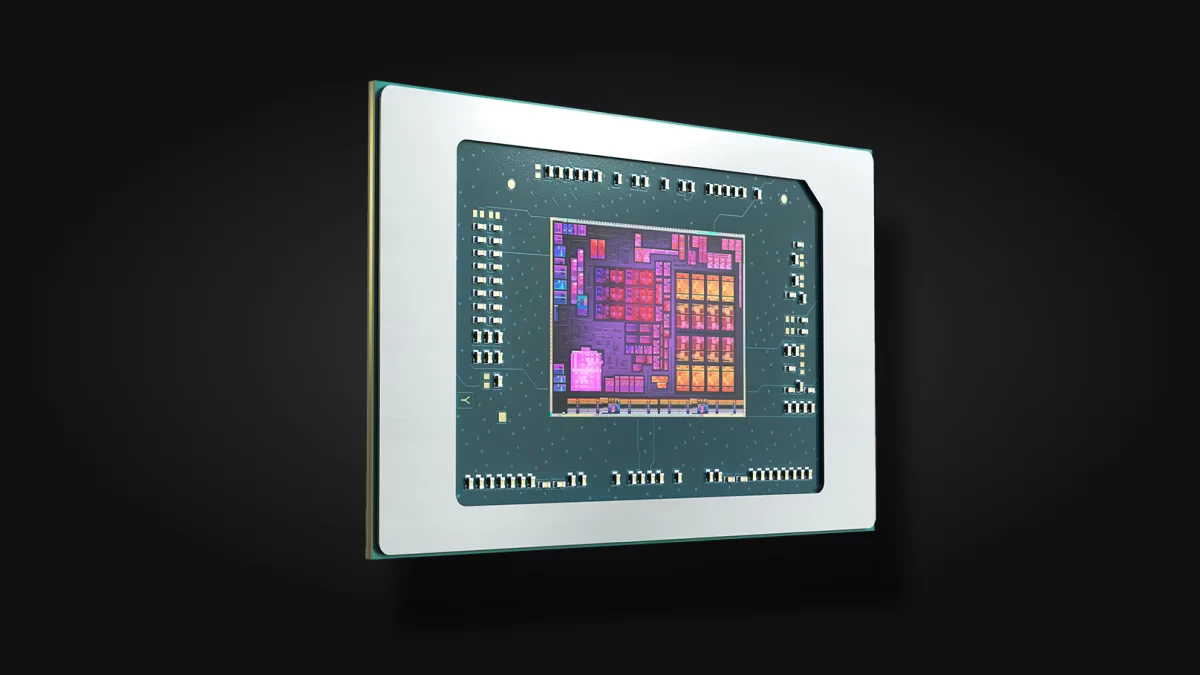
A day before start of CES 2024, AMD  announced new products expanding its desktop portfolio, delivering premium experiences to gamers, content creators and everyday users through extraordinary performance and the power of personal AI processing. AMD is introducing the new AMD Ryzen™ 8000G Series desktop processors for the AM5 platform, including the Ryzen™ 7 8700G, with the world’s most powerful built-in graphics.¹ AMD is also bringing the power of a dedicated AI neural processing unit (NPU) to desktop PC processors for the first time with the introduction of Ryzen™ AI to unlock more AI capabilities for consumers and improve productivity, efficiency, and advanced collaboration.

Building on the unprecedented longevity of socket AM4, AMD is introducing new Ryzen™ 5000 processors, offering users even more choices when it comes to building a system for productivity, gaming, or content creation. The new offerings include the new Ryzen 7 5700X3D, leveraging powerful 3D V-Cache™ technology to provide gamers with a massive boost in gaming performance.

"AMD continues to lead the AI hardware revolution by offering the broadest portfolio of processors with dedicated AI engines in the x86 market,” said Jack Huynh, senior vice president and general manager, Computing and Graphics Group at AMD. “Last year at CES, we introduced the first dedicated AI engine in an x86 processor for the mobile market. This year, we are expanding our AI leadership to desktop computing through our Ryzen 8000G Series processors. We’re excited to lead the AI PC era together with our close OEM and ecosystem partners.”

AMD Ryzen™ 8000G Series Desktop Processors Deliver Impressive Graphics and Productivity in a Single Package
AMD Ryzen™ 8000G Series is the ultimate all-in-one desktop processor. Featuring up to eight cores and 16 threads, users can expect immense power and dominant performance for intensive workloads including gaming and content creation. These processors are optimized for efficiency with low power draw but don’t sacrifice performance or responsiveness. Built on top of AMD “Zen 4” architecture, the 8000G Series processors enable leadership energy efficiency while still leveraging the incredible speed of “Zen 4”.

At the top of the stack, AMD Ryzen™ 7 8700G features eight cores, 16 threads, 24MB of Cache, and Radeon™ 780M graphics. Meanwhile, AMD Ryzen™ 5 8600G offer six cores, 12 threads, 22MB of Cache, and Radeon 760M graphics. Both include AMD Ryzen™ AI technology, including the first NPU on a desktop PC processor, uniquely able to accelerate AI software capabilities in your PC to optimize AI workloads, improve AI processing efficiencies, and unlock exciting experiences like AI-powered noise cancellation.

All 8000G Series desktop processor models offer the fastest built-in graphics in its class with the impressive power of Radeon 700M.2 Gamers will benefit from impressive visual fidelity, providing a smooth AAA 1080p gaming experience at an affordable price point, and in small form factors. The Ryzen™ 7 8700G features Radeon 780M graphics with the fastest built-in graphics you can get in a desktop processor.³ The 8000G Series is perfect for those wanting to enter the AM5 ecosystem and enjoy a smooth 1080p experience today, with the option to upgrade with a discrete graphics card later for even higher fidelity gameplay.

The entire 8000G Series also features AMD EXPO™ technology, enabling higher memory frequencies and advanced timings to unlock smoother frame rates.⁴ Precision Boost Overdrive (PBO) allows one-touch overclocking, giving users an extra CPU boost with increased power limits.5

AMD Ryzen™ 8000G Series desktop processors are expected to be available to DIY customers, SI partners starting January 31st, 2024. OEM systems are expected to arrive in Q2 2024.

AMD Unveils New Desktop Processors for Extreme PC Gaming and Creator Performance

New AMD Ryzen™ 5000 Series Desktop Processors Bring More Performance to Legacy Socket AM4 Platforms
For gaming enthusiasts seeking unparalleled performance, AMD Ryzen™ 5000 Series desktop processors are built on the proven "Zen 3" architecture, which optimizes performance with higher clock speeds and improved efficiency for a seamless gaming experience. AMD extends this series with four new processors: AMD Ryzen™ 7 5700X3D, AMD Ryzen™ 5 5700, AMD Ryzen™ 5 5600GT, and AMD Ryzen™ 5 5500GT.

The AMD Ryzen™ 7 5700X3D is purpose-built for gamers looking for a massive boost in gaming performance. With eight cores and 16 threads, the processor leverages AMD 3D V-Cache™ technology to deliver an astonishing 100MB of on-chip memory, providing power and productivity gains for games and applications at any setting and any resolution.

The new Ryzen 5000 Series desktop processors are expected to be available to DIY customers and SI partners starting January 31st, 2024.

AMD Unveils New Desktop Processors for Extreme PC Gaming and Creator Performance

OEM Partners Launch Additional Ryzen™ 8040 Series-Powered Laptops at CES
AMD OEM partners including ACER, ASUS, Lenovo, HP and Razer are introducing more AMD Ryzen™ 8040 Series-powered handheld gaming systems, gaming laptops and personal laptops, with incredible performance for gamers, professionals and consumers of all types, and unlocking AI-ready capabilities for content creation and everyday productivity.

First announced at the AMD “Advancing AI” event in December 2023, the Ryzen™ 8040 Series helps bring new AI PCs to market with its integrated Ryzen AI NPU on select models.

“Through our partnership with AMD, we are able to deliver seamless, AI-backed gaming experiences to customers,” said James Lin, general manager, Notebooks at Acer Inc. “Our latest Nitro V 16 laptop powered by the AMD Ryzen 8040 Series processors is a great example of how we’re bringing AI-ready gaming laptops to gamers everywhere. With Ryzen 8040 Series processors, we will deliver new and enhanced features equipping gamers with more immersive in-game experiences and a competitive edge.”

“We’re excited to launch the latest laptops, including the ROG Zephyrus G14 and the ASUS TUF Gaming A15 and A16, all featuring Ryzen 8040 processors aimed at delivering the most exhilarating on-the-go gaming experiences to our customers,” said ASUS Co-CEO S.Y. Hsu. “We’ve completely redefined mobile gaming by partnering with AMD. The new Ryzen 8040 Series processors will provide customers with the highest quality gameplay for hours without drops in speed or game stuttering.”

“Lenovo and AMD have a long-standing partnership that continues to deliver to customers the power and flexibility they have come to expect,” said Jun Ouyang, Lenovo’s vice president and general manager of the Consumer Business Segment, Intelligent Devices Group. “This partnership has continued with the expansion of our product portfolio to include the Lenovo Yoga Pro 7 (14", 9), Lenovo IdeaPad 5 2-in-1 (14", 9) and Lenovo IdeaPad 5 2-in-1 (16", 9) all powered by new Ryzen 8040 processors to support the creative and productivity pursuits of today’s brightest thinkers and doers.”

"At HP, we are redefining the PC for the next generation of more personal computing, and partnering with AMD for our future solutions,” said Alex Cho, president, Personal Systems, HP Inc. “With AMD, we are committed to delivering groundbreaking, personalized experiences that revolutionize the way we live, work, and play.”

“The Ryzen 8040 Series processors represent a significant milestone for gamers looking for speed, performance and an AI accelerated experience,” said Travis Furst, head of Notebook and Accessories Division at Razer. “We are thrilled to launch the new Razer Blade 14, our most portable Razer Blade, integrating the AMD Ryzen 9 8945HS processor with Ryzen AI to provide gamers with an unparalleled mobile experience.”

¹An AMD Ryzen 7 8700G processor with integrated Radeon 780M graphics is projected to have the fastest integrated desktop processor graphics in the world. Performance projection by AMD engineering staff. Engineering projections are not a guarantee of final performance. Specific projections are based on reference design platforms and are subject to change when final products are released in market. PXD-02.

²Each of the AMD Ryzen 8000G Series processors with integrated Radeon graphics are projected to have the fastest integrated desktop processor graphics in their respective classes. AMD defines the class as Ryzen 8000G Series processors, Intel Core i7-14700, Intel Core i5-14600, and Intel Core i3-141004 processors. Performance projections by AMD engineering staff as of October 2023. Engineering projections are not a guarantee of final performance. Specific projections are based on reference design platforms and are subject to change when final products are released in market. PXD-01.

³An AMD Ryzen 7 8700G processor with integrated Radeon 780M graphics is projected to have the fastest integrated desktop processor graphics in the world. Performance projection by AMD engineering staff. Engineering projections are not a guarantee of final performance. Specific projections are based on reference design platforms and are subject to change when final products are released in market. PXD-02

⁴ Overclocking and/or Undervolting AMD processors and memory, including without limitation, altering clock frequencies / multipliers or memory timing / voltage, to operate outside of AMD’s published specifications will void any applicable AMD product warranty, even when enabled via AMD hardware and/or software. This may also void warranties offered by the system manufacturer or retailer. Users assume all risks and liabilities that may arise out of overclocking / undervolting AMD processors, including, without limitation, failure of or damage to hardware, reduced system performance and/or data loss, corruption or vulnerability. GD-106.

Intel Launches Mobile, Desktop and Edge Processors

Intel Launches Mobile, Desktop and Edge Processors

At the global trade show event CES 2024, Intel announced its full Intel Core 14th Gen mobile and desktop processor lineup, including powerful new HX-series mobile processors and mainstream 65-watt and 35-watt desktop processors. Additionally, Intel introduced its new Intel Core mobile processor Series 1 family, led by the Intel Core 7 processor 150U, for performant mainstream thin-and-light mobile systems.

“Our Intel Core 14th Gen processor family is built to bring top-notch performance and platform features to enthusiast and mainstream PC users alike,” said Roger Chandler, Intel vice president and general manager, Enthusiast PC and Workstations​, Client Computing Group. “Enthusiasts on-the-go can now enjoy the best mobile experience available today with our HX-series processors. And mainstream desktop users can now experience the efficient performance and robust platform features available in our latest-gen 65-watt and 35-watt desktop processors.”

The launch of these new mobile and desktop processors at CES comes alongside the parade of new Intel Core Ultra-powered systems from Intel’s partners. Whether PC users are looking for powerful enthusiast and mainstream mobile and desktops powered by Intel Core 14th Gen or new AI PCs powered by Intel® Core™ Ultra processors, Intel has the right compute solution.
. 
Intel Launches Mobile, Desktop and Edge Processors

Intel Core 14th Gen HX-series Powers World’s Best Experience for Mobile Enthusiasts

The new Intel Core 14th Gen HX-series mobile processors are built for gamers, creators and professionals who need both higher levels of compute performance and require the mobility that a laptop provides. Led by the Intel Core i9-14900HX, featuring eight Performance-cores (P-cores) and 16 Efficient-cores (E-cores), the new HX-series combines best-in-class connectivity with incredible single- and multi-thread performance. Additionally, the HX-series features a leap in creator performance thanks to 50% more E-cores in the Intel® Core™ i7-14700HX processors.

The new processor family includes:
  • Up to 5.8 GHz turbo frequency delivering up to 17% better gaming performance and up to 51% faster multitasking performance versus competition².
  • Up to 24 cores (eight P-cores, 16 E-cores) and 32 threads in its i9-14900HX processors.
  • 50% more E-cores in its i7-14700HX processors, bringing those to 20 cores (eight P-cores, 12 E-cores) and 28 threads.
  • Support for up to 192 gigabytes (GB) of total DDR5-5600 megatransfers/second (MT/S) memory.
  • Overclocking capabilities on HX series processors, including Intel® Extreme Utility (XTU) and Intel® Extreme Memory Profile (XMP) support³.
  • New Intel® Application Optimization (APO) support on HX series, with six new gaming titles (eight total) supported since the initial Intel Core 14th Gen desktop launch in October 20234.
  • Thunderbolt™ 5, delivering 80 gigabits per second (Gbps) of bi-directional bandwidth, and bandwidth boost providing up to 120 Gbps, 3x the capability of today’s fastest solutions, for the best display and data experiences – in addition to Thunderbolt™ 4 delivering bandwidth of 40 Gbps for PC connectivity to multiple 4K monitors and accessories.
  • Leading wireless features, including integrated Intel® Wi-Fi 6E (Gig+) and available new discrete Intel® Wi-Fi 7 (5 Gig) for multi-gigabit speeds in more locations, wired-like responsiveness and extreme reliability.
  • The latest in Bluetooth® connectivity with support for both Bluetooth 5.4 and Bluetooth 5.3, providing exceptional performance for multiple simultaneous Bluetooth-enabled device connections.

With more than 60 Intel Core 14th Gen HX-powered partner systems coming to market in 2024, mobile enthusiasts can game, create and work on-the-go better than before.

Talking Tech: Intel Core 14th Gen HX: Peak Performance for Enthusiast Notebooks

The Raptor is back with the Intel Core 14th Gen mobile processor family, code-named Raptor Lake Refresh. We hear from Roger Chandler, Intel vice president and general manager of Enthusiast PC and Workstations in the Client Computing Group, about how the new HX-series combines best-in-class connectivity with incredible single- and multi-thread performance. At the top is the Intel Core i9-14900HX featuring 24 cores and 32 threads with up to 5.8 GHz turbo frequency. Additionally, the HX-series features a leap in creator performance thanks to 50% more E-cores in the Intel Core i7-14700HX processors. (Credit: Intel Corporation)

New Intel Core 14th Gen Mainstream Desktop Processors Bring Powerful Real-World Performance from Desktop to the Edge

Intel’s expansion of the Intel Core 14th Gen desktop stack gives mainstream PC users – and businesses across various vertical markets – new ways to experience the performance of Intel’s latest-gen desktop processors. These 18 new processors up and down the stack help users game, create and work at the levels they demand every day, all while enjoying the platform features users have come to expect from Intel.

The latest Intel desktop processors include:
  • Up to 5.8 GHz turbo frequency delivering up to 37% faster multi-thread performance and up to 7% better Microsoft Office performance gen-over-gen5.
  • Up to 24 cores (eight P-cores, 16 E-cores) and 32 threads in its i9-14900 processors.
  • For the i7-14700, the addition of four E-cores for a total of 20 cores (eight P-cores, 12 E-cores) and 28 threads.
  • Support for up to 192 GB of total DDR5-5600/DDR4-3200 MT/S memory – providing backward compatibility with existing Intel 600- and 700-series-based motherboards.
  • Continued support for in-box thermal solutions, including the Intel® Laminar RH1 and RM1 coolers.
  • Next-generation wireless connectivity with support for both Intel® Killer™ Wi-Fi 7 (5 Gig) and Intel Killer Wi-Fi 6E (Gig+).
  • Continued support for both PCIe Gen 5.0, Gen 4.0 and Thunderbolt 4 providing 40 Gbps bandwidth, in addition to integrated USB 3.2 connectivity support providing up to 20 Gbps transfer bandwidth.
With the full Intel Core 14th Gen desktop processor lineup now available online and in stores, PC users can find the right processor – at every price point – for their everyday gaming, creating and productivity needs.

At the edge, these processors enable powerful AI and compute-intensive workloads with more cores in LGA-socketed packaging. From interactive whiteboards in school classrooms to detail-rich medical imaging displays and controlled automation and robotics on the factory floor, Intel Core 14th Gen processors allow vertical markets to deliver innovative results more efficiently, safely and effectively.

Intel Core U Processor Series 1 Brings Efficient Performance, Robust Features to Mainstream Thin-and-Light Systems

The newly introduced Intel Core U mobile processor family is bringing to market the efficient, balanced performance mainstream mobile PC users desire in thin-and-light devices. The new mobile processor line also maintains the platform features that PC users have come to expect from Intel mobile processors.

The new Intel Core U Processor Series 1 includes:
  • Up to 5.4 GHz turbo frequency along with up to 10 cores (two P-cores, eight E-cores) and 12 threads in its Intel Core 7 processor 150U.
  • Up to 96 GB of total DDR5-5200/DDR4-3200 MT/S memory.
  • Thunderbolt 4 universal connectivity for work and play, enabling 40 Gbps bandwidth for connection to multiple 4K monitors and accessories.
  • Support for eight PCIe Gen 4.0 and 12 PCIe Gen 3.0 lanes for latest solid-state drive (SSD) storage.
  • The latest in Bluetooth connectivity with support for both Bluetooth 5.4 and Bluetooth 5.3, including Bluetooth Low Energy (BLE) audio enabling low-power, immersive, high-fidelity PC sonic experiences and support for new Bluetooth Auracast™ capabilities for broadcast audio tuning, personal audio sharing, and enhanced accessibility for hearing aids and new assisted listening services.
Next-generation wireless connectivity with support for both Intel Killer Wi-Fi 7 (5 Gig) and Intel Killer Wi-Fi 6E (Gig+).

Mobile systems powered by the Intel Core U Processor Series 1 will come to market in the first quarter of 2024, with more details to come from Intel partners.

Microprocessor Market to Surpass USD 111.16 Billion by 2026 – TechSci Research

Growing micro data center, rising usage of personal computing devices, increasing demand of high-performance computing technology outlook to boost the global microprocessor market’s development through 2026.

According to TechSci Research report “Microprocessor Market — Global Industry Size, Share, Trends, Competition, Opportunity, and Forecast, 2016-2026”, Global microprocessor market is anticipated to grow at a CAGR of 4.44% in value terms, in the next five years to reach USD111.16 billion by 2026. The market was valued USD85.85 billion in 2020 and is expected to be driven by increasing proliferation of internet services and the growing trend of portable devices. Moreover, the adoption of work-from-home and distance learning modes in the midst of the COVID-19 pandemic has increased the sales of computers and smartphones around the world, further propelling the industry's growth.

The growing exchange of data through IoT-connected devices has created a demand for micro-data centers all over the globe. These micro-data centers offer maximum efficiency by greatly reducing energy consumption which in turn drives their increased adoption all around the industries. Infrastructure housed in micro-data centers of any microprocessor includes IT infrastructure, UPS (uninterruptible power supply) systems, power distribution units (PDUs), and cooling units. The numerous advantages that include lower transactional costs, high functioning and high storage by using micro-data centers are likely to escalate the microprocessor market, globally.

Browse more than 181 market data Figures and spread through 229 Pages and an in-depth TOC on “Global Microprocessor Market." https://www.techsciresearch.com/report/microprocessor-market/7385.html

Global microprocessor market can be segmented based on type, architecture, technology outlook, end user, company and region. In terms of type, the market can be segregated into desktop microprocessor, mobile microprocessor, performance microprocessor. The desktop and mobile microprocessor segments are dominating the overall microprocessor market in 2020 with a cumulative share of 70.01% due to global dependence on the internet and smart phone devices, which has also increased over the past few years. There has been an increased use of laptops, personal computers and smart phones during COVID-19 by employees, students, and consumers as most of the companies, schools and other organizations were running remotely. Desktop and mobile microprocessors are also driven by change in consumer lifestyles and increased disposable income which have led to increase in consumers’ ability to spend more over products for entertainment and connecting devices and the microprocessor market goes in sync with increased sales of these personal computers and smart phones devices, hence driving the market.

Download Sample Report @ https://www.techsciresearch.com/sample-report.aspx?cid=7385 Customers can also request for 10% free customization on this report

Some of the major players operating globally in microprocessor market include:
  • Intel Corporation
  • Taiwan Semiconductor Manufacturing Company Limited
  • SK Hynix Inc.
  • Qualcomm Technologies Inc.
  • Micron Technology Inc.
  • Broadcom Inc.
  • Sony Corporation
  • Nvidia Corp.
  • Samsung Electronics Co. Ltd.
  • Applied Materials Inc.
Players operating in the market are employing different growth strategies to register sound return in the market. For instance, Intel corporation set up a new chip factory or fab called Fab 42 for the manufacturing of 10nm processes. While, Taiwan Semiconductor Manufacturing Company, Limited is using advanced semiconductor process technologies, i.e., 5-nanometer production capabilities, which is the most advanced semiconductor process technology available in the world.

“In the end user segment, consumer electronics holds the largest share with 20.34% in the year 2020 due to wide application of microprocessors in consumer electronics and advancement in new technologies leading to new product development. The rise in demand for IoT devices such as smart mobiles, smart refrigerators, smartwatches, smart fire alarms, smart door locks, medical sensors, fitness trackers are driving the growth of the consumer electronics segment.”, said Mr. Karan Chechi, Research Director with TechSci Research, a research based global management consulting firm.

According to TechSci Research report “Microprocessor Market — Global Industry Size, Share, Trends, Competition, Opportunity, and Forecast, 2016-2026 Segmented By Type (Desktop Microprocessor, Mobile Microprocessor, Performance Microprocessor), By Architecture (ARM, X86, SPARC, Others), By Technology Outlook (RISC, DSP, ASIC, SUPERSCALAR, CISC), By End User (Consumer Electronics, Medical, Server & Data Center, Automotive, Manufacturing, Others), By Company (2020)”, has evaluated the future growth potential of global microprocessor market and provides statistics & information on market size, structure, and future market growth. The report intends to provide cutting-edge market intelligence and help decision makers take sound investment decisions. Besides, the report also identifies and analyzes the emerging trends along with essential drivers, challenges, and opportunities in the global microprocessor market.

IIT Madras Unveils ‘SHAKTI’, India's 1st Microprocessor 'Originated in India'

Team behing SHAKTI Processor

Researchers an scholars at Indian Institute of Technology (IIT) Madras have developed India’s first indigenously or natively/locally developed RISC V Microprocessor -- ‘Shakti’. The microprocessor built in & by India, will prove to be very useful in reducing dependency on microchips which are imported from abroad. It can be utilized in surveillance cameras and smartphones.

With this, Shakti has become India's first microprocessor not only Made in India but also originated from within the country unlike other microprocessors which are either imported or made in India but by foreign private companies.

Shakti Processor from IITM-SCL | Image Source : Redact

It is to be noted that India's first "Made in India" microprocessor was built in August 2017 by US-based chimpmaker Intel's R&D centre in Bangalore and as this was first microprocessor made locally in India however the technology used, fabrication and company behind it was not India-based.

Semi-Conductor Laboratory (SCL) of the Indian Space Research Organisation (ISRO) in Chandigarh has fabricated the microchip which is essential for ‘SHAKTI’.

According to IIT Madras, SHAKTI would assist the defence, nuclear power and government agencies in reducing the threat from systems infected with back-doors and hardware Trojans.

“It could also be used in embedded low power wireless systems and networking systems, besides reducing reliance on imported microprocessors in communications and defence sectors. The microprocessor could be used by others as it is on par with International Standards,” said a statement from the Institute.

[caption id="attachment_127105" align="aligncenter" width="750"] Team of Shakti Processor
[Image - Factordaily.com][/caption]

RIMO is the code name of the SHAKTI C-class based SoC (System on a Chip) with size of 144 sq.mm. and operate at a frequency of upto 70 MHz. An SoC or System on Chip is an integrated circuit that integrates all components of a computer or other electronic system. These components typically include a central processing unit, memory, input/output ports and secondary storage – all on a single substrate.

SHAKTI is an open-source initiative by the RISE group at IIT-Madras, which is not only building open source, production grade processors, but also associated components like interconnect fabrics, verification tools, storage controllers, peripheral IPs and SOC tools.

The Project SHAKTI is funded by the Ministry of Electronics and Information Technology, Government of India.

An open-source ecosystem such as SHAKTI promotes a mix-and-match environment where users can plug-in different open-source or proprietary IPs and innovate on new ideas and projects.

Via ~ Financial Express

Market Reports

Market Report & Surveys
IndianWeb2.com © all rights reserved