‏إظهار الرسائل ذات التسميات Chip Design. إظهار كافة الرسائل

Trump Administration Invests $150M in Startup Aiming to Break ASML’s Chip Monopoly

Trump Administration Invests $150M in Startup Aiming to Break ASML’s Chip Monopoly

The Trump administration has announced plans to inject up to $150 million into xLight, a U.S. chip laser startup developing next-generation semiconductor manufacturing tools. The investment will come through the Department of Commerce’s CHIPS Research and Development Office under the CHIPS and Science Act, with the government taking an equity stake in the company.

xLight is a startup that is trying to change how the most advanced computer chips are made. Today, chip factories use a very special kind of light called extreme ultraviolet, or EUV, to print tiny patterns on silicon wafers. The only company that makes these EUV machines is ASML in the Netherlands, and their system works by firing powerful lasers at droplets of tin to create the light.

xLight wants to do this differently. Instead of hitting droplets with lasers, it is developing what’s called a free‑electron laser. This machine speeds up electrons and makes them release light directly, which can be tuned to the exact wavelength needed for chipmaking. If successful, this approach could be simpler, more efficient, and potentially cheaper than the current method.

The particle accelerator approach is at the heart of what xLight is trying to do with its free‑electron laser technology. The particle accelerator approach that xLight is pursuing is essentially about using beams of electrons to generate the special light needed for advanced chipmaking. In a particle accelerator, electrons are sped up to extremely high speeds and then passed through a series of magnets that make them wiggle. As they wiggle, they release light energy. By tuning the accelerator and the magnets carefully, that light can be produced at the extreme ultraviolet wavelength, which is the type of light semiconductor factories use to etch the tiniest patterns onto silicon wafers.  

This method is different from the current system used by ASML, which relies on firing powerful lasers at droplets of tin to create plasma that emits EUV light. The accelerator approach could be cleaner and more efficient because the EUV light comes directly from the electron beam rather than from a messy plasma process. It also offers the possibility of scaling up power more easily, since accelerators can be designed to produce stronger beams.  

xLight’s Electron Source
xLight’s Electron Source (Image - www.xlight.com) 

The challenge is that particle accelerators are usually very large machines found in physics labs, not compact systems that can fit inside a chip factory. Shrinking them down and making them reliable enough for continuous industrial use is a massive engineering hurdle. That is why xLight’s work is still experimental and why government funding is being directed toward it. If successful, this approach could give the United States its own homegrown EUV technology and reduce reliance on foreign suppliers.

The reason this matters is that chips are the brains inside phones, computers, cars, and even satellites. Whoever controls the tools to make the most advanced chips has a huge advantage in technology and national security. Right now, the United States depends on Europe’s ASML for this critical equipment. By backing xLight, the U.S. hopes to build its own version and reduce reliance on foreign suppliers.

The catch is that xLight’s technology is still experimental. It looks promising, but it hasn’t yet proven it can run reliably in a factory. That’s why the government is investing money: to give xLight a chance to develop and test this new kind of “super‑light bulb” for chipmaking. If it works, it could reshape the global semiconductor industry.

Comparative Table: xLight vs ASML EUV Systems

Feature / Aspect xLight (Free-Electron Laser Approach) ASML (Current EUV Laser Systems)
Technology Core Uses free-electron lasers (FELs), where high-energy electrons generate EUV light directly Relies on laser-produced plasma (LPP), where a CO₂ laser hits tin droplets to create EUV light
Maturity Level Experimental / early-stage; still in R&D with high technical risk Commercially proven; ASML has shipped EUV systems used in advanced chip fabs worldwide
Efficiency Potential for higher efficiency and more stable EUV output if FEL tech succeeds Less efficient, requiring massive laser power and complex optics
Scalability Could enable scalable, modular EUV sources if FELs are miniaturized Already scaled for mass production, but systems are extremely large and complex
Cost Outlook High upfront R&D costs; long-term promise of lower operating costs if FELs reduce power needs Extremely expensive machines (~$200M+ each), with high operating and maintenance costs
Supply Chain Dependence Aims to create a domestic U.S. alternative, reducing reliance on European suppliers Dominated by ASML (Netherlands) with critical components from Trumpf (Germany)
Strategic Positioning Backed by U.S. government funding ($150M) to break ASML’s monopoly and secure national security Holds a global monopoly on EUV lithography, critical for advanced semiconductor nodes
Risk Factors Technology risk: FELs are unproven in commercial chipmaking Market risk: ASML’s dominance creates supply chain bottlenecks, but technology is proven

Key Details

  • Funding amount: Up to $150 million in federal incentives.
  • Mechanism: A non-binding preliminary letter of intent signed by the Commerce Department.
  • Equity stake: The U.S. government will take a stake in xLight, though the size has not been disclosed.
  • Strategic importance: This is the first CHIPS R&D award under the Trump administration, signaling a priority shift toward early-stage, high-potential semiconductor technologies.

What xLight Does

  • Focus area: xLight is working on free-electron lasers for extreme ultraviolet (EUV) lithography, the critical technology used to etch patterns onto silicon wafers for advanced chips.
  • Global competition: Currently, Dutch company ASML dominates EUV lithography, sourcing laser technology from Germany’s Trumpf. xLight aims to create a domestic alternative, reducing reliance on foreign suppliers.
  • Leadership: The startup is chaired by Pat Gelsinger, former Intel CEO, adding credibility and industry expertise.

Strategic Implications

  • For U.S. semiconductor policy: Reflects the administration’s push to rebuild domestic chipmaking capacity and reduce dependence on foreign technology.
  • For industry: If successful, xLight could become a direct competitor to ASML, reshaping the global semiconductor supply chain.
  • For geopolitics: Strengthening U.S. control over EUV lithography tools is seen as a national security priority, given their role in advanced computing and AI hardware.

Challenges Ahead

  • Technology risk: Free-electron lasers are still experimental compared to ASML’s proven systems.
  • Capital intensity: Competing with ASML’s decades of R&D will require sustained funding beyond the initial $150M.
  • Global supply chain: Even with domestic innovation, semiconductor manufacturing remains deeply interconnected internationally.
In short: The Trump administration’s $150M bet on xLight is both a strategic gamble and a signal of intent — aiming to break ASML’s monopoly on EUV lithography and bring critical chipmaking technology back under U.S. control.

xLight’s FEL approach is a high‑risk, high‑reward bet that could revolutionize EUV lithography if successful. ASML’s LPP systems are proven but costly and monopolized, making them the current industry standard.

TCS Launches Chiplet Services to Fast-Track AI and 3D Packaging Designs


Tata Consultancy Services (TCS) has officially launched its Chiplet-Based System Engineering Services, marking a strategic move to support next-gen semiconductor design and bolster India’s ambitions as a global chip hub.

What Are Chiplets?

  • Modular integrated circuits that can be combined to form advanced processors.
  • Enable mix-and-match flexibility, reduce manufacturing costs, and accelerate time-to-market.

Key Features of TCS’s New Services

  • Chiplet Tape-Out Acceleration: Faster design cycles with scalability and reduced latency.
  • Advanced Packaging: Includes 2.5D/3D interposers and multi-layer organic substrates for compact, high-performance systems.
  • UCIe & HBM Standards: Full-stack design and verification support for Universal Chiplet Interconnect Express and High Bandwidth Memory.
  • AI Processor Integration: Already deployed with a North American firm to streamline multi-chip AI systems.

Strategic Timing

  • India’s semiconductor market projected to grow from $45–50 billion (2024–25) to $100–110 billion by 2030.
  • Backed by the ₹76,000 crore India Semiconductor Mission.
  • TCS aims to be a key enabler in this transformation.
Our chiplet-based engineering services will give semiconductor firms the flexibility and scalability they need to bring next-gen processors to market faster.”
V Rajanna, President, Technology, Software and Services, TCS

Home to 20% of the world’s chip design engineers, India has semiconductor market that valued at $45–50 billion in 2024-2025, and is projected to more than double to $100–110 billion by 2030. Leading global players are investing in manufacturing and assembly facilities in India.

With government support through the ₹76,000 crore India Semiconductor Mission (ISM), India is positioning itself as a major global hub for chip design and manufacturing.


TCS’ new services are expected to strengthen this momentum by giving both Indian and international companies access to world-class expertise in chip-to-system engineering.

boAt to Co-Develop India-Made Semiconductor with HrdWyr; Tata Electronics to Lead Assembly

boAt to Co-Develop India-Made Semiconductor with HrdWyr; Tata Electronics to Lead Assembly
Representative Image
In a landmark move for India’s consumer electronics and semiconductor ecosystem, homegrown audio-tech giant boAt has made a strategic collaboration with Bengaluru-based chip design startup HrdWyr to co-develop a domestically designed and packaged chip, dubbed Indus 1011. The news was first reported by Moneycontrol on August 28, 2025, 9:44 AM IST.

The chip will be assembled and tested by Tata Electronics, marking a full-stack Indian effort in semiconductor innovation.

Inside the Chip: Indus 1011

The Indus 1011 is a MCU-class system-on-chip (SoC) engineered specifically for headset charging cases, with a focus on power and battery management. According to boAt, the chip delivers 20–30% improved charging efficiency, and future iterations will incorporate AI-powered battery optimization.

This is not just a chip—it’s a signal that India is ready to lead in fabless innovation,” said Aman Gupta, Co-founder of boAt, in an interview with Moneycontrol.

Made in India, for India

  • Design & IP: Led by HrdWyr, a fabless startup specializing in low-power SoCs
  • Assembly, Packaging & Testing (APT): Managed by Tata Electronics at its Hosur facility. 
  • Deployment: boAt plans to integrate the chip into 25% of its product portfolio by 2026, starting with its premium Nirvana range

Strategic Implications

This collaboration marks the first India-designed and India-packaged chip for the wearables segment, reducing dependency on imports from Taiwan and China. It also shortens lead times and tightens supply chains for boAt, which has been scaling aggressively across global markets.

Ecosystem Ripple Effect

  • The chip will be made available to other OEMs, fostering a broader domestic semiconductor ecosystem
  • It sets a precedent for consumer brands investing in IP, not just product design
  • The move aligns with India’s Semicon India initiative, which aims to position the country as a global semiconductor hub
HrdWyr is already prototyping a second-generation chip with Bluetooth stack integration, while Tata Electronics is expanding its APT capacity to support future consumer-grade silicon.

IIT Hyderabad Opens Registrations for Certificate Course in VLSI Chip Design in Collaboration with TCS iON

IIT Hyderabad Opens Registrations for Certificate Course in VLSI Chip Design in Collaboration with TCS iON
  • Launch of New Program: IIT Hyderabad's Centre for Continuing Education (CCE), in collaboration with TCS iON, has launched a new online certification program titled "VLSI Chip Design."
  • Industry-Aligned Initiative: The program aims to bridge the skill gap in the specialized and market- relevant Very Large Scale Integration (VLSI) sector within the electronics and semiconductor industries.
  • Program Start Date: The 45-hour certification program will commence on October 8, 2025, with enrolments opening soon with affordable fee.

The Centre for Continuing Education (CCE) at IIT Hyderabad, in collaboration with TCS iON, announces the launch of a new industry-aligned online certification program titled "VLSI Chip Design."

This program marks a significant step in addressing the growing skill gap in the specialized and rapidly evolving domain of Very Large Scale Integration (VLSI) within the electronics and semiconductor industries. Designed to meet the increasing demand for skilled professionals, the course aims to equip learners with both foundational concepts and advanced competencies essential for future-ready careers. An exclusive highlight of the program is the immersive IITH Bootcamp, which offers hands-on learning in core areas of Analog Chip Design and Digital IC Design.

The comprehensive 45-hour certification program is set to commence on October 8, 2025, with enrolments opening shortly. The program is meticulously designed to provide in-depth knowledge of Analog Chip Design and Digital IC Design. The program is led by esteemed IITH faculty members: Prof. Ashudeb Dutta (EE), Dr. C.H. Gajendranath Chaudhury (EE), Dr. Abhishek Kumar (EE), Dr. Rajesh Kedia (CSE), and Dr. Kapil Jainwal (EE).

Prof. B.S. Murty, Director, IIT Hyderabad said "At IIT Hyderabad, we are committed to bridging the gap between academic learning and industry demands. The launch of this VLSI Chip Design certification program, in collaboration with TCS iON, is a step towards empowering professionals with the skills required to thrive in the fast-evolving semiconductor and electronics sectors. We believe this initiative will contribute significantly to building a strong talent pipeline for India’s growing VLSI and chip design ecosystem."

Prof. Amirtham Rajagopal, Chair of the Centre for Continuing Education (CCE) at IIT Hyderabad, said, "This program reflects our commitment at CCE to delivering high-impact, application-oriented learning experiences. By integrating academic rigor with hands-on training through the IITH Bootcamp, we aim to ensure that participants not only gain deep technical knowledge but are also well-prepared to contribute effectively to the VLSI industry from day one."

For Registration and more details : VLSI Chip Design Certificate Programme by IIT Hyderabad

About TCS iON:

TCS iON is a strategic unit of Tata Consultancy Services, focused on empowering individuals and organizations with tech-led education. Leveraging its unique ‘Phygital’ platforms that blend digital and physical learning experiences, TCS iON provides multi-modal, skills-based learning for various stakeholders—including students, schools, universities, corporates, and skilling institutes. For more, visit www.tcsion.com

About CCE – IIT Hyderabad

The Centre for Continuing Education (CCE) aims to conduct training programs for students, academicians, and working professionals across the country. The young and energetic faculty of IIT Hyderabad are dedicated to providing learning opportunities that contribute to the professional growth of participants. With the rapid rise in e-learning, CCE @ IIT Hyderabad continues to stay ahead by offering flexible online programs that accommodate the work schedules of busy professionals.

About IIT Hyderabad:

IITH, established in 2008, has reached a respectable position in Academics, Research, Technology development and Startups in a short span of 17 years. In the National Institutional Ranking Framework (NIRF), IITH has bagged at 3rd in Innovation and 8th among Engineering institutes in the last two consecutive years, while it has maintained its rank within the top 10 Engineering Institutes ever since NIRF was launched. IITH is ranked 664 in QS World University Ranking-2026 (among top 10% of global institutions in citations per faculty) and among the top 10 Engineering Institutes in India. IITH has been striving for excellence with a motto of "Inventing & Innovating in Technology for Humanity (IITH)".

With 331+ full-time Faculty and 5,200+ Students (PG+PhD students accounting for about 60%), IITH has a strong research focus with ~ 4990+ Projects worth of Rs. 1590+ Cr of R&D funding (Rs. 335+ Cr funding in 2024-25, i.e. Rs. 1+ Cr per faculty), 12,100+ Publications, 2,25,000+ Citations, 560+ Patents (210+ Patents in 2024 and a commitment to “Patent a Day: Mission 365” for 2025 to earn 365 Patents by the end of 2025), and about 320+ Startups (that have generated 1100+ jobs with a revenue of Rs. 1500+ Cr).

India Approves 23 Chip Design Projects Under DLI Scheme to Boost Semiconductor Innovation

India Approves 23 Chip Design Projects Under DLI Scheme to Boost Semiconductor Innovation

India has taken a major step in its semiconductor journey by clearing 23 chip design projects under the Design Linked Incentive (DLI) scheme, part of the ₹76,000 crore Semicon India Programme, reported Business Standard. 

What Is the DLI Scheme?

  • Launched in December 2021 as part of the ₹76,000 crore Semicon India Programme.
  • Supports startups, MSMEs, and academic institutions in semiconductor design.
  • Offers:
    • Up to ₹15 crore per project for prototyping and commercialization.
    • 4–6% incentives on net sales turnover for five years (capped at ₹30 crore).
    • Access to Electronic Design Automation (EDA) tools and IP cores.

Approved Chip Design Projects Under India’s DLI Scheme

While the full list of all 23 projects hasn’t been publicly disclosed, several key initiatives and companies have been highlighted by MeitY and media reports.

Notable Approved Projects

Company Project Focus Timeline
Vervesemi Microelectronics ICs for weighing scales, bridge sensors, smart energy meters, BLDC motor controllers, EV/drone motor control, aerospace data acquisition Sampling between end-2025 and 2026
SiCSem Silicon carbide-based chip solutions Details pending
Continental Device India Pvt. Ltd (CDIL) Legacy and strategic semiconductor components Details pending
3D Glass Solutions Inc. Advanced packaging and interconnect technologies Details pending
ASIP Technologies System-in-package innovations for compact electronics Details pending

Approved Projects Snapshot

  • Applications include surveillance cameras, energy meters, microprocessor IPs, and networking systems.
  • Vervesemi Microelectronics among key beneficiaries, developing:
    • Smart energy metering ASICs
    • Motor-control chips for EVs and drones
    • Data acquisition ICs for aerospace
    • BLDC controller ASICs for appliances

Strategic Impact

Impact Area Details
Import Substitution Reduces reliance on foreign chip designs
Job Creation Thousands of new jobs across six states
Global Competitiveness Positions India as a chip design leader
Manufacturing Synergy Aligns with ₹1.6 trillion investment in fab projects under ISM

Why It Matters

  • India is transitioning from a chip consumer to a global contributor in semiconductor design.
  • The DLI scheme empowers domestic innovation and builds a resilient tech ecosystem.
The Ministry of Electronics and Information Technology (MeitY) is the central driving force behind India’s semiconductor design push through the Design Linked Incentive (DLI) Scheme. MeitY launched the DLI Scheme in December 2021 as part of the ₹76,000 crore Semicon India Programme to build a robust domestic semiconductor ecosystem.

MeitY has facilitated access to Electronic Design Automation (EDA) tools for 72 companies and 278 academic institutions, enabling advanced chip design capabilities.

Through the India Semiconductor Mission (ISM), MeitY also oversees manufacturing projects worth ₹1.6 trillion, ensuring synergy between design and production.

Tata Electronics & BEL Partner for Homegrown Semiconductors

Tata Electronics & BEL Partner for Homegrown Semiconductors

Tata Electronics and Bharat Electronics Limited (BEL) have signed a Memorandum of Understanding (MoU) to collaborate on semiconductor and electronics solutions, reinforcing India's push for self-reliance in the sector.

The agreement, formalized on June 5, 2025, at Bombay House in Mumbai, focuses on semiconductor fabrication, Outsourced Semiconductor Assembly and Test (OSAT), and chip design services.

BEL, a Navratna defence PSU, specializes in advanced electronics systems for strategic and civilian use, while Tata Electronics has been expanding its footprint in semiconductor manufacturing.

The partnership aims to develop indigenous solutions, including microcontrollers (MCUs), systems-on-chip (SoCs), and monolithic microwave integrated circuits (MMICs), reducing India's import dependency in critical electronics domains.
 
Tata Electronics & BEL Partner for Homegrown Semiconductors

This collaboration aligns with India's broader vision of strengthening domestic capabilities in semiconductor technologies and fostering innovation in the electronics ecosystem. It’s a significant step toward enhancing India's role in global tech supply chains.

BEL has recently secured a ₹2,385 crore contract to supply Electronic Warfare (EW) Suites for Mi-17 V5 helicopters, enhancing operational survivability in hostile environments.

BEL has been involved in various defence projects, including next-generation air defence systems and electronic warfare solutions, showcased in Indian Army trials.

BEL has been involved in various defence projects, including next-generation air defence systems and electronic warfare solutions, showcased in Indian Army trials. 

L&T to Establish New Fabless Chip Company, To Invest $300 Mn

L&T to Establish New Fabless Chip Company, To Invest $300 Mn

Larsen & Toubro (L&T) is making an important move into the semiconductor industry by investing over $300 million to establish a new fabless chip company. This investment will be spread over three years and aims to develop advanced processors.

Unlike traditional semiconductor firms, fabless companies focus on designing and selling chips while outsourcing their manufacturing.

It is to be noted that L&T’s new fabless chip company will differ from its existing L&T Semiconductor Technologies in several key ways. The new company will be fabless, meaning it will focus solely on designing and selling chips, while outsourcing the manufacturing to third-party foundries. In contrast, L&T Semiconductor Technologies is involved in various aspects of semiconductor manufacturing, including design, fabrication, and testing.

L&T's new venture will initially target sectors like automotive, industrial, and energy, which are undergoing substantial transformation. They plan to develop 15 different products by the end of this year, with sales expected to start in 2027. This initiative is part of India's broader strategy to build a robust semiconductor ecosystem and reduce reliance on imports.

The fabless company aims to develop advanced processors and plans to roll out 15 different products by the end of this year, with sales starting in 2027. While, L&T Semiconductor Technologies offers a wider array of semiconductor solutions, including integrated circuits and system-on-chip (SoC) designs.

This new initiative by L&T aligns with India’s broader strategy to build a robust semiconductor ecosystem and reduce reliance on imports. While L&T Semiconductor Technologies also contributes to this goal, the fabless company is specifically designed to accelerate innovation and development in advanced processor technologies.

MeitY Approves Incentives for 12 SemiCon related Startups Under DLI Scheme

MeitY Approves Incentives for 12 SemiCon related Startups Under DLI Scheme

The Ministry of Electronics and IT (MeitY), Government of India, has approved incentives for 12 start-ups under the Design Linked Incentive (DLI) scheme.

This initiative is part of a broader effort to bolster the semiconductor ecosystem in India. The selected start-ups will receive financial assistance totaling over ₹130 crore for their projects, which include developing integrated circuits for telecommunications, AI hardware accelerators, and more.

This move is aimed at fostering innovation and self-reliance in semiconductor design, a critical area for technological advancement and economic growth.

Part of the overall $10 billion incentive scheme for the semiconductor ecosystem, the Design Linked Incentive (DLI) Scheme is a program by the Ministry of Electronics and Information Technology (MeitY) to support the semiconductor chip design ecosystem in India. The scheme aims to Strengthen the ecosystem, Move up the value chain, Provide financial incentives, and design infrastructure support.

The selected start-ups are:
  1. DV2JS Innovation - Image sensor system on chip for automotive applications
  2. Vervesemi Microelectronics - Microcontroller integrated circuit for industrial applications
  3. Fermionic Design - Beamformer IC for satellite communication
  4. Morphing Machines - RISC-V multi-core accelerators for telecom applications
  5. Calligo Technologies - Hardware accelerators for AI
  6. Sensesemi Technologies - Wearable SoC for healthcare applications
  7. Saankhya Labs - Basestation SoC for 5G communication
  8. Aheesa Digital Innovations - Networking SoCs for telecom applications
  9. Netrasemi - Edge-AI SoC for smart vision and IoT applications
  10. Green PMU Semi - Energy harvesting power management IC for IoT and sensing applications
  11. WiSig Networks - NarrowBand IoT SoC
  12. MosChip Technologies - Smart energy meter IC
This initiative is part of a broader effort to bolster the semiconductor ecosystem in India and foster innovation and self-reliance in semiconductor design. 

L&T Semiconductor to Develop SoCs for CCTV Cameras, Partners with CP Plus

L&T Semiconductor to Develop SoCs for CCTV Cameras, Partners with CP Plus

L&T Semiconductor Technologies Limited (LTSCT) has recently signed a Master Collaboration Agreement (MCA) with Aditya Infotech Limited to develop and supply state-of-the-art systems-on-chip (SoC) and other system solutions for CCTV cameras.

Aditya Infotech is the maker of the popular CP Plus branded CCTV cameras. This partnership aims to boost both "Make in India" and "design in India" initiatives, strengthening the trusted supply chain in line with the Ministry of Electronics and Information Technology's (MeitY) policies. The collaboration will focus on developing high-performance SoCs tailored to the Indian surveillance camera market while ensuring data security.

To recall, LTSCT has recently announced that it is acquiring SiliConch Systems for ₹183 crore to enhance its fabless semiconductor business.

The partnership between LTSCT and CP Plus underscores a shared commitment to maximising indigenous semiconductors content in Surveillance Camera solutions, adhering to security and regulatory standards set by MeitY, and creating competitive tech products for global markets.

LTSCT Chief Executive Mr Sandeep Kumar said that the collaboration will focus on developing high-performance SoCs tailored to Indian Surveillance Camera market along with a commitment to ensure data security. “We will leverage LTSCT's prowess in semiconductor technology solutions and CP Plus's extensive market insights and manufacturing expertise to create a lasting legacy of designed-and-made in India tech products”, he said.

Aditya Infotech MD Mr Aditya Khemka complemented saying: “The Indian surveillance and security camera technologies are poised to achieve substantial penetration, which will not only contribute to India's GDP but also create jobs in this sector. The CP Plus partnership with LTSCT aims to develop indigenous Indian IP SoCs & system solutions and a comprehensive range of advanced AI IP CCTV products both for India and the global market. We are thrilled to collaborate with LTSCT and CP Plus stands committed to producing IP CCTV products using these SoCs, while adhering to the highest standards of data and cyber security.”

L&T Semiconductor Technologies Ltd. (LTSCT), a fully owned subsidiary of Larsen & Toubro, is a fabless Semiconductor multinational product company – focused on designing & delivering innovative solutions and comprehensive suite of services to its Global Customers. It provides Semiconductor Devices, Solutions and Technology partnership by helping customers realize energy efficient, high-performance systems to benefit from data, electrification and software defined technology trends. LTSCT has its R&D centers in Bangalore, Delhi & Chennai and Product Engineering & Sales divisions in Austin, Munich and Tokyo.

Intel Launches 1st Integrated Optical I/O Chiplet for Future Computing

Intel Launches 1st Integrated Optical I/O Chiplet for Future Computing

Intel Corporation has achieved a significant milestone in integrated photonics technology. At the Optical Fiber Communication Conference (OFC) 2024, Intel's Integrated Photonics Solutions (IPS) Group demonstrated the industry's first fully integrated optical compute interconnect (OCI) chiplet co-packaged with an Intel CPU and running live data.

This OCI chiplet represents a leap forward in high-bandwidth interconnect, enabling co-packaged optical input/output (I/O) in emerging AI infrastructure for data centers and high-performance computing applications.

The OCI chiplet is designed to support 64 channels of 32 gigabits per second (Gbps) data transmission in each direction on up to 100 meters of fiber optics. The OCI chiplet addresses AI infrastructure's growing demands for higher bandwidth, lower power consumption, and longer reach, making it a crucial advancement for future computing platforms.

OCI Chiplets Vs Traditional Electrical Interconnects

Intel Launches 1st Integrated Optical I/O Chiplet for Future Computing

OCI chiplets offer significantly higher bandwidth compared to electrical interconnects. With 64 channels of 32 Gbps data transmission in each direction, they provide ample capacity for data-intensive workloads. Traditional electrical interconnects, such as copper-based traces on circuit boards, have limited bandwidth and can become bottlenecks in high-performance computing systems.

Moreover, OCI chiplets consume less power per bit transmitted. Optical signals experience minimal resistance and don't generate heat like electrical currents do. Electrical interconnects suffer from power losses due to resistance, leading to higher energy consumption.

OCI chiplets support longer reach—up to 100 meters of fiber optics—making them suitable for large-scale data centers. Electrical interconnects are limited by signal degradation over distance, especially at high speeds.

Optical signals travel at the speed of light, resulting in lower latency compared to electrical signals. Electrical interconnects introduce additional latency due to signal propagation delays.

Above all, OCI chiplets are immune to EMI, making them ideal for noisy environments. While, Electrical interconnects can suffer from EMI-induced signal degradation.

In summary, OCI chiplets offer superior performance in terms of bandwidth, power efficiency, reach, and latency, making them a promising solution for future computing systems.

OCI chiplets for AI-based Applications

With recent developments in large language models (LLM) and generative AI are accelerating the trend of AI applications. Larger and more efficient machine learning (ML) models will play a key role in addressing the emerging requirements of AI acceleration workloads. The need to scale future computing platforms for AI is driving exponential growth in I/O bandwidth and longer reach to support larger processing unit (CPU/GPU/IPU) clusters and architectures with more efficient resource utilization, such as xPU disaggregation and memory pooling.

Electrical I/O (i.e., copper trace connectivity) supports high bandwidth density and low power, but only offers short reaches of about one meter or less. Pluggable optical transceiver modules used in data centers and early AI clusters can increase reach at cost and power levels that are not sustainable with the scaling requirements of AI workloads. A co-packaged xPU optical I/O solution can support higher bandwidths with improved power efficiency, low latency and longer reach – exactly what AI/ML infrastructure scaling requires.

Tata Electronics Partners Synopsys for Semiconductor Facilities in Gujarat and Assam

Tata Electronics Partners Synopsys for Semiconductor Facilities in Gujarat and Assam

Tata Electronics has signed a memorandum of understanding (MoU) with Synopsys, a US-based chip design major, to collaborate on process technology and a foundry design platform, reported several media outlets. The collaboration reportedly aims to accelerate chip development at Tata Electronics' AI-enabled semiconductor fab plant in Gujarat's Dholera.

To recall, in March of this year Tata Electronics announced its partnership with Taiwan's Powerchip Semiconductor Manufacturing Corporation (PSMC), for building India's first AI-enabled semiconductor fabrication facility (Fab) in Dholera, Gujarat. The fab construction, with a total investment of up to INR 91,000 crores (~US$11 billion), is set to begin this year. It's expected to generate over 20,000 direct and indirect skilled jobs in the region.

However, now the latest reports suggest Tata Electronics partnering with US based Synopsis. The reports have not mentioned that if this partnership is in addition to the previously announced collaboration with PSMC of Taiwan, or a standalone though both the partnerships are for the Dholera plant. It is to be noted however that Tatas haven't made any official announcement of partnership with Synopsis.

The upcoming Dholera Fab will have a manufacturing capacity of up to 50,000 wafers per month. It will incorporate next-generation factory automation, leveraging data analytics and machine learning for optimal efficiency.

Additionally, Tata Electronics plans to invest in a greenfield facility in Jagiroad, Assam, for the assembly and testing of semiconductor chips. These facilities will produce chips for applications across automotive, mobile devices, and artificial intelligence.

It was in March when Prime Minister Narendra Modi laid the foundation stones for these semiconductor facilities, which will contribute to the development of India's indigenous semiconductor ecosystem.

The collaboration focuses on process technology. Synopsys, being a chip design leader, brings expertise in advanced semiconductor manufacturing processes. This knowledge can benefit Tata Electronics' fab plant in Gujarat by improving chip performance, yield, and efficiency.

The Dholera foundry design platform is crucial for chip design and layout. By leveraging Synopsys' tools and methodologies, Tata Electronics can streamline the chip design process. This platform ensures efficient, accurate, and reliable chip production. The combined efforts aim to accelerate chip development cycles. Faster design iterations lead to quicker time-to-market for semiconductor products. This is essential in today's competitive landscape.

The fab will manufacture chips for applications such as power management ICs, display drivers, microcontrollers (MCUs), and high-performance computing logic. These chips cater to growing demands in markets like automotive, computing, data storage, wireless communication, and AI.

Tata Electronics' entry into the global semiconductor industry is a significant milestone, aligning with India's vision of self-reliance and technological advancement.

With $700 Mn Investment Plan, Zoho Entering Semiconductor Chip Designing

With $700 Mn Investment Plan, Zoho Entering Semiconductor Chip Designing

Zoho, the Indian SaaS giant, is making a significant move into the semiconductor industry with a planned investment of $700 million into chipmaking. This strategic decision aligns with India's broader business agenda to strengthen its position in the high-tech sector, particularly in semiconductors, which are crucial for various industries including defense, automobiles, and telecommunications.

The company is seeking government incentives to support this venture, which focuses on compound semiconductors. These are made from materials other than the commonly used silicon and have specialized commercial applications. Zoho's proposal is currently under review by the panel that oversees India's chip initiatives at the IT Ministry – MeitY.

Moreover, Zoho is believed to have secured a strategic partnership with a technology company to establish chip manufacturing operations, which could lead to further collaborations and business opportunities.

This move comes as part of a larger national effort, with India having already approved the construction of three semiconductor plants worth over $15 billion. The country aims to compete with global semiconductor hubs like Taiwan and has projected its semiconductor market to be worth $63 billion by 2026.

Zoho's foray into chipmaking marks a significant diversification for the company, which has been known for its software and related services offered to businesses in over 150 countries. It's a bold step that could potentially reshape India's technological landscape and contribute to the global semiconductor supply chain.

The substantial investment of $700 million indicates a major financial commitment. While Zoho has a strong financial background with annual revenues exceeding $1 billion, this new venture could initially divert resources from its core software business. The move could create synergies between its software and hardware capabilities, potentially leading to the development of integrated tech solutions.

As Zoho enters a new market, it may gain a competitive edge by becoming one of the few companies that offer both software services and semiconductor products.

IIIT Hyderabad Now in India’s Elite Semiconductor Club of Few that Can Tape-Out Full Test Chip

IIIT Hyderabad Now in India’s Elite Semiconductor Club of Few that Can Tape-Out Full Test Chip

The International Institute of Information Technology, Hyderabad (IIIT-H) has reached a significant milestone in the semiconductor domain. The Integrated Circuits inspired by Wireless and Biomedical Electronic Systems (IC~WiBES) lab at the Centre for VLSI and Embedded Systems Technologies (CVEST) at IIIT-H has made headlines with a historic chip tape-out and its selection into the Ministry of Electronics and Information Technology’s (MeitY) prestigious Special Manpower Development Program (SMDP).

This achievement is particularly notable because chip design and fabrication are relatively uncommon in academic institutions in India, with only a few IITs and the Indian Institute of Science (IISc) engaging in such activities. The test chip was designed and fabricated by a team of MS students under the guidance of Prof. Abhishek Srivastava, and it includes advanced components crucial for modern communications, such as mmWave (near 20 GHz) and Sub-6 GHz circuits.

The lab's focus on R&D has led to innovations in healthcare, high-speed communication, and quantum sensing, using their own Application Specific Integrated Circuits (ASICs) or commercially available components. The IC~WiBES lab has also developed an IC characterization facility and an electronic system design and test facility, which are being utilized by both the institute and external parties.

In the past, chip design and fabrication at the lab was typically undertaken in collaboration with other stakeholders, but a significant milestone was achieved with the designing and taping-out of a full test chip by a team of MS students at CVEST under the guidance of Prof. Srivastava.

The term "tape-out" is a significant milestone in the semiconductor manufacturing process. It refers to the point at which the design of an integrated circuit (IC) is finalized and sent to a semiconductor foundry for fabrication. This step marks the transition from the design phase to the production phase.

This milestone reflects the growing capabilities and contributions of Indian institutions in the global semiconductor industry, which is a critical part of the digital economy. It's an exciting development for the country's technological advancement and innovation in this field.

In the past, chip design and fabrication at the lab was typically undertaken in collaboration with other stakeholders, but a significant milestone was achieved with the designing and taping-out of a full test chip by a team of MS students at CVEST under the guidance of Prof. Abhishek Srivastava. While a tape-out or fabrication is not novel in itself, it is definitely uncommon for academic institutions in India. “Only a few IITs and the IISc do it,” says the Prof. Srivastava.

This achievement is part of the lab's selection into the Ministry of Electronics and Information Technology’s (MeitY) prestigious SMDP program. The project aims to develop a complete mmWave (24GHz) sensing technological platform in India, marking a significant advancement in localized high-frequency technology development.

Furthermore, IIIT Hyderabad's semiconductor research has led to practical applications such as a wireless pneumonia detector, a safety device for factory workers to monitor vital signs, and radar-based healthcare applications for capturing heart and breath rate data of multiple subjects simultaneously.

Impact on Indian Semiconductor Ecosystem

The milestone achieved by IIIT-H in the semiconductor domain can have several impactful implications for the industry:

The success of IIIT-H in designing and fabricating advanced semiconductor components can inspire more academic institutions to engage in semiconductor research. This can lead to a surge in innovation, with new ideas and technologies emerging from research labs.

By involving students in such high-level projects, IIIT-H is contributing to the development of skilled professionals in the semiconductor field. This can help address the talent shortage in the industry and ensure a steady pipeline of qualified engineers.

Such milestones can foster stronger collaborations between academia and industry. Companies may partner with institutions like IIIT-H for research and development, leading to faster commercialization of new technologies.

Overall, the achievement by IIIT-H is not just a win for the institution but a significant step forward for the entire semiconductor industry in India and potentially on a global scale.

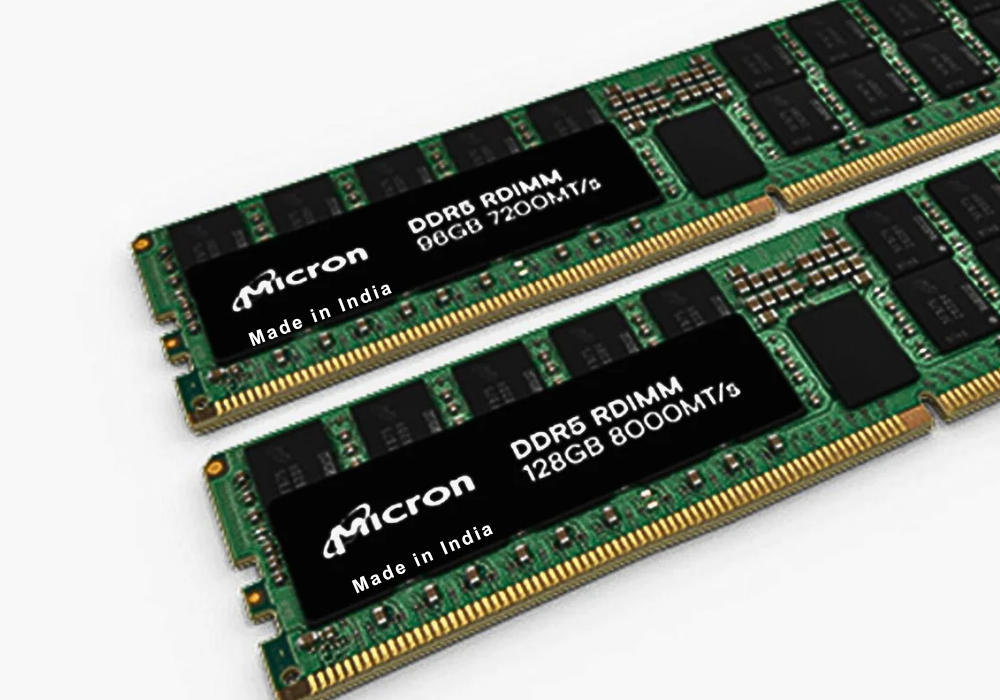
Micron to Roll Out the First Made-in-India Chips From Gujarat Facility in 2025 for Global Export

Micron to Roll Out the First Made-in-India Chips From Gujarat Facility in 2025 for Global Export

Micron Technology is set to roll out its first batch of semiconductor chips manufactured in India from its Sanand facility in Gujarat by early 2025, the company's India managing director Anand Ramamoorthy, in an interaction with Economic Times. This move is part of a broader strategy to cater to global demand, with a significant portion of the output intended for export markets.

The Sanand unit is focused on exporting chips and is expected to serve multiple sectors, including data centers, smartphones, notebooks, internet-of-things devices, and the automotive industry.

The emphasis is on agility and addressing talent scarcity in niche sectors like cybersecurity as the company prepares for this significant step in semiconductor manufacturing. This development is a part of India's growing semiconductor industry and is expected to contribute to the global supply chain diversification efforts.

The plant will focus on the assembly and test manufacturing for both DRAM and NAND products. The facility is part of Micron's strategy to meet long-term global demand for memory and storage, complementing the company's global assembly and test network.

This development is a testament to India's growing capabilities in the high-tech manufacturing sector and its potential to contribute to the global semiconductor supply chain.

The semiconductor chips to be packaged at Micron's Sanand unit in Gujarat are intended for a wide range of applications and will primarily be used in Data Centers, Smartphones, Notebooks, Internet-of-Things (IoT), Automotive Segments (ADAS).

Idaho based Micron's product range includes DRAM, flash memory, and SSDs, marketed under brands like Ballistix Gaming and Crucial.

In 2023, Micron reported a revenue of US$ 15.54 billion. The company employs around 43,000 people worldwide. Micron has been instrumental in several technological advancements, including the development of atomic layer deposition high-k films for DRAM and pioneering pitch double-patterning for NAND flash memory.

Besides Micron, Indian conglomerates – Tata and Vedanta, are also setting up semiconductor chips manufacturing plants in the country.

Collaborating with a Taiwanese partner, Tata is planning to set up India's first semiconductor fabrication plant in Gujarat's Dholera. The project is estimated to cost Rs 91,000 crore and aims to produce 300 crore chips annually for various sectors.

While, Vedanta has announced a $20 billion investment in technology, electronics, and glass businesses over the next four years, which includes semiconductor manufacturing.

Interestingly, even cricket icon Sachin Tendulkar has invested in a semcon company called RRP Electronics which is investing Rs. 5,000 crore in a semiconductor facility, contributing to the 'Make In India' initiative.

In addition to these, companies like Tata Elxsi, Dixon Technologies, Moschip Technologies, and SPEL Semiconductor Limited are also involved in the semiconductor sector and are considered key semiconductor stocks in India.

India Democratize Semiconductor Chip Designing, Enables Chip Centre At C-DAC To Be Accessed Remotely

India Democratize Semiconductor Chip Designing, Enables Chip Centre At C-DAC To Be Accessed Remotely

Now Anyone from Anywhere can Design Chips & innovate as MeitY brings Design Infrastructure to Doorstep

India is in process of democratizing semiconductor chip designing by bringing design infrastructure to doorstep so that anyone from anywhere can design chips and can innovate. Ministry of Electronics and Information Technology (MeitY) has just announced that India Chip Centre at CDAC would pool the Design licenses centrally to be made available to students at remote locations for designing chips.

Last month, MeiTY announced the formation of an advisory committee for Semiconductor Ecosystem, comprising industry experts, that include Vinod Dham, who is known as father of Pentium Chip and HCL Co-founder - Dr. Ajai Chowdhry.

In a latest now, MeitY, with its series of graded and proactive steps, is in the process of systematic overhaul of semiconductor design approach at 120 premier academic institutions across the country to debut an era of creative enablement where anyone with innate skills, anywhere in the country can get the semiconductor chips designed.

Earlier in 2021, a pilot deployment was successfully tested by MeitY under Special Manpower Development Programme for Chips to System Design (SMDP-C2SD), wherein a centralized design facility at C-DAC was enabled for remote access by over 50,000 engineering students at 60 academic institutions for designing chips. 

Leapfrogging, MeitY now intends to make accessible a centralized chip design infrastructure to be made available at India Chip Centre setup at C-DAC, to train 85000+ B.Tech, M.Tech and PhD students at 120 academic institutions across the country in chip design area for next 5 years.

For making available the chip design infrastructure at India Chip Centre (C-DAC), leading industry vendors from EDA (Electronic Design Automation), Electronic Computer-Aided Design (ECAD), IP Core and Design solutions Industry are being partnered with. Specific collaborative arrangements are being made available with Synopsys, Cadence Design Systems, Siemens EDA, Silvaco & other leading tool vendors, IP & design solution providers and Fab aggregators.

At centralized design facility hosted at India Chip Centre (C-DAC), not only the most advanced tools for entire chip design cycle (i.e. Front-end design, Back-end design, PCB design & analysis etc. for Digital, Analog, RF & Mixed Signal designs), going up to 7nm or advanced node but also an arrangement of instructor-led/ online trainings on design flows by industry professionals are being made available for next 5 years.

This centralized facility at India Chip Centre (C-DAC), one of the biggest of existing facilities, offering plethora of design flows, aims to bring the chip design infrastructure at door-steps of over 85,000 students at 120 academic institutions. Taking advantage, several academic start-ups will mushroom across the country, cross the initial entry barriers and pave the way for entrepreneurship/ startup-led design & innovations ecosystem in the country making indigenous IP Cores, Chips, System on Chip (SoCs), Systems for different application areas like 5G/ IoT, AI/ ML, Automotive & Mobility sector etc. in India, for the World.

As SemiconIndia 2022 concluded successfully last week, most of the global semiconductor leaders (like Intel, Micron, Qualcomm, LAM Research etc) not only highlighted the contribution of their Indian R&D centres, which are now the biggest centres out of their headquarter locations but also acknowledged the semiconductor design strength in our country, which now makes up for 20% of the world’s engineers.

Shri Ashwini Vaishnaw, Minister for Electronics & Information Technology envisions making available a design talent pool of highly skilled engineers for turning India into a semiconductor hub through the Chips to Startup (C2S) Programme and other initiatives in Semiconductor policy. This will strengthen & supplement the Indian talent pool designing the leading-edge chips for semiconductor giants with complete ownership of some of these chips in the country. Speaking at SemiconIndia 2022, he highlighted that India's democracy and talent pool sets it apart from other countries fighting for chip sovereignty.

Many co-development pacts were announced at SemiconIndia 2022 last week by Shri Rajeev Chandrasekhar, Minister of State for Electronics & Information Technology including Digital India RISC-V (DIR-V) Program, aiming to catalyze India’s semiconductor ecosystem. These announcements, coupled with the fact that India has just scored a century of Unicorns this week and the steps taken to democratize the chip design across the country, shall trigger the next wave of Startups and unicorns from semiconductor design space in the country.


Application Invited from Startups and MSMEs under Chips to Startup (C2S) Programme of MeitY


MeitY invites applications under the Chips to Startup (C2S) Programme from academia, R&D organisations, startups and MSMEs

In line with Prime Minister Shri Narendra Modi’s plan to transform India into the next semiconductor hub, the Ministry of Electronics and Information (MeitY) has sought applications from 100 academia, R&D organisations, start-ups and MSMEs under its Chips to Startup (C2S) Programme.

The Chips to Startup (C2S) Programme aims to train 85,000 number of high-quality and qualified engineers in the area of Very large-scale integration (VLSI) and Embedded System Design as well as result in development of 175 ASICs (Application Specific Integrated Circuits), Working Prototypes of 20 System on Chips (SoC) and IP Core repository over a period of 5 years. This will be a step towards leapfrogging in the Electronics System Design & Manufacturing (ESDM) space by way of inculcating the culture of SoC/ System Level Design at Bachelors, Masters and Research level and act as a catalyst for growth of Start-ups involved in fabless design.

The programme would be implemented at about 100 academic institutions/R&D organisations across the Country (including IITs, NITs, IIITs, Government/Private Colleges and R&D Organisations). Startups and MSMEs can also participate in the programme by submitting their proposals under Academia- Industry Collaborative Project, Grand Challenge/ /Hackathons/RFP for development of System/SoC/IP Core(s).

The C2S Programme addresses each entity of the value chain in electronics viz. quality manpower training, research and development, hardware IPs design, System design, application-oriented R&D, Prototype design and deployment with the help of academia, industry, start-ups and R&D establishments.

Under the Programme, based on the Institutions’ expertise, Technology Readiness Level (TRL) and design experience acquired during earlier SMDP Programmes, proposals are invited in three different categories, i.e., Design and Development of Systems/SoCs/ASICs/Reusable IP Core(s), Development of Application Oriented Working Prototype of IPs/ASICs/SoCs, and Proof of Concept oriented Research and Development of ASICs/FPGAs.

C-DAC (Centre for Development of Advanced Computing), a scientific society operating under MeitY, will serve as the nodal agency for the programme.

Online applications are open at the Chips to Startup (C2S) website until January 31, 2022.

The project proposals should be submitted at C2S portal (www.c2s.gov.in) in the format prescribed at the portal. The institutions applying under the programme should meet the eligibility criteria defined at the portal and should be in line with the proposals’ guidelines.

IIT Madras Unveils ‘SHAKTI’, India's 1st Microprocessor 'Originated in India'

Team behing SHAKTI Processor

Researchers an scholars at Indian Institute of Technology (IIT) Madras have developed India’s first indigenously or natively/locally developed RISC V Microprocessor -- ‘Shakti’. The microprocessor built in & by India, will prove to be very useful in reducing dependency on microchips which are imported from abroad. It can be utilized in surveillance cameras and smartphones.

With this, Shakti has become India's first microprocessor not only Made in India but also originated from within the country unlike other microprocessors which are either imported or made in India but by foreign private companies.

Shakti Processor from IITM-SCL | Image Source : Redact

It is to be noted that India's first "Made in India" microprocessor was built in August 2017 by US-based chimpmaker Intel's R&D centre in Bangalore and as this was first microprocessor made locally in India however the technology used, fabrication and company behind it was not India-based.

Semi-Conductor Laboratory (SCL) of the Indian Space Research Organisation (ISRO) in Chandigarh has fabricated the microchip which is essential for ‘SHAKTI’.

According to IIT Madras, SHAKTI would assist the defence, nuclear power and government agencies in reducing the threat from systems infected with back-doors and hardware Trojans.

“It could also be used in embedded low power wireless systems and networking systems, besides reducing reliance on imported microprocessors in communications and defence sectors. The microprocessor could be used by others as it is on par with International Standards,” said a statement from the Institute.

[caption id="attachment_127105" align="aligncenter" width="750"] Team of Shakti Processor
[Image - Factordaily.com][/caption]

RIMO is the code name of the SHAKTI C-class based SoC (System on a Chip) with size of 144 sq.mm. and operate at a frequency of upto 70 MHz. An SoC or System on Chip is an integrated circuit that integrates all components of a computer or other electronic system. These components typically include a central processing unit, memory, input/output ports and secondary storage – all on a single substrate.

SHAKTI is an open-source initiative by the RISE group at IIT-Madras, which is not only building open source, production grade processors, but also associated components like interconnect fabrics, verification tools, storage controllers, peripheral IPs and SOC tools.

The Project SHAKTI is funded by the Ministry of Electronics and Information Technology, Government of India.

An open-source ecosystem such as SHAKTI promotes a mix-and-match environment where users can plug-in different open-source or proprietary IPs and innovate on new ideas and projects.

Via ~ Financial Express

Temasek-backed UST Global Acquires SeviTech, A Bangalore-based Chip Design Startup

California, US-based UST Global has acquired Bengaluru-based SeviTech Systems, a fast-growing chip design (VLSI) services company and a leading application-specific integrated circuit (ASIC) design solutions firm.

SeviTech will be retained as an independent entity and positioned as an expert in the pre-silicon engineering services business. It will continue to operate as a subsidiary of UST Global.

The acquisition will bring in the advanced technology and deep end-market expertise of the two companies, delivering advanced end-to-end solutions to global semiconductor manufacturers. The acquisition reinforces UST Global’s strength and focus in India, and elevates its position as a world’s most premium VLSI solutions provider, and a market leader in pre-silicon engineering.

Founded in 2013, by Prabhu Bhairi, Ashish Gupta, Shekhar Sharma and Anil Dalwani, SeviTech is one of fastest growing chip design (VLSI) Services Company, working with top IC design companies. The company has about 350 employees expertizing in end-to-end ASIC (Application Specific Integrated Circuit) design and embedded solutions. SeviTech has RnD centres in Bangalore and Hyderabad. In 2017, the company was recognized as the 50 best startups to work for by Silicon India.

UST Global had recently raised $250 million from Singapore’s sovereign wealth fund Temasek, in June this year, valuing it at over $1 billion. SeviTech is UST's third acquisition so far. In 2012, the company had acquired Andare, a company engaged in developing mobile solutions for large enterprise CRM applications. This was followed by acquisition of Kanchi Technologies, a company with primary focus in Engineer Services, in 2014.

UST Global’s Semiconductor business provides an end-to-end engineering and technology services that support the entire silicon lifecycle for original device manufacturer (ODM), original equipment manufacturer (OEM), integrated hardware vendor (IHV), and ASIC (Digital & Full Custom) Design, Verification & Implementation, FPGA implementation along with embedded software development. With the added capabilities and teams from SeviTech, the company will now be able to cater to the large volume of demand from global semiconductor manufacturers.

Commenting on the acquisition, Gilroy Mathew, Global Head of Semiconductor and Head of APAC, UST Global, said “Globally, our semiconductor business has seen an inspiring and phenomenal growth over the years. The acquisition of SeviTech is an integral part of our plan to strengthen our Technical Centers of Excellence providing RTL to GDSII solutions to our customers globally. With this acquisition, UST is now placed as a leader with expertise in delivering low power, high-performance chipset solutions for Automotive, Communication, Storage and other industries. The acquisition not only reinforces our VLSI capabilities but also highlights the company as an industry powerhouse focused on the high growth opportunities in the silicon world.”

“The global presence of UST Global coupled with strong ASIC engineering teams of SeviTech Systems positions us to provide innovative solutions to customers worldwide. It enhances our service portfolio and strengthens our position with customers for the end-to-end chip design solutions,” said Prabhu Bhairi, CEO & Co-Founder, SeviTech Systems.

To ensure the continued strong growth of SeviTech and a mutually beneficial association for both parties going forward, UST Global will maintain SeviTech as an independent entity and positioning it further as an expert in pre-silicon engineering services business. SeviTech will continue to operate as a subsidiary of UST Global.

To recall, in this month only Intel has acquired Indian entrepreneurs founded NetSpeed Systems, a San Jose, California-based provider of system-on-chip design tools and interconnect fabric intellectual property.

~ Business Line | Source - UST Global

[Top Featured Image - Glassdoor]

Temasek-backed UST Global Acquires SeviTech, A Bangalore-based Chip Design Startup

California, US-based UST Global has acquired Bengaluru-based SeviTech Systems, a fast-growing chip design (VLSI) services company and a leading application-specific integrated circuit (ASIC) design solutions firm.

SeviTech will be retained as an independent entity and positioned as an expert in the pre-silicon engineering services business. It will continue to operate as a subsidiary of UST Global.

The acquisition will bring in the advanced technology and deep end-market expertise of the two companies, delivering advanced end-to-end solutions to global semiconductor manufacturers. The acquisition reinforces UST Global’s strength and focus in India, and elevates its position as a world’s most premium VLSI solutions provider, and a market leader in pre-silicon engineering.

Founded in 2013, by Prabhu Bhairi, Ashish Gupta, Shekhar Sharma and Anil Dalwani, SeviTech is one of fastest growing chip design (VLSI) Services Company, working with top IC design companies. The company has about 350 employees expertizing in end-to-end ASIC (Application Specific Integrated Circuit) design and embedded solutions. SeviTech has RnD centres in Bangalore and Hyderabad. In 2017, the company was recognized as the 50 best startups to work for by Silicon India.

UST Global had recently raised $250 million from Singapore’s sovereign wealth fund Temasek, in June this year, valuing it at over $1 billion. SeviTech is UST's third acquisition so far. In 2012, the company had acquired Andare, a company engaged in developing mobile solutions for large enterprise CRM applications. This was followed by acquisition of Kanchi Technologies, a company with primary focus in Engineer Services, in 2014.

UST Global’s Semiconductor business provides an end-to-end engineering and technology services that support the entire silicon lifecycle for original device manufacturer (ODM), original equipment manufacturer (OEM), integrated hardware vendor (IHV), and ASIC (Digital & Full Custom) Design, Verification & Implementation, FPGA implementation along with embedded software development. With the added capabilities and teams from SeviTech, the company will now be able to cater to the large volume of demand from global semiconductor manufacturers.

Commenting on the acquisition, Gilroy Mathew, Global Head of Semiconductor and Head of APAC, UST Global, said “Globally, our semiconductor business has seen an inspiring and phenomenal growth over the years. The acquisition of SeviTech is an integral part of our plan to strengthen our Technical Centers of Excellence providing RTL to GDSII solutions to our customers globally. With this acquisition, UST is now placed as a leader with expertise in delivering low power, high-performance chipset solutions for Automotive, Communication, Storage and other industries. The acquisition not only reinforces our VLSI capabilities but also highlights the company as an industry powerhouse focused on the high growth opportunities in the silicon world.”

“The global presence of UST Global coupled with strong ASIC engineering teams of SeviTech Systems positions us to provide innovative solutions to customers worldwide. It enhances our service portfolio and strengthens our position with customers for the end-to-end chip design solutions,” said Prabhu Bhairi, CEO & Co-Founder, SeviTech Systems.

To ensure the continued strong growth of SeviTech and a mutually beneficial association for both parties going forward, UST Global will maintain SeviTech as an independent entity and positioning it further as an expert in pre-silicon engineering services business. SeviTech will continue to operate as a subsidiary of UST Global.

To recall, in this month only Intel has acquired Indian entrepreneurs founded NetSpeed Systems, a San Jose, California-based provider of system-on-chip design tools and interconnect fabric intellectual property.

~ Business Line | Source - UST Global

[Top Featured Image - Glassdoor]

IIT-Hyderabad Launches Chip Design Incubator for Startups; Invites Applications

Indian Institute of Technology (IIT), Hyderabad, has announced the launch of Fabless Chip Design Incubator (FabCI), dedicated exclusively to help startups in this sector.

FabCI is first-of-its-kind incubator in India that focuses on creating an ecosystem for grooming startups in chip design, provides a bouquet of offerings, including free software tools with leading technology partners in Electronic Design Automation (EDA), among other facilities.

The incubator already has three startups being incubated -- Lemonflip, SenseHealth Technologies and WiSig Networks. The Incubator has now called for early stage startups to apply.

The goal is to incubate at least 50 'Make-in-India' chip design companies that can compete globally and generate Intellectual Property Rights (IPRs), it said.

Funded by the Ministry of Electronics and Information Technology (MeitY), FabCI has American MNCs - Cadence Design Systems and Mentor Graphics as its technology partners. Both the MNCs are leading providers of Electronic Design Automation (EDA) software, hardware and IP.

The primary motivation for this unique incubator program is to provide a one-stop solution for start-ups focusing in the area of chip design. We want to help incubate multiple •Make-in-India' chip design companies. We aspire to building an ecosystem wherein the incubates are not only provided with the relevant infrastructure.

Locally, the demand in the Indian market driven by higher consumption of electronic goods and our strategic needs for using technology in education. defense and healthcare industries is projected to reach USD 400 Billion by year 2020.

Through FabCI, the grand vision is to leverage the design expertise that exists in India to create Indian IP and to make a mark in chip design internationally.

In a video message for FabCI, Ajay Prakash Sawhney, Secretary, Ministry of Electronics and Information Technology (MeitY), said the Incubator is a step in the right direction which will greatly benefit from the expertise of IIT-H and mentors outside the Institute and should make a mark in the International Chip Design Sector.

U B Desai, Director, IIT-H,said the incubator exemplifies the commitment of the institution to develop semiconductor and chip design industries in India and enhance its IPR.

"We're looking forward to incubating startups that will roll out the next generation of disruptive products. This incubator will also contribute to the 'Startup India' and 'Make In India' campaigns of the Government of India," he said.


[Top Image -  Brian Kostiuk on Unsplash]

Market Reports

Market Report & Surveys
IndianWeb2.com © all rights reserved