‏إظهار الرسائل ذات التسميات Indian Startup Ecosystem. إظهار كافة الرسائل

India’s Startup Ecosystem Grows 500x in a Decade, Celebrated at Vigyan TECH 2026

India’s Startup Ecosystem Grows 500x in a Decade, Celebrated at Vigyan TECH 2026

Union Minister Dr. Jitendra Singh highlighted that independent India’s major share of technological transformation has taken place in the last decade, driven by decisive policy reforms, strong political support, enhanced research freedom, and private sector participation.

The minister said that independent India’s major share of technological transformation has happened in the last one decade due to decisive policy reforms, strong political support for science and technology, enhanced research freedom and increased participation of the private sector. "India Climbs from Rank 80 to 38 in Global Innovation Index over the last decade" , Dr Jitendra Singh said. 

Notably, since 2014, India has introduced sweeping reforms in the startup and patent/IPR ecosystem — including fee reductions, expedited examinations, digital filing, and simplified compliance — resulting in a five‑fold increase in patent grants and a four‑fold rise in trademark registrations. Startups, women innovators, and MSMEs can request fast‑track patent examination.

Event Overview

  • Occasion: National Technology Day 2026
  • Event: Vigyan TECH 2026 at BRIC-NII
  • Theme: Building India’s Innovation Ecosystem for Viksit Bharat
  • Participants: 14 Ministries & Departments, senior officials, scientists, startups

India’s Innovation Milestones

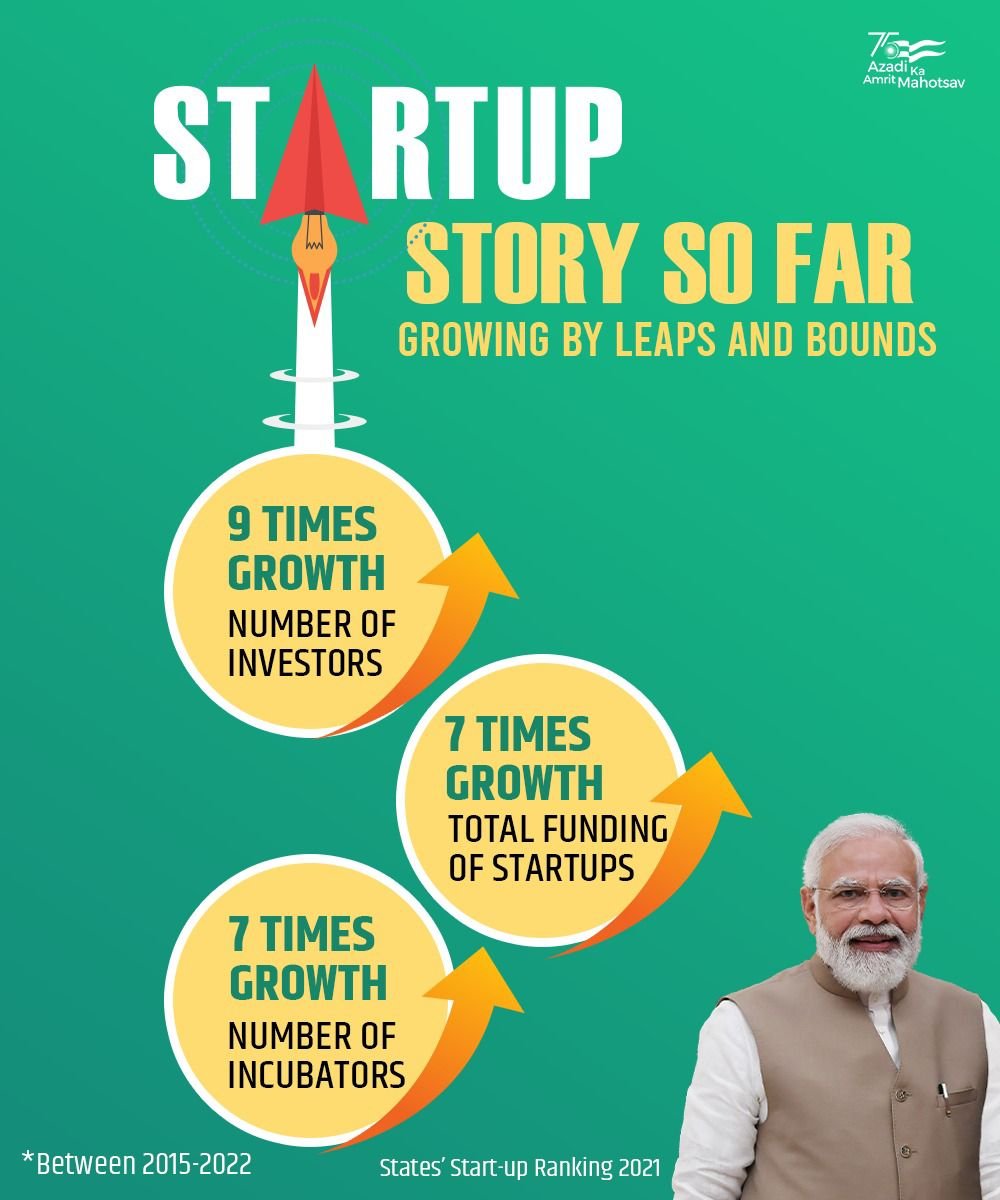
  • Startup Ecosystem: Expanded from ~350 in 2014 to over 200,000 in 2026, making India the world’s 3rd largest
  • Global Innovation Index: Improved from rank 80 to 38
  • Patents: Over 100,000 filed, 55% by Indian residents; India ranks 6th globally
  • Scientific Publications: India among leading nations in research output

Leadership Insights

  • Dr. Jitendra Singh: “Science and innovation received unprecedented national priority after 2014, resulting in rapid technological advancement.”
  • Prime Minister Narendra Modi (message): Appreciated convergence of multiple ministries to strengthen India’s innovation ecosystem
  • Prof. Ajay Kumar Sood: Called Vigyan TECH 2026 a landmark whole-of-government initiative essential for tackling national challenges

Key Highlights

  • Exhibition: Showcased indigenous technologies from national labs and startups
  • Compendium: Release of “TECH-संग्रह” highlighting innovations and technology transfers
  • Collaborations: MoUs signed for technology transfer and partnerships
  • Focus Areas: Quantum computing, AI, genomics, clean energy, biotechnology

Significance

  • Marks India’s transition from service-led to science-led innovation
  • Positions science & technology as central to Viksit Bharat @2047
  • Encourages inter-ministerial and inter-science collaboration for national outcomes

Key Initiatives Driving Transformation

InitiativeFocus AreaImpact
National Quantum MissionQuantum technologiesStrengthening India’s quantum research ecosystem
India AI MissionArtificial IntelligenceAccelerating AI adoption across sectors
Anusandhan NRFResearch & InnovationFunding and supporting advanced research
WISE-KIRAN SchemeWomen in ScienceEmpowering women scientists with opportunities
NIDHI ProgrammeStartupsSupporting incubation and entrepreneurship


In summary, Vigyan TECH 2026 underscored India’s transformation into a global innovation hub, driven by startups, patents, and scientific breakthroughs, while setting the stage for deeper collaboration and inclusive growth.

Apple Pledges ₹100 Crore to Power India’s Green Energy and Startup Revolution

Apple Pledges ₹100 Crore to Power India’s Green Energy and Startup Revolution

Apple has announced a ₹100 crore investment in India to expand renewable energy and support green startups, partnering with CleanMax and WWF‑India. The initiative will add over 150 MW of clean energy capacity—enough to power 1.5 lakh households annually—and provide catalytic support to six early‑stage enterprises in waste management, regenerative agriculture, and circular economy solutions.

Key Highlights of Apple’s India Green Push

  • Investment Size: ₹100 crore (initial phase).
  • Renewable Energy Capacity: 150 MW, powering ~150,000 households annually.
  • Partners:
    • CleanMax → Renewable energy developer for solar and wind projects.
    • WWF‑India → Recycling and plastic waste recovery initiatives.
    • Acumen → Supporting six early‑stage green startups.
  • Focus Areas: Renewable energy, waste management, regenerative agriculture, circular economy, plastic pollution reduction.
  • Global Goal: Apple aims to be carbon neutral across its entire footprint by 2030.
  • Impact on India’s Clean Energy & Startup Ecosystem
  • Boost to Renewable Infrastructure: Large‑scale solar and wind projects will strengthen India’s clean energy adoption, especially across Apple’s supply chain.
  • Startup Support: Six early‑stage enterprises will receive grants, mentorship, and strategic guidance to scale sustainable solutions.
  • Waste Management Expansion: WWF‑India’s collaboration with Saahas Zero Waste in Goa will now extend to Coimbatore and other regions, improving recycling traceability and reducing plastic leakage.
  • Supply Chain Sustainability: Apple’s India partners (Foxconn, Tata Electronics) will benefit from increased renewable energy integration.

Quick Comparison of Apple’s Initiatives in India

InitiativePartnerScale/ImpactFocus Area
Renewable Energy ExpansionCleanMax150 MW capacity, 1.5 lakh householdsSolar & wind infrastructure
Green Startup SupportAcumen6 startupsWaste mgmt, agriculture, circular economy
Plastic Waste RecoveryWWF‑India + Saahas Zero WasteExpansion from Goa to CoimbatoreRecycling, pollution reduction

Risks & Challenges

  • Execution Timeline: Large‑scale renewable projects often face delays due to land acquisition and regulatory approvals.
  • Startup Viability: Early‑stage green startups may struggle with scalability and funding beyond Apple’s initial support.
  • Supply Chain Integration: Ensuring suppliers adopt renewable energy consistently across India could be complex.

Why This Matters for India

  • Strengthens Atmanirbhar Bharat by reducing import dependence in clean energy.
  • Aligns with India’s 500 GW non‑fossil fuel target by 2030.
  • Encourages green entrepreneurship, creating jobs and innovation in sustainability sectors.

At Apple, our commitment to the environment is also a driving force for innovation — across the company and around the world, said Sarah Chandler, Apple’s vice president of Environment and Supply Chain Innovation. We’re proud to expand our efforts to invest in India’s clean energy economy and protect the country’s precious natural resources

Over 50% of India’s Future Startups Will Rise Outside Metros, says TiE Bangalore’s New Report

Over 50% of India’s Future Startups Will Rise Outside Metros, says TiE Bangalore’s New Report

At the 10th edition of the Matrix Global Summit, TiE Bangalore launched its flagship report, India as a Startup Superpower by 2035, A Strategic Roadmap, outlining a transformative vision for India’s entrepreneurial economy. Based on inputs from over 60 ecosystem leaders, including founders, investors, policy experts, and academic institutions, the report projects that more than 50% of Indian startups by 2035 will emerge from Tier 2/3 districts.

The report presents a roadmap that is intended to evolve as a living document, continuously shaped by insights and inputs from ecosystem leaders. As the landscape changes, this framework will be updated to reflect new priorities, challenges, and opportunities—ensuring it remains relevant and action-oriented.

Building on this foundation, the report lays out a long-term blueprint to shape India into the world’s most inclusive, innovation-led startup economy. It calls for a nationwide shift from "Startup India" to "Entrepreneurial Bharat", where entrepreneurship is no longer a metro-driven phenomenon but a grassroots movement embedded in school curriculums, regional economic clusters, and national priorities. It outlines actionable strategies to democratize access to capital, embed entrepreneurial education across academic institutions, and streamline regulatory policies to support high-impact founders across every Indian district.

This report is significant because it reframes how India must think about startups, not just as economic engines, but as tools for solving large-scale national challenges. With India expected to become the third-largest economy by 2030, this roadmap offers a framework to ensure that its startup ecosystem is not only high-growth, but resilient, inclusive, and globally relevant. The document also positions entrepreneurship as a core life skill, proposing its inclusion across 75% of secondary schools and 80% of higher education institutions by 2035, enabling over one million students each year to engage with startup culture.

This is not just a report, it’s a strategic invitation to reimagine India’s innovation trajectory,” said Madan Padaki, President, TiE Bangalore & Trustee, TiE Global. “We now have the opportunity to architect an ecosystem that is inclusive by design and transformative by intent, where every Indian, regardless of geography or background, has the tools to build, scale, and lead.”

Covering themes across policy, capital, academia, talent, and deep tech, the report explores how India can create an innovation economy that contributes 15% to GDP, creates 50 million new jobs, and generates 100+ IPOs on global exchanges by 2035. It addresses key enablers such as domestic patient capital, national startup policy harmonization, regulatory simplification, deep tech leadership, and global integration. In doing so, it charts a path for India to lead not just in startup quantity, but in innovation quality, sustainability, and global impact. The roadmap is informed by TiE’s national roundtable series held over the past year and includes insights from academic leaders from IITs, IIMs, and other innovation-focused institutions.

About TiE Bangalore: TiE, which stands for The Indus Entrepreneurs, is a global non-profit organization dedicated to fostering entrepreneurship. TiE provides a platform for aspiring entrepreneurs, seasoned professionals, investors, and other ecosystem players to come together, network, and learn from each other. With chapters in over 60 cities across 14 countries, TiE offers mentorship, education, funding opportunities, and other resources to help entrepreneurs start and grow their businesses. The organization also hosts events, conferences, and competitions to support and celebrate entrepreneurship around the world.

Matrix Forum, a Thinktank initiative of TiE Bangalore, mentors, evangelizes, and engages 3000+ start-ups with Corporates, Domain Enterprises, Investors, and Policy Makers, to grow the ecosystem of Matrix Technologies (IoT, DeepTech, AI, Quantum included), in India. The Forum was founded in 2014 as the IoT Forum and has evolved continuously to the present.

Flipkart To Amazon, DPIIT Inks 6 MoUs in this Month Alone, To Boost Startup Ecosystem

Flipkart To Amazon, DPIIT Inks 6 MoUs in this Month Alone, To Boost Startup Ecosystem

Since October this year, the Department for Promotion of Industry and Internal Trade (DPIIT) has signed several Memorandums of Understanding (MoUs) to boost India's startup ecosystem. Here are six of them inked in this month alone:

1. HCLSoftware: DPIIT signed an MoU with HCLSoftware to support India's startup manufacturing ecosystem under the Startup India initiative. This collaboration aims to provide startups with global market exposure and help them showcase their products and services worldwide.

2. Flipkart: DPIIT partnered with Flipkart to invest in and mentor Indian startups. This MoU is part of Flipkart's USD 100 million venture fund initiative, which aims to support tech startups across India.

3. HDFC Bank: DPIIT signed an MoU with HDFC Bank to provide startups with world-class banking and financial services. This collaboration aims to address critical challenges like funding and financial management, creating a conducive environment for startups to innovate and grow.

4. Tally Solutions: DPIIT signed an MoU with Tally Solutions to mentor manufacturing startups. Tally will offer training, case studies, and expert-led sessions to help startups streamline operations, adopt scalable business practices, and address challenges in financial management, compliance, marketing, and digitization.

5. WinZO: DPIIT signed a two-year MoU with WinZO, India's largest social gaming and interactive entertainment platform. This partnership aims to accelerate the growth of India's interactive entertainment sector by fostering innovation, creating skilled talent, and scaling startups to compete globally.

6. Amazon: DPIIT signed an MoU with Amazon to propel India's manufacturing ambitions. Amazon has earmarked $120 million from its Smbhav Venture Fund to invest in startups that digitize consumer goods manufacturing in India and cater to domestic and global demand.

Beside these six MoUs, DPIIT signed an MoU with Hitachi, Merck Life Science and Shree Cements to boost innovation and technology development in India. This collaboration aims to enhance research and development capabilities, promote advanced manufacturing, and support startups in these fields.

DPIIT signed an MoU with Johnson Controls-Hitachi Air Conditioning India to establish a startup incubator in Gujarat. This incubator is designed to support manufacturing-focused startups by providing mentorship, guidance, and access to world-class R&D, prototyping, and testing processes. The goal is to foster technological advancements, sustainability, and energy efficiency.

The incubator will help startups with concept-to-prototype development, project viability assessment, and go-to-market strategies. It will also support them in managing potential funding needs and other necessary services such as legal and IP filing for commercialization of innovative products.

DPIIT signed an MoU with Merck Life Science India on November 26, 2024. This collaboration is part of the Startup India initiative and aims to empower emerging biotech startups by providing access to cutting-edge global technologies. The goal is to foster innovation, promote new product development, and strengthen India's biotech manufacturing ecosystem.

DPIIT signed an MoU with Shree Cement to empower and promote manufacturing incubation. This partnership aims to strengthen India's manufacturing ecosystem by encouraging product startups, innovators, and entrepreneurs. Through this collaboration, Shree Cement will offer infrastructure, mentorship, access to funding, and market connections to help startups from prototype development to potential international expansion.

The initiative will encourage and motivate biotech startups, innovators, and entrepreneurs by nurturing ideas and helping them overcome the "valley of death" – the critical phase where many startups struggle to survive.

These partnerships are part of DPIIT's broader efforts to foster innovation, entrepreneurship, and economic growth in India.

Govt Launching Groundbreaking Digital Platform BHASKAR for Indian Startup Ecosystem

Govt Launching Groundbreaking Digital Platform BHASKAR for Indian Startup Ecosystem

The Department for Promotion of Industry and Internal Trade (DPIIT), Ministry of Commerce and Industry, is set to launch a new digital platform called BHASKAR (Bharat Startup Knowledge Access Registry) to revolutionize India's startup ecosystem.

BHASKAR aims provide an all-encompassing, one-stop digital platform that addresses the challenges faced by entrepreneurs and investors alike.

The platform aims to centralize, streamline, and enhance collaboration among key stakeholders, including startups, investors, mentors, service providers, and government bodies.

By serving as a centralized registry, BHASKAR will enable seamless access to a wide array of resources, tools, and knowledge that will help fuel the entrepreneurial journey from ideation to execution.

Key features of BHASKAR include:
  • Networking and Collaboration: Bridging the gap between startups, investors, mentors, and other stakeholders for seamless interaction across sectors.
  • Centralized Access to Resources: Providing immediate access to critical tools and knowledge, enabling faster decision-making and efficient scaling.
  • Personalized Identification: Assigning unique BHASKAR IDs to each stakeholder for personalized interactions and tailored experiences.
  • Enhanced Discoverability: Powerful search features to easily locate relevant resources, collaborators, and opportunities.
This initiative aligns with the Government of India’s vision to transform India into a global leader in innovation and entrepreneurship.

The BHASKAR platform will offer a wide range of resources to support the startup ecosystem in India. Here are some key resources you can expect:

1. Funding Opportunities: Information on various funding options, including venture capital, angel investors, government grants, and loans.

2. Mentorship Programs: Access to experienced mentors across different industries to guide startups through their growth journey.

3. Networking Events: Details about upcoming events, workshops, and conferences to facilitate networking and collaboration.

4. Legal and Regulatory Support: Guidance on compliance, intellectual property rights, and other legal aspects crucial for startups.

5. Market Insights: Data and analytics on market trends, consumer behavior, and industry performance to help startups make informed decisions.

6. Training and Development: Courses and workshops on essential skills like business management, marketing, and technology.

7. Service Providers: Listings of service providers offering essential services such as accounting, marketing, and IT support.

8. Success Stories and Case Studies: Inspirational stories and case studies of successful startups to motivate and educate new entrepreneurs.

These resources aim to create a supportive environment for startups to thrive and scale efficiently.

With the launch of BHASKAR, the Government of India is reinforcing its commitment to making India a leader in global innovation, entrepreneurship, and economic growth.

50% of Indian Unicorns Profitable by FY27— Redseer Report

50% of Indian Unicorns Profitable by FY27— Redseer Report

According to a recent report by Redseer, approximately 50% of unicorns are expected to become profitable by FY27, while approximately 20% will likely to struggle due to regulatory challenges, plummeting demand, and unclear business models.

Projecting four years down the line, Redseer’s analysis of 100 unicorns suggests substantial improvement in profitability, with the number of profitable unicorns projected to grow from approximately 30 unicorns in FY22 to approximately 55 in FY27.

The report points out that some of the struggling unicorns will pivot to new models, get acquired, or close entirely by FY27.

Redseer’s 'Path to Profitability' report further says that Indian start-up world is truly in the midst of a funding winter. An increasing cost of capital and interest rates, recession in developed markets, a decline in the value of tech stocks, and the slowdown in consumer internet growth have all contributed to the decline in funding, observes Mohit Rana, partner, Redseer.

The top four sectors expected to drive the highest pool of profit in the coming years are FinTech and financial services, B2B, SaaS, and eCommerce, predicts the report.

The report highlights EBITDA margins of PolicyBazaar, Delhivery, PayTM, Zomato, and CarTrade. All of theselisted companies have significantly brought down their losses each quarter. Cartrade has managed to become profitable in Q2 FY23.

Further, the report also highlights that ownership of founders in startups is also limited (0-20%) in 59% of private companies, as compared to public companies (50%+) in 65% of public companies.

According to the reports, listed tech companies like Paytm, Zomato, PolicyBazaar and Delhivery have made significant improvement over the last five quarters.

While Paytm has launched new products to expand its business in new segments. To increase the revenue per customer and reduce the CAC, the company has upsold/ cross-selling to existing customers.

Zomato has increased take rates from restaurant partners and delivery cost from customers. This month, Zomato rival Swiggy acquired LYNK, a Chennai-based logistics platform for brand owners

Policybazaar has cut its losses by reducing cost-of-customer-acquisition (CAC) related marketing expenses.

Delhivery took on backward integration by acquiring full-stack solutions across the value chain. To recall, in December last year Delhivery acquires the Pune-based Algorhythm Tech Pvt. Ltd. that delivers intelligent planning & optimization solutions for enterprise supply chain operations. In May this year, Delhivery made a strategic investment in Vinculum, a global software leader enabling omnichannel retailing for D2C enterprises, brands, brand distributors, and quick commerce companies. 

Beams Fintech Fund, Helps Create 2 Soonicorns in the Indian Startup Ecosystem, With a Combined Valuation of $1 Billion

Beams Fintech Funds, Helps Create 2 Soonicorns in the Indian Startup Ecosystem, With a Combined Valuation of $1 Billion

India’s first Growth Stage Fintech Fund backed Niyo & Progcap alongside marquee domestic & global investors in 2022.

Beams Fintech Fund, a leading Fintech focussed Growth Stage Fund will complete the calendar year 2022 on a high having its portfolio companies raised more than $150 Mn at a combined valuation of over $1 bn.

Beams Fintech Fund achieved its first close in March 2022 at $36 Mn corpus & made two investments during the year. Beams has now crossed more than 50% of its target corpus raise of $120 Mn and is in advance stages of making 3 more investments.

Founded by Fintech veteran Sagar Agarvwal & Navin Surya and Founders of Venture Catalysts - Anuj Golecha, Dr Apoorva Ranjan Sharma, Anil Jain and Gaurav Jain, Beams primarily invests in Series B & C rounds of Companies operating at the intersection of financial services and technology.

In a year when most Fintech companies struggled to raise capital, both of Beams portfolio companies saw newer rounds from marquee investors. Multiples Private Equity invested in Niyo while Beams invested alongside Google and Tiger in Progcap.

Beams has built a team of 8 investment professionals and more than 10 mentors, advisors, CXOs to help build the portfolio for Beams and create tangible value add for portfolio companies.

Beams has also brought in marquee Financial Institutions as LPs in the Fund including Yes Bank, Infibeams, Capri Global, ECG, etc., to cross pollinate with its portfolio companies.

Beams is being appreciated by the founder community for its strategy of identifying key gaps in the portfolio companies’ accessibility and providing the same in partnership with its LPs. Very similar to Canapi Ventures in the US, Beams will be building the largest ecosystem of by Banks, NBFIs, Insurance Companies and DFIs within India & Outside to create value for its companies.

Beams portfolio companies also created significant impact in 2022. Our Portfolio companies provided access to financial services to over 5 Million Consumers, SME’s and MSME’s with over $1 Billion in loans financed and enabled annualized payments of over $1.5 Billion for the underserved and blue collar workers.

During 2022, Beams has been recognised as one of the most unique upcoming investor in the Indian Fintech space which led to Beams being invited to multiple Global and Pan India Events. Beams was part of the Global Fintech Fest 2022, which is India’s largest Fintech event. Beams was also a part of the Global LP/GP Event, Superreturns at Amsterdam, Singapore and Dubai. Our Managing Partner, Sagar Agarwal was invited to share his views on Growth stage Fintech Investments in India.

“2022 has been an eventful year at Beams. As a relatively new platform in the ecosystem and creating a category focussed fund can be interesting at times, especially in a year that was marked by high inflation, geopolitical tensions and cool-off of the tech ecosystem. However, we have been very fortunate to have such high-quality investors support us. We have achieved more than what we had set out to at the start of the year and are proud to be regarded as India’s first Growth Stage focussed Fintech Fund” said Sagar Agarvwal, Co-founder and Managing Partner, Beam Fintech Fund. 

“CY ’23 looks even more promising & positive for us as markets have corrected significantly both in the private and the public space given us an opportunity to invest with high quality teams and businesses at more attractive prices and our existing portfolio companies are already performing phenomenally well. We expect to close the fund out at a target raise & deploy more than $60-70 mn in CY ’23. We follow a thesis driven approach towards investments & have narrowed down on the following themes for CY ‘23: Embedded Finance/Managed Marketplaces, SAAS Platforms for Banks/FIs, SAAS Platforms for Enterprises, Global Enterprises SAAS, Open Banking & Digital Financial Inclusion” said Navin Surya, Co-founder & Operating Partner, Beam Fintech Fund

Beams Fintech Fund is India's 1st Growth Stage Focussed Fintech Fund investing in companies operating at the intersection of Financial Services & Technology. Beams Fintech Fund is backed by Venture Catalysts. Beams is a second Fund for the group, after, 9 Unicorn, a $100 Mn Seed stage Fund launched in ‘20.

Beams Fintech Fund is an offering of Ecosystem, Value Add & Capital for Fintech market leaders of tomorrow. The Fund will create a concentrated portfolio of 10-12 investments by investing $8 -$10 Mn in high quality Fintech founders & companies in their Growth rounds ($50-500 Mn EV). Beams is a thesis driven investor & will focus on following Fintech themes in the Fund: Embedded Finance, Platforms & Technologies for the Incumbents or Disrupting the Incumbents, Global Enterprises SAAS, Open Banking & Digital Financial Inclusion.

With a target size of $100 million, the Fund has been received well & marquee Indian Financial Institutions, Banks, Family offices & Unicorn Fintech Founders are investors in the Fund thus validating the Team, Strategy, Thesis & Opportunity.

Group has invested in 30+ Fintech/FS Companies with $4 Bn+ in portfolio value creation. Founder’s current & past Fintech/FS investments include BharatPe, Dukaan, Flobiz, Klub, Esskay Fincorp, Suryoday, Centrum Forex, MFS Africa, Bank Open, Jai Kisan, GetVantage, Impact Guru, Creditwise, OTO, Liquiloans, Lenden, Junio etc.

The Parent, Venture Catalysts is the largest Network investing platform (6000+ investors) in Emerging Markets today with $225 Mn deployed capital across 180+ investments. Venture Catalysts has ranked top 3 globally for the past 3 years in no of deals.. AUM today is at $325Mn.

National Startup Report and States' Startup Ranking Results Declared

National Startup Report and States' Startup Ranking Results Declared

Results of Ranking of States’ Exercise 2021 on support to Start-up Ecosystems declared

Shri Goyal asks more start-ups to come on GeM platform; Says there is a great opportunity to democratize the start-up ecosystem

The results of the third edition of Ranking of States on Support to Startup Ecosystems were released by Minister of Commerce and Industry, Mr. Shri Piyush Goyal, on Monday at The Ashok Hotel, New Delhi. Gujarat and Karnataka emerged as the Best Performers in a category of States which included NCT of Delhi. Meghalaya won the top honour among UTs and North-eastern (NE) States.

The States Startup Ranking 2021 highlighted the support being extended by over 30 states and union territories through startup policies to the ecosystem. There were only 4 states with startup policies prior to 2016. The state startup teams have been extending support across mentorship, incubation and funding. Moreover, feedback was gathered from more than 7,000 beneficiaries through surveys made in 13 different languages to grasp the real situation at the execution level.

While Kerala, Maharashtra, Orissa and Telangana got the Top Performers award among states, Jammu & Kashmir emerged as the Top Performer among UTs and NE states.


The call for mentors for MAARG portal was also announced during the event. The portal is developed with the idea to develop a tool for start-ups in India that can be accessed from every corner of the country to request and connect with a mentor.

For the purposes of the Ranking, States and Union Territories are classified into 5 Categories - 1. Best Performers; 2. Top Performers; 3. Leaders; 4. Aspiring Leaders; and 5. Emerging Start-up Ecosystems.

Gujarat and Karnataka emerged as the Best Performers in a category of States which included NCT of Delhi. Meghalaya won the top honour among UTs and North-eastern (NE) States. While Kerala, Maharashtra, Orissa and Telangana got the Top Performers award among states, Jammu & Kashmir emerged as the Top Performer among UTs and NE states.

States Startup Ranking Results 2021


CategoryState
Best PerformerGujarat
Karnataka
Top Performers Kerala
Maharashtra
Odisha
Telangana
Leaders Assam
Punjab
Tamil Nadu
Uttarakhand
Uttar Pradesh
Aspiring Leaders Chhattisgarh
Delhi
Madhya Pradesh
Rajasthan
Emerging Startup Ecosystems Andhra Pradesh
Bihar

Category B

All State with a population less than 1 crore.

Category State
Best Performer Meghalaya
Top Performer Jammu and Kashmir
Leader Andaman and Nicobar Islands
Arunachal Pradesh
Goa
Aspiring Leader Chandigarh
Dadra and Nagar Haveli & Daman and Diu
Himachal Pradesh
Manipur
Nagaland
Puducherry
Tripura
Emerging Startup Ecosystems Mizoram
Ladakh

Speaking after declaring the awards, Mr.Piyush Goyal said that ONDC (Open Network for Digital Commerce) had the power to spawn thousands of start-ups. "The huge success that UPI has been in India, which has democratized the payment system in India. In the next 5 year, we will have ONDC democratize the e-commerce across India. So much so that we will have a few thousand start-ups may be more and a few hundred unicorns. Rather than three companies being 100 billion or one trillion size, you will have a thousand companies each of a billion dollar. That is what ONDC has the power to do," the Minister said.

Emphasizing that Indian ecosystem could become the best in the work, the commerce minister suggested that States could align with neighbouring ones so as to learn from each other. He also asked the department to get more start-ups on the Government E-Marketplace (GeM), saying that now even the Services had been brought under GeM.

Shri Goyal suggested that there was a need to focus on developing start-up ecosystem in districts with help of all the start-up related schemes by the central and the state government. He emphasized upon the need to onboard and register more start-ups. He added that there was a great opportunity to democratize the start-up ecosystem in the same way as the Indian Premier League (IPL) democratized the cricket arena.

The minister appreciated the new mentorship program and said that it would help those with ideas to get support and help them fructify their ideas.

Shri Anurag Jain, Secretary, DPIIT said that a number of initiatives of the government including JAM (Jandhan, Aadhar, Mobile), Digital India, Gatishakti, Ease of Doing Business were driving the start-up ecosystem. “If the Start-up system has to grow further, the biggest role has to be played by States. We can play a facilitative role,” he added.

Shri Manoj Kohli, Member, National Start-up Advisory Council the new coaching/mentoring programme MAARG (Mentorship, Advisory, Assistance, Resilience and Growth) would focus on creating profitable start-ups, improving their corporate governance, scaling up their operations, addressing funding gaps and building their brand. This, he said would improve their success rate.

Smt. Shruti Singh, Joint Secretary, DPIIT said that the start-up ecosystem has come a long way with States playing a big role. “Today, States have vibrant ecosystem with 27 states having their portals in regional languages,” she added.

The felicitation ceremony was accompanied by the release of the National Report which highlights the vision, framework, evolution across the years, methodology and implementation, and the way ahead for the States` Startup Ranking. A State Specific Report for each of the 31 participating States and Union Territories has also been released, containing an extensive analysis of respective ecosystem, which highlights strengths and priority areas for future.

The National Report and Specific Reports for all participating States and Union Territories launched during the session can be downloaded from the Startup India Portal.

WeWork Labs Invests $3M in Indian Startup Ecosystem Through Growth Campus & Launches Global Business Platform


  • WeWork has launched its Growth Campus initiative to help the local startup ecosystem grow.
  • Growth Campus allows startups and ecosystem enablers to get access to the largest global network of businesses, mentors and investors, and over $500k in perks and benefits through the WeWork Labs Global Platform
  • The launch is amidst a series of events with the country's most renowned startups and investors in attendance
September 30, 2021: WeWork India - the leader in flexible workspaces that provides collaborative workplace solutions - has launched its Growth Campus product in line with WeWork Labs' to power the next generation of founders in India by unlocking opportunities and enabling innovation for early stage startups, entrepreneurs, and enterprises.

Built on WeWork's core competency of providing its members networking opportunities and the benefits of flexibility at a workspace, Growth Campus facilitates the growth of the local startup ecosystem, by offering access to WeWork spaces at highly subsidised rates. This initiative is available to the entire startup ecosystem, including members, accelerators, incubators, investors and enterprises. Existing members receive all the benefits of the Growth Campus offering, along with access to the WeWork Labs platform for free, whereas the programme is open to startups, venture capitalists and other ecosystem players through a simple application process. Through this effort, WeWork Labs aims to support the startup ecosystem in overcoming the challenges presented by the COVID-19 pandemic- by providing them with access to workspaces, resources and investment.

The initiative has been launched as part of a series of three in-person events spread across a week with some of the most renowned startups and investors, to discuss the role of the local ecosystem in Building India 2.0. The events will take place in Bangalore (4th October), Mumbai (6th October) and Gurgaon (8th October), and include panel discussions with founders, various networking sessions and reverse pitches from some of the most active venture capitalists in the country. Startups like Plum, Betterplace Jai Kisan, Onsurity, CoutLoot, BluSmart, PeeSafe, Doubtnut and venture capitalists like Chiratae, Cisco, Blume, Stellaris Venture Partners Black Soil, Venture Catalysts, Matrix Partners, InnoVen, Beenext, Venture Highway, Orios, Eximius VC are expected to be in attendance. As part of the WeWork Labs community, companies will also have access to $500,000 worth of perks and benefits to help them grow faster.

Arvind Radhakrishnan, Head of Labs, WeWork India, said "We are happy to support the development of small businesses which will shape the future of entrepreneurship in the nation. WeWork Labs has always had the growth of the local startup ecosystem at the heart of its efforts and we hope that our expertise will provide startups with the network and resources to enable them to thrive, while facilitating prospects for cross collaboration."

WeWork Labs is a platform for early-stage startups that takes an innovative and personalized approach to helping entrepreneurs succeed. It serves as a growing ideation hub for forward-thinking organizations, partnering with local incubators, accelerators, and large enterprises to power future corporate innovation in both India and around the globe. Coupled with access to WeWork's global community of 4000+ founders, investors and mentors, WeWork Labs provides members with the space, access to investment, upskilling sessions with experts, and educational resources to help grow their business.

About WeWork

WeWork is India's largest office space provider, aimed at creating flexible workspace solutions for companies of all sizes. Since entering the Indian market in 2017, WeWork has been spearheading the concept of flexible workspaces and driving the future of work with over 5 million sq ft of space leased in 35 locations, across NCR, Mumbai, Bengaluru, Pune and Hyderabad as of Q1 2021.

Chinese investments in Indian Startups - Border Conflict, FDI Curbs Likely to be Roadblocks: GlobalData

The recently amended FDI rules and the straining relationship following the recent border conflict between India and China are likely to add roadblocks for Chinese investments in Indian start-ups, according to data and analytics company GlobalData.

GlobalData said Chinese investors have been making their presence felt in a big way in the Indian start-up ecosystem over the last few years.

With the amended FDI regulation, companies heavily backed by Chinese investments are in a state of uncertainty for capital raising, GlobalData said in a statement.

Some start-ups that are backed by Chinese investors like Alibaba and Tencent include BYJU's, Ola, Paytm, Zomato, Swiggy, Delhivery, Dream 11, Hike, MakeMyTrip, Oyo, Quikr, Snapdeal, Udaan and Bigbasket.

GlobalData Lead Analyst Aurojyoti Bose said -
While the new law (FDI curbs) entails investments to be scrutinised and not necessarily stopped, this move is largely seen as a measure to curb Chinese investments and is likely to have a detrimental impact on start-up ecosystem for developing economies such as India given the fact that Chinese companies have traditionally been the lead investors in some of the key start-ups in India, which also enabled these start-ups to scale up

In April, the Department for Promotion of Industry and Internal Trade (DPIIT) had said a company or an individual from a country that shares land border with India can invest in any sector here only after getting government approval.

"On the other hand, though China has been enhancing its prominence, American firms still continue to dominate the funding landscape in India and with the amended FDI regulation and recent escalation of border dispute, Indian start-ups are more likely to turn towards such non-Chinese investments," Bose said.

Startups Raises Concerns related to Cash Flow, Revenue, Labour in Meeting with Goyal

Problems related with liquidity crunch, cash flow, revenue and labour matters were raised by start-ups in their meeting with Commerce and Industry Minister Piyush Goyal on Thursday.
Goyal held the meeting through video conference with the stakeholders of the start-up ecosystem, including developers, angel investors and others, to assess the impact of COVID-19 and lockdown in the country.

"The start-up representatives raised the concerns, ranging from the question of liquidity crunch, cash flow and revenue problems, labour matters, and other difficulties in running the ventures due to lockdown, the commerce and industry ministry said in a statement.

After listening to the various problems and suggestions by the start-up stakeholders, the minister called for collaborative efforts to deal with the issues, according to the statement.

In the meeting, the minister said the country is passing through the unprecedented crisis, and this requires prompt remedial actions.

He sought cooperation in overcoming the hardships being faced by the industry, particularly the start-ups.

He welcomed the launch of the Action COVID-19 Team, which is starting a Rs 100-crore programme, aimed to seed over 50 initiatives through grants to combat the economic fallout of COVID-19 in India.

Many start-ups have been working on finding various solutions to COVID-19 issues with focus on preventive, assistive and curative aspects of the pandemic.

"Many of the ventures are in the final stage of launch and others will require some more time to take shape. These ventures will require access, funding, validation, scaling-up, and support," it said adding that a joint committee from various government departments and industry associations are evaluating these initiatives.

The meeting was also attended by the officers from the Department for Promotion of Industry and Internal Trade, Ministry of Corporate Affairs, SEBI, CBDT, CBIC, NITI Aayog, and SIDBI. Representatives of MakeMyTrip, Zomato, Cult.Fit, and Naukri.com were present in the meeting.

In a separate information, the ministry said state-owned trading firm MMTC has decided to contribute about Rs 25 lakh to the Prime Ministers' Citizen Assistance and Relief in Emergency Situation (PM-CARES) Fund. PTI RR

India’s Startup Community Joins Hands to Launch Action COVID-19 Team (ACT)


  • Initiate a collective effort to help Indian startups survive this crisis and build resilient businesses 

  • Launch of ACT Grants, an INR 100 Cr-programme, aimed at seeding 50+ initiatives through grants to combat COVID-19 in India 


Founders from leading Indian startups, members of investment advisory firms in India, and independent advisors and supporters of the startup ecosystem have come together to announce the launch of the Action COVID -19 Team (ACT). 

ACT’s mission is to provide guidance and resources to startup founders and employees, and empower teams through financial grants and mentoring to create large-scale impact in the fight against COVID-19. The group will be supported by partner NGOs and leading industry veterans and will collaborate with government agencies to scale up solutions that show promising results. 

ACT will comprise: 


  1. A collective effort to help startup founders navigate these challenging times with advice and guidance. 


Investors, industry veterans and founders will collaborate and support startup founders in their preparation and planning as they face significant economic impact caused by COVID-19. It will be a dynamic resource to share best practices with them and enable them to collaborate and co-operate efficiently with business partners and various other external and internal stakeholders. 


  1. A INR 100 Cr ACT Grant (www.actgrants.in) which will springboard innovators who are working on solutions to overcome COVID-19. 


It seeks platforms that have capital-efficient, scalable solutions which need initial seed grant to fight COVID-19. Additionally, the ACT platform will bring its networks, team money and startup assets to create a force multiplier to help these initiatives make rapid meaningful progress. 


Grant applications are invited from NGOs, SMEs and startups that are working on innovative solutions to combat the effect of COVID-19 in the following areas: 


  • Prevention of COVID-19 spread 

  • Scaling Testing 

  • Disease management at home 

  • Enhanced support for healthcare workers & hospitals 

  • Management of critically-ill patients 

  • Support for mental health 


A 25-member team combining the resources of the startup community has been formed to enable rapid evaluation and recommendations on potential projects. A leadership team comprising members of the investment advisory community, founders and independent advisors has been formed to make grant decisions. Further, a mentoring team has been constituted who can monitor and support post-investment for the projects. 

Statement from the Action COVID-19 Team (ACT) 

“As members of the startup ecosystem, not only are we feeling the massive impact of COVID-19 in our industry, but we are also conscious of our collective responsibility in helping fight the long-term effects this global pandemic will have on our society. Through the Action COVID -19 Team (ACT), founders, investment advisors, business leaders and service providers have come together as a community. Our mission is to provide a springboard for Indian startups and innovators in their fight against COVID-19.” 

We have partnered with the Bengaluru-based chapter of ‘United Way’, a global non-profit organization, to help coordinate the project and grant activities. They are an ISO-certified, FCRA and 80-G compliant organization. 

We also extend our thanks to TiE, IVCA, Nudge foundation and Wizikey for contributing towards the initiative. 

ACT Grants is open for applications, send your entry here - apply@actgrants.in 

Tremendous Startup Movement with ~ 35,000 Young Startups, 10,000 Tech Startups - Amitabh Kant at SKOCH Public Policy Lit Fest


  • The world is innovating from Indian and India is innovating for the world

  • India has eased the patent to drive a massive amount of innovation

  • Without manufacturing India cannot achieve $5 Trillion Economy


Topmost policy think-tank of the country SKOCH Group In association with RIS (Research and Information System for Developing Countries), ICRIER and IDF today organized World’s first Public Policy Literature Fest (at 63rd SKOCH Summit). This is one of the largest gathering and meet of public policy authors, startup ecosystem, economists, think tanks, civil servants and experts on water issues, foreign trade, telecom, MSMEs, defence, digital and other sectors. SKOCH Public Policy LITFest is an endeavour to bring public policy literature to the forefront of public discourse and decision making.

Scheduled just ahead of the union budget the sessions were insightful of the roadmap of the Indian economy with engaging discussions among country’s renowned economists, think tanks and policy makers witnessed by an audience comprising of civil servants and aspirants.

Speaking on the massive startup innovations happening in the country, Mr. Amitabh Kant, CEO, NITI Aayog and Author of ‘Incredible India 2.0’ said, “India is seeing a tremendous startup movement. We have close to 35,000 young startups, almost 10,000 tech startups and they are doing some unique work. Startups such as Hello English, Embibe, Tricog etc. are some great innovation stories. Indian startups such as Biju, Oyo, Ola are now penetrating global markets. This has demonstrated that you create the right ecosystem and Indian startups will actually penetrate the world. This has happened because we in India have been able to build a unique system. We are the only country in the world with 1200 million biometric, 1200 million mobiles and 1200 million bank accounts. And this what we call the JAM trinity will enable a lot of unique transition to advanced economy in due course.”

“India's data consumption today is more than the data consumption of US and China combined. We will provide size and scale of the data that the world has never seen before. This size and scale will enable us to use a lot of machine learning, AI to provide solutions to health and education which has never done before. In the next 15 years AI will contribute about 15.7 trillion $ to the global economy which is more than the output of USA and China put together. The world is innovating from Indian and India is innovating for the world. We have eased the patent to drive a massive amount of innovation. Today you can get a patent in the country just in 18 months, the way you get in the USA.”

The highest honour of SKOCH Awards – SKOCH Challenger Award was conferred to Dr. N C Saxena, Mentor to a generation of accomplished IAS Officers in the country, Author of ‘What Ails the IAS and Why It Fails to Deliver? for his valuable contribution towards the betterment of the country.

Addressing the audience, Mr. Sameer Kochhar, Chairman, SKOCH Group (India’s topmost development think-tank) at the event said, “This is an opportune time to analyse the process of public policy designing when there are a lot of people who are questioning recent policy decisions. Public policy making must be a participative exercise, more participative the process the lesser the chances of pushback. All policy making must take into account felt-needs of the people. There has to be a mechanism to capture the felt needs of MSMEs, the topmost being access to easy credit. Initiatives such as GST based bill discounting window and independent window on TReDS are required. In our country we do not have enough data, but the data we have is also not correctly used in crafting public policy. Sanctity of data and statistics is of paramount importance. There is need to have a balanced data governance. Onus of explaining the nuances of a particular policy and its implications to all stakeholders lies on the policy crafters. Disruptive technologies and business models have to be taken into account while making policy, this creates a role for technologists and future designers in policy making. Health system for new India report by NITI Aayog is a very good example of how disruptions can be leveraged for India's advantage.”

Eminent personalities such as, Dr. Rakesh Kumar, Chief Advisor, UNDP India; Mr. Alok Kumar, Adviser Health & Nutrition, NITI Aayog; Dr. Nagesh Kumar, Author, Director and Head of the South and South-West Asia (SSWA) Office of the United Nations; Mr. Shyamal Ghosh, Chairman, Telecom Export Promotion Council (TEPC); Dr. N C Saxena, Author of ‘What Ails the IAS and Why It Fails to Deliver?’; Mr. R Chandrashekhar, Author and Former Secretary, Government of India; Mr. Shyamal Ghosh, Chairman, Telecom Export Promotion Council (TEPC); Mr. Abhijit Das, Author, Head & Professor, Centre For WTO Studies among others participated and shared their insights at the summit.

About SKOCH Group

SKOCH Group is India’s topmost think-tank for socio-economic issues with a focus on inclusive growth since 1997. Its research is accepted across political spectrum and is used for parliamentary replies as well as policy formulation. SKOCH Group specializes in action research that brings felt-need of the grassroots to the policy table.

It has published seven books thus far that are valued as recommended reading. The repertoire of services includes field interventions, consultancy, research reports, impact assessments, policy briefs, books, journals, workshops and conferences. SKOCH Group has instituted India’s highest independent civilian honours in the field of governance, finance, technology, economics and social sector.

Wings to Startups - Govt Relaxes Norms for Shares with Differential Voting Rights

In a fillip to startups, the government has relaxed norms for shares with differential voting rights that will help such companies to retain control while raising equity capital.

With the amended rules, companies can now have up to 74 per cent Differential Voting Rights (DVR) shares of the total post issue paid up share capital.The limit has been revised from 26 per cent.

The corporate affairs ministry has amended the Companies (Share Capital & Debentures) Rules under the Companies Act.

"Another Key change brought about is the removal of the earlier requirement of distributable profits for 3 years for a company to be eligible to issue shares with DVRs," the ministry said in a release on Friday.

According to the ministry, the initiatives have been taken in response to requests from innovative technology companies and startups.

It would also "strengthen the hands of Indian companies and their promoters who have lately been identified by deep pocketed investors worldwide for acquisition of controlling stake in them to gain access to the cutting edge innovation and technology development being undertaken by them," the ministry said.

Further, the ministry noted such Indian promoters have had to cede control of companies that have prospects of becoming Unicorns due to the requirements of raising capital through issuance of equity to foreign investors.

Generally, unicorns are startups that have a market valuation of at least USD 1 billion. With respect to shares with DVRs, the existing cap of 26 per cent of the total post issue paid up equity share capital has been enhanced to 74 per cent.

Besides, Employee Stock Options (ESOPs) can now be issued by startups to promoters or directors holding more than 10 per cent of equity shares for 10 years from the date of their incorporation.

The time period for such ESOPs was five years earlier.

The norms for shares with DVRs have been amended to enable promoters of Indian companies to retain control "in their pursuit for growth and creation of long term value for shareholders, even as they raise equity capital from global investors", the release said. PTI RAM

India's Poor Ecosystem Holding Back Women Entrepreneurs - Facebook Official

Four out of every five women from metros as well as smaller towns in India are eager to start their own businesses and become entrepreneurs, but lack of networks and accessible technological infrastructure are holding them back in their tracks, a top Facebook official has said.

Facebook, in 2017, introduced a programme for women-founded companies — SheLeads Tech — to support them with access to community, tools, mentorship and resources to succeed in building a business in technology.

The programme has now expanded to 87 cities in the country with 596 women-led tech start-ups across agritech, edutech, gaming and other verticals in just two years since its launch.

“If we go back three years, the number of women-founded start-ups in the ecosystem were about nine per cent and today it has grown to 14 per cent.

“Even the money that was raised by women entrepreneurs and their start-ups has increased from 3.5 per cent to 5.4 per cent now,” Satyajeet Singh, Head of Platform Partnerships, South Asia, Facebook told IANS.

India is the third largest start-up market globally and with its start-up initiatives like SheLeads Tech, Code for the Next Billion, India Innovation Hub and more, Facebook has come to discover that the start-up phenomenon is rapidly expanding to smaller cities.

“We have start-ups coming from Dehradun, Hubli, Nasik and other smaller cities. The widespread start-ups phenomenon is very much present in tier two and three towns,” Singh said.

Supported by 30 women mentors, Facebook’s SheLeads Tech initiative aims to provide a platform to women entrepreneurs across all tech-related sectors like agritech, healthtech, Artificial Intelligence (AI), Machine Learning (ML), gaming, beauty, sanitation, water harvesting and more.

The education technology sector has especially seen a massive inclination from Indian women entrepreneurs, according to Facebook.

“Facebook’s SheLeads Tech is a very close community that has helped me stay connected with what all is happening in the start-up world across the country,” said Sai Gole, Co-founder of Pune-based start-up, LeanAgri, that designs tech solutions for unorganised sectors and underserved communities like farmers in India.

"Facebook’s training and mentoring sessions have helped us understand consumer psychology and ways to target campaigns in the market."

The social networking giant believes that for start-ups to flourish in India, entrepreneurs in smaller towns must get access to metro-level infrastructure and learning from established people and companies, who are willing to mentor and give back to the community.

Encouraged by the positive response that the social networking giant has received through its start-up boosting initiatives in India, the company now plans to double its efforts in helping students in technology related fields to escalate the country’s businesses and economy.

“We not only have to invest in start-ups today, we also have to start investing in start-ups for tomorrow, like tech students. We have to make sure that we are inspiring them to start up and create more jobs rather than looking for one,” Singh added.

This content was first published in CNBCTV18

With 10% YoY, Startups and MSMEs Growing Faster than India's Industrial Growth

rost & Sullivan’s recent analysis on start-up landscape in India sheds light on the entire start-up landscape in India and outlines Frost & Sullivan’s value proposition for start-ups and the investor community and their partnering benefits.

Frost & Sullivan’s recent analysis on start-up landscape in India sheds light on the entire start-up landscape in India and outlines Frost & Sullivan’s value proposition for start-ups and the investor community and their partnering benefits.

The Government of India (GoI) announced the Start-Up India initiative on 16 January, 2016 to provide a favorable business environment for start-ups in the country and enhance the ecosystem. The initiative is aimed at promoting bank financing for start-up ventures to boost entrepreneurship and job creation, with a focus on reducing state intervention, smoothening the licensing process, and mitigating other shortcomings such as difficulties in securing land permissions, foreign investment, and environmental clearances. Various GoI ministries, including the Department of Industrial Policy and Promotion (DIPP), have initiated a number of activities for encouraging the growth of start-ups in the country.

The entrepreneurial spirit of the country, backed by the current government, has attracted billions of dollars of foreign funding, encouraging the rise of promising start-ups in India. The huge leap forward in the start-up movement is largely attributable to the changing investment landscape in the Indian start-up ecosystem. Eight out of the ten venture capital (VC)/private equity (PE) investments made in 2015 came from foreign companies, driven by the insatiable consumer market demand created by the mobile/Internet revolution.

VC/PE investment in start-ups reached US$ 1.8 billion in H1 2017 and currently around 44% of the investors are foreign firms. Focus of giant VC companies such as Tiger Global Management and Accel Partners has boosted the confidence of other private equity and hedge funds in the Indian market. Start-ups and micro-small and medium enterprises registered 10% year on year growth as opposed to 6-8% average industrial growth. Start-ups grew by 7% YoY to 5,200 (number of start-ups in absolute terms) in 2017 and employed almost 100-105K people as of 2017. This is likely to grow at a CAGR of 30% and reach 300,000 by 2020.

"The Indian market is well-positioned for start-ups and small and medium businesses that are driven by the substantial investments, support activities, evolving technology, and expanding domestic market that characterize it. Longstanding expertise, geographical advantage, and availability of resources such as raw materials and economical labor, along with burgeoning income and increasing domestic demand, make India a perfect melting pot for start-ups to flourish, particularly in certain key sectors that offer significant growth opportunities”, said Krishanu Banerjee, a Consultant, with Frost & Sullivan’s Public Sector Practice.

Frost & Sullivan’s recent analysis, “Start-up Landscape in India, 2018”, sheds light on the entire start-up landscape in India and outlines Frost & Sullivan’s value proposition for start-ups and the investor community and their partnering benefits. For further information on this analysis, please mail Priya George, Corporate Communications at priyag@frost.com.

Despite strong growth prospects, however, start-ups in India face some structural challenges. Addressing these can accelerate the momentum of growth in this space. As India progresses on its transformational high-growth trajectory, a substantial gap between consumption demand and supply of goods and services persists. This is primarily owing to inadequate professional guidance, underutilization of talent, and inappropriate channelization of funds. A proper linkage between entrepreneurs and their go-to markets will make the start-ups and small enterprises more sustainable and profitable in the medium to long term. Frost & Sullivan’s advisory and operational support offers unique partnering benefits for both start-ups and investors and enables bridging the gap in the ecosystem.

Frost & Sullivan, the Growth Partnership Company, works in collaboration with clients to leverage visionary innovation that addresses the global challenges and related growth opportunities that will make or break today's market participants. For more than 50 years, we have been developing growth strategies for the global 1000, emerging businesses, the public sector and the investment community.

[Published unedited from Business Wire India/em> feed<]

India Ranks #2 in Most Number of Fintech Startups Globally


India has achieved the second spot globally with largest number of financial technology (fintech) startups, according to a report. The first spot was booked by the United States leading the list.


With a total of over 2,000 fintech startups, 42% of them are concentrated in Bengaluru and Mumbai followed by New Delhi, Gurugram and Hyderabad.


Among all fintech startups, the ones who had maximum share were payment companies, lending, insurance and personal finance management startups. Some significant names that have made an impact include Paytm, MobiKwik, Policy Bazaar, PhonePe, PayU, Kissht, Shubh Loans, Lending Kart and Faircent.


According to the report on Indian fintech ecosystem, there has been 3-fold growth in the number of fintech startups during 2015-2018. Over 1,300 new startups were added to the base number of over 730 already in practice. Shubh Loans, a mobile money lending startup, is making loans accessible to the underserved and unserved. Monish Anand, Founder and CEO of the company, said: “Indian digital lending industry is poised to grow dramatically with a potential market size of 100 billion dollars by 2023, according to a BCG report. The advancements in technology and data science are further fueling fintechs to serve the credit deprived.”


The credit behind this achievement should also be given to some of the innovative programmes launched by state governments. Founding of Mumbai Fintech Hub by the Maharashtra government and FintechVizag Valley by the Andhra Pradesh government is a testimony to the fact. SVR Srinivas, Principal Secretary at Maharashtra’s Directorate of Information Technology, said, “In one year, immense progress has been made by Mumbai Fintech Hub in catalysing the growth of fintech startups. Zone startups has been one of our accelerator partners from the beginning and events like Fintegrate has deepened our partnership in this journey." The sector has attracted the attention of investors significantly.


82% Start-ups did Not get Benefits of Govt.'s Startup India Initiative: Report

Around 82% of startups in India are yet to receive any benefit under the Centre's Startup India initiative, a report.

"Only 18 per cent start-ups and SMEs (small and medium enterprises) in the next poll claimed to have benefited from the Startup India Mission. This means that a huge 82 per cent start-ups or SMEs felt that they did not receive any benefit from the highly publicised scheme," said the LocalCircles Annual Startup Survey 2019.

LocalCircles, a community social media platform, conducted the survey among over 15,000 start-ups, SMEs and entrepreneurs in the country, it said.

The Startup India initiative was launched in January 2016 with an aim to support the growth of start-ups in the country by providing incubation, funds and tax exemptions among other benefits.

Further, bringing the glare back to the "angel tax" issue faced by start-ups, the survey showed that about 32 per cent start-ups received multiple notices from the Income Tax Department in 2018.

"The angel tax has not made the life of an entrepreneur any easier with many SMEs and start-ups receiving income tax notices this year," the report said.

"32 per cent said they had received multiple notices while six per cent said they had received one notice. 62 per cent said they did not receive any notices."

The issue of tax notices to start-ups received public gaze after several start-up founders took to social media after receiving tax notices.

This led to the government ordering the Income Tax (IT) Department on December 24 not to take coercive measures to recover the outstanding angel-tax dues.

The order issued by the Central Board of Direct Taxes (CBDT) said the matter was under consideration and directions were issued to the IT Department not to take any coercive measures to recover the outstanding demand till further instructions.

However, according to the report, issuance of assessment orders against start-ups continued despite the government orders.

"Though an order was issued to not take coercive measures to recover the demand, assessment orders continue to be issued against start-ups," it said.

About 97 per cent of the people surveyed felt the IT Department officials should be educated on start-up valuations.

On the outlook for the year ahead, 71% of start-up founders said they would like to grow their organisation while 24 per cent said they would close their businesses and the remaining five per cent intend to sell their business.

In a recent report by EDII (Entrepreneurship Development Institute of India), business discontinuation in India is among the highest in the world at 26.4%. Only 5% of the country's people go on to establish their own startup ventur, which is among the lowest rates in the world, said the report.

In 2017, industry body FICCI, in its report suggested that startups in India need government support to lessen the number of failures and revealed that startups success rate is not up to the mark in the country.

Last year, in a report called Asia’s startup-friendly countries list - 2017, India stands at 8th rank -- behind China and even Malaysia because of the very fact that it is still the poorest country in Asia with GDP per capita of $1,710, in 2017 and a high unemployment rate.

Value of VC Deal in India Grew 5 times in the Last 10 Yrs; $10 Bn Since 2014

The venture capital (VC) market in India is consistently ramping up particularly after Flipkart acquisition by Walmart in May this year. The powdered money investors have got post exiting the homegrown e-commerce giant is now being utilized for investing in new and mid-stage ventures.

Industry body, Indian Venture Capital and Private Equity Association (IVCA), has just released a report and it also reveals that VC industry has matured and the focus has shifted to placing selective bets on fewer investments.

The report, prepared by IVCA and Bain & Company says, "Bigger VCs have accordingly shifted their focus to later-stage investments with many new smaller VCs playing in the Seed/Series A stage," it said.

Venture capital deal value grew 5 times in the last 10 years, with 2017 deal value at $3.4 billion. Overall since 2014, the figure has been pegged at $10 billion, said the report

The exit momentum has also picked up in the last few years with $4 billion worth of exits in 2017. "Going forward, exits are expected to increase in future with 80 per cent of start-up founders expecting investor exits by 2024".

On the start-up ecosystem in the country, the report says India has been recording rapid growth with a number of total start-ups and funded start-ups growing at 30% CAGR.

"Multiple factors have contributed in building this flourishing start-up ecosystem in India. These include access to abundant, high-quality talent, strong underlying macroeconomic growth, holistic ecosystem enablers (like co-working spaces) and a supportive regulatory framework," the report said.

According to a report released two months back by Ernst and Young (EY), private equity/venture capital (PE/VC) investments in Indian startup ecosystem have reached a whopping $8.7 billion in the September quarter, a figure which is significantly higher than what was recorded for the same period last year. The PE/VC investments for the quarter July-September'18 increased from $3.1 billion in the same period last year to a record high $8.7 billion this year. The report highlighted that this sharp increase was largely courtesy the big-ticket transactions that took place over the said period.

Source - Business Standard

IoT Startups in India Grow 10x in Last Four Years

Startups in the Internet of Things (IoT) segment has grown ten fold, according to IoT Forum, a think-tank to build the IoT Ecosystem in India.

In 2014 India had only 126 IoT Startups and today the number of IoT startups in India have increased to 10X in last four years, with 31% growth alone since last year, according to Venkatesh Kumaran, Somshubhro Pal Choudhury and Arvind Tiwary, co-chairs of IoT Next.

IoT Forum, which was launched in 2014 is an initiative by TiE and IESA to engage startups, corporates and investors across the country.

Back in 2014, it was just a handful of IoT start-ups, with no ecosystem support and hardly any investors. Today, we have over 1,250 IoT start-ups, many generating revenue not just in India but globally and smaller size exits already happening, they added.

The effort is to raise the IoT Quotient of India by developing business case and ROI for industrial IoT, cyber security and edge computing, as companies globally are increasingly getting digitised.

According to 2017 study report by Management Consulting firm Zinnov, the city of Bengaluru is the prime destination for IoT startups to set up a base in the Indian subcontinent. Bangalore comprise nearly 52% of India's total Internet Of Things startups.

Additionally, the major MNCs are doing substantial portion of their IoT development in India. A number of Systems Integrators with IoT practices, and a growing ecosystem of investors, incubators/accelerators, angel community, mentors/advisors are there to add the IoT Quotient of India.

Between 2014 to 2018, a lot had been done in IoT ecosystem in India by global as well as local industry bodies. In 2015, global chipmaker giant Intel had launched Intel Maker Lab in India for IoT innovators and startups in the country.

In the same year, a report by Gartner had predicted that India will boast of at least 5 IoT startups with billion dollar valuations by the year 2018. The report also suggested that about 20% of the Indian white-collar workforce will be able to access enterprise data on their personal electronic devices by the end of year 2017.

Prakash Mallya, Managing Director, Intel India, Sales & Marketing Group said that with the introduction of the technologies like 5G, coupled with affordability of sensors, IoT is set to be a part of our daily lives.

The annual IoT Next 2018 summit brought the entire community together discussing and debating state of affairs and future trends, connecting with global IoT counterparts, and showcasing the start-ups from India.

Ravi Gururaj , President, TIE Bangalore said that the aim to build IoT landscape from sensor to the cloud for making the technological evolution deeper.

Research by McKinsey Global Institute estimates the impact of the Internet of Things on the global economy will be $6.2T by 2025. NASSCOM and Deloitte recently pegged the IoT market in India at $5.6B in 2016, growing to over $15B by 2020.

Source - Business Line

Market Reports

Market Report & Surveys
IndianWeb2.com © all rights reserved