‏إظهار الرسائل ذات التسميات Government of India. إظهار كافة الرسائل

Tunnel‑Boring Machines at Heart of India’s $1.2B Construction Boost

Tunnel‑Boring Machines at Heart of India’s $1.2B Construction Boost

India is finalizing a US$1.2 billion (approx.  ₹114,318 crore) incentive scheme to boost domestic manufacturing of advanced construction equipment such as tunnel-boring machines, elevators, and firefighting systems, aiming to cut reliance on Chinese imports and attract $1.8 billion in fresh investment over seven years, said a reported news agency Reuters. 

India’s dependence on imported tunnel‑boring machines (TBMs), particularly from China, has become a strategic vulnerability, prompting a ₹1.2 billion incentive scheme to build domestic capacity. Imports have fallen sharply since 2020 border clashes, but local production remains limited, with firms like BEML and Larsen & Toubro now positioned to benefit.

Key Highlights of the Incentive Plan

  • Funding Size:  ₹114,320 crore ($1.2B) in incentives
  • Duration: Spread over seven years
  • Target Investment: Expected to draw $1.8 billion in new investment
  • Focus Areas:
    • Tunnel-boring machines
    • Elevators
    • Firefighting equipment

Strategic Context

India has relied on Chinese TBMs for metro rail and highway construction. Imports dropped from $18 million in 2022–23 to just $800,000 in 2025–26, largely due to restrictions and customs delays imposed by Beijing.
  • Import Dependence: Heavy reliance on Chinese tunnel-boring machines; imports dropped since 2020 border clashes
  • Domestic Push: Scheme designed to make local production viable with value-addition targets
  • Beneficiaries: BEML, Larsen & Toubro, Johnson Lifts

Market Impact

  • Construction Equipment Market Size: Valued at ₹1 trillion ($10.5B)
  • Growth Drivers: Roads, metros, airports, smart city projects
  • Policy Goal: Reduce reliance on imports, strengthen supply chain resilience, support Make in India

Equipment TypeCurrent StatusPolicy Impact
Tunnel-boring machinesMostly imported from ChinaIncentives for local production, BEML & L&T to benefit
ElevatorsDomestic players exist but rely on importsBoost to Johnson Lifts & others
Firefighting equipmentLargely importedPush for indigenous manufacturing

Risks & Challenges

  • Execution Risk: Previous attempts struggled to scale
  • Technology Gap: Tunnel-boring machines are highly sophisticated; R&D hurdles likely
  • Global Supply Chain Pressure: China’s export restrictions since 2024 highlight vulnerability

Outlook

  • If implemented effectively, the scheme could transform India’s construction equipment sector
  • Reduce strategic dependence on China
  • Create a globally competitive domestic industry
  • Aligns with India’s infrastructure expansion and self-reliance agenda
If successful, the scheme could transform India’s construction equipment sector, reduce strategic dependence on China, and create a globally competitive domestic industry. It directly supports India’s infrastructure expansion goals and self‑reliance agenda.

India’s 80th Independence Day: PM Modi Unveils Bold Vision for AI, Nuclear Power, and Women-Led Development

India’s 80th Independence Day: PM Modi Unveils Bold Vision for AI, Nuclear Power, and Women-Led Development

On the historic occasion of India’s 80th Independence Day, Prime Minister Narendra Modi addressed the nation from the ramparts of the Red Fort, announcing a sweeping set of initiatives aimed at transforming India’s technological, educational, and social landscape.

AI Skilling for One Crore Youth

One crore youth will be trained in Artificial Intelligence skills within the next year. This initiative aims to empower India’s youth to lead in the digital future.

Free Online Coaching Network

A nationwide free online coaching network will be launched for competitive examinations, easing the financial burden on poor and middle-class families by leveraging digital public infrastructure and India’s pool of educators.

Nationwide Sports Talent Hunt

A sports talent hunt for children aged 5–15 years will identify and train young athletes, with emphasis on Olympic disciplines where India has traditionally lagged.

Civil Defence for Modern Challenges

A vibrant Civil Defence network will be created to safeguard critical infrastructure such as refineries, banks, data centres, and factories. Citizens will be trained to meet modern challenges through a large voluntary force.

Semiconductor Self-Reliance

Three semiconductor plants are already operational and exporting production. Plans for five to eight new plants in the next seven to eight years will strengthen India’s march toward self-reliance and the vision of Viksit Bharat.

100 GW Nuclear Power by 2047

India targets 100 GW nuclear power capacity by 2047. Five new nuclear reactors are planned within this decade, alongside advancements in fast breeder nuclear technology, ensuring sustainable energy for AI, data centres, and industrial growth.

Six Crore Lakhpati Didis

A new target of six crore Lakhpati Didis has been set, doubling the earlier goal. Women entrepreneurs empowered through self-help groups will drive a major transformation in India’s rural economy.

Conclusion

Prime Minister Modi’s Independence Day address outlined a vision of India as a global leader in technology, energy, and inclusive development. From AI skilling and semiconductor plants to nuclear energy and women’s empowerment, the initiatives reflect a roadmap for a self-reliant, resilient, and future-ready India.

India's AI Pilots Need a Frontline Failure Log Before They Scale

India's AI Pilots Need a Frontline Failure Log Before They Scale

India is moving quickly from AI ambition to deployment. The IndiaAI Mission's Safe and Trusted AI work now spans 13 responsible-AI projects, 58 centres of excellence (CoEs) and 27 data and AI labs. A new innovation challenge is offering promising systems a path into MSME governance and AYUSH-enabled public health, including structured pilot support and the possibility of multi-year government contracts.

That is exactly the kind of momentum India needs. But the hard part begins after a demonstration succeeds.

A pilot can look impressive because the data is clean, the users are motivated and the exceptions are quietly handled by the people running the test. Production is different. Real users switch between languages. Records are incomplete. Policies change. A small error travels into a customer decision, a benefit application, a health recommendation or a business filing. The tool may save ten minutes at the front end while creating an hour of checking and correction somewhere else.

India's startups and public agencies therefore need a simple discipline before they scale an AI system: a frontline failure log.

The pilot-to-production gap

Most organisations already collect technical metrics such as response time, uptime and model accuracy. Those numbers matter, but they often miss the moment when a system fails in actual work.

Consider an AI assistant used to help a small business identify a government scheme. The model may retrieve the right programme but misunderstand the applicant's industry classification. A staff member catches the mistake, rewrites the query and gives the correct answer. The interaction may still be recorded as successful. Yet the correction reveals something important about the data, the prompt, the workflow and the training users need.

The same problem appears in health, finance, hiring and customer service. Human intervention makes the system appear more reliable than it is. Unless that intervention is recorded, leaders cannot see the true cost of adoption or the conditions under which the tool becomes unsafe.

India's AI Governance Guidelines rightly emphasise trust, people-first design, fairness, accountability, understandable systems and resilience. A frontline failure log turns those principles into operational evidence.

What the log should capture

The log does not need to become another compliance platform. A lightweight form can capture seven fields.

First, record the real task. "Drafted a reply" is too vague. Note whether the system interpreted an eligibility rule, summarised a medical history, classified a supplier, answered a customer or recommended an action.

Second, record the operating conditions. Was the source current? Was the user speaking Hindi, Tamil, Bengali or a mix of English and a regional language? Was a scanned document difficult to read? Did the system lack a crucial field?

Third, record what the system did. The point is not to save every word of every interaction. It is to capture the decision or output that mattered.

Fourth, record the human intervention. Did someone correct a fact, reject a recommendation, add missing context, change a category or stop the workflow entirely?

Fifth, record the downstream consequence. Did the error merely create awkward wording, or could it have delayed a payment, misdirected an applicant, exposed personal data or produced an unfair result?

Sixth, record the rework. Count the minutes spent checking, correcting, escalating and repairing the result. This is the difference between gross time saved and reliable work completed.

Seventh, name the owner and next action. Someone must decide whether the response calls for better training, fresher data, a changed workflow, a narrower use case or a stop rule.

A scaling asset for founders

For startups, the log is not an admission that the product is weak. It is evidence that the company understands the environment in which its product must operate.

A founder can use the data to distinguish a one-off user mistake from a recurring design problem. Product teams can see whether failures cluster around a language, a document type, a customer segment or a policy change. Sales teams can describe operating limits honestly. Investors and public-sector buyers can evaluate whether the system is becoming more dependable instead of relying on a polished demonstration.

The log also creates a better learning loop for employees. People are more likely to report a near miss when leaders treat it as useful evidence rather than proof that someone used the tool badly. That psychological safety matters because the most valuable information often comes from the employee who notices that the answer looks plausible but is wrong.

India's recent AI governance architecture, including the new inter-ministerial AI Governance and Economic Group, recognises that innovation, labour-market effects and public trust must be handled together. Frontline evidence is where those priorities meet.

Scale what survives reality

India does not need to slow its AI ambitions. It needs to make scaling more selective.

Before a pilot expands, leaders should be able to answer basic questions. What kinds of failures occurred? Who caught them? How much hidden work did correction require? Which users or communities faced the greatest risk? Did the failure rate fall after changes were made? Is there a clear human owner when the system is uncertain?

A pilot that cannot answer those questions is not ready for scale, no matter how impressive the demo appears.

India's advantage will not come only from building more models or funding more pilots. It will come from learning faster than others about how AI behaves in the messiness of real work. A frontline failure log gives founders, agencies and employees the evidence to do that—and turns responsible AI from an aspiration into a practical operating habit.

AUTHOR – Gleb Tsipursky, PhD, a behavioral scientist, CEO of Disaster Avoidance Experts, and author of The Psychology of AI Adoption at Work: From Resistance to Results (Georgetown University Press, 2026). https://disasteravoidanceexperts.com/aibook

India Expands Nuclear Power: 10 Reactors Under Construction, 8,000 MW Capacity in Pipeline

India Expands Nuclear Power: 10 Reactors Under Construction, 8,000 MW Capacity in Pipeline

India is accelerating its nuclear energy expansion with 10 reactors under construction totaling 8,000 MW, backed by the landmark SHANTI Act (2025) and a long-term mission to achieve 100 GW nuclear capacity by 2047. This positions India as a global leader in clean, reliable, and advanced nuclear technologies.

Moreover, the Government has already announced measures for enabling R&D in SMRs (Small Modular Reactors) and new advanced technologies. Towards the expansion of Fast Breeder Reactors, Government of India has approved the pre-project activities of 2 x 500 MW FBR 1 & 2 at Kalpakkam, Tamil Nadu.

Current Nuclear Projects (2026)

  • Three reactors (2,100 MW) began commercial operations in 2023–24.
  • Ten reactors (8,000 MW) are under construction across five states:
StateLocationProjectCapacity (MW)
GujaratKakraparKAPP-3 & 42 × 700
RajasthanRawatbhataRAPP-7 & 82 × 700
Tamil NaduKudankulamKKNPP-3 & 42 × 1000
KudankulamKKNPP-5 & 62 × 1000
KalpakkamPFBR-11 × 500
KarnatakaKaigaKaiga-5 & 62 × 700
HaryanaGorakhpurGHAVP-1 & 22 × 700

Policy & Legislative Framework

  • SHANTI Act 2025: Modernizes India’s nuclear laws, allows limited private participation, and strengthens regulation via statutory recognition of the Atomic Energy Regulatory Board (AERB).
  • Nuclear Energy Mission (2025–26): Allocated ₹20,000 crore for Small Modular Reactors (SMRs), aiming for at least five indigenous SMRs operational by 2033.

Technological Milestones

  • Prototype Fast Breeder Reactor (PFBR) at Kalpakkam achieved first criticality in April 2026, marking India’s entry into Stage 2 of its Three-Stage Nuclear Programme.
  • Stage 1: Pressurised Heavy Water Reactors (PHWRs).
  • Stage 2: Fast Breeder Reactors (FBRs).
  • Stage 3: Thorium-based reactors leveraging India’s vast thorium reserves.

Global Significance

  • India is now only the second country after Russia to operate a commercial fast breeder reactor.
  • Nuclear power contributes ~3% of India’s electricity mix, with installed capacity at 8.78 GW (2025). Planned expansion will raise this to 22.38 GW by 2031–32.
  • By 2047, India targets 100 GW nuclear capacity, aligning with its net-zero emissions goal by 2070.

Engagement & Innovation

  • Private sector participation: Enabled under SHANTI Act, fostering collaboration with industries and research institutions.
  • SMRs for diverse applications: Including hydrogen generation, repurposing fossil-fuel plants, and powering remote regions.
  • Human resource development: Training programs at BARC and fellowship schemes ensure a skilled workforce for nuclear innovation.

Conclusion

India’s nuclear journey reflects a dual strategy: scaling large reactors for base-load power while pioneering SMRs and thorium-based technologies for sustainable growth. With 10 reactors under construction, PFBR operational milestones, and the SHANTI Act opening doors to wider participation, India is positioning itself as a global leader in clean nuclear energy.

India’s PLI Drive Powers $65 Billion Auto & Battery Revolution

India’s PLI Drive Powers $65 Billion Auto & Battery Revolution

India’s Production Linked Incentive (PLI) schemes are reshaping the country’s industrial landscape, targeting advanced automotive technologies and domestic battery manufacturing to strengthen self-reliance and global competitiveness.

It was on September 2021 when Government of India approved the PLI Scheme for Automobile and Auto Component Industry in India (PLI-Auto) with a budgetary outlay of Rs.25,938 crore for enhancing India’s manufacturing capabilities for Advanced Automotive Products. 

PLI Auto is a pan-India Scheme and approved applicants are free to set up units anywhere in the country.

PLI cheme on “National Programme on Advanced Chemistry Cell (ACC) Battery Storage”, approved in May 2021, with an outlay of ₹18,100 Crore for 50 GWh capacity. However, till date, no beneficiary firm has claimed any incentive under the PLI ACC scheme. As reported by the beneficiary firms, the scheme has attracted an investment of ₹5,180 crore and direct employment of 1,277 till May 2026.

India’s PLI Schemes for Automobiles, Auto Components & Battery Storage

Background & Objectives

  • PLI for Automobiles & Auto Components
    Announced in September 2021 with a budget of ₹25,938 crore (~$26.9 billion).
    Focuses on Advanced Automotive Technology (AAT) products — electric vehicles, hydrogen fuel cell vehicles, and high-tech components.
    Goal: Position India as a global hub for EVs and advanced auto manufacturing.
  • PLI for Advanced Chemistry Cell (ACC) Battery Storage
    Launched in May 2021 with a budget of ₹18,100 crore (~$18.8 billion).
    Target: Establish 50 GWh domestic manufacturing capacity for advanced batteries.
    Goal: Reduce import dependence and support India’s EV ecosystem.

Progress in Automobiles & Auto Components

  • Investments attracted: ₹44,326 crore (~$45.9 billion)
  • Jobs created: 67,820
  • Incentives disbursed: ₹2,386.36 crore (~$2.47 billion)
  • Incremental sales: ₹52,414 crore (~$54.3 billion) over FY20 baseline

State-wise Distribution of Units

StateUnits
Maharashtra66
Tamil Nadu38
Haryana35
Karnataka28
Uttar Pradesh13
Others (Gujarat, Uttarakhand, Rajasthan, MP, Telangana, AP, Jharkhand, Assam, Kerala, Puducherry, Punjab)45

Progress in Battery Storage

  • Investment attracted: ₹5,180 crore (~$5.37 billion)
  • Jobs created: 1,277
  • Incentives claimed: None yet (capacity not fully commissioned)

Awarded Projects (40 GWh capacity)

  • ACC Energy Storage Pvt. Ltd. – 5 GWh (Karnataka)
  • Ola Cell Technologies Pvt. Ltd. – 20 GWh (Tamil Nadu)
  • Reliance New Energy Battery Storage Ltd. – 5 GWh (Gujarat)
  • Reliance New Energy Battery Ltd. – 10 GWh (Gujarat)

Challenges

  • Automobile PLI: Companies must meet 50% Domestic Value Addition (DVA) to qualify for incentives, requiring deep localisation.
  • Battery PLI: Commissioning delays — only Ola has installed 1 GWh capacity so far.
  • Global competition: India must accelerate to compete with China, South Korea, and Europe in EV batteries.

Conclusion

The PLI-Auto scheme has already delivered strong results, driving investments and job creation across India’s auto hubs. Meanwhile, the PLI-ACC battery scheme is progressing slower, but remains critical for India’s EV future. Together, these schemes are central to India’s Atmanirbhar Bharat vision, reducing import dependence and building global competitiveness.

Breakdown of India’s $65 Billion PLI Schemes

India’s Production Linked Incentive (PLI) schemes for automobiles, auto components, and advanced battery storage represent a combined scale of over $65 billion, based on official government data and credible reporting.

Breakdown of Figures

Scheme / MetricINR (₹ crore)USD (approx.)
PLI-Auto Scheme Budget25,938$26.9 billion
PLI-ACC Battery Scheme Budget18,100$18.8 billion
Investments attracted under Auto PLI44,326$45.9 billion
Investments attracted under Battery PLI5,180$5.37 billion
Incentives disbursed (Auto PLI)

India’s Poshan Tracker Wins Global Recognition as a Digital Nutrition Governance Model

India’s Poshan Tracker Wins Global Recognition as a Digital Nutrition Governance Model

India’s fight against malnutrition has entered a new era with the Poshan Tracker, a digital platform that combines technology, transparency, and community engagement to transform nutrition governance. Launched on 1 March 2021, the application has become the backbone of POSHAN Abhiyaan, enabling real‑time monitoring of Anganwadi services and ensuring benefits reach those who need them most.

A Digital Leap in Nutrition Governance

  • The Poshan Tracker monitors pregnant women, lactating mothers, children up to six years, and adolescent girls.
  • As of March 2026, it covers nearly 14 lakh Anganwadi Centres and tracks over 8.95 crore beneficiaries.
  • The platform has earned the Prime Minister’s Award for Excellence in Public Administration (2024).

    Advanced Identity Verification and Transparency

    • Facial Recognition System (FRS)Aadhaar‑based tracking prevent leakages and eliminate ghost entries.
    • Digital integration has improved operational efficiency, ensuring timely delivery of supplementary nutrition and related services.

    Accessible Support for Citizens

    • The Poshan Helpline (1515), active since November 2025, allows beneficiaries to raise concerns in 17 languages.
    • This grievance redressal system strengthens accountability and builds trust between communities and service providers.

    Nutrition as a Jan Andolan

    • Campaigns like Poshan Maah (September) and Poshan Pakhwada (April) mobilize communities nationwide.
    • Activities include home visits, growth monitoring drives, health camps, street plays, and convergence events.
    • The focus is on behavioural change—promoting infant feeding practices, dietary diversity, hygiene, and healthy lifestyles.

    Poshan Pakhwada 2026: Maximizing Brain Development

    Theme: Maximizing Brain Development in the First Six Years of Life

    • Mother and child nutrition
    • Early stimulation for brain growth
    • Play‑based education in early years
    • Reducing screen time for children
    • Strengthening Anganwadi centres with community support
    Scientific evidence shows that 85% of brain development occurs before age six, making early nutrition and stimulation critical.

    Rashtriya Poshan Maah

    • Celebrated every September to reinforce nutrition awareness across villages, schools, health facilities, and Anganwadi centres.
    • The 2025 edition focused on maternal nutrition, infant feeding, ECCE, and reducing sugar and oil consumption to fight obesity.

    Building Human Capital for Viksit Bharat

    • Mission Poshan 2.0 emphasizes convergence across health, education, and community sectors.
    • Technology‑enabled governance ensures efficiency and transparency.
    • Community participation drives sustained behavioural change.
    Improved nutrition strengthens human capital, leading to better health, learning outcomes, and productivity. As India advances towards Viksit Bharat 2047, investments in nutrition and early childhood development remain central to building a healthy, resilient population.

    Government Launches ₹10,000 Cr Startup India Fund of Funds 2.0

    Government Launches ₹10,000 Cr Startup India Fund of Funds 2.0

    The Government of India has officially notified the Startup India Fund of Funds 2.0 (FoF 2.0), with a total corpus of ₹10,000 crore aimed at mobilizing venture and growth capital for the country’s startup ecosystem. The scheme builds upon the success of the Fund of Funds for Startups (FFS 1.0) launched in 2016 under the Startup India Action Plan.

    Key Features of Startup India FoF 2.0

    • Corpus Size: ₹10,000 crore, spread across the 16th and 17th Finance Commission cycles
    • Focus Areas: Deep tech startups, early growth stage startups supported by smaller AIFs, technology-driven and innovative manufacturing ventures, and sector/stage agnostic startups
    • Selection Process: Screening by a Venture Capital Investment Committee (VCIC) comprising veterans from the startup ecosystem
    • Oversight: An Empowered Committee (EC) will monitor implementation and performance
    • Co-Investment Framework: Provisions for joint investments by Government and institutional investors with governance safeguards

    Implementation

    • Primary Agency: Small Industries Development Bank of India (SIDBI)
    • Additional Agency: Another domestic implementation agency to be selected
    • Investment Route: Contributions to SEBI-registered Alternative Investment Funds (AIFs) investing in entities recognized as startups by the Central Government

    Strategic Impact

    • Innovation: Strengthens India’s innovation-led growth agenda
    • Manufacturing: Boosts technology-driven manufacturing capabilities
    • Employment: Generates high-quality jobs
    • Global Positioning: Positions India as a global innovation hub
    Aligned with the national vision of Viksit Bharat @ 2047, FoF 2.0 represents the Government’s continued commitment to empowering entrepreneurs, fostering innovation, and unlocking the full potential of India’s startup ecosystem.

    Notification

    The official notification is available on the e-Gazette portal: View Notification

    Modi Govt To Roll Out ₹2.5 Lakh Crore Lifeline for War-Hit Businesses

    Modi Govt To Roll Out ₹2.5 Lakh Crore Lifeline for War-Hit Businesses

    India is reportedly preparing a massive ₹2.5 lakh crore ($26.7 billion) sovereign guarantee scheme to protect businesses hit by the Iran war, offering up to 90% credit guarantees on loans for four years. This move is aimed at shielding small and medium enterprises (SMEs), especially in sectors like textiles and glass, from supply chain shocks and rising inflation.

    A sovereign guarantee (or government guarantee) is a formal assurance by the national government that it will take responsibility for a borrower’s debt if they fail to repay. In India’s case, it means the government will backstop loans to businesses hit by the Iran war, ensuring banks feel secure in lending.

    Amid Iran War, supply chains from West Asia are strained, hitting raw material imports. Smaller firms in textiles, glass, and other sectors face bankruptcy risks. Moreover, rising crude prices threaten inflation and growth.  By offering sovereign guarantees, India ensures businesses can still access loans despite heightened risks.  

    Key Details 

    • Loan Coverage: Up to ₹100 crore ($10.75 million) per borrower
    • Guarantee Extent: 90% sovereign guarantee to lenders in case of default
    • Total Package Size: ₹2.5 lakh crore ($26.7 billion)
    • Duration: Valid for four years, modeled on the COVID-era ECLGS
    • Target Sectors: SMEs in textiles and glass manufacturing

    Context: Why This Matters

    • Iran War Impact: Disrupted supply chains across West Asia
    • Oil Dependency: India faces risks of inflation and slower growth
    • Economic Stability: Designed to prevent bankruptcies and stabilize industries

    Comparison with COVID-Era Credit Scheme

    Feature COVID ECLGS (2020) Iran War Guarantee (2026)
    Package Size ₹3 lakh crore ₹2.5 lakh crore
    Guarantee Coverage 100% for small loans 90% up to ₹100 crore
    Duration 4 years 4 years
    Target MSMEs across sectors SMEs in war-hit supply chains

    Risks & Trade-Offs

    • Fiscal Burden: Estimated cost of ₹170–180 billion
    • Inflation Pressure: Rising oil prices could offset benefits
    • Banking Sector Exposure: Liquidity stress possible if defaults surge
    • Global Uncertainty: Escalation may worsen disruptions

    What This Means for Businesses

    • Immediate Relief: Easier access to loans with reduced risk
    • Strategic Planning: Prepare for higher input costs and delays
    • Opportunity: Government backing may encourage more lending

    Global Context: Sovereign Guarantee Schemes vs Other Crisis Tools

    India’s sovereign guarantee scheme can be better understood when compared with how other countries respond to crises.

    Global Comparisons

    Country Tool Used Purpose Example
    India Sovereign loan guarantees Protect SMEs from war-driven supply shocks ₹2.5 lakh crore guarantee for Iran war-hit firms
    United States Direct stimulus + Fed liquidity Boost demand and stabilize banks CARES Act (2020) gave direct cash + Fed backstops
    European Union Loan guarantees via European Investment Bank Support cross-border firms and maintain credit flow EU COVID Guarantee Fund (2020) covered €200 billion
    Japan Government-backed credit insurance Shield exporters from global shocks Trade insurance for firms during supply chain crises
    China State-directed lending + subsidies Keep industries afloat and maintain employment State banks extend cheap loans with gov’t backing

    Key Differences

    • India: Uses sovereign guarantees to encourage banks to lend.
    • US: Relies on direct cash transfers and liquidity injections.
    • EU: Pooled guarantees at a supranational level.
    • Japan & China: Insurance and state-directed lending, reflecting centralized structures.

    Why Guarantees Matter

    • Cheaper for government upfront than direct subsidies
    • Boosts confidence in banking sector
    • Provides targeted relief for vulnerable industries
    • Risk shifts to government balance sheet if defaults surge. 


    India’s sovereign guarantee scheme is a shield, not a cash injection. It ensures SMEs can still borrow during the Iran war crisis, but unlike the US or EU, it doesn’t directly hand out money—it leverages the government’s credibility to keep credit flowing.

    India Shifts 1.6 Mn Govt Emails to Zoho Cloud in $20M Deal

    India Shifts 1.6 Mn Govt Emails to Zoho Cloud in $20M Deal

    The Government of India has migrated 16.68 lakh official email accounts of ministries and departments to Zoho’s cloud platform, spending about ₹180 crore (USD 19.4 Million). The move, executed via the National Informatics Centre (NIC) and GeM bidding, is aimed at strengthening data sovereignty, modernizing legacy systems, and improving security.

    The official confirmation came through Parliament statements by the Ministry of Electronics and IT (MeitY). Minister of State Jitin Prasada informed the Lok Sabha that 16.68 lakh government email accounts were migrated to Zoho Cloud at a cost of ₹180.10 crore.

    The government framed this migration as part of Digital India and data sovereignty goals, reducing reliance on foreign providers.

    NIC continues to manage the government’s email backbone, but Zoho provides the cloud infrastructure. The initiative mandates NIC email use, now backed by Zoho’s scalable cloud services.

    Key Facts

    • Total accounts migrated: 16.68 lakh (1.668 million) official email IDs
    • Platform chosen: Zoho Cloud, selected through a transparent GeM bidding process
    • Cost per account: ₹170–₹300 per month
    • Total expenditure: ₹180.10 crore so far
    • Executing agency: National Informatics Centre (NIC), under MeitY
    • Timeline: Migration announced in October 2025, completed by April 2026

    Financial Breakdown

    Metric Details
    Accounts migrated 16.68 lakh
    Cost per account ₹170–₹300/month
    Total spend ₹180.10 crore
    Vendor Zoho Cloud
    Process GeM bidding, NIC-led migration

    Strategic Implications

    • Digital Sovereignty: India reduces dependence on foreign tech giants
    • Security & Compliance: Sensitive communications hosted on secure, indigenous cloud
    • Operational Efficiency: Cloud-based systems improve accessibility and uptime
    • Symbolic Move: Strengthens Zoho’s position as trusted enterprise provider

    Risks & Challenges

    • Vendor Lock-in: Heavy reliance on Zoho may limit flexibility
    • Transition hurdles: Migrating millions of accounts may cause disruptions
    • Long-term costs: ₹180 crore is significant; ROI must be monitored
    • Cybersecurity vigilance: Large-scale government data remains a high-value target

    India’s Zoho migration is part of a global trend: governments are increasingly wary of foreign cloud dominance and are investing in sovereign or indigenous providers. For a global audience, the analogy is clear—India is doing what the U.S. did with Microsoft, what Europe is attempting with Gaia-X, and what China enforces with Alibaba/Huawei.

    Comparison with Other Countries


    Comparison with Other Countries

    Country Provider(s) Motivation Analogy to India
    United States Microsoft 365 Gov Cloud Security, compliance, sovereignty Trusted domestic provider
    EU Gaia-X Reduce dependence on U.S. hyperscalers Sovereign cloud push
    Germany Deutsche Telekom Cloud GDPR compliance, national security Homegrown provider
    France Orange/Capgemini Trusted Cloud Jurisdictional control, sovereignty National hosting
    China Alibaba/Huawei Cloud Security, sovereignty, exclusivity Indigenous SaaS ecosystem

    Govt Shifts 12.68 Lakh Emails to Zoho

    Govt Shifts 12.68 Lakh Emails to Zoho

    The Indian government has migrated about 12.68 lakh official email accounts from various ministries and departments to Zoho Mail, including 7.45 lakh accounts belonging to Central Government employees.


    Key details of the transition

    • Scale of migration: Roughly 12.68 lakh accounts moved to Zoho Mail, making it one of the largest government email transitions in India’s history.
    • Central government employees: Out of the total, 7.45 lakh accounts belong to Central Government staff.
    • Data ownership: Minister of State for Electronics and IT, Jitin Prasada, emphasized that data ownership remains with the government, ensuring sovereignty over sensitive communications.
    • Security & productivity: The move is designed to enhance security, streamline communication, and improve productivity across ministries.
    • Zoho partnership: This reflects a strategic collaboration with Zoho Corporation, an Indian SaaS company, reinforcing the government’s push for indigenous technology solutions.

    Why this matters

    • Digital sovereignty: By partnering with Zoho, the government reduces reliance on foreign email providers, aligning with India’s broader Digital India and data localization goals.
    • Cybersecurity: Centralized migration helps enforce uniform security protocols, reducing risks of fragmented systems across ministries.
    • Efficiency: A unified platform simplifies inter-ministerial communication, potentially cutting down delays and improving coordination.

    Risks & challenges

    • Transition hiccups: Large-scale migrations often face compatibility issues, downtime, or user adaptation challenges.
    • Training needs: Government employees may require orientation and support to fully leverage Zoho’s features.
    • Vendor dependence: While Zoho is domestic, reliance on a single provider could pose operational risks if service disruptions occur.

    Strategic context

    This move fits into India’s broader tech sovereignty narrative, where the government increasingly favors homegrown platforms for critical infrastructure.
    It also signals confidence in Zoho’s ability to handle enterprise-scale deployments, potentially boosting its credibility in global markets.

    India to Invite Financial Bids for IDBI Bank Stake Sale in Q3 FY26

    India to Invite Financial Bids for IDBI Bank Stake Sale in Q3 FY26

    India is set to invite financial bids for the strategic stake sale of IDBI Bank during the October–December quarter of FY26, according to DIPAM Secretary Arunish Chawla.

    Key Highlights:

    • Stake on offer: 60.72% jointly held by the Government of India (45.48%) and LIC (49.24%).
    • Due diligence completed: All data room protocols and consultations with qualified bidders are finalized.
    Expected timeline:
    • Financial bids: Q3 FY26 (Oct–Dec 2025)
    • Winning bidder announcement: By March 2026.
    • Potential buyers: Include Fairfax India Holdings, Emirates NBD, and Kotak Mahindra Bank.
    • Estimated proceeds: Around ₹50,000 crore for the government and LIC.
    This sale marks a major step in India’s broader privatization agenda, especially for public sector banks.

    Govt Stake in Vodafone Idea to Rise to 48.99% As Spectrum Dues Convert to Equity

    Govt Stake in Vodafone Idea to Rise to 48.99% As Spectrum Dues Convert to Equity

    The Indian government's stake in Vodafone Idea is set to increase significantly from 22.60% to approximately 48.99%. This change comes as part of a telecom sector relief package introduced in September 2021. The government will convert outstanding spectrum auction dues worth ₹36,950 crore into equity.

    Vodafone Idea will issue 3,695 crore equity shares at a face value of ₹10 each. Despite the government's increased stake, the promoters—Vodafone Plc and Aditya Birla Group—will retain operational control of the company.

    The government will convert outstanding spectrum auction dues worth ₹36,950 crore into equity shares. Vodafone Idea will issue 3,695 crore equity shares at a face value of ₹10 each.

    The equity conversion process will be completed within 30 days, subject to approvals from the Securities and Exchange Board of India (SEBI) and other relevant authorities.

    This move is expected to provide liquidity support to Vodafone Idea, helping it manage its debts and sustain operations in a highly competitive telecom market.

    The government's intervention is seen as a strategic effort to prevent market consolidation into a duopoly and maintain healthy competition in the telecom sector. This development highlights the government's proactive approach to stabilizing the telecom industry while ensuring that private players remain operationally independent.

    This move aims to alleviate Vodafone Idea's financial distress and ensure its sustainability in the competitive telecom market.

    This move may provide much-needed financial relief to Vodafone Idea, helping it manage its debts and spectrum dues. It could also improve investor confidence in the company's ability to sustain operations.

    With the government holding a significant stake, there might be increased scrutiny and regulation, potentially influencing the competitive landscape of the telecom sector.

    Despite the government's larger shareholding, operational control remains with the promoters, Vodafone Plc and Aditya Birla Group. This ensures continuity in management but raises questions about the government's role in strategic decisions.

    Modi Govt Issues Notice to Wikipedia Over Alleged Bias and Inaccuracies

    Modi Govt Issues Notice to Wikipedia Over Alleged Bias and Inaccuracies

    The Narendra Modi-led central government of India has issued a notice to Wikipedia, raising concerns about alleged bias and inaccuracies in its content. The notice questions Wikipedia's editorial control and whether it should be classified as a publisher rather than an intermediary. This move follows complaints from Indian users and a Delhi High Court ruling that criticized Wikipedia's open editing feature as "dangerous".

    The government highlighted that a small group of editors appears to have significant control over the content, which could lead to skewed narratives on sensitive topics. The notice is part of a broader effort to regulate online platforms in India and ensure the accuracy and neutrality of Information.

    It's a significant development in the ongoing debate about the responsibilities of online platforms in managing user-generated content.

    Wikipedia has not yet issued an official statement in response to the Indian government's notice. However, in previous instances, Wikipedia's legal representatives have assured that the platform has established policies to govern user contributions and ensure compliance with legal guidelines. They emphasized that users must adhere to these guidelines when creating or updating content.

    In July 2024, news agency ANI filed a defamation lawsuit against Wikipedia in the Delhi High Court. ANI alleged that the Wikipedia page about it contained defamatory content, describing the news agency as a "propaganda tool for the incumbent central government" and accusing it of distributing materials from fake news websites and misreporting events.

    The Delhi High Court has ordered Wikipedia to disclose information about the users who made the edits on ANI's page. This case has raised concerns about online free speech in India and the responsibilities of online platforms in managing user-generated content.

    Notably, there is an existing research, including the analysis of Wikipedia’s co-founder Larry Sengar, which has detailed how Wikipedia is not neutral.

    The research cites three prior researches to bolster its case. Research by the Manhattan Institute published in June 2024 by David Rozado concluded that Wikipedia heavily leans towards the Left.

    Beside these development, a very recent dossier published by media outlet, OpIndia, on Wikipedia highlights several concerns regarding the platform's content and editorial practices.

    OpIndia alleges that Wikipedia exhibits significant bias against India and Hindus, often blocking corrections perceived as biased against India.

    The dossier claims that Wikipedia censors content that does not align with certain ideological perspectives, leading to skewed narratives. It points out that a small group of editors wields significant control over the content, which can lead to biased information.

    Moreover, OpIndia raises concerns about the sources of funding for Wikipedia, suggesting potential conflicts of interest. OpIndia also argues that Wikipedia's open editing model lacks accountability, making it difficult to ensure the accuracy and neutrality of content.

    These points have contributed to the Indian government's decision to issue a notice to Wikipedia, questioning its status as an intermediary and raising concerns about its editorial practices.

    It's a complex situation that highlights the challenges of balancing free speech and accountability on the internet.

    Founded on January 15, 2001, by Jimmy Wales and Larry Sanger, Wikipedia is owned by the Wikimedia Foundation, a non-profit organization based in San Francisco, California. The foundation was established in 2003 to support Wikipedia and its sister projects, such as Wiktionary and Wikibooks. 

    Govt to Set Up a New Not-for-Profit Company to Consolidate All Startup India Entities

    Govt to Set Up a New Not-for-Profit Company to Consolidate All Startup India Entities

    Commerce and Industry Minister Piyush Goyal announced that the Indian government will establish a not-for-profit company under Section 8 of the Companies Act to consolidate all initiatives and bodies of Startup India under one roof.

    This move aims to further strengthen the startup ecosystem by fostering innovation and creating a self-sufficient structure for the sector.

    Launched on January 16, 2016, the Startup India initiative encompasses a variety of programs and schemes designed to support and nurture startups in India. Under this, several programmes have been rolled out to support entrepreneurs, build a robust startup ecosystem and transform India into a country of job creators instead of job seekers.

    The new company will be industry-led, similar to Invest India, and will manage its affairs independently. It will also involve the National Startup Advisory Council and potentially SIDBI. This initiative is expected to support entrepreneurs and transform India into a country of job creators.

    The Small Industries Development Bank of India (SIDBI) is expected to play a significant role in the new not-for-profit company being set up by the Indian government to consolidate all Startup India initiatives.

    Section 8 of the Companies Act, 2013, pertains to the formation of not-for-profit organizations in India. These companies are established with the objective of promoting fields such as commerce, art, science, sports, education, research, social welfare, religion, charity, and environmental protection.

    The Non-profit companies are formed to promote charitable purposes rather than to earn profits. Profits, if any, are reinvested in the company’s objectives and not distributed as dividends to members. Such companies enjoy certain exemptions and benefits under the Companies Act, such as reduced compliance requirements.

    At present, Startup India is housed in Invest India, which is a national body to promote investments.

    "We will support it as a catalyst so that policy-wise, it is on the right track. It will have an independent board and organisation structure and we would do a little oversight. The National Startup Advisory Council can also be a part of it," Goyal said.

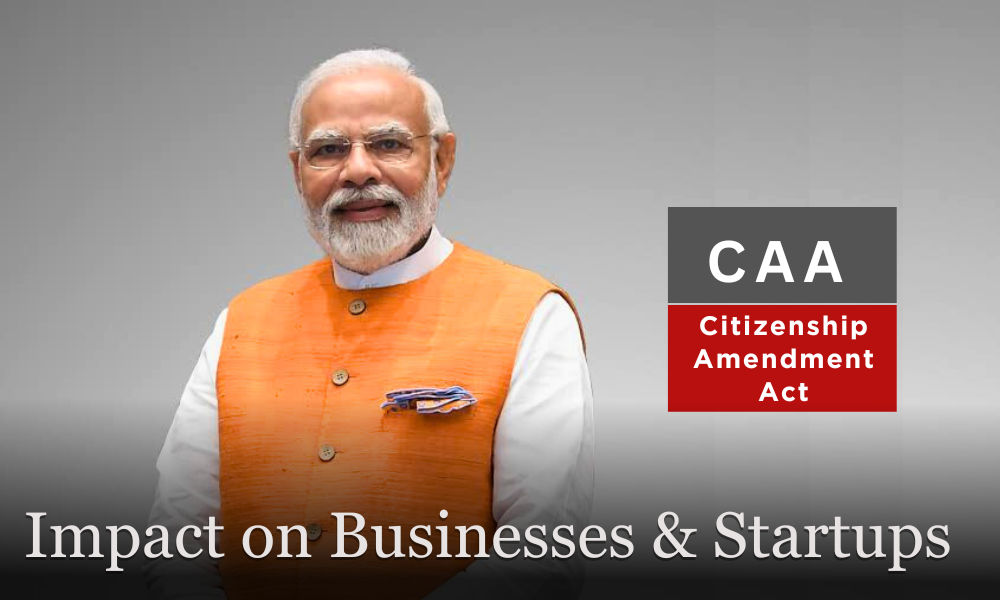
    CAA (Citizenship Amendment Act): Impact and Influence on Businesses and Start-ups in India

    CAA (Citizenship Amendment Act): Impact and Influence on Business and Start-ups in India

    The Citizenship Amendment Act (CAA) has been implemented in India as of March 11, 2024. The Union Home Minister notified the rules for the CAA, which expedites the citizenship process for six religious minorities from Afghanistan, Bangladesh, and Pakistan who migrated to India due to religious persecution. This implementation comes ahead of the Lok Sabha elections and follows significant discussions and protests across the country since the act's passage in 2019.

    The CAA primarily affects the process of granting citizenship to persecuted minorities from neighboring countries. The act has been a topic of significant discussion and has led to various forms of social and political mobilization. While the act itself is focused on the citizenship status of individuals from certain neighboring countries, its broader implications can indirectly influence the business environment. The implementation of such policies can have indirect effects on businesses and startups in the country.

    For businesses, especially those operating in diverse sectors or with international ties, the political and social climate influenced by such policies can impact market stability and consumer sentiment. Startups may consider the broader implications of the act, such as shifts in the labor market or changes in the regulatory environment that could affect their operations or growth strategies.

    It's important for businesses and startups to stay informed about the developments related to the CAA and assess any potential impacts on their operations, workforce, and long-term plans. However, the specific influence would vary depending on the nature of the business, its location, and its market demographics. For a detailed analysis, businesses may consult legal and market experts to understand the nuances of the CAA's impact on their specific context.

    For businesses and startups, the impact can manifest in several ways:

    Market Sentiment: The social and political discourse surrounding the CAA might affect consumer sentiment, which in turn could influence market trends and consumer behavior.

    Workforce Diversity: Companies with diverse workforces might need to navigate the complexities of the act and its reception among their employees.

    Investor Perception: Domestic and international investors often consider the stability and inclusivity of a country's social and political climate when making investment decisions.

    Regulatory Environment: Any legislative change can lead to shifts in the regulatory environment that businesses must adapt to.

    Startups, in particular, may need to be agile and responsive to the changing socio-political landscape to maintain their growth trajectories and ensure a stable operating environment. It's advisable for businesses to seek expert analysis and legal advice to fully understand the CAA's implications for their specific context.

    The full extent of the CAA's impact on India's business environment and startup ecosystem will likely to unfold over time, and it remains a subject of significant interest and debate in global diplomatic circles.

    Education Ministry Issues Guidelines for Coaching Centres, Can't Enrol Student Below 16 Years

    Education Ministry Issues Guidelines for Coaching Centres, Can't Enrol Student Below 16 Years

    Ministry of Education, Government of India, has issued latest guidelines for Coaching Centres in the country for better guidance and assistance to the students in any study programme, competitive examinations, or academic support.

    In the context of rising student suicides cases, fire incidents, lack of facilities as well as methodologies of teaching have been engaging the attention of the Government from time to time, the ministry said.

    The number of unregulated private coaching centers in the country continues to grow in the absence of any laid down policy or regulation. Instances of such centers charging exorbitant fees from students, undue stress on students resulting in students committing suicides, loss of precious lives due to fire and other accidents, and many other malpractices being adopted by these centres are widely reported in the media. These issues have also been raised many times through debate, said the guidelines document issued by education ministry.

    For Registration of coaching centers, the Ministry issued following conditions –
    • Should NOT engage tutors having qualification less than graduation.
    • Should NOT make misleading promises or guarantee of rank or good marks to parents/students for enrolling them in the coaching center.
    • Should NOT enroll student below 16 years of age or the student enrolment should be only after secondary school examination.
    • Should NOT publish or cause to be published or take part in the publication of any misleading advertisement relating to any claim, directly or indirectly, of quality of coaching or the facilities offered therein or the result procured by such coaching center or the student who attended such class.
    • Should NOT be registered, if it has less than minimum space requirement per student.
    • Should NOT hire the services of any tutor or person who has been convicted for any offence involving moral turpitude.
    • Should NOT be registered unless it has counselling system as per the requirement of this guidelines.
    • Coaching center shall have a website with updated details of the qualification of tutors, courses/curriculum, duration of completion, hostel facilities (if any), and the fees being charged.
    Furthermore, the ministry has also suggested that coaching centres be penalised up to ₹1 lakh or their registration be cancelled for charging exorbitant fees that cause undue stress leading to student suicide or for other malpractices.

    The state government will be responsible for monitoring the activities of the coaching centre and enquiring about any coaching centre regarding the fulfilment of required eligibility of registration and satisfactory activities of the coaching centre.

    "Considering that regulation of +2 level education is the responsibility of State/Union Territory Governments, these institutions are best regulated by the State / UT governments,” the document stated.

    To recall, National Testing Agency (NTA), an Indian government agency, had earlier launched a Mobile App called —‘National Test Abhyas’— to help the students to practice well for NEET (UG) and JEE (Main) entrance examinations. The app facilitate candidates’ access to high quality mock tests online free of cost.

    The guidelines' document also mentions PIL in WP No. 456 of 2013 in the matter of Student Federation of India Vs UOI and others was filed in the Hon’ble Supreme Court in which Ministry of Education was one of the respondents.

    The PIL was disposed-off vide Order dated 03.02.2017 inter-alia with direction that issue raised in the petition, though important, is basically a policy matter. It will be open to the petitioners to raise the issue before the concerned authorities who may consider the same in accordance with law.

    In the context of the issue of regulation of the private coaching having subject of elaborate discussion both in the Parliament and in the Ashok Mishra Committee Report, vide letter no. 32-6/2017-TS I dated 04.04.2017 Deptt. of Higher Education had requested States / UTs to take action for regulation and strict penalty system for deviant institutions. In this letter States / UTs were requested to take into consideration 12 measures suggested by Justice Roopanwal Commission of Enquiry to address the student suicide.

    Centre May Soon Announce ₹60,000 Cr Subsidy on Housing Loans

    India May Soon Announce $7.2 Bn Subsidy on Housing Loans

    The Central Government of India is planning to give subsidy on Housing Loan. According to the report by news agency Reuters, the government is planning to spend Rs 60,000 crore (~ US$7.2 billion) to provide subsidized loans for small urban housing for the next 5 years.

    Prime Minister Narendra Modi announced the plan in a speech in August on the country's Independence Day, but its details have not been previously revealed.

    In this yet-to-be-announced scheme, annual interest subsidy between 3 to 6.5% will be provided on the loan amount up to Rs 9 lakh. Sources said home loans of less than Rs 50 lakh, with a tenure of 20 years, will be eligible for the scheme.

    According to Reuters, banks are likely to roll out the scheme in a couple of months, ahead of key state elections later this year and general elections due in mid-2024.

    The interest subsidy will be deposited upfront directly into the housing loan account of the beneficiaries,” said the Reuters report citing a government official. This scheme, proposed till year 2028, is being finalized and will require Cabinet approval. The official said that this scheme can benefit 25 lakh loan applicants from low income groups in small-urban areas but the quantum of subsidised credit will depend on demand for such homes.

    PM Modi had said in his speech in August, "We are coming up with a new scheme in the coming years, which will benefit those families who live in cities, but are living in rented houses, or in slums. Are living, or are living in chawls and unauthorized colonies."

    Lenders have not been provided any specific lending targets about this scheme but a meeting with government officials is likely soon, two bank officials told Reuters.

    Earlier in 2017-2022, the Government had ran similar scheme under which 12.27 million homes were sanctioned.


    Govt Mulls To Reduce Import Duties on Fully-Built EVs Into India

    Govt Mulls To Reduce Import Duties on Fully-Built EVs Into India

    Consumers in India will soon be able to buy relatively cheaper foreign-made electric vehicles. As the Government of India has been working to promote electric vehicles, in a latest, the central government is reportedly planning to drastically reduce import tax on electric cars being imported into the country.

    According to Reuters report, electric vehicle (EV) Import tax can be reduced from 100% to 15%. Apart from this, it is believed that EV import tax can be reduced on some of the cars of foreign brands.

    Citing an official, the Reuters report further said that the government is movin slowly in considering the policy proposal as any lowering of taxes on imported EVs could disrupt the market and upset local players like Tata and Mahindra that are investing to build electric cars locally in India.

    The policy, which is still in the initial stages, could allow automakers to import fully-built EVs into India at a reduced tax as low as 15%, compared to the current 100% that applies to electric cars which cost above $40,000 and 70% for the rest, said the report citing two of its sources, including a senior Indian government official.

    However, Finance Minister Nirmala Sitarama has denied the report, and told reporters "there is no proposal in front of me" to reduce import duties on electric vehicles.

    This policy is said to be a 'push' to bring Tesla to India. To recall, just after Prime Minister Narendra Modi's US tour and a meeting with Elon Musk, India had rejected China's $1 billion offer to set up EV manufacturing plant in India.

    In an another report by CNBC Voice, the Government of India is working on a new "Electric Vehicle Policy". The policy is being prepared keeping in mind the proposal of Tesla, in which the government can give tax exemption to the imported car of some of the companies. This policy is also being made keeping in mind the companies which plan to plant in India or to promote "Make in India" Initiative of Government of India.

    It is to be noted that currently 100% tax applies to cars that cost more than $40,000. At the same time, cars of lower price are taxed at 70%. Tesla is projected to benefit the most from this new policy. To recall, Tesla has recently proposed to set up plants for the production of electric cars in the country. Currently, Tesla's most popular car Model Y is priced at $47,740 in the US. After the implementation of the new policy, only 15% of Tesla car will be taxed in India.

    Government e-Marketplace Surpasses ₹1 Trillion GMV Milestone in Record 145 Days of FY 2023-24

    Government e-Marketplace Surpasses ₹1 Trillion GMV Milestone in Record 145 Days of FY 2023-24

    Government e-Marketplace (GeM) has achieved an impressive milestone, crossing INR 1 lakh crore (₹1 Trillion or US$ 1,000 Billion) in Gross Merchandise Value (GMV) within a remarkable span of 145 days in the current financial year, FY 2023-24. GeM has achieved this feat through accelerated growth, increased efficiency and unwavering trust.

    Government e-Marketplace is a 100% Government owned Section 8 company setup under the aegis of Department of Commerce, Ministry of Commerce and Industry for procurement of common use goods and services by government ministries, departments and CPSEs

    In previous year, this GMV landmark was reached in 243 days. The average GMV per day has also witnessed significant growth from INR 412 crore per day in FY 22-23 to INR 690 crore per day in FY 23-24.

    This notable milestone firmly establishes GeM as one of the largest public procurement portals globally, both in terms of transaction value and the breadth of the buyer-seller network within its unified digital ecosystem. Since inception, GeM has crossed INR 4.91 Lakh Crore in GMV and has facilitated over 1.67 crore orders on the platform.

    Among the noteworthy contributors to this remarkable GMV achievement, the contribution of Central Public Sector Enterprises (CPSEs), Central Ministries and State Governments has been 54%, 26% and 20% respectively.

    Additionally, GeM's efforts to foster inclusivity and accessibility have been commendable. The platform's integration with e-Gram Swaraj to streamline Panchayat-level procurement exemplifies its commitment to reaching last-mile sellers and optimizing costs at the grassroots level of administration.

    Looking ahead, GeM's vision encompasses a wider federal reach, customized processes, and policies that will enhance public savings while upholding the highest quality standards for products and services. Its remarkable performance in achieving the INR 1 lakh crore GMV milestone within an accelerated time frame not only reflects its growth trajectory but also solidifies its position as the key player in transforming government procurement practices in the country.

    The past financial year concluded with a GMV of INR 2 lakh crore, setting a formidable foundation for this year's achievement. GeM's strategic focus in FY 2023-24 centers on expanding its reach by integrating government buyers across all tiers into its robust e-procurement infrastructure. The portal's extended range of service offerings has contributed significantly to its widespread adoption during this period.

    The platform's integration with e-Gram Swaraj to streamline Panchayat-level procurement exemplifies its commitment to reaching last-mile sellers and optimizing costs at the grassroots level of administration.

    Looking ahead, GeM's vision encompasses a wider federal reach, customized processes, and policies that will enhance public savings while upholding the highest quality standards for products and services. Its remarkable performance in achieving the INR 1 lakh crore GMV milestone within an accelerated time frame not only reflects its growth trajectory but also solidifies its position as the key player in transforming government procurement practices in the country.

    The past financial year concluded with a GMV of ₹2 lakh crore, setting a formidable foundation for this year's achievement. GeM's strategic focus in FY 2023-24 centers on expanding its reach by integrating government buyers across all tiers into its robust e-procurement infrastructure. The portal's extended range of service offerings has contributed significantly to its widespread adoption during this period.

    With a vast assortment of over 30 lakh listed products and an impressive portfolio of over 300 service categories, GeM is well-equipped to meet the diverse product and service needs of government departments nationwide. Consequently, the platform has also witnessed a substantial surge in orders from various State Governments and affiliated entities, firmly establishing GeM as a go-to solution for government procurement.

    About GeM:

    Government e-Marketplace (GeM) is an online public procurement portal developed facilitate the procurement of goods and services by various government departments, agencies, and public sector undertakings. It was launched in August 2016 as a part of the government's "Digital India" initiative to bring transparency, efficiency, and cost-effectiveness to public procurement. GeM aims to simplify the public procurement process, reduce paperwork, and promote the use of digital technology for government procurement.


    Govt To Sell Its Entire Stake In BPCL For $6.9 Billion - Report


    Government of India is moving with plans to sell its entire stake in Bharat Petroleum Corporation Limited (BPCL), India's second-biggest state refiner, according to people familiar with the matter, said a Bloomberg report.

    Mumbai-headquartered BPCL is an Indian government oil and gas corporation under the ownership of Ministry of Petroleum and Natural Gas, Government of India. The government has 53% stake in the BPCL, which is valued at about INR 509 billion ($6.9 billion).

    Since the last week of April, government has allowed bidders access to the financial data of BPCL and some bidders have even held meetings with BPCL management, said the report citing one of the people privy to the development.

    Privatization of BPCL could be the India’s biggest and crucial at the same time as the government needs to raise capital to make up the fall in tax revenues as the pandemic hits the Indian economy. Finance Minister Nirmala Sitharaman said last month the plan to raise about $23 billion from selling stakes in state-run companies, including BPCL.

    BPCL is India's 2nd largest downstream oil company and is ranked 275th on the Fortune list of the world's biggest corporations as of 2019. BPCL ranked 672 in the Forbes 2018 list. It also has its subsidiaries -- Indraprastha Gas Limited (IGL), Petronet LNG and Bharat Renewable Energy Limited.

    Besides central government, the government of Madhya Pradesh also has a minor stake in BPCL through compulsorily convertible warrants. 

    On Mar 2021, Bharat Petroleum Corporation Ltd (BPCL) sold its entire 61.5% stake in Numaligarh Refinery in Assam to a consortium of Oil India Ltd. and Engineers India Ltd. and Government of Assam for ₹9,876 crore.

    Market Reports

    Market Report & Surveys
    IndianWeb2.com © all rights reserved