Showing posts with label Globaldata. Show all posts

Venture Capital Funding of Indian Startups Down by Massive 76.4% YoY in H1 2023, Reveals GlobalData

Venture Capital Investment in India Startups Down by Massive 76.4% YoY in H1 2023, Reveals GlobalData
India experienced a relatively more significant impact compared to the United States, China, and the UK

Venture capital (VC) funding activity in Indian Startup Ecosystem experienced a major hitch during the first half (H1) of 2023 and the resulted impact was very prominent in terms of value, according to GlobalData, a leading data and analytics company.

A total of 568 VC funding deals of worth $3.7 billion were announced in India during the period. This represents a year-on-year (YoY) decline of 43.3% in terms of deals volume and a massive 76.4% in terms of value, said the report. 

The total funding value in India during H1 2023 was down by more than four times compared to the total funding value for first half of last year. An analysis of GlobalData’s Financial Deals Database revealed that Indian startups raised $15.8 billion across 1,002 VC funding deals in H1 2022.

Aurojyoti Bose, Lead Analyst at GlobalData, comments: “Owing to the challenging economic scenario, investor sentiment had a dent globally. As a result, several key global markets, including India, have experienced subdued VC funding activity. The steep decline in funding value could also be signal of prolonged funding winter and severity of investor cautiousness.”

Bose adds: “Apart from macroeconomic challenges and recession fears, concerns around startup valuations also seem to take a toll on investor sentiments in the country. In fact, the impact in India, which happens to be among the top five markets globally in terms of both VC funding deal volume and value, also seems to be relatively more prominent compared to the US, China and the UK.”

For instance, VC funding deal volume for the US, China and the UK declined by 34.7%, 15.8%, and 28.6% in H1 2023, respectively, compared to the same period in the previous year. The decline in corresponding value for these markets was even relatively lesser, standing at 49.2%, 36.3% and 54.7%, respectively.

Jio Platforms' success gives hope to struggling Indian IT vendors impacted by COVID-19, says GlobalData


  • Challenges faced by Indian IT vendors are in stark contrast to global counterparts

  • Indian tech companies have traditionally been IT services giants

  • Interest in Jio Platforms will augur well for other Indian tech companies


Global technology companies have seen a rapid increase in their valuation over the past six months - with the most notable example being Apple passing the US$2 trillion mark in market capitalization (MCap) value. In contrast, many Indian IT vendors are struggling, having been affected considerably by the COVID-19 outbreak. While traditional Indian IT services giants have been waiting to tide over the impact of the pandemic, Jio Platforms has transformed into a tech juggernaut. While it may be difficult for others to replicate what Jio has achieved, the interest in Jio will definitely augur well for other Indian technology companies at a time when enterprises across the world are gearing up for digitization, says GlobalData, a leading data and analytics company.
GlobalData logo

Nishant Singh, Director of Technology at GlobalData, says: "While Indian IT vendors seeing such stark contrast to global counterparts is unfortunate, this is just the nature of the IT services business model, which, in contrast to software, needs projects in the pipeline. With the COVID-19 outbreak, enterprises halted all non-critical expenses, including plans to upgrade or transform their IT infrastructure. This has had an impact on Indian IT companies, since most of their revenues are from IT services.

"A lot of the faith in global technology companies comes from the fact that they have a pretty robust suite of intellectual property, including hardware, software and ecosystems that serve consumers and enterprises alike. The growth in stock prices merely reaffirms that technology companies – primarily 'Big Tech' companies – are well poised to tide over the pandemic-induced recession."

Big Indian technology companies such as TCS, Infosys, Wipro and HCL have traditionally been IT services giants. Unlike their counterparts in the software space, IT services companies typically do not have a large stash of intellectual property, making it slightly difficult for the market to distinguish between the IT services companies. For example, TCS – India's biggest IT services company – has only managed to recover the valuation it had lost owing to the pandemic. The company has also been in the news recently due to the intellectual property lawsuit filed against it by Epic Systems Corp.

Despite these struggles, the near future should see the market showing more confidence in the traditional Indian IT vendors. Singh adds: "With enterprises across the world now gearing up for digitization, Indian IT services vendors will witness a lot of action. Coupled with the market euphoria witnessed for Jio, the technology landscape in India could well witness a drastic revival in investor confidence."

Analysts available for interview. Please contact Aarti Chandrseker at the GlobalData Press Office for comment on +91 40 6616 6809 / +44 (0)207 936 6400 or email: pr@globaldata.com.

,

New figures released by GlobalData reveal collapse in new global IT services contracts in Q2 2020 due to COVID-19


  • The global IT services market was worth $1.6 trillion in 2019, with the Asia region contributing around 32% market share

  • Total new IT services contracts globally declined by 77% in volume and 72% in value during Q2 2020 with recovery not expected until 2021

  • Very few high-value contracts were signed in Q2 2020


COVID-19 has caused companies in Asia and elsewhere around the globe to halt all but the most critical IT projects in the short-to-medium term, reflected in the dramatic 72% fall in global IT services spending, from $14.4bn in Q2 2019 to just $4bn during the same period in 2020, according to the latest research by leading data and analytics company GlobalData.

The global IT services market was worth $1.6 trillion in 2019, with the Asia region contributing around 32% market share. An analysis of GlobalData's IT Contracts Database, which tracks publicly announced IT contracts, reveals that the number of new IT services contracts signed globally in Q2 2020 declined by 77% year-on-year from 886 in Q2 2019 to 200 in Q2 2020 with total contract values falling by 72% to just $4bn during the same period - reflecting the low number of high-value IT contracts being signed during the quarter with only 7% of contracts above $100m.

Nishant Singh, Director of Technology at GlobalData, comments: "The fall in global IT services contracts volume and the value underscores the global economic uncertainty caused by COVID-19, with IT vendors now having to work hard to rebuild healthy IT contract pipelines. IT vendors from Asia, particularly India, have relied on local skills and labor arbitrage to establish themselves. These IT vendors specialize in IT services, and the fall in IT services contract numbers will greatly impact their short term revenues."

Over half of the global IT services contracts signed during Q2 2020 were government and defence contracts. GlobalData does not expect the number of IT services contracts to recover until 2021 at the earliest, which is when most of the digital transformation deals from large enterprises should start flowing in.

Singh continued: "Q2 2020 saw a fundamental change in the way IT services contracts have been delivered up until now. Clients have accepted remote support and service delivery as opposed to the on-site delivery of services. This has allowed IT services vendors to permanently adopt a remote working model for a large part of their workforce, which will translate into cost savings from reduced real-estate and reduced employee travel expenses."

In the current climate, most IT service vendors are expected to focus their efforts on securing more contracts for digital service applications, including cloud and automation.

Singh adds: "GlobalData now expects an extended period of pricing pressure as IT vendors offer discounts and other concessions, including interest-free credit to secure desperately needed client contracts."

Please contact the GlobalData Press Office for comment, analysts available for interview, Office: +44 (0) 207 936 6400, Email: pr@globaldata.com

,

Blockchain is the Missing Link to Transform Electric Power Industry

The highly regulated electric power industry is in need of enablers to move away from traditional business models with complex operating structures. Blockchain technology is one such to create a paradigm shift in the industry towards a more decentralized and transactional environment, says GlobalData, a leading data and analytics company.

The key challenges that the electric utilities broadly face today are high operating costs, aging grids, security, regulatory compliance and personalized customer service. Due to blockchain’s potential in addressing many of these pain points, business leaders are increasingly interested in experimenting with the technology.

Archi Dasgupta, Disruptive Tech Analyst at GlobalData, comments: “Blockchain could be the leading enabler of decentralization, democratization, and liberalization in the power industry. Using smart contracts, the technology can empower bilateral settlements in real-time by eliminating midpoint delays steering to a significant reduction in the operational costs of utilities.”

An analysis of GlobalData’s Disruptor Tech Database reveals interesting real-world use cases of blockchain in the power domain and select startups and electricity companies working on them.

Decentralization of power through blockchain has been giving rise to trading platforms like that implemented in the Brooklyn microgrid by LO3 Energy where power can be purchased or and sold directly within a peer-to-peer (P2P) network, eliminating the need for intermediaries. This will not only lower costs of both utilities and consumers but also present network transparency.

Australia’s crypto startup Power Ledger known for developing decentralized energy trading platforms on blockchain launched its first commercial deployment in the US. Its distributed P2P blockchain network allows consumers and businesses to sell their surplus solar power in their neighbourhood without a middle man.

Thanks to its intrinsic characteristic of traceability, blockchain can improve the tracking of power grid failures, which has never been a simple task. The technology can be used to stabilize and modernize the grid in many ways.

European transmission system operator TenneT’s pilot with Sonnen using blockchain based on IBM’s Hyperledger framework can enable energy storage systems within the network to absorb or discharge excess power within seconds and minimize transmission gridlocks.

Smart meters made quite a buzz in the yesteryears of power for their benefits to consumers. In a centralized network, however, they have not offered desired results, leaving them eager to experiment with their data on a decentralized network like blockchain. Lithuanian startup, WePower, has been working around the same in partnership with Estonia’s transmission system operator Elering.

WePower managed to upload 26,000 hours and 24TWh of energy production and consumption data from the smart meters of Estonia on to the Ethereum blockchain, which led to the creation of 39 billion smart energy tokens that are tradable.

Capitalizing on blockchain’s potential, P2P energy networks are able to create a decentralized marketplace connecting electric vehicle (EV) drivers and charging station owners for mutual benefits. German startup Motionwerk has launched a blockchain-based P2P energy sharing project Share&Charge, which enables users to share their private electric charging stations for money.

Other startup examples piloting with blockchain to disrupt the electric power include Drift, Electron, FlexiDAO, Grid+ and Riddle&Code.

Dasgupta concludes: “Although blockchain technology started scaling from its incumbent phase in the power industry, it is still largely dominated by proof-of-concept projects and small-scale production deployments. Its mass-scale commercial adoption is still three to five years away as there are several challenges to be addressed including deployment costs, the requirement of power to run the setup, and more importantly, the need to develop common standards and regulations. Electric utilities are similar to banks in the way they are centralized and highly regulated, hence it is crucial to creating an ideal set up for the implementation of transformative technologies such as blockchain."

Cloud Security A Winning Model To Protect Businesses, Says GlobalData

In an era when enterprises always have to grapple with processing large amount of information through big data technology, security has emerged as the most important measure to accomplish their goals. Against this backdrop, software-defined networking is turning concern about security in the cloud on its head, enabling a winning model for protecting businesses, says leading data and analytics company GlobalData.

Protecting a business network has traditionally meant plugging in a bunch of different security ‘appliances’, in each business location, to protect all the many different devices and machines connected to the LAN or WAN.

However, managing the process can be a nightmare for enterprises of even a modest size, to the point where many often simply give up. The trend now is moving toward using the cloud (and software-defined networks) to deliver security protection wherever it may be needed.

John Marcus, Principal Analyst for Enterprise Cloud and Security Services at GlobalData, says: “The benefits of this security-as-a-service approach don’t just accrue to harried IT/security managers and security product vendors: network operators are set to generate huge revenues by partnering with the vendors to enable their solutions.”

For example, in August 2018, DOSarrest Internet Security selected global connectivity and communications service provider Epsilon’s Infiny on-demand connectivity platform to connect and optimize its DDoS protection, virtual firewall, and other security solutions across the globe.

Marcus adds: “For a business customer, getting something like a virtual firewall delivered on demand where needed and managed by the provider as part of the deal eliminates multiple headaches.

“For the security technology developer, using the cloud and software-defined networks eliminates go-to-market and supply chain inefficiencies, making delivering their solutions much simpler. Service management and monitoring can be included as part of the package, but huge gains from centralizing support and a vast increase in reach and scale make it worth packaging a high value solution at attractive prices.”

DOSarrest has connected to Epsilon’s network through its New York metro hub and will eventually be hooked up directly to sites including Los Angeles, London and Singapore. Instead of shipping hardware and sending engineers around the world, it now offers its DDoS Protection, Web Application Firewall, DOSarrest External Monitoring Service, Geo Load Balancing services and a Cyber Attack Preparation Platform using Epsilon’s network as its solution delivery platform.

But businesses and security vendors are not the only ones to gain from the cloud-enabled model. Network and cloud platform operators like Epsilon (or digitally evolving telcos like BT, Telefonica, or Verizon) stand to gain by creating a platform for technology adoption and generating revenues through their high-value host platforms.

Marcus concludes: “With such B2B partners having a single platform to procure and manage underlying connectivity, rapidly provisioning on-demand services via a web-based portal and iOS or Android mobile apps, the network or cloud service provider becomes the established home for an ecosystem of partner businesses and their customers. In this way, they turn concerns around cloud security on their head by enabling a model where everybody from consumer to provider to enabler wins.”

Cloud-to-Edge AI Chip Kunlun Repositions Baidu in AI Market Globally

Search engine giant Baidu has recently unveiled China’s first cloud-to-edge artificial intelligence (AI) chip --Kunlun -- at Baidu Create 2018. The move repositions the company in not only the Chinese market but also globally, says leading data and analytics company GlobalData.

Launched this month, Kunlun is China’s first cloud-to-edge AI chip, built to accommodate high performance requirements of a wide variety of AI scenarios. With this, Baidu joined the ranks of Google, Nvidia, Intel, and many other tech companies making processors especially for AI.

Additionally, Baidu also joins select few companies that not only offer an AI platform to help enterprises deploy AI-infused solutions but also have their own hardware to maximize AI processing. Built to accommodate the high performance requirements of a wide variety of AI scenarios, Kunlun includes training chip ‘818-300’ and inference chip ‘818-100’. It can be used to provide AI capabilities such as speech and text analytics, natural language processing, and visual recognition.

Rena Bhattacharyya, Technology Analyst at GlobalData, says: “Well-established players such as IBM, Microsoft, Google and Amazon are fine-tuning their AI platforms to make it easier and faster for customers to incorporate a wide range of AI technologies. Although already an ambitious player in China, Baidu had not managed to establish itself as a major force in the AI space until now. The Kunlun chip has the potential to change that.”

Kunlun canbe deployed in the cloud or at the edge, such as in autonomous vehicles, an area in which Chinese companies are allocating sizeable research and development funds. But edge deployments of AI do not stop there. On-device AI is used in mobile phone cameras to improve picture quality, it can provide speech and voice recognition, and it may be used in security systems, drones or robots.

AI at the edge can increase efficiency since at least a portion of the analysis, if not all, can be performed without the need to transport data to and from the cloud. It also offers greater flexibility, because the device can utilize AI even when it is offline, and it can improve the user experience since the device can learn behavior patterns. Some users may prefer it since data stays on the device instead of being transmitted over a network to the cloud.

Bhattacharyya concludes: “Baidu does not market heavily to other regions and will have a tough time competing with the well-established players. Nonetheless, the release of the new chipset underscores the overall momentum behind AI in China, as well as the determination of Chinese players to establish themselves as global leaders in this emerging area.”

Kunlun leverages Baidu’s AI ecosystem, which includes AI scenarios like search ranking and deep learning frameworks like PaddlePaddle, which is a deep learning platform code-named after Parallel Distributed Deep Learning. Baidu made it open source in September 2016.

Additionally, in April 2017 the company also announced its open source autonomous driving project, Apollo, an open platform that provides open software stack, cloud infrastructure, and other services that are able to support major features and functions of an autonomous car. For this, Baidu has also joined hands with Microsoft to power the former's open source self-driving project outside China.

[Top Image - Twitter.com/Baidu_Inc]

Artificial Intelligence Is Evidently Not Just Hysteria, Says GlobalData

There is an unprecedented wave of speculation and investment in Artificial intelligence (AI) sweeping the industry with ideas like machine learning (ML) appearing as a magic wand of business innovation. Beneath the seemingly boundless hype of AI, however, there is something quite simple at play -- the idea of finding ways to perform well-understood, common tasks more efficiently, according to leading data and analytics company GlobalData.

An analysis of GlobalData’s Disruptor Tech Database reveals that enterprise AI practitioners are primarily seeing very pointed benefits within problems that directly impact the bottom line.


For instance, one of the compelling areas where businesses have been using AI is generating leads. Harley-Davidson in New York chose AI to automatically craft the most appropriate digital marketing and advertising campaign on a customer-by-customer basis. The technology captures existing customer data from the company’s customer relationship management (CRM) system and analyzes user’s online and offline past purchasing behavior to scale up marketing campaigns across channels. Within three months of deployment, leads of the dealership grew by nearly 3,000% and more importantly the sale of motorcycles by 40%.

Another, pointed, pragmatic use cases for AI can be found in boosting operating efficiency. General Electric (GE), for instance, unlocked millions in cost savings using AI. Given its long operating record in multiple sectors and numerous enterprise resource planning (ERP) systems, GE has often faced challenges in arriving at a conclusion on its overall expenditure. AI enabled GE to combine all its 270 separate ERP systems into a single platform. The company realized more than $100 million in return on investment in different ways, including optimizing sourcing strategies, renegotiating contract terms, identifying cross-selling opportunities and reducing landing cost of products.

AI has been increasingly touted by enterprises as a key to customer personalization. Spotify stands a classic example in using AI to facilitate its customers with personalized music listening experience. Although players in the music streaming business such as Apple and Pandora offer curated playlists, they often fail to match individual listener’s music taste over time. Spotify’s “Discover Weekly” feature, curated algorithmically, became a sensation in personalizing music playlists more accurately at exceptionally large scale.

AI is of course the game changer of risk management to businesses in many ways. Online money transfers and payments company PayPal moved from using linear models to neural networks with deep learning (DL) for analyzing money transactions in real-time. The advanced platform helps to create scenarios related to positive and negative user behavior and contribute to improving the accurace of fraud detection over time. PayPal claims to have reduced the fraud rate to 0.32% of its total revenue, as compared to many peers at 1.32%.

The aforementioned are just a few in the expanding list of companies realizing tangible benefits with the use of AI.

“The operationalization of AI has allowed nearly every enterprise to grow smart, leveraging AI not globally but very specifically in solving well-understood problems, all without having to invest heavily in data sciences. However, while many are witnessing desirable results, potential AI practitioners should approach AI with caution, carefully weighing internal expertise against business needs,” concludes Brad Shimmin, Service Director, Global Technology and Services at GlobalData.

Cloud-First Approach Beneficial To Logistics Firms, Says GlobalData

Logistics is the backbone for many industries such as retail and online commerce, energy, utilities, health care and fast moving consumer goods. Against this back drop, a cloud-first architecture provides many advantages for logistics firms to achieve better customer experience in terms of speed, lower prices and the ability to track their goods, says leading data and analytics company GlobalData.

As IT systems start to flatten, logistics companies are beginning to explore new technologies to automate and streamline the supply chain to meet the changing buyer requirements. Individuals and businesses expect low prices, faster delivery and more customization. There is a requirement for better end-to-end visibility such as real-time ‘track and trace’ integrated with supply chain management system. This allows goods to be tracked at any point of time, expected arrival and route plan.

Siow Meng Soh, Technology Analyst at GlobalData says: “Technology is rapidly changing the logistics sector in areas such as driverless cars and drones for doorstep delivery. Blockchain can also be tapped for smart contracts, compliance with customs, such as chain of custody and authenticity of goods. There are also other collaborative and crowd-sharing platforms allowing businesses to share fleets and transportation networks and setting up code-sharing agreements, much like an airline, to help goods move from origin to destination."

While customer demands increase, the expectation is often to keep within the existing budgets. As a result, profit margins within the logistics industry are very tight. There are many other factors applying pressure to this industry including rising fuel costs, labor costs and higher focus on customer service.

Soh concludes: “Given these realities, a cloud-first architecture will be essential to reduce manual processes and handovers between multiple parties through collaboration and automation. It will provide the necessary platform for real-time pricing. The inherent ability to act on changing market conditions will enable providers to maximize profit margins and minimize risks that can be easily compounded down the value chain.

“Cloud ensures logistic providers have real-time monitoring capabilities to make merge-in-transit (MIT) possible where shipments from multiple origins are merged at a final destination. It is common for orders purchased online to come in multiple packages over several days. As the logistics companies expand into IoT, cloud services will also be used more extensively for compute, management, storage and security of data, to rendering new formats that are intuitive, user-friendly and accessible though mobile devices."

Digital Payment Solutions Adoption To Rise Further in Asia-Pacific - Study

With safety, trust and convenience emerging as important factors, the adoption of digital wallets and contactless card-based payments by retailers in developing countries across Asia-Pacific is likely to rise further and become a standard, says leading data and analytics company GlobalData.

Traditionally, smaller retailers, street traders, corner cafes and cabbies relied on the cash economy for decades and could not afford to buy card reader devices or pay the fees associated with processing electronic payments. However, things have started to change rapidly over the past few years, most noticeably in India.

Andreas Olah, Lead Analyst for Digital Retail at GlobalData, says: “As the Indian government launched a demonetization program, consumers were forced to use electronic payments, though cash did not completely disappear. As a result, all types of retailers understood the need to offer cashless payment methods to remain competitive.”

Paytm emerged as a popular digital wallet in India with over 200 million users. It can be used for payments across all major stores, online retailers, utility bills, and metro cards, as well as auto rickshaws and food stalls. The wallet’s balance can be topped up via credit or debit cards, as well as through online bank transfers. It can also be integrated with most point of sales (PoS) solutions.

The trend towards cashless payments is not limited to India; however other countries use different approaches. For example in China, many consumers prefer to use the all-round app WeChat for payments. It offers in-app and web based payments, as well as options for splitting bills and paying friends and family members without any hassle.

In Europe, Swedish mobile payments company iZettle offers a mobile card reader which is a popular choice among several smaller retailers, cafes and restaurants. Unlike Paytm and WeChat, it is primarily aimed at contactless debit and credit card payments, although it also offers traditional chip and PIN. iZettle also offers an e-commerce platform that small retailers can set up with minimal effort.

Olah concludes: “Safety and trust are important factors for the increased adoption of cashless payment solutions in addition to greater convenience including the speed of the transaction. They feature advanced encryption technology, and secret keys used in payment transactions do not reveal any passwords or other sensitive information such as credit card numbers.

“Retailers are recognizing the need to accept the payment types that customers prefer if they do not want to lose out on business. Adoption rates are likely to rise for digital wallets, as well as for contactless card-based payments as they are becoming the standard in many countries. The biggest disruption is occurring in developing countries across Asia, Latin America, and Africa where digital wallets are also opening up banking services to millions of low-income consumers who have previously relied entirely on cash and checks.”

AR and VR Revolutionize the Way Retailers Connect with Customers : Report

Augmented reality (AR) and virtual reality (VR) technologies are reshaping the retail landscape by improving customer experience both in-store and online. With extensive usage of smartphones and the advent of wearable technologies, AR and VR are witnessing considerable consumer uptake and are set for disruptive growth in the retail sector, says leading data and analytics company GlobalData.

According to GlobalData’s Digital Retail Platform, AR can be used to guide customers around stores in an informative and entertaining way by blending in product details and whereabouts. AR solutions are relatively less disruptive to existing store layouts, formats and processes compared with VR, which completely immerses shoppers in the experience and can be used for product demonstrations and games in selected areas.

AR can be useful for supporting staff in stores and warehouses by providing them with practical information without disrupting their view and keeping their hands free since they no longer need to hold tablets or ruggedized devices while carrying out tasks such as loading, packing or recording inventory. In contrast, VR has a more limited use for staff since it is more immersive, but can be useful for training.

Needless to mention AR and VR are transforming the customer experience journey in several innovative ways. IKEA has created a high-definition and interactive showroom that uses the immersive power of VR to offer an innovative 3D product experience. Similarly, L’Oreal store in Paris features a Make Up Genius bar where women can virtually try on makeup through the Make Up Genius app on mobile devices. Swarovski launched a VR shopping app in partnership with MasterCard to drive the Atelier Swarovski Home Décor line.

For the past two years, home improvement store Lowe's has been developing visualization capabilities using AR and VR tools. Furthermore in early 2018, Walmart has acquired a small VR start up Spatialand to augment its VR efforts and it hopes to transform the shopping experience across the company’s different websites and stores. Other major retailers embracing AR/VR include Tesco, Carrefour and Kroger.

In India, Bengaluru-based Preksh Innovations is an Augmented Reality solutions startup that claims to launch World’s first patented augmented Reality solution for retail market, in 2015, and filed two patents for same. Preksh offers omni-channel solution to retailer that can be rendered on AR gadgets to allow consumers to shop from stores while sitting at home.

Andreas Olah, Digital Retail Analyst at GlobalData, says: “AR and VR have been tested in retail for a while, but have only been implemented in a limited way so far. However, this is expected to change as major supermarkets, department stores, fashion retailers and DIY stores look to roll out them for various purposes, from in-store navigation and virtual apparel trials to product demonstrations, games and interaction with virtual shop assistants. Furniture retailers are also expected to compete more intensely on AR for projecting furniture into customers’ homes to encourage online purchases and reduce the rate of product returns.”

[Top Image Via - RetailNews.asia]

South Korea Among the World’s Leading Markets for Blockchain, Says GlobalData

Blockchain represents a new standard for the way information is shared and a host of companies such as telecom operator Korea Telecom (KT) and messaging apps Line and Telegram are working to determine how they can use the technology to save on costs and generate new revenue, says leading data and analytics company GlobalData.

In South Korea, KT is taking an early lead with plans to launch a blockchain-powered data roaming service in May 2018. The carrier is cooperating with global network operators including Sprint and Japan’s SoftBank. In the long term, KT plans to use blockchain to power finance, IoT, smart energy and healthcare businesses.

Lynnette Luna, Principal Technology Analyst at GlobalData, says: “KT’s adoption of blockchain is likely to have a significant impact on the South Korean market as it dominates the local landline and broadband Internet market. KT sees revenue arising from enabling secure and efficient exchange of data among people and businesses and allowing people to control their own data. This is particularly attractive at a time when users are increasingly unhappy with how companies like Google control and exploit their information.”

In the OTT messaging market, Telegram and Kik are embarking on cryptocurrency strategies while Japan-based social messaging platform Line and Kakao are researching blockchain applications.

Line is set to launch a blockchain subsidiary – Unblock – in South Korea to study blockchain technology and determine how it can be applied into the various platforms of the company. Line will also make strategic investments in various blockchain projects outside of its own platform.

Luna adds: “Besides the US, Japan and South Korea are two of the most popular markets for cryptocurrency and blockchain. But, the market is still very young, and it’s unclear what Line’s foray into blockchain will look like.”

On the other hand, Telegram has raised a total of $1.7bn to build its own blockchain architecture Telegram Open Network (TON), host its currency Grams and compete with Mastercard and Visa. Telegram argues that scalability, ease of use and an engaged user base are all areas where it will have strength and where Bitcoin and other currencies are failing in their quest to become mainstream.

Luna concludes: “Telegram should consider a cryptocurrency strategy similar to rival Kik, which is starting smaller by targeting its own user base. Telegram needs to establish a firm foothold within its own ecosystem before venturing outside of it. In the case of telecom providers, they need to move forward with trial services on the public blockchain or risk being blindsided by a host of startups pushing the envelope on innovative services and compensation strategies.”

IoT Software and Services In The Pharma Sector To Be Worth $2.4 Billion by 2020, Says GlobalData

Internet of Things (IoT) is transforming the pharmaceutical industry at a rapid pace. IoT has the potential to enhance almost all the processes of the pharmaceutical industry ranging from clinical trials, drug disclosure, manufacturing, and supply chain to remote patient monitoring, according to GlobalData, a leading data and analytics company.

IoT software and services in pharmaceutical industry is expected to grow from US$420million in 2015 to US$2,486 million by 2020, at a Compound Annual Growth Rate (CAGR) of 42.7% from 2016 to 2020. It is to be noted that Global IoT market will hit $1.29 trillion of worth By 2020, according an IDC-Aeris report.

Alok Singh, Senior Technology Analyst, at GlobalData, comments: “IoT software and services effortlessly connect and create the base upon which IoT applications and use cases can be realized to develop a comprehensive solution that will benefit organizations to reduce response times, enhance product quality, security, and boost performance.”

“IoT software and services spending is driven by the large adoption of cloud platform as a service (PaaS) along with advanced data analytics, new application, and use cases, which transforms data into substantial information and eventually into the activity that will boost business productivity, or better customer service.”

Pharmaceutical Iot Software ans Services

GlobalData’s pharmaceutical IoT software and services revenue forecast depicts significant growth in the Asia Pacific region, to reach a value of $655 million by 2020, growing almost fivefold against the 2015 baseline. The Asia-Pacific region’s robust IoT software and services growth in the pharmaceutical sector is primarily driven by the large number of upcoming pharmaceutical manufacturing organizations, increasing expenditure, high internet penetration rates, government investment policies, demand for quality treatment, and rising adoption of new technologies like cloud computing, big data, and artificial intelligence (AI).

Moreover, it is interesting to note that Middle East & Africa (MEA) will deliver the fastest overall growth in IoT spending with a five-year CAGR of 49.9%, but from a far smaller base. Meanwhile, North America and Europe are the largest regions in terms of investment at the beginning of the forecast period and combined represent a $1.5 billion market by 2020.

Singh concludes: “IoT will revolutionize the way pharmaceutical organization will operate and do business. IoT software and services can help pharmaceutical organizations to digitize and connect critical actions, increase efficiencies, compliance, and persuade product quality that will benefit organizations to achieve a faster time to value.”

Using IoT platforms and solutions, pharmaceuticals companies can digitize and connect vital functions, elevate efficiencies, and assure product quality and compliance. Pharma companies must follow strict guidelines for determining the way a drug is transported, administered, and consumed. Thus, tracking the movement of drug
inventory at every point can potentially save supply chain participants billions of dollars, says an IoT report by Cognizant.

To recall, an another report IoT’s market is projected to grow from $16B in 2016 to $195 Billion in 2023. This exponential growth is courtesy the ubiquitous manufacturing of smarter mobile, in-home, and transportation devices and the increased interest in capturing that data and enhance communication infrastructure.

Speaking about India in particular a report by research and strategy consultancy Zinnov Zones has highlighted that the India holds a whopping 43% of the global IoT market. The second position was occupied by Western Europe with 27 per cent and North America with 23 per cent.

IoT Software and Services In The Pharma Sector To Be Worth $2.4 Billion by 2020, Says GlobalData

Internet of Things (IoT) is transforming the pharmaceutical industry at a rapid pace. IoT has the potential to enhance almost all the processes of the pharmaceutical industry ranging from clinical trials, drug disclosure, manufacturing, and supply chain to remote patient monitoring, according to GlobalData, a leading data and analytics company.

IoT software and services in pharmaceutical industry is expected to grow from US$420million in 2015 to US$2,486 million by 2020, at a Compound Annual Growth Rate (CAGR) of 42.7% from 2016 to 2020. It is to be noted that Global IoT market will hit $1.29 trillion of worth By 2020, according an IDC-Aeris report.

Alok Singh, Senior Technology Analyst, at GlobalData, comments: “IoT software and services effortlessly connect and create the base upon which IoT applications and use cases can be realized to develop a comprehensive solution that will benefit organizations to reduce response times, enhance product quality, security, and boost performance.”

“IoT software and services spending is driven by the large adoption of cloud platform as a service (PaaS) along with advanced data analytics, new application, and use cases, which transforms data into substantial information and eventually into the activity that will boost business productivity, or better customer service.”

Pharmaceutical Iot Software ans Services

GlobalData’s pharmaceutical IoT software and services revenue forecast depicts significant growth in the Asia Pacific region, to reach a value of $655 million by 2020, growing almost fivefold against the 2015 baseline. The Asia-Pacific region’s robust IoT software and services growth in the pharmaceutical sector is primarily driven by the large number of upcoming pharmaceutical manufacturing organizations, increasing expenditure, high internet penetration rates, government investment policies, demand for quality treatment, and rising adoption of new technologies like cloud computing, big data, and artificial intelligence (AI).

Moreover, it is interesting to note that Middle East & Africa (MEA) will deliver the fastest overall growth in IoT spending with a five-year CAGR of 49.9%, but from a far smaller base. Meanwhile, North America and Europe are the largest regions in terms of investment at the beginning of the forecast period and combined represent a $1.5 billion market by 2020.

Singh concludes: “IoT will revolutionize the way pharmaceutical organization will operate and do business. IoT software and services can help pharmaceutical organizations to digitize and connect critical actions, increase efficiencies, compliance, and persuade product quality that will benefit organizations to achieve a faster time to value.”

Using IoT platforms and solutions, pharmaceuticals companies can digitize and connect vital functions, elevate efficiencies, and assure product quality and compliance. Pharma companies must follow strict guidelines for determining the way a drug is transported, administered, and consumed. Thus, tracking the movement of drug
inventory at every point can potentially save supply chain participants billions of dollars, says an IoT report by Cognizant.

To recall, an another report IoT’s market is projected to grow from $16B in 2016 to $195 Billion in 2023. This exponential growth is courtesy the ubiquitous manufacturing of smarter mobile, in-home, and transportation devices and the increased interest in capturing that data and enhance communication infrastructure.

Speaking about India in particular a report by research and strategy consultancy Zinnov Zones has highlighted that the India holds a whopping 43% of the global IoT market. The second position was occupied by Western Europe with 27 per cent and North America with 23 per cent.

Businesses Should Stay on Top of Emerging Ethical Concerns Surrounding AI

The demands for more ethical use of Artificial Intelligence (AI) will increase. The population is now becoming more aware of the disastrous effects of unintended consequences of automation run amok. Simplistic automation that we today find in Facebook, Twitter, Google, Amazon etc. can lead to unwanted effects on society.

Much has been written about Ethics and Artificial Intelligence (AI) and with many organizations looking to adopt some form of AI technology in 2018, business leaders are wise to stay on top of these emerging ethical concerns, according to GlobalData, a leading data and analytics company.

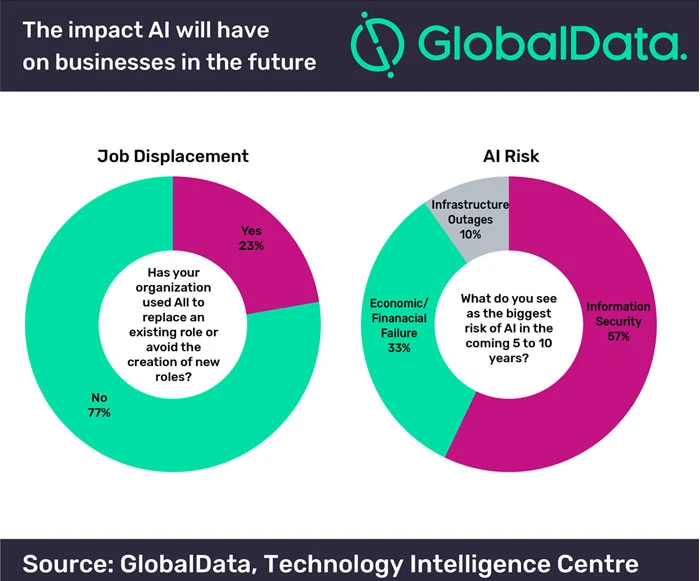
Job displacement is still a key consideration, as is safeguarding data. In a survey conducted by GlobalData, 23% of organizations indicated they had cut or not replaced employees because of AI and 57% indicated security as a top concern.

AI Ethics and businesses

However, looking ahead, the ethics questions that the AI community will need to tackle are even more controversial. For example, if a child runs into the road, there are questions surrounding how a self-driven car would react to this situation, such as whether it would hit the child or swerve and risk injuring its passenger.

More relevant to business leaders is the concern that an AI infused application may not perform up to the organization’s ethical standards. It may contain unintentional racial bias – say a financial algorithm that is biased against a specific race, or an application that demonstrates a preference towards one gender over another. This raises concerns over what should be done when a phrase that is acceptable when said by one demographic is completely unacceptable when uttered by another. It leads to people questioning whether an algorithm can be trained to reliably make this distinction and what happens when it makes a mistake.

To recall, in order to work on such issues surrounding AI and its impact on society, tech giants namely -- Facebook, Microsoft, Google (and Google’s DeepMind), IBM, and Amazon, have together formed a partnership, in October 2016, and launched a non-profit organization. Called the Partnership on Artificial Intelligence to Benefit People and Society (PAI), the nonprofit organization has been established with an aim of studying and formulating the best possible practices on AI technologies, which can not only advance the public’s understanding of AI, but also serve as an open platform for discussion and engagement about AI and its influences on common people and society.

Rena Bhattacharyya, Technology Analyst at GlobalData, comments: “On the one hand, unintentional results are not the fault of the organization using the AI solution. The responsibility may lie in the data used to train the underlying machine learning model. However, customers are quick to pass judgment. If and when these unintentional biases become public, customers will quickly assign blame to the company using them, potentially with enormous impact to a brand’s reputation.

“Just as CEOs may take the blame for customer data breaches, and as a result may lose their jobs, senior leaders are also at risk of taking the fall when an AI solution implemented by their organization crosses an ethical line. It’s in their best interest to ensure that does not happen as their reputation depends on it.”

Speaking about India, last month India’s IT ministry had constituted four committees to thoroughly study on various aspects of Artificial Intelligence for citizen-centric use.

A mixed notions has been circulating globally about adoption of AI and automation as it was a report by MIT review first that had said that Artificial Intelligence will not eliminate jobs in Asia. However, then it was reported -- in January 2017, prior to MIT review report --- that Indian IT giant Infosys had replaced 9,000 of its employees with automation and AI. Going forward, the Infosys CEO, Vishal Sikka, quit the company eventually in the same year which gave a speculative message that Sikka's strategy of fastly embracing automation and AI was one of the reason that he had to take the exit from Infosys.

Top-featured Image - www.slideshare.net/sparksandhoney/ai-ethics

Businesses Should Stay on Top of Emerging Ethical Concerns Surrounding AI


The demands for more ethical use of Artificial Intelligence (AI) will increase. The population is now becoming more aware of the disastrous effects of unintended consequences of automation run amok. Simplistic automation that we today find in Facebook, Twitter, Google, Amazon etc. can lead to unwanted effects on society.

Much has been written about Ethics and Artificial Intelligence (AI) and with many organizations looking to adopt some form of AI technology in 2018, business leaders are wise to stay on top of these emerging ethical concerns, according to GlobalData, a leading data and analytics company.

Job displacement is still a key consideration, as is safeguarding data. In a survey conducted by GlobalData, 23% of organizations indicated they had cut or not replaced employees because of AI and 57% indicated security as a top concern.


However, looking ahead, the ethics questions that the AI community will need to tackle are even more controversial. For example, if a child runs into the road, there are questions surrounding how a self-driven car would react to this situation, such as whether it would hit the child or swerve and risk injuring its passenger.

More relevant to business leaders is the concern that an AI infused application may not perform up to the organization’s ethical standards. It may contain unintentional racial bias – say a financial algorithm that is biased against a specific race, or an application that demonstrates a preference towards one gender over another. This raises concerns over what should be done when a phrase that is acceptable when said by one demographic is completely unacceptable when uttered by another. It leads to people questioning whether an algorithm can be trained to reliably make this distinction and what happens when it makes a mistake.

To recall, in order to work on such issues surrounding AI and its impact on society, tech giants namely -- Facebook, Microsoft, Google (and Google’s DeepMind), IBM, and Amazon, have together formed a partnership, in October 2016, and launched a non-profit organization. Called the Partnership on Artificial Intelligence to Benefit People and Society (PAI), the nonprofit organization has been established with an aim of studying and formulating the best possible practices on AI technologies, which can not only advance the public’s understanding of AI, but also serve as an open platform for discussion and engagement about AI and its influences on common people and society.

Rena Bhattacharyya, Technology Analyst at GlobalData, comments: “On the one hand, unintentional results are not the fault of the organization using the AI solution. The responsibility may lie in the data used to train the underlying machine learning model. However, customers are quick to pass judgment. If and when these unintentional biases become public, customers will quickly assign blame to the company using them, potentially with enormous impact to a brand’s reputation.

“Just as CEOs may take the blame for customer data breaches, and as a result may lose their jobs, senior leaders are also at risk of taking the fall when an AI solution implemented by their organization crosses an ethical line. It’s in their best interest to ensure that does not happen as their reputation depends on it.”

Speaking about India, last month India’s IT ministry had constituted four committees to thoroughly study on various aspects of Artificial Intelligence for citizen-centric use.

A mixed notions has been circulating globally about adoption of AI and automation as it was a report by MIT review first that had said that Artificial Intelligence will not eliminate jobs in Asia. However, then it was reported -- in January 2017, prior to MIT review report --- that Indian IT giant Infosys had replaced 9,000 of its employees with automation and AI. Going forward, the Infosys CEO, Vishal Sikka, quit the company eventually in the same year which gave a speculative message that Sikka's strategy of fastly embracing automation and AI was one of the reason that he had to take the exit from Infosys.

Top-featured Image - www.slideshare.net/sparksandhoney/ai-ethics


WhatsApp Set To Disrupt Digital Payments Market in India, says GlobalData

Facebook-owned messaging company WhatsApp has recently launched peer-to-peer digital payments beta service in India. The entry of the messaging app, which has more than 200 million monthly active users, is expected to disrupt the unified payments interface (UPI)-based digital payments landscape in India, currently dominated by Paytm, says leading data and analytics company GlobalData.

Reportedly, Facebook is working with top lenders, including State Bank of India, ICICI Bank, Axis Bank and HDFC Bank, to integrate the UPI-based payments solution.

Prarthna Tiga, Senior Technology Analyst at GlobalData, comments: “E-payments in India are already witnessing unprecedented growth since the government's announcement of demonetisation in late 2016. Now with the foray of WhatsApp, the country’s smaller and struggling e-payments companies fear a unique threat in an already crowded and competitive ecosystem.”

The Indian payments marketspace is already swarmed with over 60 non-banking players such as Paytm, MobiKwik, Amazon Pay and Flipkart (PhonePe). Established players such as Paytm are also feeling the push and fear that their position will be challenged with the entry of WhatsApp payments.


While the messaging platform is the latest entrant, Google launched its payment app, Tez, in September 2016. It is creating fervour in the digital payments landscape, with transactions surpassing the likes of Axis Bank, one of the top digital players among banks.

However, it is interesting to note that even though India’s e-payments market is expected to grow in the coming years, most e-wallet operators are not profitable in India yet. In fact, some who have been issued licenses by the Reserve Bank of India are still evaluating the situation before setting up operations.

Tiga concludes: “We expect consolidations to be the force in the next few years, with the bigger players focusing on opportunities to expand their footprint in India and other markets. In the meantime, smaller e-payments players are tapping into unidentified opportunities to stay relevant in the market.

“Therefore, creating a compelling case for people to use digital money is becoming absolutely necessary for smaller players, while bigger players are taking advantage of their wide user base.”

WhatsApp Set To Disrupt Digital Payments Market in India, says GlobalData

Facebook-owned messaging company WhatsApp has recently launched peer-to-peer digital payments beta service in India. The entry of the messaging app, which has more than 200 million monthly active users, is expected to disrupt the unified payments interface (UPI)-based digital payments landscape in India, currently dominated by Paytm, says leading data and analytics company GlobalData.

Reportedly, Facebook is working with top lenders, including State Bank of India, ICICI Bank, Axis Bank and HDFC Bank, to integrate the UPI-based payments solution.

Prarthna Tiga, Senior Technology Analyst at GlobalData, comments: “E-payments in India are already witnessing unprecedented growth since the government's announcement of demonetisation in late 2016. Now with the foray of WhatsApp, the country’s smaller and struggling e-payments companies fear a unique threat in an already crowded and competitive ecosystem.”

The Indian payments marketspace is already swarmed with over 60 non-banking players such as Paytm, MobiKwik, Amazon Pay and Flipkart (PhonePe). Established players such as Paytm are also feeling the push and fear that their position will be challenged with the entry of WhatsApp payments.


While the messaging platform is the latest entrant, Google launched its payment app, Tez, in September 2016. It is creating fervour in the digital payments landscape, with transactions surpassing the likes of Axis Bank, one of the top digital players among banks.

However, it is interesting to note that even though India’s e-payments market is expected to grow in the coming years, most e-wallet operators are not profitable in India yet. In fact, some who have been issued licenses by the Reserve Bank of India are still evaluating the situation before setting up operations.

Tiga concludes: “We expect consolidations to be the force in the next few years, with the bigger players focusing on opportunities to expand their footprint in India and other markets. In the meantime, smaller e-payments players are tapping into unidentified opportunities to stay relevant in the market.

“Therefore, creating a compelling case for people to use digital money is becoming absolutely necessary for smaller players, while bigger players are taking advantage of their wide user base.”

Market Reports

Market Report & Surveys
IndianWeb2.com © all rights reserved