Showing posts with label Baidu. Show all posts

China Lifts Restriction from Tesla Vehicles, Tesla-Baidu Partnership Expands

China Lifts Restriction from Tesla Vehicles

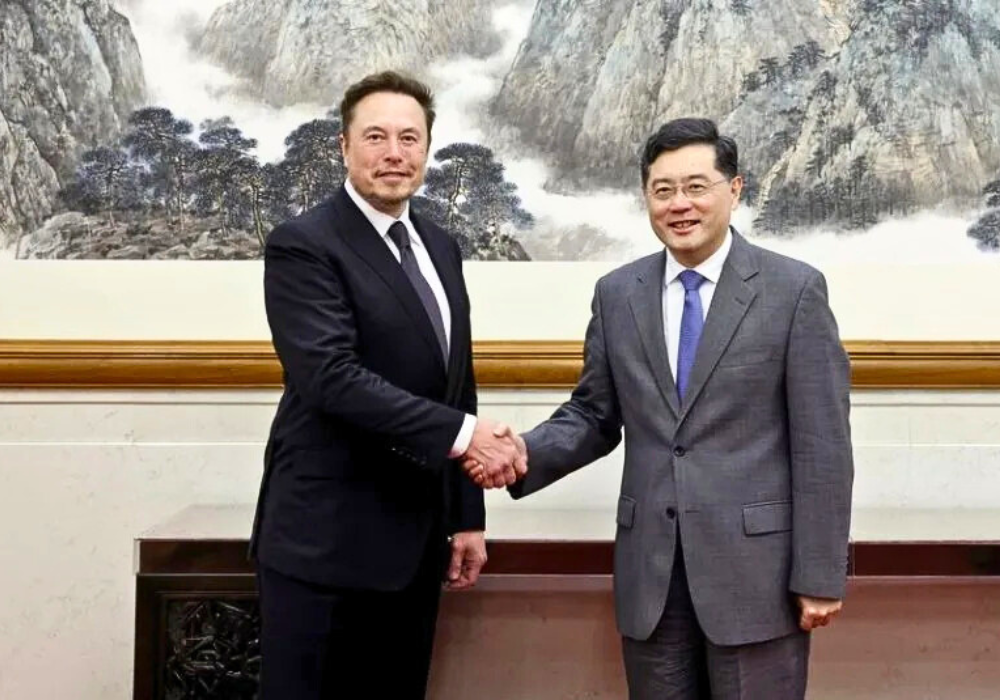
China has lifted the restrictions on Tesla vehicles. This decision came after Tesla's cars passed the necessary compliance tests with China's data security rules. The clearance was granted following a surprise visit to Beijing by Tesla CEO Elon Musk, who met with Chinese Premier Li Qiang.

The tests, which began in November 2023, assessed whether the cars met specific compliance requirements related to data security, including the anonymization of certain types of data and the non-collection of in-car data by default.

Tesla has localized data storage in Shanghai and passed the ISO 27001 international standard for information security.

Tesla's locally produced models, such as the Model 3 and Model Y, have been listed among the EVs that meet China's data security requirements for smart cars, which is a key regulatory hurdle cleared.

Tesla's inclusion in the list of approved vehicles is significant as it faced stiff competition from local rivals and had previously encountered entry bans in government-affiliated buildings and military bases over security concerns. This approval is expected to bolster Tesla's presence in its second-biggest market, following the United States.

Elon Musk's visit to Beijing was quite eventful and strategic for Tesla's operations in China. Musk's visit was unannounced and came after he cancelled a planned trip to India.

During his visit, Musk met with Chinese Premier Li Qiang. The trip was significant as it involved discussions about Tesla's compliance with China's data security regulations.

Musk expanded Tesla’s partnership with Baidu, although the long-term benefits of this move are still under scrutiny. There were expectations raised that Tesla's Full Self-Driving software would soon be available in China.

Tesla has worked to ensure its vehicles comply with China's strict data security laws. This includes adjustments in how personal data is collected and processed, such as anonymizing recordings of faces outside the car.

Tesla is promoting its FSD features in China, which, although not making the cars fully autonomous, offer advanced assisted driving capabilities under driver supervision

Musk's China visit underscores the importance of the Chinese market for Tesla and highlights the company's efforts to navigate the regulatory landscape of data security in China. It also reflects the ongoing negotiations and partnerships that are crucial for Tesla's success in the region.

Tesla has modified its charging ports to conform to local standards, allowing Tesla owners in China to plug into stations operated by other service providers. Additionally, Tesla has opened select Superchargers in Beijing and Shanghai to other EV brands, which is part of a pilot project.

These adaptations reflect Tesla's commitment to the Chinese market and its efforts to stay competitive amid growing market share from domestic automakers. By aligning with local regulations and preferences, Tesla aims to maintain its position as one of the best-selling EV brands in China.

Baidu Launches Driverless RoboTaxi in Beijing

Baidu Apollo Robotaxis move on a street at the Shougang Park in Beijing, Sunday, May 2, 2021. [Image - The Associated Press]


Chinese tech giant Baidu rolled out its paid driverless taxi service on Sunday, making it the first company to commercialize autonomous driving operations in China.

Unlike previous Baidu autonomous driving demonstrations in Beijing, this was the first time there was no safety driver sitting behind the wheel. Instead, a safety member was seated in the front passenger seat to deal with any emergencies.

Baidu is one of the largest Artificial Intelligence (AI) and Internet companies in the world

Up to 10 Apollo “robotaxis” are now operating simultaneously in an area of about 3 square kilometers (1.2 square miles), picking up and dropping off passengers at eight stops in Shougang Park in western Beijing. Each ride costs 30 yuan ($4.60), and is open to passengers ages 18 to 60.

The park is a former site of iron and steel plants that’s been redeveloped into a sightseeing destination and a future venue for the 2022 Beijing Winter Olympics. Although traffic flows aren’t heavy, an influx of tourists was seen in the park on the second day of China’s international labor day holiday.

The robotaxis were repeatedly forced to brake when encountering jaywalkers or curious tourists who came close to the vehicles for photos.

Kelly Wang and her husband, who both work in the artificial intelligence industry, said they had a smooth riding experience.

“I would recommend people experience this. There is a strong sense of technology, because nobody is in the driver’s seat,” Wang said. Her husband was even considering buying such a car for their household.

Passengers can order a robotaxi on an app called Apollo Go. When the taxi arrives, passengers must have their identities verified before getting in. The taxi will start to move after it detects the passengers have fastened their seat belts.

One visitor, Amy Li, still had concerns about autonomous driving, because driving behavior on the road can be complex.

“We’ve all had experiences such as other cars jumping the queue or making a sudden lane change. People have emotions while robots don’t, at least at present,” she said “The robots may not be able to deal with such changes.”

Baidu, known for its search engines, has been testing autonomous driving on the open road since last year. Its Apollo Go robotaxi service has carried more than 210,000 passengers in three cities across China and aims to expand to 30 cities in the next three years, the company said in a press release.

“In the future, Baidu Apollo will launch driverless robotaxis in more cities, enabling the public to access greener, low-carbon and convenient travel services, while continuing to improve the unmanned service process and user experience,” said Wang, vice president and general manager of autonomous driving technology at Baidu in a statement.

Original Source - Associated Press

Valley's Autonomous Vehicle Tech Firm Velodyne Lidar Announces 3-Year Sales Agreement with Baidu


Velodyne Lidar, Inc. (Nasdaq: VLDR) today announced a three-year sales agreement with Baidu for its Alpha Prime™ lidar sensors. The Alpha Prime sensors will be utilized for autonomous applications. Velodyne's low-cost, high-scale manufacturing delivers attractive pricing for Baidu and its Apollo partners

Baidu and Baidu’s Apollo program, an open-source autonomous vehicle software platform, selected the Alpha Prime for its range, resolution and field of view that collectively address the high-performance requirements for autonomous vehicles. Quality 3D lidar vision is a critical component for autonomous vehicles to accurately perceive the environment.

The Alpha Prime sensor produces millions of data points per second, enabling precise, reliable navigation in real time to detect objects, vehicles and people that might pose a collision threat. The Alpha Prime can help autonomous vehicles navigate roadways at various speeds, traveling in a range of road conditions such as rain, sleet and snow. This powerful lidar will enhance the vehicle capabilities.

Baidu has been a strategic investor in Velodyne since 2016. Baidu and Velodyne share a strong commitment to advancing autonomy and safety on roadways.

“In fulfilling our intelligent driving mission, Baidu works with innovation leaders like Velodyne to bring a safe, efficient autonomous driving experience to everyone,” said Yaoming Shen, Sr. Optical Engineer, Baidu.

“Velodyne greatly values our relationship with Baidu, a strategic business partner and investor, and we are deeply committed to our combined work in the Chinese market,” said Wei Weng, Executive Director of Asia, Velodyne Lidar. “They are a trailblazer of intelligent driving technology and deployment, and their accomplishments and influence span global markets. Alpha Prime provides safe, efficient navigation for autonomous vehicles.”

Velodyne’s Alpha Prime is a next generation lidar sensor that utilizes Velodyne’s patented 360-degree surround view perception technology to support autonomous mobility. A result of over ten years of lidar development and learning, the Alpha Prime supports autonomous operation across a broad range of road settings, including urban and highway environments. Velodyne has multiple manufacturing sources available, including in the United States, Japan and Thailand, to produce high-quality sensors at scale to address customer needs.

Velodyne Lidar (NASDAQ: VLDR) ushered in a new era of autonomous technology with the invention of real-time surround view lidar sensors. Velodyne is the first public pure-play lidar company and is known worldwide for its broad portfolio of breakthrough lidar technologies. Velodyne’s revolutionary sensor and software solutions provide flexibility, quality and performance to meet the needs of a wide range of industries, including autonomous vehicles, advanced driver assistance systems (ADAS), robotics, unmanned aerial vehicles (UAV), smart cities and security. Through continuous innovation, Velodyne strives to transform lives and communities by advancing safer mobility for all. For more information, visit www.velodynelidar.com.

Govt Blocks 118 Mobile Apps including PUBG, Baidu and WeChat Work


The Ministry of Electronics and Information Technology, Government of India invoking it’s power under section 69A of the Information Technology Act read with the relevant provisions of the Information Technology (Procedure and Safeguards for Blocking of Access of Information by Public) Rules 2009 and in view of the emergent nature of threats has decided to block 118 mobile apps (see Appendix below of this post) since in view of information available they are engaged in activities which is prejudicial to sovereignty and integrity of India, defence of India, security of state and public order.

The Ministry of Electronics and Information Technology has received many complaints from various sources including several reports about misuse of some mobile apps available on Android and iOS platforms for stealing and surreptitiously transmitting users’ data in an unauthorized manner to servers which have locations outside India. The compilation of these data, its mining and profiling by elements hostile to national security and defence of India, which ultimately impinges upon the sovereignty and integrity of India, is a matter of very deep and immediate concern which requires emergency measures.

The Indian Cyber Crime Coordination Centre, Ministry of Home Affairs has also sent an exhaustive recommendation for blocking these malicious apps.. Likewise, there have been similar bipartisan concerns, flagged by various public representatives, both outside and inside the Parliament of India. There has been a strong chorus in the public space to take strict action against Apps that harm India’s sovereignty as well as the privacy of our citizens.

On the basis of these and upon receiving of recent credible inputs that information posted, permissions sought, functionality embedded as well as data harvesting practices of above stated Apps raise serious concerns that these Apps collect and share data in surreptitious manner and compromise personal data and information of users that can have a severe threat to security of the State.

In the interest of sovereignty and integrity of India, defence of India and security of the State. And using the sovereign powers, the Government of India has decided to block the usage of certain Apps, used in both mobile and non-mobile Internet enabled devices. These apps are listed in the attached appendix.

This move will safeguard the interests of crores of Indian mobile and internet users. This decision is a targeted move to ensure safety, security and sovereignty of Indian cyberspace.

Appendix

  1. APUS Launcher Pro- Theme, Live Wallpapers, Smart
  2. APUS Launcher -Theme, Call Show, Wallpaper, HideApps
  3. APUS Security -Antivirus, Phone security, Cleaner
  4. APUS Turbo Cleaner 2020- Junk Cleaner, Anti-Virus
  5. APUS Flashlight-Free & Bright
  6. Cut Cut – Cut Out & Photo Background Editor
  7. Baidu
  8. Baidu Express Edition
  9. FaceU - Inspire your Beauty
  10. ShareSave by Xiaomi: Latest gadgets, amazing deals
  11. CamCard - Business Card Reader
  12. CamCard Business
  13. CamCard for Salesforce
  14. CamOCR
  15. InNote
  16. VooV Meeting - Tencent Video Conferencing
  17. Super Clean - Master of Cleaner, Phone Booster
  18. WeChat reading
  19. Government WeChat
  20. Small Q brush
  21. Tencent Weiyun
  22. Pitu
  23. WeChat Work
  24. Cyber Hunter
  25. Cyber Hunter Lite
  26. Knives Out-No rules, just fight!
  27. Super Mecha Champions
  28. LifeAfter
  29. Dawn of Isles
  30. Ludo World-Ludo Superstar
  31. Chess Rush
  32. PUBG MOBILE Nordic Map: Livik
  33. PUBG MOBILE LITE
  34. Rise of Kingdoms: Lost Crusade
  35. Art of Conquest: Dark Horizon
  36. Dank Tanks
  37. Warpath
  38. Game of Sultans
  39. Gallery Vault - Hide Pictures And Videos
  40. Smart AppLock (App Protect)
  41. Message Lock (SMS Lock)-Gallery Vault Developer Team
  42. Hide App-Hide Application Icon
  43. AppLock
  44. AppLock Lite
  45. Dual Space - Multiple Accounts & App Cloner
  46. ZAKZAK Pro - Live chat & video chat online
  47. ZAKZAK LIVE: live-streaming & video chat app
  48. Music - Mp3 Player
  49. Music Player - Audio Player & 10 Bands Equalizer
  50. HD Camera Selfie Beauty Camera
  51. Cleaner - Phone Booster
  52. Web Browser & Fast Explorer
  53. Video Player All Format for Android
  54. Photo Gallery HD & Editor
  55. Photo Gallery & Album
  56. Music Player - Bass Booster - Free Download
  57. HD Camera - Beauty Cam with Filters & Panorama
  58. HD Camera Pro & Selfie Camera
  59. Music Player - MP3 Player & 10 Bands Equalizer
  60. Gallery HD
  61. Web Browser - Fast, Privacy & Light Web Explorer
  62. Web Browser - Secure Explorer
  63. Music player - Audio Player
  64. Video Player - All Format HD Video Player
  65. Lamour Love All Over The World
  66. Amour- video chat & call all over the world.
  67. MV Master - Make Your Status Video & Community
  68. MV Master - Best Video Maker & Photo Video Editor
  69. APUS Message Center-Intelligent management
  70. LivU Meet new people & Video chat with strangers
  71. Carrom Friends : Carrom Board & Pool Game-
  72. Ludo All Star- Play Online Ludo Game & Board Games
  73. Bike Racing : Moto Traffic Rider Bike Racing Games
  74. Rangers Of Oblivion : Online Action MMO RPG Game
  75. Z Camera - Photo Editor, Beauty Selfie, Collage
  76. GO SMS Pro - Messenger, Free Themes, Emoji
  77. U-Dictionary: Oxford Dictionary Free Now Translate
  78. Ulike - Define your selfie in trendy style
  79. Tantan - Date For Real
  80. MICO Chat: New Friends Banaen aur Live Chat karen
  81. Kitty Live - Live Streaming & Video Live Chat
  82. Malay Social Dating App to Date & Meet Singles
  83. Alipay
  84. AlipayHK
  85. Mobile Taobao
  86. Youku
  87. Road of Kings- Endless Glory
  88. Sina News
  89. Netease News
  90. Penguin FM
  91. Murderous Pursuits
  92. Tencent Watchlist (Tencent Technology
  93. Learn Chinese AI-Super Chinese
  94. HUYA LIVE – Game Live Stream
  95. Little Q Album
  96. Fighting Landlords - Free and happy Fighting Landlords
  97. Hi Meitu
  98. Mobile Legends: Pocket
  99. VPN for TikTok
  100. VPN for TikTok
  101. Penguin E-sports Live assistant
  102. Buy Cars-offer everything you need, special offers and low prices
  103. iPick
  104. Beauty Camera Plus - Sweet Camera & Face Selfie
  105. Parallel Space Lite - Dual App
  106. "Chief Almighty: First Thunder BC
  107. MARVEL Super War NetEase Games
  108. AFK Arena
  109. Creative Destruction NetEase Games
  110. Crusaders of Light NetEase Games
  111. Mafia City Yotta Games
  112. Onmyoji NetEase Games
  113. Ride Out Heroes NetEase Games
  114. Yimeng Jianghu-Chu Liuxiang has been fully upgraded
  115. Legend: Rising Empire NetEase Games
  116. Arena of Valor: 5v5 Arena Games
  117. Soul Hunters
  118. Rules of Survival


China's Baidu to Work with Indian Institutions on AI-led Intelligent Economy

China’s largest search engine Baidu is planning to work with Indian institutions on "intelligent economy", announced Baidu CEO and Chairman Robin Li, who is also the Co-Founder of Chinese search engine. An Intelligent Economy can be defined as economy driven by Artificial Intelligence (AI) or Human-Machine interaction such as using AI-based virtual assistant to open bank accounts or personal assistants for students.

According to estimates by a McKinsey report, AI could add around 16% or $13 trillion to global output by 2030.

Speaking at tech fest Shaastra 2020 event held at IIT Madras, in Chennai, on January 4, Li said "Baidu is looking to work with Indian institutions in future to make a better world through innovation".

Li was not very specific to Baidu's commitment in India, though he said -
India is one of the fastest growing smartphone markets in the world, and very large developing country, right next to China. Both the countries have been growing at a fast pace in the last few decades. “For the next decade, we will be more optimistic.

Once in the age of AI, search will be very different from what is seen today. Once we transform the search into a different product, we will be ready to launch that internationally

Li, who is also the creator of search technology Hyperlink Analysis, said that the previous decade was that of the Internet but the coming decade is that of intelligent economy with new modes of human-machine interaction. AI is transforming a lot of industries for higher efficiency and lower services. For instance, banks are finding it difficult to open branches but virtual assistant is used to open an account. Customers are more comfortable with virtual person than a real person.

In the education sector, every student can have a personal assistant while the pharma industry accelerate the pace of drug development with many start-ups already doing this. AI is also transforming transportation by helping reduction in traffic delays by 20-30 per cent, he said.

Founded in 2000, Baidu offers several Google-like services but uses Chinese-language search terms. Baidu had also led a US$12 billion worth of joint investment with Alibaba Group, Tencent, JD.com and Didi Chuxing in China Unicom, a Chinese state-owned telecommunications operator of China.

In 2016, Baidu open sourced its PaddlePaddle deep learning platform , which Baidu claims is a machine translation program that need less code when compared to other famously used deep learning platforms.

According to Li, AI Baidu helped in finding missing people in China and 9,000 missing people have been found already. Li said "AI can make one immortal. When everything about you can be digitised, computers can learn all about you, creating a digital copy of anyone."

The name "Baidu" was inspired by a Chinese poem written more than 800 years ago during the Song Dynasty. The poem compares the search for a retreating beauty amid chaotic glamour with the search for one's dream while confronted by life's many obstacles. The poem goes like -- "…hundreds and thousands of times, for her I searched in chaos, suddenly, I turned by chance, to where the lights were waning, and there she stood."

Baidu, whose literal meaning is “hundreds of times”, represents a persistent search for the ideal.

Via ~ Business Line

Cloud-to-Edge AI Chip Kunlun Repositions Baidu in AI Market Globally

Search engine giant Baidu has recently unveiled China’s first cloud-to-edge artificial intelligence (AI) chip --Kunlun -- at Baidu Create 2018. The move repositions the company in not only the Chinese market but also globally, says leading data and analytics company GlobalData.

Launched this month, Kunlun is China’s first cloud-to-edge AI chip, built to accommodate high performance requirements of a wide variety of AI scenarios. With this, Baidu joined the ranks of Google, Nvidia, Intel, and many other tech companies making processors especially for AI.

Additionally, Baidu also joins select few companies that not only offer an AI platform to help enterprises deploy AI-infused solutions but also have their own hardware to maximize AI processing. Built to accommodate the high performance requirements of a wide variety of AI scenarios, Kunlun includes training chip ‘818-300’ and inference chip ‘818-100’. It can be used to provide AI capabilities such as speech and text analytics, natural language processing, and visual recognition.

Rena Bhattacharyya, Technology Analyst at GlobalData, says: “Well-established players such as IBM, Microsoft, Google and Amazon are fine-tuning their AI platforms to make it easier and faster for customers to incorporate a wide range of AI technologies. Although already an ambitious player in China, Baidu had not managed to establish itself as a major force in the AI space until now. The Kunlun chip has the potential to change that.”

Kunlun canbe deployed in the cloud or at the edge, such as in autonomous vehicles, an area in which Chinese companies are allocating sizeable research and development funds. But edge deployments of AI do not stop there. On-device AI is used in mobile phone cameras to improve picture quality, it can provide speech and voice recognition, and it may be used in security systems, drones or robots.

AI at the edge can increase efficiency since at least a portion of the analysis, if not all, can be performed without the need to transport data to and from the cloud. It also offers greater flexibility, because the device can utilize AI even when it is offline, and it can improve the user experience since the device can learn behavior patterns. Some users may prefer it since data stays on the device instead of being transmitted over a network to the cloud.

Bhattacharyya concludes: “Baidu does not market heavily to other regions and will have a tough time competing with the well-established players. Nonetheless, the release of the new chipset underscores the overall momentum behind AI in China, as well as the determination of Chinese players to establish themselves as global leaders in this emerging area.”

Kunlun leverages Baidu’s AI ecosystem, which includes AI scenarios like search ranking and deep learning frameworks like PaddlePaddle, which is a deep learning platform code-named after Parallel Distributed Deep Learning. Baidu made it open source in September 2016.

Additionally, in April 2017 the company also announced its open source autonomous driving project, Apollo, an open platform that provides open software stack, cloud infrastructure, and other services that are able to support major features and functions of an autonomous car. For this, Baidu has also joined hands with Microsoft to power the former's open source self-driving project outside China.

[Top Image - Twitter.com/Baidu_Inc]

America's Microsoft To Power China's Baidu's Self-Driving Car Project

American tech giant Microsoft has joined forces with China's Chinese Internet search giant Baidu to power the latter's open source self-driving project outside its home country. With this, Microsoft's Azure cloud infrastructure adds another bullet to the growing list of resources connected to one of Baidu's most awaited projects.

The Chinese company, which occupies 60th rank on Forbes World's Most Innovative Companies List 2017, first announced about its open source autonomous driving project, Apollo, in April this year. Named by the company after the historic lunar landing program, it is an open platform that provides open software stack, cloud infrastructure, and other services that are able to support major features and functions of an autonomous car.

For its dream project, Beijing-headquartered Baidu has already locked in deals with some of the biggest names in the Chinese automobile industry like Chery Auto and Great Wall Motors, along with famous Asian ride-sharing service Grab, global navigation and mapping service provider TomTom, suppliers Continental and Bosch as well as Intel and Ford.

Companies who make use of Baidu's Apollo platform for their self-driving vehicle projects will now be able to employ Microsoft's Azure cloud services to securely scale their cars outside China.

Commenting on Microsoft's deal with Baidu, Microsoft's corporate vice president, Kevin Dallas said that his company believes that today's vehicles already have an impressive level of sophistication when it comes to their ability to capture data. Hence, by applying Microsoft's global cloud AI, machine learning, and deep neural network capabilities to that data, the company can significantly accelerate the work already being done to make autonomous vehicles safer.

The autonomous vehicle space has been witnessing a lot of activity off late. In a 2016 report, consulting firm McKinsey & Company predicted that up to 15 per cent of new cars sold in the year 2030 could potentially be fully autonomous. A number of prominent tech companies are currently already working on their own autonomous vehicles project. Alphabet's Waymo is currently said to be leading the race which has strong contenders like Tesla, Nissan and Ford.

While autonomous vehicle space is heating up like never before, Microsoft is sure that it does not want to dip its toe in the water, at least not anytime soon. For now, it only wants to stick to the software and services part of the deal.

Baidu, which is famously called as the “Google of China” aims to get its self-driving software on the roads by 2018. Instead of going the commercial self-driving vehicles route, Baidu is working on launching a shuttle service in Chinese cities by next year.

[Top Image: Neowin]

America's Microsoft To Power China's Baidu's Self-Driving Car Project

American tech giant Microsoft has joined forces with China's Chinese Internet search giant Baidu to power the latter's open source self-driving project outside its home country. With this, Microsoft's Azure cloud infrastructure adds another bullet to the growing list of resources connected to one of Baidu's most awaited projects.

The Chinese company, which occupies 60th rank on Forbes World's Most Innovative Companies List 2017, first announced about its open source autonomous driving project, Apollo, in April this year. Named by the company after the historic lunar landing program, it is an open platform that provides open software stack, cloud infrastructure, and other services that are able to support major features and functions of an autonomous car.

For its dream project, Beijing-headquartered Baidu has already locked in deals with some of the biggest names in the Chinese automobile industry like Chery Auto and Great Wall Motors, along with famous Asian ride-sharing service Grab, global navigation and mapping service provider TomTom, suppliers Continental and Bosch as well as Intel and Ford.

Companies who make use of Baidu's Apollo platform for their self-driving vehicle projects will now be able to employ Microsoft's Azure cloud services to securely scale their cars outside China.

Commenting on Microsoft's deal with Baidu, Microsoft's corporate vice president, Kevin Dallas said that his company believes that today's vehicles already have an impressive level of sophistication when it comes to their ability to capture data. Hence, by applying Microsoft's global cloud AI, machine learning, and deep neural network capabilities to that data, the company can significantly accelerate the work already being done to make autonomous vehicles safer.

The autonomous vehicle space has been witnessing a lot of activity off late. In a 2016 report, consulting firm McKinsey & Company predicted that up to 15 per cent of new cars sold in the year 2030 could potentially be fully autonomous. A number of prominent tech companies are currently already working on their own autonomous vehicles project. Alphabet's Waymo is currently said to be leading the race which has strong contenders like Tesla, Nissan and Ford.

While autonomous vehicle space is heating up like never before, Microsoft is sure that it does not want to dip its toe in the water, at least not anytime soon. For now, it only wants to stick to the software and services part of the deal.

Baidu, which is famously called as the “Google of China” aims to get its self-driving software on the roads by 2018. Instead of going the commercial self-driving vehicles route, Baidu is working on launching a shuttle service in Chinese cities by next year.

[Top Image: Neowin]

China's Baidu Open Sources Its Deep Learning Platform PaddlePaddle

Keeping a track of your rival's every move is important in order to survive in this competition crazy tech market. Saying true this rule, Chinese Internet search giant Baidu has also followed the step of its competitors like Google and decided to open source its deep learning platform code-named PaddlePaddle after PArallel Distributed Deep LEarning.

According to Baidu, the company featured on Forbes World's Most Innovative Companies list, the platform will allow developers to devote their attention entirely on the high-level structure of their models and completely forget worrying about the low-level details. For example, a PaddlePaddle written machine translation program would need less code when compared to other famously used deep learning platforms.

With a pre-release Alpha version of the software already available, the company is going to release it with specs and full documentation on September 30th to GitHub. This would be done under an Apache open source license.

Baidu believes that its open source platform would prove to be of significant use to programmers and enthusiasts interested in deep learning tools. According to the company, a special effort was put not to only make a platform for machine-learning researchers.

The company founded in the year 2000 by Yanhong Li and Xu Yong, also sees a lucrative opportunity for a variety of deep learning platforms, focusing people of different kinds. According to Baidu, the transportation and healthcare industry could significantly gain from the power of artificial intelligence.

According to information made available by Baidu, PaddlePaddle can easily support some of the most-famous and widely used neural network architectures, like the recurrent neural networks and convolutional neural networks. In addition to this, it is even capable of scaling to a large numbers of CPUs or GPUs on a number of machines. At PaddlePaddle, optimisation takes place at different levels including architecture, computing, communication and memory. This has been done in order to take maximum advantage of heterogeneous computing.

It was only last year in November that tech giant Google announced about the open source release of its second-generation machine learning system, TensorFlow. Software giant Microsoft is also in the race by releasing Computational Network Toolkit, an open source license a deep learning toolkit. In fact, social networking giant Facebook has also made available some of its deep learning software to the open source community.

According to industry experts, open sourcing significantly benefits companies as with this they are able to find their way into a larger and enthusiastic community of engineers, researchers and even occasional hobbyists meticulously working on fixing the code and building on it.

[Top Image - testing / Shutterstock.com]

Market Reports

Market Report & Surveys
IndianWeb2.com © all rights reserved