‏إظهار الرسائل ذات التسميات GPU. إظهار كافة الرسائل

OXMIQ Labs Secures $35 Mn Series A to Scale Licensable GPU Core OxCore™ for Custom AI Silicon

OXMIQ Labs Secures $35 Mn Series A to Scale Licensable GPU Core OxCore™ for Custom AI Silicon

OXMIQ Labs Inc., a unified GPU and AI architecture company founded by Raja Koduri, today closed its $35 million Series A financing, bringing the company's total capital raised to $60 million. The funding will scale OxCore™, OXMIQ's licensable GPU architecture that allows semiconductor companies and AI system builders to build custom AI silicon without a full chip program. The round was co-led by Fundomo and Samsung Catalyst Fund, with participation from MediaTek, AM Intelligence Labs, Pegatron Venture Capital, CDIB-TEN, Darwin Ventures, and Morgan Creek Digital, among other financial and strategic investors. OXMIQ's expertise spans the full AI stack, from renewable power and data center infrastructure to silicon IP, electron-to-token machines (ETMs™), along with the software that runs AI factories and agents.

One Core, Three Engines

Token demand is outpacing the world's ability to build infrastructure to serve it. OXMIQ was founded to re-architect the GPU stack from Atoms to Agents™, building the silicon IP, configurable systems and software platform that enable semiconductor companies and AI infrastructure builders to drive down the cost of intelligence at every layer of the stack.

At the center of the architecture is OxCore™, a scalable, licensable GPU core that integrates three distinct compute engines: a CUDA®-compatible GPU engine, a tensor processing engine, and an orchestration engine (CPU) responsible for coordinating workloads and agents across the system. OxCore tightly couples compute functionality that is typically split across three chips, and was purpose-built for near-memory compute, minimizing data movement to enhance compute and energy efficiency of AI workloads. OxCore was designed for scalability and the architecture scales efficiently from single-core AI deployments to large-scale datacenter configurations. OxCore is running on FPGA today, with live demonstrations available.

OXMIQ Technology Stack
OXMIQ Technology Stack 


OxQuilt™, OXMIQ's chiplet integration architecture, combines heterogeneous compute chiplets and memory in a single package. Most AI silicon designs are locked to a specific foundry and memory type. OxQuilt instead adapts to any supply chain, with configuration tools that let customers design across logic process nodes, memory types, interconnect standards, and advanced packaging options. By making high-performance AI compute licensable and configurable, OXMIQ lets any design team build custom AI silicon packages without needing cost-prohibitive full chip programs. The architecture is also designed to incorporate emerging interconnect technologies such as silicon photonics as they reach production readiness.

OXMIQ pairs the hardware with a software stack spanning OxCapsule™ for high-level orchestration to low-level kernel optimization. OxPython™ runs existing CUDA® and PyTorch® code on OxCore without code changes, giving developers full portability across hardware. This stack supports emerging silicon architectures for optimized inference at scale and delivers day-zero support for new models. OxPython has been validated on third-party platforms with live demos available.

OXMIQ's IP-first model is built for capital efficiency. By focusing on new architecture IP rather than full SoC development, the company generates revenue from customer engagements while preserving capital for building the stack.

“We are very excited to co-lead OXMIQ’s financing round and back Raja Koduri and the strong team at OXMIQ.” said David (Dede) Goldschmidt, SVP & Managing Director, Head of the Samsung Catalyst Fund. “OXMIQ’s novel AI core and software platform enable heterogeneous compute for efficient, custom inference solutions serving large-scale agentic workloads.”

"Raja has built silicon at every layer of the stack, and he knows exactly where the constraints sit. Most compute IP makes the customer bend their memory, packaging, and foundry around the chip. OXMIQ does the opposite, and that flips a cost center into leverage. We backed this team because they will define how AI compute gets built this decade," said Rajeev Surati, Partner at Fundomo.

An Expanding Team

OXMIQ has strengthened its board and advisory ranks with two additions that bring decades of silicon pedigree. Jim Keller, CEO of Tenstorrent and among the most influential chip architects in the industry, joins the board of directors alongside existing board member Dr. Ker Zhang. Dr. Valluri (Bob) Rao, a renowned Fellow who retired from Intel's process technology group, joins as an advisor. Together, they deepen OXMIQ's leadership as the company moves from architecture to customer integration.

"I am excited to join the OXMIQ board. Raja and this team are creating an open GPU architecture, a much-needed step toward removing the artificial boundaries around AI innovation. As the industry concentrates around a few incumbents, this is more important than ever. OXMIQ's open, configurable foundation, which developers can build on and own, is exactly where compute should be heading," said Jim Keller, CEO of Tenstorrent and OXMIQ board member.

Raja Koduri, OXMIQ founder and CEO, added: "A licensable core with an open architecture means design teams everywhere can build the custom AI silicon their work needs. Today, state-of-the-art AI reaches most people through a handful of channels, and the cost of the compute underneath is the reason. Bring that cost down, and you widen who gets to build with it. I believe AI is a force for good when it is a tool everyone can pick up and use, not just the few who can afford to build with it. Closing this round with investors who own the supply chain tells us we can get there."

Get Involved

OXMIQ is working with semiconductor companies, neoclouds, AI system builders, and physical AI/ robotics companies ready to own their compute roadmap. For licensing and partnership inquiries, contact licensing@oxmiq.ai.

Investors

The round was co-led by Fundomo, a New York venture firm focused on frontier compute infrastructure, and Samsung Catalyst Fund, Samsung Electronics' evergreen multi-stage venture capital fund that invests in deep tech AI infrastructure. MediaTek, a seed investor and one of the world's leading fabless semiconductor companies, is reinvesting.

Lawrence Loh, SVP of MediaTek said, “MediaTek is actively powering today's advanced AI capabilities from the edge to the cloud. Our investment in OXMIQ underscores this push and combines our AI ambitions with their highly flexible GPU architecture. We see this investment as a way to continue unlocking unprecedented on-device AI performance across all technology platforms."

AM Intelligence Labs, part of the AM Green Group, joins this round as an investor, deepening the collaboration behind a 5GW total AI factory with 3GW as a renewable-powered AI compute platform that they are building with OXMIQ in India. CDIB-TEN is a joint fund between CDIB Capital, a leading Asian PE/VC firm expanding its asset management business through a strong regional presence anchored by over 65 years of investment heritage in Taiwan, and TEN Capital, a prestigious investment fund that is deeply wired into Taiwan’s semiconductor ecosystem. Pegatron Venture Capital, the investment arm of one of the world's largest ODMs and system integrators, adds manufacturing and systems depth to carry chiplet AI accelerator designs from architecture to deployment. Morgan Creek Digital, an investor focused on AI and digital infrastructure, joins the round on the thesis that compute capacity and architecture choice will define the AI economy this decade. Darwin Venture Management, a Taipei-based venture firm investing across the TaiwanSilicon Valley technology corridor, brings cross-border conviction that mirrors OXMIQ's own design and supply chain footprint. Intel Capital rounds out the group as a strategic IP partner, adding to OXMIQ's design and engineering depth.

About OXMIQ Labs

OXMIQ Labs is a GPU and AI architecture company with expertise spanning every layer of the AI stack, from renewable energy and data center infrastructure to silicon IP, electron-to-token machines, and cloud software for AI factories and agents. OXMIQ develops licensable compute IP and adaptive AI infrastructure software. The OXMIQ stack, OxCore™, OxQuilt™, OxPython™ and OxCapsule™, enables semiconductor companies, neoclouds, and AI system builders to develop and deploy custom AI compute across the full spectrum of AI applications. The company's mission is to re-architect the GPU stack: from Atoms to Agents™, making high-performance AI compute available, affordable, and within reach of design teams and builders who need it. Founded by Raja Koduri, OXMIQ is headquartered in Campbell, California, with a development site in Hyderabad, India.

Learn more: https://oxmiq.ai/
New demo of OxPython working with OxCore as it runs Qwen3 1.7 in simulation on an FPGA. https://oxmiq.ai/media#demo-oxcore-qwen
Demo of OxCapsule working to cluster three RTX 6000 GPUs to run Qwen3.5, a 397 billion parameter LLM. https://youtu.be/7hy4HK9jOXw
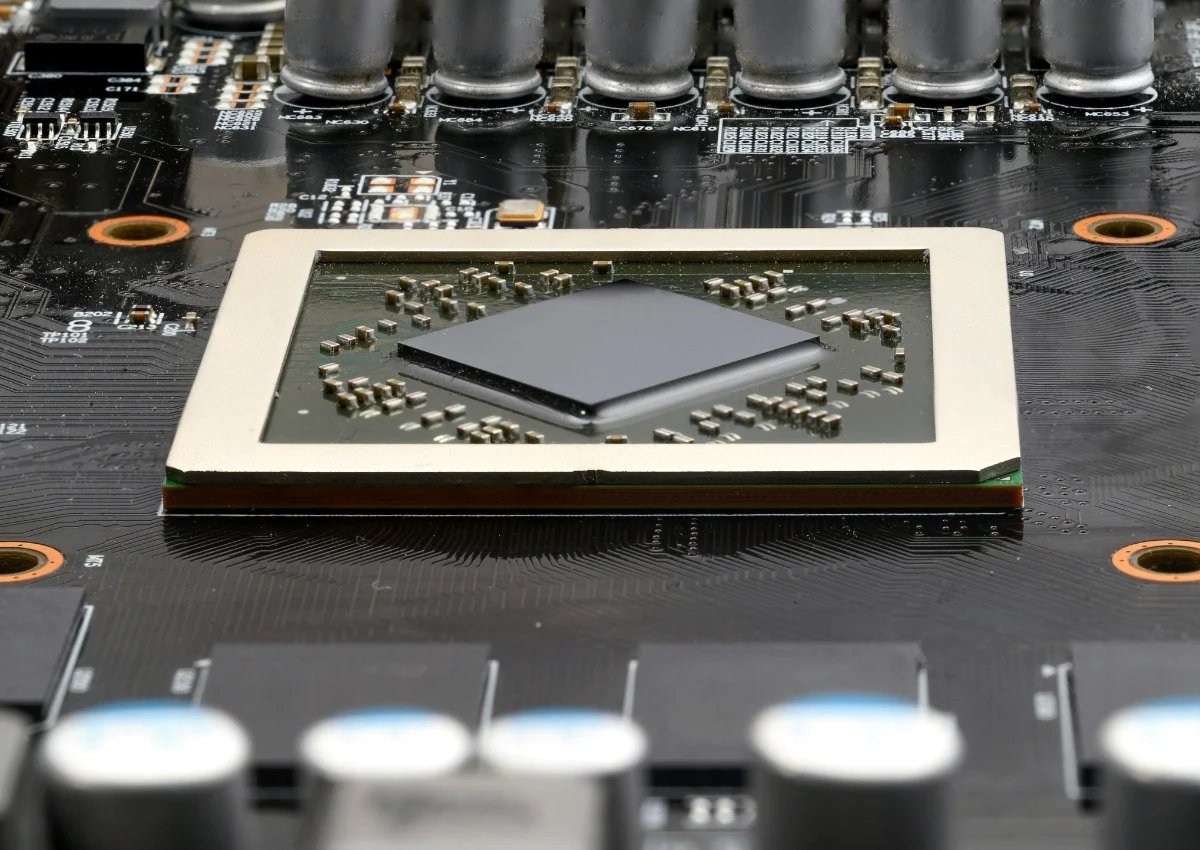
India’s GPU Boom: 17,000+ GPUs Successfully Installed Under the IndiaAI Mission

India’s GPU Boom: 17,000+ GPUs Successfully Installed Under the IndiaAI Mission

In an unprecedented stride toward digital empowerment, India has crossed a significant milestone by successfully installing over 17,300 GPUs under its ambitious IndiaAI Mission. Far from being a simple hardware update, this marks a tectonic shift in how the country envisions its role in the global AI landscape: not just as a user of AI, but as a builder, architect, and innovator.

At the heart of this transformation is the ₹10,372 crore initiative to establish a nationwide compute infrastructure. The response has been overwhelming—over 34,000 GPU proposals flooded in across the first two rounds, with the third already wrapped up and awaiting evaluation. These aren’t just numbers. They represent India's move to democratize AI access across startups, research labs, and public institutions through a model that’s affordable, shared, and scalable.

Sovereign Algorithms for a Diverse Nation

India’s true differentiator may lie not in the hardware, but in what it enables. Projects like Sarvam and Bhashini signal a shift from data sovereignty to algorithmic sovereignty—developing indigenous large language models trained on culturally grounded, linguistically diverse datasets. This is critical in a nation where Hindi and Tamil are just the tip of the linguistic iceberg.

UPI for AI? A Public Infrastructure Vision

Much like how UPI redefined digital payments, the government aims to create a public AI backbone through the IndiaAI Compute Portal and strategic ties with CDAC and NIC. By offering GPU access at up to 40% reduced cost, this infrastructure is turning AI from an elite tool into a public utility, allowing a biotech startup in Lucknow to tap the same resources as a research center in Bengaluru.

From Brain Drain to Brain Gain

India’s AI brainpower has often migrated in search of compute capacity—but that could change. With on-shore, cost-effective infrastructure, researchers and developers can now push boundaries from within India’s borders. This access isn’t just about convenience; it’s about creating a nurturing ecosystem that invites innovation to flow from India, for the world.

A Subtle Diplomatic Flex

While key partners like Nvidia are pivotal to this rollout—Yotta Data Services is deploying H100 GPUs en masse—the infrastructure itself remains rooted in Indian soil. This reflects a savvy, techno-strategic non-alignment: not beholden to any bloc, but assertively Indian in design and purpose.

India is betting big on compute capacity not just as a technical enabler, but as a lever of national influence and innovation. The GPU rollout is the foundation—but the edifice being built is one of sovereign innovation, equitable access, and global ambition. As the chips power up, so does a new chapter in India's AI story.

Intel’s Lunar Lake Processors for AI PCs Arriving by September This Year

Intel’s Lunar Lake Processors for AI PCs Arriving by September This Year

Intel's Lunar Lake processors, which is the company's upcoming 16th generation CPU and a part of Intel's client processor lineup, are set to make a significant impact in the market with their launch in Q3 2024.

The Core Architecture of Lunar Lake will feature a hybrid core architecture with 4 Performance (P) cores and 4 Efficiency (E) cores, providing a balanced design for both power and performance.

Lunar Lake will power more than 80 new laptop designs across more than 20 original equipment manufacturers (OEMs), delivering AI performance at a global scale for Copilot+ PCs. Lunar Lake will get the Copilot+ experiences, like Recall, via an update when available.

These processors are built on Intel's advanced 20A process node (which is equivalent to 2nm), enhancing performance and power efficiency, especially for mobility devices.

Lunar Lake is expected to be a groundbreaking mobile processor for AI PCs with more than 3 times the AI performance compared with the previous generation. An AI PC has a central processing unit (CPU), a graphic processing unit (GPU) and a neural processing unit (NPU), each with specific AI acceleration capabilities. An NPU is a specialized accelerator that efficiently handles AI and machine learning (ML) tasks right on your PC instead of sending data to be processed in the cloud. The AI PC is increasingly important as the need to automate, streamline and optimize tasks on the PC grows.

Lunar Lake's AI Capabilities is expected to give a significant boost in AI performance, thanks to the inclusion of a new Neural Processing Unit (NPU) capable of over 45 TOPS (Tera Operations per Second), making it four times more powerful than the NPU on Meteor Lake rated at 11 TOPS.

Lunar Lake will also feature the Xe2 GPU architecture, similar to Intel’s upcoming Battlemage discrete GPUs. This includes the Xe Matrix eXtension (XMX) cores, which should improve graphics capability significantly.

Key Features —

Performance: It is claimed to be 40% faster in Stable Diffusion 1.5 running on the GIMP photo editor when compared to the Snapdragon X Elite.

Power Efficiency: It promises the lowest power consumption seen from an x86 processor, which could be a game-changer for battery life in laptops and other portable devices.

Intel's Lunar Lake processors are poised to be a major step forward in the evolution of CPUs, offering improvements in AI, graphics, and power efficiency that could redefine the capabilities of next-generation laptops and other computing devices.

Intel's announcement comes as a competitive response to Qualcomm's Snapdragon X Elite processors, highlighting the intensifying race to dominate the Al and PC market. With such advancements, Lunar Lake processors are poised to power the next generation of Al personal computers, including the Microsoft Copilot+ PCs. 

OpenAI To Buy $51 Mn of AI Chips from OpenAI's CEO backed Startup

OpenAI To Buy $51 Mn of AI Chips from OpenAI's CEO backed Startup

ChatGPT maker OpenAI, in 2019, had signed a nonbinding agreement to spend $51 million on AI chips from a startup called Rain AI into which OpenAI CEO has invested in his personal capacity.

According to a report by Wired, Altman had personally invested by more than $1 million into Rain AI, by leading a seed round in the startup in July 2020. The letter of intent has not been previously reported. The AI Chip Startup is located less than a mile from OpenAI’s headquarters in San Francisco.

Founded in 2017, by Gordon Wilson, Jack Kendall and Juan Nino, Rain AI is working on a chip it calls a neuromorphic processing unit, or NPU, designed to replicate features of the human brain. The Sam Altman backed startup claims that its brain-inspired NPUs will yield potentially 100 times more computing power and, for training, 10,000 times greater energy efficiency than GPUs, primarily sourced from Nvidia.

Just a few days back, Biden-led US administration had reportedly forced a Saudi Aramco-backed venture capital firm Prosperity7, to sell its shares in Rain AI, reported Bloomberg.

Rain AI had also raised a small seed funding from the venture unit of Chinese search engine Baidu.

While Amazon and Google have spent years developing their own custom chips for AI projects. Altman has refused to rule out OpenAI making its own chips apparently because of the fact that unlike OpenAI Amazon and Google have other business verticals–revenues to fund the AI chip of their own.

Intel Unveils Arc Pro GPU Products

Today Intel introduced the Intel® Arc™ Pro A-series professional range of graphics processing units (GPUs). The first products are the Intel Arc Pro A30M GPU for mobile form factors and the Intel Arc Pro A40 (single slot) and A50 (dual slot) GPUs for small form factor desktops. They all feature built-in ray tracing hardware, machine learning capabilities and industry-first AV1 hardware encoding acceleration.

Intel Unveils Arc Pro GPU Products

Intel Arc Pro A-series graphics are targeting certifications with leading professional software applications within the architecture, engineering and construction, and design and manufacturing industries. Intel Arc Pro GPUs are also optimized for media and entertainment applications like Blender, and run the open source libraries in the Intel® oneAPI Rendering Toolkit, which are widely adopted and integrated in industry-leading rendering tools.

Intel Arc Pro GPUs will be available starting later this year from leading mobile and desktop ecosystem partners.

For developers and content creators attending SIGGRAPH on Aug. 8- 11, demos using Intel Arc Pro systems and Intel oneAPI Rendering Toolkit can be seen at the Intel Booth, #427.

Specifications

  Intel Arc Pro A40 GPU Intel Arc Pro A50 GPUIntel Arc Pro A30M GPU (Mobile)
Peak Performance3.50 TFLOPs at Single Precision4.80 TFLOPs at Single Precision3.50 TFLOPs at Single Precision
Xe-core8x Ray Trace Cores8x Ray Trace Cores8x Ray Trace Cores
Memory6GB GDDR66GB GDDR64GB GDDR6
Display Outputs4x mini-DP 1.4 with Audio Support4x mini-DP 1.4 with Audio SupportLaptop Specific with Support for up to 4x
General50w Peak Power in a Single Slot Form Factor75w Peak Power in a Dual Slot Form Factor35-50w Peak Power and ISV Software Certified

NVIDIA Introduces GeForce RTX 3060, Next Generation of the World’s Most Popular GPU


NVIDIA today announced that it is bringing the NVIDIA Ampere architecture to millions more PC gamers with the new GeForce® RTX™ 3060 GPU.
 
With its efficient, high-performance architecture and the second generation of NVIDIA RTX™, the RTX 3060 brings amazing hardware ray-tracing capabilities and support for NVIDIA DLSS and other technologies, and is priced at INR 29,500.
 
NVIDIA’s 60-class GPUs have traditionally been the single most popular cards for gamers on Steam, with the GTX 1060 long at the top of the GPU gaming charts since its introduction in 2016. An estimated 90 percent of GeForce gamers currently play with a GTX-class GPU.
 
“There’s unstoppable momentum behind ray tracing, which has quickly redefined the new standard of gaming,” said Matt Wuebbling, vice president of global GeForce marketing at NVIDIA. “The NVIDIA Ampere architecture has been our fastest-selling ever, and the RTX 3060 brings the strengths of the RTX 30 Series to millions more gamers everywhere.”
 
With newer gaming titles come bigger worlds with cinematic graphics and real-time ray tracing — these are gaming workloads that only RTX-powered platforms are suited to handle. The GeForce RTX 3060 has twice the raster performance and 10x the ray-tracing performance of the GTX 1060, making it a formidable upgrade opportunity and the foundation of a gaming PC platform powerful enough to handle cutting-edge titles such as Cyberpunk 2077 and Fortnite with RTX On at 60 frames per second.
 
The RTX 3060’s key specifications include:
 
  • 13 shader-TFLOPs
  • 25 RT-TFLOPs for ray tracing
  • 101 tensor-TFLOPs to power NVIDIA DLSS (Deep Learning Super Sampling)
  • 192-bit memory interface
  • 12GB of GDDR6 memory
 
Resizable BAR will be supported on the GeForce RTX 30 Series starting with the RTX 3060. When combined with a compatible motherboard, this advanced PCI Express technology enables all of the GPU memory to be accessed by the CPU at once, providing a performance boost in many games.

Like all RTX 30 Series GPUs, the RTX 3060 supports the trifecta of GeForce gaming innovations: NVIDIA DLSS, NVIDIA Reflex and NVIDIA Broadcast, which accelerate performance and enhance image quality. Together with real-time ray tracing, these technologies are the foundation of the GeForce gaming platform, which brings unparalleled performance and features to games and gamers everywhere.
 
NVIDIA DLSS: The AI Gift That Gamers Love
AI is revolutionizing gaming — from in-game physics and animation simulation to real-time rendering and AI-assisted broadcasting features. Powered by dedicated AI processors on GeForce RTX GPUs called Tensor Cores, NVIDIA DLSS boosts frame rates while generating beautiful, crisp game images and gives gamers the performance headroom to maximize ray-tracing settings and increase output resolutions. DLSS is available in more than 25 games, with more added every month.
 
NVIDIA Reflex and Broadcast: The Ultimate Play
NVIDIA Reflex technology reduces system latency (or input lag), making games more responsive and giving players in competitive multiplayer titles an edge over the opposition. NVIDIA Broadcast is a suite of audio and video AI enhancements, including virtual backgrounds, motion capture and advanced noise removal, that users can apply to chats, Skype calls and video conferences.
 
Advanced GeForce Experience Features
All NVIDIA GeForce GPUs benefit from GeForce Experience™, a tool used by tens of millions of gamers to optimize game settings, record and upload gameplay, stream gameplay, take screenshots, and download and install Game Ready® Drivers. The latest features include:
 
  • One-click automatic GPU Tuning: GeForce Experience now supports GPU Tuning, which can automatically create overclocking profiles by using an advanced scanning algorithm.
  • Enhanced in-game monitoring overlay: GeForce Experience’s already robust in-game overlay now adds performance stats, temperatures and latency metrics, including NVIDIA Reflex Latency Analyzer stats.
 
Where to Buy
The GeForce RTX 3060 will be available in late February, starting at INR 29,500, as custom boards — including stock-clocked and factory-overclocked models — from top add-in card providers such as ASUS, Colorful, EVGA, Gainward, Galaxy, Gigabyte, Innovision 3D, MSI, Palit, PNY and Zotac. Look for GeForce RTX 3060 GPUs at major retailers and etailers, as well as in gaming systems by major manufacturers and leading system builders worldwide.


Market Reports

Market Report & Surveys
IndianWeb2.com © all rights reserved