‏إظهار الرسائل ذات التسميات Clean Fuel. إظهار كافة الرسائل

Delhi Goes Green: Only Clean-Fuel Fleets Allowed from 2026!

Delhi Goes Green: Only Clean-Fuel Fleets Allowed from 2026!

Delhi is taking a big step toward cleaner air! Starting January 1, 2026, only electric or CNG vehicles will be allowed in the fleets of cab aggregators, delivery firms, and e-commerce companies operating in Delhi-NCR. This means no new petrol or diesel-powered vehicles can be added to their fleets.

Additionally, from November 1, 2026, only BS-VI diesel, CNG, or electric buses will be permitted to enter Delhi under various service permits, including tourist, school, and institutional transport. The move is part of a broader effort to tackle air pollution, which remains a major concern in the capital.

This shift aligns with Delhi’s Motor Vehicle Aggregator and Delivery Service Provider Scheme, 2023, which requires companies with more than 25 vehicles to register them for monitoring. The Commission for Air Quality Management (CAQM) has also urged Haryana, Uttar Pradesh, and Rajasthan to adopt similar rules, especially in high-traffic cities like Gurugram, Noida, Ghaziabad, and Faridabad.

Challenges During Implementation

Delhi’s clean-fuel mandate is ambitious, but implementation won’t be smooth sailing. Here are some key challenges:

1. Fleet Transition Costs – Many cab aggregators and e-commerce companies will need to replace petrol and diesel vehicles with electric or CNG alternatives, which can be expensive. Smaller operators may struggle with the financial burden.

2. Charging Infrastructure – While Delhi has been expanding its EV charging network, the demand for charging stations will surge. Ensuring enough fast-charging points, especially for high-usage fleets, will be critical.

3. Interstate Coordination – The policy applies to vehicles entering Delhi, but enforcement across neighboring states like Haryana, Uttar Pradesh, and Rajasthan remains uncertain. Without strict coordination, older polluting vehicles could still find ways into the city.

4. Compliance & Enforcement – Monitoring thousands of vehicles to ensure compliance will require robust tracking systems. The government plans to use ANPR (automatic number plate recognition) cameras to restrict entry of non-compliant vehicles, but effective enforcement will be key.

5. Public Transport Adjustments – The transition for buses will take time, especially for private operators. Ensuring enough BS-VI diesel, CNG, or electric buses are available by the 2026 deadline will be a logistical challenge.

6. Consumer & Operator Resistance – Some fleet owners may push back against the mandate, citing operational difficulties or cost concerns. Public awareness campaigns and incentives will be needed to encourage adoption.

Despite these hurdles, the policy is a bold step toward cleaner air. Do you think Delhi can overcome these challenges, or will enforcement gaps slow progress?

What do you think—will this significantly improve Delhi’s air quality? Or do you see challenges in implementation? Comment your opinion below.... 

Noida-based Nexgen Energia Secures $1 Bn from Capital Edge

Noida-based Nexgen Energia Secures $1 Bn from Capital Edge

In a big news for India's green energy sector, NexGen Energia, a Noida-based firm specializing in Compressed Bio-Gas (CBG) production, has secured a $1 billion investment from Capital Edge, a Kuwaiti investment company. 

This funding will help NexGen Energia expand its CBG infrastructure across India, supporting the country's transition to clean energy and energy self-reliance.

The funding is equity-based, allowing NexGen Energia to scale operations without short-term repayment pressure.

The company aims to establish 1,000 CBG plants by 2026, contributing to India's clean energy transition. The investment aligns with India's National Bio-Energy Mission, which promotes bio-energy initiatives for sustainability and carbon neutrality.

The Kuwaiti firm, Capital Edge, specializes in high-impact investments across Asia, Africa, and the Middle East, focusing on scalable, sustainable projects.

The company aims to set up 1,000 CBG plants by 2026, significantly boosting India's renewable energy capacity 1. With the Indian government actively promoting bio-energy initiatives, this investment aligns well with national goals for sustainability and carbon neutrality.

NexGen Energia’s Director of Sales, Nishant Tiwari, emphasized that this funding will accelerate their vision of a greener India, fostering innovation, job creation, and energy independence.

Noida-based Nexgen Energia Secures $1 Bn from Capital Edge

This $1 billion investment in NexGen Energia's Compressed Bio-Gas (CBG) infrastructure is a significant step for India's renewable energy sector and has multiple far-reaching implications such as Job Creation, as setting up 1,000 CBG plants will generate employment opportunities, especially in rural areas. Moreover, farmers can sell agricultural waste to CBG plants, creating an additional revenue stream.

Globally, investments in renewable energy have surged, with clean energy spending now nearly double that of fossil fuels. In 2024, total energy investment is expected to exceed $3 trillion, with $2 trillion allocated to clean energy technologies and infrastructure.

Indian Oil-GPS Renewables JV is investing 1,200 crore to set up 10 CBG plants across India in FY26. These plants will produce 5,475 tonnes per annum (TPA) of CBG, along with fertilizers and biomass pellets. Locations include Haryana, Uttar Pradesh, Chhattisgarh, and Andhra Pradesh.

Last November, Reliance Industries announced a massive investment of ₹65,000 crore (approximately US$ 7.5 billion) to set up 500 CBG plants in Andhra Pradesh over the next 5 years.

The SATAT initiative (Sustainable Alternative Towards Affordable Transportation) aims to establish 5,000 CBG plants by 2023-24, with an estimated investment of ₹2 lakh crore. This program is designed to boost clean fuel availability and create employment opportunities.

Financial analyses indicate that CBG investments offer promising returns, with growing demand for biomass blending in coal-based power plants and fertilizer markets. However, challenges include securing skilled manpower and ensuring stable feedstock supply.

Asia's Largest Compressed Biogas (CBG) Plant Coming Up Gujarat's Navsari; To Produce Over 16K Tons of Biogas Annually

Asia's Largest Compressed Biogas (CBG) Plant Coming Up Gujarat's Navsari; To Produce Over 16K Tons of Biogas Annually

  • Gruner Renewable to Build Asia’s largest CBG Plant in Gujarat; to Invest Rs 220 crores
  • Gujarat is currently seeing significant interest in the green energy space, with major Indian business conglomerates announcing new renewable energy projects in the state.

Gruner Renewable Energy, in collaboration with a leading business conglomerate, is all set to establish Asia's largest Compressed Biogas (CBG) plant in Navsari, Gujarat. This will mark a significant step towards a cleaner and greener future for India and in line with the government’s efforts to increase dependency on renewable energy solutions. The estimated cost of this plant at Navsari is approximately Rs. 220 crores.

The flagship CBG plant in Navsari is expected to produce an impressive 44 tons of biogas per day (TPD) using cost-effective feedstocks such as paddy, pressmud, canetrash and OF MSW. This equates to an annual production of over 16,000 tons of biogas, highlighting the plant's significant contribution to PM Narendra Modi's vision for India's energy independence and sustainability goals.

Gujarat is currently experiencing a surge of interest in the green energy sector, with major Indian business entities announcing new renewable energy projects in the state. In 2018, Gujarat pioneered the nation's first Hybrid Policy, resulting in an installed capacity of 1,373 MW. Beyond wind and solar energy, the state has diversified its renewable energy portfolio.

Utkarsh Gupta, Founder & CEO of Gruner Renewable Energy, emphasized the company's efforts to address climate change and promote economic growth through sustainable energy solutions. “Since our inception in 2023, Gruner has been committed to mitigating climate risks by converting waste into biogas, thereby promoting environmental sustainability. As India work towards decreasing reliance on fossil fuels, opening of plants like Navsari is going to play a critical role in meeting our goals of championing sustainable energy solutions. Furthermore, in addition to generating employment opportunities within the biofuel sector, the establishment of CBG plants will significantly reduce our country's crude oil import bill,” added Gupta.

The Navsari CBG plant is a crucial step in India's CBG-based rural economy master plan. The local population will directly or indirectly benefit by the opening of this plant with work opportunities created for stakeholders like farmers, suppliers, labourers and youth among others.

Gruner has strategically planned this facility, from selecting high-yielding and cost-effective feedstocks like pressmud, paddy, OF MSW and canetrash to its optimal location. These choices will ensure high-quality biofuel production while simplifying the feedstock supply chain, improving availability, and eliminating pretreatment costs. Additionally, by converting industrial waste products into CBG, the new plant will address disposal challenges and help to reduce environmental pollution.

While speaking at the inaugural ceremony of India Energy Week (IEW) earlier this year, PM Modi stated that India’s energy sector will see an investment of over $67 billion over the next five years. He also unveiled plans for the establishment of 5,000 CBG plants across India.

Based on Indian Oil Corporation Ltd. (IOCL’s) white paper on CBG, the estimated CBG potential from various sources in India is nearly 62 million metric tons (MMT) with bio manure generation capacity of 370 MMT.

According to data from the Petroleum Planning and Analysis Cell, India's gas production stands at 29,769 million metric standard cubic meters (mmscm) against a consumption of 55,256 mmscm. This results in a shortfall of 25,488 mmscm, or 46.12% of total consumption, currently met through imports. “CBG has the potential to bridge this gap, and Gruner Renewable Energy recognized this critical need early on, understanding the importance of CBG in the growth of India's renewable energy sector. We expect that the push for renewable energy will further strengthen under the term of the new government,” said Gupta.

With an unwavering focus on innovation and sustainability, Gruner Renewable Energy continues to spearhead the revolution in the biogas industry. The company remains steadfast in its commitment to delivering cutting-edge solutions that drive business growth while fostering positive environmental and societal impacts.

About Gruner Renewable Energy:

Established in February 2023, Gruner Renewable Energy has quickly become a premier provider of sustainable energy solutions, dedicated to reducing carbon footprints and achieving sustainability objectives. Leveraging advanced German technology, the company offers end-to-end solutions encompassing the entire plant setup process. Gruner Renewable is a proud member of the Indian Biogas Association, driven by a vision to revolutionize India's energy industry.

Gruner Renewable excels in installing top-tier biogas plants known for their affordability and user-friendliness. Headquartered in Noida, the company has achieved remarkable success in a short period, surpassing a turnover of INR 40 crores within just five months of its inception and currently managing over 50 projects. Starting with a team of four, Gruner has grown into a conglomerate with 200 employees.

Gruner Renewable Energy is committed to paving the way for a greener and more sustainable future. Their expertise in biogas production aims to mitigate environmental impact while promoting renewable energy sources. The company's strategic approach to using high-yield, cost-effective feedstocks ensures the production of high-quality biofuel, addressing significant waste disposal challenges and contributing to a cleaner environment.

Results of World’s 1st In-Flight Study of Commercial Aircraft Using 100% Sustainable Aviation Fuel is Out, and Its Promising

Results of World’s 1st In-Flight Study of Commercial Aircraft Using 100% Sustainable Aviation Fuel is Out and Promising
  • In-flight measurements from an A350 aircraft using 100% sustainable aviation fuel (SAF) show a significant reduction in soot particle emissions and formation of contrail ice crystals compared to using conventional aviation fuel
  • Global model simulations estimate 26% reduction in contrails' climate impact when using 100% SAF
The world's first in-flight study of commercial aircraft using 100% sustainable aviation fuel (SAF) has is out now and has shown promising results. The study, which involved an Airbus A350 aircraft powered by Rolls-Royce Trent XWB engines, revealed a significant reduction in soot particle emissions and the formation of contrail ice crystals when compared to conventional Jet A-1 fuel.

The Emission and Climate Impact of Alternative Fuels (ECLIF3) study, in which Airbus, Rolls-Royce, the German Aerospace Center (DLR) and SAF producer Neste collaborated, was the first to measure the impact of 100% SAF use to emissions from both engines of an Airbus A350 powered by Rolls-Royce Trent XWB engines and followed by a DLR chase plane.

Results of World’s 1st In-Flight Study of Commercial Aircraft Using 100% Sustainable Aviation Fuel is Out, and Promising


To give an idea of what contrails are, — the white streaks you see coming off high-flying jet airplanes are called contrails, which is short for condensation trail. Contrails are clouds that form when water vapor condenses and freezes around small particles (aerosols) in aircraft exhaust.

The impact of contrails was estimated to be reduced by at least 26 percent with 100% SAF use compared to contrails resulting from the Jet A-1 reference fuel used in ECLIF3.

Key findings from the study include:
  • A 56% reduction in the number of contrail ice crystals per mass of unblended SAF consumed.
  • An estimated 26% reduction in the climate impact of contrails, according to global model simulations by the German Aerospace Center (DLR).
The results suggest that using 100% SAF could significantly reduce the short-term climate impact of aviation by reducing non-CO2 effects such as contrails, in addition to lowering CO2 emissions over the lifecycle of SAF. This is a clear indication of the effectiveness of SAF towards climate-compatible aviation and a step forward in mitigating the environmental impact of air travel.

These results show that using SAF in flight could significantly reduce the climate impact of aviation in the short term by reducing non-CO2 effects such as contrails, in addition to reducing CO2 emissions over the lifecycle of SAF.

Click here to read the full report.

India Mandates Blending of Compressed Bio-Gas in CNG (Transport) and PNG (Domestic) Segments of CGD Sector

India Mandates Blending of Compressed Bio-Gas in CNG (Transport) and PNG (Domestic) Segments of CGD Sector
  • CBG Blending Obligation (CBO) to encourage investment and facilitate establishment of 750 CBG projects by 2028-29 : Petroleum Minister Hardeep S Puri
  • CBO to help in saving forex, promoting circular economy and achieving Net Zero Emission
  • Sustainable Aviation Fuel (SAF/Bio- ATF) indicative blending percentage targets set
  • Production of ethanol from maize to be promoted through various multidepartment initiatives
  • CBG Blending Obligation (CBO) will promote production and consumption of Compressed Bio-Gas (CBG) in the country, said Shri Hardeep Singh Puri, Minister of Petroleum & Natural Gas and Housing & Urban Affairs.
In a major step towards enhancing use and adoption of CBG, the National Biofuels Coordination Committee (NBCC), chaired by Union Petroleum Minister announced yesterday the introduction of phase wise mandatory blending of CBG in CNG (Transport) & PNG (Domestic) segments of City Gas Distribution (CGD) sector.

The key objectives of the CBO are to stimulate demand for CBG in CGD sector, import substitution for Liquefied Natural Gas (LNG), saving in Forex, promoting circular economy and to assist in achieving the target of net zero emission etc. Highlighting the key outcomes of the CBO, Shri Puri Said that it will encourage investment of around Rs. 37500 crores and facilitate establishment of 750 CBG projects by 2028-29.

It was, inter-alia, decided that:
  1. CBO will be voluntary till FY 2024-2025 and mandatory blending obligation would start from FY 2025-26.
  2. CBO shall be kept as 1%, 3% and 4% of total CNG/PNG consumption for FY 2025-26, 2026- 27 and 2027-28 respectively. From 2028-29 onwards CBO will be 5%.
  3. A Central Repository Body (CRB) shall monitor and implement the blending mandate based on the operational guidelines approved by Minister, PNG.
Discussions also took place for promoting production of ethanol from maize with all stake holders especially with Department of Agriculture and Department Food and Public distribution (DFPD) to make it a prominent feedstock in coming years. It was discussed that the last few years there is increase in Maize cultivation area, yield per hectare and production. Work has been initiated by this ministry in consultation with Department of Agriculture and DFPD to further develop high starch yielding varieties, improve quality of maize DDGS (Dried Distillers Grain Solids) by removing aflatoxins, faster registration of new seed varieties with high starch. To further promote maize training program for distillers with seed companies has also been initiated.

On Friday, another important announcement was made for promoting biofuels in the country. Sustainable Aviation Fuel (SAF/Bio- ATF) initial indicative blending percentage targets were set by the committee. Based on the comments received from the stakeholders, like MoCA, Niti Aayog, OMCs, etc., the capacities of Sustainable Aviation Fuel plants coming up in the country and projected ATF sales, the following initial indicative blending percentages of SAF in ATF are approved:1% SAF indicative blending target in 2027 ( Initially for International flights) 2% SAF blending target in 2028 (Initially for International flights). 

Germany’s Bioenergy Ties with Noida-based Gruner Renewables To Introduce India's 1st Napier Grass Bio CNG Plant

Germany’s Bioenergy Ties with Noida-based Gruner Renewables To Introduce India's 1st Napier Grass Bio CNG Plant

Bio Energy, a German company that provides technology and engineering design for biomass-based gas plants, has partnered with Noida-based Gruner Renewable Energy (GRE), to Enter India market.

Founded by Uttkarsh Gupta, GRE is sustainable energy company that creates renewable fuel from biomass and bio wastes. The partnership with BioEnergy Germany will introduce India's first Napier Grass Bio CNG Plant.

On Sunday, GRE and BioEnergy Germany signed the partnership agreement to develop 100 BioCNG plants using multiple feedstocks like Napier grass, in India.

Napier grass, elephant grass or Uganda grass, is a species of perennial tropical grass native to the African grasslands. It is specifically stored for the production of biofuels and bio-based products, primarily due to its high cellulose content (34.2-40%), high yields per unit area and drought tolerance.

The Napier grass based bio CNG plant is scheduled to be completed in November and is coming up in Lasanpur Village, Wardha district of Maharashtra. With completion of this state-of-the-art plant, a significant milestone will achieved for India's quest for cleaner and greener energy solutions.

The plant is said to be inspired by the Union transport minister Nitin Gadkari’s speeches, and is claimed to be the country’s first bio-CNG plant using Napier grass as feedstock.

Till date, Napier grass is mainly used in India as a fodder crop, used as feed to the cattle directly or made as hay or even silage to feed farm animals.

The upcoming plant in Maharashtra will not only provide a clean and reliable energy source but will also promote agricultural sustainability and provide new avenues for rural development.

The 20-year-old BioEnergy has built over 300 plants in 12 countries and is currently building the world’s biggest one, in Malawi in southern Africa (where the gas will fuel a 56 MW power plant). BioEnergy has experience in handling 580 types of feedstock.

In India, the reported annual production yield of Napier grass ranges from 150-200 tonnes per acre per year, which is significantly higher (25-35 tonnes per hectare) compared to other energy grasses like miscanthus and switchgrass.

This fast-growing Napier grass can reach a height of 10-15 feet and can be harvested 5-6 times annually.

In February this year, Delhi based CEF Group announced of setting up multiple waste processing plants in various locations in Uttar Pradesh to address the problem of waste mismanagement and augment bio-fuel production, utilising Napier grass as one of the sources for bioenergy. The group is investing ₹650 crore for the same.

Late last month, the GOBARdhan initiative of the Union Government, has said that in a short span of just 60 days, over 1200 plants including 320 CBG plants and 892 Biogas plants, spread across the length and breadth of the country, covering as many as 450 districts have been registered on the GOBARdhan portal.

Sustainable Fuel: Bharat Petroleum Pioneers Ethanol Blended Diesel and Flex Fuel Program

Sustainable Fuel: Bharat Petroleum Pioneers Ethanol Blended Diesel and Flex Fuel Program
  • BPCL showcases commitment to sustainable fuel solutions by promoting alternative fuels and reducing carbon emissions
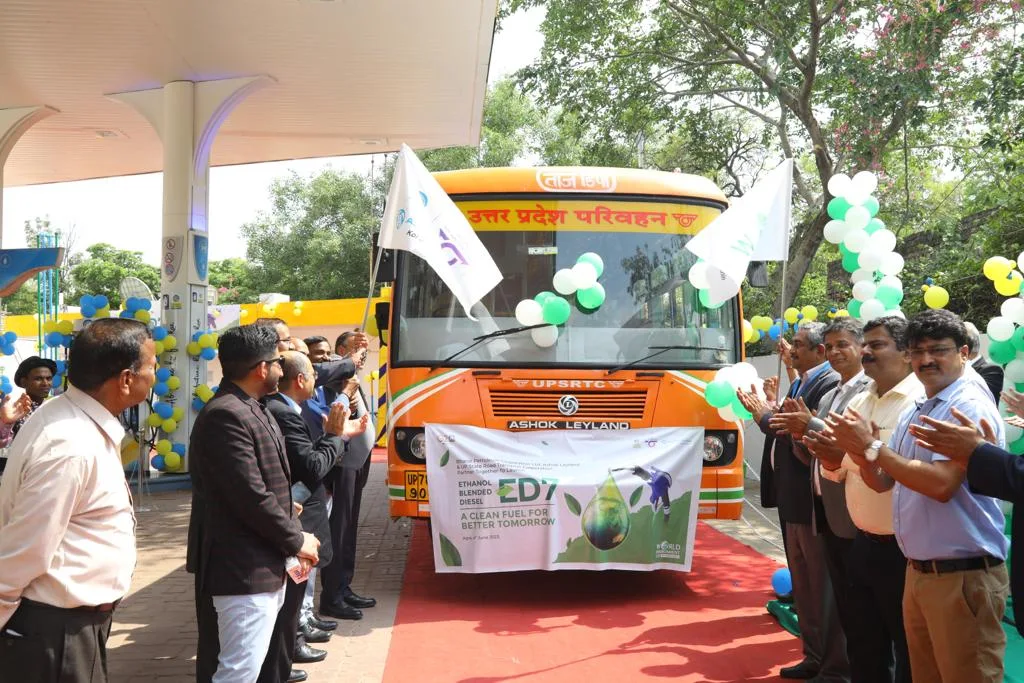
  • Flag off event features motorcycles fueled by Flex Fuel (Petrol blended with 27% ethanol, E27 & Petrol blended with 85 % ethanol) and bus fueled by ED7 (Diesel blended with 7% ethanol), demonstrating the potential of these innovative fuel options
  • The pilot program marks an important milestone in this journey, showcasing BPCL's leadership and innovation in the pursuit of a cleaner and more sustainable future
Bharat Petroleum Corporation Ltd., a leading provider in the energy sector, and Ashok Leyland have initiated a pilot program to test the effectiveness of ED7 (Diesel blended with 7 % Ethanol) fuel. This program aims to transform India's bio-fuel economy and achieve a stable energy mix.

The ED7 (Diesel blended with 7 % Ethanol) fuel blend, developed by BPCL-R&D, consists of 93% diesel and 7% ethanol. The blend has undergone rigorous testing and validation on engine test bench in collaboration with Ashok Leyland.

Sustainable Fuel: Bharat Petroleum Pioneers Ethanol Blended Diesel and Flex Fuel Program

Shri G. Krishnakumar, Chairman & Managing Director, BPCL, said, “In pursuit of India’s commitment towards NET ZERO, BPCL is developing sustainable fuel options under the clean fuel development program in association with leading automotive OEM’s, Ashok Leyland and Hero MotoCorp is committed towards developing sustainable fuel options. BPCL has commenced supply of E20 in many cities across the nation. Today’s flag off of the Pilot ED7(Diesel blended with 7% Ethanol) for buses with Ashok Leyland and flex fuels (E27&E85) for two wheelers along with Hero Mototcorp is a step by BPCL towards our country's aim of reducing import bill & providing sustainability. Increased use of Ethanol enables farmers transforming from अन्नदाता से उर्जादाता। This world environment day, BPCL takes a lead to move towards cleaner fuels for a better tomorrow.”

Shri Sukhmal Jain, Director (Marketing), BPCL, said, “BPCL has been a pioneer in Fuel Retailing initiatives, leading the transformation towards a sustainable future. The field pilot of ED7 (Diesel blended with 7% Ethanol) and Flexi Fuel is an ambitious initiative to enhance the economic prosperity of large farming population and its contribution in India’s GDP, as well as drive a change to a cleaner and greener future.”

Ashok Leyland conducted extensive laboratory trials on their engines using the ED7 (Diesel blended with 7 % Ethanol) fuel. The ED7 (Diesel blended with 7% Ethanol) fuel blend showcases a remarkable reduction in pollution levels, including Particulate Matter and Nitrogen oxides (NOx). The blend can be seamlessly adopted by diesel vehicles without requiring any significant modifications in engine. After pilot program, a comprehensive report will be submitted to ARAI, the Ministry of Road Transport & Highways, and the Ministry of Petroleum and Natural Gas, for developing roadmap for commercial implementation of the fuel. With ethanol readily available in India, the study targets to establish ethanol blend in diesel to the tune of 7%, with an aim to reduce energy bill for the country.

Hero MotoCorp, in alignment with its vision of being the future of mobility, has developed a Flex-Fuel Prototype at its Centre of Innovation and Technology (CIT) in Jaipur. The vehicle, equipped with a 125cc BS6 engine, can run on ethanol-blended petrol mixtures ranging from 20% (E20) to 85% (E85) ethanol blends. The Flex-Fuel Prototype utilizes advanced software to detect the ethanol blend in the fuel and adjust engine control parameters accordingly, ensuring a trouble-free riding experience. The engine's performance and emissions remain uncompromised across the entire blend range.

BPCL, Ashok Leyland, and Hero MotoCorp's initiatives mark significant milestones in India's journey towards a greener and more sustainable future, aligning with the Government of India's vision to promote renewable fuel technologies, reduce carbon emissions, and foster economic stability.

About Bharat Petroleum Corporation Ltd. (BPCL):

Fortune Global 500 Company, Bharat Petroleum is the second largest Indian Oil Marketing Company and one of the premier integrated energy companies in India, engaged in refining of crude oil and marketing of petroleum products, with a significant presence in the upstream and downstream sectors of the oil and gas industry. The company attained the coveted Maharatna status, joining the elite club of companies having greater operational & financial autonomy.

Bharat Petroleum’s Refineries at Mumbai, Kochi and Bina Refinery have a combined refining capacity of around 35.3 MMTPA. Its marketing infrastructure includes a network of installations, depots, energy stations, aviation service stations and LPG distributors. Its distribution network comprises over 21,000 Energy Stations, over 6,200 LPG distributorships, 525 Lubes distributorships, 123 POL storage locations, 53 LPG Bottling Plants, 70 Aviation Service Stations, 4 Lube blending plants and 4 cross-country pipelines.

Bharat Petroleum is integrating its strategy, investments, environmental and social ambitions to move towards a sustainable planet. The company has chalked out the plan to offer electric vehicle charging stations at around 7000 energy stations over next 5 years.

With a focus on sustainable solutions, the company is developing a vibrant ecosystem and a road-map to become a Net Zero Energy Company by 2040, in Scope 1 and Scope 2 emissions. Bharat Petroleum has been partnering communities by supporting innumerable initiatives connected primarily in the areas of education, water conservation, skill development, health, community development, capacity building and employee volunteering. With ‘Energising Lives’ as its core purpose, Bharat Petroleum’s vision is to be the most admired global energy company leveraging talent, innovation & technology.

Govt Holding Conference To Explore Consumer-Centric Approaches for India's Electric-Cooking Transition

Govt Holding Conference To Explore Consumer-Centric Approaches for India's Electric-Cooking Transition

More than 70% of Indian households use LPG as their primary cooking fuel and nearly 85% have LPG connections, according to an independent study by the Council on Energy, Environment and Water (CEEW).

Notably, in the year 2022, India imported over 17 million metric tons of LPG, an increase from the year 2021.

With rising fuel prices and increasing supply pressures, India needs a clean, sustainable and affordable e-cooking solution – one that also reduces its dependence on imports and increases energy security.

Besides, the IEA estimates that cooking resulted in 498 Mt of CO2 emissions in 2020.

Having said that, on this year's World Environment Day, celebrated on June 5, 2023, the Government of India is holding a “Conference on Consumer-Centric Approaches for E-cooking Transition” in New Delhi, in order to reduce India's dependency on traditional fuels and LPG. 

The World Health Organization (WHO) estimates that 50% of the global population currently relies on gas, including LPG, as their primary cooking fuel, representing almost 70% of all urban dwellers and 30% of rural populations.

In India, 54% of households continue to use traditional solid fuels such as firewood, dung cakes, agriculture residue, charcoal, and kerosene, either exclusively or by stacking them with LPG, increasing the exposure to indoor air pollution.

As per the WHO report, in low- and middle-income countries, 3.2 million premature deaths occur each year from illnesses attributable to the household air pollution caused by cooking with solid fuel and kerosene.

The Conference 

Conference on Consumer-Centric Approaches for E-cooking Transition

The upcoming conference, on this World Environment Day, will explore pathways to accelerate the deployment of energy-efficient, clean and affordable electric-cooking solutions. Organized by the Bureau of Energy Efficiency (BEE), Ministry of Power, Government of India, in collaboration with CLASP, the conference brings together institutional consumers, consumer research groups, policy makers, think tanks, manufacturers, and other enablers to drive dialogue and discuss strategy for the transition to electric cooking.

The conference on Consumer-Centric Approaches for E-cooking Transition will explore enablers for adoption of e-cooking solutions such as finance, demand aggregation, carbon credits and business models. It will also brainstorm on consumer-centric approaches and behaviours to bring about the e-cooking transition.

In addition, the conference will have a presentation by Energy Efficiency Services Limited, on e-cooking market transformation program and a presentation by BEE on initiatives undertaken to promote e-cooking. Additional Secretary, Ministry of Power, Ajay Tewari will deliver the special address while Director General, Bureau of Energy Efficiency, Abhay Bakre will deliver the keynote address.

The conference is being held at Salon West, Hyatt Regency, New Delhi.

Electric Cooking Appliances

In electric cooking technologies, there are two options — Electric Heating and Induction.

A traditional electric stove has a glass or ceramic cooking surface with heating elements underneath. As the coil gets hot, it starts to glow and transfers the heat to the surface through infrared energy.

While Induction technology, which uses magnetic current instead of infrared energy, has advanced to offer the most sophisticated cooktop experience today. Induction technology is safer, cooler and easier to clean.

However, availability of electricity is still a concern for regions facing scarcity of the electricity or for communities experiencing energy poverty. But expert research shows that solutions like electric pressure cookers and low wattage induction cooktops are cheaper than LPG in many regions.

Speaking on the government’s thrust on clean cooking, Additional Secretary, Ministry of Power, Ajay Tewari said: “Recognizing the health, economic, and environmental benefits of clean cooking, the Government of India has prioritised policies that promote cleaner cooking fuels. With tremendous strides being made on electrification, as well as an increasing share of electricity supply being generated from renewable energy, electric cooking solutions provide a great opportunity to propel India towards a climate-friendly, healthier and sustainable future.

The focus on electric cooking is based on the recognition that e-cooking is a key pathway to Mission LiFE (Lifestyle for Environment), an India-led global mass movement to nudge individual and community action to protect and preserve the environment.

Launched by Prime Minister Narendra Modi at the 26th UN Climate Change Conference of the Parties (COP26) in Glasgow in 2021, Mission LiFE seeks to transform persons into pro-planet people, who would adopt sustainable lifestyles.

Buyofuel Joins Hands With Sai Vasudev Briquettes to Make Biomass Fuel Available, Affordable, Accessible for All

Buyofuel Joins Hands With Sai Vasudev Briquettes to Make Biomass Fuel Available, Affordable, Accessible for All

Under this partnership, the leading online marketplace for green fuels will make biomass briquettes available on its platform for buying and selling.

Buyofuel will support the manufacturer with regular supply of raw materials including agricultural waste sourced from farmers to empower stakeholders and build a circular economy.

Taking another leap towards making cleaner energy sources available, affordable and accessible for all, Buyofuel has entered a partnership with Sai Vasudev Briquettes. Under this partnership, the company, which is India's leading online marketplace for green fuels, will make environment-friendly biomass briquettes available for buying and selling on its platform.

A briquette (also spelled briquet) is a compressed block of coal dust or other combustible material (such as charcoal, sawdust, wood chips, peat, or paper) used for fuel as well as for kindling to start a fire.

Currently, briquetting is one of the suitable evolving technologies of waste materials conversion to solid biofuels for clean fuel or energy purposes. 

Notably, Buyofuel has built a vast network of raw material aggregators, biofuel manufacturers, fuel consumers and waste generators to bridge the demand and supply gap. With this partnership, it aims to benefit its partners by making trading of briquettes easier and hassle-free. This step is further aligned with its goal of replacing conventional energy sources, utilizing waste materials, accelerating decarbonisation and building a circular economy.

According to Buyofuel, the switch to cleaner energy is gaining pace as industries and organizations are putting sustainability at the core of their strategies. This transition has heightened the demand for biomass briquettes which are great replacements for conventional, carbon-emitting fuels to reduce greenhouse gases emissions and support the larger goal of achieving sustainable development goals. The partnership will make briquettes more accessible and will accelerate replacement of fossil fuels. This will also pave the way for unconventional raw materials like dust generated from coir manufacturing, garden waste, etc. to become a part of the biofuel value chain.

Speaking about the partnership, CEO of Buyofuel, Mr. Kishan Karunakaran said," Our partnership with Sai Vasudev Briquettes helps us inch closer to our objective of making green fuel available, accessible and affordable for all. This also gives us an opportunity to partner with like-minded businesses who are making result-oriented efforts towards achieving common goals like accelerating decarbonisation and building a sustainable future. We are confident that this partnership will create a meaningful social impact, empower stakeholders and most importantly accelerate adoption of clean energy sources by replacing fossil fuels.”

The importance of briquettes in combating climate change has been widely acknowledged as they are more efficient, cleaner, cheaper and eco-friendly than conventional fuels like coal or firewood. Since briquettes are made of organic residues, their carbon emissions are much lower than fossil fuels. These are great choices to utilize agricultural waste collected from farms, gardens and other agricultural places, reduce the amount of waste going into landfills and stubble, and empower farmers with additional sources of income generation.

Also, this partnership is a reflection of the company’s support to emerging and innovative entrepreneurs and farmers who are working and contributing towards building a better environment. Buyofuel will act as a direct link between the manufacturer, raw materials providers for the production of briquettes, sellers and the customers, thus benefiting all stakeholders. With this, it will ensure a regular supply of raw materials for manufacturing briquettes in addition to ensuring regular and direct market access. This will encourage manufacturers like Sai Vasudev Briquettes to focus on their core area of manufacturing, without having to worry about procuring the raw materials for production. The step will further make it easier to take actions that contribute to the economy through productive interaction between businesses and individuals who want to contribute more towards a better environment.

About Buyofuel: The primary vision behind Buyofuel is to create an empowering platform

for trading of Biofuel based commodities in a quick and secure manner, providing a

nurturing platform with verified buyers and sellers.

Bharat Petroleum Launches Low Smoke Superior Kerosene Oil for the Indian Army

Bharat Petroleum Launches Low Smoke Superior Kerosene Oil for the Indian Army

Bharat Petroleum Corporation Limited (BPCL), a ‘Maharatna’ and a Fortune Global 500 Company, today announced the launch of Low Smoke Superior Kerosene Oil (SKO) for the Indian Army in Jammu.

BPCL has emerged as the first OMC to commence the supply of the new LSLA grade SKO supplies to the Army, which will go a long way in improving the serving environment and alleviate the issues related to smoke and smell in use of SKO.

Normal Kerosene emits substantial smoke, which poses health hazard to the Army personnel who use it at higher altitudes, where oxygen level is very low. Hence, the low smoke kerosene is a big step towards providing a cleaner fuel to our soldiers operating in very tough terrains.

LSK launch pic

Shri Vetsa Ramakrishna Gupta, Director (Finance) with additional charge of C&MD and Director (HR), BPCL, reflected on BPCL’s proud association with the Army which has strengthened over the years and expressed confidence that the same will grow over the years with the strong partnership and value adding initiatives. Lt Gen M K S Yadav, echoed the sentiments and fondly remembered BPCL’s special efforts in commencing HSD (Winter Grade) supplies in Eastern Command. He complimented BPCL for launching the LSLA grade which will surely go a long way in improving the conditions for our forces at forward locations.

Speaking on the occasion, Shri Sukhmal Jain, Director (Marketing) at Bharat Petroleum Corporation Limited, said, “The courage, valour, and dedication of our army, to protect Mother India's honour is incomparable. For the difficult conditions and the height at which they work as a shield to protect and serve our motherland and their selfless dedication, we can only salute them! Supplying Low Smoke Superior Kerosene Oil to the army at a high altitude is our way to thank them for their service to the nation and a small gesture to make their life a bit easy.”

Speaking on the occasion, Shri S. Jena, Executive Director (Industrial & Commercial), BPCL said, “Currently BPCL has a share of about 16% with the Indian Army, supplying close to 70 TKL of petroleum products annually and BPCL has partnered with Indian Army in provision of over 100 consumer pumps and “Scattered Storage locations” at strategic locations besides actively pursuing key initiatives.”

The first lorry carrying the LSLA grade SKO, from our Jammu Depot, was flagged-off today virtually by Lt Gen Manoj K S Yadav, SM, Director General of Supplies & Transport, Integrated HQ of MoD and Mr V R K Gupta, Director (Finance) with additional charge of C&MD and HR in the presence of Mr Sanjay Khanna, Director (Refineries), Mr Sukhmal Jain, Director (Marketing) and Maj Gen Ashok Choudhary, VrC, ADGST (FT).

SKO supply to the Army is vital as it is consumed as fuel in the room heaters (Bukhari) at the high altitude camps. The Army consumes about 70 TKL/A of SKO for their Northern & Eastern commands. Northern command consumes higher quantity of about 45 TKL/A. The low smoke kerosene is a big step towards providing a cleaner fuel to the Nation’s Bravehearts.

During the product innovation process, BPCL’s Industrial and Commercial (I&C) SBU in association with the Corporate Research & Development Centre (CRDC) and Mumbai Refinery offered the upgraded SKO with tailored parameters related to smoke point & Aromatic content and conducted field trials at Karu ( Leh -Ladakh) and Gangtok.

Upbeat with the results of the successful trials, BPCL’s I&C unit has embarked on a tailored logistics arrangement and accordingly a batch has been moved to the Jammu depot. Regular supply of the upgraded SKO to Indian Army shall commence soon. BPCL is also proudly associated with Army Core 14 at Leh, where the Corporation has installed ‘Eternal flame’ wherein continuous supply of LPG is provided.

About Bharat Petroleum Corporation Ltd. (BPCL):

Fortune Global 500 Company, Bharat Petroleum is the second largest Indian Oil Marketing Company and one of the premier integrated energy companies in India, engaged in refining of crude oil and marketing of petroleum products, with a significant presence in the upstream and downstream sectors of the oil and gas industry. The company attained the coveted Maharatna status, joining the elite club of companies having greater operational & financial autonomy.


Bharat Petroleum’s Refineries at Mumbai & Kochi and Bina at Madhya Pradesh have a combined refining capacity of around 35.3 MMTPA. Its marketing infrastructure includes a network of installations, depots, energy stations, aviation service stations and LPG distributors. Its distribution network comprises over 20,000 Energy Stations, over 6,200 LPG distributorships, 733 Lubes distributorships, and 123 POL storage locations, 54 LPG Bottling Plants, 60 Aviation Service Stations, 4 Lube blending plants and 4 cross-country pipelines.

Bharat Petroleum is integrating its strategy, investments, environmental and social ambitions to move towards a sustainable planet. The company has chalked out the plan to offer electric vehicle charging stations at around 7000 energy stations over next 5 years.

With a focus on sustainable solutions, the company is developing a vibrant ecosystem and a road-map to become a Net Zero Energy Company by 2040, in Scope 1 and Scope 2 emissions. Bharat Petroleum has been partnering communities by supporting innumerable initiatives connected primarily in the areas of education, water conservation, skill development, health, community development, capacity building and employee volunteering. With ‘Energising Lives’ as its core purpose, Bharat Petroleum’s vision is to be the most admired global energy company leveraging talent, innovation & technology.


Bengaluru-based BuoFuel Tech Firm GPS Renewables Receives Patent for Its Decentralised Distributed Biogas Model

GPS Renewables strengthens IP Portfolio; receives patent for its Decentralised Distributed Biogas model

GPS Renewables, a Bengaluru based biofuels technology and EPC firm, has received a patent from Intellectual Property India for its Decentralised Distributed Biogas model (DISPRED model).

GPS Renewables’ DISPRED model which stands for DIStributedPREDigestion is a 100% decentralized model. It enables the direct many-to-one or many-to-many mapping of Waste Generators to Bulk Energy Users in a completely B2B way.

GPS Renewables Receives Patent for Its Decentralised Distributed Biogas Model
GPS- DISPRED MODEL

GPS’ unique proprietary model bypasses the standard global approach of transporting food waste to a centralised location, processing it, and then bottling and delivering it to energy users. Transportation of waste accounts for 60-70 percent of waste management costs. By adopting the DISPRED Model, the cost of transportation as well as the distance of transport greatly reduces.

The DISPRED model includes:

  • Pre-digestor: The Pre-digestor is an ultra-compact Liquid Anaerobic Composter (LAC) that processes and converts food waste at source into a stable pre-digestate, which does not release any biogas. It can be set up in basements or terraces of apartment communities and requires merely 200 sq ft of space for 1 ton waste. The LAC is located at the waste generator’s premises or other designated area near the waste generator. In waste management, about 60-70% of expenses are in transportation of waste. But the slurry from the predigestor needs to be collected once in 4 - 5 days, thus reducing the transportation cost of transportation costs
  • Gas Generation Unit: The second component of the model is the Gas Generation Unit(GGU) that processes the pre-digestate (slurry) produced by Liquid Anaerobic Composter (LAC). The slurry, which is essentially fuel, can be easily transported in tankers, without creating a mess. Hence, the GGU can be set up anywhere, where there is space available and there's a need for large volumes of LPG/PNG.
  • Scheduler: A scheduler tracks every Liquid Anaerobic Composter and communicates the number of tons of pre-digestate to be picked up from each unit to the pre-digestate carrier. The collection can be done on a predetermined route increasing the overall efficiency.
Designed for apartment communities and housing societies, the DISPRED model is easy to manage and operate. The biogas generated from the ‘Gas Generation Unit’ can replace LPG/CNG, thus generating revenues. The DISPRED Model allows maximum resource utilisation of the food waste and ensures segregation at source Since the processing of food waste starts early, it has the highest possible biogas productivity potential. Furthermore, since the biogas is generated near the point of usage, no additional resources are wasted in bottling and transportation of biogas.

Commenting on this, Sreekrishna Sankar, COO and Co-Founder, GPS Renewables, said, “Rapid urbanisation and a burgeoning population have led to an exponential increase in the generation of municipal solid waste (MSW). GPS Renewables’ DISPRED Model has been designed to remove all the challenges that are usually seen in the standard centralised model of waste collection and treatment.”

“ There are no two ways about the fact that the future is all about sustainability and renewable energy. Biogas generation from food waste diverts the entire food waste from landfills. Thus, avoiding the harmful impact of poorly managed waste. Moreover, the biogas generated replaces usage of fossil fuel, thus further contributing to the mitigation of GreenHouse Gases.” he added.

About GPS Renewables

GPS Renewables is a Series B funded cleantech company headquartered in Bangalore. The company focuses on biofuel technologies to solve the organic waste management challenge, accelerate substitution of fossil fuel with bioenergy and play a key role in mitigating climate change. Starting from captive biogas plants, GPS has scaled up to setup some of the world’s largest BioCNG plants, including Indore city’s recently commissioned 500TPD BioCNG plant.

For more information: http://www.gpsrenewables.com/

For Yrs Urban India Continue to Breathe Toxic Air, Incentivising Vehicle Conversions to Clean Fuels An Immediate Solution until EV Become Commercially Viable

What about our immediately available clean air solutions?
In absence of immediately available clean air options, urban India will continue to breathe toxic air for years

The lack of urgency to respond to air pollution crisis is causing irreparable harm to the health of millions of Indians

Rolling out clean gaseous fuels such as Auto LPG can bring about an immediate difference in air quality of several Indian cities

Incentivising vehicle conversions to clean gaseous fuels can be an immediate solution until Electric Vehicles become commercially viable


New Delhi : As poor air quality coupled with hazardous smog continues to perpetually choke the capital and other Indian cities, lack of urgency to respond is both frustrating and appalling. With an overwhelming policy thrust on EVs and a complete dearth of focus on immediate clean air solutions, millions of Indians are likely to continue breathing toxic air for years.

As we observe National Pollution Control Day, it is pertinent to note that by banking totally on long term solutions like the EVs, India is missing out on low hanging fruits that can help bring about an immediate difference in air quality. Clean gaseous fuels such as Auto LPG are one such under-utilised solution that can bring about immense benefits to urban air quality by controlling hazardous vehicular tailpipe emissions.

Indian Auto LPG Coalition, the apex body of Auto LPG suppliers in the country, is underlining the need for the government to incentivise vehicle conversions to Auto LPG to be able to leverage an immediate air quality benefit.

"Even though the annual stubble burning process impacts Delhi’s air quality most seriously at the onset of winters, truth is that residents of the capital breathe toxic air for most part of the year. Hazardous vehicular emissions continue to be a major source of poor air quality in urban India. Yet, the fact that policymakers do not display any urgency in addressing the above and focus only on long-term deployment of EVs is frustrating. Lack of use of immediate clean energy solutions such as Auto LPG implies that millions of people have no hope of breathing clean air any time in the near future,” said Mr. Suyash Gupta, Director General, Indian Auto LPG Coalition.

With a bulk of Delhi’s and most Indian cities’ air pollution woes emanating from the transport sector, it is important that well calibrated near and long term measures are initiated to address this problem. The capital and other polluted Indian cities need to shift a substantial part of their private vehicles to cleaner fuels like Auto LPG in the short term until EVs become widely viable. Much like the capital undertook a major transformation drive by converting its DTC buses fleet to CNG 20 years back, another similar transformation drive is needed on personal vehicles and cars.

Tailpipe emissions resulting from vehicles include oxides of nitrogen (NOx), hydrocarbons, carbon monoxide (CO), carbon dioxide (CO 2) as well as particulate matter.

“We already have readily available and clean alternative fuels that can help us achieve significant gain in air quality in a short span of time. With much lower emissions of not only carbon but also nitrogen oxides and particulate matters, Auto LPG is such a readily available alternative to petrol and diesel. What we need is a clear policy tilt towards clean alternative fuels and a plan to incentivise vehicle conversions to Auto LPG. The government must do this by subsidising conversion costs, reducing GST on Auto LPG as well as on Auto LPG/CNG conversion kits to encourage use of the eco-friendly fuel", added Mr Gupta.

A policy thrust towards cleaner fuels will also push OEMs towards investing in more Auto LPG variants, offering greater options for consumers.

Auto LPG is the third most widely used automotive fuel used globally after petrol and diesel. It has almost 50% lesser PM emissions than CNG and Petrol and 80% lower PM emissions than Diesel. Vehicles using Auto LPG as fuel also emit much lower CO2, making Auto LPG one of the most eco-friendly fuels on the block. Also, LPG has been classified by United Nations International Panel on Climate Change (UNIPCC) for having a global warming potential of zero, implying that is not a greenhouse gas.

About IAC:


Indian Auto LPG Coalition (IAC) is the nodal body for the promotion of Auto LPG in India. Members of the Coalition include the Oil Sector PSUs, Private Auto LPG marketers, Kit Suppliers and Equipment Manufacturers. The Coalition works closely with the World LPG Association and Society of Indian Automobile Manufacturers.

IAC is also a member of “Central Motor Vehicle Rules - Technical Standing Committee” (CMVR-TSC) & “Standing Committee on Emission Legislation” (SCOE), TED26 (Bureau of Indian Standards), Government of India.


Market Reports

Market Report & Surveys
IndianWeb2.com © all rights reserved