Showing posts with label textile. Show all posts

India’s Textile Growth Gets a Boost as PM Modi Opens First PM MITRA Park

India’s Textile Growth Gets a Boost as PM Modi Opens First PM MITRA Park

Prime Minister Narendra Modi inaugurated India’s first functional PM MITRA Park in Warangal, Telangana, on May 10, 2026. Built at a cost of ₹1,695.54 crore, the park is expected to attract over ₹6,000 crore in investments and generate more than 24,400 jobs, marking a historic milestone in India’s textile growth journey.

A PM MITRA Park (Prime Minister Mega Integrated Textile Region and Apparel Park) is a government-backed initiative to create world-class, integrated textile manufacturing hubs across India. These parks bring the entire textile value chain — from raw cotton to finished garments and exports — under one ecosystem, aligned with the 5F vision: Farm to Fibre to Factory to Fashion to Foreign.

Key Highlights of PM MITRA Park, Warangal

PM MITRA Park, Warangal
  • Project Cost: ₹1,695.54 crore
  • Location: Warangal, Telangana; strategically near NH-163 and the proposed Nagpur–Vijayawada Greenfield Expressway (NH-163G)
  • Scale: Spread across 1,327 acres, with 62% of land already allotted to industries
  • Employment Impact: Expected to generate 24,400+ jobs, with thousands already created
  • Investment Potential: Over ₹6,000 crore anticipated in textile and apparel units

Infrastructure & Sustainability

  • Internal road network, dedicated power substation, assured water supply
  • Common Effluent Treatment Plant upgraded to Zero Liquid Discharge (ZLD) technology
  • Planned 10 MW solar power plant
  • Expanded worker dormitories and common boiler facilities for processing units

Government Support & Incentives

  • Approved under the PM MITRA Scheme in March 2023
  • Eligible for ₹200 crore development capital support and ₹300 crore Competitive Incentive Support (CIS)
  • Units can avail incentives under other schemes, including the PLI scheme for textiles
  • Example: Evertop Textile and Apparel Complex Pvt. Ltd. — investing ₹1,051 crore, expected to employ 12,800 people and achieve an annual turnover of ₹1,990 crore

National Context

  • Seven PM MITRA Parks approved: Telangana, Tamil Nadu, Karnataka, Maharashtra, Uttar Pradesh, Gujarat, and Madhya Pradesh
  • Operationalises the 5F strategy — Farm to Fibre to Factory to Fashion to Foreign

Significance

  • Positions Warangal as a global textile hub, benchmarked against international mega parks
  • Creates large-scale opportunities for women workers
  • Multimodal connectivity ensures efficient logistics for exports
To summarize, the Warangal PM MITRA Park is not just a regional industrial project but a nationally prioritized textile ecosystem, combining central funding, modern infrastructure, and global positioning to accelerate India’s textile revolution.

The Government of India has approved seven PM MITRA Parks across the country, each strategically located to strengthen the textile ecosystem. Here are the sanctioned sites – Telangana (Warangal), Tamil Nadu (Virudhnagar), Gujarat (Navsari), Karnataka (Kalaburagi), Madhya Pradesh (Dhar), Uttar Pradesh (Lucknow), Maharashtra (Amravati).

Each of these parks is designed to integrate the textile value chain — from raw fibre to finished fashion — while offering modern infrastructure, sustainability features, and government-backed incentives to attract investment and generate large-scale employment.

India Bets Big on Manufacturing Hubs to Power $30 Trillion Economy Vision

India Bets Big on Manufacturing Hubs to Power $30 Trillion Economy Vision

India is positioning itself as a global manufacturing powerhouse by building integrated industrial hubs, backed by a record ₹12.2 lakh crore capital expenditure in FY2026‑27 and flagship schemes like PM MITRA, Biopharma SHAKTI, and corridor‑linked smart cities. This strategy aims to raise manufacturing’s GDP share to 25% by 2047, anchoring India’s $30‑35 trillion economy vision.

India’s Manufacturing Hub Strategy – Key Highlights

Union Budget 2026‑27:

  • ₹12.2 lakh crore public capital expenditure (up from ₹2 lakh crore in FY2014‑15).
  • 3 chemical parks, 7 PM MITRA textile parks, and ₹10,000 crore Biopharma SHAKTI initiative.
  • Expanded MSME cluster support with 580 approved projects under MSE‑CDP.

Global Positioning:

  • India ranked 3rd most sought‑after manufacturing destination globally.
  • Medium‑ and high‑tech industries now contribute 46.3% of manufacturing value added.

MSME Role:

  • 7.47 crore enterprises, contributing 35.4% of output and 48.58% of exports.
  • Employs over 32.82 crore people, second only to agriculture.

Types of Manufacturing Hubs

Large Integrated Parks: 

Plug‑and‑play zones under NICDP; 20 smart cities approved, 4 completed (Dholera, Shendra‑Bidkin, Greater Noida, Vikram Udyogpuri).

 Sector‑Specific Ecosystems:

  • Bulk Drug Parks (Gujarat, Himachal Pradesh, Andhra Pradesh).
  • Semiconductor hubs under Semicon India Programme.
  • Biopharma SHAKTI with new NIPERs and 1,000+ clinical trial sites.

MSME Clusters:

Infrastructure and Common Facility Centres to boost competitiveness in Tier‑2/3 cities.

Corridor‑Linked Nodes:

Delhi–Mumbai, Chennai–Bengaluru, Amritsar–Kolkata, Vizag–Chennai corridors enabling multimodal logistics.

State‑Level Momentum

  • Uttar Pradesh: Defence Industrial Corridor across six nodes.
  • Tamil Nadu: Expanded electronics and automobile clusters; “Detroit of Asia.”
  • Gujarat: Port‑linked estates attracting large‑scale investment.

Policy Backbone

  • PM Gati Shakti National Master Plan: Coordinated planning across 44 ministries and 36 states/UTs.
  • National Manufacturing Mission: Mission‑oriented approach to scale and reliability.
  • Digital Public Platforms (ULIP): Reducing logistics friction and financing delays.

Global Context

The Economic Survey 2025‑26 notes that competitiveness now depends on resilience and reliability, not just low costs. India’s integrated hubs align with this shift, enabling firms to scale, innovate, and embed into global value chains.

Outlook

By 2047, India aims to:
  • Raise manufacturing’s GDP share to 25%.
  • Build a $30‑35 trillion economy.
  • Ensure broad‑based growth by anchoring hubs in Tier‑2 and Tier‑3 cities.

Tech-led Digital Ecosystem for Natural Fibers Reshamandi Launches Reshamudra to Offer Personalized Credit Solutions for the Textiles Industry

Tech-led Digital Ecosystem for Natural Fibers Reshamandi Launches Reshamudra to Offer Personalized Credit Solutions for the Textiles Industry
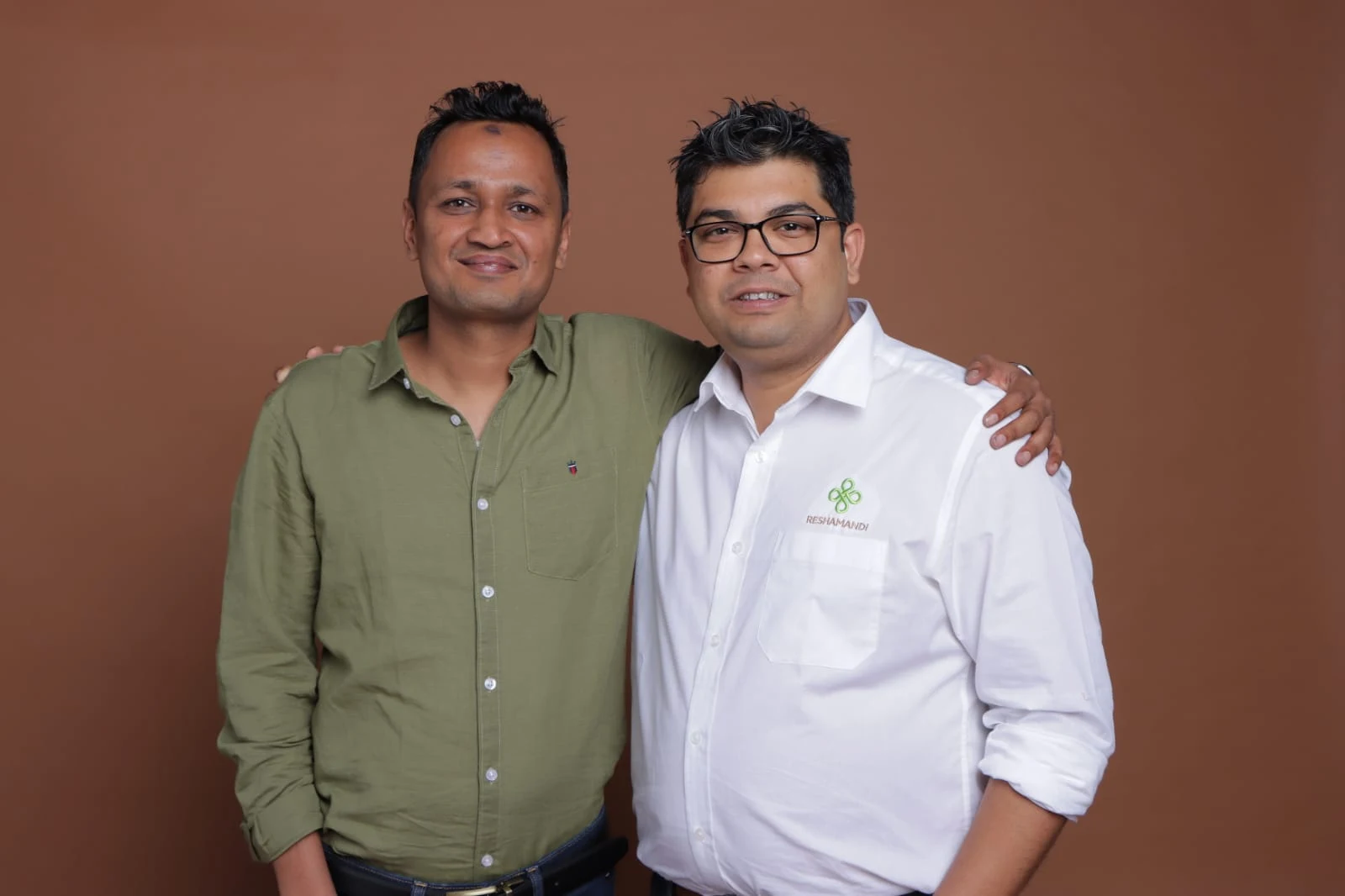
Mayank Tiwari & Saurabh Agarwal - Founders of ReshaMandi

ReshaMandi, India’s largest farm-to-fashion natural fibre digital ecosystem, unveiled its new venture ReshaMudra, which offers personalised credit solutions for the textiles industry. ReshaMudra will give business partners across the ecosystem access to working capital solutions as well as long-term loans, enabling them to secure crucial funding to help them grow their businesses or tide over challenging times. All of these offerings are subject to regulatory approvals from respective authorities.

The suite of services offered by ReshaMudra are aimed to be cost-effective with quick turnaround time, thereby creating an engaging customer experience.

A majority of India’s micro, small and medium enterprises currently face working capital pressures as they lack access to credit. Today, only 20% of their credit needs are met by the formal sector and 40% by the informal sector. ReshaMudra aims to bridge this need gap, enabling MSMEs to expand their operations and thereby boost revenues, margins and profits.

ReshaMandi’s Founder and CEO, Mayank Tiwari said, “India’s textile sector is on course to becoming a $190 billion powerhouse by 2025-26. But lack of access to credit could stifle that potential as nearly 80% of the country’s MSMEs today are faced with this challenge. Our vision is to be the partner of choice to stakeholders across the textile industry by providing customised, financial products that are cost-effective and easy to use. ”

Kshitij Kuthiala, AVP, ReshaMudra, says “With the textile industry picking up pace, it is imperative to provide the stakeholders in the supply chain with credit solutions that cater to their needs and facilitate their growth. With 75% of their costs being towards the inputs they purchase, working capital support is crucial for their growth. At ReshaMudra, our aim is to address the credit needs of Bharat-first textile entrepreneurs across the country so their businesses can thrive and the textile industry can fulfill its immense promise. We aim to provide financing solutions that are less dependent on a wide range of documents and bring more awareness around efficient use of credit to increase their annual turnovers. With more than 70 lakh+ stakeholders, half of which are underserved or under banked, ReshaMudra aims to become the go to player for all things credit across this complex market.”

ReshaMudra with its strong focus on PSL and MSME segment for lending across Tier II - IV cities aims to have exclusive tie- ups with banks and NBFCs to facilitate business growth with moratorium period upto 3 months, attractive interest rates and a turnaround time of seven days for farmers, yarn manufacturers, manufacturers, exporters, traders/distributors and mill owners.

In an industry-first, ReshaMudra will also offer short-term financing in the form of the Buy Now, Pay Later (BNPL) scheme. This is a type of financing that allows consumers to make purchases and pay for them at a future date. Buy Now, Pay Later in B2B is the key to unlocking SME growth, as it frees up inclusive credit to the underserved SMEs in India.

The pandemic has reinforced the need for a planned health insurance programme at organisations. In addition, when employees feel they are being taken care of, they are motivated and committed to the company’s success. ReshaMudra’s customised solutions also include a health and wellness insurance policy, developed in collaboration with Onsurity, called ReshaSuraksha. This will also help SMEs insure their employees and enable them to give the right healthcare benefits for their employees.

*Source: Independent report compiled by Red Seer agency for ReshaMandi

About ReshaMandi:

ReshaMandi is India's first and largest digital ecosystem for natural fibre supply chain starting from farm to fashion. The company started with the focus on silk and has diversified adding other natural fibres like cotton, jute, coir and banana to the portfolio. ReshaMandi works with 60,000 farmers, more than 10,000 weavers, over 7,500 yarn manufacturers and 3500 retailers in the entire natural fibre supply chain to improve their productivity, impact their bottom line and eventually be instrumental in improving the quality of their lives.

ReshMandi recently also ventured into D2C with its e-commerce platform ReshaWeaves that caters to end consumers, bringing them exquisite sarees from different parts of India. Today the company manages the full eco-system for all natural fibres catering to a diverse set of audience like farmers, reelers, weavers on one side and retailers, mills, manufacturers, exporters, corporates, designers & the end consumers on the other side of the spectrum.

Wealth in Waste: India’s Potential to Lead Circular Textile Sourcing

Today Fashion for Good releases “WEALTH IN WASTE: INDIA’S POTENTIAL TO BRING TEXTILE WASTE BACK INTO THE SUPPLY CHAIN”; a first-of-its-kind study, and the most comprehensive analysis of the Indian textile waste landscape. India is in a unique position to leverage existing infrastructure and resources to emerge as a leader in capturing waste, implementing new sorting and recycling technologies, and reintroducing its textile waste back into the global market, securing its role as a circular sourcing region.

Wealth in Waste: India’s Potential to Lead Circular Textile Sourcing
CREDIT: KobchaiMa

Advanced recycling technologies are at the cusp of closing the textile-to-textile recycling loop. The resources and materials are available, yet the infrastructure and systems to source and provide higher quality feedstock fall short. With mounting pressure to reduce reliance on virgin sources and decarbonise the industry, what can be reused, must be reused to its full potential. - Katrin Ley, Managing Director at Fashion for Good
Commissioned by Fashion for Good as part of the Sorting for Circularity; India Project, the study was conducted in collaboration with Sattva Consulting, Saahas Zero Waste, and Reverse Resources, specialist organisations in strategic impact, waste, resource and data management, and the scaling of textile recycling infrastructures.

To enable an effective transition towards circularity, “WEALTH IN WASTE: THE OPPORTUNITY FOR INDIA TO BRING TEXTILE WASTE BACK INTO THE SUPPLY CHAIN” attempts to fill the data gaps that exist in the textile waste landscape in India. By building a better understanding across three key streams, domestic post-consumer waste, pre-consumer waste and imported waste, and by mapping stakeholders, and geographical flows and recognising challenges in the current infrastructure, the study aims to help ecosystem players to orchestrate actions and devise solutions and mediate accordingly.

The industry stands to gain a clear map of the textile waste value chain in India, armed with a robust set of recommendations for action. This now forms a strong basis to move forward collaboratively to scale the investments, infrastructure, and innovation needed to make circularity in fashion reality in India." – Anita Chester, Managing Director at Laudes India LLP

UNLOCKING POTENTIAL: THE OPPORTUNITY FOR INDIAN PLAYERS

Up to 7800 kilotonnes of textile waste is accumulated in India annually; the largest share of which, an estimated 51%, originates from Indian consumers - post-consumer waste, with factory waste and offcuts - pre-consumer waste, amounting to 42%, followed by imported waste that contributes a further 7%. India’s textile waste accounts for 8.5% of the global total; only 59% of the textile waste in India finds its way back into the textile industry through reuse and recycling, with a mere fraction making it back into the global supply chain.

A lack of strict regulation, informal, and in some cases non-existent, traceability systems, excessive cost competitiveness and limited technological infrastructure to process certain waste types, has limited the potential of circular value chains so far. Detailing the bottlenecks in the current processing of waste, the study identifies materials that can be ranked according to their best potential through a waste value hierarchy framework as well as actions that can push the materials up the hierarchy in the future.

Outlining the potential for collaborative and systemic interventions to fortify circularity in the Indian textile waste industry and reintroduce it into the supply chain, the study presents a three-step approach to driving this transition;
  • enabling visibility and access to waste,
  • harnessing the recycling potential of India, and
  • establishing systems, infrastructure, and regulations for waste management.
READ THE FULL REPORT HERE

MOBILISING AN INDUSTRY

"WEALTH IN WASTE: INDIA’S POTENTIAL TO BRING TEXTILE WASTE BACK INTO THE SUPPLY CHAIN” was presented and launched in New Delhi on July 27, during an industry-focused event in collaboration with Apparel Export Promotion Council (AEPC). The event brought together key players and changemakers from across the value chain to present the study and featured a panel discussion with industry leaders from Birla Cellulose, PVH Corp. and AEPC to discuss the findings and actions for the industry to implement.

ABOUT THE STUDY

Sorting for Circularity; India is initiated by Fashion for Good and launched in November 2021. The project is supported by project partners: Laudes Foundation as a catalytic funder, PVH Corp., Adidas, Levi Strauss & Co, TESCO, Primark, Arvind Limited, Birla Cellulose, and Welspun India, and technology partner Reverse Resources.

Sorting for Circularity is a framework conceived by Fashion for Good, with the aim to (re)capture textile waste, expedite the implementation of game-changing technologies and drive circularity within the fashion value chain. Insights from the Fashion for Good and Aii collaborative report “Unlocking the Trillion Dollar Fashion Decarbonisation Opportunity”, which charts a trajectory for the industry to meet its net-zero ambition by 2050, highlight the potential and significant impact on carbon emissions in the industry through material efficiency, extended and re-use of waste.

Fashion for Good’s scope of work encompasses several, industry-wide, pre-competitive projects such as the Full Circle Textiles Projects - focusing on the recycling of man-made cellulosic fibers and polyester, amongst others, which tie into the greater goal of this project to close the loop on textile waste and reducing the industry’s environmental impact.

To Fight Coronavirus, Indian Textile Industry Gears for Swiss Polymer Technology

An innovative product has emerged in the Indian textile industry that promises to render viruses such as coronavirus ineffective. The credit to bring this technology goes to N9 World Technologies, a subsidiary of Bengaluru Resil Chemicals, and Consolidated Pathways Inc., USA. The two firms signed an agreement to build unique Swiss antiviral and antimicrobial technologies into sustainable, cost effective custom blends for Indias textile industry.

At the centre of the partnership is N9s unique organ functional polymer marketed under the umbrella brand VIROBAN. The durable antiviral technology from the house of N9 brings hygiene to textile materials, thereby helping improve the fabrics resilience against viruses' including Coronavirus.

The VIROBAN N9 XTS-18 creates a highly-cationic charge density on the textile's surface, deactivating the spread of the virus & bacteria upon contact. The technology is highly effective against enveloped and capsid viruses, having proven in reducing infective viruses by 99.99% in ISO 18184 tests. The technology is designed to quickly prevent transmission of viruses. VIROBAN polymers are highly compatible with other textiles while remaining gentle on human skin.

N9's special textile capabilities have ushered in a unique product that has emerged as the need of the hour for countries fighting the pandemic. Such high-quality fabrics and textile products correspond with the needs of India. Mr. Vikram Rao, Managing Director of N9 World Technologies explaining the benefits of the technology, says, "With the onslaught of the pandemic, consumers are increasingly seeking protection and safety in almost everything they breathe, touch or wear. We are committed to keeping our customers safe and that is why we have partnered with Consolidated Pathways & SANITIZED AG. With this partnership, N9 World Technologies is now a 'One Stop Shop' for Global Brands & Retailers who are seeking innovative and sustainable specialty finishes for their textile products. A worldwide business development team is already in place for marketing and servicing customers with these proven technologies with global regulatory approvals."

N9 World Technologies Pvt. Ltd., a wholly owned subsidiary of Bengaluru based Resil Chemicals and is a manufacturer & marketer of specialty chemicals in Antibacterial, Cooling & Dynamic Drying technologies. Mr. Ganesh Srinivasan, CEO of Resil Chemicals said, "Current annual Indian mill made fabric production for domestic and an export market is nearly 7 billion sq. meter. This can possibly create the potential for use for antibacterial & antiviral products to the tune of Rs. 140 - 150 crores. With N9s strong local service and technical support, we aim to capture a significant market share from this emerging opportunity. N9s manufacturing capability within the country can help scale up the production of the antiviral products quickly and market them globally with this association."

Based in Midland, Michigan, USA, Consolidated Pathways is a brand & technical representative for Sanitized products, and supports the advancement of the trusted Sanitized Quality Seal and related branding concepts to the global textile industry. Consolidated Pathways is partnering with N9 World Technologies in support of its antiviral and antimicrobial custom blended products, which, when properly applied can utilize the highly regarded Sanitized Quality Seal.

Mr. James Krueger, CEO of Consolidated Pathways added, "We are excited to partner with N9 World Technologies. This partnership provides a unique combination of technologies, market information and expertise that can help brands and retailers enhance their products in ways that are meaningful to consumers."

Resil Chemicals enjoys the trust of over 150 brands and retailers across the world for its products like COOLITTM, NeudriTM, N9 Pure SilverTM, etc. Almost all the antibacterial masks in the Indian market currently use N9's products to achieve the antibacterial effect. This partnership will now allow both companies to offer unique performance benefit platforms to the global textile industry. Any antiviral claims are subject to regulation in countries where such regulations exist and N9 assists its customers in assuring that such regulations are strictly adhered to.

About N9 Technology

A globally recognized organization, N9 World Technology is committed to offering well-researched solutions in the hygiene and wellness space to our customers by constantly developing next generation technologies that are sustainable. They are part of a renowned group Resil Chemicals one of Asias leading innovative formulators of silicone for textiles, having heritage of more than 25 years of product development and innovation for the textile industry. n9world.com.

Market Reports

Market Report & Surveys
IndianWeb2.com © all rights reserved