Showing posts with label United Nations. Show all posts

Indian Policy Leader Dr. Rajendra Pratap Gupta Nominated to UN Advisory Group Shaping Future of Internet Governance

Indian Policy Leader Dr. Rajendra Pratap Gupta Nominated to UN Advisory Group Shaping Future of Internet Governance

Dr. Rajendra Pratap Gupta, a globally respected public policy leader, digital governance expert, AI researcher, and healthcare futurist, has been nominated by the Secretary-General of the United Nations to serve on the Multistakeholder Advisory Group (MAG) of the United Nations Internet Governance Forum (IGF).

The MAG plays a pivotal role in advising the United Nations Secretary-General on global Internet governance and digital policy issues, while also shaping the programme, strategic direction, and multistakeholder dialogue of the Internet Governance Forum — the world’s foremost platform for dialogue on the future of the Internet and digital cooperation.

The official announcement by the United Nations Internet Governance Forum can be accessed here: United Nations IGF MAG 2026 Members Announcement

Dr. Gupta’s nomination comes at a particularly critical juncture in the evolution of the digital world. As artificial intelligence, digital platforms, cybersecurity, data governance, and digital public infrastructure increasingly shape economies, societies, healthcare systems, and democracies, the role of global digital governance has become central to humanity’s future.

Commenting on the nomination, Dr. Gupta said:
It is an honour to be nominated by the United Nations Secretary-General to serve on the MAG of the Internet Governance Forum. We are at a defining moment in human history where digital governance will shape economies, social systems, public trust, and global cooperation. This role offers an opportunity to collaboratively contribute towards building an inclusive, secure, equitable, and innovation-driven digital future for the world.

Dr. Rajendra Pratap Gupta has the unique distinction of being associated with multiple multilateral bodies and global initiatives working at the intersection of technology, governance, economy, and human development. Over the years, he has worked extensively with governments, international organizations, academia, and industry leaders to shape conversations around digital transformation, artificial intelligence, Internet governance, and inclusive growth.

In 2019, he was invited by the Office of the Prime Minister of Bangladesh to contribute to the drafting of Bangladesh’s Artificial Intelligence policy framework. He currently chairs the Commonwealth AI Consortium for Capacity Building, which focuses on strengthening AI readiness, policy frameworks, and human capacity across nations.

An AI researcher and thought leader, Dr. Gupta is the creator of the “Functional AI Pyramid – The AI Maturity Model,” a pioneering framework that explains the progression of artificial intelligence from conversational systems to organizational intelligence. The model is increasingly being viewed as a practical roadmap for AI adoption and integration across governments, enterprises, healthcare systems, and institutional value chains.

He is also the architect of Project CREATE, a global movement advocating the use of technology for employment generation, inclusion, and connecting the unconnected. The initiative promotes the idea that digital infrastructure and AI must become tools for equitable development and decentralized economic participation rather than instruments of exclusion.

Dr. Gupta is a former Advisor to the Union Minister of Health & Family Welfare, Government of India, and has contributed to several landmark public policy and digital transformation initiatives.

He currently serves in leadership roles across several global initiatives and institutions, including as:
  • Summit Chair of the Global Digital Health Summit
  • Chairman of the Academy of Digital Health Sciences
  • Chair of Health Parliament
  • Chair of multiple Dynamic Coalitions under the Internet Governance Forum ecosystem
Widely regarded as one of the leading voices advocating the use of technology for inclusive human development, Dr. Gupta has consistently emphasized that digital technologies must serve humanity through ethical governance, equitable access, and responsible innovation.

His nomination to the MAG further reinforces the growing importance of voices from the Global South in shaping the future architecture of global digital governance and multistakeholder cooperation.

About the Internet Governance Forum (IGF)

The Internet Governance Forum (IGF), convened by the United Nations Secretary-General, is a global multistakeholder platform that facilitates discussions on public policy issues related to the Internet. It brings together governments, private sector leaders, civil society, academia, and technical communities to collectively shape the future of the digital ecosystem.

China-Sponsored AI Resolution Passes in United Nations General Assembly

China-Sponsored AI Resolution Passes in United Nations General Assembly

In a diplomatic win for China, the United Nations General Assembly unanimously adopted a China-led resolution urging the international community to create a "free, open, inclusive, and non-discriminatory" business environment for artificial intelligence (AI) development among wealthy and developing nations.

More than 140 nations, including the United States, co-sponsored the non-binding resolution, which is — largely symbolic, affirm that all nations should “enjoy equal opportunities” in the non-military domain, calling for global cooperation to assist developing countries facing “unique challenges” and ensure “they will not be further left behind”.

This resolution emphasizes cooperation and capacity building, reflecting global support for shaping the future of this powerful technology.

To recall, in March this year, the UN General Assembly had also adopted a United States-led draft resolution, without a vote, to promote “safe, secure and trustworthy” artificial intelligence (AI) systems.

The impact on global AI development, from the China led AI resolution, is multifaceted. It underscores the need for collaboration and inclusivity, encouraging nations to work together in shaping AI policies and standards.

Apparently, the symbolic resolution is said to emphasize a non-discriminatory environment, it aims to foster innovation while addressing ethical concerns. However, practical implementation remains a challenge, and its effectiveness will depend on how countries translate these principles into concrete actions.

Key features of this China sponsored AI resolution

The China-led resolution on artificial intelligence highlights several key features:

1. Inclusivity: It emphasizes creating a "free, open, inclusive, and non-discriminatory" environment for AI development across nations. This encourages collaboration and knowledge sharing.

2. Capacity Building: The resolution calls for capacity-building efforts, recognizing that AI development requires skills, infrastructure, and resources. It aims to bridge the gap between wealthy and developing countries.

3. Ethical Considerations: By promoting a non-discriminatory approach, it addresses ethical concerns related to bias, fairness, and transparency in AI systems.

4. Cooperation: The resolution underscores the importance of international cooperation in shaping AI policies, standards, and regulations.

5. Future Impact: While the resolution sets a positive tone, its practical impact will depend on how countries implement these principles and collaborate effectively.

Dissenting opinions on this resolution?

While the China-led resolution on artificial intelligence received unanimous support in the United Nations General Assembly, it's essential to acknowledge that differing opinions may exist.

Some potential points of contention could include concerns about China's influence, questions about practical implementation, and debates over the balance between inclusivity and safeguarding national interests. However, without specific dissenting statements, we can't definitively pinpoint opposing viewpoints.

Potential concerns about China's influence in AI

China's rapid advancement in artificial intelligence (AI) raises several concerns globally:

1. Autocratic Alignment: Autocratic governments, including China, seek to predict citizens' whereabouts and behaviors using AI. This alignment of purpose between AI technology and autocratic rulers can lead to surveillance and control.

2. Data Advantage: China's vast data collection capabilities give companies with government contracts an advantage. They can leverage state data for commercial AI projects, potentially impacting global markets.

3. Spreading Influence: China exports significant amounts of AI technology, particularly to weak democracies and autocracies. This could lead to the proliferation of similar autocratic regimes worldwide.

4. Competition with the US: Some view the US-China AI competition as a contest between democracy and authoritarianism. Chinese dominance in AI could challenge US prominence and the liberal international order.

5. Deepfake Misuse: Concerns exist that China might support AI-generated deepfakes for political disinformation, although it has imposed laws banning manipulative AI fakery.

In summary, China's AI influence is multifaceted, impacting technology, geopolitics, and global norms.

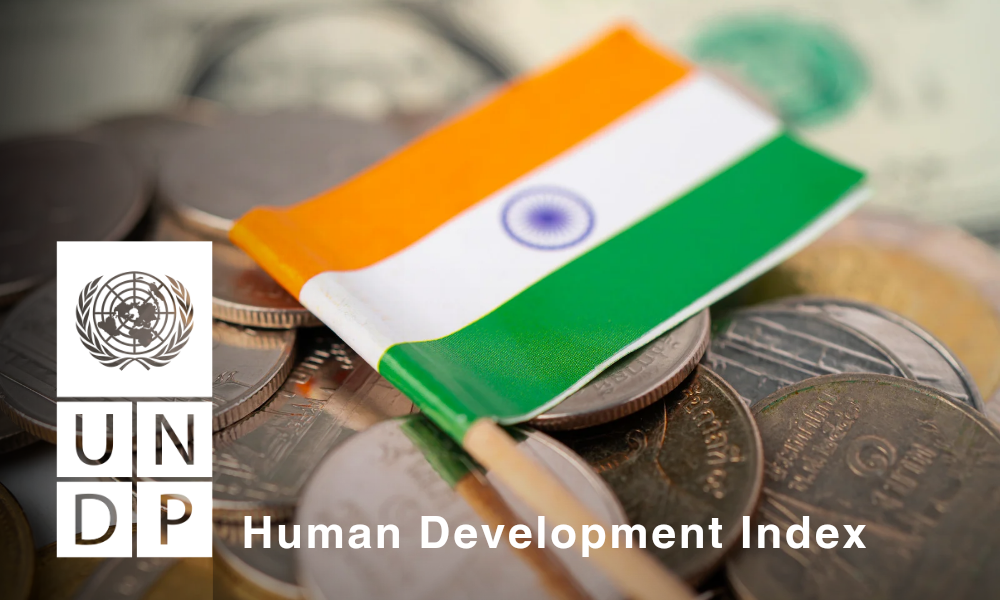
India Ranks #134 on UN's Human Development Index 2022

India Ranks #134 on UN's Human Development Index 2022

India's ranking on the United Nations Human Development Index (HDI) improves by one position in 2022 to 134 out of 193 countries ranked compared to 135 out of 191 countries in 2021.

On the Gender Inequality Index (GII) 2022, India has been ranked at 108 out of 193 countries with a score of 0.437. Its rank was 122 out of 191 countries with a score of 0.490 in the GII-2021

This shows a significant jump of 14 ranks on the GII-2022 vis-a-vis the GII-2021, the women and child development ministry said However, the country also has one of the largest gender gaps in its labour force participation rate a 47.8% difference between women (28.3%) and men (76.1%).

Between 1990 and 2022, India's HDI value changed from 0.434 to 0.644, an change of 48.4 percent.

Between 1990 and 2022, India's life expectancy at birth changed by 9.1 years, expected years of schooling changed by 4.6 years and mean years of schooling changed by 3.8 years. India's GNI per capita changed by about 287.0 percent between 1990 and 2022.

According to 2023-24 Human Development Report from the UN Development Programme (UNDP), the Human Development Index (HDI) stands at a new high following steep decline during 2020 and 2021 due to the COVID-19 pandemic.

Rich countries experienced unprecedented development, the Human Development Report details, yet half of the world’s poorest nations continue to languish below their pre-COVID crisis levels.

The HDI is a composite of statistics measuring such factors as per capita income, educational attainment and life expectancy.

India Ranks #134 on UN's Human Development Index 2022

The latest UNDP report also found that half of people surveyed worldwide report having little or no control over their lives, and over two-thirds believe they have little influence on their government’s decisions, showing glaring gaps in people’s agency.

The UNDP report also identified an emerging “democracy paradox”, with most of those surveyed expressed support for democracy but also endorsing leaders who may undermine democratic principles.

This paradox, coupled with a sense of powerlessness and a lack of control over government decisions, has fuelled political polarization and inward-looking policy approaches.

More key data from the report

  • In 2023, all 38 countries that are members of the Organization for Economic Co-operation and Development (OECD) achieved higher Human Development Index (HDI) scores compared to their levels in 2019.
  • Among the 35 least developed countries (LDCs) that experienced a decline in their HDI in 2020 and/or 2021, more than half (18 countries) have not yet recovered to their human development levels of 2019.
  • All developing regions have not met their anticipated HDI levels based on the trend before 2019. It appears they have shifted to a lower HDI trajectory, indicating potential permanent setbacks in future human development progress.
  • The impact of human development losses is in sharp focus in Afghanistan and Ukraine. Afghanistan’s HDI has been knocked back by a staggering ten years, while Ukraine’s HDI dropped to its lowest level since 2004.
  • The report cites research indicating that countries with populist governments have lower GDP- growth rates. Fifteen years after a populist government assumes office, the GDP per capita is found to be 10 percent lower than it might under a non-populist government scenario.

Full report – https://hdr.undp.org/human-development-report-2023-24

UN Forms New AI Advisory Board; iSPIRT's Sharad Sharma and Hugging Face's Nazneen Rajani Among the Members

UN Forms New AI Advisory Board; iSPIRT's Sharad Sharma and Hugging Face's Nazneen Rajani Among the Members

On Thursday, the Secretary-General at a press conference announced the creation of a new Artificial Intelligence Advisory Body on risks, opportunities and international governance of Artificial Intelligence (AI) . That body will support the international community’s efforts to govern artificial intelligence.

Among the members of AI Advisory Body, two are from India — Sharad Sharma (iSPIRT) and Nazneen Rajani (Hugging Face).

Sharad Sharma is a co-founder of iSPIRT, a non-profit think tank that wants India to be a product nation. He was the CEO of Yahoo India R&D and dubbed as the architect of Indian software products ecosystem.

About Nazneen Rajani, she is a Research Lead at Hugging Face, which is building an open-source alternative to ChatGPT called H4, a powerful LLM, "aligning language models to be helpful, honest, harmless, and huggy".

U.N. Secretary-General Antonio Guterres on Thursday launched this 39-member advisory body of tech company executives, government officials and academics from countries spanning 6 continents.

The panel aims to issue preliminary recommendations on AI governance by the end of the year and finalize them before the U.N. Summit of the Future next September.

The full members list are as below:
  • Anna Abramova, Director of the Moscow State Institute of International Relations-University AI Centre, Russian Federation
  • Omar Sultan al Olama, Minister of State for Artificial Intelligence of the United Arab Emirates, United Arab Emirates
  • Latifa al-Abdulkarim, Member of the Shura Council (Saudi Parliament), Assistant Professor of Computer Science at King Saud University, Saudi Arabia
  • Estela Aranha, Special Advisor to the Minister for Justice and Public Security, Federal Government of Brazil, Brazil
  • Carme Artigas, Secretary of State for Digitalization and Artificial Intelligence of Spain, Spain
  • Ran Balicer, Chief Innovation Officer and Deputy Director General at Clalit Health Services Israel, Israel
  • Paolo Benanti, Third Order Regular Franciscan, Lecturer at the Pontifical Gregorian University, Italy
  • Abeba Birhane, Senior Advisor in AI Accountability at Mozilla Foundation, Ethiopia
  • Ian Bremmer, President and Founder of Eurasia Group, United States
  • Anna Christmann, Aerospace Coordinator of the German Federal Government, Germany
  • Natasha Crampton, Chief Responsible AI Officer at Microsoft, New Zealand
  • Nighat Dad, Executive Director of the Digital Rights Foundation Pakistan, Pakistan
  • Vilas Dhar, President of the Patrick J. McGovern Foundation, United States
  • Virginia Dignum, Professor of Responsible Artificial Intelligence at UmeÃ¥ University, Portugal/Netherlands
  • Arisa Ema, Associate Professor at the University of Tokyo, Japan
  • Mohamed Farahat, Legal Consultant and Vice-Chair of MAG of North Africa IGF, Egypt
  • Amandeep Singh Gill, Secretary-General's Envoy on Technology
  • Dame Wendy Hall, Regius Professor of Computer Science at the University of Southampton, United Kingdom
  • Rahaf Harfoush, Digital Anthropologist, France
  • Hiroaki Kitano, Chief Technology Officer of Sony Group Corporation, Japan
  • Haksoo Ko, Chair of Republic of Korea’s Personal Information Protection Commission, Republic of Korea
  • Andreas Krause, Professor at ETH Zurich, Switzerland
  • James Manyika, Senior Vice-President of Google-Alphabet, President for Research, Technology and Society, Zimbabwe
  • Maria Vanina Martinez Posse, Ramon and Cajal Fellow at the Artificial Research Institute, Argentina
  • Seydina Moussa Ndiaye, Lecturer at Cheikh Hamidou Kane Digital University, Senegal
  • Mira Murati, Chief Technology Officer of OpenAI, Albania
  • Petri Myllymaki, Full Professor at the Department of Computer Science of University of Helsinki, Finland
  • Alondra Nelson, Harold F. Linder Professor at the Institute for Advanced Study, United States
  • Nazneen Rajani, Lead Researcher at Hugging Face, India
  • Craig Ramlal, Head of the Control Systems Group at the University of The West Indies at St. Augustine, Trinidad and Tobago
  • He Ruimin, Chief Artificial Intelligence Officer and Deputy Chief Digital Technology Officer, Government of Singapore, Singapore
  • Emma Ruttkamp-Bloem, Professor at the University of Pretoria, South Africa
  • Sharad Sharma, Co-founder iSPIRT Foundation, India
  • Marietje Schaake, International Policy Director at Stanford University Cyber Policy Center, Netherlands
  • Jaan Tallinn, Co-founder of the Cambridge Centre for the Study of Existential Risk, Estonia
  • Philip Thigo, Adviser at the Government of Kenya, Kenya
  • Jimena Sofia Viveros Alvarez, Chief of Staff and Head Legal Advisor to Justice Loretta Ortiz at the Mexican Supreme Court, Mexico
  • Yi Zeng, Professor and Director of Brain-inspired Cognitive AI Lab, Chinese Academy of Sciences, China
  • Zhang Linghan, Professor at the Institute of Data Law, China University of Political Science and Law, China

The transformative potential of AI for good is difficult even to grasp,” Guterres said. He pointed to possible uses including predicting crises, improving public health and education, and tackling the climate crisis.

However, the UN Secretary-General cautioned, “It is already clear that the malicious use of AI could undermine trust in institutions, weaken social cohesion and threaten democracy itself.”

Strict Rules Against AI Tools Like ChatGPT in Schools – UNESCO

Strict Rules Against AI Tools Like ChatGPT in Schools – UNESCO

UNESCO on Thursday published its first guidance on use of Generative AI (GenAI) for education, urging governmental agencies to regulate the use of the technology, including protection of data privacy and putting an age limit for users.

In new guidance for governments, the UN’s education body UNESCO is calling on Governments across the world to implement appropriate regulations and teacher training, to ensure a human-centred approach to using Generative AI in education.

The UNESCO Guidance sets an age limit of 13 for the use of AI tools in the classroom and calls for teacher training on this subject.

In its guidance report, UNESCO said, "Publicly available generative AI (GenAI) tools are rapidly emerging, and the release of iterative versions is outpacing the adaptation of national regulatory frameworks. The absence of national regulations on GenAI in most countries leaves the data privacy of users unprotected and educational institutions largely unprepared to validate the tools."

Generative AI can be a tremendous opportunity for human development, but it can also cause harm and prejudice,” said Audrey Azoulay of UNESCO.

In a recent UNESCO global survey, it was found that over 450 schools and universities showed that less than 10% of them had institutional policies and/or formal guidance concerning the use of generative AI applications, largely due to the absence of national regulations.

Students have taken a liking for GenAI, which can generate anything from essays to mathematical calculations with just a few line of prompts.

Among a series of guidelines in a 64-page guidance report, UNESCO stressed on the need for government-sanctioned AI curricula for school education, in technical and vocational education and training.

Presently in India, there's no law to regulate the AI sector. In April this year, the Ministry of Electronics and IT had said that it is not considering any law to regulate the AI sector, with Union IT minister Ashwini Vaishnaw admitting that though AI “had ethical concerns and associated risks”, it had proven to be an enabler of the digital and innovation ecosystem.

However, last month Prime Minister Narendra Modi’s call for a global framework on the expansion of “ethical” artificial intelligence (AI). In July, India's telecom regulatory body TRAI proposed for immediately establishing an independent statutory authority for ensuring development of responsible AI and regulation of use cases in the country.

Generative AI hit public awareness last year in November with the launch of ChatGPT, which became the fastest growing app in history.
While ChatGPT reached 100 million monthly active users in January 2023, only one country has released regulation on generative Al in July.
Moving forward with UNESCO guidance report, it further states – "The most fundamental perspective of the long-term implications of GenAI for education and research is still about the complementary relationship between human agency and machines. One of the key questions is whether humans can possibly cede basic levels of thinking and skill-acquisition processes to AI and rather concentrate on higher-order thinking skills based on the outputs provided by AI."

Writing, for example, is often associated with the structuring of thinking. With GenAI, rather than starting from scratch to plan the aims, scope and outline of a set of ideas, humans can now start with a wellstructured outline provided by GenAI.

"Some experts have characterized the use of GenAI to generate text in this way as ‘writing without thinking’ (Chayka, 2023). As these new GenAI-assisted practices become more widely adopted, established methods for the acquisition and assessment of writing skills will need to adapt." - the UNESCO Guidance report mentions.

One option in the future is that the learning of writing may focus on building skills in planning and composing prompts, critical evaluation of the GenAI outputs, higher-order thinking, as well as on co-writing based on GenAI’s outlines.

In concluding remarks the UNESCO Guidance report states — "From the perspective of a human-centred approach, AI tools should be designed to extend or augment human intellectual abilities and social skills – and not undermine them, conflict with them or usurp them, said UNESCO."

While GenAI should be used to serve education and research, we all need to be cognizant that GenAI might also change the established systems and their foundations in these domains. The transformation of education and research to be triggered by GenAI, if any, should be rigorously reviewed and steered by a human-centred approach.

United Nations Population Fund (UNFPA) India -TechGig Launch A Nationwide Hackathon To Create World Free of Violence

United Nations Population Fund (UNFPA) India -TechGig Launch A Nationwide Hackathon To Create World Free of Violence

Gender-based violence (GBV) is one of the most prevalent human rights violations in the world. It knows no social, economic or national boundaries. Worldwide, an estimated 1 in 3 women has experienced physical or sexual abuse in their lifetime. The most recent data from National Family Health Survey (NHFS-5) also reported that around 29.3% of married Indian women between the ages of 18-49 years have faced domestic violence/ or sexual violence.

The risk of and vulnerability to GBV increases on account of intersections of gender with sexual orientation, disability, caste, and age. Similarly, GBV risks are known to increase during humanitarian crises such as public health emergencies, natural calamities and conflicts. Today, with the increased use and reliance on technology and digital spaces, we also see the emergence of newer forms of GBV where harm is perpetrated through online spaces. Clearly, GBV is all pervasive and addressing it in all its forms with a particular focus on those with increased vulnerabilities is no longer negotiable.

Leading a life free from violence is a fundamental human right - and one that is critical to advance the realization of other human rights.

The imperative action to address and end GBV is of utmost importance to the Government of India with a focus on establishing One Stop Centres (OSCs) across states for those who are in distress and survivors of violence to avail counseling, medico-legal support and support from police all under one roof. To further strengthen these efforts, the United Nations Population Fund (UNFPA) India - in association with India’s biggest technology community, TechGig - launched a Hackathon - Crack the Code to Prevent and Address Gender-Based Violence

This hackathon aims to address key problems, knowledge gaps and increase access to services for persons with disabilities experiencing GBV; facilitating anonymous, safe and timely access to those at risk of GBV in humanitarian situations; and mitigating technology facilitated GBV.

The hackathon will crowdsource impactful and innovative ideas and turn them into prototypes for scaling up. The program has three phases: Phase 1 for relevant idea submissions, Phase 2 for selection and mentoring of ideas for prototyping and lastly, Phase 3 to announce the winners.

“Effectively responding to Gender-Based Violence requires convergence of great minds, innovative thinking and multi-sectoral partnerships. UNFPA is excited to launch its first hackathon in India to invite solutions to address GBV. The aim is to discover and deploy effective prevention and response mechanisms for newer forms of GBV, as well as recognize and respond to heightened risks and vulnerabilities among marginalized groups, including during crises" said Andrea Wojnar, Resident Representative, UNFPA India.

This hackathon invites individuals, women-led teams, techpreneurs, civil societies, startups, research groups, and people with diverse lived experiences to submit ideas and solutions to make public spaces, workplaces, homes, and society equal, equitable and inclusive.

“TechGig is proud to partner with the United Nations Population Fund (UNFPA) in their crucial mission to #EndGBVForAll. I urge everyone to participate in this hackathon and share your innovative solutions - big and small - to make our world free of violence,” said Sanjay Goyal, Business Head, TechGig.

Registrations are free and open for everyone at https://www.techgig.com/hackathon/crack-the-code-to-prevent-and-address-gbv.

Paytm Foundation and United Nations Environment Program join hands to establish Air Quality Action Forum

Paytm Foundation and United Nations Environment Program join hands to establish Air Quality Action Forum
Representational

Set to work together and put forth discussions, challenges and solutions for tackling India’s air pollution crisis

National and International organizations convened to share scale up programs to reduce air pollution

Under the Corporate sector pillar, which is one of the 6 stakeholder pillars under the AQAF, startups working on scalable air pollution related technologies invited to share their technologies

Paytm Foundation in partnership with United Nations Environment Program (UNEP) set up the Air Quality Action Forum. The forum, through stakeholder consultations, will highlight the efforts undertaken to mitigate the impact of air pollution in India.

The launch of the AQAF is a step to facilitate an inclusive approach towards curbing air pollution in India. In a step towards the same, effective implementation along with collaboration between all the stakeholders, including from the government is key to achieving the desired objectives under it.

While addressing one of the consultation meetings, Vijay Shekhar Sharma, Founder and CEO, Paytm, said, “We all must come together to mitigate the impact of air pollution in India. The Forum will work towards creating corporate champions. The air quality meters should become part of the Production Linked Incentive scheme."

"There is a need for the inclusion of a clean air initiative as part of “Swachh Bharat Mission” with ranking of states and cities on the basis of air pollution levels," he added.

In line with the objectives of the AQAF, consultation meetings were organized across all six stakeholders, aimed to identify everyone’s views on various issues concerning air pollution in India, and the possible solutions that could lead to its reduction.

Some of the solutions that came out of the consultation meetings are:
  1. Need to create an ecosystem for innovative solutions and products
  2. Promoting pilot studies/ projects to understand the efficacy and scalability of local solutions
  3. Integration of health aspects in the current framework for air quality management and standardization of air quality measurement parameters
The feedback and suggestions from these discussions have provided critical inputs to draft a report on understanding the challenges, gaps, needs and synergizing solutions. The report will be released at the Forum Convention soon. The Centre of Excellence for Research in Climate Change, (CERCA) at IIT-D is being onboarded as an implementing partner. Many other public and private sector organizations and well-known academic institutions like DTU participated and contributed to the success of the consultation meetings.

During the consultations, Shri. Arvind Nautiyal, Member Secretary, Commission for Air Quality Management in National Capital Region and Adjoining Areas, Mr. Sudheer Chintalapati, Joint Director, MoEFCC, and Dr. Prashant Gargava, Member Secretary, CPCB also provided useful insights on the initiatives that the government is undertaking for air pollution mitigation.

Vijay Shekhar Sharma has been named as UN’s environment patron for clean air. This initiative is part of Paytm’s commitment to advocate UN Environment's global BreatheLife campaign by generating awareness about pressing social and environmental issues, and alleviating them through collaborative partnerships.

IESA Supports UNIDO FLCTD Innovation Challenge 2022

IESA Supports UNIDO FLCTD Innovation Challenge 2022

India Energy Storage Alliance (IESA) supports United Nations Industrial Development Organization’s (UNIDO) FLCTD Innovation Challenge 2022

The United Nations Industrial Development Organization (UNIDO) regional office in New Delhi has announced the launch of 5th Innovation Challenge on Innovative Low Carbon Technologies. Applications will be accepted until 31st May 2022. The Innovation Challenge is conducted under the Facility for Low Carbon Technology Deployment (FLCTD; https://www.low-carbon-innovation.org/), which is jointly implemented by UNIDO and Bureau of Energy Efficiency.

The Innovation Challenge covers thematic area of “Electrical Energy Storage Systems” in which applications are invited for innovative solutions on electrochemical batteries, supercapacitors, hybrid energy storage systems including super/ultra-capacitor & electrochemical battery systems and critical components for electrical energy storage systems including power conversion system.

Customized Energy Solutions (CES) India, powered with India Energy Storage Alliance (IESA) is the implementing partner to support the project management unit in planning and implementation of the innovation challenge.

The project provides financial assistance of up to US$50,000 to the winners to validate their innovation and demonstrate its efficacy (performance) in actual field conditions – a necessary step before commercialization. It also supports innovative technologies in advance stage of development for field demonstration and validation and does not support innovation that are at the ideation-stage, proof-of-concept or at lab-scale.

Commenting on the Innovation Challenge 2022, Sandeep Tandon, National Programme Manager, Facility for Low Carbon Technology Deployment (FLCTD) said, “UNIDO’s Innovation Challenge provides unique opportunity and risk-capital of up to INR 3.5 million to validate the efficacy and performance of innovative technologies for scale-up and commercialization. Already from a pool of 59 winning innovations that are being supported with INR 180 million, 17 have completed technology trials and 13 have been commercialized. The challenge is open to entrepreneurs, start up and registered private entities. FLCTD is helping industrial and commercial sector players to choose proven innovative low carbon technologies for decarbonization.

Debi Prasad Dash, Executive Director, India Energy Storage Alliance (IESA) said, “India’s energy storage sector is seeing many positive developments like the PLI and battery swapping announcement, and the energy storage policy is also expected from the Ministry of Power. With these developments, we will see many startups and large companies diversify their business into energy storage space and this will help many indigenous innovations in India that will support the ecosystem. This all will catalyze the growth of startups in India. With the national labs and research institutes, we expect new innovations to come in India like other emerging countries.”

The selection process includes post application screening, pitching to an expert panel, in-person visits, and technical and financial due-diligence. The project orientation of FLCTD is more technology-focused as compared to the standard fundraising opportunities available for innovators, so the shortlisted applicants are also provided mentoring through each round of the selection process to help them in improving their chances of final selection.

About India Energy Storage Alliance (IESA):

IESA is a leading industry alliance focused on the development of advanced energy storage, green hydrogen, and e-mobility technologies in India. Founded in 2012, by Customized Energy Solutions (CES), IESA’s vision is to make India a global hub for R&D, manufacturing, and adoption of advanced energy storage, e-mobility, and green hydrogen technologies.

The alliance has been at the forefront of efforts seminal in shaping an enabling policy framework for the adoption of energy storage, electric mobility, green hydrogen, and emerging clean technologies in India. Today, IESA is a proud network of 160+ member companies, encompassing industry verticals from energy storage, EV manufacturing, EV charging infrastructure, green hydrogen, microgrids, power electronics, renewable energy, research institutes and universities, and cleantech startups.

IESA website: www.indiaesa.info

UN Women Showcase Asia-Pacific Care Industry Startups in Online Demo Day


Meet the most promising startups that are transforming care work into inclusive opportunities in the Asia-Pacific region

The UN Women Care Accelerator programme concluded with an online demo day, showcasing 13 Asia-Pacific startups with a focus on developing solutions for the Care-Economy. For more information about the startups, visit careaccelrator.seedstars.com.

Women in the Asia-Pacific are seen as the center of the family, responsible for taking care of the household and taking on a disproportionate share of unpaid care and domestic work responsibilities. Research shows that unpaid care also emerges as a critical reason why women do not participate in paid work. This is especially prevalent in the Asia-Pacific region, which is the only region globally in which women’s participation in the labour force has been declining the past 10 years.

The accelerator aimed to identify and support entrepreneurs who are creating innovative solutions that help to make care services more accessible, affordable and increase the quality of child and elderly care services provided. In turn, these solutions have the potential to create decent work opportunities for caregivers and provide an opportunity for many women and their families to have a caregiving solution allowing them to fully take part in the workforce.

The UN Women Care Accelerator provided enterprises with a 4-month intensive training programme to build more sustainable and gender-inclusive business strategies. At the demo day, all participating startups had the opportunity to present their business strategies to potential investors and care ecosystem stakeholders such as mentors, investors, speakers, NGOs and international organizations.

“The Care Accelerator has really opened our eyes to the possibilities that ‘Care Entrepreneurship’ can offer to create decent employment opportunities and also improve affordability, access and quality of care services. However it will require strong collaboration with policymakers and corporates alike to create an inclusive care economy.” said Katja Freiwald Regional Programme Manager WeEmpowerAsia UN Women.

The demo day is the official culmination of the UN Women Care Accelerator program, presented by UN Women, WeEmpowerAsia, European Union, Bopinc and co-organized by Seedstars, where each startup got to pitch their product and share their progress. After the pitching, all the companies also participated in 1:1 meetings with investors and partners.

Demo day featured the following startups from the UN Women Care Accelerator programme:
  • LoveCare saves clients time by matching them with the perfect carer that fits their needs and preferences in less than 5 minutes.
  • Kiddocare gives the tools to millions of freelance caregivers and nurses throughout Asia to better care for their clients while helping them grow their businesses through technology.
  • Pillar Health develops highly scalable tools that help independent care providers work more efficiently and operate their care services more effectively.
  • Nannyz matches nannies and babysitters with families in the area.
  • Kiidu is a care platform to find the most suitable nannies and caregivers in Thailand.
  • Aseana Caregivers connects parents with trained, vetted and certified Malaysian babysitters, for personalized on-demand childcare.
  • Carer provides caregivers the most comprehensive in-home nursing help and guidance.
  • Ayat Care facilitates empowerment without boundaries by providing care and coaching exactly where it is needed and beneficial.
  • Bihani Social Venture provides age inclusive services with a focus on mental and physical well-being for older people in Nepal.
  • Mobiva empowers older people to live independently longer, healthier and safer while providing peace of mind to their families.
  • JobNukkad is an online portal in India that helps families connect with caregivers in their locality without paying commission to an agency: it is cheap and fast.
  • TiTLi unlocks livelihood opportunities for millions of women by helping them become skilled early childhood educators and caregivers.
  • Angels & I provides a proprietary educational curriculum and certification for nannies to take care and educate children at home.
"We’ve been working with the founders on a weekly basis for the past four months and it’s so rewarding to see this clear business growth as well as their progress in becoming more gender inclusive, as reflected in their pitches. A special thank you goes to our mentors, who have been supporting the founders through this intense, but extremely valuable journey," said Seedstars Acceleration Program Manager Eugenia Schevchenko.

After two pitching sessions the jury, consisting of: Christina Teo, Chief Builder at she1K; Konstantin Hapkemeyer, Investment Manager Africa & Asia at Seedstars; Katja Freiwald Regional Programme Manager at WeEmpowerAsia; and Paul Ark, Partner & Head of ESG at Gobi Partners, decided on two grant winners. Kiddocare and Lovecare will receive USD 5,000 each to support the building of a more inclusive care industry in Asia-Pacific. The grant was provided by WeEmpowerAsia and Seedstars.

In case you missed the demo day and want to see the pitches or request a meeting with one of the founders, visit careaccelrator.seedstars.com.

WeEmpowerAsia is a UN Women programme funded by and in partnership with the European Union that seeks to increase the number of women who lead and participate in business in China, India, Indonesia, Malaysia, the Philippines, Thailand and Viet Nam. For more information, visit http://weempowerasia.org.

UN Women is a global champion for gender equality, working to develop and uphold standards and create an environment in which every woman and girl can exercise her human rights and live up to her full potential. UN Women is a trusted partner of advocates and decision-makers from all walks of life, and it is a leader in the effort to achieve gender equality.

The European Union is made up of 27 Member States that have decided to gradually link together their know-how, resources and destinies. Together, during a 50-year period of enlargement, they have built a zone of stability, democracy and sustainable development while maintaining cultural diversity, tolerance and individual freedoms.

Seedstars is a private company based in Switzerland with a mission to impact people’s lives in emerging markets through technology and entrepreneurship. The group’s activities cover emerging ecosystems in more than 90 cities through a variety of initiatives: the FTxSDG Challenge, previously known as the Seedstars World Competition, the largest entrepreneurship competition in emerging markets; Seedstars programmes designed to support entrepreneurs in varying stages of growth via training, education, mentoring and access to resources; Seedstars 01 talent incubator providing digital skills and startup-based immersive education for the next generation of changemakers; Seedspace coworking spaces and hubs located in 15 countries; and Seedstars International, a global venture capital fund for seed stage startups. For more information, visit www.seedstars.com.

Sai Life Sciences becomes a signatory of the United Nations Global Compact (UNGC)

HYDERABAD, India, Aug. 26, 2021 /PRNewswire/ -- Sai Life Sciences, a leading global Contract Research, Development & Manufacturing Organization (CRO/ CDMO), today announced that it has become a signatory of the United Nations Global Compact (UNGC), the world's largest sustainability initiative. As a signatory, Sai Life Sciences has committed itself to adopting the Ten Principles of the UNGC on human rights, labour, environment and anti-corruption, reinforcing the company's commitment to corporate responsibility and sustainability.


Making the announcement, Krishna Kanumuri, CEO & Managing Director said, "As we pursue our vision and business growth, we consciously integrate our social, environmental and governance responsibilities. We have committed ourselves to implement Ten Principles of the UNGC and to make them part of the strategy, culture and day-to-day operations of our company. This will help us in strengthening our sustainability agenda and also accelerate our progress towards achieving our Sustainable Development Goals (SDGs)."

Over the past two years, Sai Life Sciences has made significant investments and progress in advancing its Sustainability agenda as part of its organizational transformation initiative, Sai Nxt. Some of the notable highlights:
  • Became the first India-headquartered company to join the PSCI membership.
  • Joined ACS Green Chemistry Institute Pharmaceutical Roundtable (ACS-GCIPR) as an 'Associate Member'.
  • Released its first Sustainability Report in 2020 in line with the GRI framework
  • Received the ISO 14001:2015 and ISO 45001:2018 certifications for its R&D and manufacturing sites.
  • Won the prestigious 21st National Award for Excellence in Energy Management 2020 by CII - Sohrabji Godrej Green Business Centre
  • Received 5-Star rating for Excellence in EHS Practices at the Confederation of Indian Industry (CII) South awards 2019 and 2020.

About Sai Life Sciences

Sai Life Sciences is a full-service CRO-CDMO that works with innovator pharma and biotech companies globally, to accelerate the discovery, development and commercialisation of complex small molecules. For over two decades, Sai Life Sciences has consistently delivered high-quality, cost-effective solutions to its diverse customers spanning biotechs, small, mid and large pharma. Today, it has over 2200 employees across its facilities in India, UK and USA. Sai Life Sciences is privately held and backed by global investors, TPG Capital and HBM Healthcare Investments. https://www.sailife.com.

India No.3 in Top-10 Countries with Increasing Forest Areas as per UN Agency


The world has a total forest area of 4.06 billion hectares (ha), which is 31 percent of the total land area. This area is equivalent to 0.52 ha per person – although forests are not distributed equally among the world’s people or geographically.

According to a latest report of Food and Agriculture Organization of the United Nations, the world has lost a net area of 178 million ha of forest since 1990, which is an area about the size of Libya. More than half (54 percent) of the world’s forests is in only five countries – the Russian Federation, Brazil, Canada, the United States of America and China.


When it comes to average annual net gain in forest area, China, Australia and India are among top-3 countries for period of 2010–2020. However, it is to be noted that there was also a reduction in the rate of gain in South and Southeast Asia; the average annual increase in planted forest area in India, for example, was 365 000 ha in 1990–2000 then => 341 000 ha in 2000–2010, and then => only 49,100 ha 2010–2020.

The rate of net forest loss decreased substantially over the period 1990–2020 due to a reduction in deforestation in some countries, plus increases in forest area in others through afforestation and the natural expansion of forests. The rate of net forest loss declined from 7.8 million ha per year in the decade 1990–2000 to 5.2 million ha per year in 2000–2010 and 4.7 million ha per year in 2010–2020.

The rate of decline of net forest loss slowed in the most recent decade due to a reduction in the rate of forest expansion.

Bamboo Plantation

The total area of bamboo increased by almost 50 percent between 1990 and 2020 (Figure 13), largely because of increases in China and India.

Govt and Local/Tribal Managed Forests -

In Asia, the area of public forest managed by public administrations decreased and the area managed by local, tribal and indigenous communities increased, due largely to India and the implementation of joint forest management (a participatory management regime involving the government and local communities in the regeneration and management of degraded forests). 

The forest area managed by local, tribal and indigenous communities in India increased from zero in 1990 to about 25 million ha in 2015.

The Gender Park and UN Women to sign MoU as Equal Partners


Thiruvananthapuram, Dec 21: The Gender Park, an autonomous body under the Kerala government is all set to partner with UN Women to further the cause of women empowerment and function as a South Asia hub for gender equality. The Memorandum of Understanding to formalize the partnership will be signed in the honourable presence of the state's Chief Minister Shri Pinarayi Vijayan on Monday.

Gender Park CEO Dr P T M Sunish and UN Women Deputy Country Representative Ms Nishtha Satyam will officially sign the MoU at Cliff House, the Chief Minister's official residence in Thiruvananthapuram on December 21 at 3 pm. Smt K K Shailaja, Hon. Minister for Health, Social Justice and Women & Child Development will be present on this occasion along with Mr Biju Prabhakar IAS, Secretary, Social Justice and Women & Child Development.

Smt Shailaja said the cooperation with the UN Women will give a renewed push to the Gender Park's efforts by providing support for activities like research, education and social intervention towards establishing gender equality. The world body's association marks the global recognition of Kerala's decades-long efforts in the field of woman empowerment, she added.

Sri Prabhakar noted that the UN partnership will boost and broaden the novel activities of the state's Women and Child Development department through the 2013-founded Gender Park. Headquartered in Thiruvananthapuram, it drives various projects and programmes on gender equality in the state including running a gender library, museum and training centres for sustainable entrepreneurial ventures.

The UN Women Multi-Country Office located in Delhi will support Gender Park to develop it into a South Asia hub for gender related activities. The two parties will set up the Gender Data Centre at the Park's 24-acre Kozhikode campus that also houses an International Institute for Gender and Development.
UN Women established in 2010 works with the all strata of society to promote gender equality. Its Delhi chapter comprises India, Sri Lanka, Bhutan and the Maldives. The organisation provides advocacy for budget and national planning with a view to empowering women.

The United Nations Recognizes Edtech Startup GlobalShala’s Superhero U Contest


Superhero U contest gets a feature on the U.N.'s website for creative ways of engaging students to solve global problems


Taking inspiration from the United 'Nation's Sustainable Development Goals (SDGs), the Ed-tech company had announced its initiative Superhero U. In the pursuit of cultivating a force of forward-thinking and self-responsible leaders. The contest invited students to self-imagine a "Superhero" that essentially takes on universal challenges and strives to make the world a better place. Winners of the competition will also be awarded an opportunity to visit the U.N. Headquarters in New York, USA.


To distinguish future leaders' creative engagement, the United Nations recognized the contest as an impactful initiative to encourage imaginative student ideas to solve global problems. This special recognition marks a proud moment for Globalshala, a company inspired by the United Nations Sustainable Development Goals. In today's complex, global society, the need for innovative and creative problem-solving has never been greater. Our communities face myriad challenges, and each individual should have a role in reimagining their future with the powers and intelligence required to create an idealistic society. Globalshala's dynamic engagement platform enables young social entrepreneurs to catalyze their creative thinking and social innovation.

Superhero U was a collaborative effort between GlobalShala and Northeastern University, a UNAI member institution, and a top 50 ranked research university in the U.S. and a global leader in experiential learning.

Anushika Jain, Founder & CEO, GlobalShala, said, "The entire GlobalShala team extends gratitude for the recognition from the United Nations for the innovative approach to inspiring students in solving real-world problems with the "Superhero U". It is delightful to see the impact of our work and 1,000+ aspirants from more than 80 countries taking upon the opportunities provided by GlobalShala. We revel on the feature on the U.N. website and hope to thrive more with our collaborative efforts."

GlobalShala focuses on empowering students and educators through experiential learning and education to open up hopes and dreams of lifelong learners worldwide. Through the GlobalShala platform, individuals can participate in exciting global competitions and events, have a chance to earn international scholarships, receive hands-on training through global internships, and secure batches and certificates towards lifelong learning.

About GlobalShala:

Inspired by the United Nations Sustainable Development Goals, notably Education, Gender Equality and Women Empowerment; GlobalShala provides lifelong learners from across the globe a platform to express, experience, explore, and engage. Globalshala offers hopes and dreams to make a good world better through various learning opportunities, including competition, internships, and career-focused learning modules.

Link: https://globalshala.com/


9 Schools from India are Key Part in World’s Biggest Grassroots Online Education Conference


A selection of nine outstanding Indian schools, from kindergarten and primary level to senior secondary, have been selected for a ground-breaking new grassroots education event – World Education Week – to be held online in October.

Each school is to play a starring role in what is billed as the ‘world’s biggest education conference’, a key ingredient in a showcase of 100 schools which will gather online to share expertise and best practices in the inaugural World Education Week, from 5-9th October, in support of the United Nations Sustainable Development Goal on Quality Education (SDG 4).

The hundred schools have been hand-picked for their expertise across a range of educational themes, such as enhancing employability and life-skills; deepening family and community engagement; the use of technology; a focus on wellbeing; and promoting the science of learning and teaching.

Each will share their wisdom to an online audience expected to reach 100,000 worldwide. The ambition driving World Education Week is to accelerate progress to achieve UN SDG 4, a commitment designed to ensure inclusive and equitable quality education and lifelong learning for all.

The Indian schools are:

  • The TSWRS Chevella Freedom School in Moinabad, Rangareddy
  • The School of Excellence in Khichripur, New Delhi
  • Choitram School, in Indore, Madya Pradesh
  • Mahatma Vidyalaya in Muthanallur, Bangalore District, Karnataka
  • The iTeach RSM English Medium Secondary School in Mundhwa, Pune
  • The Government Primary School near Udaipur, Rajasthan
  • The Riverside School in Ahmedabad, Gujurat
  • Samaritan Mission School (High) in Howrah, Kolkata
  • Zilla Parishad Primary School, Kallekhetpada, in the Nandurbar district, Maharashtra

Centred on the theme of ‘Learning Today’, each school will host a virtual event to demonstrate how to bring change, based on their own experiences.


New partnership between UNEP and ReNew Power to increase access to clean, Efficient Energy in India


India's largest renewable energy company, ReNew Power, and the UN Environment Programme (UNEP) have signed a partnership agreement to promote increased access to renewable energy and improved energy efficiency.


The strengthened partnership between the two parties - who signed the Memorandum of Understanding (MoU) on 10th July, 2020 in Delhi - focuses on enhancing access to renewable energy and improving energy efficiency as part of the progressive strategies that India has adopted to realize its Nationally Determined Contributions (NDC) under the Paris Agreement.


ReNew Power will partner with UNEP's District Energy in Cities Initiative as an implementation partner for renewable energy installations across India with the aim of shifting the heating and cooling sector to an energy efficient one. The partnership will also implement solar off-grid projects, studies, and assessments. Joint efforts will be promoted through annual events to showcase contributions to India's strategic vision on renewable energy.


Renewable sources constitute about 23.6% of total installed capacity in India Source. The country had a target of 175 GW of renewables capacity by 2022, and at the UN Climate Action Summit in September 2019, the Prime Minister announced an increase in the target to 450 GW.


"At ReNew, we have always believed in going beyond our business and engaging with a wide range of stakeholders on multiple issues impacting various communities across the country," said Vaishali Nigam Sinha, ReNew Power's Chief Sustainability Officer. "Through our association with UNEP, we are looking to work on issues which have the potential to accelerate growth and bring about socio-economic change in the area of environment and clean energy."


"ReNew Power is a market leader in renewable energy and has demonstrated that clean energy makes ample business sense," said Atul Bagai, Head of UNEP's India Office. "We are proud to associate with them to push the envelope when it comes to clean and viable energy solutions for multiple applications in support of the climate goals and the 2030 Sustainable Development Agenda."


About the UN Environment Programme:


UNEP is the leading global voice on the environment. It provides leadership and encourages partnership in caring for the environment by inspiring, informing, and enabling nations and peoples to improve their quality of life without compromising that of future generations. UN Environment works with governments, the private sector, civil society and with other UN entities and international organizations across the world.


About ReNew:


ReNew Power Private Limited is India's largest renewable energy IPP (Independent Power Producer) in terms of total energy generation capacity. It generates 5.4 GW of energy through solar and wind assets and has another 4.6 GW under various stages of development throughout the country. ReNew develops, builds, owns and operates utility scale wind and solar energy projects as well as distributed solar energy projects that generates power for commercial and industrial customers. ReNew has a strong track record of organic and inorganic growth, having nearly doubled its operational capacity between FY 2015-2018.


ReNew's broad base of equity investors include Goldman Sachs, JERA, ADIA, CPPIB, and GEF SACEF India. For more information, please visit: www.renewpower.in; Follow ReNew Power on Twitter @ReNew_Power


About District Energy in Cities Initiative:


It aims to support market transformation efforts in order to shift the heating and cooling sector to energy efficient and renewable energy solutions. The initiative supports local and national governments to build local know-how and implement enabling policies to accelerate investment in modern - low-carbon and climate resilient - district energy systems. In parallel, the Initiative is working with cities and industry to identify, assess and tender bankable district energy projects based on international best practice accumulated from 45 champion cities for district energy and 45 partners with decades of expertise in the sector.


About 400 Million Workers in India May Sink into Poverty: UN Report

About 400 million people working in the informal economy in India are at risk of falling deeper into poverty due to the coronavirus crisis which is having "catastrophic consequences", and is expected to wipe out 195 million full-time jobs or 6.7 per cent of working hours globally in the second quarter of this year, the UN's labour body has warned.

The International Labour Organization (ILO) in its report titled 'ILO Monitor 2nd edition: COVID-19 and the world of work', describes coronavirus pandemic as "the worst global crisis since World War II".

"Workers and businesses are facing catastrophe, in both developed and developing economies. We have to move fast, decisively, and together. The right, urgent, measures, could make the difference between survival and collapse," ILO Director-General Guy Ryder said on Tuesday.

Worldwide, two billion people work in the informal sector (mostly in emerging and developing economies) and are particularly at risk, the report said, adding that the COVID-19 crisis is already affecting tens of millions of informal workers.

"In India, Nigeria and Brazil, the number of workers in the informal economy affected by the lockdown and other containment measures is substantial," ILO said.

"In India, with a share of almost 90 per cent of people working in the informal economy, about 400 million workers in the informal economy are at risk of falling deeper into poverty during the crisis. Current lockdown measures in India, which are at the high end of the University of Oxford's COVID-19 Government Response Stringency Index, have impacted these workers significantly, forcing many of them to return to rural areas," it said.

The report said the disruption to the world's economies caused by the COVID-19 pandemic is expected to wipe out 6.7 per cent of working hours globally in the second quarter of this year – the equivalent of 195 million jobs worldwide.

"This is the greatest test for international cooperation in more than 75 years. If one country fails, then we all fail. We must find solutions that help all segments of our global society, particularly those that are most vulnerable or least able to help themselves," said Ryder.

"The choices we make today will directly affect the way this crisis unfolds and so the lives of billions of people. With the right measures we can limit its impact and the scars it leaves. We must aim to build back better so that our new systems are safer, fairer and more sustainable than those that allowed this crisis to happen," he said.

Large reductions are foreseen in the Arab States (8.1 per cent, equivalent to 5 million full-time workers), Europe (7.8 per cent, or 12 million full-time workers) and Asia and the Pacific (7.2 per cent, 125 million full-time workers), it said.

Huge losses are expected across different income groups but especially in upper-middle income countries (7.0 per cent, 100 million full-time workers), far exceeding the effects of the 2008-9 financial crisis, the report warned.

"The COVID-19 pandemic is having a catastrophic effect on working hours and earnings, globally," it said.

The agency said sectors most at risk include accommodation and food services, manufacturing, retail, and business and administrative activities.

The eventual increase in global unemployment during 2020 will depend substantially on future developments and policy measures. There is a high risk that the end-of-year figure will be significantly higher than the initial ILO projection of 25 million, it said.

More than four out of five people (81 per cent) in the global workforce of 3.3 billion are currently affected by full or partial workplace closures, it said.

According to the report, 1.25 billion workers are employed in the sectors identified as being at high risk of "drastic and devastating" increases in layoffs and reductions in wages and working hours. Many are in low-paid, low-skilled jobs, where a sudden loss of income is devastating.

Looked at regionally, the proportion of workers in these "at risk" sectors varies from 43 per cent in the Americas to 26 per cent in Africa.

Some regions, particularly Africa, have higher levels of informality, which combined with a lack of social protection, high population density and weak capacity, pose severe health and economic challenges for governments, the report cautions.

Large-scale, integrated, policy measures were needed, focusing on four pillars: supporting enterprises, employment and incomes; stimulating the economy and jobs; protecting workers in the workplace; and, using social dialogue between government, workers and employers to find solutions, the study says.

Global Economy could Shrink by Almost 1% in 2020 due to COVID-19 Pandemic: UN

The global economy could shrink by up to one per cent in 2020 due to the coronavirus pandemic, a reversal from the previous forecast of 2.5 per cent growth, the UN has said, warning that it may contract even further if restrictions on the economic activities are extended without adequate fiscal responses.

The analysis by the UN Department of Economic and Social Affairs (DESA) said the COVID-19 pandemic is disrupting global supply chains and international trade. With nearly 100 countries closing national borders during the past month, the movement of people and tourism flows have come to a screeching halt.

"Millions of workers in these countries are facing the bleak prospect of losing their jobs. Governments are considering and rolling out large stimulus packages to avert a sharp downturn of their economies which could potentially plunge the global economy into a deep recession. In the worst-case scenario, the world economy could contract by 0.9 per cent in 2020," the DESA said, adding that the world economy had contracted by 1.7 per cent during the global financial crisis in 2009.

It added that the contraction could be even higher if governments fail to provide income support and help boost consumer spending.

The analysis noted that before the outbreak of the COVID-19, world output was expected to expand at a modest pace of 2.5 per cent in 2020, as reported in the World Economic Situation and Prospects 2020.

Taking into account rapidly changing economic conditions, the UN DESA's World Economic Forecasting Model has estimated best and worst-case scenarios for global growth in 2020.

In the best-case scenario — with moderate declines in private consumption, investment and exports and offsetting increases in government spending in the G-7 countries and China — global growth would fall to 1.2 per cent in 2020.

"In the worst-case scenario, the global output would contract by 0.9 per cent — instead of growing by 2.5 per cent — in 2020," it said, adding that the scenario is based on demand-side shocks of different magnitudes to China, Japan, South Korea, the US and the EU, as well as an oil price decline of 50 per cent against our baseline of USD 61 per barrel.

The severity of the economic impact will largely depend on two factors - the duration of restrictions on the movement of people and economic activities in major economies; and the actual size and efficacy of fiscal responses to the crisis.

"A well-designed fiscal stimulus package, prioritising health spending to contain the spread of the virus and providing income support to households most affected by the pandemic would help to minimise the likelihood of a deep economic recession,” it said.

According to the forecast, lockdowns in Europe and North America are hitting the service sector hard, particularly industries that involve physical interactions such as retail trade, leisure and hospitality, recreation and transportation services. Collectively, such industries account for more than a quarter of all jobs in these economies.

The DESA said as businesses lose revenue, unemployment is likely to increase sharply, transforming a supply-side shock to a wider demand-side shock for the economy.

Against this backdrop, the UN-DESA is joining a chorus of voices across the UN system calling for well-designed fiscal stimulus packages which prioritize health spending and support households most affected by the pandemic.

"Urgent and bold policy measures are needed, not only to contain the pandemic and save lives, but also to protect the most vulnerable in our societies from economic ruin and to sustain economic growth and financial stability,” Under-Secretary-General for Economic and Social Affairs Liu Zhenmin said.

The analysis also warns that the adverse effects of prolonged economic restrictions in developed economies will soon spill over to developing countries via trade and investment channels.

A sharp decline in consumer spending in the European Union and the United States will reduce imports of consumer goods from developing countries.

“Developing countries, particularly those dependent on tourism and commodity exports, face heightened economic risks. Global manufacturing production could contract significantly, and the plummeting number of travellers is likely to hurt the tourism sector in small island developing States, which employs millions of low-skilled workers,” it said.

Meanwhile, the decline in commodity-related revenues and a reversal of capital flows are increasing the likelihood of debt distress for many nations. Governments may be forced to curtail public expenditure at a time when they need to ramp up spending to contain the pandemic and support consumption and investment.

UN Chief Economist and Assistant Secretary-General for Economic Development Elliot Harris said the collective goal must be a resilient recovery which puts the planet back on a sustainable track. “We must not lose sight how it is affecting the most vulnerable population and what that means for sustainable development,” he said.

The alarms raised by UN-DESA echo another report, released on March 31, in which UN experts issued a broad appeal for a “large-scale, coordinated, comprehensive multilateral response” amounting to at least 10 per cent of global gross domestic product (GDP).

According to estimates by the Johns Hopkins University, confirmed coronavirus cases across the world now stand at over 932,600 and over 42,000 deaths.

Good but not Good Enough: Solar Energy Growth in Light of the Paris Agreement

At this year’s UN Climate Change Conference (COP25) in Madrid, leaders from across the world face the chance to specify their goals to reach the 2°C, ideally the 1.5°C goal, as stipulated in the Paris Agreement in order to reduce the harmful effects of global climate change.

Until the end of 2018, global solar markets have been well on track to reach the 2°C target according to REC Group’s study “Closing the COP21 Gap by Going Solar”. However, with this year’s global installed solar capacity at roughly 120 GW, the world is starting to lag behind; for the 1.5°C target even by around 80 GW in 2019.

Despite high increases in the past years, which outperformed all forecasts, the total global cumulated solar capacity that is still required to reach COP21 goals is 4,500 GW above forecast by 2025. In order to keep up, solar markets need to exponentially and quickly increase their capacities.

From December 2-13, UN Secretary-General António Guterres is hosting the UN Climate Change Conference (COP25) in Madrid, where global leaders are discussing their environmental agendas and specifying their nationally determined climate contributions. With solar playing a key role in the decarbonization of the energy sector, it is time for REC Group to take stock of what has been achieved in the solar PV industry since Paris, and especially, what action is still required based on its study “Closing the COP21 Gap by Going Solar”.

Today more than ever, people throughout the world are concerned about the pace in tackling climate change. With increasing evidence about the impact of GHG emissions already visible today, they demand swift and decisive action. Steve O’Neil, CEO of REC Group, emphasizes the decisive role of solar to reduce greenhouse gas emissions:

“Roughly one third of energy-related emissions worldwide derive from the power sector. To live up to the Paris Agreement, we therefore need a fundamental and quick change of our energy systems in the decades to come - with solar being at the forefront of this global energy transition. Solar PV is the only renewable energy source, which can be deployed quickly enough at feasible sizes, on rooftops, the ground and water without any externalities. Cumulated solar PV installations in the past four years exceeded the 2015 forecast by 36 percent. This is good, but not good enough. At REC Group, we truly believe in empowering consumers via solar energy and high-end products to successfully mitigate climate change.”

Acknowledging the crucial role solar has to play in future energy generation, REC Group published the study “Closing the COP21 Gap by Going Solar” in June 2016. As one of the first of its kind, the study investigates the required solar capacity to stay in line with the 2°C and 1.5°C goal as stipulated in the Paris Agreement. This analysis is conducted globally and across some REC Group’s key markets – the US, Germany, India, Japan, the Netherlands and Belgium. The good news is that annual solar growth rates until 2019 outpaced projections made prior COP21. REC Group's market analysts expect that global solar installations are about to reach roughly 120 GW in 2019 while projections based on 2015 trends forecasted only 81 GW. The increase was partly facilitated by the momentum created by the Paris Agreement but most importantly fostered by the sharp decrease in PV system costs.

However, with 396 GW installed in 2016 - 2019, the world is falling short by 20 GW to limit global warming to 2°C; and 80 GW to 1.5°C while the global energy demand is constantly increasingly. Already by 2025, up to 4,500 GW of additional solar capacity on top of actual forecasts will be required. Considering the broad application potential of solar also in other sectors like transportation and heating, the demand for solar deployment would be even much higher.

[caption id="attachment_139289" align="aligncenter" width="628"] Global projections of solar installed capacities related to climate change commitments[/caption]

COP25 is the next chance to ratchet-up international climate ambitions by agreeing on rules for market mechanisms or delivering more detailed plans to enhance nationally determined contributions by 2020, which must be in line with reducing greenhouse gas emissions by 45 percent over the next decade – and to net zero emissions by 2050.

REC Group is calling for increased efforts of the international community to close the emission gap and avoid accelerating the impact of climate change. The solar industry as well needs to be more ambitious with innovative products that empower homeowners and businesses to reduce their emissions. REC Group’s game changing REC Alpha Series with increased efficiency by 20 percent is an essential milestone, offering industry-beating power of up to 380 watt-peak in a 60-cell format, allowing for maximized savings for rooftop owners. With the REC Alpha, REC Group is bringing a product to the market, which leads the shift to a cleaner and greener future.

About REC Group

Founded in Norway in 1996, REC Group is a leading vertically integrated solar energy company. Through integrated manufacturing from silicon to wafers, cells, high-quality panels and extending to solar solutions, REC Group provides the world with a reliable source of clean energy. REC’s renowned product quality is supported by the lowest warranty claims rate in the industry. REC Group is a Bluestar Elkem company with headquarters in Norway and operational headquarters in Singapore. REC Group employs around 2,000 people worldwide, producing 1.5 GW of solar panels annually.


IIT Gold Medalist Awarded Karmaveer Chakra by iCONGO United Nations

Rahul Adhikari, Founder of International Changemaker Olympiad & an IIT Gold-Medalist, was conferred with the prestigious Karmaveer Chakra Award and REX Karmaveer Global Fellowship at the REX CONCLiVE here in Noida on November 27 for his contributions in the education sector, and now joins the family of past awardees like Dr. Verghese Kurien (Father of White Revolution), Actor Anupam Kher (for his social work) and Mark Parkinson (renowned education change champion).

The Karmaveer Chakra Award is a National People's Award for Citizen Social Action and a global civilian honours instituted by the International Confederation of NGO (iCONGO) in partnership with the United Nations. It is given to those people across the globe who show relentless courage by walking the path less trodden and initiating a wave of change in society. The award is a tribute to the Honorable Dr. A. P. J. Abdul Kalam, 11th President of India, who had offered to be the ambassador for the awards. All the awardees are dubbed Noble Laureates.

Rahul received this award for his innovative work in the education sector to help children in schools grow up as Changemakers. Rahul founded the "International Changemaker Olympiad' (ICO) (www.ico-official.org) in 2017, which provides a platform for children in schools to launch social initiatives and solve a real-world problem in their home, school, or community, thereby making a positive difference in the world, while also developing the critical 21st-century skills of empathy, teamwork, creative problem-solving, and a Changemaker mindset while doing the same. More than 20,000 school students have participated in ICO from 20+ cities till date and launched initiatives to solve problems as varied as rehabilitating over 200 injured animals on the streets, reducing usage of 12,000 plastic straws in juice shops monthly, establishing mental health clubs in 15 schools, and saving 1 million+ litres of water by installing flow reducing devices in taps in 120 houses.

After receiving the award, Mr. Rahul shared, "It's a privilege to receive this award and great to know that others are recognising our work and the impact we have created for children in schools. There is still a long way and we will keep going to achieve our vision of every child a Changemaker."

Eitu Vij Chopra, Co-founder & Chief Curator of these awards said, "Our simple mantra is - 'I Change to Change the World' and all awardees exemplify this quality. We are very excited to have Rahul in the family and recognise his tremendous work.”

The awardees for this year represent 10+ countries from across the globe and were finalised after a rigorous selection process. These awards seek to celebrate and inspire individual citizen social responsibility, justice and action, and are held every year on the day the Indian Constitutional Pledge was signed.

Newly Appointed Indian UN Official Voices for Innovative Ideas for Women's Empowerment

India is the crucible for innovative ideas which can be shared with other developing nations to implement changes that leap-frog women's empowerment and equality for generations ahead, Anita Bhatia, the newly-appointed Deputy Executive Director of UN Women, has said.

UN Secretary-General Antonio Guterres last month appointed Bhatia as Assistant Secretary-General for Resource Management, Sustainability and Partnerships and Deputy Executive Director of the United Nations Entity for Gender Equality and the Empowerment of Women (UN Women).

"Because of its size, India is really the crucible for so many ideas and for the implementation of new and innovative approaches," Bhatia told PTI in an interview here.

Bhatia, who is the senior-most Indian woman in the UN system in New York , said India has implemented several measures and policies towards ensuring women's economic empowerment such as the National Rural Employment Guarantee Act 2005 and The Maternity (Amendment) Bill 2017.

"These are good (policies) and we need to just build on them and come up with innovative and new ways of connecting women, may be using mobile technology and digital interventions to implement leap-frog changes so that it is not just one step at a time but you are jumping many generations forward through technological interventions," Bhatia said.

She stressed that India is a "crucible of innovation" and one often sees things and ideas being developed there that can really serve other parts of the developing world and help enhance economic opportunities for women.

Bhatia, who assumed her duties on August 1, is the senior-most Indian woman in the UN system in New York, home to the world body's headquarters. Bhatia has had a distinguished career at The World Bank Group, serving in various senior leadership and management positions. She brings extensive experience in the area of strategic partnerships, resource mobilization and management.

She added that Indian women are succeeding on many levels across sectors and the most important thing for women is to have security, safety, protection against domestic violence as well an opportunity to earn a fair living wage.

UN Women, which already has strong partnerships with the Indian government, will be further looking to enhance collaborations with the Narendra Modi government to see what are the more innovative approaches that can be tested. “Together that will allow us to achieve some of these leap-frogging changes.”

Bhatia underscored that she is a strong believer in looking for locally-grounded innovation to grow.

[blockquote footer="Anita Bhatia"]My dream would be the things that we come up with in India, we can pilot and take to other parts of the world because then you reduce the learning curve for other places and you can have sharing of ideas between the developing world. We have answers at home and we should be looking for those models of things that work and scale those up. India can be a crucible for learning and development of how to do things that make a big difference[/blockquote]

She also stressed that girls' education is the single most important tool for change.

"Investment in human capital of girls and women, that is very critical because investing in this human capital can really change the society.”

Noting that women are a disproportionately large part of the informal sector, Bhatia said there is a need to find more ways to bring women out of the informal sector or to support them in the informal sector and move them to the formal sector.

"I personally think that a focus on women's economic empowerment is very important. Activities that can create jobs and that can allow women to stand on their own two feet are very important, obviously in the context of the overall poverty rates in India."

She highlighted the need to have policy interventions to enhance their labour force participation. "India has one of the lowest female labour force participation rates in the world - at 27 per cent in 2018. That needs to change. We need to see more women engaged in the labour force,” she said.

"People should feel the impact of the change of the laws that we want to push that help put women on an equal footing," she said. PTI YAS

Market Reports

Market Report & Surveys
IndianWeb2.com © all rights reserved