‏إظهار الرسائل ذات التسميات Tribal. إظهار كافة الرسائل

India Creates 6 Large Nano Centres, Including At IISc, to Train Tribal Students in Semiconductor Tech

India Creates 6 Large Nano Centres, Including IISc, to Train Tribal Students in Semiconductor Tech

The project —"Semiconductor Fabrication & Characterization Training for Students from Tribal Community" is a significant part of the initiative by the Ministry of Electronics and Information Technology (MeitY). This training will be conducted at the six large nano centres, including the one at IISc.

Under this project, the Ministry of Tribal Affairs, in collaboration with the Indian Institute of Science (IISc) in Bengaluru, will train 2,100 tribal students in semiconductor technology over the next three years. This initiative includes basic training for 1,500 students and advanced training for 600 students. The goal is to empower tribal students with skills in this cutting-edge field, contributing to India's growing semiconductor industry.

The project, which was given to IISc under the central sector scheme Tribal Research Information, Education, Communication and Events (TRI-ECE) during the financial year 2023-24, aims to deliver 2,100 NSQF-certified. level 6.0 and 6.5 training in semiconductor technology to tribal students over three year.

All tribal students who possess a degree in one of the engineering subjects, are eligible to apply for the program.

Notably, the Ministry of Electronics and Information Technology (MeitY) has established six large nano centres, including one at the IISc in Bengaluru. These centres are designed to deliver comprehensive training in semiconductor technology.

The degree programs at these nano centers have representation from tribal community, as per the reservation policies. Other than degree programs the nano centers also run short term training programs under INUP program.

The initiative aims to provide both degree programs and short-term training courses, with a focus on including tribal communities as per reservation policies.

This effort is part of a broader strategy to enhance India’s capabilities in semiconductor technology and ensure inclusive growth by empowering underrepresented communities.

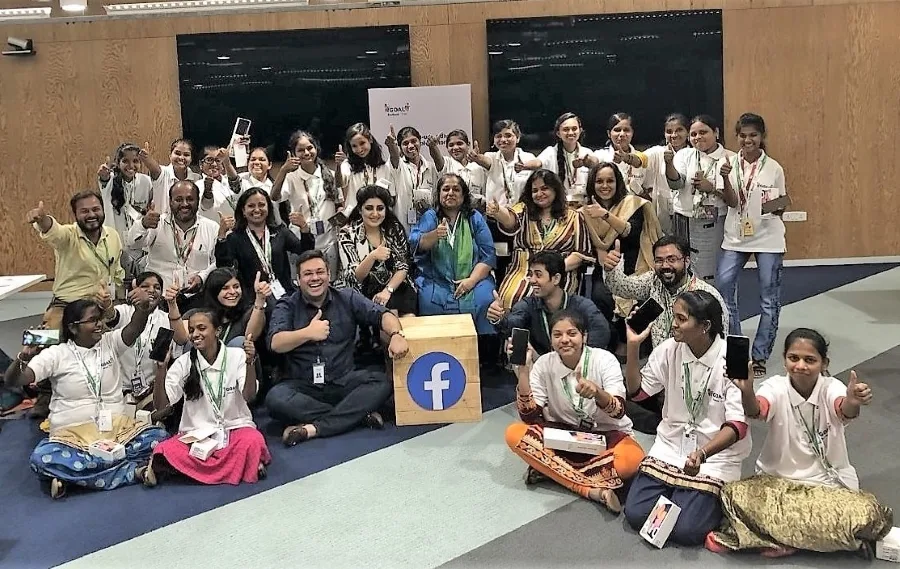
Earlier, in August 2022 Ministry of Tribal Affairs partnered Meta (formerly Facebook) for training tribal youth in digital skills and technology.

IIT Roorkee and IIT Bhilai Forge Alliance for Tribal Research and Preservation of Indian Knowledge Systems

IIT Roorkee and IIT Bhilai Forge Alliance for Tribal Research and Preservation of Indian Knowledge Systems

IIT Roorkee and IIT Bhilai signed an MoU on 29th December,2023 to strengthen the academic and research collaboration between the two institutions. The MoU was signed at IIT Bhilai by the heads of both institutions i.e. Prof K K Pant, Director IIT Roorkee and Prof Rajiv Prakash, Director IIT Bhilai.

This strategic partnership aims to preserve and promote Indian Knowledge Systems (IKS) and seeks to contribute to socio-economic development in tribal areas, emphasizing research on traditional medicinal plants, tribal culture studies, agricultural practices in tribal regions, and financial literacy among tribal populations.

IIT Roorkee and IIT Bhilai Forge Alliance for
IIT Roorkee and IIT Bhilai ink MoU

This collaboration represents a significant stride towards fostering awareness among the youth about Indian culture and heritage, aligning with the Government of India's ambitious vision of Viksit Bharat@2047. Moreover, the partnership will actively support the objectives outlined in the National Education Policy (NEP) 2020, emphasizing the integration of Indian Knowledge Systems into the education system. IKS includes “Knowledge of India” from ancient India and its contributions to modern India and its successes and challenges, and a clear sense of India’s future aspirations with regard to education, health, environment, etc. This collaboration also aligns with Honorable Prime Minister's vision of Ek Bharath Shreshtha Bharat.

“IIT Roorkee is glad to collaborate with IIT Bhilai, and this MoU reflects our commitment to fostering groundbreaking solutions for today’s education system. Through this collaboration, we aim to bridge the gap between ancient and modern education, facilitating both basic and translational research, and contributing to our shared vision of 'Viksit Bharat' – a developed India," said Prof K K Pant, Director, IIT Roorkee.

Prof Rajiv Prakash, Director IIT Bhilai said, “this partnership will create new opportunities for research and development. It will also promote our ancient knowledge and our heritage.”

Both institutions commit to exchange knowledge and promote Indian culture, Indian Knowledge systems and develop projects on sustainable & rural development, Ancient Indian science, Fintech, Health Science, Agriculture, Artificial Intelligence, Complementary and Alternative Medicine, Life Management, Environment, Renewable Energy, Food Processing, Tourism Management, Languages, Peace and Conciliation, Music, Humanities and common interest.

They have also agreed to jointly organize Seminars/ symposiums/ conferences/ workshops/ short term training programs.

Both Prof K K Pant and Prof Rajiv Prakash expressed their happiness on the addition of this new chapter in the partnership of IIT Roorkee and IIT Bhilai, and also offered full support from their side in fostering long lasting and mutually beneficial collaborations between the two institutions. Prof. Akshay Dvivedi, Dean, Sponsored Research & Industrial Consultancy, IIT Roorkee, Prof. Anil Kumar Gourishetty, IKS Coordinator, IIT Roorkee, Prof. Harshit Sosan Lakra, Assistan Professor, Department of Architecture and Planning IIT Roorkee and Prof. Santosh Biswas Faculty-in-charge, DoRD IIT Bhilai were also present. 

President Inaugurates L&T Skill Training Hub in Her Hometown in Odisha To Upskill Tribal Youth

President Inaugurates L&T Skill Training Hub in Her Hometown in Odisha To Upskill Tribal Youth

The Honourable President of India, Smt Droupadi Murmu, today inaugurated the L&T Skill Training Hub at her hometown Pahadpur, Mayurbhanj in Odisha. The historic event was also graced by Ms Meena Subrahmanyan, President of Prayas Trust - an L&T-funded non-profit organisation, along with senior officials of L&T and the Odisha-based non-profit SLS Trust. The historic event was also graced by Ms Meena Subrahmanyan, President of Prayas Trust - an L&T-funded non-profit organisation, along with senior officials of L&T and the Odisha-based non-profit SLS Trust.

L&T, in collaboration with SLS Trust, has established the Skill Training Hub across a land parcel of five acres. The state-of-the-art facility was completed in a remarkable five-month timeframe and aims at providing underprivileged youth in the region with training in construction skills, thus enabling them to become self-reliant. SLS Trust, led by its President, Ms Itishree Murmu, has been instrumental in creating opportunities for the marginalised sections of society.


Commenting on the launch of project, Ms Meena Subramanyan, President of Prayas Trust said, “This training center will enable candidates to fully focus on learning and developing their skills in an enabling environment with a strong focus on life skills and personality development. We believe that empowering the underprivileged youth through accessible skill training is not just an investment for their future but a promise of a brighter and more inclusive tomorrow.”

The project, which includes operations and maintenance, is a significant opportunity for the tribal youth in the area, connecting them with opportunities beyond their immediate surroundings.

Complementing her comment, Ms Mabel Abraham, Joint General Manager - Corporate Social Initiatives, L&T, said: “Transforming dreams into opportunities, L&T is dedicated to making a lasting impact by equipping underprivileged youth with valuable skills. Our commitment to empower these young individuals is a testament to our vision for a more promising and inclusive society.”

The Skill Training Hub is equipped with contemporary infrastructure, featuring an administrative-cum-institute building, a multipurpose hall, an e-learning hall, a digital training room, separate hostels for both boys and girls (each accommodating 120 individuals), dining facilities, practice yards for various trades, and a dedicated workshop for learning pipe welding.

Additionally, the training center is equipped with state-of-the-art simulators with AR/VR technology to enhance the learning experience.

Agri-Fintech Ayekart and Coffee Maker CCL Join Forces to Support Araku Tribal Farmers

Agri-Fintech Ayekart and Coffee Maker CCL Join Forces to Support Araku Tribal Farmers

The collaboration uplifts the coffee farming community and enhance their livelihoods by providing essential tools and resources.

Over 1,000 farmers have experienced improved income and enjoyed an enhanced quality of life in the previous coffee season

Ayekart, a leading Food and Agri-FinTech and an integrated digital platform empowering Farmers/FPOs and MSMEs in the food and agri value chain, has partnered with CCL Products (India) Ltd., a renowned Instant Coffee Manufacturer, to bring positive change to the lives of indigenous tribal farmers in the picturesque Araku Valley of Andhra Pradesh. A step forward to Ayekart's existing initiatives in the region for the past couple of years, this collaboration aims to uplift the coffee farming community and enhance their livelihoods by providing essential tools and resources.

Ayekart's collaboration with these tribal farmers began in 2021 through the FPO - Visakha Manayam Farmer Producer Company Limited. Extensive training programs for the farmers focused on modern production and processing techniques were conducted. These programs included the utilisation of baby pulpers, proper drying techniques on elevated platforms, accurate measurement of moisture levels, and digital weighing of produce.


The partnership between Ayekart and Visakha Manayam Farmer Producer Company Limited has made a substantial social impact on the lives of indigenous tribes of the Araku Valley by equipping these farmers with the knowledge and resources required to secure fair prices and improve their livelihoods. As a result of these efforts, approximately 1,000 farmers have experienced improved income and enjoyed an enhanced quality of life in the previous coffee season.

Agri-Fintech Ayekart and Coffee Maker CCL Join Forces to Support Araku Tribal Farmers

Ashutosh Singh, COO and Co-Founder of Ayekart remarked, "We are elated to have successfully conducted extensive GAP (Good Agricultural Practices) training, encouraged collective bargaining and value-addition initiatives with the local tribal farmers through Visakha Manayam Farmer Producer Company Limited. By equipping these farmers with modern techniques and resources, we are helping farmers achieve higher yields and are also improving their income and preserving their unique heritage. Moreover, our collaboration is a testament to our dedication to sustainable development and improving the livelihoods of those in need. We believe that together, we can make a meaningful and lasting impact in Araku, fostering a brighter future for the local communities."

On the partnership with CCI, Mr Singh further added, "We are excited to partner with CCL in our shared commitment to uplift the tribal farming communities in Araku. The collaboration between Ayekart and CCL stands as a testament to the transformative power of partnership and innovation in improving the lives of small-scale farmers."

The Araku Valley is renowned for its Arabica Parchment and cherry coffee cultivation, serving as the primary source of income for the indigenous tribes residing in the region. Despite the region's rich and fertile lands, commitment to organic farming practices, and the unique quality of its coffee, the farmers have long struggled to achieve fair pricing and economic stability. Intermediaries and local traders often exploit their vulnerability, leaving them with minimal income to support their families.

Praveen Jaipuriar, CEO of CCL Products (India) Ltd., expressed, "At CCL, we believe that businesses are responsible for uplifting the communities. Our collaboration with Ayekart in Araku Valley reflects our commitment to sustainable development, and we are proud to contribute to empowering these dedicated tribal farmers."

With a rich history of 3 decades, CCL Products (India) Ltd is one of the finest and most exquisite instant coffee manufacturers in the world. The company has successfully built a business with integrity, commitment, customer orientation, and consistent effort towards upholding the highest standards in the industry.

The upcoming coffee season is set to commence in November, with this year's season slightly ahead of schedule. To mark this occasion and support the farmers, Ayekart and CCL distributed tarpaulins and baby pulpers, generously provided by CCL as part of their CSR activity and other ongoing initiatives.

About Ayekart:

Ayekart is India's First Integrated supply chain finance platform that addresses the needs of the food and agri value chain, enabling traditional businesses technologically and financially while retaining and enhancing trust in their ecosystem by delivering efficiency and convenience. The platform aligns with the government's objectives to bring the desired change in the MSME and Retail segment by "Empowering the Traditional Business" and helping bring transparency and credibility to the entire ecosystem.

Recognising its leadership and innovation in the Banking, Financial Services, and Insurance sectors, Ayekart has also been awarded the "Best BFSI Brand 2023" title from The Economic Times.

To know more, please visit: https://ayekart.com/

About CCL:

CCL Products (India) Limited was established in the year 1994 with the objective of manufacturing the finest and most exquisite coffee in the world. At CCL Products, we conduct our business with integrity, commitment, customer orientation, and a consistent effort towards upholding the highest standards in the industry. The past three decades have led us to evolve into one of the largest instant coffee exporters and private-label manufacturers globally, with strong R&D and 1000+ blends to offer. Our strength lies in our infrastructure and a global clientele base in over 100 countries.

To know more, please visit: https://www.cclproducts.com/

GITAM Wins 3.65 Cr Grant from DST to Set Up Four Science & Technology Hubs in Andhra Pradesh, under Tribal Welfare Grant

GITAM Receives 3.65 Cr from DST to Set Up Sci-Tech Hubs in Andhra Pradesh, under Tribal Welfare Grant

GITAM STI wins Rs 3.65 cr grant for Tribal development plan in Andhra Pradesh’s Alluri Sitarama Raju District

Four business units to be set up, each of which will initiate economic enterprises such as Niger Seed Oil Mill Units, Honey Processing Units, Solar Based Cold Storage Units, and Vegetable Processing Units

In a groundbreaking initiative, GITAM (Deemed to be University) is pioneering a transformative approach to uplift the socio-economic conditions of the local Scheduled Tribe (ST) population in select villages of Andhra Pradesh. By establishing four (04) Science Technology and Innovation Hubs (GITAM STI Hubs), this prestigious educational institution is blending academic research and community service to create a platform that nurtures entrepreneurship and empowers the tribal youth, ultimately leading to a remarkable improvement in their overall lifestyle.

Funded by the Government of India’s Ministry of Science and Technology, and to be executed under the purview of the Department of Science and Technology (DST), these STI Hubs are the first of its kind in Paderu and Araku Valley Mandals.

Currently, a field survey is underway to identify and enroll the target beneficiaries for the project that is expected to run for a period of three years (up to 31-03-2026). This project will see several departments work in synergy as GITAM STI will collaborate with ICAR-Krishi Vigyan Kendra (ICAR-KVK), Integrated Tribal Development Authority (ITDA), National Bank for Agricultural and Rural Development (NABARD), Khadi & Village Industries Commission (KVIC), Girijan Co-Operative Corporation (GCC), and several local NGOs.

Associate Professor Dr. I. Sarat Babu, Principal Investigator from the Department of Biotechnology, GITAM School of Technology, and the team of researchers at the Science Technology and Innovation Hub of the GITAM (Deemed to be University) have been granted a funding amounting to Rs 3.65 crore towards a project aimed at uplifting the socio-economic status of the tribal population by setting-up a revenue generating model. Dr. Babu is leading the team along with co-investigators, Dr Raja Phani Pappu, Director, Dept of Research & Consultancy and Dr P Manjushree, Professor, GITAM School of Business.

Speaking about the initiative, Dr. Raja Pappu said, “The tribal communities have long faced socio-economic challenges that hindered their growth and progress. However, GITAM (Deemed to be) University has recognized the immense potential hidden within these communities, and is leading the initiative to provide them with the tools, resources, and knowledge necessary for self-sustenance and success.”

Speaking about the novelty of the project Dr. Babu added, “The GITAM STI Hubs go beyond the traditional boundaries of academic research by directly engaging with the tribal communities and uplift their socio-economic conditions. Professors, researchers, and students from diverse fields collaborate closely with the local inhabitants, bridging the gap between theoretical knowledge and practical application. By leveraging their expertise, the university creates an environment that fosters innovation, problem-solving, and skill development, tailored specifically to the needs and aspirations of the tribal population.”

The overall goal of the STI Hub is to improve the livelihood of small and marginalised tribal communities and help with skill development through the formation of 2 FPOs (Farmer Producer Organisation) and 20 SHGs (Self Help Group) reaching out to 1000 beneficiaries. It also aims at creating value chains through Science and Technology Interventions and the develop social enterprises. The activity will help improve the physical and human capitals of selected beneficiaries as well as lead to improvement in the health and nutritional status of the tribals.

To function within the framework of Science for Equity Empowerment and Development (SEED) Division, four business units will be set up, each of which will initiate economic enterprises such as Niger Seed Oil Mill Units, Honey Processing Units, Solar Based Cold Storage Units, and Vegetable Processing Units for vegetables including broccoli, cucumber, ginger, etc.

The GITAM STI Hub is operated in the “Hub and Spoke Model”. The main hub will be in Paderu (district headquarters) while the 12 identified villages in the Paderu (Thumpada, Modapalle, Minumuluru, Raigedda, Talarisingi and Yegumodaputtu) and Araku Valley (Padmapuram, Pappuduvalasa, Yandapallivalasa, Chompi, Hattaguda and Lotheru) Mandals will act as spokes. The hubs are well equipped with Niger seed oil Processing Units, Honey Processing Units, Solar based Cold storage Units, Vegetable Processing Units, and Quality Assurance, Quality Control Laboratories for Honey, and Niger oil, along with the training centers.

About GITAM (Deemed to be University)

GITAM was founded in 1980 by an inspired group of eminent intellectuals and industrialists of Andhra Pradesh led by Dr M. V. V. S. Murthi, former Member of Parliament and popular philanthropist. Located in Visakhapatnam, Andhra Pradesh, it also has campuses in Hyderabad and Bengaluru. Collectively, the four campuses have 12 Schools offering 112 UG and PG Programmes , under their wing, in addition to Ph.D. Programme. Over the years, GITAM (Deemed to be University) has taken part in many social activities and has also produced many renowned personalities. For more information, visit:
https://www.gitam.edu/.

IIT Hyderabad Denotes Thotis’ Tradition — An Age-Old Tattooing Technique

The Thoti women performed the conventional tattoo making among the Gond women as a part of healing and remedies.

The Thotis are an associated tribal community with the Raj Gonds. The traditional occupation of the Thotis was singing 'Gond Gatha', keeping the history of the Gondwana kingdom alive in the form of oral history. Thotis sustained their livelihood depending on the Gond patrons; The women belonging to the Thoti community are the traditional tattoo makers. 

The Thoti women performed the conventional tattoo making among the Gond women as a part of healing and remedies. The conventional practices of the Thotis are declining gradually; few families are still continuing the generation-old practices along with them and safeguarding their traditions by keeping them alive!


The thotis is one of the endangered tribal communities decreasing in their population. As per the census 2021, the population of thotis are 4811 only. Their living traditions are endangered since only a few community members practice traditional occupations. Documenting and safeguarding their living traditions is an important task and need of the present times.

Department of Design, Indian Institute of Technology Hyderabad, has taken the initiative to research, document and preserve the traditional practices of the Thoti community residing in the Adilabad district of Telangana. Under the guidance and principal investigation of Professor Deepak John Mathew, the research team conducted a field visit to the Thoti Guda at Tosham Village at Gudihatnur Mandal, Adilabad district. The traditional music of Thotis has been recorded using advanced technologies to preserve the intangible cultural heritage of the Thoti community.

“I am delighted to see the work from our Design department. We define IITH as Inventing & Innovating in Technology for Humanity. Preserving Traditions & Cultural Heritage using the Design Concept & encouraging future generations to sustain them fulfils our motto. IITH also has a Rural Development Centre to uplift rural livelihood with the aid of technology. We also have a Department of Heritage Science and Technology, which has similar objectives.”, added Prof B S Murty, Director, IIT Hyderabad.

Speaking about the project, Prof Deepak John Mathew, Head, Department of Design, said, “This documentary beautifully describes the age-old traditions & science behind it. Our objective is to showcase these amazing techniques and help the community to sustain its cultural values. It also a step towards connecting our today’s city generation to rich cultural & social heritage of these communities”.

Electronic release on Thoti’s Tradition: https://youtu.be/-5Ae4u-vfgE

Indian Institute of Technology Hyderabad (IITH) is one of the eight new IITs established by the Government of India in 2008. In a short span of 14 years, the institute has become a top-ranker. It has 280+ full-time faculty, ~3,800 students, nearly 200+ state-of-the-art laboratories, and five research and entrepreneurship centers. The institute has a strong research focus with approx. Rs 535+ crore of sanctioned research funding, with PhD scholars accounting for about 30% of total student strength. IITH has more than 7,500+ research publications with 1,00,000+ Citations, 164 Published Patents, 1,700+ sponsored/consultancy projects with 500+ running projects, and about 100+ startups.

Grameen Udyami Project Launched in Jharkhand to Promote Entrepreneurship Amongst the Tribal Youth

Grameen Udyami Project Launched in Jharkhand to Promote Entrepreneurship Amongst the Tribal Youth

On Friday, the second phase of Grameen Udyami Project was launched, wherein Jharkhand tribal youths will now be trained for functional skills to enable them for livelihoods.

Grameen Udyami is a unique multiskilling project, funded by National Skill Development Corporation (NSDC) in partnership with Seva Bharti and Yuva Vikas Societythat aims to train 450 tribal students in Madhya Pradesh and Jharkhand. The project is being implemented in six states— Maharashtra, Rajasthan, Chhattisgarh, Madhya Pradesh, Jharkhand, and Gujarat. This concept was crystallized by MoS, Shri. Rajeev Chandrasekhar and tribal MPs.

On this occasion, Union Minister of Tribal affairs, Mr. Arjun Munda stated that our complete focus is on strengthening sustainable livelihood for tribal populations and with this, the central government has sanctioned a budget of 85,000 cr. exclusively for tribal areas.

There is also a dire need of increasing ownership so that there is awareness built around such schemes and initiatives. There is so much potential and ability in the tribal youth that all we need to do is lay down the right avenues for them to use their talent in the right places.

To recall, the Ministry of Tribal Affairs has partnered with tech giants — Microsoft and Meta (formerly Facebook) — for training tribal youth in digital skills and technology.

Mr. Munda, who launched the programme today, said, "Grameen Udyami project will prove to be game changer for the tribal communities of Jharkhand and will extend the right opportunities to them to stand on their own feet. He urged gram panchayats, villages, and blocks to bring these initiatives to youth for their progress."The training under the project will be conducted in the following Job roles which are relevant to the local economy.
  • Electrician & Solar PV Installation Technician
  • Plumbing & Masonry
  • 2-Wheeler Repair & Maintenance
  • IT/ITES with e-Governance
  • Farm Mechanization
Grameen Udyami Yojana is implemented under Sansadiya Parisankul Yojana. A two-day conference of Honorable MPs was held in Mumbai to discuss the upliftment of tribal communities in January 2020 in which various experts and government organizations shared their experiences. Further, Scheduled Tribe organizations called for a 'Parliamentary ST Cluster Development Project' which has been initiated. Under which, 49 clusters in 15 states of India have been selected by 40 tribal MPs of Lok Sabha and Rajya Sabha. Under their leadership, the scheme in respective clusters will be implemented. One development associate is appointed by the MPs in each cluster.

Following objectives must be achieved under the project:Increase in Rural/Local Economy
  • Enhance employment opportunities
  • Reduce forced migration due to lack of local opportunities
  • Conservation of natural resources
Due to lack of skill and education, organized sectors have very poor contribution in tribal livelihood as compared to the national average. Therefore, initiatives like Grameen Udyami project are critical for their betterment and to ensure their livelihood generation.

Ministry of Tribal Affairs Partnered With Microsoft and Meta to Train Tribal Youth in Digital Skills and Technology

Ministry of Tribal Affairs Partnered With Microsoft and Meta to Train Tribal Youth in Digital Skills and Technology
Image - goal.tribal.gov.in

In an initiative aimed at digitally skilling tribal youth and opening up opportunities for them using digital technology, the Ministry of Tribal Affairs has partnered with tech giants — Microsoft and Meta (formerly Facebook) — for training tribal youth in digital skills and technology.

The State Tribal Welfare Departments and Tribal Research Institutes are being consulted and asked to create awareness about the program amongst tribal communities of the state.

In May, 2021, the Ministry of Tribal Affairs has entered into a Memorandum of Understanding (MoU) with Microsoft. The MOU with Microsoft also aimed to support the digital transformation of residential schools, specifically for Scheduled Tribes, across India such as - Eklavya Model Residential Schools (EMRS) and Ashram Schools, among others.

The initiative will enable the professional development of educators so as to train them to use technology in classrooms. Under the partnership, students from EMRS schools will be mentored on projects that involve AI applications.

The second phase of the GOAL Programme (GOAL 2.0) was launched on 28th June, 2022 in partnership with Meta (previously Facebook).


GOAL 2.0 initiative aims to digitally upskill 10 lakh youth by on promoting entrepreneurship amongst tribal communities of the country and opening up opportunities for them using digital technology.

Through this program, the identified GOAL participants will have access to Meta Business Coach - a WhatsApp based learning bot - that will give the participants an opportunity to learn skills on how to build and grow their business using Facebook, Instagram and WhatsApp.

In a result of 1st-Phase of GOAL, 75% of the participants from the tribal community admitted to being able to better articulate their thoughts to words and saw an improvement in their interpersonal skills. About 69% were able to leverage Digital Commerce for increased reach and about 63% said that it helped them understand how to set up their business.

Blockchain-powered Caste Certificates To ~65,000 Tribals in Remote Maharashtra

Blockchain-powered Caste Certificates To ~65,000 Tribals in Remote Maharashtra

In India, frontier technologies like AI, Blockchain is now not restricted to urban population but reaching in villages, and in a latest development it has been implemented for tribal population as well. 

Out of India's ~ 1.35 billion population, about 9% are tribals. In the state of Maharashtra, the state administration has begun issuing blockchain "caste certificates" to up to 65,000 tribal members in a remote area of Maharashtra, aiming to stop fraudulent claims on government benefits for the tribal population.

Led by 28-year-old Shubham Gupta, who is an officer of the Indian Administrative Services, the certificates are powered by blockchain through a paper representation with a verifiable QR code. Shubham is the administrative head of the Etapalli subdivision of Gadchiroli in the state of Maharashtra.
Indian government officials hand a paper copy of a caste certificate with a QR code linking to its blockchain original to a tribal person in a village in the Etapalli subdivision of district Gadchiroli, Maharashtra. (photo credit - Shubham Gupta/Yahoo Finance)

Shubham came up with this idea of using blockchain post experiencing a fraudulent incident in the tribal area wherein a former elected politician in his area of jurisdiction had fraudulently acquired tribal land by posing as a tribal member using a fake caste certificate.

The blockchain-implementation for the certificates is being done by a three-man government team through a private blockchain-platform Legit Doc, which is an Ethereum-based software application of Crossforge Solutions, a Bangalore-based technology company specializing in blockchain DApp development. The caste-certificates are made using tamper-proof digital documents that was commissioned through a government process using Polygon protocol.

Earlier, LegitDoc helped the Government of Maharashtra to implement blockchain-powered educational credentialing system by issuing nearly 1 million tamper-proof diploma certificates. It was claimed to be the world's largest blockchain-powered educational credentialing system.

Tribal Artisans Turn Entrepreneurs Thanks To TEDP Initiative

Painting By Divya chandra

The joint enterprise by the Ministry of Tribal Affairs (MoTA) and national industry body, ASSOCHAM, the Tribal Development Entrepreneurship Program has helped artisans from the remotest parts of the country to generate a decent income.

New Delhi, 30th July, 2021: The COVID imposed lockdown of 2020 had cast a gloomy scenario globally. People grappled with job loss and stared at an uncertain future. But some artisans like Himjyoti Morang of Assam used this as an opportunity to grow. Trained under the Tribal Entrepreneurship Development Program of MoTA, these artists cum farmers are now tech-savvy businessmen and earn a handsome income to support their families.

Morang (31), is from the Dolaghat district of Assam. She is a weaver and makes traditional tribal outfits like Mekhela, Gamosa (gamcha), Daluk (jacket), mufflers, etc. “The men in our community do farming while women make clothes in our tribe,” says Morang. Till the lockdown of last year, Morang earned around Rs 5000 per month from the sale of her clothes.

Himjyoti Morang

"Though there is demand for these garments, I would get orders through word-of-mouth only,” she says. Financially, things were difficult for her family whose only means of survival were their farm produce. However, her selection in the Tribal Development Entrepreneurship Program (TEDP) of the Ministry of Tribal Affairs (MoTA) in May 2021, changed things forever. TEDP is a joint initiative of MoTA and the national industry body ASSOCHAM. It trains tribal artisans across the country to upgrade their skills and imparts digital marketing knowledge.

“I learned to make my Facebook Business page and posted two pictures of the mufflers I made. Within two days I got a bulk order for 30 mufflers,” she says excitedly. From Rs 5000 a month, Morang has seen her income double up to Rs 10,000. “I can now manage my business from home easily and educate my two daughters as well,” she says.

Similarly, Rudan Devi (50), a Sohrai artist from Jharkhand got more work after she was trained under the TEDP this February. To date,Rudan had only made Sohrai murals and had never held a paintbrush in her life. “Under the workshop, we learned to paint on paper and cloth. It was a novel experience,” she says.

Sohrai paintings of Jharkhand are associated with the harvest season and are made by tribal women on mud walls of their huts. They use natural earth colors – white (kaolin), black (manganese), yellow and red ochre. It has also received geotag from the Indian government in 2020.

After the workshop,Rudan got some orders to make paintings on paper. “Earlier we would paint murals. Now we have more products to offer the customers as we can paint on paper as well,” she says. Her monthly income which was earlier dependent on occasional murals is now around Rs 20,000/- per month. “Apart from murals, there is always some painting work to do and earn more money,” she adds.

The skills learned by these artisans under TEDP have made them hopeful of brighter prospects. For instance, Malini MG, 39, a bamboo artist from Wayanad, Kerala now has more variety to offer her customers. “Previously I made eco-friendly bamboo spoons and spatulas and sell them at government-held exhibitions,” she says.This limited range of products restricted her market reach. She would earn anywhere Rs 5000 per month depending upon the exhibitions.

But TEDP came to her rescue this summer where she got to learn additional skills. “I learned to make bamboo pen-stands, egg-holders, dream catchers, etc., in the workshop. Now I have more range of daily use products and I am hopeful to get more customers,” she points out.

Similarly, the digital marketing workshop held under TEDP has fired up the ambition of Chhattisgarh artisans as well. The global reach of online marketing has made them dream of a better tomorrow. “We learned how to tap an online platform to promote our work and benefit from it,” says Suresh Kumbhakar, 30, a sculptor from Chhattisgarh.

Though everything was closed during the lockdown, TEDP held online workshops to teach these artisans digital marketing skills. The artists learned to create their Facebook business page and upload their artwork. “Since lockdown restricted our movement, we learned to use the online platform to reach the customers,” he reveals.

The workshop has turned these artists hopeful of catering to a bigger market for which they are now in the process of forming a group. “We did not upload our artwork wondering what if we get bulk orders. Hence, we are forming a group so that we can deal with the flood of online orders once our work is promoted online,” says Divya Chandra, 23 a painter and sculptor from Korba district of Chhattisgarh.

Divya chandra

The Ministry of Tribal Affairs and ASSOCHAM aims to train more than 1000 artisans over a span of three years under the TEDP program as a part of the ‘Aatmanirbhar Bharat’ initiative of the government of India.

Ministry of Tribal Affairs Launches Adi Prashikshan Portal

M/o Tribal Affairs has launched Adi Prashikshan Portal and inaugurated 3 Days Online Capacity Building Programme for ST PRI Members in Collaboration with NTRI & TRI, Madhya-Pradesh from 16 – 19 June, 2021


New Delhi, June 17, 2021: ADI PRASHIKSHAN portal has been inaugurated by Shri Arjun Munda, Hon’ble Minister, Ministry of Tribal Affairs, GoI in the presence of Sh. Anil Kumar Jha, Secretary, and Dr Navaljit Kapoor, Joint Secretary and Ms. R. Jaya, Joint Secretary on 16th June 2021.

The Government of India has special concern and commitment for the Scheduled Tribes for improving their socioeconomic status. The unique challenges and concerns of Scheduled Tribes must be addressed to achieve Hon’ble Prime Minister’s vision of SabkaSaath, SabkaVikas. The Ministry of Tribal Affairs is dedicated to frame policy and programmes recognizing the distinct needs of the tribal communities and their areas and provides a comprehensive framework for their protection, empowerment and development.


Shri Arjun Munda, Honorable Union Minister for Tribal Affairs stated that this vision of the Ministry of Tribal Affairs can only be successful when the tribal communities are aware of their rights and entitlements and a strong and robust institutional delivery mechanism is put in place to ensure last mile delivery and no tribal household is left behind.

“This requires extensive training and capacity building of different stakeholders, tribal communities and their representatives, officials and nodal agencies. Further training of local communities is possible only when master trainers and resource persons are available at block and district level,” Shri Munda stated.


Towards this Ministry of Tribal Affairs has inaugurated a three day training programme on “Capacity Building Training of Master Trainers For ST PRI Members”.Itis jointly organized by National Tribal Research Institute and Tribal Research & Development Institute, Govt. of Madhya Pradesh from 16th -19th June 2021. The participants of the training programme will be PA ITDAs, District Level & Block Level Welfare Officers, NGOs, Tribal Youths, SHG Member and Sarpanches. This training programme will cover topics such as Constitutional Rights of Schedule Tribes, Financial and administrative management of GPs, flagship programmes of Central and State Governments schemes meant to improve education, health, nutrition, social security, livelihood and skilling of youth.

Even Ministry in collaboration with the United Nations Development Programme has developed ADI PRASHIKSHAN portal . As the name suggests AdiPrashikshan- ‘Training for Tribals” is a very well-intended initiative to reach the remotest area with ‘knowledge packets’ using information technology (IT), so that tribal communities are able to have access to their rights and benefits. It’s an effort to bring Training Institutions/ Organizations, Experts and Trainers together for addressing thematic knowledge gaps among Tribal PRIs, Communities, Officials and various other stakeholders involved in tribal area development.

Shri Anil Kumar Jha, Secretary, Ministry of Tribal Affairs stated that this portal would provide comprehensive information on training programs held across the country.

“This portal gives the opportunity to register as an organizer of training programs and to partake as trainee or a Master Trainer and acts as an information hub for each trainee and trainer who will have individual log in credentials. The system will also generate digitally signed Certificates to each participant,” He informed.

Adi Prashikshan will transform the various ongoing training initiatives under different units of the Ministry like TRIs, COEs and converge the initiatives for better skill and knowledge building. It will also catalyze and improve the processes of conducting training by making it online and accessible to all. Unified open platform will give users access to authentic knowledge products.

Dr Navaljit Kapoor, Joint Secretary, MoTA stated that the portal also has search options on thematic areas of training along with location and organizer in an inter-linked manner and also captures dynamic disaggregated data.

“This initiative will be beneficial and will ensure tribal development to reach out to the people for whom it is meant,” He said.

Market Reports

Market Report & Surveys
IndianWeb2.com © all rights reserved