‏إظهار الرسائل ذات التسميات Rural Entrepreneurs. إظهار كافة الرسائل

Empowering Rural Women Entrepreneurs: Enhancing Financial Well-being with FIA Global

Empowering Rural Women Entrepreneurs: Enhancing Financial Well-being with FIA Global
FIA Educating Women on Financial Independence
FIA Global Brings Affordable Digital Financing to Women and Other Unbanked Persons

FIA Global, a woman-led organisation offers a comprehensive range of sachet financial services through its state-of-the-art fintech platform that is powered by artificial intelligence (AI). These services are designed for women and women-owned businesses and other financially excluded populations who live or work in underserved geographies and economically backward areas in India.

FIA Global uses its deep-tech expertise, including investments in AI and developing AI skillsets; investments in a massive rural distribution network, with 50% as women banking agents and its large network of financial service alliances with banks, microfinance institutions (MFIs), insurance companies, mutual fund houses, and the government of India to deploy financial inclusion solutions at scale.

 
Women to fulfill their financial potential with FIA Bank Sakhis

FIA Global Bank Sakhis Transforming Lives

FIA Global works with these financial service partners to customize their products for women, micro and small entrepreneurs, and other unbanked markets. FIA integrates the financial products provided by its financial partners into its platform and helps them reach the rural markets through the existing network of banking agents.

Speaking on the subject, Ms. Seema Prem, the CEO and Co-Founder of FIA Global, comments, “FIA invests time and effort to mobilize and build the capacity of SHGs at scale to support our rapid outreach to close the finance gap. We also partner with public institutions like the National Skills Development Corporation and the edtech company Unnati to provide vocational training to SHG members to enable women to get the necessary skills for starting their businesses. Through this focussed approach FIA, an impact fintech has been serving the low-income households in South Asia.”

FIA Global has a three-pronged approach of expanding the services into the new regions.
  1. Educating and training women to work as banking agent micro-entrepreneurs in new target regions in India and in Bangladesh. Women run about 18 percent of FIA Global's banking outlets. These women are selected, educated and trained by FIA Global trainers. The model accelerates the inclusion of women and minorities in formal finance. The women are an effective channel to get more local community women to use banking services.
  2. Improving financial literacy. Creating financial resilience for lower-income women, women micro-entrepreneurs, entrepreneurs and owners of SMEs requires targeted public education efforts. FIA has been organizing, nurturing and enabling linkages with banks and MFIs by working with the local community partners (NGOs) to create and support Self Help Groups (SHGs). FIA also uses referrals to fill the gap through skill building initiatives.
  3. Connecting women-owned businesses to financing and re-engaging women in the workforce. FIA in association with the community partners, provides training and links the women entrepreneurs who operate in cash economies, who are not noticed by the banks, who are also likely to be targets of unscrupulous money lenders. FIA and its partners also get access for these women to a larger pool of working capital loans, and agricultural and livestock loans at market rates. Once credit history is built, banks extend larger loans.
The digital finance model of FIA Global makes it easy for women-owned or -led businesses to avail themselves of efficient banking services to pay wages and bills digitally and access working capital. The business owners can also avail of the benefits and as much as they can provide their employees, through enrolment in social security schemes, including life and health insurance, and pension plans.

In the post-pandemic world, women suffered job losses and depleted savings, losing financial independence. The absence of bank accounts worsened the situation, limiting savings and social protections. Two-thirds of working women lost jobs in April 2020, with few returning unlike men. Even after two years, women business owners in South Asia face a financing gap that threatens their survival. In India, the gender gap in accessing credit for women-owned MSMEs is estimated at $158 billion due to the pandemic. FIA Global strives to create gender-inclusive financial systems and prevent regression of women's progress in finance and workforce integration.
ONDC Network Partners, Delhivery, and Mystore Collaborate to Drive Growth for Rural Entrepreneurs

ONDC Network Partners, Delhivery, and Mystore Collaborate to Drive Growth for Rural Entrepreneurs

Delhivery Ltd., India's largest fully-integrated logistics provider, has partnered with Mystore, an ONDC-powered marketplace for Indian sellers, to provide express parcel shipping for rural entrepreneurs nationwide.

ONDC (Open Network For Digital Commerce) is a government-led initiative to create an open, secure, and interoperable network for digital commerce in India. Through ONDC, Mystore's e-commerce platform is leveraging Delhivery's extensive pan-India network of over 18,500 pin codes to offer affordable and reliable shipping to rural entrepreneurs.

Healthline Foods, a Srinagar-based healthy food brand, is using the services of both enablers to expand its reach to Maharashtra and other parts of India.

Commenting on this, Mudassir Ahmed, Co-founder of Healthline Foods, said, "As a Kashmir-based seller, both discoverability and logistics can be challenging, but through ONDC and enablers like Delhivery and Mystore, we've successfully fulfilled orders in many parts of India. For sellers like us, democratizing commerce and easy partner access has been a growth driver."

Coonoor-based Honeybee Tea Company sells fresh Nilgiri products such as tea, honey, essential oils, and TODA embroidery.

Speaking on this, Dileep Ramu, Chief Executive Officer of Honeybee Tea Company, said, "It is the power of digitalization and the strength of collaborations that a small retail store in Coonoor now caters to the customers in India's biggest metros. ONDC and its partners have created new revenue streams for us entrepreneurs and given people across India access to unadulterated, fresh, and unique products to enhance their lifestyles."

Commenting on the partnership, T. Koshy, MD & CEO, ONDC, added, "The collaboration between Mystore and Delhivery has the potential to drive economic growth and create new opportunities for businesses emerging from remote areas. This will be a key driver in enabling overall development and social upliftment in rural communities."

Kriti Aggarwal, Co-Founder of Mystore, said, "We are an ONDC-connected Marketplace providing seamless onboarding to sellers and a convenient online shopping experience (across categories) to customers pan India. We are proud to be the digital commerce solution provider for farmer producers. With our collaboration with Delhivery, we are now enabling FPOs to deliver their products directly to buyers in tier-1 and tier-2 cities. This strategic alliance between Mystore and Delhivery expands rural entrepreneurs' reach, boosts their confidence, and increases revenue."

Commenting on the partnership, Ajith Pai, Chief Operating Officer, Delhivery, said, "ONDC's pathbreaking design and execution promises to democratize e-commerce in India, transforming the growth paradigm for millions of small businesses. Delhivery, with its extensive pan-India network, technology, and data-driven backbone, is the ideal partner for ONDC's participants. With seamless integration across our different service lines, we are excited to be part of this transformative journey being chartered by ONDC."

About Delhivery

Delhivery Ltd. is India's largest fully integrated logistics services provider. With its nationwide network covering over 18,500 pin codes, the company provides a full suite of logistics services such as express parcel transportation, PTL freight, TL freight, cross-border, supply chain, and technology services. Delhivery has successfully fulfilled over 2 billion shipments since inception and today works with over 27,000 customers, including large & small e-commerce participants, SMEs, and other enterprises & brands. For more information about Delhivery, please visit www.delhivery.com.

About Mystore

Mystore® is an ONDC-connected marketplace helping SMEs and enterprise brands leverage the ONDC network to accelerate their growth. With its Mystore Seller App and Multilingual Buyer app for ONDC, Mystore enables seamless selling and buying on the Open Network for Digital Commerce. Mystore's cutting-edge e-commerce solutions are built on StoreHippo® - the leading enterprise e-commerce platform powering top enterprise brands across the globe.

Ministry of Rural Development and Meesho Sign MoU to Onboard Rural Women as Online Sellers

The Ministry of Rural Development and Meesho, India’s only true online marketplace, signed a Memorandum of Understanding (MoU) today to drive digital inclusion of all women registered under State Rural Livelihood Missions (SRLMs) and enable them to sell online.

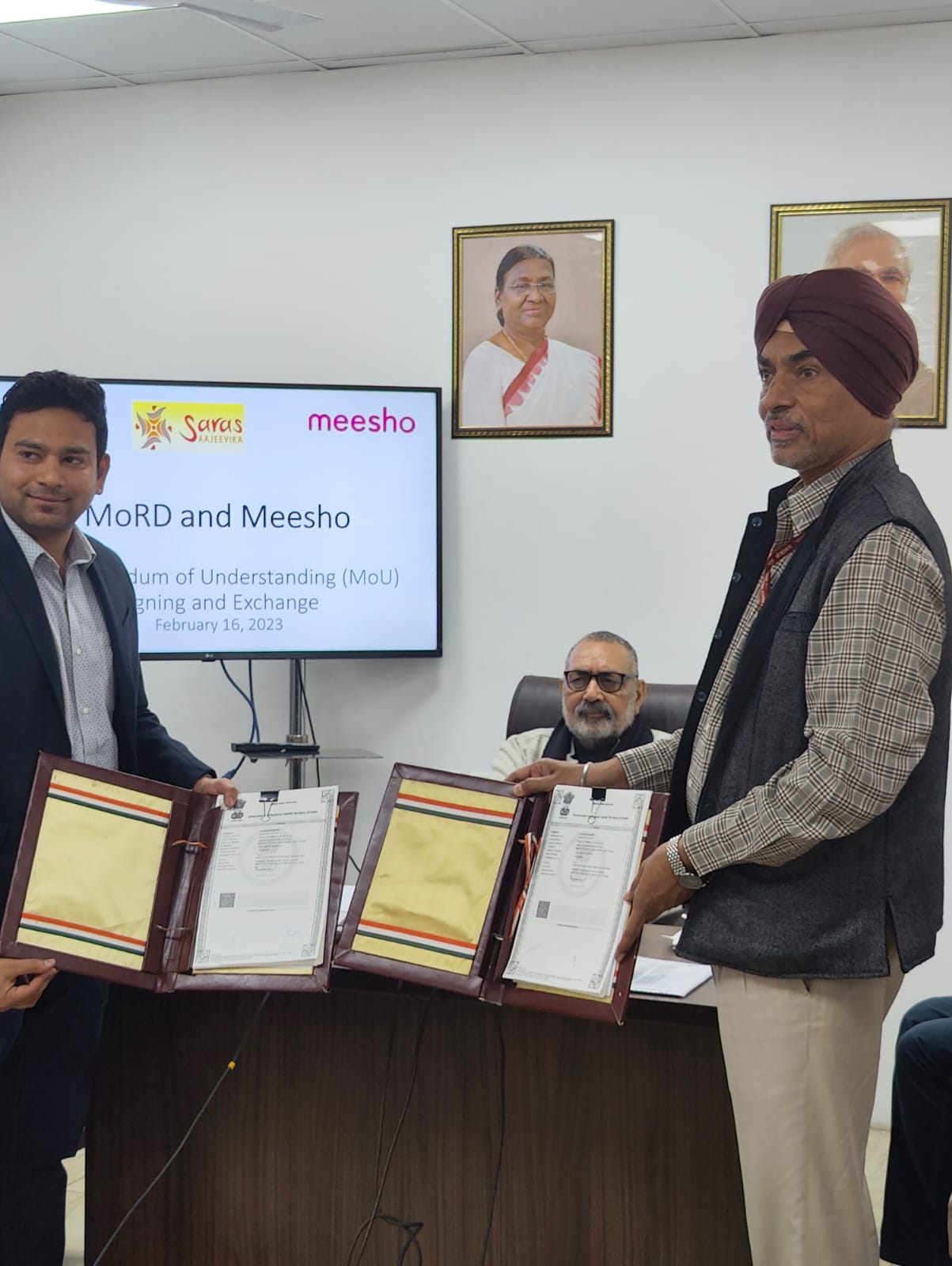
Sanjeev Barnwal, Co-founder and CTO, Meesho and the Ministry of Rural Development signed a Memorandum of Understanding (MoU) today in Delhi in the presence of Giriraj Singh, the minister for Rural Development and Panchayati Raj to onboard women registered under
Sanjeev Barnwal, Co-founder and CTO, Meesho and the Ministry of Rural Development signed a Memorandum of Understanding (MoU) today in Delhi in the presence of Giriraj Singh, the minister for Rural Development and Panchayati Raj to onboard women registered under the Deendayal Antyodaya Yojana - National Rural Livelihood Mission and enable them to sell on Meesho.

The partnership will give impetus to Meesho’s ongoing efforts to onboard rural women entrepreneurs in various states and enable them to launch and grow their businesses online. Over the last few months, Meesho has tied up with several government-run self-help groups (SHGs), such as Sanjeevini - Karnataka State Rural Livelihood Mission and UMEED - Jammu and Kashmir Rural Livelihoods Mission.

Meesho will now work with the central government to facilitate this digitisation at scale, organising rural women as community institutions, ensuring their financial inclusion and helping them with market access. The Ministry of Rural Development will support Meesho's engagement with state-owned and SRLM-promoted enterprises to bring local artisans, weavers and craft producers into the e-commerce fold.

Giriraj Singh, the Minister for Rural Development and Panchayati Raj said, “Uplifting rural women across India by unlocking livelihood opportunities for them has been our key objective. Our constant endeavour has been to support the growth and development of rural communities and the collaboration with Meesho will be instrumental in driving financial inclusion for them. Through market insights and training on product cataloging and packaging, women from these self-help groups will be able to leverage the power of technology in making their products visible and accessible to a wider customer base, thereby increasing their earning potential.

With more than 40% of the women population into non-farming, it is our collective responsibility to build capabilities and unlock wider opportunities for them through online selling platforms. We are hopeful to empower 10 crore women financially through this partnership, thereby making them an integral part of India’s vision of becoming a $5 trillion economy.”

Meesho’s continued commitment towards creating a level playing field for the smallest of sellers and its industry-first initiatives like zero commission will encourage women from across the country to embrace internet commerce and allow them to access a wider market. Aligned with Meesho’s vision to enable 100 million small businesses to succeed online, the move will allow them to become self-employed entrepreneurs and fulfill their aspirations of achieving financial independence.

Sanjeev Barnwal, Co-founder and CTO, Meesho, said, “We are honoured to partner with the Ministry of Rural Development on our mission to democratise internet commerce for everyone. Women entrepreneurship is key to India's vision of becoming a $5 trillion economy and, over the years, Meesho has empowered lakhs of them to succeed in the online world and achieve financial independence. This partnership will amplify our efforts in that direction, unlocking the power of internet commerce for their social and economic growth. We will provide them with all the tools and guidance they need to grow their business online with Meesho.”

Meesho will provide end-to-end support to SHGs, training them on the various facets of running an online business. From guidance on identifying the right products and creating a seller account to uploading catalogues and packaging, Meesho will organise a host of in-person training workshops in several regional languages. Further, Meesho will impart education and training on features like product and pricing recommendations, besides facilitating logistics tie-ups in the respective states.

About Meesho:

Meesho is India’s only true e-commerce marketplace. With a vision to enable 100 million small businesses, including individual entrepreneurs, to succeed online, Meesho is democratising Internet commerce and bringing a range of products and new customers online. The Meesho marketplace provides small businesses, which includes SMBs, MSMEs and individual entrepreneurs, access to millions of customers, selection from over 30 categories, pan-India logistics, payment services and customer support capabilities to efficiently run their businesses on the Meesho ecosystem.

For more news and updates on Meesho, follow us on Twitter

About National Rural Livelihood Mission:

The Ministry under Deendayal Antyodaya Yojana – National Rural Livelihood Mission (DAY-NRLM) flagship programme has been working to improve the living conditions of rural Indians by enhancing livelihoods through the SHG ecosystem and providing SHG members better income by facilitating better and profitable markets for their produce. As of January 2023, NRLM has its footprints in 7,054 blocks across 737 districts in 34 States/UTs. It has mobilised a total of 8.79 Crore women into 81.61 lakhs SHGs who have been federated into 4.76 lakh Village Organisation and 31,070 Cluster Level Federations.

Besides the Capitalization Support funding of over Rs. 28K crores provided by the programme, Bank loans of Rs. 6.17 lakh crore cumulatively has been also accessed by SHGs. Most of the funds have been used for promoting livelihood activities in the farm and non-farm livelihoods sector. Over 2.30 lakh rural enterprises owned by SHG members have been supported directly under non-farm livelihood activities of DAY-NRLM.

Start-up Village Entrepreneurship Programme (SVEP) Launched To Support Entrepreneurs in Villages

Start-up Village Entrepreneurship Programme Launched To Support Entrepreneurs in Villages
Photo by Néstor Morales on Unsplash

National Institute of Entrepreneurship and Small Business Development (NIESBUD), a premier organization of the Ministry of Skill Development and Entrepreneurship (MSDE), has signed a Memorandum of Understanding (MoU) with the Ministry of Rural Development (MoRD) to develop a sustainable model for promoting entrepreneurship at the grass roots by initiating the Start-up Village Entrepreneurship Programme (SVEP).

SVEP  aims to support entrepreneurs in rural areas to set-up enterprises at the village-level in non-agricultural sectors. The partnership will enable the rural community by helping them set up their trades and provide complete support till they are stabilized. This pragmatic intervention will provide knowledge, advisory and financial support to the public and will help create village-level community cadre.

NIESBUD is an autonomous organization engaged in training, consultancy, research, etc. in order to promote entrepreneurship and Skill Development. 

Under the partnership of NIESBUD and MoRD, rural entrepreneurs will be able to access banking systems for receiving financial support for starting their enterprises, including support from MUDRA bank. Integrated ICT techniques and tools will also be provided for training and capacity building along with enterprise advisory services to augment the entrepreneurship ecosystem in India’s villages. 

Newly launched SVEP program will benefit the Self-Help Group (SHG) ecosystem of DAY-NRLM and the scheme not only supports existing enterprises but new enterprises as well.

In September last year, MSDE had announced its plans for implementing a project on entrepreneurship promotion and mentoring of micro and small enterprises in 6 temple towns of Puri, Varanasi, Haridwar, Kollur, Pandharpur and Bodh Gaya, to tap the entrepreneurial potential of first generation entrepreneurs, educated unemployed youth, school/college dropouts, women, youth from backward community etc.

On the partnership, Shri Rajesh Aggarwal, Secretary, Ministry of Skill Development & Entreprenuership said that the Prime Minister Shri Narendra Modi has highlighted that Indians should dream of becoming job creators from job seekers and in this regard, SVEP will help create an innovative ecosystem, accelerating economic and social gains at the community level. He informed that the scheme also aims at building an inclusive society by providing equal opportunities to all along with the required financial support. Shri Aggarwal highlighted that India is a land of opportunities and by helping our youth access these prospects, we are catering to their aspirations. 

He expressed his confidence that this partnership will help in training the rural community and will provide them with necessary resources for entrepreneurship to increase their income and will pave the way for building Aatmanirbhar Bharat.

Shri Aggarwal stressed that rural entrepreneurship can play a significant role in the overall economic development of India and a huge number of employment opportunities can be generated because of the rural entrepreneurship for the people who are living in rural or remote geographies. The old-age artistic heritage has also been conserved by protecting as well as promoting the rural entrepreneurship, he added. He informed that from past few years, Skill India has been working persistently to bridge the skill gap by giving entrepreneurs easy access to funding, providing the right mentorship, and improving ease of doing business in the country.

Hesa to Onboard 1.5 Lakh Microlevel Entrepreneurs in 2022 Across Rural Parts of India

Hesa to Onboard 1.5 Lakh Microlevel Entrepreneurs in 2022 Across Rural Parts of India

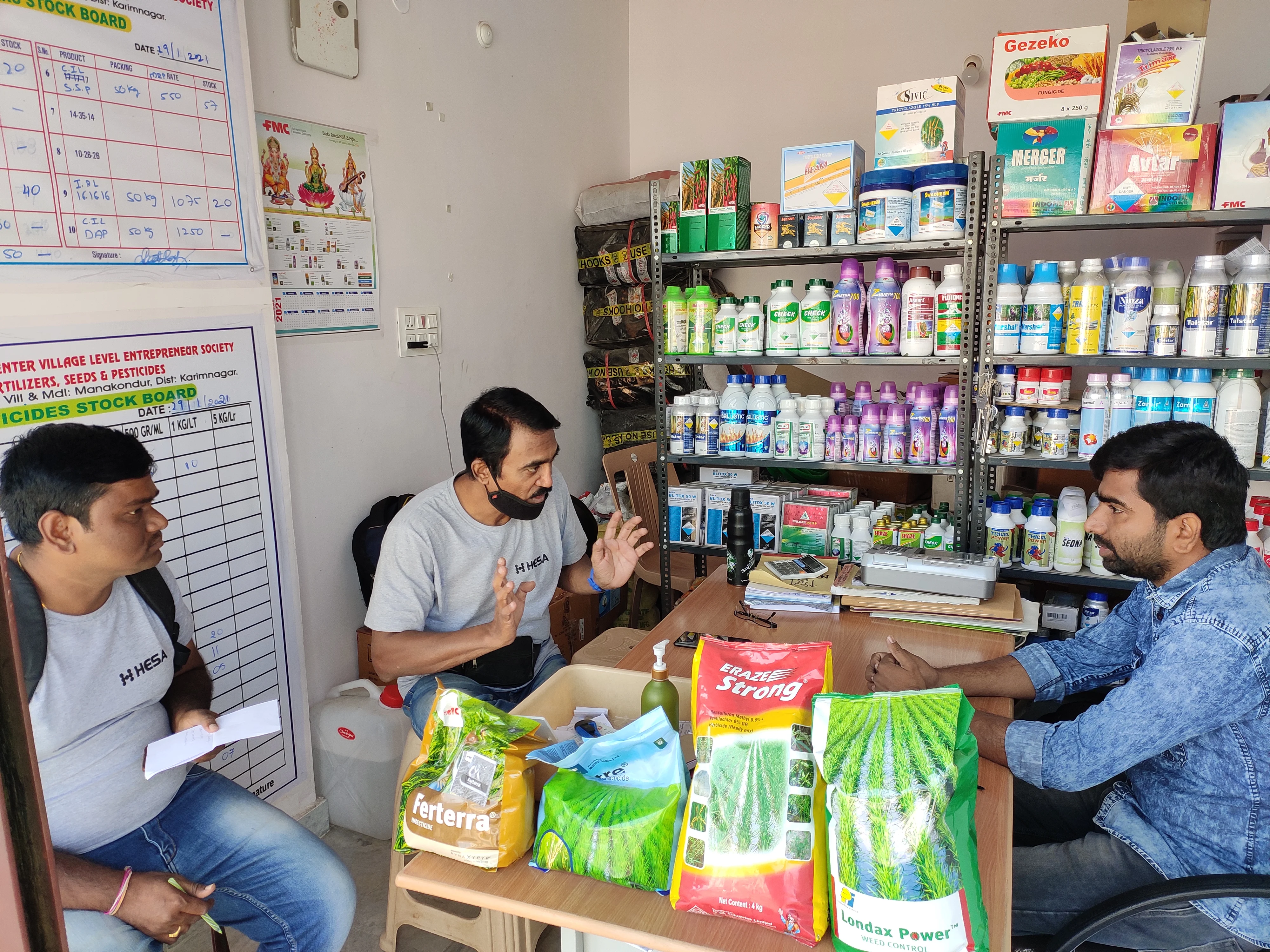
Hesa, which is on a mission to uplift rural entrepreneurs, announced today that it will onboard more than 1.5 Lakh microlevel entrepreneurs by the end of 2022. With this Hesa, the rural- tech startup will empower these entrepreneurs across rural parts of India such as the states of Karnataka , Andhra Pradesh, Telangana and plans to grow into five additional states by the end of this year. 

Expanding its network of microlevel entrepreneurs (Hesaathi), the startup focuses on offering a range of products and services in order to solve the challenges of accessibility, availability and buying and selling in remote rural locations. Identifying the right talent on the ground, the field officer onboards Hesaathi who are then trained to use the platform. After the completion of the training, Hesaathis are awarded with a certificate and then roll on the platform.

Established in 2020, Hesa is a technology-enabled rural commerce platform empowering livelihood in rural areas, enabling access to quality products and services. With currently a total of 30000+ microlevel entrepreneurs (Hesaathi), the startup continues to bolster its rural network across India. Hesa is providing the micro entrepreneurs to settle with dignified work in local villages allowing them to make Rs 8000 to Rs 12000 income monthly.

Hesaathis onboarded at Hesa will be incharge of the supply chain at a local level, facilitating village level mapping, surveys, campaigns and promotions for the company's brand partners. Hesaathis also helps rural consumers with everyday transactions on the platform like utility bill payments, buying and selling of products across sectors and more. Where the rural customer visits Hesaathi in their village for multiple needs in a single visit, which also fulfils the demand of social distancing in the current times, avoiding long commutes in shared vehicles or standing in longer queues, Hesaathis are also able to generate income through commission on every transaction they make on the platform. The startup's business model thereby provides solutions at both ends- Connecting businesses to rural India and enabling scalable solutions for rural households, helping them with progressive livelihoods.

On the team expansion plans, Founder & CEO, Vamsi Udayagiri quotes “As a technology enabled platform we are empowering livelihood in rural areas, providing access to quality products and services. Our endeavour is to bridge the gap between rural and urban India by leveraging technology and the workforce. We at Hesa, are overwhelmed with the response we have received in the last 2 years and we are ready to scale our services across multiple states with our innovative tech solutions.

Hesa is a social enterprise enabling convenience with multiple solutions for both ends connecting rural entrepreneurs and brands. The startup has connected 65+ brands to 600,000 rural customers through its network of 30,000 village-level entrepreneurs in around 50,000 Indian villages. The startup has also received recognition for its outstanding contribution in helping 11+ lakh rural households and 10,000+ job creation in a short span of one year. The company further aims to impact 3 crore rural livelihoods and onboard 1.5Lakh microlevel entrepreneurs in 2022. With buying, selling, promoting, marketing, services all enrolled in one platform, Hesa has become the go-to-market solutions in rural India.

TRIFED Bags Awards for Excellence in PSU for Investment in Start-ups in Organisational Awards Category of the Business Leader of the Year Awards

Team TRIFED bags the award for excellence in PSU for Investment in Start-ups in the Organisational Awards category of the Business Leader of the Year awards.

Shri Pravir Krishna, Managing Director awarded with the CEO of the year, the Brand Builder of the year and Entrepreneur of the year.


Team TRIFED, led by Shri Pravir Krishna, Managing Director, TRIFED, has won 4 awards in the 19th Global edition and the 4th India Edition of World Leadership Congress and Awards. The Economic Times presents Business Leader of the Year, which took place in Mumbai on February 17, 2021.

A national level cooperative body under the administrative control of Ministry of Tribal Affairs of Government of India, TRIFED aims to improve the livelihood of the tribal communities by creating a sustainable market and create business opportunities for tribal people. It involves exploring marketing possibilities for marketing of tribal products on a sustainable basis, creating brand and providing other necessary services.

Recognized for its diligent efforts towards the transformation of lives of the tribal population across the country, TRIFED won a collective award of Excellence in PSU – for investment in start-ups in the Organizational Award Category. Shri Pravir Krishna, Managing Director won three awards in the Individual Category for his exemplary and inspirational leadership – CEO of the year; Brand Builder of the Year and Entrepreneur of the Year.

Mr. Pravir Krishna MD, TRIFED


Hosted by the World Leadership Congress and Awards, the Economic Times presents Business Leader of the Year, recognizes the ability of leaders to steer their organisations through turbulent times and contribute to the country’s development.

The awards are a recognition of Shri Pravir Krishna’s leadership and TRIFED’s contribution towards livelihood generation of the entire tribal community and making them self-reliant. Over the past three years, under Shri Krishna’s guidance, TRIFED has accelerated its mission in empowering the tribal community through the implementation of pathbreaking initiatives such as the Van Dhan Yojana, the MSP for MFP Scheme and in promoting tribal commerce through offline events such as exhibitions like Aadi Mahotsav etc and online platforms such as the Tribes India marketplace and retail outlets such as Amazon, Flipkart.

Believing firmly in a bottoms-up approach when it comes to tribal welfare and development, it is with a passion and drive that Mr. Krishna and the entire team at TRIFED has been working the past year especially more so during this unprecedented Covid-19 crisis. The mission is to create an Atmanirbhar Tribal India.

This turnaround of TRIFED has been recognized earlier when the team and Shri Krishna won three awards in the Virtual Edition of National Awards for Excellence – PSU held on October 14, 2020. Shri Krishna was awarded 2 individual awards for the exemplary and inspirational leadership in the CEO of the Year and Visionary Leadership Award categories and TRIFED, a collective award in the Investment in Start-Ups Category.

Shri Krishna, an IAS officer of 1987 batch (Madhya Pradesh cadre) also was named as one of the '50 Most Influential Indian 2020', a list of influential Indians prepared by Fame India, Asia Post and PSU Watch in 2020!


Actor Sonu Sood Partners with Rural Fintech Firm Spice Money to Empower Over 1 Crore Rural Entrepreneurs


Spice Money, India’s leading rural fintech firm, today announced that the company has joined hands with actor, humanitarian and philanthropist, Sonu Sood to achieve their mutual vision to digitally and financially empower 1 crore rural entrepreneurs. 

Since the start of the COVID-19 pandemic Sonu Sood’s goal has been to help those in need in the remotest corners of the country, while Spice Money’s aim has been to strengthen the country’s rural economy through digital empowerment and financial inclusion. Given their common vision to digitally uplift rural India, Sonu Sood and Spice Money will jointly work towards creating an entrepreneurial mindset in towns and villages. As part of the association, Sonu Sood will own equity stake in the company and has been appointed as a Non-Executive Advisory Board Member. 

Spice Money will ideate collectively with Sonu Sood to design new initiatives and products that will bridge the divide between rural and urban India. Spice Money will also enable select existing programs developed by Sonu Sood during the lockdown, to be made available on the Spice Money platform. 

As a Non Executive Advisory board member Sonu will contribute in building the network of entrepreneurs, while encouraging financial inclusion and digital empowerment in rural India. Sonu Sood will work with Spice Money Adhikaris (entrepreneurs) to develop an appetite for digital product offerings thus, accelerating their digital journey through technology adoption. Sonu Sood will also be seen as Spice Money’s first brand ambassador. 

Dilip Modi, Founder of Spice Money said, “Spice Money is on a mission to digitally and financially empower over 1 crore rural entrepreneurs. We are thrilled to have in Sonu Sood, a partner who shares the same passion. We will together enable Indians to harness the power of technology in earning an independent livelihood without having to leave their homes and families. This strategic association will leverage digital solutions and knowledge creation through the Spice Money platform, to promote self-reliance, entrepreneurship and financial inclusion in every corner of ‘Bharat’.” 

Dilip Modi, Founder, Spice Money

Speaking on the occasion Sonu Sood said, “I strongly believe that together, we will chart the future for an Aatmanirbhar Bharat. Humein har gaon ko digitally saksham banaana hai. Through my experiences over the last few months, I have gained an eye-opening perspective on the needs and struggles of the people in towns and villages of India. My vision is to make my countrymen, socio-economically independent and self-reliant using technology. My association with Spice Money will help us jointly achieve just that. The company’s technology prowess and extensive reach in the country gave me an unparalleled platform to reach out to citizens in rural India."


Since the beginning of its operations in 2015, Spice Money has been focusing on financial inclusion with nearly 90% of its digital Adhikaris (entrepreneurs) being in semi-urban and rural India. The company’s endeavor has been to bridge the gap between the served and the under-served, providing digital and financial services to customers at their doorstep. Spice Money has been progressing at a rapid pace, towards covering 18,000+ pin codes, 700+ districts and 5000+ blocks in India.

About Spice Money

Spice Money is India’s leading rural fintech company with close to 500,000 Adhikaris (entrepreneurs) offering cash deposit, aadhar enabled payment system for cash withdrawal, mini ATM, insurance, loans, bill payments, cash collection centre for customer/agents/representative of NBFC/Banks, airtime recharge, tours & travel, online shopping,, Pan Card and mPoS services. Spice Money services are available through Spice Money App (Adhikari App) and web portal. Spice Money through its cutting edge technology and wide network of Spice Money Adhikaris, is bridging the gaps in access to various financial services for the masses across the length and breadth of India." To know more, visit https://spicemoney.com/.

ASSOCHAM Launches CoE for Tribal Entrepreneurship Development


Apex industry body ASSOCHAM has set up the ‘Centre of Excellence (CoE) for Tribal Entrepreneurship Development’ and will work in partnership with Ministry of Tribal Affairs, Government of India.

The Centre of Excellence for Tribal Entrepreneurship Development was virtually inaugurated by Shri Arjun Munda, Union Minister of Tribal Affairs, Government of India. The event was attended by several dignitaries from the Central and State Governments.

Noting that potential of Indian tribal community has largely remained untapped due to various reasons, Shri Munda said “There is lack of awareness about tribal heritage and ignorance about the range and diversity of tribal produce across the country.”

Lauding the chamber's efforts, the Union Minister added, “A differentiated value proposition mooted by ASSOCHAM should help position and develop tribal offerings and in turn create better livelihood opportunities for tribal artisans and the community at large.”

Highlighting the need for collective stakeholder participation, Shri Munda said, “I call upon all the stakeholders, including the industry members, to join in the efforts of developing the potential of the tribal communities and building their capacities to enhance their contribution in socio-economic growth thus fulfilling the vision of Atmanirbhar Bharat given by Prime Minister Narendra Modi.”


ASSOCHAM also conducted a webinar titled, ‘Khadi: Symbol of independent Atmanirbhar Bharat,’ to commemorate the birth of Father of the Nation, Mahatma Gandhi and to celebrate upliftment, inclusion and empowerment of India underprivileged, marginalized and impoverished communities.

The discussion focused on the urgency to promote and support entrepreneurship of the tribal communities in the country.

Sharing his views, ASSOCHAM president, Dr Niranjan Hiranandani said, “Given the often-remote locations where these tribal populations live, delivering essential services and ensuring they can benefit from economic growth, remains a crucial challenge for the country. Considering that scheduled tribes are almost 20 years behind the average Indian population in terms of their development, the potential of approximately 8 percent of our population must be fully developed and leveraged. The ‘Tribal Entrepreneurship Development Programme’ would optimize their contribution to the growing economy of our country and support India's vision of becoming Atmanirbhar.”


Echoing similar sentiment, ASSOCHAM secretary general, Mr Deepak Sood said, “In a bid to promote and support entrepreneurship across Indian tribal communities, efforts are underway in connecting agriculture and forest produce with markets using technology, creation of self-help groups, empowering women, and creating self-sustainable enterprises. However, there are several challenges and bottlenecks that impede the growth of this process. The ‘ASSOCHAM Centre of Excellence’ will strive to address these issues, explore avenues of promotion to create a robust tribal brand identity and in the process - build and enhance the entrepreneurial capabilities of the tribal artisans.”

Mr Sood added that the ‘Tribal Entrepreneurship Development Programme’ is aimed at ensuring the quality of life to the last man in the line and strengthening tribal entrepreneurship.


Amid others who shared their views on tribal development included - Mr Deepak Khandekar, secretary, Ministry of Tribal Affairs, Government of India; Dr Naval Jit Kapoor, joint secretary and Mr Vineet Agarwal, senior vice-president, ASSOCHAM.


Also present on the occasion were Dr Atul Kochhar, CEO, National Accreditation Board for Hospitals & Healthcare Providers (NABH); Dr Manish Pande, director & head, Project Analysis & Documentation (PAD) Division, Quality Council of India; Dr Manu Gupta, co-founder Sustainable Environment and Ecological Development Society (SEEDS) along with other senior industry players.

About ASSOCHAM:

ASSOCHAM initiated its endeavour of value creation for Indian industry in 1920. It was established by promoter Chambers, representing all regions of India. Having in its fold over 400 Chambers and Trade Associations, and serving over 4.5 lakh members across India. ASSOCHAM has emerged as the fountainhead of Knowledge for Indian industry, which is all set to redefine the dynamics of growth and development in the Knowledge Based Economy.


Ministry Carrying Out Projects for Startup Ecosystem for Rural and Tribal Entrepreneurs

Government of India, through Ministry of Skill Development and Entrepreneurship, has taken initiatives for implementing entrepreneurship development schemes and programmes for the youth and women of the Country through entrepreneurship education, handholding & mentorship and essential linkages with financial and market institutions. 

The information was given by the Minister of State for Skill Development and Entrepreneurship Shri R.K. Singh in a written reply in the Rajya Sabha today.


Ministry of Skill Development and Entrepreneurship (MSDE) is implementing a project on entrepreneurship promotion and mentoring of micro and small enterprises in six temple towns of Puri, Varanasi, Haridwar, Kollur, Pandharpur and Bodh Gaya, to tap the entrepreneurial potential of first generation entrepreneurs, educated unemployed youth, school/college dropouts, women, youth from backward community etc.

To encourage women entrepreneurship, Ministry of Skill Development and Entrepreneurship (MSDE) is implementing a project named ‘Economic Empowerment of Women Entrepreneurs and Startups by Women’ in collaboration with Deutsche Gesellschaftfür Internationale Zusammenarbeit (GIZ) Germany. The project pilots incubation and acceleration programmes for women micro entrepreneurs to start new businesses and scale up existing enterprises in Assam, Rajasthan and Telangana. The project has the target to pilot the incubation programme with 250 women and the acceleration programme with 100 women. The first cohort of the support programme ended in April-May, 2020 and the second cohort has commenced in July, 2020.

MSDE is implementing a pilot scheme, PM YUVA (PM Yuva Udyamita Vikas Abhiyan) towards creating an enabling ecosystem through entrepreneurship education, training advocacy and easy access to the entrepreneurship network and focuses on students/trainees and alumni coming out of the skilling ecosystem such as Industrial Training Institutes, Pradhan Mantri Kaushal Kendra, Jan Shikshan Sansthan, etc.

Further, Govt. of India, through Ministry of Rural Development, is implementing Skill development Training programmes through Rural Self Employment and Training Institutes (RSETIs) which has the provision of Bank Credit facility for setting-up micro enterprises by the skill trainees. This scheme is aimed at increasing employability of rural poor youth for either wage or self employment. RSETI program is currently being implemented through 585 RSETIs by 23 Leading Banks (both Public Sector and Private Sector as well as few Gramin Banks) in 33 States/UTs covering 566 Districts in the country. Out of these, there are 30 RSETIs in Odisha, including 3 RSETIs in the KBK region, for providing training to the rural poor in various skill entrepreneurship development activities, free of cost to enable them to start enterprises of their own.

Start-Up Village Entrepreneurship Programme (SVEP) is implemented by Deendayal Antyodaya Yojana –National Rural Livelihoods Mission (DAY-NRLM), Ministry of Rural Development, since 2016,with the objective to support the rural poor come out of poverty, supporting them set up enterprises and provide support till the enterprises stabilize, SVEP focusses on providing self-employment opportunities with financial assistance and training in business management and soft skills while creating local community cadres for promotion of enterprises. SVEP has extended business support services and capital infusion in 23 states, including Odisha.

Pradhan Mantri Van Dhan Yojana (PMVDY) by the Ministry of Tribal Affairs is a Market Linked Entrepreneurship Development Programme for forming cluster of Tribal Self Help Groups and strengthening them into Tribal Producer Companies.

Government of India through Department of Financial Services has launched the Stand-up India Scheme to facilitate Bank loans from Scheduled Commercial Banks between Rs. 10 lakh and Rs. 1 crore to at least 1 Scheduled Caste or Scheduled Tribe borrower and at least 1 women borrower per bank branch for setting up a Greenfield enterprise in trading services or manufacturing sector.

Further, Govt. of India through Ministry of Micro, Small and Medium Enterprises (MSME) is implementing the Prime Minister’s Employment Generation Programme (PMEGP), which has the target to generate self-employment opportunities through establishment of micro enterprises for non-farm sector. The maximum cost of projects is Rs. 25 lakh in the manufacturing sector and Rs. 10 lakh in the service sector. Benefit can be availed under PMEGP for setting up of new units only.

Infoedge backed Agri-Tech Startup Gramophone Ties up with Local Rural Entrepreneurs for Last Mile Product Delivery

In order to support the disrupted rural supply chain, Gramophone has tied up with the local young rural entrepreneurs for last mile delivery which resulted in double business in last three months as compared to previous year.

One of the main challenges in the agriculture supply chain is the last mile - the final leg from the distribution centre to the customer. If we look at the need of the hour is to provide agri inputs to the farmers as quickly as possible, within 1-2 days, especially seeds and crop protection, which contribute to over 80% of gramophone’s product portfolio.

Gramophone’s distribution model has lesser time of shipment of around 1-2 days only. To provide products to farmer quickly, Gramophone’s inventory need to be closer to the customers, and with this principle, they have created a decentralized distribution model with the setup of Gram Uday centers.

From these Gram Uday centers, Gramophone is further moving the material to different clusters, the geographical indicators served by their farm advisors, from where the product is finally delivered to the farmers at their doorstep. With this model, their delivery time has reduced from 4-5 days to 1-2 days as they don’t need it consolidate the demand to the same extent as any other e-commerce company who operate out of centralized model.

These young rural entrepreneurs have delivery tie ups with Gramophone, creating a second source of income for these entrepreneurs. This last mile delivery network is also helping gramophone to serve farmers better. In addition to this, the company has also tied up with local shops in the villages to act like a micro warehouses, keeping various parcels of the farmers nearby. From these partner shops, their delivery boys pickup and deliver it to the farmers directly.

The company’s supply chain model has been designed in a way that it can demonstrate its fruit-fullness even at times of crisis. Cotton and chilli are widely cultivated in the Barwani, Khandwa and Burhan districts during these months. We are delivering all the required Agri Inputs at the doorstep of farmers in these districts.

“We had strategically built our operational model to have deeper penetrations through our Omnichannel approach. Our technology architecture was geared to deliver Agronomic Intelligence personalised to the farm level of a farmer who worked efficiently without any ground support. With a decentralised demand generation and delivery model, we could not only aggressively grow our business but also gain the TRUST of the farmers in such time.” Tauseef Khan, Co-Founder at Gramophone.

Market Reports

Market Report & Surveys
IndianWeb2.com © all rights reserved